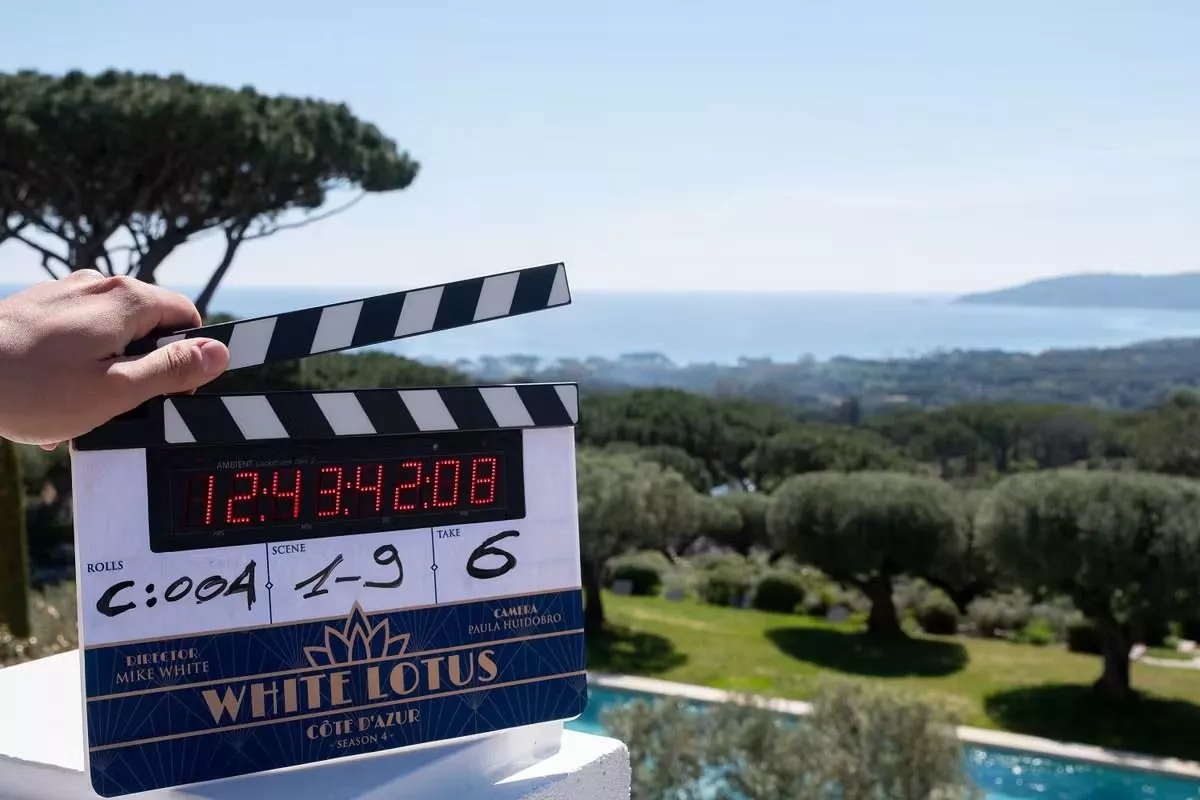
Production on the fourth season of White Lotus is now under way on the French Riviera, with the Emmy-winning series setting its sights on the Cannes Film Festival for its latest chapter.
The season follows a new group of hotel guests and employees over the course of a week during the festival, continuing the show’s established format of immersing a rotating cast in the world of high-end hospitality — previously explored in Hawaii, Italy and Thailand.
Two White Lotus hotels feature in the story: the White Lotus du Cap, filming at the Airelles Château de la Messardière in Saint-Tropez, and the White Lotus Cannes, shot at the Hôtel Martinez on the Croisette.
Filming is taking place in Cannes, Saint-Tropez, Monaco and Paris, with the story set entirely along the Côte d’Azur. Production is under way in the region during this year’s actual Cannes Film Festival, running 12th to 23rd May, though HBO has declined to confirm whether the two will overlap on the ground.
The ensemble cast includes Helena Bonham Carter, Vincent Cassel, Steve Coogan, Kumail Nanjiani, Chris Messina, AJ Michalka and Nadia Tereszkiewicz, among others.
A private collector has spent a quarter of a century quietly building what Sotheby’s is now describing as the largest and most comprehensive collection of vintage Cartier watches ever brought to market. This year, it goes under the hammer across three continents.
The Shapes of Cartier: The Finest Vintage Grouping Ever Assembled spans more than 300 timepieces and traces a century of Cartier’s watchmaking history, with pieces drawn from all three of the maison’s historic branches — Paris, London and New York. The collection is expected to achieve in excess of $15 million in total, distributed across Sotheby’s Important Watches auctions in Hong Kong on 24 April, Geneva on 10 May and New York on 15 June.
Why Cartier London is the star
While Cartier Paris produced the Tank and Santos that most collectors recognise instantly, it is the London branch — and specifically its extraordinary experimental period between 1967 and 1974 — that gives this collection its most significant pieces and its genuine depth.
Operating independently from Paris and New York, Cartier’s Bond Street workshop under Jean-Jacques Cartier pushed the boundaries of watch design further than anywhere else in the maison’s history. The results were watches that challenged every convention of the form: asymmetrical, geometric, distorted, sculptural — objects that had more in common with wearable art than conventional horology.
The centrepiece of the Hong Kong sale is a rare yellow-gold Cartier London Crash from 1987, estimated at $400,000 to $800,000. The Crash, originally conceived in 1967, remains one of the most radical watch designs ever produced. Its entire form — case and dial — was deliberately deformed into a surreal, melted silhouette. For years, stories circulated that the design was inspired either by Salvador Dalí’s melting watches in The Persistence of Memory or by a Baignoire Allongée destroyed in a car accident. As Francesca Cartier Brickell revealed in her book The Cartiers, neither is true: Jean-Jacques Cartier and his chief designer Rupert Emmerson simply took the existing Maxi Oval, pinched and bent it, and created something entirely new. Fewer than a dozen original London Crash watches are believed to have been produced between 1967 and 1970. This 1987 example is thought to be one of only three made that year.
The other highlights
Alongside the Crash, the collection includes a remarkable assembly of Cartier London pieces that rarely appear on the open market. A Decagonal — a ten-sided 18ct yellow gold watch hallmarked 1970–71 — is one of only five known examples, all in men’s sizes, estimated at $60,000 to $80,000. A Tank Asymétrique in 18ct white gold with blue numerals, hallmarked 1992, carries the same estimate range. An Asymétrique with blue enamel from 1973–74, produced in the final phase of Cartier London’s experimental years, is one of only five known London enamel watches from the era, estimated at $50,000 to $80,000.
A gentleman’s Baignoire London from circa 1973–74, in yellow gold with the case ends stretched outward rather than pinched — inverting the standard Baignoire form entirely — is estimated at $50,000 to $68,000. A Driver’s watch from 1966–67, deeply curved to allow the time to be read from the steering wheel, estimates at $50,000 to $80,000. A Tank Allongée in white gold with a stark black dial from 1992 is estimated at $40,000 to $60,000.
What makes this collection unusual
Sam Hines, Global Chairman of Sotheby’s Watches, described the collection as remarkable not merely for the number of pieces but for the quality and rarity of individual examples, particularly in the London category. “The appeal of vintage Cartier lies in its ability to capture a moment in design history while remaining entirely timeless,” he said. “This collection is remarkable not only for its breadth, but for its depth — particularly in its unprecedented assembly of Cartier London pieces, many of which are among the most important examples ever to appear on the market.”
The auction schedule begins in Hong Kong on 24 April, with further sales in Geneva on 10 May and New York on 15 June. Additional highlights from the collection will be announced throughout the year.
By the time Jannik Sinner lifted the trophy at the Rolex Monte-Carlo Masters on Sunday, defeating Carlos Alcaraz 7-6, 6-3 to reclaim the world number one ranking, the cameras had already found him once that week — in rather different circumstances.
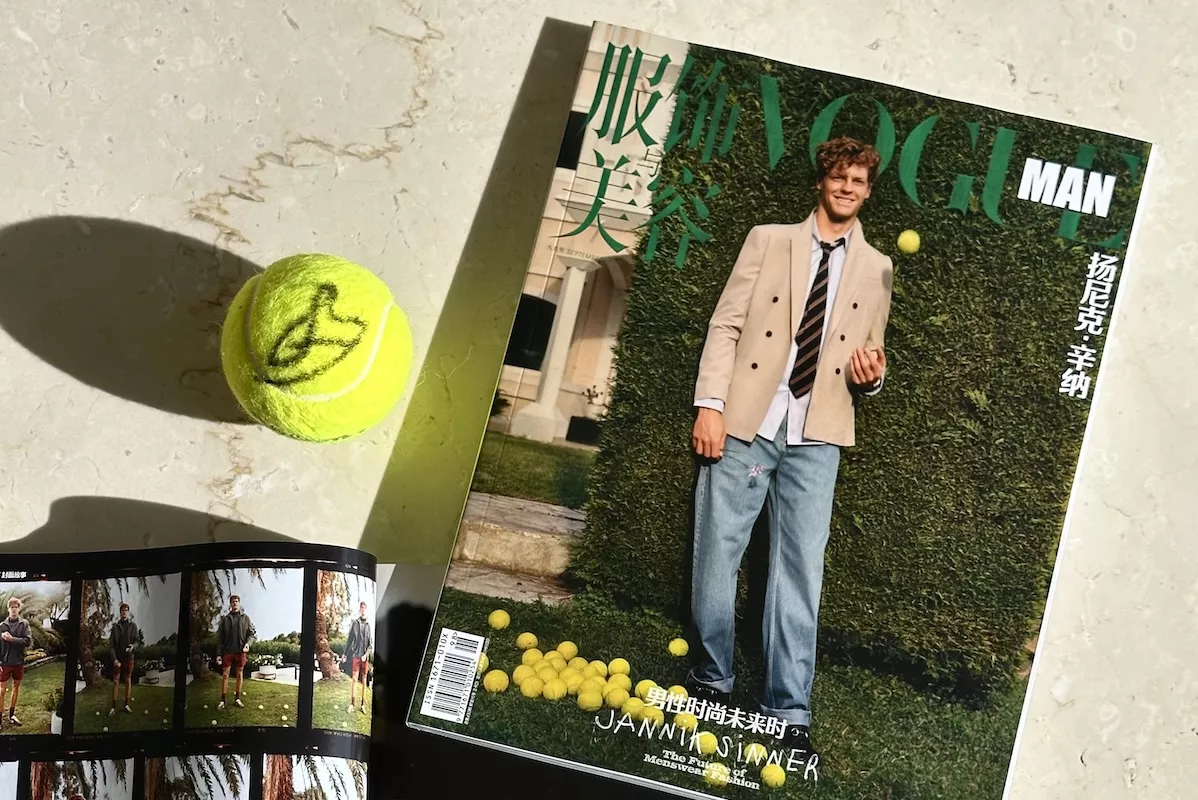
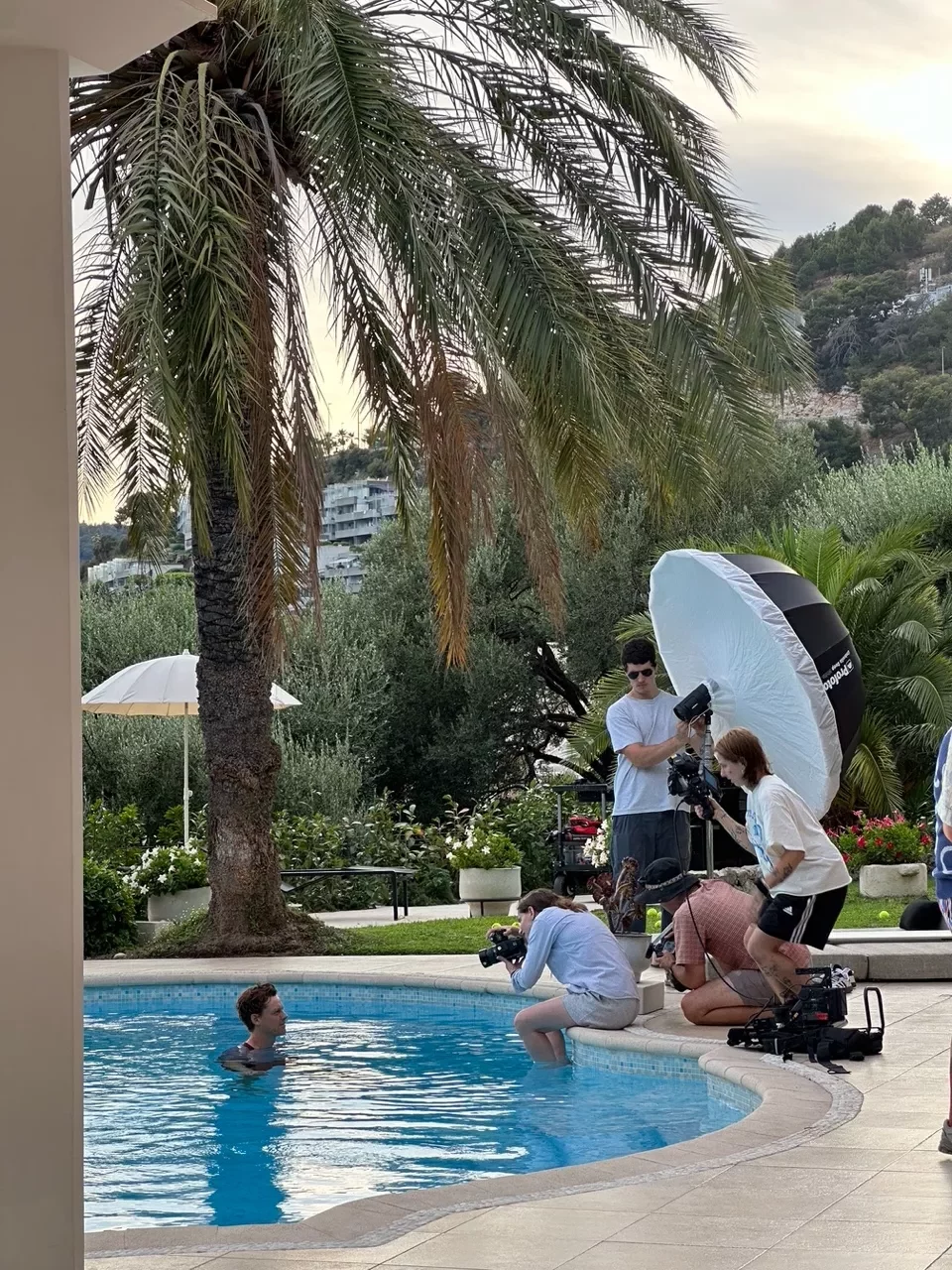
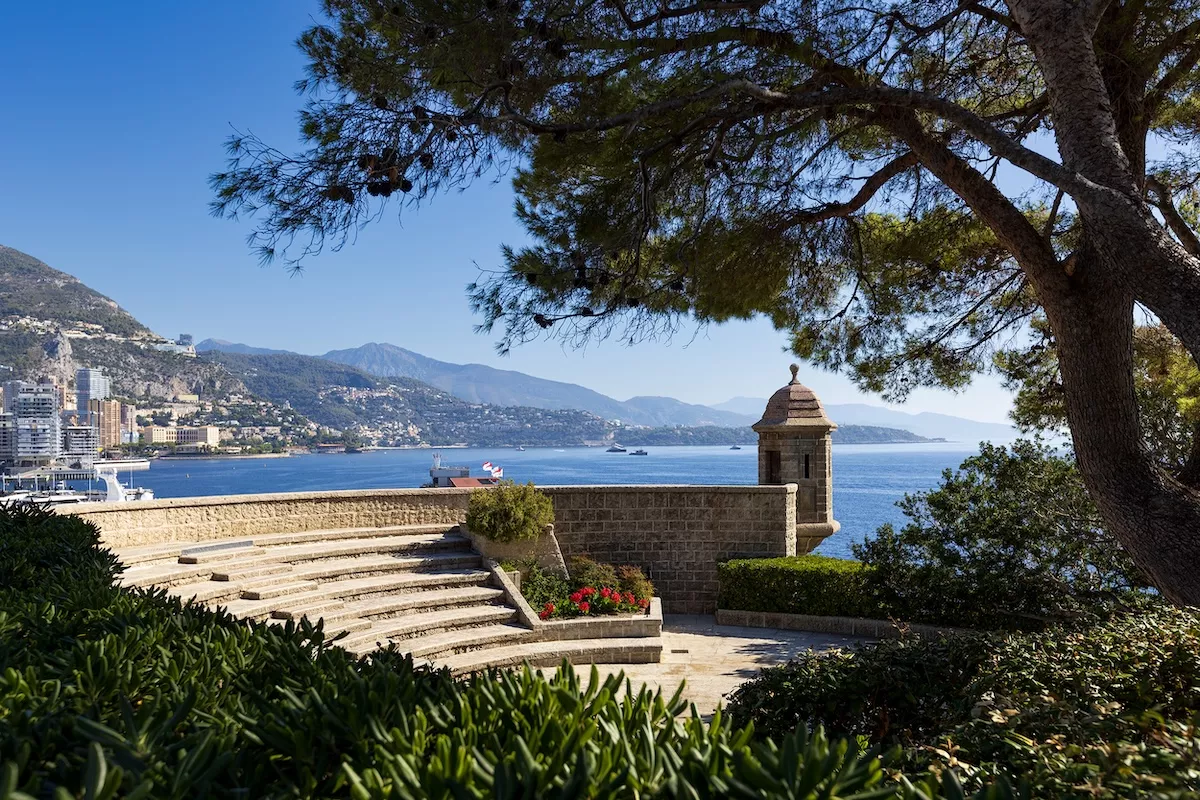
Before the tournament began, the world’s best tennis player was at Villa Monaco, a private estate tucked into the hills of Cap d’Ail just minutes from the Monaco border, submerging himself fully clothed in tailored high fashion into a heated infinity pool overlooking Saint-Jean-Cap-Ferrat at sunset. The occasion was a photoshoot for the inaugural issue of Vogue Man China — a closed-set, intimate affair that transformed the villa into what its owners describe as “a tennis-inspired dreamscape”.
The juxtaposition is hard to ignore. One of the most dominant athletes in the world, stepping away from the clay to be photographed for a global fashion magazine at a discreet Monaco estate. It says something about where Sinner is right now — not just as a tennis player, but emerging as a cultural figure.
Villa Monaco
Sinner lives five minutes from the property in Monaco. The villa, located at 9-11 Chemin des Eucalyptus in Cap d’Ail, sits on 4,000 m² of private grounds and has built a quiet reputation as the go-to retreat for elite athletes who need to disappear — Kevin Durant, Dirk Nowitzki, Mark Cavendish and Nathan Aké among those who have passed through its gates. It offers, as the property puts it, not access but absence: no external visibility, discreet staff and complete environmental control.
For Vogue’s purposes, it also offered something no studio could replicate. The light reflecting off the heated infinity pool, the manicured gardens, the natural acoustics. Very little needed to be staged.
The defining shot of the editorial was the pool sequence — Sinner in tailored clothes, submerged in water, Saint-Jean-Cap-Ferrat visible behind him at golden hour.
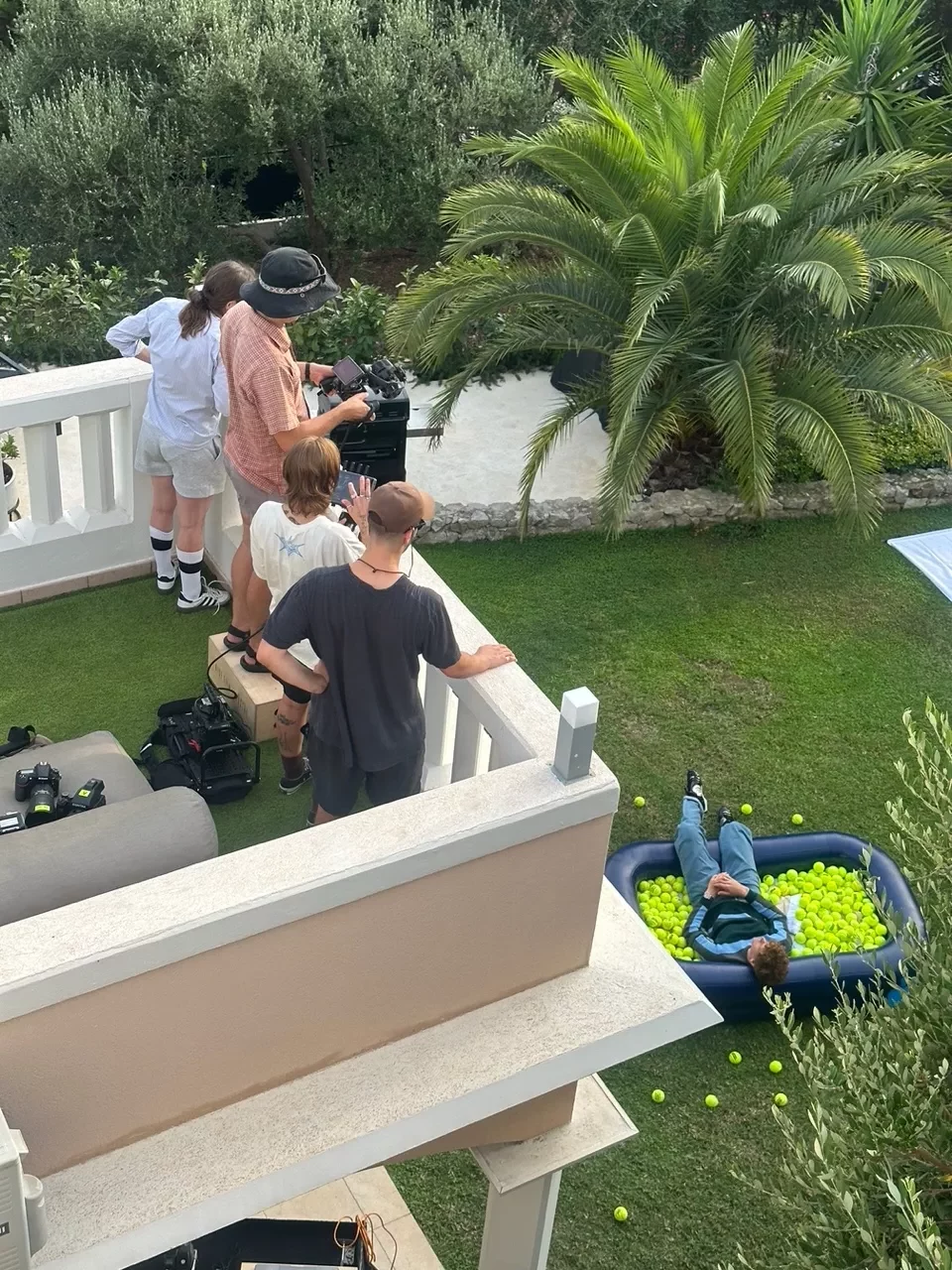
Other sequences included a classic red sports car on the villa’s private driveway and — in a more playful nod to his origins — a ball pit filled with dozens of tennis balls.
The cover
The editorial appears in the inaugural issue of Vogue Man China. The shoot was completed while he was preparing to compete at the Monte-Carlo Country Club — and days later, he walked off the clay as champion, having not dropped a set until the semi-finals and defeating the defending champion in straight sets in the final.
The Direction des Affaires Culturelles is inviting young artists aged 16 to 30 to apply for the fourth edition of Scène Ouverte — Les Talents du Fort, taking place on Friday 10th July at Fort Antoine.
The annual open stage evening gives emerging performers the chance to appear before a large public audience in professional conditions — but this year’s edition carries a significantly higher stake than previous editions. One of the selected performers will be chosen to represent Monaco at the 2027 World Expo in Belgrade, Serbia, performing on an international stage before audiences from around the world.
The competition is open to musicians, singers, dancers, actors, circus artists and DJs who are Monegasque nationals, resident in Monaco, enrolled in school in the Principality, or have a demonstrable connection to Monaco. Applicants must be aged between 16 and 30.
The application deadline is 17th May. Forms are available online through the Direction des Affaires Culturelles.
In partnership with the Princess Grace Foundation-USA, Monaco Life proudly presents a monthly series spotlighting the lives and artistic contributions of the Foundation’s remarkable Award winners.
For filmmaker, producer, director, and educator John Ira Palmer, storytelling has always been both an escape and a means of self-discovery. With a career spanning independent film, commercial production, and academia, his work is grounded in a deep commitment to collaboration, emotional truth, and the evolving language of cinema.
A Princess Grace Award winner in Film (Honorarium) early in his career, Palmer has gone on to support filmmaker-driven projects through Projected Picture Works, including September 5 and Asphalt City, while also mentoring the next generation at USC’s School of Cinematic Arts and the AFI Conservatory. Whether producing, directing, or teaching, his approach remains rooted in connection—between story and audience, artist and collaborator.
In this conversation, Palmer reflects on his early creative beginnings, the lessons he’s carried across disciplines, and why moments of change in the film industry continue to inspire optimism.
On the Princess Grace Foundation-USA
You received a Princess Grace Foundation Film Honorarium early in your career. What did that recognition mean to you then?
Truth be told, I couldn’t even believe I received the grant at the time. I was making a tiny little experimental film at a tiny little art school in the Bay Area, and I never thought I’d land on the radar. It meant the world to me. It was the largest budget I’d worked with at that point, and by a lot. It allowed me to realize visuals and ideas I’d been bouncing around but had no resources for.
On a larger scale, it made me feel legitimized. Having someone believe in you and your work can sometimes be all you need to advance to the next level. The Princess Grace Foundation has also been the gift that keeps on giving… I really don’t think I’d have the access I now have without the help of the Foundation.
The Princess Grace Awards connect artists worldwide. What does being part of this global artistic community mean to you?
Well, aside from the obvious connection to Princess Grace Kelly’s incredible legacy, the community has been incredible. I’ve made amazing friends and colleagues, some of whom have been in my life for well over a decade. Whether I need guidance, collaboration, or simply inspiration, the Princess Grace network has given me all of this in spades.
On His Career & Artistic Growth
Let’s go back to the beginning… When did filmmaking first become a meaningful form of expression for you?
My love for movies has been lifelong—something my dad shared and passed along. When I was a kid, movies provided entertainment, sure, but they also offered escape—a chance to see the world and a safe place to feel my emotions. So I always knew I wanted to be a part of making them one day, but as a kid from a trailer park, I had no idea how to actually do that.
I lived with my grandparents for much of my childhood, and when I was in middle school, they bought me a discounted floor model of a camcorder from the local electronics store. I never put it down. I started making films with my friends—silly westerns, horror movies, stop-motion animations, and on and on.
When I look back on those, as goofy as many of them were, and even though they weren’t necessarily autobiographical, I realize that I was working through many of the themes in my life—telling stories as a way to express my inner world. Filmmaking felt like home, something I was born to do.
John Ira Palmer on the set of September 5, photo by Moritz Binder
You started your studies in fine arts before pursuing film production. How did that artistic foundation shape your visual storytelling and creative voice?
As I grew into adulthood, I still had no idea how to access the film industry, much less find my own place in it. But I knew I enjoyed connecting with others through creativity, and I’d continued making movies and taking photos. Whether the images were moving or still, I loved making them.
I ended up in art school—the San Francisco Art Institute (RIP)—based on my photography portfolio, but quickly moved into experimental filmmaking there. They had a great little avant-garde film program with incredible, legendary faculty like George Kuchar, Ernie Gehr, Lewis Klahr, Gunvor Nelson, Janis Crystal Lipzin, Sandra Davis, and so on.
So I was making movies in art school, but they were really far outside of the scope and practice of commercial filmmaking. Art school, if you take it seriously, is quite a rigorous endeavor. Through experimentation and critique, you start to learn how to align your talent with your taste, and how to shape your work and voice to translate your ideas to viewers.
I think it prepared me well for my transition into the larger world of commercial filmmaking. It’s worth noting, though, that I still love experimental film and sometimes even find time to make them as a way to channel my creative energy outside of a market-driven space.
Your career covers independent film, creative agencies, and academia. How have these different worlds influenced your approach to filmmaking and collaboration?
Sometimes it feels so disjointed when I think about it. But the truth is, they’re all riding the same line. They all involve storytelling and are about connecting with others. Each is a collaboration between a messenger and an audience.
Independent filmmaking has taught me a lot about roll-your-sleeves-up entrepreneurialism in concert with supporting creative vision. The agency side really taught me about effective communication, which is paramount in the marketing and advertising world, alongside teamwork and always-aim-for-perfection craft within tight budgets and deadlines.
And teaching—well, teaching has taught me so much. I work mostly with graduate film students at the USC School of Cinematic Arts and the AFI Conservatory, and one thing that stands out as a lesson learned is to be patient and let people surprise you. Sometimes just investing the time to see the potential in someone and their ideas is the spark that’s needed to help them level up.
I also genuinely love teaching and mentoring, and the feeling of sharing and exchanging knowledge and practice is one of my life’s greatest joys. But all of these things, however disparate they might seem, have made me a better producer and director—and yes, collaborator. I really do see them as part of the same whole.
As both a producer and director, how do you balance creative vision with practical realities?
It’s interesting, because I sort of have these two practices. One is my bread-and-butter, my “day job,” which is producing what we’ll call “commercial” films, and the other is my more personal practice of directing experimental films and documentaries.
Obviously, the pressure of the practical is greater on a larger, feature-length film. But in both, I think the goal is always to identify what is special about a project—to figure out that core thing that drives it—and to protect that at all costs while figuring out a way to actually bring it to life.
One of my colleagues and mentors, the producer Tim Marx, always says to his teams, “We can do anything, we just can’t do everything.” And I really love that mantra. We can pull anything off, and hopefully always in service of that thing that’s special, though there will always be compromises.
What’s awesome, though, is that you often find even better creative solutions when you’re limited by filmmaking “frenemies” like time and budget.
Through Projected Picture Works and films like September 5 and Asphalt City, you’ve supported filmmaker-driven stories. What attracts you to the projects you choose to produce?
There’s really not any one particular genre that I look toward, and the same is true for my partners at Projected Picture Works. We’re just looking for good stories, made by good people.
We tend to gravitate toward original ideas and try to support early-career filmmakers when we can. I also love movies that add value to the world. That doesn’t necessarily mean that every project has to be driven by a social issue, but I love it when there’s something there that makes you feel, think, or see something in a fresh way.
As an educator, what lessons do you hope to pass on to emerging filmmakers?
I hope they learn the nuts and bolts of the job, of course, but also that there’s no one right way to make it to your destination.
Good storytelling, effective communication, and kindness are excellent foundations. It’s also important to listen well, and to be adaptable.
In an industry that’s rapidly changing, what excites you most right now?
Some of my industry colleagues and students are worried about the shifts we’re experiencing in film, but our industry has undergone seismic changes many times.
We’re at a moment of huge change, and it’s not without its pains, but to be a part of figuring out what form movies will take as we move forward keeps me going.
On Life Beyond Film
Ever been to Monaco? What would your perfect day there look like?
I’ve been to the Cannes Film Festival several times, but I’ve never actually made it to Monaco. I’d love to!
I’m a simple guy, so a perfect day would involve delicious food, beautiful views, and the ocean air… and maybe channeling a bit of Princess Grace’s glamor for a night out.
On What’s Next
What stories or challenges are inspiring you now—and what can audiences expect next?
I’m really compelled by what audiences will want to see moving forward, and how we’ll tell stories that continue to bring people into theatres and eyes onto screens.
Our production company released four movies in 2025, and we have some exciting projects on the horizon, which I can’t talk about just yet.
On the personal side of filmmaking, I’ve been ideating several experimental collage films about queer longing, which I’m hoping to film on my Bolex.
Why are programs like the Princess Grace Awards still so important today?
Early-career filmmakers find themselves in a Catch-22. No one takes you seriously until you can prove what you can do, but you can’t do that without adequate resources.
The Princess Grace Foundation offers funding, but also long-term, sustainable commitment in the form of professional development, networking, and so on.
For an artist to hear, “I see something special in you,” that’s powerful. And it’s more important now than ever.