

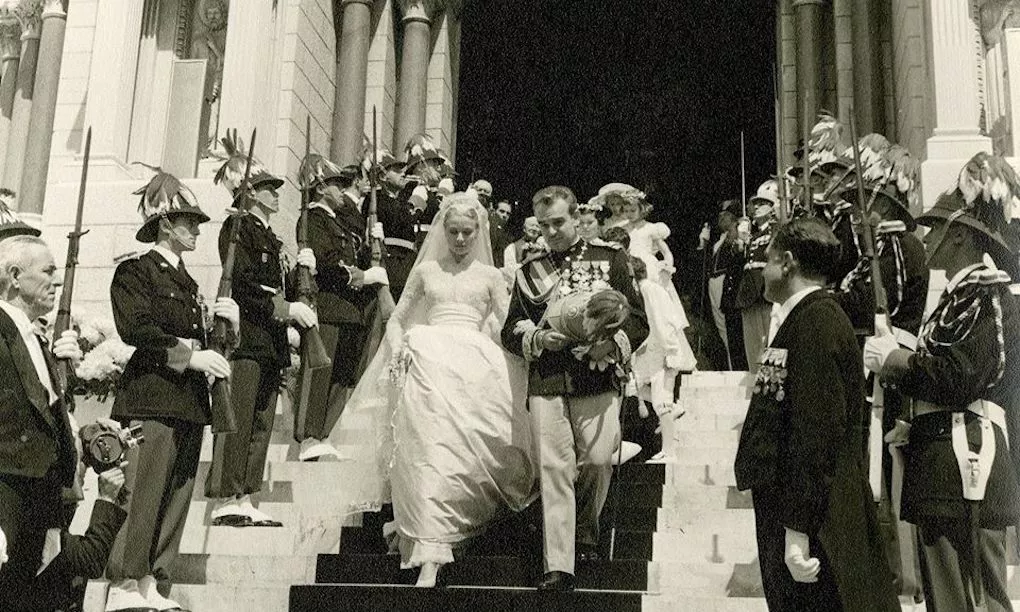
Seventy years ago this weekend, a 26-year-old Oscar-winning actress from Philadelphia became one of the most famous women in the world. The wedding of Prince Rainier III and Grace Kelly on 18th and 19th April 1956 was not simply a marriage — it was a moment that changed Monaco permanently, invented the template for modern royal media spectacle, and produced an image of the Principality that endures to this day.
Monaco Life marks the anniversary by tracing the love story from its unlikely beginning to the ceremony that stopped the world.
How it began
The meeting that started everything was not especially romantic in its origins. In May 1955, during the Cannes Film Festival, a Paris Match journalist arranged for Grace Kelly — then in Cannes to promote Alfred Hitchcock’s ‘To Catch a Thief’ — to visit the palace for a photo opportunity with Prince Rainier III. The encounter was nearly called off entirely: a power cut at Grace Kelly’s hotel left her unable to do her hair or press an outfit, and the party arrived late after a minor road accident on the way.
What followed was captured by Irish photographer Edward Quinn, who had accompanied the group and sensed immediately that the atmosphere between the two was unexpectedly charged. Both were shy, initially at a loss for words. Quinn suggested they move to the palace gardens for better light. The prince showed his guest his private zoo. She stroked a tiger. By the time Grace Kelly was driven back to Cannes, her only remark was: “He is charming, charming”.
A year of letters followed — a private, largely undocumented courtship conducted across the Atlantic. Rainier sailed to the United States and proposed in Philadelphia in January 1956. She accepted. The world, when it found out, could barely contain itself.
The arrival
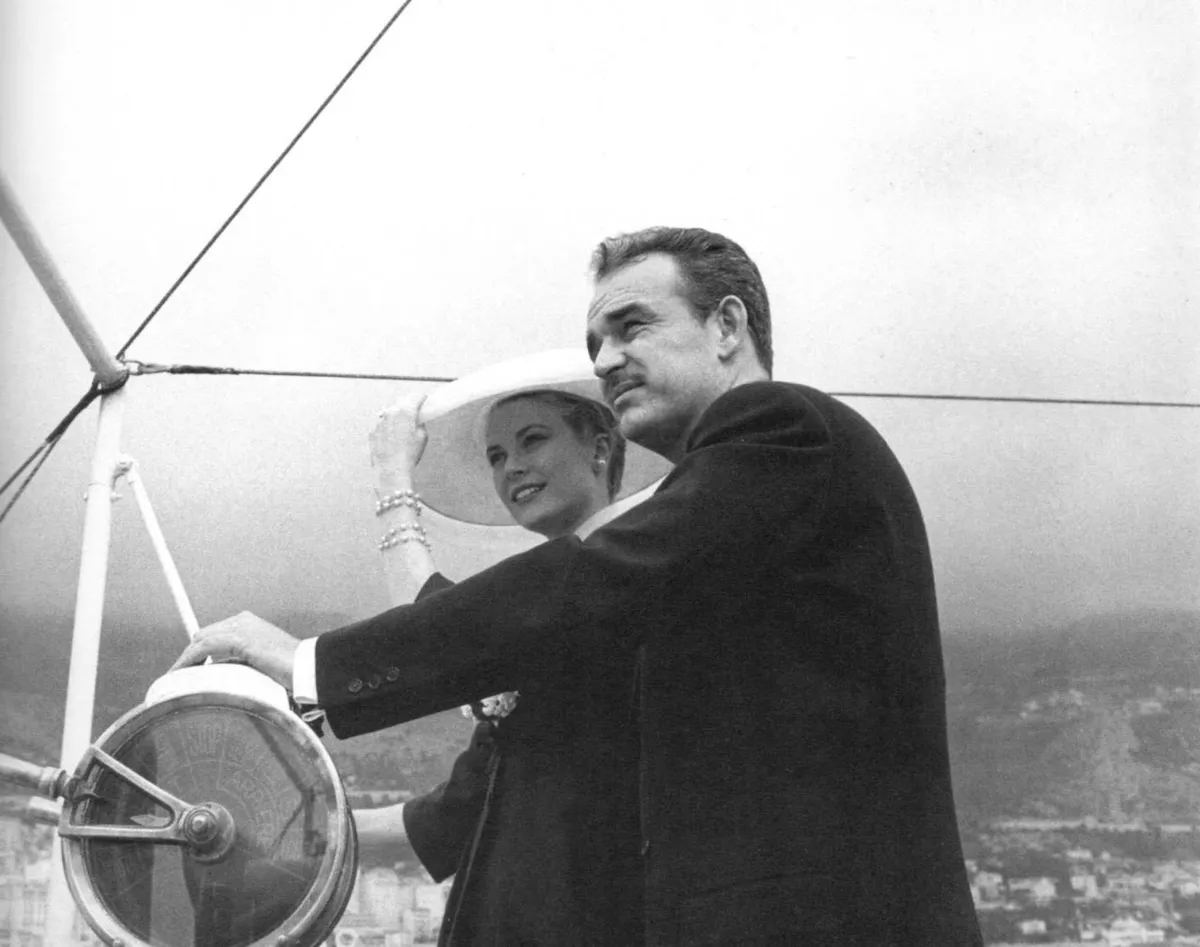
Grace Kelly sailed from New York to Monaco aboard the SS Constitution, accompanied by 80 pieces of luggage, members of her family, a contingent of press, and her beloved poodle Oliver. The arrival in Monaco’s harbour was itself a spectacle — crowds lined the shore, boats surrounded the ship, and cameras recorded every moment. It was staged, whether deliberately or not, with all the theatricality of a film premiere. Aristotle Onassis had sent his yacht to escort her in.
For the Principality, it was a portent of what was coming. Monaco, at the time, was a small and relatively quiet enclave on the French Riviera, known for its casino and its clement weather. It was about to become something else entirely.
Two ceremonies, one legend
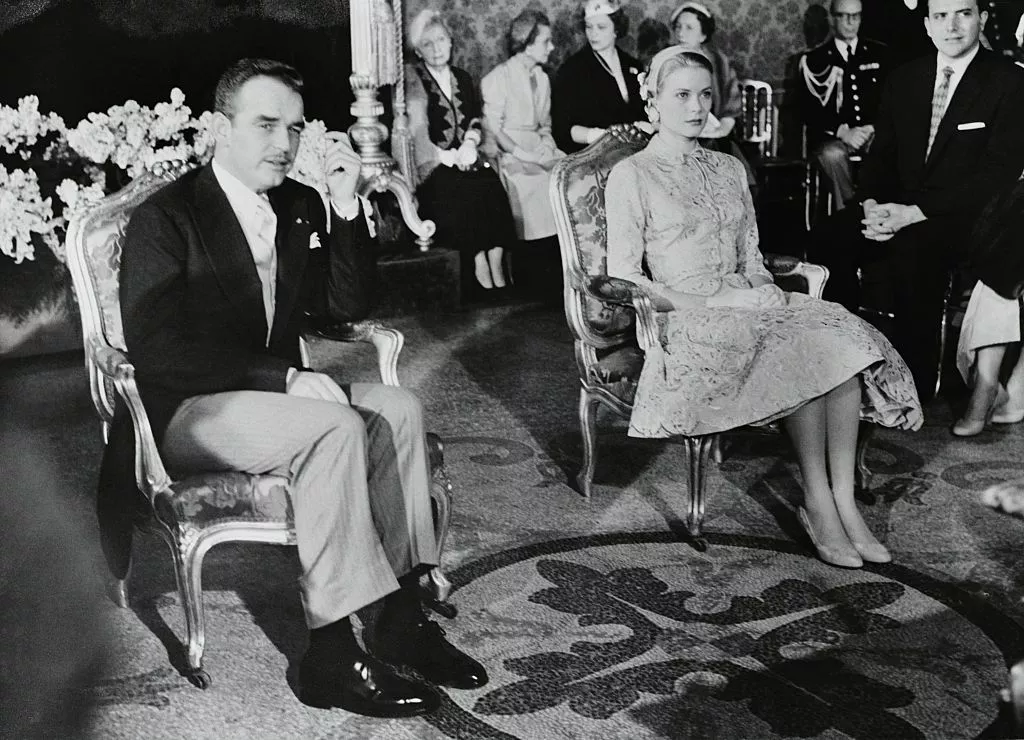
The civil ceremony took place on 18th April in the Throne Room of the Prince’s Palace. It lasted around 40 minutes and was conducted twice — once privately and once for the cameras. Upon signing the register, Grace Kelly acquired 142 royal titles. She was now, formally, Her Serene Highness Princess Grace of Monaco.
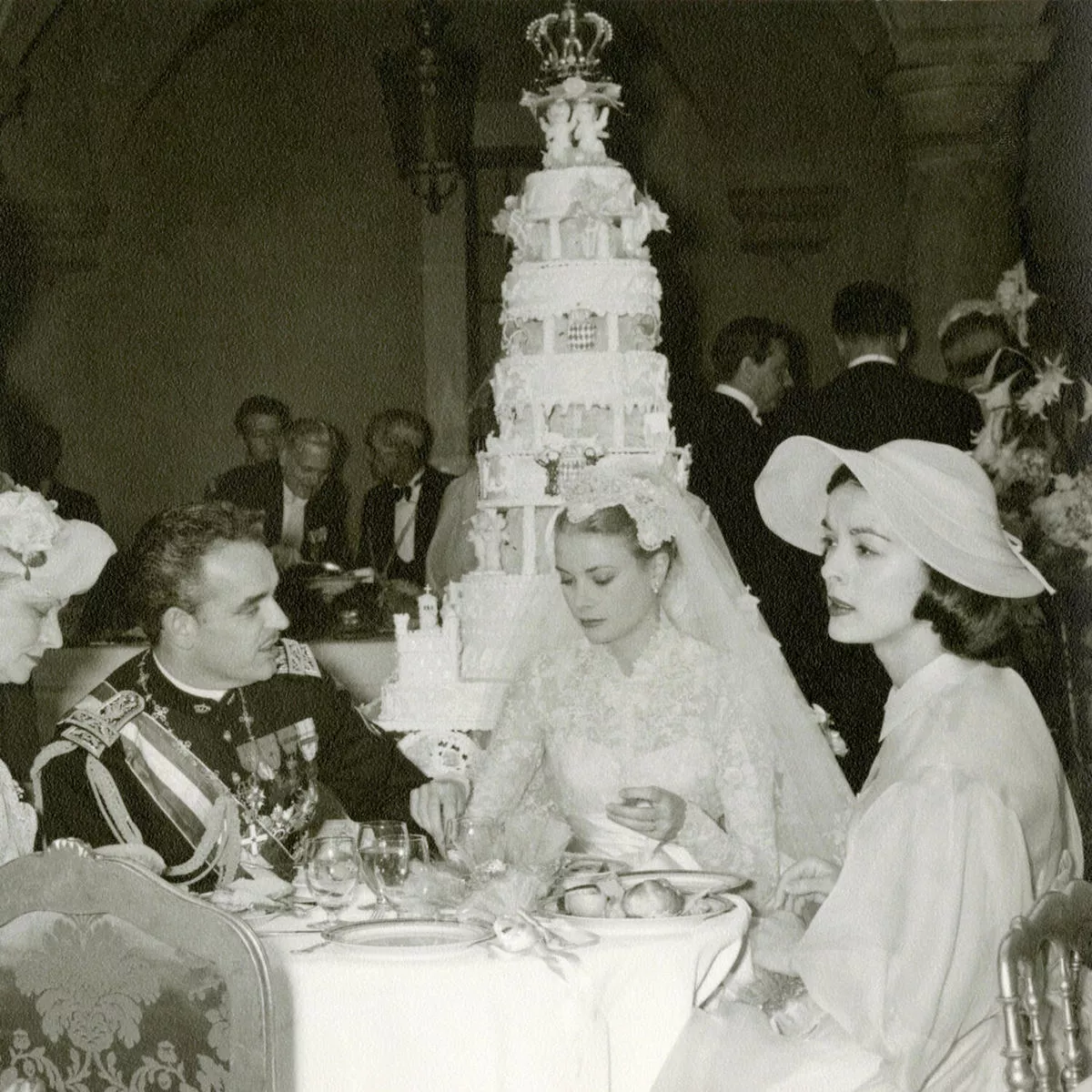
The religious ceremony on 19th April at Saint Nicholas Cathedral is the one that entered history. Around 700 guests filled the cathedral, among them Cary Grant, Ava Gardner, David Niven and Aristotle Onassis. Frank Sinatra, invited but mindful that his presence might overshadow the occasion, declined to attend.
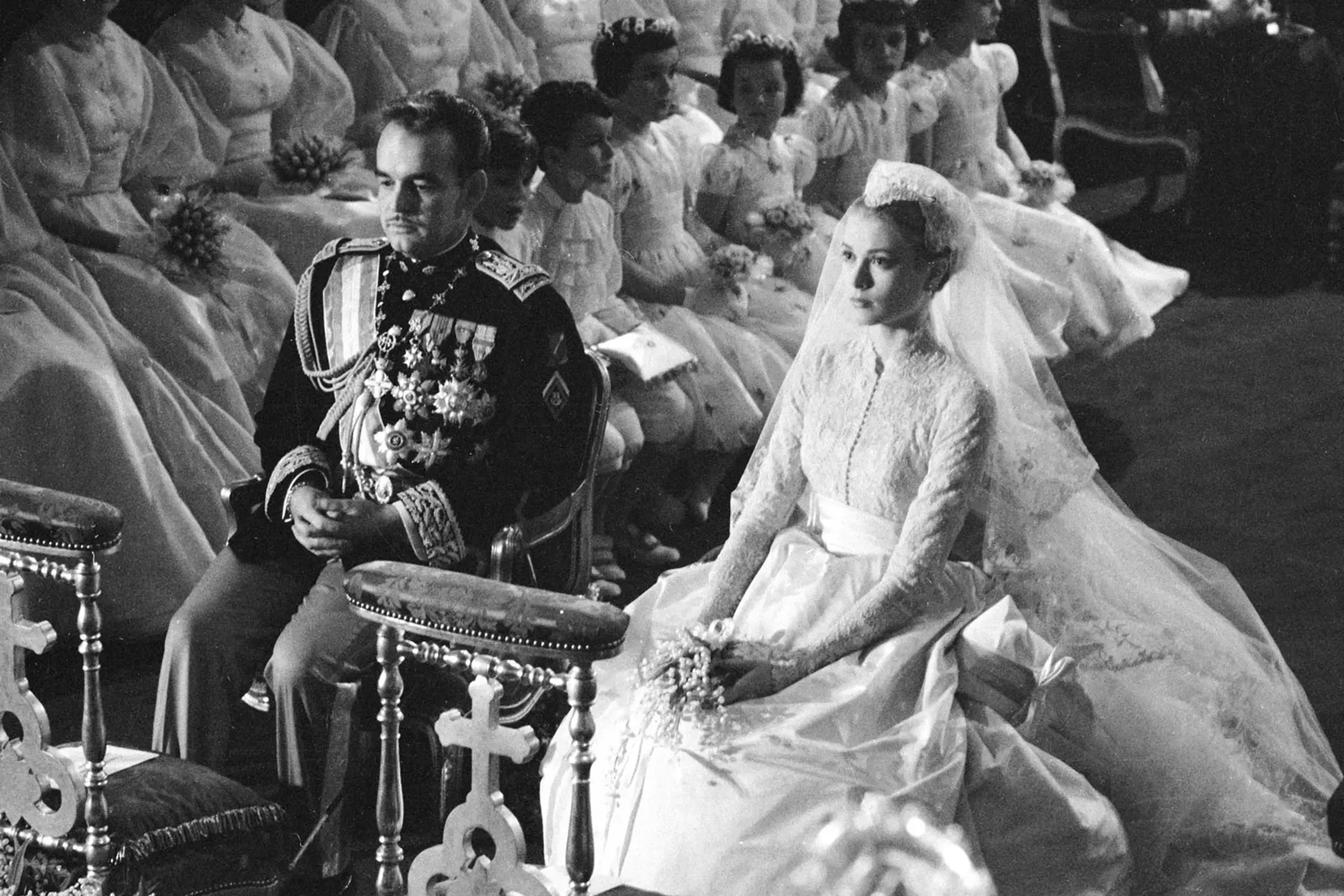
Bishop Gilles Barthe officiated, and a congratulatory message from the Pope was read at the close of the service. Outside, approximately 3,000 Monegasques joined the celebrations. Around the world, some 30 million television viewers watched via nine networks, broadcast through Eurovision and MGM.
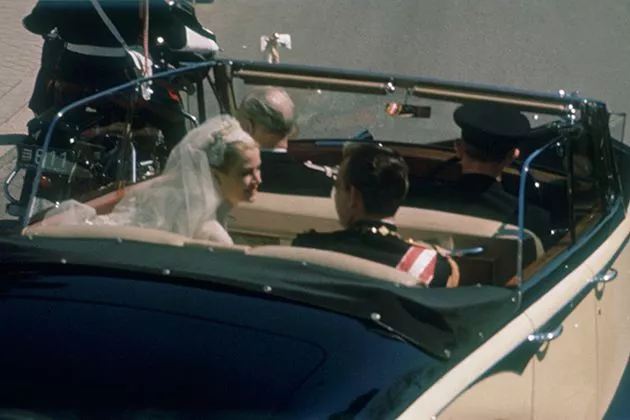
The wedding presents that poured in ranged from the fabulous to the absurd — among the more practical, a Rolls-Royce; among the less useful, a gold and bone hatchet. When the ceremony was over, Rainier and Grace drove through Monte-Carlo in an open-top car, greeting the crowds in what felt less like a civic procession and more like the final scene of a film.
It was, as one historian later described it, the first modern event to generate media overkill — and the blueprint for every royal media spectacle that followed, decades before Diana, before Kate, before any of the weddings that would claim the same superlatives.
The dress
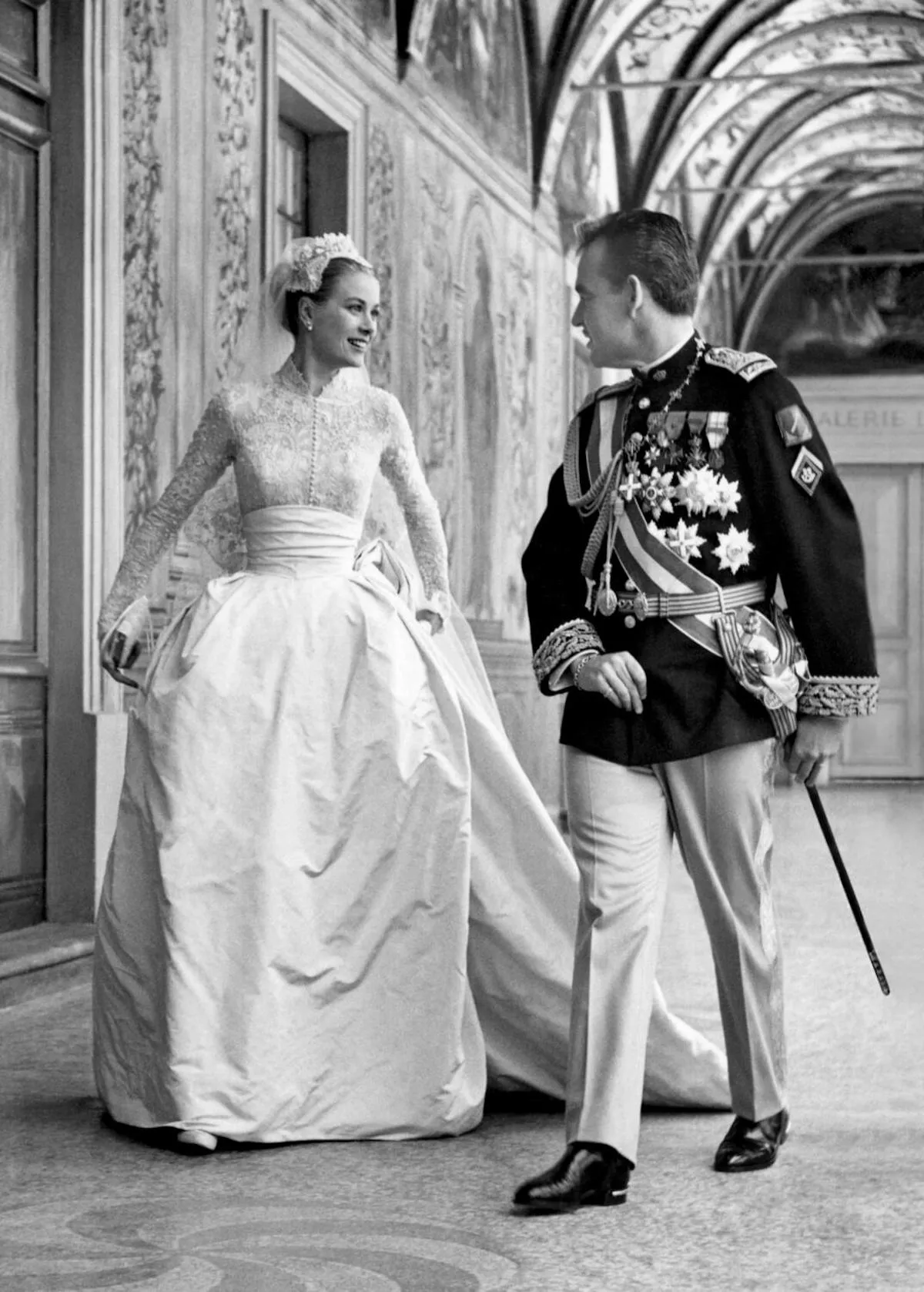
Helen Rose, MGM’s head costume designer, spent six weeks and the labour of between 30 and 35 seamstresses creating the gown that Grace Kelly wore to the cathedral. It was made from silk taffeta and antique lace, sewn with thousands of hand-applied pearls, with a high neckline, long lace sleeves and a train of more than 10 feet. Instead of a tiara, Kelly chose a Juliet cap. Her bouquet was lilies of the valley.
The dress has never been bettered as an object of bridal influence. Its echoes appeared decades later in the gown Catherine Middleton wore to Westminster Abbey in 2011. It is currently valued at close to $800,000 and remains one of the most studied garments in fashion history.
The deal behind the fairy tale
The wedding was not only a romance. Grace Kelly’s family paid a dowry of $2 million, a transaction widely reported at the time and framed variously as extraordinary generosity or the price of a title. MGM financed elements of the occasion, including the dress and the broadcast rights. Prince Rainier III, for his part, was acutely aware that Monaco needed what Grace Kelly could bring: international attention, glamour, and the kind of soft power that no amount of casino revenue could purchase.
It worked. Tourism to Monaco increased significantly in the years that followed. The Principality’s identity as a destination for the global wealthy — a place where luxury and spectacle were not incidental but definitional — was cemented in those two April days in 1956 in ways that have never been undone.
The honeymoon was a seven-week Mediterranean cruise aboard the Deo Juvante II, a yacht gifted to the couple by Aristotle Onassis.
What it made of Monaco
The transformation was not immediate but it was irreversible. Grace Kelly brought to Monaco not only celebrity but genuine cultural seriousness: she founded the Garden Club, championed the arts, and used the platform of her position with a conviction that outlasted her own lifetime. She died in September 1982 following a car accident on the road above Monaco. She was 52. Prince Rainier III died in 2005.
Their three children — Princess Caroline, Prince Albert II and Princess Stéphanie — each carry something of both parents into the present.
Seventy years on, the images remain startling in their clarity: the ship in the harbour, the cathedral, the dress, the crowds. A small principality that had been largely overlooked by history suddenly at the centre of the world’s attention — and never quite leaving it since.
Stay updated with Monaco Life: sign up for our free newsletter, catch our podcast on Spotify, and follow us across Facebook, Instagram, LinkedIn, and Tik Tok.