Monaco hosts Ancestral Wisdom Summit as Indigenous leaders meet National Council

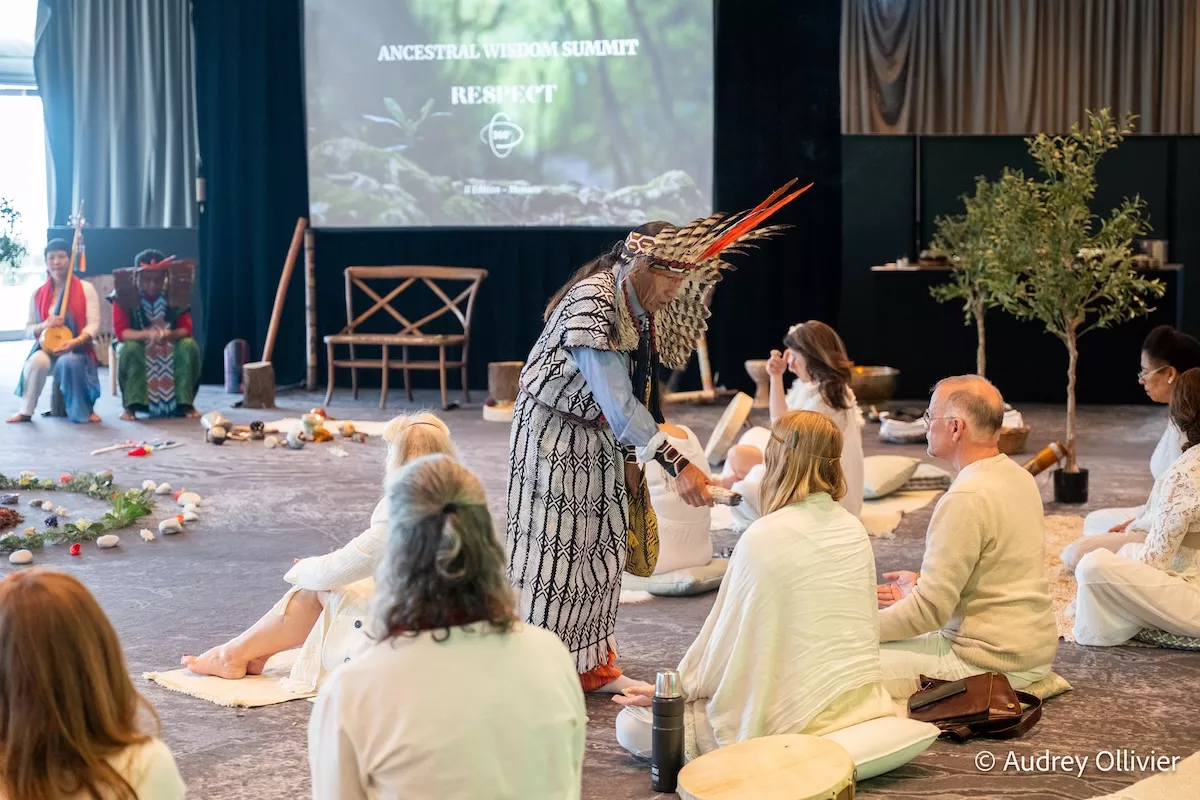
Monaco hosted the second edition of the Ancestral Wisdom Summit on 7th April at the Méridien Beach Plaza, bringing together spiritual leaders, institutional representatives, researchers and international participants in what organisers describe as an effort to open dialogue between ancestral knowledge, science and contemporary governance.

The summit was founded and led by Isabella Vieira, whose Respect 360° Code — a protocol for inner transformation in service of systemic change — has attracted interest from the University of Cambridge’s Centre for Systemic Change and is supported by Monaco’s National Council.

The day centred on an immersive experience led by Vieira alongside a spiritual leader of the Nai Baiya Council, during which participants underwent what was described as a collective energetic activation. Testimonials from attendees were strong. Cindy Forde of the University of Cambridge said the experience invited a fundamental rethinking of humanity’s relationship with the world and with life itself. Rhonda Hudson, President of the Kate Powers Foundation, noted that what had begun quietly a few years ago was now claiming its place with strength.

From Monaco to Istanbul

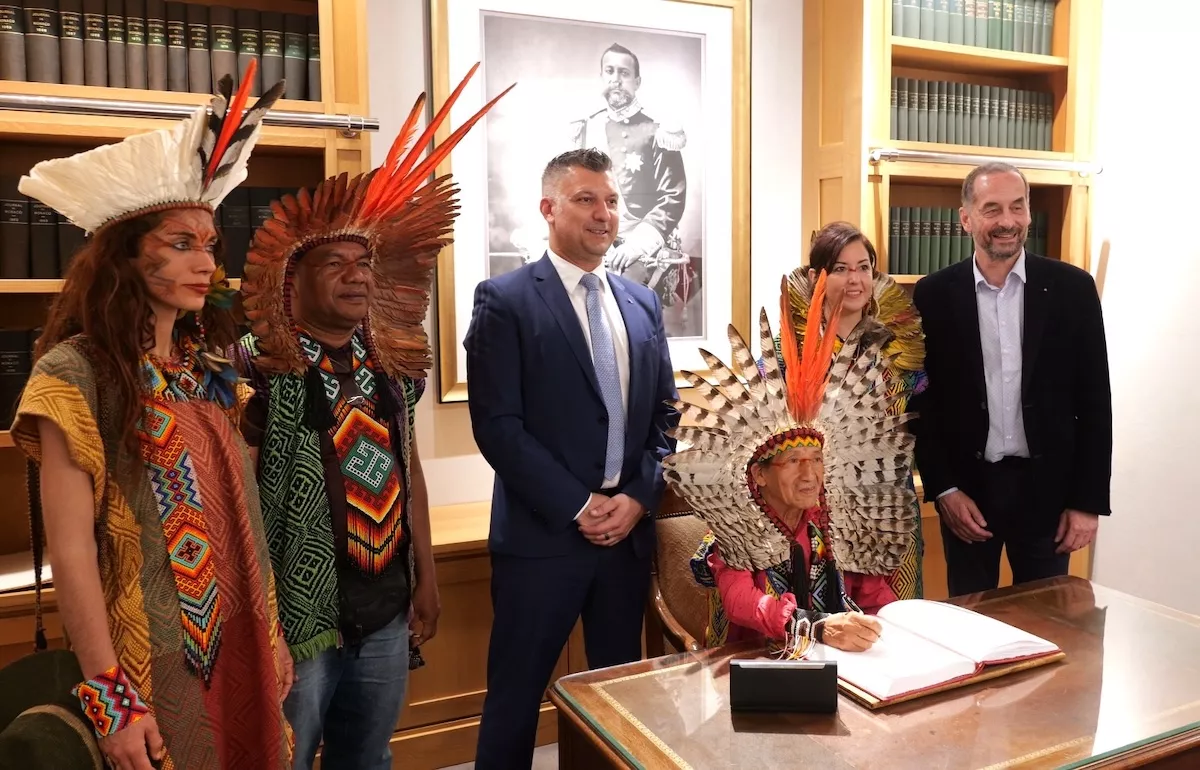
The following day, on 8th April, Monaco’s National Council — under President Thomas Brezzo and Foreign Relations Committee President Fabrice Notari — officially welcomed leaders of the Huni Kuin people of the Amazon. The official guestbook was signed by spiritual leader Pae Nawa and Isabella Vieira, carrying the message: “May the governments of the world open the way to the true leaders of this planet.”

The momentum continued in Istanbul, where Vieira represented Monaco at the 152nd Assembly of the Inter-Parliamentary Union alongside the National Council — the first time leaders of the Huni Kuin people have carried their voice into an international political dialogue space alongside government representatives. Invited to speak within the WYDE Women’s Leadership initiative, supported by UN Women, Vieira addressed the assembly with a message: “The world does not simply need more leaders. It needs a different kind of leadership — one grounded in respect, connection, and consciousness.”

An Ancestral Parliament of the Earth

The longer-term ambition emerging from these gatherings is the creation of an Ancestral Parliament of the Earth — a space designed to bring together spiritual leaders, Indigenous leaders and international institutions to integrate ancestral wisdom into global decision-making. Academic and institutional partnerships are in development, alongside immersive multi-day formats intended to deepen the transmission of that knowledge.

Stay updated with Monaco Life: sign up for our free newsletter, catch our podcast on Spotify, and follow us across Facebook,  InstagramLinkedIn, and Tik Tok.

Main photo credit: Audrey Ollivier

Road closures and parking restrictions ahead of Monaco’s Historic Grand Prix

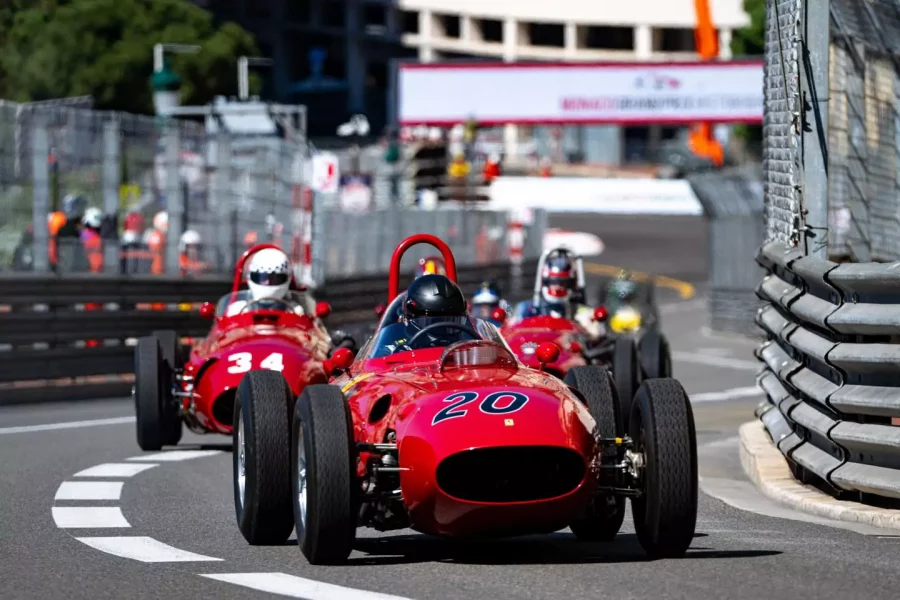
Dozens of streets across the Principality will be closed to traffic from Friday as the 15th Grand Prix de Monaco Historique gets under way.

The three-day event, scheduled from 24 to 26 April, will bring significant disruption to road, maritime and pedestrian access across Monaco. Authorities have issued ministerial orders detailing the scope of restrictions, which begin in some areas from Wednesday.

Road closures
A broad swathe of Monte-Carlo’s main arteries will be closed to all vehicles — including motorcycles — on each race day: from 9:30am on Friday, 6:15am on Saturday and 6:00am on Sunday, in each case until the end of the day’s racing programme.

The affected routes include boulevard Albert Ier, Place du Casino, avenue Princesse Grace (between avenue des Spélugues and boulevard Louis II), avenue J.-F. Kennedy, boulevard Louis II, avenue de Monte-Carlo, avenue d’Ostende, avenue des Spélugues, Quai Albert Ier, Quai Antoine Ier, avenue de la Costa (between no. 3 and avenue d’Ostende), part of rue Grimaldi, avenue de la Quarantaine and the Rocher Albert Ier and Rocher Noghès tunnels.

Between avenue des Papalins and avenue Albert II — including sections of avenue des Papalins itself (nos. 13 to 39) — traffic bans are in place from Friday 7:00am through to Sunday at 23:59.

Several streets will see their one-way directions reversed during racing hours, among them rue Princesse Florestine, rue de Millo, avenue du Port, rue Suffren Reymond, rue Saige and rue Terrazzani. Rue Grimaldi (between rue Suffren Reymond and Place d’Armes) and rue Notari (between rue Suffren Reymond and rue Princesse Antoinette) will operate as two-way roads.

Parking restrictions
Parking bans are already in force in parts of La Condamine from Wednesday 22 April at 7:00am, covering avenue Princesse Alice, rue Princesse Antoinette, avenue de la Madone and avenue de la Quarantaine, with restrictions remaining in place until Sunday evening.

In Monte-Carlo, no-parking orders begin on Thursday 23 April at 6:00am in passage de la Porte Rouge, avenue de Roqueville and part of boulevard de Suisse. From Thursday at noon, an extensive list of streets across both districts — including Place du Casino, boulevard Charles III, rue Grimaldi, boulevard Louis II and avenue des Spélugues — will be off-limits for parking until Sunday at 22:00.

Additional restrictions come into effect from Friday 24 April at 8:00am on avenue de la Costa, rue de la Colle, avenue Henry Dunant, rue Princesse Florestine, part of boulevard des Moulins and rue du Rocher. Rue Louis Aureglia (nos. 3 to 7) will be subject to a parking ban on Sunday only, from 8:00am to 8:00pm.

Pedestrian access
Pedestrians without tickets or passes issued by the Automobile Club de Monaco (ACM) will be barred from Quai Albert Ier, Quai Antoine Ier, Escalier de la Costa, Escalier Sainte-Dévote, avenue de la Costa, avenue Princesse Grace, part of boulevard du Larvotto and avenue de la Quarantaine during racing hours on each of the three days.

Residents of buildings within the circuit perimeter may access their properties on presentation of identity documents. Those working within the zone may do so with a valid work permit, or an ACM or Sûreté Publique pass.

Public transport and EV charging
Bus lines operated by the Compagnie des Autobus de Monaco (CAM) will be diverted for the duration of the event; updated routes are available on the CAM website. ZOU regional bus services will also be affected.
Electric vehicle charging points will be deactivated at multiple locations across the Principality from as early as Monday 21 April, with the last restrictions lifting on 27 April on avenue des Ligures.

Motorists can track live road conditions via the Waze events page for the 2026 Historic Grand Prix.​​​​​​​​​​​​​​​​

Stay updated with Monaco Life: sign up for our free newsletter, catch our podcast on Spotify, and follow us across Facebook,  InstagramLinkedIn, and Tik Tok.

Photo by Monaco Life

Monaco-founded Cash & Rocket brings its philanthropic car tour to Miami this month

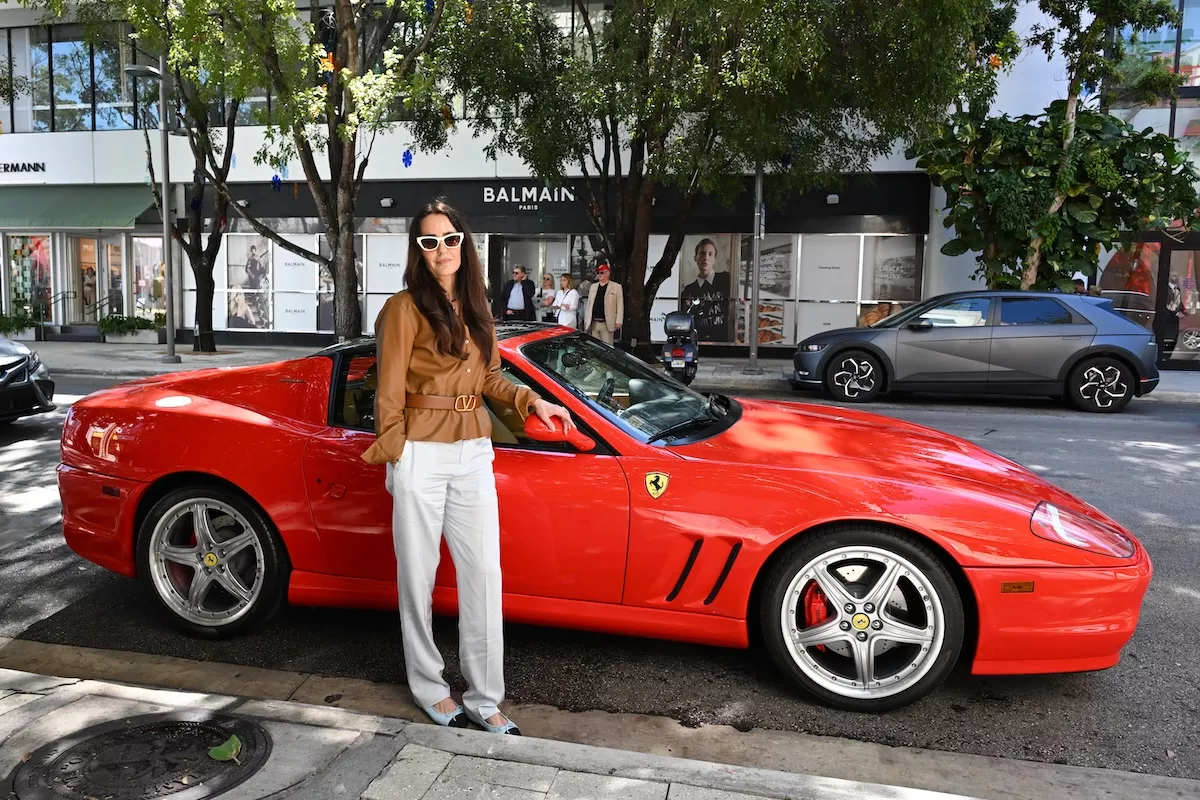
Cash & Rocket, the global philanthropic platform founded in Monaco by Julie Brangstrup, returns to the United States this month for its second American car tour, culminating in a high-profile finale at the Miami Design District on Sunday 26thApril.

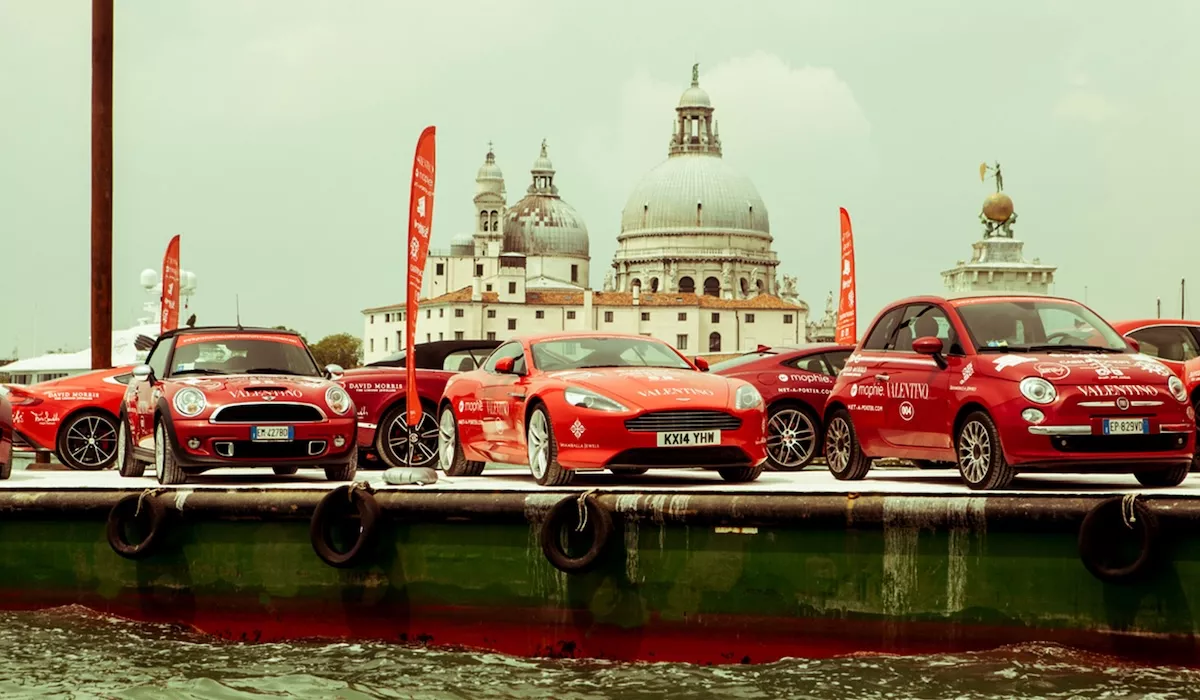
The four-day tour runs from 23rd to 26th April, with an international collective of influential women — spanning entrepreneurs, philanthropists, creatives and public figures — driving 30 luxury sports cars across the American Southeast before arriving in Miami for the closing event. The finale will feature a public car display along 41st Street in the Design District, a curated charity shopping experience and brand activations with partners including Jimmy Choo, Giorgio Armani and Isabella Grutman.

A movement with serious numbers behind it

Since its founding, Cash & Rocket has raised more than $6.6 million and united a global network of more than 2,800 women, including Ashley Graham and Paris Hilton. This year’s US edition supports charities including Style Saves and Sumbandila.

The Miami Design District, an area defined by its convergence of fashion, architecture and public engagement, serves as both the backdrop and a collaborating partner for the finale. According to the organisers, it is a setting that mirrors Cash & Rocket’s own ethos of placing women at the centre of spaces, including automotive culture, that have historically been male-dominated.

The Monaco connection

Cash & Rocket has deep roots in Monaco, where founder Julie Brangstrup built the platform and where the movement’s European editions have taken place. The brand’s expansion into the American market represents a natural extension of a community that has always drawn heavily from Monaco’s international resident base and the global network that gravitates around the Principality each season.

For Monaco Life readers on both sides of the Atlantic, the Miami finale on 26th April is open to the public.

Stay updated with Monaco Life: sign up for our free newsletter, catch our podcast on Spotify, and follow us across Facebook,  InstagramLinkedIn, and Tik Tok.

All photos provided by Cash & Rocket

Formula One makes rule changes to improve racing after difficult start to 2026 season

Formula One’s governing body, the FIA, has agreed a set of rule changes for the 2026 season following concerns about the way the new cars have been performing in the opening three races. Most changes will take effect from the Miami Grand Prix on 3rd May.

The 2026 season introduced a significant overhaul of technical regulations, with cars running a new hybrid power system that gives electric motors a much greater role than before. The changes agreed on 20th April are designed to address problems that have emerged with how that system works in practice.

The core problem

The new hybrid system allows cars to harvest and store electrical energy under braking, then deploy it for extra power on acceleration. In the opening races, drivers have had to manage this energy very carefully, leading to frustrating moments where cars are not running at full power — harvesting energy rather than using it — which has affected the quality of racing and placed a heavy burden on drivers to constantly monitor their energy levels.

What is changing

The FIA has adjusted the energy parameters to reduce the amount of harvesting and allow cars to run flat-out more consistently. Peak electrical power has also been increased, which means cars will spend less time in energy-saving mode. The result should be more straightforward, faster racing with less of the energy management that has complicated matters in the early rounds.

In race conditions, a cap has been placed on the maximum power boost available, preventing sudden and dramatic speed differentials between cars that could make overtaking dangerous rather than exciting.

A new safety system has also been introduced for race starts, designed to detect cars that fail to accelerate normally off the line and automatically provide them with a minimum level of power — reducing the risk of a slow car being hit from behind at the start. Affected cars will also flash warning lights to alert the drivers behind them. This system will be tested in Miami before being formally adopted.

For wet weather racing, tyre temperatures have been adjusted to improve grip on damp surfaces, and electrical power output will be reduced to give drivers more control in slippery conditions. Rear lights have also been simplified to make cars more visible in poor weather.

FIA President Mohammed Ben Sulayem said the speed at which the changes had been agreed reflected the commitment of everyone involved. “Safety and sporting fairness remain the FIA’s highest priorities. We look forward to the rest of what promises to be an exciting 2026 season.”

Stay updated with Monaco Life: sign up for our free newsletter, catch our podcast on Spotify, and follow us across Facebook,  InstagramLinkedIn, and Tik Tok.

Photo of Charles Leclerc driving for Scuderia Ferrari at the Japanese Grand Prix, source: Scuderia Ferrari Media Centre


Artcurial to auction ancient weapons, Egyptian sarcophagi and Islamic art

Artcurial, which maintains a permanent presence in Monaco, will hold two days of auctions in Paris on 11th and 12th May dedicated to archaeology and Oriental art, featuring highlights from two significant private collections alongside a Belgian antiquities collection and a section devoted to Islamic and Indian art.

Monday 11 May sees the second and final part of the collection assembled by Christian Levett, founder of the Musée d’Art Classique de Mougins — the museum that for more than a decade placed ancient artefacts in dialogue with modern masters including Picasso, Warhol, Matisse and Damien Hirst before closing in August 2023. Levett spent two decades building what he describes as once the largest and most celebrated collection of ancient arms and armour in private hands, spanning the kingdom of Urartu through classical Greece to the Roman period.

Highlights include a Greek bronze breastplate from the late seventh to early sixth century BC (estimate €50,000–70,000), a Phrygian-type bronze helmet depicting the mythological figure Scylla from the late classical to early Hellenistic period (€60,000–80,000), a Corinthian-type bronze helmet from late sixth century BC Greece (€50,000–80,000) and an important Roman bronze male head from the third century AD (€50,000–80,000).

“I am very proud to present the final sale of my collection,” Levett said. “Having spent fourteen years on the arms and armour committee of the Metropolitan Museum of Art and eight years on the board of the Ashmolean, I can speak with genuine expertise about the importance and excellence of the pieces presented.”

The Jean-Jacques Rotthier Egyptian collection

Tuesday 12 May opens with the Egyptian antiquities assembled over a lifetime by Jean-Jacques Rotthier (1932–2009), a discreet Belgian collector who lent generously to exhibitions across Europe — from Brussels and Paris to Amsterdam and Venice — without ever seeking recognition. Nearly 70 works covering every period from the predynastic era to the Roman period come to auction seventeen years after his death.

The centrepiece is an exceptional painted wood mummiform coffin and sarcophagus in the name of the Lady Iahtesnakht, from the Saite period, 26th dynasty (664–525 BC), estimated at €120,000–150,000 — completed by a Book of the Dead papyrus held at the University of Cologne. A painted stucco funerary boat model from the Middle Kingdom (estimate €30,000–60,000), chosen to illustrate the cover of the Du Nil à l’Escaut exhibition catalogue, and a rare painted linen shroud from the Roman period (€50,000–80,000) are among the other highlights.

Islamic art and a Belgian private collection

The afternoon of 12 May continues with a Belgian private collection of Mediterranean antiquities including a remarkable Cycladic marble female idol from the Spedos group, dating to 2700–2300 BC (€35,000–40,000). The Islamic and Indian art section features a rare Mughal Quran section from the reign of Aurangzeb (1658–1707), combining floral illuminations and delicate thuluth calligraphy in black and gold (€12,000–15,000), and a Safavid copper-alloy candlestick that once belonged to 19th-century French orientalist Charles Henri Auguste Schefer (€8,000–12,000).

A public exhibition runs from 9 to 11 May at Artcurial’s Paris premises at 7 Rond-Point des Champs-Elysées Marcel Dassault, with viewing by appointment on 12 May.

Stay updated with Monaco Life: sign up for our free newsletter, catch our podcast on Spotify, and follow us across Facebook,  InstagramLinkedIn, and Tik Tok.

Photos source: Artcurial