
Formula One makes rule changes to improve racing after difficult start to 2026 season

Formula One’s governing body, the FIA, has agreed a set of rule changes for the 2026 season following concerns about the way the new cars have been performing in the opening three races. Most changes will take effect from the Miami Grand Prix on 3rd May.

The 2026 season introduced a significant overhaul of technical regulations, with cars running a new hybrid power system that gives electric motors a much greater role than before. The changes agreed on 20th April are designed to address problems that have emerged with how that system works in practice.

The core problem

The new hybrid system allows cars to harvest and store electrical energy under braking, then deploy it for extra power on acceleration. In the opening races, drivers have had to manage this energy very carefully, leading to frustrating moments where cars are not running at full power — harvesting energy rather than using it — which has affected the quality of racing and placed a heavy burden on drivers to constantly monitor their energy levels.

What is changing

The FIA has adjusted the energy parameters to reduce the amount of harvesting and allow cars to run flat-out more consistently. Peak electrical power has also been increased, which means cars will spend less time in energy-saving mode. The result should be more straightforward, faster racing with less of the energy management that has complicated matters in the early rounds.

In race conditions, a cap has been placed on the maximum power boost available, preventing sudden and dramatic speed differentials between cars that could make overtaking dangerous rather than exciting.

A new safety system has also been introduced for race starts, designed to detect cars that fail to accelerate normally off the line and automatically provide them with a minimum level of power — reducing the risk of a slow car being hit from behind at the start. Affected cars will also flash warning lights to alert the drivers behind them. This system will be tested in Miami before being formally adopted.

For wet weather racing, tyre temperatures have been adjusted to improve grip on damp surfaces, and electrical power output will be reduced to give drivers more control in slippery conditions. Rear lights have also been simplified to make cars more visible in poor weather.

FIA President Mohammed Ben Sulayem said the speed at which the changes had been agreed reflected the commitment of everyone involved. “Safety and sporting fairness remain the FIA’s highest priorities. We look forward to the rest of what promises to be an exciting 2026 season.”

Stay updated with Monaco Life: sign up for our free newsletter, catch our podcast on Spotify, and follow us across Facebook,  InstagramLinkedIn, and Tik Tok.

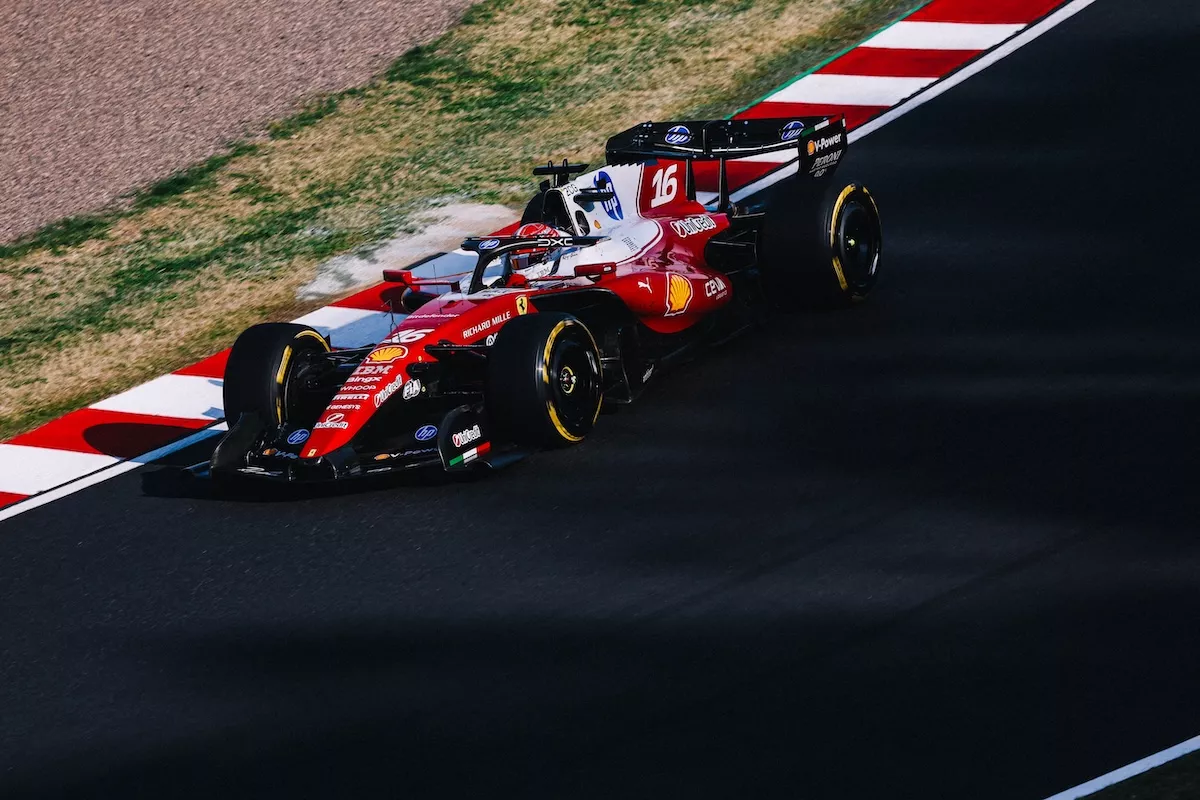
Photo of Charles Leclerc driving for Scuderia Ferrari at the Japanese Grand Prix, source: Scuderia Ferrari Media Centre
 

Artcurial to auction ancient weapons, Egyptian sarcophagi and Islamic art

Artcurial, which maintains a permanent presence in Monaco, will hold two days of auctions in Paris on 11th and 12th May dedicated to archaeology and Oriental art, featuring highlights from two significant private collections alongside a Belgian antiquities collection and a section devoted to Islamic and Indian art.

Monday 11 May sees the second and final part of the collection assembled by Christian Levett, founder of the Musée d’Art Classique de Mougins — the museum that for more than a decade placed ancient artefacts in dialogue with modern masters including Picasso, Warhol, Matisse and Damien Hirst before closing in August 2023. Levett spent two decades building what he describes as once the largest and most celebrated collection of ancient arms and armour in private hands, spanning the kingdom of Urartu through classical Greece to the Roman period.

Highlights include a Greek bronze breastplate from the late seventh to early sixth century BC (estimate €50,000–70,000), a Phrygian-type bronze helmet depicting the mythological figure Scylla from the late classical to early Hellenistic period (€60,000–80,000), a Corinthian-type bronze helmet from late sixth century BC Greece (€50,000–80,000) and an important Roman bronze male head from the third century AD (€50,000–80,000).

“I am very proud to present the final sale of my collection,” Levett said. “Having spent fourteen years on the arms and armour committee of the Metropolitan Museum of Art and eight years on the board of the Ashmolean, I can speak with genuine expertise about the importance and excellence of the pieces presented.”

The Jean-Jacques Rotthier Egyptian collection

Tuesday 12 May opens with the Egyptian antiquities assembled over a lifetime by Jean-Jacques Rotthier (1932–2009), a discreet Belgian collector who lent generously to exhibitions across Europe — from Brussels and Paris to Amsterdam and Venice — without ever seeking recognition. Nearly 70 works covering every period from the predynastic era to the Roman period come to auction seventeen years after his death.

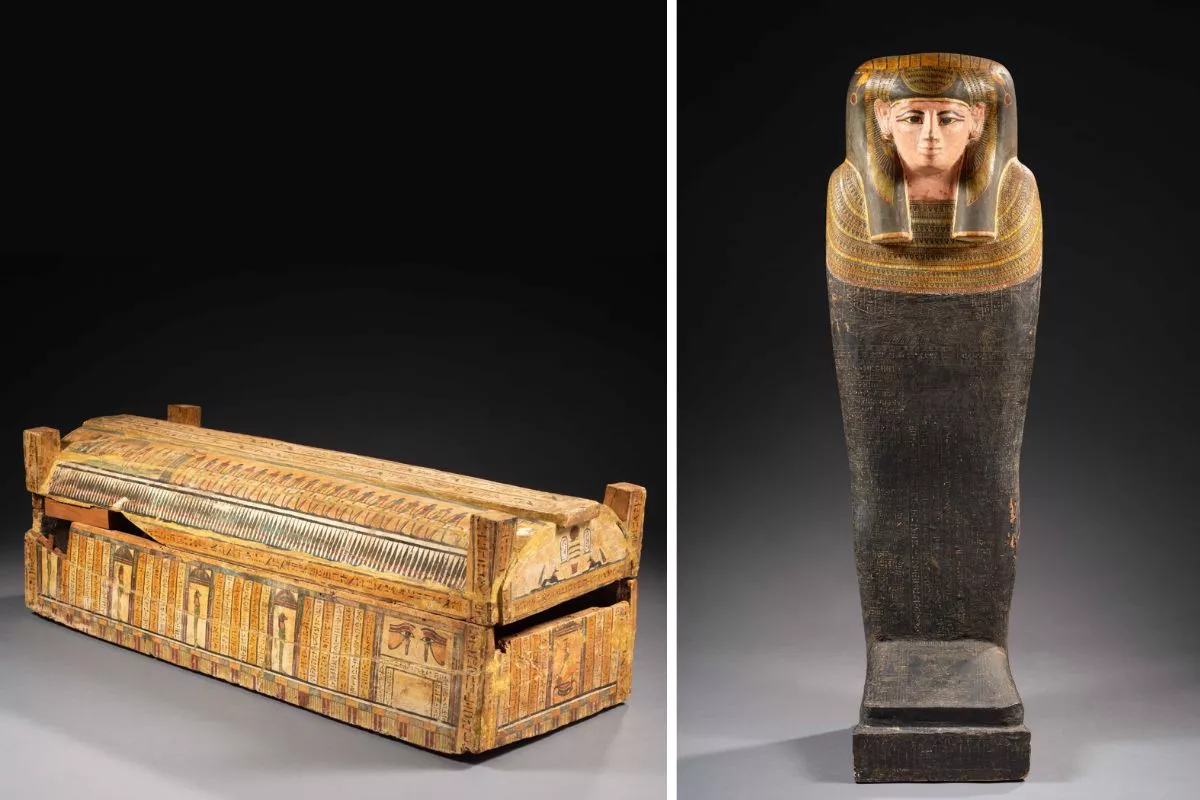
The centrepiece is an exceptional painted wood mummiform coffin and sarcophagus in the name of the Lady Iahtesnakht, from the Saite period, 26th dynasty (664–525 BC), estimated at €120,000–150,000 — completed by a Book of the Dead papyrus held at the University of Cologne. A painted stucco funerary boat model from the Middle Kingdom (estimate €30,000–60,000), chosen to illustrate the cover of the Du Nil à l’Escaut exhibition catalogue, and a rare painted linen shroud from the Roman period (€50,000–80,000) are among the other highlights.

Islamic art and a Belgian private collection

The afternoon of 12 May continues with a Belgian private collection of Mediterranean antiquities including a remarkable Cycladic marble female idol from the Spedos group, dating to 2700–2300 BC (€35,000–40,000). The Islamic and Indian art section features a rare Mughal Quran section from the reign of Aurangzeb (1658–1707), combining floral illuminations and delicate thuluth calligraphy in black and gold (€12,000–15,000), and a Safavid copper-alloy candlestick that once belonged to 19th-century French orientalist Charles Henri Auguste Schefer (€8,000–12,000).

A public exhibition runs from 9 to 11 May at Artcurial’s Paris premises at 7 Rond-Point des Champs-Elysées Marcel Dassault, with viewing by appointment on 12 May.

Stay updated with Monaco Life: sign up for our free newsletter, catch our podcast on Spotify, and follow us across Facebook,  InstagramLinkedIn, and Tik Tok.

Photos source: Artcurial