Monaco Yacht Show gets an overhaul

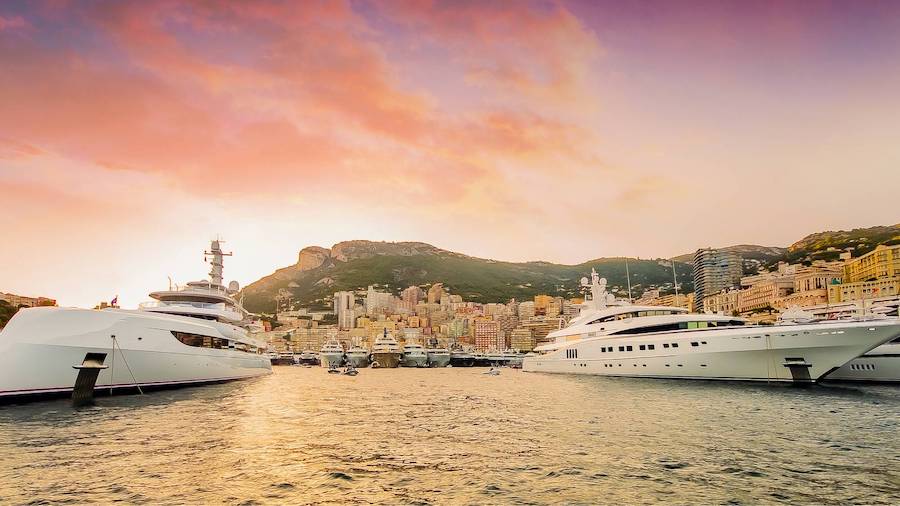
Organisers of this year’s Monaco Yacht Show are betting on a new badge system to better connect visitors and exhibitors and take the flagship event to another level.
After a forced hiatus due to Covid last year, the Informa Group, owner of the Monaco Yacht Show (MYS), says it has made good use of the time and is looking at the yachting industry and where it is headed with fresh eyes.
In a statement released this week, the group says that it has decided to redesign the event to “rise to the commercial and marketing challenges facing the market.”
In order to make the overall experience clearer to visitors and professionals, a new three-category system is being introduced. There will be a Discover badge for yacht clients, an Advise badge for their advisors and consultants, and a Connect badge for trade visitors.
The badges will show the profile of each visitor so that the right people can connect on sight.
Buyers can therefore suss out designers and builders at a glance, whilst their captains and reps can readily find equipment manufacturers, for example.
“On Wednesday 22nd September, the Dockside Area will be open to Discover and Advise badges only, so that these categories of visitor can meet with shipyards, yacht brokers, designers or tender manufacturers in a more intimate and personalised environment,” indicated the organiser in a press statement. “From Thursday onwards, the Dockside Area will be open to all participants.”
The system will help visitor flow and reduce crowd sizes, an important requirement in the current times.
Meanwhile, in an effort to include more personalised experiences, Informa will introduce the ‘Sapphire Experience’, a VIP programme which includes activities at both the show and in the city for superyacht owners, charterers and potential clients.
Another upgrade is being made to the exhibition areas, which will be renamed to make it easier for visitors to find their way around. They are also adding new sections dedicated to innovative projects and trends in sailing, design and exploration, with the idea that the programme will grow over the coming years to include a range of activities that reflect life on board a superyacht.
The group said that it’s main priority is to safeguard the health of participants, therefore it will implement all necessary health measures, guided by its AllSecure programme and health regulations issued by the Monaco’s government.
The Monaco Yacht Show will run from 22nd to 25th September.
 
Photo by MYS


Monaco's own manga powers ahead

The third volume in the Blitz series, the first and only manga produced in Monaco, is hitting stands this Friday.
Created by Monaco-based Shibuya Productions, Blitz entered the exclusive manga realm in 2020, combining the clever world of chess with the phenomenon of Japanese story telling.
Backed by the greatest chess player in history, Garry Kasparov, volume one has sold almost all of the 10,000 copies printed in France – a rare recognition for a new manga series created outside Japan. This edition is now back in print and volume two is barely four months old.
On Friday 26th February, volume three will hit the stands, and Cédric Biscay, Daitaro Nishihara and Tsukasa Mori have promised some exciting new additions.
In this new opus, chess games are redoubled in intensity. The reader finds themself transposed on a real battlefield where each player makes move for move. The heroes are confronted with strong personalities which challenge their nerves and their concentration.
Monaco’s famous landmark, the Monte-Carlo Casino, makes an appearance and readers are drawn into the Zen method of meditation by the great Japanese master Sosho Yamada, which will be very useful to the Blitze heroes during their adventures.
Meanwhile, new text by intuition specialist Alexis Champion gives the keys to better understand the phenomena present in the manga and which often occur in the real world.
“Blitz always aims to democratise chess by offering ambitious entertainment for everybody. Volume three is a new step in this direction,” said Cédric Biscay, founder of Shibuya Productions.
 
Related stories:

Interview: Cédric Biscay, CEO Shibuya Productions

Interview: Blitz 2 creator Cedric Biscay


Will you accept the challenge?

British world-record holding long-distance runner Paula Radcliffe is challenging the students of Monaco and their families to practice a minimum of 15 minutes physical activity per day for the Two-15 Challenge.
Paula Radcliffe devoted her life to sport, being a three time winner of the London Marathon, a three time winner of the New York Marathon, and a one time winner of the Chicago Marathon over her long-distance running career.
Now she is challenging young people and their families in Monaco to follow her lead and get active over the school holidays with the Two-15 Challenge.
The programme, a coordinated effort between Radcliffe, the Princess Charlene of Monaco Foundation and the Department of National Education, Youth and Sport (DENJS), is a two-week event aimed at getting kids and their loved ones moving.
She had been hosting these events all over Britain when she caught the eye of Princess Charlene, a world-class athlete in her own right. On her Instagram page, Radcliffe shared her delight in having crossed borders to have Monaco interested in being included in her endeavour.
“We are excited to announce that you all did such an amazing job with the Two-15 Challenge that you have inspired others,” she said. “Families on Track are travelling virtually to Monaco to support school children and their families in association with the Princess Charlene of Monaco Foundation for their own Two-15 Challenge.”
The name Two-15 is a nod to Radcliffe’s world record marathon time of two hours, 15 minutes and 25 seconds, which went unbroken for 16 years.
The idea is to encourage students and families to engage in a minimum of 15 minutes of physical activity together every day of the two-week winter half term break. The goal is to offer families “the opportunity to engage in fun activities in complete safety.”


Monaco’s undefeated streak continues

AS Monaco soundly beat last year’s reigning champs and one of their biggest rivals, Paris Saint-Germain, two to nil in an away game at Parc des Princes on Sunday. 
The Red and Whites faced off against powerhouse team Paris Saint-Germain on Sunday in a much-anticipated game that has solidified Monaco’s status as one of this season’s teams to beat.
Coach Niko Kovac put all the biggest guns on the field, with a line-up that included Wissam Ben Yedder, Kevin Volland, Sofiane Diop, Axel Disani and Ruben Aguilar.
The match couldn’t have started off much better for Monaco with Diop scoring the opening goal at only six minutes in. He planted a magnificent header right between the posts, scoring his sixth goal this year and surprising PSG, who had not conceded a goal this early in the game once this season.
This was the only goal scored in the entire first half, with only a few close calls for both sides. One was a free header made by Disani, handily blocked by Paris goalkeeper Keylor Navas, and another by PSG striker Idrissa Gueye, which was a close-but-no-cigar shot handled brilliantly by Benjamin Lecomte.
After halftime, both sides kept things under control for the first few minutes, but at the 53 minute mark, Guillermo Maripán picked up a loose ball and knocked it into the bottom corner of the net, putting Monaco in a comfortable two to nothing lead.
Paris has not seen a two point deficit since 15th February 2020, so needless to say they were a bit rattled. Couple this was a strong showing by the Red and White’s defence and it was Monaco’s match for the taking.
The win leaves Monaco in the enviable position of remaining undefeated in 2021. Though they are still in fourth place in the standings, they are solidly there, being 12 points ahead of the fifth place team, Lens. This match also dropped PSG to third, putting them only two points and spitting distance ahead of ASM, with league-topping Lille only four points ahead.
“It’s very tight and interesting for everyone,” said Coach Kovac. “I hope it will continue like this until the end of the season, it’s exciting. It is in the interest of Ligue 1, because there is not only one team that is dominating the league.”
 
Monaco Life with AS Monaco press release, photo by AS Monaco


Monaco’s most famous hotel receives 2nd five-star rating

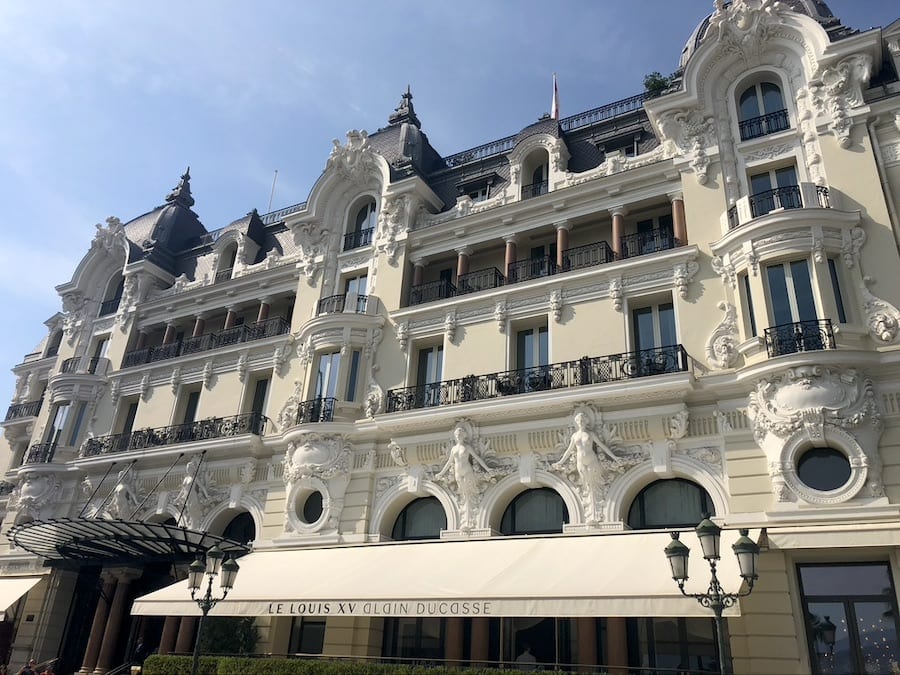
The Hôtel de Paris has been given a five-star rating for the second year in a row by the prestigious Forbes Travel Guide’s Star Awards, another nod to the hotel’s €600 million makeover.
Forbes Travel Guide is the only independent, global rating system for luxury hotels, restaurants and spas and it has just released its 2021 Star Awards, giving Covid-weary would-be travellers something to look forward to.
And the Hôtel de Paris, a local landmark with a pedigree to match, has made the cut for the second year in a row.
The hotel has accommodated the rich and famous for more than 150 years, hosting myriad events including Prince Rainier III and Princess Grace’s wedding dinner.
In 2014, the hotel underwent a major renovation, costing €600 million and taking four years to complete. The modernised version was just as resplendent as the former, with Architect Richard Martinet’s tree-lined open-air courtyard, new rooftop villas and a second Alain Ducasse restaurant.
The upgraded hotel put the grande dame back on the radar of many, including the Forbes Travel Guide, which sends inspectors to stay at a hotel for three days and two nights. The inspectors are anonymous, they pay their own way and do not alert the staff of who they are.
They have a 900-strong list of standards they check for, as diverse as health-conscious meal choices, quality interior decoration and staff uniform design. Above all, though, they look for customer service, constituting 75% of a hotel’s rating, while 25% is based on the facilities.
The Hôtel de Paris was given the highest rating, five stars, for its exceptionality.
The 63rd annual list features 283 Five-Star, 576 Four-Star and 438 Recommended hotels; 73 Five-Star, 136 Four-Star and 77 Recommended restaurants; and 90 Five-Star and 200 Four-Star spas worldwide.
 
Photo by Cassandra Tanti for Monaco Life, all rights reserved


Understanding bitcoin and the great crypto boom

In our Q&A with Daniel Coheur, co-founder of Tokeny in Monaco, we explore what is behind the monumental rise of bitcoin and the paradigm shift from centralised to decentralised finance.

What a difference a year makes. Less than 12 months ago, bitcoin was sitting at $3,000 and everyone was looking forward to a normal year ahead.

Enter Covid-19 and the digital currency breaks into a bull run, spawning a new community of retail investors who have a lot of free time on their hands.

All of a sudden Michael Saylor, MicroStrategy chief executive officer, is calling bitcoin “digital gold” and “the scarcest asset in the world”; the planet’s richest man, Elon Musk, makes waves with Tesla’s announcement that it bought $1.5 billion of bitcoin; and traders analysts say institution investment is happening “at a staggering pace”.

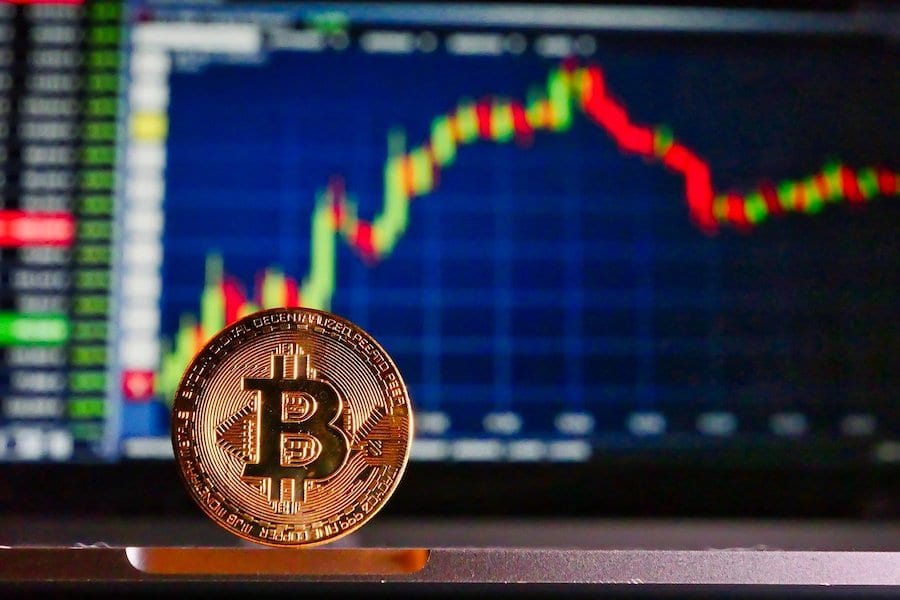
Bitcoin hit its all-time high of $50K on Tuesday and the digital asset continues to make inroads into traditional finance, including news that an investment unit of Morgan Stanley is considering whether to bet on bitcoin.

So, what is this great crypto boom?

Well, there is a saying in the digital community that “You don’t get crypto, until you do”. To help explain the phenomenon, Monaco Life spoke to Daniel Coheur, co-founder and Chief Commercial Officer of Tokeny, a digital solutions company that the Monaco government has entrusted with securing its blockchain finance platform.

Monaco Life: How would you describe what has happened over the past six to 12 months with regards to bitcoin?

Daniel Coheur: When you have something like bitcoin that is not is backed by government, then trust becomes essential.

There may have been a very active community of people who believed in the technology and its potential as a future store of value by excellence next to gold, but there was no signal from the main actor of this ecosystem that it was the case.

The regulator helped significantly by allowing hedge funds to start investing, but that went largely unnoticed.

Then came people who were “visible”. The first to really take a stand was Michael Saylor, founder of MicroStrategy, who said that his company was going to buy bitcoin. Today, they have more than $3 billion US in bitcoin, so that certainly pushed things ahead.

Then Laurence Fink from BlackRock said that bitcoin could become an equivalent store of value as gold. Blackrock has $8 billion under management, so if those guys say that, it really means something. Not only BlackRock, but hedge funds in general were saying: “Ok, now we should invest.” Then, Elon Musk brought $1.5 billion bitcoin with Tesla.

It is what people needed to see – that the world’s biggest institutions were getting involved.
Meanwhile, according to the Bank of America, Americans are sitting on $1.6 trillion of spare cash, having not been able to spend money due to Covid-19 and the lockdowns. In the UK, household savings of typically $5 billion are now over $20 billion. With time on their hands and cash to play with, more people have been investing in cryptos.

So, the number of transactions began increasing, as well as the number of accounts. The number of individual Ethereum wallets has grown from 34 million at the beginning of 2020 to over 51 million at the end of 2020.

Last but not least, Decentralised Finance (DeFi) really pushed this forward by providing a means to show how the technology could be used and how, based on those crypto assets, you could make even more money than on the speculative side of investing.

So, I think all of this has been pushing the market to realise that this is not something that will disappear, and everyone that was passive is now looking to invest. That is what has been driving the price of bitcoin.

Where do you see bitcoin going this year?

If it is indeed becoming a store of value that is comparable to gold (people have been claiming that it will reach $200,000 by the end of 2021), is that the limit?

There is a reality that the market can’t ignore: unlike the euro or dollar, you cannot mine bitcoin forever. There is a limited amount of bitcoin and that is a certainty – there is nothing you can do about it.

Canada has approved the first North American Bitcoin exchange-traded fund, Deutsche Bank is planning to offer crypto custody to hedge funds that invest in the asset class, BNY Mellon will roll out its own digital custody unit, and Morgan Stanley Investment Management is exploring whether bitcoin would be a suitable option for its investors. Is there still a place for retail traders in bitcoin and do you see it becoming mainstream?

What is important to remember is that all of these companies are involved in blockchain projects. Besides the value that they place on the currency itself, they have developed a good understanding of the technology. Until recently, institutional investors had no industry grade digital custody solutions. Now, your banker can buy bitcoins or digital securities and have solutions delivered by companies like BitGo, Metaco or Pyctor to safely custody them. The technology risk has been overcome and its simplicity is being made available to investors.

There is a lot of proof of concept that is being run not only to use bitcoins but to understand how, with this technology, banks can upgrade their current infrastructure. The perception of technology is not a barrier of entry for them anymore.

Michael Saylor famously said it first, and Jim Cramer, host of Mad Money on CNBC, repeated it recently, that it would be “irresponsible” for hedge fund managers and companies not to own bitcoin. Do you agree with that statement?

Every financial product has an associated risk, which is driven by the profile of investors – you sign-up, you identity your risk profile, and then you invest according to that.
What would be irresponsible is if you have customers that are willing to take that risk and you are not able to offer them the option.

What is the difference between bitcoin and other cryptocurrencies?
Bitcoin signaled the emergence of a radically new form of digital money that operates outside the control of any government or corporation. With time, people began to realise that one of the underlying innovations of bitcoin, the blockchain, could be utilised for other purposes. Ethereum proposed to utilise blockchain technology not only for maintaining a decentralised payment network but to power decentralised finance. Ethereum applications and contracts are powered by ether, the Ethereum network’s currency, which is now the second largest cryptocurrency by market capitalisation.

It is a different perspective with regards to investing in ether versus bitcoin, because they each serve a very different purpose. For a currency that is considered a store of value, it depends on how much trust people put into those currencies, while for other altcoins that are pouring into infrastructure, it depends on how much potential you see in that infrastructure and what the limitations are behind it.

It takes around 10 minutes of computer time to “mine” one bitcoin. That’s equivalent to 72,000GW of electricity. Energy usage is therefore one of cryptocurrencies’ biggest negatives. How do you see this problem being solved in the future?

It is not something that will change with bitcoin because that is simply the way it operates.
However, Ethereum – which is the dominant public blockchain to power financial transactions – is moving from proof of work to proof of stake, and this will address the issue. Ethereum is not the only one doing this, there are other blockchains gaining in popularity that are using the same kind of consensus mechanism. Polkadot is one that is progressing critically fast. Speed and energy consumption are driving the adoption of the technology as an infrastructure, and when you know that there are 300,000 developers working Ethereum, you understand that this is just a matter of time.

Do you see blockchain changing the future of finance?

What makes blockchain unique is trust, so it will definitely change market infrastructures. Without trust, you need third parties to manage your counterparty risk, a custodian to preserve the integrity of your assets, etc. Very soon, we will no longer see blockchain only as a store of value for bitcoin. Blockchain will be behind every transfer of value. Right now, that is money, but it will soon be anything carrying value – like art, property, or a car, starting of course with securities.
Blockchain and smart contracts will be mainstream in the future and everybody will use it without even noticing. It will be like email is today – no one cares what protocol is behind it, they are only confronted with it when their laptop crashes and they have to reinstall their email.

Where does Monaco sit in this digital paradigm shift?
There has been a lot of work from the National Council and the Government to provide the regulatory framework for Monaco to position itself within this technology. There is the law that was published last year on STOs, and now there is a proposal from the National Council to allow the digital registration on a shared ledger of unlisted company securities. Tokeny has the technology to power that kind of solution; once the share registry is digitised then you can introduce many other services such as online voting. It will also facilitate the transfer of shares and make the process more transparent and more in line with international regulations.

But this is one element of a much bigger picture that Frédéric Genta is overseeing through Extended Monaco and the digitalisation of the economy.
Everything that can be digitalised, will be digitalised, because Monaco wants to be running at the front of the pack.

Related stories:
Monaco advances its digital finance strategy
Daniel Coheur: “Our ambition is to protect Monaco’s reputation”
Prince: Digital is the turning point in Monaco’s history

Photo source: Pixabay