Monaco lose control late in 87-83 defeat to ASVEL

A limited rotation and second-quarter ejection disrupted Monaco’s rhythm as ASVEL capitalised late to secure the win.

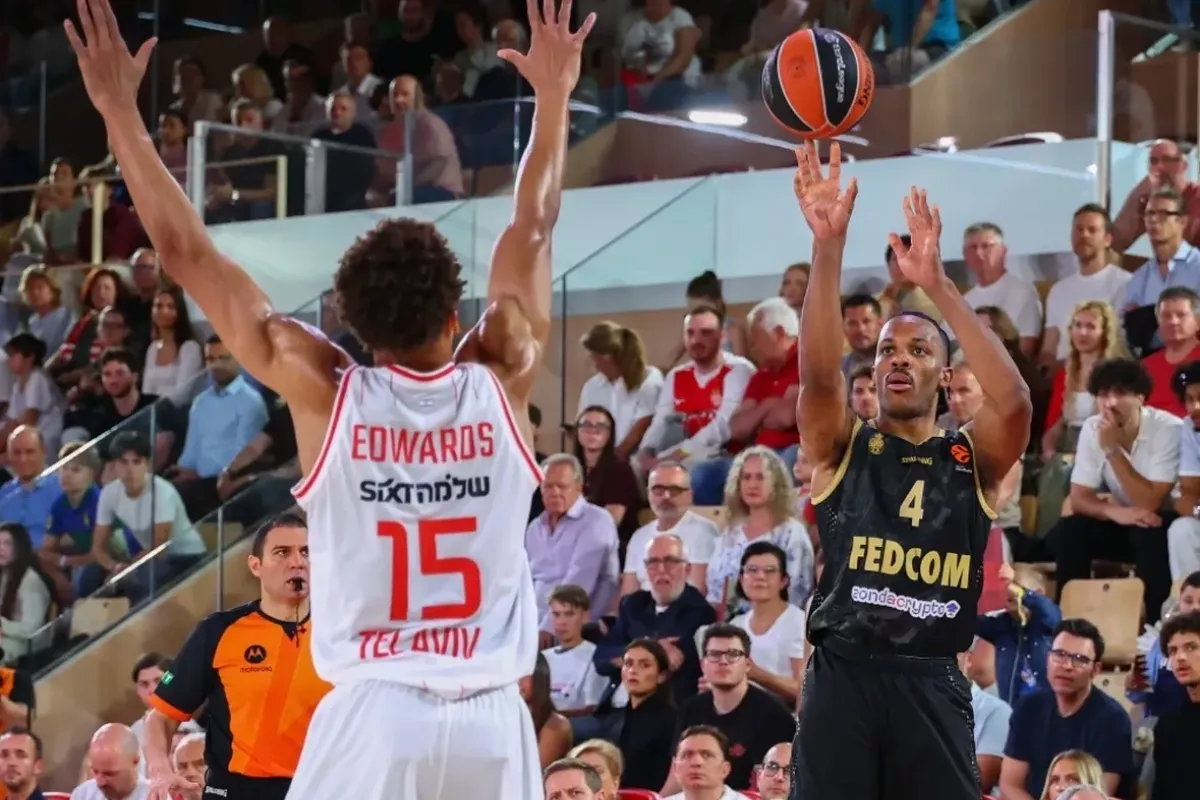
Following their recent EuroLeague victory, AS Monaco Basket faced LDLC ASVEL in a Betclic Elite matchup on Sunday 19th April, where they were upset 87-83. Operating with an eight-man bench, the team featured only five professionals alongside three from Monaco’s Espoirs, a situation further impacted when Mike James was ejected due to two technical fouls in the second quarter.

The arena did not hold back its opinion as fans erupted in protest over James’ ejection, alongside many other calls (or lack thereof). Although Monaco did not show up with the same cohesion and shooting efficiency as their last match, they were able to maintain a lead over ASVEL until the final minute of the third quarter, where ASVEL tied Monaco and took a one-point lead heading into the fourth.

From that point, the game shifted. Once ASVEL found their momentum, they continued to capitalize, with Shaquille Harrison recording 23 points for his team. Having only seven players available, four of which were professionals, ultimately proved costly. Despite moments of promise, ASVEL pulled away to secure the victory. Alpha Diallo led Monaco with 26 points, alongside Mantas Laurencikas who contributed 7 points, 4 rebounds, and 5 assists on his debut.

Although they may not have won the match, the support from the arena was notable. The team received a standing ovation, with fans believing they had put up a strong fight despite difficult officiating circumstances.

With an important play-in EuroLeague match on Tuesday, it is pivotal that Monaco’s injured players be recovered and ready to perform, and that the team can realign and play as a unit moving forward.

Stay updated with Monaco Life: sign up for our free newsletter, catch our podcast on Spotify, and follow us across Facebook,  InstagramLinkedIn, and Tik Tok.

Photo source: AS Monaco Basket


AS Monaco Rugby extend winning run as youth camp highlights club spirit

AS Monaco Rugby delivered a strong weekend across all levels, with senior teams securing victories and youth players taking part in a team-building camp at the Lérins Islands.

AS Monaco Rugby’s seniors continued a positive run with two important wins against Stade Union Cavaillonnais, showcasing both squad depth and cohesion.

The Espoirs were pushed in a tightly contested battle, remaining neck-and-neck with their opponents for much of the match. It was only in the final ten minutes that Monaco managed to break away, securing a well-earned 22-18 victory.

The first team, however, controlled their match from the beginning. Monaco showed up focused and dictated the rhythm of the match, ultimately securing their victory and strengthening their position at the top of the standings with a 30-13 win.

Beyond the senior success, the weekend also highlighted the club’s continued investment in its next generation of athletes.

Youth players had the opportunity to travel to the Lérins Islands for a team-building camp focused on rugby development, teamwork, and shared experiences. More than drills and match play, the camp highlighted the energy and connection among the youth as they develop both on and off the field.

Stay updated with Monaco Life: sign up for our free newsletter, catch our podcast on Spotify, and follow us across Facebook,  InstagramLinkedIn, and Tik Tok.

Photo source: AS Monaco Rugby

Monaco issues warning to drivers ahead of Top Marques and Grand Prix

Monaco has a message for the owners of high-powered vehicles planning to make their presence felt during Top Marques and the Formula 1 Grand Prix: get caught breaking the highway code and your car goes nowhere for five days.

The Government has announced that immediate 120-hour vehicle immobilisation will once again apply to any road traffic offence committed during Top Marques Monaco, running from 6th to 10th May, and the 83rd Formula 1 Louis Vuitton Grand Prix de Monaco, from 4th to 7th June.

The measures are a direct response to a pattern the government has identified around both events — unauthorised gatherings of sports cars that spill onto public roads and, all too often, generate dangerous driving, traffic violations and noise disturbance for residents. The gatherings are typically spontaneous and unplanned, which has historically made them difficult to police. The extended immobilisation period, already used at previous editions of both events, is designed to sharpen the deterrent considerably.

Stay updated with Monaco Life: sign up for our free newsletter, catch our podcast on Spotify, and follow us across Facebook,  InstagramLinkedIn, and Tik Tok.

Photo by Monaco Life

Monaco’s Mairie invites applications for summer food stalls and children’s attractions

Larvotto monaco

Monaco’s Mairie has launched a call for applications for its 2026 summer animation programme, offering spaces for food chalets, private food structures and children’s rides or attractions at two locations across the Principality.

Available sites are Place Anne-Marie Campora at Larvotto, running from Friday 3rd July to Sunday 16th August, and Quai Albert Ier, with two zones available: the northern zone from Friday 10th July to Sunday 9th August, and the southern zone and forecourt from Friday 24th July to Sunday 9th August.

Application dossiers are available at mairie.mc. Completed applications must be submitted to animation@mairie.mc by Wednesday 29th April.

Stay updated with Monaco Life: sign up for our free newsletter, catch our podcast on Spotify, and follow us across Facebook,  InstagramLinkedIn, and Tik Tok.

Photo credit: Cassandra Tanti

Football: Monaco salvage draw but pass up golden chance in Champions League race

Simon Adingra cuts back under the sun at the Stade Louis II as Monaco are held by Auxerre

AS Monaco came from two goals down to secure a 2-2 draw against Auxerre, but after their competitors for Champions League football slipped up, Sébastien Pocognoli’s side missed a golden opportunity.

The worst was avoided, but Monaco left the Stade Louis II with regrets on Sunday afternoon. “Is the glass half empty or half full? We’ll judge at the end of the season. But it is a match that mirrors our season more globally: we’re reacting,” reacted Sébastien Pocognoli. You also wonder how Claude Puel views the result. The former Monaco manager was in attendance as the club celebrated 50 years of their renowned academy. Now manager of fierce rivals OGC Nice, who took a point off Lille on Saturday, his side are being chased by Auxerre, who themselves are hot on their heels in the fight to remain in Ligue 1.

Like Pocognoli, he wouldn’t have enjoyed the first half. Monaco started with intent but came up against a solid and compact block. Chances were always likely to be limited for Auxerre. But when they came, they were taken. Kévin Danois finished spectacularly, tracking a looping ball onto his right foot and volleying brilliantly from the outside of the box. The response from Monaco was not marked, and the task was made more difficult on the half-hour mark when Lassine Sinayoko, after a game of pinball on the edge of Les Monégasques’ box, finished first-time on the volley.

Monaco emerge for second half with “more pronounced mindset”

Monaco were down but not out, and it wouldn’t prove to be the knockout blow for a side that were looking to bounce back from last weekend’s 4-1 humbling at the hands of Paris FC. The reaction, however, was not immediate and the boos that accompanied the Monaco player’s trundle back to the dressing room were no surprise. Pocongoli has previously said that he only shouts when he feels it absolutely necessary. “It is the first time that, at half-time, I was very disappointed,” said Pocognoli. “He said what needed to be said,” added Wout Faes. Whatever was said or whatever the tone, it had an effect.

Granted, the introduction of Simon Adingra at the break, at the expense of Aladji Bamba, had its own effect, but for Pocognoli, it didn’t “explain the turnaround.” The Monaco manager added, “I think there was a more ‘pronounced’ [positive] mindset [in the second-half]. I wanted a reaction and it was a very good second half.”

Adingra provided the width on the left that gave Jordan Teze the space to curl a shot on target and truly test Donovan Léon for the first time. He couldn’t do anything about Ansu Fati’s right-footed effort minutes later. The deficit halved, something of a frenzy ensued. Three minutes later and Monaco were level thanks to Folarin Balogun, who, having been downed by Léon in the box, got up and blasted his penalty down the middle. The USMNT forward then thought he had given the home side the lead, only for the offside flag to cut short the celebrations, and all the while, Auxerre continued to look dangerous on the break.

Monaco – not exactly a flat-track bully

Bar his spectacular goal, Sinayoko was wasteful, and Monaco will be thankful for that. Found unmarked inside the box, he had time and space to restore Auxerre’s lead, but could only put a tepid effort right at Hradecky. Some intelligent game management allowed the storm to pass and Monaco could not build up a head of steam as they searched for the late winner.

After Lille and Marseille both dropped points on Saturday, Monaco saw a golden opportunity to cut the gap pass them by. “It is a shame because we had the chance to be the beneficiaries of those results. If we want to challenge them, we have to take our chances. That will be decisive. Everything will have to align for us to have a finish to the season in line with our ambitions,” said Pocognoli.

Monaco will now hit the road, with games away to Toulouse and Metz, matches certainly winnable on paper… but so was this match against Auxerre and the one last weekend against Paris FC. Ultimately, however, the Principality club took just one point from these matches, compared to the six that they took against Marseille and Lyon in the two previous gameweeks. ASM conclude the season against two European challengers in the form of Lille and Strasbourg. It is not just by beating those around them that they will secure Champions League qualification for next season.


Stay updated with Monaco Life: sign up for our free newsletter, catch our podcast on Spotify, and follow us across Facebook,  InstagramLinkedIn, and Tik Tok.

Photo source: AS Monaco

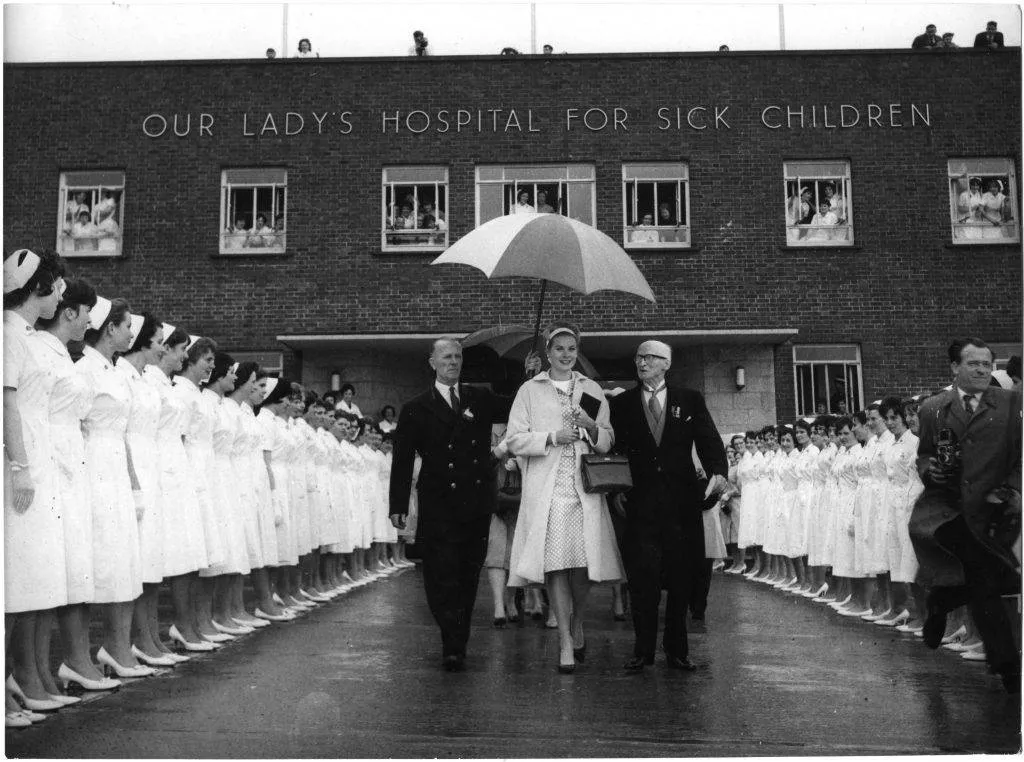
The wedding that made Monaco: 70 years since Grace Kelly became a princess

Seventy years ago this weekend, a 26-year-old Oscar-winning actress from Philadelphia became one of the most famous women in the world. The wedding of Prince Rainier III and Grace Kelly on 18th and 19th April 1956 was not simply a marriage — it was a moment that changed Monaco permanently, invented the template for modern royal media spectacle, and produced an image of the Principality that endures to this day.

Monaco Life marks the anniversary by tracing the love story from its unlikely beginning to the ceremony that stopped the world.

How it began

The meeting that started everything was not especially romantic in its origins. In May 1955, during the Cannes Film Festival, a Paris Match journalist arranged for Grace Kelly — then in Cannes to promote Alfred Hitchcock’s ‘To Catch a Thief’ — to visit the palace for a photo opportunity with Prince Rainier III. The encounter was nearly called off entirely: a power cut at Grace Kelly’s hotel left her unable to do her hair or press an outfit, and the party arrived late after a minor road accident on the way.

What followed was captured by Irish photographer Edward Quinn, who had accompanied the group and sensed immediately that the atmosphere between the two was unexpectedly charged. Both were shy, initially at a loss for words. Quinn suggested they move to the palace gardens for better light. The prince showed his guest his private zoo. She stroked a tiger. By the time Grace Kelly was driven back to Cannes, her only remark was: “He is charming, charming”.

A year of letters followed — a private, largely undocumented courtship conducted across the Atlantic. Rainier sailed to the United States and proposed in Philadelphia in January 1956. She accepted. The world, when it found out, could barely contain itself.

Photo: Getty Images

The arrival

Grace Kelly sailed from New York to Monaco aboard the SS Constitution, accompanied by 80 pieces of luggage, members of her family, a contingent of press, and her beloved poodle Oliver. The arrival in Monaco’s harbour was itself a spectacle — crowds lined the shore, boats surrounded the ship, and cameras recorded every moment. It was staged, whether deliberately or not, with all the theatricality of a film premiere. Aristotle Onassis had sent his yacht to escort her in.

For the Principality, it was a portent of what was coming. Monaco, at the time, was a small and relatively quiet enclave on the French Riviera, known for its casino and its clement weather. It was about to become something else entirely.

Prince Rainier III married Grace Kelly in a civil ceremony at the Palace Throne Room on 18th April 1956. Photo credit: Bettmann / Getty Images

Two ceremonies, one legend

The civil ceremony took place on 18th April in the Throne Room of the Prince’s Palace. It lasted around 40 minutes and was conducted twice — once privately and once for the cameras. Upon signing the register, Grace Kelly acquired 142 royal titles. She was now, formally, Her Serene Highness Princess Grace of Monaco.

The religious ceremony on 19th April at Saint Nicholas Cathedral is the one that entered history. Around 700 guests filled the cathedral, among them Cary Grant, Ava Gardner, David Niven and Aristotle Onassis. Frank Sinatra, invited but mindful that his presence might overshadow the occasion, declined to attend.

The religious wedding ceremony was held at Monaco’s Cathedral the following day on 19th April 1956. Photo credit: Thomas D. McAvoy—The LIFE Picture Collection/Getty Images

Bishop Gilles Barthe officiated, and a congratulatory message from the Pope was read at the close of the service. Outside, approximately 3,000 Monegasques joined the celebrations. Around the world, some 30 million television viewers watched via nine networks, broadcast through Eurovision and MGM.

The wedding presents that poured in ranged from the fabulous to the absurd — among the more practical, a Rolls-Royce; among the less useful, a gold and bone hatchet. When the ceremony was over, Rainier and Grace drove through Monte-Carlo in an open-top car, greeting the crowds in what felt less like a civic procession and more like the final scene of a film.

It was, as one historian later described it, the first modern event to generate media overkill — and the blueprint for every royal media spectacle that followed, decades before Diana, before Kate, before any of the weddings that would claim the same superlatives.

Photo: Getty Images

The dress

Helen Rose, MGM’s head costume designer, spent six weeks and the labour of between 30 and 35 seamstresses creating the gown that Grace Kelly wore to the cathedral. It was made from silk taffeta and antique lace, sewn with thousands of hand-applied pearls, with a high neckline, long lace sleeves and a train of more than 10 feet. Instead of a tiara, Kelly chose a Juliet cap. Her bouquet was lilies of the valley.

The dress has never been bettered as an object of bridal influence. Its echoes appeared decades later in the gown Catherine Middleton wore to Westminster Abbey in 2011. It is currently valued at close to $800,000 and remains one of the most studied garments in fashion history.

Photo source: Palace Archives – Institut Audiovisuel de Monaco

The deal behind the fairy tale

The wedding was not only a romance. Grace Kelly’s family paid a dowry of $2 million, a transaction widely reported at the time and framed variously as extraordinary generosity or the price of a title. MGM financed elements of the occasion, including the dress and the broadcast rights. Prince Rainier III, for his part, was acutely aware that Monaco needed what Grace Kelly could bring: international attention, glamour, and the kind of soft power that no amount of casino revenue could purchase.

It worked. Tourism to Monaco increased significantly in the years that followed. The Principality’s identity as a destination for the global wealthy — a place where luxury and spectacle were not incidental but definitional — was cemented in those two April days in 1956 in ways that have never been undone.

The honeymoon was a seven-week Mediterranean cruise aboard the Deo Juvante II, a yacht gifted to the couple by Aristotle Onassis.

Photo source: Palace Archives – Institut Audiovisuel de Monaco

What it made of Monaco

The transformation was not immediate but it was irreversible. Grace Kelly brought to Monaco not only celebrity but genuine cultural seriousness: she founded the Garden Club, championed the arts, and used the platform of her position with a conviction that outlasted her own lifetime. She died in September 1982 following a car accident on the road above Monaco. She was 52. Prince Rainier III died in 2005.

Their three children — Princess Caroline, Prince Albert II and Princess Stéphanie — each carry something of both parents into the present.

Seventy years on, the images remain startling in their clarity: the ship in the harbour, the cathedral, the dress, the crowds. A small principality that had been largely overlooked by history suddenly at the centre of the world’s attention — and never quite leaving it since.

Stay updated with Monaco Life: sign up for our free newsletter, catch our podcast on Spotify, and follow us across Facebook,  InstagramLinkedIn, and Tik Tok.