
Monaco employment figures: key trends for 2025

Monaco’s labour market closed the year on a slight downturn, with total employment reaching 77,866 jobs, according to IMSEE’s latest Employment Observatory. The figure represents a 0.7% decrease over the year, driven primarily by a slowdown in the private sector, while public employment continued to expand.

Despite this short-term adjustment, the broader trajectory remains firmly upward. Over the past decade, employment in the Principality has increased by 27.6%, underlining the continued resilience of Monaco’s economy.

Private sector normalises after construction peak

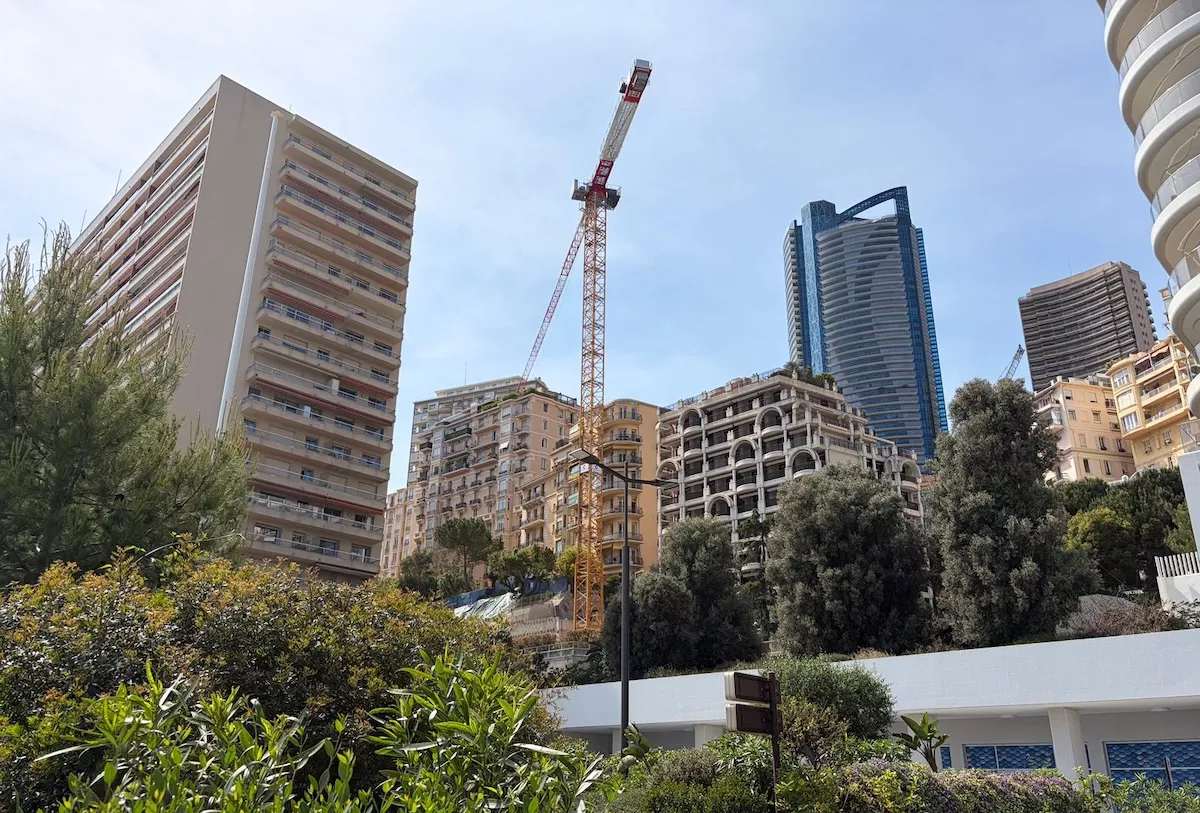
The private sector remains overwhelmingly dominant, accounting for 64,770 salaried jobs—more than 92% of all employees. However, it recorded a 1.3% decline over the year, largely linked to a slowdown in the construction sector following the completion of major development projects.

This cooling effect was not fully offset by gains in other industries, even as Monaco’s service-based economy continued to show relative strength. The tertiary sector still represents the backbone of employment, particularly administrative and support services, accommodation and food services, and retail activity.

Administrative and support services remain the largest employer within the private sector, followed closely by hospitality, which continues to expand, while construction has seen a clear contraction after several years of intense activity.

Public sector continues steady expansion

In contrast, the public sector maintained its upward trajectory, reaching 5,393 employees, an increase of around 3% over the year.

Growth was particularly visible across government administration, education, and healthcare-related services, reinforcing their role as stable and structural pillars of Monaco’s employment model.

This divergence between private consolidation and public expansion is not unusual in mature, high-employment economies. IMSEE highlights that such patterns often reflect cyclical adjustments in private activity, balanced by steady institutional growth and continued investment in public services.

A structurally balanced labour market

Beyond short-term fluctuations, Monaco’s employment landscape remains highly structured and stable.

The Principality continues to rely heavily on cross-border labour, with the vast majority of private sector employees commuting daily from France. At the same time, the share of public sector employment remains comparatively small but stable within the overall labour mix.

Teleworking has also become a more established feature of the labour market, reflecting broader changes in working patterns across Monaco’s workforce.

Outlook

While the latest figures confirm a period of moderation in private sector activity, the underlying fundamentals remain strong. Employment levels are near historic highs, and long-term growth continues to define Monaco’s labour market.

Stay updated with Monaco Life: sign up for our free newsletter, catch our podcast on Spotify, and follow us across Facebook,  InstagramLinkedIn, and Tik Tok.

Photo by Virginia D’Umas

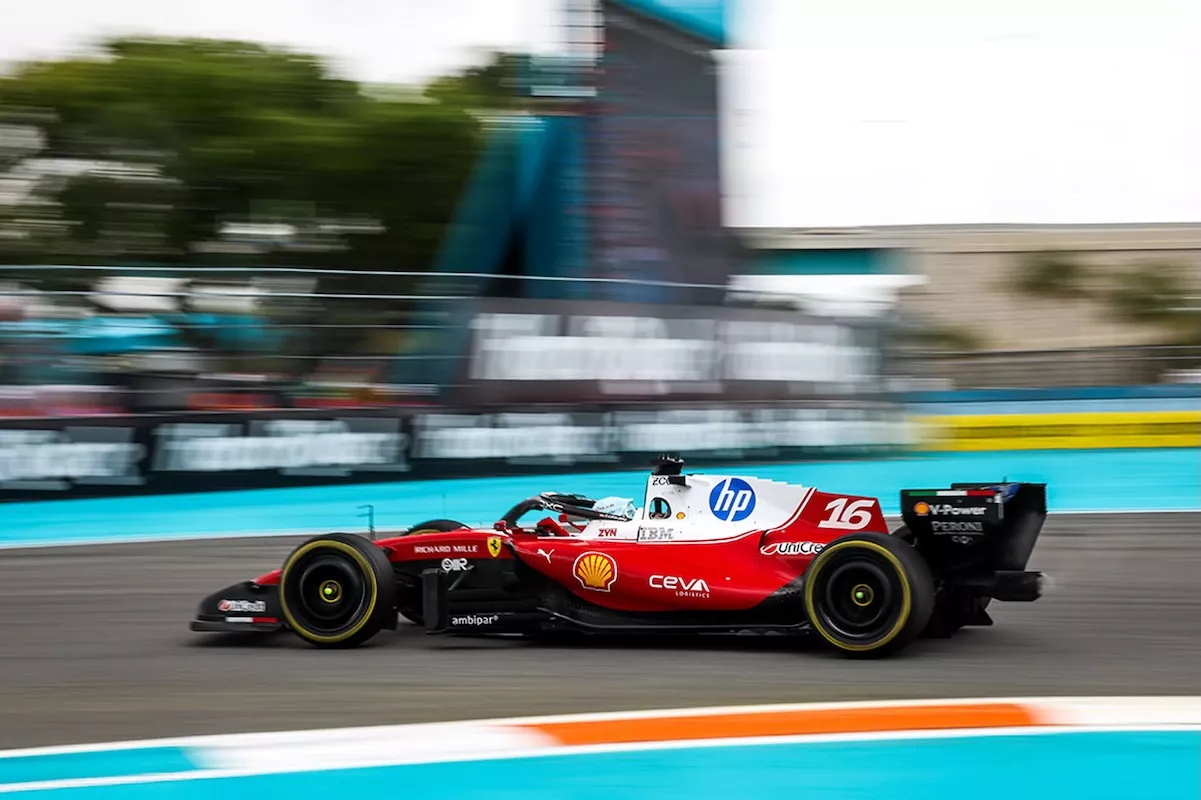
Charles Leclerc leads the Miami Grand Prix before dramatic final-lap spin costs Ferrari the podium

Charles Leclerc produced one of the drives of the Miami Grand Prix only to see it undone in the most dramatic fashion on the final lap, spinning into the barriers at Turn 3 while defending third place and ultimately crossing the line in sixth. It was a painful end to a weekend that had shown genuine promise for Ferrari, whose SF-26 ran with its first aerodynamic update package of the season and demonstrated real pace at the front of the field.

From third on the grid, Leclerc seized the lead at the start by capitalising on the chaos ahead of him — Kimi Antonelli losing positions off the line and Max Verstappen spinning a full 360 degrees after contact with the Ferrari through the first two corners. Leclerc led the opening phase of the race and remained among the front-runners through the safety car period triggered by separate crashes involving Isack Hadjar and Pierre Gasly on lap six.

A race of two halves

Ferrari pitted Leclerc on lap 21, a decision he was not consulted on, and one that dropped him into traffic and forced him to fight his way back through the field. The sequence of overtakes that followed was impressive — he worked his way past George Russell and Verstappen to reclaim third — but passing the Red Bull cost him significant time, allowing Oscar Piastri to close in behind. “The start and the race overall went well and we were fighting for the podium,” said Leclerc in a post-race statement by Ferrari. “At the end, unfortunately, I made a mistake that cost me several positions. That’s on me and I will make sure I don’t repeat it again.”

With two laps remaining, Piastri was tucked into the slipstream of the Ferrari. The Australian attacked at the final corner on the penultimate lap and Leclerc, pushing hard to defend, spun at Turn 3 and hit the barriers. He kept the car moving and took the chequered flag, but with a puncture and a damaged car, finished sixth — and then received a 20-second penalty on top for repeatedly leaving the track in the closing stages, dropping him to eighth in the final classification.

The result leaves Leclerc third in the drivers’ championship with 59 points — 37 adrift of Antonelli and with Norris and Hamilton both on 51 and closing — while Ferrari sit second in the constructors’ standings, 68 points behind a Mercedes side that is showing little sign of slowing. The next opportunity to respond comes at the Canadian Grand Prix in Montreal in three weeks’ time.

Stay updated with Monaco Life: sign up for our free newsletter, catch our podcast on Spotify, and follow us across Facebook,  InstagramLinkedIn, and Tik Tok.

Photo source: Scudera Ferrari Media Centre