AS Monaco midfielder Aurélien Tchouaméni told the press on Wednesday that Monaco have given themselves “the right to dream” at the end of the season, whilst Philippe Clement struck a wary tone.
The press assembled in La Turbie on Wednesday for a pre-match press conference ahead of Friday’s trip to reigning champions LOSC Lille.
Having fought back from the brink after a disappointing March, Tchouaméni admitted that he had doubts about bouncing back to launch an assault on the Champions League places, but is grateful to be in the fight for the podium.
The Frenchman told Monaco Life, “Honestly, every season has its own story. If you had asked me after the defeat against Strasbourg if we would have won seven in a row, honestly, I wouldn’t have believed you. Now, we have given ourselves the right to dream. We have three games left, starting with an important match against Lille. Away from home, that will be a difficult match.”
That is the objective for Tchouaméni, who has often been linked with a move away from AS Monaco, but who would nonetheless like to play Champions League football with the Principality side next season.
“The elimination in the play-off round last year stuck in my throat. Playing Champions League football with Monaco isn’t something that would displease me.”
Only three “finals” stand between Monaco and Champions League football next season. They are only outside of the podium on goal difference, whilst the two teams ahead of them, Rennes and Marseille, must still play against each other. In all likelihood – although it isn’t completely guaranteed – Monaco will qualify should they win their remaining fixtures.
Clement, however, is wary of Friday’s opponents Lille, who despite losing 3-0 against Troyes in an ill-tempered match at the weekend, are nonetheless the reigning champions of France. “I’m not too fond of facing teams when they have just lost a match,” admitted Clement.
“They will want to show a reaction. Lille are also strong at home, where they have only lost three times all season… so I’m mistrustful of this opponent.”
Clement will likely be able to count on the same side that won 2-0 against Angers on Sunday. Monaco Life was present at training in La Turbie on Wednesday and can report that Ruben Aguilar, despite seeming to come off with a niggle over the weekend, did train with the group. Gelson Martins and Cesc Fabregas are still absent, and neither will make the trip to Lille.
Tchouaméni says that the recent seven-game run has given them the “right to dream”. It is now in Monaco’s hands to make that dream a reality.
“We want to fight every game for Clement and the fans”
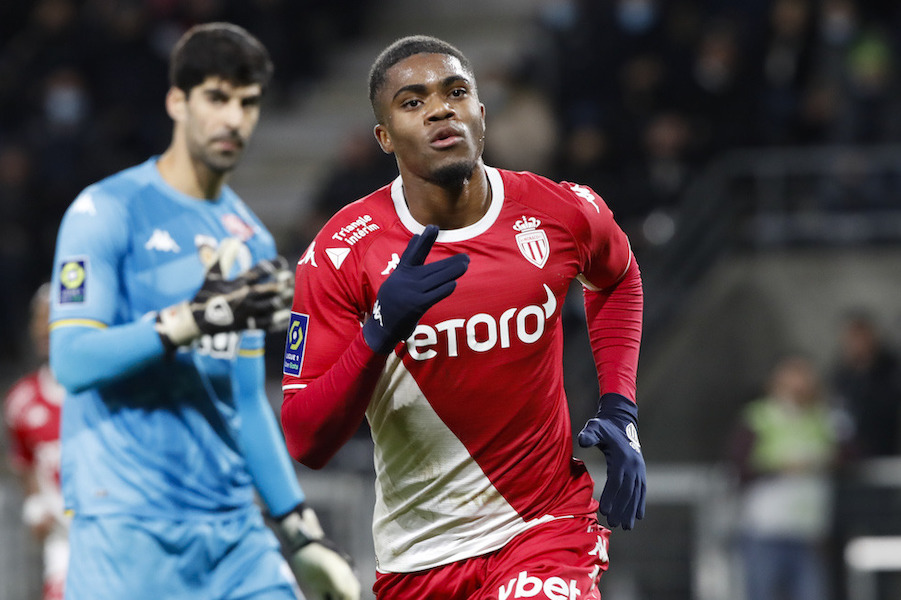
ASM’s in-form Dutch striker Myron Boadu sat down with Monaco Life to discuss the team’s recent resurrection, the impact of Philippe Clement, and the process of “becoming himself” again.
Arriving from AZ Alkmaar in August 2021, the €17 million price tag looked to be weighing heavily on the young Dutchman’s shoulders, as he netted only twice during Nico Kovac’s reign as AS Monaco manager, averaging a goal every 510 minutes. Fast forward to May and Monaco are on a seven-game winning run, whilst Myron Boadu, under the tutelage of new manager Phillipe Clement, looks to have broken free from the shackles that constrained him during those difficult beginnings, scoring three goals in his last six games and averaging a goal every 96 minutes.
Monaco Life: Coming from the Eredivisie, you took time to adapt to Ligue 1. How do you evaluate those first few months?
Myron Boadu: I’m a young player. For me, it was the first time going abroad and of course to a stronger league, so that was a little bit difficult in the beginning. I expected it, but on the other hand, I also expected that I’d be scoring goals every game, like in Holland. I talked a lot with my agent, with my parents, with the coach at that time and Paul Mitchell as well. So, they gave me the confidence to just do my thing, they said just have patience and my qualities will show through. I also spoke with Calvin Stengs (OGC Nice winger). We talked about the new life that we were experiencing, and he had similar problems to me. I think it was good to have each other.
What would you say are the most notable differences between the two leagues?
I saw a difference in the style of play. Most of the teams play against us with five defenders, and in the Eredivisie, even the clubs that are playing to avoid relegation are playing a 4-3-3, attacking football. That is the main difference, as well as the physicality. It’s not normal. All of the defenders here are so strong, and I consider myself a strong guy. That’s what really stands out for me. What I see here as well is that everyone has a winning mentality, even in training, which is a little bit different from Holland. In training in France, when we lose as a team, we can really go back to the dressing room angry, disappointed. It is really competitive, but I think that is good. In Holland, it’s a little bit less so. We come off the pitch and it’s finished.
You talk about training, how has the intensity of those sessions improved you both on a physical and tactical level?
I had to adapt, it was finding out the right schedule to work on my physique. It was also good to replicate in training what I would expect in a game, with Axel Disasi, Benoît Badiashile and Aurélien Tchouaméni. Those kinds of guys are super strong, so in that way, it allowed me to adapt to Ligue 1’s style of play. Ben Yedder is a fantastic player as well, and a fantastic person. For me it was important to see a top striker in front of me. I’m happy that he’s my team-mate. In training I watch what he does, how he does it, and I try to add it to my game. If we are in a finishing drill then he and Kevin Volland will give me words of advice, and I appreciate that from them.
Having undergone that process of adaptation, you scored against Nantes in the defeat on penalties in the Coupe de France semi-final. Can you talk us through that bittersweet moment?
It was a very important moment for me because I felt that from January until that moment I became the person I am today, I became myself again. The first six months was a matter of adapting to this new situation and I think that is normal… I was ultimately disappointed, I wanted to be in the final, but I was happy to have scored that goal. For me at that point, I knew I just had to continue like that.
That match was the beginning of a difficult March. How pivotal has Clement been to the turnaround? Disasi and Badiashile have both talked about the calmness and optimism that he exudes.
After that match, we had a lot of disappointments one after another, but the coach always told us that he knew how good we could be, and I think that is important for a coach to do that and we respect him a lot. We want to fight every game for him and for the fans, to win the games.
On a personal level, how is it having a coach that speaks your mother tongue?
He knows I can score goals, he gives me a lot of confidence and he talks with me a lot. Whilst I can understand French, it makes it easier in training, because he can explain to me even better in Dutch and then I know exactly what to do. I don’t even have to think, I just know.
The turning point came in a 3-0 win against PSG. Despite a difficult run leading up to the fixture against the league leaders, how was the atmosphere within the group?
Before PSG, the dynamic within the team was already good, but of course if you beat PSG 3-0, it’s going to do a lot of good to your confidence. On top of that, PSG is the best team in the league. We already knew how good we were, we just needed a game to confirm that, and PSG was that game.
Since that victory, Monaco have strung together another six wins, amounting to a seven-game winning streak, their best since January/February 2021. The team is clearly high on confidence, whilst you have scored three goals in your last six fixtures. How confident are you at the moment?
The confidence in taking the next chance is something that I also had in Holland so I had to rediscover that. At the beginning of my time here I got overly frustrated with myself when I missed a chance, whereas now I just think, “okay, you missed this one, but the next one is going in, and if you miss the next one then the one after that is going in”. This season has taught me a lot. I also talk with the right people and they give me extra confidence to refind myself. Now I just want to continue to score goals and I hope that I can do that.
Of course, the hope is that Monaco’s run takes them into next season’s Champions League. Is that a dream of yours to play in that competition?
The Champions League is where the best teams are, and of course you want to compete with the best. I think with the history that Monaco has, we should be playing in the Champions League. It is a dream for all of us, and I know that we can do it. Of course, we have three finals so we’re not there yet. For us, it’s important just to keep doing the same things that we have been doing, by not thinking about the table. We just have to win our games, and we do that by being ourselves.
And then there is also the World Cup at the end of the year…
It’s a dream to go to the World Cup for sure. But at this point I just want to continue here like I’ve been doing. For me, the Dutch squad is currently far away, but I think everything is possible. So, I just have to continue, end the season well, and then from the first minute of next season, I have to do the same.
Boadu is only just hitting his stride at Monaco, and should he continue down the same path, there is no reason for him not to force his way into Louis Van Gaal’s plans, whilst his dream of playing Champions League football next year remains very much alive.
Photo by AS Monaco
The great chemical detox: EU to ban widely used chemicals
Thousands of the worlds’ most notorious chemicals, found in everything from plastic water bottles and food wrapping to children’s toys, could be banned in Europe by 2030 under new EU regulation.
The European Commission published its ‘Restrictions Roadmap’ on Monday 25th April and, if implemented, it will be the largest ever regulatory removal of authorised chemicals anywhere in the world.
It covers chemicals that environmental, consumer and health groups have fought against for decades.
Among them is the Minderoo Foundation, an Australian non-profit which, through its Plastics and Human Health project, aims to eliminate the harmful effects of plastic on human health using research evidence, international collaboration and advocacy to drive changes in how plastic is made, used and managed.
The Foundation recently launched a new global study on human health and plastic pollution with the Scientific Centre of Monaco and Boston College.
“There are around 10,500 different chemicals that are added to plastic to give it the properties of flexibility, stability, UV and flame resistance, and it is these chemicals that leak out of the plastics and enter our bodies,” Sarah Dunlop, Director of Plastics and Human Health, told Monaco Life. “We know this because we have measured the level of these chemicals in blood and urine during pregnancy, in umbilical cord blood and breastmilk, in seminal fluid and urine in children and adults… these chemicals are there, the public just don’t know anything about it.”
Studies show that some 700 industrial chemicals are found in humans today that were not present in our grandparents, more than half of which are known or suspected causes of cancer.
“There has been this touching faith that plastic was inert, that it didn’t change or leak chemicals, and there was no testing to prove otherwise,” said Dunlop. “The problem is that the companies that produce this plastic are not paying the cost, we are paying the cost. The health system and the environment are now paying the cost.”
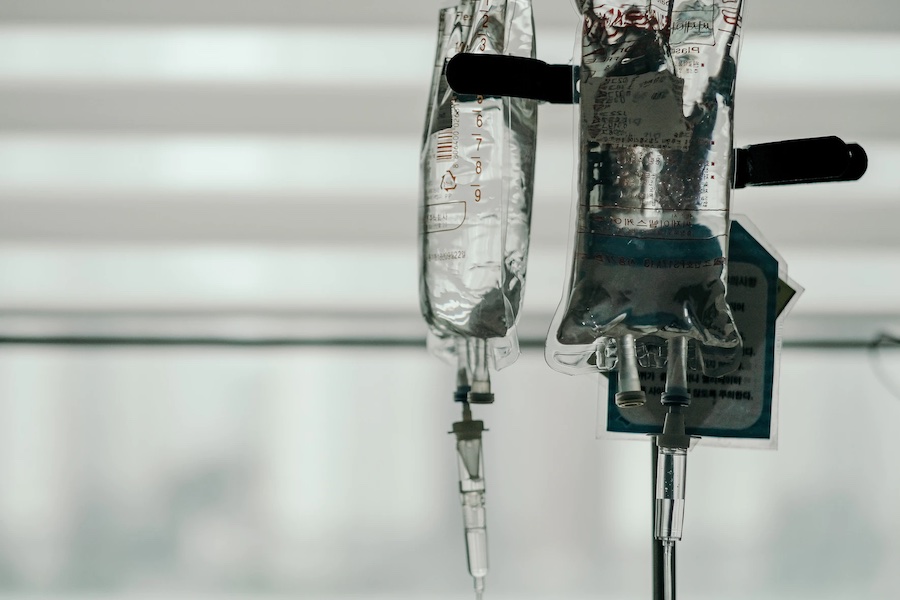
Toxic chemicals are used in the creation of medical equipment, such as IV drips.
The EU roadmap is a political commitment to use existing laws to ban toxic substances including all flame retardants and bisphenols – chemicals that are widely used in plastics but are frequently linked to cancer and are proven to disrupt human hormones.
It will also ban all forms of PVC, the least recyclable plastic on the planet and the fourth most common type of plastic in Europe. It is used in everything from children’s toys and food packaging, to shoes, furniture and building materials. It also contains large amounts of toxic additives.
In addition, the roadmap restricts all PFAS, found in a wide variety of consumer items, from takeaway packaging to dental floss. These are known as ‘forever chemicals’ because they accumulate in humans, animals and the environment, including drinking water, and they are virtually impossible to remove.
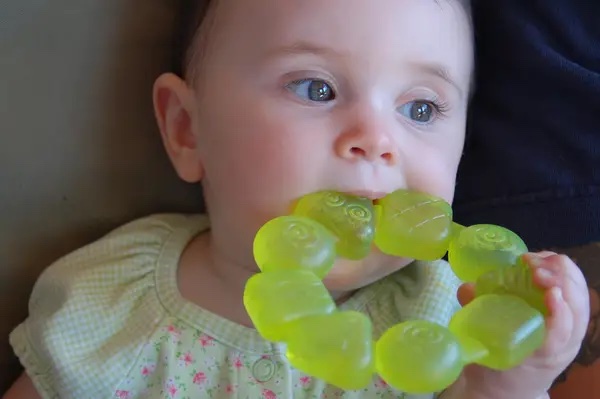
Around 2,000 harmful chemicals found in baby products also make the list, chemicals that are widely used in things like nappies, pacifiers and teething toys.
“Almost every manufactured product in shops and in our homes will be impacted,” European Environment Bureau (EEB) Chemicals Policy Manager Tatiana Santos said. “What the EU is planning is the boldest ‘detox’ we have ever seen. Petro-chemical industry lobbyists are shocked at what is now on the table.”
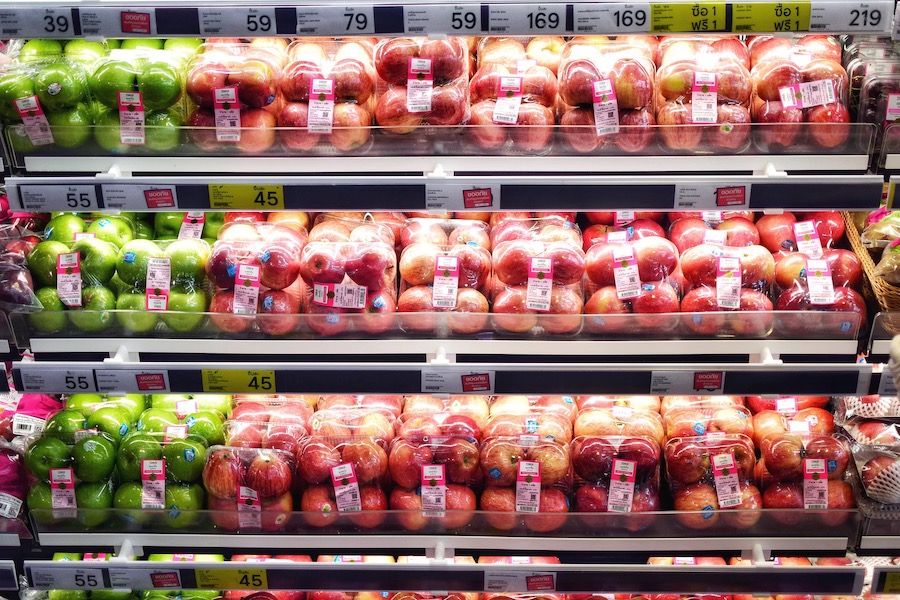
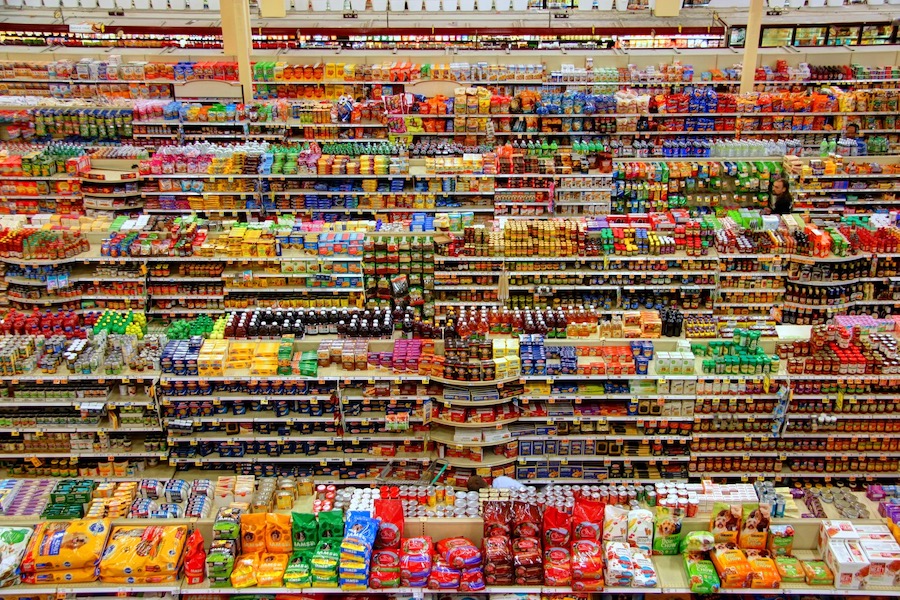
Photo of supermarket aisles filled with plastic products, by Peter Bond
Stemming the tide of chemical production
Around 200,000 chemicals are currently used in Europe, three quarters of which are proven to be hazardous to our health.
While the EU has some of the world’s strictest chemical controls, “in reality they are failing to control the rising tide of chemical production and pollution”, says the EEB, with the industry creating a new chemical every 1.4 seconds, on average.
The exciting aspect of this plan, say experts, is that it will restrict large groups of some of the most hazardous chemicals still in use. By grouping the substances together, the EU is able to regulate thousands of chemical compounds at the one time.
“Regulatory actions that deal with entire classes of chemicals are much needed and long overdue,” Professor Philip J. Landrigan, Member of the Human Health Unit at the Monaco Scientific Centre, tells Monaco Life. “The current approach which examines one chemical at a time is slow, cumbersome and not effective at protecting public health.”
“It also allows ‘regrettable substitution’ in which another member of a chemical class is introduced to the market to replace a chemical of the same class that has been banned,” adds Professor Landrigan, who is also Director of the Global Observatory on Pollution and Health at Boston College. “Examples are seen in the organophosphate insecticide family and in the substitution of bisphenol S for bisphenol A.”
The EEB estimates that between 5,000 and 7,000 substances could ultimately fall within the scope of the new proposal, making it the largest ever ban of toxic chemicals.
According to research paid for by the European chemical industry body CEFIC, the number is closer to 12,000 chemicals, which can be found in 74% of all consumer and professional products.
In other words, the chemical industry – while outlining the impact of these bans on the sector – has itself acknowledged that millions of varieties of consumer products on the shelves throughout Europe today have the potential to cause serious health and environmental harm.
Why has it taken this long?
The European chemical industry is worth €534 billion a year, making it the fourth largest industry in the EU, and it has major lobbying power.
Early drafts of this plan prompted large protests among the industry, and these companies are expected to try to water down the roadmap, as they have done in the past.
Member states and the European Commission will now examine each proposed ban in detail and while some chemicals on the roadmap list were already facing EU restrictions, most are new. Once approved, the ban could take months or years to come into force, and will likely be around the year 2030, predicts the EEB.
That’s too long for health professionals like Professor Landrigan.
“This is unnecessarily slow. Millions of people, including millions of Europe’s children, will be exposed to potentially dangerous chemicals during this long run-in period,” he says. “As a paediatrician and public health physician, I would have preferred a run-in time of no more than two to three years.”
Around 2,000 chemicals used in baby products, such as teething rings, will be banned. Photo flickr: cantaloupe99, Creative Commons
The Restrictions Roadmap is part of the European Green Deal announced in December 2019 and the zero-pollution ambition for a toxic-free environment. Experts all agree that it is a major step in the right direction.
“What Von der Leyen’s Commission has announced today opens a new chapter in facing down the growing threat from harmful chemicals. This ‘great detox’ promises to improve the safety of almost all manufactured products and rapidly lower the chemical intensity of our schools, homes and workplaces. It is high time for the EU to turn words into real and urgent action,” said the EEB’s Tatiana Santos.
By banning groups of the most harmful chemicals in consumer products, companies will be forced to move away from controlling harmful chemicals to avoiding their production all together.
“We urgently need different materials,” adds the Minderoo Foundation’s Sarah Dunlop. “The protocol that banned CFCs and therefore mended the hole in the ozone layer partly came about because scientists discovered different alternatives. We need to do that with plastics.”
The need for effective monitoring
A lack of regulation means that, for years, companies have been allowed to share very limited information on the hazardous nature of their products with officials. According to German investigators, most substances on the market break safety rules. Meanwhile, the level of non-compliance just keeps rising, says the European Chemicals Agency, with around 93% of chemicals on the market currently lacking critical information about their potential hazards.
The Minderoo Foundation therefore is pushing for the establishment of a scientific committee, similar to the IPCC (Intergovernmental Panel on Climate Change), made up of health professionals, scientists and policy experts, to study the data on the risks of chemicals to human health and that of the planet; a group that has the ability to effect change in public opinion and government policy, just as the IPCC has done with regards to the climate crisis.
The Foundation is currently putting together its global study on human health and plastic pollution, launched during this year’s Monaco Ocean Week, and expects to present the report with the Scientific Centre of Monaco during the 2024 event.
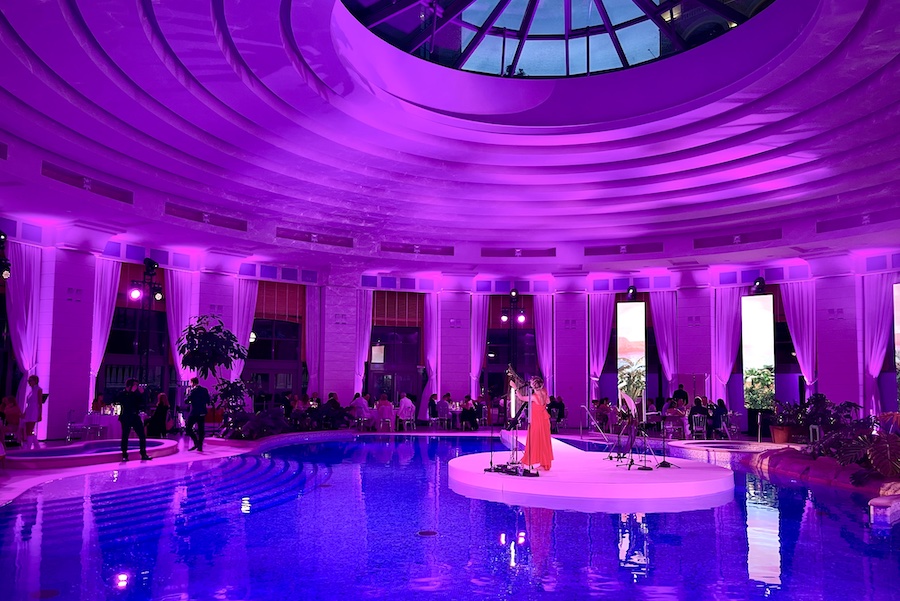
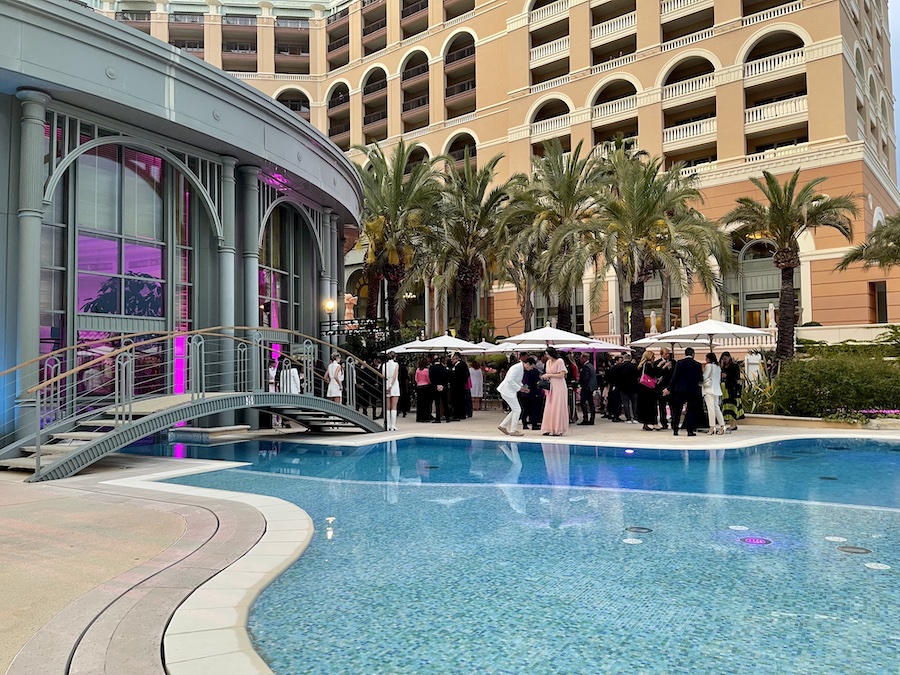
‘Rose is the Future’ was the final act of this year’s Ma Vie en Rose spring programme by Monte-Carlo SBM, a grand closing dinner featuring the futuristic sounds of celebrated composer Thomas Roussel, the cuisine of two Michelin star Chef Marcel Ravin, and the romantic pool-side setting of the Monte-Carlo Bay Hotel and Resort.
Since early March, the Monte-Carlo Société des Bains de Mer (SBM) has been entertaining residents and visitors of the Principality with its unique Ma Vie en Rose programme, a colourful celebration of spring in Monaco. From the floral spinning installations created by Eva Dmitrenko and Céline Pagès and the sweet-smelling floral selfie frame in the atrium of the Casino, to the Sunday Rose Brunches available at the Blue Bay, the vibrancy and joyfulness of spring has been in full bloom.
On Saturday night, Monte-Carlo SBM took it to another level, inviting guests to board a spaceship towards the future, with sparkling rosé around the lagoon followed by a romantic dinner in the atrium.
Rose is the Future event, photo by Monaco Life
At tables circling the Monte-Carlo Bay pool, guests were treated to a gastronomic menu designed by two Michelin star Chef Marcel Ravin, a “journey to the end of desire” featuring meteorite bowls and a giant chocolate Saturn.
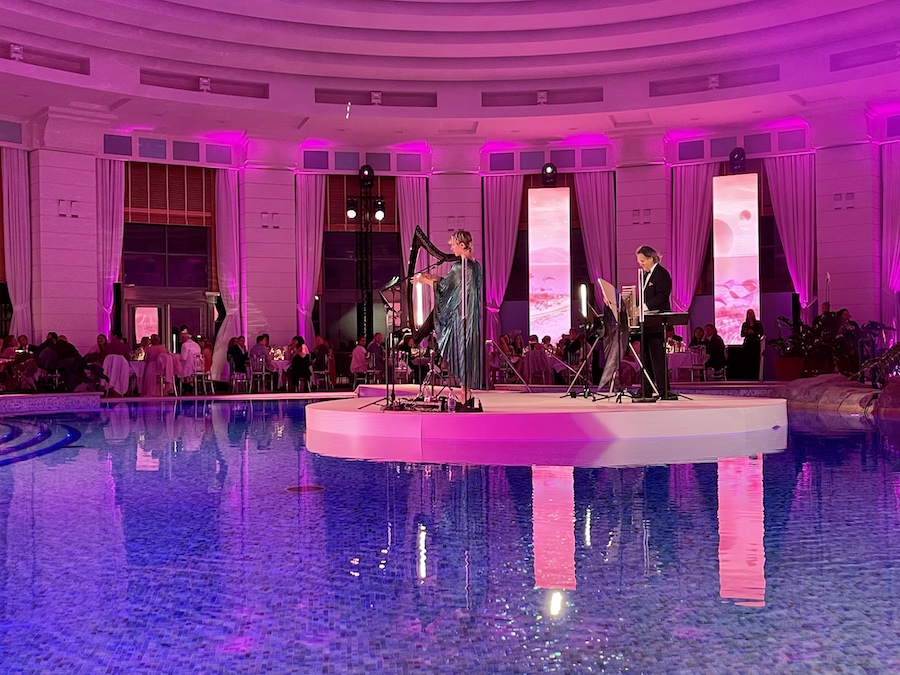
Harpist Naomi Greene joined an orchestra in performing pieces by celebrated composer Thomas Roussel, the futuristic sound of a Cristal Bachet serving as a highlight of the evening.
Spectacular performance by Harpist Naomi Greene and the orchestra, photo by Monaco life
Monte-Carlo SBM CEO Jean-Luc Biamonti thanked guests for taking part in the evening, reminding them of SBM’s commitment to Joie de Vivre, but also to the plight of the Ukrainians through the sale of around 100 art installation spinning wheels for the benefit of the victims of war.
It was a spectacular end to another unique programme of events organised annually by SBM as part of its ‘Great Art of Living’ philosophy, delivering one-of-a-kind experiences at the company’s hotels, spas and restaurants, and maintaining the legend that is Monaco.
Click on our Instagram post below to see more images and videos…
While My Yacht Group is primed to ride the swelling wave of F1 popularity across the Atlantic, the Principality-based company will celebrate 15 years at the Monaco GP. Co-founder Nicholas Frankl shares with us his plans for the busy 2022 racing calendar.
Glamour and motorsport tend to go hand-in-hand, especially Formula 1. Accustomed to playing a nexus role and uniting these elements in Monaco each year, My Yacht Group is setting its lofty gaze further afield this year as they prepare for the first Miami Grand Prix.
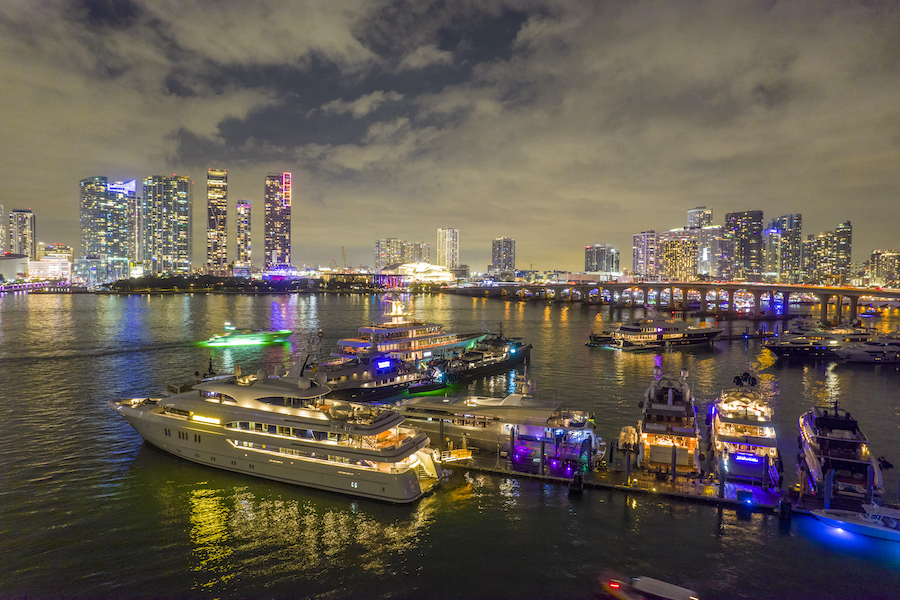
As Co-Founder Nicholas Frankl told Monaco Life, “You want to be on a superyacht, that’s the special magic of the harbour of Monte-Carlo.” Now, they’re taking that “magic” to Florida as the sporting world, as well as the yachting and hospitality communities, prepare for the latest addition to an ever-expanding F1 calendar.
The race, which takes place on 8th May, will do so in one of the least glamorous settings – a car park. This led then Race Director Michael Masi to say in November that “it’s far from a race in a car park,” and that it will be “something unique.”
The original plan for the Miami circuit was for it to run around Biscayne Boulevard and downtown Miami. That plan was ultimately foiled, but is one that, according to automotive writer Frankl, might have gone through if it were proposed today. “At the time, Miami and Miami locals didn’t really know a lot about Formula 1,” he began.
“I have a suspicion that the mayor, who is pro-business and pro-Miami, and governor Ron DeSantis would have made it happen. Also, locally, I suspect that there would be a much higher level of support, because now thanks to Netflix and their documentary series ‘Drive to Survive’, it’s the biggest growth sport in America today.”
The race in Miami has been sold out for weeks. Offering a different kind of experience, and a VIP one at that, will be My Yacht Group, who are primed to ride the swelling wave of F1 popularity across the Atlantic.
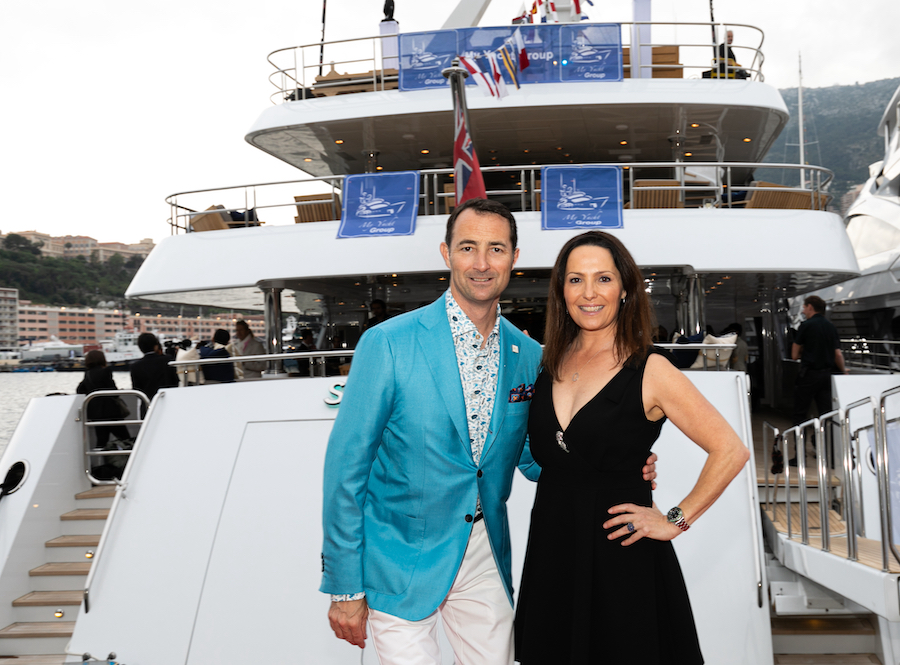
Frankl, who co founded My Yacht Group with his sister Annabelle, detailed their upcoming super yacht party in the ‘Sunshine State’: “We are very well known for hosting sophisticated, fun and elegant super yacht parties, always charity related and charity themed, and so that is exactly what we’re doing on a special boat called Gene Chaser, a 55m research vessel.”
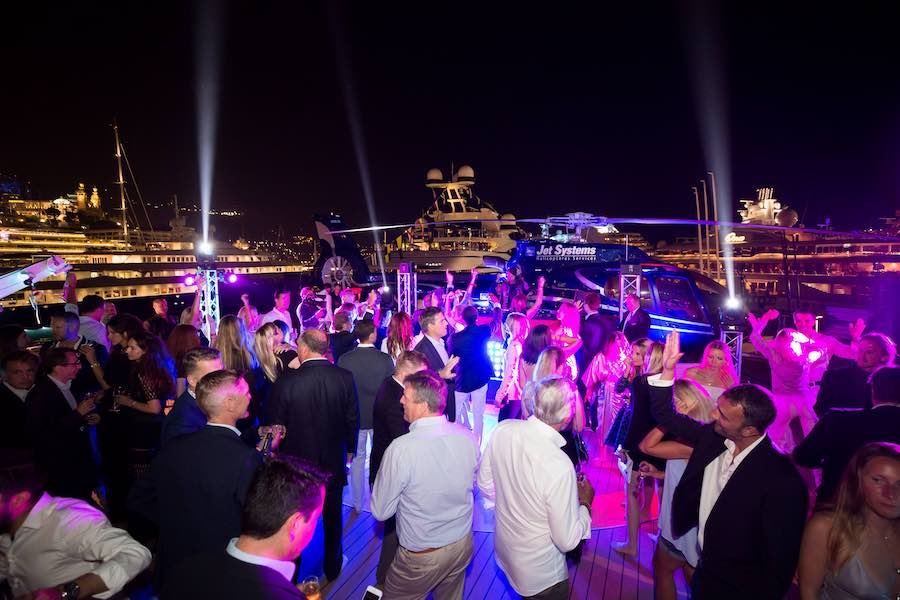
“They have labs on-board, as well testing facilities and a mobile MRI machine, so it’s very much a technical showcase. We are hosting a business networking and investor reception for a curated guest list of only 100 people, representing around $250bn of net worth,” says Frankl. “We will then turn it into a My Yacht Club, which is the pop-up nightlife experience we’ve successfully hosted at the Austin GP since 2012. It’s a combination of a charity and investor reception, then a full-on party, DJ, bottle service, VIP event… We have partnered with world-famous celebrity chef Todd English, who will be personally catering on-board for our guests.”
Frankl also revealed that they will be running an event at the inaugural Las Vegas Grand Prix in November 2023, a race that was announced back in March and will be the third US GP on the calendar. Frankl, however, isn’t worried about F1 saturating the American market. “I think the US can easily absorb three races,” he says.
15 years of Monte-Carlo glamour
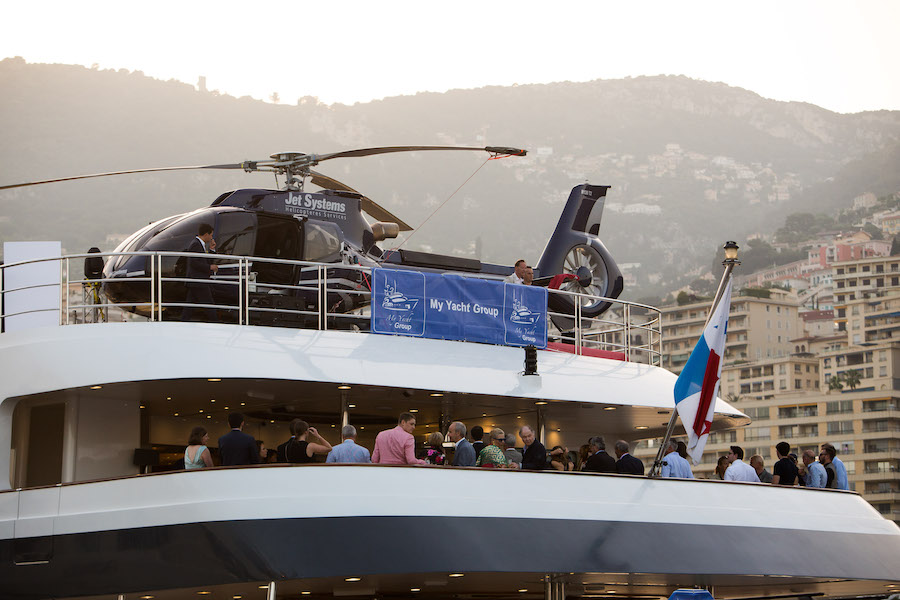
Heading back to more familiar shores, just as they have been for the last 15 years, My Yacht Group will once again be hosting a full track side super yacht hospitality weekend and their popular Friday night party during this May’s Monaco Grand Prix.
After last year’s more muted event, which involved two private astronaut receptions, My Yacht Group returns to normality in style. In what Frankl describes as a “huge charity weekend”, guests will board the DB9 yacht, acquired in the auction at the Prince Albert II of Monaco Foundation gala back in September. “All the proceeds from that auction item, which is several hundred thousand euros, went to the Prince Albert II of Monaco Foundation, and we are very proud to be promoting and supporting the PA2F once again throughout the weekend,” said Frankl.
My Yacht Group has just released three on-board luxury cabins for “the ultimate experience”. Guests will be able to stay in Port Hercules during the Grand Prix weekend, trackside, as well as mingle with VIP guests.
“We will have commander Michael Lopez-Alegria, a five-time world-record holding, US hall-of-fame astronaut who has just arrived back from the International Space Station (ISS). He is commander of the first all-private mission to the ISS with Axiom Space, a company that I and several other Monaco residents invested in.”
Frankl says it would be great to help send a Monegasque to space. “We would love to take the first Monaco astronaut to the ISS. It would be incredible to see a member of the Princely family, or a Monegasque citizen, spend 10 days aboard, conducting medical and scientific research for humanity.”
Commander Lopez-Alegria will be attending both the Miami and Monaco VIP events, as well as representatives from Vita Inclinata, a manufacturer that has designed a “life-saving autonomous power system” to stabilize cradles on helicopters and cranes. The company recently delivered $500,000 worth of their equipment to Ukraine, and trained Ukrainian medevac crews how to use it during the ongoing war. They will exhibit their technology on the superyacht crane in Monaco over the GP weekend. “That’s the first time it will be demonstrated in this way,” revealed Frankl.
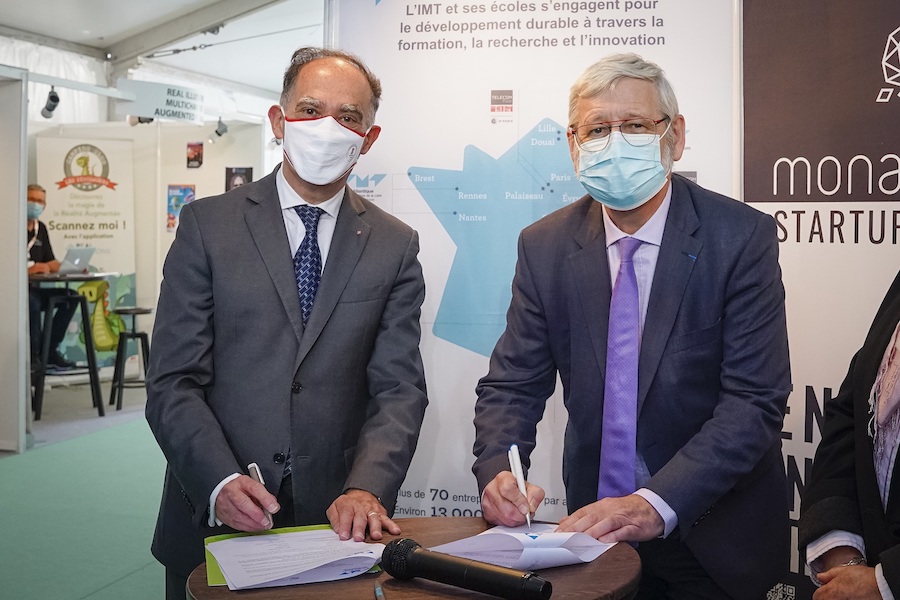
MonacoTech and French incubator IMT Nord Europe have officially signed a pact to work together toward the common goal of helping select emerging companies rise to the top of their games.
MonacoTech, the start-up incubator founded in 2017 by the government, Monaco Telecom and Xavier Niel, has signed a formal collaboration agreement with French incubator APUI- IMT Nord Europe, part of the University of Lille and Institut Mines-Télécom, to expand their reach.
At the recent Ever Monaco Forum, Jean Castellini, President of MonacoTech and Minister of Finance and Economy, alongside Alain Schmitt, Director of IMT Nord Europe, confirmed the collaboration agreement signed in 2021 between MonacoTech and the APUI-IMT Nord Europe incubator.
“I am very happy today to confirm, after a year of partnership, the collaboration agreement initiated last year between APUI-IMT Nord Europe and MonacoTech, in order to support and develop innovation in areas in which our two organizations are particularly involved: the environment, energy and digital technology,” Mr Castellini said of the affiliation. “Innovation is virtuous in that it benefits the economy, the general interest and our territories. This is the meaning of this partnership.”
The two institutions share a number of values, in that both are striving to work with companies who are developing innovative business models, particularly in the Green Tech and Clean Tech, sustainable cities and smart building sectors.
Since their combined efforts first began a year ago, the two entities wanted to publicly reaffirm their joint commitment to start-up creation and expansion in both territories, giving the new businesses a chance to benefit from the expertise and knowledge offered by both MonacoTech and APUI-IMT Nord Europe, as well as give representatives from these new companies the opportunity to meet other like-minded businesspeople and form potential synergistic alliances.
“This partnership represents added value for both structures in their mission to support entrepreneurship and economic development,” said Alain Schmitt. “Through this collaboration, we want to give our startups the opportunity to open up to new horizons and to exchange with the economic and institutional players in the Principality of Monaco’s ecosystem.”
The Start-Up Village at the EVER Monaco event gave a glimpse at what the future of this partnership will look like, with four start-ups from MonacoTech and three from APUI-IMT Nord Europe on hand.
Photo source: MonacoTech
All the headlines and highlights from Monaco, direct to you every morning