

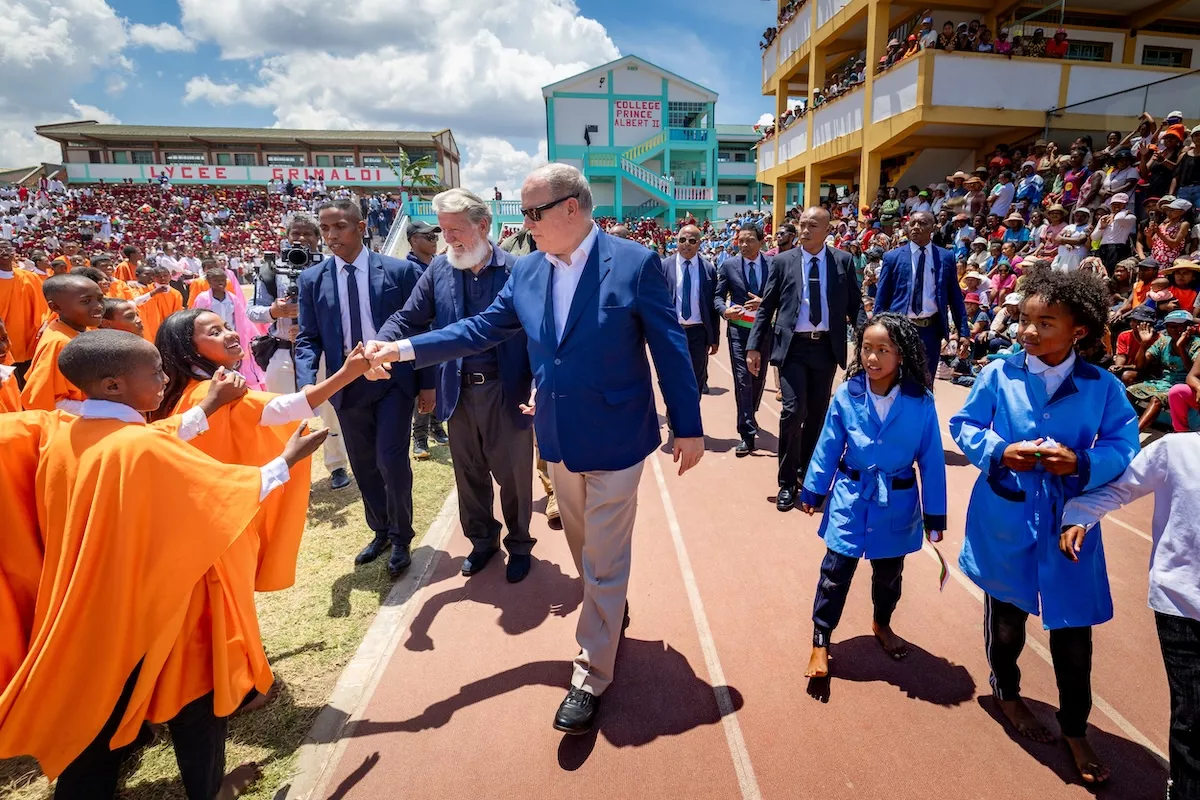
A stadium filled with 12,000 cheering schoolchildren, a new college bearing his name, and an emotional return to a children’s centre named after his mother, Princess Grace. Prince Albert II’s visits to Madagascar and Cameroon on 29th and 30th October brought him face to face with thousands of young people whose lives have been transformed by decades of Monegasque humanitarian support.
The two-day journey took the Prince from the schools and community projects of Madagascar to the presidential palace and children’s welfare centres of Cameroon, where he was received by President Paul Biya and First Lady Chantal Biya.
While the trip included high-level diplomatic meetings, it was the encounters with children, students and families that provided its most memorable moments.
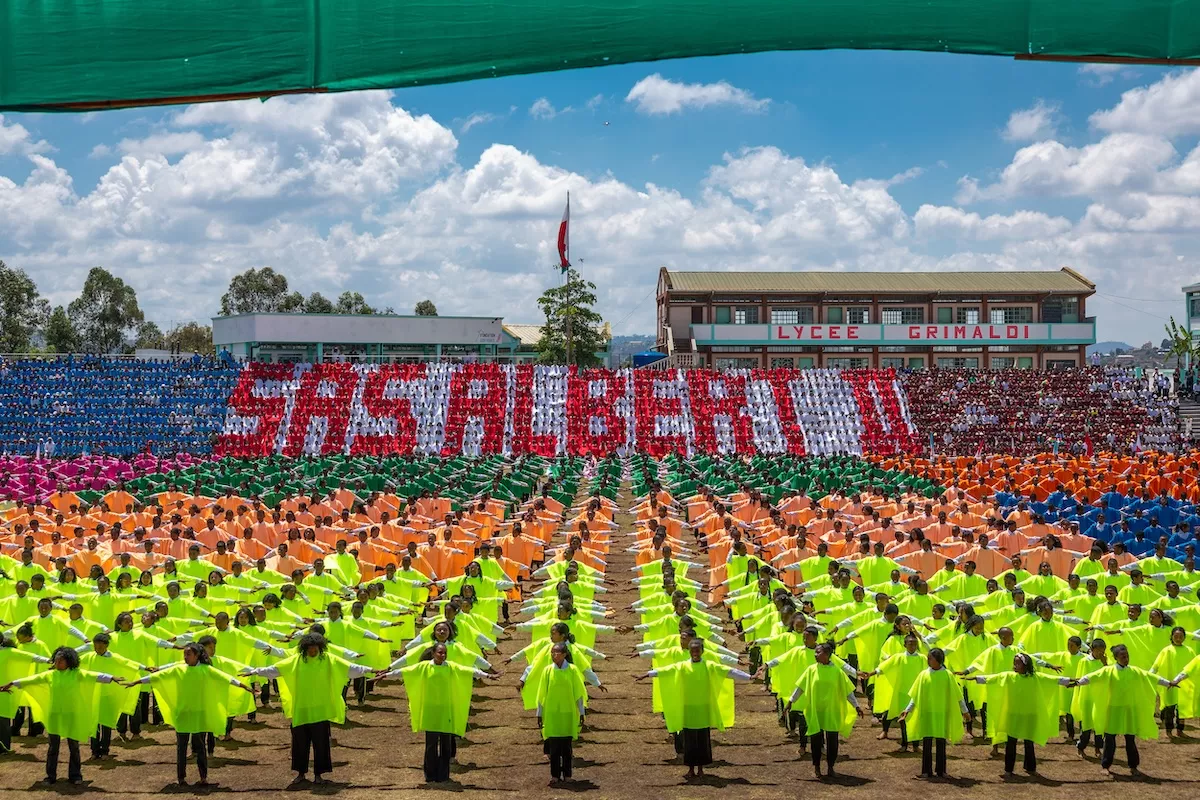
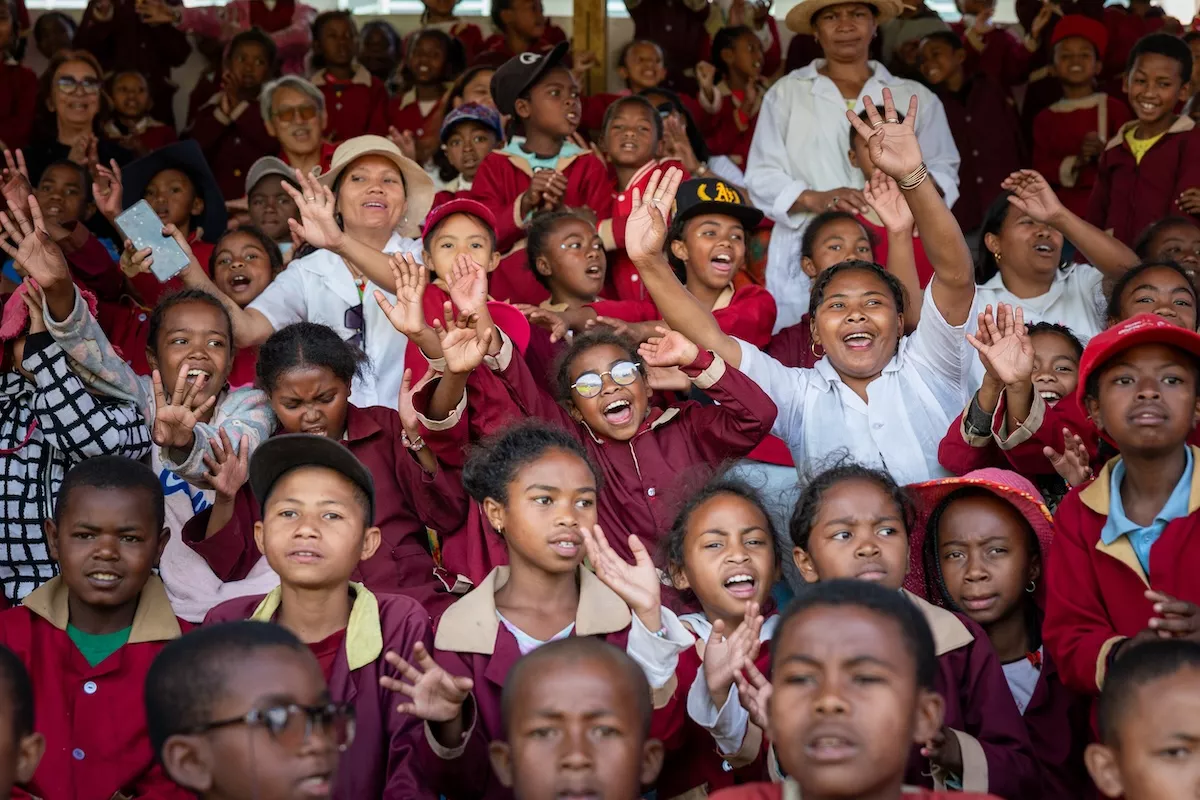
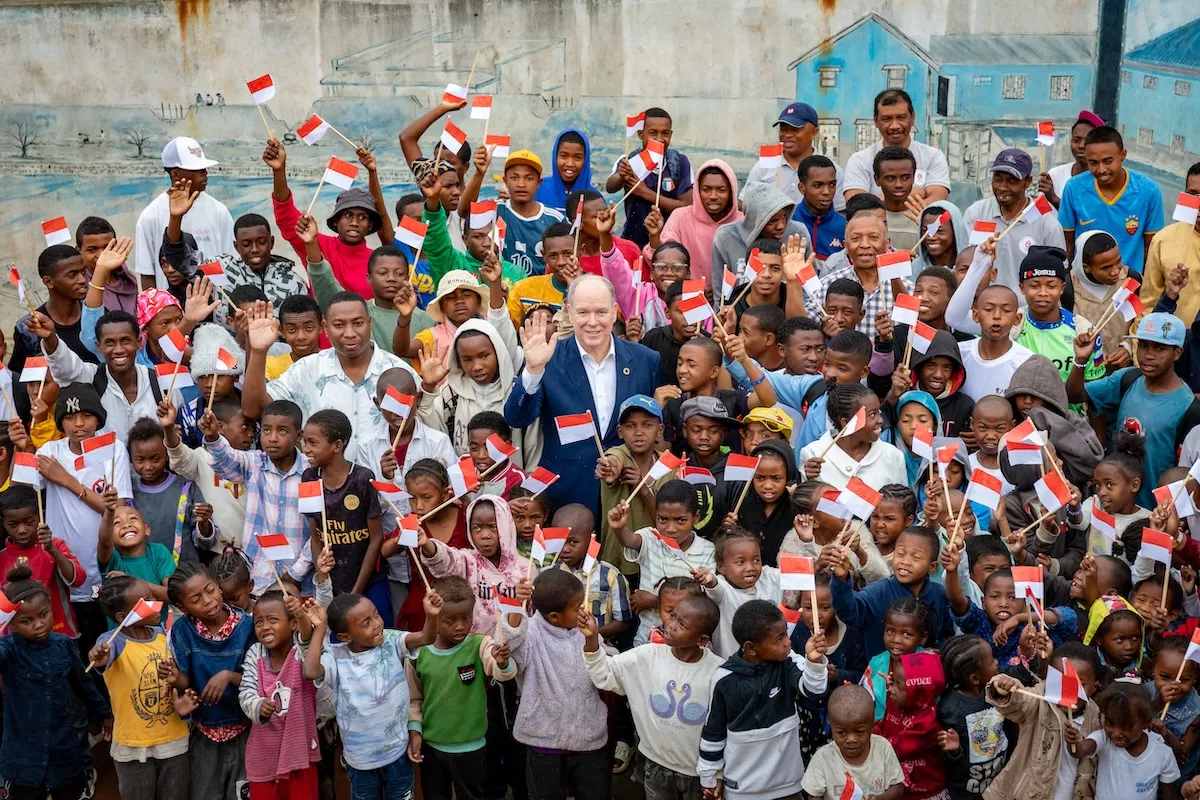
A welcome from 12,000 schoolchildren in Madagascar
Some 12,000 pupils filled the stadium at Akamasoa, on the outskirts of Antananarivo, on Thursday 29th October to welcome Prince Albert II and Father Pedro Opeka. The Argentine-born missionary’s organisation has spent nearly four decades helping some of Madagascar’s poorest communities.
The children put on a colourful programme of songs, dances and an athletics race, and two pupils addressed the gathering before Father Pedro and the Prince spoke. The occasion marked the inauguration of the Collège Prince Albert II, named in recognition of the Prince’s longstanding support for Akamasoa.
Addressing the children, Prince Albert recalled the words of Victor Hugo: “Every child we teach is a person we gain.”
“Listening to the two pupils who have just spoken with such talent and courage, and seeing you all gathered here, those are the words that come to mind,” he said. “Looking at the children and adolescents you are today, how can we not see the adults you will become? Adults committed to intelligence, responsibility and hope. Free and clear-sighted women and men.”
He praised Father Pedro’s determination to bring education to children who might otherwise have little chance of attending school.
“That is Father Pedro’s wonderful project, the greatness of Akamasoa and the challenge of this college: to open the doors of education to everyone, in order to open the doors to a better life for as many people as possible.”
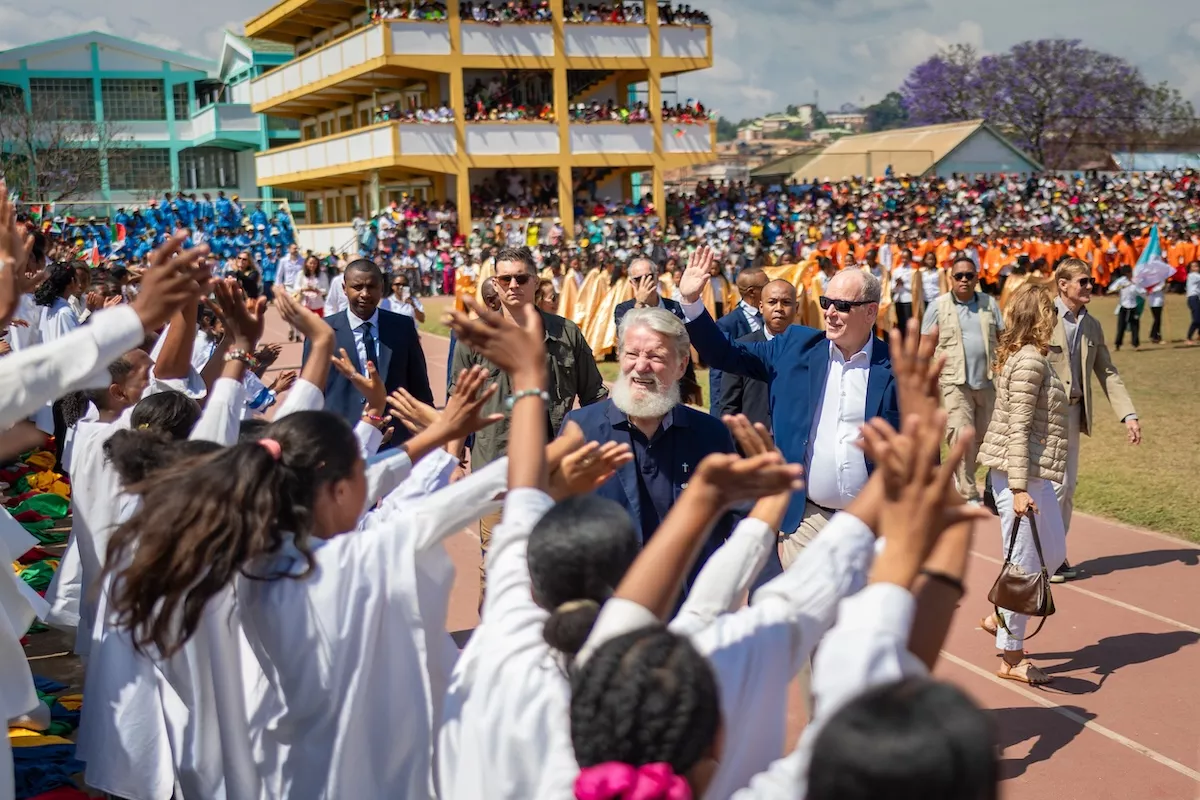
The Prince then unveiled a commemorative plaque and toured the new college, stepping into a classroom to meet pupils.
The figures he cited show the scale of Akamasoa’s work. More than 5,000 families have been given decent housing, and its schools employ almost 1,000 teachers, around 400 funded by the Malagasy state and 600 by Akamasoa.
Monaco Aide et Présence has supported Father Pedro’s initiatives since the 1990s, alongside the Association d’Aide au Père Pedro Opeka. Since 2002, it has supported more than 1,000 children a year in schools at Ambanitsena and Ampefy, helping to fund classrooms, school materials and meals.
“I am proud that your college bears my name,” the Prince told the gathering, before paying tribute to Father Pedro, the teachers and the families of Akamasoa. “Monaco will remain at your side,” he promised, ending his address in Malagasy with “Misaotra betsaka”, meaning thank you very much.
From classrooms to the fight against poverty and disease
The Prince was accompanied in Madagascar by Monaco’s Consul Cyril Juge, Monaco Aide et Présence President Donatella Campioni, and Christophe Glasser, Director of Fight Aids Monaco, the association founded by Princess Stéphanie.
In Antananarivo, he visited the Sandratra project, supported by Monaco’s Department of International Cooperation. The project helps street children with protection, education, vocational training and reintegration, and trains young single mothers so they can find work and become financially independent.
At the Centre Nouveau Relais des Jeunes, children welcomed him with a performance before showing their skills in the centre’s vocational workshops.
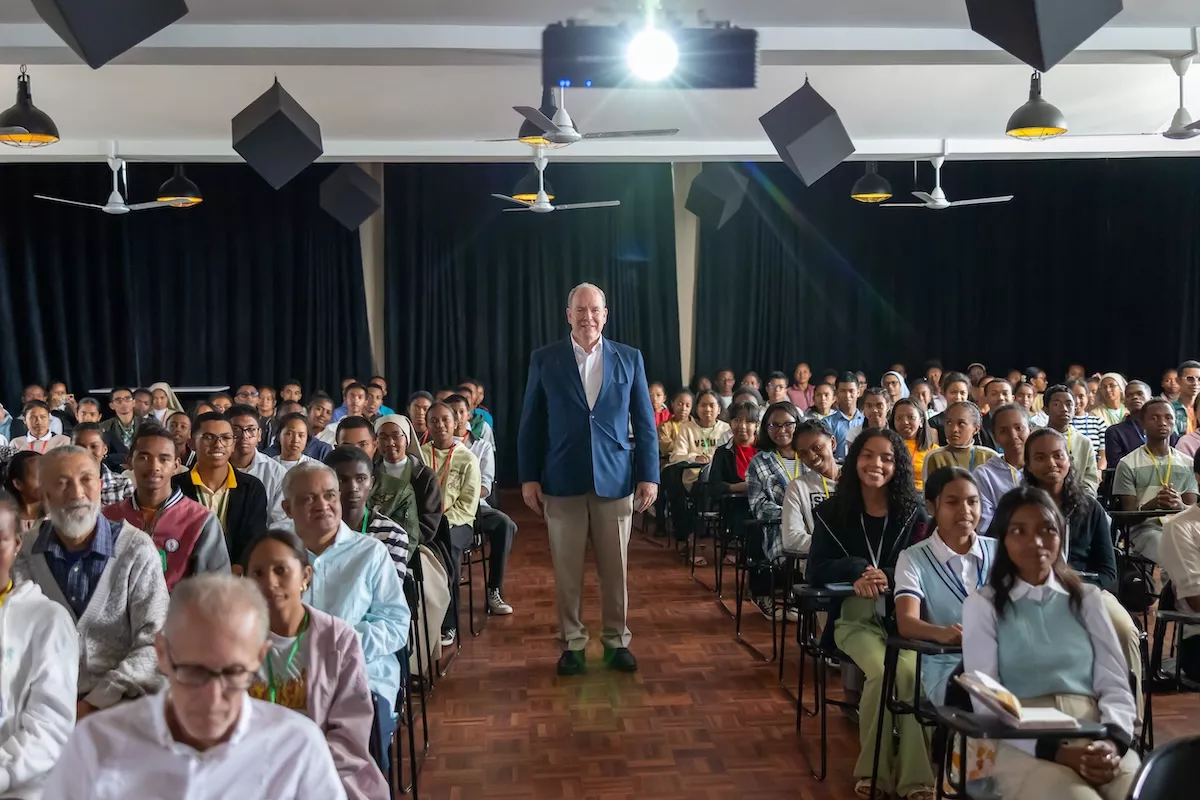
At Saint-Vincent-de-Paul University in Manantenasoa, students questioned the Prince on environmental protection, climate change and the work of his Foundation. Asked which challenges should take priority in Madagascar, he pointed to the country’s unique wildlife and ecosystems, threatened by deforestation and increasingly extreme weather.
He highlighted his Foundation’s projects there, including reforestation around Masoala National Park, the protection of 800 hectares of coastal forest on Sainte-Marie Island and new marine protected areas around Nosy Be, all developed with local communities.
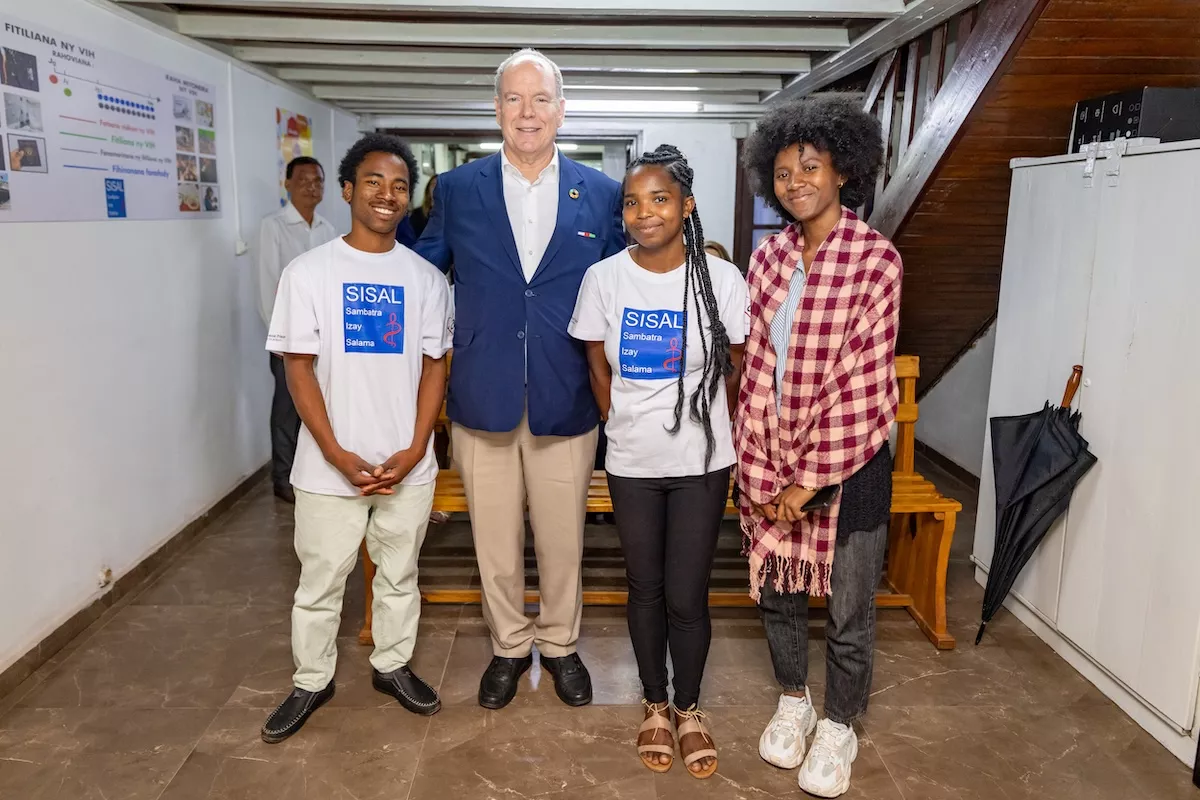
The day ended at the SISAL 67HA health centre, supported by the Department of International Cooperation and Fight Aids Monaco.
There, the Prince met medical staff and people living with HIV, including two young people who shared their stories and hopes in what the Palace described as a particularly moving encounter.
A return to Cameroon after 23 years
On Friday 30th October, the Prince travelled to Yaoundé, returning to a country he first visited in 2003 as Hereditary Prince. He was welcomed at the airport by Prime Minister Joseph Dion Ngute and Monaco’s Consul André Siaka.
The visit to the Centre Edimar Princesse Grace, in the capital’s Elig-Essono district, carried particular personal significance. Founded in 2002 by Father Maurizio Bezzi with substantial funding from Monaco Aide et Présence, the centre was named in honour of Princess Grace.
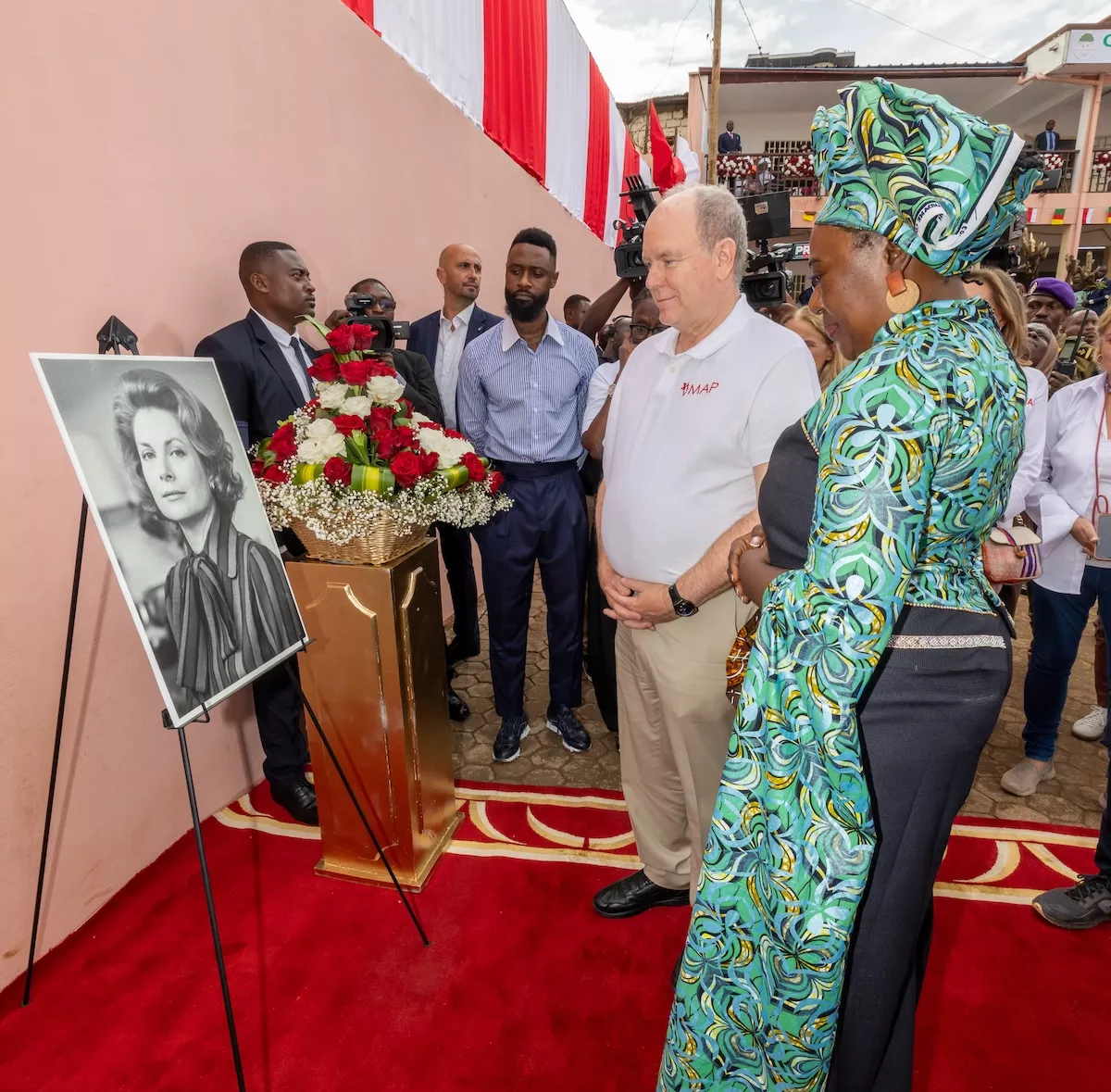
This time he was accompanied by First Lady Chantal Biya, a UNESCO Goodwill Ambassador. Father Maurizio and the centre’s director, Mireille Yoga, welcomed the guests alongside Minister of Social Affairs Pauline Irène Nguene and Monaco Aide et Présence Vice-President Pilar Klemm.
After a performance of songs and dances by the children, the Prince toured the centre and learned about its work in education, healthcare, literacy, vocational training, family support and its educational farm. Today it helps more than 500 vulnerable children and young people each year.
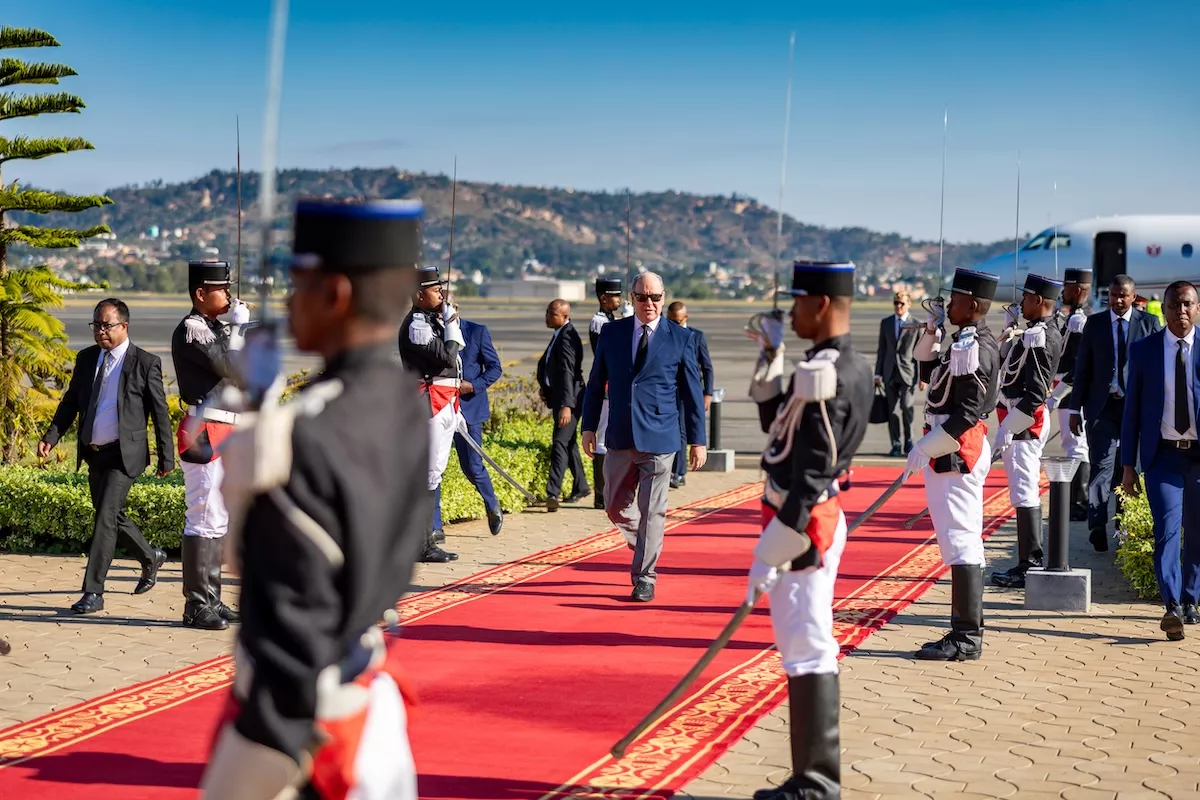
Prince Albert meets President Paul Biya
The Prince also met President Paul Biya at the Unity Palace. According to the Cameroonian presidency, the two leaders discussed relations between their countries, their cooperation on humanitarian and environmental projects, and ways to strengthen bilateral ties.
He then attended a reception hosted by the Apostolic Nuncio, Archbishop José Avelino Bettencourt, where he addressed Monaco’s humanitarian partners and reflected on how the partnership began.
“Everything began a quarter of a century ago with an image: that of Father Maurizio playing football with street children in the red dust of Yaoundé,” he recalled. “That image already said everything essential: the importance of being present and of earning the trust of the most vulnerable.”
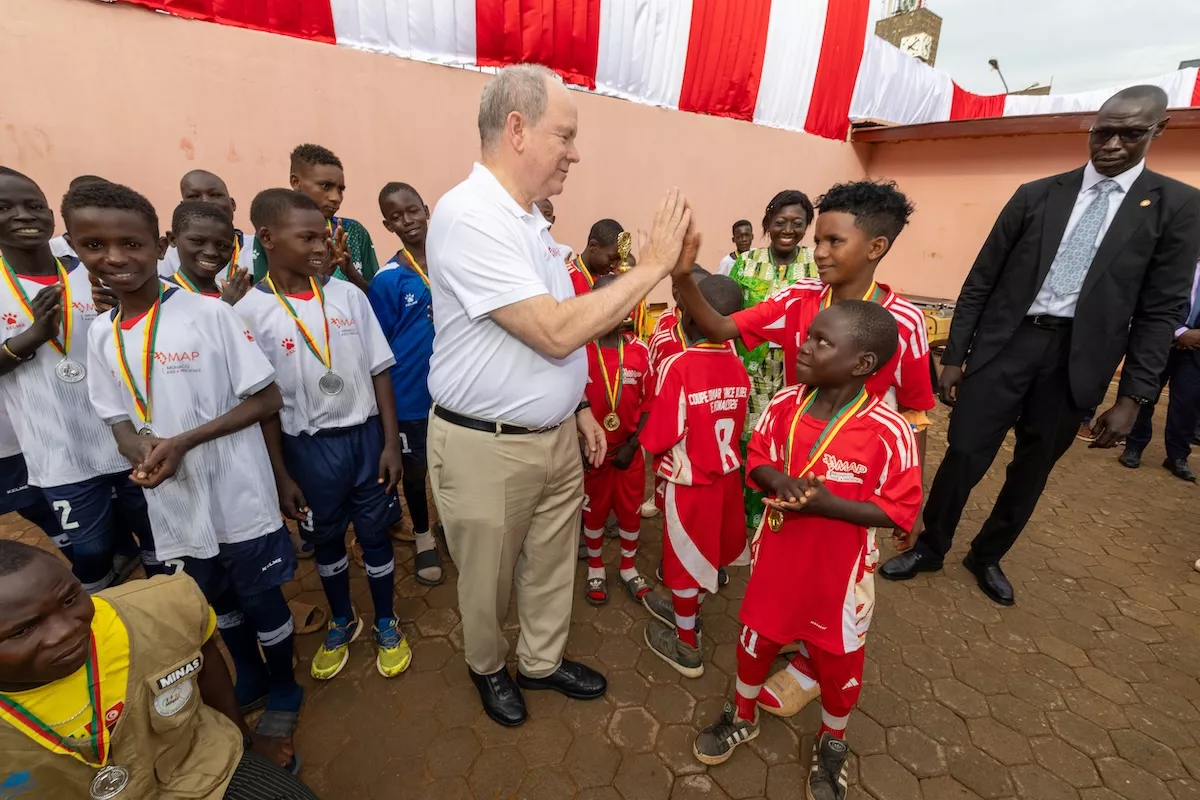
Monaco Aide et Présence financed more than half of the centre’s construction, with Father Maurizio raising the rest. The Prince also praised the decision in 2018 to hand its management to an entirely Cameroonian team.
“Since then, this centre has borne my mother’s name, Princess Grace. That obviously touches me deeply. But above all, it seems to me to reveal the strength of our ties.”
Monaco’s support in Cameroon extends well beyond the centre. It includes the Christ Roi College in Obout, the Saint-Martin de Porrès Dominican hospital in Mvog Betsi, programmes to prevent mother-to-child transmission of HIV, scholarships, vocational training and medical cooperation.
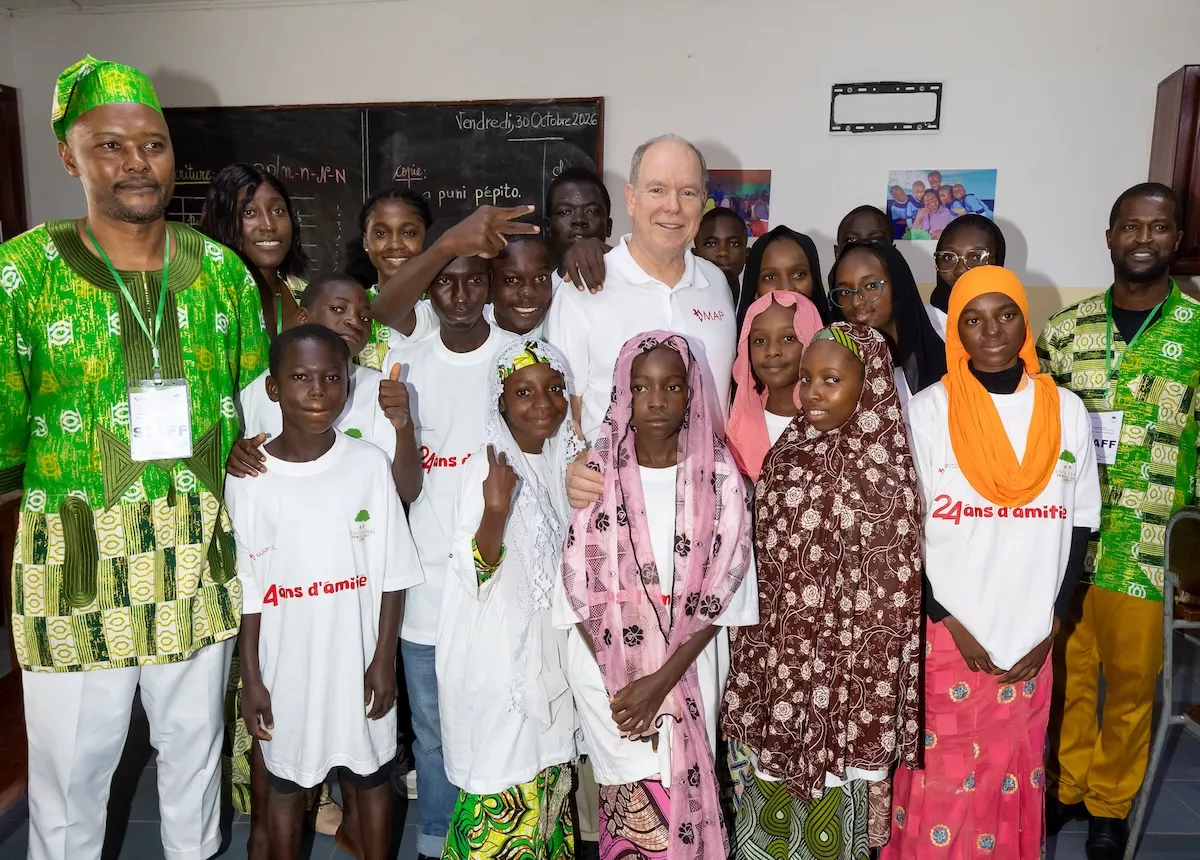
“That is Monaco’s choice: to build partnerships based on trust and over the long term,” the Prince said. “Monaco will continue to work with you to open up concrete opportunities for Cameroon’s most vulnerable children, young people and families. You can count on us!”
From Yaoundé, the Prince travelled to Dakar, Senegal, for the Youth Olympic Games, which he is attending as a member of the International Olympic Committee.
Monaco Life is written by qualified journalists, writing original content. Sign up for our free newsletter, listen to our podcasts on Spotify, and follow us across Facebook, Instagram, LinkedIn, and Tik Tok
Main Photo credit: Frédéric Nebinger / Palais princier de Monaco