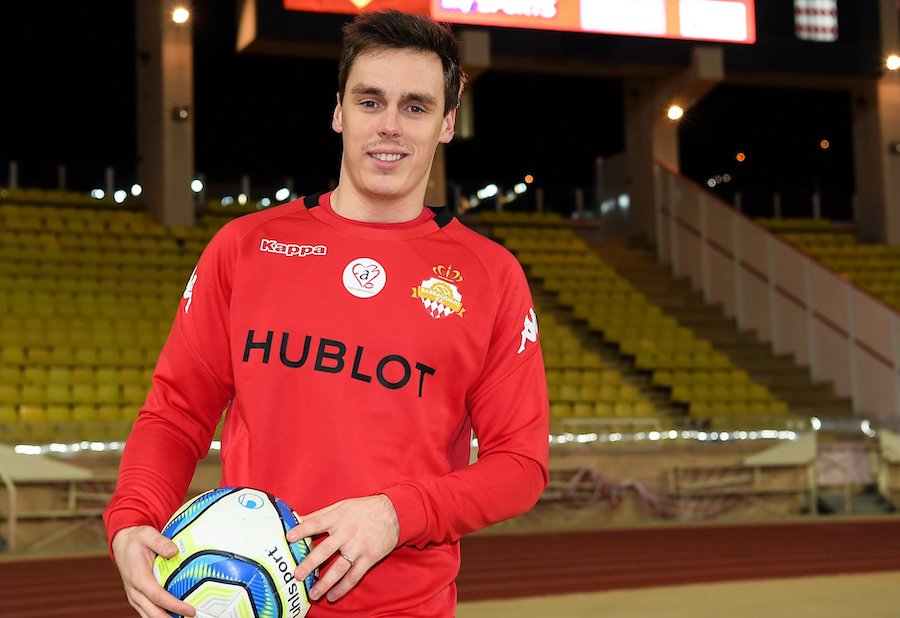
The Fight AIDS Cup charity match, organised by Louis Ducruet and Romain Goiran, is returning for a second edition, pitting Prince Albert’s Barbagiuans against Princess Stephanie’s Circus Football Club.
“In the first year after the creation of this match, only our team was reinforced by former professional players. We had to allow Circus FC to do the same, in order to attract more public and sponsors,” said Louis Ducruet, president of the Barbagiuans.
“This year again, the legends of football have responded, on both sides. We have the unconditional support of all these players and especially Sébastien Frey, captain of Circus FC, who facilitated the arrival of some of his friends. We are delighted.”
The charity football match will be held on 24th January and will be hosted by, amongst others, former Bien Sports journalist Alexandre Ruiz, who will keep fans abreast of the action on the pitch as well as review former glories of local and international football.
The Fight AIDS Cup is an extension of the historical match between the Barbagiuans and Circus FC that has been ongoing for over 40 years. The new name has created a direct link between sport and charitable values in the Principality.
“With my partner Romain Goiran, who is a child of the Barbagiuans, we decided to formalise this match to help my mother’s association, Fight AIDS Monaco. When this event took place at the Cap d’Ail stadium, on the sly with the Circus Festival, big names in football were already invited. We found it a shame not to share the potential of such a sporting event with charity,” Ducruet added.
The 2020 version attracted some big names including several former AS Monaco players. In addition to Sébastien Squillaci, Didier Deschamps, Gaël Givet, Andrea Raggi and Manuel Dos Santos, the fans particularly appreciated seeing Ludovic Giuly on the field.
The triumph of the last event puts the pressure on to make sure this year’s is equally thrilling and well-received.
Photo source: Fight AIDS Monaco
Analysis: Tactical takeaways from Clement’s ASM debut
Despite limited preparation and a depleted roster, Philippe Clement’s Monaco debut on Sunday provided an interesting tactical insight into how he sees his side developing over the course of his management.
Flexibility and adaptability
Clement was greeted in Monaco by a swathe of Covid cases and the absences of key players. One could therefore be fooled into thinking that little can be deduced from the drab draw at a drenched Beaujoire stadium.
The way in which Clement reacted in light of these challenges, however, is revealing in itself. Rather than pigeonholing players in certain positions, Clement approaches the game in terms of the role that players fulfil, and their suitability to that role based on their attributes.
This explains the introduction of debutant Vanderson in a slightly more advanced right-midfield berth, often functioning within the half-spaces. More strikingly, however, was the deployment of resident left-back Caio Henrique in the number 10 role.
Caio as a No.10
Although the jury is still out on Henrique’s suitability to the role relative to other candidates, and it remains to be seen whether this was simply a short-term fix to Monaco’s injury crisis or a more long-term adjustment, the Brazilian gave a positive showing.
Particularly in the first-half, Henrique was an ever-present option for progressive passes. He manufactured space nicely in between the lines and often came to feet. More interestingly and encouragingly, he showed a great understanding with Kevin Volland.
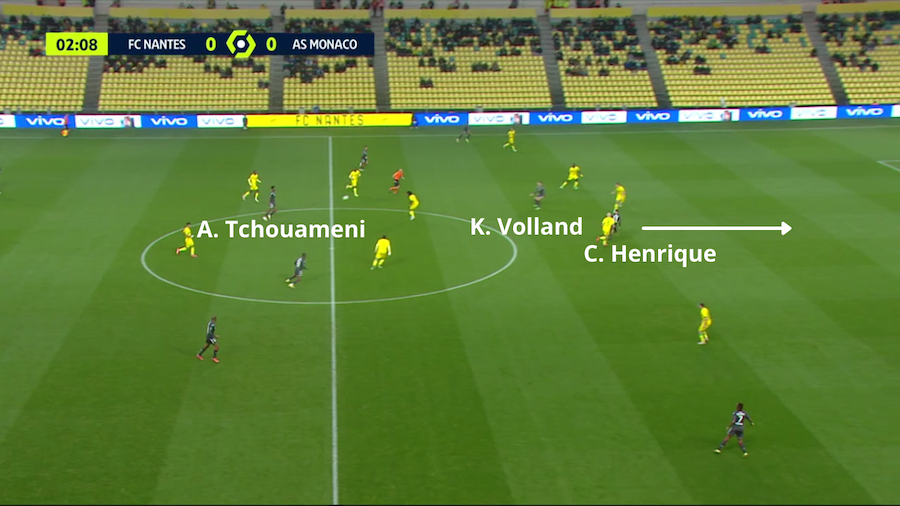
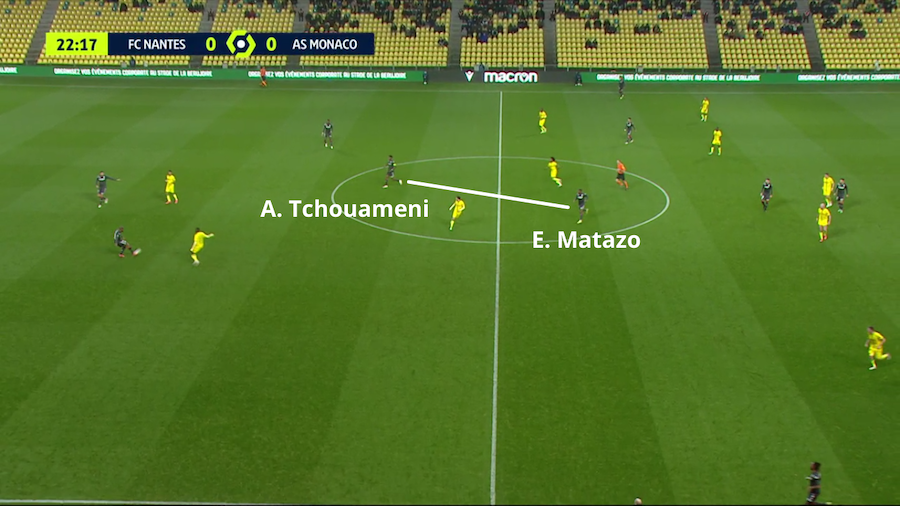
As shown in this extract from the game against Nantes, Henrique was equally as adept at making runs off the shoulder of the last man and in behind the defence. Although he didn’t receive the required service to make this count, the understanding of the role was there.
What was most striking was how Volland and Henrique almost always correctly interpreted the intentions of the other. When Volland made a run in behind, Henrique would show to feet and vice versa. In the above example, Volland was the option to feet, whilst Henrique ran in behind to attempt to get on the end of Aurelien Tchouameni’s ball over the top.
Henrique is not completely unfamiliar to the role. He has played in the number 10 during his formative years and also during his time at Atletico Madrid, and this showed in his understanding. His partnership with Volland, and the way in which they worked in tandem, would certainly have encouraged Clement, and whether it is used as a long-term solution or not, he certainly shouldn’t be discouraged from deploying the duo in those roles in the future.
Asymmetrical back four
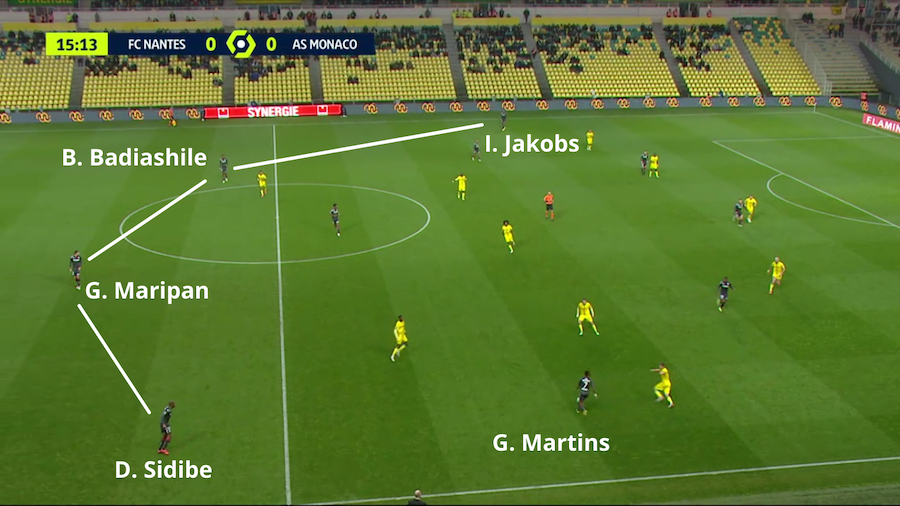
Perhaps the most distinguishable of all the tactical decisions made by Clement was his utilisation of an asymmetrical back four. Ismail Jakobs height up the pitch as well as his width provided a constant switching outlet, whilst also providing more room for the effervescent Sofiane Diop to exploit the half-spaces.
In stark contrast, Djibril Sidibe tucked in narrower and deeper. Gelson Martins was the outlet down the right who provided the width, whilst Sidibe would sometimes provide an underlapping run to provide attacking momentum.
Although there were some nice interchanges between Martins and Sidibe, the Jakobs-Diop partnership bore more fruit. Particularly in the first-half, the width provided by Jakobs afforded plentiful room for Diop in the half-spaces that he duly exploited. The performance of the France U21 international was another signal of his continued progression as he becomes a more rounded player. Niko Kovac can certainly be given a lot of credit for this, whilst the excellent attitude of the player is seeing him become a more consistent performer and a key member of AS Monaco’s attacking unit.
Tactically, little changed when Sidibe went off injured mid-way through the first-half. Ruben Aguilar continued to sit deep and narrow, and Martins was the principal source of progression down that side.
Jakobs’ unrelenting natural fitness allowed him to get back into shape as soon as the ball was lost, as he quickly joined a flatter, more conventional back-line. 41% of Nantes’ attacks were focused down Sidibe/Aguilar’s side despite the fact that, given the huge gap between Jakobs and Benoit Badiashile, most of the space should theoretically have been on the other side. This shows just how quick Jakobs was in re-joining the rest of his back-line.
A vertical midfield pivot?
Tchouameni was the standout performer on Sunday. On a visual inspection he looked dominant and metronomic in his role in the midfield pivot alongside Eliot Matazo. The statistics back this up too. The France international midfielder registered a series of season-best statistics including most progressive passes, most carries, most touches and most attempted and completed passes.
This was, in part, facilitated by a tweaking of the double pivot partnership. Accustomed to a more horizontal pivot, Tchouameni and Matazo played more vertically on Sunday, facilitating simple progressive passes. This was shown in their average position at the end of the match as the two players almost overlap, with Matazo on average playing just slightly higher, but no wider than his teammate.
Tchouameni was therefore more often the deeper of the two. This allowed him to fully utilise his range of passing from more unpressured areas of the pitch, whilst also providing opportunities for his teammates to easily recycle the ball through him and once more build through the phases.
It was largely thanks to this unconventional pivot that AS Monaco managed to control the match, with a dominating 69% possession throughout the game. Matazo was also impressive, and whilst Youssouf Fofana should be back in the matchday squad against Clermont Foot, he may find it difficult to displace the young Belgian.
Speed and verticality in transition
Perhaps the most exciting tactical characteristic of Clement’s debut was the dynamism in the transition. Staying true to Kovac’s philosophy, Monaco pressed high and with intent in the first-half in particular. The three injuries and perhaps just a lack of natural fitness amongst some of the returning players, meant that this wasn’t replicated in the second-half.
Some of the pressing patterns that AS Monaco fans were accustomed to seeing under Kovac were once again evident here. In particular, Monaco recognised the opposition full-backs receiving the ball as a pressing trigger, and would quickly condense the space and commit players to the press.
Once the ball was regained, Monaco would then quickly spring an attack, the verticality and the speed of which was problematic for the opposition, who had not yet had the time to reset. With more drilling and a higher level of fitness amongst the squad, this style of transition play has the chance of being a great source of attacking threat for Monaco.
The first-half of Clement’s debut offers a lot of promise going forward, and although a slightly more lethargic second-half display may linger more in the minds of fans, it is important to remember the difficulty in the preparation of the game. There are already enough positive signs to hint that Monaco are in a good position to fight for the Champions League places.
Photo of Philippe Clement by Luke Entwistle, Monaco Life
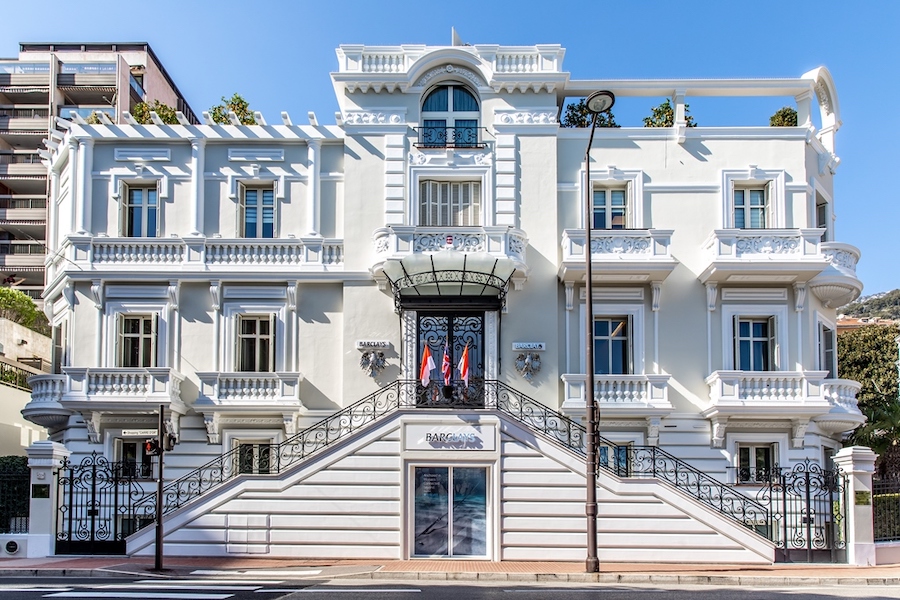
Barclays Private Bank is this year celebrating its 100th anniversary of opening in Monaco and will mark the milestone by showcasing some of its precious mementos.
Barclays Private Bank was established in Monaco in 1922 and was the first foreign private bank to open its doors in Monaco’s Golden Square.
“Barclays was the first international bank to arrive in Monaco in 1922 and, 100 years on, we are proud to continue to bring our British heritage to the Principality, which remains one of the leading financial centres in the world thanks to its high quality infrastructure and economic stability,” said Jean-Christophe Gerard, Head of Wealth and Private Banking at Barclays. “We look forward to celebrating Barclays’ centenary in the Principality and are honoured to be part of the rich history and future of Monaco, as we continue to service the sophisticated needs of our clients by providing them with highly bespoke business and investment opportunities.”
From January, a selection of memorabilia from Barclays over the years will be on display at the Barclays Monaco office, including a gold signet ring dating from 1570, which was designed by Thomas Gresham, banker to Queen Elizabeth I and founder of Martin’s Bank which was later sold to Barclays in 1969. Also on display is a letter from the court of Queen Elizabeth I authorising Thomas Gresham to pay her debts in Antwerp, a ledger from Oxford Old Bank – which later became part of Barclays in 1900 – showing the account of Oscar Wilde, and the UK´s first credit card.
Throughout 2022, Barclays will be marking its centenary year in Monaco with events that celebrate its history and future in Monaco. Among them will be Monaco Ocean Week, which Barclays Private Bank will be supporting for the second year through its partnership with the Prince Albert of Monaco Foundation to safeguard ocean bio-diversity and help maintain a stable climate.
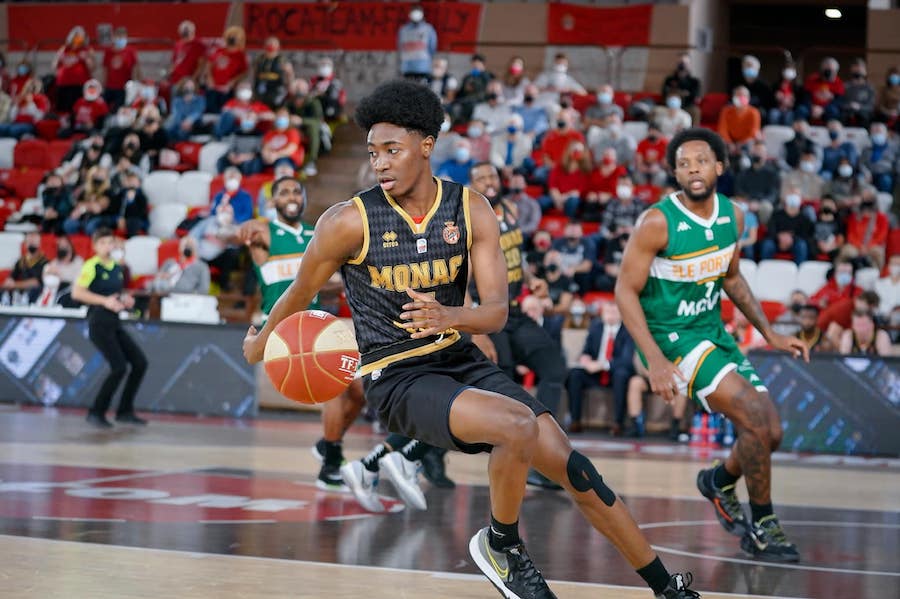
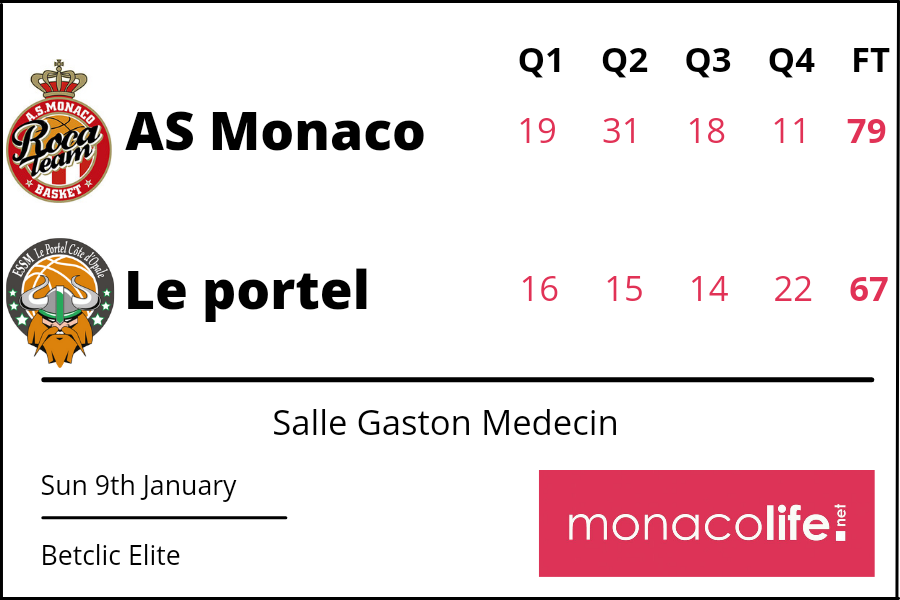
AS Monaco Basketball strolled to a comfortable 79-67 home victory against Le Portel on Sunday, as Sasa Obradovic’s men took full advantage of their extended break.
The postponement of Friday’s fixture against Lyon-Villeurbanne has clearly benefited the side, providing a gap in the packed basketball schedule. Obradovic, having replaced Zvezdan Mitrovic mid-season, has had little time to instil his ideas in his side. Obradovic was clearly grateful for this post-match, stating that, “We have had more time to train these past days. It is important to make the players understand what I expect of them in terms of their roles and the system.”
Against the bottom side in the Betclic Elite, Monaco started poorly as they struggled to cut through Le Portel’s stubborn defence. Monaco gradually worked their way back into the game in the first-quarter, largely thanks to the efforts of Leo Westermann and Ibrahima Fall Faye, the latter’s 11 points enough to make him Monaco’s top scorer in the fixture.
Ending the first-quarter with a slender lead, Monaco blew Le Portel away in the second with a monstrous offensive effort yielding 31 points, including an impressive 14 point streak that went unreplied. Paris Lee chipped in with a three-pointer, whilst Donatas Motiejūnas was prolific within the key.
The half-time buzzer brought to an end a dominant half from the Roca team, leaving them with the not so daunting task of managing their almost unassailable 19 point lead in the second-half.
Monaco comfortably navigated the third-quarter, managing to marginally extend their advantage, before losing their control on the game in the final quarter. It was not enough for Le Portel, who remain bottom of the table following the loss, whilst Monaco stay in second.
Although Obradovic was disappointed with the way that his side finished, he was nevertheless happy with a comfortable win in their first fixture of 2022. “There are lots of good things to hold on to. I am happy with our defence and the way in which we converted on the counter attack,” the Serb said. “It would have been better if we had kept up the intense rhythm until the end.”
Tuesday night fixture against Unics has been postponed due to Covid cases within the Russian side’s squad. Obradovic therefore has yet more time to work with his players in preparation for Thursday’s trip to Bayern Munich.
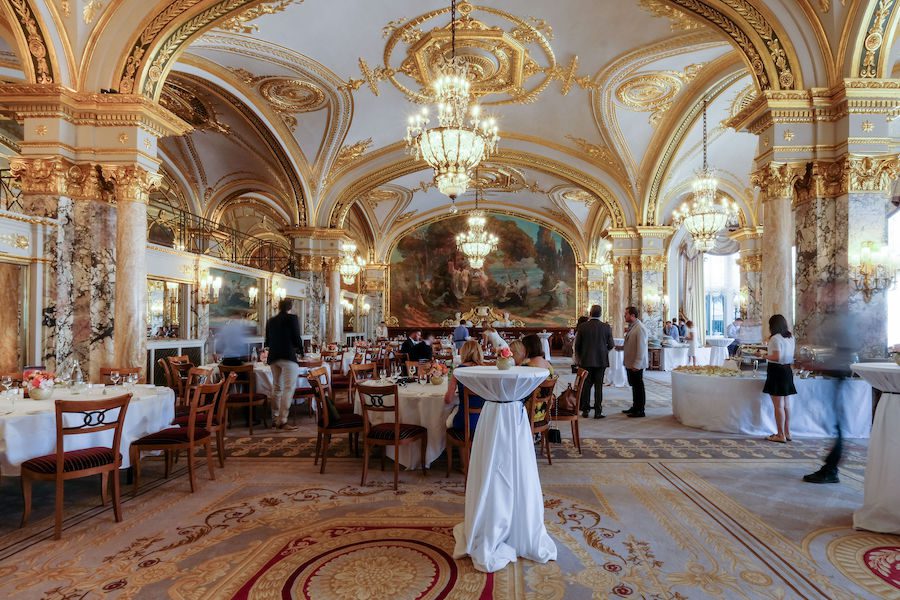
The legendary Café de Paris will be taking up temporary residence in the glamorous Salle Empire at the Hotel de Paris during an extensive one-year renovation of the original Monte-Carlo site.
The Café de Paris, which has been a staple of the Monaco landscape since 1868 under different guises, is about to undergo a major facelift and will be closed from March 2022 to April 2023.
But in order to keep the iconic institution up and running during this period, the owners of the café – Société des Bains de Mer (SBM) – have come up with a temporary solution to ensure the fabled brasserie carries on, though in a different setting.
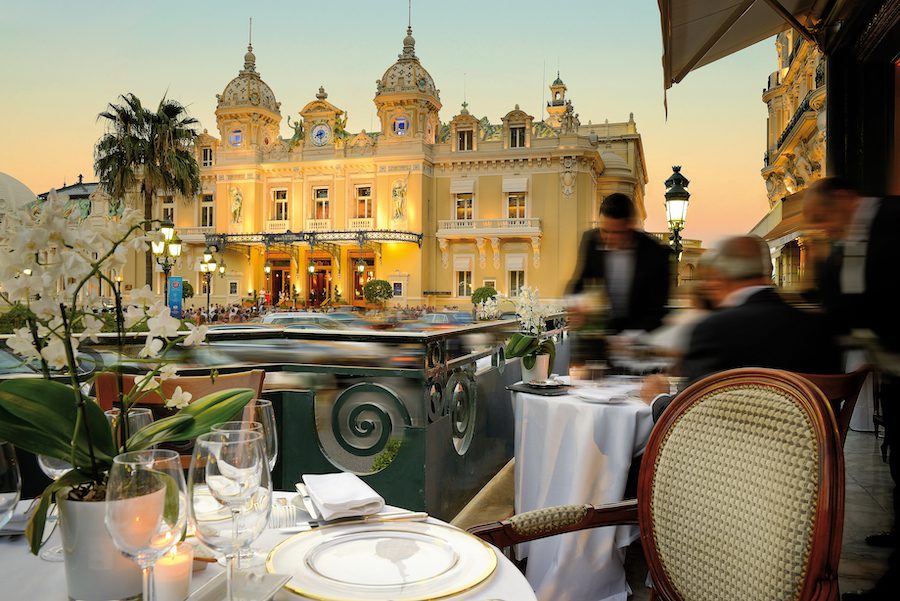
According to a report in Monaco Matin, the Café de Paris is decamping across the square to the stunning Belle Epoque-styled Salle Empire at the Hôtel de Paris. The location was chosen for its beautiful terrace and views onto the Place du Casino, an inspired idea that will soothe fans of the Café de Paris and allow service to continue uninterrupted. Even the furniture will be moved to Salle Empire, as will all of the staff, says SBM.
The terrace of the Salle Empire at the Hôtel de Paris, source SBM
The Café de Paris started its history as the Café Divan in 1868 and was primarily for the use of hotel guests. After just a year, the restaurant’s success saw an expansion and a new name, the Grand Café de Monte-Carlo.
In 1882 and 1890, the site was renovated, but was soon changed again when, seven years later, it was demolished to make way for the Café de Paris that we know today.
Stefano Brancato, photo by Monaco Life
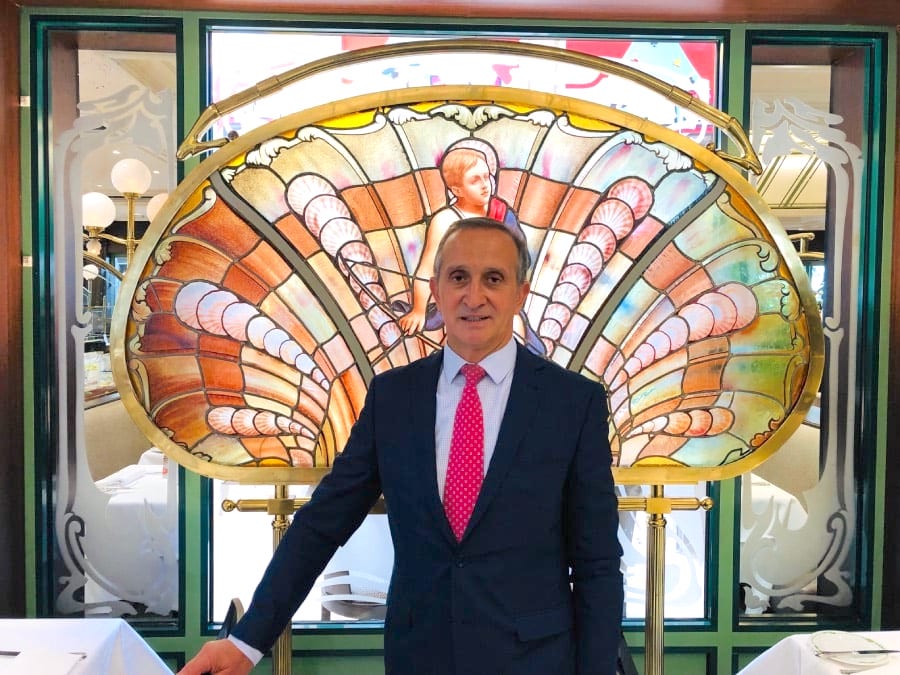
Whilst huge efforts are being made to ensure everything stays the same, one change will no doubt be felt. The long-time Director of the Café de Paris, Stefano Brancato, retired on 9th January after more than three decades at the helm.
Giving equal and always friendly service to celebrities, the Princely family and regular customers alike, Brancato decided it was time, at age 63, to start a new chapter of his life, though he intends to remain active.
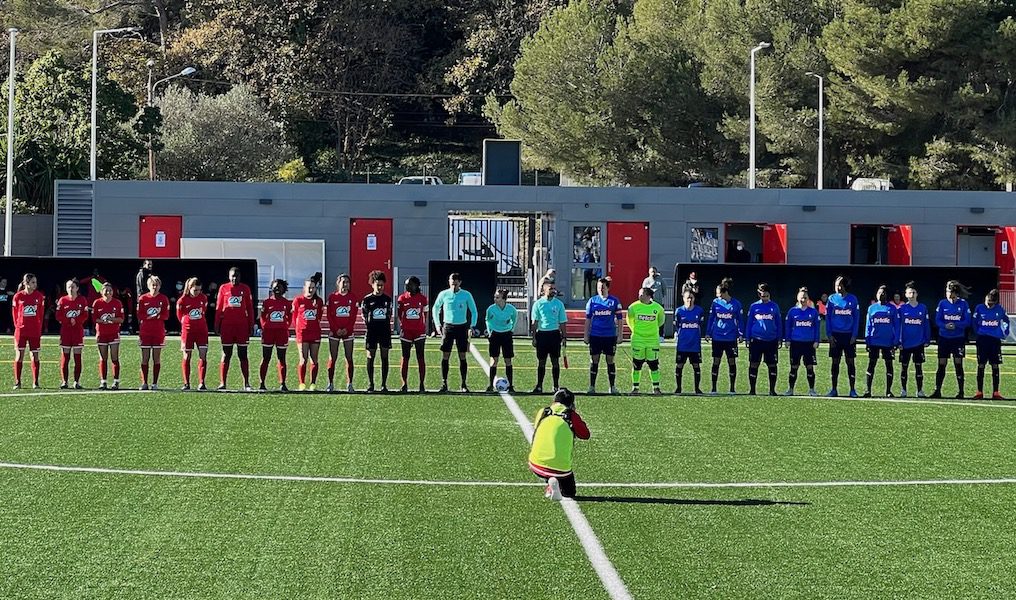
AS Monaco Women sealed their place in the next round of the Coupe de France, keeping alive their hopes of cup glory. Their already historic run now sees them advance to the round of 16.
Stunning late goals from Laura Domecq and Eva Towara sealed a 3-1 victory against Colomiers at a sunbaked Prince Hereditaire Jacques stadium on Sunday. In the draw for the next round, ASM Women, alongside Grand Calais, will be the joint lowest-ranked sides left in the competition.
ASM Women set the tone for the match early-on, dominating possession and territory. Two early chances fell to Domecq, but having found herself one-on-one on two occasions, she couldn’t convert either chance.
It was Colomiers in a rare foray in the Monaco half who opened the scoring. American defender Maddie Watson brought down a Colomiers player in the box, and Manon Rouzies converted the resulting penalty.
Colomiers began to sit deeper and deeper, happy to allow Monaco possession on the edge of their half, but the pressure eventually told. Domecq restored parity midway through the second-half and from that point the barrage on the Colomiers goal was unrelenting.
It wasn’t until late on that ASM Women made their dominance count. Towara’s sweetly struck strike nestled in the bottom left corner to send the 300 home supporters into raptures. The victory was sealed just moments later, Domecq doubling-up with a sumptuous long-range strike that was out of the reach of the Colomiers keeper and nestled in the top-left corner.
Queue wild celebrations in the home dressing room. Having already made history by making it into the round of 32 of the Coupe de France for the first time, Domecq told Monaco Life that she is already thinking about the next round. “We are going to have to raise our game, because it won’t be the same kind of match.”
Watson told Monaco Life that she hopes the team can go all the way in the competition. “We want to go as far as possible, let’s win it if we can!” On her preference for the opponent in the next round, she said, “They’re all going to be good at this point so there’s no preference. We just want to win and play our game, and it doesn’t matter who we play.”
ASM Women supporters will be waiting with anticipation to find out the team’s next opponent, with the fixture to be played on Sunday 30th January.