
Risk-focused Artificial Intelligence Act enters into effect in the EU

Following the introduction of the risk-focused Artificial Intelligence Act, which came into effect on 1st August, EU-based or connected businesses that use AI features and programming now face a range of new regulations. Here are the details. 

The European Union’s new cross-sector regulations concerning the use of artificial intelligence were voted in on 21st May 21st and have since been approved by the European Council. Now recognised as the Artificial Intelligence Act, the new rules and regulations formally came into effect on 1st August. 

The act is the first of its kind globally, and incorporates a definition of AI based on the “product safety and risk-based approach” championed by the EU. It categorises AI-related risk into four levels – minimal, specific transparency, high, and unacceptable – that designate the type of rules businesses must now adhere to.  

Minimal risk to unacceptable influence

Many companies fall into the minimal risk category and are not required to take any action at all, though they may choose to comply with additional rules voluntarily. 

For AI systems classified under specific transparency risk, such as chatbots, there is a requirement to clearly disclose to users that they are interacting with a machine. Certain AI-generated content, including deepfakes, must be clearly identified, and users must be notified when biometric categorisation or emotion recognition systems are in use. 

High-risk systems, including those used for recruitment or determining eligibility for bank loans, must adhere to stringent regulations. These include implementing risk-mitigation systems, ensuring high-quality data sets, maintaining activity logs, providing detailed documentation, offering clear user information, enabling human oversight and upholding a high level of cybersecurity. 

AI systems with unacceptable risk are banned outright due to their potential threats to fundamental human rights or user safety. Examples include AI that manipulates behaviour to circumvent users’ free will, such as toys using voice assistance to encourage dangerous or poor behaviour in minors, systems enabling ‘social scoring’ by governments or companies, predictive police profiling networks and real-time remote facial recognition systems used in public spaces for law enforcement. 

“The Act is designed to ensure that AI developed and used in the EU is trustworthy, with safeguards to protect people’s fundamental rights,” reads an EU press release. “The regulation aims to establish a harmonised internal market for AI in the EU, encouraging the uptake of this technology and creating a supportive environment for innovation and investment.” 

The new law applies to all 27 Member States, as well as non-EU businesses and companies with a customer base in the bloc. Additionally, EEA countries like Liechtenstein, Norway and Iceland will also need to comply. 

Non-compliance with the guidelines will result in fines of up to 7% of global annual turnover for violations involving banned AI applications, up to 3% for other violations, and up to 1.5% for providing incorrect information. 

Companies will have a year to adjust to the new regulations.  

To read more about the Artificial Intelligence Act, click here.

Read related:

Advances and challenges of AI and blockchain explored at Monaco’s Digital Innovation Summit


Monaco Life is produced by real multi-media journalists writing original content. See more in our free newsletter, follow our Podcasts on Spotify, and check us out on Threads,  Facebook,  Instagram,  LinkedIn and Tik Tok. 


Photo source: Levart, Unsplash
 

Monaco’s must-visit restaurants without a Michelin star

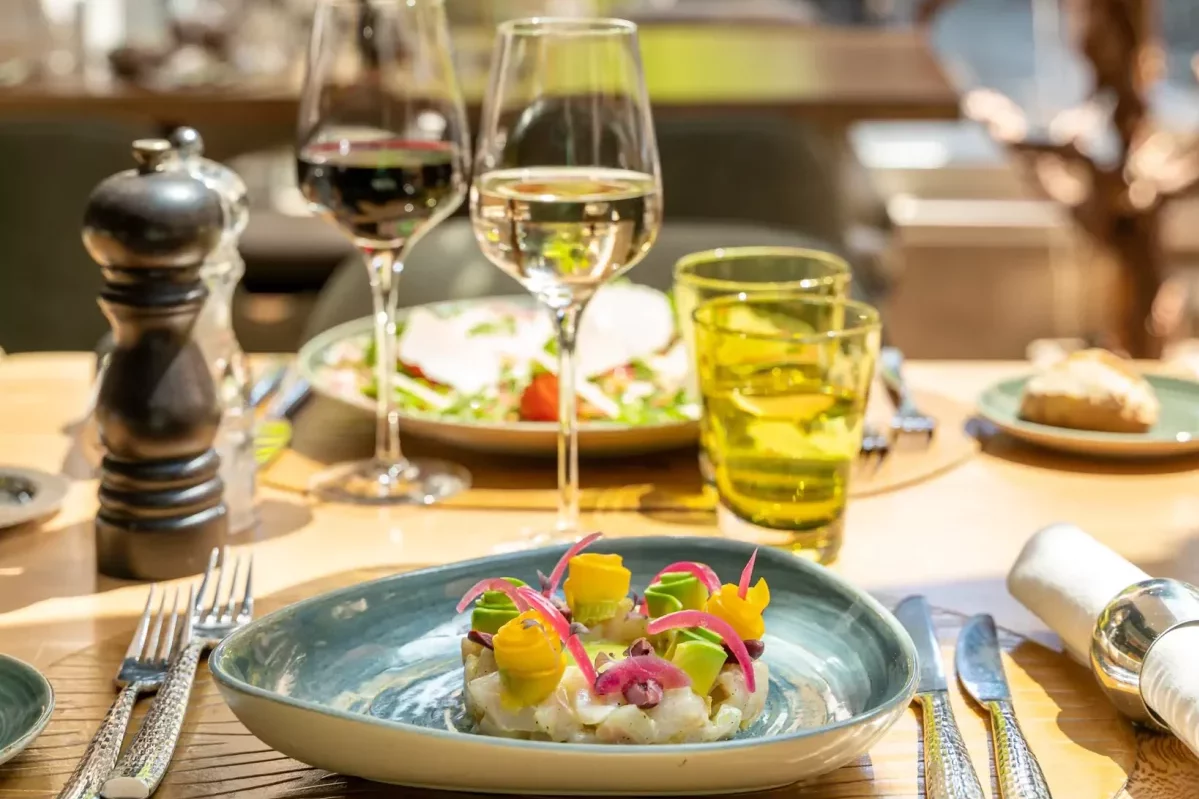
The Principality of Monaco is home to seven incredible Michelin-starred restaurants, including the famous Le Louis XV at the Hôtel de Paris and the acclaimed Les Ambassadeurs de Christophe Cussac at the Hôtel Métropole, but there are many other stellar addresses that should be on your list to sample, even if they don’t yet have a star to their name. 

Monaco’s Michelin-starred restaurants are, in some cases, just as famous as the Principality’s most iconic buildings and monuments. They carry titanic names of the culinary world, from Alain Ducasse’s three-starred Le Louis XV to Yannick Alléno’s Pavyllon Monte-Carlo at the Hôtel Hermitage, Marcel Ravin at Blue Bay and La Table d’Antonio Salvatore au Rampoldi.  

While they should all be on your gastronomic bucket list, there are many other top-quality eateries here in the Principality that deserve to feature too, regardless of their Michelin-starred – or star-less – status.  

Here, Monaco Life presents the six restaurants recommended by the legendary Michelin Guide for their cooking prowess and creativity.

Six top restaurants to try 

First up are two Monte-Carlo Société des Bains de Mer-backed restaurants: Elsa, the organic eatery at Monte-Carlo Beach, and Em Sherif, the Hôtel de Paris’ Lebanese affair. 

Elsa reopened this spring under the watchful eye of two Michelin-starred Chef Marcel Ravin, who also heads up his eponymous Blue Bay restaurant at Monte-Carlo Bay Hotel & Resort.  

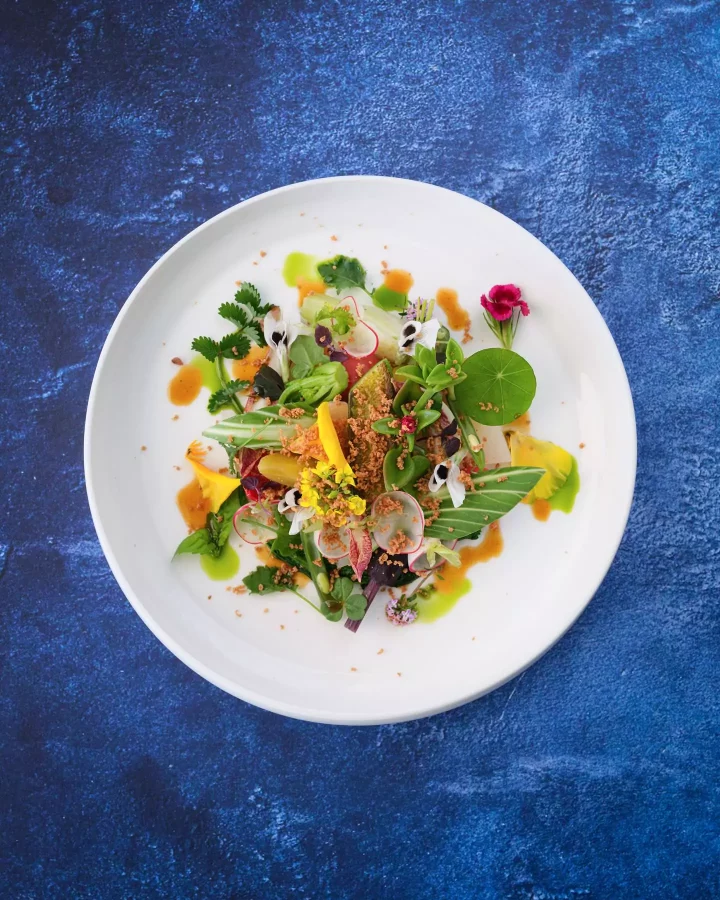
It is all about sustainability and organic produce sourced from the local area at Elsa, which was awarded the Prize for Ethical and Environmental Responsibility by La Liste in 2023.  

The menu here is deep-rooted in the region, with many of the fresh ingredients coming from the nearby Domaine d’Agerbol in Roquebrune Cap Martin. Seafood is particularly important to Caribbean native Ravin, who describes the range of dishes on offer at Elsa as akin to a “marine garden”.

Chef Marcel Ravin describes Elsa’ offerings as a “marine garden”. Photo credit: Monte-Carlo SBM

Em Sherif in the Place du Casino is a celebration of Lebanese cuisine in its finest form.

Chef Yasmina Hayek blends typical and traditional dishes from her native Lebanon with a finesse and aesthetic guided by her experiences in some of Europe’s most creative kitchens. Guests can expect all the colours and flavours of this quintessentially Middle Eastern cuisine, but with an added touch of glamour thanks to the restaurant’s stunning setting in the five-star Hôtel de Paris.  

Refined Lebanese cuisine at Em Sherif. Photo credit: Monte-Carlo SBM

Next are two distinct restaurants that belong to the Giraudi Group: the Chinese Song Qi on Avenue Princesse Grace and Beefbar, the meat-lover’s paradise that has gone truly global. 

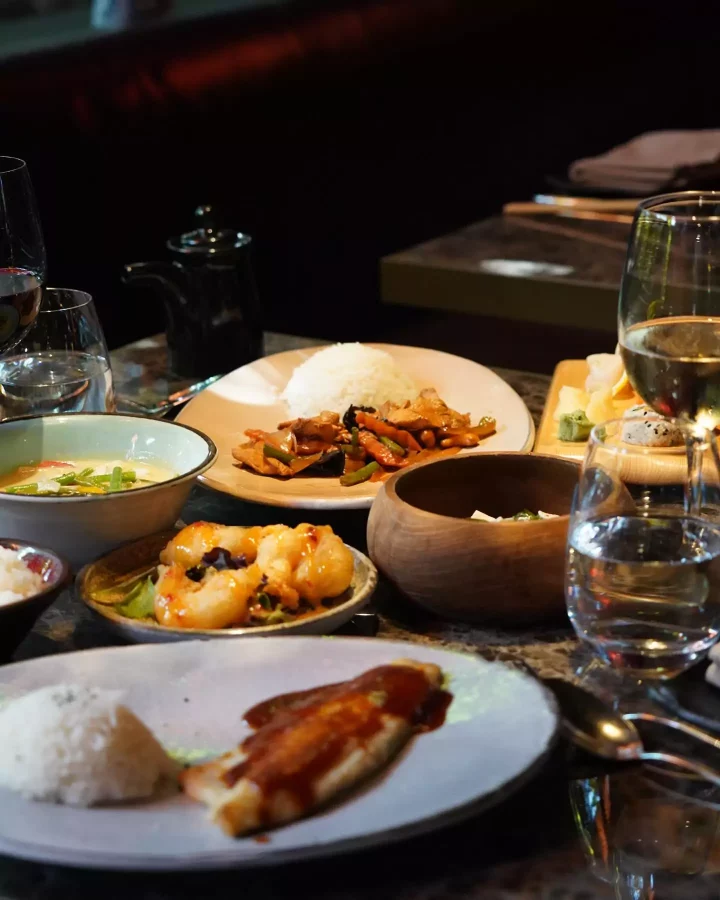
Song Qi is a place to try for lunch and for dinner. Located just over the road from the Grimaldi Forum conference centre, the menu features classic Chinese dishes with an elegant twist, from lobster and Chilean seabass dim sum to elaborate woks and aromatic Peking duck pancakes. There are also plenty of vegan and vegetarian plates, making this a great place for groups with all dietary demands and appetites! 

See more: From Monaco to Brazil: New Song Qi restaurant opens in São Paulo

Beefbar Monaco on the Quai Jean-Charles Rey in Fontvieille is the brand’s original location, but it has spread all over the world and can now be found in far-flung destinations including New York City, the UAE, Hong Kong and throughout the Caribbean.  

Though beef is clearly the star of the menu, which features the likes of genuine Japanese Kobe to Australian Wagyu and USDA Black Angus, Beefbar also celebrates other fine meats, including Iberian hams and milk-fed veal.  

The restaurant offers a stylish yet sumptuous dining experience; it’s not hard to see why the Beefbar brand has been taken up by cities all over the world. 

Read more: Beefbar voted the world’s top steak house

The Maya Collection’s MayaBay is the fifth restaurant without a Michelin star to try. Another Avenue Princesse Grace address, this Japanese-Thai fusion uniquely brings together the colour and flavour of the latter with the grace and minimalism of the former.  

It is visually decadent, but far from over-induglent, and Chef Christophe Dupuy is well-known for his ethos of “only working with beautiful produce and beautiful things”. 

MayaBay blends Japanese cuisine with Thai flair and flavour. Photo via Facebook

The final restaurant to feature on our list is perhaps the most understated, but don’t let that put you off from visiting.  

La Table d’Elise is an ode to Provence, with the Michelin Guide’s inspectors describing its cuisine as “spot on, unfussy, generous and tasty”. 

Found on the Rue du Portier, the menu spotlights classically Mediterranean dishes such as soupe de poisson de roche, herb-crusted fish, langoustines and octopus, and grilled meats.  

The restaurant runs a very affordable lunch menu for €29, while the dinner service offers guests a full choice of la carte.  


Monaco Life is produced by real multi-media journalists writing original content. See more in our free newsletter, follow our Podcasts on Spotify, and check us out on Threads,  Facebook,  Instagram,  LinkedIn and Tik Tok. 


Photo credit of La Table d’Elise via Facebook 

Ferrari’s Leclerc: Competitive upgrades are needed “as soon as possible”

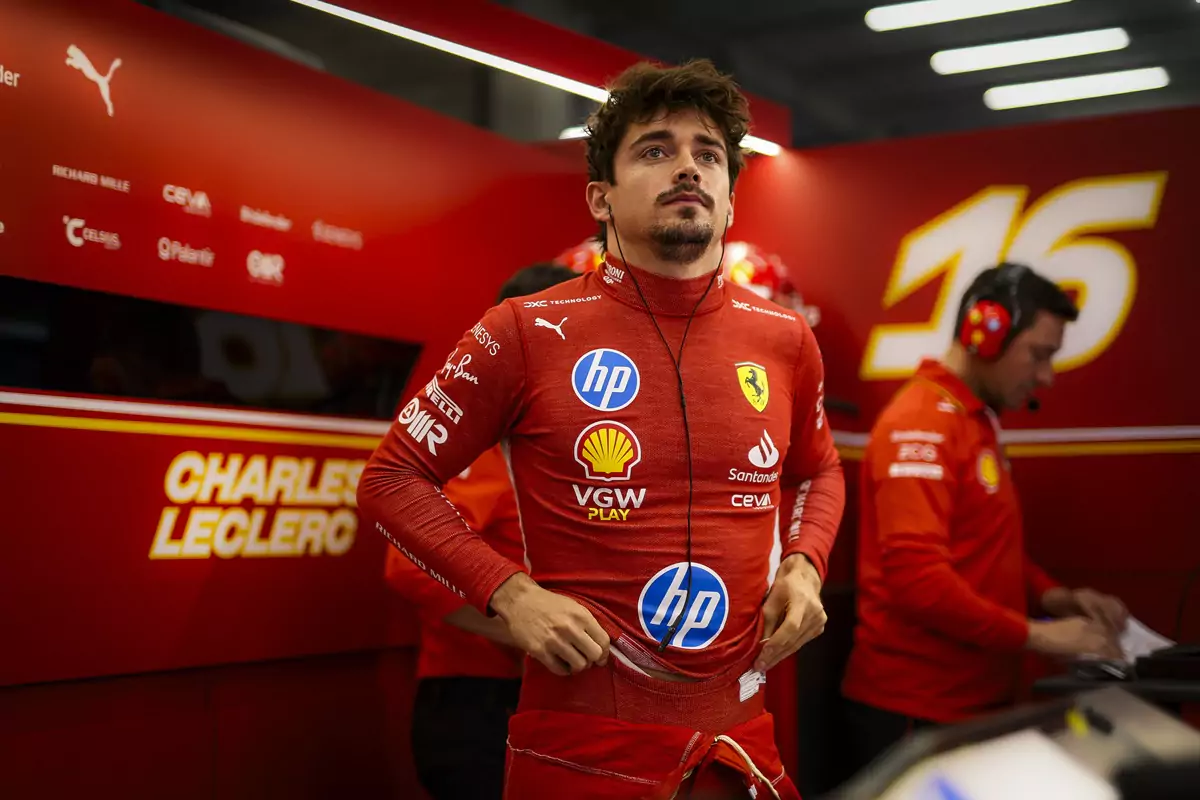
Monegasque Formula 1 driver Charles Leclerc has opened up about his thoughts on Ferrari’s 2024 season so far, with the bottom line being that he believes upgrades are urgently needed if the team is to gain a competitive edge on rivals Mercedes, Red Bull and McLaren. 

Just over midway through the 2024 Formula 1 season, Scuderia Ferrari pilot Charles Leclerc has given his honest assessment on why he thinks his team is struggling despite a fairly strong start to the season. 

“I feel like we are the fourth-fastest car at the moment,” said the 26-year-old Monegasque in an interview with formula1.com. “The first part of the year for us was, for the first half, pretty positive; the second half [we are] struggling a bit more, trying to fix the issues.” 

He continued, “We are just going to try and recharge our batteries during the break, come back, try and analyse, and hopefully bring new parts as soon as possible on the car to be challenging for wins again.” 

His solution to the team’s woes, and to regain traction against the Mercedes, McLaren and Red Bull teams, is to incorporate upgrades to the cars, as well as smooth out the hitches caused by the change to the floor that was introduced for the Spanish Grand Prix, which caused excessive bouncing at higher speeds.  

See more: Update: Russell disqualification moves Leclerc up to P3 at Belgian Grand Prix

But while Leclerc’s views lean toward giving his team a “needs improvement” label, Ferrari Team Principal Frédéric Vasseur has a brighter outlook.  

“Overall, it’s a much better start than 12 months ago,” said Vasseur to formula1.com. “It was a bit up and down. We had a good sequence and a bit more difficult sequence, but the most important [thing] is to score the points that you can score.” 

Ferrari has collated 345 points this season, putting the team in third place behind the leading Red Bull side and second-placed McLaren.  

Whatever the perspective, the fact is that the team have a bit of time to iron out any glitches before returning to action on 25th August for the Dutch Grand Prix on the Zandvoort Circuit.

Read related:

F1: Charles Leclerc brings home the win at the Monaco Grand Prix


Monaco Life is produced by real multi-media journalists writing original content. See more in our free newsletter, follow our Podcasts on Spotify, and check us out on Threads,  Facebook,  Instagram,  LinkedIn and Tik Tok. 


Photo credit: Scuderia Ferrari Media Centre


€1.5 billion generated by frozen Russian assets pledged to Ukraine

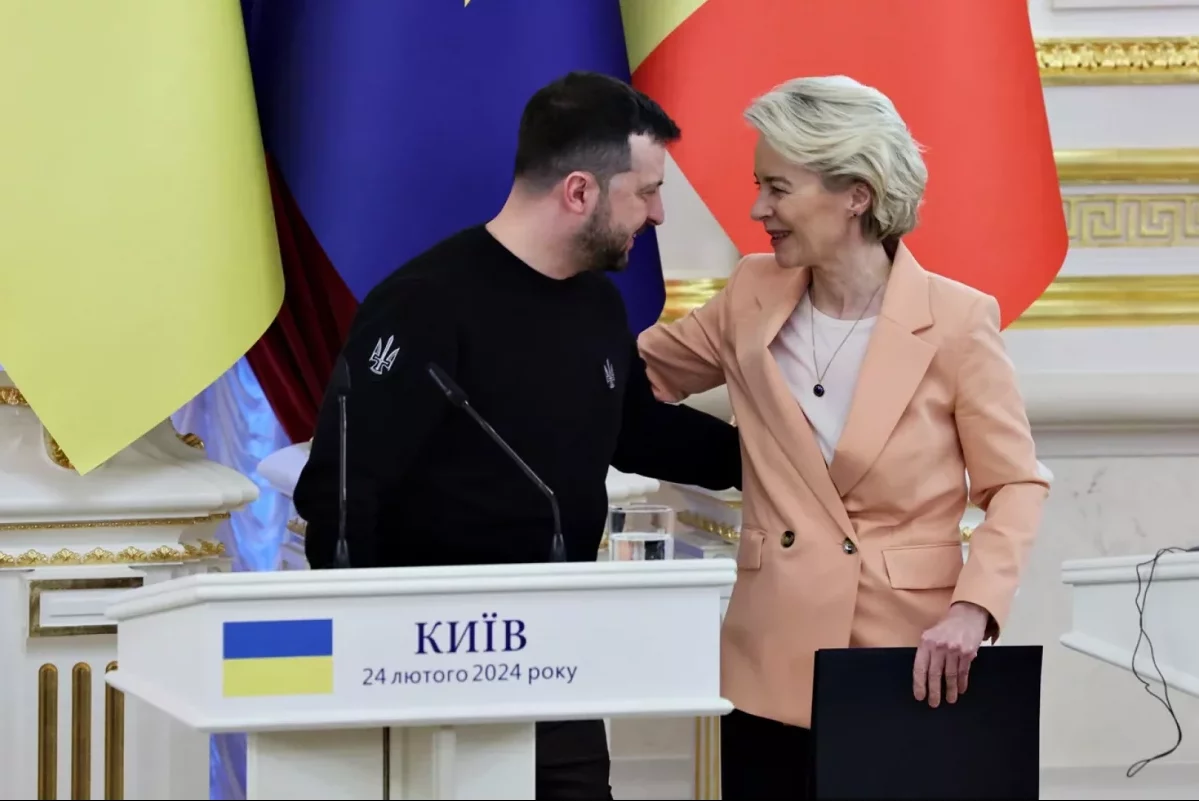
In a landmark yet controversial move, the European Union has transferred €1.5 billion in extraordinary revenues generated by frozen Russian assets to the Ukrainian war effort and reconstruction project.  

This first payment, which represents a portion of the proceeds generated by interest gained on immobilised Russian assets over the last year and a half, was made on 26th July following an agreement with the Euroclear Belgium central securities depository.  

According to a statement made by the EU, “90% of the financial contribution from the extraordinary revenues will go to the European Peace Facility (EPF) and 10% will go to the Ukraine Facility to support respectively Ukraine’s military and reconstruction needs… The extraordinary revenues are fully used for the benefit of Ukraine through two Union Instruments, the EPF and the Ukraine Facility. The channelling ensures that the revenues are spent on the strengthening of military capabilities and reconstruction in line with sound financial management rules.” 

The action comes on the back of a decision made in May 2024 in which the European Council voted in a favour of adopting “a set of legal acts ensuring that the net profits stemming from unexpected and extraordinary revenues accruing to central securities depositories (CSDs) in the EU, as a result of the implementation of the EU restrictive measures” could be used to provide financial support to the besieged nation of Ukraine’s defence industry capacities and reconstruction. 

Following the completion of this first €1.5 billion transfer, Ursula von der Leyen, the president of the European Commission, said, “The EU stands with Ukraine… There is no better symbol or use for the Kremlin’s money than to make Ukraine and all of Europe a safer place to live.” 

See more: Monaco joins 100 other nations and international organisations at Ukraine Peace Summit

The decree to use the funds to aid Ukraine has not been universally approved, with Hungary refusing to agree to the terms. A legal loophole has allowed the EU to circumvent the nation, with lawyers arguing that as Hungary abstained from voting on the agreement made by other bloc members in May, it has been therefore excluded from being a part of the decision to make the inaugural payment.  

According to ReutersMark R. Ludwikowski, a columnist on international trade, “Although well-intentioned, the West’s plans to confiscate Russian assets to provide reparations or assistance to Ukraine face significant legal challenges. Criminalising transactions involving sanctioned Russian assets reduces their economic value, but does not alter ownership. Customary laws of warfare allow for the confiscation of enemy state property and countermeasures against responsible states. Still, these measures do not apply to either the EU or the other G7 countries, as Russia has not attacked them.” 

He continues, “Legally, freezing assets is different from confiscating them. Confiscation requires judicial action, which is impeded by the principle of sovereign equality. Therefore, Russian Central Bank (RCB) assets are protected from legal proceedings in other states unless Russia explicitly waives this immunity. For example, assets blocked under Council Regulation 833/2014 are justified as countermeasures, but cannot be definitively taken under current laws.” 

Since the Russia-Ukraine conflict began in early 2022, the EU has imposed wide-reaching sanctions on Russian assets and is believed to have frozen an amount totalling €210 billion.  


Monaco Life is produced by real multi-media journalists writing original content. See more in our free newsletter, follow our Podcasts on Spotify, and check us out on Threads,  Facebook,  Instagram,  LinkedIn and Tik Tok. 


Photo credit: EU 

Lionel Beffre officially assumes role as  Monaco’s new Minister of the Interior

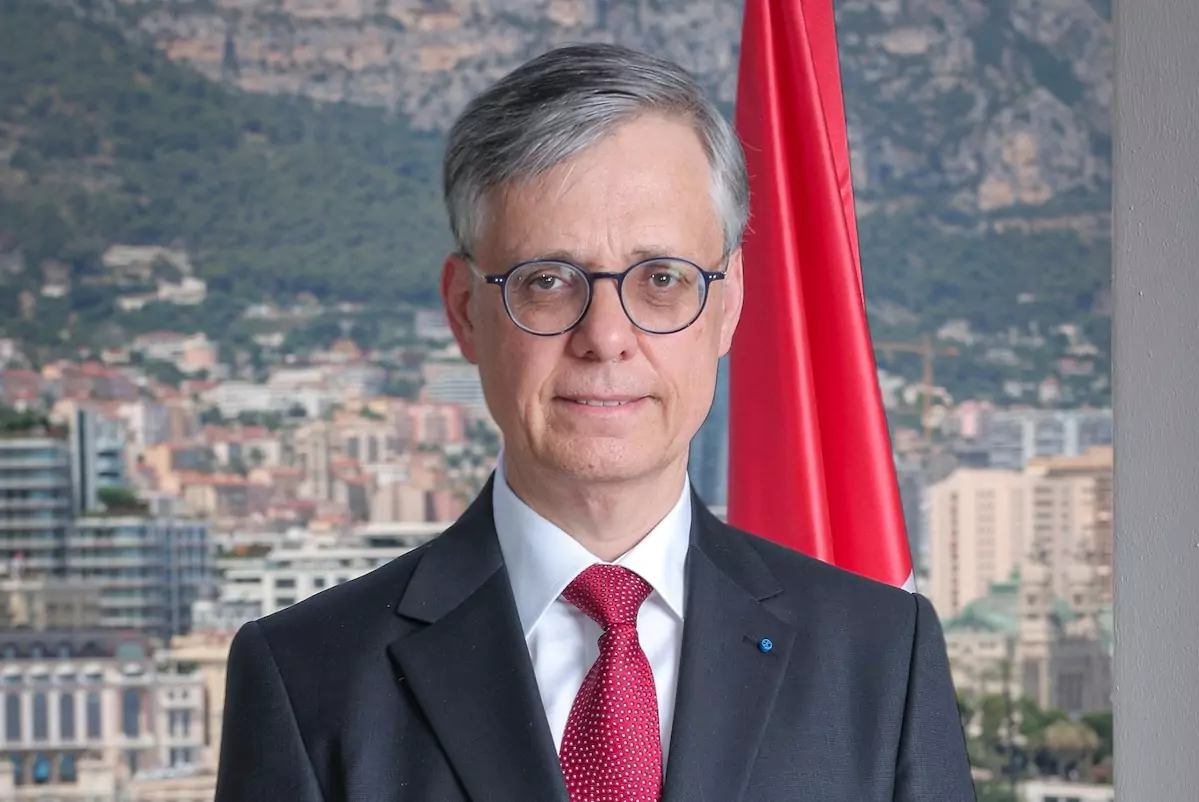
In a significant reshuffle within Monaco’s government, Lionel Beffre has officially taken over the role of Minister of the Interior. He replaces Patrice Cellario, who retires after an impressive 42-year tenure in service of the Monegasque state.

Monday 5th August marked a pivotal change in Monaco’s administration as Lionel Beffre assumed his new duties as Minister of the Interior. Beffre’s appointment follows the retirement of Patrice Cellario, a long-serving and respected figure in Monegasque politics.

Beffre comes into the role with an extensive background in public administration. Before his new appointment, he served as the Chief of Staff for the Minister of Overseas Territories. His extensive career includes several key positions as Prefect across various French departments, such as Lot-et-Garonne, Eure-et-Loir, Pyrénées-Atlantiques, Isère, and Seine-et-Marne. 

Beffre’s predecessor, Patrice Cellario, leaves behind a significant legacy. Over four decades, Cellario played a crucial role in shaping and maintaining Monaco’s internal policies. 

The transition not only marks a change in leadership but also sets the stage for new strategies and initiatives under Beffre’s guidance.

Monaco Life is produced by real multi-media journalists writing original content. See more in our free newsletter, follow our Podcasts on Spotify, and check us out on Threads,  Facebook,  Instagram,  LinkedIn and Tik Tok. 

Photo credit: Stephane Danna, Government Communication Department