Great British victory for Venturi

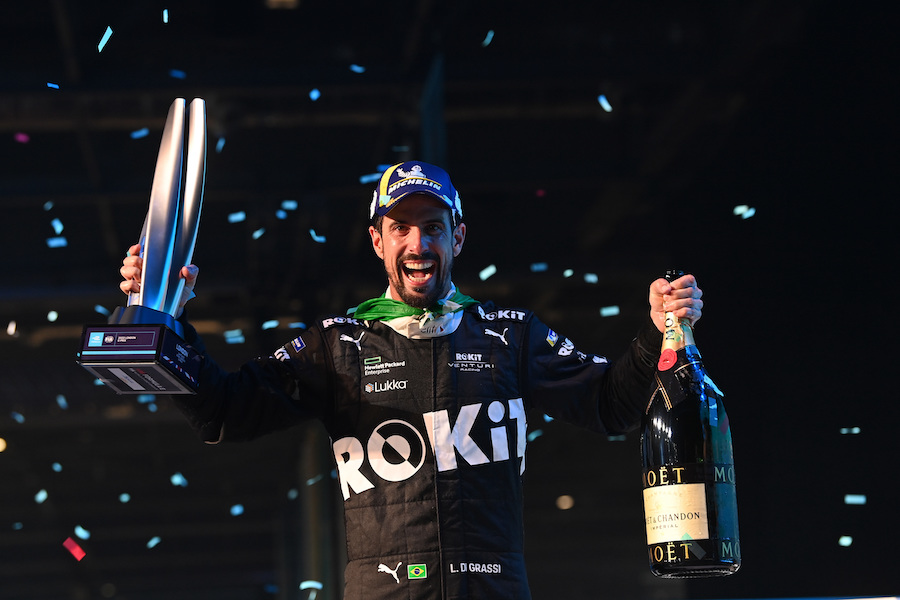
Monaco’s ROKiT Venturi Racing rounded off a difficult weekend in the English capital with a win in Sunday’s ePrix, however Edoardo Mortara now finds himself cut adrift in the championship battle.

It is what preceded Sunday’s win in London that is of concern to ROKiT Venturi and what leaves them with ground to make up in the Formula E constructors’ standings. The team have Lucas Di Grassi to thank for his contribution, which keeps them in the running.

Swiss driver Mortara, who has looked one of the favourites for the title, now finds himself 41 points off championship leader Stoffel Vandoorne with just two rounds remaining. The Venturi driver failed to score a point over the race weekend, leaving him with a lot of work to do in Seoul.

Having sustained damage on the first lap of Saturday’s race, Mortara was forced into the pits, and from there he couldn’t recover. However, Venturi did salvage a handful of consolation points thanks to a stellar drive from Di Grassi, who fought from the back of the grid to finish ninth.

Mortara’s miserable weekend continued on Sunday. Having qualified 17th, he couldn’t fight through the field to reach a point-scoring position. Di Grassi continued to impress, however, and qualified second for the race.

The Brazilian controlled the race from start to finish to take his first victory for Venturi and the 13th of his Formula E career. Unfortunately, it is too late for him to mount a title charge, but the points haul keeps his team in contention for the constructors title.

Team principal Jérôme D’Ambrosio was in a bullish mood post-race: “It was a fantastic race today (Sunday) – awesome drives in qualifying and the race from Lucas to achieve his first, and well deserved, win for the team. Unfortunately, it didn’t go Edo’s way today, but that’s Formula E and I have no doubt that he will come back fighting in Seoul. Most of all though, I am incredibly proud of the team – yesterday was a very difficult day and today we showed once again what we’re made of. We won’t stop fighting until it’s over.”

Mortara and Venturi go into the final weekend in mid-August with everything still to fight for, even if they face an uphill battle.


Photo credit: Sam Bagnall / LAT Images, source: ROKiT Venturi Racing


New restaurant: Giacomo at Larvotto Beach

The doors have swung open on the new beachside restaurant Giacomo, where diners can travel to culinary Italy while enjoying that famous Monegasque view and hospitality.

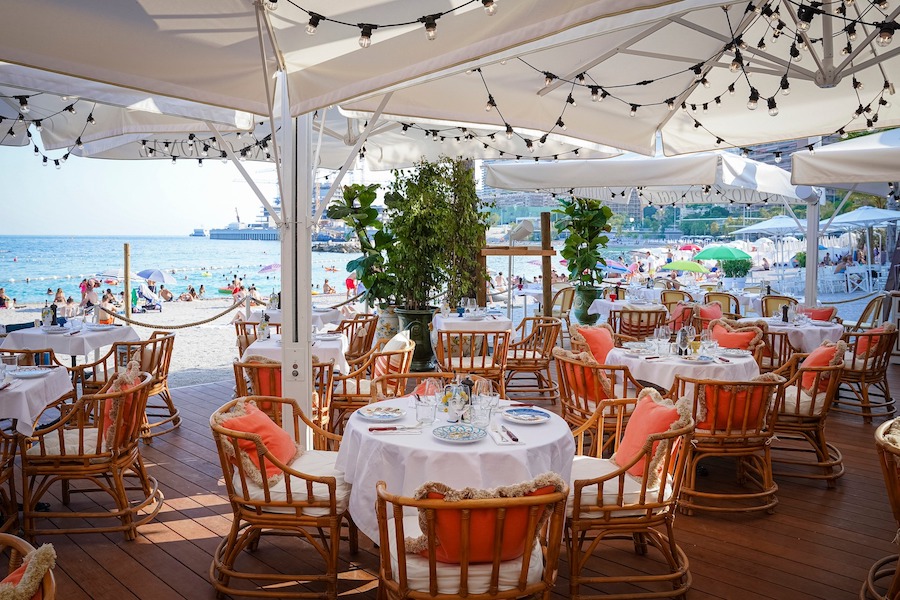
The Big Mamma family now has a beachy big brother to add to their ranks with the addition of their first trattoria, Giacomo. Established at the far end of Larvotto Beach, the restaurant is now serving up fine Italian fare whilst patrons sit on a toes-in-the-sand terrace with space for 84 guests soaking up the view of the Med.

Giacomo has a team of seasoned pros at the helm, including Big Mamma veteran Mike Lucchese, Alessio Tallarico – a Calabrian who has worked in the luxury hotel industry for years, and Alessandro Orientale Caputo, who will be head of house.

Chef Adrian Spatz will be serving up dishes in the spirit of those that nonna used to make, only with a bit more sophistication. Starters like zucchini flowers stuffed with fresh ricotta and smoked stracciatella, bruschetta with large slices of mozzarella di bufala and grated bottarga, and vitello tonnato will tempt the palate. But it’s the John Limon starter that steals the show, featuring extra fresh sea bass gravlax from the Mediterranean, with the possibility of a caviar supplement.

The pastas are made fresh and topped with comforting veal ragu, earthy truffle, saffron and parmesan, or a light tomato sauce accompanied by a lobster tail, again, with caviar as a possible supplement. Of course, no Italian joint would be respectable without pizza, and Giacomo offers seven choices, each more delectable than the last.

Roast sole, beef carpaccio, octopus skewers, and caprese salad are highlights of the main course menu.

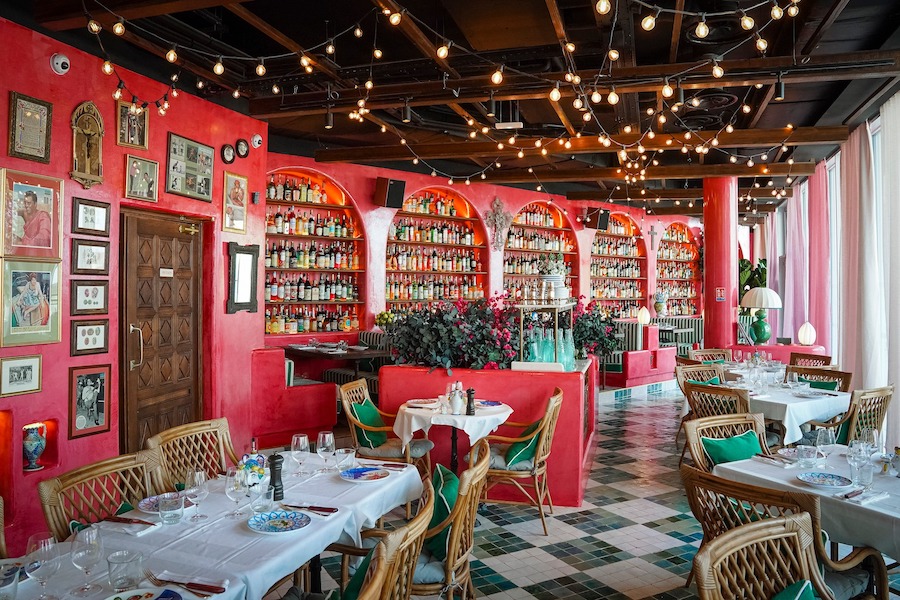
The interior of Giacomo is playful, bright and welcoming

The design is pure Italy, created to make patrons feel like they’re at home. Say the owners, “Our in-house design team has decided to make you stay all year round in a seaside villa in southern Italy. A place for family reunions, where you can bask in the sun, feet in the water while eating nonna’s delicious dishes. In this villa, we keep all the memories of past holidays, with trinkets on each windowsill, family photos of the team, but also holiday photos taken from vintage Italian magazines on the walls.”

Owners Victor Lugger and Tigrane Seydoux, himself Monegasque, named the restaurant in tribute to Tigrane’s father, Jacques. Giacomo is Italian for Jacques, and the little love note to his dad can be found engraved on the glassware of the trattoria, which reads “To the glory of my father”.

“Giacomo displays the must-haves of Italian cuisine, sunshine and breath-taking views of the Mediterranean all year round,” say the owners. “Our new address pays tribute to what we love most in life: good food, spritzes under the parasol, the sound of the waves and high waist swim briefs. An invitation to slip your feet under the sun table at the zenith or golden hour, this is the perfect spot to taste seasonal piatti, bursting with freshness and always direct from our producers.”

For a taste of Italy on the beach in Monaco, Giacomo is the place to be!


Investigation reopens into Rybolovlev’s art fraud claims

The long-running billion euro dispute between AS Monaco owner Dmitry Rybolovlev and Swiss art dealer Yves Bouvier has reignited, with Geneva’s criminal court of appeal overturning a dismissal of Rybolovlev’s complaints.

It’s a move that Rybolovlev’s lawyers believe will “swiftly establish the criminal responsibility of Yves Bouvier and his acolytes”, according to a statement obtained by Monaco Life.

The case, often dubbed the Bouvier Affair, has been played out in court rooms across the world, captivating the art community for seven years.

Rybolovlev, recognised as one of the world’s most prominent art collectors, is accusing his former agent Bouvier of having swindled €1.1 billion from him through the €2 billion sales of 38 works of art from 2003 to 2014. In 2017 and 2019, the Russian owner of AS Monaco football club filed two complaints in Geneva against Bouvier and his alleged accomplices Tania Rappo and Jean-Marc Peretti, for gang fraud and money laundering.

In September 2021, the case was dismissed by the district lead prosecutor, Yves Bertossa, who claimed that it was mostly based on evidence collected in a previous criminal procedure in Monaco, which was annulled in 2020 for being “partial and disloyal”.

The prosecutor also considered that the accusations of fraud against Yves Bouvier were “contradicted by many elements”.

But on 26th July, Geneva’s court of appeal ruled that the “possible existence of a deception cannot be denied”. It said that it was “surprising” that the prosecutor in Geneva had dismissed Rybolovlev’s criminal proceedings against Bouvier, Tania Rappo and Jean-Marc Peretti on the grounds of violations of the procedure in Monaco, as “nothing of the kind” had happened in Geneva, Bouvier’s home city.

The case has now been returned to the Public Prosecutor’s Office for further investigation.

According to The Art Newspaper, Bouvier has welcomed the decision of the court, “which will see the Geneva Prosecutor’s Office carry out an additional investigation to further demonstrate the hopelessness of Rybolovlev’s claims,” said his lawyer.

Rybolovlev has brought cases against Bouvier in Monaco, Singapore, the US and Switzerland.

“Yves Bouvier has chosen to plead via media, proclaiming an alternate reality and making egregiously erroneous statements about the case,” said Rybolovlev’s lawyers. “Our clients prefer to rely on the judicial system and salute the independence and the quality of the work of the Geneva judiciary. They have full confidence that the prompt demonstration of the criminal responsibility of Yves Bouvier and his accomplices will be made.”


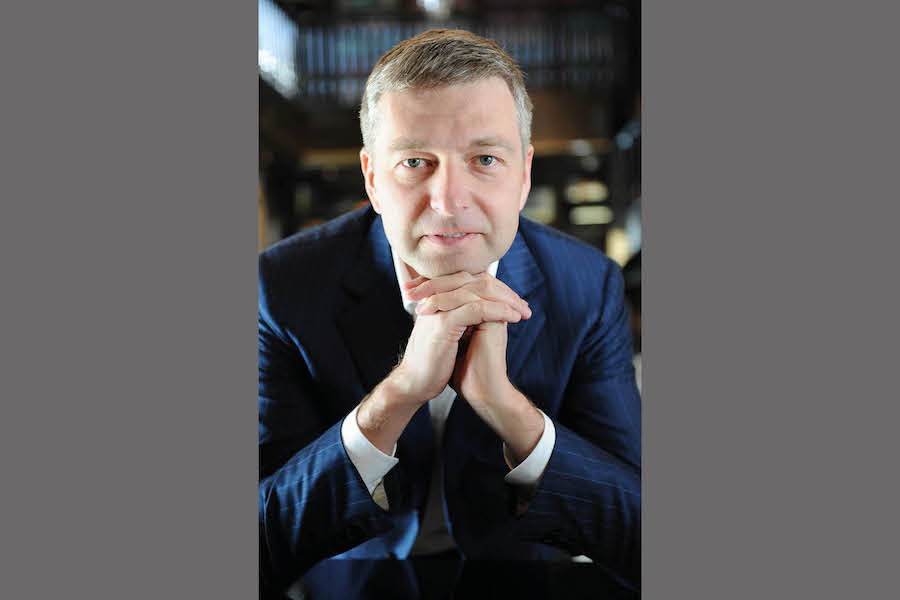
Photo of Dmitry Ryboolovlev by Francknataf


Major breakthrough in Esplanade Les Pêcheurs real estate project

esplanade des pecheurs

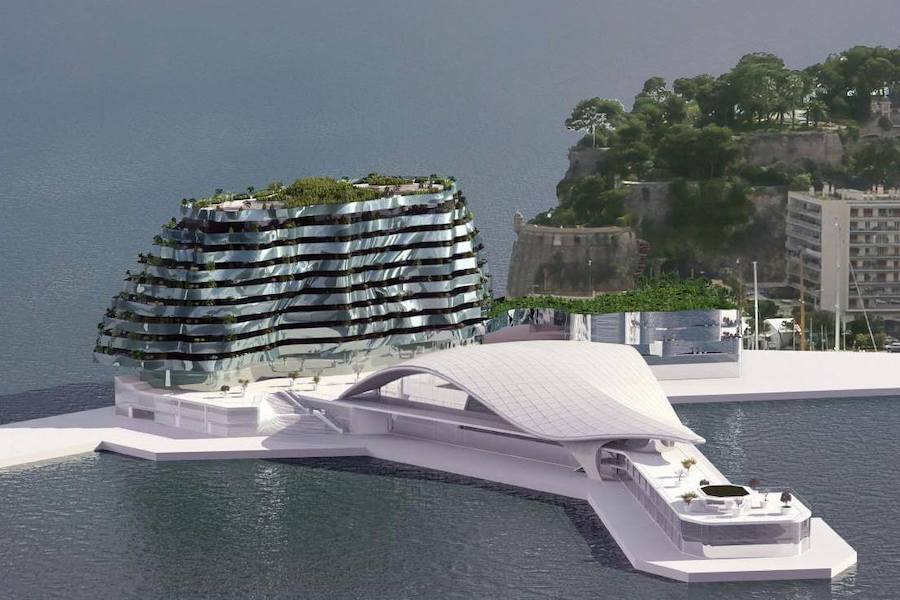
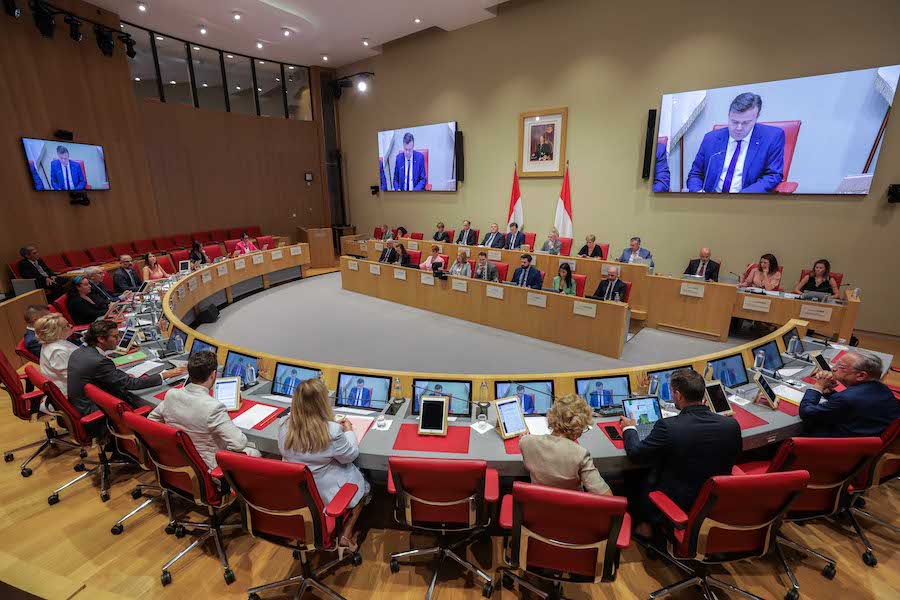
The National Council has passed a landmark law that allows the State to benefit more from private development in the Principality, while paving the way for the long-awaited new real estate project at the Esplanade Les Pêcheurs.

The controversy surrounding the Esplanade Les Pêcheurs site, which has been ongoing since September 2014, may finally be at end with Law 1057 passed by a majority of the National Council on Wednesday 27th July. The law decommissions the plot of land belonging to the State, allowing for the development project to begin.

The saga began when the State signed an agreement with SAMEGI, now the Caroli Group, and underwater archaeologist Franck Goddio. It then withdrew its bill to decommission the land a year later over concerns that the real estate project didn’t fit in with the needs for the organisation of the Monaco Grand Prix. After numerous court battles between the State and the promoter over the following years, the Supreme Court decreed in June 2020 that the State pay a sum in principal and interest equivalent today to 155 million euros.

Prince Albert then intervened and instructed his government to find a more amicable solution. Negotiations took place between all the interested parties, namely the State, the organising authorities of the automobile events, the promoter and Franck Goddio. A modified project was put forward, which included a premises for the State and a smaller private building than the one proposed.

But the sale of land in the public domain can only go ahead in law, voted upon by the National Council. On the same day the Prince announced the modified project, the National Council released a statement saying “it would ensure that the final agreement negotiated by the government is balanced and that the economy of the project is respectful of the interests of State.”

General Assembly Wednesday 27th July, photo courtesy National Council of Monaco

“As we have always said since the beginning of this mandate, this National Council will never vote for decommissioning without direct compensation for the housing of Monegasques and without additional areas for the benefit of the State,” said National Council President Stéphane Valeri during Wednesday’s session.

The project will therefore now include a State building of around 3,000sqm to be used for housing Monegasques. Additionally, the State will benefit from the donation of an entire floor of the private building, which is 1,870sqm in size.

In order to pass the law, the National Council also wanted to protect the financial interests of the State by setting a safeguard clause allowing excess profits made by the operation above those forecast to be redirected in part to the public finances.

“When we know that the sale prices of Monegasque real estate are constantly increasing and how high they are, this clause is the guarantee for the State to recover a significant part of the potential excess profits on this operation,” said Valeri.

“This progress marks a historic turning point in the way of apprehending the laws of decommissioning of the public domain for the benefit of a private actor, and therefore of defending the interests of the State and of Monegasques,” concluded the National Council President. “This new method had never been applied before tonight’s vote. It will henceforth be the rule for the future, for the Government as well as for the National Council.”

The real estate project, situated at the end of Port Hercule, will include a museum dedicated to marine archaeology called the Centre of Man and the Sea, premises for the Maritime Police and the port officials, shops on the quay level of the Esplanade, a state building facing Port Hercule with housing and shops, office spaces, a public garden, modular spaces for the Grand Prix, and a lift connecting the area with the gardens located on the upper part of the avenue de la Porte Neuve.

There will also be a 700m2 increase to the exterior space on the Esplanade to accommodate the installation needs of the television compound used during Grand Prix, bringing the total space available to the F1 event to 5,800 m2, which can also be used for other events.


By Cassandra Tanti and Stephanie Horsman. Photo of architectural design by Caroli Group. 


(more…)

Spain invites Prince Albert to travel back a million years in time

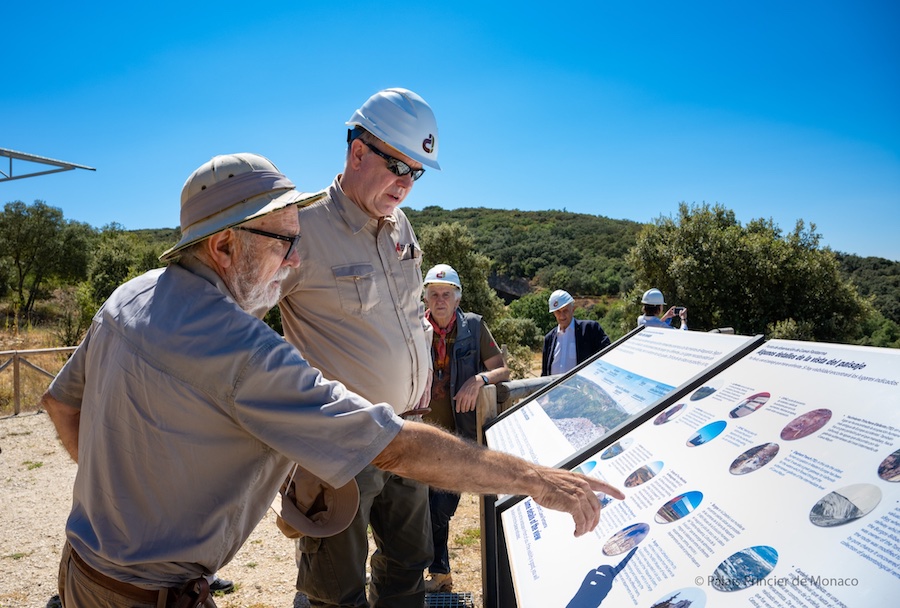
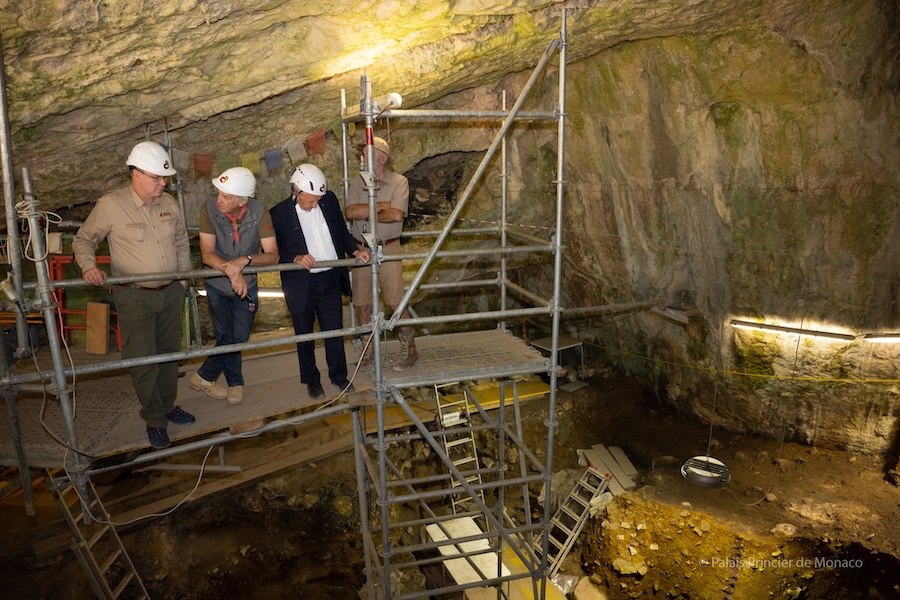
Prince Albert II on Tuesday travelled to the archaeological site of the Sierra d’Atapuerca near the city of Burgos in Spain to discover the fossil remains of the first human beings to settle in Europe around a million years ago.

Accompanied by Monaco’s Ambassador to Spain Catherine Fautrier-Rousseau, the Prince donned an explorer’s outfit to examine the rich excavation sites.

The Archaeological Site of Atapuerca is located near the city of Burgos, in the Autonomous Community of Castilla y León, in the North of the Iberian Peninsula.

The property encompasses over 284 hectares and contains a rich fossil record of the earliest human beings in Europe, from nearly one million years ago and extending into the Common Era. It’s considered an exceptional scientific reserve that provides priceless information about the appearance and way of life of these remote human ancestors.

Prince Albert exploring the Archaeological Site of Atapuerca, photo credit: G. Luci / Prince’s Palace

Just this summer, a bone from the jaw of what could be the first European hominid aged around 1.4 million years was found during excavations.

Prince Albert began his visit at the site of El Portalón de Cueva Mayor, before heading to the site of Sima del Elefante and that of Cueva Fantasma. He then visited the Museum of Human Evolution (MEH) and the National Centre for Research on Human Evolution (CENIEH).

Photo credit: G. Luci / Prince’s Palace

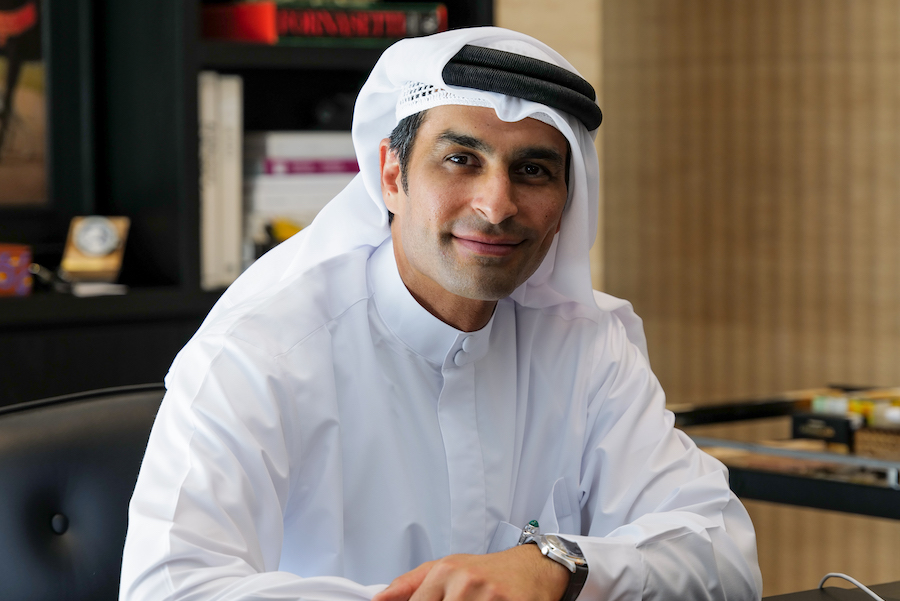
Interview: Abdulla Al Gurg, founder of Omere Institute

Inspired by personal experience, Abdulla Al Gurg created the Omere Foundation, a global platform for preventative medicine that brings together innovation, technology, and organic healing to transform the future of aging.

The World Health Organisation estimates that by 2030, poor mental health will become the second most important cause of disability in the world.

The Omere Foundation has two objectives: to improve physical, mental, and emotional health and thereby, longevity, and to influence health policy so health systems and resources shift towards innovation in life science, disease prevention and wellness.

Monaco Life: Where did the idea for the Omere Institute come from?

Abdulla Al Gurg: I went through a health condition around four years ago. I was going downhill and I was quite depressed, and I believe that it caused my stroke. That was the ignition to the whole thing. I was quite paralyzed and I wasn’t really feeling myself. I tried everything. I was in London on all sorts of medication and I said to myself, ‘This is just not working for me’. I was numb. I was literally numb from the amount of medication I was on.

Then I came across this group of specialists and technicians who have a medical background and who have evolved in the industry to want to bring an organic way of doing things, or an advanced way of doing things.

And things evolved from there.

Did you feel then that you had an obligation to share your knowledge and experience with the wider community?

Yes, I felt like there are so many other people like me who are undergoing a lot of medical interventions, who feel they need to change course at some point.

First, it was the health issue, but then I was rejuvenating and I was beginning to unlock my potential. I was starting to do more business, I was becoming more efficient than I was previously, thinking more clearly… and I thought, this is phenomenal.

It allows people who are in stressful situations to actually enjoy doing business or actually rejuvenate while they’re living their lives.

My chronological age is 42, but my biological age is now 36. I am therefore six years younger. I found this phenomenal as I used to be three years older than my age. So, I figured I had to share this.

Can you tell us how it works?

It is based on a science called elementology. What the technicians do is they connect your genes to the elements in your genetic code and they have a unique algorithm which helps them to understand how to treat you to unlock your gene potential.

I was borderline diabetic and I had eight active cancer markers. But if you test me today, I have only two active cancer markers and diabetes has gone away. That’s because I changed my behaviour and they taught me how to do that. They triggered things in me too, because everybody has a certain pattern and we come with a hereditary code. That’s it in a nutshell.

Who would be interested in this?

People who are currently sick and are looking to change that situation, or those who are not necessarily sick but who may have hereditary issues in their family that they would like to avoid. Also, people who want to rejuvenate. There are so many people investing money in a pill that will stop the aging process. This is a method. And i’m not the only case study. There are hundreds and hundreds of case studies and samples of reverse aging with this model.

If it is the “Fountain of Youth”, then you have the biggest game changer in history at your fingertips. Why is this not more widespread?

It takes a while to catch on. Do you remember when you bought the first iPhone or Mac computer? Or when you invested in the first Tesla car? How expensive it was? This is exactly at that point of launch and I believe this will be the future of health care.

It’s just a matter of time, and that’s why I was very interested in not only setting up the Omere Institute, but also the Omere charity foundation, which connects directly with the Institute to become the conduit for taking this to the critical mass and to spread the word so the people who will benefit can afford the service now.

Because if, for example, you have a child who has recovered from cancer through this method, you would want donate so other people can benefit also, right?

The Foundation is a conduit for us to bring it to the people.

Currently, this method is only available to high-net-worth individuals then?

Yes, because we can service between only 70 and 90 people per year. But of course, in the long term, as this foundation becomes more and more active, we can commercialise and train more technicians.

Photo provided