The agreement born in Monaco’s throne room that’s been protecting the Med for 50 years

In May 1976, in the throne room of the Prince’s Palace, the ministers of France, Italy and Monaco signed an agreement that would become the Mediterranean’s first concrete regional protection accord. Prince Rainier III had been calling for it since 1970, when he stood before the plenary assembly of the International Commission for the Scientific Exploration of the Mediterranean in Rome — with Jacques-Yves Cousteau in the room as Secretary General — and urged the three nations to act together before it was too late.

“The coastal states of the Mediterranean must wait no longer,” Prince Rainier declared. “They must act to safeguard their sea.”

Fifty years on, the RAMOGE Agreement — its name drawn from the initials of Saint-Raphaël, Monaco and Genoa, the three anchor points of its original zone — is marking its anniversary with a full programme of scientific, operational and public events running across France, Italy and Monaco throughout 2026.

What RAMOGE has achieved

The numbers tell a compelling story. Over five decades, the accord has overseen more than 30 anti-pollution exercises, recovered nearly 500 tonnes of hydrocarbons from three real-world emergency activations of its RAMOGEPOL response plan, collected more than 600 tonnes of marine debris — the equivalent of 50 refuse lorries — and identified 67 ecologically significant zones covering 3,060 km² of Mediterranean waters. Five marine protected areas have been created or extended as a direct result of its work, and more than 20 sampling sites monitor water quality on an ongoing basis.

The RAMOGEPOL plan itself was born from tragedy. When the tanker Haven exploded off Genoa in April 1991 — spilling 144,000 tonnes of hydrocarbons in the Mediterranean’s worst ever oil disaster — RAMOGE created a coordinated multinational response framework within two years. It has been activated three times since, most recently in 2018 when a collision between two cargo vessels off Cap Corse allowed 90% of spilled hydrocarbons to be recovered.

Previous deep-sea exploration campaigns have delivered discoveries that were as sobering as they were scientifically significant — human waste found at depths exceeding 2,000 metres in the Monaco Canyon among them.

The 2026 programme

The 50th anniversary celebrations began in March with the launch of the international photography competition RAMOGE — L’Homme et la Mer, open until 31st October, with the prize-giving ceremony to take place in Monaco on 4th December.

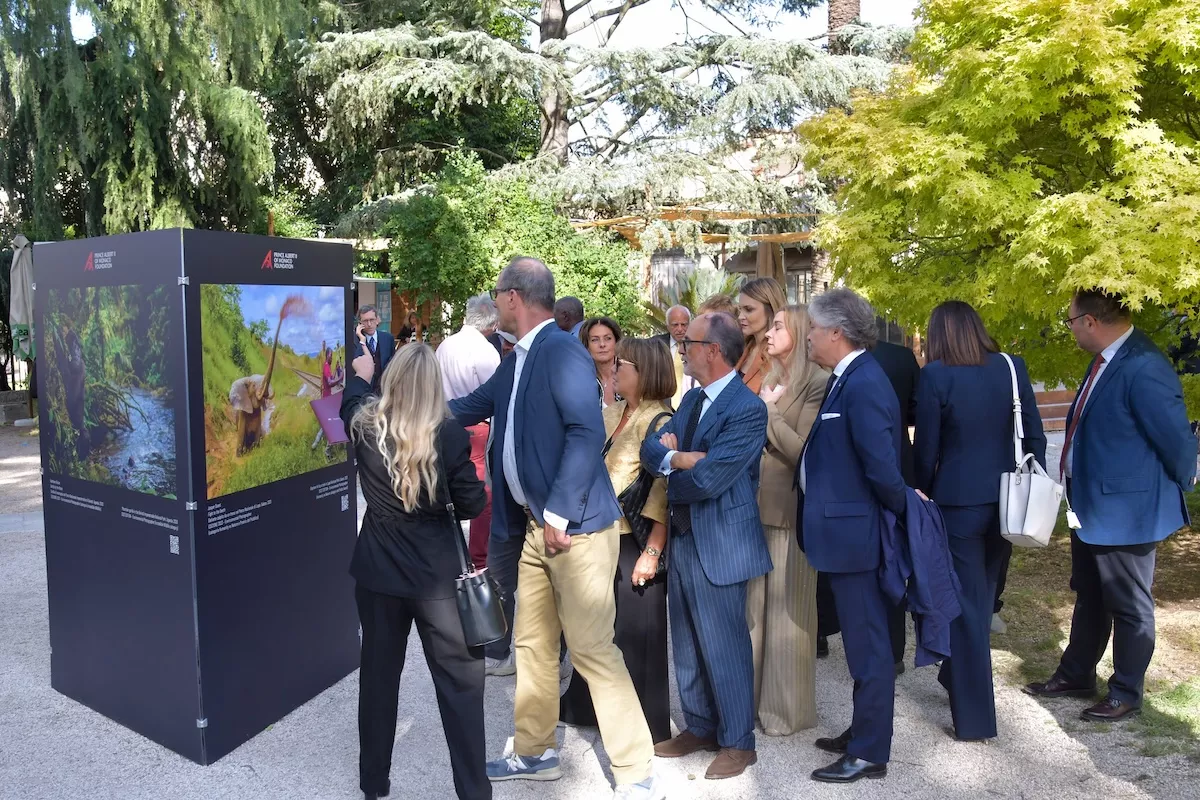
A travelling commemorative exhibition opens in Genoa on 28th May before moving to France in September, with a version tailored for the Monaco Ministry of State inaugurated on 26th June in the presence of Prince Albert II — who will also cancel a commemorative stamp to mark the occasion. That same day, a live RAMOGEPOL anti-pollution exercise will be demonstrated at sea, with public access to the installations planned for the day before, followed by a public conference at the Oceanographic Museum of Monaco and a virtual reality experience plunging audiences into the Mediterranean’s submarine canyons.

In late July, a week-long deep-sea exploration campaign aboard the research vessel Alfred Merlin will probe the French, Italian and Monegasque waters of the RAMOGE zone to depths of 500 metres — extending a programme of submarine exploration that has run since 2015 and consistently produced both remarkable discoveries and troubling evidence of human impact.

The autumn will bring a workshop on Posidonia oceanica, the Mediterranean’s emblematic seagrass whose beds cover nearly 50% of coastal floors, produce oxygen, absorb CO₂ and shelter thousands of species — yet lose approximately 2% of their surface each year to anchoring damage alone. The session will accompany the launch of a new RAMOGE guide to the plant, updated for the first time since 2006.

Stay updated with Monaco Life: sign up for our free newsletter, listen to our podcasts on Spotify, and follow us across Facebook,  InstagramLinkedIn, and Tik Tok.

Photo source: RAMOGE

Masterpiece of tension and balance: Cesare Catania unveils ‘Phygital’ Saint-Jean-Cap-Ferrat

Art met the elements on Wednesday as Cesare Catania’s latest masterpiece, The Heart of the Earth, took centre stage at Quai Virgile Allari. The immersive monumental installation was inaugurated by Saint-Jean-Cap-Ferrat Mayor,  Jean-François Dieterich, inviting residents and visitors to explore a ‘phygital’ journey that bridges the gap between physical sculpture and digital wonder.

A five-metre steel monolith of spheres and pyramids, Cesare Catania’s The Heart of the Earth challenges the eye with its complex, precarious geometry. Its form appears to defy the laws of physics, compelling the observer to linger in a state of captivated tension, half-expecting the structure to yield to gravity at any second.

Yet, the logic behind this seemingly vulnerable structure is as sophisticated as it is profound. As Catania explains: “The spheres and pyramids exist in an unstable yet possible balance—much like our planet”. In this symbolic geometry, the spheres represent perfection and generative motion, embodying the feminine, while the pyramids and triangles represent the masculine. Together, they represent humanity, sustained by the essential harmony between men and women.

“In this sense, the artwork represents the human race”, says Catania. “Standing here, overlooking the Mediterranean, I wanted to highlight that our existence rests upon the delicate fragility of the ocean”.

The Heart of the Earth. Photo credit: Virginia D’Umas

On the ‘Phygital’ Experience

In recent years, Cesare Catania’s artistic research has ventured deep into the ‘phygital’ realm—a seamless fusion of the physical and digital worlds. Here, the digital component is far more than a mere overlay; it acts as a catalyst, activating a deeper layer of interpretation. Through augmented reality the work functions as a living, layered system that evolves alongside the viewer’s perception, revealing an invisible dimension of the sculpture and extending its interpretation far beyond its physical form. 

Catania explained to Monaco Life how how the digital dimension of The Heart of the Earth alters the way visitors perceive the sculpture’s immense weight and gravitational presence within its maritime setting.

“The sculpture is a massive, physical undertaking”, Catania said. “For me, the digital dimension acts as a ‘booster’ for the physical experience. While some may not feel an immediate emotional connection to a static object, merging it with digital sensations allows us to unlock new depths of emotion. My goal is to use technology to help people truly feel the art”.

Engaging with this digital layer is effortless: visitors simply scan the QR code situated beside the sculpture to immerse themselves in Catania’s expanded vision.

Precise Passions: Inside the Mind of Cesare Catania

Beyond his acclaim as a contemporary painter and sculptor, Cesare Catania possesses a professional background in civil engineering. His artistic research is born from a compelling tension: the intersection of rigorous mathematical calculation and the desire to translate that data into a profound sensory experience.

For Catania, these two worlds are not in conflict, but in a constant, supporting dialogue. “I would say that engineering follows sensibility”, the artist explains. “The artistic vision always leads, and the engineering follows to bring that vision to life. Given the monumental scale of these sculptures, engineering is indispensable—it ensures they can physically stand and endure. It is the vital tool that supports the creative concept”.

In his practice, engineering is far more than a technical requirement; it is the very lens through which reality is observed, deconstructed, and reimagined. His works emerge as striking geometric configurations that, while appearing beautifully precarious, are anchored by a precise structural harmony. Here, the invisible language of forces, loads, and tensions is masterfully translated into a visual symphony of balance and form.

From left to right: Jean-Marc Berard – port director Saint Jean cap Ferrat, Cesare Catania and the mayor of Saint Jean cap Ferrat, Jean-François Dieterich. Photo credit: Virginia D’Umas

‘The Manifesto of Inclusivity’: Why Cesare Catania is Breaking the Gallery Walls

In 2024, Catania formalised his artistic philosophy in the ‘Manifesto of Democratic Art’, reimagining the artwork not as an isolated object, but as an open, accessible, and shared system. Within this framework, monumental sculpture and the ‘phygital’ dimension serve as complementary tools, designed to expand the audience’s engagement far beyond the restrictive confines of a traditional gallery.

When asked what connection he hopes to spark by placing an interactive work in a bustling public port rather than a private exhibition space, Catania’s response is as principled as the structure of the work itself.

“My ‘Manifesto’ is a flag I fly to propose a different way of perceiving art”, he explains. “The French Riviera is a truly international hub; it embraces every culture. This is why I prefer the term ‘Inclusive’ over merely ‘Democratic’. I want to reach everyone—not just the elite or the traditional art world. By choosing this location, the art is invited to be embraced by an international, inclusive public, making it a shared experience for all who pass by”.

Cesare Catania and his wife Anastasiya Vrublevskaya. Photo credit: Virginia D’Umas

The Perfect Canvas

This philosophy found its physical home in Saint-Jean-Cap-Ferrat. Described as a profound dialogue between the sea, the mountains, and the land, The Heart of the Earth draws directly from the unique energy of the peninsula. We were keen to discover what it was about this specific landscape that inspired Catania to anchor his exploration of tension and balance on these shores.

“This location possesses a rare alchemy—the mountains, the sea, and the village all converge here. It is a perfect crossroads”, Cesare reveals. “Saint-Jean-Cap-Ferrat, in particular, is a commune entirely committed to the arts. It offers a singular harmony of nature and culture, providing the ultimate ‘canvas’ for a project of this scale. It is, quite literally, the perfect setting”.

Stay updated with Monaco Life: sign up for our free newsletter, listen to our podcasts on Spotify, and follow us across Facebook,  InstagramLinkedIn, and Tik Tok.

Main photo by Virginia D’Umas


Monaco assumes Council of Europe presidency as ministers establish Ukraine war crimes tribunal

Monaco took over the rotating presidency of the Council of Europe’s Committee of Ministers on Thursday, as foreign ministers concluded a landmark session in Chișinău that established a special tribunal for the crime of aggression against Ukraine and adopted a raft of new legal instruments on migration, money laundering and foreign interference.

Isabelle Berro-Amadeï, Monaco’s Minister for Foreign Affairs and Co-operation, presented the Principality’s priorities for the presidency — which runs from 15th May to 10th November 2026 — after taking over from the Republic of Moldova at the close of the ministerial session.

A tribunal for Ukraine

The session’s most significant outcome was the adoption of a resolution establishing an Enlarged Partial Agreement on the Special Tribunal for the Crime of Aggression against Ukraine. Thirty-six countries — including Monaco — alongside the European Union, Australia and Costa Rica have declared their intention to join the agreement, which will task the tribunal with investigating and prosecuting those who bear the greatest responsibility for the crime of aggression. Ministers also reaffirmed their determination to secure the return of Ukrainian children unlawfully deported or forcibly transferred by Russia.

Migration, disinformation and criminal assets

Ministers adopted a declaration reaffirming member states’ commitment to the European Convention on Human Rights in the context of migration, balancing community interests with individual rights, and agreed to continue discussions within the Council of Europe’s Network of Focal Points on Migration.

On disinformation, the Committee of Ministers instructed the Secretary General to submit proposals for a legal instrument — including a possible framework convention — on foreign information manipulation and interference, described as a serious threat to human rights, democracy and the rule of law.

A new Additional Protocol to the Warsaw Convention modernises the legal framework for criminal asset recovery, extending authorities’ powers to monitor suspicious transactions and confiscate assets including crypto-assets. The protocol will be opened for signature at a cybercrime conference in Strasbourg on 14th October 2026.

Monaco’s presidency

The Monegasque presidency comes at a pivotal moment for the organisation, with the Council of Europe navigating the ongoing consequences of Russia’s war in Ukraine, rising migration pressures and growing threats to democratic institutions across the continent. Monaco has been a member of the Council of Europe for more than 20 years and assumed the presidency on the same day its information stand opened on Rue Princesse Caroline in the Principality — a public engagement initiative running through 22nd May.

Stay updated with Monaco Life: sign up for our free newsletter, listen to our podcasts on Spotify, and follow us across Facebook,  InstagramLinkedIn, and Tik Tok.

Photo credit: Manuel Vitali, Government Communications Department

Formula E meets the fairway at Monte-Carlo’s first ‘Tee Prix’ charity golf tournament

Sport, philanthropy and motorsport converged on the greens of the Monte-Carlo Golf Club on Wednesday 13th May for the inaugural Formula E Monte-Carlo Tee Prix — a charity golf tournament held in support of the Princess Charlene of Monaco Foundation, with Prince Albert II and Princess Charlene attending the prize-giving ceremony alongside Gareth Wittstock, General Secretary of the Foundation.

The event brought together Formula E drivers, global sponsors, professional golfers and notable personalities for a day that balanced genuine competition with the relaxed camaraderie of a charity occasion. Played in a Scramble format against the scenic backdrop of the Riviera, teams navigated bespoke challenges including Nearest the Pin and Longest Drive contests.

The results

Third place went to Team Andretti, with the prize presented by Gareth Wittstock. Second place was awarded to Team Aurora — comprising Lee Flay, Matt Beal, Lee Attreed and Westbury Gillett — with Prince Albert II presenting the prize.

Princess Charlene at the Tee Prix event, which raised funds for her association. Photo credit: Michaël Alesi / Palais princier

The inaugural title was claimed by the Influencers team: Seb Delanney, Emma Houlmiere, Mathilde Ostrowski and Formula E driver Maximilian Günther. Princess Charlene presented the first-place trophy to the winning squad.

Beyond the competition, the principal beneficiary of the day was the Princess Charlene of Monaco Foundation itself, with funds raised going towards its global mission of drowning prevention and swimming education for children.

Stay updated with Monaco Life: sign up for our free newsletter, listen to our podcasts on Spotify, and follow us across Facebook,  InstagramLinkedIn, and Tik Tok.

Photo Credit: Michaël Alesi / Palais princier


Coya’s new cocktail menu is the most immersive drinks experience this season

From theatrical presentations to painstakingly crafted ingredients made entirely in-house, Coya Monte-Carlo’s new Madre Tierra cocktail programme transforms mixology into storytelling — and it may just be the most exciting bar launch Monaco has seen in years.

Coya Monte-Carlo has returned for the 2026 Riviera season with a renewed culinary direction, a major international music programme and a completely reimagined global bar concept that deserves to be the headline attraction this summer. The launch of Madre Tierra — translated as “Mother Earth” — introduces a deeply ambitious cocktail menu that takes guests on a sensory journey across Peru through flavour, storytelling and meticulous craftsmanship.

Unveiled during an intimate press dinner last Thursday, the new menu was presented by Grégoire Schnerb, Coya Group’s Global Head of Mixology, whose inventive approach to cocktails has earned him the nickname “The Cocktail Butcher”. Originally from the south of France, Schnerb trained as a sommelier in Bordeaux before refining his mixology expertise in the UAE, later winning Bar Manager of the Year at the Caterer Middle East Awards in 2021. Since joining Coya in 2023, he has spearheaded the group’s global drinks identity while mentoring emerging talent through his Capital Bartenders platform.

Coya’s new cocktail experience is a fascinating taste and visual journey. Photo source: MCSBM

A cocktail menu built like a cinematic story

“This is not just a new cocktail list,” Schnerb told guests during the presentation. “It’s a new concept, a new story, a new direction the bar is taking. It’s truly a completely new chapter for us.”

That chapter centres around a fictional protagonist named Camila de Killian, a descendant of the Inca moon goddess Koya, whose journey through Peru forms the narrative backbone of the menu. Divided into three ecosystems — Costa, Sierra and Selva — the cocktails guide guests from Peru’s coastline through its mountains and deserts before arriving in the Amazon jungle.

The storytelling element could easily have felt gimmicky in lesser hands, but here it becomes immersive and unexpectedly emotional. Each cocktail represents a moment in Camila’s journey, with colours, ingredients and presentation designed to mirror landscapes, encounters and discoveries along the way.

The level of detail is extraordinary. Every syrup, clarification and infusion is produced inside the Coya lab. Milk punches are made entirely in-house. Clarified sriracha is prepared from scratch. Ingredients undergo hours of testing before reaching the final glass. The result is a menu where technique never overshadows flavour but definitely elevates it. Cocktail connoisseurs will find themselves nicely surprised.

The remarkably fluorescent Hay-Agua-Ska. Photo source: MCSBM

One standout creation, La Marque, inspired by the Peruvian coast and featuring blue spirulina, symbolises the boundary between Camila’s past and future. Elsewhere, La Rwanda is designed as a theatrical sharing cocktail for two, while the Hay-Agua-Ska — featuring Don Julio Blanco Tequila, chilli and mango pisco macerado — arrives as a spectacular fluorescent creation.

Importantly, non-alcoholic cocktails are woven seamlessly throughout the menu rather than isolated into a separate section, ensuring every guest experiences the same narrative journey regardless of whether they drink alcohol.

More than mixology

What ultimately makes Madre Tierra remarkable is its authenticity. Schnerb explained that the team spent extensive time researching Peruvian mythology and cultural references to avoid creating a superficial concept. “When guests taste the cocktail, they should be able to understand the story behind it and feel what the cocktail is meant to represent,” he said during the presentation.

The cocktails alone justify a visit to Coya Monte-Carlo this season, but the food remains every bit as compelling. The classic guacamole, smashed and served tableside with homemade tortilla chips, disappears almost immediately. Sea bass croquettes paired with spicy aioli make for the perfect appetite whetter, while the spicy bluefin tuna ceviche absolutely demands to be paired with the Agua-de-Chifa clarified sriracha cocktail from the new drinks programme. For mains, the Charolais spicy beef fillet is a melt-in-your-mouth must-order that perfectly reflects the kitchen’s balance of heat, richness and precision.

The spicy bluefin tuna ceviche is a must try at Coya. Photo source: MCSBM

Dessert is equally indulgent. Few can resist ordering churros, but the real revelation comes when they are paired with Coya’s homemade ice creams, particularly the spicy mango, which is both refreshing and addictive.

Overall, Coya feels like a huge hit again this season. The atmosphere is electric, the DJ line-up energetic, and the restaurant full every night — not difficult to understand once you experience it for yourself. But for those looking for a reason to return, or perhaps discover it for the first time, this remarkable new cocktail menu is undoubtedly it.

Coya Monte-Carlo reopened on 1st April and will run through to 24th October at Sporting Monte-Carlo, alongside a summer music line-up featuring Francis Mercier, Demaya, Alex Wann, Arkadyan and Bob Sinclar.

Stay updated with Monaco Life: sign up for our free newsletter, listen to our podcasts on Spotify, and follow us across Facebook,  InstagramLinkedIn, and Tik Tok.

Main photo source: MCSBM

Prince Albert receives Interpol president as Monaco reaffirms historic policing ties

Prince Albert II received Lucas Philippe, President of Interpol, at the Palace on Friday 15th May for discussions centred on international security and multilateral cooperation.

Lucas Philippe was accompanied by Pierre Lieutaud, Prefect and Chief of Staff to the President, Camille Stephan, Head of Cabinet at the Interpol Presidency, and Tessa Guild, Strategy Adviser. The Prince was joined by Cabinet Director Olivier Wenden and advisers Guillaume Pastor and Julie Donati.

According to a statement by the Palace, the meeting highlighted a shared commitment to strengthening cooperation between Monaco and Interpol, building on a relationship that dates to 1914, when Prince Albert I first established ties with the international criminal police organisation. The Principality reaffirmed its engagement within international police cooperation frameworks and its role in the fight against transnational crime.

Both Prince Albert II and Lucas Philippe underlined the importance of reinforced multilateral cooperation in addressing global security challenges. The Interpol President commended the Prince’s consistent support for international cooperation across security, justice and regional stability.

Stay updated with Monaco Life: sign up for our free newsletter, listen to our podcasts on Spotify, and follow us across Facebook,  InstagramLinkedIn, and Tik Tok.

Photo credit: Frédéric Nebinger / Palais princier