
The 65th Monte-Carlo Television Festival opened on Thursday evening at the Grimaldi Forum under the patronage of Prince Albert II, with Dame Kristin Scott Thomas receiving the Crystal Nymph and the world premiere of The Walking Dead: Dead City Season 3 marking the start of a five-day celebration of international television.
The festival, which has been a fixture of Monaco’s cultural calendar since 1961, this year introduces a new digital competition recognising original content created for platforms such as YouTube, alongside its established fiction and feature reports categories.
Crystal Nymph for Kristin Scott Thomas
Dame Kristin Scott Thomas received the Crystal Nymph, the festival’s most prestigious individual honour, in recognition of her career as an actress, director and screenwriter across European and international productions. The award acknowledges a body of work that has spanned decades on both stage and screen.
Spanish actress Ester Expósito, best known internationally for the Netflix series Elite, was awarded the International Golden Nymph for Most Promising Talent. French television presenter Michel Drucker, whose career spans more than six decades, received the Honorary Nymph in recognition of his contribution to French-language television.
Prince Albert II presenting the award to Dame Kristin Scott Thomas at the 65th Monte-Carlo Television Festival
Walking Dead premiere in Monaco
The opening ceremony was followed by the international premiere of the first two episodes of The Walking Dead: Dead City Season 3, produced by AMC Studios.
Actors Jeffrey Dean Morgan and Lauren Cohan attended alongside showrunner Seth Hoffman. The series, set in a post-apocalyptic Manhattan, follows characters Maggie and Negan and is due to air on AMC and AMC+ later this summer.
Prince Albert II with, from left to right, Marie Ducruet, Louis Ducruet, Spanish actress Ester Expósito, and Camille Gottlieb
The juries
This year’s Golden Nymph juries bring together figures from across the global audiovisual industry. The fiction jury is chaired by British actress Lesley Manville CBE and includes Kevin McKidd, Greg Daniels, Hojin Kwon, Frédérique Bel and Yasmin Finney.
The feature reports and news jury is chaired by American filmmaker Joshua Seftel, while the newly created digital jury is led by Susanne Daniels, former Global Head of Original Content at YouTube.
The Walking Dead: Dead City Season 3 world premier at the Monte-Carlo Television Festival
Prince Albert II declared the festival open, saying: “65 years later, the ambition of the Festival remains more relevant than ever. It continues to promote an industry in perpetual transformation, while remaining faithful to its essence: celebrating stories and outstanding individuals capable of moving, questioning, enlightening and informing.”
The Golden Nymph Awards ceremony, at which competitive winners across fiction, documentary and digital categories will be announced, takes place on Tuesday 16th June at the Grimaldi Forum. Actor Kurt Russell will also receive a Crystal Nymph at the closing ceremony, in recognition of his career spanning more than five decades in film and television.
The Monte-Carlo Television Festival runs until 16th June at the Grimaldi Forum, Monaco.
The Principality’s status as a global hub for innovation was firmly in the spotlight as the WAIB Summit 2026 descended upon the One Monte-Carlo on 9th and 10th June. Over two days, the event brought together the brightest minds in finance and technology to dissect a singular, pressing reality: the economic landscape is undergoing a fundamental transformation, and the digital asset space is leading the change.
Setting the tone for the event, Ludmilla Raconnat Le Goff, Monaco’s Attractiveness Delegate, delivered a powerful opening address. Emphasising that innovation must be balanced with responsibility, she noted: “Infrastructure, taxation, and quality of life still matter, but the future will belong to those who are willing to learn, adapt, and to collaborate.”
Breaking the ‘four-year’ myth
The summit’s opening panel, Beyond the Four-Year Cycle: What Drives Crypto Markets Now?, wasted no time challenging conventional wisdom. Industry veterans, including Sabina Liu (KuCoin EU), Nenter Chow (BitMart), and Ajinkya M. Tulpule (HashKey Europe), dismantled the long-held belief that Bitcoin’s halving events remain the sole pulse of the market.
While the four-year cycle remains a recognisable pattern, the consensus was clear: the market has matured. It is now tethered to the heartbeat of global macroeconomics and institutional capital. As Nenter Chow of BitMart observed, “You’re not seeing that same natural climb on the demand side anymore; it’s now a matter of institutional supply and demand dynamics.” Because today’s institutional players manage massive, diversified portfolios across equities and commodities, digital assets are now inextricably linked to the broader financial system.
From left to right – Panel 1 Moderator Daniel Blackmore (Glassnode), Sabina Liu (KuCoin EU), Nenter Chow (BitMart) and Ajinkya M Tulpule (HashKey Europe)
The regulatory clock is ticking
The atmosphere turned serious during a critical fireside chat with Peter Kerstens, Advisor at the European Commission, DG FISMA, regarding the EU’s MiCA framework. The takeaway was unambiguous: 1st July 2026 marks a definitive hard cutoff for the MiCA transitional period. Any firm operating in the EU without a license after this date faces a precarious future.
Kerstens delivered a clear advisory for users: shift your assets to fully regulated, MiCA-compliant platforms immediately to ensure the safety of your holdings. With the European Commission already casting its gaze toward ‘MiCA 2.0’—a framework poised to encompass the tokenisation of real-world assets—it is clear that the days of the ‘Wild West’ are officially behind us.
From stablecoins to tokenised assets: The new capital market
The summit also featured critical discussions on the convergence of stablecoins and tokenised assets as the foundation for Europe’s new capital markets. Financial leaders from institutions like ABN AMRO and BNP Paribas emphasised that tokenisation is no longer a theoretical exercise but an operational reality. The focus has shifted from experimental pilot programmes to industrial-scale infrastructure. By migrating traditional legacy settlement systems to on-chain capabilities, institutions can unlock trapped liquidity and significantly enhance capital efficiency.
Reflecting on the timeline of this evolution, Julien Clausse of BNP Paribas noted, “We are in the midst of a generational change that will take roughly 20 years to fully realise. The next five years will be defined by market scaling; we are at a pivotal moment right now.” Experts agreed that this transformation requires a unified ‘monetary stack’—integrating stablecoins, tokenised bank deposits, and central bank digital assets—to bridge the gap between retail innovation, and institutional stability.
From left to right – Panel 2 Moderator Anna Tutova (AI Crypto Minds), Paul Infante Moñozca (Moñozca Family Office), Edoardo Reggiani (Weltix), Julien Busnel (CoinShares AM), Bogdan Dinulescu (c8ntinuum) and Brendan Ma (Arbitrum Foundation)
Making blockchain ‘invisible’
The dialogue shifted to institutional adoption, where leaders from ABN AMRO and BNP Paribas confirmed that digital assets have graduated from fringe speculation to essential components of modern portfolios. With roughly 97% of family offices now viewing digital assets as a permanent fixture, the industry is entering its most ambitious phase yet: the pursuit of invisible infrastructure.
The sentiment among the panellists was pragmatic. As Dr. Paul Infante Moñozca from the Moñozca Family Office noted: “The bank of humanity is here. We want to create bridges and remind every single player, small or big, that they’re important in a decentralised world.”
The mission for the next 24 months is to move beyond experimental proofs-of-concept. The goal is to weave blockchain so seamlessly into the fabric of the banking platforms that institutions already trust that the user won’t even know it’s there, effectively stripping away the intimidating technical complexity that has long kept retail and institutional investors at arm’s length. Centralised entities will increasingly serve as the compliant ‘gatekeepers’ to these decentralised networks, balancing the efficiency of blockchain with the trust and oversight required by traditional financial regulation.
The path forward
Despite the complexities of regulatory shifts and institutional integration, the mood at the One Monte-Carlo was undeniably optimistic. The industry is currently eyeing three major growth engines for the coming year. There is an aggressive push toward tokenising real-world assets, such as bonds and real estate, to unlock new liquidity. Simultaneously, the sector is prioritising a breakthrough in digital identity standards to ensure data can move seamlessly across platforms. Finally, there is an intense focus on building institutional-grade custody that meets the rigorous, long-term risk-management standards demanded by the world’s most conservative banks.
As the summit concluded, it was clear that we are witnessing a ‘smartphone moment’ for the financial sector—a foundational shift that may take years of meticulous building, but one that is now on an unstoppable trajectory.
She splits her year between Ibiza and Miami, holds a residency at Pacha, has played Burning Man and Tomorrowland, founded a record label and a sustainability non-profit that has kept 325,000 single-use plastic bottles out of circulation, and is developing a cup made from bacteria.
On the evening we spoke, Blond:ish — the stage name of Canadian-born DJ and producer Vivie-Ann Bakos — was preparing to play Sunset Monaco for the first time, an outdoor set on the terrace at Le Méridien Beach Plaza with the Mediterranean as a backdrop and the Grand Prix weekend in full swing around her.
It was the perfect setting for someone who has spent 15 years carving out a distinctive corner of the electronic music world — one defined less by a single sound than by a certain energy and a refusal to separate the music from the responsibility that comes with the platform.
From Montreal to Monaco
Vivie-Ann originally formed Blond:ish as a duo with Anstascia D’Elene Corniere, who she met in 2007. The pair performed together until 2019, when she began performing under the name alone. She specialises in upbeat, eclectic sets fusing house, techno, afro house and global rhythms.
The connection to Monaco and to Sunset organiser Cédric Houdrouge goes back to the early days. “I’ve known Cédric for a long time. We’ve been friends since our raver days.” Playing by the sea, she says, suits where she is right now. “These days I’m more in my feminine energy — lighter, more fun, happier. That’s the best offering I can give. So if it’s by the sea with the sunset, even better.”
Sunset during Monaco Grand Prix weekend has become an iconic electronic music festival attracting some of the world’s best DJs as well as rising talent. Photo credit: Mathieu Ceccarini
Her father’s reel-to-reel
The origin story involves a sailor father and a basement full of vinyl. “My dad was obsessed with collecting vinyl and he loved old-school equipment. He had a reel-to-reel machine. He was a sailor, so he travelled all over the world — to Africa, Lebanon, everywhere — and he’d bring vinyl back to Canada. He would transfer all the vinyl onto the reel-to-reel so that at parties he didn’t have to keep changing records. Everyone could just keep dancing.”
She didn’t recognise the influence at the time. “When I became a teenager, I realised my dad was basically a DJ,” she said. “Both my parents loved music, but my dad was always searching for new records and sounds from around the world. I inherited that curiosity. That’s where it all started for me.”
The boys’ club
Ask Blond:ish about navigating a male-dominated industry and her answer is characteristically matter-of-fact. “I never really paid attention to it. When you put attention on something, you might manifest it. I was a tomboy my whole life. I always played with the boys, and this was just another boys’ club.” She pauses. “Now, with the way social media is, there’s room for anyone in music, however they want to approach it.”
That freedom, she believes, has transformed the industry. Artists are no longer confined by genre, image or convention, and success can take many different forms.
Recalling a show she played the night before with German artist Bunt, she points to the growing diversity of audiences and performance styles within electronic music. “Bunt does a concert more like a rapper or singer,” she says. “He goes out and does a 75-minute show playing very emotional music. His crowd is probably 70% women. They barely drink. That’s a completely different offering.”
Blond:ish performing Sunset Monaco during the 2026 Monaco Grand Prix. Photo credit: Anatole Vialard
Why EDM dying was good for music
The conversation turns to the evolution of electronic music and the growing crossover between genres. For Blond:ish, the shift can be traced back to the decline of EDM (Electronic Dance Music) — the commercially driven festival sound that dominated dance music during the early 2010s.
“For a long time there was a big elephant in the room, and that was EDM,” she says. “EDM kind of died a few years ago, and that enabled all the different genres and artists to start cross-collaborating again. That’s why you’re seeing everyone collaborate with each other now — the elephant in the room is gone.”
In its place, she sees a more open and creative landscape, where artists are free to move between genres and audiences are increasingly willing to embrace different sounds and styles.
Advice for aspiring DJs
Asked what she would tell a young woman in the crowd watching her perform and thinking about a career in music, she immediately reframes the question. “I like to answer that in a way that everyone can get value from it, not just females.”
“Consistency is more important than talent these days. Also, everything is energy. Find your own uniqueness — everyone has something unique about them. And learn to make decisions with your heart instead of for money or ego. That’s how I found my way in this industry, because it’s very ego-driven. There are politics. There’s a dark side and a light side. I learned to ask myself: does this make me feel happy and free? If the answer is yes, I go that way.”
Photo credit: Anatole Vialard
A mountain of plastic bottles
While music remains at the centre of her career, Blond:ish has become equally well known for her efforts to make the industry more sustainable. Through Bye Bye Plastic, the non-profit organisation she co-founded in 2018, she has used her influence to challenge one of live music’s least glamorous realities: the vast amount of single-use plastic generated behind the scenes at festivals and events.
The initiative’s Eco-Rider — a sustainability clause incorporated into artists’ performance contracts — has now been adopted by more than 1,500 DJs worldwide, preventing more than 325,000 single-use plastic bottles from entering circulation.
The turning point arrived after a performance that highlighted the stark contrast between the beauty of the experience and the waste left behind. “I was playing the most beautiful show in the jungle, with an amazing sunrise and incredible energy,” she recalls. “At the end of the show I was on such a high, and then I saw this mountain of plastic water bottles and these exhausted cleaning staff dealing with the aftermath. That contrast felt completely out of balance.”
Convinced that someone within the industry had to take responsibility, she decided to act. “I had a eureka moment and thought, ‘I’m one phone call away from everyone in the music industry. I can actually do something about this.'”
What appeared to be a simple problem quickly revealed itself to be far more complex. “I thought it would be easy. It’s actually one of the hardest things we’ve ever done, because it’s not as simple as replacing bottles. There are procurement systems, logistics and so much infrastructure involved.”
The progress, however, has been significant. “When I started, none of my shows were plastic-free. Now around 90% of them are.”
Photo credit: Anatole Vialard
A cup made from bacteria
The work has pushed her into territory she didn’t expect. Blond:ish and her team are now developing new materials to replace single-use plastics at scale — including a cup made from PHA, a biopolymer produced by bacteria. She has also made a vinyl record from the same material. “We’re nerds. We’re really into developing new materials.”
Despite becoming one of electronic music’s most visible environmental voices, Blond:ish remains reluctant to describe herself as an activist. “Some people call me an activist, but I’m really not. I just honestly see when things aren’t in balance, and I like putting them back into balance.”
It’s a philosophy that seems to underpin everything she does. From collecting inspiration through music to challenging the environmental footprint of the industry she loves, Blond:ish has built a career on questioning accepted norms and finding her own path.
As she heads towards the Sunset Monaco stage, with the Mediterranean shimmering behind her, it is clear that for her, success has never been about following trends. It’s about staying curious enough to create what comes next.
At the Blue Economy & Finance Forum (BEFF) 2026 held in Monaco in May, A&B Smart Materials took centre stage to introduce a disruptive solution to the nappy waste crisis. With 300,000 disposable nappies entering the environment every minute, the start-up is replacing persistent fossil-fuel plastics with bio-based alternatives that promise to reshape the future of the hygiene industry.
Modern hygiene products—nappies and menstrual pads—rely on synthetic SAPs to function. These polymers are engineering marvels, capable of absorbing hundreds of times their own weight in liquid. However, they come at a heavy environmental cost.
Currently, the industry consumes 200 million barrels of oil annually to produce these fossil-fuel-derived plastics. Designed for extreme durability, they are not biodegradable; they can persist in the environment for up to 500 years, eventually breaking down into the microplastics that permeate our ecosystems, from our soils to our own bloodstreams.
With the market for these materials projected to balloon from $9 billion today to $17 billion by 2035, the environmental ticking clock is accelerating.
A bio-based solution
Enter Amaury Van Trappen and his team at A&B Smart Materials. An Oxford-based startup, the company has developed a groundbreaking, fully bio-based, and biodegradable alternative to synthetic SAPs.
“What we are looking for is a way to solve the global plastics crisis, and we can’t do that without identifying a solution for nappies,” said Lucy Mortimer, a founding partner at Archipelago Ventures, during the BEFF 2026 pitch session. “A&B Smart Materials offers that solution. Their polymers can be programmed to decay within days, not decades.”
By utilising abundant, low-cost natural feedstocks, the team has created a ‘drop-in’ solution. This means hygiene manufacturers—the P&Gs and Kimberly-Clarks of the world—could theoretically swap out their synthetic polymers for A&B’s greener alternative without needing to overhaul their entire industrial machinery.
Why investors are paying attention
The impact potential has already drawn significant attention. A&B Smart Materials recently closed an oversubscribed $2 million pre-seed round, backed by a consortium of strategic investors including Archipelago Ventures and others.
The urgency is bolstered by a tightening regulatory landscape. The EU has already signalled a move to ban non-biodegradable synthetic SAPs in soil-related applications by 2028, effectively forcing the industry to innovate or face obsolescence.
For Van Trappen, who was recently named to the Forbes 30 Under 30 list, the goal is clear: to prove that environmental impact and high-scale investment returns are not mutually exclusive.
What’s next
With the pre-seed round successfully closed, the team is now turning its attention to the challenge of industrial-scale production. As the company eyes its next major funding round by early 2027, they are actively seeking strategic partnerships within the chemical and hygiene industries to move their innovation from the laboratory to the supermarket shelf.
As Van Trappen noted during the BEFF 2026, the goal is not just to improve a product—it is to unlock circularity for a massive, global industry. “The only thing blocking nappies from being truly biodegradable is the super absorbent,” he says. “We are unlocking that.”
Grand Prix weekend in Monaco hosted events across the Principality from land to sea, bringing together exclusive celebrations during the Principality’s most iconic weekend of the year. On Friday evening, the rooftop of Rose de France welcomed guests for a private screening of the documentary Gipsy Kings Featuring Tonino Baliardo, followed by an intimate live performance by the Gipsy Kings themselves.
Rose de France hosted a full weekend of Grand Prix celebrations, though this evening stood out as one of its highlights. This documentary explores the history and heritage behind the music of the Gipsy Kings, while highlighting the story of the group and its members over decades of success. Writer and director Joel Van der Molen attended the occasion, told Monaco Life: “While I am in Monaco making another film, I thought it was the perfect occasion for the Gypsy Kings to perform.”
Marking the group’s first-ever performance during the Monaco Grand Prix weekend, the evening felt all the more special. As the sun set over Port Hercule, guests gathered on the rooftop for performances of well-known hits including ‘Bamboléo’ and ‘Volare’, carrying the energy of the day into the evening hours.
The intimate setting added to the atmosphere, creating a more personal experience for guests during a fast-paced, busy weekend. With stunning views over Port Hercule, attendees sang along and danced throughout the performance, while nearby residents stepped onto their balconies to take in the music from afar.
The evening offered a different side to Grand Prix weekend, one focused on a more intimate atmosphere, as live music and views over Port Hercule closed out the day.
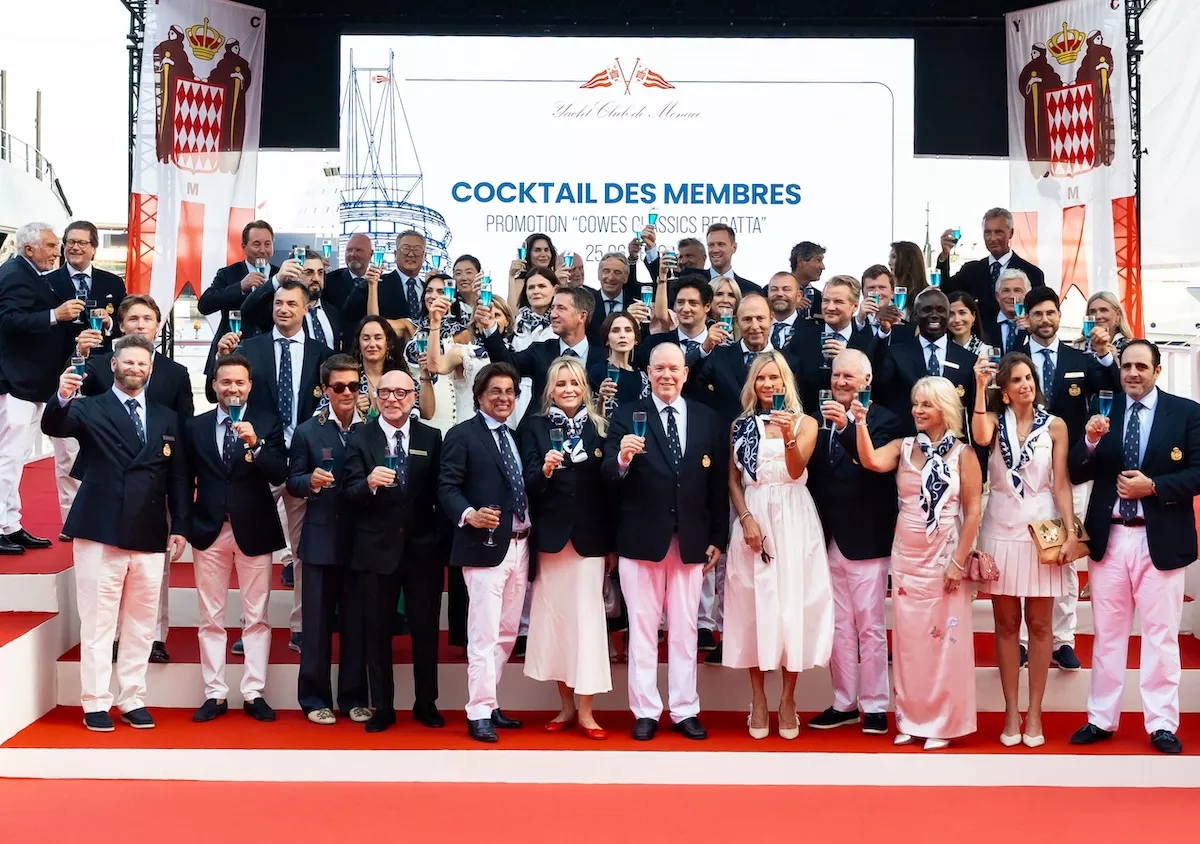
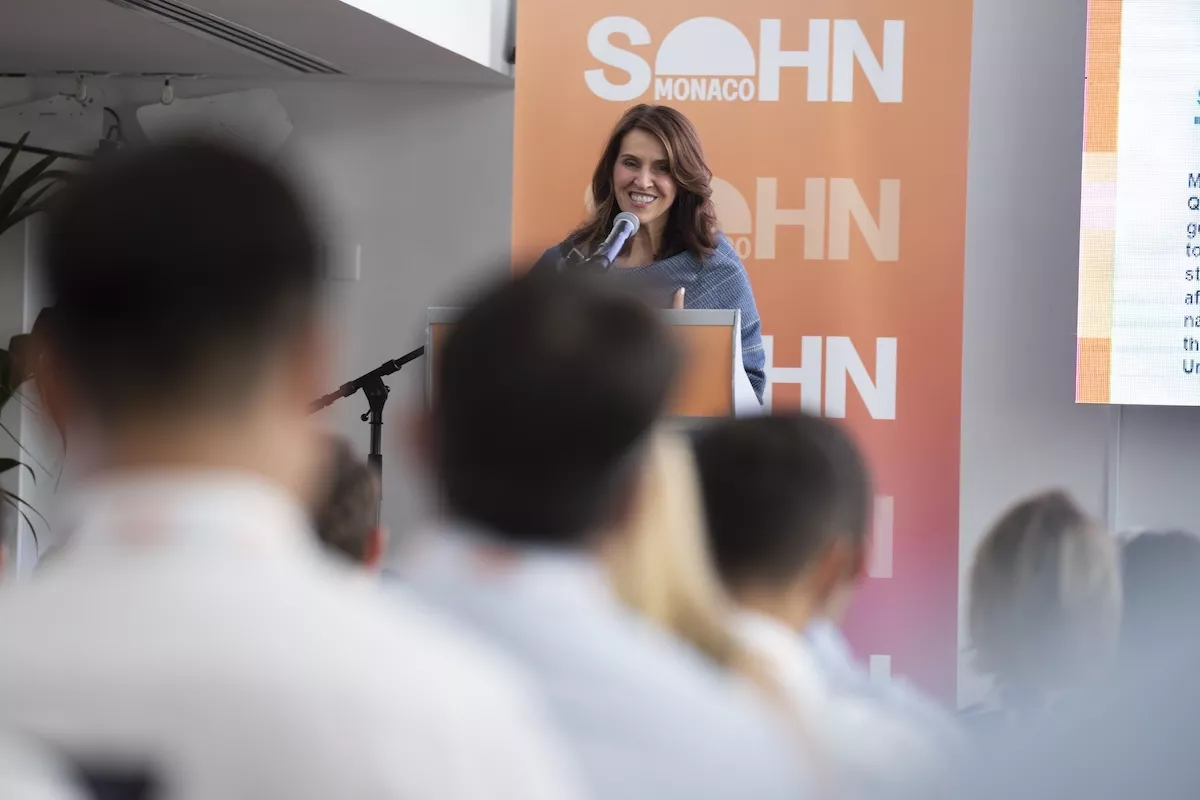
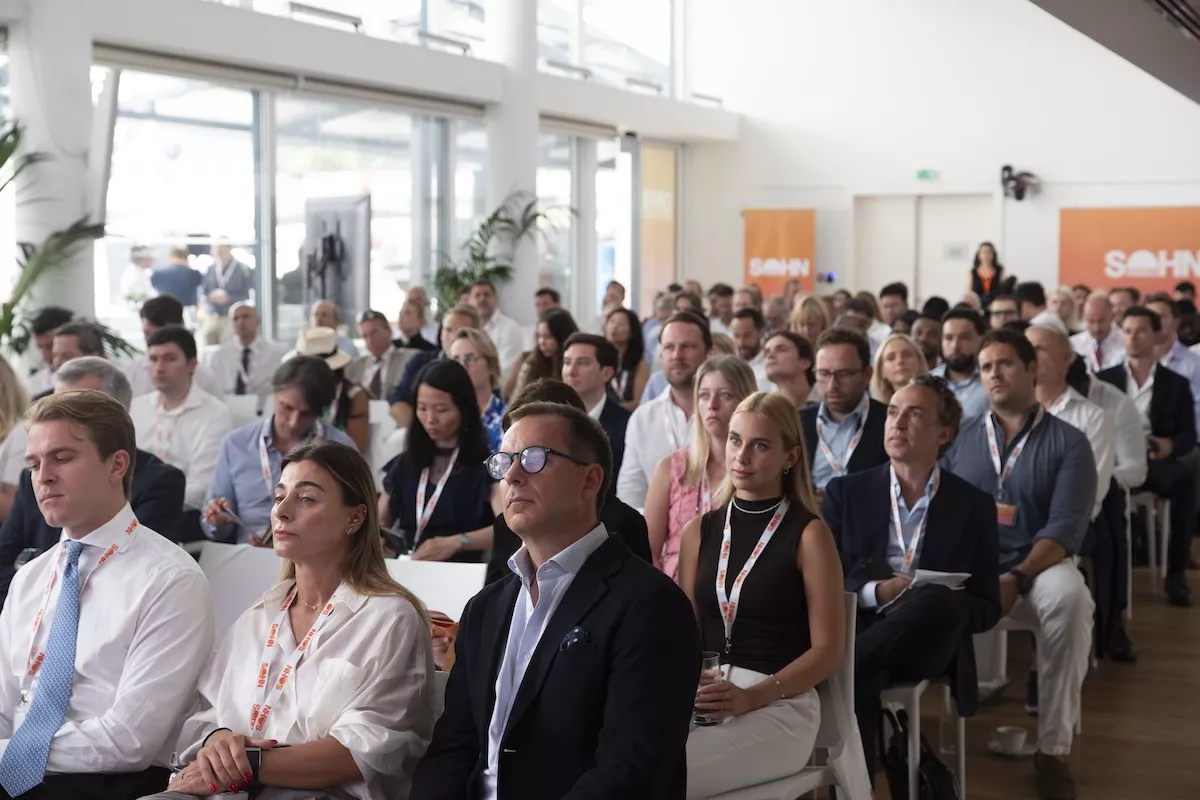
Some of the world’s most respected hedge fund managers, investors and financial strategists will converge on Monaco on 24th June for the sixth edition of the Sohn Monaco Investment Conference, a unique event that combines market insights with a mission to advance paediatric cancer research.
Held under the High Patronage of Prince Albert II at the Yacht Club de Monaco, the annual conference has established itself as one of Europe’s most influential gatherings for the alternative investment community. The event brings together leading hedge fund managers, portfolio managers and institutional investors who share their highest-conviction investment ideas while raising funds to support paediatric cancer research, treatment and care.
The Monaco edition forms part of the global Sohn Conference network, which spans major financial centres including New York, London, Hong Kong, Montreal and San Francisco. Founded in memory of Wall Street professional Ira Sohn, who died from cancer at the age of 29, the conference series has become renowned for attracting some of the investment industry’s most respected voices while supporting life-changing medical research.
Newly announced speakers join impressive line-up
Among the latest additions to the 2026 programme are Jean-Luc Allavena, chairman of Atlantys in partnership with Apollo, and Kaspar Hållsten, chief investment officer and portfolio manager at Rhenman & Partners.
They join an international roster of investment professionals that includes Fawaz Chaudhry of Horizon Global Partners, Maggie Fanari of J. Rothschild Capital Management, Célia Fseil of Candriam, Vincent Ijaouane of Vigama Capital, Per Lekander of Clean Energy Transition, Angelo Meda of Banor, Harrison Moot of Sandstone, Alison Porter of Janus Henderson and Moni Sternbach of Haverstock Capital.
As with Sohn conferences around the world, speakers are expected to share original investment ideas and market perspectives, offering attendees direct insight into the thinking behind some of the industry’s most successful investment strategies.
Finance and healthcare leaders take the stage
The conference will also welcome several distinguished guests, including Monaco’s Minister of Finance and Economy, Frédéric Cottalorda, and Jean-François Peyron, research director at INSERM C3M.
Their participation reflects the conference’s dual focus on finance and philanthropy. While investors gather to discuss opportunities across global markets, the event’s ultimate objective remains supporting advances in paediatric cancer treatment and research through the work of the Sohn Conference Foundation.
Investing for impact
What distinguishes Sohn Monaco from many traditional investment conferences is its format. Rather than presenting fund performance or corporate marketing messages, speakers reveal specific investment ideas and the research behind them, giving attendees a rare opportunity to understand how leading investors identify opportunities and assess risk.
Since its launch in New York in 1995, the Sohn Conference Foundation has expanded into a global platform that combines education, networking and philanthropy. Today, its events continue to unite the international financial community around a shared goal: using the power of finance to support breakthroughs in healthcare and improve outcomes for children facing serious illnesses.
The 2026 Sohn Monaco Investment Conference will take place on Wednesday 24th June at the Yacht Club de Monaco, with registration opening at 12.30pm before an afternoon of presentations and discussions, followed by a networking cocktail reception.