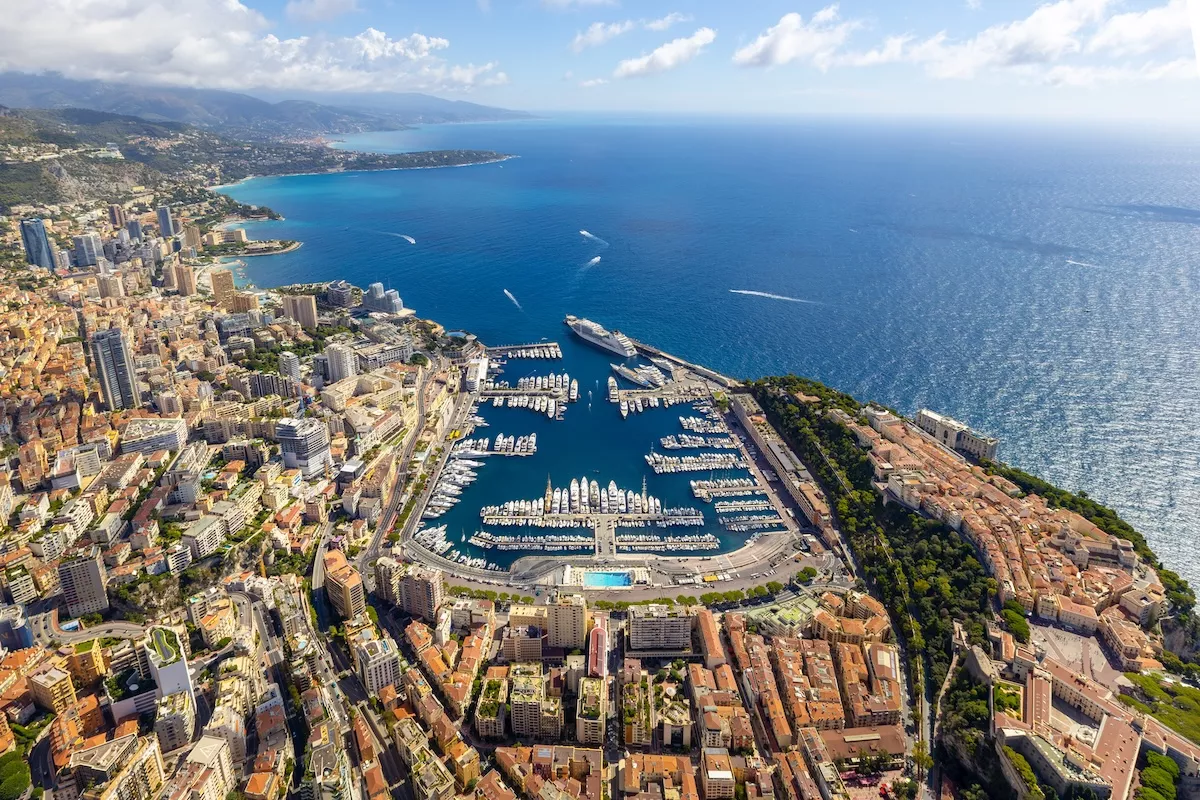
Monaco welcomed close to 6.7 million visits in 2025, generating almost €1.4 billion in direct visitor spending, according to a survey published on Tuesday by the Monaco Statistics Institute (IMSEE) and the Directorate of Tourism and Congresses (DTC).
Of the 6.7 million visits recorded, 92.5% were made by day-trippers who came to discover the Principality without staying the night, while 7.5% were tourists spending at least one night. Together they accounted for 9.3 million days of presence and more than 1.4 million overnight stays. Tourists stayed an average of 3.8 days, against 1.2 for day-trippers, and hotels remained the accommodation of choice, accounting for more than seven stays in ten.
Tourists drive the sector
Although overnight tourists made up just 7.5% of all visits, they alone generated 61.4% of the sector’s economic impact, a finding that points to the value of a high-spending international clientele alongside the nearby visitors who form the bulk of the numbers.
“Our ambition is not to welcome ever more visitors, but to attract more tourists who generate strong added value for the Monegasque economy,” said Guy Antognelli, Director of Tourism and Congresses. “Everything the Directorate of Tourism and Congresses does follows this logic of qualitative, sustainable growth.”
According to the report, a day-tripper spends an average of €76 a day in Monaco and a tourist €348, figures that rise to €85 and €1,670 respectively when measured across an average visit. Visitors from the Near and Middle East spent the most, topping €1,000 per person per day during their stay. In all, direct visitor spending reached almost €1.4 billion in 2025, equivalent to 6.8% of the Principality’s total turnover excluding the financial and insurance sector.
A loyal and international clientele
Nearly one visit in two was made by someone living in France, the destination’s main nearby market. Overnight tourists, though, showed a far more international profile, with 42% of their stays made by visitors from outside the European Union. Couples were the most common type of visitor, at 37%, ahead of families at 32.7%, and leisure and holidays were the leading reason to come, behind close to 95% of trips. Most visitors reached Monaco by car or rental vehicle, at 42.6%, or by train, at 33.3%, while those staying in the Principality got around mainly by taxi, at 34.8%.
Íñigo López de la Osa Franco has just ridden in front of a home crowd at the Longines Global Champions Tour in Monaco, one of the most technically demanding stops on the international show jumping calendar. The first Monégasque male rider ever to reach this level of the sport, he spoke to Monaco Life about what competing at home means to him, the bond between horse and rider, and the message he hopes to send to the next generation of Monégasque athletes.
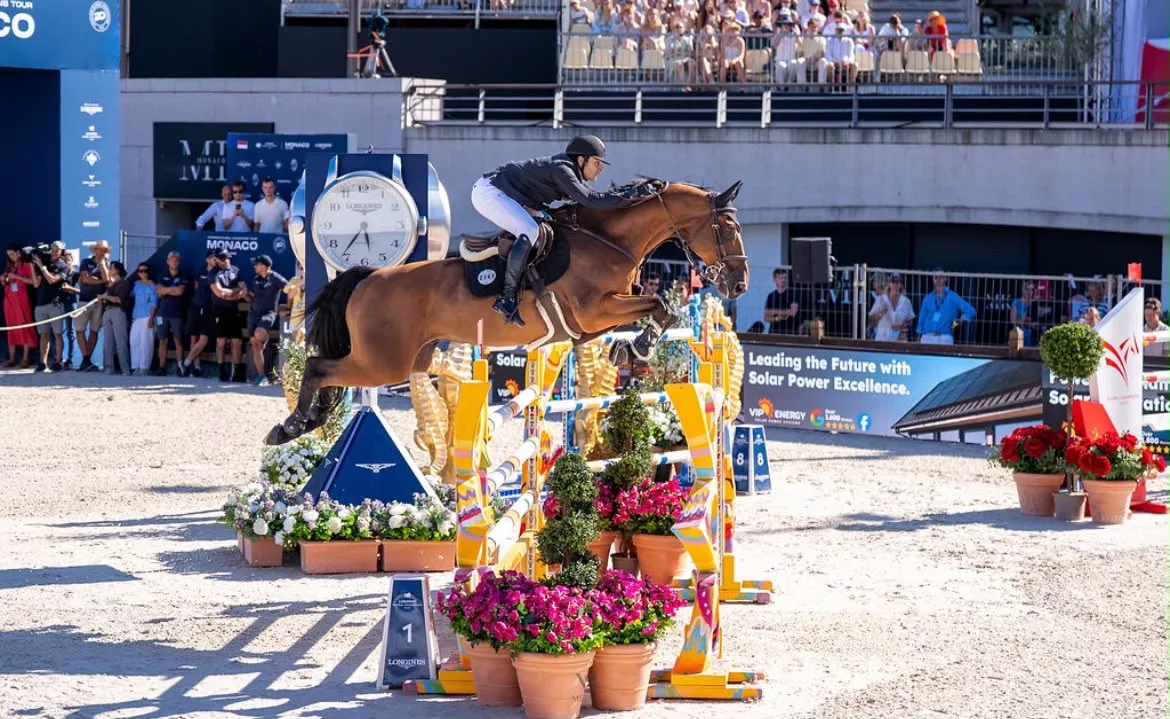
Few show jumping arenas demand as much precision as Monaco’s. Built between the Formula 1 pit lane and Port Hercule beneath the Prince’s Palace, its compact layout leaves little room for error. For Íñigo López de la Osa Franco, however, it also means competing at home.
“Competing in Monaco is always incredibly special because it means representing my country, my home, and the place where I grew up. As a Monegasque athlete, wearing my country’s colours in front of my family, friends, and home crowd is a real source of pride,” said López de la Osa Franco. “I’m also deeply grateful to H.S.H. Prince Albert II for the trust and support he has always shown me. Having the opportunity to represent Monaco at this level is a privilege that motivates me to give my very best every time I step into the arena.”
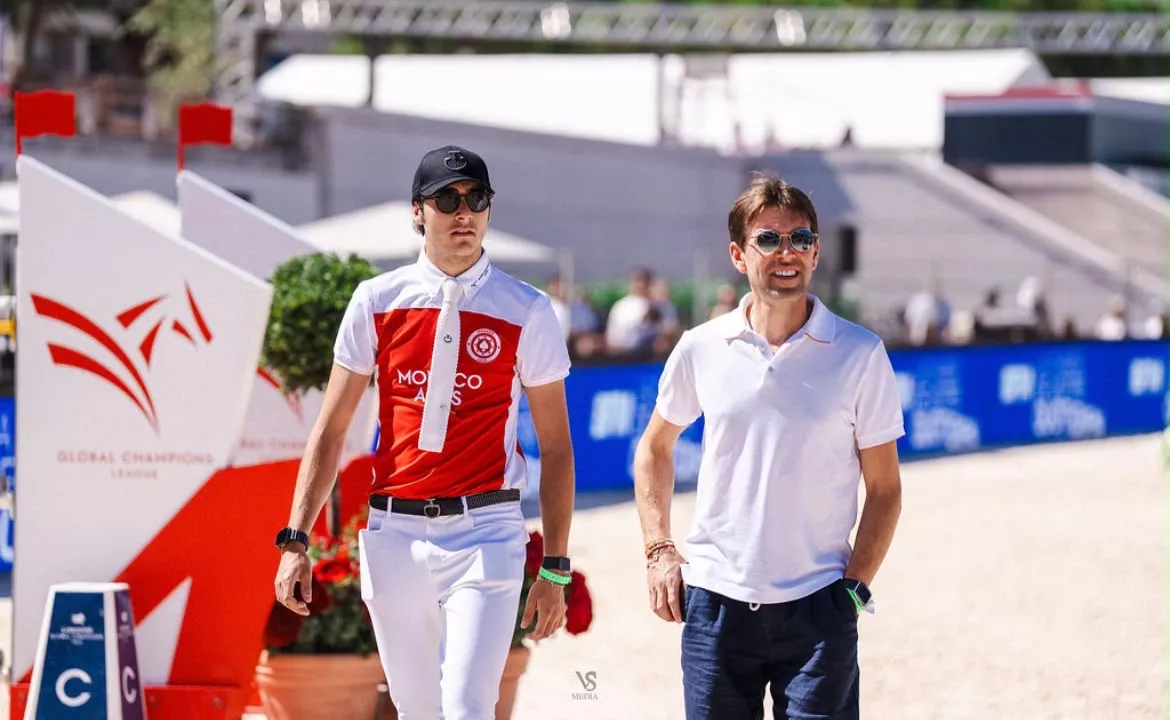
Íñigo López de la Osa Franco with Simon Delestre at the International Jumping Monte-Carlo. Photo credit: VSMedia.Equestrian and Horseframes
From Spain’s youth teams to Monaco’s flag
Born in Monaco to a Spanish father and an Italian mother, López de la Osa Franco first rode for Spain in youth Nations Cups before taking up the Monaco Olympic Committee’s invitation to compete under the Principality’s flag. He represented Monaco at junior and young rider European Championships between 2021 and 2024, and trains in France under Simon Delestre, a former world number one, and his father Marcel Delestre. After making his Global Champions League debut in 2025 with the Stockholm Hearts, he joined the Monaco Aces this season as the team’s Under-25 rider, alongside names such as the Swedish Olympic medallist Peder Fredricson.
He points to steady work rather than a single moment as the reason his results have climbed.
“I’ve always given my all in every competition and every training session. I’ve always believed in myself and in my horses. The work we’ve done, and continue to do, is paying off,” said López de la Osa Franco. “Over the past year, I’ve become more aware of my abilities and my potential, and that has helped me achieve some excellent results.”
Chief among them was an eighth place in the Grand Prix at the Mexico City leg in April, riding Nascar Van’t Siamshof, a result that left him the youngest rider in the top ten of the overall standings.
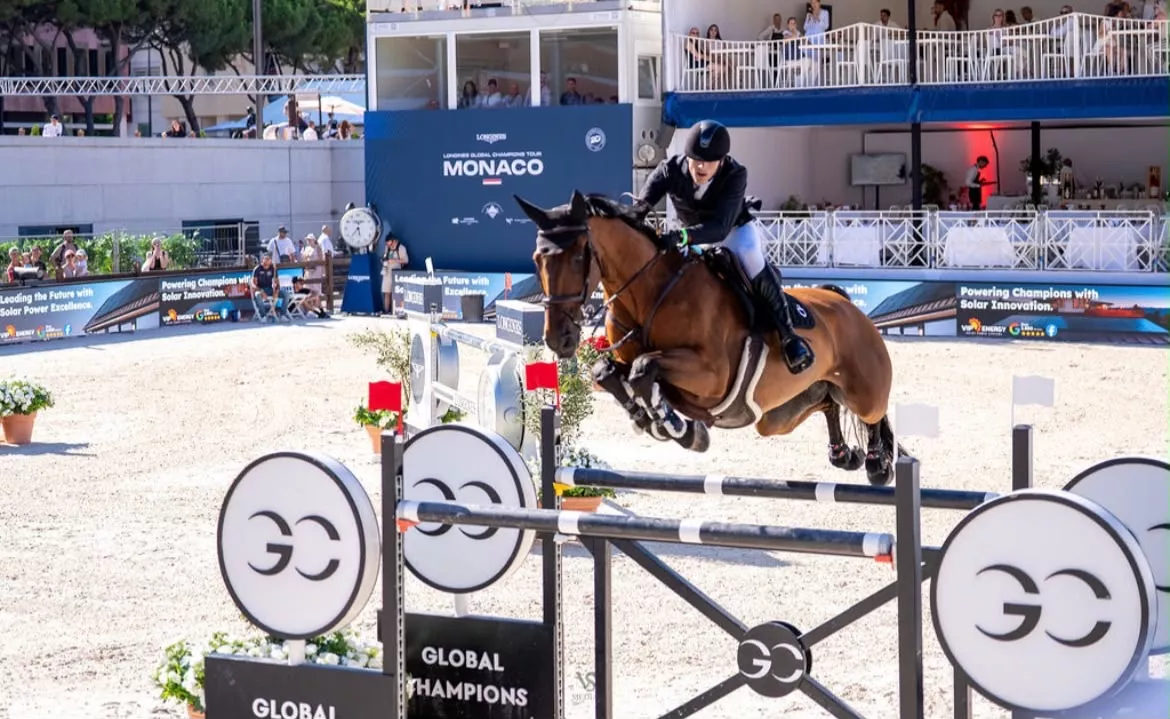
Íñigo López de la Osa Franco competing in Monaco. Photo credit: VSMedia.Equestrian and Horseframes
Learning from the best
The Global Champions circuit, often called the Formula 1 of show jumping, puts him among the world’s leading riders week after week.
“I never stop learning. I’m still young, and I know there’s so much I can learn from my more experienced colleagues. That’s an important part of growing,” said López de la Osa Franco. “As an athlete, I try to mature and improve every single day.”
With the Monaco Aces sitting sixth of the seventeen teams in the league, there is plenty still to play for. “We don’t want to give up now, we are looking forward to the future. There are still seven stages left before the Riyadh Super Cup,” he said, referring to the league’s season finale, before adding of his home stop: “Monaco? It’s always a fantastic competition, well organised and full of enthusiasm.”
The bond with his horses
Ask him about the partnership at the heart of the sport and his affection shines through.
“It’s absolutely fundamental. I have a special relationship with each of my horses, and that relationship is different with every one of them. It’s something you feel deep inside—it’s difficult to explain,” said López de la Osa Franco. “It’s a genuine and authentic bond that no one from the outside can influence.”
A World Championship in his sights
The season builds towards a landmark. López de la Osa Franco has qualified for the Show Jumping World Championship at Aachen, in Germany, this August, and is set to become the first Monégasque rider ever to compete at one.
A message to young Monégasques
For a Principality with a proud sporting culture but few athletes at the very top, he hopes his rise can point a way forward.
“I’d love to see more Monegasque athletes representing our country at the highest level in the future, competing in the world’s biggest events. My message is simple: never stop believing in yourself,” said López de la Osa Franco. “The pride of representing your country should be the motivation that never allows you to give up.”
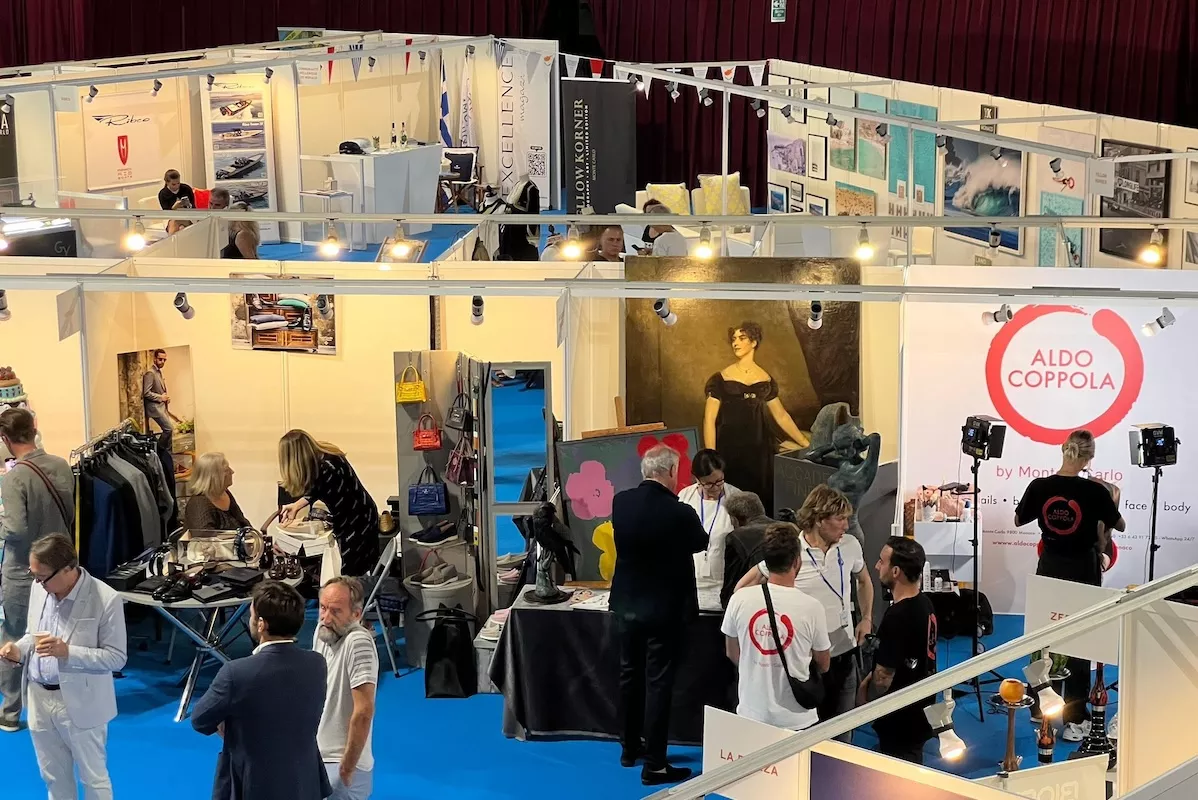
The Principality is set to host Monaco Méditerranée this coming weekend, a two-day event transforming the Galerie Diaghilev at the Grimaldi Forum into a vibrant showcase of regional creativity and craftsmanship. Running from Saturday 11th July to Sunday 12th July, the exhibition positions itself as a central hub for those seeking to engage with authentic Mediterranean lifestyle and design.
Organisers have structured the event into four distinct villages, each designed to highlight a different aspect of regional identity. The ‘Fashion and Lifestyle’ section offers attendees a look at exclusive collections and artisan-made accessories, with a focus on how designers are blending heritage with contemporary trends. Complementing this, the ‘Art and Craftsmanship’ village features handcrafted pieces and contemporary works, creating a space where visitors can meet the creators behind the objects.
‘Gastronomy’ serves as another pillar of the event, with a dedicated area for tastings and culinary workshops. The programme aims to bridge the gap between local producers and the public, offering a chance to explore high-quality flavours from across the region. Rounding out the experience is the ‘Culture village’, which will host a series of talks, performances, and exhibitions aimed at exploring the diversity of Mediterranean history and modern cultural output.
Supporting a charitable goal
While the event highlights aesthetics and trade, it also maintains a philanthropic focus. Admission to the exhibition is set at €5, with all proceeds donated directly to the Association les Amis du Liban.
The event is open to the public on Saturday 11th July from 10am until 8pm, and on Sunday 12th July from 10am until 7pm. With its emphasis on direct dialogue between creators and the public, the show aims to cement its reputation as a key fixture on the Monaco summer social calendar.
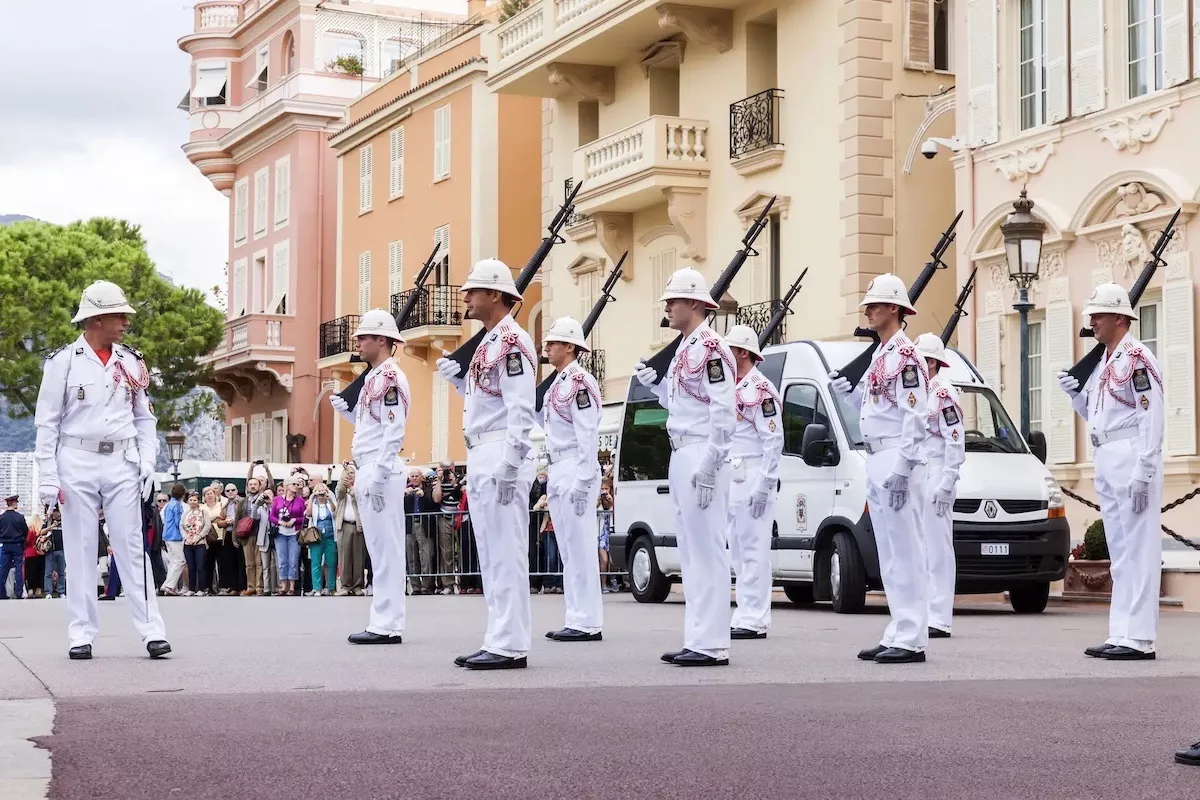
The Compagnie des Carabiniers du Prince has launched its 2027 recruitment campaign, with applications now open for French and Monegasque nationals seeking to join the military unit responsible for protecting the Sovereign, the Princely Family and the Prince’s Palace.
Founded in 1817, the Prince’s Carabiniers play a dual role within the Principality, combining operational security with ceremonial duties. In addition to safeguarding the Prince’s Palace and supporting the Sovereign’s official engagements, the unit is a familiar presence at national celebrations, state ceremonies and major public events, including the Formula 1 Monaco Grand Prix.
Who can apply?
The Compagnie is recruiting Class 2 soldiers and is also seeking musicians to join its military orchestra.
According to the official recruitment criteria, applicants must be of French or Monegasque nationality, aged between 19 and 27, and meet the required physical standards, including a height of between 1.80 metres and 2.00 metres.
The selection process
Recruitment takes place over two stages. Candidates first complete eligibility tests covering general knowledge, mathematics, dictation, oral expression and physical fitness, including swimming and endurance running.
Those who successfully pass the initial stage progress to medical and psychological assessments before attending formal recruitment interviews.
Life within the Compagnie
The Compagnie notes that the role involves shift work and irregular hours, reflecting the demands of military service and the operational requirements of protecting the Sovereign and supporting official engagements throughout the year.
Beyond their operational duties, members also take part in ceremonial events and have access to a range of sporting, cultural and social activities organised within the unit.
How to apply
Applications for the 2027 intake are now open through the official Prince’s Carabiniers website. Interested candidates have until 22nd July 2026 to submit their application.
Just over two and a half hours from Monaco, the rolling vineyards of Italy’s Langhe unfold across the hills of Piedmont, home to some of the world’s most celebrated wines and one of the country’s great gastronomic regions. It’s a journey that swaps the Mediterranean for vineyard-covered hills, medieval villages and a slower pace of life.
I spent three days here in June at Scarpa Villas, a collection of beautifully restored farmhouses among the vines near Verduno, and discovered a region where exceptional food, wine and hospitality are simply part of everyday life.
The villas stand within Monvigliero, regarded by growers and critics as the finest cru in Verduno and one of the greatest sites in all of Barolo. The wider landscape of the Langhe, Roero and Monferrato has been a UNESCO World Heritage site since 2014, and it is easy to see why: hills of vines in every direction, threaded with villages and castles. Alba, the nearest town of any size, is 20 minutes away. It is the capital of the white truffle, and the home of Ferrero, which is why the gianduja hazelnut chocolate you taste everywhere here is the direct ancestor of Nutella.
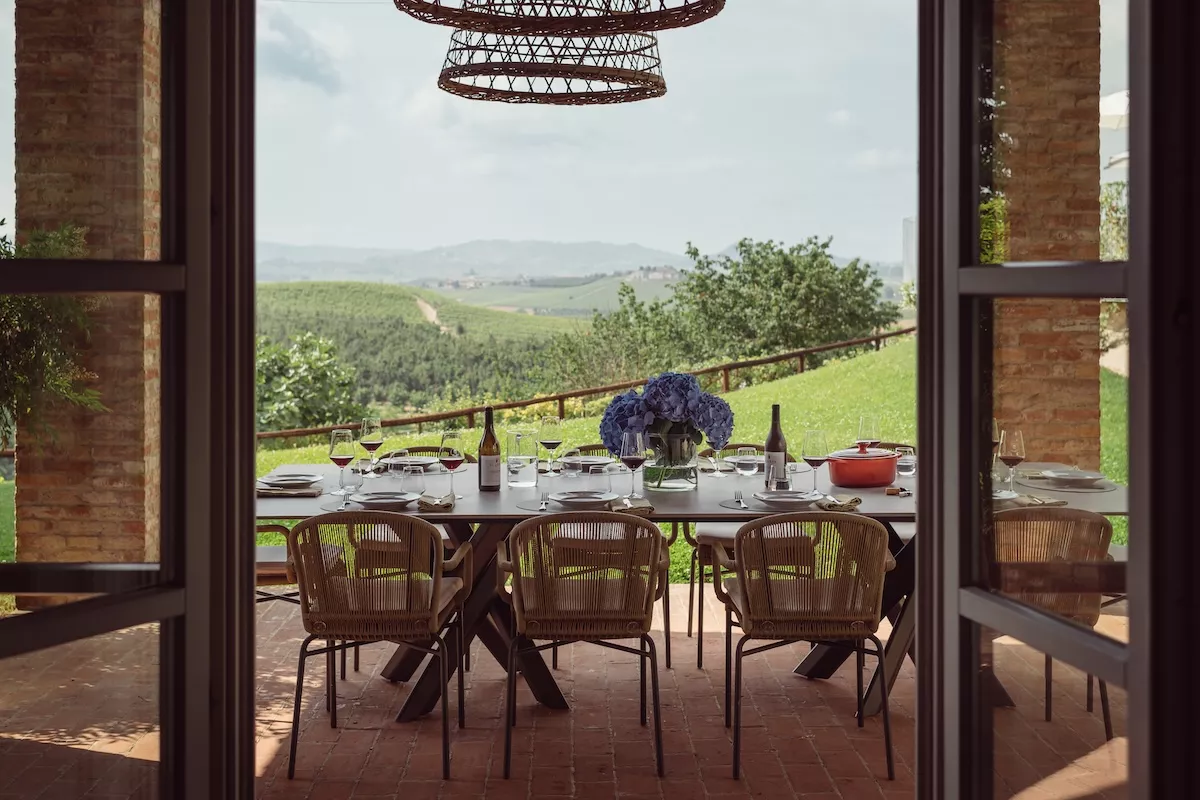
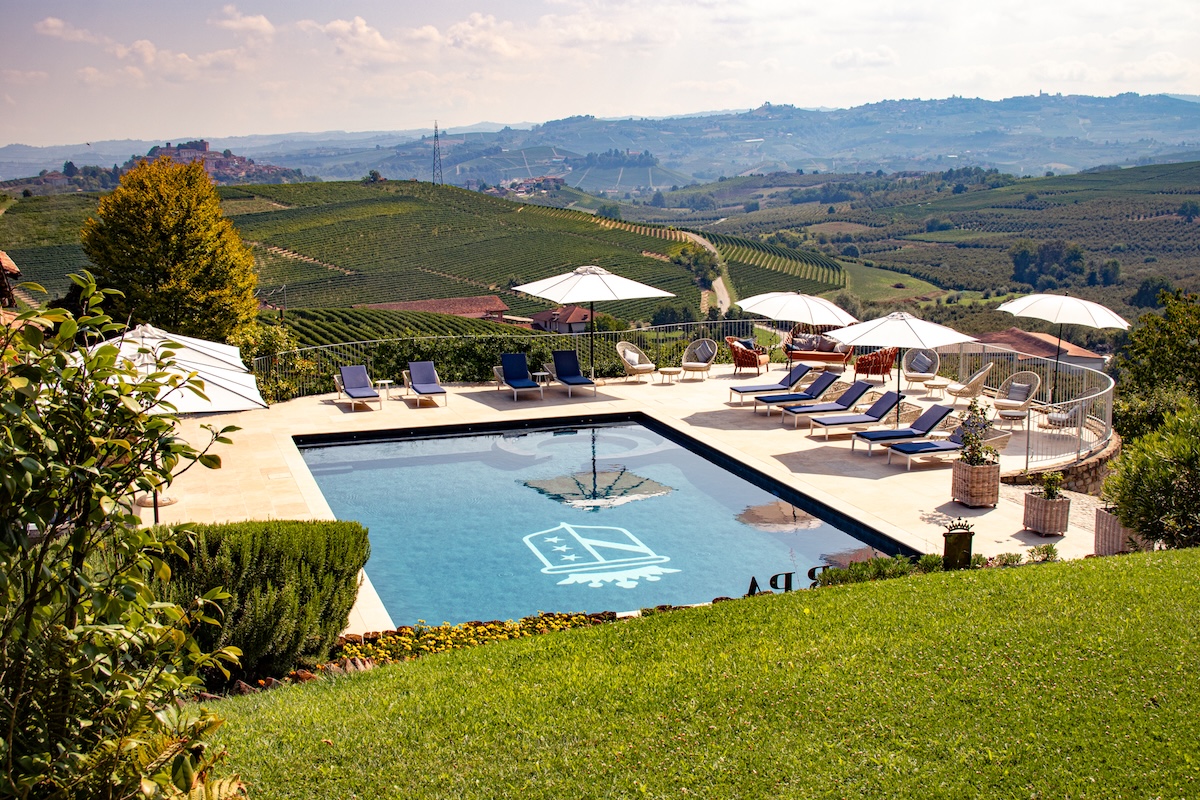
Renowned Scarpa wines alongside fresh local dishes, served with a view across the Barolo hills
The estate
Scarpa has been making wine here since 1900. It was founded by Antonio Scarpa, a merchant from the Venetian island of Burano who came to Piedmont for the vineyards and stayed for the woman he married. The winery bottled its first Barolo in 1940, early enough that it holds a rare privilege it still enjoys: it is one of the very few producers allowed to age and bottle Barolo and Barbaresco outside the official appellation boundaries, at its historic cellars in nearby Nizza Monferrato.
Each of the four villas is named after a Scarpa wine — Tettimorra for the Barolo, Tettineive for the Barbaresco, La Bogliona and I Bricchi for the two Barberas.
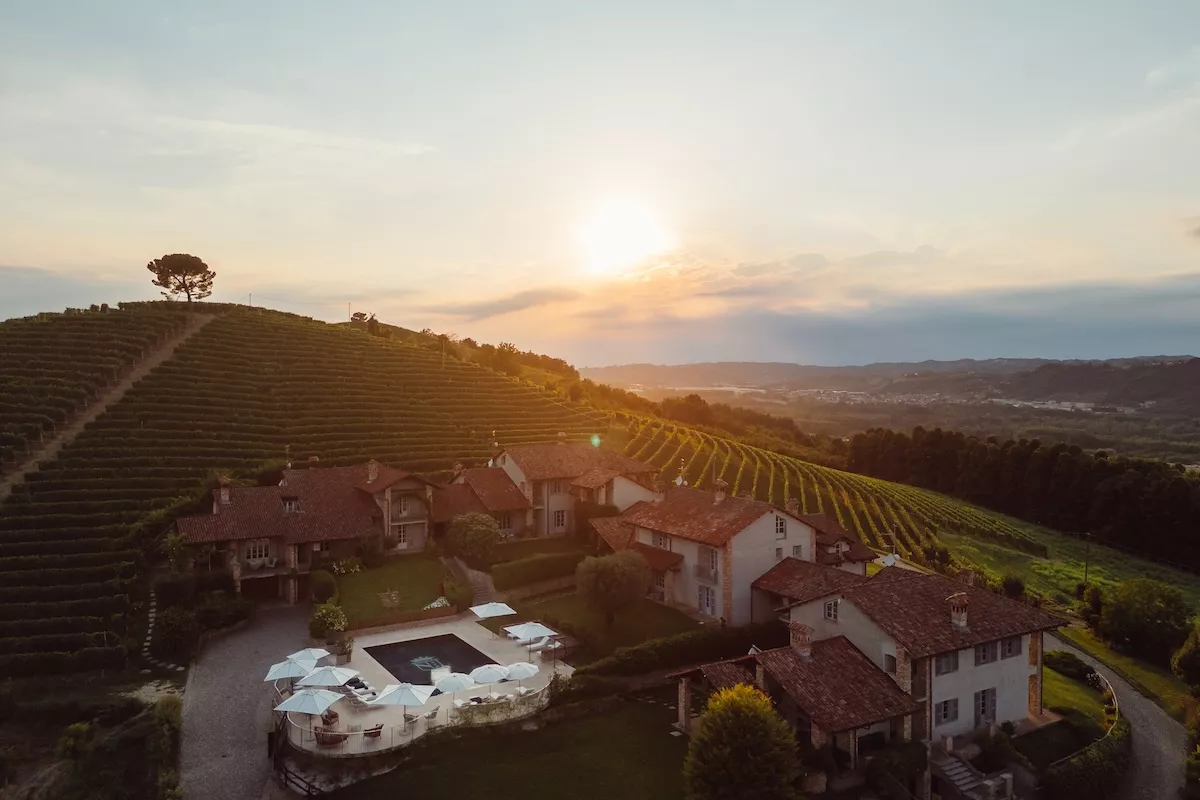
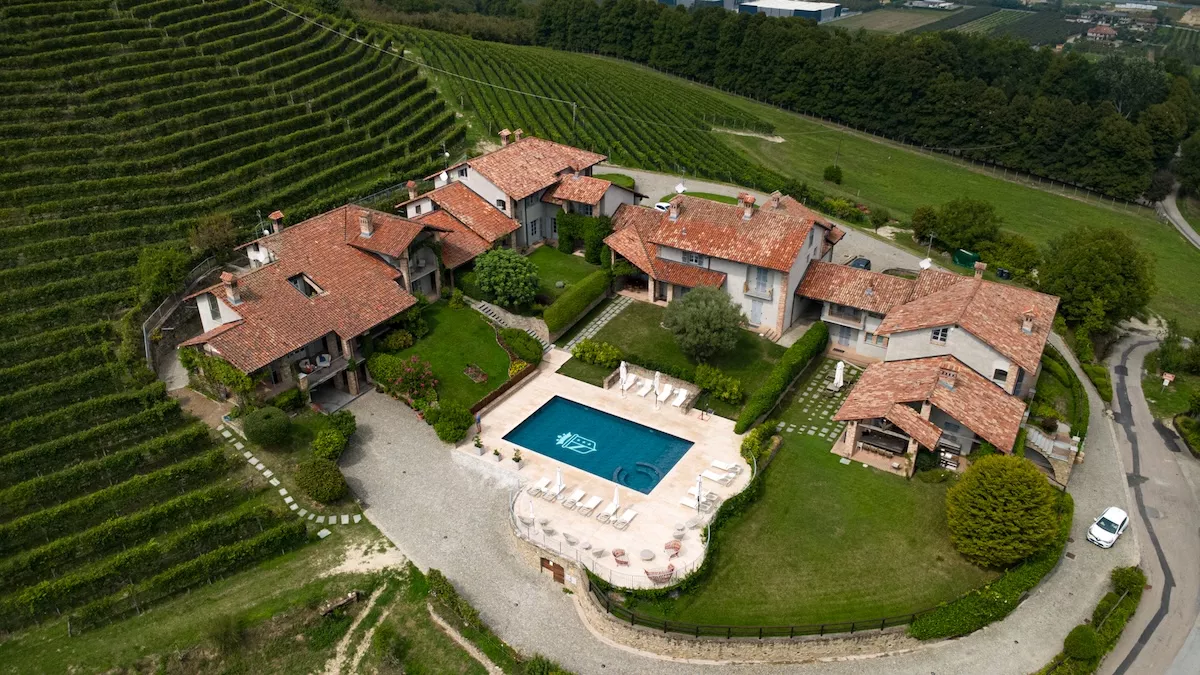
The Scarpa Villas surround the large heated pool, each with sweeping views over the vineyards
The villas
The four houses share a heated pool that looks straight down the valley, and they range from the intimate to the generous. La Bogliona, the smallest, sleeps six to nine and is lovely for a couple or a close group. Tettineive, the largest, takes up to 12 and is made for families, reunions and celebrations.
Inside, the exposed beams and warm terracotta of the old farmhouses have been beautifully restored, and the welcome is the kind of unhurried Italian hospitality that has you settled in within the hour. One evening a private chef cooked for us on the terrace as the light came off the hills; another opened with an aperitivo out in the vineyard. The estate even makes its own vermouth, from a recipe of more than 40 botanicals the family has kept secret since the 1920s and which forms the basis of the most delicious Scarpa aperitivo cocktail.
An escape at any time of year
Truffles, cooking and a day at the winery
There is no shortage of ways to fill the days. I took a cooking class and finally learned to make agnolotti, the little filled pasta the Langhe is proud of, and spent a full day at the Scarpa winery in Nizza Monferrato: a tour of the old cellars, a library of rare vintages reaching back to 1962, and a tasting lunch that made a persuasive case for the estate’s slow, patient way with its wines.
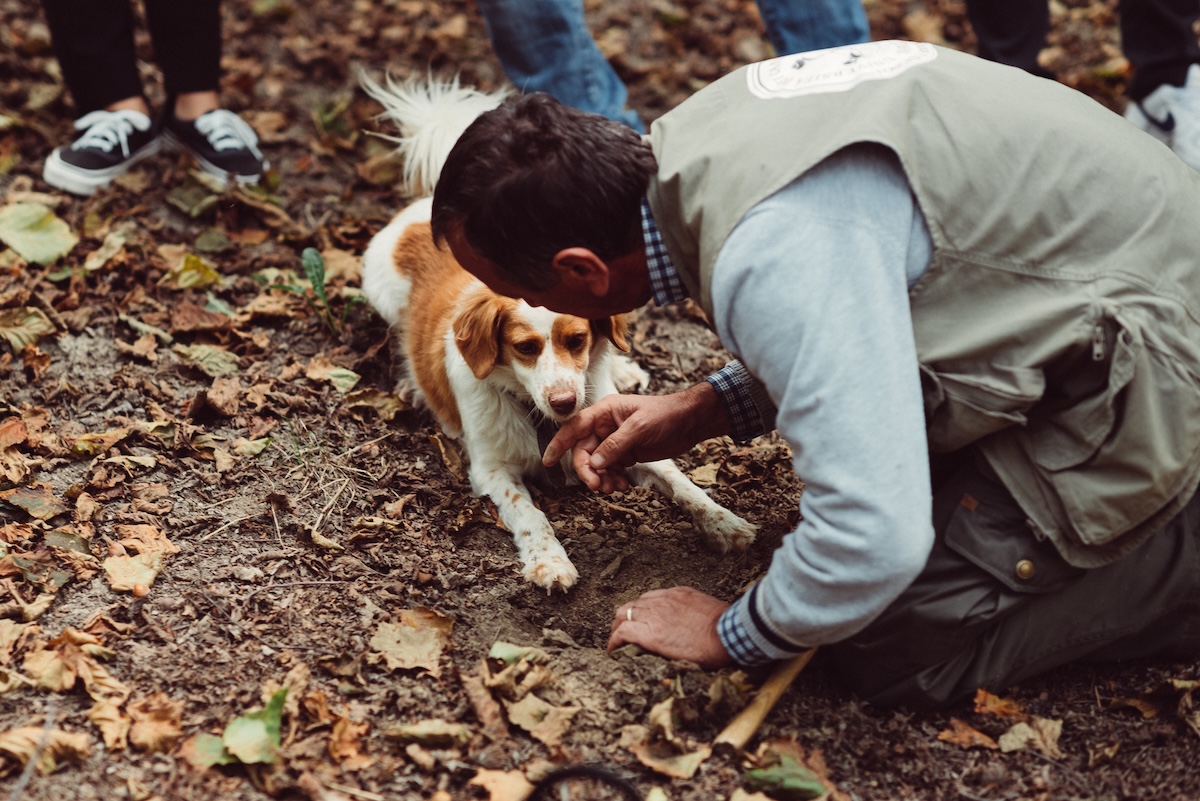
One afternoon we went truffle-hunting in the nearby woods with a local trifulau and his dog Ciara, watching it dart between the trees and dig. Together, we found a remarkable number of black truffles — and then had the pleasure of having them served to us for dinner by our Private Chef Alex Moro. It is the kind of heart warming experience that stays with you.
Beyond that, the villa team will arrange almost anything: sommelier tastings, e-bikes and Vespas through the hills, a sunrise balloon flight, yoga on the lawn, or a day trip into Turin.
Truffle hunting just metres from the Scarpa Villas estate
The castle at Grinzane Cavour
A highlight of the trip was a short drive to the Castello di Grinzane Cavour. The hilltop medieval castle was once home to Camillo Cavour, one of the architects of Italian unification, who was mayor of the village here for 17 years. Today it holds the first regional wine cellar in Piedmont, founded in 1967 and stocked with the great reds of the Langhe, alongside museums of local life and, every November, the World Alba White Truffle Auction — a charity sale that has raised more than seven million euros since 1999.
From its walls, the view over the Barolo vineyards is worth the trip on its own.
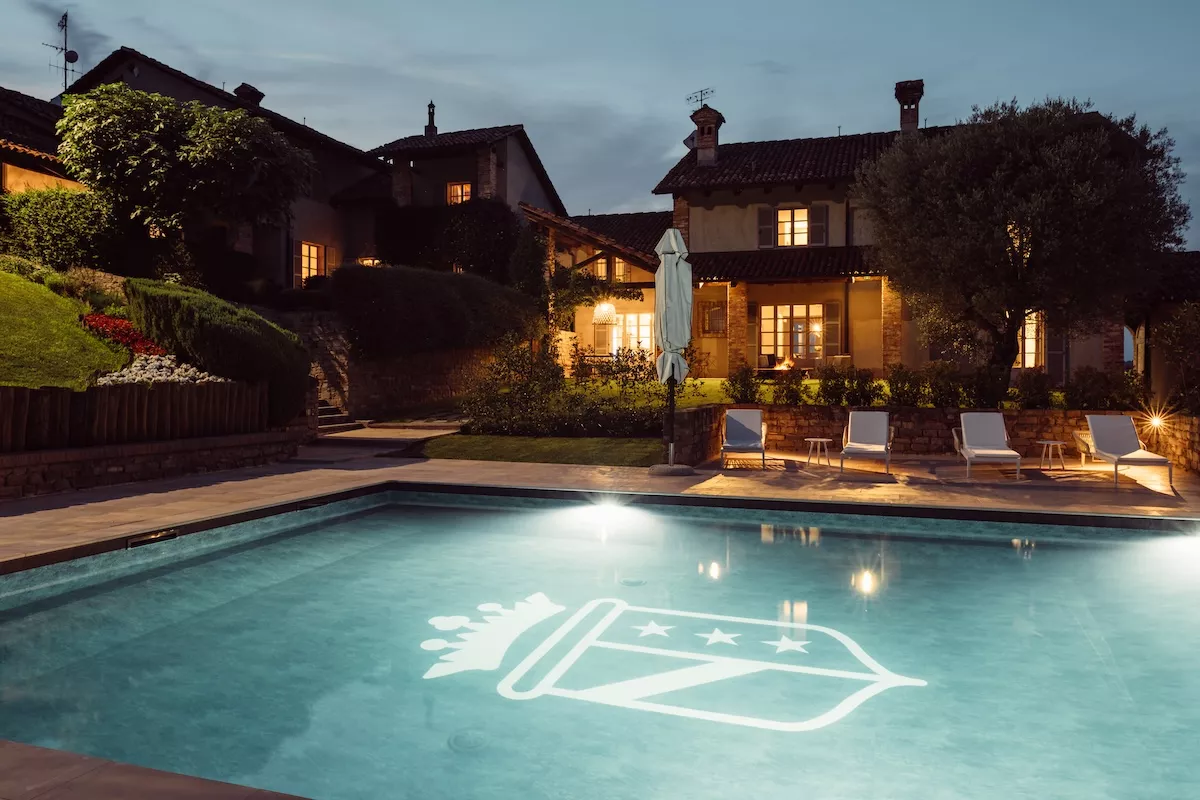
The cosy ambiance of Scarpa Villas
When to go
The region rewards a visit at any time of year. Come in late spring or summer, as I did, for long light and warm evenings by the pool; come in autumn for the white truffle season, when Alba’s famous truffle fair fills the town and the great reds are on everyone’s mind.
Whenever you go, the appeal is the same. This is serious wine country and genuine Italian hospitality, with views you will not want to leave, all within an easy drive of Monaco. Anyone who loves those things will simply love it here.
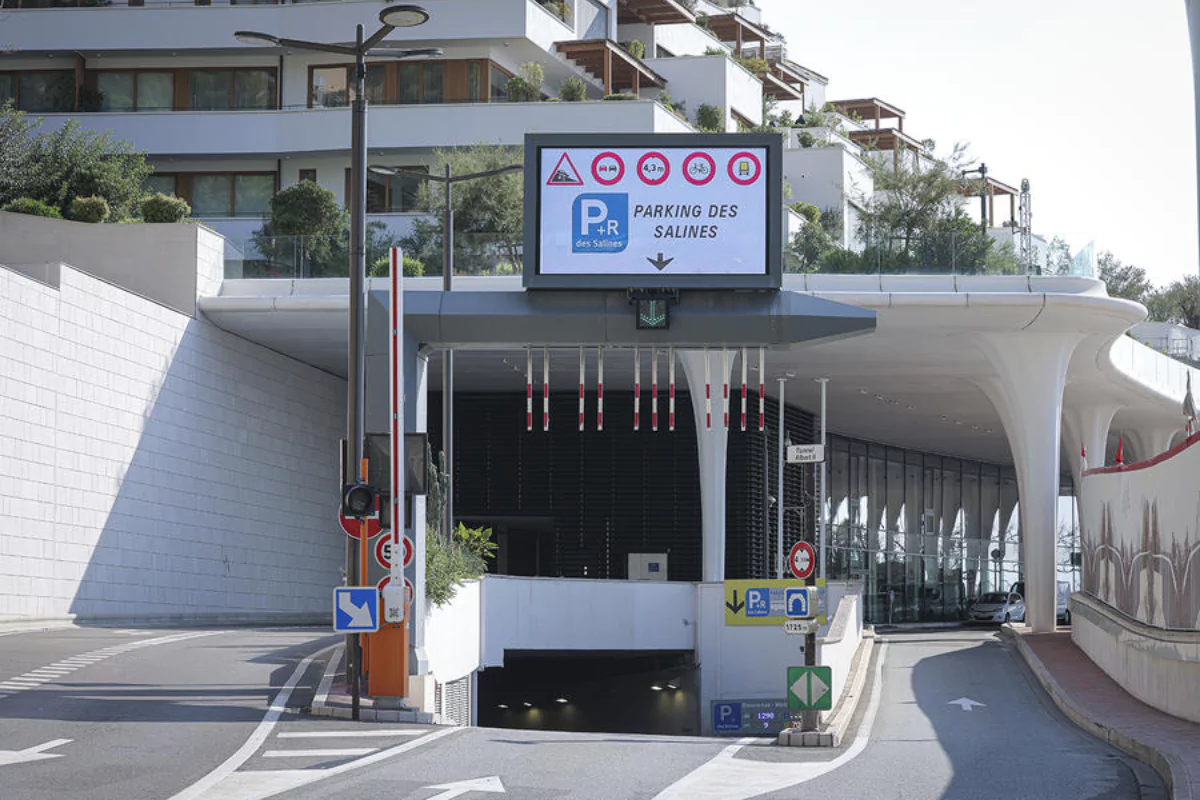
Monaco has stepped up its L2 bus service on summer weekends, adding three extra buses on Saturdays and Sundays between 10am and 1pm since 4th July. The reinforcement runs until the end of the summer on the line that links the Salines car park, at the western entrance to the Principality, with Monaco-Ville, the old town on the Rock.
The move responds to the heavy passenger numbers seen on the L2 during summer weekends, particularly on departures from the Salines car park. The extra capacity is intended to improve comfort at the busiest times and keep journeys flowing between Salines and Monaco-Ville, which draws visitors to the Prince’s Palace, the cathedral and the Oceanographic Museum.
Park at the edge, ride in for free
Visitors arriving by car are encouraged to use the city-entrance car parks, and the Salines site in particular. Motorists who park there receive 10 free journeys on the Compagnie des Autobus de Monaco (CAM) network, enough for a car of up to five passengers to reach the Principality’s main attractions by public transport.