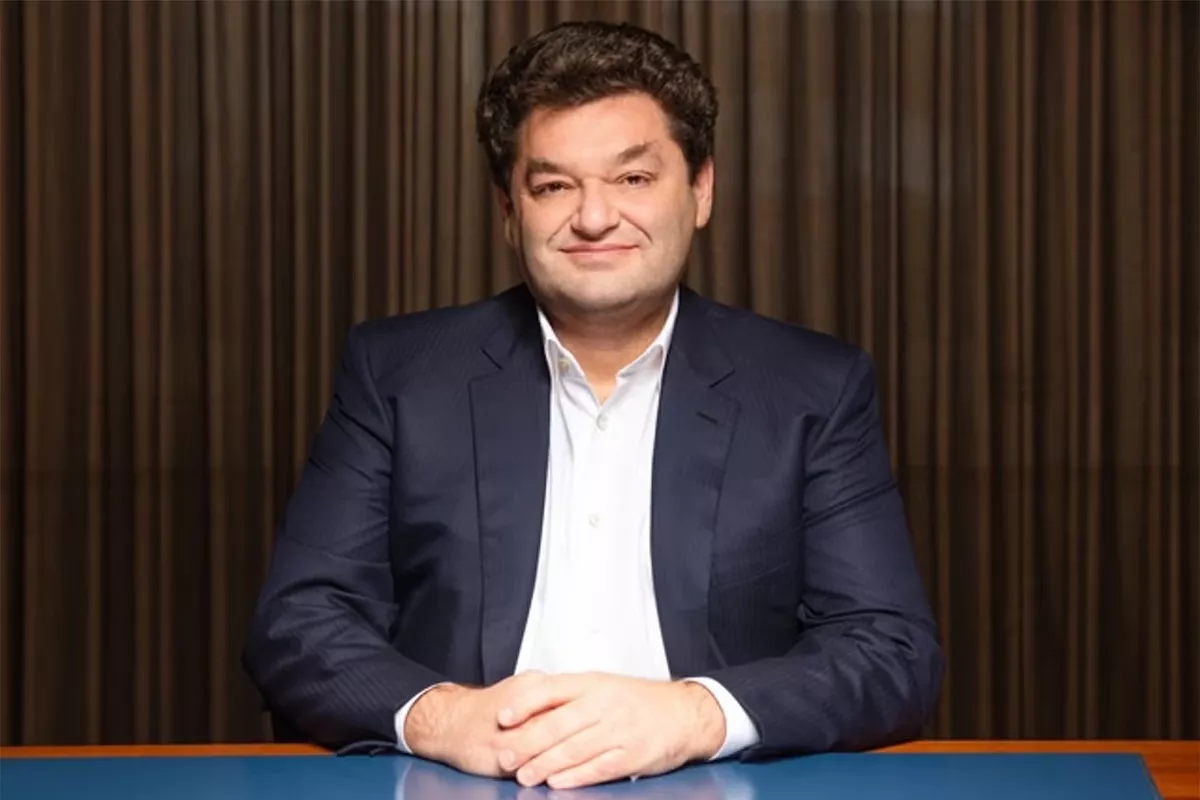
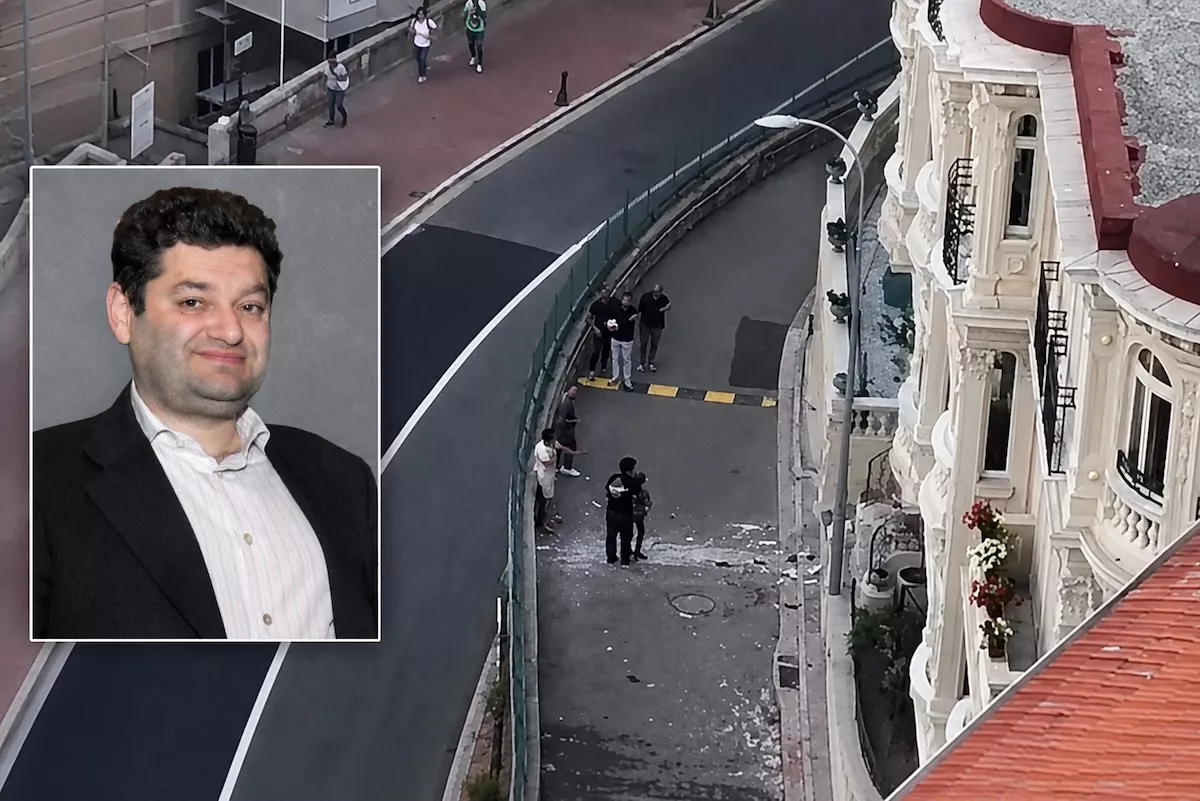
The lawyer representing Vadym Iermolaiev, the Ukrainian businessman injured in Monday night’s parcel bomb attack in Monaco, has confirmed to Monaco Life that the three victims are 58-year-old Vadym Iermolaiev, his son, and his partner — clarifying that the woman injured in the blast is not his wife, as has been reported in several international outlets.
Grégoire Gamerdinger, of Monaco-based firm 99 Avocats, spoke directly to Monaco Life Editor in Chief Cassandra Tanti on behalf of the family, providing the first detailed statement from their legal representatives since the attack.
Investigation ongoing, family cooperating
Gamerdinger confirmed that the family is working closely with police and collaborating fully with the investigation. He said the legal team currently has limited access to information given the ongoing nature of the inquiry, and that the health of the victims has not changed from what Prosecutor General Stéphane Thibault indicated at Tuesday morning’s press conference, when he said that one victim’s life was no longer in immediate danger while another remained in critical condition.
Asked if he could confirm the identify of the woman injured in the blast, the family’s lawyer told Monaco Life: “if the Monegasque authorities do not wish to communicate the victim’s name, we will not comment, and let the prosecutor decide which information should be make public.”
No known motive
On the question of why the attack took place, Gamerdinger said the family has no explanation. “There is no motive that we know of behind the attack,” he said.
Appeal for accuracy
The lawyer’s central message was a direct appeal to the media to exercise caution during what he described as a critical stage of the investigation.
Among the claims he sought to address directly was speculation linking the attack to Iermolaiev’s adult son, Artur — a separate individual from the 13-year-old son injured in Monday’s blast. Artur Iermolaiev was arrested by Interpol in Cyprus in late 2025 following an Estonian arrest warrant, and was recently sentenced to a suspended prison term and the confiscation of several million euros in assets, in connection with an alleged pan-European network of fraudulent call centres. Various media have suggested a possible connection between that case and the attack. Gamerdinger rejected any such connection. “There is no link at all,” he said. “And as the Prosecutor General said on Tuesday, Vadym Iermolaiev is not sought by any authorities.”
A “shocking and outrageous” attack in Monaco
Asked about the wider implications of the attack for Monaco’s reputation as one of the world’s safest places to live, Gamerdinger said, “Security and safety is the first interest of Monaco. I think it is something you can see in the Palace communication and in the National Council communication — it is very shocking and outrageous that something like this can happen in Monaco.”
He said the family places full trust in the Monégasque authorities and remains entirely at their disposal.
The suspect who left the explosive device at the entrance of the residential building on rue Révérend-Père-Louis-Frolla on Monday evening and fled towards Beausoleil remains at large.
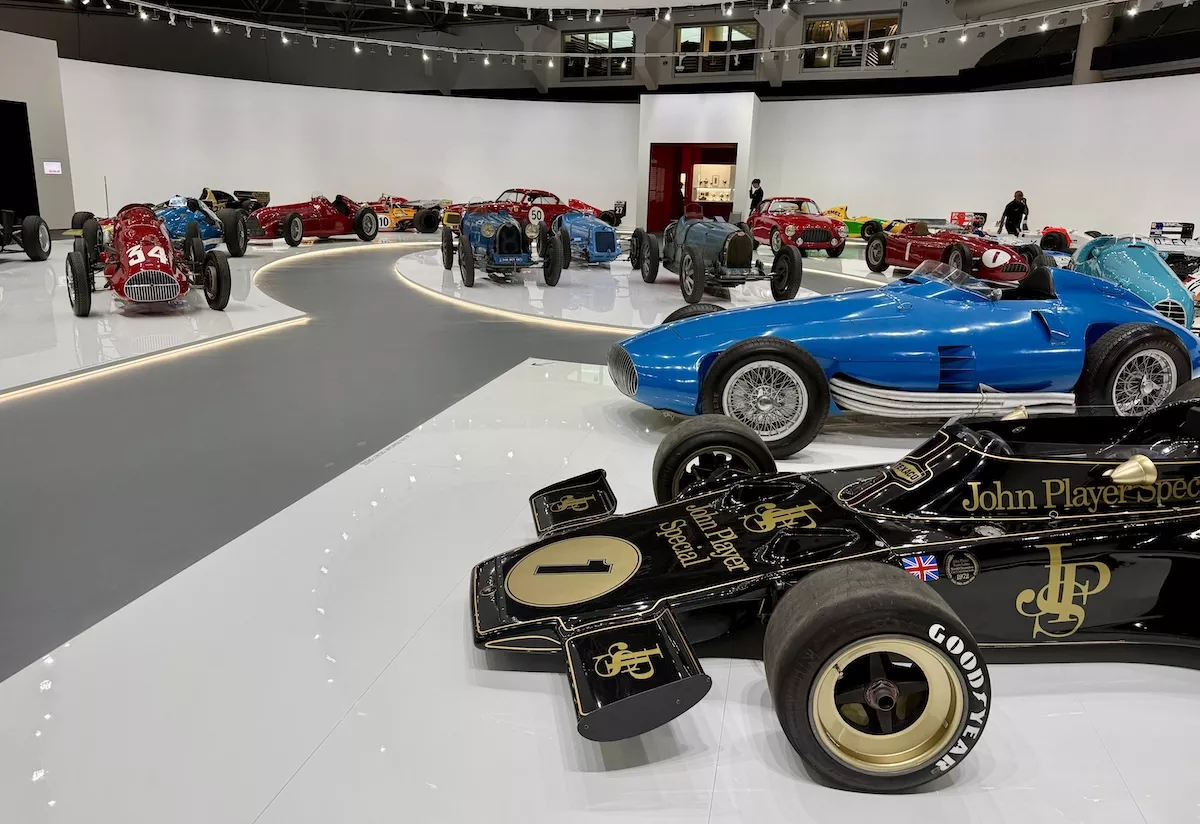
A major exhibition celebrating more than 130 years of Monaco’s relationship with the automobile opened at the Grimaldi Forum on Wednesday, bringing together 53 iconic vehicles drawn from lenders across the world in a show that has taken years to assemble. Originally planned for 2020, ‘Monaco and the Automobile, from 1893 to the Present Day’ was delayed by the pandemic and finally opens this summer across 3,500 square metres of immersive displays, archival footage, previously unseen documents and scenographic installations.
“It is always great to present three to four years of hard work that goes into an exhibition,” said Sylvie Biancheri, General Manager of the Grimaldi Forum Monaco. “For ‘Monaco and the Automobile’ I have to say that it has been quite difficult to find the original cars — not just winning cars, but the cars that actually raced in Monaco. We have 53 iconic vehicles in this exhibition and almost 50 lenders, so that gives you an idea of how hard it is to find these vehicles.”
The scale of that undertaking is visible throughout. Almost every car on display is the actual vehicle that competed, not a replica or a similar model — sourced from private collectors, racing archives and institutional lenders spanning multiple countries.
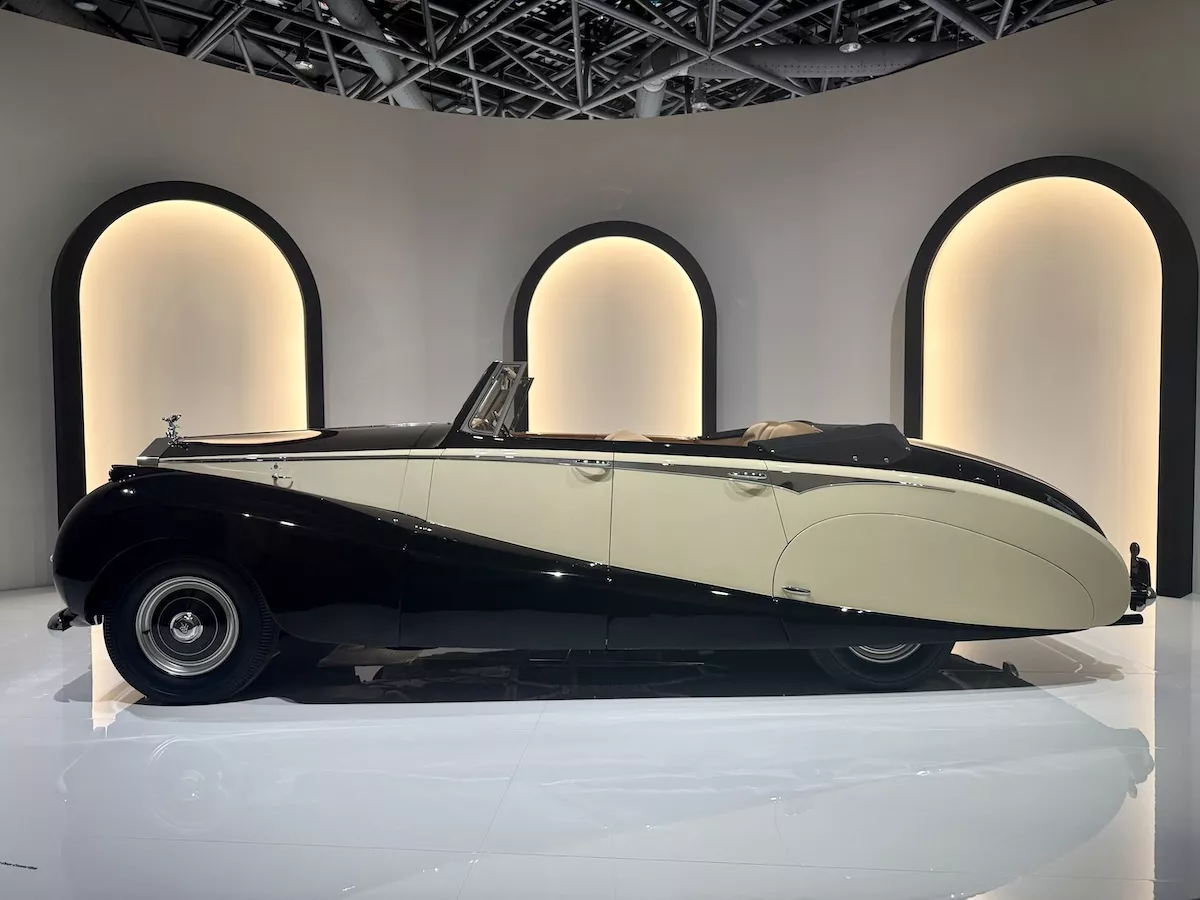
The Rolls-Royce Silver Wraith that carried Prince Rainier III and Princess Grace through Monaco on the day of their wedding. Photo credit: Cassandra Tanti
A wedding and a beginning
The exhibition opens with one of its most emotionally charged pieces: the Rolls-Royce Silver Wraith that carried Prince Rainier III and Princess Grace through Monaco on 19 April 1956, the day of their religious wedding. Accompanied by archival video footage of the ceremony, the car anchors the show’s opening in a year when Monaco is already marking the 70th anniversary of that union — the so-called ‘Wedding of the Century,’ watched by 30 million viewers on Eurovision and still considered the second most widely covered event in the world after the coronation of Queen Elizabeth II.
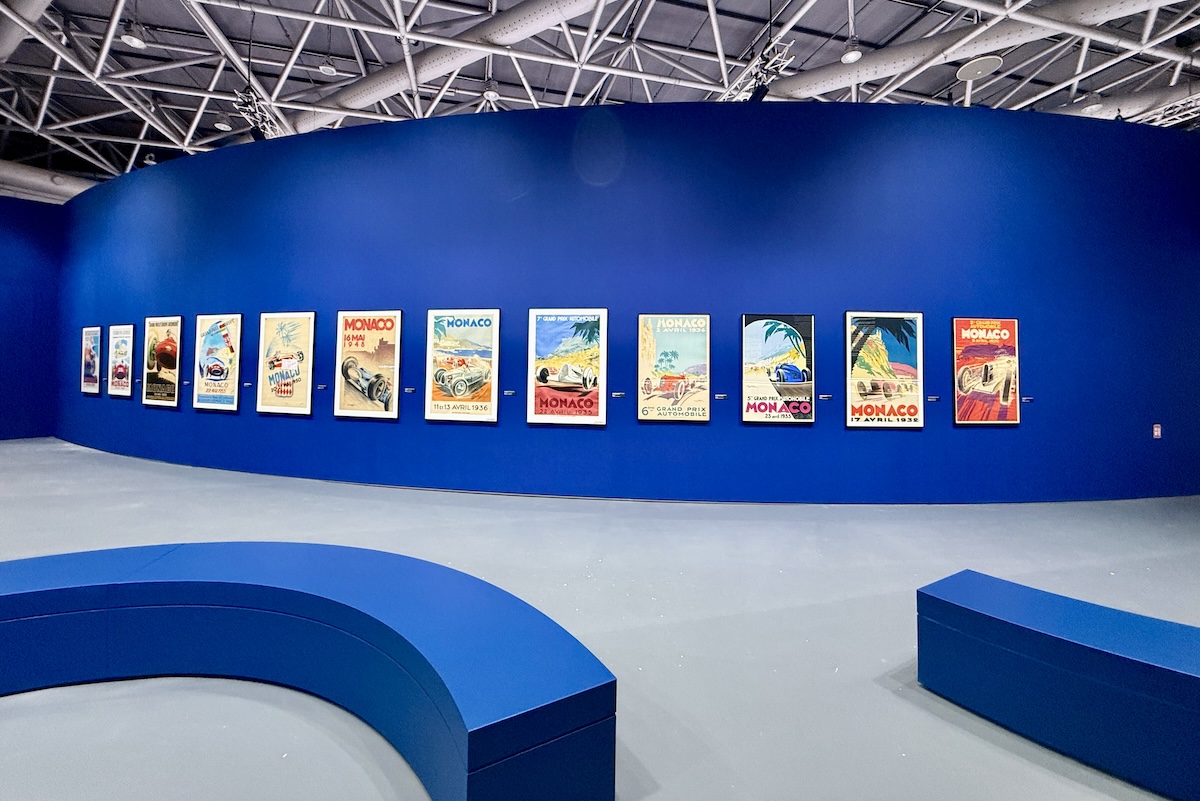
The Monaco Grand Prix promotional posters on display. Photo credit: Cassandra Tanti
An immersive journey through time
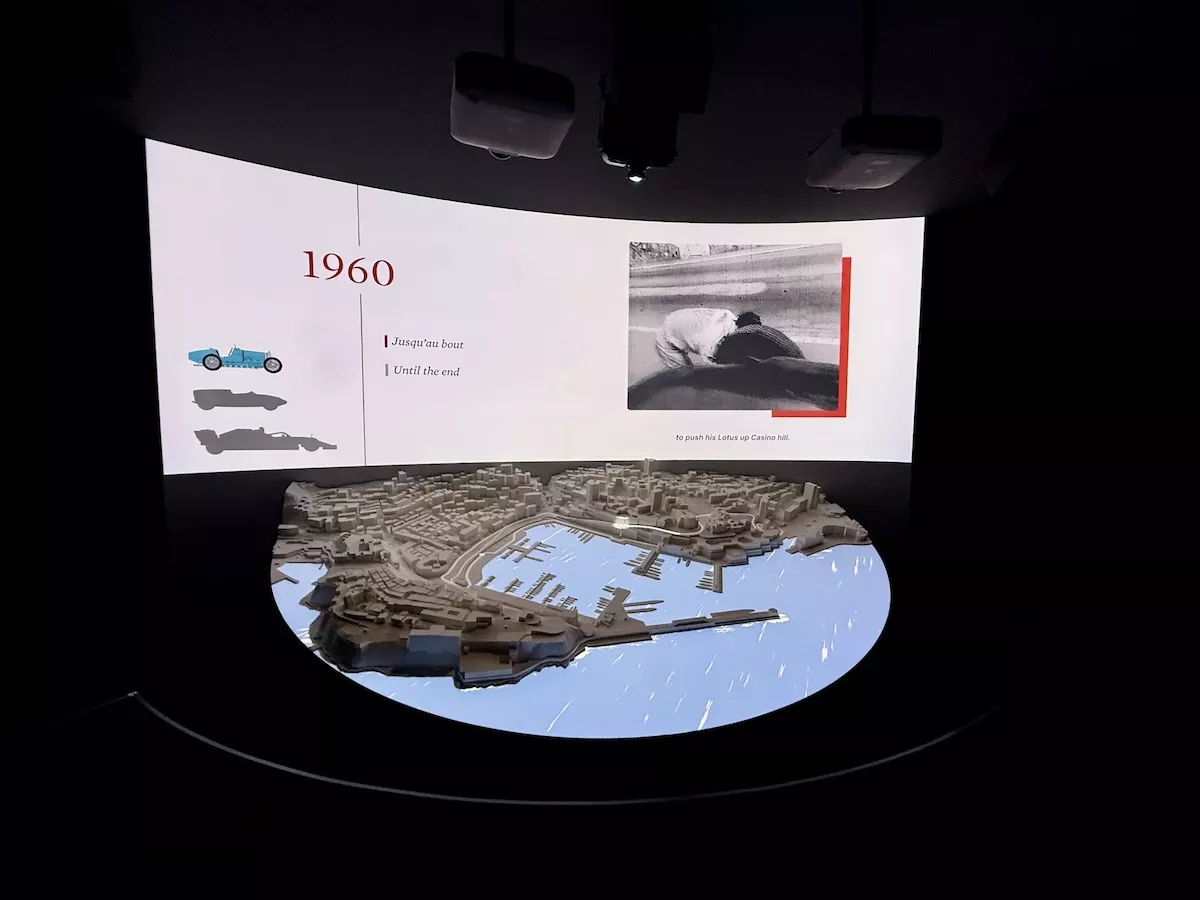
What distinguishes this exhibition from a conventional motor show is the depth of context surrounding the cars. Screens throughout the Grimaldi Forum chronicle Monaco’s history with the automobile, from the arrival of the first car in the Principality during the Paris-Nice race of 1893, through the creation of the Monte-Carlo Rally in 1911 and the first Monaco Grand Prix in 1929, to the present day. Previously unseen documents from racing archives sit alongside video reconstructions of landmark races and moments, allowing visitors to experience the history rather than simply read about it.
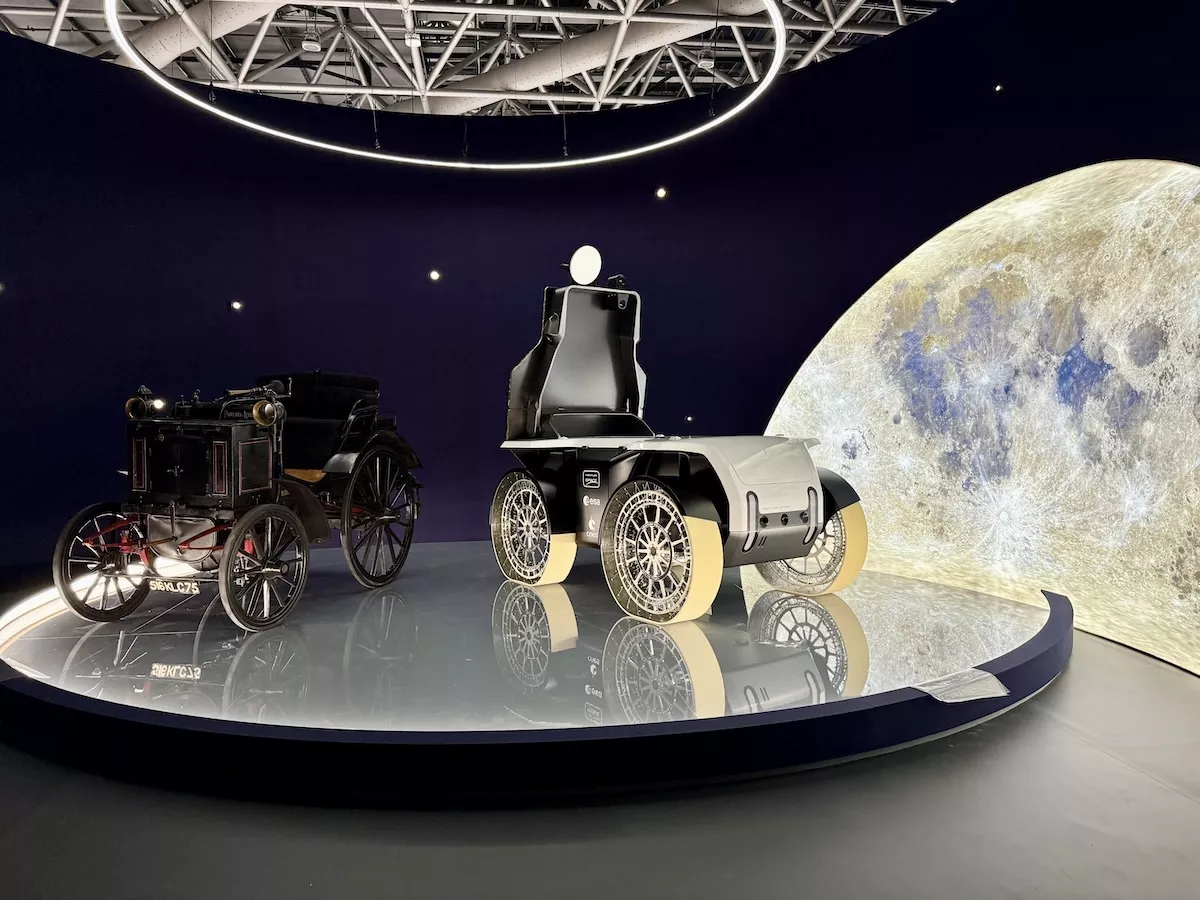
The exhibition closes with a striking juxtaposition: the 1893 Panhard & Levassor Type P2D, the oldest running petrol-powered automobile in the world, placed face to face with the Venturi Space MONA LUNA, a lunar rover designed to operate at the Moon’s South Pole by 2030 — a deliberate bridge between Monaco’s pioneering past and its ambitions for the future.
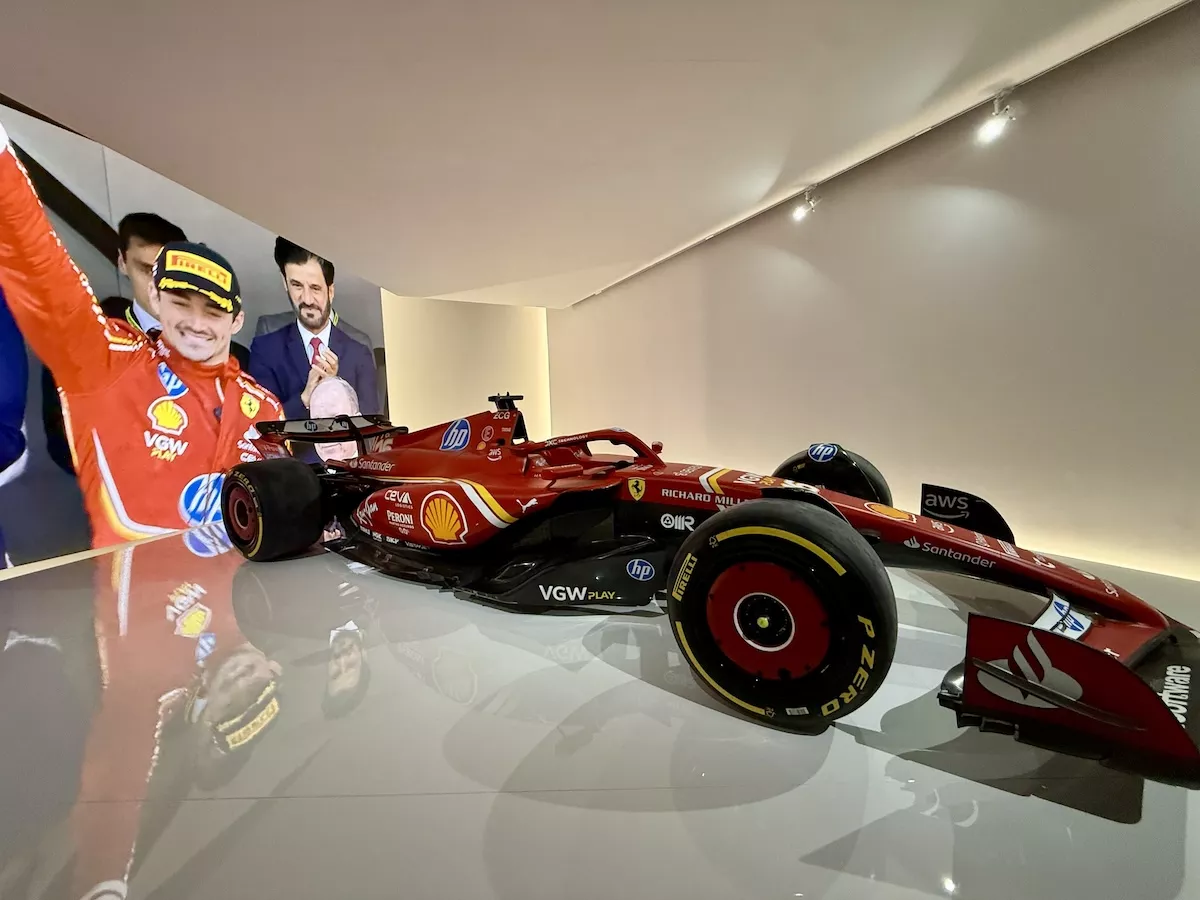
Charles Leclerc’s winning Ferrari on display. Photo credit: Cassandra Tanti
Chiron, Leclerc and the cars that raced
A section dedicated to great Monegasque drivers traces the line from Louis Chiron, who remains the only driver ever to have won both the Monaco Grand Prix and the Monte-Carlo Rally, to Charles Leclerc, represented by his Ferrari SF-24 — the car with which he became only the second Monegasque winner of his home Grand Prix in 2024, ending a 93-year wait since Chiron’s victory. Video footage of the race accompanies the car.
Various video and visual displays feature throughout the exhibition. Photo credit: Cassandra Tanti
For everyone, not just enthusiasts
Biancheri is emphatic that the exhibition is not aimed exclusively at motorsport fans. “I think it is not only for experts or fans of the automobile — it is for everybody. Families, children, everybody can find a topic which could be attractive to them,” she said.
Curated by Rodolphe Rapetti, Chief Heritage Curator and art historian, the exhibition approaches the automobile as an aesthetic and cultural object as much as a technical one, positioning Monaco as a place where innovation, elegance and performance have always converged.
‘Monaco and the Automobile, from 1893 to the Present Day’ runs at the Grimaldi Forum Monaco from 1st July to 6th September 2026.
Few artists are invited into the private worlds of heads of state, rock stars and cultural icons. Fewer still spend hours alone with them, studying not only their public image, but the person beneath it.
For more than two decades, Belfast-born artist Colin Davidson has built an international reputation as one of the world’s leading portrait painters, creating striking likenesses of figures ranging from Queen Elizabeth II and Bono to Brad Pitt, Ed Sheeran and Seamus Heaney. Yet despite a career defined by famous faces, celebrity has never been the destination.
“What I find endlessly fascinating,” he tells Monaco Life’s Cassandra Tanti, “is the vulnerable human being behind the public persona. What I hope is that my portrait paintings somehow express that. I hope they open a door into that person, but ultimately they should also become a mirror for the viewer.”
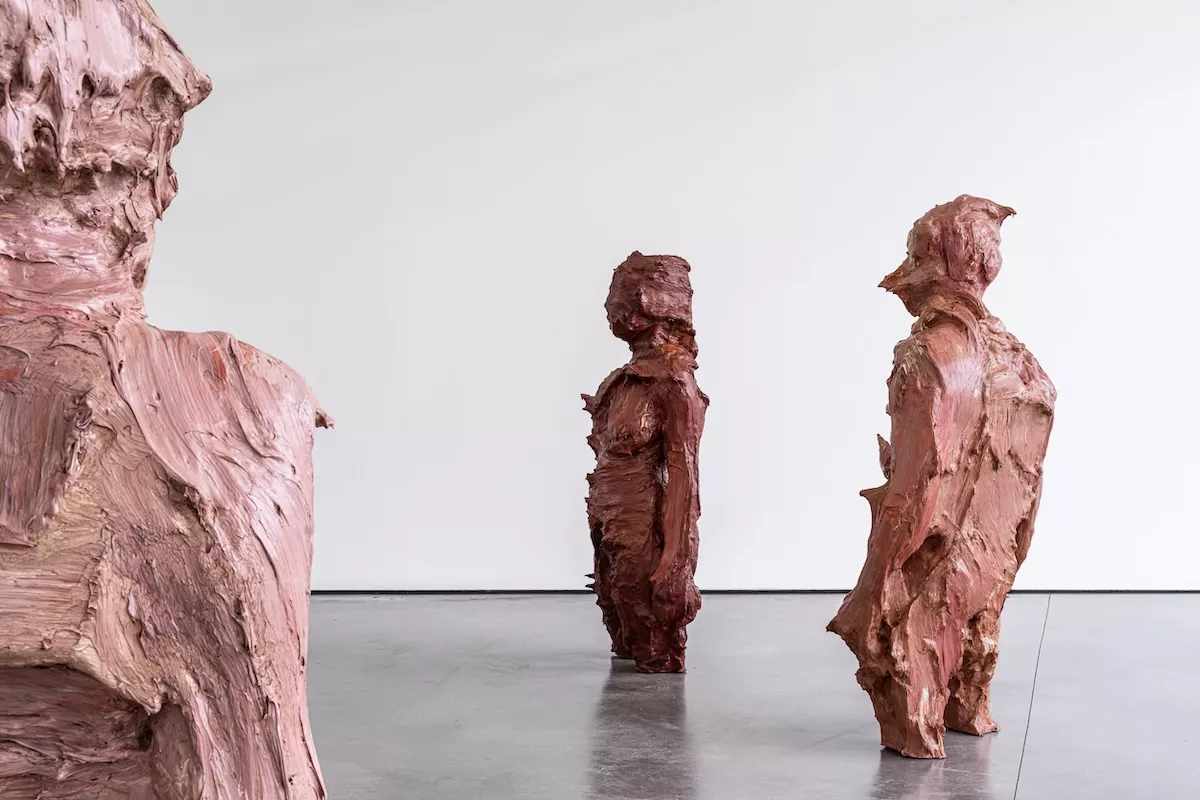
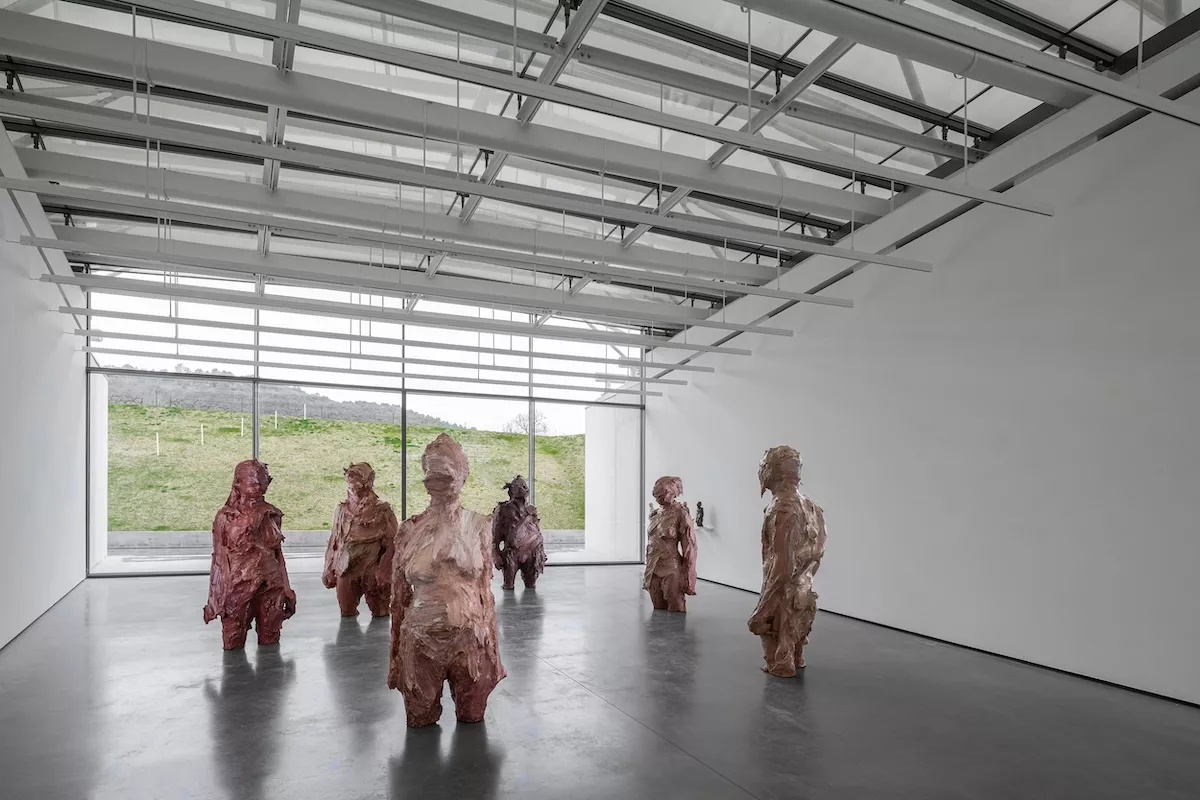
That philosophy has shaped every stage of Davidson’s career, from the intimate portraits that established his international reputation to his latest exhibition, Stranger, at Château La Coste in Provence. There, he ventured beyond the canvas for the first time, creating life-sized human forms sculpted not from clay or stone, but from oil paint itself.
Whether working in two dimensions or three, the objective remains unchanged. He is less interested in recording a likeness than revealing something deeper — creating works that invite viewers not only to look at another person, but to recognise something of themselves.
The ‘Stranger’ exhibition, by Colin Davidson, was recently exhibited at Château La Coste in Provence
A life spent looking closely
Colin Davidson’s path into portraiture was not the result of a grand plan. He had always painted, but the turning point came almost by accident, around 20 years ago, when he encountered fellow Belfast musician Duke Special.
“He had changed his appearance quite dramatically and something simply made me want to paint him,” Davidson says. “That was when the portraits began. It was really a chance encounter.”
What followed was an artistic obsession with exploring what lies behind the faces we think we already know. “I was often looking at people who were already familiar to us through photography, film, television or the media, and trying to probe beyond the public image, to see what lay behind the façade,” he says. “That has remained endlessly fascinating to me, because every portrait is like starting from scratch. You have a completely different human being sitting in front of you. It’s just the two of you in a room together, and there is no blueprint for how that interaction will unfold.”
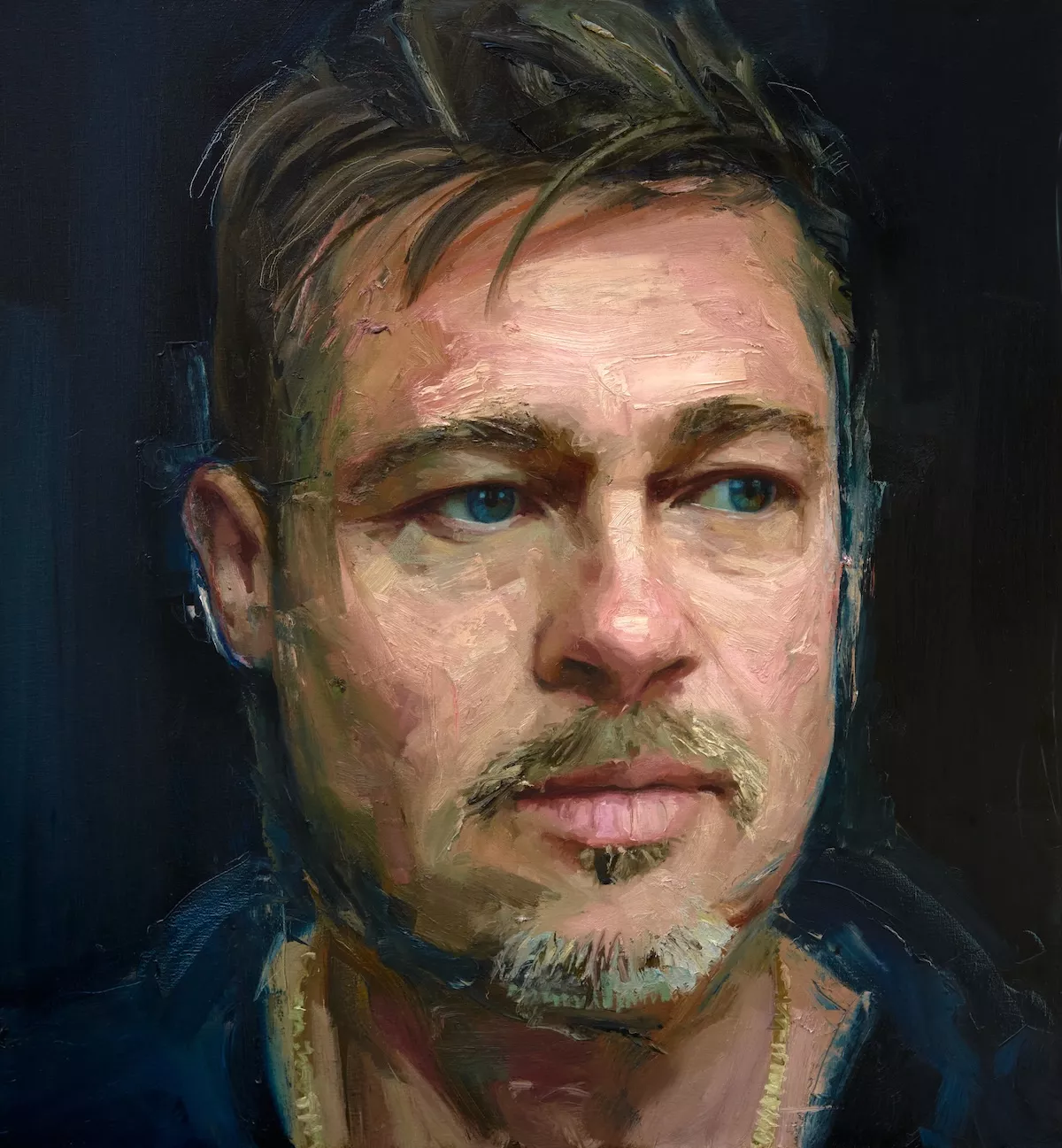
Colin Davidson’s portrait painting of actor Brad Pitt
Unlike photographers working in minutes, or actors performing for an audience, portrait painters spend hours in close proximity to their subjects. Conversations unfold. Silences settle. Defences lower.
Davidson believes few people reveal themselves completely. “I believe we all have façades of some sort,” he says. “In my own case, and I’ll be completely honest about this, my façade exists largely to protect me from people seeing the parts of myself that I don’t particularly like. I think that’s true for many people.” His task, he suggests, is not to dismantle that façade, but to look beyond it—to find the person beneath.
The Queen, Bono and the privilege of access
That process has granted Davidson extraordinary access to some of the world’s most famous figures.
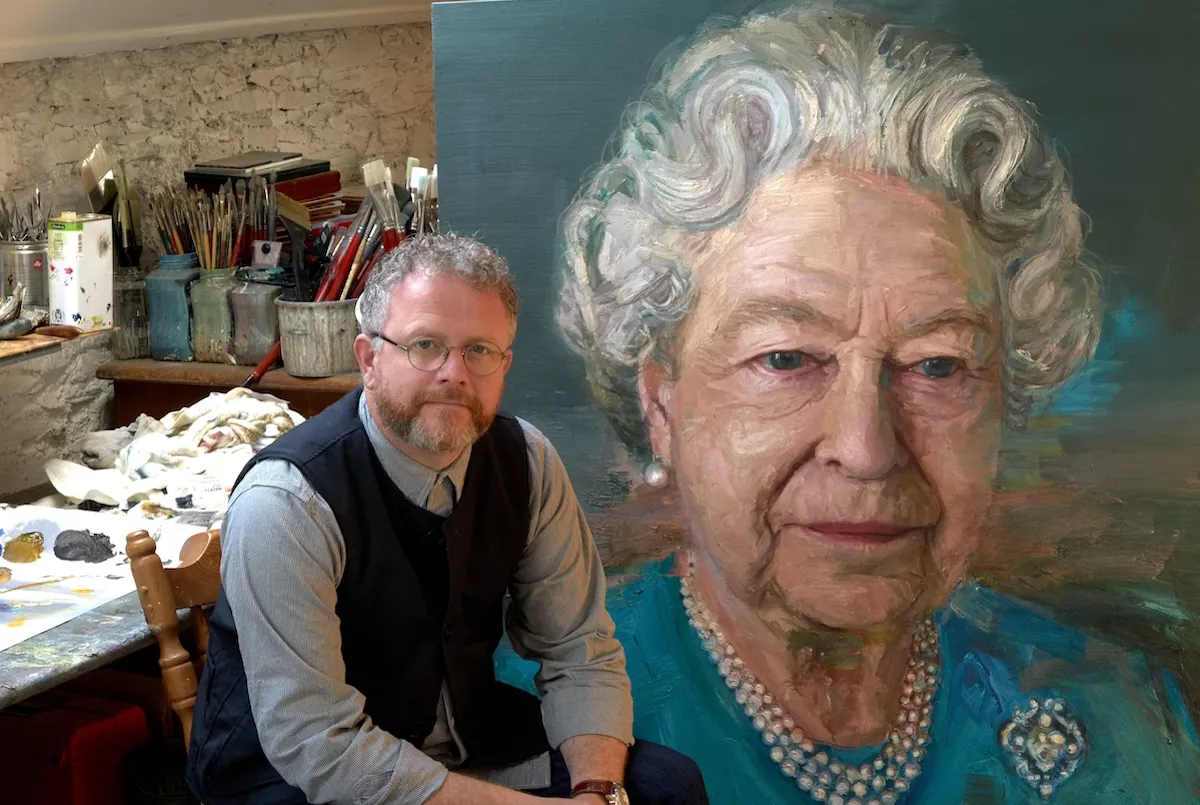
One of the most memorable moments of his career came while painting Queen Elizabeth II. “Sitting in the Yellow Drawing Room at Buckingham Palace and having a two-hour one-to-one conversation with the late Queen was undoubtedly one of those pinch-me moments,” he says. “I remember thinking: what on earth am I doing here? I was this vulnerable kid from Belfast sitting in Buckingham Palace, entrusted with this extraordinary privilege.”
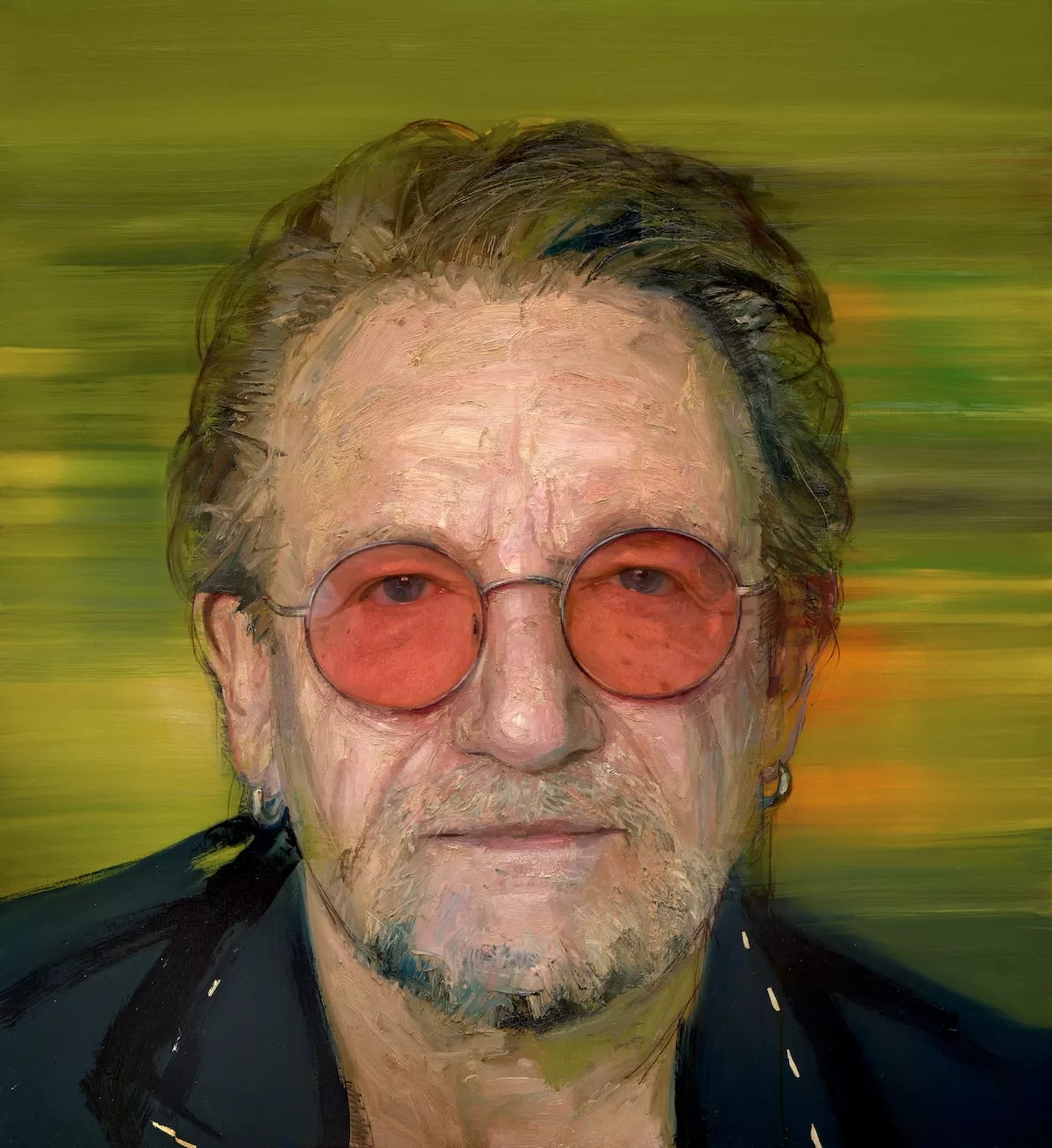
Colin Davidson’s portrait painting of U2 frontman Bono
Painting Bono carried a different kind of significance. Davidson had been a devoted U2 fan since his teenage years, and to find himself later painting the singer in his own home felt almost surreal. Yet despite the prestige attached to such commissions, he insists that celebrity quickly becomes secondary. “You have a job to do,” he says. That job is not simply to achieve a likeness. It is to capture something far less easy to pin down. “I’ve learned that you can’t paint sadness. You can’t paint happiness, contentment or discontentment,” he says. “What I do is paint what I see and what I feel.”
That may sound contradictory, coming from an artist whose work is so often praised for its emotional depth. But Davidson believes the most important elements of a portrait cannot be consciously manufactured, only allowed to emerge through the process itself. “There are gaps — subconscious, intangible gaps — that exist within the process,” he says. “You begin knowing you have a practical job to do. First, you have to make a good painting of a head, which is difficult enough. Then you have to make a good painting of a head that actually resembles the person sitting in front of you, which is even harder. But somewhere within that process, you hope something else enters the work. Something beyond your control. Artists often talk about a work becoming greater than the sum of its parts. That’s what I’m striving for.”
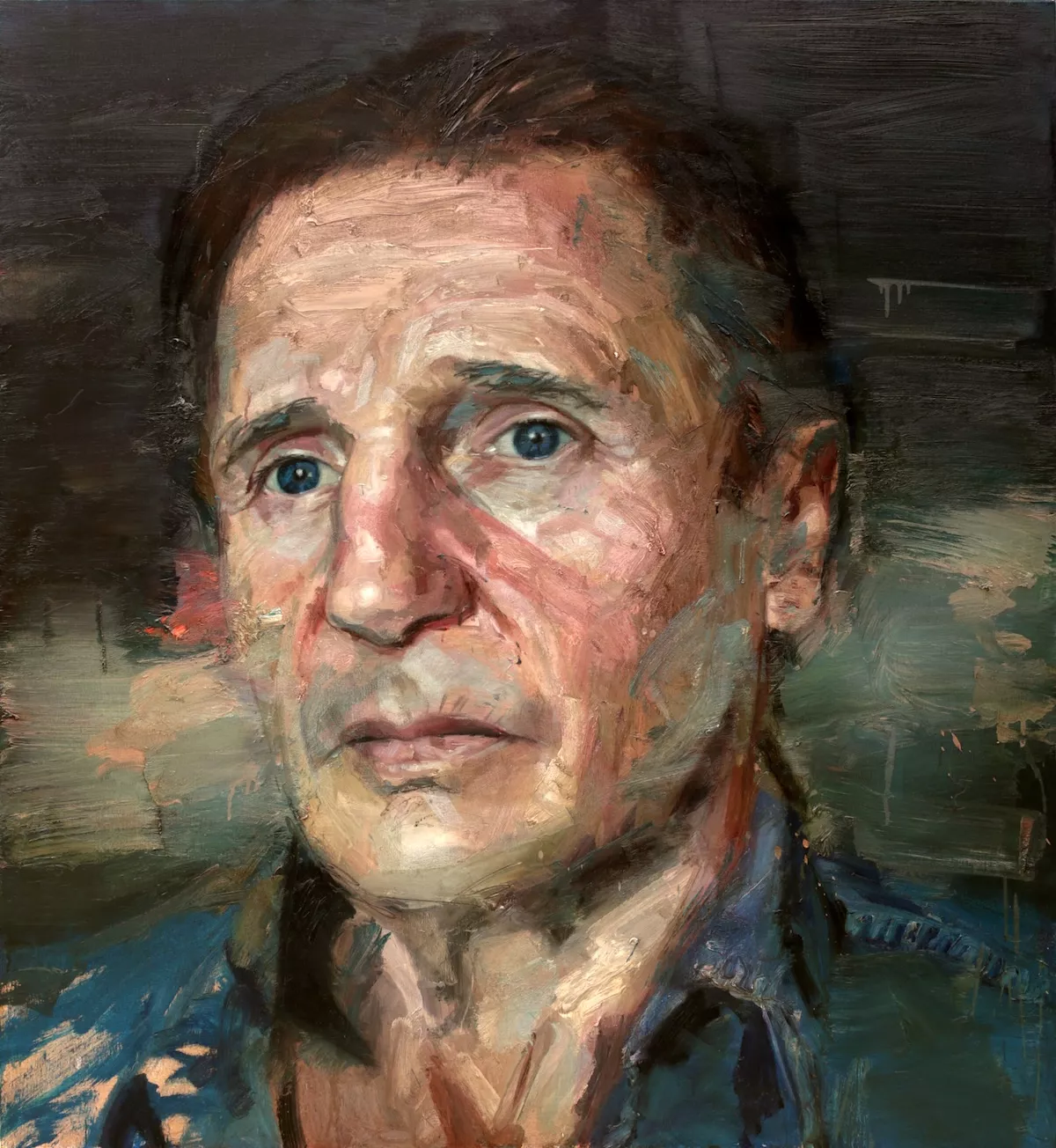
Colin Davidson’s portrait painting of actor Liam Neeson
Portraits as mirrors
Colin Davidson frequently returns to an idea that may explain why his portraits resonate so strongly. He does not see them simply as representations of the people he paints, but as mirrors.
“I hope they open a door into that person, but ultimately they should also become a mirror for the viewer,” he says. “Ideally, they reveal something about the viewer as well.”
Perhaps that is why his portraits often feel unusually intimate. The eyes dominate. Skin becomes landscape. Every wrinkle, shadow and imperfection remains visible. The result is not idealised beauty, but recognisable humanity. Davidson believes the artist inevitably leaves something of themselves in every work, echoing a well-known observation by Picasso. “If that’s true,” he says, “then every portrait is also a self-portrait.”
That reflective quality, he suggests, becomes more pronounced once a sitter is no longer among us. “When I look at a painting of someone who is no longer alive, the painting itself takes on a different feeling,” he says. “It almost takes on a different appearance. Suddenly it exists in the past tense.” Both Queen Elizabeth II and Seamus Heaney have died since he painted them. “Their absence inevitably changes the way I engage with those paintings today.”
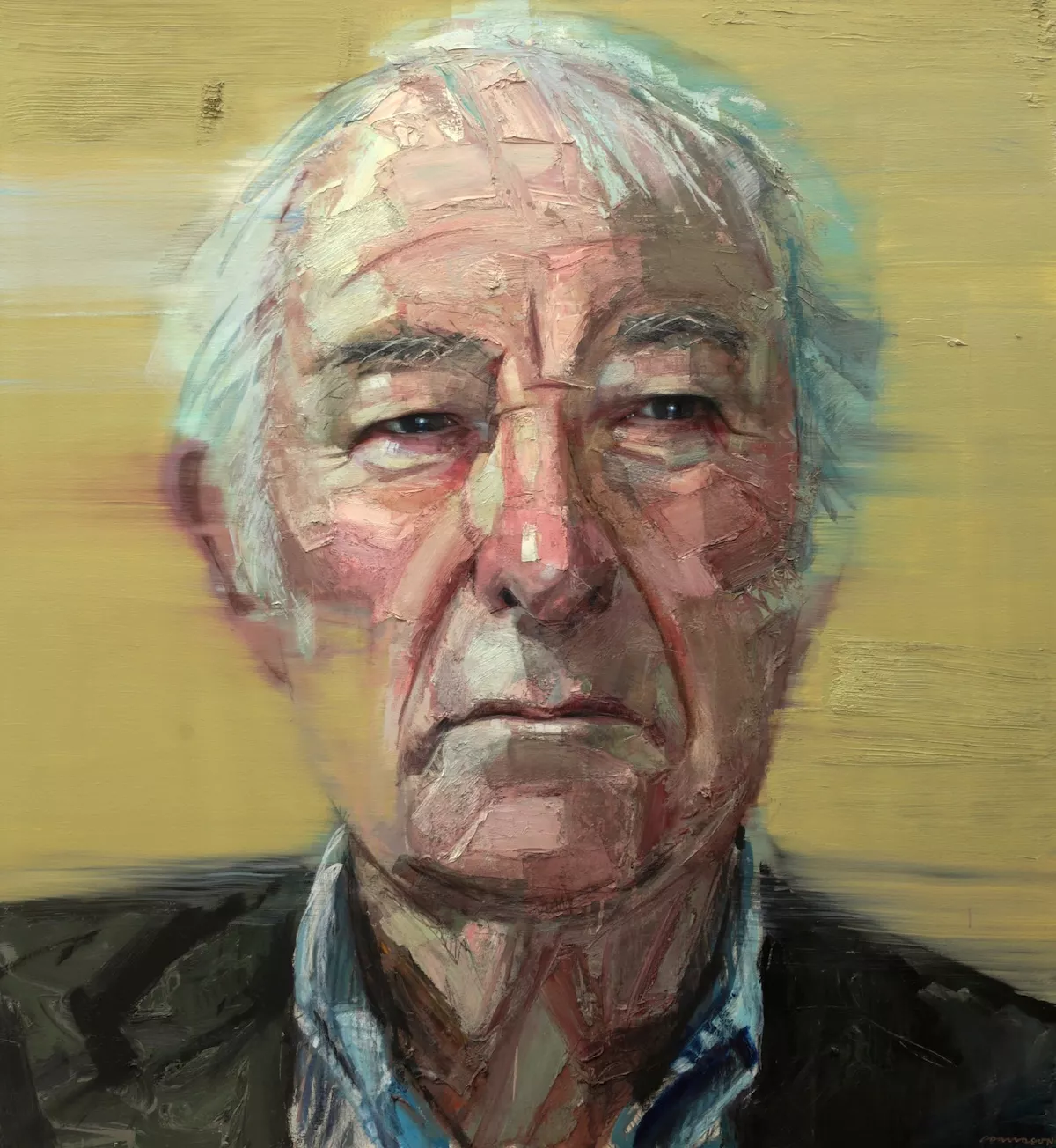
Colin Davidson’s portrait painting of Irish poet, playwright and translator Seamus Heaney
More than celebrity
For all the attention his famous sitters attract, Davidson believes the most important work of his career has involved people whose names are unknown to the wider public.
In 2015, he created Silent Testimony, a series of portraits of 18 individuals, most from Northern Ireland, who had endured profound personal loss during the Troubles. The project was rooted in his own reckoning with the peace that followed. “The Good Friday Agreement brought an end to that conflict 28 years ago,” he says. “I voted for the agreement because I wanted a future. But as time passed, I realised there were many flaws within it, particularly regarding victims and survivors. Many people were carrying extraordinary trauma, and it seemed to me that they were paying the price for everybody else’s peace.”
The resulting exhibition opened at the Ulster Museum in Belfast in 2015 before travelling to venues including Dublin Castle and the United Nations in New York. More recently, the series was exhibited at London’s National Portrait Gallery, introducing the work to a wider UK audience.
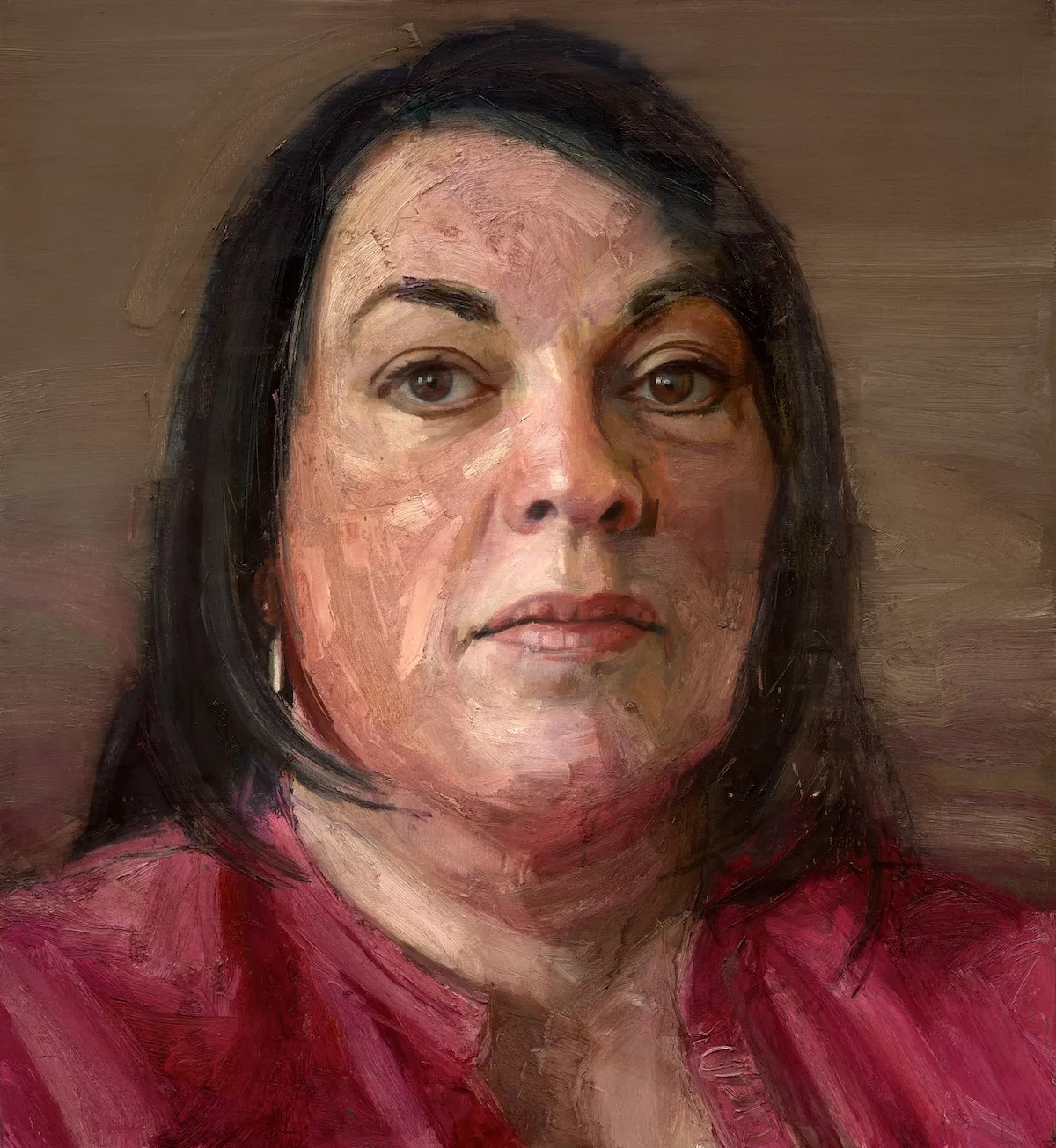
Colin Davidson’s portrait painting of Anna Cachart, Silent Testimony
Sculpting with paint
Colin Davidson’s connection to Château La Coste, the art, architecture and wine estate north of Aix-en-Provence that recently showed his exhibition Stranger, runs deeper than the show itself. The venue was built by fellow Belfast native Paddy McKillen, and Davidson has returned there repeatedly over the years, including to paint a portrait of McKillen’s father, who had moved to the estate to visit his son and, in the end, never left.
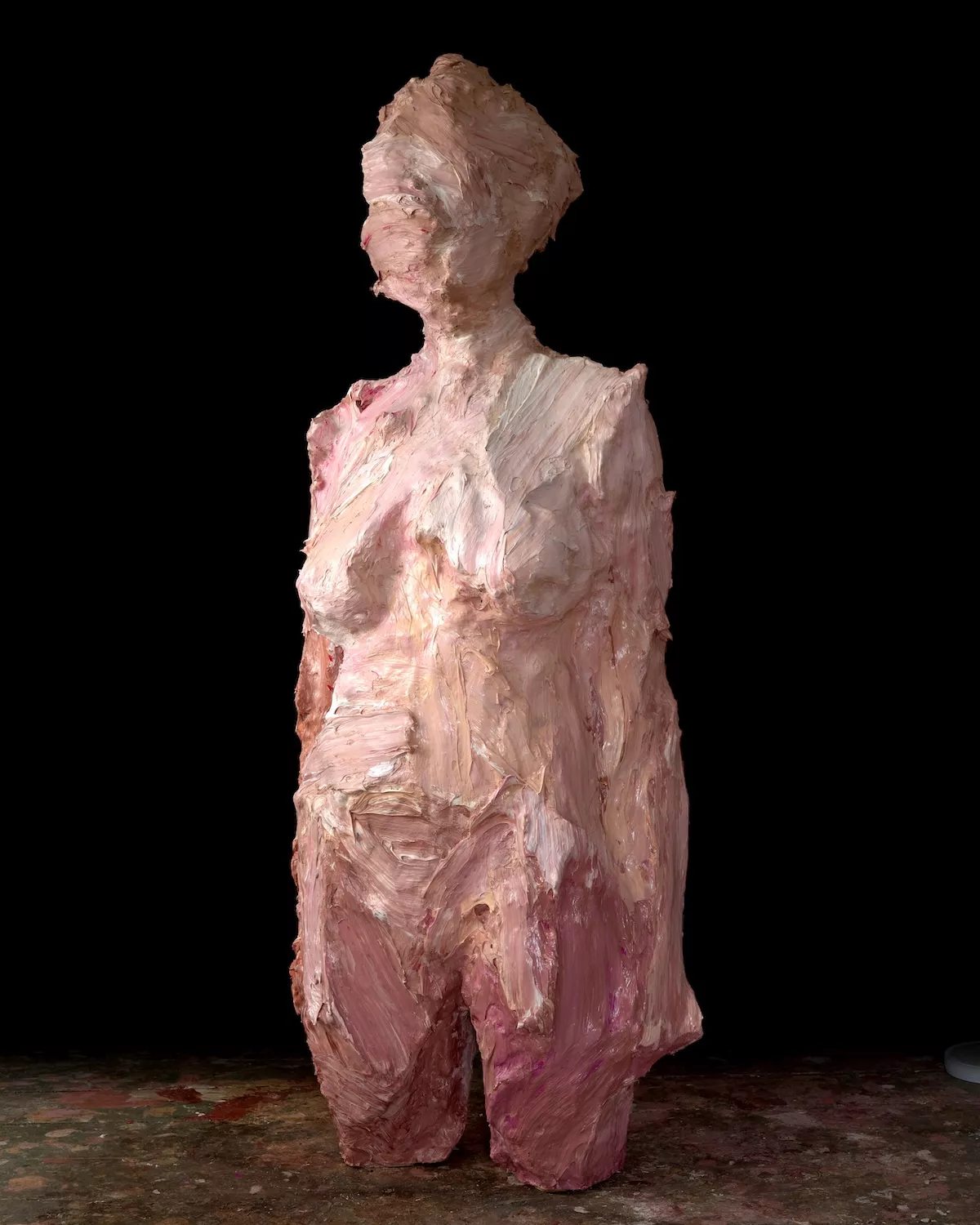
Stranger marks Davidson’s first major venture into three-dimensional work, though he resists framing it as a departure from painting. The life-size human forms begin as small painted studies, which are then scanned, digitally enlarged, and 3D-printed in sections before being assembled and painted again. “I wondered what it would be like to sculpt with oil paint rather than with clay or stone,” he explains. “That was really the genesis of these figures. They are human forms, but primarily they are objects made with paint. It’s all about the paint.”
Colin Davidson’s ‘Stranger’ exhibition. Photo credit: Stephane Aboudaram
He frames the shift as a question of boundaries as much as materials. “Painting has its own boundary: the edge of the canvas,” he says. “The moment a painter brings a canvas to an easel, a finite space has already been defined. Within that space there is freedom, but there is still a boundary. I see sculpture as having fewer boundaries.” Where painting, he says, creates “the illusion of three-dimensional space on a flat surface,” these new works occupy the room with the viewer directly. “I love the idea that these objects share the same space as us.”
Asked what he hopes visitors take away from the exhibition, Davidson returns to a quote he often cites: that there can be as much creativity in engaging with a work of art as in making it. “I generally don’t have preconceived ideas about how people should respond,” he says. “I would hope that when people engage with the work they are left with questions — questions about what a painting actually is. These pieces are made with paint, and I still see them as paintings, albeit in the round. Perhaps a painting doesn’t always have to hang on a wall.” The solitary, larger-than-life figures, he adds, might also prompt visitors “to question what sculpture is… and through that, they might think about humanity itself.”
‘Stranger’ sculpture by Colin Davidson
He is careful to leave room for the unexpected. “I love it when people discover meanings I never anticipated,” he says. “That, to me, is one of the great powers of art.” Nor is the work finished evolving. “I’m already developing the work further in the studio. I have no idea where it will lead, and that’s what excites me.”
It is, he suggests, simply an extension of how he sees himself as an artist. “It’s important to set aside the fear of what people might think,” he says. “The world likes to pigeonhole artists. It likes to say, ‘This is what you do’. I resist that.”
Looking forward
Colin Davidson’s visit to the region coincided with celebrations surrounding Irish designer Eileen Gray and the restored Villa E-1027 at Roquebrune-Cap-Martin, a project he describes as a triumph and a proud celebration of Ireland’s influence beyond its borders.
For an artist who has spent years moving between the worlds of royalty, music, politics and ordinary lives marked by extraordinary experiences, it was another reminder of the connections that art can create.
Asked whether there is still someone he dreams of painting, Coln Davidson finally names one: Van Morrison. Like Davidson himself, the Belfast musician has spent decades resisting labels, following his own path and searching for something deeper beneath the surface.
“Sometimes I make paintings. Sometimes I make three-dimensional objects,” he says. “At heart, I’m simply a maker.”
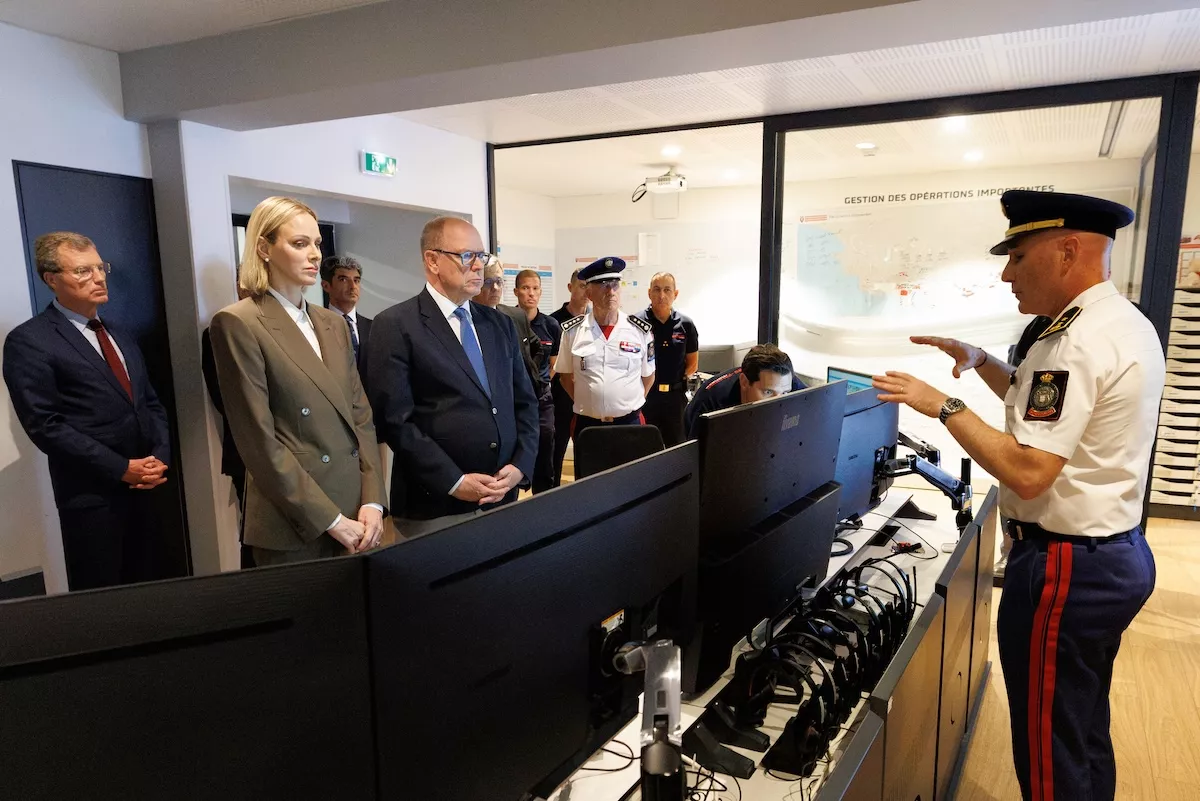
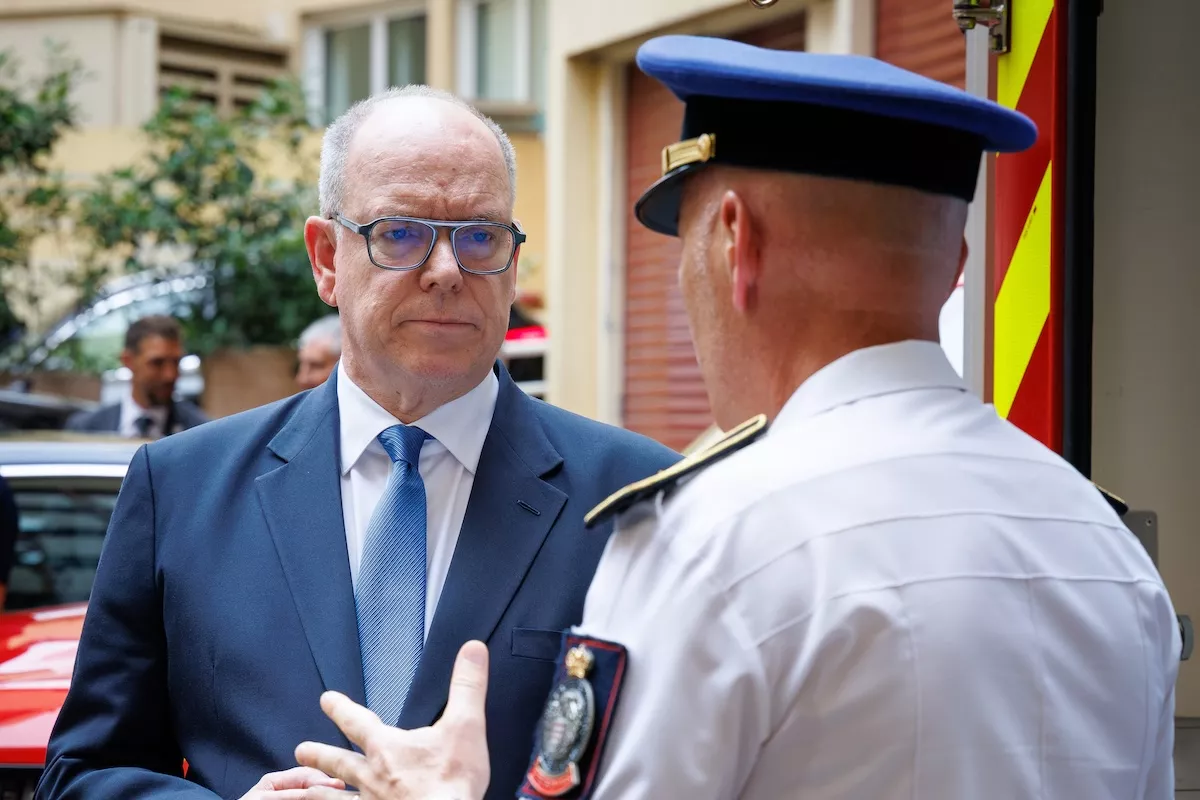
Prince Albert II and Princess Charlene visited Monaco’s public security headquarters and fire station on Tuesday afternoon to express their personal support for the teams who remained mobilised throughout the night following Monday’s parcel bomb attack — the most serious security incident the Principality has seen in its modern history.
The visits took place after the Prince and Princess had been kept informed of the investigation’s progress overnight. The couple had been in Rust, Germany with their children Prince Jacques and Princess Gabriella as well as Princess Stéphanie for the official inauguration of Europa-Park’s new Monaco-themed district when the attack struck shortly before 9pm on Monday.
Accompanied by Minister of State Christophe Mirmand, Interior Minister Lionel Beffre and Secretary of State for Justice Samuel Vuelta Simon, the princely couple visited the Direction de la Sûreté Publique in the early afternoon, where they received a full operational briefing from the Controller and his senior command. According to the Palace, they then travelled to the Caserne des sapeurs-pompiers, where they were received by Colonels Tony Varo and Maxime Yvrard and spoke directly with the intervention teams who responded to Monday night’s explosion.
Prince Albert II met personally with the emergency teams who responded to Monday night’s bomb attack. Photo credit: Michael Alessi, Prince’s Palace
The visits came less than 24 hours after Prince Albert II issued an overnight statement from the Palace calling the explosion a “criminal act” and a shock to the entire Monégasque community, pledging that the security of the Principality would remain a priority “whatever the threats”.
The suspect, caught on CCTV leaving a package at the building before fleeing on foot towards Beausoleil, remains at large. Monégasque and French authorities are working jointly on the investigation.
The city of Nice will hold three days of commemorative events from 12th to 14th July to mark the 10th anniversary of the terrorist attack on the Promenade des Anglais, which killed 86 people and injured hundreds more on Bastille Day 2016. President Emmanuel Macron has confirmed he will attend the main memorial ceremony on 14th July.
On the evening of 14th July 2016, a 19-tonne truck was driven at speed into crowds gathered on the Promenade des Anglais to watch the Bastille Day fireworks, killing 86 people, including 10 children, and injuring 458 others. The attacker was shot dead by police.
It remains one of the deadliest terrorist attacks on French soil.
The programme of commemorations has been drawn up in collaboration with the four local victims’ associations — Promenade des Anges, Mémorial des Anges, Life for Nice and Une voie des enfants — and unfolds across three days.
Sunday 12 July — Solemn march
The commemorations open on Sunday 12th July at 9am with a participative solemn march along the Promenade des Anglais, open to victims, their families and the general public. The march will begin opposite the Lenval hospital and conclude at the bandstand with a laying of flowers.
Monday 13 July — Interfaith ceremony
On the evening of Monday 13th July, an interfaith ceremony will be held at the Villa Masséna at 4.30pm in honour of all those killed on 14th July 2016 and their families. The ceremony is by invitation only and will conclude with the lighting of 86 candles at the memorial monument in the Villa Masséna gardens.
Tuesday 14 July — A day of national remembrance
The anniversary itself will be marked by several moments throughout the day. A military parade will take place at Place Masséna from 9am, followed by the main memorial ceremony at 6pm, presided over by President Macron. At 8.30pm, the Nice Philharmonic Orchestra will perform at the Théâtre de Verdure. At 10pm, a drone show will take place along the Promenade des Anglais between the first pergola and the “three palms”. At 10.34pm — the exact time the attack began 10 years ago — 86 beams of light will be illuminated along the Promenade in memory of each of the 86 victims.
Exhibition marking ten years of memory and resilience
Running alongside the commemorations, the Villa Masséna will host the exhibition ‘Nice, dix ans de mémoire et de résilience’ from 3rd to 27th July. Drawing on archives, photographs, objects of remembrance, testimonies, symbolic artworks and previously unseen documents, the exhibition traces the collective memory of the attack across its many dimensions — the tribute to victims, the wave of solidarity that followed, and the long process of reconstruction. The exhibition closes with a screening of the documentary ’10 ans’, directed by Franck Fernandes, and is conceived as a space for memory, transmission and reflection on how a community confronts tragedy and rebuilds itself in its aftermath.
The communications agency representing Vadym Iermolaiev has issued its first public statement following Monday night’s bomb attack in Monaco, condemning what it describes as a “barbaric act” while rejecting international reporting that has described the Ukrainian-born businessman as an oligarch.
Issued by Silver Eye Communication Agency, the statement confirms that Vadym Iermolaiev and his son were injured in Monday evening’s explosion outside a residential building in Monaco.
“The use of an explosive device in an attempt on a person’s life is a barbaric act that has no place in any civilised society,” the statement says. “The fact that Mr Iermolaiev’s child was also injured makes this crime particularly shocking.”
The agency also appealed for restraint as Monaco authorities continue their investigation.
“As the criminal investigation has only just begun, we urge journalists and media outlets to act responsibly,” it said. “Numerous photographs, assumptions and unverified allegations are already circulating online. We respectfully ask the media to refrain from speculation and to allow the authorities to establish the facts.”
Monaco’s Prosecutor General, Stéphane Thibault, has already confirmed that investigators are treating the explosion as a targeted attempted homicide rather than an act of terrorism. Police continue to search for the suspect, who is believed to have fled into neighbouring France.
Responding to his public profile
A significant portion of the statement seeks to challenge the way Iermolaiev has been portrayed in international media coverage since the attack.
Most international news organisations, including Reuters, AP, FT, The Guardian and Le Monde have described him as a Ukrainian-born oligarch who made his fortune through the Alef Group, a diversified business with interests including commercial real estate, manufacturing and agriculture. He was sanctioned by Ukraine in 2023 over alleged business activities in Russian-occupied Crimea, allegations he has denied.
“Mr Vadym Iermolaiev is not an oligarch. He has never held political office, never controlled strategic sectors of the Ukrainian economy, never enjoyed a monopoly in any industry and has never been part of Ukraine’s political establishment,” said his representative.
Instead, the agency describes him as “An entrepreneur and investor who built a diversified business over more than two decades in real estate, manufacturing and investment, creating thousands of jobs and contributing to the development of the city of Dnipro.”
The statement also says Iermolaiev “left Ukraine in full compliance with Ukrainian law” and now legally resides in Monaco, “where he lives from passive investment income and pursues his long-standing interest in art collecting.”
It was confirmed on Tuesday that Iermolaiev obtained Monaco residency in 2021.
Disputing the sanctions
Ukrainian President Volodymyr Zelensky introduced sanctions on Iermolaiev in December 2023 following recommendations from Ukraine’s Security Service (SBU), which alleged that Iermolaiev had continued business activities in Russian-occupied Crimea after Russia’s annexation of the peninsula. Ukrainian media have also included him among the so-called “Monaco Battalion”, an informal label applied to wealthy Ukrainians living abroad during the war.
His representatives insist those allegations remain unproven.
Monaco authorities have not commented on the contents of the statement, as the investigation into who is responsible for planting Monday night’s explosive device continues.