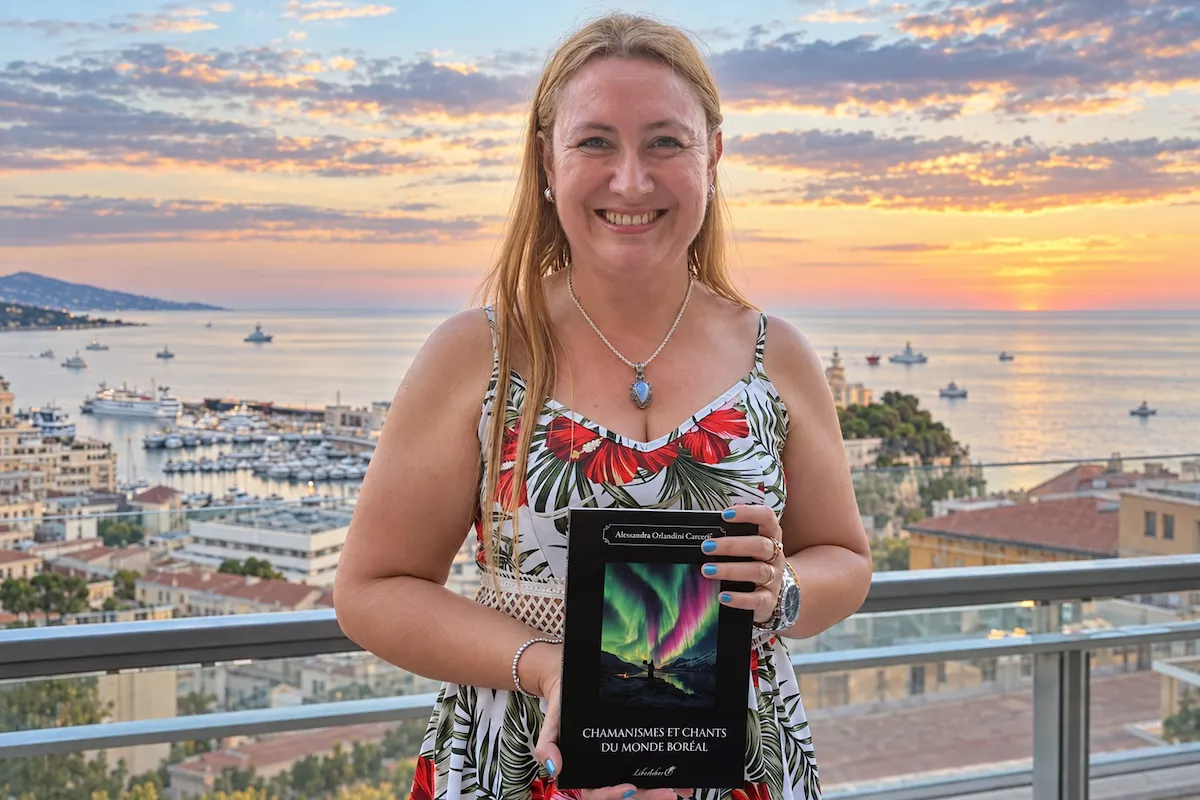
From prehistoric traces to pop culture: The undying echoes of Sami shamanism

Entitled Chamanisme et magie, Dr. Alessandra Orlandini Carcreff’s lecture on 14th September at Monaco’s Musée d’Anthropologie préhistorique unpacked the deep-rooted reality of Sami shamanism to dismantle New-Age clichés and champion indigenous pre-Christian heritage. 

Introduced by museum director Elena Rossoni-Notter, the talk ranged from prehistoric bear-hunting rites to the music of Sibelius and contemporary folk metal, replacing generic mysticism with the grounded, hard-fought reality of Sami spiritual heritage.

Opening the sacred cosmos

Museum director Elena Rossoni-Notter opened the evening with an introduction of Dr. Alessandra Orlandini Carcreff’s recent work, saying: “I completely devoured her recent book, Chamanisme et Magie, which is a well-sourced and richly argued exploration of travel literature, mythologies, and epics spanning Northern Europe, Lapland, Finland, and global traditions.”

Carcreff herself started by clearing away shallow New-Age myths, warning against the trap of mixing unrelated cultures together. Rather than forcing false links between different belief systems, she explained shamanism as a structured, three-level system: an upper world of gods, a middle world for humans, and an underworld of ancestors.
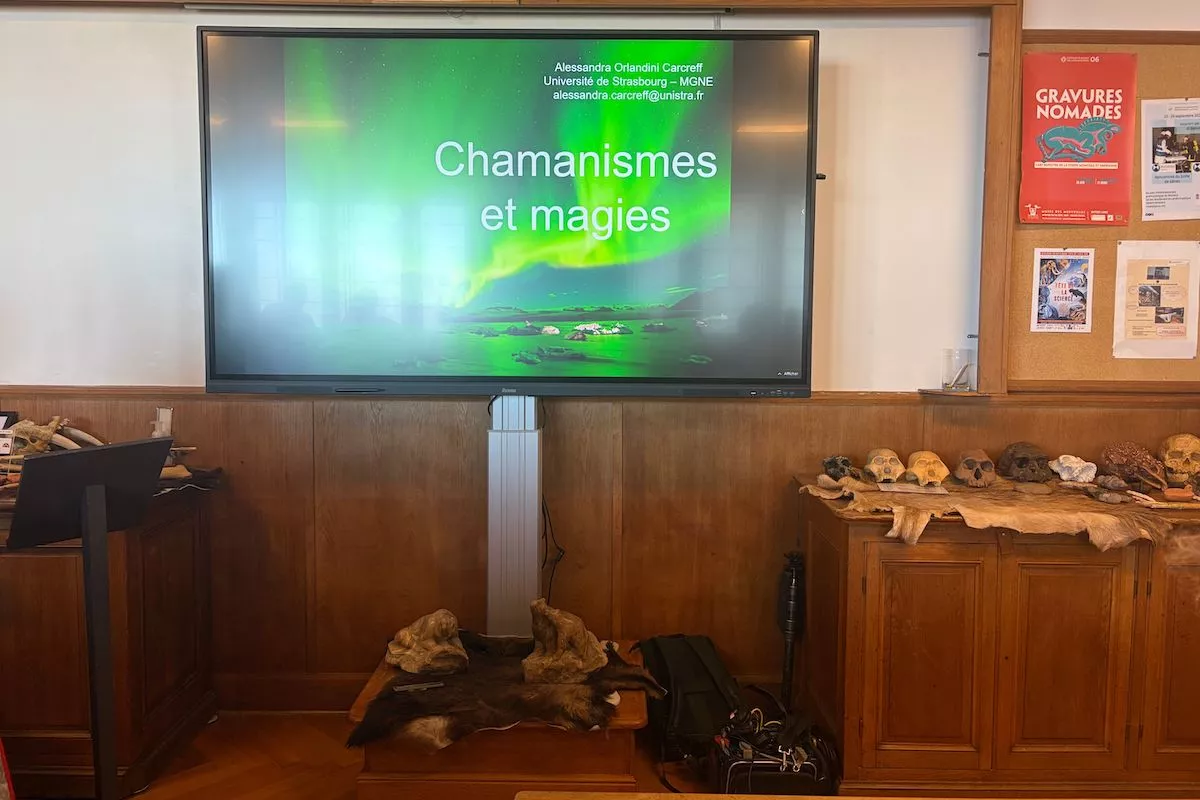
‘Chamanismes et magie’ lecture at Monaco’s Musée d’Anthropologie préhistorique. Photo credit: Virginia D’Umas.

To bridge these worlds, the shaman entered deep trances. While historical figures like the traditional Sami noaidi faced heavy suppression centuries ago—prosecuted by Nordic authorities and churches under the charge of ‘sorcery’ for keeping their sacred drums and rituals alive—the tradition’s core continues today through a modern cultural renaissance. 

“Whether chosen by a calling, a personal search, or family tradition, an initiate endured extreme hunger, thirst, and freezing cold before going through a ritual of symbolic death and rebirth. Once reborn, the shaman acted as the community’s healer, judge, historian, ceremony leader, and guide for lost souls,” explained Carcreff. 

Drums, bears, and ancient amber routes

To accomplish these spirit journeys, the shaman relied on heavy regalia, masks, and massive ceremonial drums constructed from sacred birch wood and stretched reindeer hide painted with a full cosmogony of stars and forests. Carcreff illustrated how these practices are deeply tied to the living landscape, explaining: “The most sacred hunt for the Sami was the bear hunt—an encounter with an ancestral figure where hunters must appease the animal with deferential prayers, addressing it tenderly as ‘my little bear, my handsome and valiant bear’ while asking it to close its eyes before the strike.” 

Tracing these traditions backward along ancient amber and tin trade routes that once linked the Far North directly to the Mediterranean and Etruscan workshops, Carcreff connected universal elements of water, fire, and blood across diverse ancient landscapes. This shared thread appears everywhere from the sacred hearth of Rome’s Vestal Virgins and the multi-use threshold space of the Finnish sauna to mythic hero-smiths like Finland’s Ilmarinen or Greece’s Hephaestus, and psychopomp guides like Odin, Anubis, and Hermes.
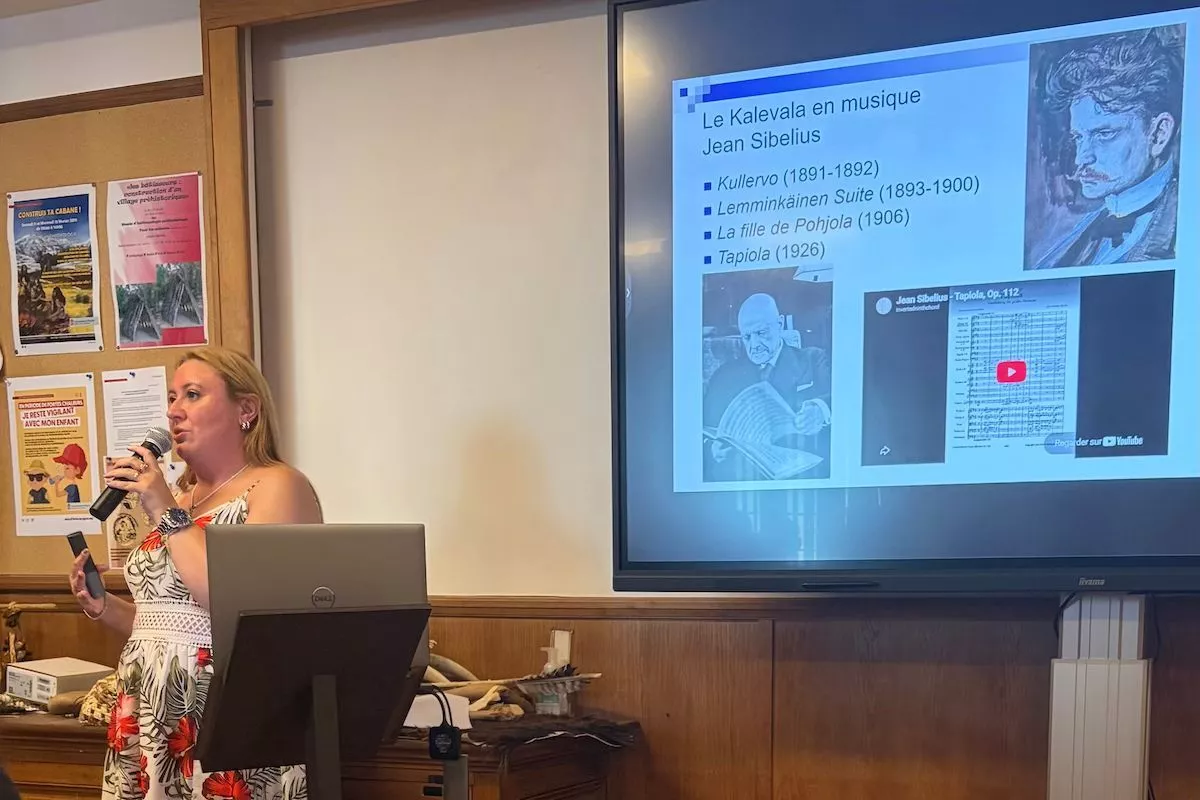
Dr. Alessandra Orlandini Carcreff exploring the journey of Sami shamanism from 19th-century romantic revivals to modern pop culture. Photo credit: Virginia D’Umas 

From 19th-century revivals to folk metal

In the 19th century, this ancient heritage experienced a romantic revival through Finland’s national epic, the Kalevala, which inspired artists like painter Akseli Gallen-Kallela and composer Jean Sibelius. Today, that northern echo lives on—from the deep folk rhythms of bands like Wardruna to pop culture touchstones like the Northuldra in Disney’s Frozen (“We are the Northuldra, we are the people of the sun…”).

As Carcreff said: “This isn’t just dusty folklore: for the Sami people, reclaiming these pre-Christian roots is a powerful act of political and cultural survival after centuries of forced Christianisation.”

The hidden Sami heart of Disney’s Frozen

Nowhere does this ancient indigenous resonance break into modern mainstream consciousness quite like in Disney’s Frozen franchise. Carcreff explained that Disney films have always operated on a dual frequency, offering a light-hearted layer for children while embedding deep cultural histories for those trained to look closer. In the production of Frozen 2, Disney animation teams conducted extensive field research across Norway, studying local geography and traditional garments while officially engaging and thanking the Sami community. The result is the creation of the Northuldra, a nomadic, reindeer-dependent fictional tribe whose spiritual framework, regalia, and deep communion with nature mirror Sami culture. 

“Even the film’s rolling trolls find their structural inspiration in seiddis—sacred, peculiarly shaped Sami standing stones where offerings were historically left to local spirits,” said Alessandra, adding: “Most remarkably, the hypnotic, pulsing vocal harmonies woven into the soundtrack directly adapt the yoik, the traditional Sami chant used by shamans to cross the threshold into trance.” 

For the researcher, even when filtered through Hollywood’s commercial lens, these mainstream narratives serve as an unexpected vessel carrying genuine northern magical memory straight into contemporary global culture.

Stay updated with Monaco Life: sign up for our free newsletter, listen to our podcasts on Spotify, and follow us across Facebook,  Instagram, LinkedIn, and Tik Tok. 

Dr. Alessandra Orlandini Carcreff presenting her new book ‘Chamanisme et magie’. Photo credit: Virginia D’Umas
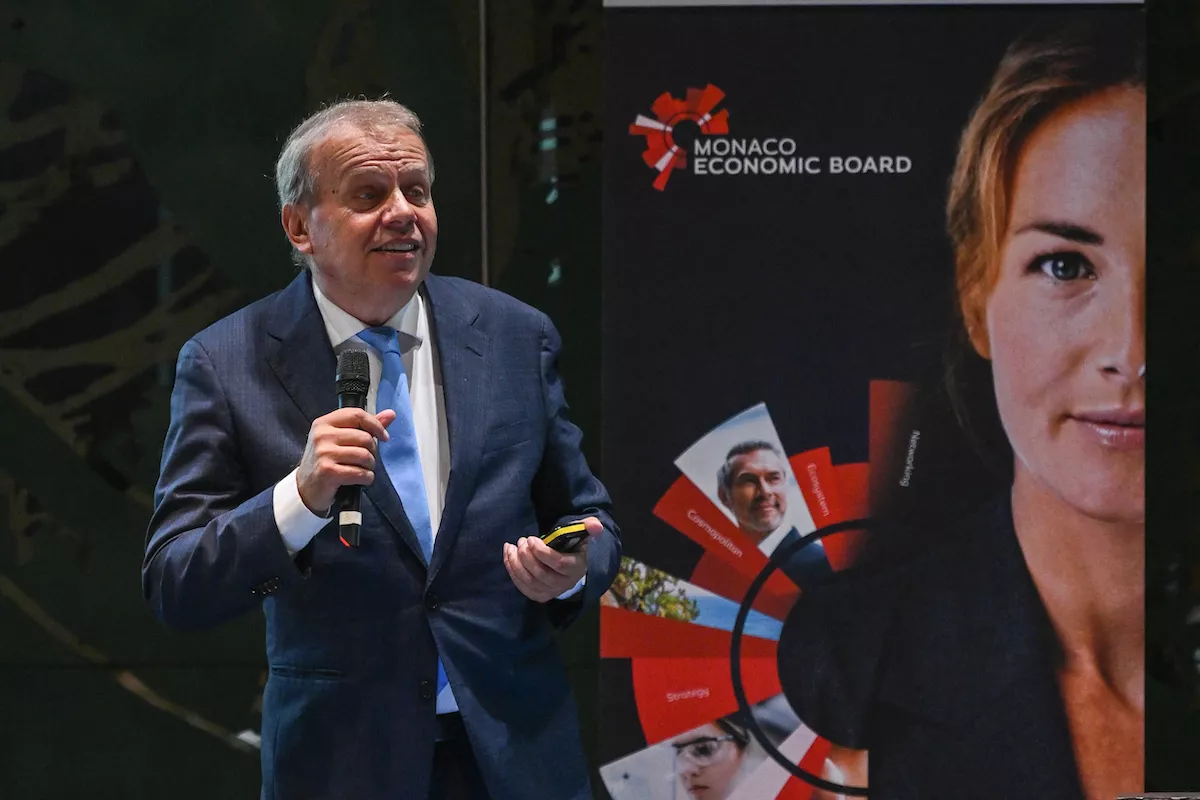
Jean-Pierre Petit in Monaco: Geopolitical risk, French debt warnings, and the AI bubble

France faces an ‘Argentinian scenario’ of structural economic decline as public debt barrels toward 130% of GDP by 2030, economist Jean-Pierre Petit warned in Monaco on Friday 11th September, during his annual address at the Hôtel Hermitage Monte-Carlo.

Hosted by the Monaco Economic Board (MEB) in partnership with Jutheau Husson, the conference marked Petit’s ninth consecutive appearance before the Principality’s business and financial leaders.

Geopolitics and democratic inertia

Opening his address, Petit gave a blunt warning: traditional and hybrid wars are on the rise globally. He contrasted the speed of decision-making and strategic resource deployment in authoritarian models with what he described as the ‘self-paralysis’ of traditional democracies.

The warning for France

Turning to domestic economics, Petit offered a bleak outlook for France, projecting public debt to climb toward 130% of GDP by 2030.

Citing administrative inefficiencies and political deadlock over public spending, he raised the prospect of an ‘Argentinian scenario’ – a cycle of soaring debt, political impasse, and long-term economic decay similar to Argentina’s historic fall from wealth to crisis – of structural economic decline, if reforms fail to materialise.

Global resilience and the AI market

Globally, the economy looked strong, backed by solid US company profits. While US mid-term elections usually help stocks grow over time – despite short-term bumps – Petit warned that share prices are too high and showing signs of a bubble. However, he distinguished the current artificial intelligence boom from the dot-com bubble of the 1990s, highlighting that current markets are behaving more rationally by rewarding only tech firms capable of concretely monetising their AI investments, even if high multiples still demand strict selectivity.

Portfolio strategy for the next six months

For the rest of the year, Petit advised playing it safe with regular stocks and bonds, while pointing to select small European companies, gold, and copper.

Stay updated with Monaco Life: sign up for our free newsletter, listen to our podcasts on Spotify, and follow us across Facebook,  Instagram, LinkedIn, and Tik Tok. 

 Jean-Pierre Petit in Monaco. Photo credit: MEB 

New era begins for AS Monaco Volleyball women’s team

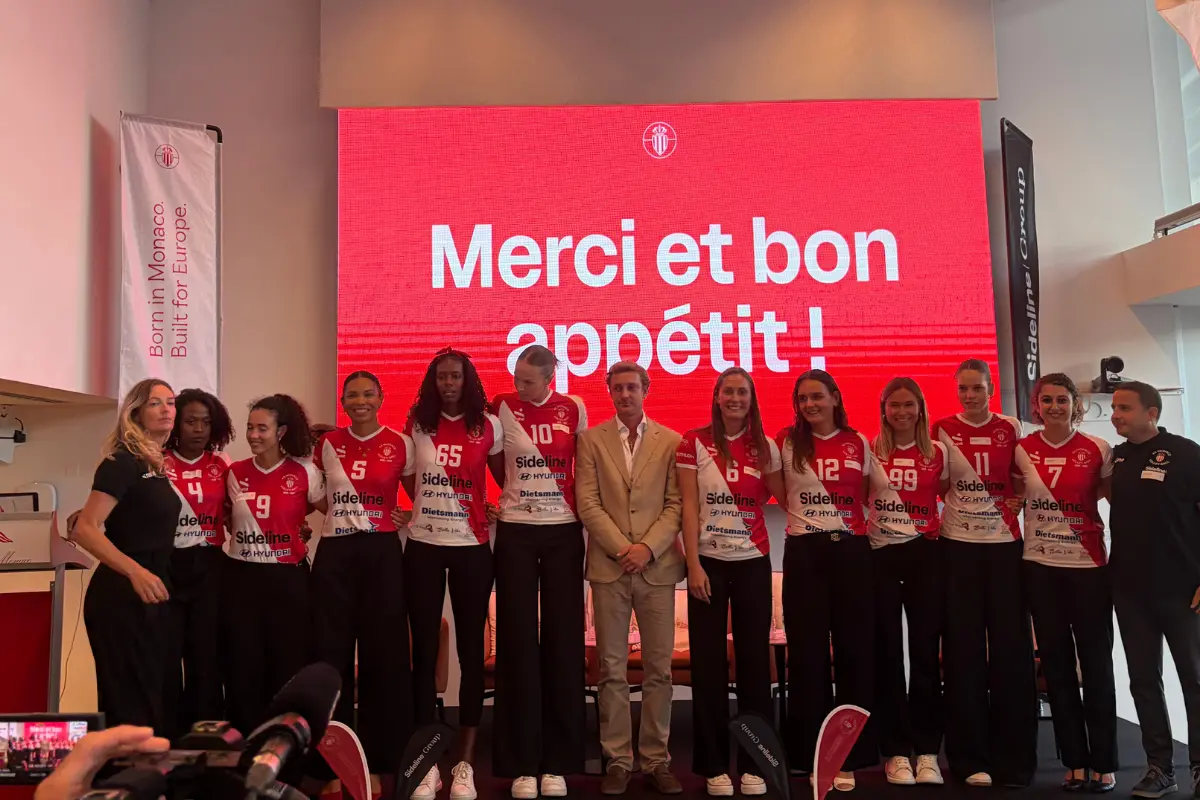
AS Monaco Volleyball unveiled a new performance project for its women’s team ahead of the 2026-2027 season, showcasing ambitions to reach the highest levels of French volleyball and ultimately compete for titles in the years to come.

The project, developed alongside Swiss volleyball agency Sideline, was presented at the Yacht Club de Monaco on Monday 14th September, bringing together players, staff, partners, and representatives from various Monegasque institutions.

The project marks a tremendous change to the structure surrounding the women’s team. Last season, the team typically trained two times per week, with this schedule now increasing to ten training sessions per week as the club combines both amateur and professional players in a high-performance environment.

New Head Coach Filipe Lacerda reflected on the change, highlighting the importance of connection across the team. “I think this will be the secret, everyone connected. That’s the most difficult part of building a team. So, I think we are taking the right steps,” he said during the press conference.

A 2030 VISION FOR AS MONACO VOLLEYBALL

The 2030 vision for the project was outlined, with long-term objectives of competing for both national and international titles. In order to reach that point, the club seeks progression through the French volleyball pyramid to ultimately reach the professional level.

The partnership also brings support for the team off the court as AS Monaco seeks to develop the infrastructure needed to achieve its goals. Hyundai is providing vehicles to support players travelling between training sessions, while Pierre & Vacances is providing accommodation for players and coaches.

For Sideline, Monaco itself was a factor in determining its investment in the project. After considering other opportunities across Europe, the company saw greater potential in the Principality, with the international recognition attached to Monaco proving critical to the decision.

The new project builds on decades of volleyball in the Principality. Founded in the 1950s, AS Monaco Volleyball and Beach Volleyball now has more than 500 members, with 37 teams entered into competition and all youth categories represented.

NEW SQUAD TAKES SHAPE

The 2026-2027 squad was presented during the evening, bringing together existing amateur players with the new professional recruits. This combination will be critical to the club’s immediate sporting ambitions while also building a strong foundation.

For Camille Mistral, the difference is already being felt ahead of the season. “We went from two or three training sessions to two training sessions a day,” she said. “You can feel that everyone is really involved, whether it’s the coaches, the staff, or the players.”

Laura De Zwart also explained what attracted her to joining AS Monaco. “There is a lot of thought going into this project. I trusted that this would be a good step for me and that we will make a good season here and do our best for this project and for Monaco.”

With the new structure now in place, the upcoming season represents the beginning of a larger project, as AS Monaco Volleyball looks to turn its women’s programme into one capable of competing at the professional level.

Stay updated with Monaco Life: sign up for our free newsletter, listen to our podcasts on Spotify, and follow us across Facebook,  Instagram, LinkedIn, and Tik Tok. 

Photo credit: Kayla Sauceda / Monaco Life

Meet Bénédicte Chrétien, the new CEO reshaping CFM Indosuez

Almost a year after taking the helm of CFM Indosuez Wealth Management, Monaco’s only listed bank, Bénédicte Chrétien faced the press for the first time on Tuesday — and she did not do it alone. Rather than address the room from the front, the chief executive sat surrounded by her senior leadership team and handed each of them the floor in turn. It was a deliberate signal of the more collaborative way she intends to run a 104-year-old institution now navigating some of the deepest changes its industry has faced.

Bénédicte Chrétien, who took over last October from Mathieu Ferragut, arrived after more than two decades in wealth and asset management and, most recently, a spell as group head of human resources at Crédit Agricole — the people-first background that colours much of her thinking.

Chrétien’s new strategy sets out six priorities for the bank, with ‘Client at the Heart’ at the top of the list. It calls for a more integrated advisory model in which the private banker acts as a conductor, drawing together an increasingly specialised orchestra of experts for each client.

Not a pyramid, but a collective

Chrétien was emphatic that the bank is no longer led from a single desk. Its executive committee has been renewed by 80% since she arrived — younger, and now 62% women — and she framed that collective as the point rather than a by-product.

“This bank is not run by one man or one woman alone,” she said. “There is no providential man or woman. There is a team that, through the diversity of its experiences, profiles and skills, balances itself positively.” Bringing that team to the microphone, instead of speaking for it, was the demonstration.

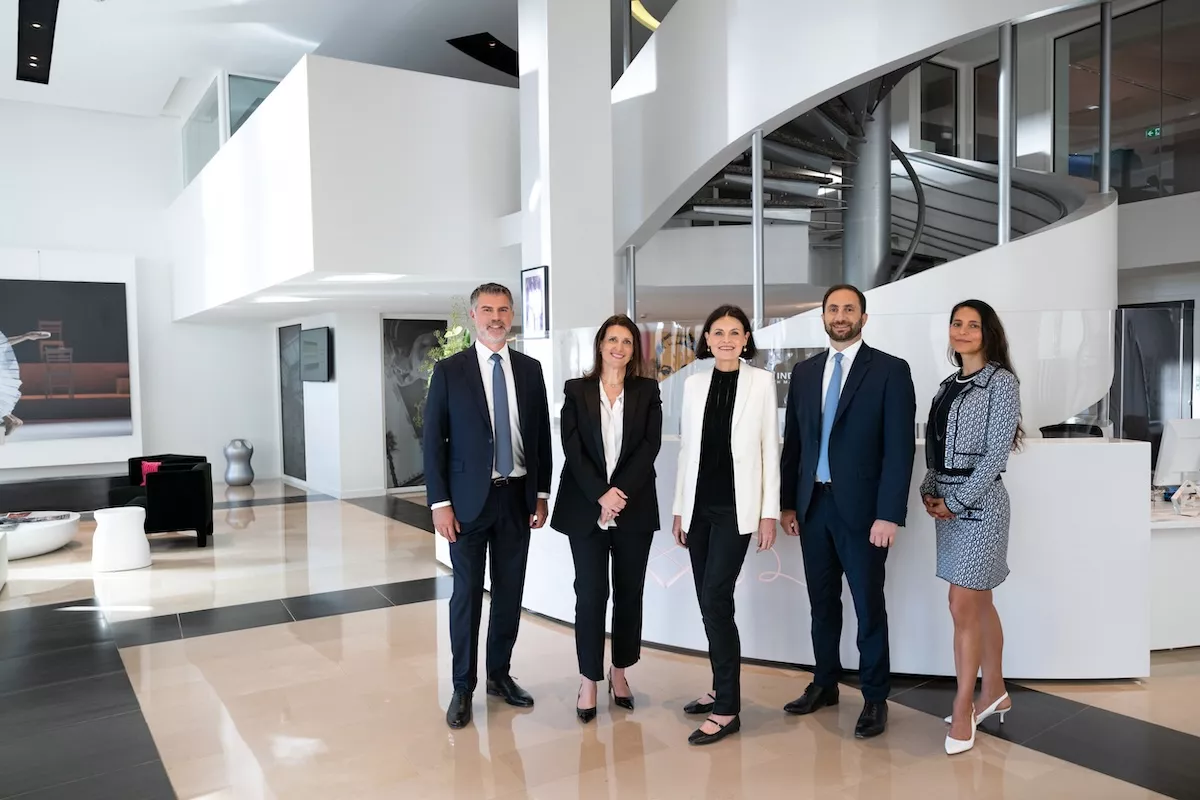
From left to right: Co-Head of Wealth Management Vincent Cartillier, Deputy Chief Executive Officer Sophie Armando, Chief Executive Officer Bénédicte Chrétien, Co-Head of Wealth Management Jad Bardawil, and Sophie Couve de Murville, Global Head of Advisory. Photo source: CFM Indosuez Wealth Management

A clientele in transformation

The urgency, as Chrétien tells it, comes from three shifts striking wealth management at once. The first is the great wealth transfer: by 2030, she said, around 30% of the world’s wealth will change hands, half of it in the United States and a quarter each in Europe and Asia. The second is a new generation of clients who want more than returns. “How can my wealth have an impact on the world — now, but also in 20 or 50 years?” is the kind of question they now ask, she said.

The third she called genuinely new: the rise of women’s financial power. In 2015, women held 31% of global wealth; by 2026 that had climbed to 41%. It is a shift mirrored in the bank’s own leadership, with a female chief executive and deputy chief executive, and an executive committee that is now majority women. Where the priorities of the next generation and of women converge, Chrétien argued, is on a demand for meaning and measurable impact. It is this that she brands “the bank of meaning” — the case that preserving and growing family wealth must now sit alongside purpose, from the blue economy to sustainable building and education.

The human, augmented by technology

On technology, Chrétien was pointedly unromantic. Artificial intelligence, she said, is now simply the norm — every bank will have it — so it cannot be what sets one apart. “The real differentiator is the human being augmented by technology,” she said, reaching, for her largely Anglophone audience, for a line she attributed to Steve Jobs: “I would trade all of my technology for an afternoon with Socrates.”

Sophie Couve de Murville, the bank’s Global Head of Advisory, explained what this looks like in practice. AI already allows the bank to produce instant consolidated reporting across complex structured-product positions and monitor more market signals than any analyst could track alone. During one recent client review, she said, the technology revealed that a portfolio which appeared well diversified was actually heavily concentrated in technology once its underlying US and Asian exposures were analysed. Yet even within her own field, she added, AI still combines “extremely advanced” analysis with “beginner’s errors”.

“What still makes the difference is intuition – particularly an understanding of how markets will react,” said Couve de Murville. “At this point, AI is not yet able to reproduce that.”

Scale, and a bigger footprint

The platform behind the strategy is substantial. CFM Indosuez is the largest employer in Monaco’s financial sector, with more than 400 staff, some 60 private bankers — average age 45, 40% of them women — and what it says is the largest trading room in the Principality, run by 50 multilingual specialists. It is the only listed bank among the 25 in Monaco, and part of Crédit Agricole, the world’s ninth-largest banking group. It was again named Best Bank in the Principality by Global Finance this year, the tenth year running.

That footprint grew in March with the acquisition of BNP Paribas’ wealth-management clients in Monaco, alongside the arrival of 37 staff. Deputy chief executive Sophie Armando said the measure of such a deal is not the assets but the handover: clients, she recalled, told the bank, “On Friday, we were with BNP Paribas; on Monday morning, we were with CFM Indosuez. It happened transparently and seamlessly, and for us that was a tremendous reward.”

Co-Head of Wealth Management Vincent Cartillier said CFM Indosuez had built an increasingly international private-banking team to reflect its clientele, with nearly 20 nationalities represented and around a dozen foreign languages spoken among its bankers. “We are a bank that is profoundly Monegasque by our history and our roots,” he said, “but resolutely international by our set-up and our clientele.”

For Cartillier, however, that international reach must extend across generations as well as borders. “Our objective is simple: to be the bank of the family, not merely the bank of one generation,” he said. That responsibility requires advisers to know not only their clients, but also their children—and to understand how the next generation’s needs, expectations and attitudes towards wealth are evolving.

His fellow Co-Head of Wealth Management, Jad Bardawil, said that international reach is already translating into “spectacular” growth among Anglophone ultra-high-net-worth clients relocating to Monaco, while one in two existing clients has recommended someone close to the bank.

Making it work across the bank

Turning all of this into the daily work of 400 people is, Chrétien acknowledges, the harder task. The conductor model only functions if the specialists are within reach, so the bank’s transversal wealth-engineering, financing, real-estate and investment-advisory teams are built to plug directly into each private banker rather than sit in silos. Investment experts now join client meetings as a matter of course, Couve de Murville said, and for its largest clients, the bank assembles a dedicated team of bond, equity and other investment specialists who work together and review the portfolio monthly, operating in effect as an in-house family office.

The second lever is generational. With a long-serving cohort of bankers retiring, Chrétien has been deliberately recruiting younger “digital natives” with a real appetite for AI, then pairing them with the bank’s most seasoned advisers. The technology, she argues, the newcomers bring naturally; the human craft of reading a family’s story “cannot be improvised”, and has to be handed down. “Every family is unique and every family carries its own story,” she says. “It is human intelligence – with its subtlety, discernment, free will and responsibility – that ultimately enriches the solution we offer.”

Training is continuous, particularly in compliance, where regulatory monitoring, staff education, controls and audits form a permanent cycle. Chrétien wants compliance treated not as a checklist but as a culture – and, for Monaco’s only listed bank, a source of trust and competitive advantage.

Underpinning it all is a conviction shaped by Bénédicte Chrétien’s years in human resources: two of her three stated ambitions are to be the first choice not only for clients but for staff, because, she insists, one is impossible without the other. Look after employees’ wellbeing, the logic runs, and they will advise clients better. Each acquisition, the BNP integration included, becomes a chance to rebuild the bank’s own operating model and, in her words, to “question ourselves and look at ourselves with humility”.

For all that structure, CFM Indosuez’s new CEO is clear that the hardest part is cultural – that shifting the habits of a 104-year-old institution can be neither forced nor left to drift. Eleven months in, she measures progress less by reorganisations than by how many employees have embraced the changes. “I believe we have brought 80% of our teams on board,” she said. “Cultural transformation of this scale requires time – but it must not take too long. I give it two years.” It is an unusually concrete deadline for a change of that kind, and a telling one: patience, but with a clock running.

It amounts to a wager that a century-old institution can be run less as a pyramid than as an ensemble, and that the way to keep increasingly demanding clients is to look after the people serving them. Almost a year in, with her team assembled around her, that is Chrétien’s strategy — and, just as deliberately, her message.

Monaco Life is written by qualified journalists, writing original content. Sign up for our free newsletter, listen to our podcasts on Spotify, and follow us across Facebook,  Instagram, LinkedIn, and Tik Tok. 

Main photo source: CFM Indosuez Wealth Management

Monaco and 19 firms shortlisted for Citywealth awards

Monaco’s private wealth sector is up for international recognition, with the Principality shortlisted for the IFC of the Year 2027 title and 19 local firms nominated across three categories at the Citywealth International Financial Centre Awards. The shortlist has been published by the awards’ judges and the public vote is now open, giving the global private wealth industry until 20th November to have its say.

Run by Citywealth and founded by its chief executive, Karen Jones, the IFC Awards recognise the achievements of firms and individuals in private wealth across the world’s major international financial centres. The public vote counts for 10% of the final result, with the remaining 90% decided by an independent panel of senior industry judges.

Law Firm of the Year – Monaco

The nominees are CMS Monaco, Donald Manasse Law Offices, Etude Mullot, Etude Régis Bergonzi, the Law Offices of Jean-Charles S. Gardetto and Zabaldano Advocates.

Legal Advisory Firm – Monaco

Shortlisted in this category are Groom Hill, Harpers Legal, HFW Monaco, Interlaw Monaco, Square Services and Tempest Legal.

Private Bank of the Year – Monaco

The contenders are Banque Richelieu, Barclays Private Bank, CFM Indosuez, Edmond de Rothschild, Julius Baer, Moncrief Private Bank and Société Générale Private Banking.

How to vote, and what’s next

The public vote is open until 20th November on the Citywealth website. The winners will be announced at the Citywealth IFC Awards 2027 gala dinner on 26th January 2027 at The Biltmore Mayfair on Grosvenor Square in London, hosted by BBC News presenter Rich Preston.

Stay updated with Monaco Life: sign up for our free newsletter, listen to our podcasts on Spotify, and follow us across Facebook,  Instagram, LinkedIn, and Tik Tok. 

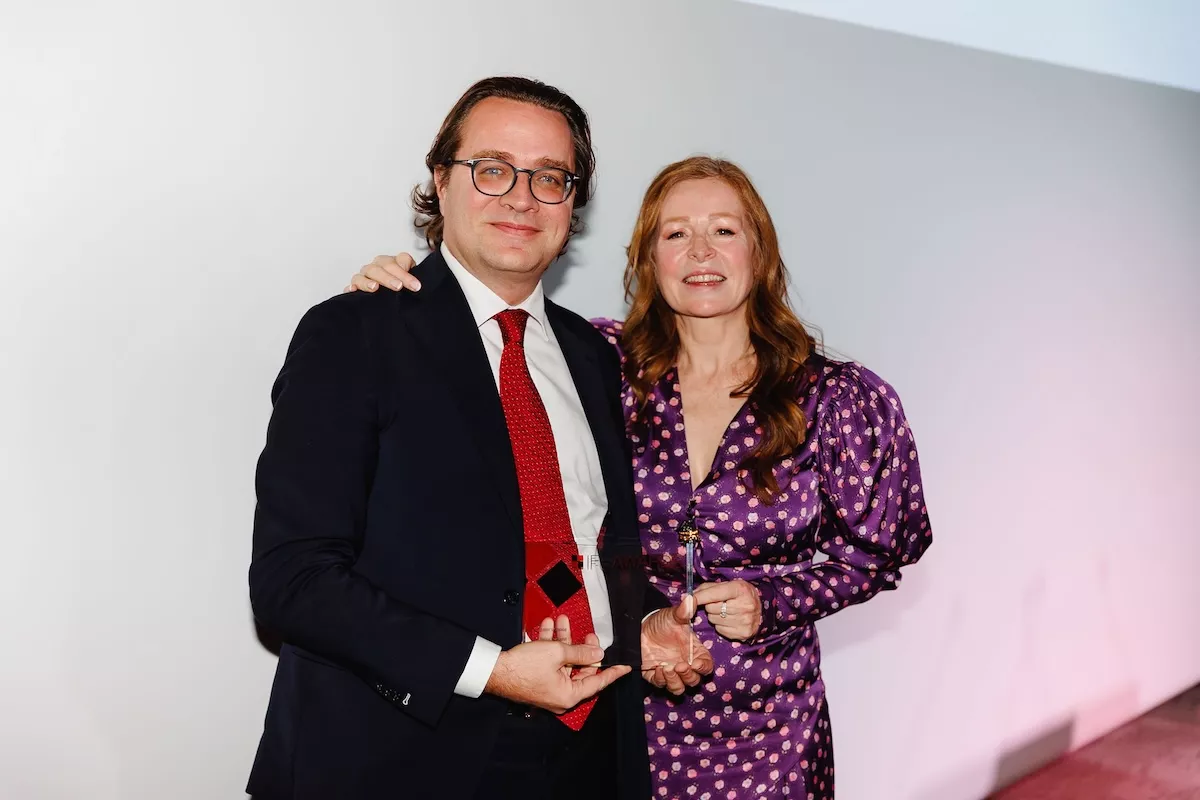
Photo: Régis Bergonzi from Etude Régis Bergonzi with Karen Jones, CEO of Citywealth. Source: Citywealth

Creative expression in the Principality: The 2026/2027 Pavillon Bosio public workshops

The Pavillon Bosio – École Supérieure d’Arts Plastiques will open its doors for the 2026/2027 public art workshops, running from 5th October through 29th May 2027. 

Led by practicing artists and specialist tutors, these sessions are designed for children, teenagers, and adults looking to build technical skills, explore new mediums, or refine their creative expression. New for this term is a dedicated Tuesday painting class tailored for sixth-formers, undergraduates, and adults of all abilities.

Shaping the next generation

In the ceramics studio at the Pavillon Bosio, children aged seven to eighteen can dive headfirst into the tactile realities of clay, learning the nuances of modelling, moulding, and glazing under the guidance of Jeffrey Haines. Across town at the Foyer Sainte Dévote Annexe, Marine Gambardella will steer younger participants through the fundamentals of drawing and art history, pairing imaginative exercises with rigorous explorations of proportion and perspective. These tightly capped groups—twelve for ceramics, twenty for drawing—ensure that instruction remains intensely personal.

Adult apprenticeships in medium and material

For adults and undergraduates, the curriculum reads like a masterclass in traditional and contemporary craft. The ceramics department, led by Jeffrey Haines alongside master technician Jean-Sylvain Marchessou, will offer rigorous pathways from introductory throwing to advanced form-building. Nearby, the printmaking and bookbinding ateliers will preserve vanishing arts. Laure Fissore will introduce students to the intricate friction of woodcut and drypoint, while Sophie Sediri will initiate participants into the quiet, exacting world of leatherbound volumes, marbled papers, and contemporary bradel structures.

New horizons on the easel

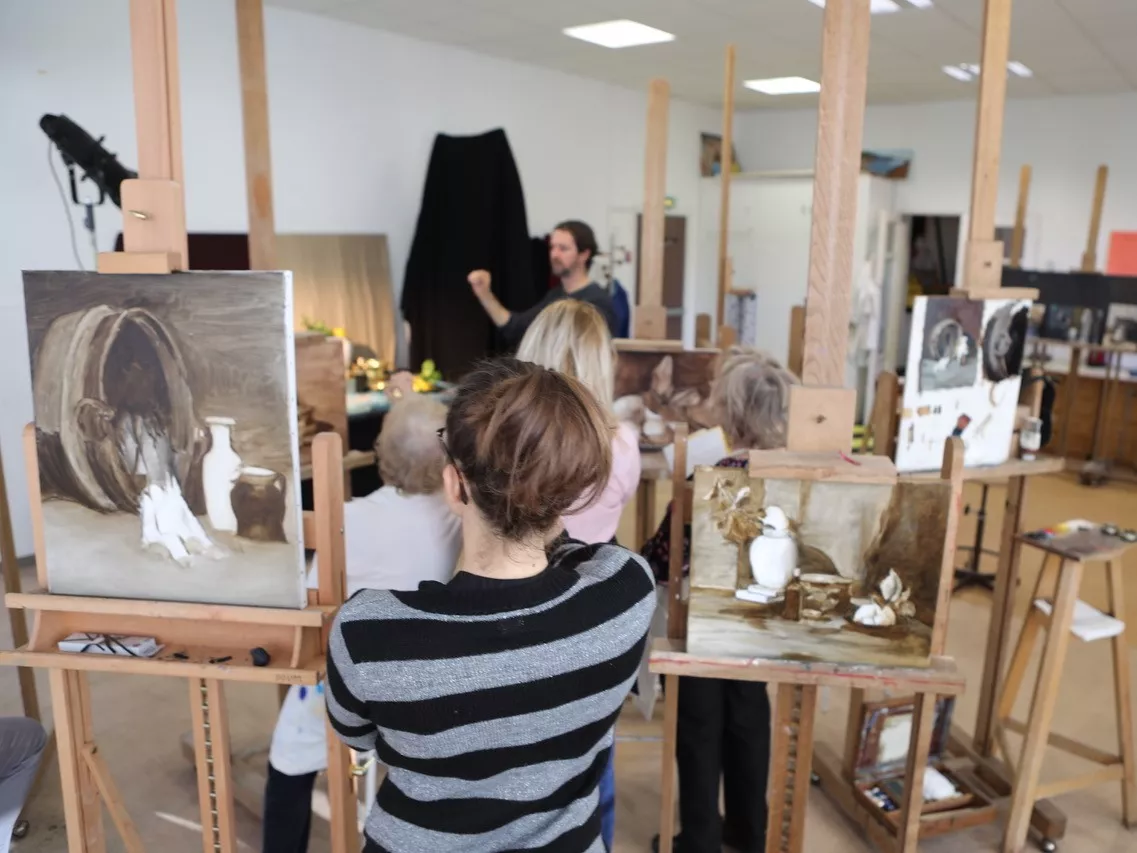
Painting and drawing command a significant share of the weekly timetable, anchored this season by a brand-new Tuesday painting class designed specifically for sixth-formers, undergraduates, and adults of all skill levels. Sandrine Flury and Laure Fissore will guide students through the heavy lifting of colour theory, light, and chromatic mixing, while Yannick Cosso will secure the drawing sessions with rigorous studies in portraiture and life drawing across venues like the accessible Espace Lamartine.

The practicalities of practice

Engaging with the arts in the Principality requires a touch of administrative timing. Pre-registrations for the upcoming term run from 7th to 11th September 2026, with confirmation letters dispatching from 28th September ahead of final payments on 12th October. 

For those unable to commit to a full academic year, seasonal practical workshops offer intensive bursts of making throughout the holidays and into June.

Detailed schedules, registration forms, and enrolment guidelines remain accessible directly through the Pavillon Bosio platform under the public workshops rubric.

Stay updated with Monaco Life: sign up for our free newsletter, listen to our podcasts on Spotify, and follow us across Facebook,  Instagram, LinkedIn, and Tik Tok.

Photo credit: Mairie de Monaco