“That’s Not What I Said”: What King Charles and Charles Spencer Can Teach Us About Communication

King Charles III and Earl Spencer have made headlines over the latter’s account of a telephone conversation in the days after the death of Diana, Princess of Wales.

In his new book, Charles Spencer alleges that the then Prince Charles made a deeply hurtful remark during a heated discussion about Diana’s funeral arrangements. Buckingham Palace has challenged his recollection, pointing to the effect that intense grief can have on memory.

The public will inevitably take sides over whose version is “true”. Yet this need not be an argument about dishonesty. It may instead offer a lesson in how communication and memory actually work.

In my experience, most communication failures — whether in the bedroom or the boardroom — are not caused by lying. They stem from the mistaken belief that what was said and what was heard are the same thing.

How often does a married couple leave the same conversation with completely different memories of it, while both remain utterly convinced they are right? This is the stuff that keeps many relationship therapists in business.

Memory is not a recording

We tend to imagine memory as a faithful record of events. It is not. Memory is reconstructive rather than reproductive.

We also make the mistake of thinking that communication is simply the transfer of facts. In reality, it is the transfer of meaning — and every one of us filters meaning. We reconstruct events from fragments of what happened, combining them with our beliefs, emotions, assumptions, life experiences and present-day understanding.

Emotion plays a powerful role in that process and is likely to be highly relevant to any recollection of the days after Diana’s death. When emotions run high, certain moments can become exceptionally vivid while others barely register. Our feelings influence both what we notice at the time and what we later remember.

We are also inclined to remember how an exchange made us feel. That emotional certainty can give us enormous confidence in our recollection years later, even when the precise words have become less reliable.

There can therefore be a significant gap between what one person believes they said, what another believes they heard and what either remembers afterwards.

In this royal dispute, the most memorable part of the alleged exchange may have been different for each person. One may remember particular words; another may remember the intended meaning or the emotion surrounding them. Earl Spencer has publicly stood by his account, while the Palace has questioned it. That does not, by itself, tell us exactly what was said in a private conversation nearly three decades ago.

Did the message land?

In everyday life, we devote enormous effort to choosing our words and remarkably little to checking whether they landed as intended.

It is one of the most common causes of workplace conflict. A manager knows with certainty what she intended to say, but she cannot know with the same certainty what the other person heard — unless she asks. Why don’t more bosses ask?

Consider a performance appraisal. How often do we remember the one piece of constructive criticism and forget the 10 positive comments that surrounded it? Emotion has a habit of climbing into the driving seat. Two people can leave the room remembering different conversations, and often do.

This is why good communication requires more than speaking clearly. It requires curiosity. “What did you hear me say?” may be one of the most useful — and underused — questions in any relationship or workplace.

The stories memory tells

Memory also changes over time. Diana died 29 years ago. Since then, recollections of those extraordinary days may have been subtly reshaped not only by how those involved felt at the time, but by everything that has happened since.

Psychologists also talk about self-serving bias: our tendency to interpret, and sometimes remember, events in ways that support how we see ourselves and the world. Identity matters. So does the story we have told ourselves — and others — over many years.

It turns out that recalling events is a complicated business. Ask my husband. We disagree about whether it was his idea or mine to move to Monaco. We can both vividly recall the conversation we had on an aeroplane 12 years ago. The trouble is that we remember it differently. Each of us is entirely convinced that he was the one who suggested it.

We tend to assume memory is like a photograph. Psychologists often suggest it is closer to a painting: the scene may be recognisable, but each of us adds our own colours.

Returning to the royal row, it is entirely possible for people to be sincere about how they remember an exchange while disagreeing profoundly about its words, meaning and tone. None of us was on that telephone call, and sincerity is not the same as perfect recall.

The rest of us might draw a more useful lesson than simply choosing a side. Say what you mean. Check what was heard. And when conflict arises years later, leave room for the possibility that certainty is not proof.

The Palace statement issued in the late Queen Elizabeth II’s name in 2021 may have captured the psychology rather better than anyone realised: recollections may vary.

Monaco Life is written by qualified journalists, writing original content. Sign up for our free newsletter, listen to our podcasts on Spotify, and follow us across Facebook,  Instagram, LinkedIn, and Tik Tok.

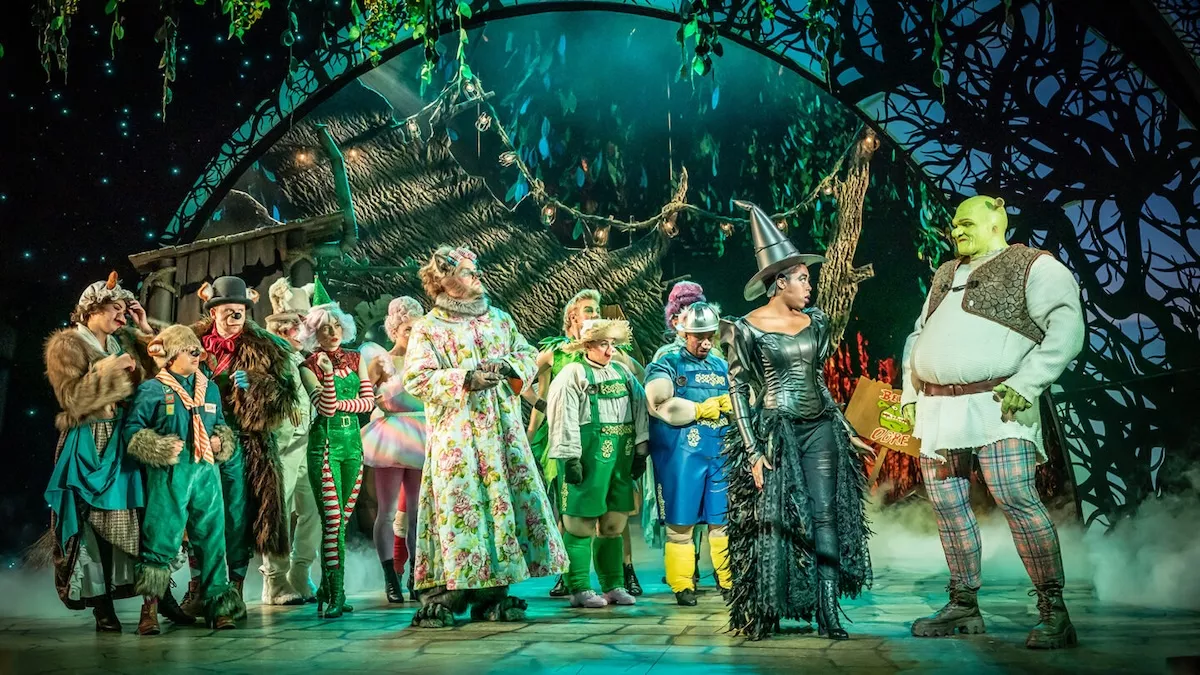
Image is AI generated by Monaco Life

Gavin Sharpe is a psychotherapist based in Monaco. The views expressed in this opinion piece are his own and do not necessarily reflect those of Monaco Life.

Tennis: Monaco’s Davis Cup rise continues with historic win over Finland

Monaco has made Davis Cup history after defeating Finland 3-1 to secure a place in the 2027 Davis Cup Qualifiers for the first time.

The historic result played out in Espoo, Finland, where Monaco faced the home team in a World Group I tie on 18th and 19th September. Entering the weekend ranked 35th in the Davis Cup nations rankings compared to Finland at 20th, Monaco looked to continue its quick rise after reaching World Group I for the first time earlier this year.

CATARINA MAKES HIS RETURN

The weekend began on Friday with Lucas Catarina making his return to competition following his retirement last year, facing Finland’s Otto Virtanen, currently ranked world No. 108.

Having not competed professionally in more than two years due to injury, Catarina struggled in the opening set, losing 6-0. He put up a stronger fight in the second, but Virtanen ultimately secured the match with a 6-3 second-set victory.

Catarina later revealed to Monaco Life that he had not originally expected to compete in Finland. However, after returning to training ahead of the tie, his level proved better than expected and he was ultimately selected to play. Despite his appearance in Finland, Catarina confirmed that he does not currently plan to make a full-time return to professional tennis.

Valentin Vacherot then faced world No. 446 Eero Vasa in Monaco’s second match of the day. The Monaco representative, world No. 21, took the first set 6-3 before a closer second set went to a tiebreak, where Vacherot secured a 7-6(3) victory, levelling the score at 1-1 heading into Saturday’s competition.

MONACO TAKES THE LEAD

Romain Arneodo and Hugo Nys opened Saturday’s competition against Finland’s Patrik Niklas-Salminen and Harri Heliövaara in doubles.

After losing the first set 6-3, the Monegasque duo turned the match around to win the following two sets 6-4, 6-3, giving Monaco a 2-1 advantage heading into the remaining singles matches. The comeback proved crucial, putting Monaco within one victory of securing its historic place in the Davis Cup Qualifiers.

Vacherot returned to the court next, this time facing Virtanen, with the opportunity to secure the decisive third victory for Monaco.

The opening set remained close before Vacherot took the tiebreak 7-6(3). Virtanen responded with a 6-4 victory in the second, sending the match to a deciding third set.

Vacherot ultimately came out on top, taking the third and final set 6-4, securing Monaco’s third victory of the weekend and making the fifth scheduled match unnecessary.

HISTORY MADE FOR MONACO

The result marks another historic step for Monaco’s Davis Cup team, which reached World Group I for the first time earlier this year and will now advance to the 2027 Davis Cup Qualifiers for the first time.

Vacherot played a key role in the achievement, winning both of his singles matches across the weekend. He spoke about the development of the Monaco team, particularly over the last five years, as well as the longstanding relationships between its players.

For Catarina, returning to the Monaco team also meant being part of a historic first for the Principality. Having first joined the Davis Cup team over 10 years ago, he has witnessed Monaco’s progression from fighting to remain in the lower divisions to now earning the opportunity to compete against some of the world’s leading tennis nations.

“Being back with the team for me was a very strange feeling, between nostalgia of my life as a tennis player that I could feel again for a week and the excitement of being able to live that again,” Catarina told Monaco Life. “I thought I would never feel that again. Just to be there with my friends and feel the emotions was amazing, playing the match even more.”

Catarina also credited the team’s rise to the development of its players and the strong friendships built across generations of Monaco’s Davis Cup team, including former players Benjamin Balleret and Thomas Oger, as well as current captain Guillaume Couillard.

“We managed through the years to build strong friendships between all of us and it’s always a big week of joy to be all together,” he said. “Everybody wants to win for the friends.”

The historic qualification adds another chapter to what has already been a remarkable period for Monegasque tennis. It comes less than a year after Vacherot surprised the tennis world with his victory at the Shanghai Masters. He will now return to China for the Asian portion of his season carrying another milestone with him, this time one achieved alongside his team.

Stay updated with Monaco Life: sign up for our free newsletter, listen to our podcasts on Spotify, and follow us across Facebook,  Instagram, LinkedIn, and Tik Tok. 

Photo credit: Manuel Vitali

Prince Albert II Foundation marks 20 years with star-studded Monaco gala

For one night, the gilded opera hall was transformed into the heart of the Amazon as Monaco gathered to celebrate 20 years of Prince Albert II’s Foundation — two decades in which a personal conviction of the Prince has grown into an international force for environmental action.

Prince Albert II and Princess Charlene presided over the anniversary gala on Friday 18th September, joined by Monica Bellucci, Richard Gere and Isabelle Huppert, with live performances by Christina Aguilera, Plácido Domingo and Sister Sledge carrying the celebration late into the evening.

Eva Herzigova, Catrinel Marlon and Aurélien Muller were also among those walking the gala’s green carpet at the Opéra de Monte-Carlo.

Yet behind the famous faces and grandeur of the setting was a milestone of considerable substance. Since its creation in 2006, the Prince Albert II of Monaco Foundation has supported more than 830 projects around the world, advancing work on climate change, biodiversity and water resources.

Photo credit: Frederic Nebinger, Prince’s Palace

A purpose beyond any reign

Opening the evening, Prince Albert returned to the conviction that led him to establish the Foundation just one year after becoming Sovereign.

“Twenty years ago, I had come to a simple conclusion. A Head of State is given a position, a voice that is listened to, and a great many doors that open when he knocks; and it seemed to me that these were worth a good deal more if they were put to work for something that would outlast any reign,” he said. “So I set out to build a foundation that could act where a State cannot always act: quickly, across borders, and for the long term.”

That ambition has shaped the Foundation’s work across the Mediterranean Basin, the Polar Regions and the world’s least developed countries. Its projects bring together scientists, institutions, NGOs, local communities and economic partners, combining research with practical efforts to protect and restore natural ecosystems.

Photo credit: Philippe Fitte, FPA2

Hollywood voices support Monaco’s environmental mission

Guests of honour Monica Bellucci and Richard Gere used the occasion to pay tribute to Prince Albert’s sustained environmental leadership. Bellucci spoke of her respect for a commitment that has placed both people and future generations at the centre of environmental action.

Gere drew a direct connection between ecological responsibility and shared humanity.

“For twenty years, HSH Prince Albert II and his Foundation have helped keep environmental protection at the heart of the international conversation,” he said. “Caring for our planet is inseparable from caring for one another.”

Their presence reflected a central part of the Foundation’s approach over the past two decades: bringing the scientific and environmental worlds into conversation with international culture, philanthropy, business and public life.

Richard Gere addressing guests at the 20th anniversary gala. Photo credit: Philippe Fitte, FPA2

A night staged on a fitting scale

The anniversary was given all the scale its setting demanded. Michelin-starred chef Yannick Alléno devised the gala dinner, served beneath an Amazon-inspired transformation of the Salle Garnier. Christina Aguilera brought international pop power to the stage, while Plácido Domingo and Sister Sledge completed a line-up that moved from opera to disco.

Art and experience also became instruments of support during an auction conducted by Simon de Pury. Lots included works by Georges Condo, Urs Fischer and Secundino Hernández, an exclusive Chopard high-jewellery creation, an experience with Richard Gere, privileged access to Maison Petrus and a journey aboard the Venice Simplon-Orient-Express.

The evening was supported by the Foundation’s longstanding partners Rolex and UBS, alongside contributions from Chopard, the Museo Nacional Thyssen-Bornemisza, Maison Petrus and the Belmond Group.

Christina Aguilera performed at the gala. Photo credit: Philippe Fitte, FPA2

Twenty years — and a mission far from finished

The anniversary offered a moment to take stock of what has been achieved, but its message was firmly directed towards the future. Pressure on the climate, biodiversity, oceans and natural resources has intensified since the Foundation began its work in 2006. Its next chapter will continue to combine scientific research, field-based solutions, public awareness and international cooperation in response to those challenges.

On a night filled with music, cinema, art and Monaco spectacle, the clearest statement came from the purpose that first set the Foundation in motion: using the Principality’s international reach to deliver environmental action well beyond its borders.

See more in the gallery below. Credits: Philippe Fitte, Ed Wright, Frederic Nebinger

Monaco Life is written by qualified journalists, writing original content. Sign up for our free newsletter, listen to our podcasts on Spotify, and follow us across Facebook,  Instagram, LinkedIn, and Tik Tok.

Main photo credit: Philippe Fitte


Monaco raises Riviera taxi fares, adds QR codes and higher waiting charges

Monaco has raised the fixed fares on most of its taxi routes into France and Italy under a revised official tariff, with increases of €5 to €10 to destinations from Èze to Cannes and a new two-tier fare for Nice. The order, published in the Journal de Monaco on 18th September and now in force, holds the €18 fare for a trip within the Principality, adds a compulsory QR code inside every cab and lifts the charge for waiting and slow-moving traffic.

Monaco’s taxi fares are set by the government as non-negotiable flat rates, all-inclusive for up to four passengers with luggage, with motorway tolls included on the longer trips. A journey within Monaco is fixed at €18, day or night, in normal traffic, and the grid then extends by zone across the border, with the bookable long-distance routes — Nice airport, Ventimiglia, San Remo, Antibes and Cannes — at the top end.

Fares rise across the Riviera

Most of the increases fall on journeys beyond Monaco. The fare to Nice airport rises from €100 to €110, and Nice is now split into two sectors — €100 to the east and €110 to the west — in place of a single €90 fare. A string of other destinations go up by €5 to €10: Èze and La Turbie from €50 to €55, central Menton from €60 to €65, Saint-Jean-Cap-Ferrat from €75 to €80, Villefranche-sur-Mer from €75 to €85, Ventimiglia from €95 to €105, San Remo from €165 to €175 and Cannes from €190 to €200.

The €18 fare within Monaco, the €25 fare to the neighbouring communes of Cap d’Ail, Beausoleil and Roquebrune, and the €190 fare to Antibes are unchanged.

The tariff also does away with the old two-tier pricing that charged more for a pre-booked cab. Previously, a taxi within Monaco cost €18 if hailed but €28 if booked ahead, and the neighbouring-commune fare €25 or €38; those booking surcharges are gone, replaced by a single fixed fare.

A QR code and a higher waiting charge

The order adds a transparency measure too. Alongside the printed price list that must be displayed inside every taxi, drivers now also have to show a visible QR code, giving passengers a quick way to check the official rates.

The charge for waiting and slow-moving traffic rises from €80 to €90 an hour, after a three-minute grace period, and the speed at which it kicks in is now graduated by zone — below 8 km/h close to Monaco, 10 km/h further out and 15 km/h on the longest routes — rather than a single threshold. The €200 charge for cleaning a cab soiled through drunkenness or antisocial behaviour, sometimes reported as new, was already in force.

The Grand Prix grid

A separate, steeper set of fares applies during the Formula 1 Grand Prix, from 8am on the Thursday to 11.59pm on the Monday. Most of those held steady, but Nice airport rises to €160 and Villefranche-sur-Mer to €125, while — unusually — the Grand Prix fare to Antibes falls, from €300 to €290. Over that weekend a trip within Monaco is €30, San Remo €260 and Cannes €300.

Art and Luxury Fair 2026 to benefit Princess Charlene of Monaco Foundation

The Art and Luxury Fair returns to Monaco this week for its third edition, moving to the Théâtre Princesse Grace for two days of free public exhibitions on 24th and 25th September. Held under the High Patronage of Prince Albert II and in support of the Princess Charlene of Monaco Foundation, this year’s fair is themed ‘Art, Luxury & Longevity’, exploring what its organisers describe as the links between art, creativity, science and wellbeing.

Founded by Annette Wijdom and previously staged at the Hôtel Métropole, the fair coincides with Monaco Yacht Show week and brings together artists, artisans, collectors and luxury houses. Among its guests is Princess Margarita de Bourbon de Parme, the fair’s Honorary Creative Contributor, who will present her nature-inspired jewellery line, De Parme Design, created with the Monégasque jeweller Isabelle Fissore.

Meeting the makers

The fair is built around encounters with the people behind the work. Each afternoon at 5.45pm, a “Storytelling” session gives artists and experts the floor: on 24th September, the sculptor Daphné Du Barry — whose statue of Princess Grace stands at the Princess Grace Hospital — speaks on “The Art of Grace”, while on 25th September the watch expert Michele Rosa turns to the timepieces made famous by cinema and celebrity.

The line-up spans painting, sculpture, jewellery and craftsmanship. Alongside Du Barry, the exhibiting artists include the Italian painter Claudio Sacchi, the Monaco-based Dutch artist Nora Bonavera and the contemporary portraitist Marcos Marin, as well as the art restorer Zuhura Iddi — known for her work on pieces by Breitner and Banksy — and the mentalist Max Schneider. Jewellery, watchmaking and design houses on show include De Parme Design, Feadship, Van Bergen 1795, Perrier-Jouët and Monacqua.

If you go

The fair runs on 24th and 25th September at the Théâtre Princesse Grace, 12 avenue d’Ostende, with free public admission from 2pm to 6pm each day and Storytelling sessions from 5.45pm. The evenings are reserved for a private, invitation-only event.

Monaco Life is written by qualified journalists, writing original content. Sign up for our free newsletter, listen to our podcasts on Spotify, and follow us across Facebook,  Instagram, LinkedIn, and Tik Tok.

Photo by Monaco Life

From champions to survival: What remains of the Roca Team dynasty?

The detrimental summer haunting the Roca Team appears to never come to an end as the club confirmed it received an unfavorable proposal from the French National Olympic and Sports Committee (CNOSF), recommending that the decision of the Federal Bureau of the French Basketball Federation (FFBB) be upheld, rejecting the club’s application to play at the Nationale Masculine 1 (NM1) level for the 2026-2027 season.

In a statement released by the club, it said, “AS Monaco Basketball wishes to express its profound gratitude to its players, its sporting and administrative staff, its partners, its sponsors, its fans, and all its supporters.” The statement read eerily like the beginning of an end.

As the club has been rejected from professional and semi-professional competition, lawyer Xavier Le Cerf-Galle has emphasized the impact the loss of the club could have on the community including “the dismissal of the 22 employees, the disappearance of the company’s purpose, and likely its liquidation,” as he argued in his recent appeal to the CNOSF.

The club stated it “remains fully committed and will communicate on the next steps as soon as the path forward has been determined.” As Monaco considers its remaining legal options, NM1 competition is now underway without the Roca Team.

For a club that has built a dynasty over the last five seasons, the blow is massive. Since its 2021 EuroLeague debut, the Roca Team has reached five consecutive EuroLeague playoffs, including two Final Four appearances and its first EuroLeague final, while domestically claiming three French championships, reaching two additional finals, and adding the Coupe de France, Leaders Cup and SuperCup to its list of achievements.

Just months after completing a historic season in which the Roca Team won every domestic title available, the club now faces a drastically different reality. With the possibility of liquidation looming and its immediate sporting future still uncertain, one of the most successful periods in Monaco basketball history could now be facing an abrupt end.

Stay updated with Monaco Life: sign up for our free newsletter, listen to our podcasts on Spotify, and follow us across Facebook,  Instagram, LinkedIn, and Tik Tok. 

Photo credit: Monaco Life