Snowman log and €150 tea top Cédric Grolet’s Christmas menu

Cédric Grolet is serving a €150 Christmas afternoon tea on the patio of the Hôtel de Paris Monte-Carlo this festive season, alongside four sculpted Christmas logs, from a coconut and passion fruit snowman to a chocolate teddy bear, for residents to take home.

The logs go on sale at the pastry chef’s boutique from Wednesday 9th December, a week before the afternoon tea begins. Grolet opened his boutique and tea room at the hotel in July 2025, as reported by Monaco Life.

Christmas afternoon tea

The afternoon tea runs from Wednesday 16th December to Sunday 3rd January. The menu pairs miniature versions of Grolet’s signature pastries with savoury bites, cakes and shortbread. Monaco Life attended the press preview, where lobster, caviar and truffle featured among the savoury bites.

The Christmas afternoon tea costs €150 and is served daily from 3pm to 5.30pm, by reservation only.

Four Christmas logs to take home

Grolet’s snowman combines coconut mousse and passion fruit cream with vanilla sponge and a crunchy coconut praline. The chocolate teddy bear layers chocolate mousse, cream and sponge with a cocoa nib praline and fleur de sel.

The Father Christmas log is built around vanilla, with vanilla mousse, cream, sponge and milk jam balanced by a salted praline. The gingerbread figure combines gingerbread mousse, cream and sponge with vanilla caramel and a crunchy gingerbread praline.

Each log serves six and costs €85. They can be collected from the boutique from Wednesday 9th to Thursday 31st December.

Two Epiphany pastries

The boutique’s festive collection continues into the New Year with two pastries for Epiphany. The galette des rois pairs puff pastry with almond frangipane, while the brioche des rois is flavoured with local citrus. Both will be available for collection from Wednesday 6th to Sunday 17th January, priced from €45 for six.

Monaco Life is written by qualified journalists, writing original content. Sign up for our free newsletter, listen to our podcasts on Spotify, and follow us across Facebook, Instagram, LinkedIn, and Tik Tok.

Photo credit: Calvin Courjon
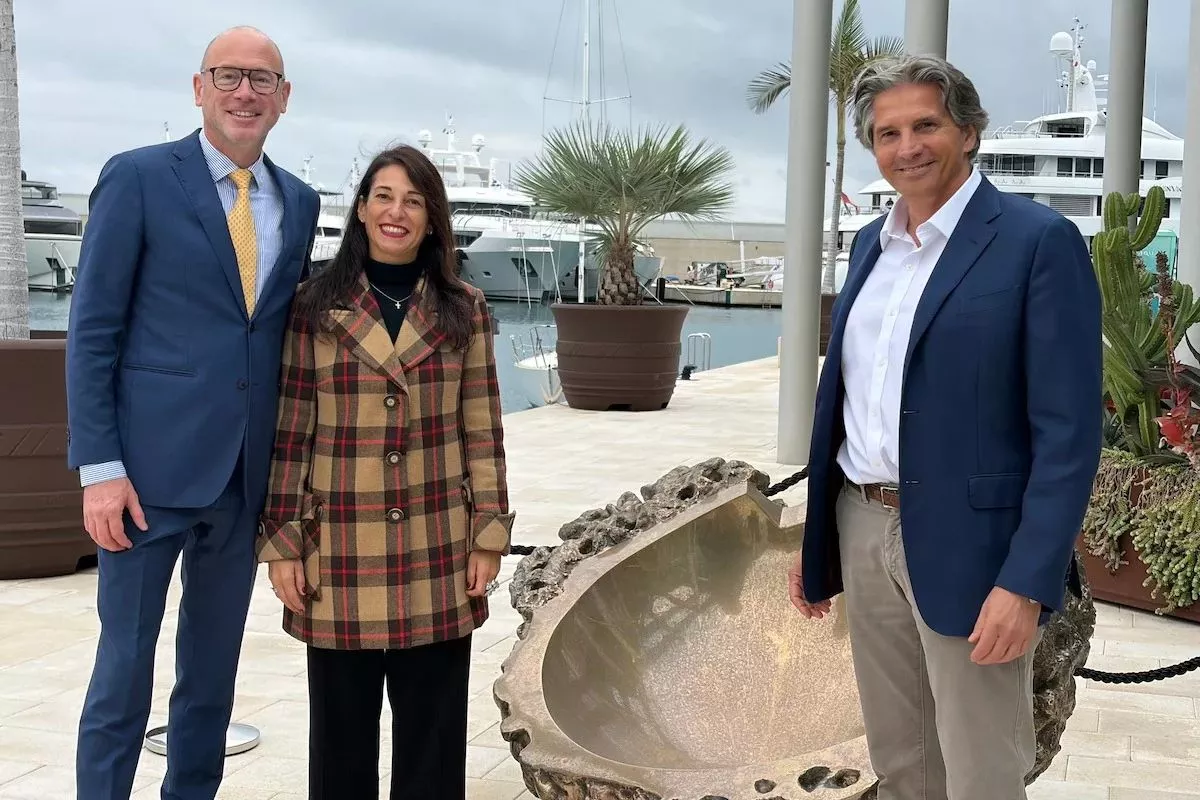
Bronze ‘Meteora’ opens new art programme at Cala del Forte

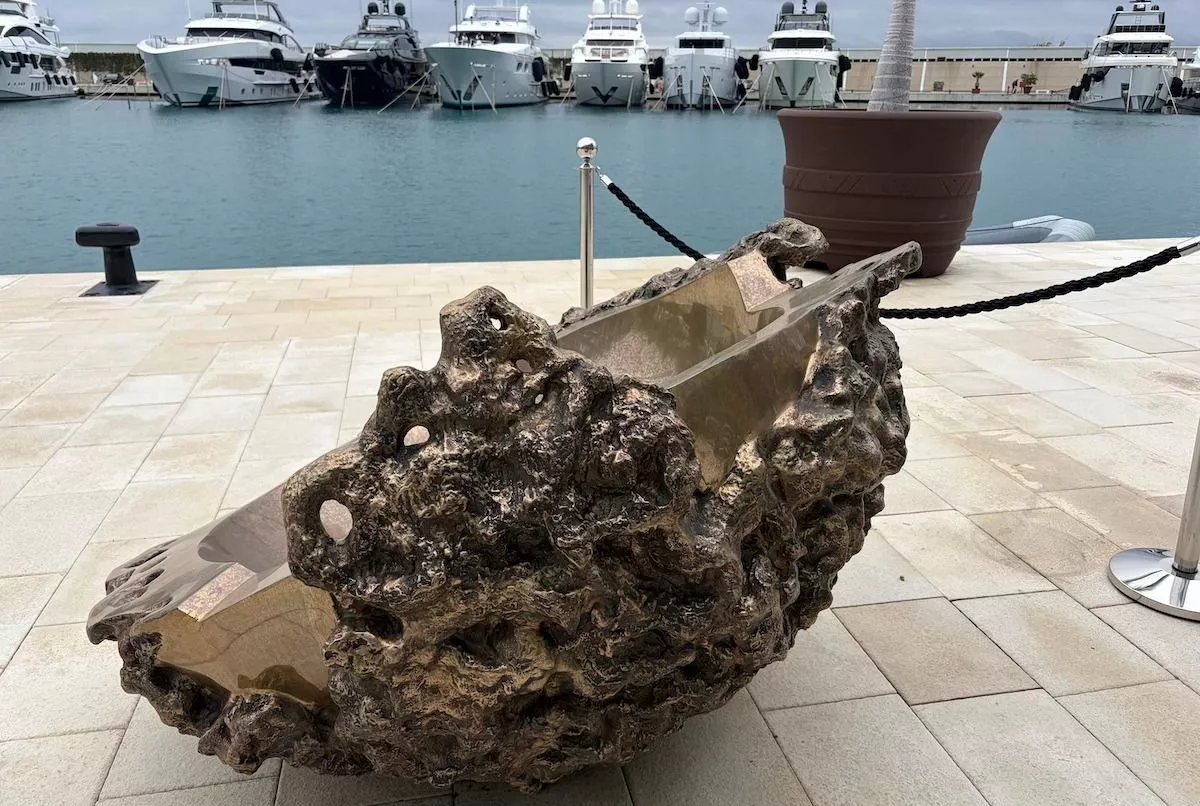
A 250kg bronze sculpture by Italian artist Roberta Verteramo was unveiled at Cala del Forte in Ventimiglia, Monaco’s third port, on Wednesday 11th November, the first of a series of contemporary works intended to turn the superyacht marina into a public art destination.

The piece, ‘Meteora’, was installed at the initiative of Force One magazine editor Luca Marotta, who leads the marina’s artistic development, in partnership with Ardentis Yacht.

A lunar mirror on the waterfront

Measuring roughly 160cm in diameter, ‘Meteora’ pairs a raw, textured bronze exterior with a mirror-polished concave interior. As visitors walk past, the reflective basin captures and inverts both the surrounding harbour and the viewer, so the work changes with the sea, the sky and whoever stands before it.

For Verteramo, whose practice spans sculpture, painting, fashion, jewellery and collectible design, and whose work has already been installed aboard several superyachts, creating monumental work is “an act of inner expansion”. Speaking at the unveiling, she explained that the piece, part of her ‘Selene’ lunar series, is rooted in the search for harmony between opposing elements: the organic and the geometric, the spiritual and the material.

Meteora, a monumental bronze sculpture by Italian artist Roberta Verteramo, at Cala del Forte in Ventimiglia. Photo credit: Virginia D’Umas

Placed outdoors beside the Mediterranean, the work is designed to interact with both the sea air and the night sky. “When the Moon is out, you can see it reflected inside the sculpture, you see the lunar surface below, and the mystery of the Moon inside,” Verteramo told Monaco Life.

Rather than treating coastal weather as wear, she welcomes the gradual patina on the raw bronze. “You can see the oxidation, and it is part of the work because the sculpture is alive. That corrosion recreates the exact texture of the Moon, it is like a human being,” she said.

From superyacht hub to cultural destination

The installation is the first step in plans to transform Cala del Forte from a technical yachting hub into a year-round cultural promenade for both yacht owners and the wider public.

“The layout, setting, and scale of this port give us an opportunity to grow culturally as well. Bit by bit, we want to make this a meeting point between architecture, art, and landscape. ‘Meteora’ is the first chapter of this adventure, paving the way for more permanent contemporary works with strong character,” said Marotta during the presentation.

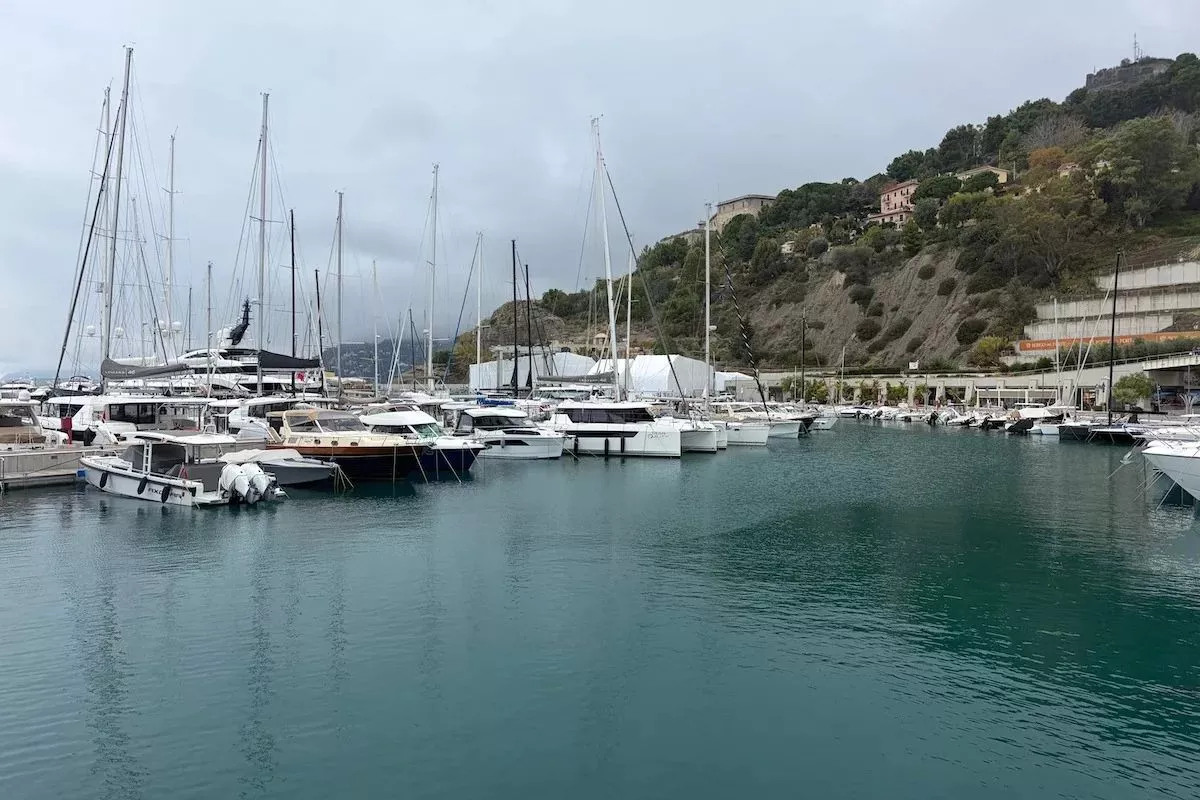
Cala del Forte in Ventimiglia, Monaco’s third port. Photo credit: Virginia D’Umas

Sustainability and connection in Ventimiglia

Operated by Monaco Ports, Cala del Forte was officially inaugurated in July 2021 in a ceremony attended by Prince Albert II, as reported by Monaco Life, and was built to connect superyacht infrastructure with the wider town of Ventimiglia.

Marco Cornacchia, who has managed the marina since 2018 and became its managing director in August 2025, has made environmental standards a focus. “We installed a proper black-water system, meaning no one discharges anything into the port, the water is entirely clean,” Cornacchia told Monaco Life.

The marina also uses smart energy monitoring to track consumption in real time. “If a yacht uses too much power, our control system flags it straight away so we can alert them immediately,” he said. Cala del Forte is on the 2026 list of Blue Flag marinas, its fourth consecutive year with the award, according to the marina.

Alongside its 35 commercial spaces, restaurants and waterfront cafés, the marina has increasingly become a public promenade. Visitors can walk the coastal Sentiero delle Calandre, known locally as Lovers’ Walk, or take the lift linking the quayside to Ventimiglia’s historic old town, Ventimiglia Alta, in 40 seconds.

Stay updated with Monaco Life: sign up for our free newsletter, listen to our podcasts on Spotify, and follow us across Facebook,  Instagram, LinkedIn, and Tik Tok.

From left to right: Luca Marotta, Force One magazine editor, artist Roberta Verteramo and Cala del Forte managing director Marco Cornacchia. Main photo credit: Virginia D’Umas

Monaco foundation takes polar research appeal to COP31

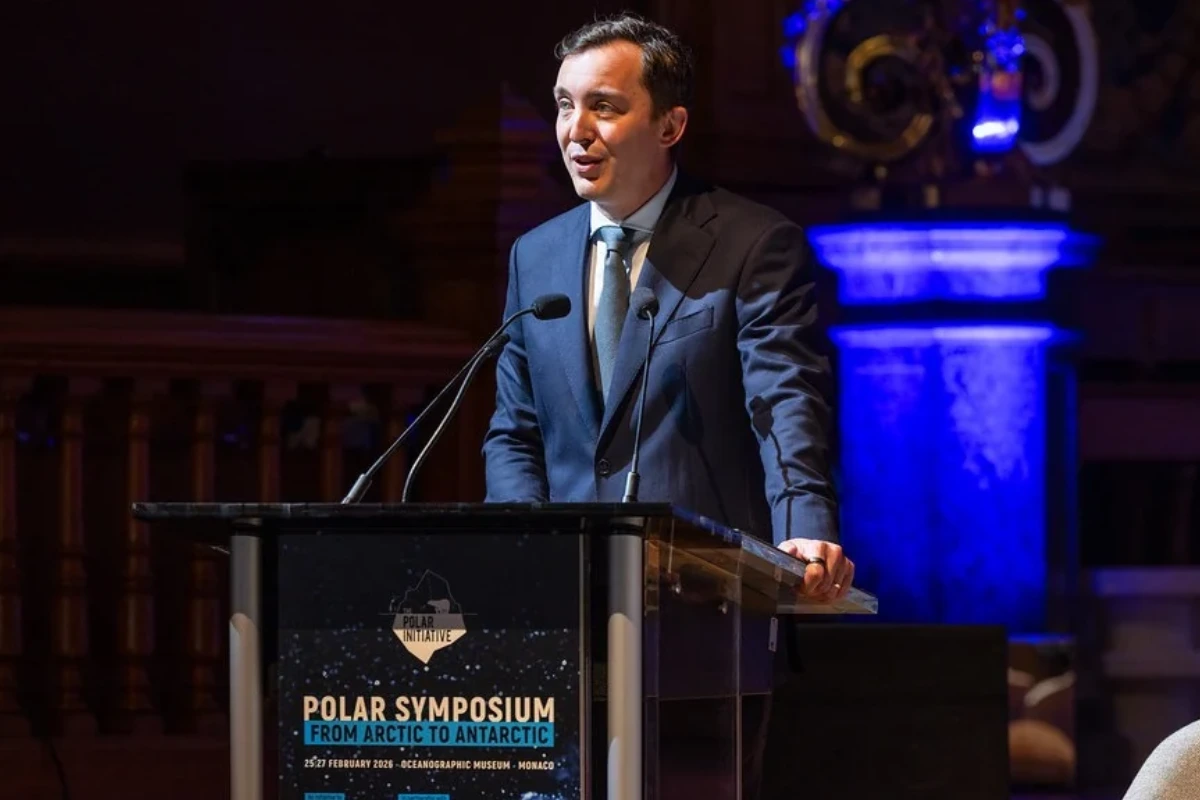
The Prince Albert II of Monaco Foundation will use next week’s COP31 climate summit to look for partners willing to back 17 proposed Arctic and Antarctic projects, from a polar early warning system to a permanent funding mechanism for research in the regions.

The proposals are being put forward ahead of the Fifth International Polar Year (IPY5), a coordinated international research effort planned for 2032-2033.

The foundation’s Polar Initiative will present its call to action on Tuesday 17th November during a panel at the summit’s Cryosphere Pavilion in Antalya, Turkey. It will ask governments, researchers, Indigenous organisations and funders to identify which projects they could help develop and what they could contribute.

Proposals from Monaco

The proposals came out of the third Monaco Polar Symposium, which, as reported by Monaco Life, was held at the Oceanographic Museum in February and brought together 170 participants from 31 countries and territories.

Among them are more precise forecasts of how much Antarctic ice loss could contribute to sea-level rise, and projections that vulnerable coastal communities could use to plan for local impacts. Other proposals would improve access to polar research data while respecting Indigenous control over how knowledge is shared, give Indigenous communities a role in shaping the International Polar Year, and create an international polar science education programme.

Funding beyond the International Polar Year

The foundation says short-term funding makes it difficult to sustain the observations, equipment and international collaboration that polar research requires. The proposals include a summit bringing research funders and investors together, as well as a permanent funding mechanism for polar research.

“The years leading to 2032 give us a unique opportunity to build the legacy of IPY5. We have a shared direction and a roadmap. Our duty now is to turn them into coordinated, ambitious and lasting action for the protection of the polar regions,” said Prince Albert II.

Organisations and individuals can already register interest in specific proposals through the Polar Initiative’s call for expressions of interest, which closes on 2nd January 2027. A new grant will help partners develop early ideas into programmes that can attract funding and operate across borders.

Monaco Life is written by qualified journalists, writing original content. Sign up for our free newsletter, listen to our podcasts on Spotify, and follow us across Facebook, Instagram, LinkedIn, and Tik Tok.

Photo credit: Philippe Fitte / FPA2

Storm Charles batters French Riviera as rockfalls close roads and flooding hits coastal towns

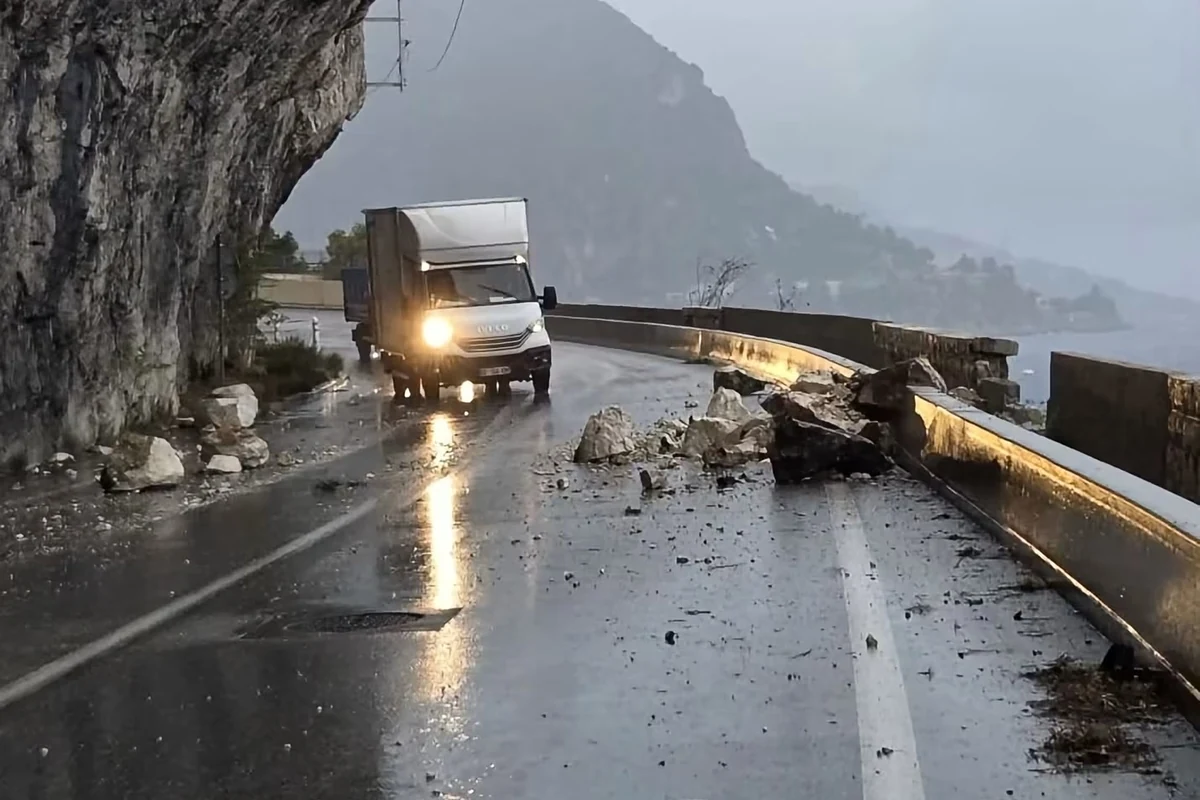
Torrential rain has triggered rockfalls, flooding and widespread traffic disruption across the French Riviera on Thursday, with a major section of the Lower Corniche between Nice and Monaco closed after large boulders crashed onto the road and damaged a roadside barrier.

The severe weather, brought by Storm Charles, has affected communities from Cannes to Menton, with roads submerged, coastal routes closed and emergency services responding to incidents across the Alpes-Maritimes.

One of the most dramatic incidents occurred near Èze, where substantial sections of rock broke away from the cliff face above the RM6098, sending boulders and debris onto the carriageway. Photographs shared by the municipality show large rocks scattered across both lanes, with part of the stone parapet overlooking the Mediterranean badly damaged.

The road was closed in both directions from approximately 10.20am, with no confirmed reopening time. No injuries have been reported in connection with the rockfall.

Major disruption between Nice and Monaco

The closure of the Lower Corniche has disrupted one of the principal coastal routes linking Nice, Èze and Monaco.

According to the municipality of Èze, diversions have been established via Boulevard Édouard VII for motorists approaching from the west and Avenue de Lattre de Tassigny for those travelling from the east.

Further east, another rockfall affected the RD50 between Roquebrune and Cap-Martin, resulting in a partial road closure.

In Menton, authorities closed the Promenade du Soleil (RD52) shortly before 10.45am because of waves overtopping the seafront. The closure was announced for an indefinite period as dangerous coastal conditions persisted.

More than 120mm of rain recorded in Cannes

The heaviest rainfall has affected the western Alpes-Maritimes, where flooding has been reported in several towns.

According to La Chaîne Météo, Cannes had recorded 123mm of rainfall by 1.30pm, including 56mm in just two hours. Mandelieu-la-Napoule recorded 116mm, while Antibes received 104mm.

In Mandelieu, streets in the town centre were flooded as heavy rain overwhelmed drainage systems. Rising water levels also prompted heightened monitoring of local waterways.

Flooding was reported around Mougins and Saint-Laurent-du-Var, while authorities in Cannes responded to problems caused by the intense rainfall, including displaced manhole covers.

Weather warnings remain in force

The Alpes-Maritimes prefecture issued yellow weather warnings for rain and flooding, with heavy precipitation forecast throughout Thursday.

Authorities warned that rainfall totals could reach 70mm, locally rising to 100mm, while thunderstorms could produce particularly intense downpours.

A separate coastal flooding warning was issued, with waves of two to three metres expected along the Mediterranean coastline.

The combination of saturated ground, intense rainfall and rough seas has increased the risk of further landslides, flash flooding and coastal damage.

Motorists are being urged to avoid affected roads, respect closures and check official traffic updates before travelling, particularly between Nice, Èze, Monaco and Menton.

The full extent of the damage is still being assessed as the storm continues to move across southeastern France.


Photo caption: Large boulders and debris cover the Lower Corniche near Èze following a rockfall during Thursday’s severe weather. Photo: Ville d’Èze.

Monaco celebrates FATF grey list exit, but EU restrictions remain. Why?

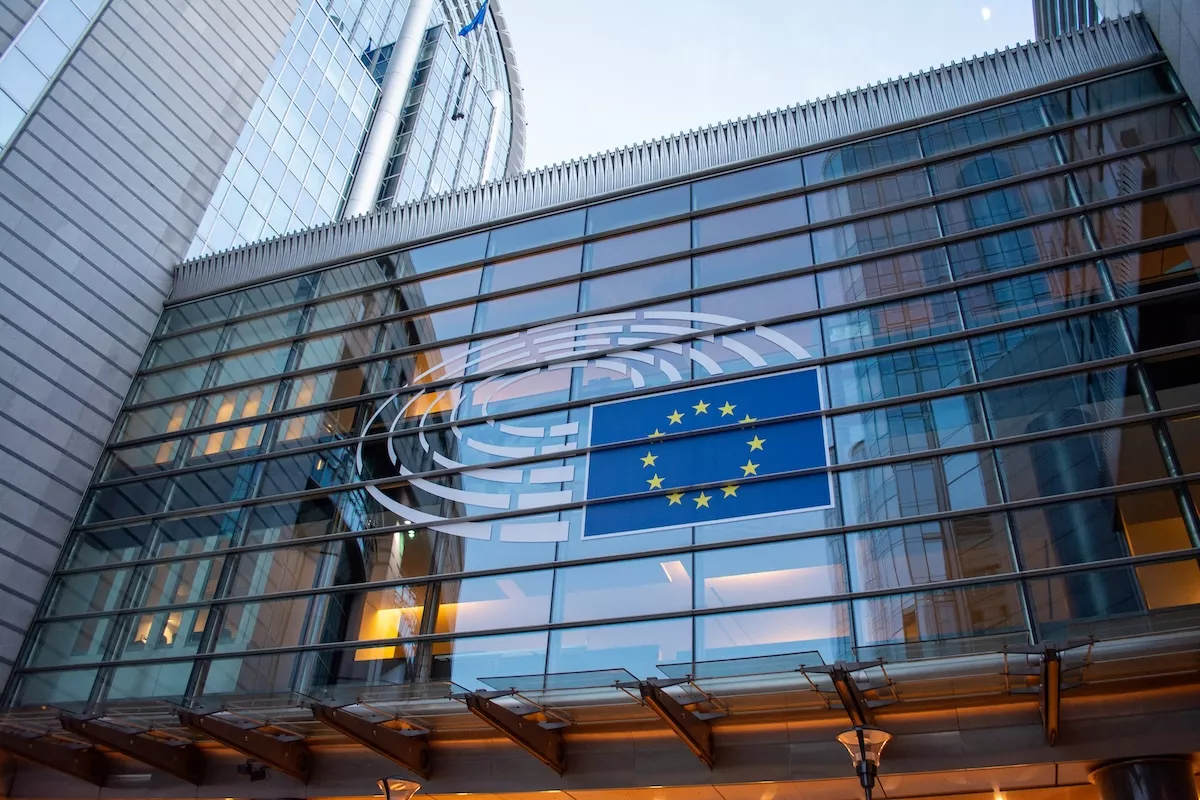
Monaco’s removal from the Financial Action Task Force (FATF) grey list has been hailed as a major breakthrough for the Principality. But nearly two weeks after the decision, one important question remains unanswered: when will the European Union follow suit?

In a statement published on 5th November, Monaco’s Direction des Services Judiciaires confirmed that the FATF’s decision does not automatically remove the Principality from the EU’s separate list of high-risk third countries for money laundering and terrorist financing.

So while Monaco has satisfied the international watchdog that its reforms warrant an end to enhanced monitoring, its EU designation carries separate regulatory consequences for financial relationships with European institutions.

Two lists, two separate decisions

The FATF formally removed Monaco from its grey list on 30th October, recognising improvements in financial crime investigations, international cooperation, sanctions and the seizure of criminal assets.

However, the European Union operates its own system for identifying countries considered to have strategic deficiencies in their anti-money laundering frameworks.

Monaco was added to that list in 2025 through a European Commission regulation. Although the EU takes FATF assessments into account, changes to its list require a separate European regulatory process.

This means the FATF’s decision does not, by itself, change Monaco’s legal classification under EU rules.

The Monegasque Justice Department acknowledged the distinction in its latest statement, while stressing that the Principality must continue consolidating the reforms that secured its removal from FATF monitoring.

What does this mean for Monaco’s banks and businesses?

Under EU anti-money laundering rules, financial institutions and other regulated businesses must apply enhanced due diligence to certain business relationships and transactions involving countries on the EU’s high-risk list.

These requirements can involve additional scrutiny of customers, the origin of funds and the purpose of transactions.

For Monaco, whose economy relies heavily on international banking, wealth management and cross-border business, the EU designation therefore remains relevant even after the FATF decision.

It does not mean that transactions with Monaco are prohibited, or that every transfer will face the same checks. The practical consequences depend on the institution, the transaction and the applicable regulatory requirements.

Nevertheless, removal from the FATF grey list does not automatically eliminate the compliance obligations associated with Monaco’s continuing EU classification.

When could Brussels remove Monaco?

That is now the central question.

The European Commission has previously removed jurisdictions from its high-risk list following improvements recognised by the FATF, but the two decisions do not necessarily happen simultaneously.

Any change to Monaco’s EU designation would require action through the European Union’s own procedures.

As of 12th November, no timetable for Monaco’s removal from the EU list had been announced.

The distinction leaves Monaco in an unusual transitional position: recognised by the FATF for completing its action plan, but still subject to the separate consequences of its EU classification.

The next test for Monaco’s financial reputation

The Principality’s work on financial transparency is far from over. The FATF has called on Monaco to continue cooperating with Moneyval, the Council of Europe’s anti-money laundering monitoring body, to ensure that improvements are maintained.

For Monaco’s financial sector, the immediate question is whether the FATF decision will translate into easier international business relationships while the EU designation remains unchanged.

For the government, attention now turns to Brussels and the process through which the Principality’s progress could be reflected in European legislation.

Monaco Life is written by qualified journalists, writing original content. Sign up for our free newsletter, listen to our podcasts on Spotify, and follow us across Facebook, Instagram, LinkedIn, and Tik Tok.

Photo credit: Fabian Kleiser, Unsplash


Cinema stars debate AI as 23rd Monte-Carlo Comedy Festival opens

The 23rd Monte-Carlo Film Festival de la Comédie opened at the Grimaldi Forum on Wednesday 11th November with a world premiere about artificial intelligence, and its jury wasted little time turning the spotlight on what AI could mean for the people in front of the camera.

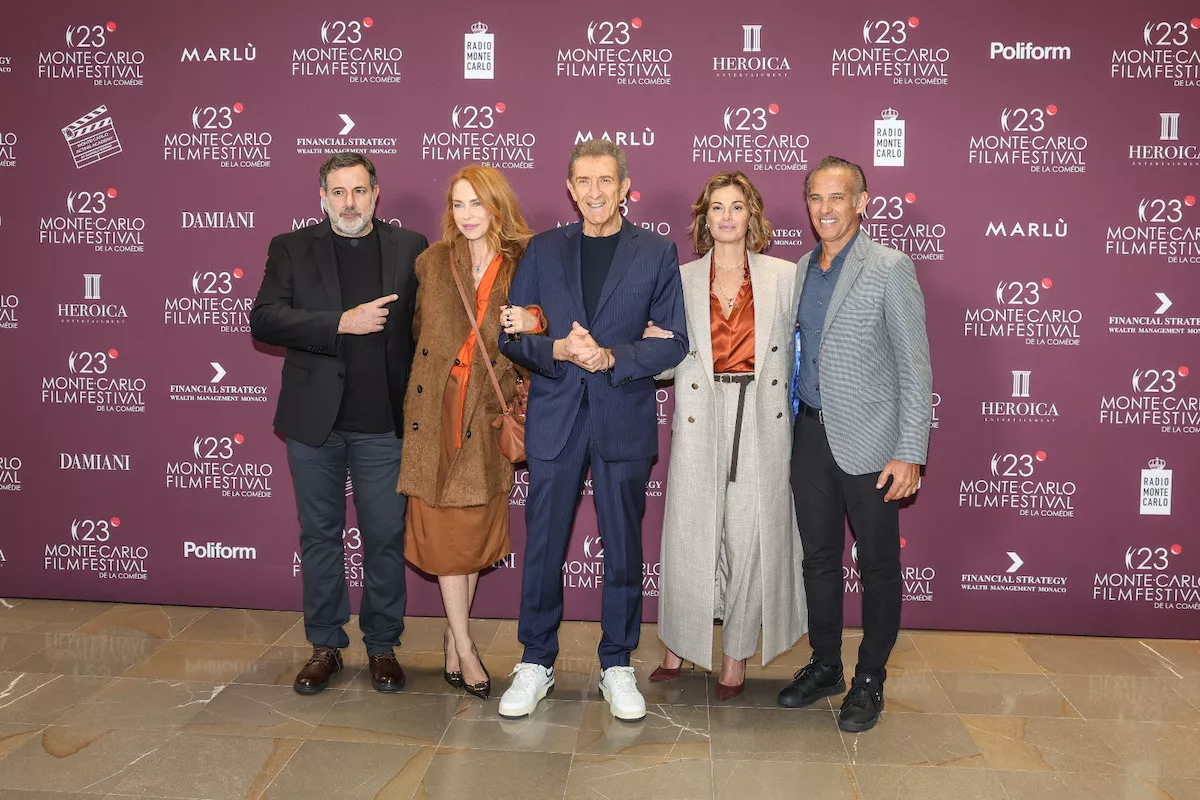
Leonardo Pieraccioni’s new film, Un weekend artificiale, was screened out of competition to a full house in the Salle Camille Blanc ahead of its release in Italian cinemas on 12th November. Festival creator and director Ezio Greggio then introduced this year’s jury to the press: jury president Fausto Brizzi, alongside Vanessa Incontrada, Yvonne Sciò and Paul Belmondo.

Jury voices concerns over artificial intelligence on screen

Brizzi said Italian and international cinema were both thriving this autumn, but the conversation quickly moved to AI, which he has used to shoot scenes in his own upcoming film.

“You can’t tell the real scenes apart from those made with AI. It’s both a marvel and a warning we must keep firmly in mind,” said Brizzi.

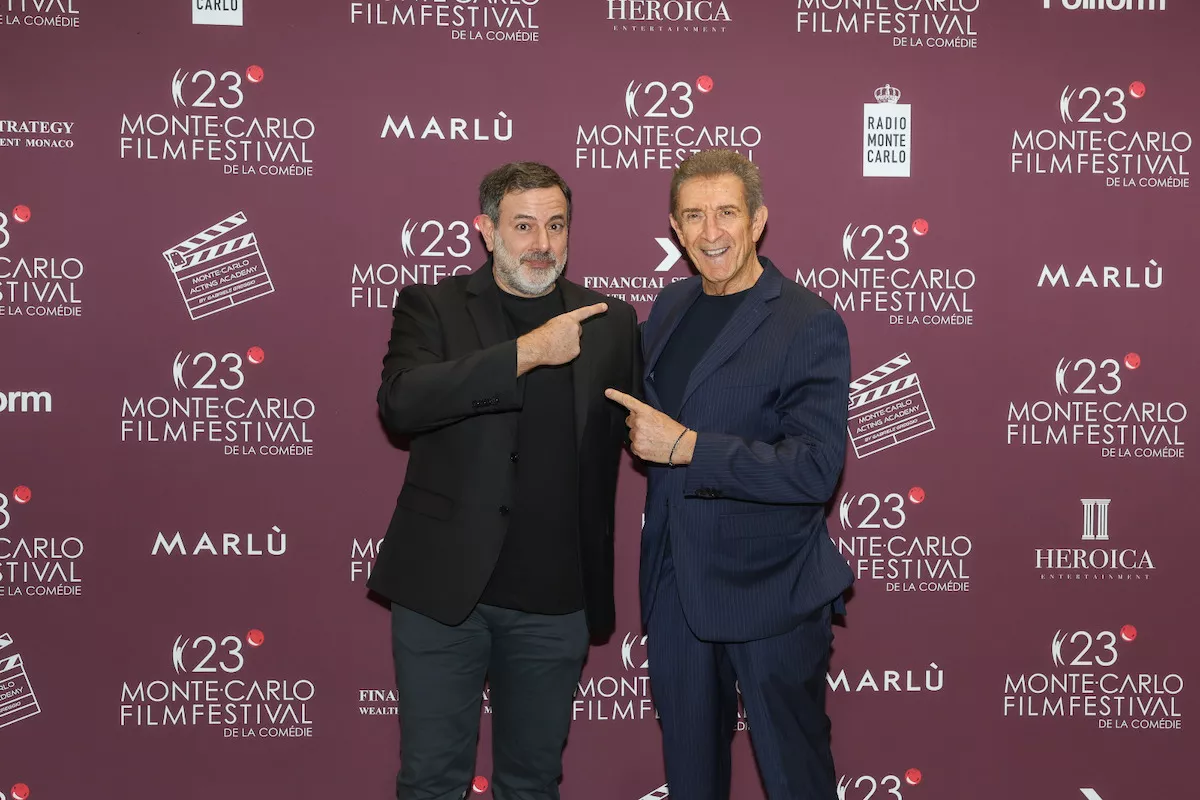
Fausto Brizzi and Ezio Greggio. Photo credit: Chiappalone – MCFF

Greggio warned that the boundary between real and synthetic performance is wearing thin, arguing that actors should keep performing as they always have and suggesting that theatre may now be the most authentic stage left to them.

The actors on the panel shared his caution. Incontrada insisted that acting must stay “very human” and said she would think carefully before taking on a film in which part of her role was generated by AI. Sciò described the technology as both fascinating and frightening. “It’s like a leap into the unknown,” she said.

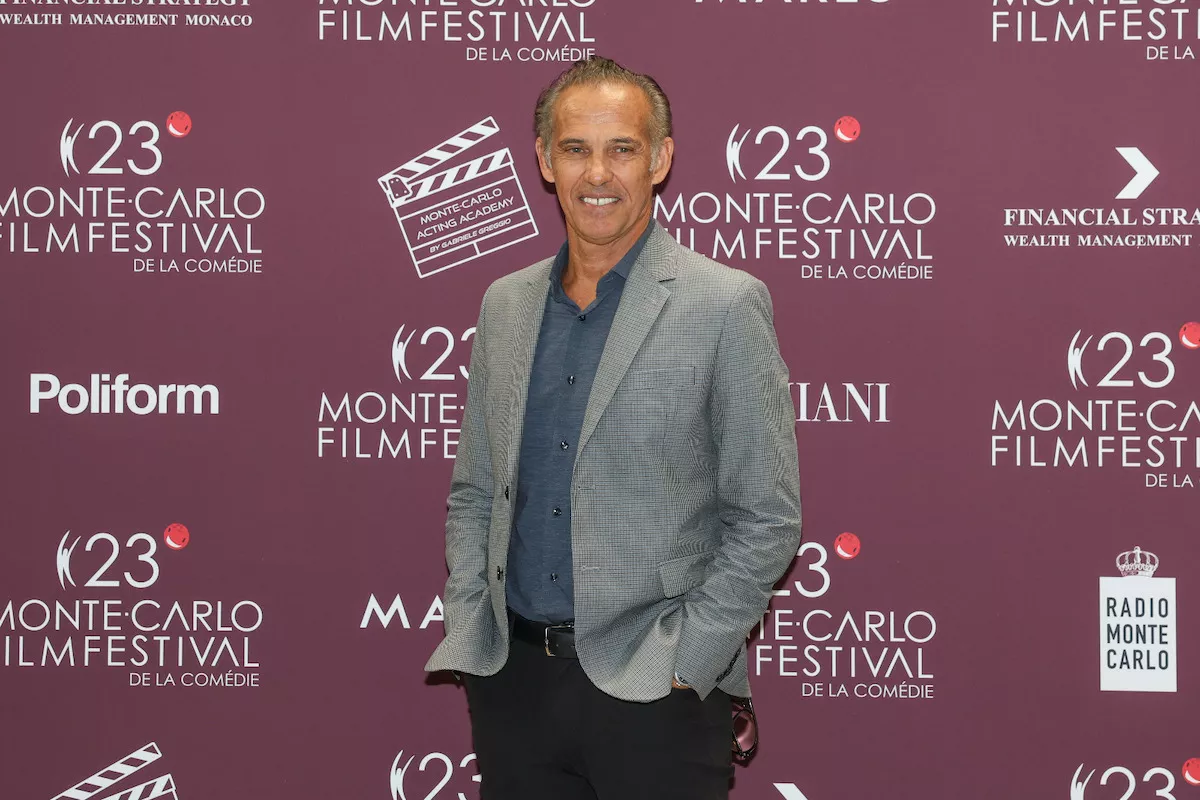
Paul Belmondo, jury member of the 23rd Monte-Carlo Comedy Festival. Photo Credit: Chiappalone – MCFF

Belmondo contrasted digital fabrication with the dangerous stunts performed by his father, Jean-Paul, observing that artificial filmmaking “takes away all the emotion of reality and the pleasure of making cinema”. He also urged filmmakers to verify every detail in their research so that errors do not slip through AI tools.

Luc Besson and Sergio Castellitto headline Saturday’s awards gala

The festival, held under the High Patronage of Prince Albert II and the Embassy of Italy, concludes on Saturday 14th November with the Grand Awards Gala at the Grimaldi Forum from 7pm. Tickets cost €50 and are available on the festival’s website.

French director Luc Besson will receive the Legend MCFF Award, while Italian actor and director Sergio Castellitto will be honoured for his career. Incontrada and Brizzi will also receive special awards for their work across film, television and comedy, and Greggio will be presented with a career prize by Gente editor-in-chief Umberto Brindani to mark four decades in entertainment, spanning Drive In, Striscia la notizia and The Silence of the Hams.

The ceremony will also spotlight social cinema, honouring producer Guglielmo Marchetti for Paola Randi’s Se domani non torno, a film inspired by the femicide of Giulia Cecchettin, alongside a new prize for best short film and a live performance by Italian singer-songwriter Yuman.

Stay updated with Monaco Life: sign up for our free newsletter, listen to our podcasts on Spotify, and follow us across Facebook,  Instagram, LinkedIn, and Tik Tok. 

From left to right: Fausto Brizzi, Yvonne Sciò, Ezio Greggio, Vanessa Incontrada and Paul Belmondo. Main photo Credit: Chiappalone – MCFF