British Airways adds direct Nice–Glasgow flights for summer 2027

Travellers between the French Riviera and Scotland will have another direct flight option next summer, with British Airways subsidiary BA Cityflyer launching a weekly service between Nice and Glasgow.

The seasonal connection will operate from mid-May to early October 2027, offering passengers a direct alternative to an itinerary involving a change of aircraft. The route forms part of British Airways’ wider expansion of its European summer programme.

Different departure days in each direction

The airline’s published timetable lists flights from Nice to Glasgow on Saturdays, beginning on 15th May and continuing until 2nd October, leaving Nice at 1pm and arrive in Glasgow at 2.45pm.

Services in the opposite direction will operate on Sundays from 16th May to 3rd October, departing Glasgow at 7.15am and reaching Nice at 10.55am.

Glasgow Airport says the Nice route will join BA Cityflyer’s returning seasonal services to Palma and San Sebastián in summer 2027.

Stay updated with Monaco Life: sign up for our free newsletter, listen to our podcasts on Spotify, and follow us across Facebook,  Instagram, LinkedIn, and Tik Tok. 

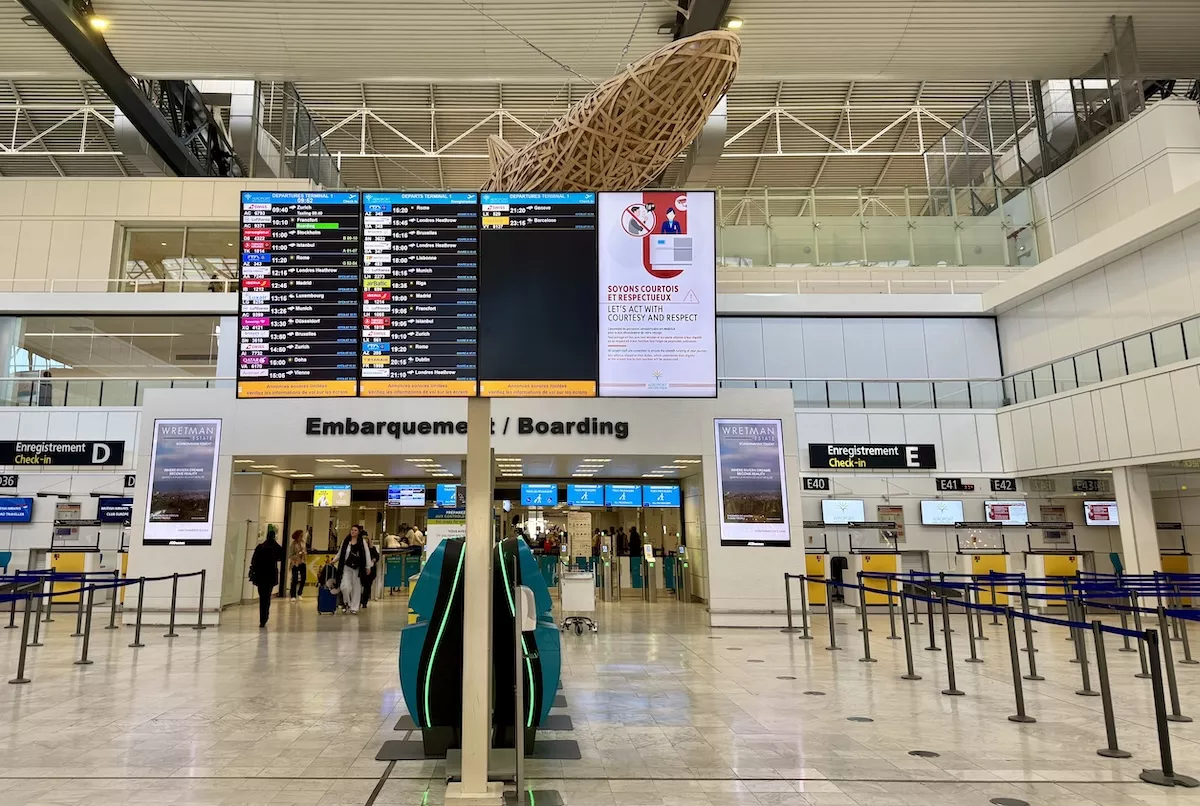
Photo of Nice Airport, credit: Cassandra Tanti, Monaco Life

France tightens overdraft checks as new banking rules take effect

Banks in France must now check customers’ ability to repay before granting even small or short-term overdrafts, under rules taking effect on Friday 20th November. Existing overdraft authorisations are unaffected.

The change brings borrowing of less than €200, or repayable within a month, within the consumer-credit framework. It extends affordability checks to facilities previously excluded from those requirements, as France implements a European directive intended to strengthen borrower protection and reduce over-indebtedness.

The practical difference arises when applying for a new overdraft. The bank must assess whether the customer can repay it, even where the amount is modest or intended to cover only a brief gap between payments.

Overdrafts remain available

The reform has prompted the Economy Ministry to reject claims that overdrafts are being abolished.

Banks remain free to approve or refuse applications. The new obligation requires an assessment of the borrower’s financial position, proportionate to the amount, duration and risks of the proposed borrowing. It does not require banks to stop offering the facilities.

Information considered may include income, other financial resources, assets, debts and regular expenses. Banks must also provide clear information about borrowing costs. For smaller and shorter overdrafts, consultation of France’s national register of personal credit repayment incidents is optional, according to Service Public.

No fresh application for every use

Customers do not have to seek permission each time they use an overdraft already agreed within their account terms. That principle continues under the new rules, and authorisations established before 20th November are not affected by the new provisions.

An authorised overdraft can still carry interest and charges, while exceeding the agreed limit may generate additional fees. The reform changes the checks required before granting borrowing; it does not make an overdraft free or create an automatic entitlement to one.

Stay updated with Monaco Life: sign up for our free newsletter, listen to our podcasts on Spotify, and follow us across Facebook,  Instagram, LinkedIn, and Tik Tok. 

Image is AI generated by Monaco Life

France caps doctors’ cosmetic work on Monaco’s doorstep

Patients booking injections or laser treatments just across the border in Beausoleil or Cap-d’Ail must now wait at least five days after receiving a quote, under a French decree that also limits how much of a doctor’s working time can be spent on cosmetic procedures.

The decree, published in France’s Journal officiel on Saturday 14th November and in force since the following day, sets out for the first time who may carry out non-surgical cosmetic procedures such as injections and medical lasers, and under what conditions. It covers procedures performed purely to change a person’s appearance, with no therapeutic, functional, reconstructive or diagnostic purpose. Cosmetic surgery is not affected.

A 30 per cent cap on cosmetic work

Aesthetic medicine is not a recognised speciality in France, and the decree treats it as a sideline: cosmetic procedures may only be carried out alongside a doctor’s main speciality and cannot exceed 30 per cent of their working time.

Doctors must declare their cosmetic activity to both their departmental Medical Council and the Regional Health Agency (ARS), and send them evidence of its share of their workload every year. The Medical Council will keep an up-to-date list of doctors practising aesthetic medicine, to be made public, showing which of five areas each doctor is trained in: preventive and anti-ageing treatments, hair removal and hair treatments, the eye area, genital aesthetics and body contouring.

Who can perform treatments

The procedures are now reserved for qualified plastic, reconstructive and aesthetic surgeons, for doctors granted a complementary right of practice, known in France as a DEC, and for doctors with at least five years in their own speciality who have completed approved theoretical and practical training. The content of that training, and any exemptions from it, will be set by ministerial order.

A five-day cooling-off period

Waiting rooms must display the doctor’s diploma or DEC alongside a notice stating that cosmetic treatments are non-therapeutic and rest on the patient’s free and informed choice.

Before any procedure, patients, or parents in the case of minors, must receive an information sheet setting out the skills the treatment requires and its risks, complications and side effects, with a signed copy kept in the medical file. Doctors must also provide a detailed, dated and signed quote explaining how to report serious adverse effects, after which patients must wait at least five days before treatment. The waiting period can be waived for a series of identical treatments the patient has already agreed to with the same doctor.

Consent must be recorded in the patient’s medical file, and doctors must hand over written aftercare instructions. Breaches can lead to suspension and fines.

Phased rollout through 2031

Doctors already practising who meet the conditions for a DEC have until 1st July 2027 to apply for one, and may keep working until the Medical Council rules on their application.

Doctors who have practised aesthetic medicine exclusively for five years or more must show by 31st December 2028 that it accounts for no more than 50 per cent of their working time, and have until 31st December 2031 to reach the 30 per cent limit. Those who have practised it for less than five years must meet the 30 per cent cap by 31st December 2028.

Stay updated with Monaco Life: sign up for our free newsletter, listen to our podcasts on Spotify, and follow us across Facebook,  Instagram, LinkedIn, and Tik Tok. 

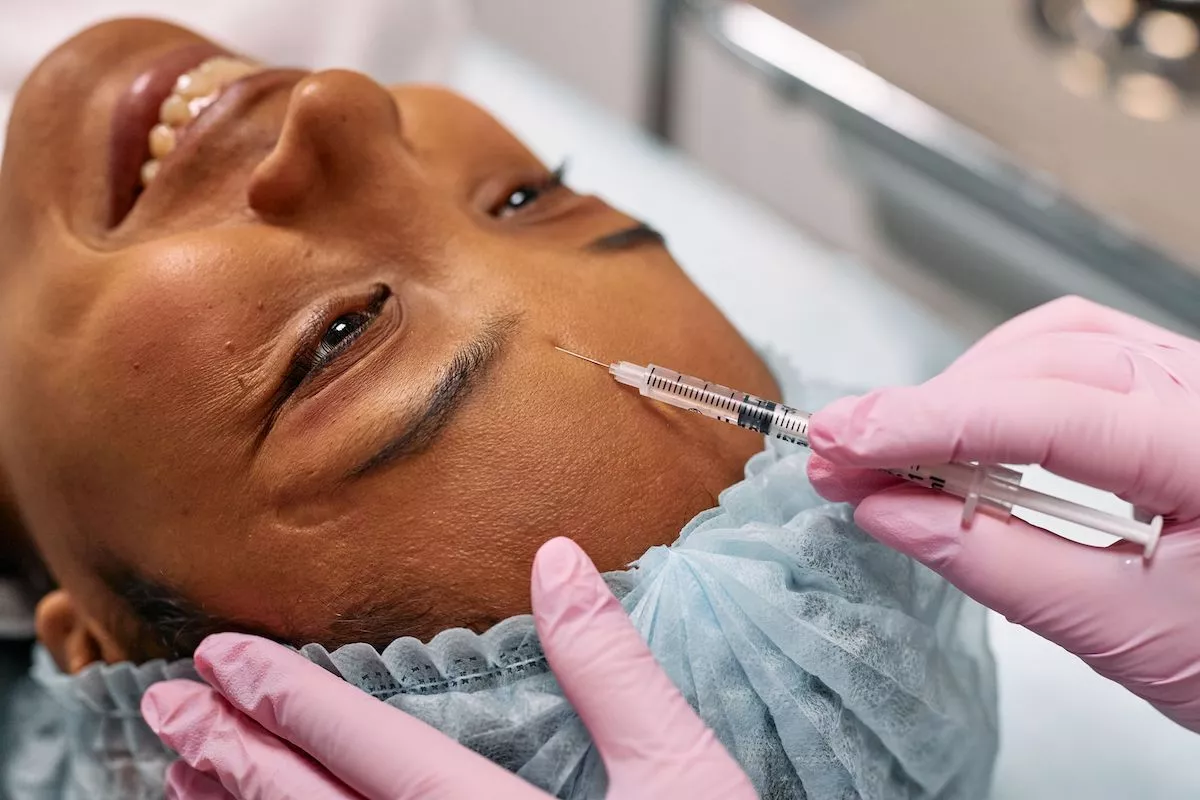
Photo credit: Pexels – Cottonbro Studio

Monaco’s native language goes online in free digital dictionary

More than 43,000 Monégasque words, drawn from two dictionaries compiled decades ago, can now be searched for free online after the Principality launched Diçiunari, a digital French-Monégasque dictionary designed to keep the national language in everyday use.

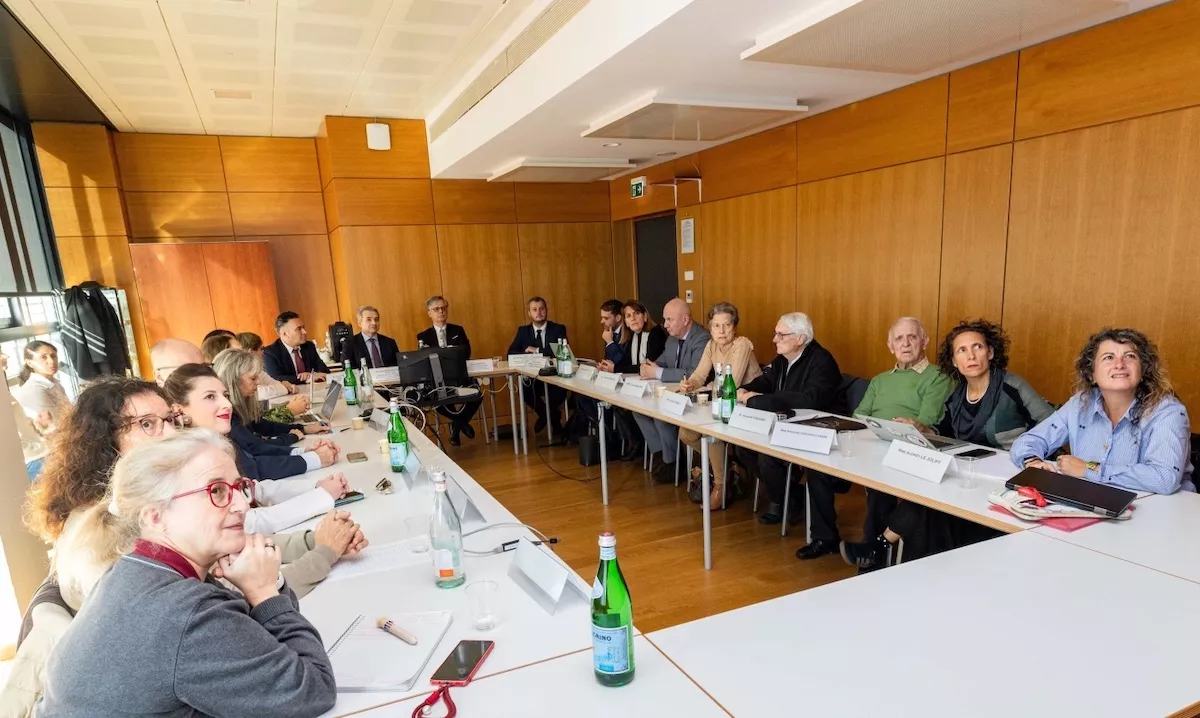
Available at diciunari.gouv.mc, the platform brings together 43,429 words, 1,438 expressions and nearly 28,900 translation pairs. Developed by the Digital Services Development Department (DDSN) with the Department of Education, Youth and Sport (DENJS), it was unveiled on Friday 13th November during an extraordinary session of the Commission for the Monégasque Language at the Lycée Rainier III, attended by Minister of the Interior Lionel Beffre and Director of Education Jean-Philippe Vinci.

How the platform works

Aimed at students, residents and researchers, the site allows two-way searches between French and Monégasque, alphabetical browsing, and filtering by grammatical category or source text. Users can also submit new words or translations, which are checked before being added to the database.

Digitising two historic dictionaries

Rather than building a lexicon from scratch, the database draws directly on two reference volumes held at the Monaco Media Library: Father Louis Frolla’s 1963 Monégasque-French dictionary and Louis Barral’s 1983 French-Monégasque dictionary, compiled with Suzanne Simone.

AI extraction backed by human review

Creating the archive involved scanning the original pages, extracting the text using artificial intelligence and building a dedicated web interface. To catch errors, nearly 3,000 lines were corrected by hand against the printed books in partnership with Avencod, a Nice-based organisation employing neurodivergent professionals, who checked accents and linguistic details.

What comes next

Presented at the launch by Georges Gambarini Grinda, Director of the DDSN, and Yannick Leo, the department’s head of data, the platform is set to expand over time. Audio pronunciations are already available for selected entries and will gradually be extended across the dictionary, with future updates expected to add modern vocabulary, grammar and conjugation guides, and audio playback of full sentences.

Stay updated with Monaco Life: sign up for our free newsletter, listen to our podcasts on Spotify, and follow us across Facebook, Instagram, LinkedIn, and Tik Tok.

Main photo credit: Manuel Vitali

Inside Monaco’s National Day: Prince Albert, Princess Charlene and children draw crowds to palace square

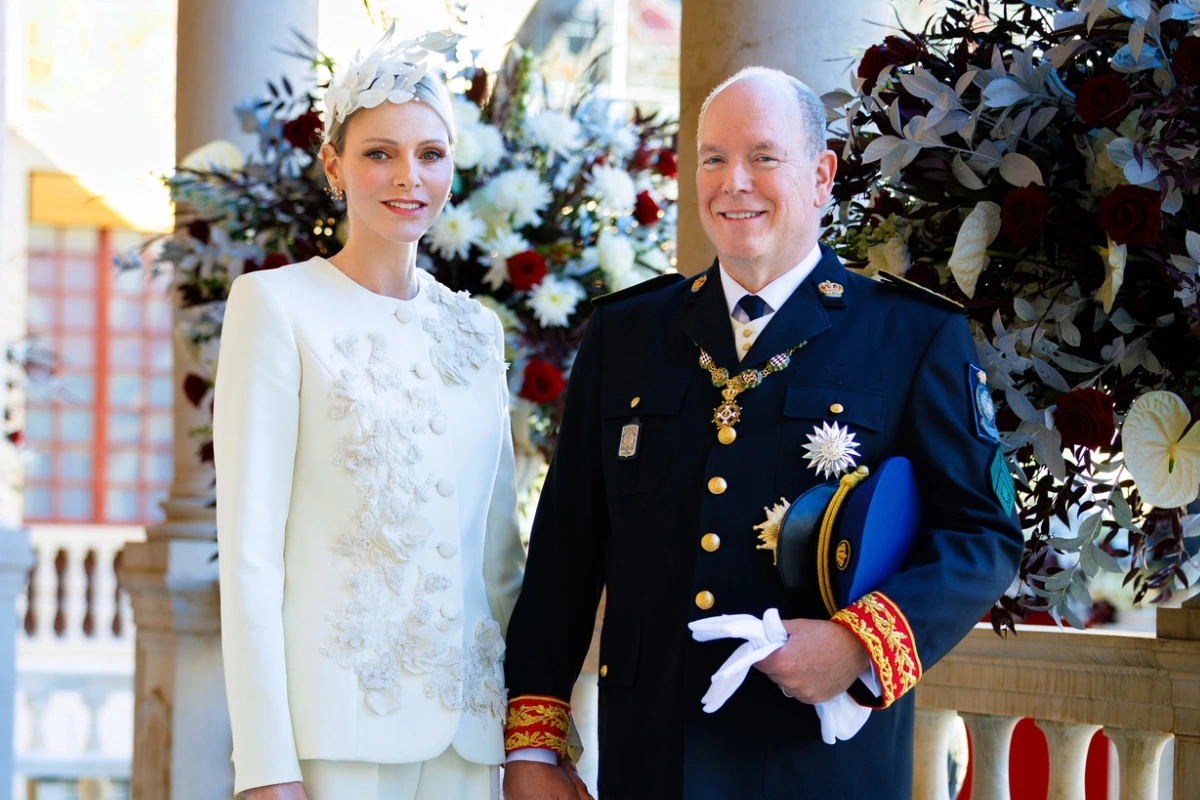
“Prince Albert, hourra!” “Princess Charlene, hourra!” The calls rang out across Place du Palais on Thursday 19th November as the Princely Family returned to the Palace windows. Spectators celebrating National Day hurried forward as soon as they were allowed, waving flags as they waited. When Prince Albert II, Princess Charlene, Hereditary Prince Jacques, and Princess Gabriella appeared, the crowd was gathered directly below them.

Many spectators had dressed formally for Monaco’s National Day as they attentively watched the presentation of military honours and the parade. Now, those same people were calling up to the Palace by name as the family waved back.

THANKSGIVING MASS AT MONACO CATHEDRAL

The official ceremonies began at 9.30am with a Thanksgiving Mass and Te Deum at Monaco Cathedral. Hereditary Prince Jacques and Princess Gabriella joined their parents for the service for the first time. Princess Charlene and Princess Gabriella wore matching beige outfits with floral embroidery, while Hereditary Prince Jacques wore the uniform of the Prince’s Carabiniers, echoing his father’s military dress.

For the short journey between the Palace and the Cathedral, the family travelled in a 1952 Austin FX3. Princess Grace brought the post-war London taxi to Monaco to take her children to and from school. It is now a part of the Prince’s car collection and is normally on display to visitors.

Archbishop Dominique-Marie David led the service, with music from the Cathedral choir, Les Petits Chanteurs de Monaco, and the Monte-Carlo Philharmonic Orchestra. Princess Caroline and Princess Stéphanie sat behind Prince Albert II and his family. Andrea Casiraghi and Tatiana Santo Domingo, Charlotte Casiraghi, Pierre Casiraghi and Beatrice Borromeo, Louis and Marie Ducruet, and Camille Gottlieb also attended.

MILITARY HONOURS IN THE COUR D’HONNEUR

Following the Mass, the Princely Family returned to the Palace for the 11am ceremony in the Cour d’Honneur. Princess Charlene, Hereditary Prince Jacques, and Princess Gabriella watched alongside Princess Caroline and Princess Stéphanie as Prince Albert II reviewed the troops and presented rank insignia to 41 military personnel promoted during the year.

A carabinier and a firefighter received the insignia of Knight of the Order of Saint Charles, and six members of the Palace staff received medals. The troops then marched out through the Palace’s main gate towards Place du Palais, where the Minister of State presented nine medals of honour to military personnel and police officers.

SIXTY YEARS OF THE PRINCE’S CARABINIERS ORCHESTRA

The Orchestra of the Prince’s Carabiniers played throughout the military ceremonies and marked its 60th anniversary with a performance tracing its beginnings under Prince Rainier III. It started with a timpani solo, recalling the ensemble’s early years. A lone bagpiper began ‘Amazing Grace’ before the orchestra joined in, and dancers from La Palladienne de Monaco performed to a medley of traditional Monegasque songs.

Prince Albert II, Princess Charlene, Hereditary Prince Jacques, and Princess Gabriella watched from the central balcony, with other members of the Princely Family on either side. As troops paraded through the square on foot and in vehicles, the orchestra played the ‘Marche du Prince Jacques’, composed for Hereditary Prince Jacques’s first appearance in Carabinier uniform in 2019. Before the final honours, the musicians and a detachment of Carabiniers formed the number 60 in the square to honour the occasion.

Stay updated with Monaco Life: sign up for our free newsletter, listen to our podcasts on Spotify, and follow us across Facebook,  Instagram, LinkedIn, and Tik Tok. 

Photo credit: Michaël Alesi / Palais princier

Behind the blooms: the volunteers who dress Monaco Cathedral for National Day

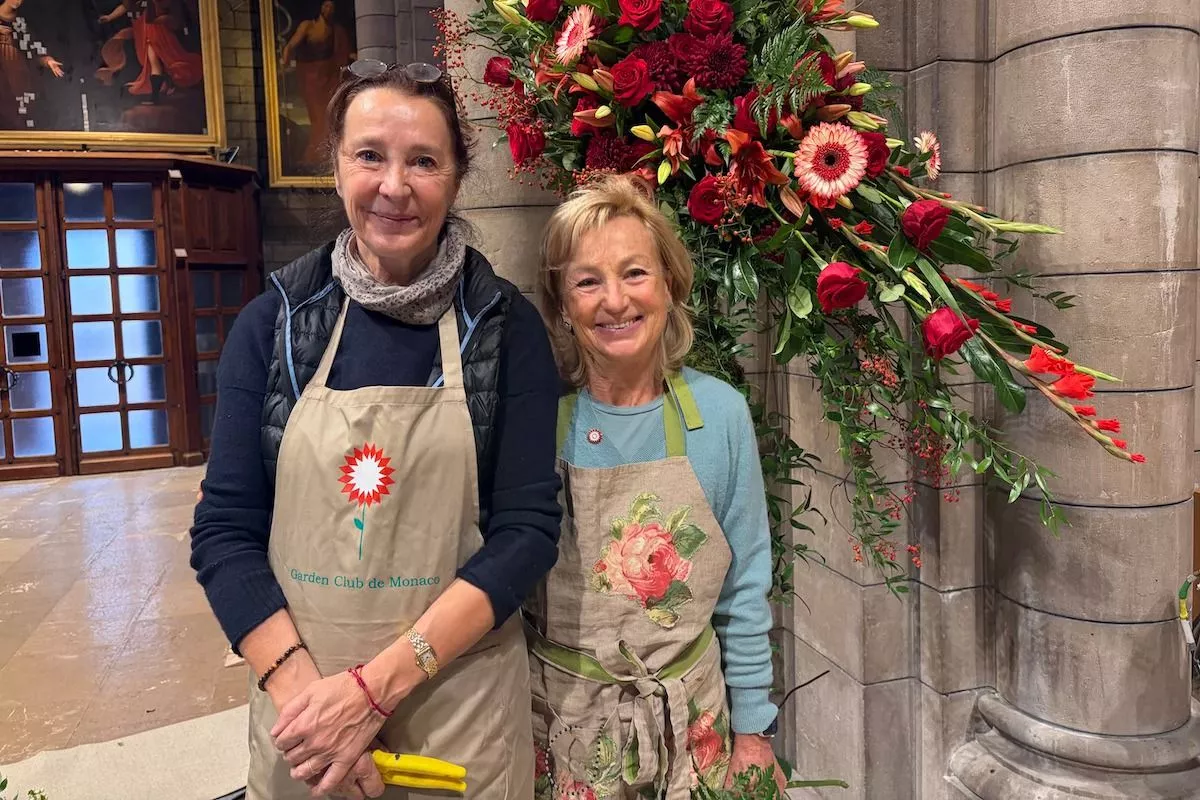
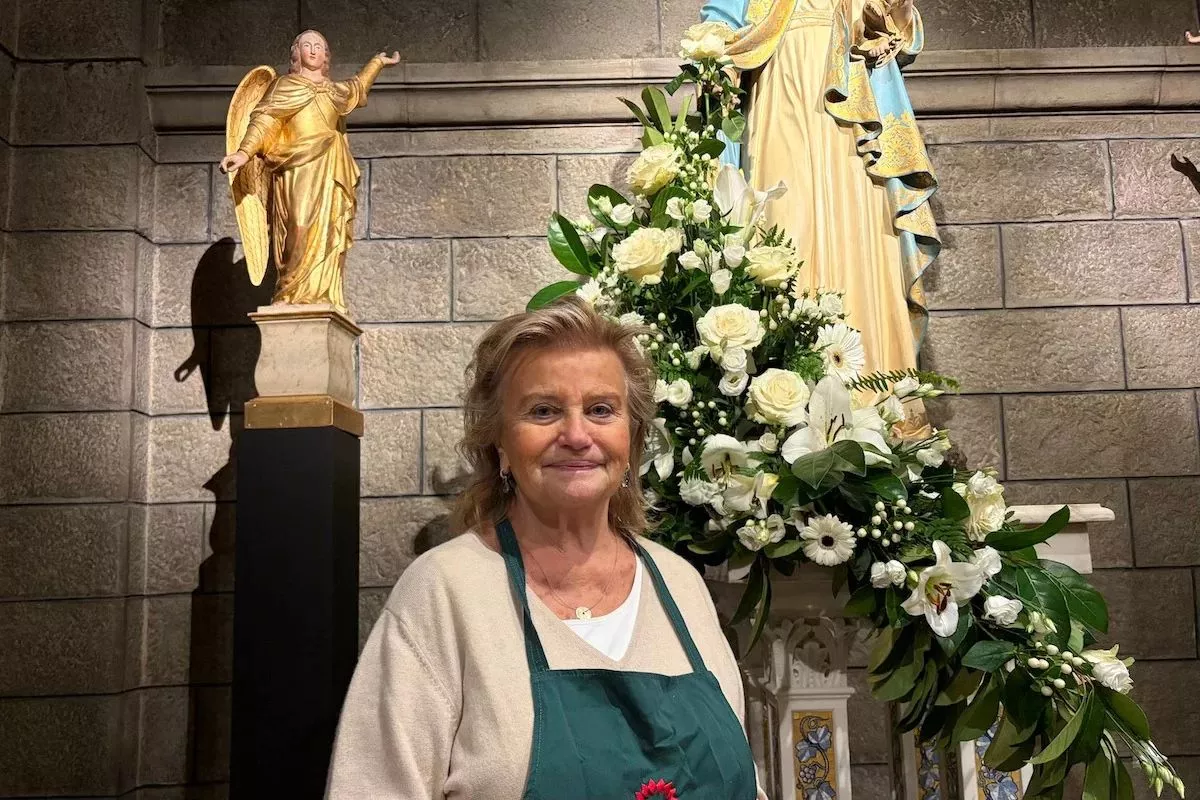
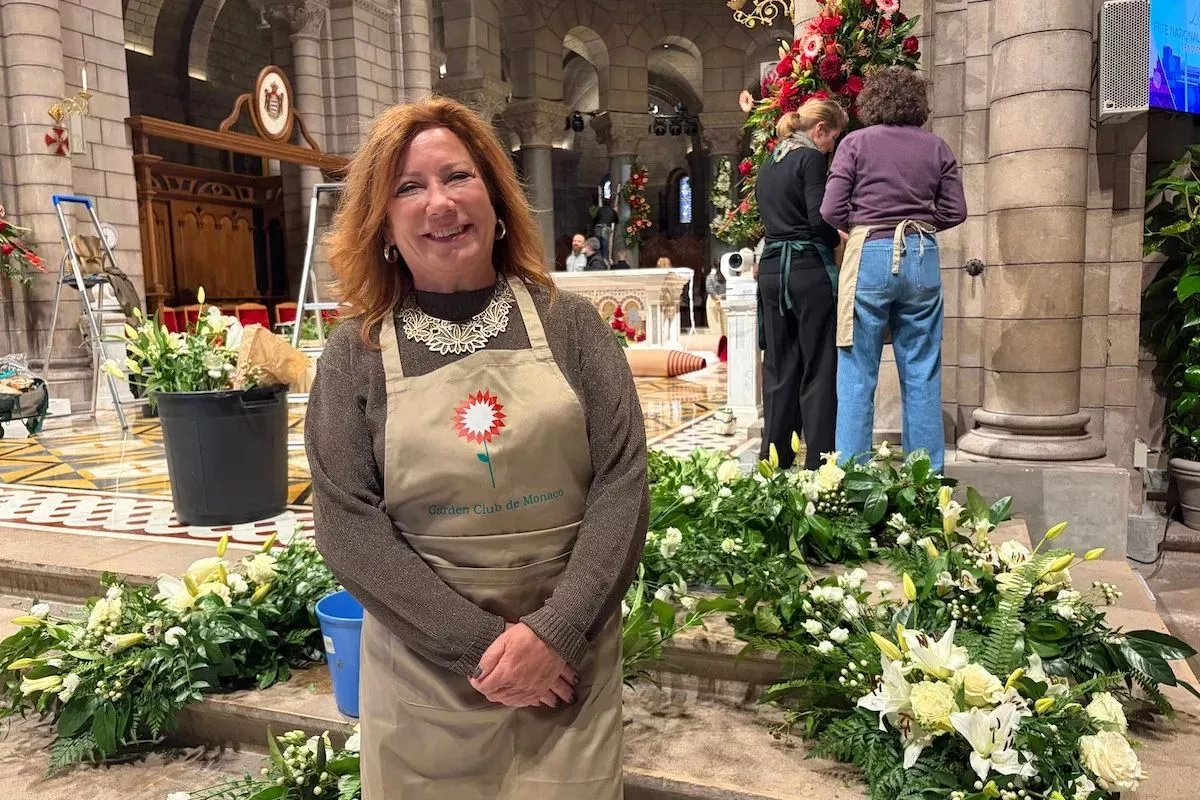
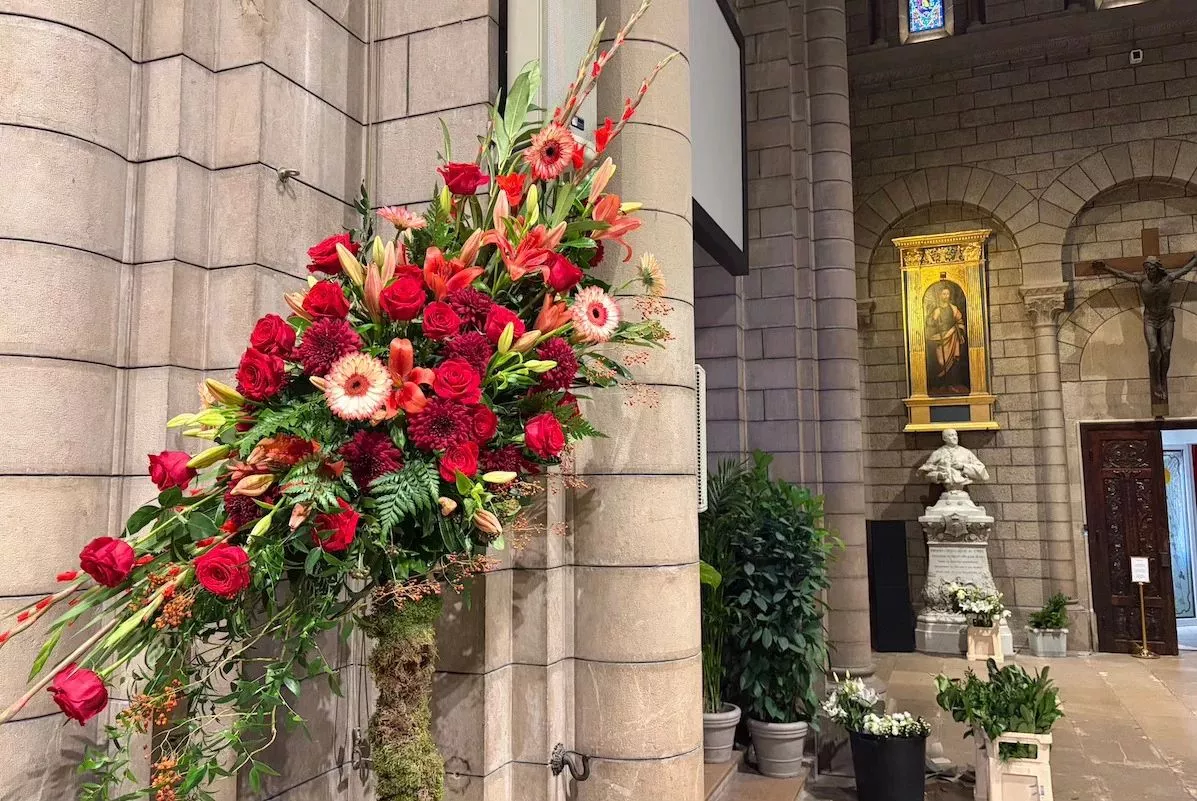
Some 35 Garden Club of Monaco volunteers have filled the Cathedral with around 2,800 red and white flowers and pieces of foliage for National Day, keeping alive a tradition Princess Grace began in the 1970s.

Members spend months sketching, sourcing and planning the display, which lines the chapels, columns, staircase and choir of the Cathedral of Our Lady Immaculate for the National Day Mass and Te Deum on 19th November.

While choirs, dignitaries and state protocol draw the cameras during the service, the floral designs are put together by volunteers working under the Garden Club, which is chaired by Princess Caroline of Hanover with Cecilia Casiraghi as vice-president. This year’s display follows the theme ‘Comme un jardin’ (Like a garden), with a natural look, and is led by club members Frédérique de Chambure and Rosella Zenere.

Honouring Princess Grace’s legacy

The practice began around the 1970s, when Princess Grace, who founded the club best known for its annual International Bouquet Competition, started spending two or three days before National Day decorating the cathedral. Planning now starts in May and June with general and board meetings, where designs are shared with the Princess of Hanover and teams are mapped out.

Garden Club of Monaco vice-president Cecilia Casiraghi
Garden Club vice-president Cecilia Casiraghi. Photo credit: Virginia D’Umas

Cecilia Casiraghi described the cathedral project as the club’s biggest event of the year. “It’s a huge deal for Monaco,” she told Monaco Life. “We always have to include the two colours, red and white, which are in the Principality’s colours. It’s not always easy, because you have to repeat it annually. You have to find new solutions. But this year, I think it’s one of the best.”

Garden Club of Monaco secretary Karine Kallay
Garden Club secretary Karine Kallay. Photo credit: Virginia D’Umas

Precision and a touch of gentleness

The stems, often including red roses, are supplied by the Italian cooperative Florcoop, which delivers directly to the cathedral. “You have to organise the chapels and columns well and distribute the flowers properly, otherwise there aren’t enough,” Garden Club secretary Karine Kallay told Monaco Life. Leftover stems are rarely wasted, as members can take them home.

Floral display inside Monaco Cathedral for National Day
This year’s floral display follows the natural theme ‘Comme un jardin’ inside Monaco Cathedral. Photo credit: Virginia D’Umas

For Frédérique de Chambure, who co-leads the team of 35 alongside Rosella Zenere, the theme was shaped by what is happening outside the cathedral walls. “We find that the mood of the times is very hard, very anxiety-inducing, very difficult, and we try to bring a little bit of gentleness into this National Day moment, which is also the feast day of our Prince,” she said. “We think he’s had responsibilities, there have been tragic events, there have been very complicated moments in Monaco, and we, the Garden Club, need to bring a bit of gentleness and a bit of peace and happiness to this special occasion.”

Stay updated with Monaco Life: sign up for our free newsletter, listen to our podcasts on Spotify, and follow us across Facebook, Instagram, LinkedIn, and Tik Tok.

From left to right: Frédérique de Chambure and Rosella Zenere, Garden Club’s project coordinators. Main photo credit: Virginia D’Umas