The Tchouaméni rumour mill keeps on turning

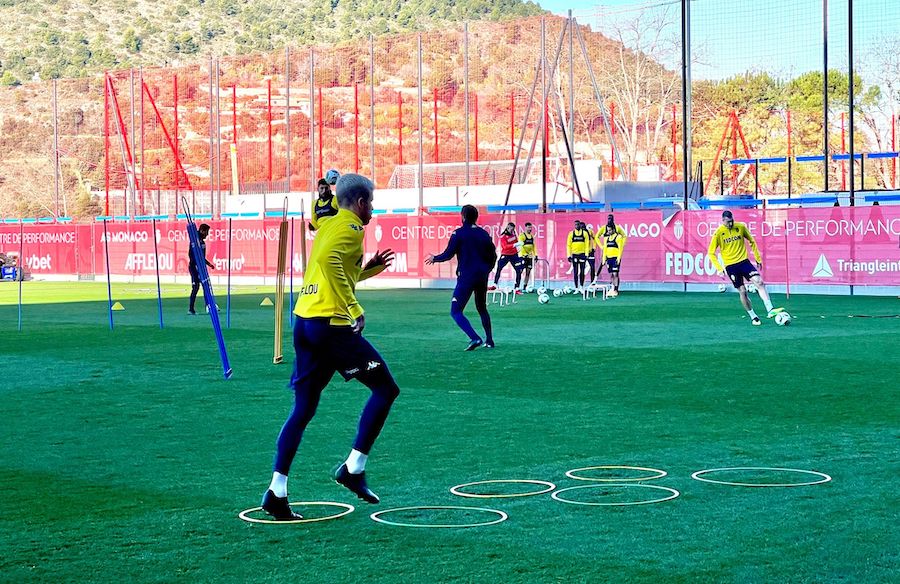
The January transfer window is fast-approaching and one player who has long been rumoured to be heading for the exit door is Aurélien Tchouaméni, with European giants keen to prise the French international away from Monaco.
The Girondins de Bordeaux academy graduate was already much coveted in the summer window. It was widely rumoured that Champions League winners Chelsea had registered an interest and were prepared to pay up to €50 million to secure his services.
His dogged work in winning the ball back, and his ability to instigate attacks with incisive progressive passes, have only enhanced his reputation and have earned him a regular spot in Didier Deschamps’ France side.
He now looks set to be the latest export from a Monaco side that has a global reputation for developing, and exporting, world class talent. Real Madrid, Juventus and Manchester United have all been touted as potential destinations by a wide range of media outlets, but Chelsea have recently emerged as the frontrunner for his signature.
The London side are keen to bolster their midfield options and are not lacking the resources to do so. Tchouaméni is seen as a potential long-term successor to N’golo Kante, and a recent injury to the Chelsea midfielder could accelerate plans to wrap up the transfer.
It still remains to be seen whether Monaco’s sporting director Paul Mitchell would sanction the French midfielder’s departure next month, but one thing is for sure – he won’t be sold on the cheap. The Englishman told Tuttosport, “Everything is expensive in Monte Carlo, let’s say that Tchouaméni is as expensive as the grand Casino.”
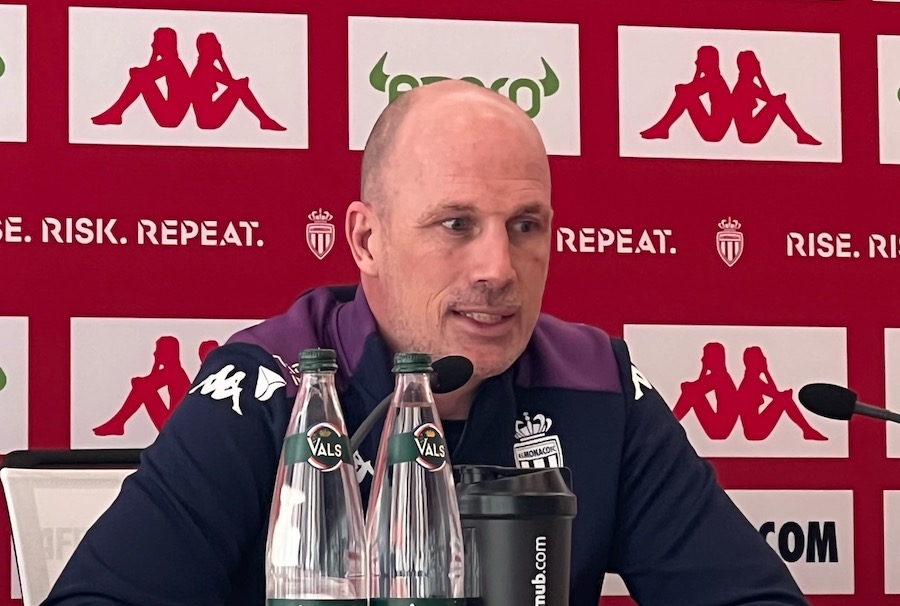
Despite Mitchell’s defiance, the fact remains that the French midfielder’s departure is a matter of when, not if. Asked by Monaco Life about the chances of keeping Tchouaméni in the long-term, Monaco manager NIco Kovac said, “He will have a good career. I think, in the end, we must be honest. We will try everything to keep him here, but I also know that one day he will leave the club.”
However, Kovac isn’t willing to let go of his star midfielder just yet. “I don’t know when (he will leave). I would like to have him here as long as possible, but he deserves it, and he has the qualities and the possibilities to play in the big leagues around Europe.”
It is yet to be seen whether Chelsea, or another European giant, will challenge Monaco’s resolve in January, but the Principality side will ultimately have to plan for a future without Tchouaméni.
 
 
Photo source: AS Monaco


CSM to analyse for Covid variants

The Scientific Centre of Monaco will soon be equipped with the technology to detect new Covid variants, including the fast-spreading Omicron variant, allowing the Principality to better understand the local health situation and contribute to international research. 
The Centre Scientifique de Monaco (CSM) has been screening nose and blood samples for Covid-19 since May 2020, and on 16th December passed the symbolic milestone of analysing 100,000 PCR tests. It is responsible for determining the outcome of around 500 Covid tests each day, as well as over a hundred blood samples to detect the presence of antibodies.
Now, the CSM is set to equip itself with new sequencing apparatus that will allow for the genetic analysis of virus samples, something that is only currently possible in Marseille.
“This tool will give us independence and therefore allow us to respond quickly to the exact identification of new variants,” says Dr. Christian Lavagna, in charge of screening at the CSM. “We will also be able to follow the mutations of the different strains and contribute to the international monitoring set up since the start of the pandemic.
“Systematic verification of the genome also makes it possible to decode the resistance profile of the virus, an essential means for the development of effective vaccines. In these circumstances, it will no longer benecessary to acquire screening kits, such as those we are currently using, which only detect the presence of known variants.”
Like last year, the CSM has increased its screening activity during the holiday period to cope with the “fifth wave” and the high number of PCR and antibody tests being conducted throughout the Principality.
“This year, determining the level of protection by the analysis of neutralising antibodies has been added to the nasopharyngeal examination and the large number of positive samples, linked to the strong contagiousness of the Omicron variant, have led us to set up an activity seven days a week to offer even more flexibility and support for the Monegasque population,” says Dr. Lavagna.
 
 
Photo source: CSM


What are Monaco’s Christmas traditions?

For more than seven centuries, the people of Monaco have created holiday traditions around Christmas. Mostly stemming from religion, they are still in existence today, though many are now celebrated with a decidedly modern twist.

No Mediterranean Christmas would be replete without seasonal delicacies as part of the fun. In Monaco, one of the oldest is the Pan de Natale, a bread specially consecrated during the midnight Christmas Mass by the head of each family. It is a sweet, round loaf with four to seven hazelnuts and an olive branch stacked in the shape of a cross. The blessed bread is taken home to be eaten either after church or during the holiday meal on Christmas Day.

The practice is not as commonly followed today as in other eras, but the Monaco Committee on Traditions is making a push to revive it. Some local bakeries are again offering the special bread in the Christmas Day run up.

Pan de Natale

Another festive foodie tradition is that of 13 Desserts. Originally, it stemmed from the idea of honouring Jesus and his 12 apostles. Four of them are the “four beggars”, which represent different poverty-bound Catholic orders and are made up of hazelnuts and walnuts for the Augustinians, dried figs for the Franciscans, almonds for the Carmelites and raisins for the Dominicans.

Other sweets come into play and are generally dictated by family tradition, but include things such as figs, tangerines, grapes, oranges, pain d’epices, fruit tarts, quince, cheese, nougat and yule logs.

The main dessert, however, is called La Pompe, a sweet bread made with flour, olive oil, sugar, and orange flower essence. Traditionally, it is broken by hand, just as Christ broke his bread. If sliced, it is said that financial ruin is to be expected in the coming year.

La Pompe

Monegasques usually have a large Christmas Eve meal that would sound familiar to most and is made up of roast goose or turkey, foie gras, oysters, wild game and cheeses. Champagne is the drink of choice on this special occasion.

The olive branch blessing is an ancient local ritual which involves the youngest or oldest guest dipping an olive branch into a glass of wine, approaching the fireplace and offering a prayer. The other guests then drink wine in tribute, and everyone sits down to a generous feast. After the meal, raffles and other games are played.

Photo: Eric Mathon – Frédéric Nebinger / Prince’s Palace

A charming tradition that was started in the 1950’s by Princess Grace involves local children who are invited to the Palace where they enjoy afternoon tea, a magic show and a visit from Father Christmas himself. His elves then hand out special gifts to each of the children on his “nice” list.

The Christmas Village has also become quite a tradition in the Principality. This year’s village has a Canada theme, but it changes each year. Games, fun fair rides and stalls selling food, drinks and gifts line the port offering a bit of something for everyone.

Monaco Christmas village, by Monaco Life

Finally, the one that makes most people shiver at simply the thought of it, is the annual Christmas Swim. Up to 100 souls brave the chilly temperatures for a dip in the Med on Christmas Eve. Many participants dress up as Santa, making it a sight to behold for those onshore. The Prince and Princess are usually present in the aftermath and a raffle is typically held.

These are a few of the rituals and traditions that make a Monaco Christmas special.

Top photo by Benedetta Pizzonia, Monaco Life

Princess shares illustrated Christmas portrait on social media

Princess Charlene has shared an illustrated Christmas family portrait on her Instagram page, showing a stylised illustration of the family next to a Christmas tree.

In the illustration, the Princess stands by Prince Albert’s side wearing a festive golden gown. Her hand is placed affectionately on his shoulder, whilst seven-year-old twins Prince Jacques and Princess Gabriella stand in front of them. Gabriella is holding onto her mother’s arm with one hand and has her other one draped across her brother’s shoulders – as she often does. She is also clutching a golden ornament, whilst Prince Jacques holds a silver bell.

Princess Charlene’s caption to the post reads, “Wishing everyone a beautiful and safe festive season, all my love.”

https://www.instagram.com/p/CXwL4FgsVSm/
 

The Princess is currently away from Monaco receiving treatment for physical and emotional exhaustion after a several month ordeal with an ear, nose and throat infection. She was grounded in South Africa for six months and returned to Europe in November.


Rosberg’s Extreme E team beats Hamilton’s to take champion title

Nico Rosberg’s e-rally team RXR became the inaugural Extreme E champions after securing fourth place in Sunday’s race on the Jurassic Coast in Dorset.
Lewis Hamilton’s X44 team took the victory on the British coast, leaving them level on points with RXR. But with more victories over the course of the season, Sunday’s fourth-place finish was enough to narrowly clinch victory.
RXR drivers Molly Taylor and Johan Kristoffersson qualified for Sunday’s final with ease, finishing first on a rain-drenched circuit.
The pair, however, couldn’t rival the pace shown by X44, with nine-time rally champion Sebastien Loeb and Critina Gutierrez powering the team to victory. RXR began the race well, getting a good launch and finding themselves on the tail of the X44 team. But they soon began to fall down the field, ultimately finishing outside of the podium places.
The fourth-place finish meant that RXR and X44 both finished on 155 points, but having won three out of the five races this season, it was Rosberg’s team who took home the title. Hamilton and Rosberg once again proved almost inseparable during this series, just as the pair were on-track during their time as teammates at Mercedes.
The inaugural season of Extreme E has been an overwhelming success. The series has provided some exhilarating on track action and Rosberg was full of praise for his drivers, saying after the race: “We are so delighted to be crowned the inaugural Extreme E Champions and I am really proud of the entire RXR team.” The Monaco resident added, “The team has worked so hard all season and performed consistently, racing in some of the world’s most remote locations. To be champions is such an honour.”
However, as Rosberg pointed out post-race, there is an off-track race that also needs to be won: “We’re racing to save the planet.”
The high-quality on-track racing has lifted the profile of the series, in turn highlighting the importance of sustainability both in sport, and in society more widely. Extreme E has therefore succeeded in its mission to raise the profile of environmental issues in sport, a cause it will continue to fight for in the 2022 season, which is due to begin in Saudi Arabia in February.
 
 
Photo source: Extreme E


“Migrants are real agents of social change”

Cultural diplomat Prince Nereides Antonio Giamundo de Bourbon has inaugurated a new initiative called the NDB Opera project, a humanitarian endeavour aimed at educating and employing immigrants.

The tide of migrants flooding into Europe has been a hot topic all year, and one not without serious controversy. The immigration and refugee explosion has left large numbers of people alone in host countries, without financial or familial support and fear of the future. These migrants face xenophobia, stigma, racism and even violence, particularly against women.

One person, Prince Nereides Antonio Giamundo de Bourbon, has looked at the issue in a different light and rather than trying to figure out ways to send them back, live furtively under the radar of the law, or let them continue to live in horrible tent city conditions, has created a project to help bring about jobs and security for immigrants.

His plan, dubbed the NDB Opera project, is to offer education programmes and work experiences in several host countries, allowing qualified candidates to legally and safely leave their countries of origin for jobs needed in Europe. The packages are extensive and include free training before and after arriving in their host countries, accommodation, language training to a B1 level, cultural and civic education training and tailor-made vocational training aimed at obtaining or converting professional diplomas or certificates required for the exercise of specialised work abroad.

Prince Nereides believes it will lead to the “adoption of well-managed migration policies”, resulting in lower costs to hosts and increased contributions by refugees or immigrants.

The project was created and funded by Prince Nereides, who is also founder and president of the holding companies Nereides de Bourbon Group and the Nereides Club-International Cultural Diplomatic Corporation.

NDB Opera is also supported by a group of United Nations members associated with the Prince’s diplomatic club and who guarantee the compliance of all its partners with the international directives of the UN on the theme of immigration and respect for human rights including access to education, mobilisation and employment.

On 18th December the United Nations commemorated the adoption in 1990 of the International Convention on the Protection of the Rights of All Migrant Workers and Members of Their Families, but little headway has been made on this issue. Only 45 countries to date have signed on.

“For 31 years, France, its European partners and most of the most industrialised immigration countries on the planet have evaded ratification. Yet the defence of human rights has a universal scope and therefore cannot exclude migrants. In addition, migration and development are linked. In advanced and emerging economies, migration plays an essential role in the socio-economic development of host countries, including addressing labour market shortages at all skill levels,” said Prince Nereides.

“Migration has predominantly positive effects, both for the countries of origin and for the host countries,” he goes on to explain. “Migrants make investments and trade that stimulate job creation and improve the balance of payments situation. As workers, entrepreneurs, or investors they bring skills, jobs and capital. Migrants are real engines, agents of social change. Those who return home also enrich their communities with new skills and contribute, along with their networks, to economic growth. Remittances from migrants help reduce poverty and improve access to education and health care in particular. Often migrants bring more to host countries than they receive in return.”

The selection process for the first two thousand candidates has already been completed and the nominees are expected to begin training and employment as early as this month.


Photo of Prince Nereides Antonio Giamundo de Bourbon provided