Opinion: Investing in the future of our shared planet 

The planet is facing two of the biggest threats in its history, biodiversity loss and climate change. These are worsening at extraordinary speed and our collective failure to act is having disastrous consequences.
There is a growing recognition and understanding among world leaders and policymakers of how biodiversity loss and climate change crises are connected, but we are yet to see united strategies on a global scale to address them. Habitat destruction diminishes nature’s ability to effectively store carbon and reduces species’ ability to adapt to changing environmental conditions, this then increases their risk of extinction and further exacerbates the breakdown of ecosystems.
But there is hope. We know that when given the chance, nature can recover.
“To drive nature’s recovery we are working tirelessly to ensure biodiversity is embedded in global decisions being taken on climate change at major events this year,” said Matthew Lowton, ZSL Policy Officer. “The pivotal climate conference COP26, held in Glasgow, is seen by many as the last chance we have to keep global warming of 1.5 within reach. ZSL will be attending and calling for global leaders to place nature at the heart of global decision-making, uniting solutions to tackle biodiversity loss and climate change. Governments must tackle these twin crises together.”
Biodiversity is also declining across the world at unprecedented rates.  ZSL’s 2020 Living Planet Index – a measure of the world’s biological diversity based on population trends of birds, mammals, reptiles, amphibians and fish – recorded a decline of 68% in average species population abundance since 1970. This is a frightening number. At ZSL, we are committed to reversing these declines in conjunction with conservation strategies to support ecosystem health.
The drastic fall in biodiversity levels impacts economies, livelihoods, food security, health and quality of life worldwide. Investment in the future of our planet is essential to reversing these declines and supporting the health of wildlife and of people.
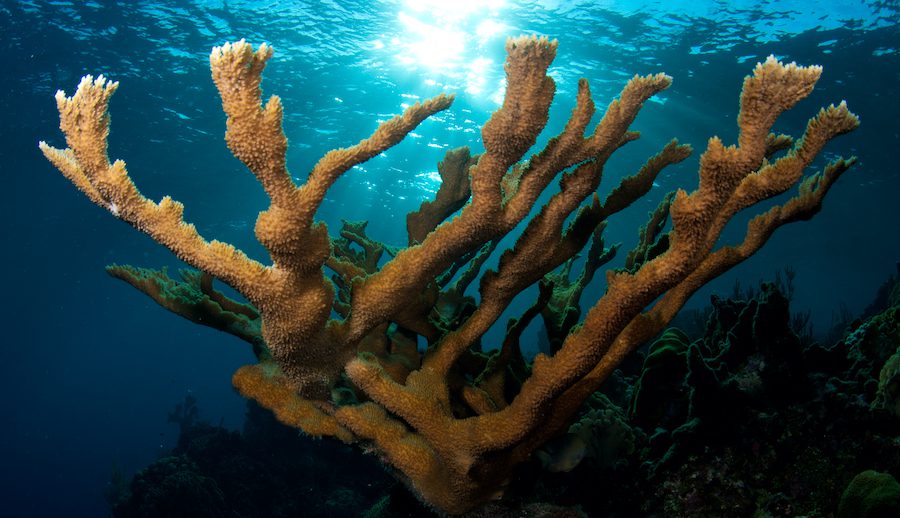
Elkhorn coral (Acropora palmata), copyright Erik Brun

“At ZSL, we strive for the recovery of wildlife because this lies at the heart of healthy functional ecosystems that underpins ecological and climate recovery,” adds Andrew Terry, ZSL’s Director of Conservation and Policy. “These nature-based solutions can be immensely powerful – but they are currently underfunded, under-studied and overly simplified. We have to accept that the answers are difficult, challenging and require major long-term commitment. Nature-based solutions must sit alongside technological solutions.”
Corals can be described as the canaries in the coalmines, and the urgent need for united, global decision is clearly illustrated by the world’s reefs. Coral bleaching, caused by rising ocean temperatures, is an all-too-visible marker of stress or death.
Coral polyps – tiny animals – are the architects of some of the most biodiverse ecosystems on Earth. The reefs they build provide vital habitat, feeding, spawning and nursery grounds for more than a million aquatic species, while around 450 million people rely on them for food, coastal protection and their livelihoods.
Here in the UK, we are engaging young people through our two Zoos, London and Whipsnade. The next generation will most keenly feel the impacts of climate change in the future, while also potentially seeing the loss of some of the planet’s most recognised species if we do not act. ZSL is committed to inspiring and educating these conservation leaders of the future to get involved, by connecting them with wildlife in our Zoos, and supporting teachers with resources on climate change.
Together, we have an opportunity now to change the future of our planet. ZSL’s innovative work around the world shows that nature can return and thrive given the right combination of help. Our vision for the future, a world where wildlife thrives, is underpinned by the Sustainable Development Goals and is led by the power and insight of our world leading science, boots on the ground field conservation and practical experience of caring for endangered animals in our Zoos. Vitally, our conservation interventions are low-cost and high impact.
We each have the power to secure change, but we need your help. Each small act can make a difference, from using a re-usable cup, to making a commitment to the health of our planet by donating to our work, to connecting your business with ZSL to drive our vision for the future together. At this critical moment in time for our planet, I invite each of you to make a transformative change for the future of our shared planet.
 
James Wren is the ZSL Executive Director of Fundraising and Engagement.
 
SEE ALSO:

Funding needed for animal-borne virus research

Technology is the key to conservation
The world is your oyster

The Evolution of ZSL


Monaco's Digital Transition: where to from here?

In just three short years, Monaco has turned the idea of creating a world-class digital infrastructure in the Principality into a reality. The key players in making this happen have come together to talk about their past successes as well as their future plans.

The Principality has taken several decisive steps under the Extended Monaco banner to make the country future-ready, including the introduction of the 5G network, creating 10G super high-speed fibre connections, creating a digital identity for residents, and being the first in Europe to have its own sovereign state cloud.

The plan, based on the precepts of sovereignty, performance, security and proximity, has aimed to give both the private and public sectors unprecedented access to the latest technology.

It has also put forth a way to promote new tech in the form of the Blue Fund. Launched at the end of 2020 as an economic recovery tool during the darkest days of the pandemic, the fund has backed over 350 digital transformation projects, supported by local service companies in nine out of 10 cases. In human terms, this means that 250 new jobs have or will be created.

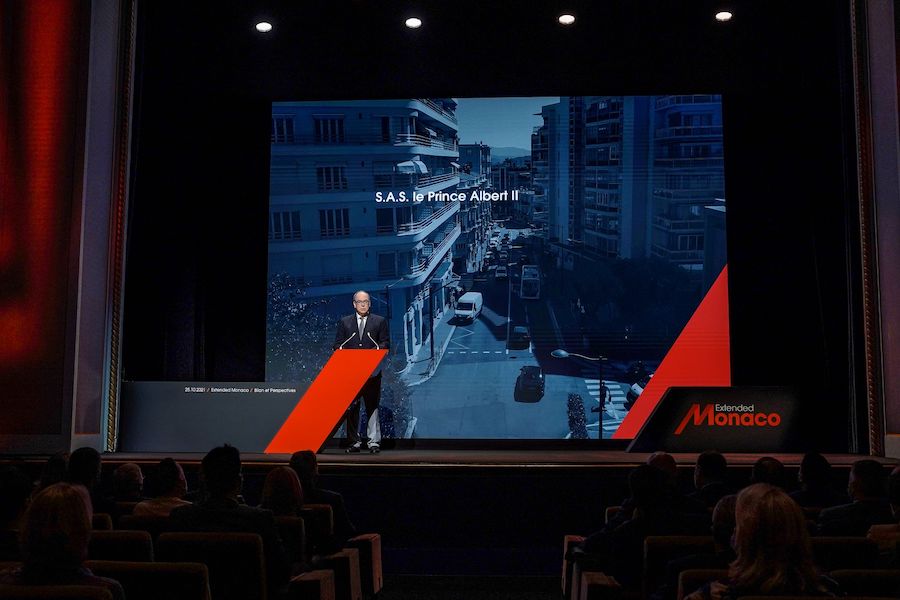
A meeting was held on Monday 25th October at the Princess Grace Theatre to outline the whirlwind of activities of the past three years that have marked the initial stages of Monaco’s digital transformation.

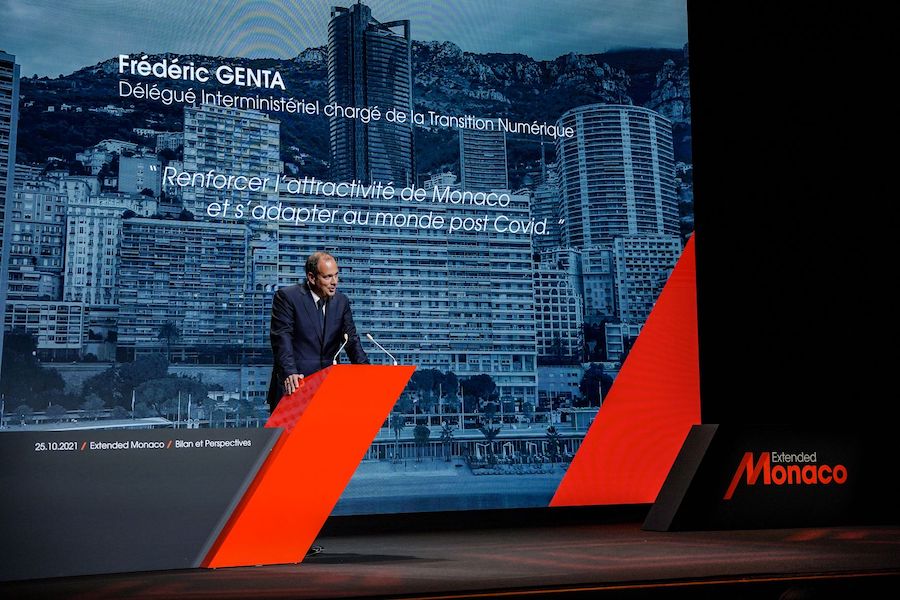
Prince Albert II, along with Minister of State Pierre Dartout, President of the National Council Stéphane Valeri, Interministerial Delegate in charge of the Digital Transition Frédéric Genta, and several other top government officials in the nation’s political and economic realm gathered to outline the next steps in the Extended Monaco programme and to applaud the efforts made thus far, despite being in the grip of a global pandemic.

“In less than three years, digital technology has seen spectacular progress for the daily life of Monegasques, residents and commuters,” said Prince Albert. “Our economy has taken the digital turn. The enthusiasm of our companies for our support and recovery measures is proof of the expectations of the Principality’s economic players in this area.”

The country’s lightning-fast transition to a digital framework, says Frédéric Genta, makes Monaco an incredibly attractive option for companies beyond the Principality’s own borders.

“On the strength of its cutting-edge digital infrastructures, the dynamic transformation of its economy, a protective legislative framework vis-à-vis certain intrusive global practices and its ecosystem of investors, the Principality has unique advantages to attract the residents and businesses of tomorrow, not to say today,” he stated proudly.

Photo: Frédéric Genta, Interministerial Delegate for the Digital Transition, by Manuel Vitali/ Government Communication Department

The pandemic, which potentially could have been disastrous, became an opportunity for Monaco to transition more quickly digitally, and the country took full advantage. Services that were once face-to-face went online, notably the dematerialisation of aid requests for companies, the launch of teleconsultations, the creation of the covid19.mc website and the establishment of solid distance learning and work-at-home programmes.

This, in turn, has given rise to positive changes in many sectors. The education system was able to overhaul its teaching practices, soft mobility options to reduce the carbon footprint were realised, 3D modelling assessments for urban works were created to lessen the impact on residents through noise and dust reduction, and an online portal for doctors and patients was developed making appointments easier as well as giving doctors quicker access to patient files.

This seems to be just the start. Pierre Dartout announced that in the “next few days” a new service called the ‘Digital Single Window’ will be launched. This allows all the administration’s tele-services to be accessed in one place, allowing authentication through digital identities.

“This Digital Single Window will gradually evolve in the coming months,” said the minister of state. “It will naturally be enriched by the new tele-services that will emerge, but also by a safe storing of the electronic documents exchanged with the administration. We will also work to create a ‘tell us once’ service for major life events.”

The new portal is the climax of a project that began in 2019 to streamline the services for end users by offering them round-the-clock and seven-days-a-week access to administrative procedures and forms. A total of 70 procedures have gone paperless including residence permit requests, enrolling in college and high school, submitting an application for civil service jobs, helping the Green Fund or the Blue Fund, and even making payments to school canteens.

The government says it aims to make every procedure dematerialised by the end 2022.


Top photo of Prince Albert II of Monaco by Manuel Vitali/ Government Communication Department


Street artists unite to save Mediterranean seals

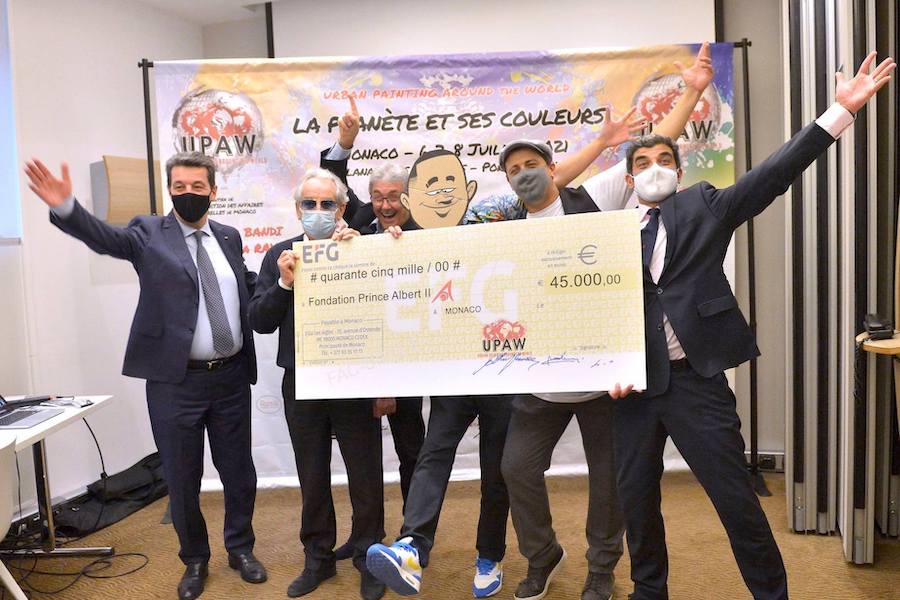
The Prince’s Foundation has accepted a €45,000 donation from UPAW, a team of urban street artists who came together to raise money for the protection of Mediterranean monk seals.
This past summer, Urban Painting Around the World (UPAW) celebrated its fifth year of bringing together talented street artists who create works of art which are auctioned off for good causes.
Under the theme ‘The planet and its colours’, the artists gathered from 4th to 8th July at the Esplanade des Pêcheurs where they let their imaginations take over to create exquisite pieces using their chosen tool, the humble spray can.
Thanks to this event, €45,000 was collected from works fashioned by artists Andrea Ravo Mattoni, Nadib Bandi, Michael Beerens, Chicadania, El Pez, Manomatic, Mister Piro, Jacques Schneider, Cacao Rock, Mr OneTeas and Tones, and was presented in a cheque on Wednesday 20th October to Olivier Wenden, Vice-President and CEO of the Prince Albert II of Monaco Foundation (FPA2).
https://www.instagram.com/p/CRI1ru7oj0A/?utm_source=ig_web_copy_link
“Today we need to find disruptive solutions to preserve the environment,” Olivier Wenden said at the hand-over event. “Engaging in art and the protection of the planet, as UPAW does, is important for raising awareness among the general public. The Foundation is very honoured to receive this donation for its action in favour of the preservation of the monk seal, a species that seemed to have completely disappeared 20 years ago.”
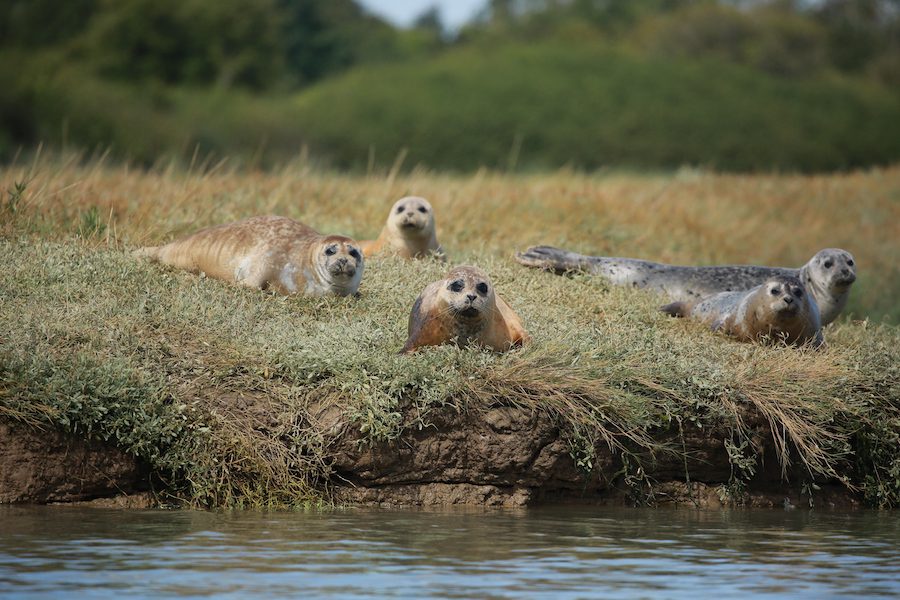
The FPA2 has supported several projects since 2011 with regard to the conservation of this rare seal, which was feared to be extinct just two decades ago. The creation of the Monk Seal Alliance aimed to multiply existing actions and intensify concrete protection efforts.
Other beneficiaries of UPAW include chimpanzees in Uganda and the fight against plastic pollution in the Mediterranean for BeMed.
The sixth edition of UPAW in 2022 will be housed in a new location, on the Terraces of the Casino de Monte-Carlo. Next year will also see the 2nd edition of the UPAW Junior Challenge, an event co-organised with the Mairie to give young talent a chance to show their stuff.
 
SEE ALSO:

NFT drop at this year’s UPAW art event

Photos: UPAW 2020


Superb Leclerc best-of-the-rest at packed US GP

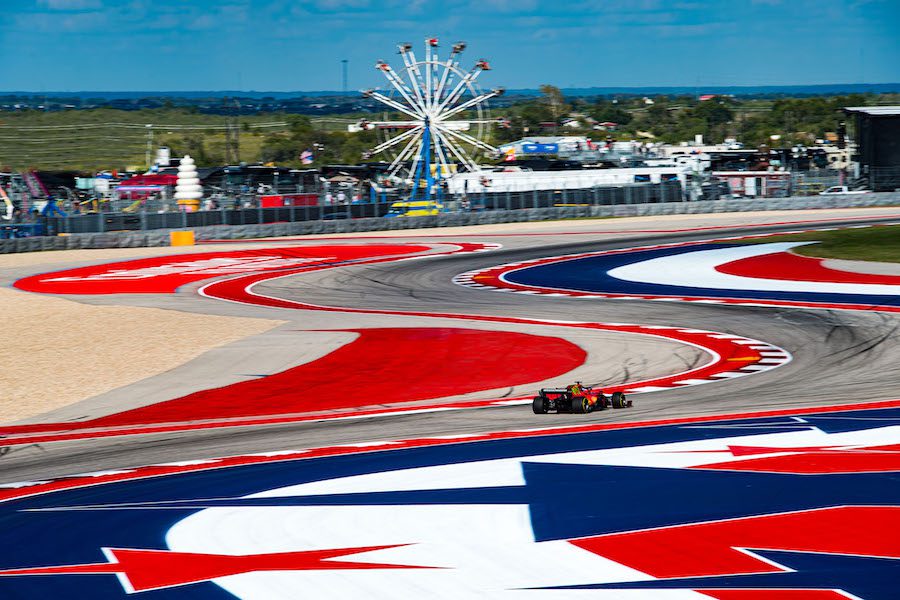
Charles Leclerc secured an impressive fourth place amidst a carnival atmosphere at the Circuit of the Americas in Austin, Texas, as Verstappen took the victory to extend his championship lead. The 140,000-strong US crowd was a welcome companion for Leclerc, who led a lonely race deprived of any on-track action.
Starting on pole, Verstappen lost the lead at the first corner despite his efforts to squeeze Hamilton, who got a blistering launch. Verstappen subsequently went wide at turn one, and would have been grateful to his team-mate Perez, who yielded in the battle for second place at turn three. Leclerc meanwhile, got off to an undramatic start as he retained his fourth place.
Further down the field, Leclerc’s team-mate Sainz came under pressure from both McLarens. Ricciardo passed Sainz with a lovely move around the outside of turn 18, but the Ferrari driver succeeded in keeping Norris behind.
Despite having overtaken Verstappen on lap one, Hamilton was unable to eke out a lead, and was quick to point out on team radio that Verstappen was in fact quicker than him.
Leclerc was understandably slower than Hamilton and the two Red Bulls, and had soon lost touch with those in front of him. His strong pace, however, saw him create a good buffer to the McLarens and his team-mate, meaning Leclerc cut a rather isolated figure on the track.
It quickly became clear that following in the dirty air would be difficult, and that the race would be won in the pit-stops rather than by on-track overtakes. In the first phase, Verstappen got the undercut on Hamilton to take a comfortable six second lead.
Verstappen’s first set of hard tyres, however, degraded quickly and he was forced in for another set of hard tyres earlier than anticipated. Meanwhile, following the pit-stops, Leclerc was quietly going about his business, and his pace in an improved Ferrari saw him out of the clutches of chasing rivals.
The tactical battle reached its crescendo in the closing stages as Verstappen’s early pit-stop meant that Hamilton was able to close-in. Hamilton got to within a second of Verstappen on the final lap, but Verstappen held onto the victory to extend his championship lead to 12 points. Perez completed the podium with Leclerc best-of-the-rest in fourth.
Post-race, Leclerc was happy both with his personal performance as well as the performance of his team. “What a race! It was definitely one of the most physical drives of my career… I really pushed the car to its limit on every lap. Our pace was a positive surprise. Although we are mostly focusing on 2022, the few upgrades we have brought this year have allowed us to make some important steps forward.”
The result sees Leclerc leapfrog Sainz into sixth in the driver standings with only five races remaining. After securing two consecutive fourth places, Leclerc will be hoping for a podium next time out in Mexico in two weeks’ time.
 
 
Photo source: Scuderia Ferrari Press Office


Inspired Volland performance secures victory for ASM

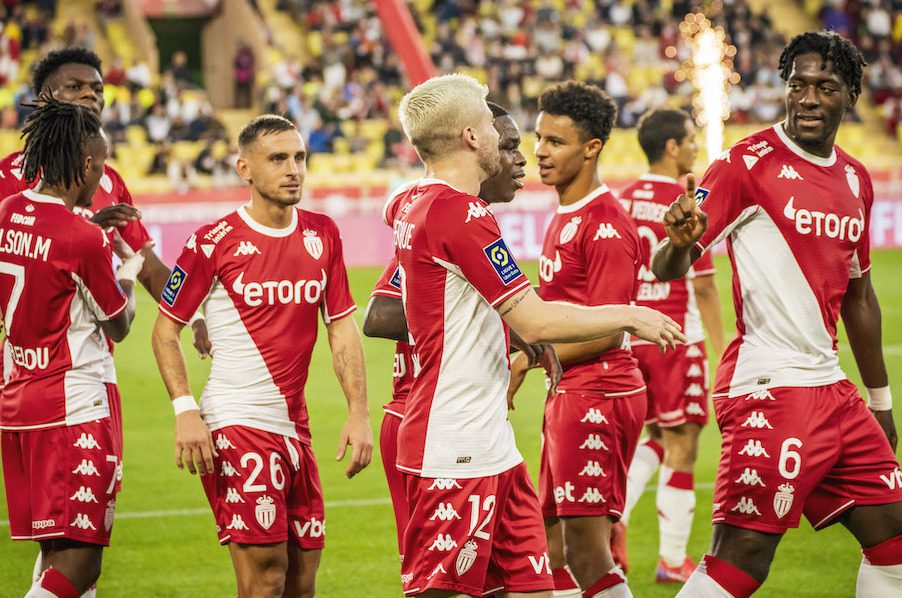
AS Monaco produced a dominant first-half display to ensure a comfortable victory against a lacklustre Montpellier side at the Stade Louis II on Sunday.
Coming into the match high on confidence after a battling victory away at PSV in midweek, ASM got off to a blistering start.
Having dominated possession and territory during the opening minutes, ASM didn’t take long to convert their dominance into tangible rewards.
Building on his man-of-the-match performance in mid-week, Caoi Henrique was once again the provider – his ball across goal finished neatly by Kevin Volland.
Montpellier couldn’t muster any response to going behind. ASM continued to dominate possession, and their persistent pressing kept Montpellier deep in their own half. Only five minutes after the opener, ASM doubled their lead. This time the scorer of the opening goal, Volland, turned provider – his sumptuous out-side of the boot delivery converted by Ben Yedder at the back post.
Kovac’s men continued to dominate proceedings in the first-half, but lacked the incision to increase their lead against a passive Montpellier side.
Montpellier came out the brighter side at the start of the second half. They were more capable of retaining possession and advancing the ball, yet their defensive frailties were once again exposed with devastating consequences.
After a penalty-box scramble, which resembled a pinball machine more than a match of football, Gelson Martins seized upon the ball and drilled home Monaco’s third.
Having confirmed the victory, ASM let the game drift, and Montpellier slowly grew into the game. Despite failing to create anything clear-cut, Montpellier were handed a glorious opportunity to get back into the match when Pavlovic clumsily brought down Gioacchini inside the ASM box.
Savanier confidently dispatched the resulting penalty to register what was ultimately only a consolation goal for the away side.
The 3-1 victory lifts Kovac’s side to 8th place in Ligue 1, and only 1 point behind the European places.
In the post-match conference, Kovac praised his side’s reaction to last Sunday’s disappointment. “We are happy to have bounced back after Lyon, by having two good matches against PSV Eindhoven in the club’s 200th European fixture, and against Montpellier.”
Despite his positive appraisal, Kovac was nonetheless critical of ASM’s inability to kill off the game. “For me, we should have finished the contest in the first half by scoring the third, even the fourth goal… After the third goal, we changed the way that we played a bit, and when you play a bit lower, with less intensity, the opponent has more of a chance to grow, and you find yourself in trouble.”
ASM will be hoping to continue their charge towards the European places with a win in their next fixture at Brest next Sunday.


Profile: Boutique brokerage Cecil Wright and Partners

It was a hectic time in the lead up to the Monaco Yacht Show for the Cecil Wright and Partners team, not because they were unprepared, but because two of the three yachts they were exhibiting were under contract to be sold a day before the show opened. Not bad for a boutique company with a handful of senior sales brokers.
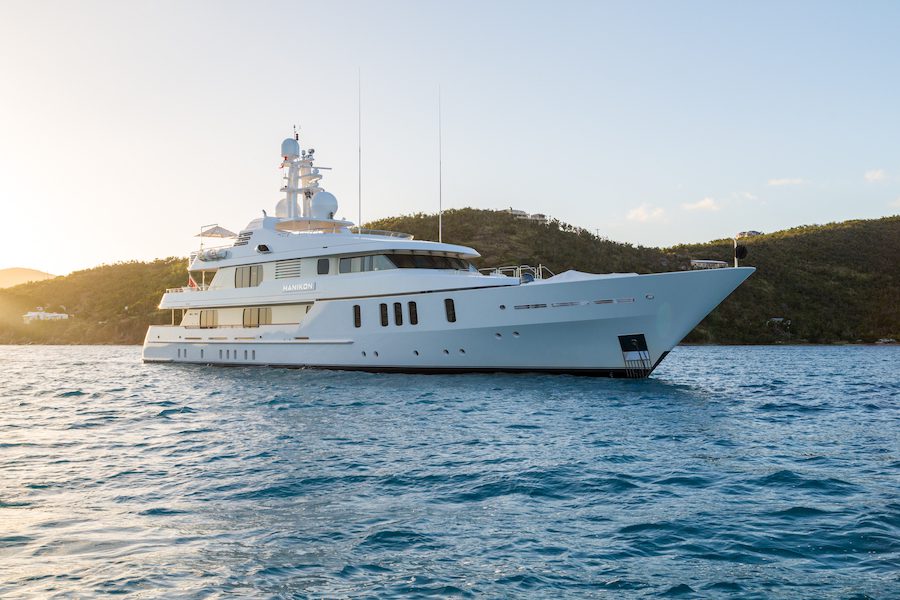
It is onboard the 50m Feadship Hanikon that I meet Henry Smith, a Partner and Director of Cecil Wright and Partners, a boutique yacht brokerage with offices in Monaco, London and Jersey. This is Henry’s eighth Monaco Yacht Show, and we were supposed to meet onboard La Masquerade. But that 55-metre Amels, along with the 49.70 metre Feadship Herculina, were both under contract to be sold, leaving Cecil Wright with three expensive berth positions, and only one saleable yacht to exhibit.
Monaco Life: Can you give us the back story of Cecil Wright and Partners?
Henry Smith: Chris Cecil-Wright and I were working together at a larger Monaco based brokerage and we studied how the market was developing and thought ‘there’s just too much out there to know everything’. Chris has been in the industry for 30 years now, and back in the day it was possible to know every big yacht owner and every big yacht, therefore you could be an authority on everything. But as time has gone by, there are so many more yachts and so many different owners, there’s just no way of knowing everything. So, our principal idea was: why don’t we specialise and focus on a very specific area of the market and ace it? So, that’s what we are doing, and doing it very well.

Madam Gu

What area of the market are you focussing on?
Northern European pedigree motor yachts, specifically Feadship. We’ve built, bought and sold more Feadships than anyone else. It’s quite extraordinary. Our 10-year plan was to be recognised as the authority on Feadship, and within three years we already had our first cold-call from a client saying he had heard we were the Feadship guys, so could we sell his Feadship? We subsequently sold the 60.55m Kingdome Come within four months.
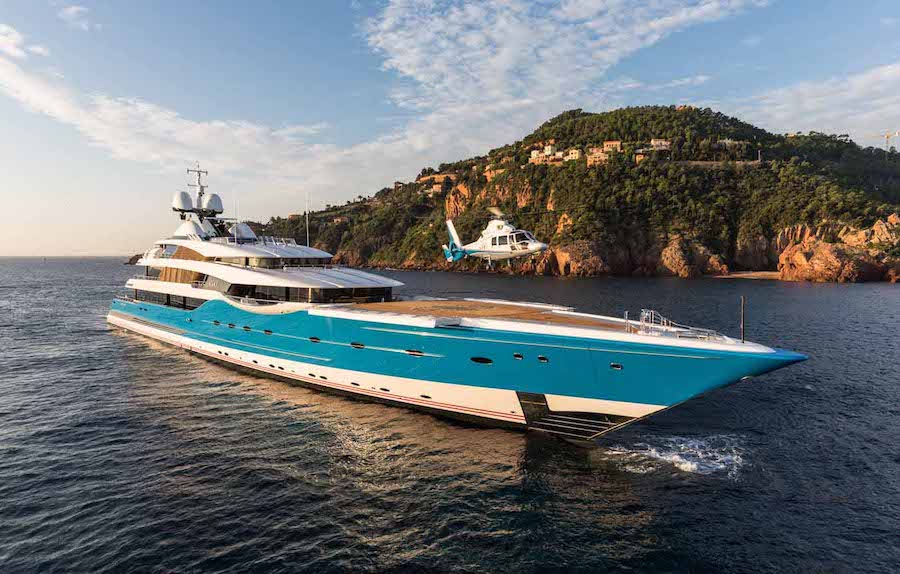
Over the past few years, the largest Feadship sale in almost every year has involved Cecil Wright and Partners. We’ve also built some very sizeable yachts and have several more large new builds on the cards now with Feadship. Chris built Madame Gu, which everyone in Monaco would recognise – the iconic 99m Feadship which, at the time of delivery, was the largest yacht ever launched in Holland; Tango; Hampshire IIwhich you see here a lot on Quay Kennedy, Sherpa, … the list goes on and on.
Why Feadship?
As a business, we focus on the 50m-plus Northern European market because that is where we know we can add the most value. And we have chosen to be known as the Feadship specialists for several reasons, one of which is that the quality is unsurpassed with unrivalled craftsmanship and attention to detail. This expertise is born from years of understanding of what makes a great boat.
Another reason is that the whole working process with Feadship is quite unique compared to other shipyards. It’s an effortless relationship because of the long-standing relationships we have with all the key people there, from the CEO to the carpenters. Furthermore, a crucial reason is, we always know a client will be blown away by the final build, so that’s great for client retention and our reputation.
The ethos of a Feadship owner is also quite different. Instead of thinking: ‘’How big a yacht can I get for as little money as possible?’’, they recognise that it is the quality that you are paying for and there really is a discernible difference in what yards can and do deliver.
Dutch boats have a timeless quality which is reflected in their market value, and the secondary market is historically strong for Feadship. Their yachts not only change hands for closer to the asking price, but they also move far quicker.
A key ethos that we stand by at Cecil Wright and Partners is ‘fewer clients serviced better’, and this underpins why we work with Feadship.
What have you noticed about the industry in the last 18 months of the health crisis?
People who were sitting on the fence about a purchase are now no longer sitting on the fence; they are very much jumping off it! And it is not just people who were thinking about buying, it is people who were thinking about doing longer-term charters who have said “Actually, I’m going to move into yacht ownership now”.
There is one school of thought which suggests that unless you can commit a considerable amount of time to a yacht, there’s not a huge point in buying one because there are a lot of costs and input required to ownership, and if you are only on it for one week a year, then it makes sense to charter one. You can, of course, hope to cover some of the running cost by making the yacht commercial and allowing charters to take place.
That said, some people don’t like the idea of other people using their yacht, so that is obviously a different case and tends to be at the larger end of the global fleet where the yachts are run privately.
We have noticed an ongoing trend in the market which we refer to as the ‘flight to quality’. This has been somewhat amplified by the last 18 months and, as a result, there really is very little left in the pedigree market.
Markets are cyclical and yachting is no exception. I would, however, expect the value retention of pedigree yachts to remain strong given the surge in demand for yachts in general.
Hanikon

How have you found this year’s Monaco Yacht Show, including the new format?
The show was a resounding success. Had you asked me what was going to happen a few months ago, I was very unsure as to whether it was even going to take place. There was a good turnout of qualified buyers who actively wanted to buy yachts.
I would say that the quality and the number of yachts on show wasn’t as high as most years, but this is really down to the fact that the market has heated up so much that all the top pedigree inventory has been sold!
In terms of the new format, I thought it was an interesting idea to have a VIP-only day on the Wednesday, but frankly it should really be like this on at least three of the four days. In terms of organisation behind-the-scenes, it turned into a far more efficient process which we are all grateful for.
Where do you see the future of the luxury yachting industry?
As global wealth increases, I can only see yachting as a sector becoming more and more popular. Whilst we will definitely see the motor yacht market expand, we are also going to see a resurgence of demand for sailing yachts, and this is driven by an ever-decreasing average age of yacht buyers who are more environmentally conscious and sailing yachts are deemed to be far greener than their motor yacht counterparts.
Already, the brokerage market has largely sold out of pedigree sailing yacht stock and we are increasingly having to hunt in the off market. Thankfully, we have a lot of experience in this space and when we approach owners in the off market, our name already carries some significant clout, so we are taken seriously. In the last 12 months, 30% of global pedigree sailing yacht deals over 35m have involved Cecil Wright and Partners.
The ever-decreasing age of yacht buyers means the yacht owning tenure for the average owner is going to increase. This will make things pretty interesting for the market as a whole unless the yards can up production to match this ever-growing demand.
Where do you see the future of Cecil Wright and Partners?
We have no intention of turning into a massive brokerage, our sales count in terms of our market area is better than most of our competitors. Between Chris, Matt (Matthew Ruane), and myself, we’re doing more sales per broker than pretty much any other brokerage – five deals this month alone, and all pedigree yachts in the right space.
So where do we go from here? We are not going to grow into a big brokerage as I said because we don’t want the overheads or the headache. We are currently 14 people located between here in Monaco, London and Jersey. Our client base is broadly European, North American, and some Middle Eastern. We may recruit one or two more people globally, but we are where we need to be, specifically within Monaco, right in the middle of the action in Monte-Carlo. Cecil Wright and Partners is continuing to go from strength to strength, selling, chartering and building more and more Feadships and pedigree yachts.
What I would really like to see is more people coming to us for our expertise in the area, even if it just for an honest second opinion. As I mentioned earlier, our 10-year plan was to be known as the Feadship experts, and it’s certainly shaping up that way.
 
 
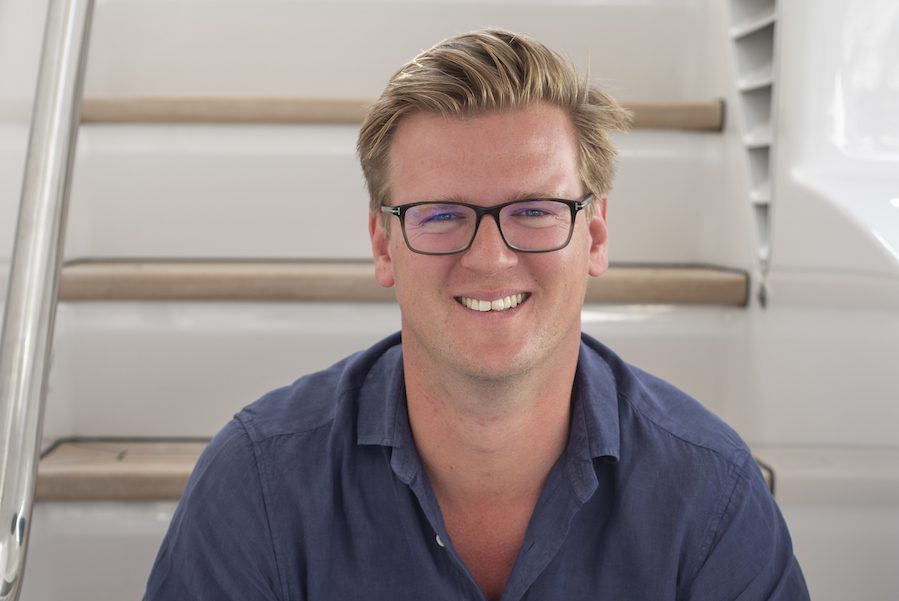
Top photo of Henry Smith, Partner and Director of Cecil Wright and Partners, all photos supplied