Monaco start-up secures €3.7 million in funding

Monaco start-up YouStock has reached a major milestone with three major new investors, giving them the capital to expand not only in France, but also internationally.

Founded in 2015, YouStock, the Monaco company that packs, moves and stores household goods and furniture at a reasonable price, has had a meteoric rise. Just two years into operations, the start-up attracted the attention of business incubator MonacoTech, and now they have secured funds from three new investors which will allow them to grow ever faster.

Amavi Capital, a fund specialising in European PropTech, the la Région Sud Investissement and business angel Jean-Luc Haddad, founder and president of Grospiron International, have joined forces with YouStock, investing €3.7 million in the company.

This injection of capital will allow YouStock, which has operations in Nice and Paris as well as the Principality, to continue their national expansion plans to Lyon by the end of 2022, with another to-be-determined European capital set to be established in early 2023.

“Ever since its launch, we’ve been impressed by the digital platform developed by the

YouStock team, as well as the growth they’ve generated,” said Frederic Van den Weghe, Managing Partner at Amavi Capital. “Supporting YouStock in their

ambitions to grow in France and in Europe is perfectly in line with the PropTech focus of our investment strategy. YouStock revolutionises the way you can manage your belongings on demand, short or longer term, and at a very competitive rate. All on an intuitive digital platform.”

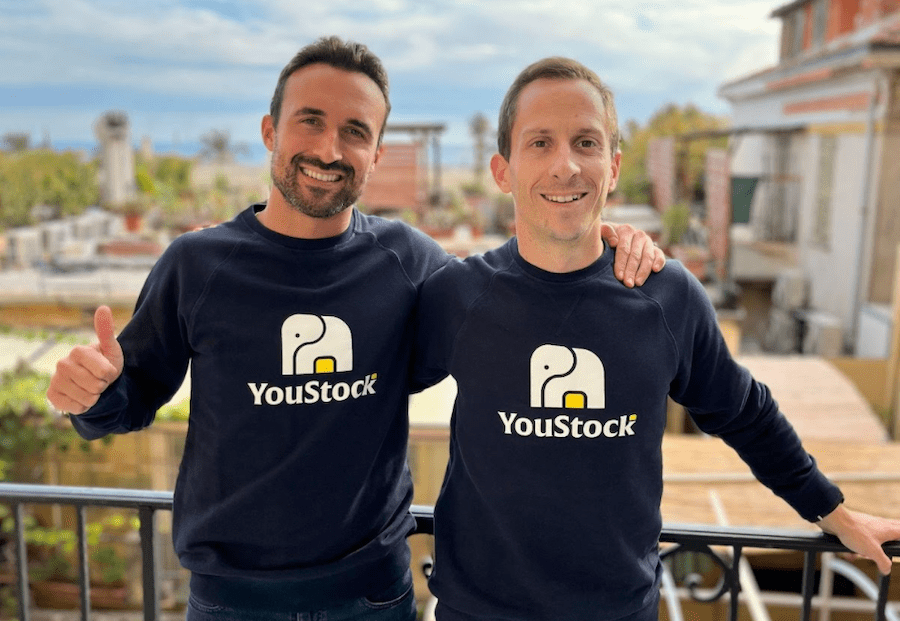
YouStock Co-Founders Alexis Bouresche and Pierre Charvet found a hole in the self-storage market and went about plugging it. The logistics and costs of storing furniture and household items were often prohibitive for people, and the idea stemmed from these constraints.

You Stock’s guiding principles offer solutions by giving customers reasonable pricing, up to 40% less than other self-storage facilities, and customised service that allows clients to directly manage the organisation of their storage online with a QR coded inventory system. This feature means that select items can be delivered back to customer’s homes within a 48-hour time period at the click of a button.  

The company has seen phenomenal growth, boasting a clientele of 1,200, a 90% rise since 2020, and they even managed to thrive during lockdown.

YouStock has also chosen its locations wisely, with the Paris opening being a massive success due to rising rent prices forcing people into smaller flats. This has led to the need for cost-effective solutions for off-site safeguarding of personal belongings.

“Our success in Paris, Monaco and Nice confirms the relevance of a service like YouStock in big cities,” said CEO Alexis Bouresche. “By offering city dwellers the fairest, simplest, and most affordable model, we aspire to quickly become a key player. This raising of capital offers a real opportunity for us to gain a foothold throughout France over the next few months.”

YouStock’s goal is now to go beyond France’s borders and cover the whole of Europe.


“Sport has a unique power to highlight climate change”

Nico Rosberg, owner of E-sports team Rosberg X Racing, has waded in on COP26. A prominent figure within the environmental sub-section of the sporting world, Rosberg took to Twitter to advocate for the implementation of environmental policies, whilst also confirming his attendance at the conference this week.
Since his retirement from Formula 1 following his championship-winning season in 2016, Rosberg has dedicated himself to the environmental cause, culminating in the creation of his own E-rally team Rosberg X Racing, which recently earned him the European Culture Award for the Environment.
In a video and subsequent thread posted on Twitter, Rosberg on Monday called for urgency in the face of the climate crisis. In particular, he highlighted the Paris Agreement commitment to limiting the global temperature rise to 1.5 degrees by 2030 stating that, “Decisions made now affect the pace of transition to reach that zero carbon emission goal.”


In order to reach that target, Rosberg has advocated for three important changes to be immediately implemented. Firstly, he called for a shift from fossil fuels towards renewable energy sources. Secondly, for the protection of rainforests and biodiversity, primarily through stopping deforestation. Finally, to build circular economies for every industry, in order to stop the use of single-use plastics.
Rosberg’s advocacy for sustainability uses the medium of sport to convey the environmental message as, in his own words, “Sport has a unique power to highlight climate change.” His engagement in the novel Extreme-e rally series has already raised the profile of climate change within a sporting context, with other racing series, including Formula 1, now starting to consider and address their environmental impact.
Rosberg will be hoping that his in-person attendance at COP26 will further raise the profile of sustainable sport, and hopefully elicit tangible, positive change at this critical juncture for the survival of the planet.
 
SEE ALSO:

Rosberg X Racing lose out in thrilling Arctic X Prix

Rosberg’s team claims 2nd straight Extreme E win

Rosberg X Racing makes history as first Extreme E winner

 
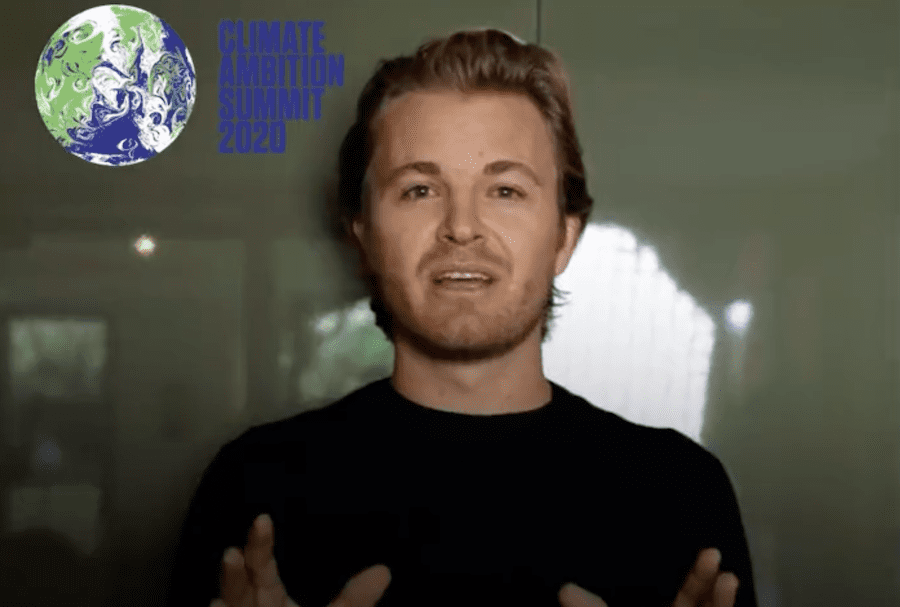
Photo: Screenshot of Nico Rosberg during Twitter video


Roca team stride to victory against struggling Paris side

AS Monaco Basket rounded off a perfect week, securing their fourth victory in seven days with a comfortable victory against Betclic Élite strugglers Paris. The win takes the Roca team joint top of the domestic league, behind Boulogne and Lyon only on points difference.
Paris got off to a strong start in the first quarter, but Mitrovic’s men quickly fought back thanks to two hoops from Alpha Diallo. By the end of the first quarter, AS Monaco had eked out a narrow 23-22 lead. The Roca side built on their lead in an impressive second quarter that ultimately put the game out of reach.
Paris Lee set the tone for the half for Monaco, two three pointers from the American went unreplied and a lead started to grow. That was followed up by Ibrahima Fall Faye who scored an impressive dunk on the counter attack to score the 8th point without reply. A dominant Roca side continued to extend their lead, and by the half-time mark it had been extended to a comfortable 15 points.
Not content with simply consolidating their advantage, AS Monaco continued to attack in the third quarter. Their lead was extended further thanks to the playmaking efforts of Mike James, whose passes and attacking incision created numerous point-scoring opportunities, which were duly converted by a clinical Roca team.
Going into the final quarter, AS Monaco had an unassailable 24-point lead. Despite a closer fourth quarter, ASM continued to impose themselves. Ibrahima Fall Faye cleverly intercepted a loose Paris pass to score an impressive solo dunk on the break. Alpha Diallo and Rudy Demahis piled on the misery for Paris late on to secure a 100-75 victory for Mitrovic’s men. Diallo finished the match as Monaco’s leading point scorer with 15 points.
Mitrovic was unequivocal in his praise for his side post-match, highlighting in particular the squad depth at his disposal. “Only positives, all is good… the players that I called upon all responded… This season will be a long one and I’m going to need everybody. The next match will be against strong opposition against one of the strongest sides in the Euroleague. We need to be ready.”
Mitrovic will be hoping that his side can continue their winning streak away at Olympiacos on Friday.
 
Photo by Michael Alessi, Communication Department


Opinion: Investing in the future of our shared planet 

The planet is facing two of the biggest threats in its history, biodiversity loss and climate change. These are worsening at extraordinary speed and our collective failure to act is having disastrous consequences.
There is a growing recognition and understanding among world leaders and policymakers of how biodiversity loss and climate change crises are connected, but we are yet to see united strategies on a global scale to address them. Habitat destruction diminishes nature’s ability to effectively store carbon and reduces species’ ability to adapt to changing environmental conditions, this then increases their risk of extinction and further exacerbates the breakdown of ecosystems.
But there is hope. We know that when given the chance, nature can recover.
“To drive nature’s recovery we are working tirelessly to ensure biodiversity is embedded in global decisions being taken on climate change at major events this year,” said Matthew Lowton, ZSL Policy Officer. “The pivotal climate conference COP26, held in Glasgow, is seen by many as the last chance we have to keep global warming of 1.5 within reach. ZSL will be attending and calling for global leaders to place nature at the heart of global decision-making, uniting solutions to tackle biodiversity loss and climate change. Governments must tackle these twin crises together.”
Biodiversity is also declining across the world at unprecedented rates.  ZSL’s 2020 Living Planet Index – a measure of the world’s biological diversity based on population trends of birds, mammals, reptiles, amphibians and fish – recorded a decline of 68% in average species population abundance since 1970. This is a frightening number. At ZSL, we are committed to reversing these declines in conjunction with conservation strategies to support ecosystem health.
The drastic fall in biodiversity levels impacts economies, livelihoods, food security, health and quality of life worldwide. Investment in the future of our planet is essential to reversing these declines and supporting the health of wildlife and of people.

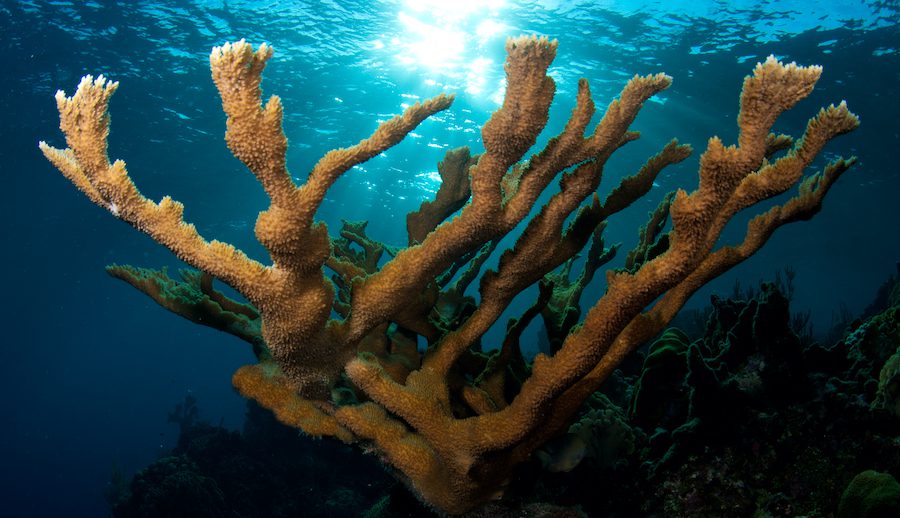
Elkhorn coral (Acropora palmata), copyright Erik Brun

“At ZSL, we strive for the recovery of wildlife because this lies at the heart of healthy functional ecosystems that underpins ecological and climate recovery,” adds Andrew Terry, ZSL’s Director of Conservation and Policy. “These nature-based solutions can be immensely powerful – but they are currently underfunded, under-studied and overly simplified. We have to accept that the answers are difficult, challenging and require major long-term commitment. Nature-based solutions must sit alongside technological solutions.”
Corals can be described as the canaries in the coalmines, and the urgent need for united, global decision is clearly illustrated by the world’s reefs. Coral bleaching, caused by rising ocean temperatures, is an all-too-visible marker of stress or death.
Coral polyps – tiny animals – are the architects of some of the most biodiverse ecosystems on Earth. The reefs they build provide vital habitat, feeding, spawning and nursery grounds for more than a million aquatic species, while around 450 million people rely on them for food, coastal protection and their livelihoods.
Here in the UK, we are engaging young people through our two Zoos, London and Whipsnade. The next generation will most keenly feel the impacts of climate change in the future, while also potentially seeing the loss of some of the planet’s most recognised species if we do not act. ZSL is committed to inspiring and educating these conservation leaders of the future to get involved, by connecting them with wildlife in our Zoos, and supporting teachers with resources on climate change.
Together, we have an opportunity now to change the future of our planet. ZSL’s innovative work around the world shows that nature can return and thrive given the right combination of help. Our vision for the future, a world where wildlife thrives, is underpinned by the Sustainable Development Goals and is led by the power and insight of our world leading science, boots on the ground field conservation and practical experience of caring for endangered animals in our Zoos. Vitally, our conservation interventions are low-cost and high impact.
We each have the power to secure change, but we need your help. Each small act can make a difference, from using a re-usable cup, to making a commitment to the health of our planet by donating to our work, to connecting your business with ZSL to drive our vision for the future together. At this critical moment in time for our planet, I invite each of you to make a transformative change for the future of our shared planet.
 
James Wren is the ZSL Executive Director of Fundraising and Engagement.
 
SEE ALSO:

Funding needed for animal-borne virus research

Technology is the key to conservation

The world is your oyster

The Evolution of ZSL


Francesco Grosoli: "We need to reverse the classic paradigm"

We talk to Francesco Grosoli, CEO of CMB Monaco, about the bank’s ambitious transformation plan and catering to the new generation of HNWIs.
Francesco Grosoli is a very familiar face in Monaco. The Italian native headed Barclays Private Bank for close to 12 years before shifting gears and taking on the role as CEO of CMB Monaco in 2019.
He came to the 46-year-old local bank and its 245 employees with a bold vision and plenty of momentum.
Then the Covid pandemic hit.
But rather than derail Grosoli’s big plans for the private bank, it solidified everything he was hoping to achieve.
Monaco Life: Why did you decide to make the move to CMB and what was your mission?
Francesco Grosoli: I find that the private banking sector often forgets that the client is at the centre of the equation, that it is important to be much closer to clients and understand what their needs are. In this industry, it is more and more complicated to operate in a large organisation, to have an influence and instigate change. This made CMB’s project an exciting challenge. The idea was to take a very solid organisation that already exists, expand it, redesign it the way I think it needs to be redesigned, and have the freedom to maintain it or to make radical changes. I had a vision of where I wanted CMB to go.
That was your vision going into it, but then Covid came along and disrupted everything…
It’s actually happened to me before. We got hit with the financial crisis of 2008, so I am pretty used to starting fresh after a big crisis. Covid has been a disruption but, in certain ways, it has also helped – as I said, by putting the client back at the centre, by being a bank that is close to the client and really wants to develop a quality of service that is second to none. Crises often contain opportunities, and one has to look ahead to understand how a disrupted present leads to several possible futures.
Has CMB always been a bank for the locals?
We have a very strong local DNA, so it is important that we cover the local market better and more closely. I think some banks in Monaco look to the rest of the world to find clients and while we have a huge market across the street, our clients and the new comers to Monaco need quality of service, sophistication and care.
Very often, there are big fortunes in Monaco but they’re using Monaco banks for simple needs. The idea is to bring more sophistication and make sure that we can deliver what the clients are looking for instead of letting them go to London, Zurich, Geneva or elsewhere. This is something that is possible and achievable. We need to reverse the classic paradigm: start not from what we want to offer the customer, but from what he or she needs.
Monaco has made a very concerted effort over the last 10 to 15 years to change its economic perspective in terms of who it attracts to the Principality, the kind of money they’re bringing in, and who they want to keep here. Can you tell us about CMB’s clients and how the demographic has shifted over the years?  
In the past in Monaco, there was an on-shore clientele and an off-shore clientele, and the on-shore clientele was very much made of quasi-retired people who’d sold their businesses and come to Monaco to enjoy their lives, or people who were spending a very short amount of time in Monaco and living elsewhere.
Then, there was a big evolution in Monaco, similar to other market places like Luxembourg and Switzerland, but particularity in Monaco, where the business model totally changed. There is a much younger population here with their families – you just have to look at the demand for schools. We have active young couples, people who are managing their businesses all over the world but are based here with their families, with their family office, holding company or business headquarters. So, it has shifted a lot from a very static, old crowd to a much younger, active, international population. When I talk about the Monaco crowd now, I see it very similar to a London/Mayfair type of crowd, but with the Mediterranean sea of course.
The services in Monaco, including in our sector, need to adapt to this type of client, whom is much more demanding because they spend more time here.
What are these younger clients looking for in a private bank?
It’s a very interesting question, because we are shifting from a very old private banking system where people come in and leave their money to be managed, to people wanting to be much more active and involved in the management of their wealth.
People are now making their fortunes in crypto, YouTube, gaming – there is a lot of new wealth generated in the new industries of the tech world. And the younger those clients are, the more differently they interact with the bank. There is now the digital way of interacting with clients, which is where we have stepped up significantly and are still working on to give the right digital tools to our staff and our clients. This being said, you also need to spend much more time with clients on more sophisticated topics. It’s a mix of human and digital interaction. I don’t see one separate from the other.
Is this the thinking behind the new brand identity that CMB unveiled last September?
Yes, we wanted to give a different image of CMB – much more modern and international, while balancing the local DNA. It’s embedded in our strategy as well because we are hiring people with a much more international approach, coming from big cities and markets like London, Luxembourg and Switzerland. That’s our approach – to be ahead of our competitors but also of the trends.
Wealth is certainly generated differently nowadays, from when it primarily used to be passed down through the generations. Is it difficult to come out of the old and into the new?
The human being, by its very nature, does not particularly want to change when in a comfort zone, and Monaco has usually been a very comfortable zone. There’s been no real need to gain the market share, because the mentality has always worked, so why should we change? But if there is no change, an organisation dies. You need to drive the change, you need to motivate the change, but firstly you need a vision. It is a tough task, but we are making it happen.
Let’s talk about Covid. CMB is one of the very few companies that has continued to offer teleworking to staff, even after restrictions were lifted. Was that a difficult decision to make? Was there resistance within the system?
The first resistance was me, pre-Covid. I was totally against it, and I have to admit that. But Covid has been a big disruptor and an accelerator of change.
We found that we could technically operate the bank with 80% of the staff working from home. It is not the easiest thing to do for the staff, nor for the organisation, but it worked.
So, with the lockdown, lifting of the lockdown, and lockdown again, we adapted to the situation and took teleworking from 80% to 65%. We deployed an infrastructure that allowed us to work effectively from home.
Then I looked at the situation and said, ‘ok, we have a legal framework in the Principality, it could be a little more flexible, but why not use it?’ A lot of our staff travel between 45 minutes to one hour each way, with all the consequences – fatigue, lack of productivity, the environmental impact of transportation…
So, in September we finalised the framework for people to work from home one to two days per week, the maximum is three days. The idea is to make the best use of remote tools and do everything possible to ensure that this has no impact on the clients.
Will you keep this system in place even after the health crises has ended?
Yes, we will not go back to the pre-Covid system, simply because we have realised that what we are doing today is possible and it is effective.
Are you noticing more productivity among the staff?
Yes. If you have someone who is a hard worker on site, they are going to be even more of a hard worker from home. Plus, you give them the flexibility of not travelling. For the people that are living across the street, it is less effective, but for the people who live far away, people that have roles that allow them to work from home, less managerial roles, it is very convenient.
The downside is that you need to be sure that the sentiment of belonging to an organisation is still there, and that’s the tricky part. You need to make sure the managers are capable of keeping the team together, making sure everyone feels like they belong to the same organisation. It is important to keep this sentiment alive.
Let’s talk about crypto and the fact that, despite its rapid progression across the world, some banks in Monaco are still refusing to address or acknowledge it. What is CMB’s position?
We are looking at solutions – what is possible and what is not possible. I am pretty sure we will not start implementing payments in crypto, this is not our job, but we are looking at crypto as an asset class because more and more people want to have their wealth invested into an asset class which is linked to cryptos.
Then you have all of the technical issues, the security of holding cryptos, etc., to take into account. Perhaps a year ago it was something that we didn’t look at, but now I think it is important that we consider it.
Is there any significant piece of legislation or regulation that you would be looking for in order to push ahead with crypto?
At this point I don’t think so, but we need to find the right actors that are regulated, locally or at the European level, but it needs to be regulated.
Where is CMB, results wise?
The crisis brought a lot of opportunities, so the numbers are quite spectacular. Considering where we were and what we have been through, we reached the milestone of €1 billion of capital equity, perhaps a unique situation for an organisation of our size in Monaco.



Monaco's Digital Transition: where to from here?

In just three short years, Monaco has turned the idea of creating a world-class digital infrastructure in the Principality into a reality. The key players in making this happen have come together to talk about their past successes as well as their future plans.

The Principality has taken several decisive steps under the Extended Monaco banner to make the country future-ready, including the introduction of the 5G network, creating 10G super high-speed fibre connections, creating a digital identity for residents, and being the first in Europe to have its own sovereign state cloud.

The plan, based on the precepts of sovereignty, performance, security and proximity, has aimed to give both the private and public sectors unprecedented access to the latest technology.

It has also put forth a way to promote new tech in the form of the Blue Fund. Launched at the end of 2020 as an economic recovery tool during the darkest days of the pandemic, the fund has backed over 350 digital transformation projects, supported by local service companies in nine out of 10 cases. In human terms, this means that 250 new jobs have or will be created.

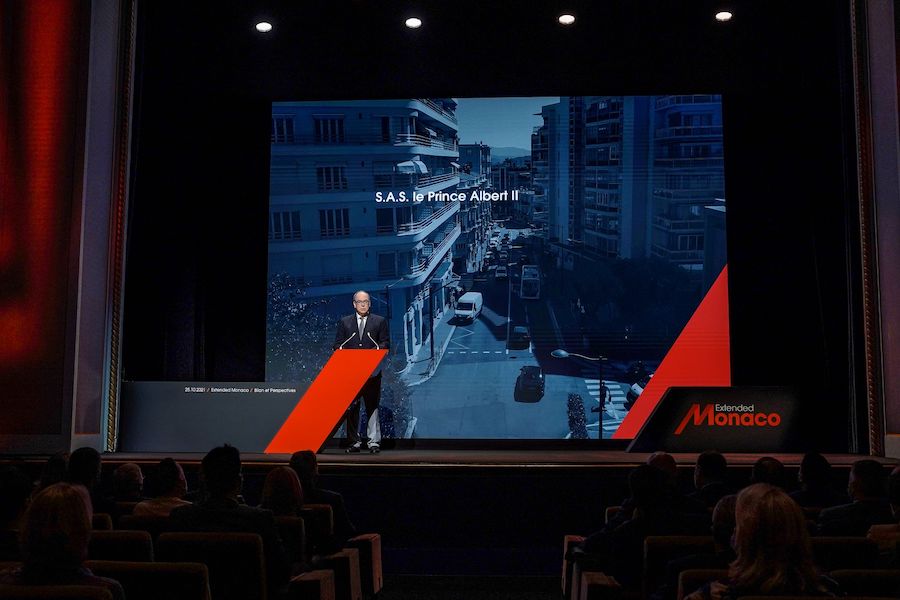
A meeting was held on Monday 25th October at the Princess Grace Theatre to outline the whirlwind of activities of the past three years that have marked the initial stages of Monaco’s digital transformation.

Prince Albert II, along with Minister of State Pierre Dartout, President of the National Council Stéphane Valeri, Interministerial Delegate in charge of the Digital Transition Frédéric Genta, and several other top government officials in the nation’s political and economic realm gathered to outline the next steps in the Extended Monaco programme and to applaud the efforts made thus far, despite being in the grip of a global pandemic.

“In less than three years, digital technology has seen spectacular progress for the daily life of Monegasques, residents and commuters,” said Prince Albert. “Our economy has taken the digital turn. The enthusiasm of our companies for our support and recovery measures is proof of the expectations of the Principality’s economic players in this area.”

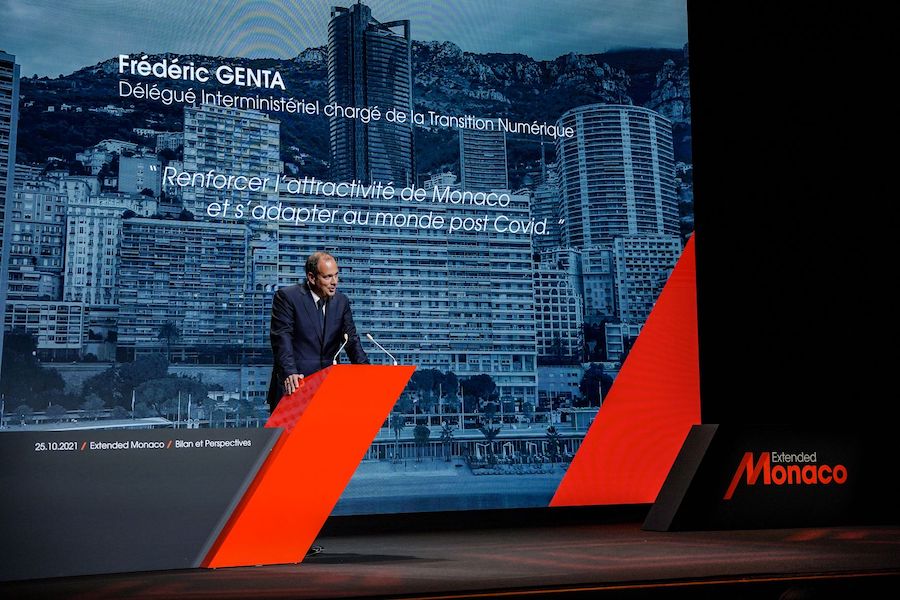
The country’s lightning-fast transition to a digital framework, says Frédéric Genta, makes Monaco an incredibly attractive option for companies beyond the Principality’s own borders.

“On the strength of its cutting-edge digital infrastructures, the dynamic transformation of its economy, a protective legislative framework vis-à-vis certain intrusive global practices and its ecosystem of investors, the Principality has unique advantages to attract the residents and businesses of tomorrow, not to say today,” he stated proudly.

Photo: Frédéric Genta, Interministerial Delegate for the Digital Transition, by Manuel Vitali/ Government Communication Department

The pandemic, which potentially could have been disastrous, became an opportunity for Monaco to transition more quickly digitally, and the country took full advantage. Services that were once face-to-face went online, notably the dematerialisation of aid requests for companies, the launch of teleconsultations, the creation of the covid19.mc website and the establishment of solid distance learning and work-at-home programmes.

This, in turn, has given rise to positive changes in many sectors. The education system was able to overhaul its teaching practices, soft mobility options to reduce the carbon footprint were realised, 3D modelling assessments for urban works were created to lessen the impact on residents through noise and dust reduction, and an online portal for doctors and patients was developed making appointments easier as well as giving doctors quicker access to patient files.

This seems to be just the start. Pierre Dartout announced that in the “next few days” a new service called the ‘Digital Single Window’ will be launched. This allows all the administration’s tele-services to be accessed in one place, allowing authentication through digital identities.

“This Digital Single Window will gradually evolve in the coming months,” said the minister of state. “It will naturally be enriched by the new tele-services that will emerge, but also by a safe storing of the electronic documents exchanged with the administration. We will also work to create a ‘tell us once’ service for major life events.”

The new portal is the climax of a project that began in 2019 to streamline the services for end users by offering them round-the-clock and seven-days-a-week access to administrative procedures and forms. A total of 70 procedures have gone paperless including residence permit requests, enrolling in college and high school, submitting an application for civil service jobs, helping the Green Fund or the Blue Fund, and even making payments to school canteens.

The government says it aims to make every procedure dematerialised by the end 2022.


Top photo of Prince Albert II of Monaco by Manuel Vitali/ Government Communication Department