Slow boating takes centre stage at the Cannes Yachting Festival

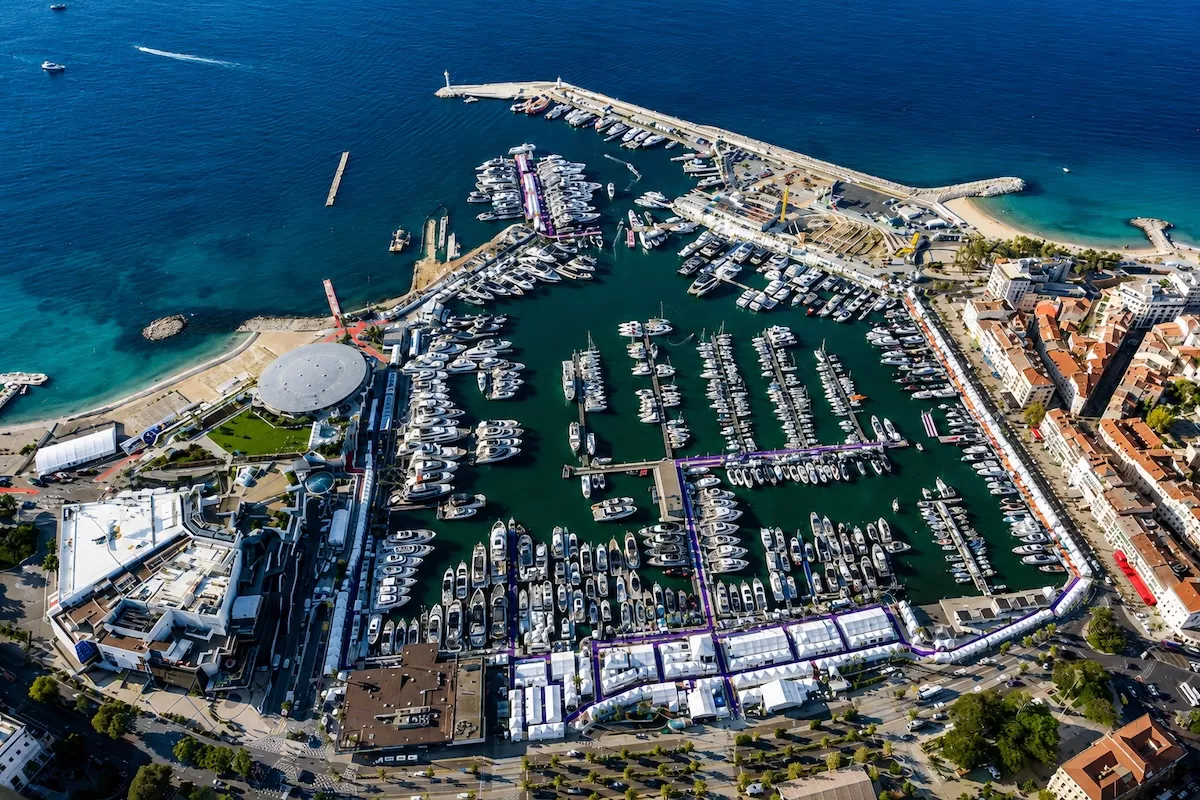
The Cannes Yachting Festival has made ‘slow boating’ the theme of its 49th edition, which runs from 8th to 13th September, championing a gentler and more sustainable way to enjoy the sea.

Borrowed from the idea of slow tourism, the approach favours cruising in short legs, spending more time in coastal areas and paying closer attention to the marine environment. It is built around pace, the choice of route and restraint rather than speed, and is embodied by a new generation of boats designed for comfort and easy handling. The edition is the first under the festival’s new director, Constance Brément, who took over in January.

“Slow boating answers a very concrete need: giving time and space back to the voyage at sea and to the places it crosses,” said Brément. “The boats, like the marina networks and destinations present this year, show that the journey and its stopovers are an essential part of the experience — encouraging navigation that is more responsible, more local and more mindful of the marine environment.”

A wider shift

The festival frames the trend as part of a broader change in how people want to travel. A 2023 study by France’s Fédération des Industries Nautiques found that 72 per cent of boaters surveyed wanted to slow their pace, 65 per cent to cut fuel consumption and 58 per cent felt weary of rigid itineraries. A separate Booking.com survey of more than 27,000 travellers across 33 countries found that 67 per cent wanted to discover less-crowded destinations and more immersive experiences.

Marinas as the backbone

Central to the idea is infrastructure. The festival argues that networks of well-spaced marinas make coastal hopping practical, letting sailors adapt their stops to the weather and rely less on the engine, while turning each port into a gateway to local food, heritage and culture. Among the marina groups and destinations taking part are the associations representing Catalonia and Sardinia, the Balearic operator IPM-IMG, the Mediterranean network D-Marin and IGY, which runs the marina in Cannes’ own Vieux Port. Closer to home, Marina Baie des Anges, between Nice and Antibes, is presenting a €63 million upgrade of its 515-berth port, while further afield Barbados and Tunisia are pitching themselves as unhurried cruising grounds.

Boats built to slow down

The trend is visible on the pontoons too. Jeanneau’s Sea Loft 480, neither monohull nor catamaran, is a hybrid-electric coastal cruiser with solar panels for recharging at anchor. The Caelum 1029 Oasis Meu Amor is a solar-powered floating home built to ‘live on the water’ rather than race across it. And the Aventura 37 Explorer is a fuel-efficient trawler catamaran made for long, slow passages, part of a growing appetite for trawlers among owners who travel for the route rather than the speed.

The festival in numbers

Founded in 1977, the Cannes Yachting Festival spreads across the Vieux Port and Port Canto and is regarded as the opening event of the international boating season. This year’s edition is expected to bring together 680 exhibitors and more than 700 boats, ranging from 5 to 50 metres, with close to 150 world premieres and some 56,000 visitors.

Monaco Life is produced by qualified, multi-media journalists writing original content. See more in our free newsletter, follow our Podcasts on Spotify, and check us out on  Facebook,  Instagram,  LinkedIn and Tik Tok

Photo source: Cannes Yachting Festival

Fresh wildfire threat forces widespread forest closures in the Var

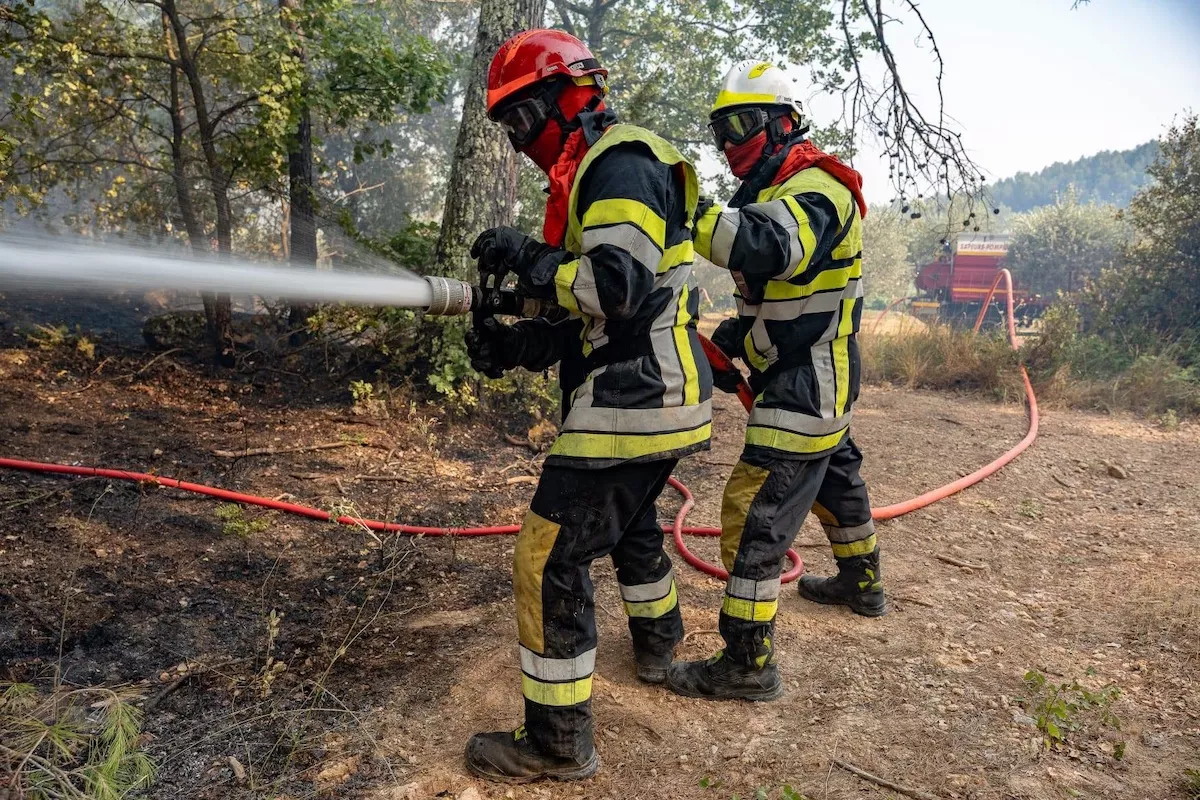
Eight of the Var’s nine forest massifs have been closed on Thursday 6th August as firefighters brace for extreme heat, dry vegetation and a strengthening Mistral.

The Gros Bessillon fire is no longer advancing, but firefighters are still working to secure its perimeter and extinguish remaining hot spots. Winds of up to 50km/h are expected to raise the risk of fresh outbreaks during the afternoon, while temperatures could reach 37°C on the coast and 40°C inland.

The Var remains under an orange heatwave alert and authorities have described Thursday as a particularly high-risk day for wildfires.

Gros Bessillon remains under close surveillance

Firefighters worked throughout Wednesday to secure the edges of the Gros Bessillon fire, tackle remaining hot spots with the support of water-bombing helicopters and open tracks into difficult terrain.

Their main concern is the south-eastern front, where the Var prefecture warned that strengthening westerly winds could cause new flare-ups.

The fire has burned approximately 6,350 hectares since it first broke out near Pontevès on 21st July. Firefighters had stopped its spread by 28th July, but a major new outbreak began near Correns three days later and burned a further 1,850 hectares.

Around 800 firefighters remained deployed on Wednesday, supported by approximately 250 vehicles, water-bombing helicopters and drone teams locating residual hot spots.

Access prohibited across most of the Var

The Sainte-Baume, Haut-Var, Centre-Var and Maures massifs are closed because of an extreme wildfire risk.

The Monts Toulonnais, Corniche des Maures, Estérel and Îles d’Hyères are also closed, with the risk rated very severe. Entry, traffic, walking and outdoor work are prohibited across all eight areas.

Access to the Canjuers plateau, the only massif not formally closed, is strongly discouraged because of a severe fire risk.

Two departmental roads remain closed near the affected area: the RD22 between Montfort-sur-Argens and Le Val, and part of the RD45 between Châteauvert and Vallon Sourn in Correns.

Several municipalities, including Le Lavandou, Saint-Raphaël, Le Muy and La Crau, have cancelled or postponed fireworks displays. Le Cannet-des-Maures has prohibited fireworks until 15th September.

Suspect held as investigators examine deliberate fires

A 23-year-old man has been placed under formal investigation and remanded in custody over a series of fires between 19th and 24th July.

The suspect was arrested on 25th July after investigators used CCTV footage to identify and locate him. He is suspected of starting around 10 fires near Brignoles, Cabasse and Vins-sur-Caramy and has acknowledged responsibility for at least one outbreak.

According to the French Gendarmerie, he is being investigated for destroying woodland by fire and causing irreversible environmental damage. The offence carries a maximum sentence of 15 years in prison and a €150,000 fine. A psychiatric examination has also been ordered.

Investigators are separately examining whether deliberate ignition caused the major resurgence near Correns on 31st July. No definitive link between the detained suspect and that outbreak has been established.

The wider investigation covers numerous fires across the Var, including six outbreaks involving human intervention around Gros Bessillon since 24th July. Authorities have cautioned that the incidents may involve several people and are not necessarily connected.

Assistance available for affected residents

Correns is among the worst-affected communities, with approximately 52% of its municipal territory burned and five houses destroyed. In Cotignac, local authorities have reported 27 damaged homes, including around 10 that were completely destroyed.

Residents and businesses affected by the fires in Gros Bessillon, Brignoles and the Taradeau–Les Arcs area are being asked to register with their municipality and contact their insurer.

The deadline for submitting insurance claims has been extended to 31st August. Exceptional assistance will also cover up to three weeks of accommodation for residents evacuated from their main home.

The French government will fully reimburse partial-employment payments made by eligible small and medium-sized businesses in evacuated areas between 20th July and 31st August.

Psychological support is available through the emergency medico-psychological unit on +33 4 94 33 18 00, with walk-in sessions scheduled in several affected communities between 7th and 14th August.

Residents and visitors are being reminded not to smoke, light fires or barbecues, or carry out work capable of producing sparks near dry vegetation. Any outbreak should be reported immediately by calling 18 or 112.

Monaco Life is produced by qualified, multi-media journalists writing original content. See more in our free newsletter, follow our Podcasts on Spotify, and check us out on  Facebook,  Instagram,  LinkedIn and Tik Tok

Photo source: Prefect of the Var


Monaco’s minister honours Roma genocide victims at Auschwitz

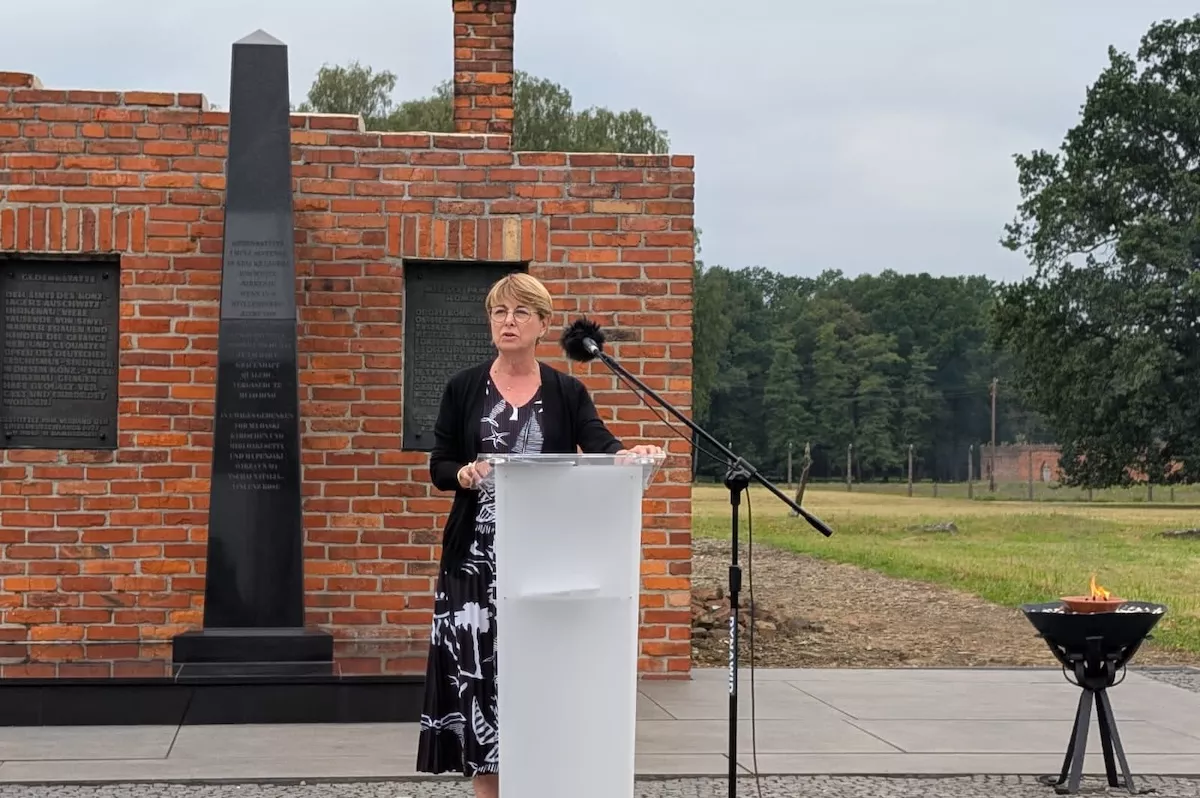
Monaco’s Minister of External Relations and Cooperation, Isabelle Berro-Amadeï, has told the official commemoration of the Roma and Sinti genocide at Auschwitz-Birkenau that remembrance demands constant vigilance against every form of hatred, speaking in her role as president of the Council of Europe’s Committee of Ministers.

She was speaking on 2nd August, the European Holocaust Memorial Day for Roma and Sinti, which marks the night in 1944 when the SS murdered the last Roma and Sinti prisoners of Auschwitz — around 4,300 people, most of them women, children and the elderly — in the gas chambers. The ceremony was held at the memorial on the site of the former camp.

Monaco currently holds the six-month rotating presidency of the Council of Europe’s Committee of Ministers for the first time, a role Berro-Amadeï chairs on the Principality’s behalf.

A call for vigilance

In her address, the minister said the duty of remembrance was not only about preserving the memory of the victims but about staying alert to every form of hatred, racism, antisemitism, antigypsyism and discrimination, and to the trivialisation of exclusion. Memory, she said, is one of the foundations of peace and of the defence of Europe’s democratic values.

She reaffirmed the Council of Europe’s commitment to Holocaust education, to combating denial, to preserving sites of memory and to the recognition of the genocide of the Roma and Sinti — a persecution that claimed an estimated half a million lives across Nazi-occupied Europe.

Passing on memory

On the margins of the commemoration, Berro-Amadeï joined a meeting between young Roma and Sinti and survivors of the Holocaust, devoted to passing remembrance on to new generations.

Monaco Life is produced by qualified, multi-media journalists writing original content. See more in our free newsletter, follow our Podcasts on Spotify, and check us out on  Facebook,  Instagram,  LinkedIn and Tik Tok

Photo source: Government Communications Department

Veteran French regulator Benoît de Juvigny joins Monaco financial watchdog

Monaco has appointed Benoît de Juvigny, the former Secretary General of France’s financial markets regulator, to the commission responsible for supervising financial activities in the Principality.

The appointment brings one of France’s most experienced regulatory figures into Monaco’s oversight structure as the country works to reinforce its financial safeguards and demonstrate compliance with international standards.

Appointment confirmed by Sovereign Ordinance

De Juvigny has been appointed as a member of the Commission de Contrôle des Activités Financières (CCAF) for the remainder of its current term, which runs until 5th October 2027.

His appointment was formalised by Sovereign Ordinance No. 12.047, signed by Prince Albert II on 13th July and published in the Journal de Monaco on 24th July.

Two decades in financial regulation

De Juvigny spent 20 years working in financial-market regulation, including 11 years as Secretary General of France’s Autorité des Marchés Financiers (AMF).

Appointed to the position in December 2012, he led the regulator’s administration during a period marked by major changes to European financial rules, the growth of digital assets and increasingly close scrutiny of market conduct. The AMF highlighted his two decades of regulatory experience when announcing his departure.

He joins a Monaco commission already chaired by another prominent former French regulator, Gérard Rameix, who served as president of the AMF from 2012 to 2017.

Supervising Monaco’s financial sector

The CCAF is Monaco’s independent administrative authority for the supervision of financial activities conducted in the Principality. Its responsibilities include granting and withdrawing authorisations, monitoring licensed institutions and funds, conducting inspections and imposing sanctions.

In February, the commission signed a cooperation agreement with the Autorité Monégasque de Sécurité Financière to strengthen information-sharing, coordinate inspections and reinforce Monaco’s response to money laundering, terrorist financing and corruption.

A significant moment for Monaco

The appointment comes at an important stage in Monaco’s efforts to strengthen its international compliance framework.

Monaco remains under increased monitoring by the Financial Action Task Force, although the organisation concluded in June that the Principality had substantially completed its action plan and qualified for an on-site assessment. That visit will determine whether the reforms have been implemented effectively and can be sustained.

See also: 

Monaco clears major hurdle in bid to exit FATF grey list

Monaco Life is produced by qualified, multi-media journalists writing original content. See more in our free newsletter, follow our Podcasts on Spotify, and check us out on  Facebook,  Instagram,  LinkedIn and Tik Tok

Photo source: Benoît de Juvigny Linkedin


Selling a home? Hiding a violent neighbour can cost you dearly

A seller who stays silent about a violent or dangerous neighbour can be made to compensate the buyer for the resulting loss in a property’s value, as France’s highest court has just confirmed, upholding an award of more than €100,000 against sellers who concealed an aggressive neighbour they had themselves repeatedly reported to police.

The case, decided by the Cour de cassation at the end of May, concerned a Paris apartment. Its owners had bought it, with a parking space, for €615,000 in 2011 and sold it on for €710,000 in 2016. What they did not tell the buyers was that they had been targeted by the occupant of a neighbouring flat, a man whose behaviour was described in court as abnormal and extremely aggressive, and against whom they had lodged complaints with the police.

After moving in, the new owners ran into the same problem, filing their own reports over the following years. In 2020 the situation turned frightening, when the neighbour rang at their door and held a loaded pistol to the wife’s head before her husband forced him away, leaving both hospitalised in shock. The couple took the former owners to court, arguing that the sellers had deliberately hidden a situation no buyer could reasonably have overlooked.

What the court decided

The buyers did not ask for the sale to be cancelled; they chose to keep the apartment and claim damages instead. A Paris court found in their favour in 2021, the Paris Court of Appeal confirmed the decision in July 2024, and on 28th May 2026 the Cour de cassation rejected the sellers’ final appeal. The sellers were ordered to pay €106,500 — 15% of the sale price — to reflect how much less the flat was worth because of the neighbour.

Crucially, the court rejected the sellers’ argument that the buyers had lost only the chance to negotiate a lower price, which would have limited the payout. Instead it treated the harm as the full gap between the price paid and the property’s real value, and awarded the entire amount.

Silence can be deceit

The ruling, published in the court’s official bulletin and so setting a benchmark for future cases, is a reminder that under French law a seller’s silence can itself amount to fraud, known as ‘réticence dolosive’. A seller must disclose anything likely to weigh materially on a property’s value. A merely irritating neighbour would not meet that test, but concealing serious, abnormal disturbances does — and, as this case shows, a buyer who later uncovers the truth can keep the property and still recover what they overpaid.

Monaco Life is produced by qualified, multi-media journalists writing original content. See more in our free newsletter, follow our Podcasts on Spotify, and check us out on  Facebook,  Instagram,  LinkedIn and Tik Tok

Photo: AI generated by Monaco Life