Monaco now allows plea deals: here’s how they will work

Monaco has introduced a new “plead guilty” procedure that allows certain criminal cases to be resolved without a conventional trial, alongside a separate mechanism for companies facing financial, economic and other specified offences. Here is what the changes mean and how they will work.

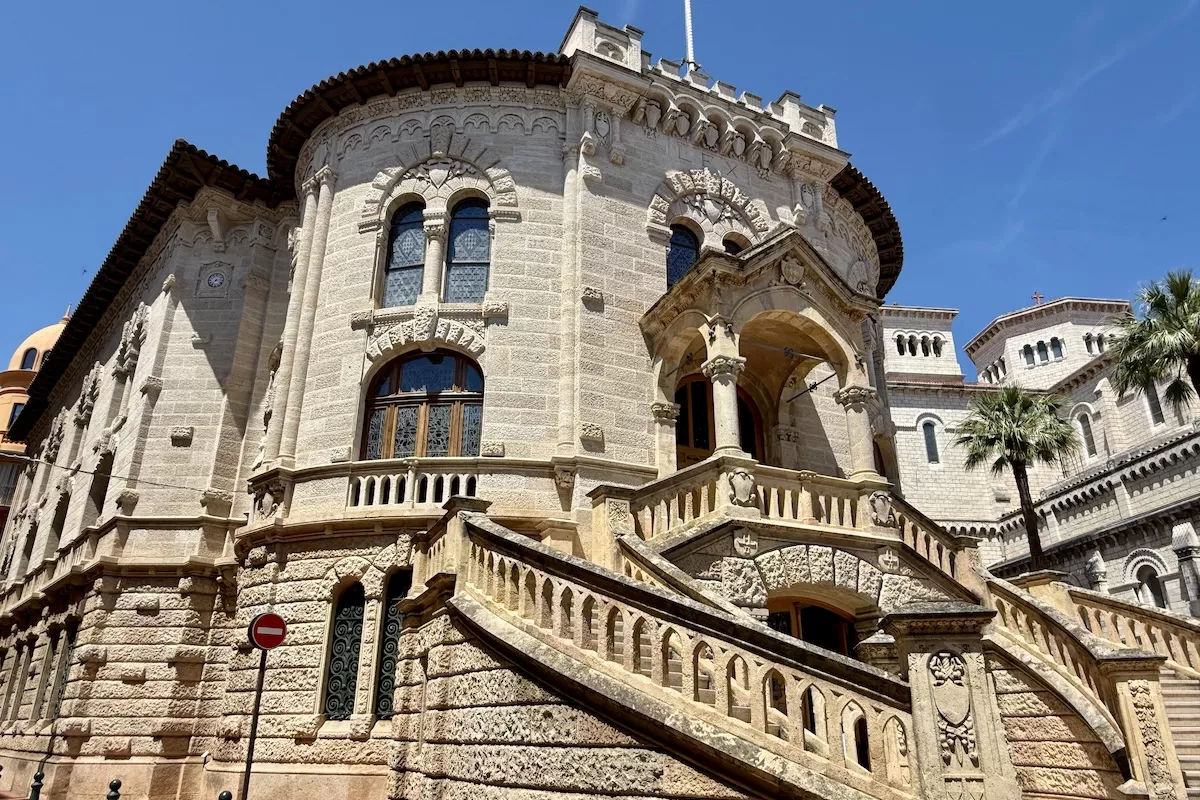
The reform was introduced under Law No. 1.593, passed by the National Council in June and enacted by Prince Albert II on 18th June. The latest edition of the Journal de Monaco has now published the legislative work behind the law, providing an opportunity to look more closely at one of the more significant recent changes to criminal procedure in the Principality.

At its heart are two new procedures: plaider coupable, or “plead guilty”, for individuals, and convention pénale, a separate mechanism principally relevant to companies and other legal entities.

What does ‘plead guilty’ mean in Monaco?

The new plaider coupable procedure allows the Prosecutor General to propose a penalty directly to an adult accused of an eligible offence, provided that person acknowledges both the facts of the case and their criminal classification.

The accused must be represented by a lawyer and must agree to the proposed punishment. The process can be initiated by the Prosecutor General or requested by the accused or their lawyer, and can also apply to a case that has already reached an investigating judge.

It does not mean every criminal case can now be settled with a guilty plea. Crimes — the most serious category of offences under Monaco law — are excluded, while contraventions can only be included when connected with the principal eligible offence.

The essential difference is that, in appropriate cases where the facts are accepted, Monaco now has a route to a criminal outcome without putting everyone through a conventional trial.

What happens after someone agrees to the penalty?

Accepting the prosecutor’s proposal is not the end of the process. The procedure retains judicial oversight, meaning the outcome must pass through the court rather than amounting to a private agreement between the prosecution and the accused.

That safeguard is an important part of the reform: the intention is to make suitable cases faster and more efficient without removing the judiciary from the process.

Companies get a different procedure

The second part of the law, convention pénale, is particularly relevant to Monaco’s substantial corporate and financial sectors.

This procedure allows the Prosecutor General, before prosecution has formally begun, to propose an agreement to a legal entity implicated in certain offences.

There is an important distinction from plaider coupable: the company does not have to admit guilt. Instead, it acknowledges the reality of the facts and agrees to comply with obligations set out under the convention.

The range of offences covered is significant and includes money laundering and related predicate offences, breaches of asset-freezing rules, tax offences, fraud, breach of trust, certain environmental offences, beneficial-ownership violations and offences involving the accuracy of company accounts.

That gives Monaco’s prosecutors another way of dealing with complex corporate and financial cases at a time when the Principality has been substantially strengthening its framework for combating money laundering and financial crime.

Is this a way of avoiding prosecution?

Not without conditions. A convention pénale remains subject to judicial validation, and the President of the Court of First Instance can refuse to approve an agreement. If the obligations contained in an agreement are not fulfilled, conventional proceedings can resume.

The two procedures therefore serve different purposes but share the same underlying idea: not every case necessarily needs to travel through the full traditional criminal trial process to reach an enforceable outcome.

For individuals who acknowledge an offence, Monaco now has a formal guilty-plea route. For companies facing certain financial, economic and other offences, prosecutors have a mechanism for reaching a judicially supervised resolution without necessarily pursuing a conventional prosecution.

Together, they represent a significant change in the way criminal justice can be administered in the Principality — and one that Monaco residents and businesses are now likely to encounter increasingly in practice.

Monaco Life is produced by qualified, multi-media journalists writing original content. See more in our free newsletter, listen to our Podcasts on Spotify, and check us out on  Facebook,  Instagram,  LinkedIn and Tik Tok

Photo credit: Cassandra Tanti, Monaco Life 

 

Splash Party 2026: The ultimate teen pool day in Monaco

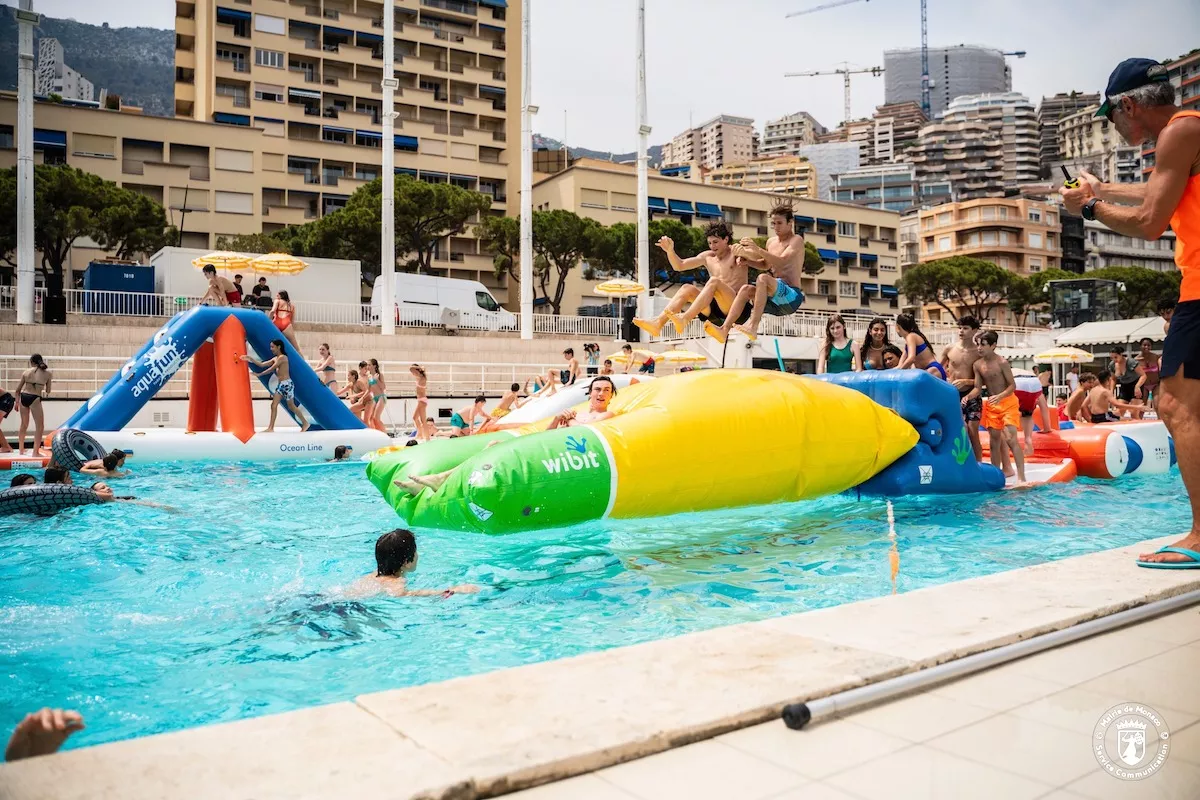
Monaco’s open-air swimming pool in Port Hercule, the Stade Nautique Rainier III, is set to host a fun-filled day out for local youth with its upcoming Splash Party on Saturday, 12th September.

Originally launched by the Mairie de Monaco to celebrate the end of the school year and the start of summer, this popular annual event will close the venue to the general public for the entire day, turning the facility into an exclusive zone for teenagers.

Designed specifically for school pupils and residents aged 12 to 17 (from 6ème upwards) who live or study in Monaco, the afternoon features a vibrant atmosphere complete with a live DJ, music, giant inflatables, water toys, and a free non-alcoholic open bar. 

Your ticket to the ultimate pool day

Set right in the heart of Port Hercule, participants can enjoy the heated Olympic-sized seawater pool, 45-metre water slide, and diving boards, all backed by reinforced security and qualified lifeguards to ensure everyone enjoys the party safely.

Tickets are priced at €20 for eligible school pupils and residents, while non-resident accompanying guests pay €25 (and must be accompanied by someone who lives or studies in Monaco). Entry is subject to the organisation’s discretion, and attendees must present a valid form of identification or a school record book upon arrival.

Further information and ticketing details are available through the Mairie website at www.mairie.mc.

Stay updated with Monaco Life: sign up for our free newsletter, listen to our podcasts on Spotify, and follow us across Facebook,  Instagram, LinkedIn, and Tik Tok

Photo credit: Mairie de Monaco 

Ocean’s filming begins in Monaco with major traffic and bus changes

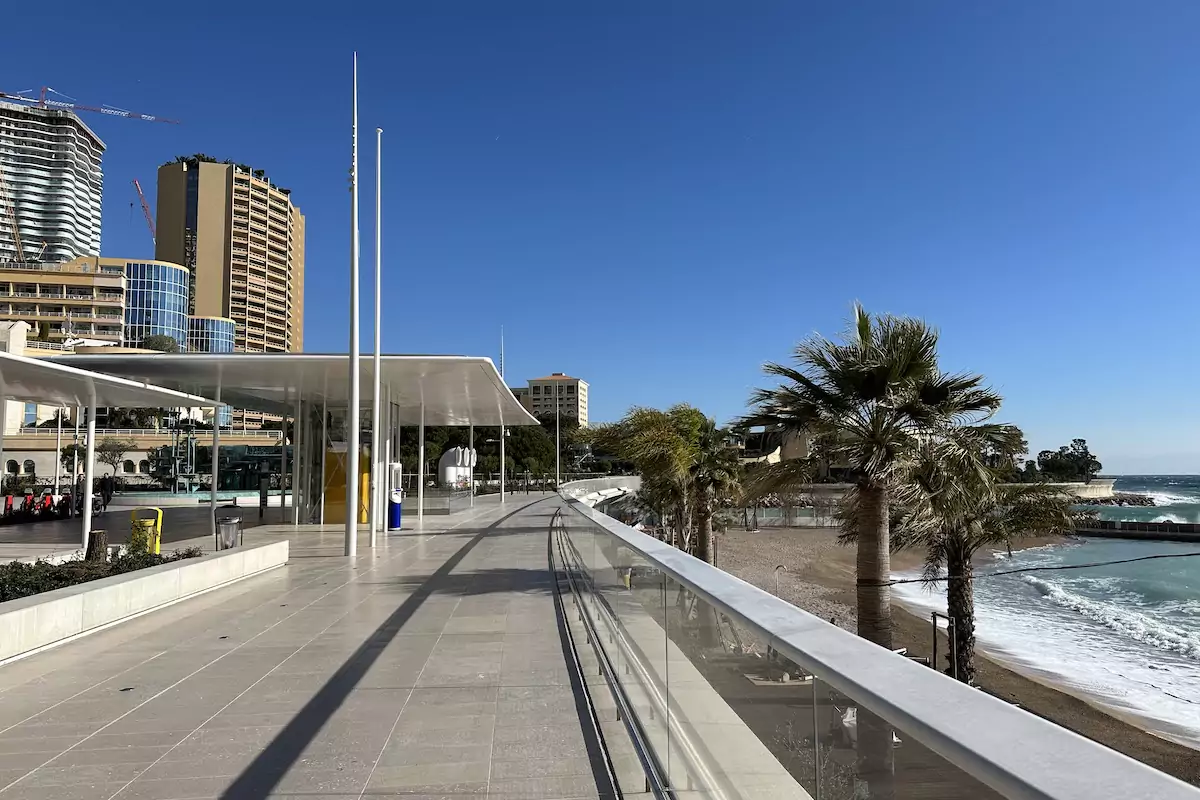
Larvotto monaco

Filming for the new Ocean’s movie got underway in Monaco this Monday, bringing five mornings of road closures and significant changes to bus services as the Hollywood production moves through some of the Principality’s most recognisable locations.

Monaco Life first revealed the filming schedule on 14th August, including plans for scenes around Port Hercule, Monte-Carlo and Larvotto. Now, as production begins, the Monaco Government has released a comprehensive traffic plan showing exactly how residents and commuters will be affected.

The restrictions run through to Friday 28th August, with most road closures in force between 5am and 10am. Residents are exempt where possible, although their journeys may be temporarily stopped while cameras are rolling, and authorities warn that arrangements could change according to the needs of the shoot.

Filming begins at Port Hercule

For anyone travelling through Monaco this Monday, the immediate impact is around Port Hercule.

Avenue J.F. Kennedy and Boulevard Louis II are closed between 5am and 10am, along with Route de la Piscine between Parking Louis Chiron and Quai des États-Unis.

The operation becomes considerably larger on Tuesday, when cameras move through central Monaco. Closures will include Boulevard Albert Ier, Avenue de la Costa, the Costa slip road, Avenue d’Ostende and the Sainte-Dévote roundabout, Passage de la Porte Rouge and Tunnel Rocher Albert Ier.

Sections of Boulevard de Suisse, Avenue Princesse Alice, Rue Suffren Reymond and Rue Louis Notari are also affected, together with Avenue Henry Dunant and Rue Princesse Antoinette.

Traffic will be reorganised around the closures. Vehicles leaving Quai Antoine Ier must head towards Tunnel Rocher-Noghès, while those coming from Boulevard Louis II will be directed towards Route de la Piscine. Parts of Rue Suffren Reymond will temporarily change direction and a section of Rue Louis Notari will operate two-way.

From Monte-Carlo to the Casino

On Wednesday, the production moves towards Avenue des Citronniers, Avenue des Spélugues and sections of Avenue Princesse Grace and Avenue de la Madone.

Thursday will see the production take over some of Monaco’s most prominent addresses.

Place du Casino will close between 5am and 10am, together with Boulevard Albert Ier, Avenue d’Ostende, Avenue de Monte-Carlo, Avenue des Spélugues, Avenue des Citronniers, Avenue Princesse Alice and Avenue de la Costa. Sections of Avenue de la Madone and Avenue Princesse Grace will also be inaccessible.

The final morning, Friday, shifts the disruption towards Portier and Larvotto, while also returning to parts of the port. Avenue des Spélugues, Avenue des Citronniers, Avenue d’Ostende, Avenue J.F. Kennedy, Boulevard Louis II and Avenue Princesse Grace are among the closures, together with the Portier roundabout and the Larvotto and Costa slip roads.

Bus passengers face widespread disruption

The Government’s latest announcement also gives a much clearer picture of what the shoot will mean for public transport.

From the beginning of service until 10am every morning through Friday, numerous stops on CAM Lines 1, 2, 3 and 5 will not be served.

More significantly, Line 6 and X3 will not operate at all before 10am. Line 4 and X1 are unaffected, while X2 will terminate at Monte-Carlo and skip Portier.

The disruption extends beyond Monaco’s own network. ZOU! Lines 600 and 80 will bypass a number of their usual stops in the Principality until 10am, with replacement stops being used at locations including Pont Sainte-Dévote, Crémaillère, Honoré II, Office de Tourisme and Place des Moulins.

Parking restrictions already in force

Parking bans will move with the production throughout the week, generally beginning at 3am on the morning of filming.

One longer restriction applies to Avenue des Citronniers from Wednesday morning through to the end of Friday, while parking opposite 4 bis Quai Antoine Ier has been prohibited since Sunday lunchtime and remains so until 11.59pm Friday.

Quai Albert Ier is also closed to pedestrians throughout the production period, from midday Sunday until 11.59pm Friday.

The Government continues to describe the project simply as an “important cinematographic production”. As Monaco Life previously reported, however, the dates correspond with the Monaco shoot for the upcoming Ocean’s Eleven prequel starring Margot Robbie and Bradley Cooper.

Margot Robbie, Bradley Cooper and Monica Barbaro have been photographed filming the Ocean’s Eleven prequel in Paris this past week.

The production is expected to recreate Monaco around the time of the 1962 Grand Prix, with Cooper also directing.

See also:

Bradley Cooper spotted at Monaco Historic Grand Prix amid Ocean’s prequel buzz

Monaco Life is produced by qualified, multi-media journalists writing original content. See more in our free newsletter, listen to our Podcasts on Spotify, and check us out on  Facebook,  Instagram,  LinkedIn and Tik Tok

Photo credit: Cassandra Tanti, Monaco Life