Monégasque athletes set to head to the Mediterranean Games in Taranto

Monaco will send a delegation of 17 athletes to the 20th Mediterranean Games, which take place in Taranto, Italy, from 21st August to 3rd September. Blending young talent with seasoned competitors, the delegation will represent the Principality across eight disciplines.

Monaco’s footprint at the Games expands into new territory this August. Padel makes its official Mediterranean Games debut, represented by Nicolas Fedoroff and 16-year-old Noah Minioni, the delegation’s youngest competitor. This marks Monaco’s second major multi-sport outing in the sport following the 2023 European Games in Kraków-Małopolska. 

New frontiers: Equestrian debuts

Alongside padel, Monaco enters a team equestrian event for the first time. The youthful trio representing the red and white consists of Eileen Delescule Thomel, 19, Anastasia Nielsen, 20, and Iñigo López de La Osa Franco, 22. They will compete in a striking venue: an equestrian facility constructed inside a former stone quarry.

Family ties in boules

The personal side of sport is prominent in the boules squad, which features a family dynamic. Guillaume Campillo, competing in precision shooting and men’s doubles, appears in his third Mediterranean Games following outings in Pescara and Oran. He is joined by his wife, Sabrina Campillo, who competes in her second Games in precision shooting and women’s doubles. Their 20-year-old daughter, Giulia Campillo, makes her international debut, partnering with her mother for the women’s doubles. Alain Costa rounds out the boules team as the delegation’s most senior competitor.

Veterans return to familiar stages

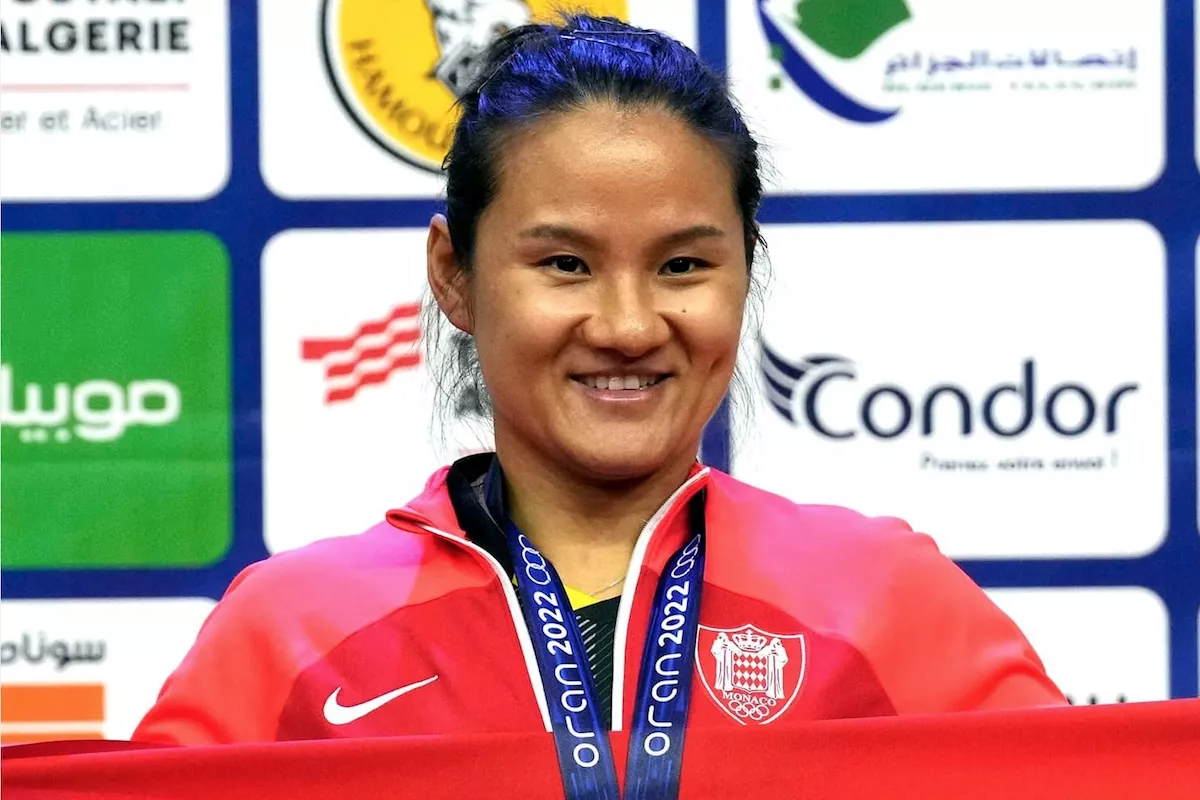
Several established names return to familiar competitive stages. In table tennis, Xiaoxin Yang returns to international competition following maternity leave. Yang carries a strong Mediterranean pedigree, having claimed silver in Tarragona and gold in Oran. Kévin Crovetto enters his fourth Mediterranean Games in artistic gymnastics, having previously competed across Mersin, Tarragona, and Oran. Jérémy Moutout in ILCA 7 sailing and Marvin Gadeau in plus-100 kg judo both head into their third consecutive Games appearances. In athletics, Marie-Charlotte Gastaud, Thomas Carreda, and Téo Bottin make their debuts alongside Louise Debeaumont in ILCA 6 sailing.

Life on a floating village

Athletes arriving in Apulia will experience an unconventional setup. Because organisers opted against a traditional permanent athlete village, the Mediterranean Village is established within an Italian naval base, with the majority of competitors accommodated aboard cruise ships. The arrangement mirrors a similar floating setup successfully utilised during the Games of the Small States of Europe hosted by Monaco in 2007, when a cruise ship docked in Port Hercule to house visiting delegations. As the ships settle into Taranto’s waters, Monaco’s 17 representatives prepare to write the next chapter of the Principality’s multi-sport history.

Stay updated with Monaco Life: sign up for our free newsletter, listen to our podcasts on Spotify, and follow us across Facebook,  Instagram, LinkedIn, and Tik Tok

Monégasque table tennis player Xiaoxin Yang will contest her third Mediterranean Games. Photo credit: Nacho Casares Montoya – Spanish Olympic Committee  
 

Monaco registers its first armwrestling club

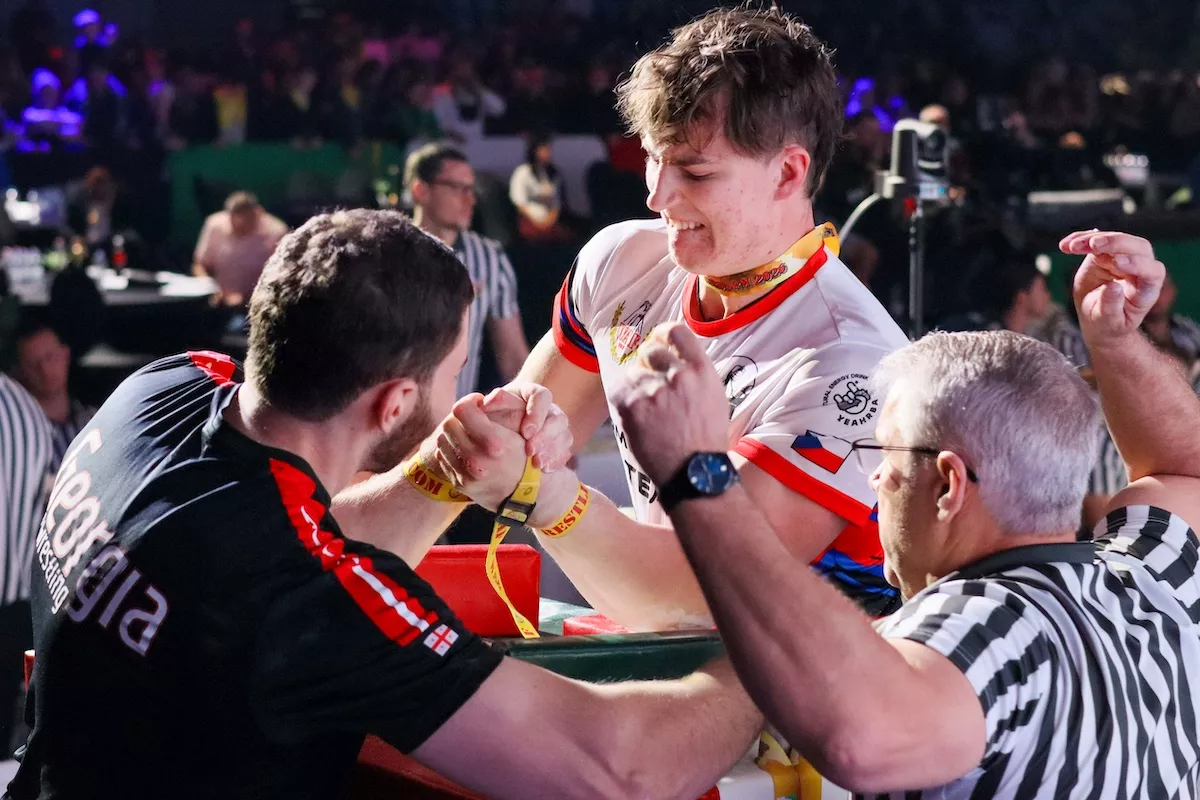
Armwrestling now has an official foothold in Monaco. The Principality has registered its first club dedicated to the sport, with plans for training, competitions, masterclasses and ties to the international scene.

The Monaco Armwrestling Club was granted approval by the Minister of State, with its registration confirmed on 16th June 2026.

Building the sport in the Principality

The club’s aim is to promote and develop armwrestling in all its forms, and to raise its profile through events held in Monaco, including seminars and masterclasses for teenagers and adults. It also intends to work alongside international armwrestling federations, among them the FFA, FF Force and East versus West.

The focus runs from newcomers to experienced competitors, with training courses, workshops, group lessons and competitions all part of the plan.

A commitment to clean sport

The club has also set out a clear position on doping. Its founding text states that the association stands for fair and honest competition and rejects any corruption of sporting values. It has pledged to support the fight against doping, to ensure its members follow the rules, and to adopt its own anti-doping regulation alongside its statutes.

The registration adds another discipline to Monaco’s growing sporting landscape, giving armwrestling in the Principality a formal base from which to build.

Monaco Life is produced by qualified, multi-media journalists writing original content. See more in our free newsletter, listen to our Podcasts on Spotify, and check us out on  Facebook,  Instagram,  LinkedIn and Tik Tok

Photo credit: Armwrestling Photographer, Unsplash

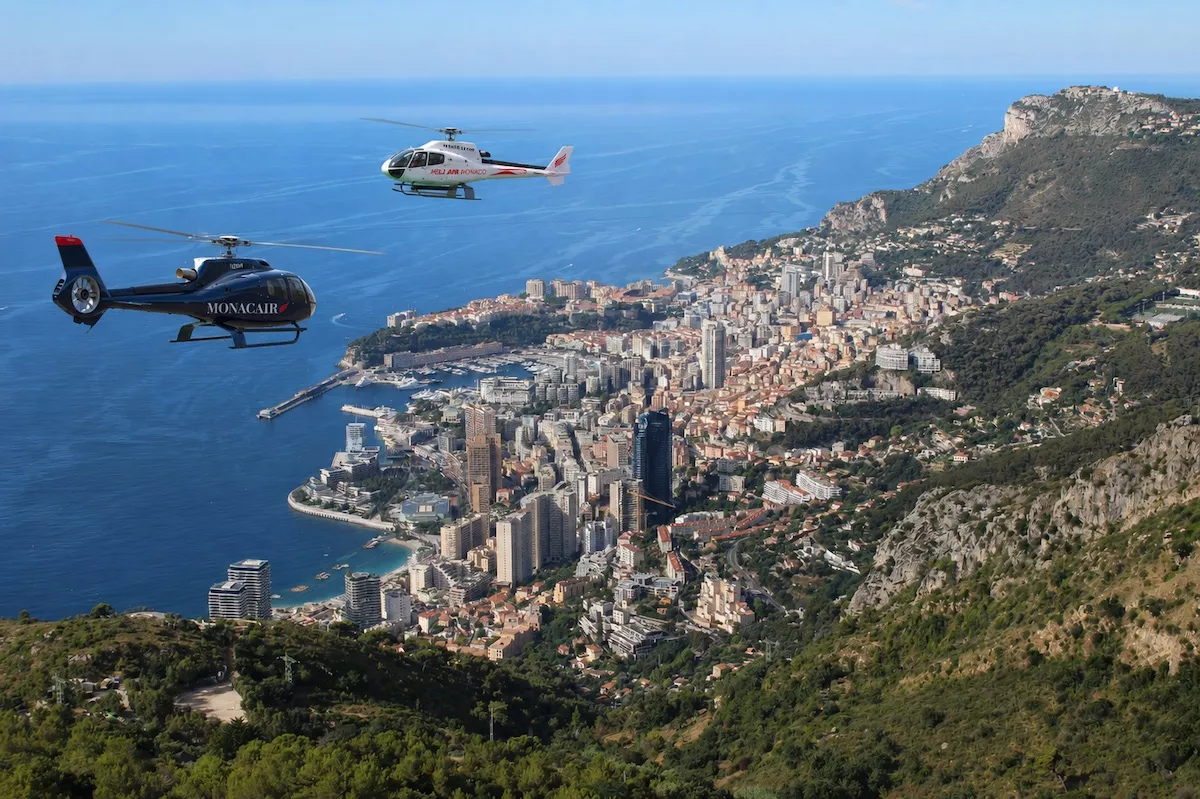
Monacair monopoly ends as Monaco approves second Nice helicopter operator

Monaco has ended Monacair’s exclusive position on the scheduled helicopter route to Nice Côte d’Azur Airport, authorising two operators to compete on the seven-minute connection.

Monacair and Héli Air Monaco can now both operate scheduled services between Monaco Heliport and Nice airport until 31st December 2026.

The decision marks a significant change to the route. Monacair had held the exclusive Monegasque concession since 1st January 2016, after winning a government tender the previous autumn and taking over the line from Héli Air Monaco, which had operated the connection since 1976. That ten-year concession expired at the end of last year.

Two operators and a capped fare

Both companies must offer a scheduled service seven days a week, with departure times published in advance.

The government has capped the basic ticket price at €195 including tax. Operators can charge less or offer promotions, but the standard scheduled fare cannot exceed that amount. The ceiling does not apply to private helicopter charters.

For passengers, the introduction of a second operator could mean more departure choices, greater seat availability during busy periods and increased competition over prices and services.

However, the order does not specify how many daily flights each company must provide. The practical impact will depend on the schedules and fares published by Monacair and Héli Air Monaco.

Safety and service requirements

Both operators must provide a premium service using aircraft equipped for VIP passengers.

Their fleets must be certified by the European Union Aviation Safety Agency and comply with noise-limitation standards. The companies must also meet aviation safety-reporting requirements and cannot outsource the route to another carrier without prior government approval, except in limited circumstances.

The order also requires both companies to respect fair-competition rules.

New agreement between Monaco and France

The change follows a memorandum signed by the French and Monegasque aviation authorities on 3rd June. From 31st July, each country gained the right to designate two carriers for the route.

The helicopter connection takes approximately seven minutes, compared with a road journey that can take 45 minutes or considerably longer during peak Riviera traffic. It is particularly important for international travellers because Monaco does not have its own commercial airport.

The current authorisations are temporary and expire at the end of 2026, meaning the government will need to decide how the route will operate from 2027.

Ministerial Order no. 2026-457 was signed on 7th August and published in the Journal de Monaco on 14th August.

Monaco Life is produced by qualified, multi-media journalists writing original content. See more in our free newsletter, follow our Podcasts on Spotify, and check us out on  Facebook,  Instagram,  LinkedIn and Tik Tok

Photo of Monaco credit: Richard McCreery, Monaco Life. AI generated helicopters overlay

France’s constitutional court blocks ban on under-15s using social media

The French government must redraft its flagship online child-protection law after the country’s highest constitutional authority ruled on 14th August that a ban on social media access for children under 15 breached freedom of expression and failed to protect users’ privacy, dealing a setback to one of President Emmanuel Macron’s signature reforms.

The Constitutional Council struck down Article 1 of the legislation, which had been due to take effect on 1st September. The measure would have barred children younger than 15 from opening a social media account, required platforms to close existing under-15 accounts within four months, and obliged services to introduce age verification approved by France’s privacy regulator.

What the court found

The Council ruled that the ban was neither appropriate, necessary nor proportionate to the freedom of expression and communication of those affected, and that its age-verification requirements posed a wider threat to privacy by forcing every user to prove their age.

“By prohibiting minors under the age of fifteen from accessing certain online services, the law inherently requires every person, even an adult, to prove their age before accessing them,” the Constitutional Council said. It added that, by failing to specify the conditions and limits under which such proof must be provided, lawmakers had not established the legal safeguards necessary to ensure compliance.

The judges accepted that the state may restrict minors’ access online to shield them from addiction, harassment, pornography and fraud. The problem, they found, lay in a blanket prohibition that swept across a broad category of services without distinguishing between their functions or the risks each posed.

Macron orders a rewrite

Macron has instructed Prime Minister Sébastien Lecornu to rework the draft to address the Council’s objections, the Élysée said, adding that the president had no intention of abandoning the policy. The president is determined for a revised law to take effect before spring 2027, when France holds a presidential election in which he cannot stand for a third term.

The reform has been a personal priority for Macron, who in April urged teenagers to switch off their devices and read in order to become better citizens. He has repeatedly linked social media to violence among young people and has pushed for common rules at European Union level.

First in Europe to follow Australia

Approved by parliament in July, the law would have made France the first country in Europe to introduce such a restriction, following Australia, whose world-first ban on under-16s using platforms including Facebook, Snapchat, TikTok and YouTube came into force in December.

The same ruling upheld a separate law establishing a right to assisted dying for adults with an incurable condition, which the Élysée welcomed as a major social reform of Macron’s second term. France is set to join the Netherlands, Belgium, Switzerland and Canada in permitting the practice under strict conditions.

Monaco Life is produced by qualified, multi-media journalists writing original content. See more in our free newsletter, follow our Podcasts on Spotify, and check us out on  Facebook,  Instagram,  LinkedIn and Tik Tok

Image is AI generated by Monaco Life