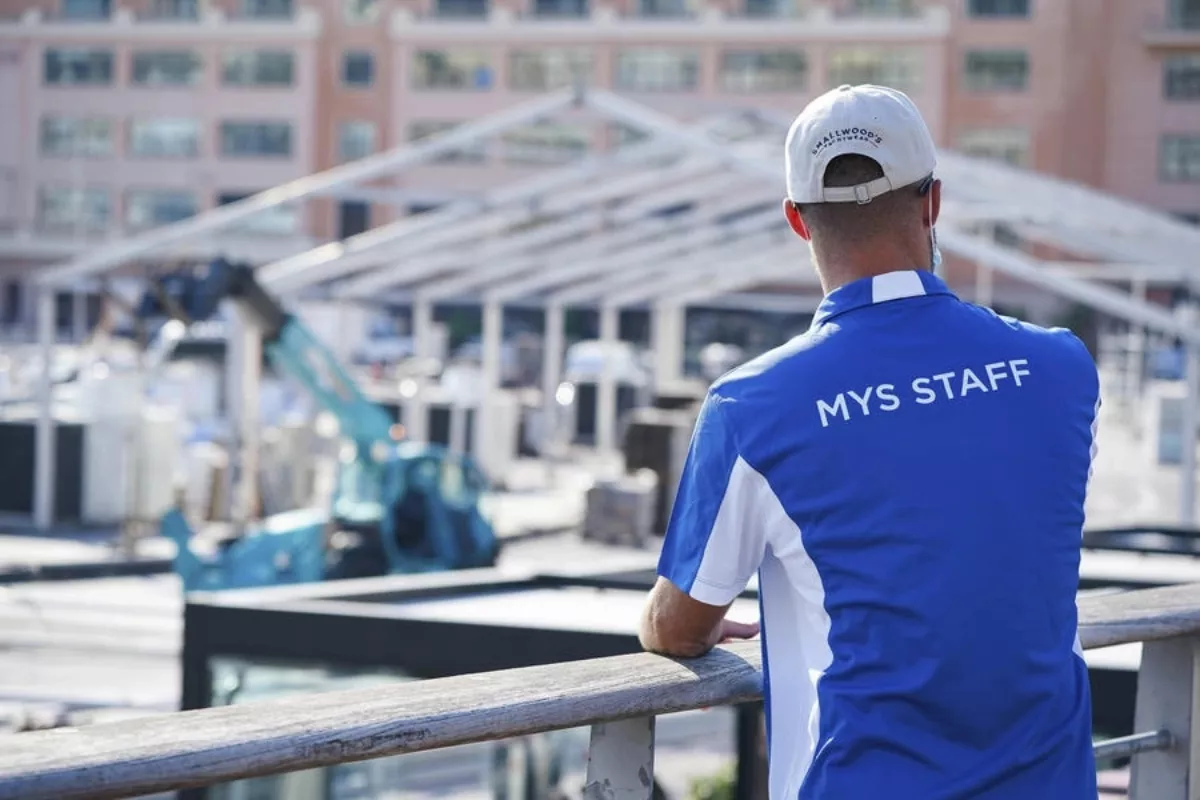
Preparations for the 2026 Monaco Yacht Show begin on Saturday 29th August, bringing major logistical operations and traffic restrictions to Port Hercule ahead of the international exhibition, which runs from 23rd to 26th September.
The build will take place across the Quai des États-Unis, Avenue J.F. Kennedy, the Route de la Piscine, and surrounding port quays, with work extending to Quai Antoine Ier on 7th September. To accommodate the infrastructure safely, local authorities have announced parking bans and changes to vehicle and pedestrian access. Complete temporary closures will affect certain zones during the setup period.
Traffic mitigation and peak-hour access
Organisers have implemented specific measures to reduce disruption during peak hours, including temporary arrangements for school drop-offs nearby and provisional routing to maintain deliveries.
The Route de la Piscine will close entirely from 14th to 30th September as the area becomes an active construction zone. However, the road will remain open in the Portier-to-Quai Antoine Ier direction during morning peak hours, except on the day before the show opens and the three days following its close. A dedicated parking area for motorcycles and scooters will open on Avenue de la Quarantaine from 7th September.
Reopening and public restoration
Public spaces will be returned incrementally following the event, with normal access fully restored by 8th October. The traffic and security plan was coordinated between state services and event organisers to balance the requirements of the exhibition with minimal disruption for local residents and businesses.
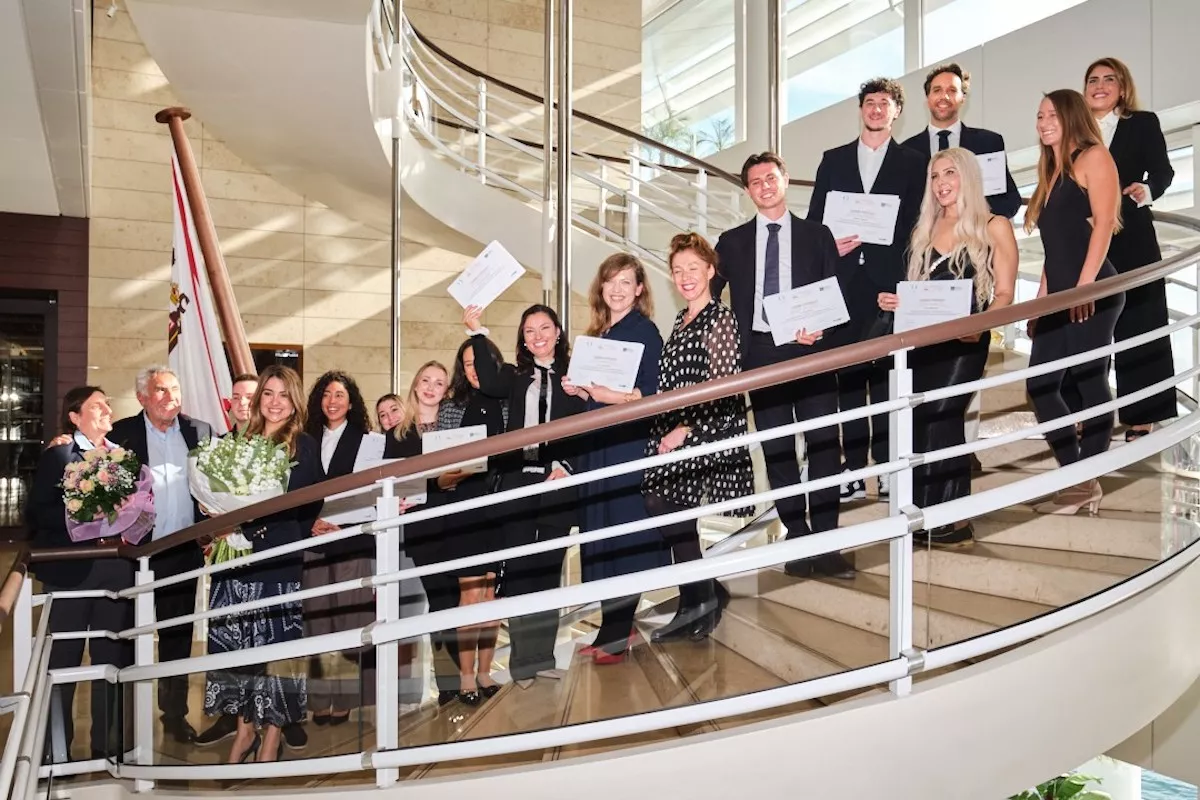
The superyacht industry is changing fast, and training centres are starting to focus on much more than just sailing ships. The Yacht Club de Monaco’s training school, La Belle Classe Academy, is running a nine-week online masterclass to teach people about the business and legal sides of luxury yachts.
Taking place from 16th September to 14th November, the digital course is designed so people with busy jobs can join without having to travel. It covers a wide range of topics, including how ships are designed, maritime laws, insurance policies, and how chartering works.
Looking at the big picture
When La Belle Classe Academy was first set up in 2015, its main goal was to raise service standards and teach traditional maritime manners. But this new course is attracting a very different crowd.
Instead of just training people who work on boats, the classes draw a big mix of students. There are experienced marine professionals who want to learn new skills, yacht crew members who are planning to move to office jobs on land, and financial experts – like private bankers and corporate lawyers – who handle money for wealthy clients buying yachts. By looking at a yacht’s entire life from start to finish, from the day it is built to its legal paperwork and daily operations, the course tries to connect the worlds of boating and business.
A growing need for training
As superyachts get bigger and international rules get stricter, managing them requires a lot more than just sailing knowledge. Courses like this show how the modern yachting world is maturing.
To help young people break into the sector, the club is also planning a ‘Yachting Student Fair’ in March 2027 to connect job seekers with industry experts. Combined with other events like their annual superyacht chef competitions, these efforts are all part of a bigger plan by Monaco to position itself as the main business hub for the global luxury yachting community.
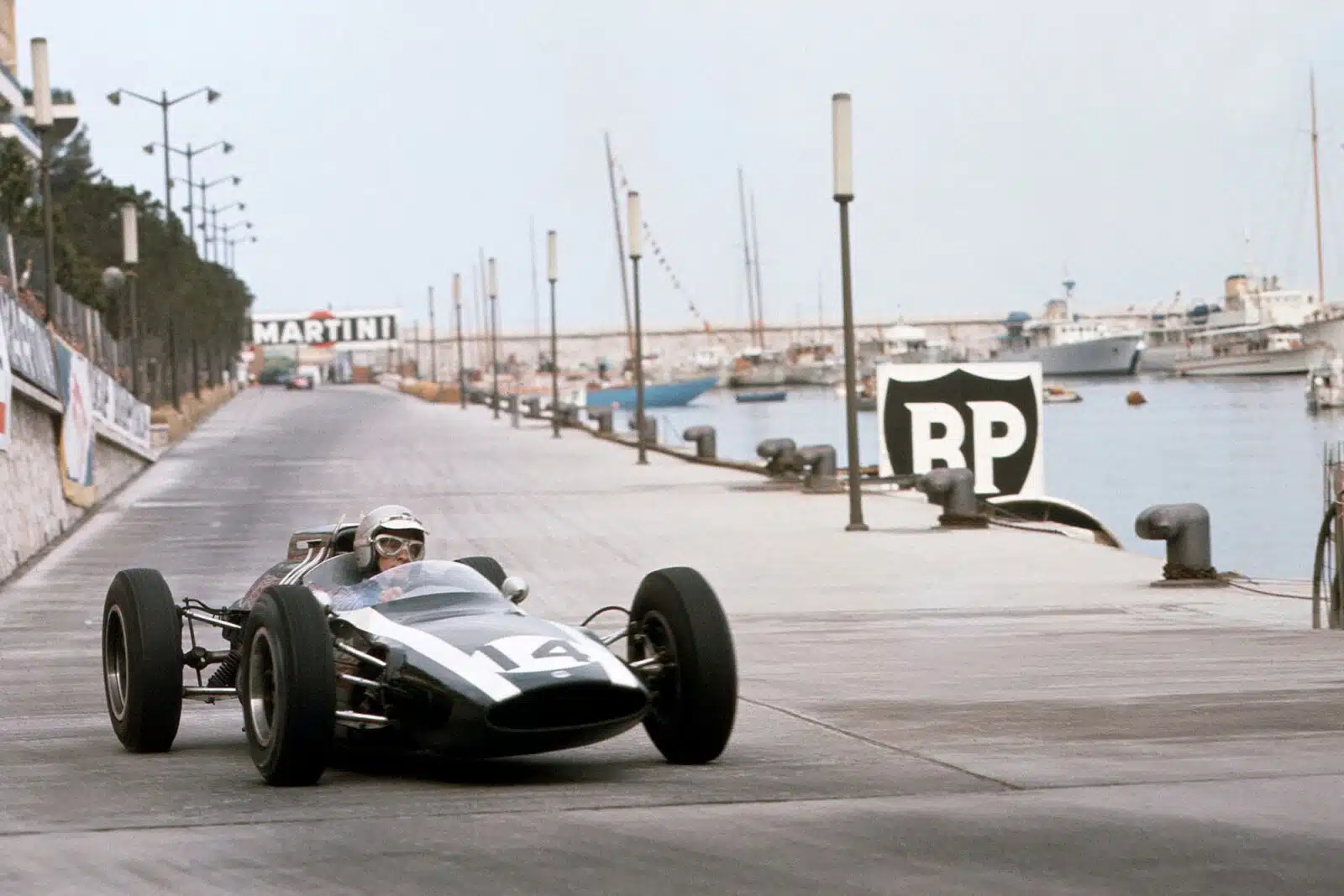
Vintage racing cars, period tailoring and a city wound back six decades: for a few days this week, Port Hercule has been doubling as the Monaco of 1962. The occasion is the filming of the Ocean’s Eleven prequel, starring Margot Robbie and Bradley Cooper, which has taken over the harbour to recreate that year’s Grand Prix.
The Warner Bros production, working under the title Sandcastles, remains in the Principality until Friday 28th August. Hundreds of extras in period costume have joined the shoot, alongside classic cars and sets built to reproduce the Monaco of the early 1960s. And this time the Principality is no mere backdrop. It is the scene of the crime.
From the port to Casino Square
Over five mornings, the shoot is working through some of Monaco’s most recognisable settings. It opened around Port Hercule on Monday before moving through central Monaco and Monte-Carlo, taking in stretches of Avenue Princesse Grace along the way.
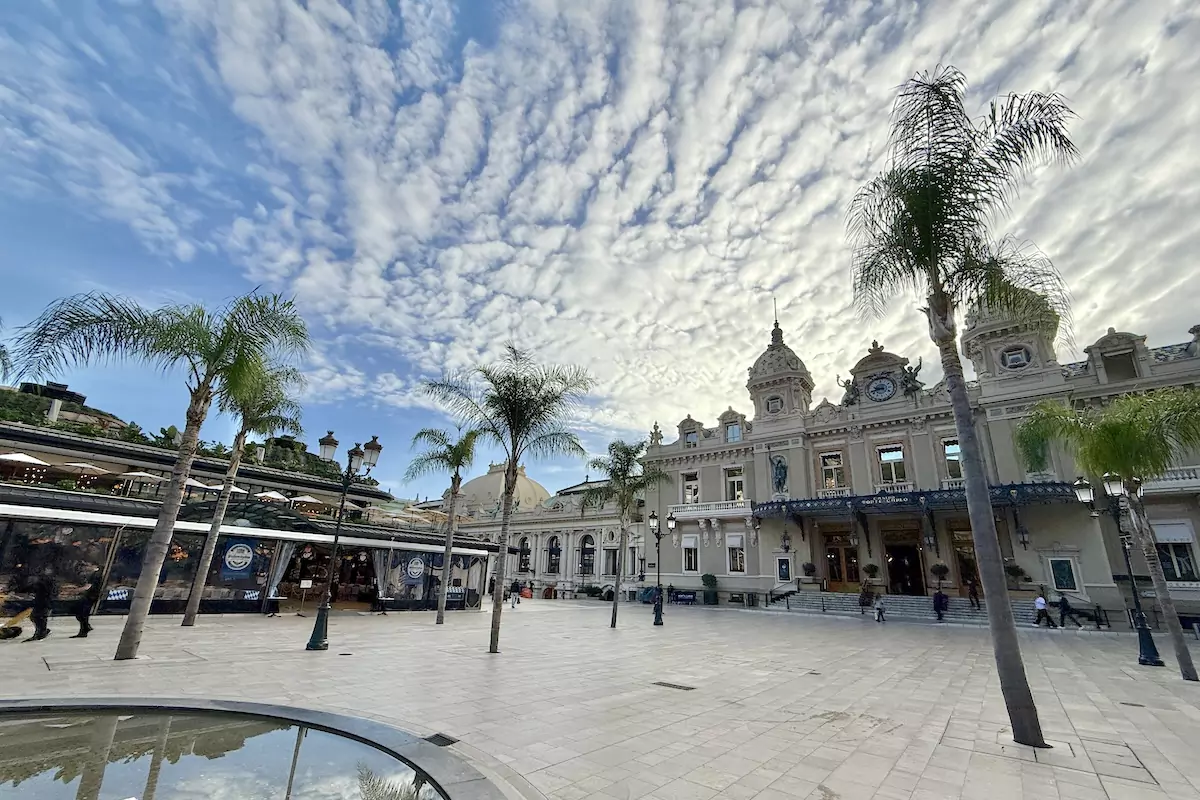
On Thursday it reaches the Principality’s grandest address, closing Place du Casino, the forecourt of the Casino de Monte-Carlo, for filming, before finishing on Friday around Portier and Larvotto and back at the port.
The Casino do Monte-Carlo and Café de Paris will be featured in the new film. Photo credit: Cassandra Tanti
A heist at the 1962 Grand Prix
The film reaches back to before there was a Danny Ocean at all, to the parents who, it seems, taught him the trade. Robbie confirmed at CinemaCon in April that the couple set out to pull off a major heist during the 1962 Monaco Grand Prix, with she and Cooper expected to play Danny’s mother and father, though Warner Bros has yet to confirm their characters’ names.
Danny Ocean, of course, is the career criminal played by George Clooney in Steven Soderbergh’s Ocean’s Eleven, Ocean’s Twelve and Ocean’s Thirteen. That makes Monaco central to the story rather than a stand-in for somewhere else: the robbery happens here, against the noise and glamour of race weekend.
Cooper takes over
Cooper has written the latest draft of the screenplay and is directing, starring and producing, his fourth film behind the camera after A Star Is Born, Maestro and Is This Thing On?
Getting here took time. Since the project was announced in 2022, it has passed through the hands of two directors, Jay Roach and then Lee Isaac Chung, while Ryan Gosling was once lined up for the male lead. Cooper took the reins earlier this year after Chung’s departure. Robbie produces through LuckyChap, the company she runs with Tom Ackerley, Josey McNamara and Milan Popelka, and Carrie Solomon worked on earlier versions of the script.
Who else is in it
Wagner Moura leads the supporting cast as the film’s principal antagonist, with Monica Barbaro and Josh Gad also in significant roles. The wider ensemble reportedly includes Vicky Krieps, George MacKay, Lauren Ridloff, Jack Holden and Omar Sy, though Warner Bros has yet to release a full official cast list.
Cooper did his homework in April
This is not Cooper’s first Monaco reconnaissance. Back in April, he was spotted at the 15th Grand Prix de Monaco Historique, moving through the paddock and grandstands and photographing the vintage cars, at one point lying flat on the circuit to shoot them from below.
The real race behind the fiction
The 1962 Monaco Grand Prix the film borrows was a race worth borrowing. Held on 3rd June, it was won by Bruce McLaren in a Cooper-Climax, no relation to the film’s director. Jim Clark took pole but retired, and Graham Hill looked set for victory until his BRM’s engine let go late in the 100-lap race, leaving Ferrari’s Phil Hill and Lorenzo Bandini to complete the podium.
Prince Rainier III and Princess Grace were on hand to present the trophy that day, and whether the production also revisits the Monaco of the reigning couple, at the height of its glamour, is not yet known.
From Paris to the Riviera
Monaco is only one stop on a longer shoot. Filming reached Monaco from Paris, where Robbie and Cooper were photographed on set as recently as last week, Robbie in tailored 1960s black-and-white looks that drew comparisons with Audrey Hepburn and Monica Barbaro in period suiting alongside her. After Monaco, the shoot is expected to continue elsewhere on the French Riviera, including Nice.
Casting a 1962 crowd
Filling those streets with a convincing 1962 crowd has been a project in itself. Back in June, casting notices called for extras aged 18 to 90 across Nice and Monaco, covering the full cast of a Grand Prix weekend, from croupiers, sommeliers and concierges to mechanics, racing drivers, firefighters, dancers, musicians and sailors.
Sandcastles, for now, remains only a working title. The finished film, still officially untitled, is is scheduled for release on 25th June 2027.
Monaco Life is produced by qualified, multi-media journalists writing original content. See more in our free newsletter, listen to our Podcasts on Spotify, and check us out onFacebook, Instagram, LinkedIn and Tik Tok.
Monaco will host the 1567th meeting of the Ministers’ Deputies on 2nd September, welcoming ambassadors and permanent representatives from the 46 member states of the Council of Europe as part of the Principality’s Presidency of the Committee of Ministers.
Founded in 1949, the Council is the continent’s leading organisation for the defence of human rights, the rule of law, and democracy, uniting over 700 million citizens.
During the thematic debate, experts – including Dr. Céline Dubreuil-Degortes from the Ocean Policy Directorate at the Oceanographic Institute – will present scientific findings, legal challenges, and policy perspectives to inform intergovernmental discussions.
Ambassador Gabriel Revel, Permanent Representative of Monaco to the Council of Europe, explained that focusing on the environment reflects the Principality’s long-term commitment to combating climate change and halting biodiversity loss under the drive of the Sovereign Prince. “Monaco places these issues at the heart of its international action and contributes actively to multilateral initiatives aiming to promote more sustainable development,” he said.
He added that the debate aligns directly with commitments made at the 4th Summit of Heads of State and Government of the Council of Europe in Reykjavík in 2023, which recognised the urgent need to address the impact of environmental degradation on the exercise of fundamental human rights.
Resuming work at the Oceanographic Museum
While the committee – the main decision-making organ of the Council – usually convenes weekly at the organisation’s headquarters in Strasbourg alongside an annual ministerial-level gathering, this particular session marks the autumn resumption of work following the summer break.
The high-profile gathering will take place exceptionally at the Oceanographic Museum of Monaco. It will open with remarks from Isabelle Berro-Amadeï, Government Counsellor and Minister for External Relations and Cooperation, who serves as President of the Committee of Ministers. The proceedings will be chaired by Ambassador Revel.
Discussing the significance of moving the session to the Mediterranean, Ambassador Revel said that it follows a tradition where states holding the rotating presidency welcome the Deputies to their national territory. “It is appreciated by the delegations that the states holding the Presidency of the Committee of Ministers organise, during their mandate, a meeting of the Committee of Ministers’ Deputies on their territory,” Ambassador Revel explained, adding that it offers visiting diplomats a unique opportunity to “discover the heritage, history, and specifics of the country that assumes the Presidency.”
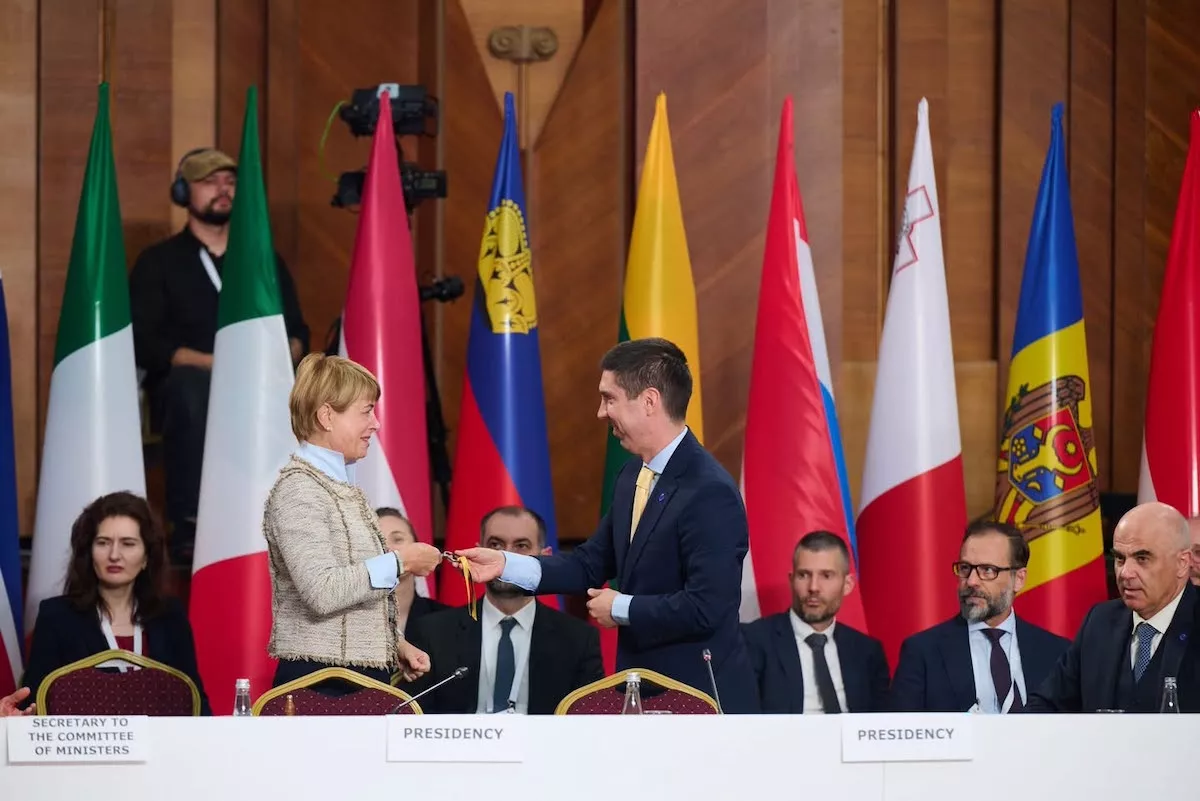
Isabelle Berro-Amadeï receives the symbolic keys of the Committee of Ministers from Moldova’s Minister of Foreign Affairs, Mihai Popșoi, as Monaco takes over the rotating presidency of the Council of Europe. Photo credit: Government Communications Department
Behia Jazz 5tet to return to La Note Bleue for a special concert
The Behia Jazz 5tet will perform a special concert titled ‘Les grandes voix du jazz’ at La Note Bleue on Larvotto beach on 23rd September, running from 8pm to 9:30pm.
Following the success of its debut performance in March 2025, which featured a tribute to Cole Porter, the ensemble returns to the venue to take audiences on a musical journey spanning from the 1940s to the present day.
The repertoire showcases legendary voices and melodies across generations, from Ella Fitzgerald, Sarah Vaughan, and Billie Holiday to Eliane Elias, alongside nods to Miles Davis. For this performance, vocalist Behia will be backed by a quartet of Italian musicians.
Designed for all audiences, the concert showcases unique arrangements of major jazz standards. Organisers expect a large crowd, including members of the Riviera’s Italian community who frequently support their compatriots at regional sporting and cultural events.
The line-up stars Behia on vocals, Jean-Baptiste Bolazzi on piano and arrangements, Sandro Massazza on double bass, Stefano Bertoli on drums, and Guido Bombardieri on alto and soprano saxophones and clarinet.
Alcohol sales will be temporarily prohibited across the Principality on Thursday 27th August ahead of AS Monaco’s UEFA Conference League match against Polish club Górnik Zabrze.
The restriction will apply to all businesses in Monaco from 2.30pm, although the time at which sales can resume will vary by district. The match is scheduled to begin at 6.45pm at Stade Louis II.
In Fontvieille, Jardin Exotique, Moneghetti, Sainte-Dévote, La Condamine, Monaco-Ville and the Port Hercule area, the ban will remain in force until 6.15pm.
Businesses elsewhere in the Principality will be prohibited from selling alcohol between 2.30pm and 5pm.
The ministerial decision applies specifically to the sale of alcoholic drinks. It does not impose a general ban on possessing or consuming alcohol.
Authorities cite concerns over travelling supporters
The measure was introduced over concerns about possible disorder involving travelling Górnik Zabrze supporters. In the decision, the government referred to recent incidents involving groups of the club’s supporters during European fixtures. It said approximately 700 fans attended a match against a Turkish club on 21st July, including 300 identified as potentially high-risk, while 882 travelled to Budapest on 5th August, including 400 considered high-risk.
According to the government, heavy alcohol consumption had preceded incidents involving supporters at previous matches. The temporary sales restriction is intended to reduce the risk of disturbances inside and outside Stade Louis II.
Businesses that fail to comply may face penalties under existing legislation. The measure will be overseen by Monaco’s Department of the Interior.
Monaco Life is produced by qualified, multi-media journalists writing original content. See more in our free newsletter, listen to our Podcasts on Spotify, and check us out onFacebook, Instagram, LinkedIn and Tik Tok.
Photo by Monaco Life
All the headlines and highlights from Monaco, direct to you every morning