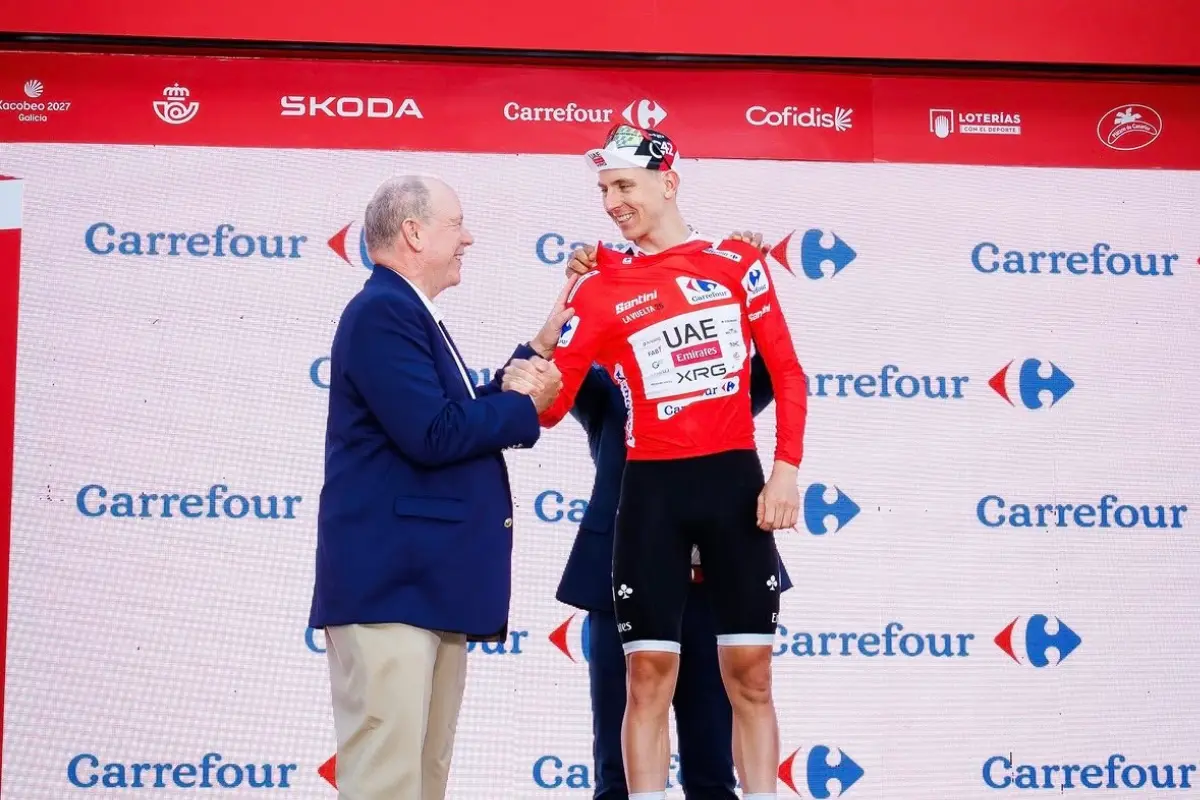
Saturday 22nd August saw Stage 1 of La Vuelta take over the Principality, transforming Monaco’s iconic landmarks including Casino Square, Port Hercule, Fontvieille and Larvotto into the backdrop for the opening race. Prince Albert II joined the opening moments, cutting the ribbon to officially set the race underway.
Slovenian rider Tadej Pogačar found victory on home roads, as he completed the 9.4-kilometre individual time trial in 10 minutes and 57 seconds, only 0.09 seconds ahead of Ethan Hayter.
“I think I gained that 0.09 second when we passed in front of my apartment, because that was the most technical part of the course,” said the Monaco local. “I walk and cycle there every day.”
With only a fraction of a second separating the two riders, Pogačar’s familiarity with the streets of Monaco may have made all the difference.
Joshua Tarling completed the time trial in third, four seconds behind Hayter. The finish comes just over a week after his brother Finlay Tarling tragically passed away in an accident while racing the Volta a Portugal.
For Pogačar, this victory gives him the first leader’s jersey of the race during his first appearance at La Vuelta since 2019.
Wearing the leader’s jersey heading into Stage 2, Pogačar now begins his pursuit of another piece of cycling history. Victory at La Vuelta would make him only the ninth rider to have won all three Grand Tours in his career. Following his fifth Tour de France win earlier this year and his Giro d’Italia victory in 2024, the Slovenian is considered a leading favourite for this race.
Stage 2 on Sunday 23rd August sees riders tackle the 214.3-kilometre route from Monaco to Manosque, France, the longest stage of this year’s race. The 81st edition of La Vuelta will continue across Spain before coming to a close on 13th September.
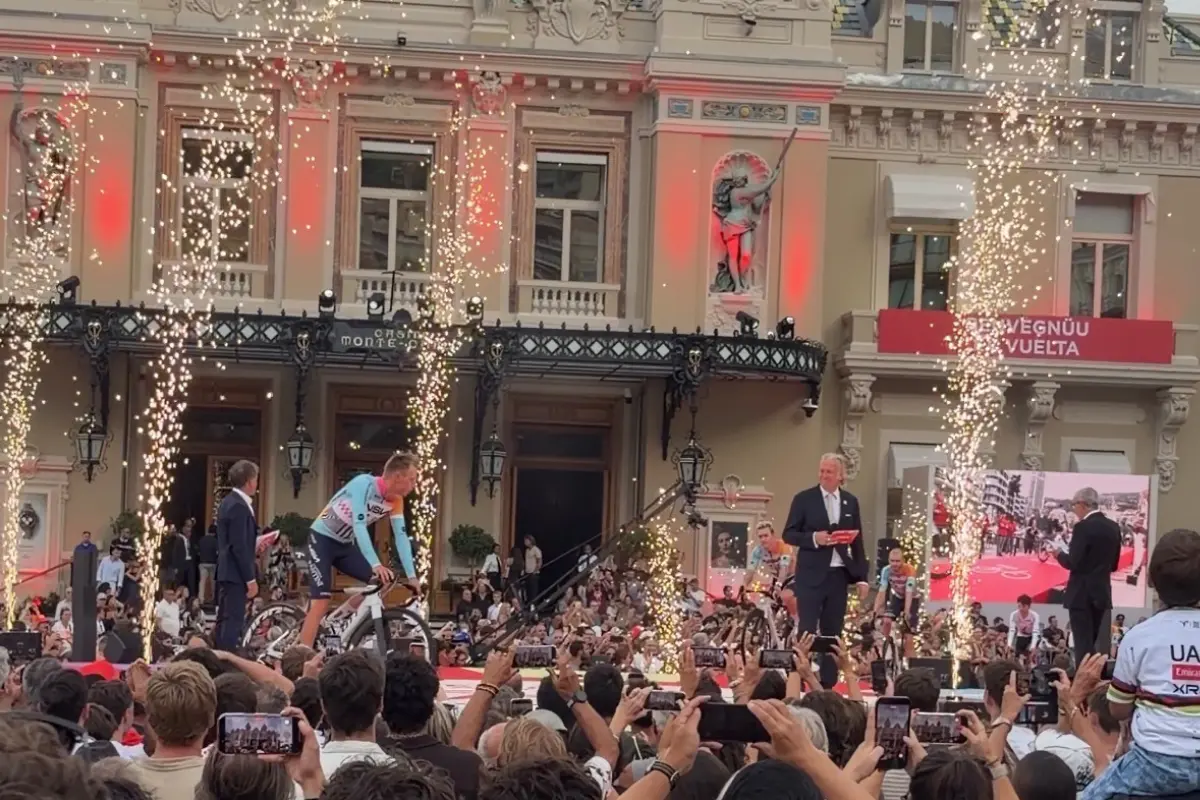
Thursday 20th August marked the official kickoff of La Vuelta in Monaco, as Casino Square welcomed riders, teams, and fans ahead of an exciting weekend of racing in the Principality.
Prince Albert II attended the celebrations, welcoming the 23 teams competing in the 81st edition of La Vuelta and the race’s first-ever Grand Départ from Monaco. The occasion adds another milestone to the Principality’s sporting history, having previously hosted the Grand Départ of the Giro d’Italia in 1966 and the Tour de France in 2009.
The evening saw the competing teams take to the stage in Casino Square, with the presentations accompanied by live musical performances, dances, interviews, and entertainment throughout the night. Riders were welcomed by an enthusiastic crowd as Monaco prepared for two days of racing through the Principality and beyond.
The action begins on Saturday 22nd August with Stage 1, a 9.4-kilometre individual time trial held entirely within Monaco. Beginning in Casino Square, riders will make their way through some of the Principality’s most recognisable locations, including Larvotto, Port Hercule, and Fontvieille, before finishing on Boulevard Albert I.
Stage 2 follows on Sunday 23 August, beginning with a ceremonial start at Place du Palais Princier before the official start at Jardin Exotique. From there, riders will leave Monaco and head into France on their way to Manosque for a 214.3-kilometer stage, a significant contrast to Saturday’s short individual time trial.
The weekend marks the beginning of three weeks of racing as La Vuelta gets underway in the Principality for the first time.
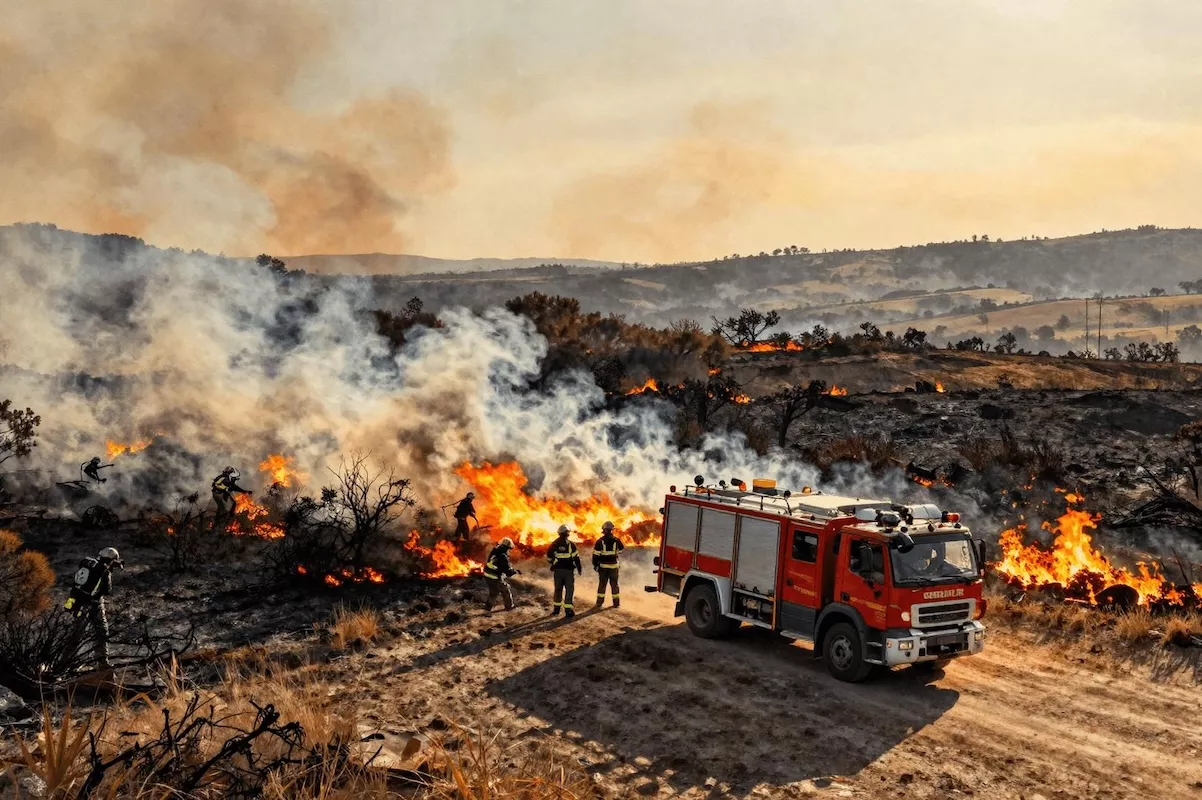
Wildfires could burn 39% more land across Europe by the end of the century even if global warming is limited to around 1.8°C, according to a new study led by the Potsdam Institute for Climate Impact Research (PIK).
Published this week in Global Change Biology, the study found that under a high-emissions scenario, with temperatures rising by around 3.6°C by 2100, the amount of land burned annually could increase by 192% — almost three times today’s level.
The warning comes after another punishing European summer, with extreme heat and dry conditions fuelling major fires across the continent. Southern Europe remains particularly exposed, but researchers expect wildfire risk to increase across western and central Europe as the climate warms.
Better fire management could limit the damage
The research found that improved prevention and fire management could significantly reduce the projected increase, although it would not eliminate the additional risk created by climate change.
That means Europe will need to focus increasingly on preventing fires before they start — including managing vegetation, maintaining landscapes, improving early detection and protecting communities built close to forests — rather than relying primarily on firefighting once a blaze is underway.
The findings are particularly relevant for southern France after another difficult fire season in the Mediterranean. This week’s heavy rainfall across the Var and Alpes-Maritimes has brought welcome short-term relief, but the longer-term trend points firmly towards hotter, more fire-prone summers.
The latest research shows that even if the world succeeds in keeping warming relatively close to the Paris Agreement targets, Europe will still have to adapt to considerably greater wildfire risk.
Monaco Life is produced by qualified, multi-media journalists writing original content. See more in our free newsletter, listen to our Podcasts on Spotify, and check us out onFacebook, Instagram, LinkedIn and Tik Tok.
Photo credit: Préfecture du Var
Osman Sezener’s Robuchon Monaco takeover leaves us wanting more
By the time Michelin-starred chef Osman Sezener’s final dish landed on the table at Robuchon Monaco on Wednesday night, Turkey felt considerably closer to the Principality than it had eight courses earlier. This was bold, exciting cooking — a succession of extraordinary flavours drawn from centuries of Turkish food culture and reworked by a chef who clearly believes the rest of the world has only scratched the surface of his country’s cuisine.
And judging by the guests’ reaction, he may be right. Sezener had travelled from Turkey with his own team and some 50 to 60 kilos of ingredients for a two-night takeover of the Robuchon Monaco kitchen on 18th and 19th August. The fresh seafood, meat and produce were sourced locally; what came in the luggage were the things that could not be replicated here — the intensely regional ingredients that give his cooking its Turkish identity.
Robuchon, meanwhile, took care of the French wine pairings.
It was an unusual proposition, and an ambitious one: rather than slotting a visiting chef into the existing restaurant, Robuchon effectively gave Sezener the keys to the kitchen and let him show Monaco exactly what he does.
The journey begins before dinner
There was something particularly thoughtful about the way the story was told. At each place setting sat a beautifully designed booklet, From the Aegean to the Principality of Monaco. Open it and a hand-drawn map plotted the ingredients across Turkey: grey mullet bottarga from Karaburun; figs from Aydın; mastic from the Aegean; tahini from Uşak; Bodrum mandarin; mesir paste from Manisa; and red pepper grown and cultivated by OD Urla.
Another page went deeper, explaining the ingredients themselves and the traditions behind them. The menu wasn’t decoration. It was a road map for dinner.
“My philosophy remains rooted in one belief: the deeper we connect with our own geography, the more global we become,” Sezener wrote in his introduction.
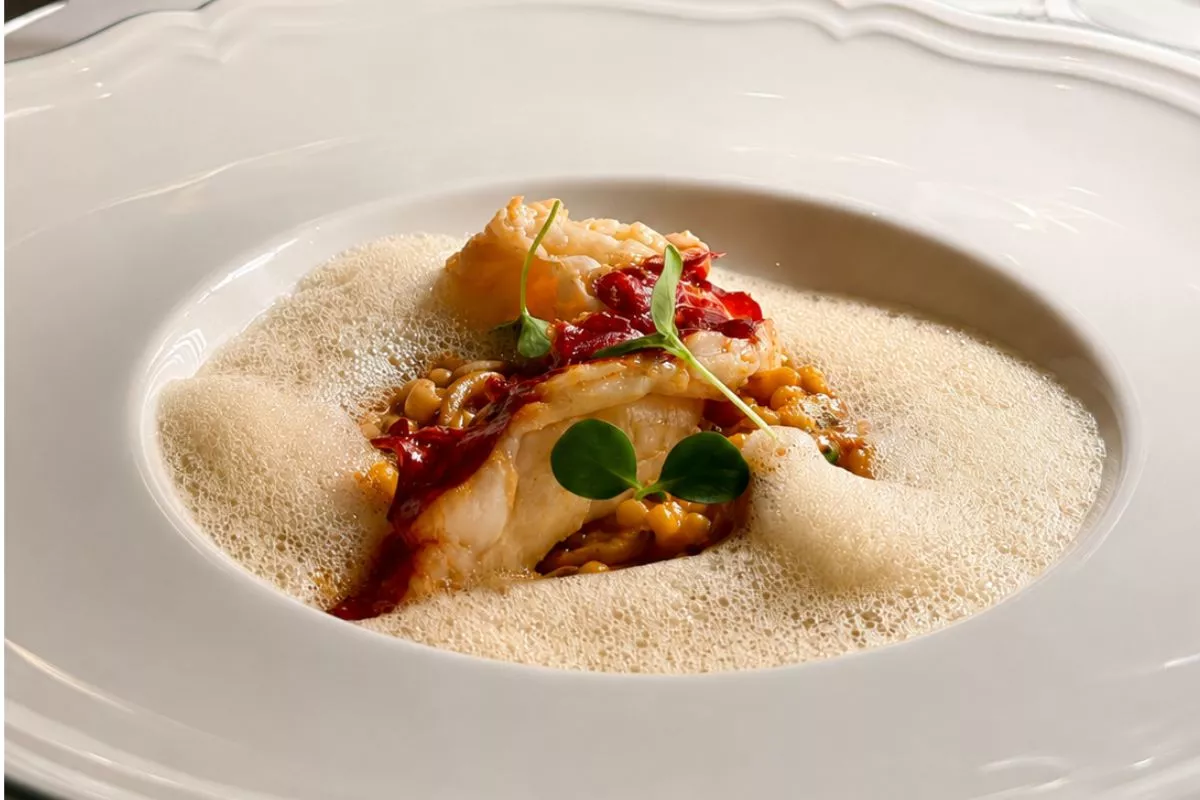
Turkish kuskus risotto with lobster. Photo credit: Cassandra Tanti, Monaco Life
Turkey, one plate at a time
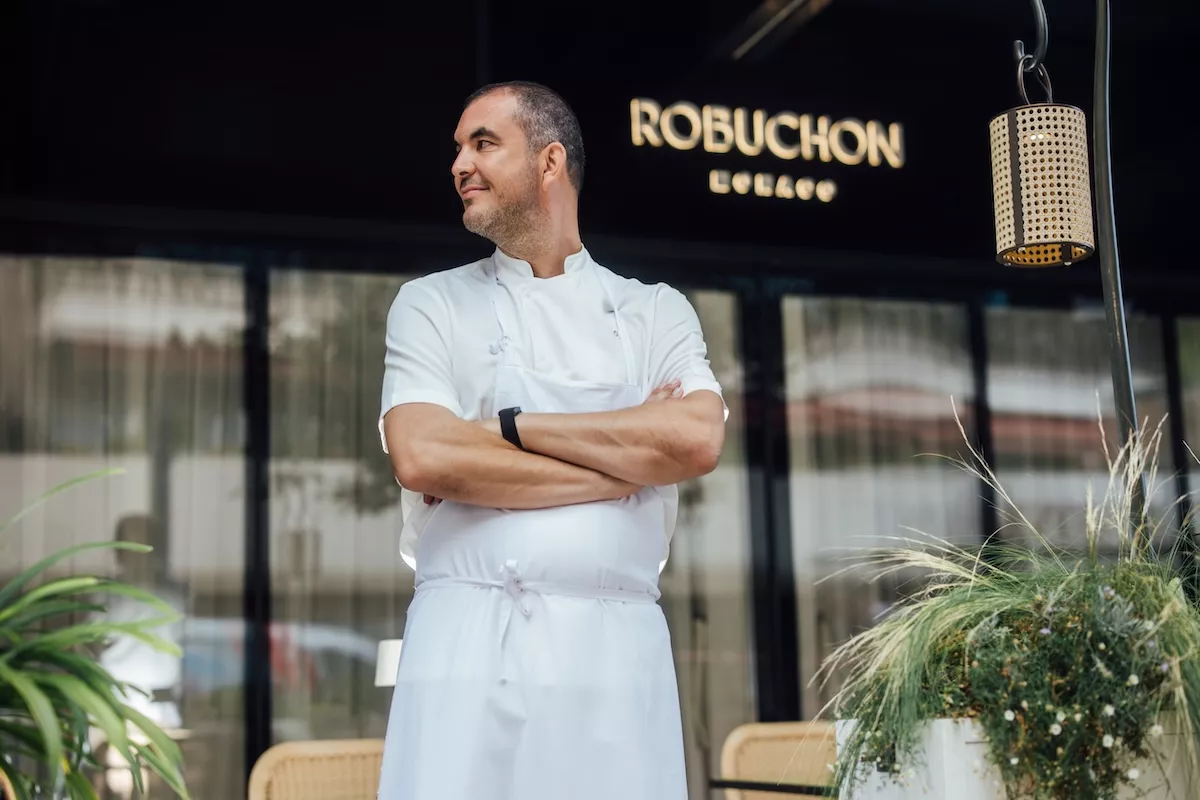
Osman Sezener was born and raised in İzmir and his flagship restaurant, OD Urla, sits among olive trees on Turkey’s Aegean coast. It holds both a Michelin star and a Michelin Green Star, while his Kitchen by Osman Sezener in Bodrum also holds a Michelin star.
His philosophy is farm-to-table, local ingredients and wood-fire cooking. But in Monaco, what became most apparent was his fascination with the sheer breadth of the Turkish pantry.
“Turkish cuisine is incredibly broad. We cook from nose to tail and use every part of the animal, and we have cooked with olive oil for centuries,” he told me before dinner. “Turkey is also a very large country. From west to east and north to south, every region has its own ingredients and way of cooking. That creates enormous diversity.”
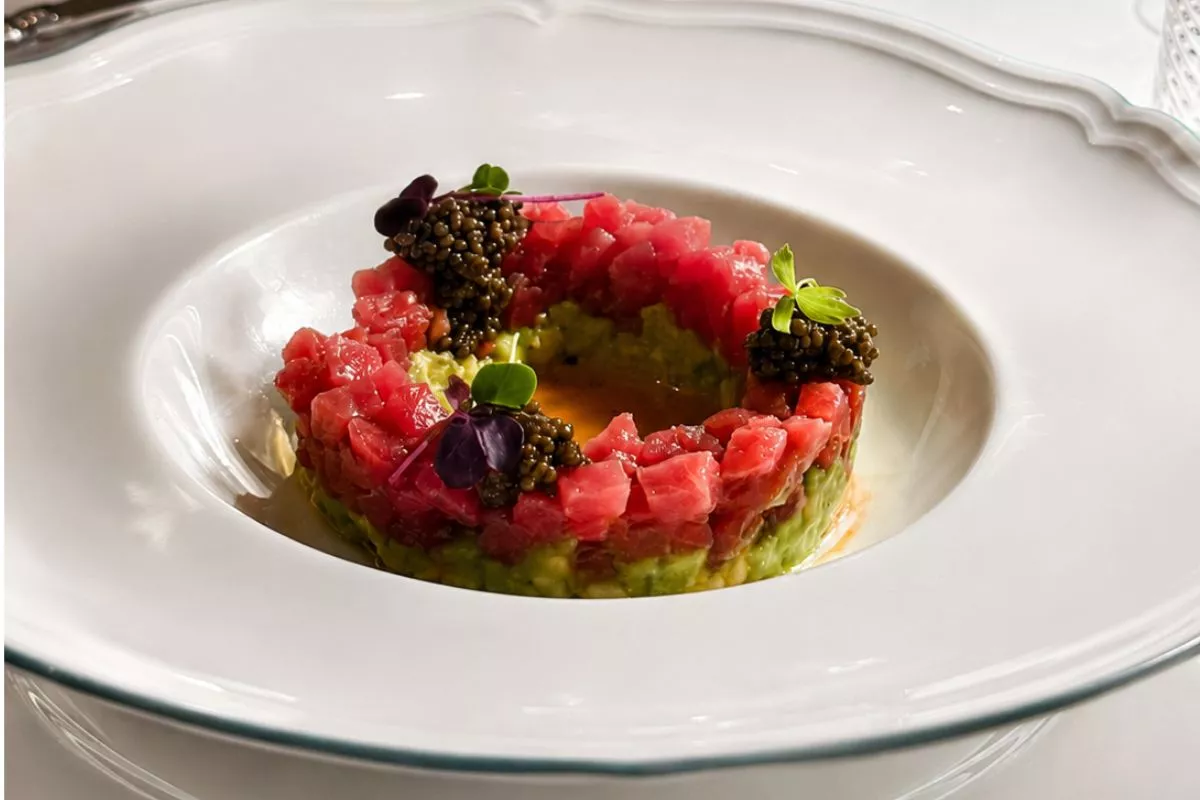
Tuna with Uşak tahini and caviar. Photo credit: Cassandra Tanti, Monaco Life
The dinner proved his point. Three welcome canapés set the scene, but it was the first course that made me sit up and take notice.
The tuna with Uşak tahini and caviar was extraordinary. There was Michelin-star finesse in the execution, but the flavours belonged unmistakably somewhere else — combinations I had never experienced before, bold and deeply savoury yet beautifully controlled. It was the sort of first course that immediately makes you excited about what the chef is going to do next.
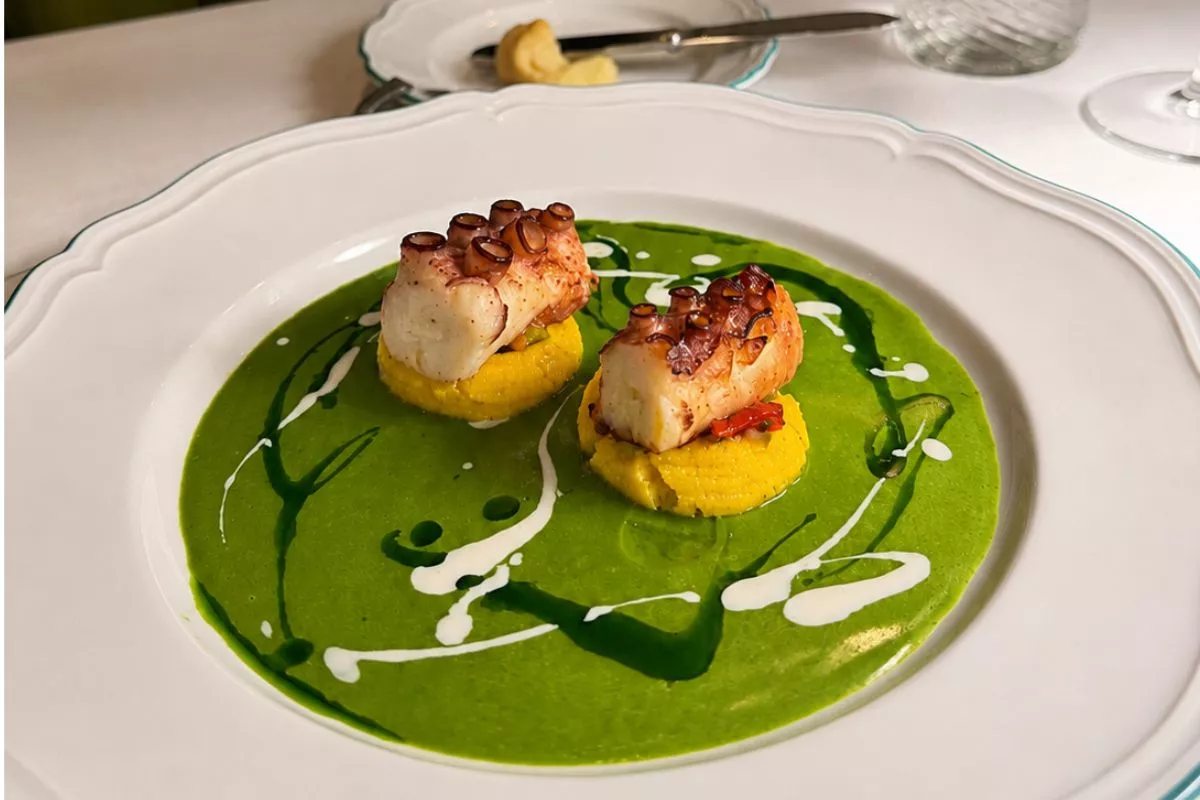
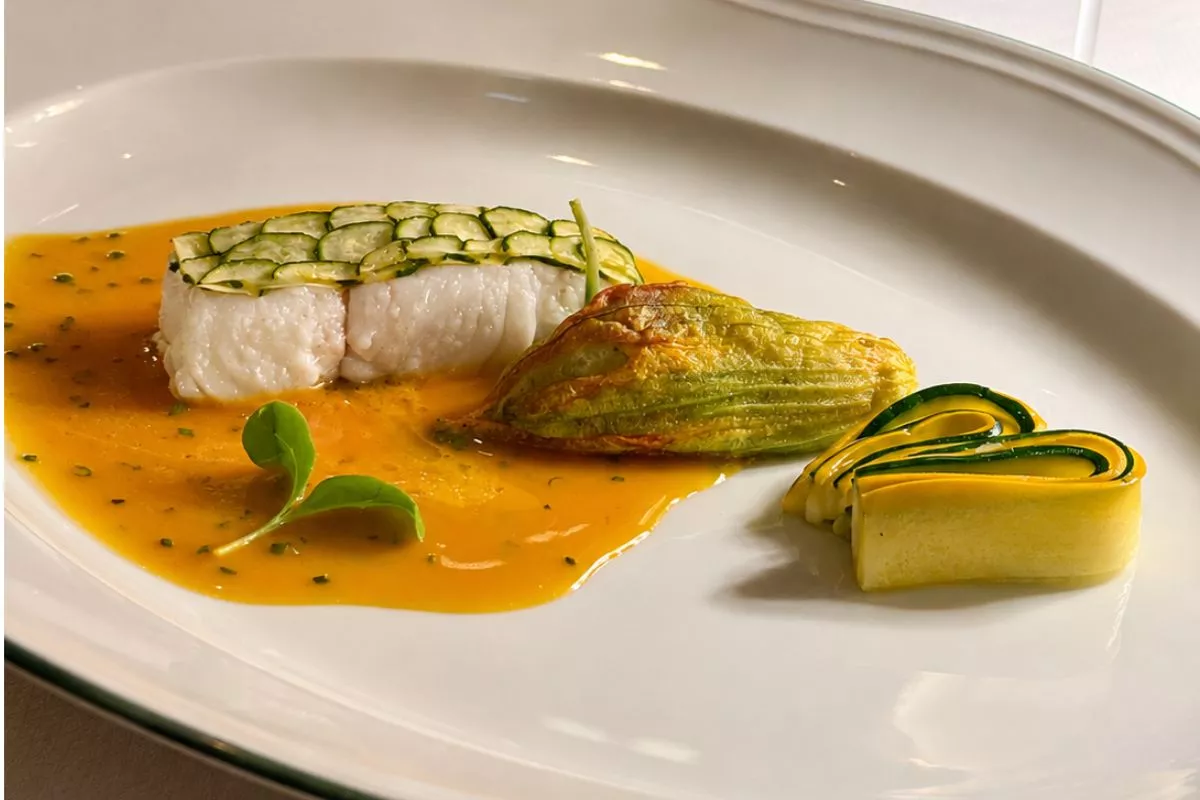
And Sezener kept pushing. Octopus came with Aegean mastic and olive; Turkish kuskus risotto with lobster, squid and summer tomatoes; and the catch of the day with zucchini blossom and fragrant Bodrum mandarin sauce. A sharp sumac and roasted red pepper sorbet cleared the way for Wagyu with eggplant beğendi and centuries-old mesir paste from Manisa.
Octopus with Aegean mastic and olive. Photo credit: Cassandra Tanti, Monaco Life
Dessert brought yoghurt, raspberry sorbet and Turkish olive oil.
But listing the dishes doesn’t really explain the experience. What Sezener delivered was an extraordinary intensity of flavour from beginning to end. There was smoke and salt, acidity and sweetness, deep spice and bursts of citrus; flavours that were unfamiliar one moment and strangely comforting the next.
And importantly, the Turkish ingredients weren’t being used as exotic punctuation around otherwise conventional fine dining. They were the entire point of the meal.
Ancient flavours, modern kitchen
Some came with histories considerably longer than the restaurant serving them. Tarhana, for example, has been made in Turkish villages for generations, prepared during summer and preserved for later use. Sezener describes it as one of the earliest forms of instant soup.
Then there is mesir macunu. “Is is an Ottoman paste that we use in the beef sauce, made with honey and spices that was traditionally consumed by sultans,” he explained. “It was believed to give them strength, energy and virility.”
Yet there was nothing remotely historical or heavy-handed about the food arriving at the table. Sezener isn’t trying to reinvent Turkish cuisine; he is drawing on a culinary culture shaped by geography, history and generations of cooking.
“Turkey is also a bridge between the Middle East and Europe, and our food reflects the intersection of those cultures,” he told me. “In almost every Turkish home, mothers cook, so people grow up with a strong palate and a clear sense of taste.”
When I asked whether the rest of the world really understood the diversity of Turkish cuisine, his answer was unequivocal.
“No, people do not really know Turkish cuisine. Tonight, I am going to show you what it is.”
He certainly did.
Catch of the day with zucchini blossom and fragrant Bodrum mandarin sauce. Photo credit: Cassandra Tanti, Monaco Life
OD Urla lands in Monaco
Perhaps the most impressive part of the evening was that this felt less like a guest appearance and more like OD Urla had been temporarily transported to Monaco. Sezener’s team moved through the Robuchon kitchen with confidence, delivering an intricate menu in unfamiliar surroundings while retaining a very clear identity from beginning to end.
For them, taking over a Robuchon kitchen carried its own significance.
“Robuchon is an important name for us. When we were at culinary school, we learned a great deal about Joël Robuchon, so it is an honour for us to cook here,” said Sezener. “It is also important for my team to visit another country together, to see a different kitchen and find new inspiration.”
There was something fitting about that exchange: chefs who had studied Joël Robuchon’s work coming years later to Monaco to cook their own food, in their own way, beneath his name.
Robuchon’s French wine pairings completed the conversation, but the night belonged unmistakably to Sezener and Turkey.
By the end, eight courses had achieved something far more interesting than simply producing an excellent dinner. They had opened a window onto a cuisine that is ancient, extraordinarily regional and far more sophisticated than its international shorthand suggests.
And they left our table with a problem.
Osman Sezener had given Monaco two nights of OD Urla. Having tasted it, two nights suddenly seemed nowhere near enough.
See more of my experience in the video reel below…
Monaco Life is produced by qualified, multi-media journalists writing original content. See more in our free newsletter, listen to our Podcasts on Spotify, and check us out onFacebook, Instagram, LinkedIn and Tik Tok.
Main photo: Osman Sezener, credit: @Puciweb
A trillion-dollar art inheritance is coming, and heirs may not want it
Around 860 billion euros’ worth of art is expected to change hands over the next decade as older collectors pass their wealth to the next generation, according to Deloitte, in a shift that is likely to leave many heirs grappling with paintings, sculptures and antiques they never asked for.
The figure, drawn from Deloitte’s Art & Finance Report, forms part of a far larger movement of money between generations, estimated at some 26.7 trillion euros over the same period. Yet art poses a problem unlike other inherited assets. A bank account can be divided among several heirs, and shares can be sold with a click. A large painting or a sculpture cannot, and while a work may have been a treasured possession for its original owner, the next generation may feel little emotional attachment to it.
An asset that is hard to place
Much of the discussion around the so-called great wealth transfer has focused on houses, businesses, cash and stocks. Art sits awkwardly alongside them. An heir living in a modest apartment may simply have nowhere to put a substantial work inherited from a family estate, and the costs of insuring, storing and maintaining a collection can be considerable.
Selling might seem the obvious answer, but the art market has its limits. There are unlikely to be enough buyers or museums to absorb everything that comes free, and analysts caution that the headline figure describes ownership passing between people, not works flooding onto the market. Much inherited art will stay where it is, move into a trust, secure a loan or be donated to an institution. Even so, every inherited object enters a fresh cycle of decisions, and even a modest proportion reaching the market at once would weigh heavily on a trade whose annual turnover is far smaller.
Tastes that do not always transfer
Research also complicates the popular image of digitally fluent millennial heirs redecorating around their parents’ collections. Analysts expect Generation X to inherit more than millennials over the coming ten years, and a large share of wealth is expected to pass first between spouses, most often to surviving wives who may hold a collection for years before it moves again.
Where younger collectors are buying, they are not necessarily buying what their parents owned. Deloitte’s research notes that the proportion of collectors citing both passion and investment as their motivation has fallen over the past decade, with cultural impact and personal identity gaining ground. The result is a market in which mid-tier works without strong contemporary appeal may face the greatest risk as heirs reallocate.
A live question in Monaco
For a Principality that has positioned itself as a hub for wealth management, family offices and cultural life, the coming transfer is more than an abstract statistic. Monaco’s private banks and advisers increasingly treat art as a strategic part of succession planning rather than a discretionary purchase, linking acquisition, finance, inheritance and philanthropy.
As the great wealth transfer gathers pace, the question facing many families will not only be what their art is worth, but who among the next generation actually wants to keep it.
Monaco Life is produced by qualified, multi-media journalists writing original content. See more in our free newsletter, listen to our Podcasts on Spotify, and check us out onFacebook, Instagram, LinkedIn and Tik Tok.
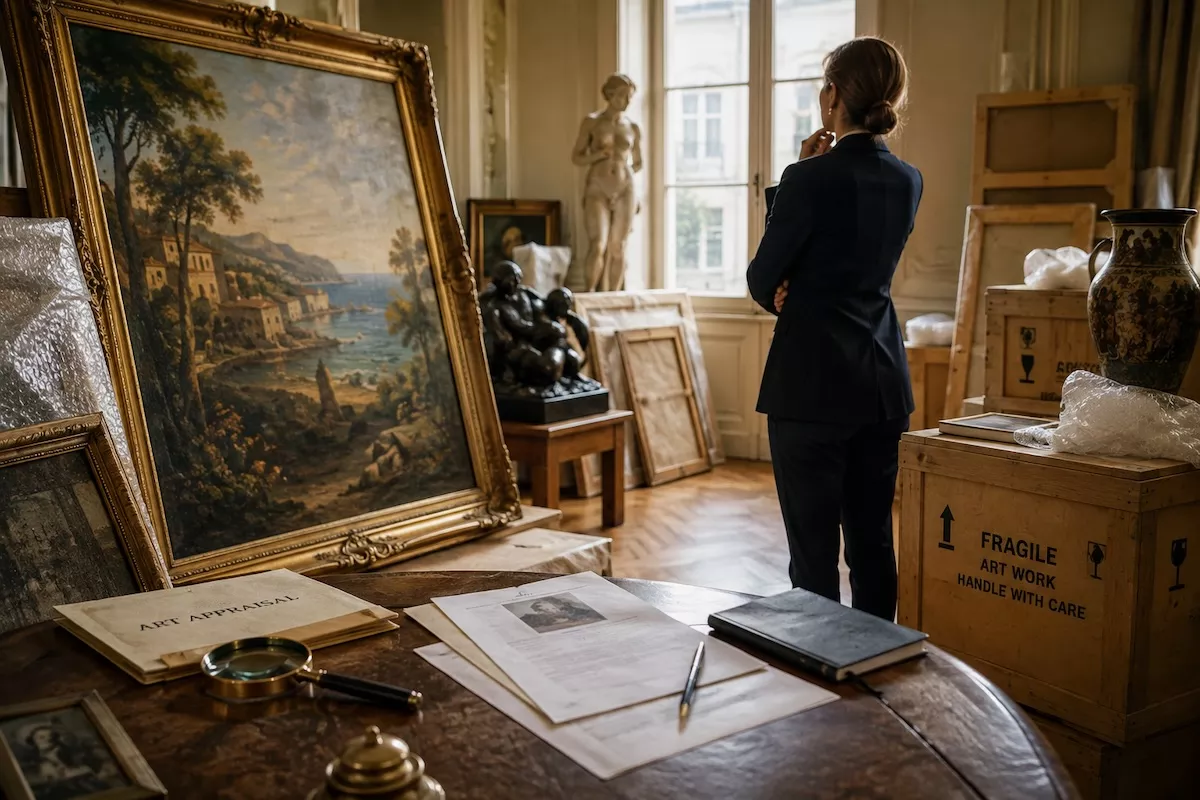
Image is AI generated by Monaco Life
Black Jack 100 claims fourth consecutive Palermo-Montecarlo victory as storms force race suspension
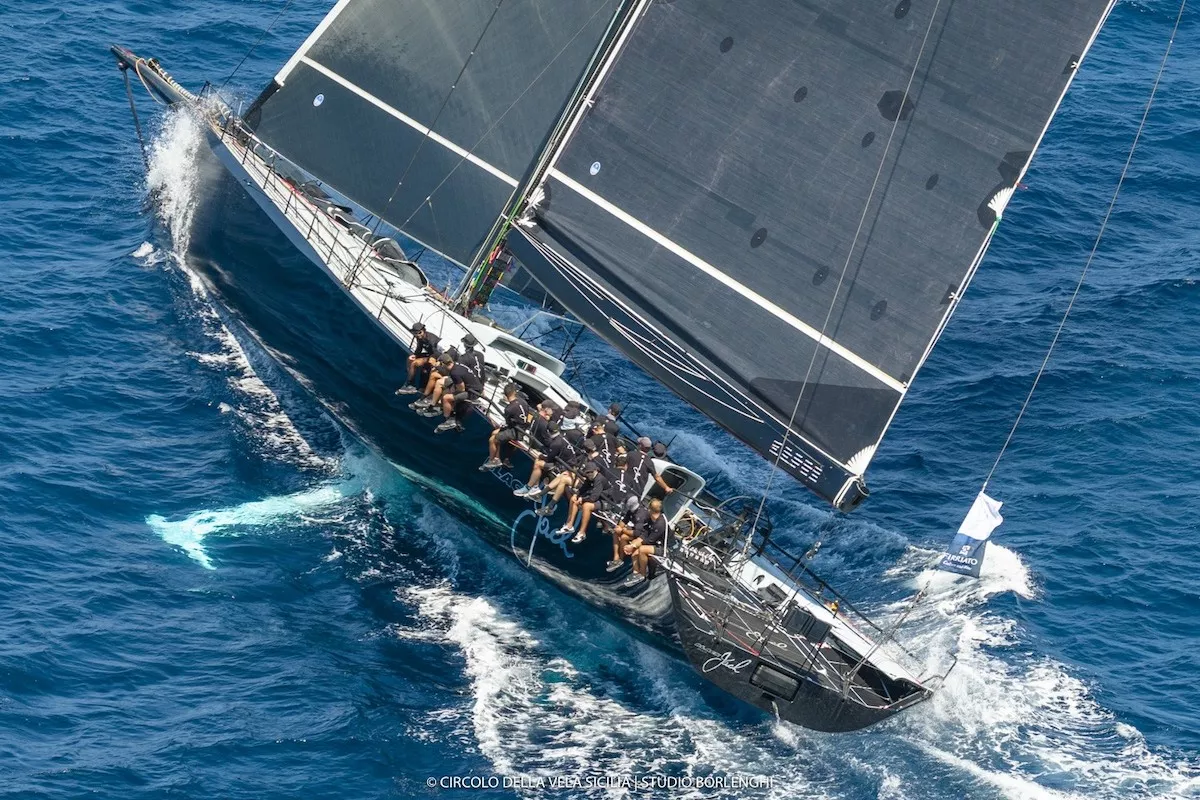
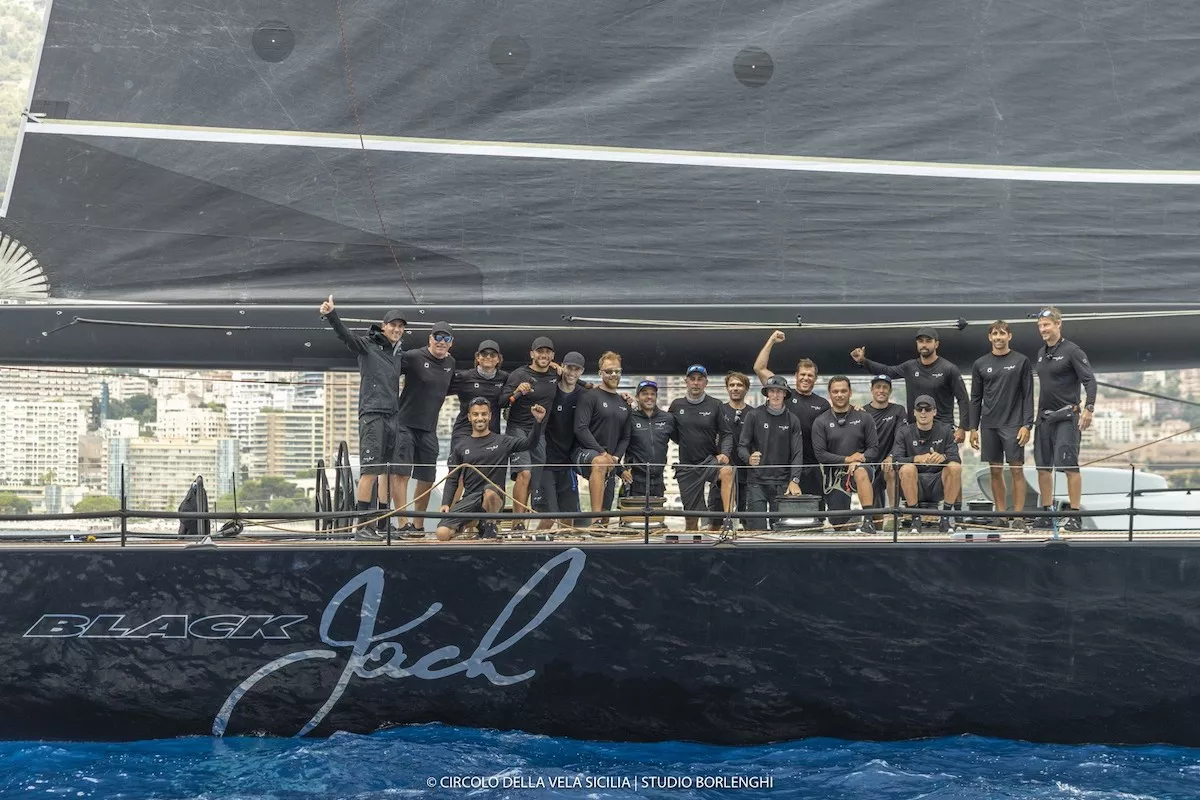
Remon Vos’s maxi yacht ‘Black Jack 100’ crossed the finish line in Monaco early Thursday morning to win the Palermo-Montecarlo race for the fourth consecutive year, beating a changing weather track that ultimately forced organisers to halt the rest of the fleet.
Even though ‘Black Jack 100’ extended its winning streak in the 500-mile race, this year’s event will be remembered for the severe weather hitting the rest of the fleet. With dangerous gale-force winds on the way, race organisers took the rare step of suspending the race for the remaining boats.
Navigating the light airs
Skippered by Tristan Le Brun, ‘Black Jack 100’ completed the rigorous course from the Gulf of Mondello, Sicily, in 47 hours, 27 minutes, and 2 seconds. While light, fickle breezes averaging just eight knots kept the crew well off the blistering course record of 38 hours they set last year, tactical mastery in the early miles proved decisive.
Departing Sicily on Tuesday afternoon, the 39-boat fleet faced an immediate chess match near Capo Gallo. “There were a lot of transitions,” Le Brun said of the shifting, conflicting winds. “It’s not easy to find the right strategy when the wind keeps switching and coming from almost opposite directions.”
The turning point came after clearing the Strait of Bonifacio. As a steadier south-to-southwest airflow filled in, the maxi stretched its legs, pulling over 100 nautical miles clear of its closest rival, Furio Benussi’s ‘Marta07’, by Thursday morning.
Photo credit: Circolo della vela Sicilia – Studio Borlenghi
A dramatic turn in the open sea
While the frontrunners secured a safe arrival in the Principality, the wider fleet’s journey home hit a severe roadblock.
Meteorological forecasts predicted a violent low-pressure front sweeping between the Strait of Bonifacio and Monaco, bringing very strong winds of 60 to 80 knots. Faced with extreme safety risks, race officials took the decisive step to officially suspend the race, instructing trailing crews to seek immediate shelter.
To preserve the integrity of the competition for the prestigious ‘Angelo Randazzo Challenge Trophy’, organisers confirmed that any time spent sheltering by competing yachts will be deducted when calculating the final overall corrected-time rankings once the storm passes.
Meanwhile, the race also plays out online. Nearly 7,000 players are competing in Virtual Regatta, facing the same weather challenges and tactical choices as the fleet at sea.
For ‘Black Jack 100’, the victory extends a four-year winning streak in a race spanning over two decades—proving that even the Mediterranean’s top yacht remains at the mercy of the sea.