Monaco’s new super-rich are fewer, wealthier — and more demanding

Monaco is attracting a smaller number of internationally mobile clients than rival jurisdictions such as Dubai, Milan and Switzerland – but those choosing the Principality are bringing considerably greater wealth, according to senior executives at CFM Indosuez Wealth Management.

The shift was among several international client trends outlined by the bank’s leadership during the presentation of its new six-point strategy in Monaco on Monday by new CEO Bénédicte Chrétien.

Jad Bardawil, Co-Head of Wealth Management, said CFM Indosuez had recorded a major influx of clients moving away from the United Kingdom. They were not exclusively British, he explained, but included international families who had previously used London as their base.

“Monaco has attracted a smaller number, but greater fortunes,” said Bardawil. “That is the real change we have seen.”

The arrivals form part of a broader movement of wealth towards jurisdictions perceived to offer long-term political and financial stability. But according to the bank, Monaco is emerging with a particular type of client: highly international, financially sophisticated and accustomed to premium levels of service in cities including London, Dubai and New York.

Anglophone growth accelerates

Bardawil described CFM Indosuez’s growth among Anglophone clients as “spectacular”, particularly among ultra-high-net-worth individuals relocating to Monaco.

The term Anglophone, however, disguises a much wider geographic mix. International residents departing London have included clients from countries such as Brazil who had used the British capital as a financial and residential base before moving to the Principality.

This has required banks in Monaco to look beyond nationality and consider the increasingly complex international structures behind each family’s wealth. Assets, companies, homes and family members may be distributed across several jurisdictions, creating demand for coordinated tax, succession, governance and investment expertise.

“Our clients are becoming increasingly multi-jurisdictional,” said Deputy CEO Sophie Armando. “We need transversal experts in order to provide a global, 360-degree approach.”

CFM Indosuez supports that reach through the wider Indosuez network, which operates across 18 jurisdictions. Within Monaco, its private-banking team represents almost 20 nationalities and speaks around a dozen foreign languages.

“We are a bank that is profoundly Monegasque through our history and roots, but resolutely international through our organisation and our clientele,” said Vincent Cartillier, Co-Head of Wealth Management.

Its bankers regularly travel to markets including the United Kingdom, Northern Europe, Switzerland, Latin America, the Middle East, South Africa, French Polynesia and New Caledonia.

Monaco gains from global uncertainty

CFM Indosuez is also seeing rising interest from the Middle East. Bardawil said some clients who had previously chosen Dubai as a base were now reconsidering Monaco as uncertainty in the region continued.

For these families, relocation does not necessarily begin with an immediate permanent move. It can mean establishing what Bardawil described as a “Plan B”: opening a bank account in Monaco, purchasing an apartment in the Principality or acquiring a second home on the Côte d’Azur.

“Monaco offers political and financial stability at a time of uncertainty, when clients are looking for genuine diversification,” he said.

Bardawil argued that Monaco had benefited repeatedly from periods of international instability during the past decade. The current movement is not simply bringing more capital into the Principality, he added, but raising expectations across its banks, property market, hotels and other service industries.

Someone spending €15 million or €20 million on an apartment in Monaco after living in Dubai, London or New York arrives with established expectations concerning technology, amenities, views and service. The same applies to wealth management.

“These clients are accustomed to being served in high-quality jurisdictions with extremely demanding standards,” said Bardawil. “That is an opportunity for us, but it means every part of Monaco’s economy has to raise its game.”

Clients arrive better informed

The relationship between private bankers and their international clients is also changing. New arrivals increasingly conduct their own research before meeting an adviser and expect the bank to add insight beyond information they can obtain independently.

“They no longer come to listen to the bank as though it were delivering the only authoritative view,” Bardawil said. “They have already done their research and they arrive prepared.”

That shift is changing the role of the private banker from a source of information into an interpreter of increasingly complex choices. Technical expertise remains essential, but Bardawil said the relationship ultimately depends on whether clients trust the bank sufficiently to bring their wider network into it. At CFM Indosuez, one in two clients has recommended the bank to someone close to them.

The future of Monaco

For Monaco, the trend presents both an opportunity and a challenge. The clients now choosing the Principality may be fewer in number than those heading to rival jurisdictions, but, according to Bardawil, they are bringing greater fortunes and the high expectations formed in cities such as London, Dubai and New York. How Monaco responds to those expectations will help shape the next phase of its international growth.

See also: 

Meet Bénédicte Chrétien, the new CEO reshaping CFM Indosuez

Monaco Life is written by qualified journalists, writing original content. Sign up for our free newsletter, listen to our podcasts on Spotify, and follow us across Facebook,  Instagram, LinkedIn, and Tik Tok. 

Photo credit: Benjamin Vergely, Tourism Department of Monaco

Monaco United and AS Monaco FF set for first-ever women’s football derby

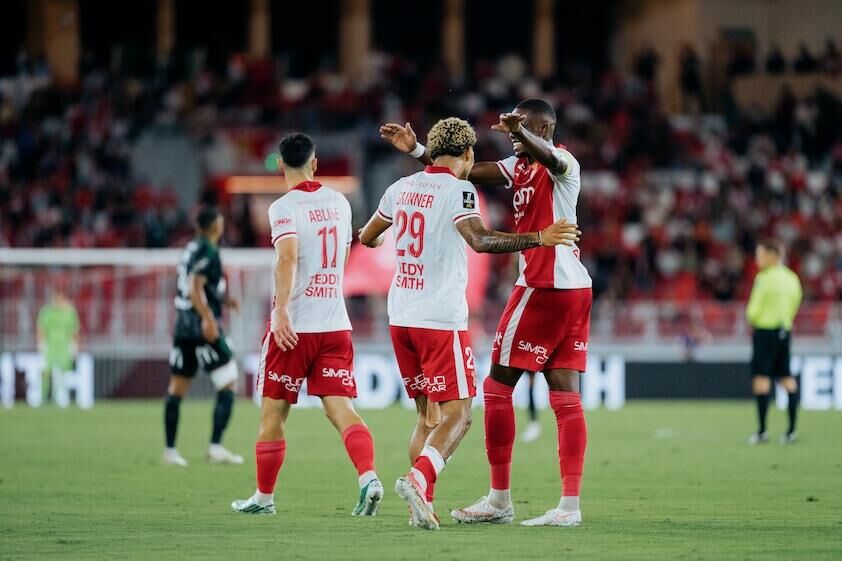
Monaco women’s football will see a first for the Principality as Monaco United takes on AS Monaco FF in the first official derby between two Monaco-based women’s football clubs.

The teams will meet on Sunday 20th September at 3:30pm at the Stade Didier Deschamps in Cap-d’Ail as part of the league championship, with the match free and open to the public.

Sunday’s match will mark the first official meeting between the two clubs, with a new local rivalry beginning to take shape within Monaco’s growing women’s sport scene.

For Monaco United, the derby comes during its first season competing at Regional level following promotion. Led by Marco Simone, the team made an impressive introduction to the division earlier this month with a 9-1 victory over AS Cannes.

The strong start continued in the Coupe de France on Sunday 13th September, when Monaco United defeated Aubagne 11-0 in the first round of the competition.

With a combined 20 goals across its last two competitive matches heading into Sunday’s derby, Monaco United will now look to carry that momentum forward into a history-making match in the Principality.

Supporters will be able to attend the derby free of charge at the Stade Didier Deschamps, with kick-off scheduled for 3:30pm.

Stay updated with Monaco Life: sign up for our free newsletter, listen to our podcasts on Spotify, and follow us across Facebook,  Instagram, LinkedIn, and Tik Tok. 

Photo credit: Flare Vision

Colleen Murrell to bring stories of pioneering BBC correspondents to Monaco

Former BBC journalist and academic Colleen Murrell will come to Monaco in October for a talk exploring how women fought their way into foreign correspondence – one of journalism’s most prestigious and historically male-dominated fields.

The event will take place at the Princess Grace Irish Library on Thursday 1st October at 7pm and draw on Murrell’s latest book, BBC Women Reporting the World: Conversations with Foreign Correspondents.

Published by Palgrave Macmillan in 2025, the book profiles 10 BBC journalists of different generations and nationalities, including Kate Adie, Lyse Doucet, Orla Guerin and Shaimaa Khalil. Through their experiences, Murrell examines the institutional barriers and gender assumptions that once kept women away from reporting and presenting roles, often confining them to work behind the scenes.

The book traces the evolution of women’s foreign reporting from the BBC’s early decades through to the expansion of opportunities in the 1970s and 1980s, before turning to more recent questions surrounding pay inequality, race, class and power within international news organisations.

From the newsroom to academia

Murrell brings direct industry experience to the subject. Before entering academia, she worked as a producer, reporter and news editor for international broadcasters and news organisations including the BBC, ITN, Associated Press, TF1, CBC and ABC Australia. Her assignments took her extensively across Europe and the Middle East.

She has been Professor of Journalism at Dublin City University since 2020, where her research focuses on international newsgathering, crisis reporting, public-service broadcasting, news production and digital media. She was also research lead for the Reuters Digital News Report in Ireland between 2021 and 2024.

The Monaco talk will combine Murrell’s academic findings with her experience inside international newsrooms, examining how female correspondents secured access to overseas assignments and how the profession has changed between the 1980s and today.

It will also consider parallels with women working in entertainment during the same period. While female stars in Hollywood were often underpaid and controlled by powerful studios, Grace Kelly established an enduring career before becoming Princess of Monaco. The library says her ability to communicate on both sides of the camera provides a local point of connection with the evening’s broader theme.

The talk begins at 7pm at the Princess Grace Irish Library, 9 rue Princesse Marie-de-Lorraine in Monaco-Ville. Tickets can be purchased through the library’s event page.

Signed copies of BBC Women Reporting the World can also be pre-ordered for €20 by emailing info@pgil.mc. A limited number will be available at the event, with payment accepted in cash.

Monaco Life is written by qualified journalists, writing original content. Sign up for our free newsletter, listen to our podcasts on Spotify, and follow us across Facebook,  Instagram, LinkedIn, and Tik Tok. 

Photo source: Princess Grace Irish Library


Innovation and sustainable ambition to take centre stage at the 21st edition of Ever Monaco

The 21st edition of Ever Monaco, taking place on 14th and 15th October at One Monte Carlo, has officially launched its preparations, bringing together leaders in sustainable mobility, renewable energy, and corporate environmental responsibility.

During a press conference on Tuesday 15th September, Sébastien Lubert, President of organiser MC2D, outlined a diverse programme featuring high-profile conferences and startup pitch sessions. The event will kick off with opening remarks delivered by young representatives from the Principality’s schools—specifically the FANB college—highlighting the younger generation’s commitment to Monaco’s energy transition.

High-level conferences and expert panels

The conference schedule will feature prominent figures, including Gilles Tonelli, Director of Prospective, Urban Planning, and Mobility for the Princely Government; Anthony Duclos, representing SME; and Jean Rossoni, President of the Monaco Ocean Alliance.

Discussions will span critical topics such as decarbonisation and artificial intelligence across generations, with contributions from Government Advisor Marie-Pierre Gramaglia, Nice Côte d’Azur airport representatives, and energy transition experts. Didier Laurent of the Auto-Cross Club will serve as the primary moderator.

Ever Monaco press conference. Photo credit: Virginia D’Umas

Corporate social responsibility (CSR) remains a core pillar of the summit. Virginie Cotta, General Secretary of SBM, expressed her enthusiasm for the gathering, saying: “We are delighted to be here and are truly thrilled to take part in the 21st edition of Ever Monaco. SBM is deeply committed to corporate social responsibility, an area where our president, Stéphane Valeri, expects us to show decisive ambition.”

SBM is participating actively in decarbonisation panels and supporting the startup pitch competition through jury participation and collaborative initiatives.

Spotlight on cutting-edge startups and rigorous judging

A major focal point of Ever Monaco is its startup competition, which showcases innovations across maritime technology, water treatment, and sustainable mobility. Jury members—including representatives from the Sustainable Development Board (SDM) covering ESG, investment professionals, lawyers, and technical experts from the Monaco Ocean Alliance—evaluate entries using a comprehensive grading matrix.

According to jury members, projects are assessed against strict cross-functional criteria, including sustainable development impact, financial viability, and real-world applicability. During the press conference a jury member said that the evaluation follows a strict framework to measure whether a project ‘impacts on sustainable development’ and whether it can genuinely replace outdated systems to drive meaningful change.

Among this year’s participating innovators is Arnau Bigatà, Commercial Manager at Dixitoo, who introduced the firm’s virtual assistant technology developed by the Speed Counter agency. Describing the system directly, Bigatà said: “This solution is not a standard chat bot, but the first true intelligent virtual ambassador for businesses.” He added that the system utilises tailored documentation and human-like contextual reasoning to provide reliable, real-time client support while helping local businesses navigate the artificial intelligence landscape.

True to its tradition, Ever Monaco maintains an open-door format welcoming the general public free of charge, ensuring broad accessibility for students, professionals, and industry leaders alike as the multi-day event unfolds its comprehensive agenda of exchanges and discoveries.

Stay updated with Monaco Life: sign up for our free newsletter, listen to our podcasts on Spotify, and follow us across Facebook,  Instagram, LinkedIn, and Tik Tok.

From left to right: Sébastien Lubert, Virginie Cotta, Maxime Calka (President, Green One), Ariane Moletto Favaloro (General Commissioner, Ever Monaco Exhibition) and Arnau Bigatà. Photo credit: Virginia D’Umas

From prehistoric traces to pop culture: The undying echoes of Sami shamanism

Entitled Chamanisme et magie, Dr. Alessandra Orlandini Carcreff’s lecture on 14th September at Monaco’s Musée d’Anthropologie préhistorique unpacked the deep-rooted reality of Sami shamanism to dismantle New-Age clichés and champion indigenous pre-Christian heritage. 

Introduced by museum director Elena Rossoni-Notter, the talk ranged from prehistoric bear-hunting rites to the music of Sibelius and contemporary folk metal, replacing generic mysticism with the grounded, hard-fought reality of Sami spiritual heritage.

Opening the sacred cosmos

Museum director Elena Rossoni-Notter opened the evening with an introduction of Dr. Alessandra Orlandini Carcreff’s recent work, saying: “I completely devoured her recent book, Chamanisme et Magie, which is a well-sourced and richly argued exploration of travel literature, mythologies, and epics spanning Northern Europe, Lapland, Finland, and global traditions.”

Carcreff herself started by clearing away shallow New-Age myths, warning against the trap of mixing unrelated cultures together. Rather than forcing false links between different belief systems, she explained shamanism as a structured, three-level system: an upper world of gods, a middle world for humans, and an underworld of ancestors.

‘Chamanismes et magie’ lecture at Monaco’s Musée d’Anthropologie préhistorique. Photo credit: Virginia D’Umas.

To bridge these worlds, the shaman entered deep trances. While historical figures like the traditional Sami noaidi faced heavy suppression centuries ago—prosecuted by Nordic authorities and churches under the charge of ‘sorcery’ for keeping their sacred drums and rituals alive—the tradition’s core continues today through a modern cultural renaissance. 

“Whether chosen by a calling, a personal search, or family tradition, an initiate endured extreme hunger, thirst, and freezing cold before going through a ritual of symbolic death and rebirth. Once reborn, the shaman acted as the community’s healer, judge, historian, ceremony leader, and guide for lost souls,” explained Carcreff. 

Drums, bears, and ancient amber routes

To accomplish these spirit journeys, the shaman relied on heavy regalia, masks, and massive ceremonial drums constructed from sacred birch wood and stretched reindeer hide painted with a full cosmogony of stars and forests. Carcreff illustrated how these practices are deeply tied to the living landscape, explaining: “The most sacred hunt for the Sami was the bear hunt—an encounter with an ancestral figure where hunters must appease the animal with deferential prayers, addressing it tenderly as ‘my little bear, my handsome and valiant bear’ while asking it to close its eyes before the strike.” 

Tracing these traditions backward along ancient amber and tin trade routes that once linked the Far North directly to the Mediterranean and Etruscan workshops, Carcreff connected universal elements of water, fire, and blood across diverse ancient landscapes. This shared thread appears everywhere from the sacred hearth of Rome’s Vestal Virgins and the multi-use threshold space of the Finnish sauna to mythic hero-smiths like Finland’s Ilmarinen or Greece’s Hephaestus, and psychopomp guides like Odin, Anubis, and Hermes.

Dr. Alessandra Orlandini Carcreff exploring the journey of Sami shamanism from 19th-century romantic revivals to modern pop culture. Photo credit: Virginia D’Umas 

From 19th-century revivals to folk metal

In the 19th century, this ancient heritage experienced a romantic revival through Finland’s national epic, the Kalevala, which inspired artists like painter Akseli Gallen-Kallela and composer Jean Sibelius. Today, that northern echo lives on—from the deep folk rhythms of bands like Wardruna to pop culture touchstones like the Northuldra in Disney’s Frozen (“We are the Northuldra, we are the people of the sun…”).

As Carcreff said: “This isn’t just dusty folklore: for the Sami people, reclaiming these pre-Christian roots is a powerful act of political and cultural survival after centuries of forced Christianisation.”

The hidden Sami heart of Disney’s Frozen

Nowhere does this ancient indigenous resonance break into modern mainstream consciousness quite like in Disney’s Frozen franchise. Carcreff explained that Disney films have always operated on a dual frequency, offering a light-hearted layer for children while embedding deep cultural histories for those trained to look closer. In the production of Frozen 2, Disney animation teams conducted extensive field research across Norway, studying local geography and traditional garments while officially engaging and thanking the Sami community. The result is the creation of the Northuldra, a nomadic, reindeer-dependent fictional tribe whose spiritual framework, regalia, and deep communion with nature mirror Sami culture. 

“Even the film’s rolling trolls find their structural inspiration in seiddis—sacred, peculiarly shaped Sami standing stones where offerings were historically left to local spirits,” said Alessandra, adding: “Most remarkably, the hypnotic, pulsing vocal harmonies woven into the soundtrack directly adapt the yoik, the traditional Sami chant used by shamans to cross the threshold into trance.” 

For the researcher, even when filtered through Hollywood’s commercial lens, these mainstream narratives serve as an unexpected vessel carrying genuine northern magical memory straight into contemporary global culture.

Stay updated with Monaco Life: sign up for our free newsletter, listen to our podcasts on Spotify, and follow us across Facebook,  Instagram, LinkedIn, and Tik Tok. 

Dr. Alessandra Orlandini Carcreff presenting her new book ‘Chamanisme et magie’. Photo credit: Virginia D’Umas

Jean-Pierre Petit in Monaco: Geopolitical risk, French debt warnings, and the AI bubble

France faces an ‘Argentinian scenario’ of structural economic decline as public debt barrels toward 130% of GDP by 2030, economist Jean-Pierre Petit warned in Monaco on Friday 11th September, during his annual address at the Hôtel Hermitage Monte-Carlo.

Hosted by the Monaco Economic Board (MEB) in partnership with Jutheau Husson, the conference marked Petit’s ninth consecutive appearance before the Principality’s business and financial leaders.

Geopolitics and democratic inertia

Opening his address, Petit gave a blunt warning: traditional and hybrid wars are on the rise globally. He contrasted the speed of decision-making and strategic resource deployment in authoritarian models with what he described as the ‘self-paralysis’ of traditional democracies.

The warning for France

Turning to domestic economics, Petit offered a bleak outlook for France, projecting public debt to climb toward 130% of GDP by 2030.

Citing administrative inefficiencies and political deadlock over public spending, he raised the prospect of an ‘Argentinian scenario’ – a cycle of soaring debt, political impasse, and long-term economic decay similar to Argentina’s historic fall from wealth to crisis – of structural economic decline, if reforms fail to materialise.

Global resilience and the AI market

Globally, the economy looked strong, backed by solid US company profits. While US mid-term elections usually help stocks grow over time – despite short-term bumps – Petit warned that share prices are too high and showing signs of a bubble. However, he distinguished the current artificial intelligence boom from the dot-com bubble of the 1990s, highlighting that current markets are behaving more rationally by rewarding only tech firms capable of concretely monetising their AI investments, even if high multiples still demand strict selectivity.

Portfolio strategy for the next six months

For the rest of the year, Petit advised playing it safe with regular stocks and bonds, while pointing to select small European companies, gold, and copper.

Stay updated with Monaco Life: sign up for our free newsletter, listen to our podcasts on Spotify, and follow us across Facebook,  Instagram, LinkedIn, and Tik Tok. 

 Jean-Pierre Petit in Monaco. Photo credit: MEB