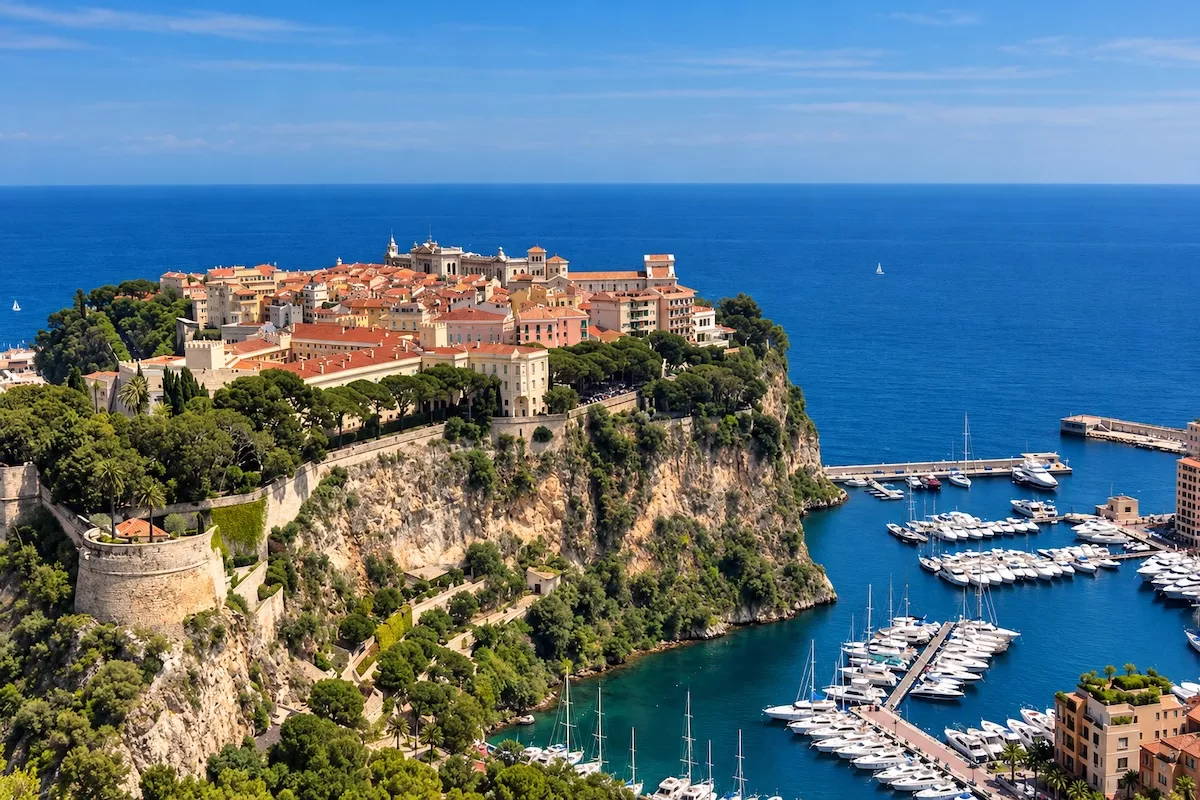
Buying a home, opening a business or letting an apartment to visitors in Monaco-Ville now comes under a new set of controls, as legislation designed to protect the Principality’s historic heart takes effect.
The State has gained a right of first refusal over property sales on the Rock – home to key Monegasque institutions including the Prince’s Palace, the Monaco Cathedral, the Oceanographic Museum, and the Court House. Short-term holiday lets, changes of commercial activity and alterations to buildings, meanwhile, face tighter scrutiny.
Law No. 1.598 on the protection of the Rock of Monaco was adopted by the National Council on 12th October and sanctioned by Prince Albert II on 16th October. Its publication in the Journal de Monaco on 23rd October, alongside four implementing Sovereign Ordinances, moves the measures from proposal to practice.
As Monaco Life reported earlier this month, the Government presented the legislation as an urgent response to mounting property pressure. The final text describes the Rock as “the heart of the Principality’s identity” and makes its protection an objective of “higher general interest”.
For owners, residents and businesses, its reach extends well beyond preserving historic façades.
The State gets first refusal on property sales
Owners wishing to sell a building, apartment or commercial lease on the Rock must notify the Minister of State in advance, disclosing the price and intended buyer. Selling a controlling stake in a company that holds such assets also falls within the rules, regardless of where the company is registered.
The State has one month to decline, buy on the declared terms or make a counter-offer. Disputes over valuation can go to an independent conciliation commission and ultimately the courts.
Owners retain the right to abandon a sale without penalty. The law expressly prevents them from being forced to sell to the State at a price they have not accepted.
The power must serve specified purposes, including protecting historic buildings, retaining permanent homes, supporting local commerce or providing public amenities. Transfers within families are exempt, while sales that bypass the declaration requirement are void.
For buyers, the practical change is an additional stage before a transaction can proceed.
Holiday lets face registration and a deadline
The law also draws a clearer line between homes and visitor accommodation. Converting a permanent residence into a property repeatedly let for short stays now requires prior authorisation.
Residents can still let their main home for up to 90 days a year without that authorisation, provided their lease and co-ownership rules allow it. Other operators may apply for a temporary licence lasting up to three years. These licences cannot be transferred with the property, and their number may be restricted street by street.
All short-term furnished lets must be registered, including those covered by the main-residence exemption, with the registration number displayed in advertisements.
Existing operators have until late April 2027 to register. Those who need authorisation but do not obtain it must stop operating by late October 2027. Breaches can attract administrative fines of up to €100,000, alongside daily penalties.
Protecting shops that serve residents
The measures give the Government a way to influence the balance between businesses serving residents and those catering primarily to tourists.
Commercial premises are divided into six activity classes, with authorisation required to move between them. The Government can also set minimum or maximum proportions for different categories on individual streets.
This could help preserve food shops, everyday services, crafts and cultural activities in a district where visitor demand competes with residents’ needs.
Building work comes under closer scrutiny
Prior approval is required for changes to façades, roofs, windows and other joinery, colours, shopfronts, signs and awnings, as well as new construction and demolition. Routine maintenance carried out on a like-for-like basis requires a declaration.
A dedicated planning regulation will establish conservation requirements building by building, following a three-month public consultation. Where those requirements make restoration more expensive than ordinary works, the State will contribute towards the additional cost.
The Government must also compile an inventory of how every premises on the Rock is used within 18 months. Owners will have three months to challenge their property’s entry.
Reports to the National Council every three years will record property sales, State acquisitions and authorised holiday lets, providing a measure of how the new controls are being applied.
Monaco Life is written by qualified journalists, writing original content. Sign up for our free newsletter, listen to our podcasts on Spotify, and follow us across Facebook, Instagram, LinkedIn, and Tik Tok.
Photo credit: Stephanie Horsman, Monaco Life