
Valentin Vacherot fights back to defeat Tsitsipas in Tokyo

Monaco’s Valentin Vacherot continues his successful run in Tokyo, producing a comeback victory over former world No. 3 Stefanos Tsitsipas on Friday, battling from a set down to secure his place in the quarterfinals of the Japan Open.

This victory over the Greek came 4-6, 7-6 (5), 6-4, continuing his run after defeating Alexander Blockx in his previous match. Tsitsipas took early control of the match, breaking Vacherot in the opening set to finish 6-4. The second set brought further challenges as Vacherot fell a break behind as Tsitsipas looked to secure a victory in the opening two sets.

Vacherot proved he would not go down without a fight as he recovered, forcing the set into a tiebreak. With the possibility of elimination on the line, Vacherot remained composed, taking the tiebreak 7-5 and forcing a deciding third set.

By the final set, Vacherot found his momentum, securing a decisive break to move ahead 3-2. Although Tsitsipas remained within reach throughout, Vacherot protected his lead to complete the comeback with a 6-4 final set.

Statistically speaking, the match proved competitive between the two players. Vacherot delivered seven aces compared to Tsitsipas’ nine, while both converted two break points. When his opportunities came, Vacherot proved his effectiveness, converting two of five break points compared to Tsitsipas’ two from eight.

FILS AWAITS IN THE QUARTERFINALS

This encounter marked the first meeting between the two and Vacherot’s first victory over the Greek, sending him into the final eight remaining in Tokyo. Vacherot will now face France’s Arthur Fils in the quarterfinals.

In their only previous match, a closely contested three-set battle ended in victory for Fils in Miami. Vacherot will now look to even the score and secure victory over the world No.9 to earn a place in the semifinals.

Stay updated with Monaco Life: sign up for our free newsletter, listen to our podcasts on Spotify, and follow us across Facebook,  Instagram, LinkedIn, and Tik Tok. 

Photo credit: Luke Entwistle, Monaco Life

Aston Martin reveals DBX GT with the same power and a softer edge

Aston Martin has just revealed the DBX GT, a new interpretation of its SUV that keeps the 727PS twin-turbo V8 and 310km/h top speed of the performance-focused DBX S but re-tunes almost everything else for comfort and refinement — a deliberate turn towards quiet luxury over outright aggression.

Revealed on 1st October and reaching its first customers in the final quarter of 2026, the DBX GT splits Aston Martin’s SUV range into two distinct characters. Where the DBX S wears its performance assertively, the GT is aimed at buyers who want the same capability delivered with greater restraint and craftsmanship.

“DBX GT is aimed at customers who prefer assured elegance over sporting aggression and demand a higher degree of luxury,” said Aston Martin chief executive Adrian Hallmark. “By refining the visual drama and elevating the interior with new elements of craftsmanship, the DBX GT delivers a true ultra-luxury experience; one which comes with no sacrifice in performance.”
A more discreet character

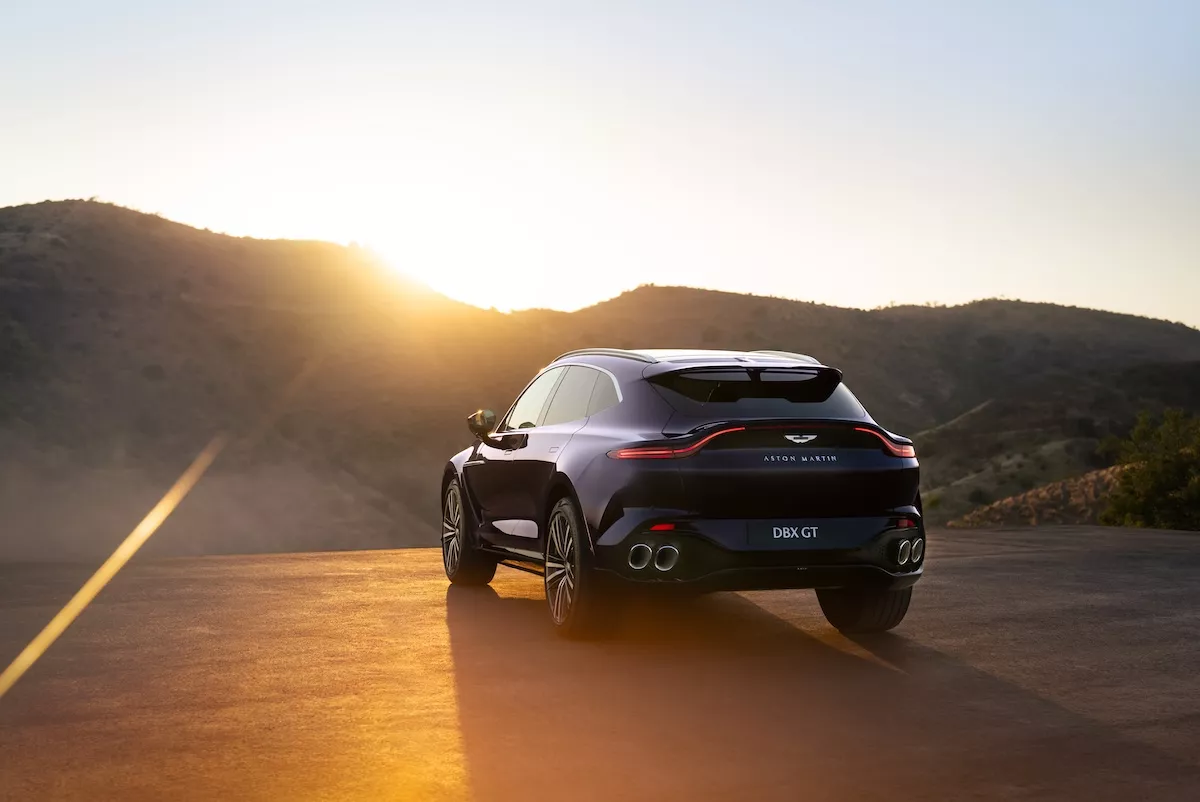
The changes to the exterior are deliberately understated. The DBX GT introduces a new double-vaned grille and a two-piece metal side strake whose contrasting polished-and-satin finish is drawn from traditional watchmaking, while the lower bumpers, sills and rear diffuser are painted in body colour rather than the assertive black of the DBX S. New 22-inch forged wheels on all-season tyres come as standard, chosen to smooth the ride and reduce road noise, with 23-inch wheels available for those wanting a sportier stance.

“With DBX GT we have taken a more discreet approach,” said chief creative officer Marek Reichman. “One which downplays its outright performance and instead exudes a quiet charisma. Elegantly understated, yet safe in the knowledge it possesses the same performance and class-leading dynamics expected of a DBX.”
The same super-SUV heart

Beneath the restraint, nothing has been softened. The GT retains the bespoke 4.0-litre twin-turbo V8 introduced on the DBX S, producing 727PS (717bhp) and 900Nm of torque, with turbocharger technology shared with Aston Martin’s Valhalla supercar. It accelerates from 0 to 100km/h in 3.3 seconds and reaches 310km/h — figures that, Aston Martin says, make it and the DBX S the world’s most powerful pure-combustion SUVs. The carbon-ceramic brakes and quicker steering rack carry over unchanged.

What has been reworked is the way the car rides. Revised dampers with a new internal valve system, new transmission and subframe mountings and extensive sound insulation are all directed at a calmer cabin; the company claims a 13% improvement in the industry measure of how easily occupants can hold a conversation on the move. A dedicated exhaust tune keeps the GT muted in its standard setting, reserving the full Aston Martin soundtrack for its Sport modes.
Craftsmanship in the cabin

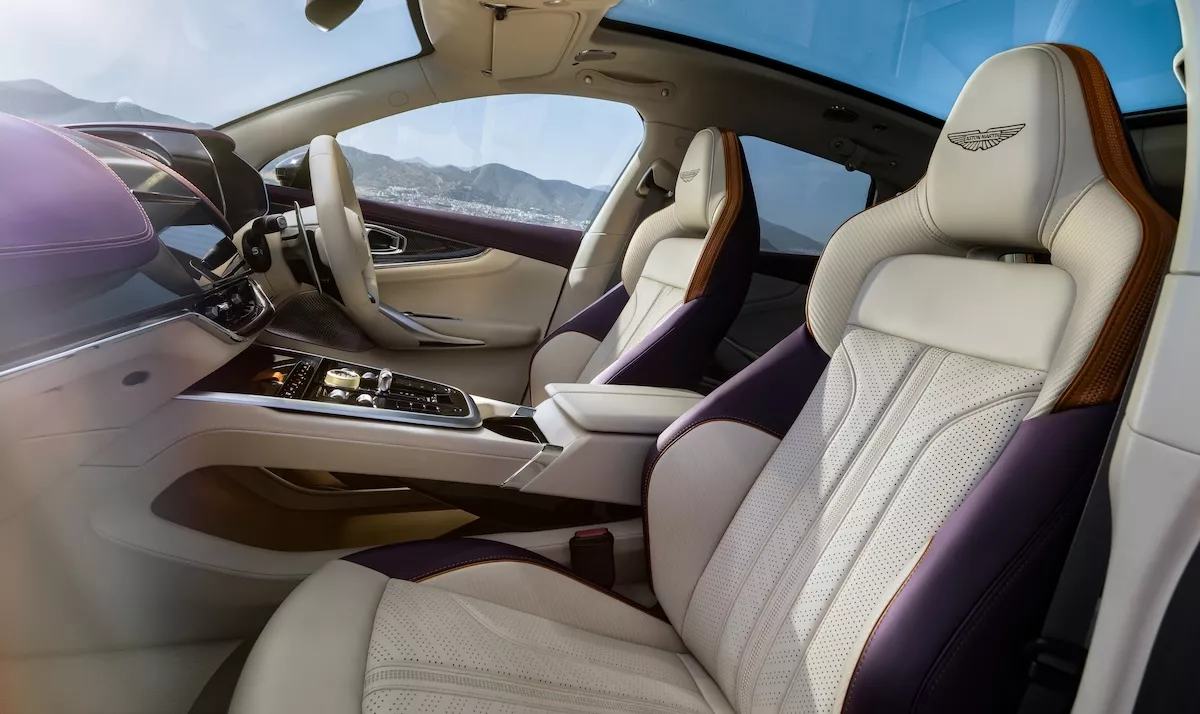
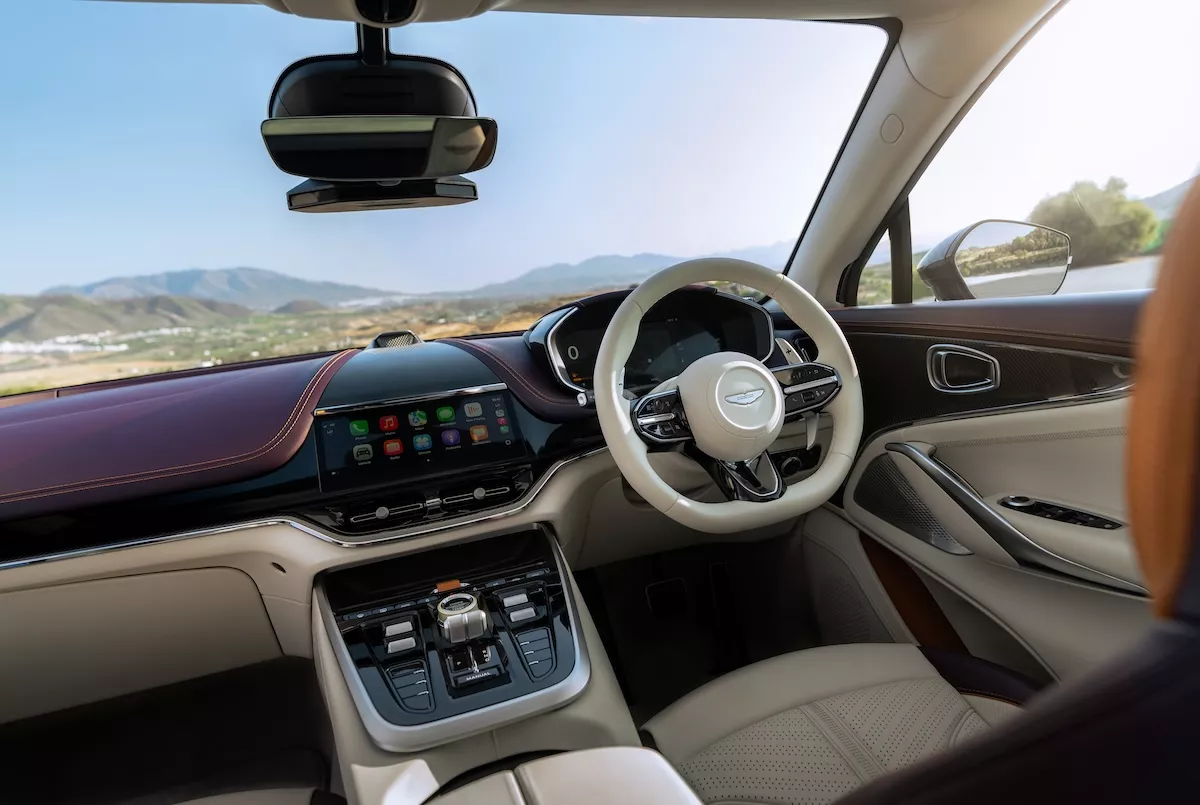
It is inside that the DBX GT makes its clearest case. Its front and rear seats have been redesigned around a thicker layer of memory foam, and a new individual rear-seat layout gives back-seat passengers the same sculpted comfort as those in front, while retaining five seats. A panoramic glass roof is now standard, alongside semi-aniline leather and metal controls finished to what Aston Martin describes as jewellery quality. Each front seat alone, the marque notes, is built using 691 metres of thread and more than four and a half hours of hand-finishing.

Built at Aston Martin’s plant in St Athan, Wales, the DBX GT begins deliveries in the fourth quarter of 2026. Pricing has yet to be announced.

Stay updated with Monaco Life: sign up for our free newsletter, listen to our podcasts on Spotify, and follow us across Facebook,  Instagram, LinkedIn, and Tik Tok. 

Photo provided
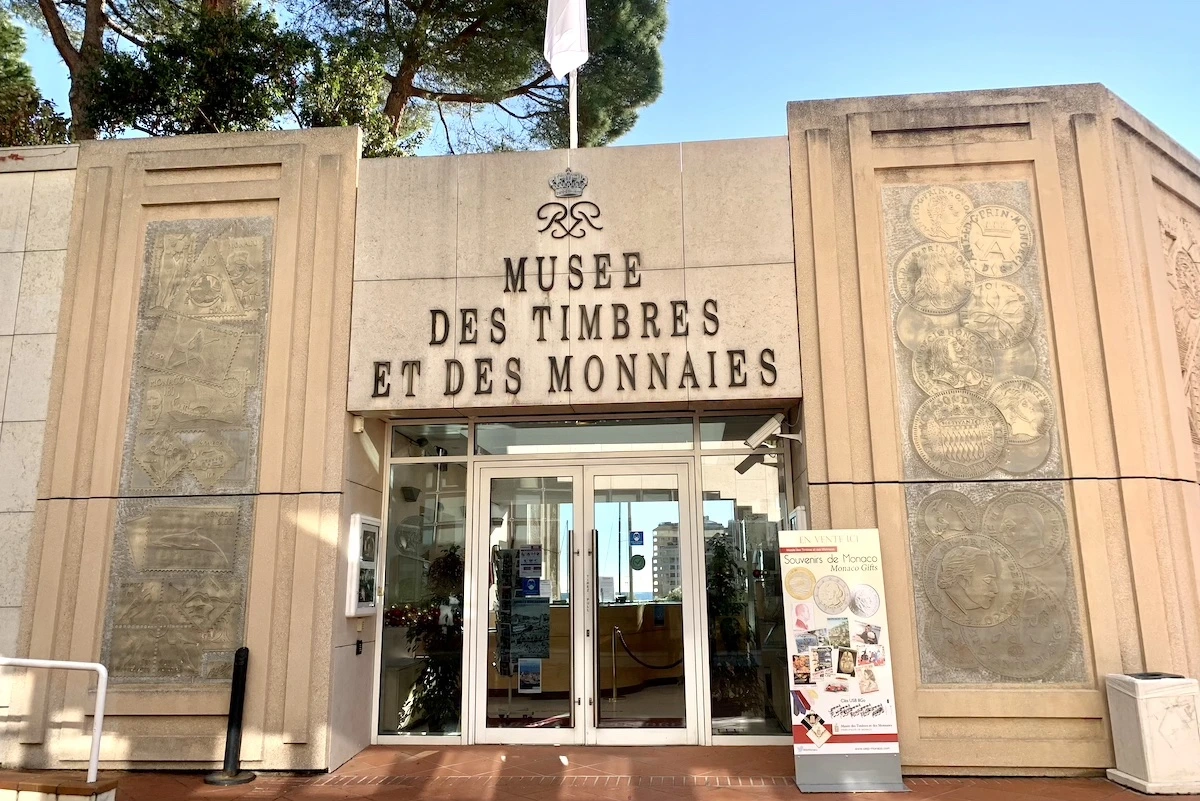
Monaco’s Museum of Stamps and Coins launches interactive experience for kids

Monaco’s Museum of Stamps and Coins has launched an interactive experience, inviting children to discover the stories hidden within the museum’s collections.

Offered since 30th September, this new activity allows young visitors to become explorers, using a booklet filled with puzzles, games, and challenges to guide them through the museum. Rather than simply observing, children are encouraged to search and investigate collections as they discover the history of stamps and coins, how they’re made, figures who have shaped Monaco’s history, and some treasures that have been preserved by the museum.

The experience was created for children aged eight to fifteen to complete independently, while visitors aged six and over can participate alongside an adult. At the end of the experience, a surprise awaits young explorers.

The activity costs €5, and to mark its launch, the museum is offering one free adult admission with each children’s booklet purchased until 2 November. Adult admission otherwise costs €3. The Museum of Stamps and Coins is open daily from 9:30am to 5pm, giving families the opportunity to discover the museum’s collections through a new, interactive experience.

Stay updated with Monaco Life: sign up for our free newsletter, listen to our podcasts on Spotify, and follow us across Facebook,  Instagram, LinkedIn, and Tik Tok. 

Photo by Monaco Life

Monaco declares digital transition over as State enters new era of AI and implementation

After eight years spent building the infrastructure, services and skills required to transform Monaco into a digital State, the Government is drawing a line under the era of “digital transition” and moving to a permanent model in which technology — including artificial intelligence — becomes part of the everyday machinery of government.

The shift has been formalised in a new Sovereign Ordinance published in the Journal de Monaco on Friday, creating the Délégation Interministérielle au Numérique (DIN) – or Interministerial Delegation for Digital Affairs in English – from 5th October.

It replaces the Délégation Interministérielle chargée de la Transition Numérique (Interministerial Delegation for Digital Transition, DITN) with the new Délégation Interministérielle au Numérique (Interministerial Delegation for Digital Affairs, DIN) — significantly removing the concept of “transition” from its name and reflecting the shift towards digital as a permanent function of the State.

The distinction reflects how much has changed since Monaco began its digital transformation in 2018.

“Digital is no longer a transition: it is now an essential function of the State and a lever for transforming professions,” Minister of State Christophe Mirmand said in a statement announcing the restructuring.

From Extended Monaco to a digital State

Monaco’s concerted push into the digital era began in February 2018 with the appointment of Frédéric Genta as Interministerial Delegate for Digital Transition. Prince Albert II then formally launched Extended Monaco in April 2019, an ambitious programme intended to apply digital technology across the Principality’s economy and public services.

At the time, the programme was built around three major ambitions: improving quality of life, creating a new cycle of economic prosperity and increasing the value of public services. The Government initially envisaged its full implementation over the following three years.

What followed was a much broader transformation.

Monaco rolled out 5G and fibre infrastructure, launched its sovereign Monaco Cloud, expanded online government services, introduced digital identity through MConnect, developed e-health and e-education services and pursued smart-city projects including a digital twin of the Principality.

The programme also extended beyond government. Extended Monaco Entreprises and the Fonds Bleu were established to help local businesses digitalise, while thousands of professionals received digital training. By 2022, the Government said almost 700 transformation projects had been co-financed through the Fonds Bleu.

The Administration itself was reorganised along the way. Dedicated digital and information-system departments were established in 2020 to develop online public services, dematerialise administrative procedures and deliver projects spanning health, education, smart-city services and the economy.

The transformation also proved unexpectedly important during Covid, when systems already developed under Extended Monaco allowed the Administration to move to remote working and schools to use digital education platforms.

Eight years after the transition began, the Government’s position is effectively that digital technology is no longer a project to be completed. It is infrastructure that now has to be operated, governed, secured and continually developed.

From building digital services to governing them

The new DIN will go considerably beyond delivering new apps and online services. Under Sovereign Ordinance No. 12.143, the delegation will design and propose the State’s digital policy and oversee its implementation.

It will identify the State’s digital requirements, anticipate changes in infrastructure and technology, establish rules governing the sharing and management of government data, monitor technological and regulatory developments and evaluate State digital projects from technical and budgetary perspectives.

For the first time, it will also prepare a consolidated digital budget for the State, bringing greater central oversight to spending across the departments it coordinates.

Security and data governance are embedded in the new structure. The DIN will oversee implementation of the State’s information-system security policy and ensure the proper management of personal data within digital projects.

AI signals the next phase

Artificial intelligence is one of the clearest indications of where Monaco intends to take the new model. The Government says the DIN will be responsible for launching a strategy for the development of AI within the Administration.

Rather than being treated as a standalone technology project, AI will therefore sit within the same structure responsible for data, infrastructure, digital services, security, regulation and spending.

That is a significant difference from the mission Monaco set itself in 2018 and 2019. Then, the challenge was getting the Principality into the digital era. Now it is deciding how increasingly powerful technologies should be integrated into the operation of the State.

Three operational departments will sit beneath the DIN: the Direction du Développement des Services Numériques (the Digital Services Development Directorate – DDSN), responsible for digital public services and elements of digital identity; the Direction des Infrastructures et des Systèmes d’Information (Infrastructure and Information Systems Directorate – DISI), responsible for State IT infrastructure, security, resilience and continuity; and the Direction des Services de Confiance Numérique (Digital Trust Services Directorate  – DSCN), responsible for digital trust services and technical elements of digital identity.

Digital regulation is meanwhile being separated from those operational activities, with a dedicated regulatory service placed directly under the Minister of State.

Pascal Rouison will head the new structure as Interministerial Delegate for Digital Affairs, with Georges Gambarini leading Digital Services Development, Jean-Charles Harlé heading Infrastructure and Information Systems and Fabien Giraud responsible for Digital Trust Services.

Monaco Life is written by qualified journalists, writing original content. Sign up for our free newsletter, listen to our podcasts on Spotify, and follow us across Facebook,  Instagram, LinkedIn, and Tik Tok

Photo credit: Benjamin Vergely


Former AS Monaco striker Sonny Anderson to chair Sportel Awards 2026 jury

Former AS Monaco striker Sonny Anderson will return to the Principality this month, chairing the jury for the 2026 Sportel Awards.

The Brazilian footballer played for AS Monaco from 1994 to 1997, and now takes on a new role as President of the seven-member jury responsible for selecting this year’s standout works in sports broadcasting, imagery, and storytelling.

Anderson had a successful career during his time in France, winning three French league titles and finishing as Ligue 1’s top scorer three times. His return brings a familiar face to Monaco for an event celebrating the relationship between sport and media for over thirty years. Joining Anderson on the jury will be figures from both sides of that relationship.

Elite sport will be represented by World and European handball champion and Olympic silver medallist Siraba Dembélé-Pavlovic, Cameroonian international footballer and Champion for Peace with Monaco-based Peace and Sport Nicolas Nkoulou, and Monegasque open-water swimmer Lisa Pou, who recently claimed bronze in the 10km at the 2025 World Championships.

Enduro and Freeride mountain biker and filmmaker Kilian Bron will join them, alongside award-winning sports photographer Catherine Steenkeste, and Georges Mohammed-Chérif, President and Chief Creative Officer of creative agency Buzzman.

Bron will represent the French National Olympic and Sports Committee on the jury, while Pou will represent the Monaco Olympic Committee.

MORE THAN THREE DECADES OF SPORTING STORYTELLING

Created in 1990, the Sportel Awards recognise productions and images capturing some of the most memorable moments in sport. The programme includes the Golden Podiums, honouring directors and producers behind outstanding sporting sequences, as well as the Renaud de Laborderie Book Prize, recognising a significant publication dedicated to sport.

The jurors will now review this year’s entries and determine which will receive the competition’s honours. The winners will be revealed in Monaco on 19th October as the Sportel Awards ceremony takes place at 7pm at the Grimaldi Forum.

Stay updated with Monaco Life: sign up for our free newsletter, listen to our podcasts on Spotify, and follow us across Facebook,  Instagram, LinkedIn, and Tik Tok. 

Photo by Monaco Life

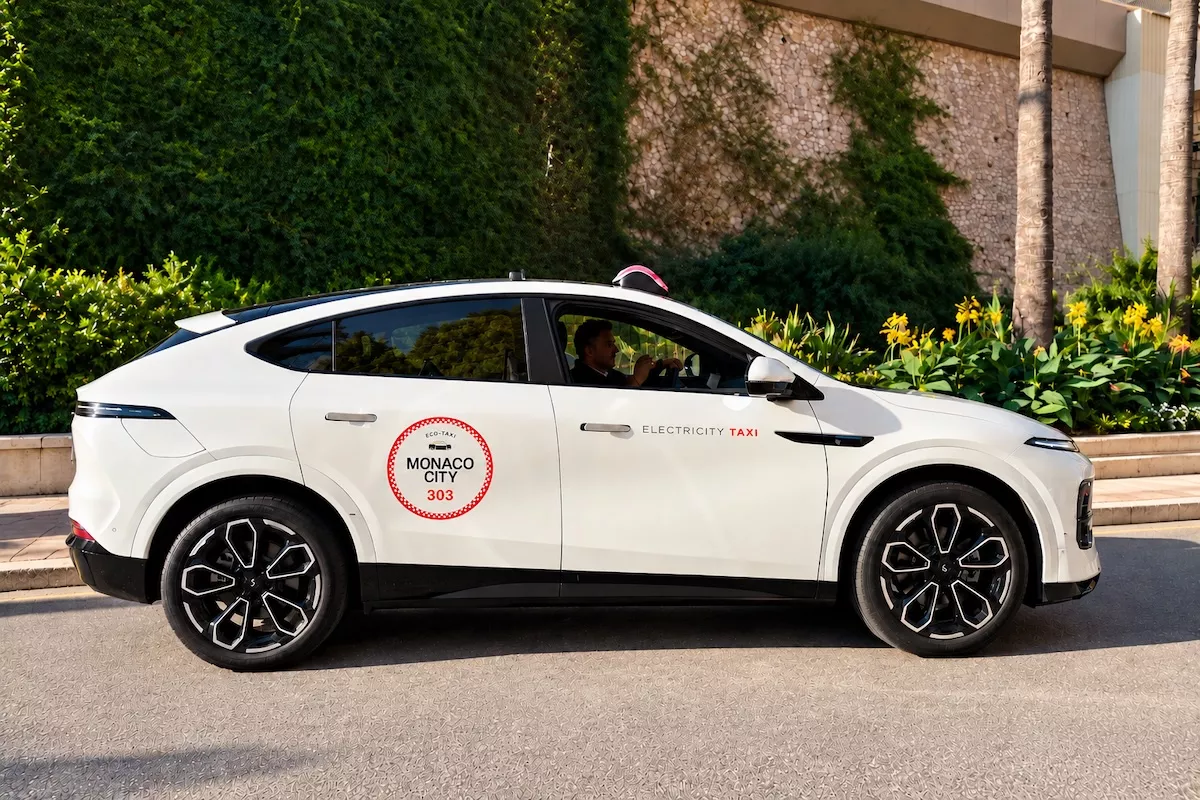
Monaco changes seasonal taxi rules in push for more reliable service

Monaco has overhauled the way seasonal taxi licences are awarded, introducing a clear hierarchy that favours Monégasques and residents while giving greater weight to experienced drivers, as the Principality looks to improve taxi availability and service quality.

The changes are particularly relevant for Monaco residents and visitors who have experienced difficulties finding taxis during major events and periods of high demand. They form part of a wider discussion between the Government, National Council and taxi profession over how to ensure the Principality has sufficient capacity when it is busiest.

Under the new system, seasonal taxi licences are awarded according to a formal order of priority: Monégasque nationals first, followed by spouses, parents or children of Monégasques, then Monaco residents, and finally non-residents.

The National Council says the changes follow two years of discussions with the Government and strengthen Monaco’s National Priority policy within the sector.

Experience to count for more

The scoring system used to select seasonal taxi drivers has also been revised, with greater weight now given to professional experience.

Previous experience working as a seasonal taxi driver is more heavily recognised, a change the National Council says will favour the return of candidates who have already demonstrated their ability to provide the service.

That change is already evident in the application process for the 2027 season. Drivers who worked during the previous season can ask for their previous average score from the English and Italian language assessments to be carried forward.

Language skills remain part of the selection process — an important consideration in a country where a large proportion of taxi passengers are international. Candidates who meet the initial requirements will undergo oral English and Italian tests, as well as a motivation interview.

Focus shifts to availability and service

The changes come alongside Monaco’s recently revised taxi tariffs and a broader attempt to address the availability of taxis throughout the year.

National Council President Thomas Brezzo said the objective went beyond National Priority and was also to ensure Monaco has a taxi service that is sufficiently sized, responsive and of a high standard for both residents and visitors.

One potentially significant change is still being discussed: the creation of a supplementary taxi fleet that could be mobilised outside the traditional high season during major events and periods of particularly strong demand.

Such a system could give Monaco additional capacity during events including the Grand Prix, Monaco Yacht Show and other periods when demand for taxis increases sharply, without permanently increasing the number operating throughout the year.

Meanwhile, the Government has now opened the next round of permanent and seasonal taxi authorisations. Applications for the 2027 seasonal licences close on 19th October, meaning the newly revised selection criteria will now be put into practice.

Stay updated with Monaco Life: sign up for our free newsletter, listen to our podcasts on Spotify, and follow us across Facebook,  Instagram, LinkedIn, and Tik Tok.

Photo by Cassandra Tanti