Monaco begins work on new yacht mooring zone ahead of 2027 anchoring ban

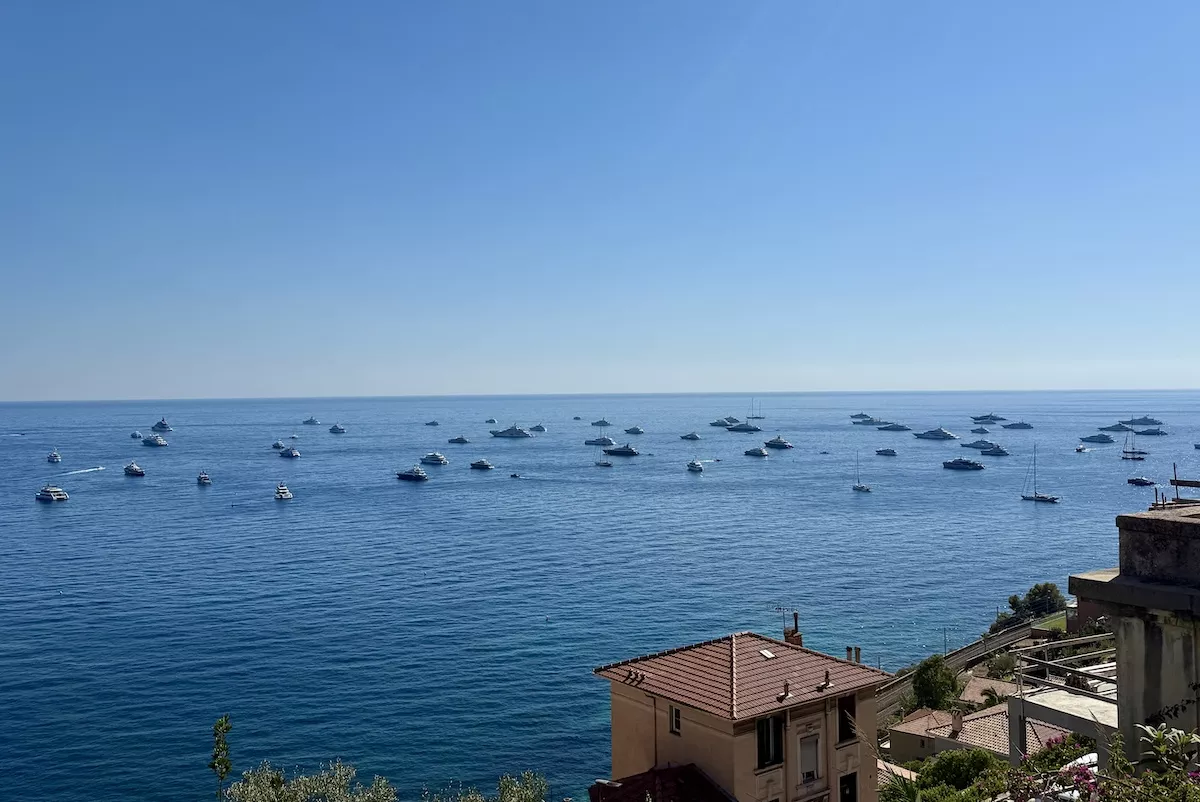
Monaco has begun work on a new deep-water mooring zone designed to protect its seabed from repeated yacht anchoring, ahead of new rules that will largely prohibit vessels from dropping anchor outside the designated area from summer 2027.

Spearheaded by the Department of Maritime Affairs after several years of preparation, the project addresses the environmental strain caused by repeated traditional anchoring on the seabed. Replacing successive anchor drops with fixed mooring points will protect local marine ecosystems in a heavily frequented body of water. Construction work is scheduled to last approximately three and a half months, concluding no later than 31st March 2027, according to the government. The new facility will become fully operational for the summer 2027 season.

Deep-water engineering and mooring specifications

While organised mooring zones already exist elsewhere in the Mediterranean, the Monaco installation is distinguished by its deep-water location – situated at depths between 45 and 80 metres – which increases the technical complexity of the installation. Developed in coordination with French maritime authorities due to its geographical location, the designated area corresponds to the traditional summer anchorage used during major Principality events.

The system will feature nine mooring buoys secured to the seabed via eco-designed anchor blocks, comprising four buoys designed for vessels up to 50 metres, three buoys for vessels up to 70 metres, and two buoys for vessels up to 90 metres.

New regulations from summer 2027

Once operational, vessels up to 90 metres will be accommodated within the zone, managed by the Société d’Exploitation des Ports de Monaco (SEPM). Concurrently, anchoring will be prohibited year-round outside of this designated perimeter across all waters under Monegasque sovereignty, significantly reducing the total number of anchorages and alleviating pressure on marine habitats. Exceptions and adjustments may be implemented during major maritime events. 

During the construction phase, all other maritime activities within the project zone are prohibited for safety reasons, though temporary adjustments will be made to accommodate major nautical events.

Stay updated with Monaco Life: sign up for our free newsletter, listen to our podcasts on Spotify, and follow us across Facebook,  Instagram, LinkedIn, and Tik Tok. 

Photo credit: Cassandra Tanti, Monaco Life

Monaco’s historic Rock faces sweeping new property controls under proposed law

Monaco’s Government is seeking sweeping new powers to intervene in property sales, restrict changes of use and control redevelopment on the Rock, warning that growing real estate pressure threatens the historic neighbourhood’s identity. 

Home to the Prince’s Palace, the Cathedral, the National Council, the Town Hall and the Palace of Justice, the Rock is not only the historic seat of Monaco’s institutions but also a residential neighbourhood where Monegasque families have lived for generations. The Government argues that growing property speculation and commercial development threaten this balance, putting an important part of the Principality’s heritage and national identity at risk.

The bill, submitted to the National Council on Tuesday 6th October, would introduce a new legal framework to protect Monaco-Ville, including its historic buildings, residential properties, local businesses and public spaces.

Presenting the legislation to elected representatives on Wednesday, the Minister of State argued that existing laws were insufficient to prevent the gradual transformation of the Rock from a residential neighbourhood into an area increasingly shaped by property investment and tourism.

The Government pointed to successive property acquisitions, proposals to convert homes into short-term furnished accommodation, the replacement of neighbourhood shops with businesses catering primarily to visitors, and major renovation projects that could ultimately change how properties are used.

While individual developments may comply with existing regulations, the Minister warned that their cumulative impact could fundamentally alter the character of Monaco’s oldest neighbourhood.

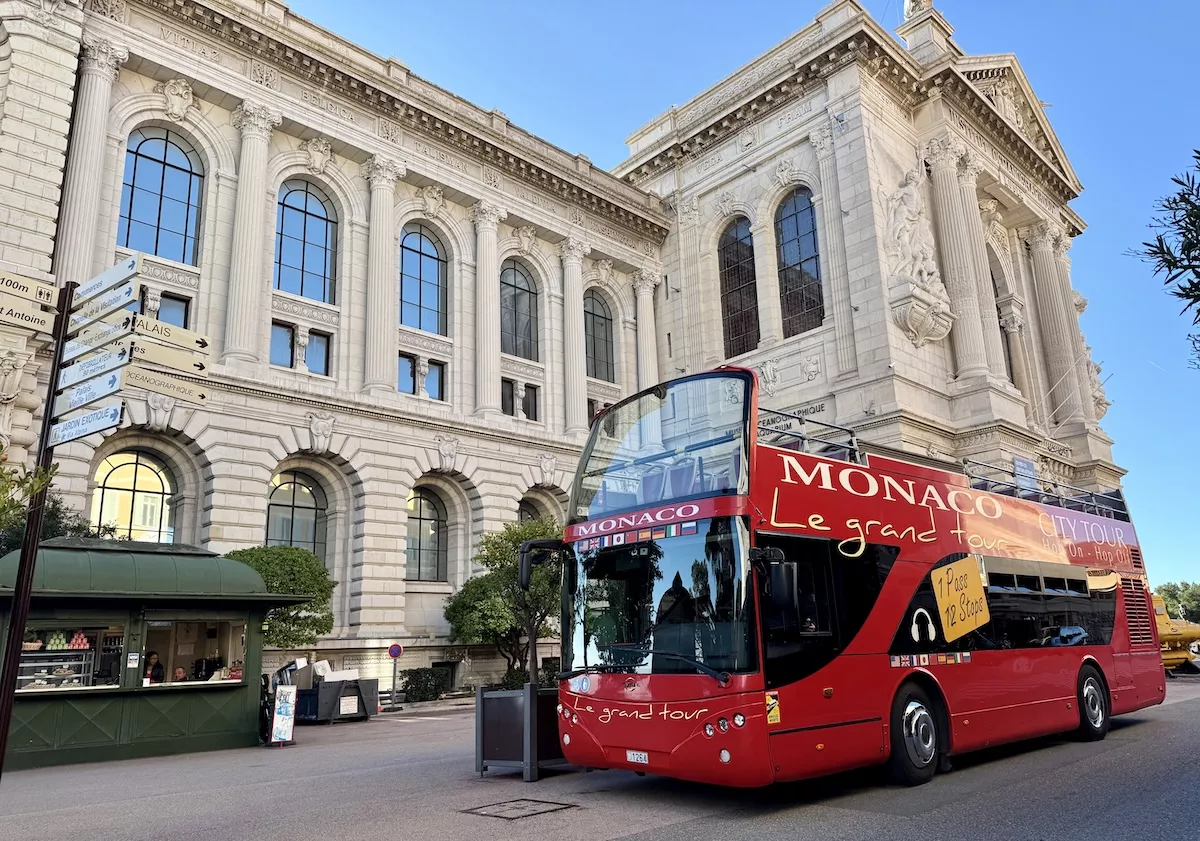
The Oceanographic Museum in Monaco-Ville is a popular tourist attraction. Photo credit: Cassandra Tanti

New powers over property sales and development

At the centre of the proposed legislation is a new right of pre-emption, giving the State priority to purchase certain properties when they are put up for sale. The proposed powers would also cover transactions involving shares in property-owning companies, businesses and leases within the protected area.

The legislation would also introduce tighter controls over the use of individual premises, with particular attention to the conversion of residential properties and the types of commercial activities permitted.

A third measure would strengthen State oversight of construction, demolition, alterations to historic buildings and development of open spaces.

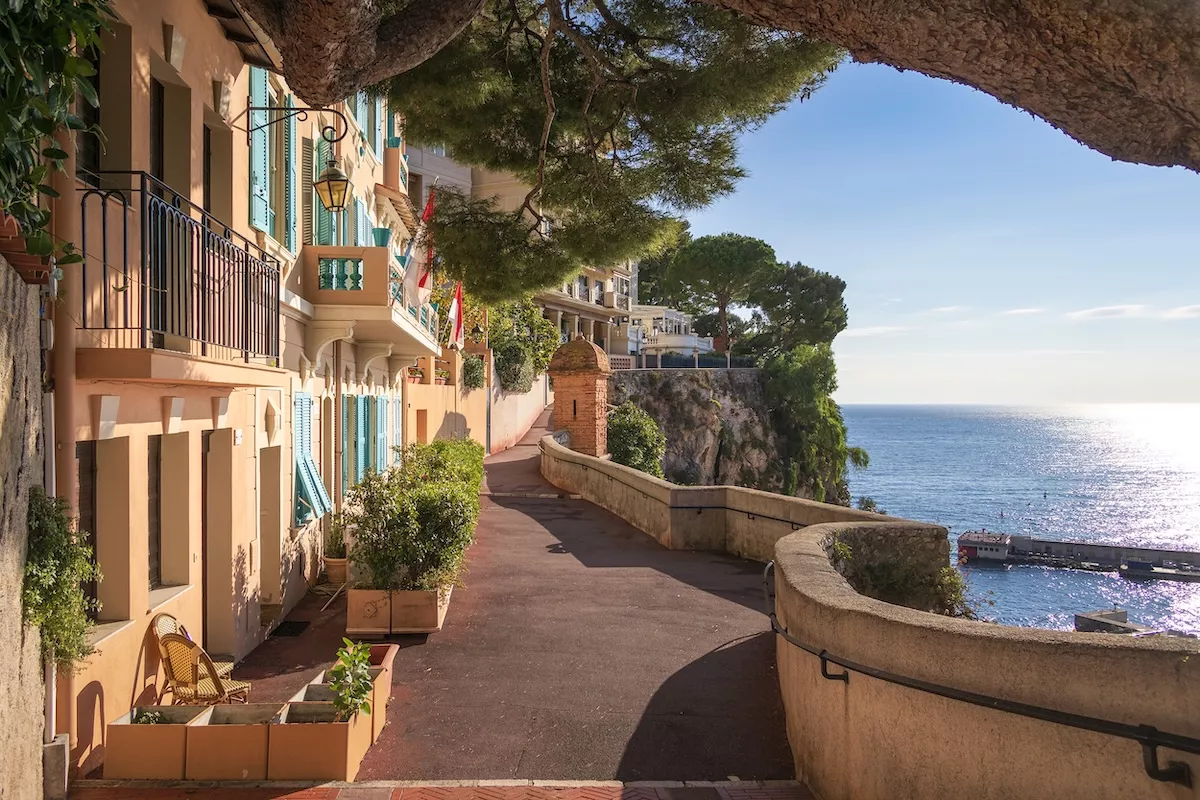
The protected perimeter would cover Monaco-Ville, including its ramparts, surrounding slopes, cliffs, gardens and the Chemin des Pêcheurs. Its precise boundaries would be detailed through a Sovereign Ordinance.

Existing property projects will not be overturned

The proposed legislation raises important questions for property owners and developers who have already invested in Monaco-Ville.

Addressing those concerns, the Minister acknowledged that the Government itself had approved several developments on the Rock in recent years, including projects already completed, under construction or awaiting implementation.

He insisted that the new legislation did not represent a reversal of those decisions.

Under Article 49 of the proposed law, property transactions covered by qualifying preliminary sale agreements concluded before the law’s publication would be exempt from the new pre-emption rules.

Existing planning permissions would also retain their validity, while legally established uses and commercial activities could continue and be transferred without requiring fresh authorisation.

The Minister further stressed that the proposed right of pre-emption would not amount to compulsory acquisition.

Property owners who disagreed with the State over a proposed purchase price would retain the right to withdraw their property from sale without penalty. Any acquisition against an owner’s wishes would have to follow Monaco’s existing expropriation legislation and its legal safeguards.

Government demands urgent vote by 16th October

The legislation has also become a source of tension between the Government and National Council. Submitted under an emergency procedure requiring debate to begin by 13th October, the 50-article bill is instead scheduled for debate and a vote on 16th October. The Minister of State criticised the delay, insisting that the National Council must meet its revised deadline without further postponement. He warned that property transactions, changes of use or planning permissions secured before the law takes effect could escape the proposed restrictions, undermining efforts to protect the Rock.

The Government maintains that the proposed law is intended to manage future development rather than prevent investment in Monaco-Ville. It would also introduce additional oversight, including a public register of properties acquired through the State’s new pre-emption powers and a report to the National Council every three years on the law’s implementation.

Monaco Life is written by qualified journalists, writing original content. Sign up for our free newsletter, listen to our podcasts on Spotify, and follow us across Facebook,  Instagram, LinkedIn, and Tik Tok.

Photo credit: Benjamin Vergely


Budget debate suspended as National Council clashes with Government over housing and jobs

Monaco’s National Council has suspended debate on the 2026 revised budget following a sharp confrontation with the Government over housing, employment opportunities for Monegasque citizens and the Assembly’s constitutional role. The unusually tense exchange exposed deep disagreements between the two institutions, with elected representatives accusing the Minister of State of dismissing legitimate concerns raised on behalf of the Monegasque population.

The confrontation unfolded on Wednesday 7th October during the opening debate on Monaco’s 2026 revised budget. Following the Government’s response to the report by the Finance and National Economy Committee, National Council President Thomas Brezzo suspended the public sitting before bringing it to a close.

In a strongly worded statement issued afterwards, the National Council said Minister of State Christophe Mirmand’s response had significantly damaged relations between the Government and the elected Assembly, both in its substance and tone.

At the centre of the dispute are two longstanding priorities for elected representatives: protecting employment opportunities for Monegasque nationals and accelerating the construction of state-owned housing.

A constitutional disagreement

The dispute began with the Minister of State’s opening remarks, in which he reminded elected representatives that the Government derives its strategic priorities, and the confidence to carry them out, from Prince Albert II alone.

The Assembly rejected what it considered an overly restrictive interpretation of its constitutional role.

While acknowledging that it does not exercise direct oversight of government action in the conventional parliamentary sense, the National Council insisted that it remains the Government’s institutional partner in implementing public policy through its vote on the budget.

The Council invoked Article 66 of Monaco’s Constitution, under which legislation requires ‘the agreement of the wills’ of the Prince and the National Council. It also recalled Prince Albert II’s description in 2006 of the relationship between the two institutions as one of cooperation rather than confrontation.

The Council said it had no intention of assuming the Government’s responsibilities but would not accept being reduced to what it described as a mere recording chamber for executive decisions.

National priority becomes a flashpoint

One of the principal disagreements concerns the application of Monaco’s constitutional principle of national priority, particularly in public-sector recruitment.

The National Council has been pressing for greater transparency in recruitment procedures, including the creation of joint commissions and the publication of recruitment notices for senior positions when no suitable Monegasque candidate has been identified.

It argues that these measures would not impose additional costs on the State or involve elected representatives in the direct management of public services.

In his address, however, the Minister of State defended the Government’s recruitment procedures and rejected the proposed involvement of a joint commission, arguing that the constitutional separation of powers prevents the National Council from participating in the recruitment of civil servants.

He also disputed concerns over unsuccessful Monegasque applications, explaining that 50 applications cited for 2025 involved 31 individuals, several of whom had applied more than once. Of those 31, he said, 16 had subsequently joined the civil service and one had entered municipal employment.

The Minister added that Monegasque nationals account for 24% of Government administration employees but occupy 79% of senior positions.

The Government did, however, express openness to introducing a dialogue process for unsuccessful Monegasque candidates, allowing them to receive explanations about recruitment decisions.

For the National Council, these concessions do not go far enough. It described the Government’s categorical rejection of its proposals as incomprehensible and maintained that Monegasque citizens must receive priority in accessing employment in their own country.

Housing targets expose a widening divide

The second major point of contention concerns the pace of construction of state-owned housing for Monegasque families.

The National Council reiterated its demand for approximately 100 new state-owned apartments to be delivered annually, arguing that the target reflects decades of experience with housing shortages in the Principality.

Elected representatives pointed to the situation in 2018, when they challenged the Government’s reliance on statistical projections that they believed underestimated actual housing demand. Those discussions preceded Prince Albert II’s announcement of the National Housing Plan in March 2019.

Seven years later, the Council warned that the Government was returning to the same approach, with projections suggesting that approximately 40 new apartments per year would be sufficient.

The Government strongly defended its calculations.

According to the Minister of State, Monaco’s statistical agency IMSEE estimates that the Monegasque population has grown by an average of 93 people annually between 2015 and 2024, equivalent to approximately 50 new households each year.

On that basis, the Government argues that constructing 40 new apartments annually would be sufficient to accommodate 80% of Monegasque nationals in state-owned housing.

The Minister also outlined the current construction programme, including 352 apartments planned for delivery during the present five-year period and a further 144 to 158 apartments scheduled between 2030 and 2034.

However, he acknowledged that no newly built state-owned apartments are scheduled to be allocated during 2026 or 2027, with the first tower of the Bel Air development expected to be delivered in January 2028.

To address the immediate shortage, the Government plans to accelerate renovations of existing apartments, potentially making approximately 90 homes available at the next allocation commission and another 50 during a second commission in 2027.

The National Council nevertheless maintained that the proposed pace of new construction falls short of what Monegasque families need.

Government defends its €2.1 billion budget

Beyond the institutional confrontation, the Minister of State defended the Government’s wider financial management.

The revised 2026 budget anticipates a 3% increase in ordinary expenditure and a 3% reduction in revenue compared with initial estimates, reflecting higher operating costs and the decline of exceptional receipts associated with the Mareterra development.

Despite these adjustments, the Government expects to maintain a budget surplus of €5.9 million.

The Minister pointed to Monaco’s approximately €2.1 billion budget, its absence of public borrowing and its lack of personal income tax as evidence of the Principality’s continuing financial strength.

He also outlined progress on several major projects, including the restructuring of the Fontvieille shopping centre, additional rail capacity between Nice and Monaco, and the planned merger of Monaco Info and TV Monaco – with a broad outline due by the end of 2026.

However, these announcements were overshadowed by the disagreement over the Government’s relationship with the National Council.

Budget proceedings halted

In explaining the decision to suspend proceedings, the National Council cited the Minister of State’s refusal to reconsider his positions on essential issues and what it described as Government inaction on major concerns.

President Thomas Brezzo first suspended and then closed the public sitting.

The Council said the decision was intended to ensure that the legitimate demands of Monegasque citizens were properly considered by the Minister of State.

Monaco Life is written by qualified journalists, writing original content. Sign up for our free newsletter, listen to our podcasts on Spotify, and follow us across Facebook,  Instagram, LinkedIn, and Tik Tok.

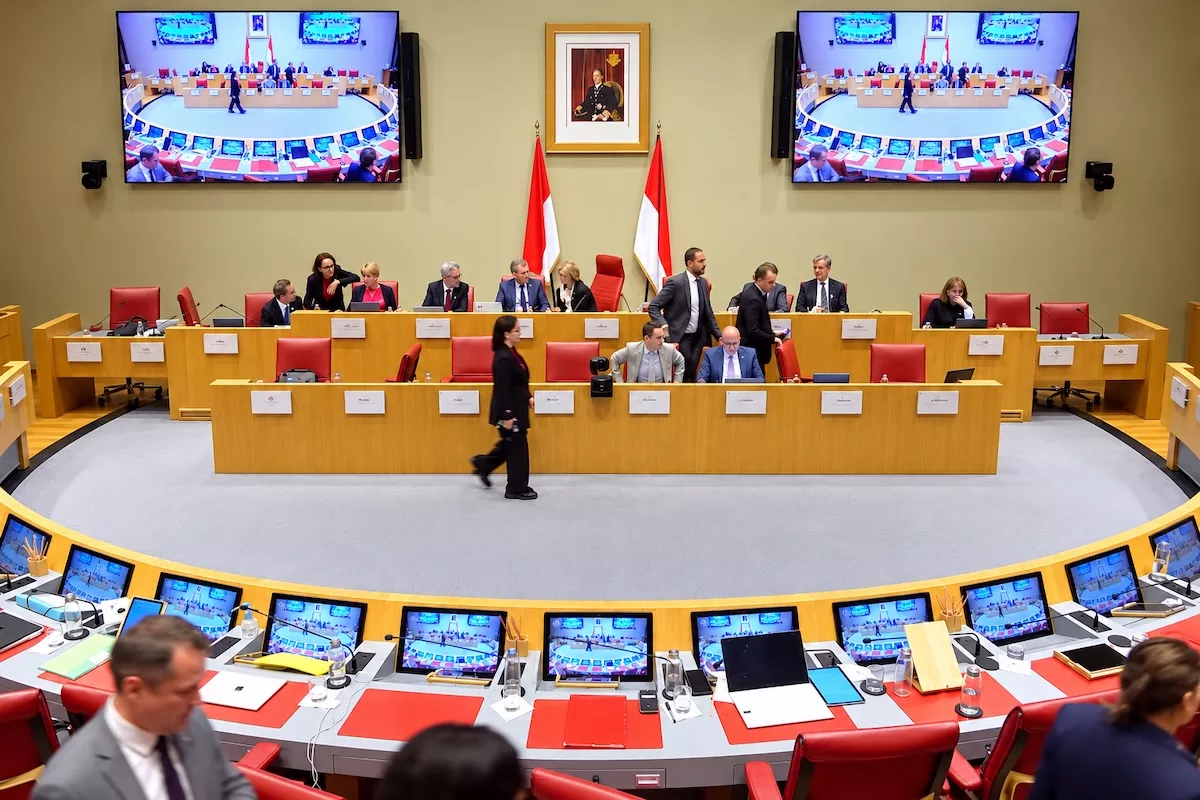
Photo taken from video of the National Council debate on 7th October


Princess Stephanie visits new shared living space in Monaco

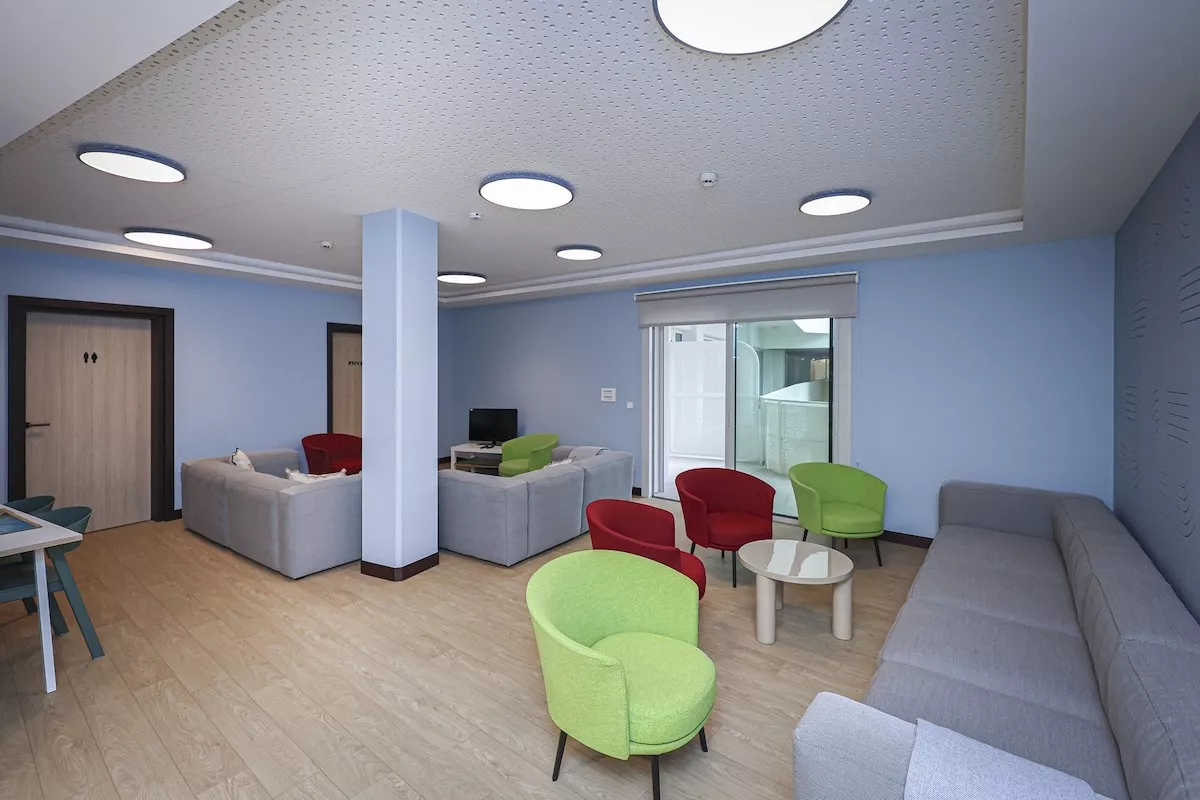
Princess Stéphanie visited Monaco’s newly established shared living unit on Monday 5th October, a facility designed to offer an intermediate housing solution for individuals with disabilities.

Located in the Hemera building and open since 1st July, the Unité de Vie Partagée welcomed a delegation led by Christophe Robino, Minister of Health and Social Affairs, alongside representatives from the National Council and the AMAPEI administration.

Princess Stéphanie and the visiting officials were guided through the premises by two residents.

Photo credit: Stéphane Danna

Tailored space for intermediate independence

The 450-square-metre facility, which includes 180 square metres of outdoor space, includes 10 customisable bedrooms with private bathrooms alongside communal living areas. The scheme is intended to bridge the gap between traditional residential care and total independence, providing a secure environment for residents holding official disability status in the Principality.

Daily support and structured admissions

Specialised educators provide morning and evening support, primarily assisting with meal preparation, while residents spend their days pursuing professional or external activities. 

Placements within the facility are directed by the ‘Disability Evaluation Commission’, establishing a secure and supportive framework designed to foster long-term personal autonomy.

Stay updated with Monaco Life: sign up for our free newsletter, listen to our podcasts on Spotify, and follow us across Facebook,  Instagram, LinkedIn, and Tik Tok. 

Main photo credit: Stéphane Danna

Monaco opens rarely seen spaces for European Heritage Days

Nearly 2,900 guests visited Monaco’s municipal cultural sites during the European Heritage Days over the weekend, with Monaco’s Exotic Garden attracting over half of the weekend’s total attendees.

The 31st edition of the event took place on Saturday 3rd and Sunday 4th October under the theme ‘Heritage at Risk: Revive – Resist – Reinvent’, opening several typically restricted areas to the public and introducing new experiences.

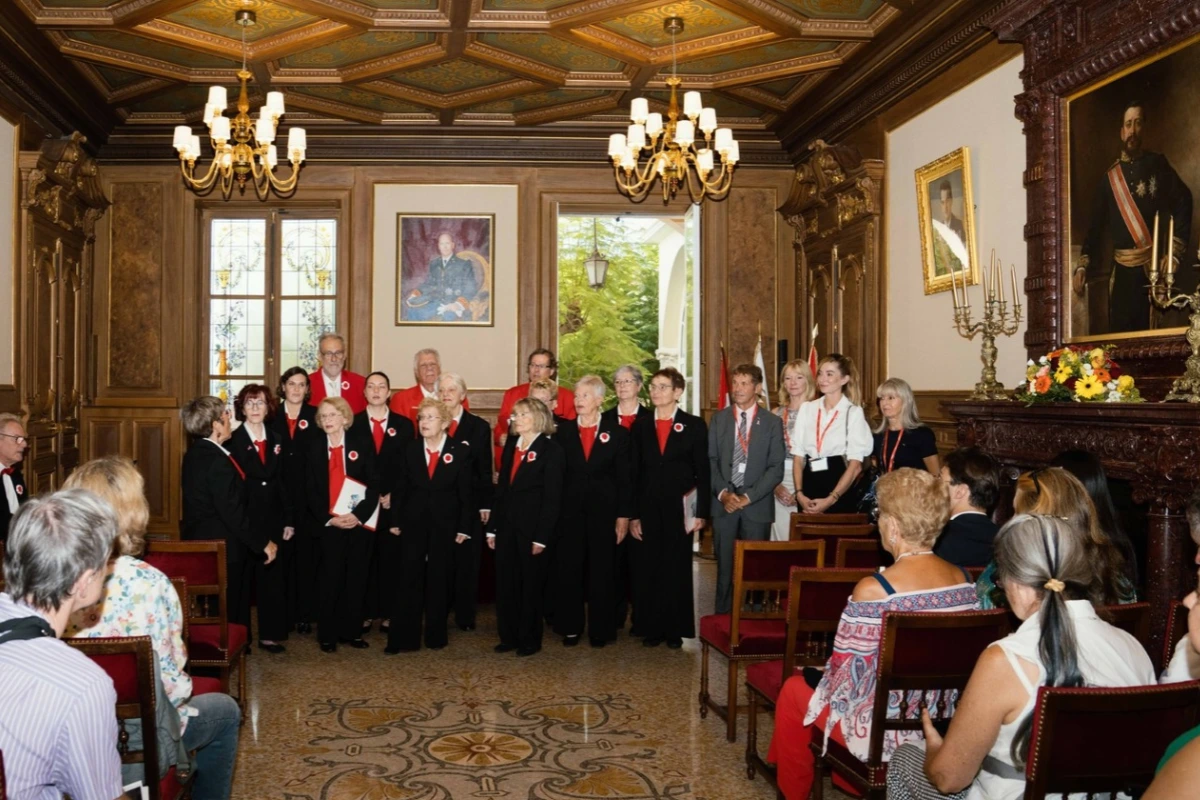
Throughout the weekend, a total of 2,878 visitors were recorded at participating sites, including 1,592 at the Exotic Garden and 873 at Monaco City Hall. At City Hall, visitors were given access to the Wedding Hall, Council Chamber, and Mayor’s Office, along with musical performances by the Rainier III Academy and the U Cantin d’A Roca choir. QR codes were also introduced during this edition, giving access to a virtual guide. A treasure hunt for families also took place.

Visitors take part in activities during Monaco’s European Heritage Days. Photo source: Mairie de Monaco

The Rainier III Academy opened behind-the-scenes areas and its instrument-making department while hosting concerts throughout the weekend. Pavillon Bosio presented its Garden Club #6 – What if the sun were blue, would we see it? exhibition, exploring recycling, repurposing, and assemblage.

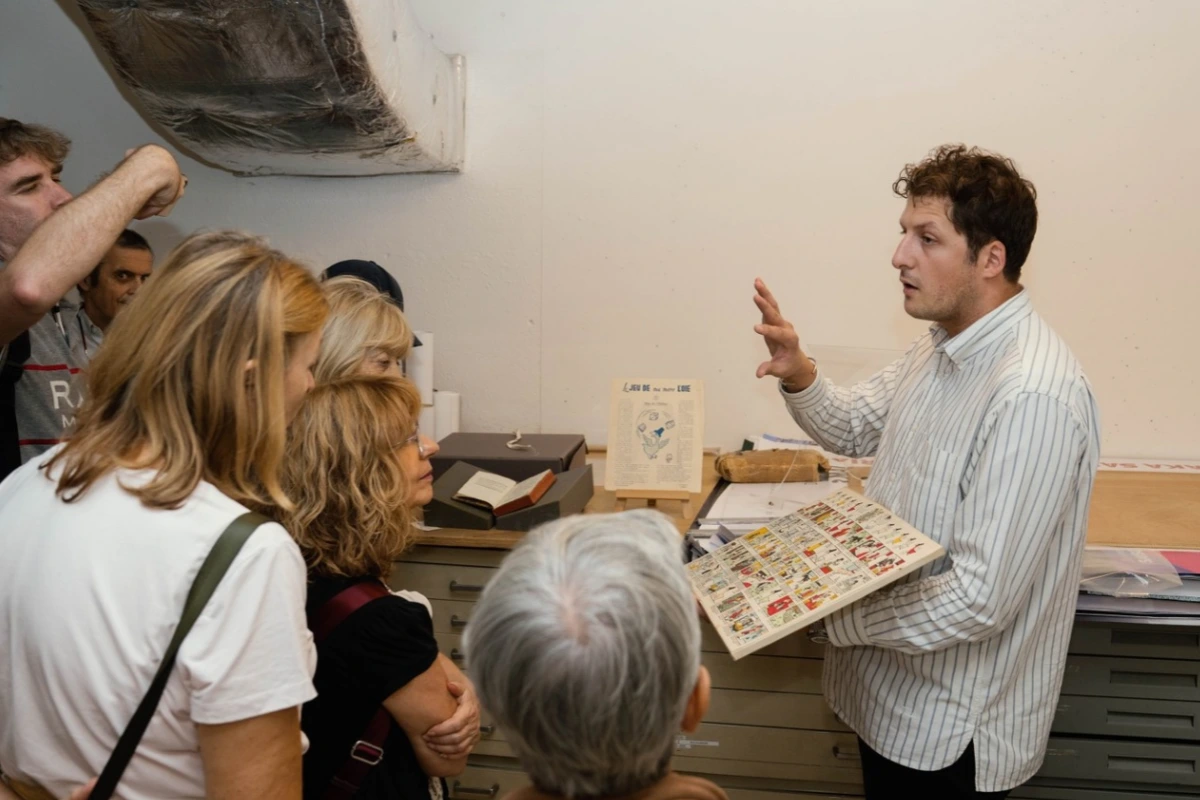
Visitors also had rare access to the heritage collection archives of the Caroline Media Library, where guided tours and demonstrations of document restoration highlighted the work that goes into preserving cultural heritage.

The weekend concluded with free access to the Exotic Garden throughout Sunday, while the Botanical Centre offered guided tours of its cacti and succulent collections.

Stay updated with Monaco Life: sign up for our free newsletter, listen to our podcasts on Spotify, and follow us across Facebook,  Instagram, LinkedIn, and Tik Tok. 

Photo source: Mairie de Monaco

The final buzzer: AS Monaco Basket’s historic Roca Team era comes to an end

AS Monaco Basket has officially marked the end of its professional rise, closing the chapter on a 12-year journey that took the Roca Team from the lower divisions of French basketball to dominating domestically and competing at the highest level in Europe.

In a statement addressed to the “Roca Family” on Wednesday 7th October, the club confirmed that AS Monaco Basket has been placed in cessation of payments and will now enter what it described as a “pause”, with ambitions to rebuild and eventually relaunch the club.

“Today is a sad day,” the statement read, as months of uncertainty surrounding its future finally reached its conclusion.

The announcement follows a rollercoaster summer for the reigning national champions, who were denied entry into France’s top two divisions, before an application to join Nationale Masculine 1 (NM1) was also rejected.

The club’s financial difficulties also continued to mount, with an October hearing revealing liabilities of €27.8 million, while the team remained without a competition to participate in.

Despite exhausting many options in search of a path forward, the Roca Team now must step away from the court months after completing one of the most successful seasons in its history.

FROM LOWER DIVISIONS TO EUROLEAGUE

The end marks a massive reversal for a team that built itself up as one of Europe’s most recognisable basketball teams. Over the last 12 seasons, Monaco won three French championship titles, four Leaders Cups, two French Cups, and one Super Cup. In 2021, the Principality earned its first European title with its EuroCup victory, opening the door to its EuroLeague seasons. The Roca Team went on to reach two EuroLeague Final Fours and one final.

“Nobody can take away what has been built over these 12 years,” the club said in its statement.

Reflecting on the years, the Roca Team pointed to its supporters as its greatest achievement. “This legacy cannot be erased,” the club said. Thousands of fans supported the Principality’s efforts from the lower divisions through to the end.

BASKETBALL CONTINUES IN MONACO

The future of men’s basketball in the Principality now falls on the Association de l’ASM, whose first team competes in Nationale 3 (NM3) along with its youth structure. The Association confirmed that its NM3 team remains entered in competition and will work towards playing its home matches at Salle Gaston-Médecin.

AS Monaco Basket formally passed the torch to the Association in its announcement, expressing its hope that the Principality will one day return to the highest level of competition. “The ultimate goal remains to see Monaco return to its rightful place,” the club said.

A SETBACK FOR FORMER ROCA TEAM STAR

The closing of the Roca Team chapter arrives during a difficult week for one of the players closely associated with the club’s rise to the top. American Mike James, who left the club for Anadolu Efes this season, suffered a ruptured Achilles tendon during a EuroLeague game against Crvena Zvezda on 1st October. The 36-year-old underwent surgery, with Anadolu Efes estimating his recovery to take seven to nine months.

James became one of the most pivotal players of Monaco’s success during his five seasons with the club, winning three French championships and helping lead the team to its EuroLeague runs.

For Monaco supporters who continued to follow a fan favourite into his next chapter, his lengthy absence brings another difficult moment at the end of an era.

For now, the Roca Team leaves behind a legacy that transformed sport in the Principality. Whether the Roca Team can eventually return remains unwritten, but the club’s final message was clear: it does not consider its story permanently finished.

“Until then, what we have built together remains.”

Stay updated with Monaco Life: sign up for our free newsletter, listen to our podcasts on Spotify, and follow us across Facebook,  Instagram, LinkedIn, and Tik Tok. 

Photo source: AS Monaco Basket