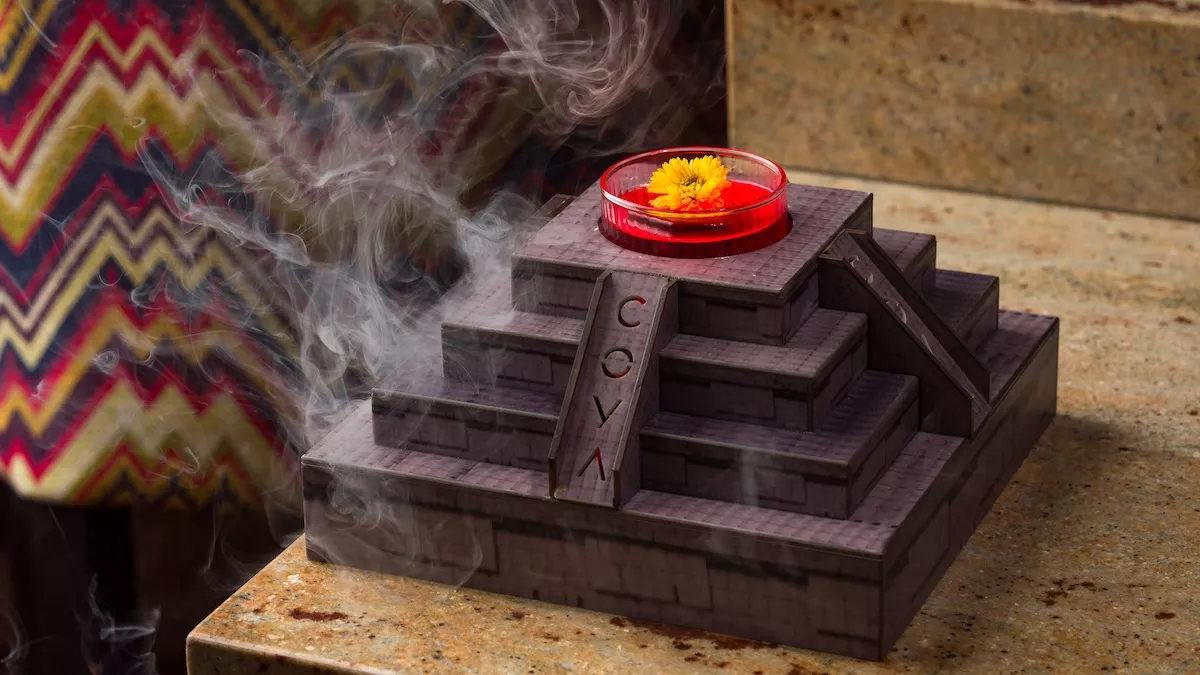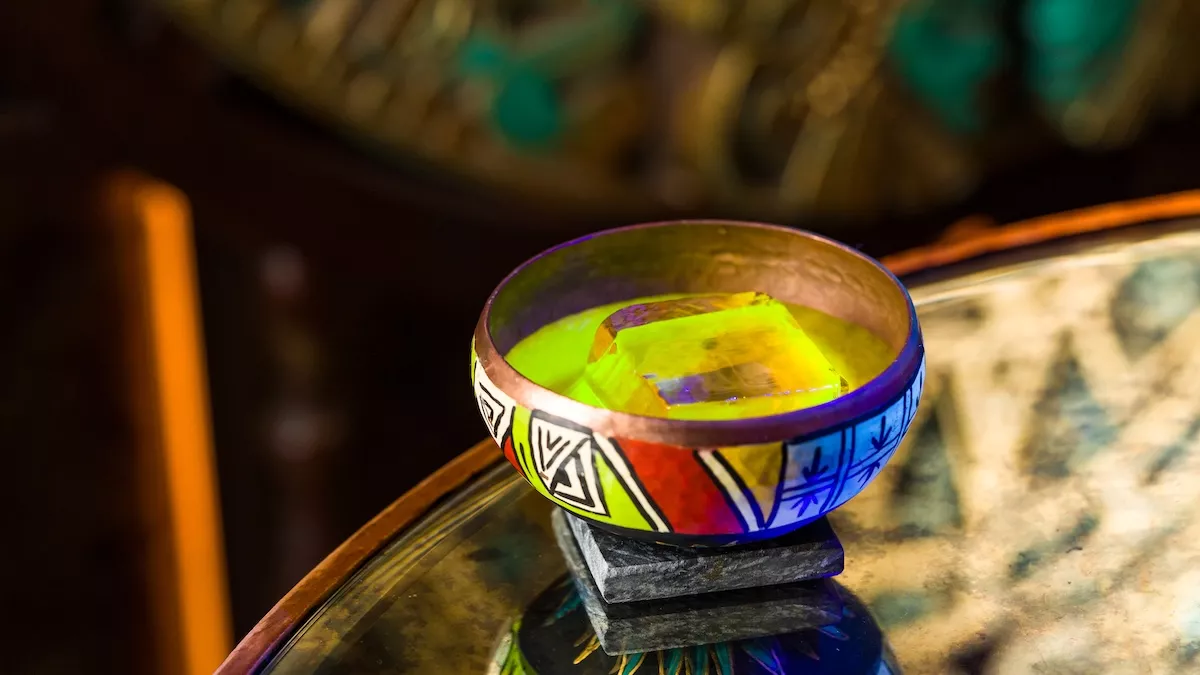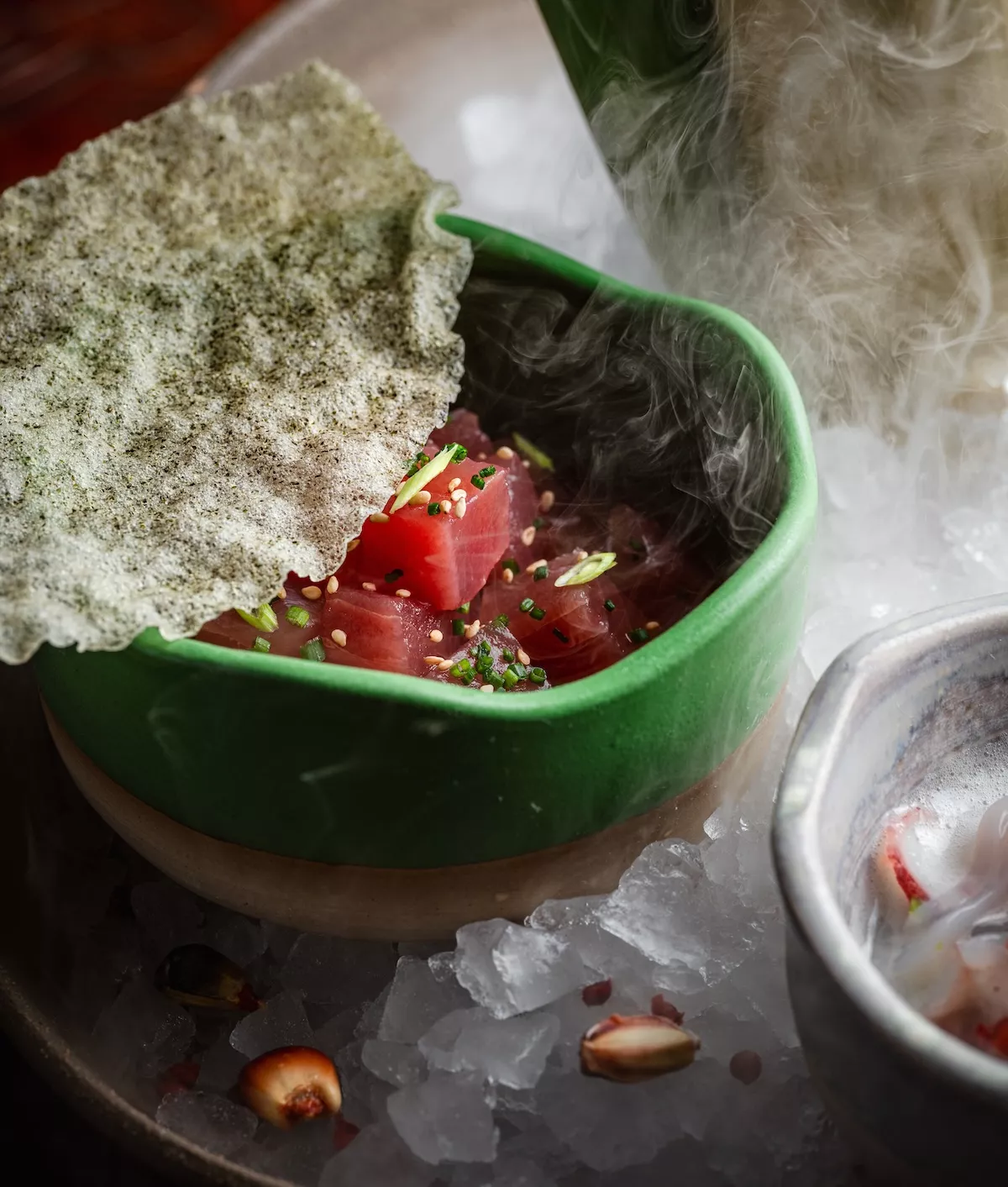
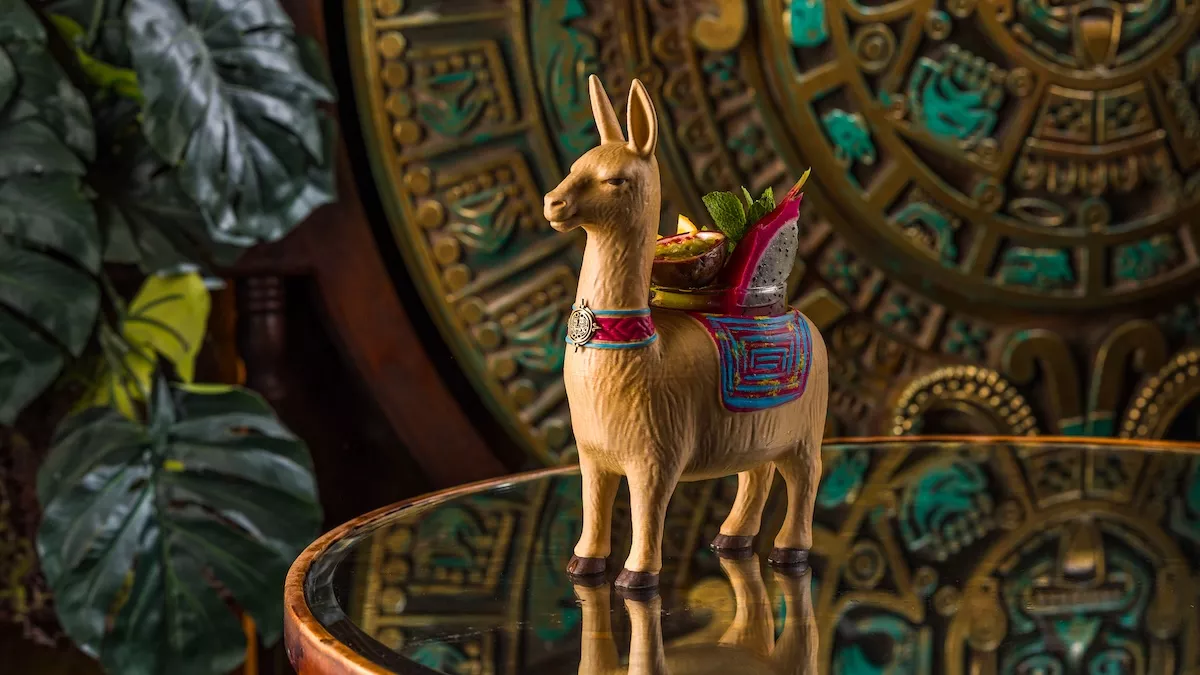
Nikki Beach St-Tropez has announced a Sunday dining series running throughout May and June. Titled ‘Amazing Sundays | Taste & Celebrate’, the programme pairs themed menus with live music each week, with executive group chef Alessandro Pizza leading the culinary offer alongside local producers and brand partners.
The series opens on 10th May with a Farm to Table Sunday, followed by a Seafood Sunday on 17th May. On 24th May, chef Nicolas Sintes presents a French Riviera menu in partnership with Miraval. Mother’s Day on 31st May is marked with a dedicated menu under the banner A Tasteful Mother’s Day.
June highlights
The June programme includes a Wagyu BBQ, a La Dolce Vita edition in collaboration with Campari, a Father’s Day Rotisserie, and a Caviar Day. Full dates for the June events are yet to be confirmed.
Miraval features as a partner across multiple editions, including the Mother’s Day sitting.
The Amazing Sundays series is part of Nikki Beach St-Tropez’s broader 2026 summer season.
More than 180 postage stamps and a rare postal document on loan from the Prince’s Palace are at the heart of a new exhibition opening at Monaco’s Museum of Stamps and Coins on 11th May, tracing the history of human movement from the first foot messengers to the technologies reshaping travel today.
Voyage au fil du timbre — on display until 27th September 2026 at the Terrasses de Fontvieille — uses philately as an unlikely but compelling lens through which to examine the transport revolutions that have reshaped societies across centuries. The postal document on exceptional loan from the Palace dates to 1870, lending the exhibition a rare archival anchor.
Small objects, big history
Postage stamps, by their nature, capture a moment: a technology celebrated, a milestone commemorated, a national pride expressed. Assembled in sequence, the more than 180 pieces in this exhibition tell the story of how humans have relentlessly pushed the limits of distance, speed and communication — from horse-drawn coaches and early railways to aviation, maritime routes and the digital age.
The exhibition traces not only the mechanics of transport but its broader consequences: the circulation of ideas, the expansion of commerce and the social bonds forged by the ability to move people and goods across the world.
The racing section
A dedicated section brings the story closer to Monaco’s own identity, charting the evolution of the leisure and racing automobile from its earliest incarnations to the present day. Through stamps depicting iconic cars, the display traces the technical and aesthetic transformations of motorsport — a nod to the Principality’s enduring relationship with speed, performance and the spirit of competition.
Voyage au fil du timbre runs at the Musée des Timbres et des Monnaies, Terrasses de Fontvieille, from 11th May to 27th September 2026. Entry is €3.
Curated by the artistic director of the Atelier du Quai des Artistes’ exhibitions – Mr OneTeas – the new exhibition Motors is bringing together a diverse collective of contemporary artists exploring the world of motorsport.
During a press conference on Thursday 7th May at Quai des Artistes in Monaco — where the exhibition Motors is currently on display — artist Mr OneTeas presented the vision behind the exhibition: an artistic exploration of motorsport in all its forms. Moving beyond Formula 1 and Grand Prix racing alone, Motors embraces the wider universe of mechanical sports, from historic racing and endurance competitions to motorcycle culture, interpreted through a diverse range of artistic styles and mediums.
“The concept behind the exhibition was not to invite a single artist to create an entire series around motorsport, but rather to bring together artists from very different backgrounds, including some who had never worked with this theme before and agreed to experiment with it for the occasion,” artist Mr OneTeas to local press.
Motors, which opened on 30th April, brings together an eclectic collective of artists united by a shared fascination with motorsport. Painters, graffiti artists, and sculptors take over the venue’s walls and spaces, as distinctive talents explore speed, movement, competition, and mechanical beauty through their own visual languages — all while the Principality itself pulses to the sound of roaring engines and screeching tires.
Photo credit: Virginia D’Umas, Monaco Life
The exhibition features works by Harry James, Sly2, Mr OneTeas, Indy Saki, Loris Quintana, Kotek, Dario Vella, Asia Nasi, Rice, Francis Puivif, Fred-Z, Jordane Saget and Gérard Haton-Gauthier.
More than a celebration of racing, Motors invites visitors to pause and rediscover — through a fresh artistic perspective — the emotion, mythology, and aesthetic power of a discipline that has inspired generations of legends.
The artists behind Motorse
The exhibition itself is highly eclectic. Many of the artists come from urban art and graffiti culture. One striking example is the painting of a young girl wearing a racing suit marked “Féérie” instead of “Ferrari”. The artist, Sly2, created this work to question the place of women in Formula 1 today: when will we finally see women competing alongside men at the highest level of motorsport? The work has a dreamlike, poetic atmosphere — set in a schoolyard, with a young girl imagining herself as a future racing driver.
Most artists created two formats for the exhibition: one large and one smaller piece. Some works arrived at the last minute, like Jordane Saget’s installation representing the starting lights of a race. Originally, the work was over two meters long and featured all the race lights together; here, only part of the installation is shown.
Photo credit: Virginia D’Umas, Monaco Life
“Dario Vella, whose work we previously exhibited in a solo show, contributed pieces in his recognisable universe populated by animals and fable-like imagery. Here, vintage racing cars coexist with foxes and farm animals, creating playful narratives inspired by motorsport,” said Mr OneTeas. “We were also delighted to include Harry James, who created a portrait of Charles Leclerc in his distinctive style, as well as a hybrid creature inspired by Lewis Hamilton — continuing his fascination with transformation and mythology.”
Many artists wanted to pay homage to racing driver Ayrton Senna, but l’Atelier du Quai des Artistes chose to include only one homage by Harry James, framed by works from Francis Puivif. He poetically combines everyday objects and reclaimed materials, creating works that move between sculpture and painting. His works at Motors create a fascinating dialogue between the circuit and the circus.
From Fangio to modern life: The vision of Mr OneTeas
Graffiti artist, painter, photographer, and sculptor based in Monaco, Anthony Alberti — better known under the artist name Mr OneTeas — is actively involved in major events in the Principality, whether art-related or not. He has developed a deep understanding of the local cultural landscape, where he has become a key figure.
As artistic director of the Atelier du Quai des Artistes’ exhibitions, he also contributed his own work to this show, for which he personally brought together the group of artists forming the Motors collective.
“One is a portrait of Juan Manuel Fangio, known as El Maestro or El Chueco. Fangio originally dreamed of becoming a football player before turning to motorsport and eventually becoming a five-time world champion. Since Monaco was one of his legendary victories, I wanted to pay tribute to him here,” said the artist.
His second work, Racing Through Life, was created using authentic vintage oil cans. It reflects on the speed of modern life — how we rush constantly, until events like the pandemic suddenly force us to stop and reconsider time itself.
Photo credit: Virginia D’Umas, Monaco Life
The many faces of MOTORS
One of the most touching stories in the exhibition is that of an 18-year-old artist exhibiting for the very first time. Mr OneTeas discovered her pencil drawings by chance at her father’s home in Italy and was immediately struck by their quality. Since she is passionate about automobiles, he invited her to participate in this exhibition. For Motors, she created her very first acrylic portrait.
“I loved the contrast between such a young emerging artist and our oldest exhibiting artist, Gérard Haton-Gauthier, who has decades of experience — it created a beautiful dialogue between generations,” said the artistic director of l’Atelier du Quai des Artistes.
Fred Genovese, who goes by the artist name Fred-Z, contributed a work titled Rhinocerosso, inspired both by Ferrari’s iconic “Testa Rossa” and by classical art history. The piece, depicting a rhinoceros in Ferrari red with the number 1 on its shoulder — symbolising the dream position every Formula 1 driver aims for — combines racing imagery, checkerboard patterns reminiscent of finish lines, and symbols of ambition, success, and competition.
Loris Quintana, originally a calligrapher and graffiti artist, created works where the image emerges through negative space between layers of calligraphic forms. His pieces explore movement, rhythm, and hidden imagery.
Another remarkable contribution to this exhibition comes from multidisciplinary artist Indy Saki, who created a sculptural Red Bull helmet combining resin, carved wood, and dynamic relief effects to evoke speed and motion.
What makes Motors particularly strong is its this diversity. Rather than simply displaying existing works, most of the artists created entirely new pieces specifically for the exhibition. Each artist brought their own visual language, their own concerns, and their own universe into dialogue with the world of motorsport. That variety is what gives this exhibition its real energy and identity.
The Fédération Monégasque d’Athlétisme (FMA) unveiled its 2026 summer programme on Thursday 7th May, sharing the first major highlights of the upcoming Meeting Herculis EBS. The Hôtel Hermitage hosted the presentation in which Rodolphe Berlin, Vice President of the FMA, and Frédéric Choquard, Director of the federation, outlined the organisation’s ambitions for the upcoming summer season.
An expanded summer calendar will offer two new major athletics events. On 30th May, the FMA will organise the European Challenger Championships. This one-day competition brings together 18 nations, serving as the athletics equivalent of the Games of the Small States of Europe, which Monaco will host in 2027.
On 5th August at 6pm, the Monaco Athletics Festival will take place on Quai Albert-Ier. This event, organised in partnership with the ‘What Gravity Tour’ led by Mutaz Barshim, will bring together 12 of the world’s best high jumpers in the heart of Monaco.
Meeting Herculis EBS returns in July
The main event of the summer will be the Meeting Herculis EBS, scheduled for 10th July at Stade Louis II from 7pm. Over nearly 40 years, this event has been ranked several times as the best athletics meeting in the world and has been part of the Wanda Diamond League since its creation in 2010.
The 2025 edition featured elite performances, three continental records, several national records, and record-breaking national TV audiences. Expectations are already high for 2026 as the competition gears up for another highly competitive edition.
The FMA announced its expanded partnership with TVMonaco, which will handle the full production and live broadcast of the event. This growing collaboration highlights the importance of local media partnerships within the Principality.
The Meeting Herculis EBS will continue to welcome technological innovation. After successfully integrating the Wavelight pacing system, LED lights used to indicate world record and qualifying pace, the 2026 edition will debut adhesive race bibs designed to improve athlete comfort and movement. This technology, tested in 2025, will be rolled out across the Diamond League circuit.
Mondo Duplantis and a new pole vault format
Furthermore, Stade Louis II will feature the installation of a second pole vault runway designed to enhance the spectacle and create a unique viewing experience for fans. The idea was heavily encouraged by world record holder Mondo Duplantis, who confirmed his participation in the event.
Speaking on the addition of the second pole vault runway, Duplantis – who was at the presentation – said: “It took some convincing from my end. It would have felt weird to wake up and be so close to the competition and not be a part of it.” Duplantis has recently become a resident of the Principality and has begun settling into life here both on and off the track. “Monaco is a really special place for me, a special place to compete as well.”
During the 2025 edition, he set a new meeting record at 6.05m, before narrowly missing another world record attempt. Speaking on competing this year, Duplantis added: “The mindset going into the competition, now that I’m here at the home stadium and where I’m training, it just feels like a world record is needed. That’s something I really want to do.”
Other headline athletes have begun confirming their appearance at the event. Faith Kipyegon, who set a still-standing world record in the mile during her 2023 appearance in Monaco, will compete at this year’s event. Jimmy Gressier, the 2025 world champion in the 10,000m, will also compete in the 5000m.
Beyond the competition, the Meeting Herculis EBS will host a full day dedicated to athletics, including nearly 50 amateur races held on the same day as the event. This initiative reflects the organisers’ desire to make athletics accessible to all. All participants will be invited to attend the meeting.
One of Monaco’s most significant cultural investments in a generation is about to begin. The Nouveau Musée National de Monaco has announced a major restoration and extension of the Villa Sauber, designed by the Renzo Piano Building Workshop, that will transform the building from a 600 m² exhibition space into a 4,000 m² cultural complex — more than six times its current size.
According to a statement released by the Prince’s Government on Friday, Work begins in September 2026 and is expected to complete in September 2029, during which time the NMNM will continue to operate from its Villa Paloma site.
What is being built
The project goes well beyond a simple expansion. The future Villa Sauber is conceived as an open cultural ecosystem, incorporating permanent collection galleries alongside spaces for large-scale temporary exhibitions — a capacity the museum has long lacked. New additions include a library, educational workshops, an auditorium, a café and a redesigned landscaped garden.
That garden is central to the architectural vision. Designed as the connective tissue between the historic villa and its new extension, it will be structured in sequences: a stone forecourt, a central clearing, an orangery planted with citrus trees, roses and jasmine, and an exotic wooded border that creates a green buffer between the museum and the surrounding urban environment. The garden will remain publicly accessible during museum opening hours throughout the works, with only three brief interruptions of two weeks each anticipated over the three-year construction period.
In preparation for the September start, Monaco’s urban planning authority has already begun transplanting trees and plants from the existing garden. The citrus trees have largely been replanted along the central reservation of Avenue Princesse Grace and in the terrace gardens of the Fairmont.
A new home for Monaco’s national collections
The project also addresses a long-standing gap in Monaco’s cultural infrastructure: the permanent housing of the national collections on Monegasque territory. From 2028, the NMNM’s reserves will be installed beneath the hill at Mareterra — Monaco’s newest land extension — ensuring that the Principality’s artistic heritage is preserved and stored within its own borders for the first time.
Accessibility has also been factored into the design, with improved pedestrian routes for those with reduced mobility between Avenue Princesse Grace and the Boulevard du Larvotto forming part of the broader works.
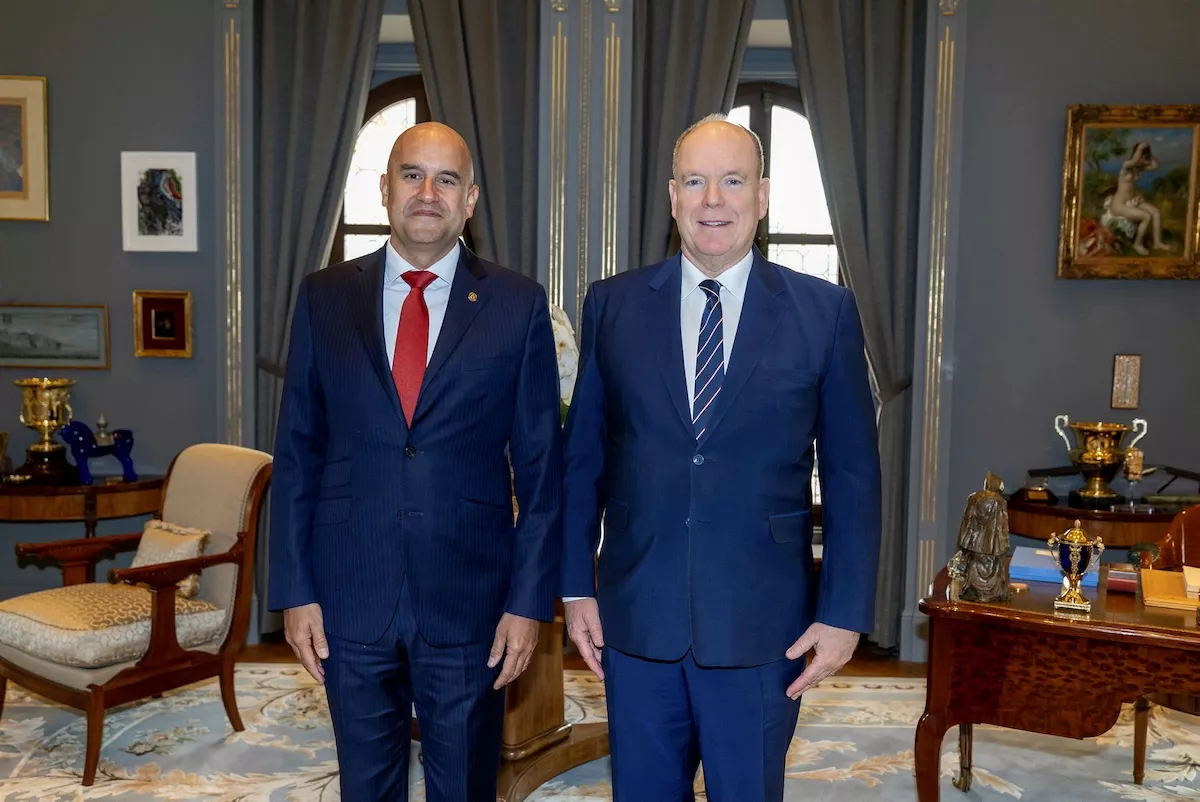
Prince Albert II spent two days this week travelling through the Drôme, Indre-et-Loire and Maine-et-Loire regions of France on a journey that was equal parts history lesson and family pilgrimage — following in the footsteps of an ancestor who served the kings of France five centuries ago.
The trip, undertaken at the invitation of local elected officials, centred on Imbert de Batarnay (1438–1523), a remarkable figure from the Dauphiné who rose to become a trusted counsellor and diplomat to several French kings during the Italian Wars of the late 15th and early 16th centuries. His effigy in the collegiate church of Montrésor remains one of the finest examples of funerary architecture from that era.
Wednesday 6th May: Bathernay and Montrésor
The Prince began in Bathernay in the Drôme, the ancestral home of Imbert de Batarnay, where he was welcomed by the Prefect of the Drôme and the town’s mayor. He visited the Romanesque church of Saint-Étienne, the former seigneurial residence, and a newly created interpretive museum space that benefited from his personal patronage.
Photo credit: Frédéric Nebinger, Prince’s Palace
The afternoon took the Prince to Montrésor in the Indre-et-Loire, where he paused in contemplation before the tomb of Batarnay in the collegiate church before continuing on foot to the château, whose ramparts and interior rooms were presented to the visiting delegation. Both the mayor and the Prince addressed residents gathered in the château grounds.
The day concluded in Loches, where Prince Albert met privately with three business leaders from the department, each at the forefront of high-technology sectors.
Photo credit: Frédéric Nebinger, Prince’s Palace
Thursday 7th May: Bridoré and Saumur
In Bridoré, another village closely associated with Batarnay, the Prince unveiled a plaque marking the site’s entry into the Grimaldi Historic Sites network — a promotional and heritage initiative connecting locations historically linked to the Grimaldi family across Europe. A visit to the village fortress and its keep followed, before an official ceremony on the steps of the town hall brought the local community together to mark the occasion.
Photo credit: Frédéric Nebinger, Prince’s Palace
The visit concluded at the military schools of Saumur in Maine-et-Loire, under the theme ‘Lieutenants of yesterday and today: a year that educates and prepares for combat’. It was a homecoming of sorts: Prince Albert’s great-grandfather Louis II studied at the cavalry school there in 1894–1895. Military honours were rendered in the Cour Austerlitz under the command of General Olivier Baudet, followed by a review of troops and a tour of the 2nd training division, where the Prince was shown the latest advances in military instruction alongside cutting-edge equipment including the Jaguar armoured vehicle, the renovated Leclerc tank and military drones.
Photo credit: Frédéric Nebinger, Prince’s Palace
The visit to the Musée de la Cavalerie preceded the day’s final moment: Prince Albert gave the starting signal for the ‘Race for the Wounded’, a fraternal event mixing civilian and military participants that has become a symbol of the bond between the French armed forces and the nation they serve.
Under the 2002 Franco-Monegasque friendship treaty, France’s armed forces serve as guarantors of Monaco’s independence and sovereignty — a relationship that gave the Saumur visit a significance that extended well beyond ceremony.