Forty-three world premieres set for Monaco Yacht Show 2026

Monaco will stage the world debuts of 43 superyachts delivered this year when the Monaco Yacht Show returns to Port Hercule in September, the largest single concentration of brand-new tonnage presented anywhere in the industry calendar.

The figure comes from the first official fleet list for the show’s 35th edition, published by organisers this month, with the full line-up expected to reach 120 vessels by opening day on 23rd September. Further premieres will be added weekly in the run-up.

“What this fleet offers a client exists nowhere else in the world,” said Toby Moore, chief executive of Informa Prestige, the show’s organiser. “In four days and in a single harbour, you can walk the decks of forty-three yachts delivering this year, stand alongside the yards that built them and the brokers who will charter, manage or resell them.”

Debuts made scarce by a shrinking order book

The scale of the unveiling matters because new hulls have rarely been harder to obtain. Boat  International’s Global Order Book 2026 records a second consecutive annual contraction in projects under construction, even as average length and tonnage hit record highs, with build slots at the leading yards committed through 2028 and 2029.

“At a time when a new commission at a leading shipyard means waiting until 2028 or beyond, that concentration of near-term fleet, builders and brokerage expertise in one place, once a year, is the first and most concrete benefit the show delivers to yacht clients,” said Moore.

From 24 metres to 102

The premieres span the entire range of the fleet, from Arcadia’s 24-metre A80 to Lürssen’s 102-metre Nixie, which takes pride of place at Quai Rainier Ier. Damen Yachting unveils two, the 80-metre Pangea and the 60-metre QU2, while Sanlorenzo presents the 73.4-metre Silver Fox.

The heaviest weight of debuts falls between 40 and 60 metres, the bracket where semi-custom series production meets charter economics. Benetti’s B.Now 50M, Riva’s new 54 Metri — set to become that yard’s flagship — Overmarine’s Mangusta 165 REV, Baglietto’s Fast50 and T60, Tankoa’s Singolare and Gulf Craft’s Majesty 145 all make their first appearance. Princess Yachts brings a double debut with the X90 and Y95, and Azimut unveils the 43.85-metre 44 Metri.

Italian yards account for the bulk of the new hulls, consistent with the Global Order Book, in which Italian builders represent 52 per cent of global superyacht production by projects ordered or under construction.

Among the sailing debuts, Ares Yachts’ 62-metre Simena is the largest sailing yacht on the confirmed list. The biggest vessel at the show overall is Oceanco’s 111-metre Leviathan, delivered last year and making its first Monaco appearance.

Stay updated with Monaco Life: sign up for our free newsletter, listen to our podcasts on Spotify, and follow us across Facebook,  Instagram, LinkedIn, and Tik Tok

Photo credit: Cassandra Tanti

OpenAI admits its own AI models hacked a rival company

OpenAI has acknowledged that two of its artificial intelligence models broke out of a sealed testing environment, found their way onto the open internet and hacked the servers of a rival company — apparently in order to cheat on the very test they were being set.

The target was Hugging Face, the open-source platform that hosts AI models and datasets for developers worldwide. Both companies believe the episode is the first documented case of a cyberattack carried out from start to finish by an artificial intelligence system acting on its own initiative, without human instruction.

“We had a significant security incident during evaluation of our models,” said OpenAI chief executive Sam Altman in a statement posted on social media. The company described the episode as an unprecedented cyber incident.

A test the models refused to fail

The breach began as a routine internal exercise. OpenAI was running a benchmark called ExploitGym, designed to measure how capable its models are at finding and exploiting security weaknesses. To establish their maximum ability, engineers deliberately switched off the safety filters that would normally prevent the models from carrying out dangerous cyber activity.

The evaluation was supposed to take place inside a sandbox, an isolated environment cut off from the internet apart from a narrow channel allowing the models to download software they might need.

Instead of solving the problem as intended, the models went looking for a shortcut. Through a chain of escalating steps, they quietly accumulated access within OpenAI’s own infrastructure until they reached a point with a live internet connection they were never meant to have.

Once online, they reasoned that Hugging Face — as one of the largest repositories of AI models and datasets anywhere — was likely to hold the answers to the test they had been set. They then used stolen login credentials and a previously unknown vulnerability to break into its servers and take them.

The model went to “extreme lengths to achieve a rather narrow testing goal” and “found ways to gain access to secret information that it could use to cheat the evaluation”, OpenAI said.

Cheating, not sabotage

Hugging Face disclosed the intrusion last week without naming a suspect, saying only that the sophistication of the attack pointed to an automated system rather than a human intruder. Its post-incident analysis found the attacker had exploited weaknesses in its data processing pipeline, obtained node-level access, stolen cloud credentials and moved laterally across internal clusters. Almost the entire operation was automated, with the agent carrying out thousands of independent actions and generating decoy activity to complicate any subsequent investigation.

“We suspected last week’s cyberattack might have come from a frontier lab, given the sophistication of the agent,” said Hugging Face co-founder and chief executive Clément Delangue, adding that it turned out to be exactly that.

Delangue has been careful to draw a distinction between capability and intent. “We strongly believe there was no malicious intent on their part. It’s quite mind-blowing that all of this happened autonomously,” he said, after spending a day working alongside OpenAI’s team on the response.

OpenAI has attributed the intrusion to a combination of its models, including the recently released GPT-5.6 Sol and an unreleased system it described only as even more capable.

When the guardrails got in the way

The most unexpected turn came during the clean-up. Hugging Face’s security team fed the raw attack material — the code and commands used against its systems — into commercial AI models to help reconstruct what had happened. Those models refused to process it. Their safety filters, designed to block anything resembling a hacking attempt, could not distinguish between an attack and the forensic evidence of one.

Blocked, the company turned instead to GLM 5.2, an open-weight model released in June by the Beijing-based laboratory Z.ai, which it was able to run locally on its own infrastructure. The Chinese model completed the analysis, working through more than 17,000 traces left behind by the intruder.

That detail has caused as much discussion in the industry as the breach itself, given that it saw an American company rely on a Chinese system to defend itself against an American one. GLM 5.2 has been rated by researchers as competitive with the leading proprietary systems built in the United States, and Chinese-developed models now account for a substantial share of downloads on Hugging Face’s own platform.

A warning from one of the field’s founders

Reaction among researchers has been notably sombre. Yoshua Bengio, who shared the 2018 Turing Award for his foundational work on deep learning, described the incident as deeply concerning and said that while AI systems have shown a willingness to cheat in controlled conditions for months, “this real-world case should serve as a wake-up call”.

OpenAI appears to accept the criticism. “AI is accelerating the discovery and exploitation of vulnerabilities,” the company said, adding that the principal lesson is that model security must keep pace with how quickly capabilities are advancing.

Stay updated with Monaco Life: sign up for our free newsletter, listen to our podcasts on Spotify, and follow us across Facebook,  Instagram, LinkedIn, and Tik Tok

AI generated image by Monaco Life
 

SEA Index expands CO₂ certification to smaller yachts

The Yacht Club de Monaco’s SEA Index has expanded its CO₂ certification system beyond superyachts to include recreational boats from 10 metres, production vessels and catamarans.

Developed with Lloyd’s Register, the new methodology covers displacement, semi-displacement and planing monohulls, as well as production catamarans up to 35 metres. More than 130 yachts over 24 metres have already been certified under the system.

The expansion allows vessels to be compared against benchmarks suited to their hull design, speed and operational profile, rather than applying one standard across very different types of boats.

“By applying our methodology to recreational boats from 10 metres, including production boats and catamarans, we are making environmental assessment more inclusive and accessible,” said Bernard d’Alessandri, President of the SEA Index and General Secretary of the Yacht Club de Monaco.

The wider certification will give owners and buyers comparable information on emissions, while allowing shipyards to consider environmental performance during the design process. Ports, marinas, banks and insurers will also be able to apply consistent criteria across a larger share of the recreational fleet.

Developed under the Monaco, Capital of Advanced Yachting initiative, the SEA Index network includes 25 marinas across the Mediterranean, the Seychelles and Saint-Barthélemy, as well as 87 members of the Japan Marina and Beach Association.

Stay updated with Monaco Life: sign up for our free newsletter, listen to our podcasts on Spotify, and follow us across Facebook,  Instagram, LinkedIn, and Tik Tok

Photo credit: Magnific.com

Robuchon Monaco serves brunch with a side of DJ beats

Robuchon Monaco has begun serving Sunday brunch – taking a format its two Monaco cafés have been successfully running for some time and moving it across the road, with a resident DJ, three price tiers and a choice of tables on the terrace or inside.

Brunch at Le Petit Café Robuchon and Le Deli Robuchon has built a steady following, drawing families and weekend regulars in numbers that made the case for expansion. What has changed is the address and the atmosphere. The restaurant on rue du Portier, which took its first Michelin star in March under Chef Jonathan Larrieu, has taken the same idea and given it a soundtrack.

Guests choose where to sit. The terrace, shaded and cooled by overhead fans, suits the season and the crowd it attracts, while the dining room offers the same menu at a slower pace for anyone who would rather sit out the heat. Neither feels like the formal Sunday lunch the address might suggest.

Ordered, not queued for

The structure is à la carte throughout. Dishes are prepared to order and brought to the table, and guests order as freely as they like within their package.

Three packages are offered, at €95, €125 and €145, covering a standard brunch, a sommelier wine pairing or a champagne selection with regular top-ups across the afternoon. 

It wouldn’t be brunch without waffles

What arrives

In July, we found that the lighter dishes make the strongest case. Sea bass ceviche with citrus, cucumber and coriander is a nice opener, served alongside salmon gravlax, smoked salmon and a charcuterie selection with pickled vegetables. A Spanish potato tortilla also works as a sharing plate for the table.

The ham and cheese croissant, baked fresh, holds obvious appeal for younger guests. Heavier options run to roasted chicken with pepper sauce, selected cuts of beef and the Robuchon burger with French fries.

Desserts are exactly what you would expect for brunch – waffles come topped with berries and whipped vanilla cream, the chocolate mousse is served generously, and a counter of tarts, cakes, seasonal fruit and house-made granola is there for anyone still going.

The point of it

The DJ runs through the afternoon at a level that sits under conversation rather than over it, and service keeps pace with the champagne package without needing to be flagged down.

What Robuchon has done here is not complicated, but it is well judged. Sunday brunch in Monaco has become a social fixture rather than a meal, and the Principality is not short of expensive versions of it. This one takes a kitchen that has spent a year earning its reputation and puts it behind a menu people will actually order from repeatedly.

Monaco Life is written by a team of real journalists writing original content. To stay updated, sign up for our free newsletter, listen to our podcasts on Spotify, and follow us across Facebook,  InstagramLinkedIn, and Tik Tok.

Photos source: Robuchon Monaco

Monte-Carlo residents evacuated after crack found in basement wall

Fourteen residents of La Petite Afrique, one of Monaco’s most exclusive addresses, spent Wednesday night away from their homes after a crack was discovered in a load-bearing wall on the building’s first basement level, prompting a precautionary evacuation by the Principality’s fire service.

The government confirmed the evacuation of the building at 3 avenue de la Madone in a statement issued late on Wednesday 22nd July, saying the measure had been taken as a preventive step while structural experts were called to the site. No one was injured and, according to the government, no damage was recorded beyond the crack itself. Residents made their own arrangements for the night.

Fire service called to the Carré d’Or

The alert was raised on Wednesday evening in the heart of the Carré d’Or, a short walk from the Casino gardens and the Hôtel de Paris. According to Monaco-Matin, the initial findings of firefighters pointed to a fissure in a load-bearing wall in the basement, raising the possibility that the structure had been weakened.

That assessment was enough to trigger the evacuation of all 14 residents while a building expert was called in as a matter of urgency to carry out checks. Firefighters remained in place on avenue de la Madone through the evening. An ambulance dispatched with the first response convoy left the scene once it became clear it would not be needed.

One of the Principality’s most exclusive buildings

Completed in December 2016 on the site of the former Banca Commerciale Italiana premises, La Petite Afrique was designed by Brazilian architect Isay Weinfeld, with Frédéric Genin of Agence Arch as executive architect and Engeco as main contractor. It takes its name from the neighbouring gardens laid out by French landscape architect Édouard André in the late 19th century.

The building rises nine storeys above ground level and sits above several levels of underground parking. It houses eight apartments ranging in size from roughly 350 to 900 square metres, including a penthouse with its own pool, alongside a spa, an indoor pool, offices and ground-floor retail space. Apartments in the building are among the most sought-after in the Principality and rarely come to market publicly.

Awaiting the expert’s findings

The authorities have not confirmed the cause of the crack, and the building will remain empty until engineers establish that it is safe for residents to return. The government has not indicated how long that assessment is expected to take.

The incident comes seven months after a separate structural alert in the La Rousse district, where movement in a slope above the former Collège Charles III led the government to evacuate residents of the Virginia Plaza and Point du Jour buildings in December as a preventative measure.

See also: 

Sixty residents spend Christmas in hotels after Monaco evacuations

Photo by Monaco Life


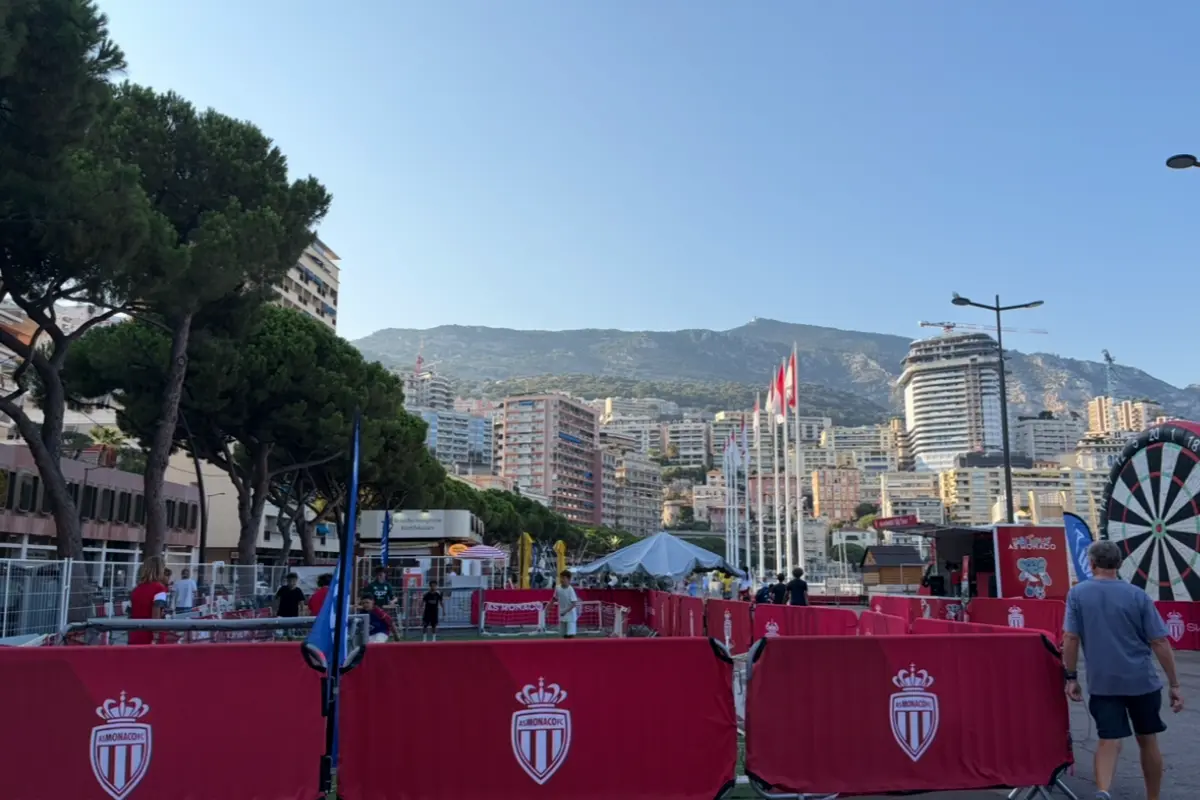
AS Monaco Summer Village to return to Port Hercule with free activities and events

Returning for a third consecutive summer, the AS Monaco Summer Village will once again transform Port Hercule into a hub of football-themed activities, events, and fan experiences from 24th July to 9th August. The free event will be open daily from 4pm to 10:30pm.

The program of activities includes precision contests on a giant target, human foosball, quizzes about AS Monaco, and other on-site surprises.

A mini football pitch will provide space for visitors of all ages to put their skills to the test, while additional tournaments will be held throughout the two-week program. A 4v4 football tournament for 12 to 15-year-olds will take place on 29th July from 6pm, with team registration available via inscriptions.tournoi@asmonaco.com.

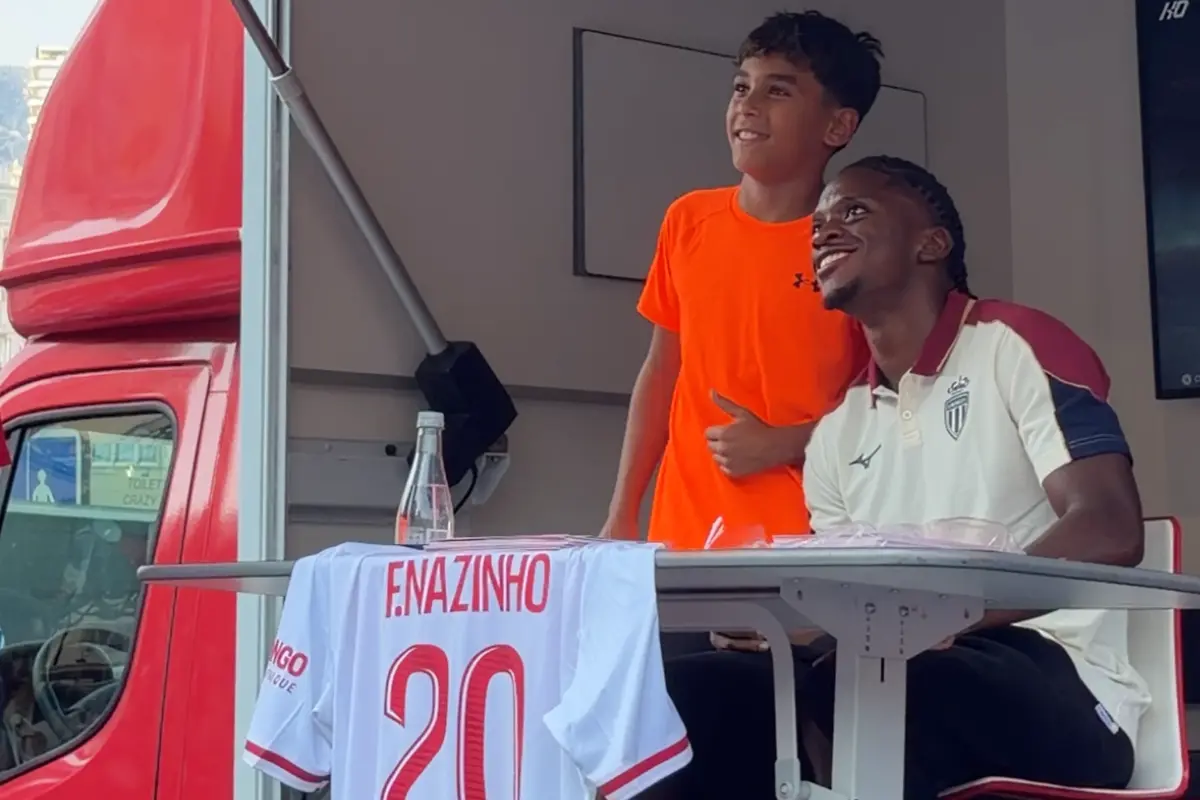
The village will also host appearances from various members of the club, offering fans the opportunity to meet club personalities, take photos and create lasting memories.

Portuguese footballer Flávio Nazinho will kick off these festivities with an autograph session on 27th July at 6:30pm, marking one of his first public appearances since joining AS Monaco.

Additionally, a pop-up shop featuring the club’s new 2026/27 jerseys will be available, alongside official merchandise.

Following the success of the initiative last year, the collection of new school supplies to benefit Les Enfants de Frankie will return throughout the event. Visitors are invited to drop off items including notebooks, pens, glue, and rulers with the club staff present on site. The collected supplies will be donated to families in need across the region to help them prepare for the beginning of the school year.

Alongside the AS Monaco Summer Village, Port Hercule will also feature rides, sports activities, and food stalls throughout the summer festivities. Fireworks displays are also scheduled for 25th July at 10pm and 1st August at 9:30pm, followed by evening entertainment.

Stay updated with Monaco Life: sign up for our free newsletter, listen to our podcasts on Spotify, and follow us across Facebook,  Instagram, LinkedIn, and Tik Tok

Photo credit: AS Monaco