Prince Albert II voices solidarity with wildfire-hit communities, urges climate action

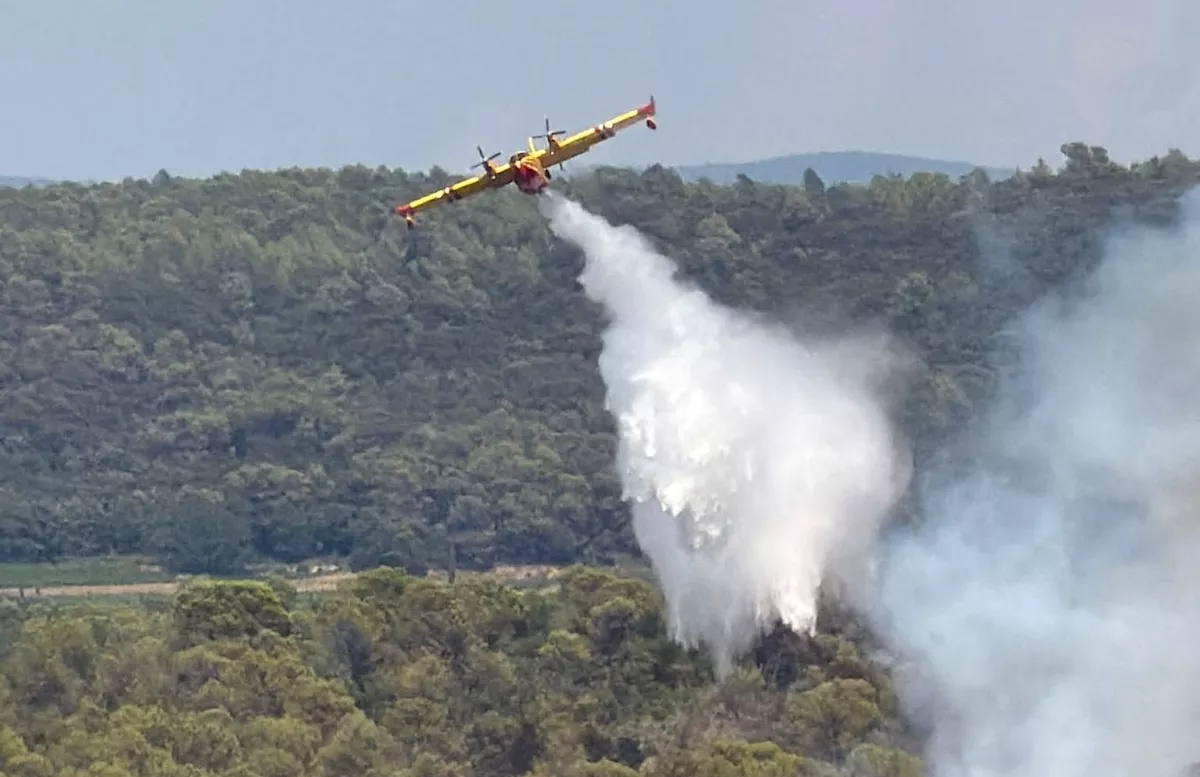
As Western Europe battles its worst heatwave season on record, resulting in massive wildfires across France, Spain, and the United Kingdom, Prince Albert II and Princess Charlene have issued an official communiqué offering their profound support to all those affected.

As of Tuesday 28th July, the situation remains extremely volatile. More than 330,000 people have been forced to flee their homes across France and Spain. In southwestern France, the massive Gironde wildfire has destroyed over 42,000 hectares, prompting authorities to issue fresh evacuation orders for campsites and tourist areas around Lacanau as a new wave of heat pushes temperatures toward 40°C. Meanwhile, severe blazes in Spain’s Madrid and Ávila regions have displaced tens of thousands.

The Princely Palace shares a message of compassion

Deeply moved by the vast human toll and environmental devastation unfolding across borders, Prince Albert II addressed the international community directly:

“As violent fires affect numerous regions of the world, notably in France, Spain, and the United Kingdom, Princess Charlene joins me in extending our most sincere support to all those suffering the consequences,” the Prince said in his official statement, adding: “Our thoughts are with the affected families, those forced to leave their homes, and all communities mobilised in the face of this ordeal.”

Honouring frontline heroism

With thousands of firefighters and emergency personnel working day and night under extreme conditions – battling erratic winds and walls of flame – Prince Albert II paid a special tribute to their relentless bravery, saying: “We salute the remarkable courage of the firefighters, rescue teams, and all those who work tirelessly to protect populations and preserve threatened territories.”

A call for urgent environmental action

The Prince said that beyond putting out the fires, the severe damage is connected to climate change and asked countries to team up to protect nature: “These fires also affect precious natural environments and a fragile biodiversity. They result in part from the major disruptions affecting our climate, and more than ever call for courageous responses. Protecting our environment is an urgency that must unite us all. In these difficult moments, our solidarity accompanies each and every person affected.”

Stay updated with Monaco Life: sign up for our free newsletter, listen to our podcasts on Spotify, and follow us across Facebook,  Instagram, LinkedIn, and Tik Tok.

Main photo: the wildfires as seen from Brue-Auriac, credit: Thomas Delacoste

New European Union laws order businesses to label AI content

From Sunday 2nd August, businesses operating within the European Union must clearly label artificial intelligence-generated content, including deepfakes, chatbots, and synthetic imagery, under new visibility standards. 

The mandate forms part of the EU’s phased artificial intelligence legislation, designed to help consumers instantly distinguish authentic material from machine-generated media.

A new era of transparency

Companies are required to embed digital watermarks, metadata, or visible disclaimers into professional tools and public-facing outputs. Private individuals using AI for personal reasons remain exempt, while artistic, creative, satirical, and fictional works also hold exemptions. Text intended to inform the public on general interest topics must carry labels unless it undergoes direct human editorial oversight. 

Existing systems have until 2nd December 2026 to achieve full compliance. Firms face large fines if they don’t comply.

Combating synthetic disinformation

EU officials defended the directive against criticism regarding compliance hurdles. “Generative AI enables disinformation to be created at unprecedented scale, tailored to specific audiences, and disseminated with remarkable speed,” an EU official said, adding that: “Since AI is making it increasingly difficult for all of us to distinguish what is real from what is synthetic, the EU’s rules seek to preserve citizens’ ability to trust what they see, hear, and read.

Industry concerns and compliance challenges

Industry figures have raised concerns over the administrative burden. Ashley Casovan of the International Association of Privacy Professionals acknowledged the friction, telling Agence France-Presse (AFP): “We have heard that it is going to be very, very difficult to implement. But I think we often hear this with compliance requirements. And yet, the world turns and we figure these things out.”

Meanwhile, major technology firms have warned that overlapping mandates could create counterproductive outcomes. Google’s Karen Massin cautioned against ‘regulatory complexity’ that risks confusing the people these rules are meant to help. “If online content is flooded with overlapping AI labels and legal disclosures, it becomes harder for people to get the clear context they need,” Massin to AFP

Big tech adaptation

Major platforms have already begun deploying proprietary markers ahead of the enforcement date. TikTok has mandated creator labels for synthetic images, audio, and video for years, reporting that detection tools have already flagged over three billion items. Meta has introduced ‘AI Info’ label across Instagram and Facebook, while Google has signed the EU’s voluntary code of conduct on AI transparency, collaborating with developers such as Nvidia, OpenAI, and Apple on standardised digital tagging infrastructure.

Stay updated with Monaco Life: sign up for our free newsletter, listen to our podcasts on Spotify, and follow us across Facebook,  Instagram, LinkedIn, and Tik Tok

Photo credit: Zulfugar Karimov – Unsplash

Sea views, a baroque basilica and world-class music: Menton’s festival is back

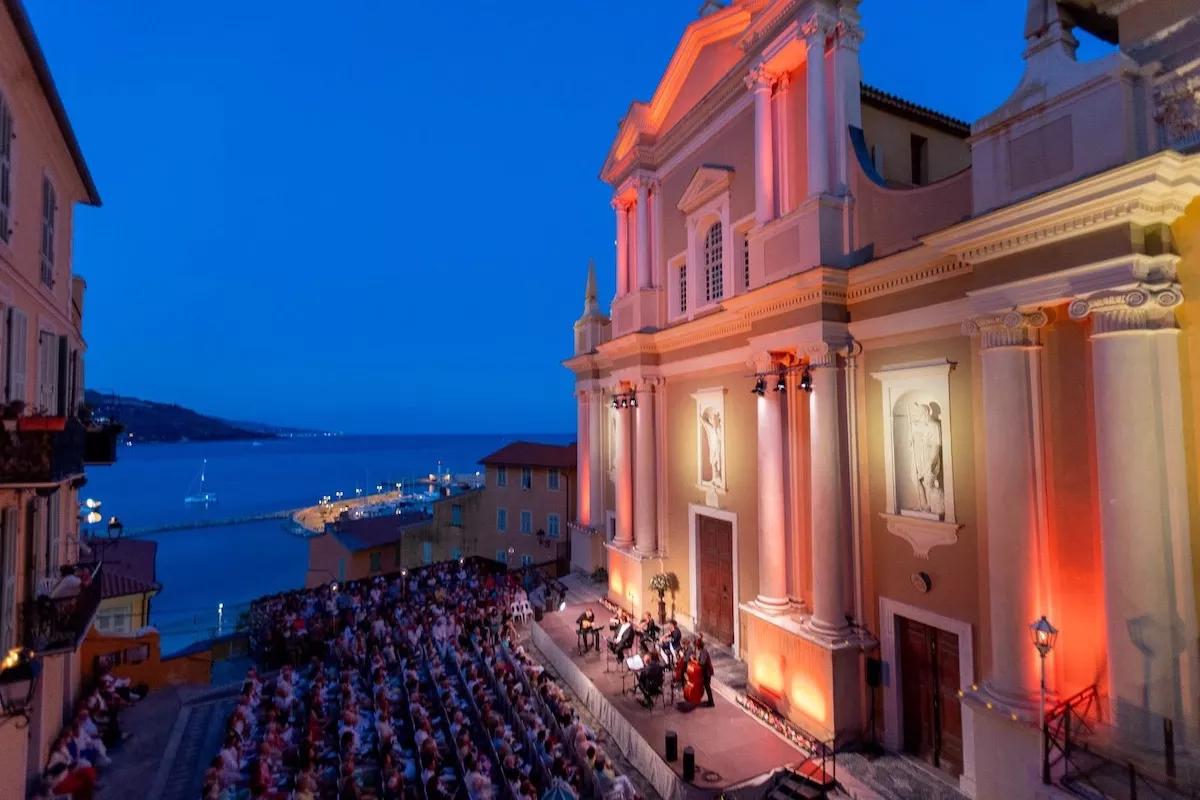
One of Europe’s oldest classical music festivals is under way just along the coast from Monaco, where the 77th Festival de Musique de Menton is staging a fortnight of open-air concerts on the parvis of the Basilica Saint-Michel-Archange until 7 August. Held each summer in the baroque heart of the old town, overlooking the Mediterranean, the festival opened on 25 July with the cellist Gautier Capuçon and the Orchestre Philharmonique de Nice, conducted by Lionel Bringuier, in a programme of Saint-Saëns and Beethoven.

The event traces its origins to August 1949, when the Hungarian-born impresario André Böröcz heard Bach drifting from a radio across the deserted parvis of Saint-Michel and resolved to bring music to the setting. The first festival followed on 5 August 1950, when the Végh Quartet performed Haydn, Mozart and Beethoven beneath the church’s polychrome façade. In the decades since, the parvis has hosted many of the century’s most celebrated musicians, among them Sviatoslav Richter, Mstislav Rostropovich, Isaac Stern, Wilhelm Kempff and Maria-João Pires. The festival has been led since 2012 by the conductor Paul-Emmanuel Thomas, its artistic director.

This year’s programme

The 2026 edition brings together more than 150 artists across fourteen main concerts and a series of free events, spread between the parvis, the Palais de l’Europe and open-air esplanades. Evening concerts on the parvis form the centrepiece, while the Palais de l’Europe hosts a run of recitals and chamber programmes.

Among the highlights still to come are the violinist Leonidas Kavakos with the pianist Enrico Pace on 4 August, and the pianist Alexandre Kantorow, who closes the festival on 7 August with a solo recital ranging from Bach and Beethoven to Chopin. The programme also reaches beyond the classical canon. The baroque is represented by the cellist Nicolas Altstaedt with Ensemble Jupiter and the lutenist Thomas Dunford on 29 July, and by Ensemble I Gemelli under the tenor Emiliano Gonzalez Toro on 5 August, while jazz arrives on 28 July with The Amazing Keystone Big Band performing Gershwin. On 6 August, the marimba player Vassilena Serafimova and the pianist Thomas Enhco give a duo recital at the Palais de l’Europe.

Free concerts and a Monaco connection

Alongside the ticketed programme, the festival stages a number of free concerts intended to involve the town and its residents. These include a pre-opening performance by Ensemble Spark, whose ‘From Bach to the Beatles’ concert was given on the Esplanade des Sablettes, as well as the Festival Mass on 2 August and a concert by the Sirba Octet on 3 August. For Monaco audiences, the free bill also features Monaco Brass, which performed on 27 July, and a concert by the laureates of cellist Gautier Capuçon’s foundation the same evening.

Stay updated with Monaco Life: sign up for our free newsletter, listen to our podcasts on Spotify, and follow us across Facebook,  Instagram, LinkedIn, and Tik Tok

Photo source: Menton Music Festival

Argerich and Dutoit reunite for Prince’s Palace summer concert

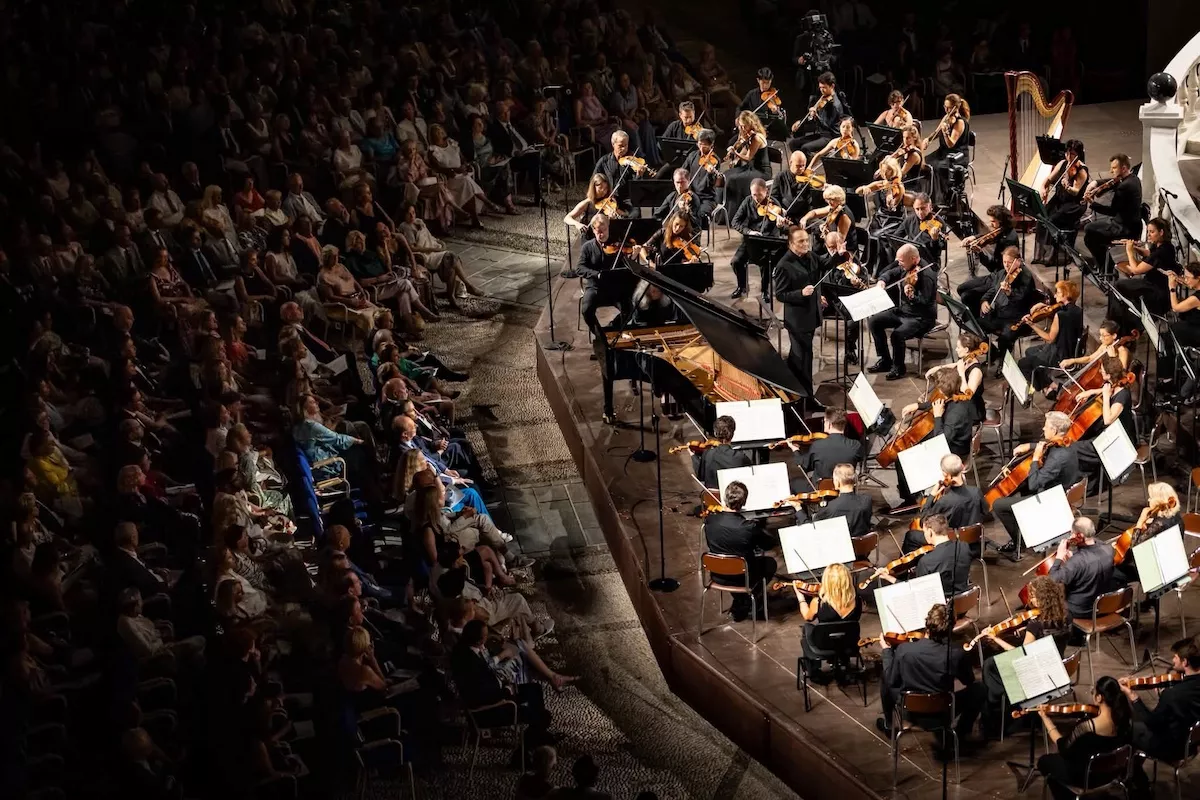
The Orchestre Philharmonique de Monte-Carlo returned to the Cour d’Honneur of the Prince’s Palace on Sunday 26 July for the latest of its summer concerts, performing works by Manuel de Falla and Sergei Prokofiev in the presence of Prince Albert II. The evening was conducted by Charles Dutoit and featured the pianist Martha Argerich as soloist, with the soprano Alexandra Marcellier also taking part.

The concert opened with the Interlude and Dance from de Falla’s opera La Vida breve, a work rooted in the composer’s native Andalusia. Argerich then joined the orchestra for Prokofiev’s Piano Concerto No. 3 in C major, one of the most frequently performed of his five concertos and a piece the pianist has named among her favourites. The programme closed with the ballet suites from de Falla’s Le Tricorne, or The Three-Cornered Hat, written for Serge Diaghilev’s Ballets Russes.

A long-standing partnership

Dutoit and Argerich have performed together for decades, and their appearances at the Prince’s Palace are among the most anticipated of the OPMC’s summer season. The concert was one of several in the 2026 series to sell out well in advance, with the orchestra offering only a waiting list in the days before the performance.

Photo credit: Frédéric Nebinger, Prince’s Palace

About the series

The Concerts au Palais Princier were created by Prince Rainier III and Princess Grace and have been held in the Cour d’Honneur for more than 60 years. Each summer, the Prince invites the OPMC and leading international conductors and soloists to perform in the open-air setting. The 2026 season runs from 9th July to 6th August, with the orchestra led across the series by figures including Philippe Jordan, Simone Young and Juraj Valčuha.

Stay updated with Monaco Life: sign up for our free newsletter, listen to our podcasts on Spotify, and follow us across Facebook,  Instagram, LinkedIn, and Tik Tok

Photo credit: Frédéric Nebinger, Prince’s Palace

Monaco’s Embassy in Brussels celebrates Prince Albert II’s accession

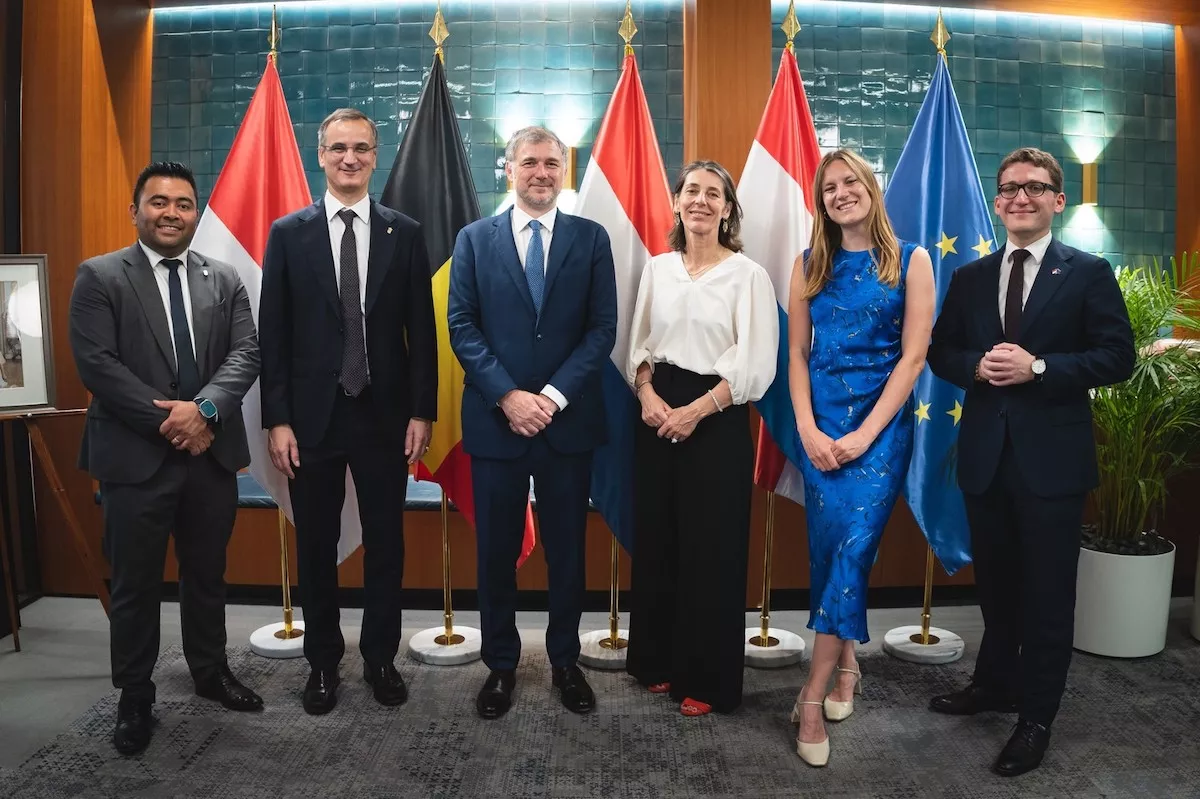
The Embassy of Monaco in Belgium, Luxembourg, and the Netherlands hosted its annual reception at the embassy headquarters in Brussels on 8th July to celebrate the 21st anniversary of the accession of Prince Albert II.

Addressing the guests, Ambassador Frédéric Labarrere talked about the strong ties Monaco shares with Belgium, Luxembourg, and the Netherlands, saying that many people from all three countries live in Monaco, creating a bond that goes back a long way. To highlight these historic links, he pointed to Antwerp, which is celebrating the 150th anniversary of Monaco’s local consulate this year.

The Ambassador also touched on European and global topics, welcoming the “steady, trusting relationship Monaco maintains with European Union institutions”.

In addition, he spoke about Monaco’s broader role on the world stage and the fact the Principality is currently leading the Committee of Ministers of the Council of Europe for the first time. He reminded guests of the government’s main goals abroad: protecting human rights, working together internationally, safeguarding the environment, and backing global cooperation.

To end the evening, guests enjoyed tasting traditional food and products from Monaco.

Stay updated with Monaco Life: sign up for our free newsletter, listen to our podcasts on Spotify, and follow us across Facebook,  Instagram, LinkedIn, and Tik Tok

Photo: The Ambassador (third from the left) and the team from the Embassy of Monaco in Brussels on the evening of the reception. Photo Credit:  Samyan Otero – Monaco Embassy


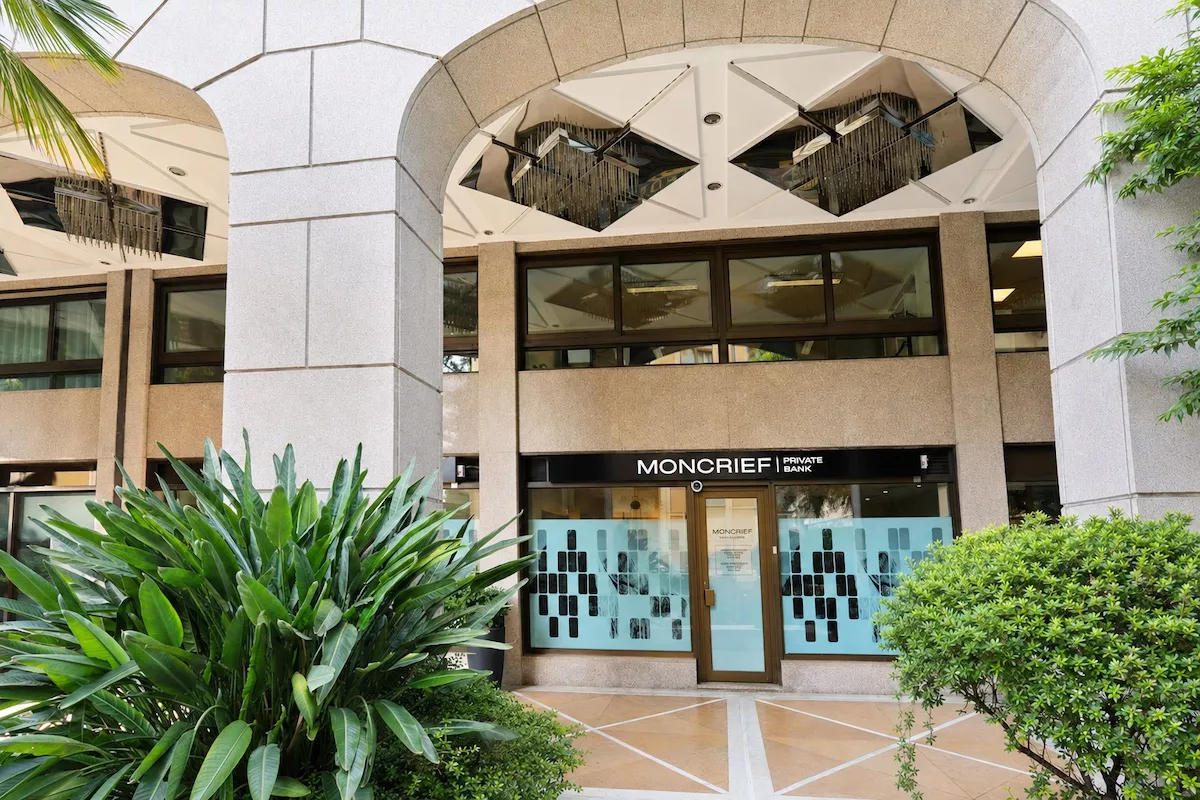
Moncrief bank, formerly Banque Havilland (Monaco), fined €1 million for anti-money-laundering failures

Moncrief Private Bank (Monaco), formerly Banque Havilland (Monaco), has been fined €1 million after Monaco’s financial regulator upheld seven grievances concerning deficiencies in its financial-crime compliance controls, including three that repeated failings already sanctioned in 2021.

The decision of the Autorité Monégasque de Sécurité Financière (AMSF), published in the Journal de Monaco on 10th July, followed an on-site inspection at the bank’s boulevard des Moulins premises between 9th July and 5th September 2024. The sanctions committee delivered its ruling on 30th June, and rejected the bank’s request to have the decision published anonymously, ordering that it appear in named form for three years.

Inspection coincided with parent bank’s licence withdrawal

The inspection coincided with a significant event for the wider group. On 2nd August 2024, midway through the AMSF’s on-site work, the European Central Bank withdrew the banking licence of the Luxembourg parent, Banque Havilland S.A. The Monaco subsidiary, whose capital was €27 million at the time of the inspection, subsequently changed ownership and was renamed Moncrief Private Bank (Monaco).

The bank employed 19 people at the time of the inspection. According to its 2023 regulatory data, it had 360 clients, 65 per cent of them individuals. Non-residents represented 48 per cent of the total client base, while British, Italian and Russian nationals were the largest groups among individual clients. As of 30th June 2024 it held €449 million in assets under management, while its net banking income has fallen sharply, from €8.8 million in 2023 to €5 million in 2025.

A risk map that understated the danger

The first of the seven grievances concerned the bank’s overall assessment of risk. The AMSF found that its risk mapping did not reflect its actual client base: the bank’s own data showed 29 per cent of relationships as high-risk and a further 2 per cent as very high-risk, yet its risk map recorded just 18 per cent as high-risk and applied a very-high category of zero, described in its own system as “a risk level not applied in Monaco”. The committee rejected the bank’s explanation that its clientele had simply evolved, finding it had failed to keep the mapping updated.

Source of wealth and a €1.2m loan

The most detailed findings concerned how well the bank knew where its clients’ money came from. In four high-risk files, the AMSF found that the files lacked sufficient reliable documentation establishing the clients’ economic background and the origins of their wealth. In one case, the bank’s own periodic review in May 2021 had concluded that its knowledge of the client rested on declarations and insufficient public information, and that management would have to decide whether the risk could be accepted as it stood, around eight years after the relationship began.

The committee also found the bank’s transaction monitoring inadequate. Its surveillance tool, set to flag every transfer involving high- or very-high-risk profiles from the first euro, generated more than 20,000 alerts in 2023 alone, a volume the AMSF found made genuine detection of atypical transactions effectively impossible.

Two transactions were singled out. In one, $300,000 was sent to the United States as a rent advance for a client’s daughter and returned the next day, with the bank unable to produce the lease it had itself flagged as necessary. In another, €1.2 million was transferred to a Cypriot company and then passed to a Romanian firm under a lending arrangement. The committee found that the bank had identified the structure as intended to circumvent Romanian lending rules, but the transaction was validated regardless, with legal advice obtained only afterwards. It further found that the compliance function had recorded obtaining the managing director’s agreement before approving it, evidence, the regulator concluded, that the bank’s compliance officers did not have effective autonomy.

Two relationships that should have been closed

The committee also found that the bank had failed to close two business relationships despite being unable to obtain the information required to meet its customer-identification obligations. A separate grievance concerned its failure to conduct the required specific examination of unusual transactions involving multiple risk indicators.

Repeat failings from 2021

Central to the decision was the finding that three of the breaches repeated failings already sanctioned by the Minister of State on 11th October 2021, when the bank received a formal reprimand. These concerned insufficient knowledge and corroboration of clients’ economic backgrounds, wealth and source of funds; failure to update client and beneficial-owner information; and deficiencies in transaction monitoring. The AMSF held that the corrective measures taken after that first sanction had not remedied the problems.

The committee also found the bank’s internal organisation inadequate, both in the number of compliance staff and in their autonomy, noting that an internal audit of November 2023 had itself recorded reviews conducted late or without sufficient rigour, gaps in client documentation and incorrectly assigned risk levels.

Regulator refuses anonymity

The bank had asked that any sanction be published anonymously, arguing that naming it would damage client confidence and its relationships with correspondent banks, and stressed that it had changed owners and no longer belonged to an international banking group. The AMSF was unpersuaded, finding no objective evidence that named publication would cause disproportionate harm. It noted that the change in ownership was a consequence of the ECB’s licence withdrawal rather than any choice by the bank, that there had been no change at the head of the board or general management, and that the Havilland group had already been the subject of named sanctions by regulators in Luxembourg and the United Kingdom.

In fixing the penalty at €1 million, the committee weighed the number, breadth and recurrence of the breaches against the bank’s modest size and a three-year average net banking income of €6.9 million. The decision may be appealed to the Court of First Instance within two months of its notification.

In a statement sent to Monaco Life, Moncrief said: “Since taking ownership, the bank’s new shareholders have invested in a comprehensive strengthening of its financial-crime controls and has moved away from the previous shareholder’s group-wide policies by implementing updated policies and procedures specific to The Bank, as well as mandating an experienced consulting firm to conduct a comprehensive compliance review — supported by an expanded and more experienced compliance team.”

A tougher regulator

The Moncrief ruling follows a series of recent enforcement decisions by the AMSF as Monaco works to strengthen its framework against money laundering and terrorist financing.

In a separate decision published in the Journal de Monaco on 8th May, the authority imposed a €6 million penalty on UBS (Monaco), one of the Principality’s largest banks, which held almost €17 billion under management at the end of 2023.

The AMSF upheld eight grievances in full and a ninth in part following an inspection conducted between March and June 2024. The findings included the late completion of the bank’s overall risk assessment, failures to identify and verify the ownership and control chains behind complex client structures, insufficient corroboration of the economic backgrounds of high-risk and politically exposed clients, weaknesses in transaction monitoring and delays in filing suspicious-transaction reports.

As with Moncrief, the regulator rejected UBS’s request for anonymity. It ordered the decision to be published under the bank’s name for five years, after which it will remain available in anonymised form. Both banks were represented during the respective proceedings by Monaco avocat-défenseur Thomas Giaccardi.

Stay updated with Monaco Life: sign up for our free newsletter, listen to our podcasts on Spotify, and follow us across Facebook,  Instagram, LinkedIn, and Tik Tok

Photo by Monaco Life