Moncrief bank, formerly Banque Havilland (Monaco), fined €1 million for anti-money-laundering failures

Moncrief Private Bank (Monaco), formerly Banque Havilland (Monaco), has been fined €1 million after Monaco’s financial regulator upheld seven grievances concerning deficiencies in its financial-crime compliance controls, including three that repeated failings already sanctioned in 2021.

The decision of the Autorité Monégasque de Sécurité Financière (AMSF), published in the Journal de Monaco on 10th July, followed an on-site inspection at the bank’s boulevard des Moulins premises between 9th July and 5th September 2024. The sanctions committee delivered its ruling on 30th June, and rejected the bank’s request to have the decision published anonymously, ordering that it appear in named form for three years.

Inspection coincided with parent bank’s licence withdrawal

The inspection coincided with a significant event for the wider group. On 2nd August 2024, midway through the AMSF’s on-site work, the European Central Bank withdrew the banking licence of the Luxembourg parent, Banque Havilland S.A. The Monaco subsidiary, whose capital was €27 million at the time of the inspection, subsequently changed ownership and was renamed Moncrief Private Bank (Monaco).

The bank employed 19 people at the time of the inspection. According to its 2023 regulatory data, it had 360 clients, 65 per cent of them individuals. Non-residents represented 48 per cent of the total client base, while British, Italian and Russian nationals were the largest groups among individual clients. As of 30th June 2024 it held €449 million in assets under management, while its net banking income has fallen sharply, from €8.8 million in 2023 to €5 million in 2025.

A risk map that understated the danger

The first of the seven grievances concerned the bank’s overall assessment of risk. The AMSF found that its risk mapping did not reflect its actual client base: the bank’s own data showed 29 per cent of relationships as high-risk and a further 2 per cent as very high-risk, yet its risk map recorded just 18 per cent as high-risk and applied a very-high category of zero, described in its own system as “a risk level not applied in Monaco”. The committee rejected the bank’s explanation that its clientele had simply evolved, finding it had failed to keep the mapping updated.

Source of wealth and a €1.2m loan

The most detailed findings concerned how well the bank knew where its clients’ money came from. In four high-risk files, the AMSF found that the files lacked sufficient reliable documentation establishing the clients’ economic background and the origins of their wealth. In one case, the bank’s own periodic review in May 2021 had concluded that its knowledge of the client rested on declarations and insufficient public information, and that management would have to decide whether the risk could be accepted as it stood, around eight years after the relationship began.

The committee also found the bank’s transaction monitoring inadequate. Its surveillance tool, set to flag every transfer involving high- or very-high-risk profiles from the first euro, generated more than 20,000 alerts in 2023 alone, a volume the AMSF found made genuine detection of atypical transactions effectively impossible.

Two transactions were singled out. In one, $300,000 was sent to the United States as a rent advance for a client’s daughter and returned the next day, with the bank unable to produce the lease it had itself flagged as necessary. In another, €1.2 million was transferred to a Cypriot company and then passed to a Romanian firm under a lending arrangement. The committee found that the bank had identified the structure as intended to circumvent Romanian lending rules, but the transaction was validated regardless, with legal advice obtained only afterwards. It further found that the compliance function had recorded obtaining the managing director’s agreement before approving it, evidence, the regulator concluded, that the bank’s compliance officers did not have effective autonomy.

Two relationships that should have been closed

The committee also found that the bank had failed to close two business relationships despite being unable to obtain the information required to meet its customer-identification obligations. A separate grievance concerned its failure to conduct the required specific examination of unusual transactions involving multiple risk indicators.

Repeat failings from 2021

Central to the decision was the finding that three of the breaches repeated failings already sanctioned by the Minister of State on 11th October 2021, when the bank received a formal reprimand. These concerned insufficient knowledge and corroboration of clients’ economic backgrounds, wealth and source of funds; failure to update client and beneficial-owner information; and deficiencies in transaction monitoring. The AMSF held that the corrective measures taken after that first sanction had not remedied the problems.

The committee also found the bank’s internal organisation inadequate, both in the number of compliance staff and in their autonomy, noting that an internal audit of November 2023 had itself recorded reviews conducted late or without sufficient rigour, gaps in client documentation and incorrectly assigned risk levels.

Regulator refuses anonymity

The bank had asked that any sanction be published anonymously, arguing that naming it would damage client confidence and its relationships with correspondent banks, and stressed that it had changed owners and no longer belonged to an international banking group. The AMSF was unpersuaded, finding no objective evidence that named publication would cause disproportionate harm. It noted that the change in ownership was a consequence of the ECB’s licence withdrawal rather than any choice by the bank, that there had been no change at the head of the board or general management, and that the Havilland group had already been the subject of named sanctions by regulators in Luxembourg and the United Kingdom.

In fixing the penalty at €1 million, the committee weighed the number, breadth and recurrence of the breaches against the bank’s modest size and a three-year average net banking income of €6.9 million. The decision may be appealed to the Court of First Instance within two months of its notification.

In a statement sent to Monaco Life, Moncrief said: “Since taking ownership, the bank’s new shareholders have invested in a comprehensive strengthening of its financial-crime controls and has moved away from the previous shareholder’s group-wide policies by implementing updated policies and procedures specific to The Bank, as well as mandating an experienced consulting firm to conduct a comprehensive compliance review — supported by an expanded and more experienced compliance team.”

A tougher regulator

The Moncrief ruling follows a series of recent enforcement decisions by the AMSF as Monaco works to strengthen its framework against money laundering and terrorist financing.

In a separate decision published in the Journal de Monaco on 8th May, the authority imposed a €6 million penalty on UBS (Monaco), one of the Principality’s largest banks, which held almost €17 billion under management at the end of 2023.

The AMSF upheld eight grievances in full and a ninth in part following an inspection conducted between March and June 2024. The findings included the late completion of the bank’s overall risk assessment, failures to identify and verify the ownership and control chains behind complex client structures, insufficient corroboration of the economic backgrounds of high-risk and politically exposed clients, weaknesses in transaction monitoring and delays in filing suspicious-transaction reports.

As with Moncrief, the regulator rejected UBS’s request for anonymity. It ordered the decision to be published under the bank’s name for five years, after which it will remain available in anonymised form. Both banks were represented during the respective proceedings by Monaco avocat-défenseur Thomas Giaccardi.

Stay updated with Monaco Life: sign up for our free newsletter, listen to our podcasts on Spotify, and follow us across Facebook,  Instagram, LinkedIn, and Tik Tok

Photo by Monaco Life

Fires still burning in the Var and Corsica as Mediterranean goes on alert

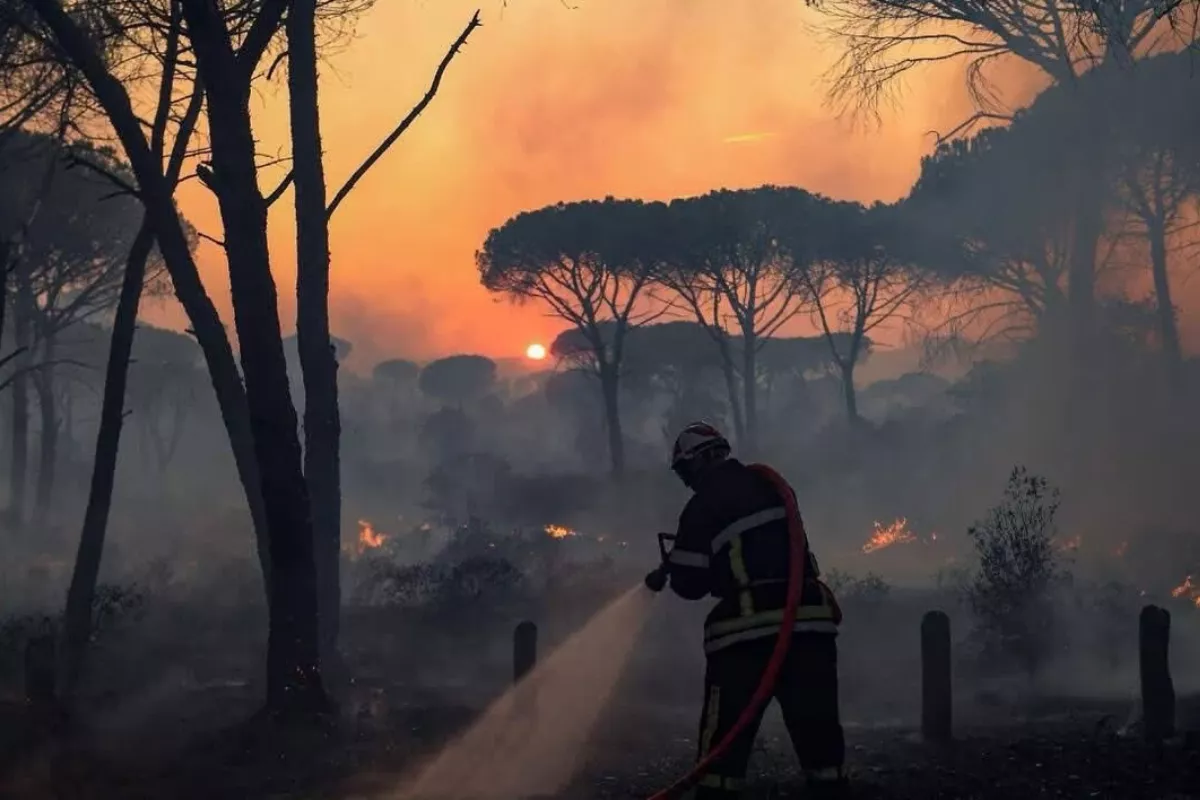
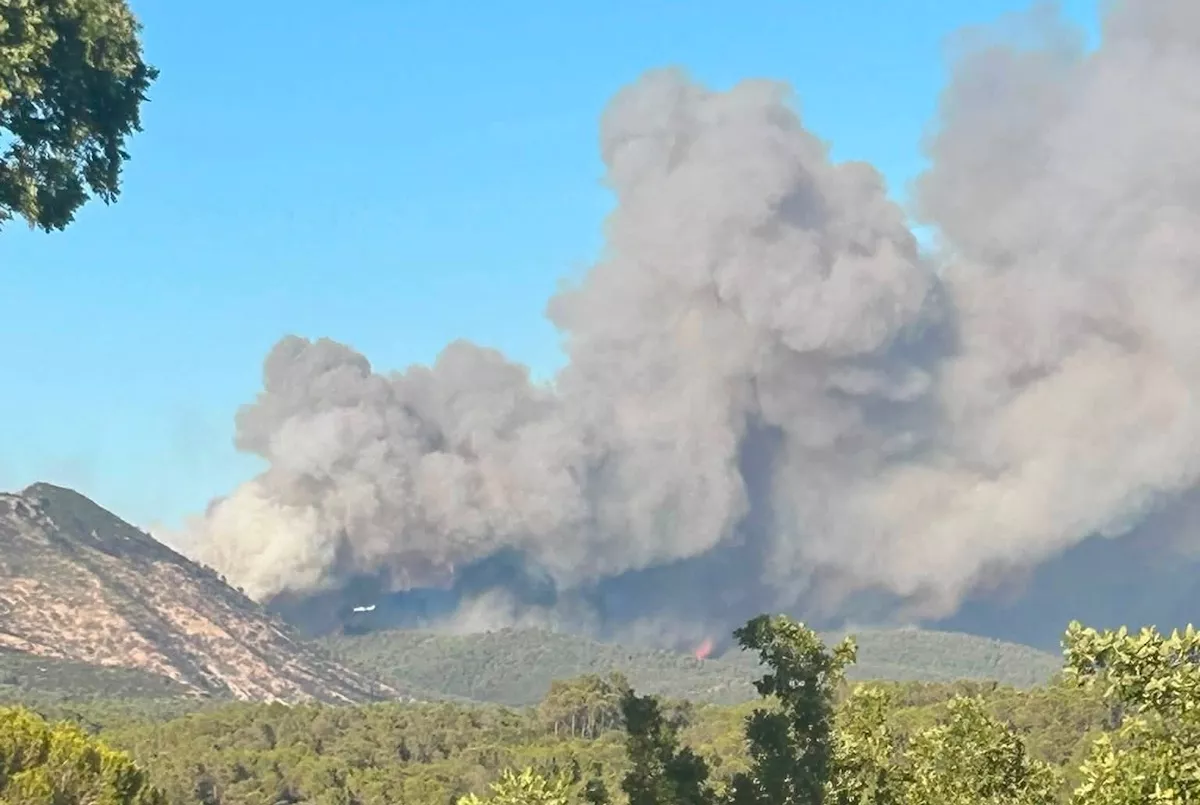
Wildfires remain active across the south-east of France this morning, with the blaze at Pontevès in the Var still not under control and seven Mediterranean departments placed on alert for a high fire risk, even as the country’s attention centres on the megafire threatening Bordeaux.

The Pontevès fire has now covered 4,500 hectares and is not yet contained, with all of the Var’s forest massifs closed to the public for the day and gusts of wind forecast throughout. The prefect of the Var, Simon Babre, said two Canadair water-bombers would join the effort, alongside four water-bombing helicopters — two of them heavy — supplied by Switzerland, the Czech Republic and Slovenia, which had already begun drops this morning.

Three deliberate fire-starts at Varages

Overnight, three deliberate fire-starts were reported in the commune of Varages, north-west of the Pontevès blaze, the prefecture and Captain Mario Aulino confirmed. “These three ignitions have nothing to do with the Pontevès incident,” Aulino said, stressing they were unconnected to the main fire.

Corsica and the Landes

In Haute-Corse, two significant fires are mobilising crews, one at Corte having burned 950 hectares and a second at Biguglia 150. In the Landes, the fire between Biscarrosse and Sanguinet has covered 3,600 hectares and destroyed 198 homes, but did not progress overnight after rain arrived, and the prefect described a calmer situation. A separate blaze in the Hautes-Alpes has left five firefighters lightly injured.

Seven departments on alert

Météo-France has placed seven Mediterranean departments — the Pyrénées-Orientales, Aude, Hérault, Gard, Vaucluse, Bouches-du-Rhône and Var — on orange alert for a fire risk judged ‘high’. For those on the Riviera and across the wider Provence-Alpes-Côte d’Azur region, the immediate danger remains the tinder-dry conditions and the possibility of new outbreaks rather than the current fronts. Residents can track active fires in near real time on the public map at gisfire.saro.app.

See also: 

France battles historic megafire as flames near Bordeaux and 220,000 flee

Stay updated with Monaco Life: sign up for our free newsletter, listen to our podcasts on Spotify, and follow us across Facebook,  Instagram, LinkedIn, and Tik Tok

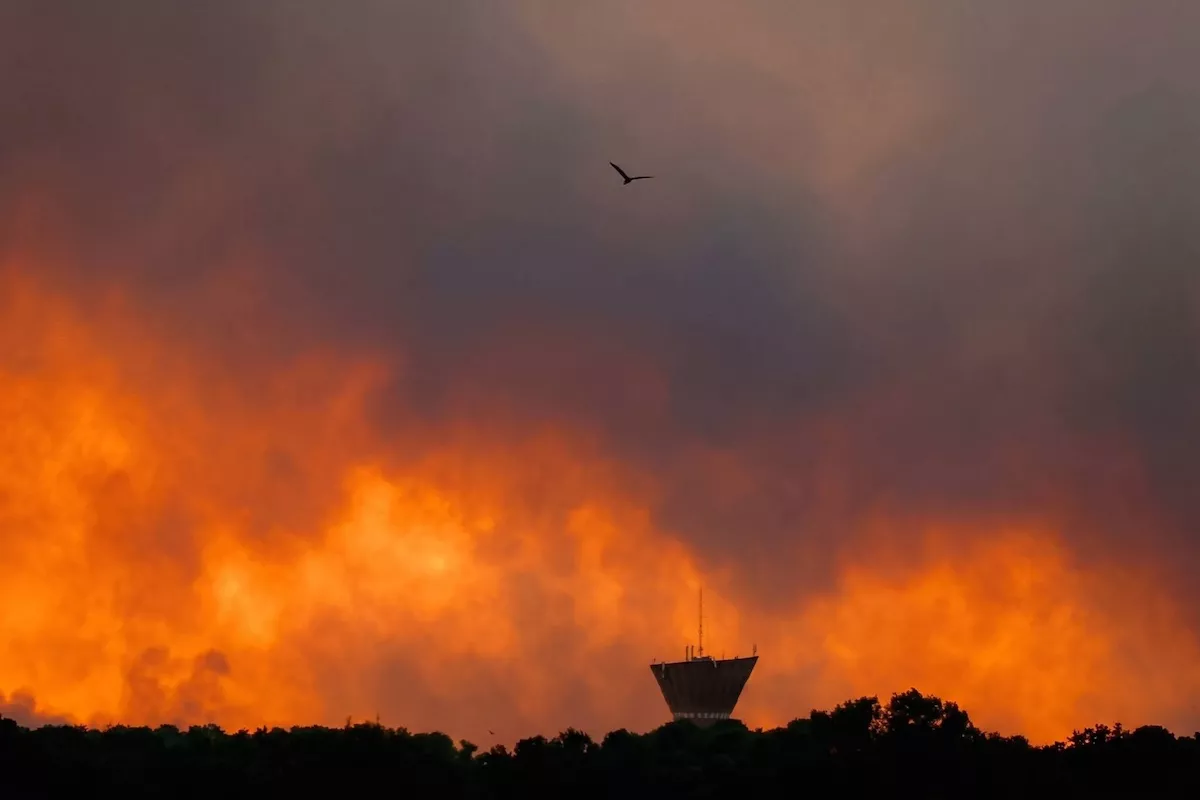
Main photo: the wildfires as seen from Brue-Auriac, credit: Thomas Delacoste
 

France battles historic megafire as flames near Bordeaux and 220,000 flee

France is fighting a wildfire of unprecedented scale on the edge of Bordeaux this morning, with 42,000 hectares burned, around 220,000 people evacuated and firefighters conceding they are still not in control of a blaze the Gironde prefecture has classed as a ‘megafire’. President Emmanuel Macron convened an interministerial crisis cell at the interior ministry at 10am.

The fire, which broke out at Saumos last Wednesday, is the defining front of a wider emergency burning across five departments. Interior Minister Laurent Nuñez said 115,000 hectares have burned across France since the start of the season, with 30 to 40 fires being fought on any given day and more than 13,000 outbreaks recorded since January.

Readers can follow the active fires in near real time on the public tracking map at gisfire.saro.app.

‘We are still not masters of the fire’

Rain overnight and a drop in the wind bought crews time, but the Gironde fire service was blunt this morning about where things stand. “We can’t say the fire is stabilised. We’ve stabilised a situation that was completely unstable, but we’re still not masters of the fire,” said Captain Wilfried Schneider of the SDIS 33, adding that the most active front now lies between Marcheprime and Pierroton, at the gates of the Bordeaux metropolitan area.

The prefecture reported the fire had remained broadly stable through the night, without major change, though it “continues its progression”. On the Cap-Ferret peninsula the picture is more fragile. “Unfortunately the weather conditions are not favourable to allow this fire to be brought under control,” said Philippe de Gonneville, mayor of Lège-Cap-Ferret, describing forestry works under way to slow the flames’ advance south along the peninsula. “The coming hours will be decisive.”

Government spokeswoman Maud Bregeon sought to calm fears about the city itself, telling franceinfo that “the evacuation of Bordeaux is not on the agenda as things stand”, while describing an exceptional and unpredictable fire. The mayor of Bordeaux, Thomas Cazenave, said the flames had come within around 15 kilometres of the city, prompting the partial closure of a major motorway.

The moon above Gironde. Photo credit: Sandrine Ricard

84 firefighters injured, no civilian casualties

The Gironde prefecture said 84 firefighters have been injured since the blaze began, nine of them in the latest 24-hour period. No civilian has been killed or injured by the Gironde fire, a point the fire service has held onto through days of exhausting work. “There were zero injuries among our fellow citizens,” said Éric Brocardi, spokesman for France’s firefighters, adding that crews were far from demoralised. “They have fire in their bellies.”

Some 2,500 firefighters are engaged in the Gironde alone, supported by 1,500 soldiers, 1,200 police and gendarmes and 18 aircraft. The lieutenant-colonel coordinating part of the response, David Annotel, warned the fight would be long. The fire, he said, “will last several weeks, even several months before we can give the final message of the fire being out.”

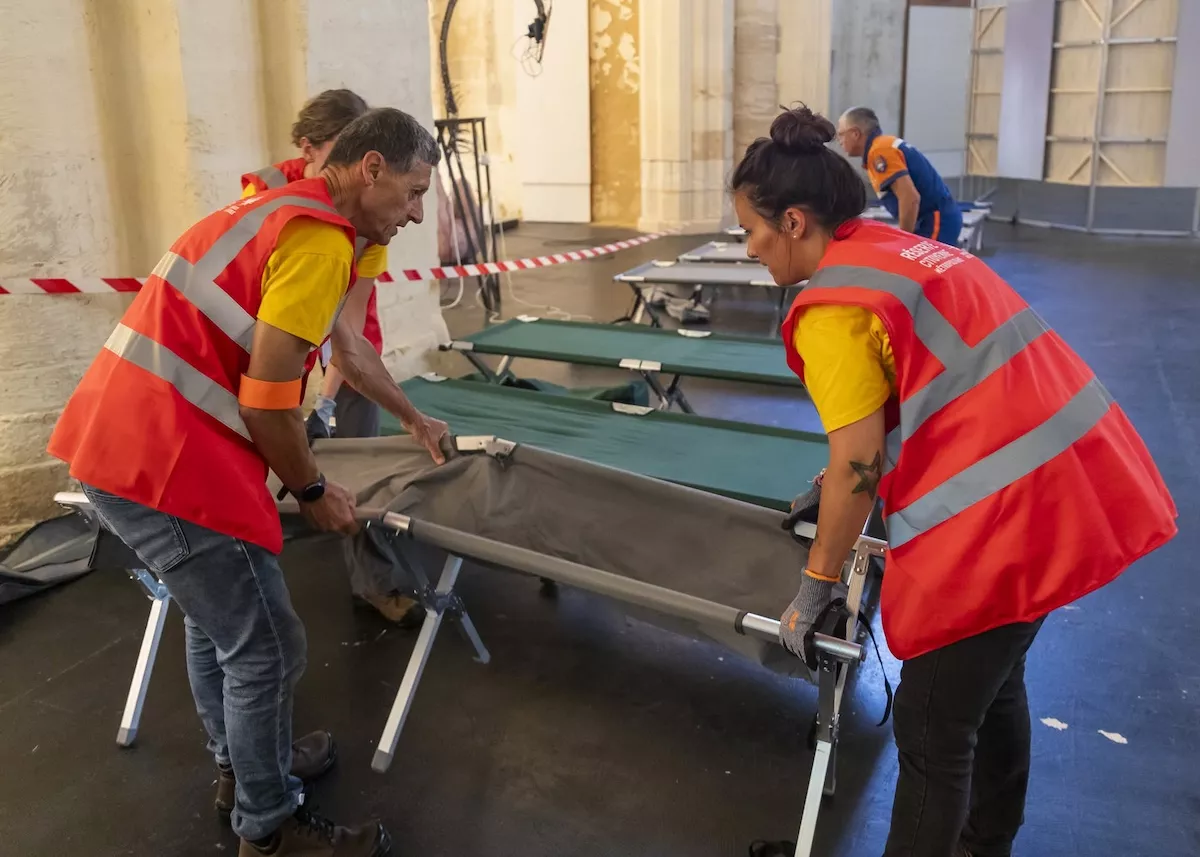
Emergency crisis centres have been set up in Bordeaux to accommodated thousands of people who have been forced to flee their homes. Photo source: Bordeaux Metropole Facebook page

A village of the displaced in Bordeaux

The human scale of the evacuation is becoming visible in the city’s public buildings. Between 2,500 and 3,000 people are now gathered at the Bordeaux exhibition park, where thousands of camp beds have been laid out across the halls and volunteers distribute food and water. More than fifteen schools and boarding establishments have been opened across Nouvelle-Aquitaine to take in evacuees, among them care-home residents and children from summer camps.

The economic toll is already being counted. Economy Minister Roland Lescure said more than 13,000 businesses had been evacuated in the Gironde, calling it “an economic thunderclap” for a region that did not need one, and confirmed that insurers had agreed to cover rehousing costs for up to three weeks for those displaced.

A crisis felt across the border

The fires are part of a wider southern European emergency. Across France and Spain, more than 300,000 people have been forced from their homes, with Spain battling what officials in the Madrid region have called the worst fires in its history. France has activated the EU civil protection mechanism, drawing in water-bombing aircraft and firefighting teams from Croatia, Portugal, the Czech Republic, Slovakia, Slovenia and Romania.

Stay updated with Monaco Life: sign up for our free newsletter, listen to our podcasts on Spotify, and follow us across Facebook,  Instagram, LinkedIn, and Tik Tok

Main photo of Gironde, credit: Sandrine Ricard

France bans social media for under-15s, but without a way to enforce it

France has become the first country in the European Union to pass a blanket ban on social media for children under 15, after both chambers of parliament approved the legislation on 21st July. The catch, buried in the final text, is that lawmakers removed the mechanism that was supposed to make it work.

The National Assembly passed the measure by 279 votes to 81, with President Emmanuel Macron hailing it as a major step forward. Yet the version that emerged from the joint parliamentary committee had been stripped of the clauses requiring platforms to build age-verification systems, and of the power that would have let France’s regulator compel them to comply. What remains, in the words of one legal analyst, is a general prohibition without a specified procedure to apply it.

What the law actually says

The ban takes the form of a new provision, Article 6-9, inserted into France’s 2004 law on confidence in the digital economy. It states simply that access to online social network services is prohibited for minors under 15. Three categories are exempt: online encyclopedias, educational and scientific directories, and open-source software development platforms with an educational purpose.

It applies in two stages. From 1st September 2026, under-15s will be barred from creating new accounts on the major platforms, understood to include TikTok, Instagram and Facebook. From 1st January 2027, existing accounts belonging to under-15s must be closed.

The law does not, however, say how a platform is meant to establish that a user is 15 or older, nor does it name the specific services caught by the ban, leaving that to be worked out from the existing legal definition.

How the enforcement mechanism was lost

The original bill, tabled by MP Laure Miller in November 2025, was far more prescriptive. It would have required platforms to use age-verification methods aligned with technical guidelines set by Arcom, the French audiovisual and digital regulator, and provided for fines of up to 3 per cent of a platform’s global turnover for non-compliance. A later version added a regulator-drawn ‘blacklist’ of platforms deemed harmful to minors.

Brussels intervened. In a detailed opinion issued on 6th July, the European Commission objected to the bill’s enforcement architecture, warning that it would create a parallel national supervision regime overlapping with the EU’s Digital Services Act, the bloc’s harmonised framework for regulating online platforms. France’s own Conseil d’État had raised a similar concern in January, cautioning that member states may not impose obligations on platforms that go beyond what the DSA allows.

Faced with that objection, French legislators reversed course, dropping both the blacklist and the provisions handing Arcom enforcement powers. The result is a prohibition that now depends largely on the DSA for its teeth, a point of some awkwardness given the DSA is precisely the instrument the original enforcement plan was found to conflict with.

A jurisdictional knot

The deeper difficulty is that most of the platforms operating in France are established elsewhere in the EU, chiefly Ireland. Under the country-of-origin principle that governs the single market, France cannot straightforwardly impose national rules on a company regulated in another member state without following a set procedure. The Commission’s objection was rooted in exactly this: framed as a rule for minors, the ban would in practice require platforms to verify the age of all users and, potentially, authenticate parental consent, which risks colliding with both the DSA and EU data protection law.

Digital affairs minister Anne Le Hénanff has defended the timetable, arguing that the technical tools for age verification already exist and are effective. Child protection advocates are less certain. Ines Legendre, a legal adviser at the online safety group e-Enfance, pointed to the practical questions left unanswered. “We’ll also have to address the issue of existing accounts for those under 15. How do we identify them? How do we suspend them? And then there’s the question of age verification for all new accounts,” she said.

Following Australia, watched by Europe

France is not acting in isolation. Australia’s world-first ban on social media for under-16s took effect in December across nine named platforms, carrying penalties running into tens of millions of dollars. Macron has repeatedly cited that model, and has pushed for the EU to adopt a bloc-wide minimum age, an idea the European Parliament endorsed in principle late last year.

For now, the French law still faces constitutional review before it is fully enacted, and the mechanics of enforcement remain to be assembled from instruments the statute itself does not spell out. Whether a ban without a defined verification system changes what French teenagers actually do online, or simply sets a marker for the rest of Europe to follow, is the question the coming months will answer.

Stay updated with Monaco Life: sign up for our free newsletter, listen to our podcasts on Spotify, and follow us across Facebook,  Instagram, LinkedIn, and Tik Tok

Photo: AI generated image by Monaco Life

AS Monaco unveils grape-brown away kit for 2026–27 season

AS Monaco has unveiled a grape-brown away kit for the 2026–27 season, the latest strip produced through the club’s partnership with Japanese sportswear company Mizuno.

The shirt uses a dark brown base with purple undertones and gold detailing. A tone-on-tone pattern spelling out “ASM” is incorporated into the fabric, while the club crest, manufacturer’s logo and sponsor branding appear in gold.

The new AS Monaco away kit 2026-27. Photo credit: AS Monaco

The back of the collar features nine arches representing the façade of Stade Louis-II, a detail repeated across AS Monaco’s kits for the new season. The design also includes a polo-style collar and narrow sleeve edging.

The club launched the kit with a player photoshoot at the Hôtel de Paris Monte-Carlo.

AS Monaco said the shirt is made entirely from recycled polyester. The club has not yet confirmed the first match in which the team will wear the new strip.

Stay updated with Monaco Life: sign up for our free newsletter, listen to our podcasts on Spotify, and follow us across Facebook,  Instagram, LinkedIn, and Tik Tok

Main photo: The new AS Monaco away kit for 2026–27. Credit: AS Monaco

Nice Jazz Fest hails successful reset after move to three nights

Nice Jazz Fest has concluded its shortened 2026 edition, with the city reporting savings of €800,000 while maintaining a programme of 18 concerts across two stages.

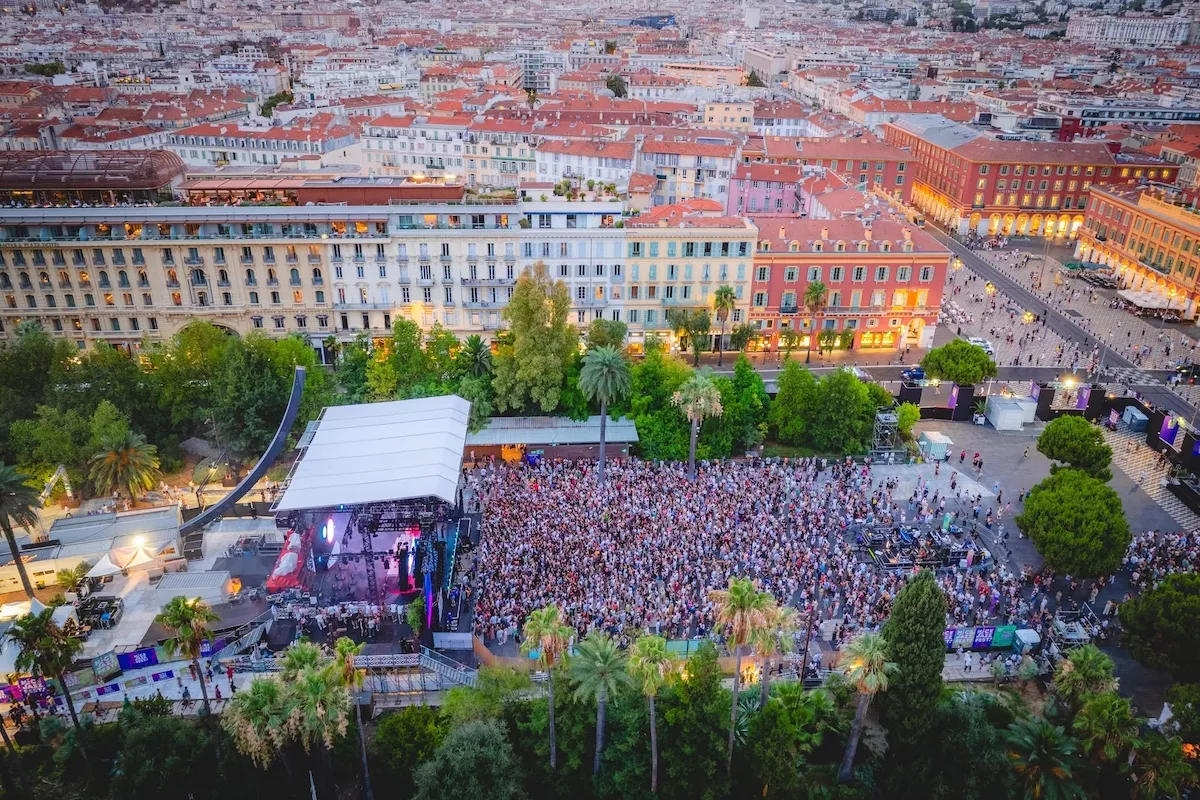
Held at Place Masséna and the Théâtre de Verdure from 23rd to 25th July, the festival brought together jazz, soul, hip-hop and contemporary music, with headline performances from Sting, Busta Rhymes and Lola Young. The city has described the edition as a popular success, although no attendance figures were released. The official programme featured six concerts each evening.

The move to three nights formed part of a wider effort to reduce public spending without abandoning the festival’s artistic ambitions.

“This edition marks an important stage in the festival’s renewal,” said Nice Mayor and Métropole President Éric Ciotti. “The savings achieved, €800,000, demonstrate responsible management and allow the Nice Jazz Fest to be placed on a sound economic footing without sacrificing the quality of the public experience.”

Festival extends across the city

Beyond the main stages, more than 100 artists performed in streets, squares and markets as part of the free Fest’OFF programme.

A further 20 bars, restaurants, cinemas, associations and businesses took part in Lou Girou, presenting almost 60 jazz and contemporary music events between 16th and 26th July.

Inside the festival grounds, the Merenda village offered food, drinks and relaxation areas, with DJs performing between concerts at the Théâtre de Verdure.

The extended programme ended on Sunday with the first Nice Music Lab x Sacem Université competition. Six emerging artists and groups from the Alpes-Maritimes and Var performed before an industry jury, with three winners due to receive professional training during 2026 and 2027.

Accessibility measures included vibrating vests for deaf and hearing-impaired festivalgoers, while a dedicated responsibility area provided information on sexual violence, alcohol and drug risks, discrimination, hearing protection and waste reduction.

Held at Place Masséna and the Théâtre de Verdure from 23rd to 25th July, the festival brought together jazz, soul, hip-hop and contemporary music, with headline performances from Sting, Busta Rhymes and Lola Young. The city has described the edition as a popular success, although no attendance figures were released. The official programme featured six concerts each evening.

The move to three nights formed part of a wider effort to reduce public spending without abandoning the festival’s artistic ambitions.

“This edition marks an important stage in the festival’s renewal,” said Nice Mayor and Métropole President Éric Ciotti. “The savings achieved, €800,000, demonstrate responsible management and allow the Nice Jazz Fest to be placed on a sound economic footing without sacrificing the quality of the public experience.”

Festival extends across the city

Beyond the main stages, more than 100 artists performed in streets, squares and markets as part of the free Fest’OFF programme.

A further 20 bars, restaurants, cinemas, associations and businesses took part in Lou Girou, presenting almost 60 jazz and contemporary music events between 16th and 26th July.

Inside the festival grounds, the Merenda village offered food, drinks and relaxation areas, with DJs performing between concerts at the Théâtre de Verdure.

The extended programme ended on Sunday with the first Nice Music Lab x Sacem Université competition. Six emerging artists and groups from the Alpes-Maritimes and Var performed before an industry jury, with three winners due to receive professional training during 2026 and 2027.

Accessibility measures included vibrating vests for deaf and hearing-impaired festivalgoers, while a dedicated responsibility area provided information on sexual violence, alcohol and drug risks, discrimination, hearing protection and waste reduction.

Stay updated with Monaco Life: sign up for our free newsletter, listen to our podcasts on Spotify, and follow us across Facebook,  Instagram, LinkedIn, and Tik Tok

Photo source: Nice Jazz Fest