Wildfires flare again in the Var as red alert grips the Riviera and south-west burns

Wildfires reignited overnight in the Var, with flames threatening homes at Correns and evacuation orders still in force across three communes, as Provence-Alpes-Côte d’Azur remains under extreme fire risk and a far larger disaster unfolds in the south-west of France, where two firefighters have been killed and more than 141,000 people forced from their homes.

The fire that began at Pontevès on Tuesday 21st July flared again during the night at Correns, on two separate fronts, one of them threatening houses to the north-west of the village. A fresh flare-up was also recorded at Pontevès itself. Since Tuesday, around 3,250 hectares have burned in the department. Ground crews worked through the night and four water-bombing helicopters were making drops on Saturday morning.

Evacuations still in place across the Var

Evacuation orders remained in force on Saturday for the communes of Correns, Châteauvert and the southern districts of Barjols. Residents of Pontevès and neighbouring communes have been temporarily banned from drinking tap water because of contamination risks, with bottled water being distributed instead. An investigation into the cause of the original fire is under way, with investigators examining whether it was started deliberately.

Some residents had been allowed to return earlier in the week after conditions briefly improved, only for strong Mistral winds to drive the flames forward again. Rain is forecast over the affected area later on Saturday, which the prefecture hopes will help crews on the ground.

Massifs closed, and a warning for the Alpes-Maritimes

Météo-France placed five departments — the Aude, Bouches-du-Rhône, Gard, Var and Vaucluse — on red alert for extreme fire risk this week, following weeks of drought, record heat and strong winds. In the Var, five major forest massifs — the Monts Toulonnais, the Corniche Varoise, the Maures, the Estérel and the Centre-Var — were closed to the public at the highest ‘very severe’ risk level.

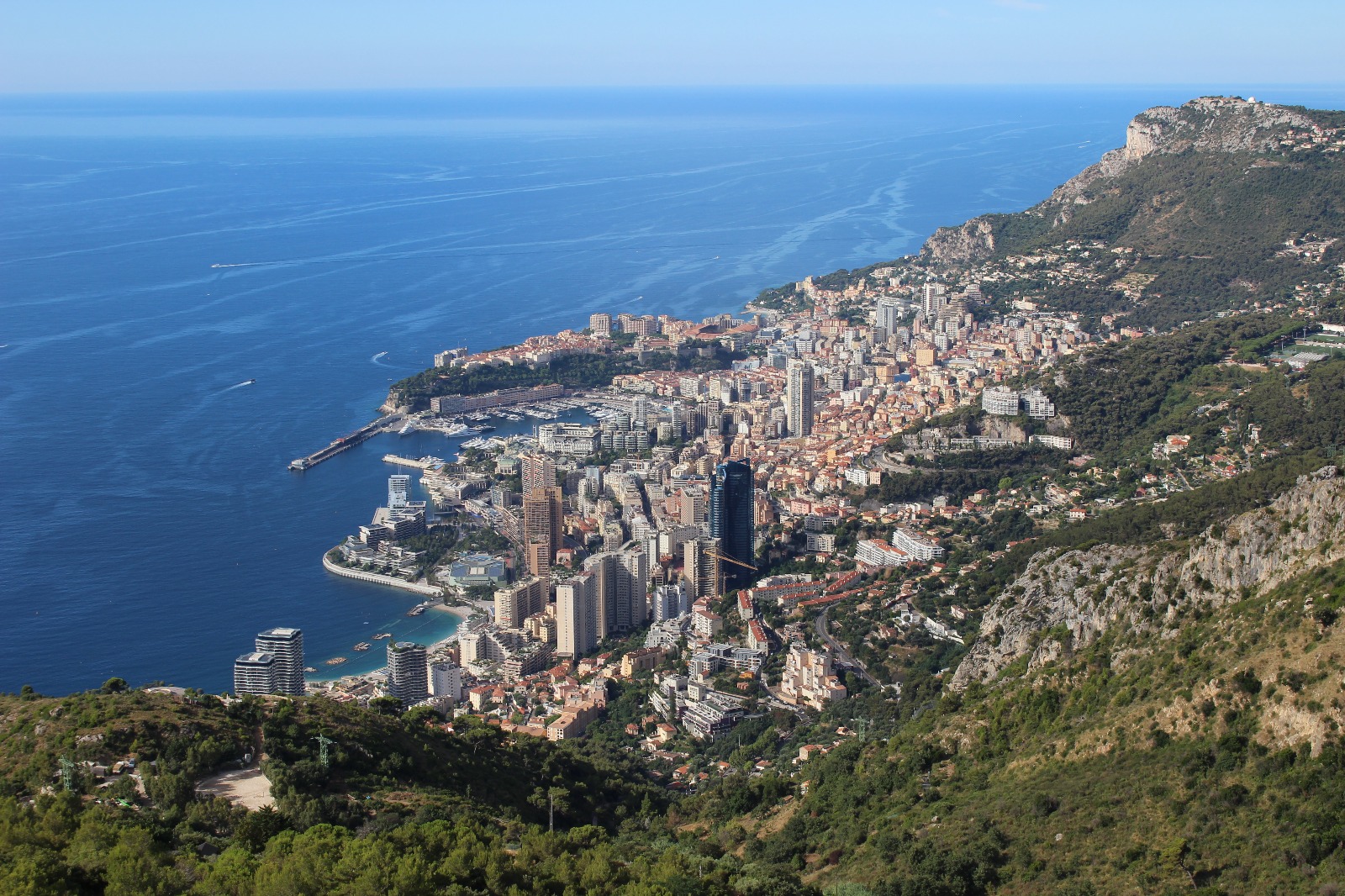
The alert stretched into the Alpes-Maritimes, where much of the coastal fringe and the hinterland behind the Riviera was classed at the ‘severe’ level, with access to the massifs strongly discouraged. For Monaco and the wider Côte d’Azur, the immediate risk this weekend is less the flames themselves than the tinder-dry conditions and the possibility of dry thunderstorms sparking new blazes.

An ‘unprecedented’ fire nears Bordeaux

The gravest situation is unfolding some 700 kilometres to the west. Authorities began evacuating suburbs of Bordeaux on Saturday — Le Haillan, Eysines and Mérignac — as an enormous wildfire advanced on the city. Prime Minister Sébastien Lecornu said the fires had reached a level never seen before, and President Emmanuel Macron ordered the military to mobilise.

The blaze, which broke out near Saumos in the Gironde on 22nd July, has burned through as much as 19,000 hectares of pine forest and forced tens of thousands from their homes across the Arcachon basin. The Nouvelle-Aquitaine prefecture described it as worse than the fires of 2022, warning that it moves unpredictably and can leap distances of up to a kilometre. On the Cap-Ferret peninsula, one of the region’s best-known holiday spots, a full evacuation was ordered by land and sea, with around 1,500 people leaving by boat.

Two firefighters were killed on Tuesday while tackling a blaze near Bordeaux-Mérignac airport. Macron has requested emergency assistance from the European Union, drawing in firefighting aircraft from Croatia, the Czech Republic, Slovakia and other partners.

Four times the normal destruction

More than 42,800 hectares have burned across France since January, according to the European Forest Fire Information System, more than four times the average for this point in the year and surpassing the record set in 2022. Forecasters warn that more than 60,000 hectares could be lost if the current conditions persist through the summer.

The crisis extends across the border into Spain, where the government has declared a national emergency in the Madrid region and the province of Ávila, with around 60,000 people evacuated. The president of the Community of Madrid described the fire threatening the region as the worst in its history.

A brief respite is expected over the weekend, with storms forecast to lower temperatures and bring rain to parts of the south, easing the red alerts. Forecasters caution, however, that a fresh heatwave next week is likely to bring high fire risks back to the region.

Stay updated with Monaco Life: sign up for our free newsletter, listen to our podcasts on Spotify, and follow us across Facebook,  InstagramLinkedIn, and Tik Tok.

Photo credit: Philippe Charpentier

Monaco activates drought vigilance as rainfall drops by more than 50%

The Monaco Government has activated the first level of its drought response plan after rainfall in the Principality fell to less than half the seasonal average since the beginning of the year.

The “vigilance” level does not introduce restrictions on water use. Instead, it calls on residents and businesses to reduce unnecessary consumption before worsening conditions require more binding measures.

Monaco is experiencing the same pronounced rainfall deficit affecting the wider region. The government on Friday said it had chosen to act now to encourage a collective response while water-saving measures remain voluntary.

Residents urged to reduce water consumption

Households are being asked to make simple changes, including running washing machines and dishwashers only when full, limiting garden watering, using water-efficient equipment and avoiding non-essential consumption.

Businesses in water-intensive sectors are receiving recommendations tailored to their activities. These include postponing the filling or draining of swimming pools where possible, delaying certain water discharges and recycling cleaning water when conditions allow.

The government said it would continue monitoring rainfall and water resources, with its response to be adjusted progressively if conditions deteriorate.

Stay updated with Monaco Life: sign up for our free newsletter, listen to our podcasts on Spotify, and follow us across Facebook,  InstagramLinkedIn, and Tik Tok.

Photo credit: Richard McCreery, Monaco Life

Monaco bomb victim fears case is being stifled over Ukrainian intelligence links

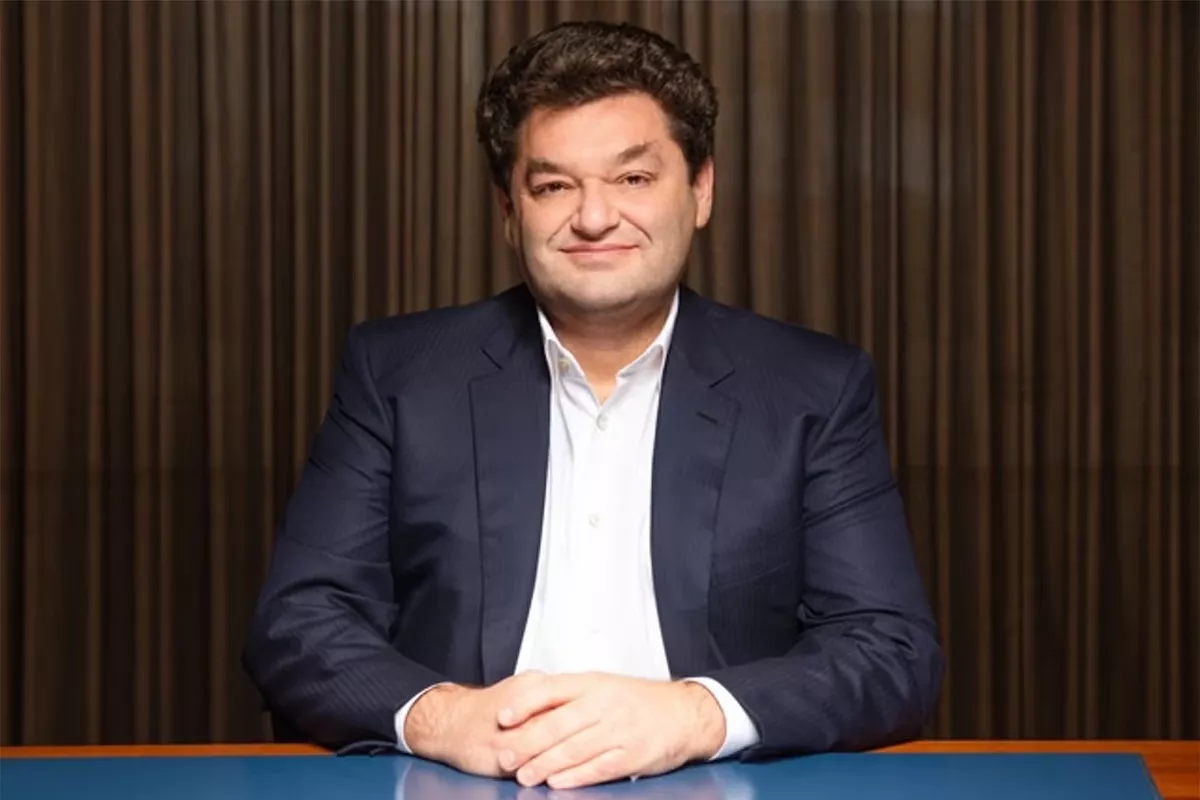
With a serving Ukrainian military intelligence officer in custody, the alleged bomber dead and crucial evidence split between Monaco and Ukraine, businessman Vadym Yermolaiev has appealed directly to Prince Albert II and President Volodymyr Zelensky to prevent the investigation into the attempted assassination of his family from being delayed or “stifled”.

Yermolaiev was injured alongside his partner Anna and their 13-year-old son when an explosive device concealed in a bag was detonated at the entrance to their Monaco residence on 29th June.

“This was not a warning. It was an attempted assassination,” he said in a statement dated 22nd July and sent to Monaco Life through his lawyers on 24th July.

The investigation has since extended deep into Ukraine. Anastasiia Berezovska, identified by Monaco’s Prosecutor General as the principal suspect in the bombing, was found shot dead near Kyiv on 7th July. Two men are now in custody over her killing and are also being investigated over the organisation of the Monaco attack.

Against that background, Yermolaiev has called on the prosecutors general of Monaco and Ukraine to establish a formal mechanism for cooperation between the two countries.

Crucial evidence in Monaco and Ukraine

Evidence needed to determine who planned, financed and ultimately ordered the attack lies in both jurisdictions. It includes material from the scene in Monaco, information about the movements and contacts of suspects in Ukraine, and evidence recovered following Berezovska’s death.

“To our knowledge, no official joint working group nor any other effective mechanism of direct cooperation has yet been established between the Monaco prosecutor’s office and the Ukrainian prosecutor’s office,” Yermolaiev said.

He appealed directly to Monaco Prosecutor General Stéphane Thibault and Ukrainian Prosecutor General Ruslan Kravchenko to establish a rapid exchange of evidence, documents, witness statements and investigation files, as well as information concerning the suspects’ movements, contacts and financing.

“Every day of delay plays into the hands of the criminals, the organisers, the coordinators and those who ordered the crime,” he said. “Without this, it is impossible to trace the entire chain, from those who carried it out through to the ultimate instigator.”

The Ukrainian prosecutor proposed creating a joint investigative group after consultations with his Monegasque counterpart on 10th July and said Ukraine was ready to cooperate under international legal procedures. Neither country has publicly confirmed that the proposed group has been formally established.

Military intelligence officer in custody

One of the two men being held in Kyiv over Berezovska’s killing is a serving officer in the Main Intelligence Directorate of Ukraine’s Ministry of Defence, known as the GUR. The other is a former law enforcement officer.

Ukrainian prosecutors are also investigating the two men over the organisation of the Monaco bombing and Berezovska’s recruitment to carry it out.

Yermolaiev said the involvement of people linked to Ukrainian military intelligence required close and independent scrutiny.

“These circumstances demand an immediate, independent and exhaustive investigation conducted by the competent authorities,” he said. “If certain individuals, whether in office or linked to state structures, have used their status, their connections, their resources or their means to organise the contract killing of a family on European territory, this must be the subject of a thorough investigation — regardless of position, title, administrative affiliation or the politically sensitive nature of the case.”

No Ukrainian institution has publicly addressed the wider implications of a serving GUR officer’s detention beyond the account provided by investigators. Yermolaiev said that silence had created “well-founded fears” that attempts could be made “to stifle the case, to draw it out at length, or to settle it ‘behind the scenes’”.

“This is an international crime. It was committed on European territory. It requires an open, independent, intergovernmental and exhaustive investigation,” he said.

Ukraine says suspects acted independently

The Security Service of Ukraine has said the GUR officer confessed to killing Berezovska but claimed to have acted on his own initiative and without his superiors’ knowledge.

Prosecutors have similarly maintained that the two men acted independently and concealed their conduct from the leadership of the intelligence service. A Kyiv court has ordered both suspects to remain in custody without bail.

Ukrainian Prosecutor General Kravchenko subsequently released footage of the Monaco bombing that he said investigators had recovered after the suspects attempted to destroy it. According to the prosecutor general, the recording came from a surveillance camera installed by those behind the attack to confirm that it had been carried out as ordered.

President Zelensky has not publicly commented on the substance of the case, although he said on 9th July that further relevant material would be released.

“Our family continues to fight for Anna’s life”

Yermolaiev’s statement also provides the first update on the family’s condition since Monaco’s prosecutor announced shortly after the attack that one of the three victims had suffered life-threatening injuries.

“Today, our family continues to fight for Anna’s life. We cannot say more than that at this stage,” he said.

The couple’s son remains under treatment and is recovering from his injuries. Yermolaiev said he is also continuing to receive medical care and is not yet well enough to participate fully in public communications.

“I survived by a miracle,” he said.

Warning that the threat remains

Yermolaiev also raised fears that the threat to himself and his family has not gone away simply because the main suspect was killed. “The attack did not achieve its objective. This means that the threat persists,” he said.

He has also called for the ongoing protection of everyone connected to the investigation. “If persons linked to the organisation of the attack are already being eliminated or subjected to violence, this means that witnesses, investigators, lawyers, persons holding information and my family could be under threat,” he said. “We ask that they do not wait for a further tragedy to occur.”

Monaco Life has reached out to Monaco’s Prosecutor General for comment.

See also: 

Vadym Iermolaiev breaks silence after Monaco bombing: “Our survival was nothing short of a miracle”

Stay updated with Monaco Life: sign up for our free newsletter, listen to our podcasts on Spotify, and follow us across Facebook,  InstagramLinkedIn, and Tik Tok.

Photo of Vadym Yermolaiev taken from X

Google fined €890 million in first EU penalty under digital rulebook

Google has been fined €890 million by the European Commission for favouring its own services in search results and preventing app developers from steering customers towards cheaper alternatives, the first penalty issued against the company under the bloc’s Digital Markets Act.

The decision, announced on Thursday, splits into two findings of non-compliance. A €460 million fine covers self-preferencing on Google Search, where the Commission found the company gave systematic preferential treatment to its own shopping, hotels, transport and sports results over those of third parties. A further €430 million relates to restrictions imposed on businesses using Google Play, preventing them from directing consumers to alternative and often cheaper purchase channels.

Sixty days to change or pay daily

More consequential than the sum itself is the order attached to it. Google has 60 days to end both practices or face periodic penalty payments of up to 5 per cent of its worldwide turnover.

“Google must now bring the non-compliance to an end and to refrain from continuing it in the future,” said Henna Virkkunen, the Commission’s executive vice-president for tech sovereignty, security and democracy, adding that the decisions send a clear message that Brussels will not hesitate to use its tools to protect the opportunities the Digital Markets Act was designed to create.

The Commission opened the investigations in March 2024, six months after designating Google a ‘gatekeeper’ under the legislation, and set out its preliminary findings in March 2025. It noted that Google has already begun testing changes to how it presents its own services, describing them as substantial progress towards compliance, and confirmed that discussions are continuing over how the ruling’s principles will apply to AI Overviews and AI Mode.

Google calls it product degradation

The company’s response was combative. “This isn’t fair competition; it’s product degradation driven by a small group of self-serving complainants, with European businesses and consumers taking the hit. Regulation should improve products, not make them worse,” said Kent Walker, Google’s president of global affairs.

Google argues that altering its search results would harm European travel businesses that depend on it for bookings, and that pushing users towards third-party sites introduces security risks. It has not said whether it intends to appeal.

Awkward timing across the Atlantic

The fine arrives at a delicate moment. Washington has repeatedly characterised the EU’s digital rules as a trade irritant, and the Trump administration is weighing a fresh round of duties as the current regime expires this week, following a Section 301 investigation touching on German drug pricing.

Brussels has shown before that it is not immune to that pressure. A separate fine over Google’s advertising business was shelved last September amid internal opposition led by trade commissioner Maroš Šefčovič, who argued against sensitive sanctions before a deal with Washington was concluded. The Commission eventually proceeded, imposing a €2.95 billion penalty — but the episode exposed how exposed its enforcement had become to outside politics.

Stay updated with Monaco Life: sign up for our free newsletter, listen to our podcasts on Spotify, and follow us across Facebook,  Instagram, LinkedIn, and Tik Tok

Image AI generated by Monaco Life


Free night shuttles return to Monaco thanks to SBM driver renewal

Free shuttles taking late-night revellers home across Monaco are running again this summer after Monte-Carlo Société des Bains de Mer renewed its partnership with Be Safe Monaco for a third consecutive year.

The agreement, signed by Stéphane Valeri, chairman and chief executive of Monte-Carlo Société des Bains de Mer, and Camille Gottlieb, president of Be Safe Monaco, makes the Group’s professional drivers available to the association on a rotating basis through the summer season.

Wednesday to Sunday, midnight to 5.30am

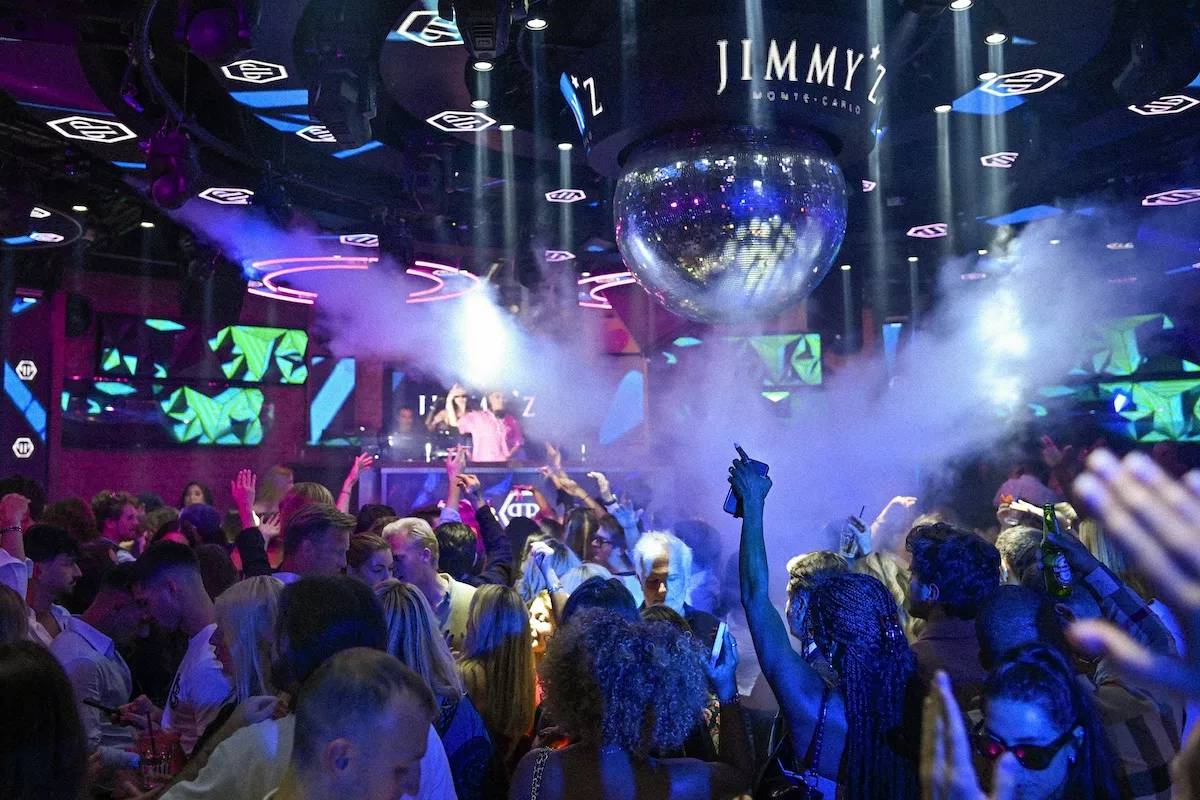
The electric shuttles have been operating since 1st July and will continue until 31st August, running from Wednesday to Sunday inclusive between midnight and 5.30am. The service is free of charge and takes customers of the Principality’s nightlife venues home within Monaco.

Since the partnership was first signed in April 2024, 741 people have been driven home by SBM drivers, 355 in the first summer and 386 last year — an increase that both organisations have taken as evidence the scheme is being used rather than merely offered.

An association born of a personal loss

Be Safe Monaco was founded in 2017 by Camille Gottlieb, the daughter of Princess Stéphanie, together with four friends, after the death of Alexis Jacquemond in a scooter accident following a night out. The association campaigns against drink-driving through awareness work in nightclubs, the distribution of breathalyser tests and educational programmes aimed at young people, alongside the shuttle service that has become its most visible initiative.

Partnering with the Principality’s largest hospitality operator gives the association access to something small charities rarely have: a trained professional workforce already accustomed to late hours and a demanding clientele.

Stay updated with Monaco Life: sign up for our free newsletter, listen to our podcasts on Spotify, and follow us across Facebook,  InstagramLinkedIn, and Tik Tok

Photo source: MCSBM

Monaco U18 rugby team secures Championship promotion with European silver

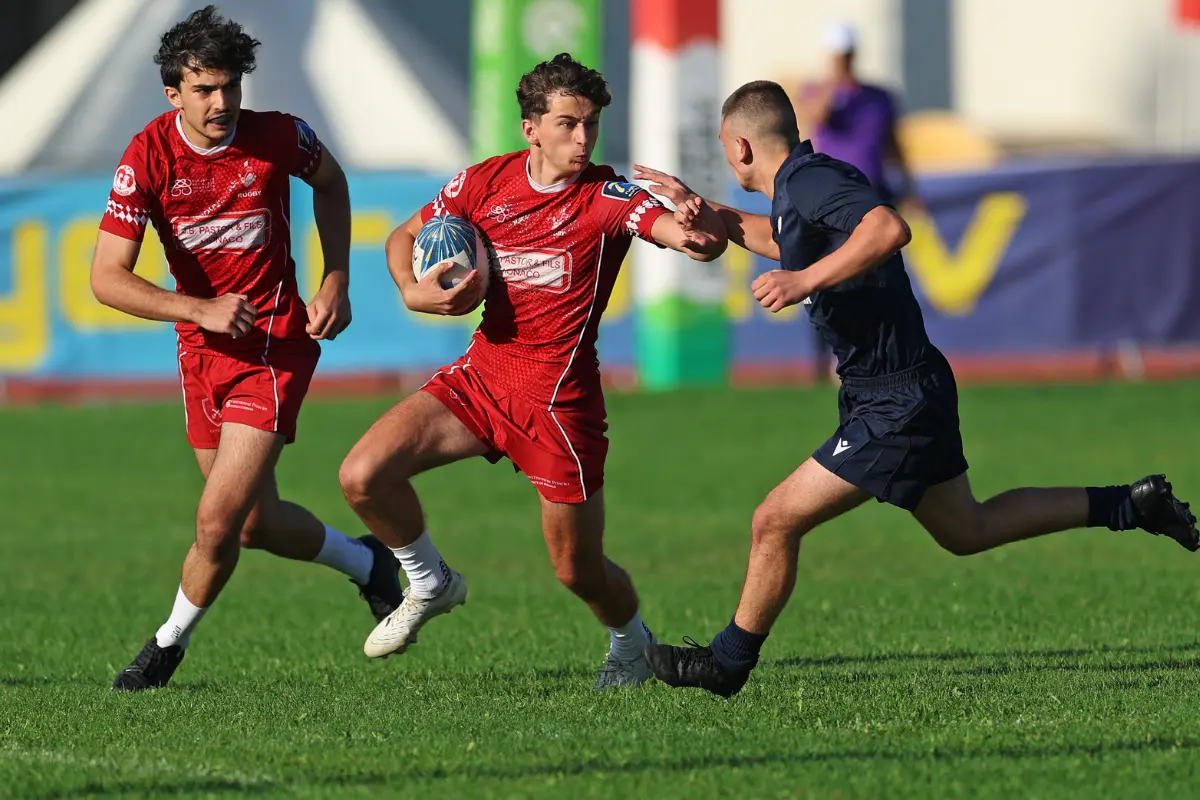
The Monaco Rugby Federation’s U18 team was crowned European runners-up last weekend in Budapest, securing promotion to the Championship, the highest division of European rugby sevens. This historic achievement puts Monaco among the 12 best nations in European U18 rugby sevens.

Only one year after winning the Trophy 2 title to earn promotion to Trophy 1, the young team claimed a silver medal in Hungary. Following a strong tournament, the team was beaten only by Latvia in the final. Despite not claiming the title, Monaco still secured promotion to the Championship alongside Latvia.

Monaco made a strong start to the tournament under coach Dorian Danthez. They began with a hard-fought 17-17 draw against Luxembourg before claiming victories over Sweden and Croatia, finishing top of their pool to secure a place in the semi-finals.

Monaco delivered a 26-7 victory over Israel in the semi-final, securing its place in the final and, with it, promotion to the Championship.

The final challenge was a close battle as both teams fought hard before Latvia ultimately claimed a 19-7 victory. Tom Lacascia was named MVP of the European U18 Championship, marking the second consecutive year that a Monaco player has received the tournament’s highest individual honor.

Next season, the Principality’s young team will compete against Europe’s leading rugby nations, including France, Spain, and Germany.

Stay updated with Monaco Life: sign up for our free newsletter, listen to our podcasts on Spotify, and follow us across Facebook,  InstagramLinkedIn, and Tik Tok

Photo credit: Travis Prior – Rugby Europe