Inside Italian President Mattarella’s historic state visit to Monaco

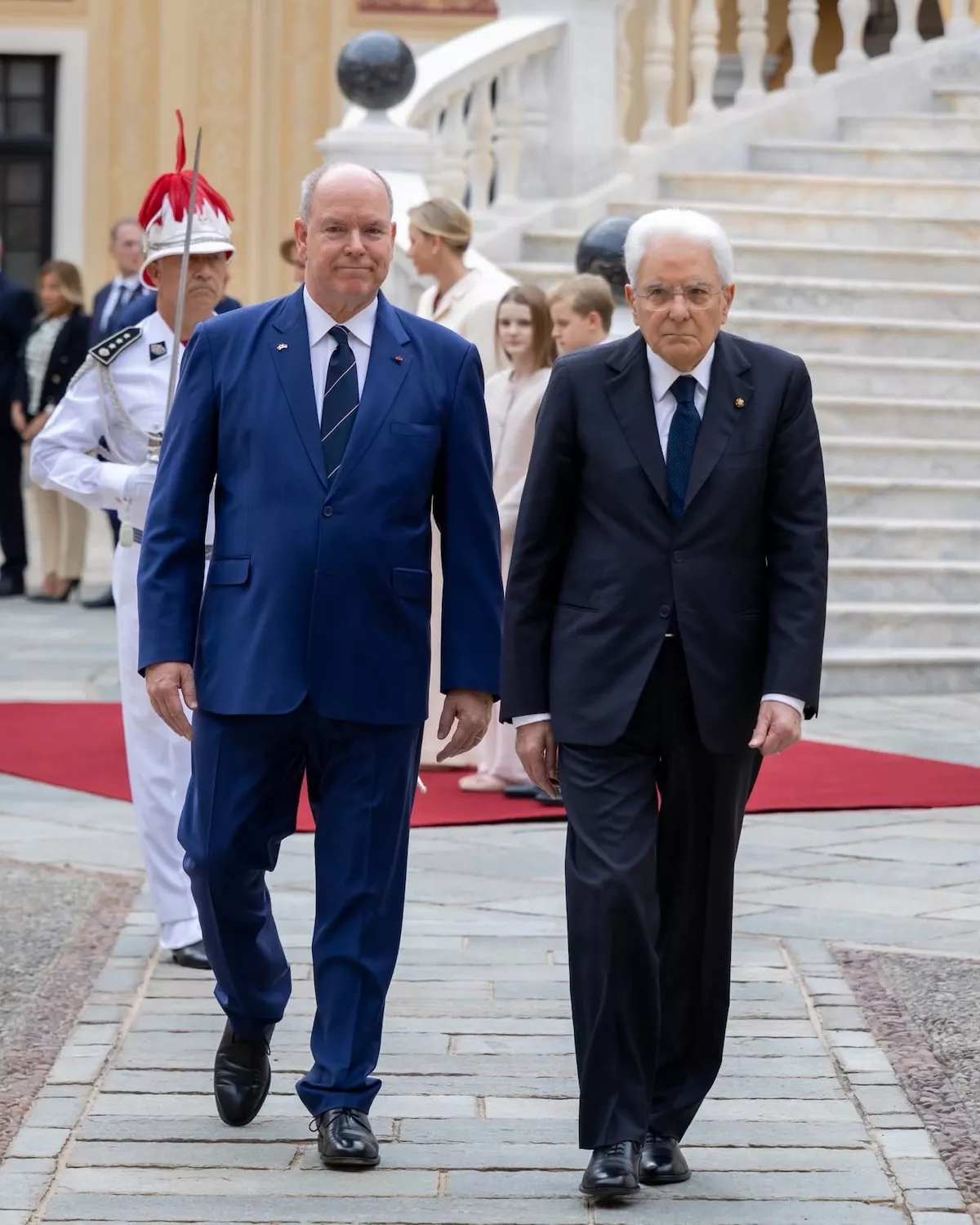
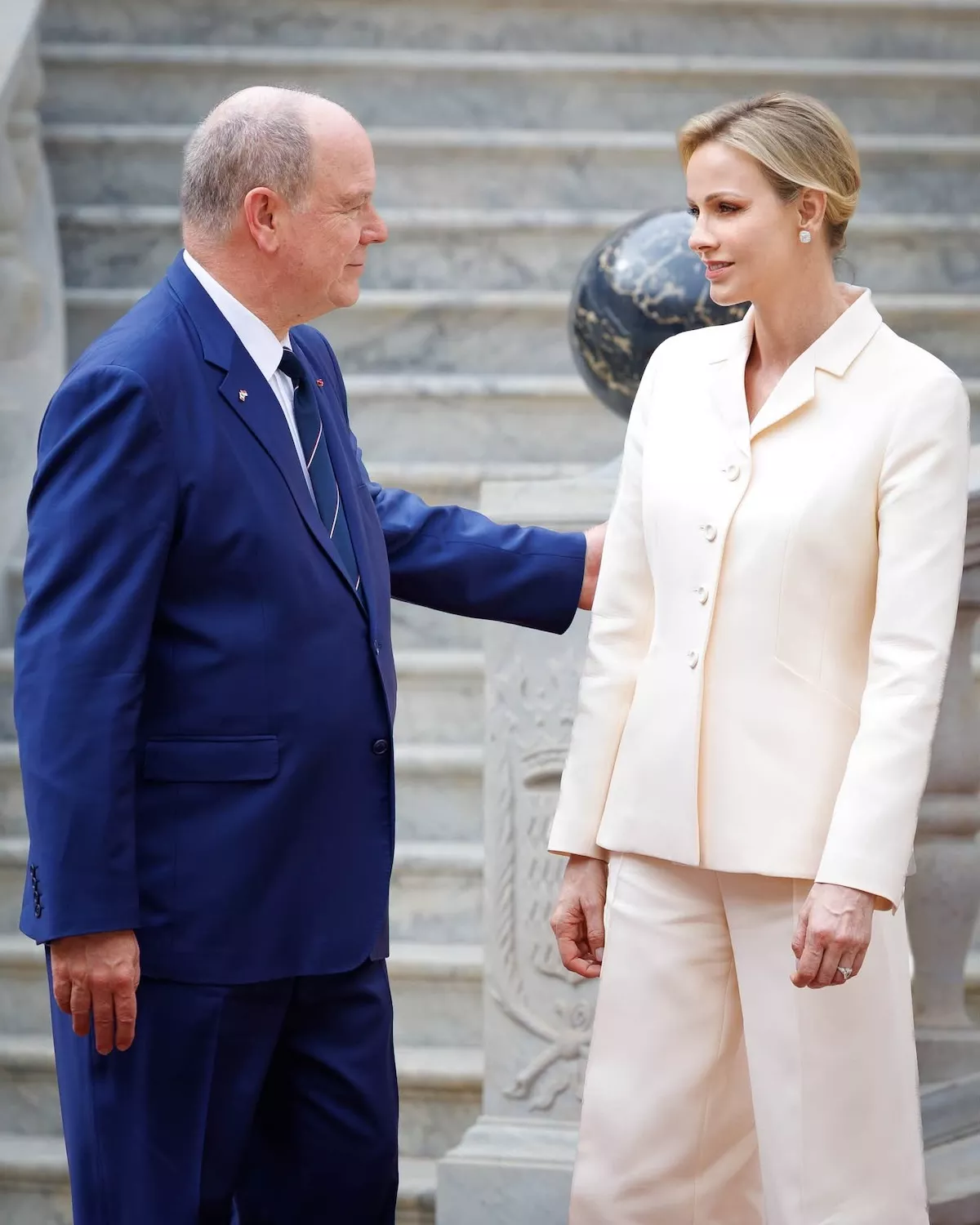
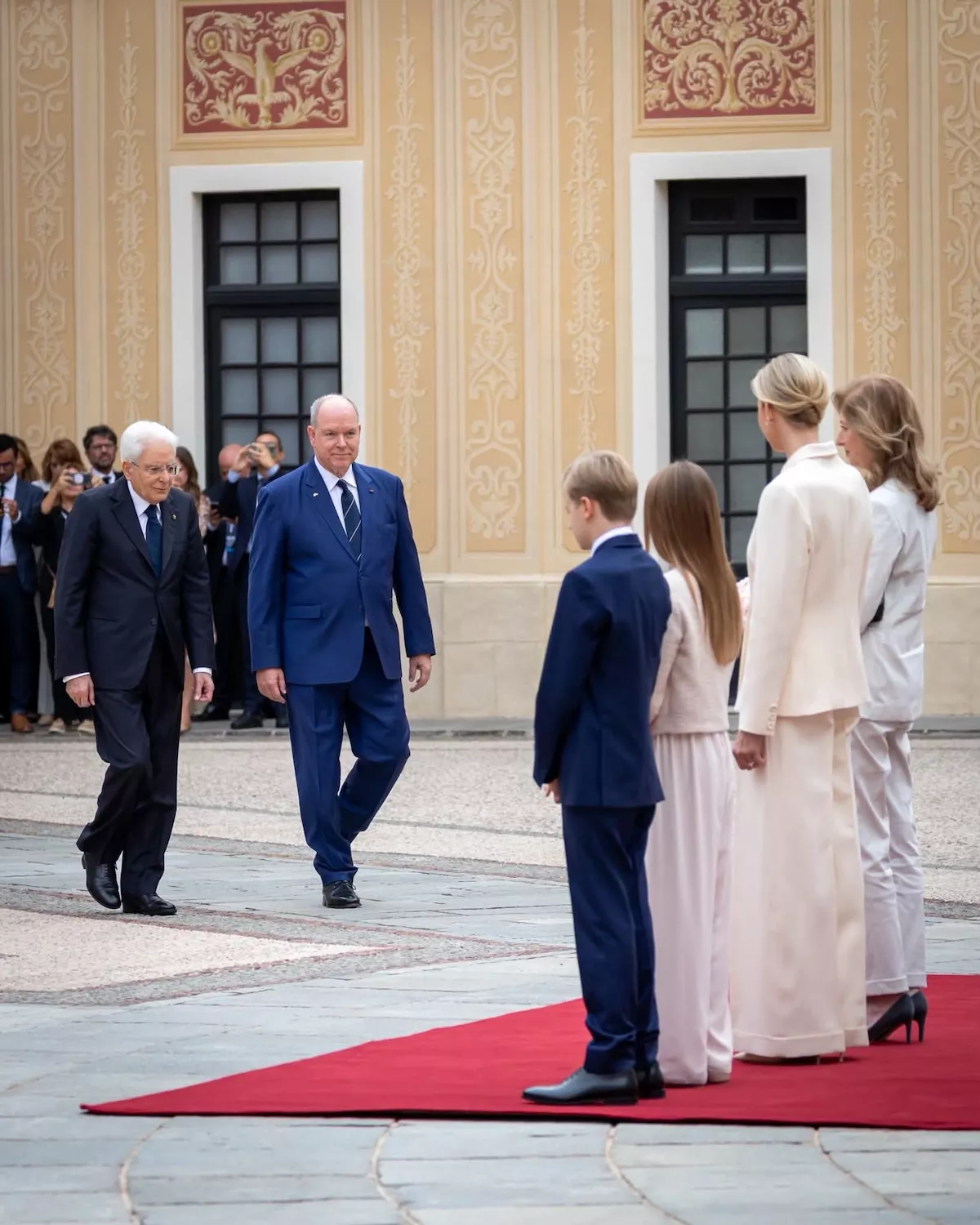
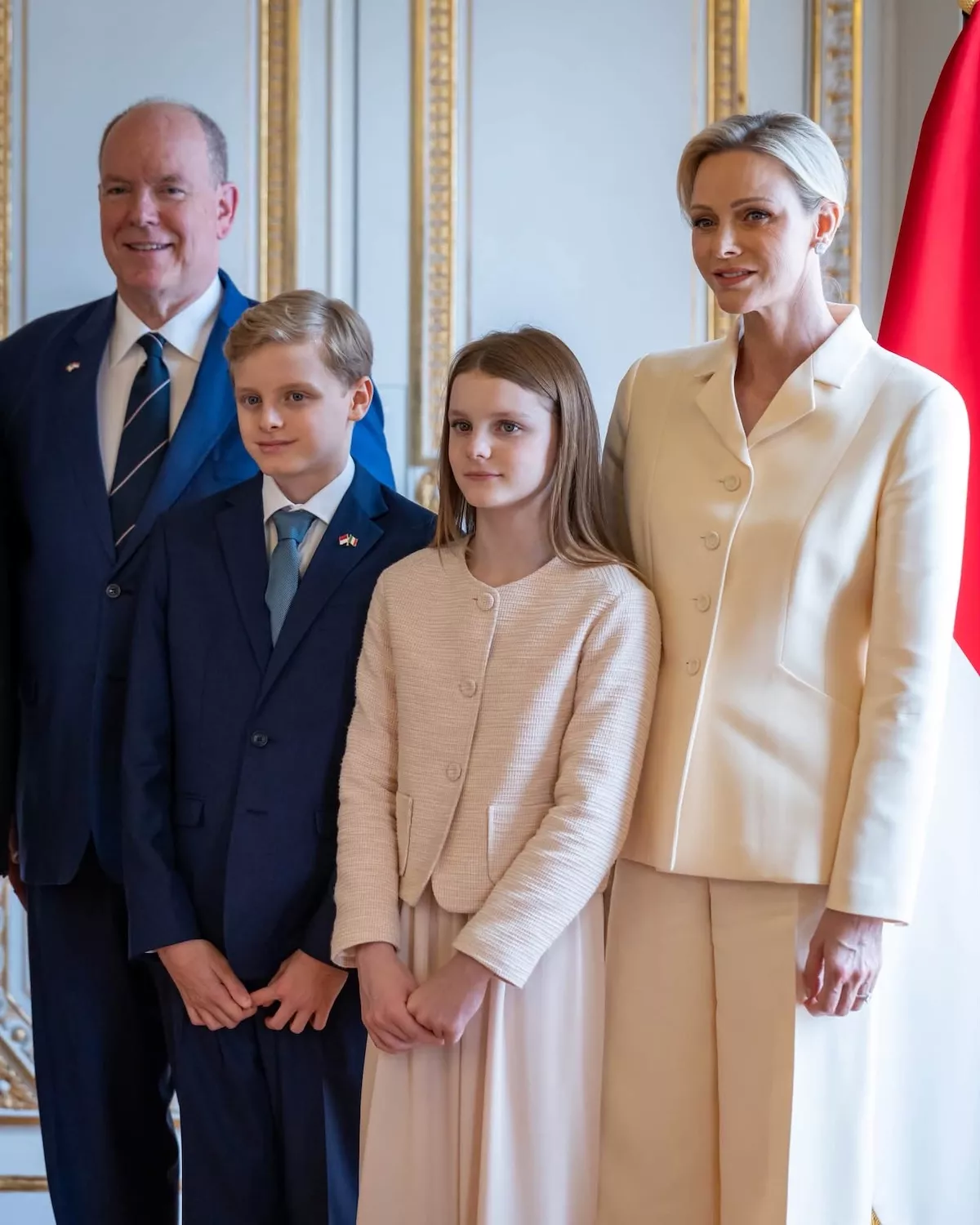
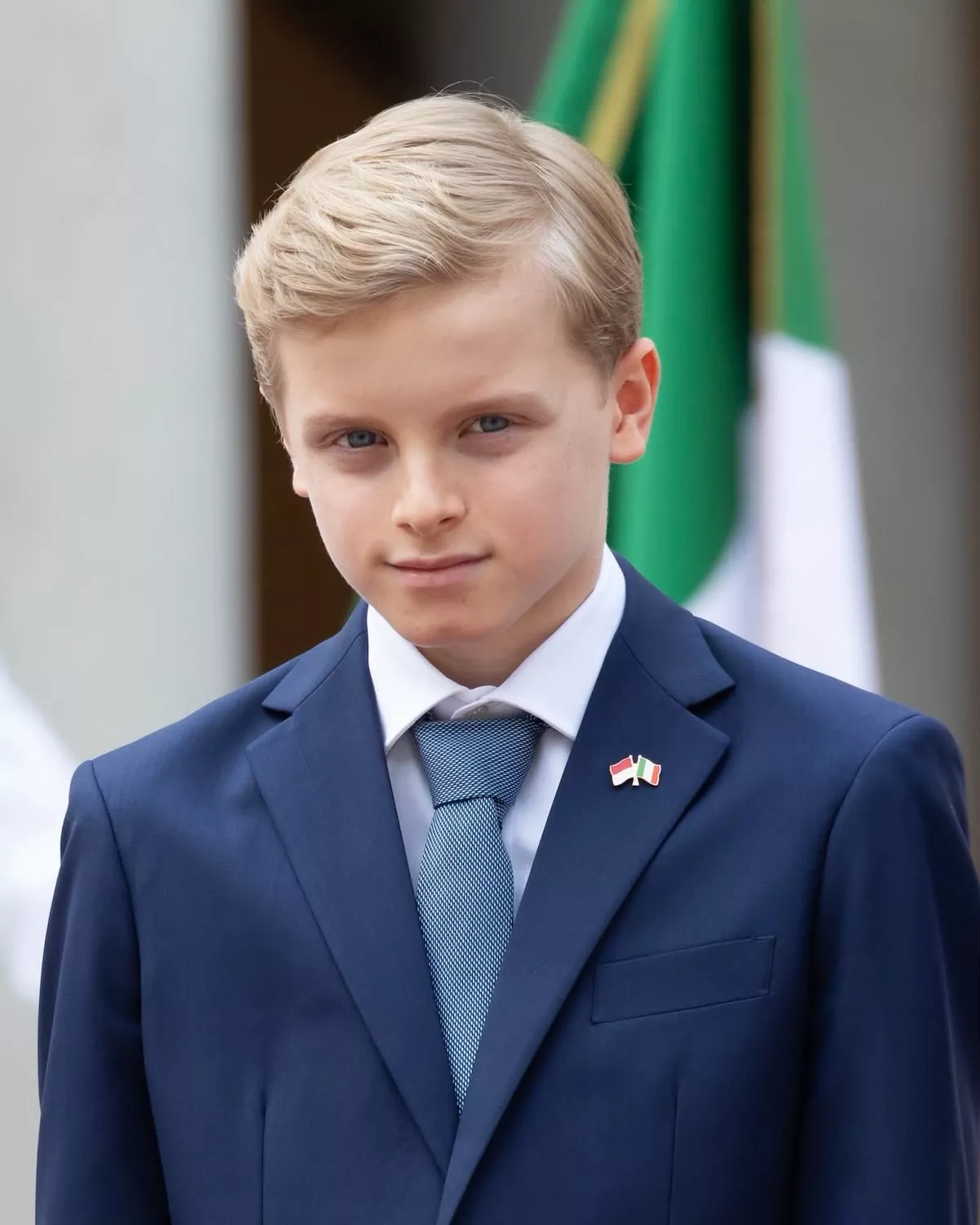
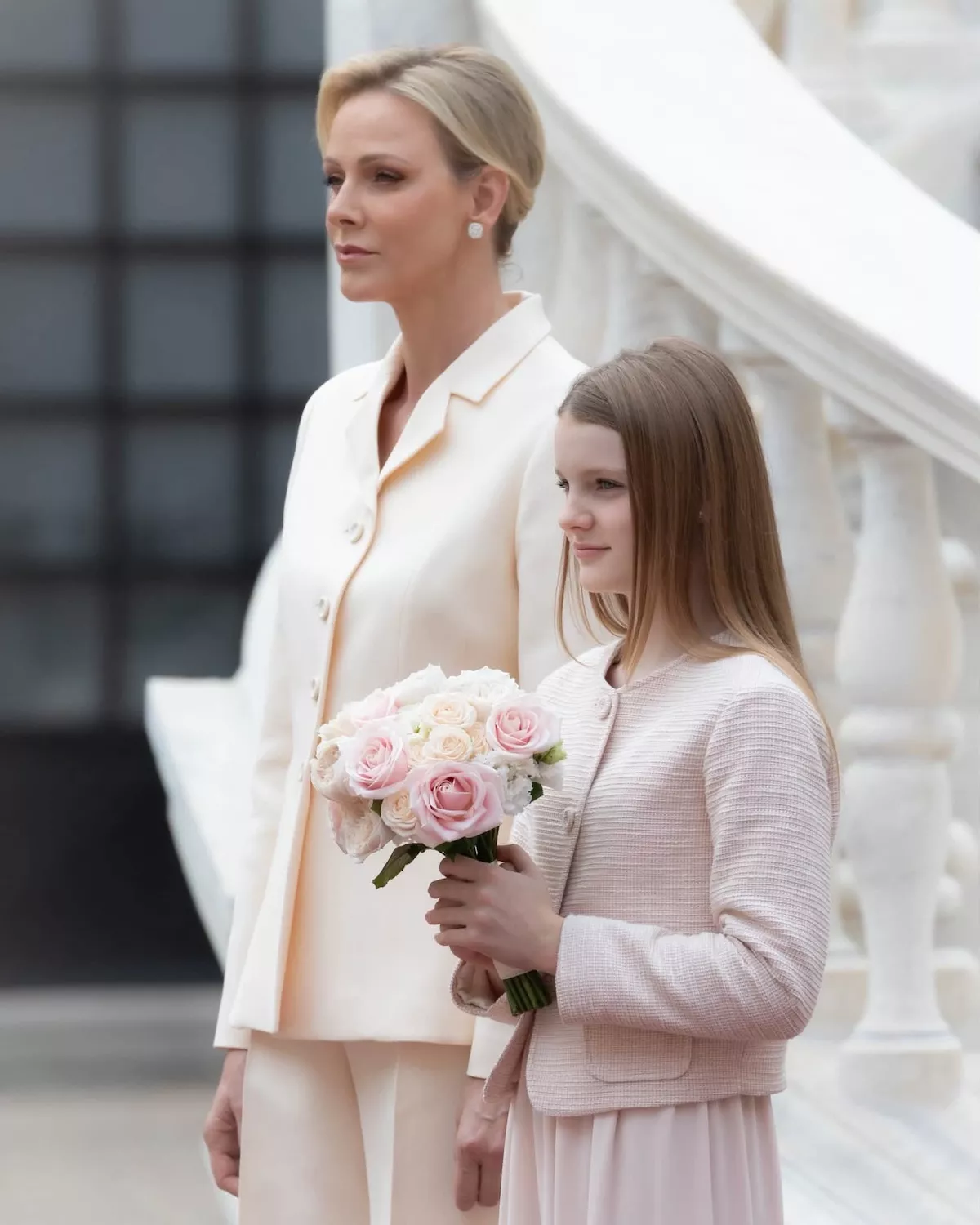
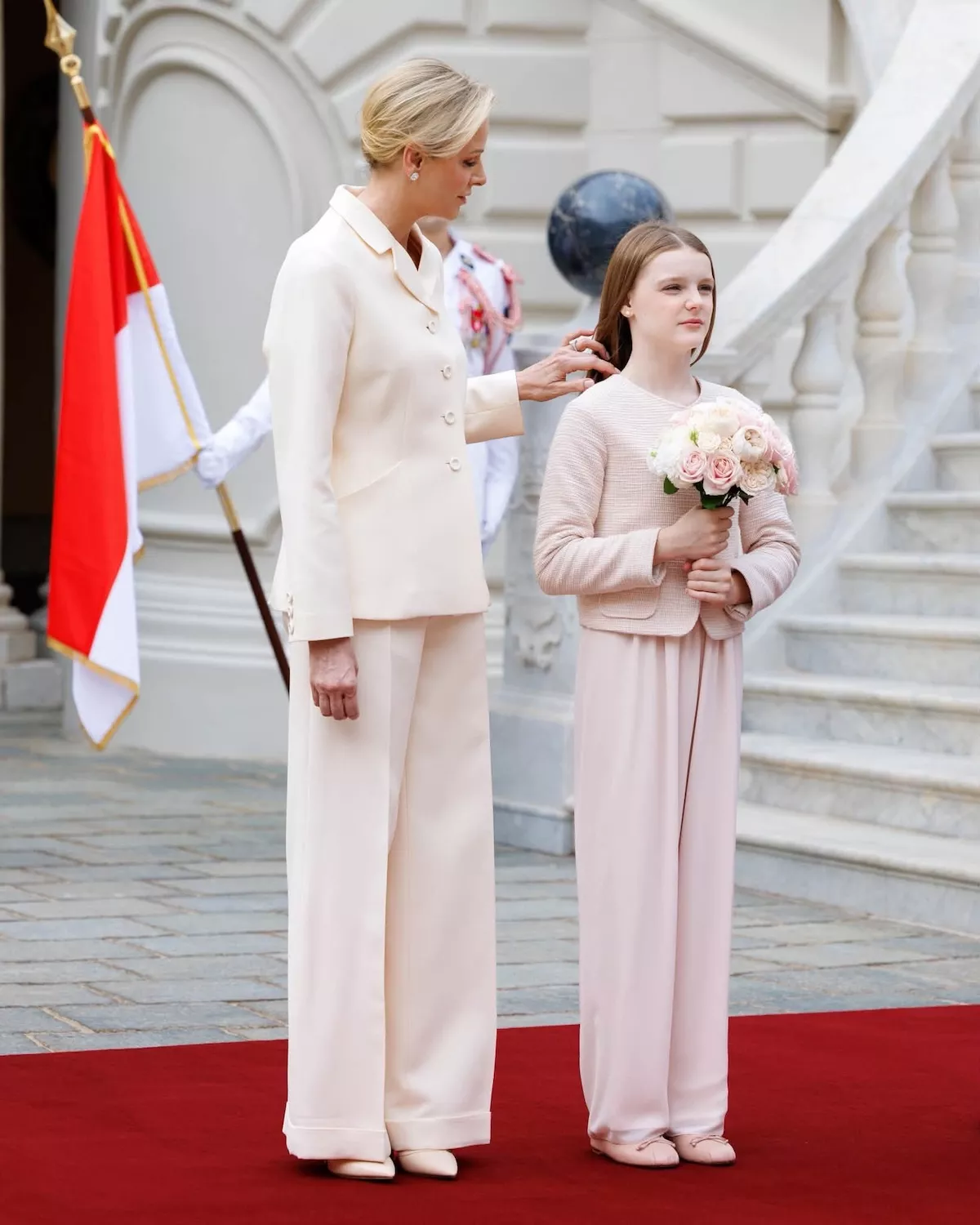
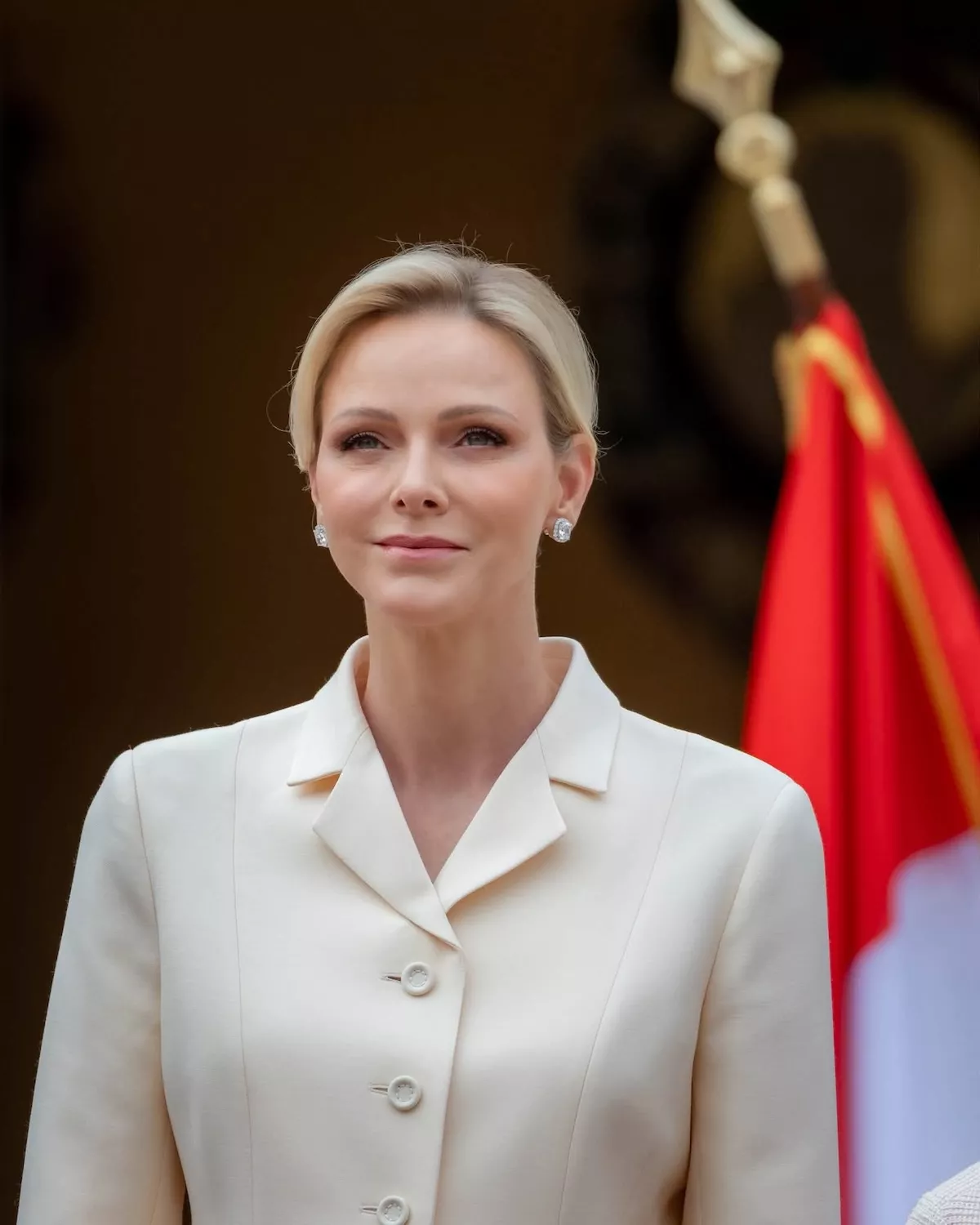
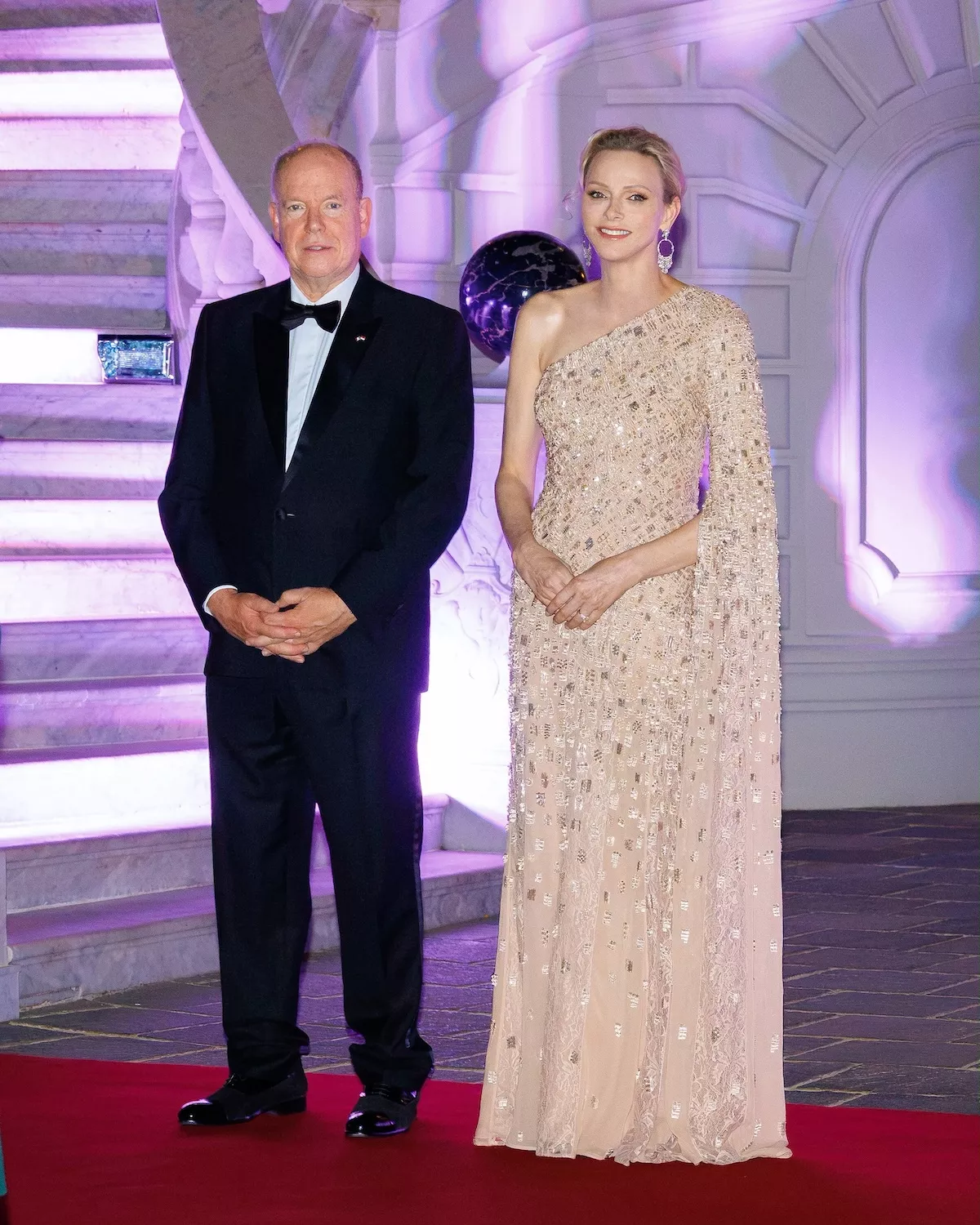
Prince Albert II and Princess Charlene received Italian President Sergio Mattarella at the Prince’s Palace on Friday 2nd October for the first state visit ever made by an Italian head of state to Monaco – a first that the Prince said was long overdue between two neighbours whose shared history reaches back more than seven centuries to the Genoese roots of the Grimaldi dynasty.

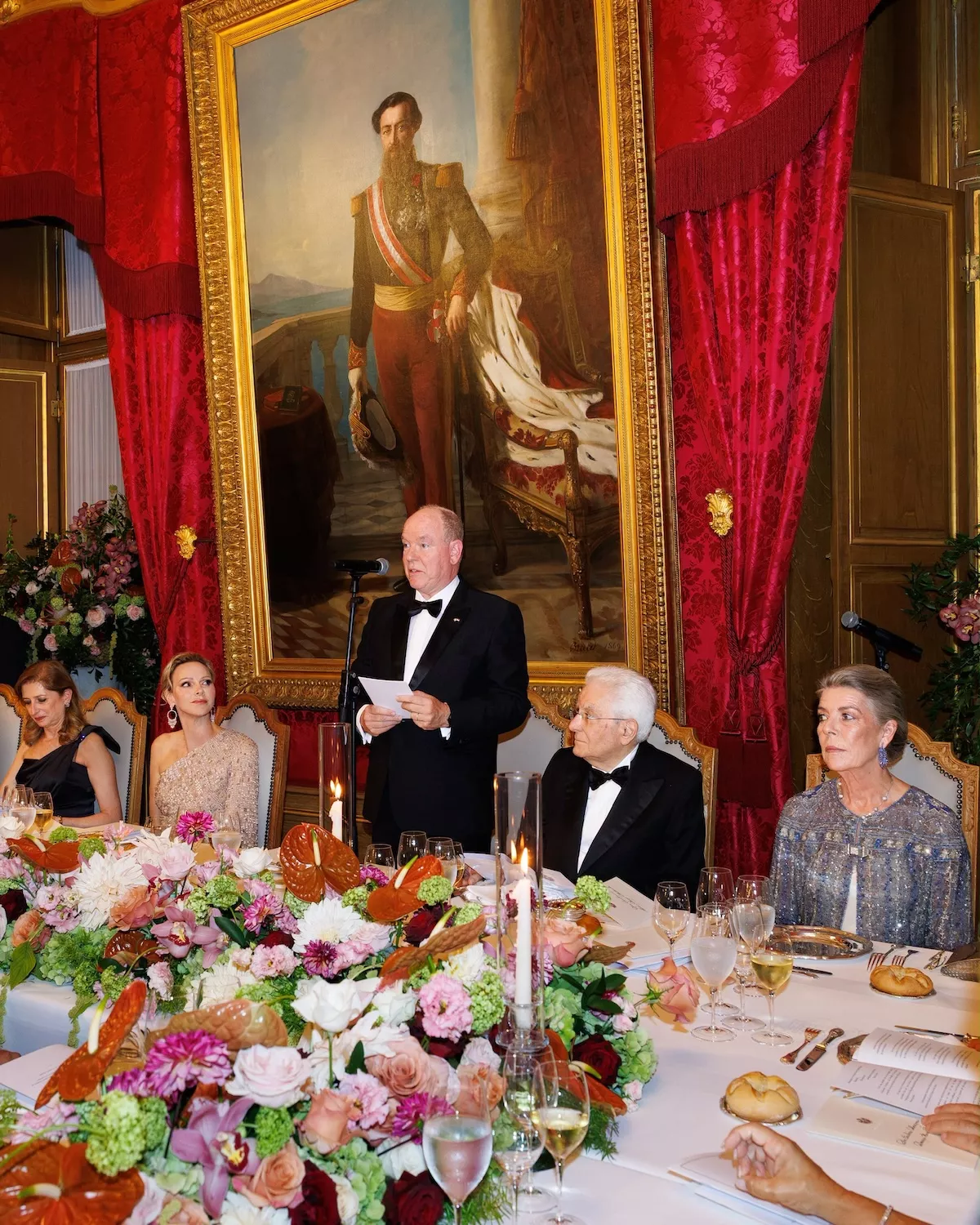
The President was accompanied by his daughter, Laura Mattarella, who has fulfilled the role of Italy’s first lady since the death of her mother, Marisa, in 2012. Over a single day, the visit moved from military ceremony on the Rock to an evening of Italian opera and a state dinner in the Palace’s Throne Room, where both heads of state used their toasts to reflect on centuries of common history and on the turbulent world beyond the Mediterranean.

A gap finally filled

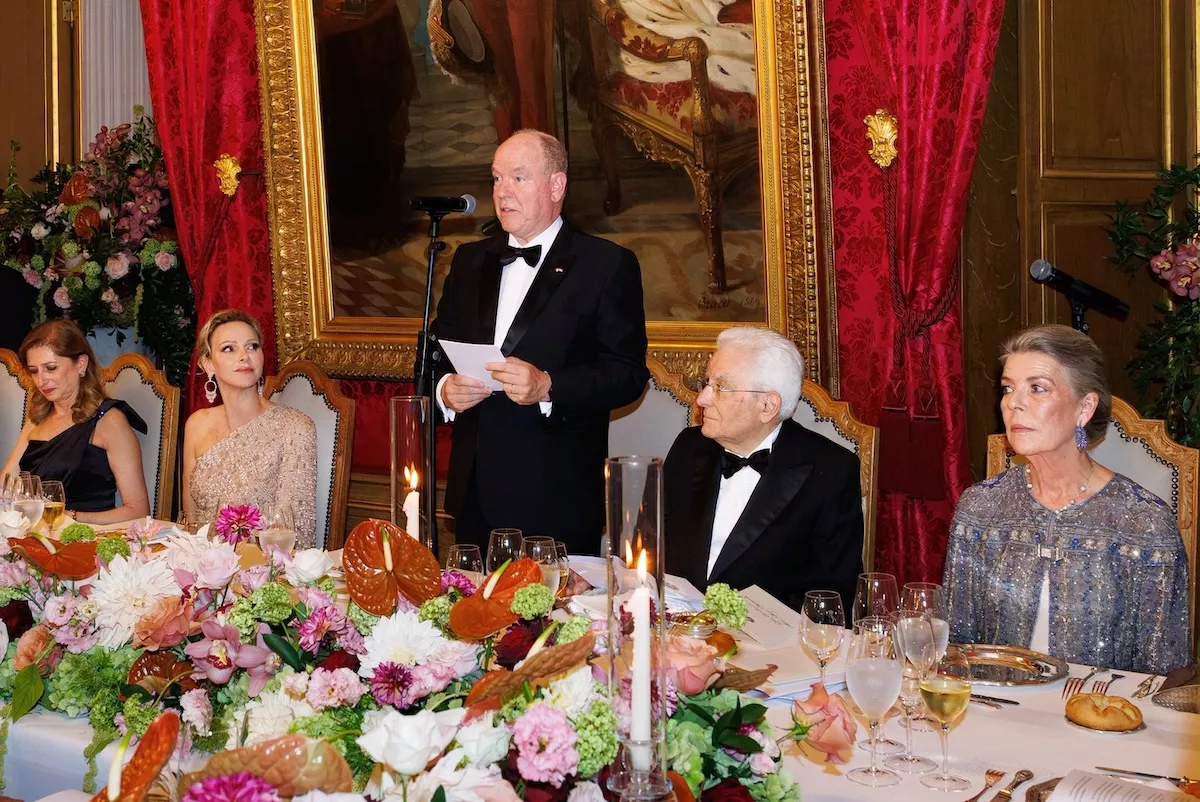
Addressing his guests in the Throne Room, Prince Albert acknowledged that the two men had until now always met on Italian soil.

“It is indeed the first time that we have had the pleasure of receiving a President of the Italian Republic for a state visit to the Principality. This first therefore makes up for something that was missing, and I am happy to be able to do so with you,” said the Prince.

“For we meet regularly, and if until now it has always been in Italy or at international meetings, I must confess to having found a certain advantage in that, so friendly and warm has your welcome always been,” he added.

President Mattarella recalled that his visit came almost seven decades after Prince Rainier III and Princess Grace were received in Rome. “It is a true privilege for all of us to take part in the first Italian state visit to the Principality of Monaco. A state visit that I am honoured to make almost seventy years after that of Their Serene Highnesses Prince Rainier III and Princess Grace to Rome,” said the President.
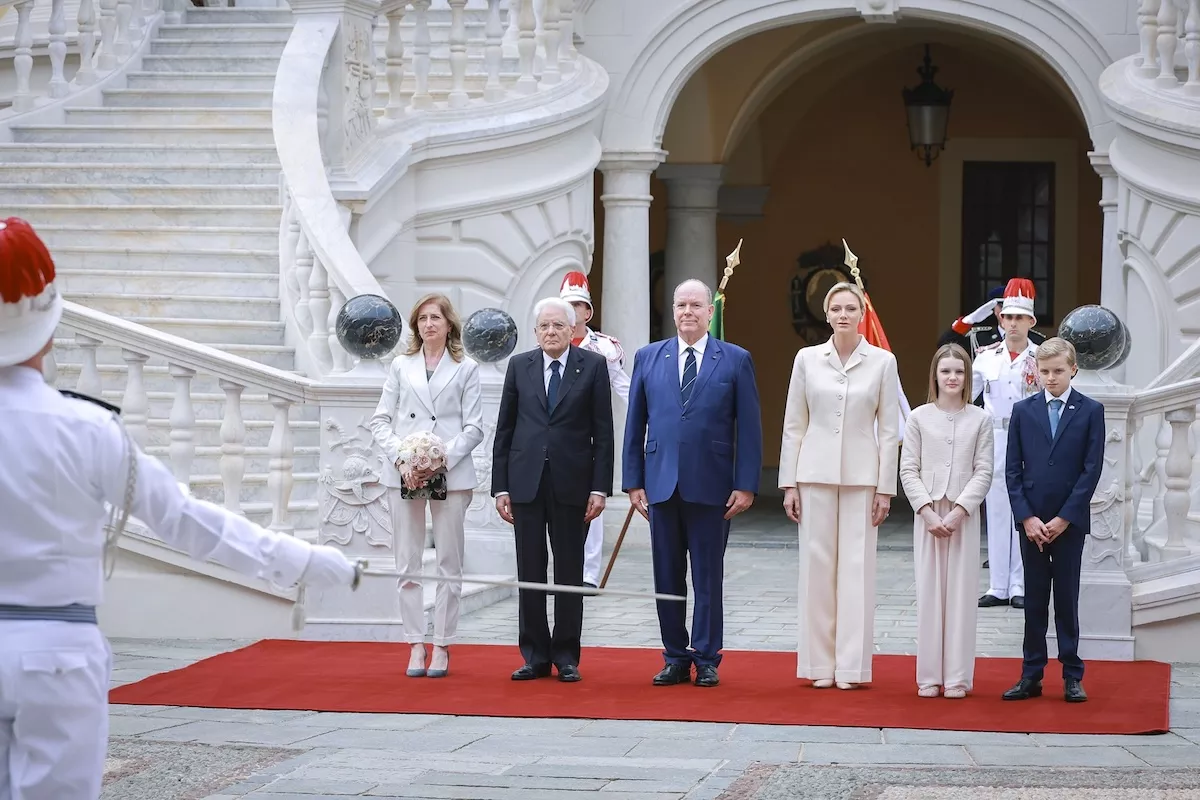
Photo credit: Stephane Danna

A fifth of the population

The Prince paid tribute to the Italian community, which he said now accounts for one in five of Monaco’s residents. “Some even choose to live in Monaco, and the Italian community today represents a fifth of our population,” said Prince Albert, before switching into Italian to honour “all the Italians who, over the centuries, have contributed to the development of Monaco”.

“The role they have played in our history has been fundamental. And the many ties they have created continue to enrich us today, on both sides of the border,” he said.

According to figures published in the Palace’s press dossier, 7,559 Italians were among Monaco’s 38,857 residents in the 2025 census, while 8,962 Italians worked in the Principality’s private sector at the end of last year, around 15% of the workforce. Some 2,500 companies linked to Italian nationals operate in Monaco, chiefly in luxury, fashion, shipping and business services.
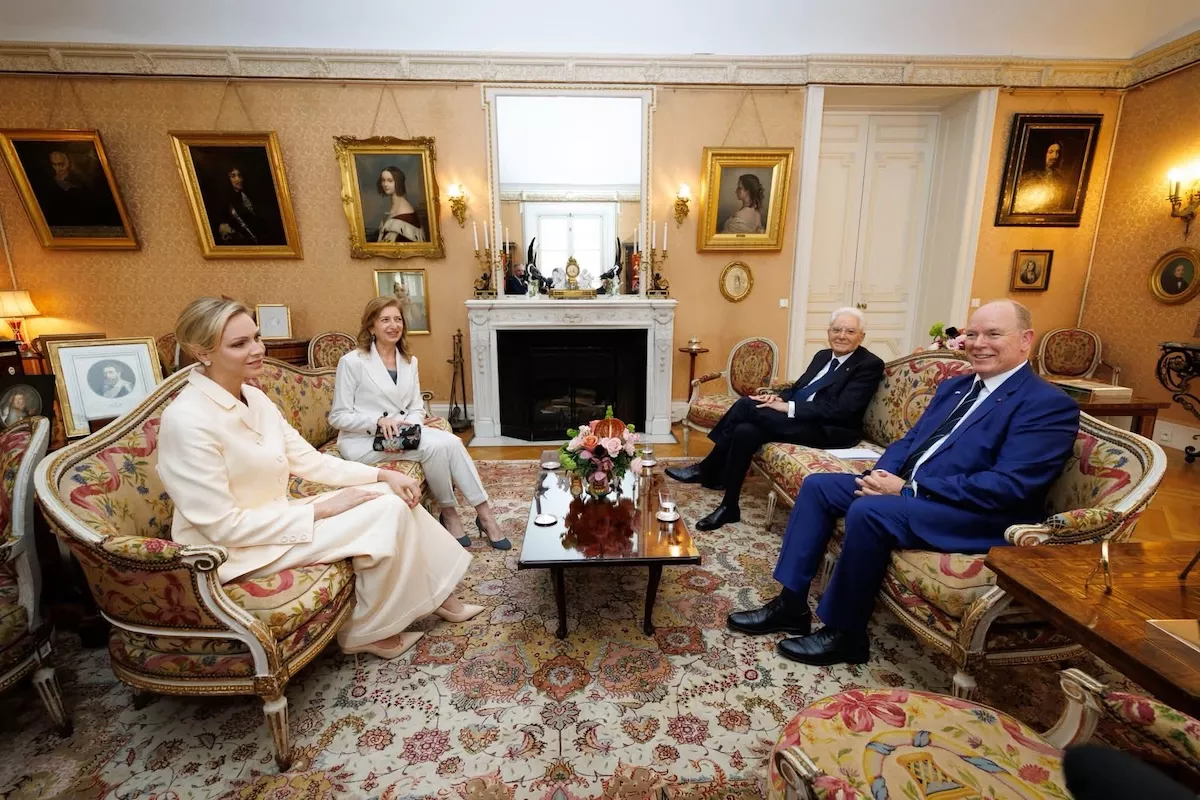
Photo credit: Michaël Alesi / Frédéric Nebinger / Palais princier

The night of 8th January 1297

President Mattarella reached back to the episode that founded the Grimaldi dynasty on the Rock. “Above all, there is an indissoluble bond created on the night of 8th January 1297. The daring and shrewdness of the Genoese Francesco Grimaldi marked not only the origin of the long and prosperous life of the Principality, but also the intertwining of Monegasque and Ligurian history,” he said.

He also praised the Prince’s work as president of the Association of Grimaldi Historic Sites, which brings together towns in France and Italy linked to the family. In recent years the Prince Albert II has retraced his ancestors’ footsteps through former Grimaldi strongholds in Liguria, Piedmont, Basilicata, Puglia, Sicily and Calabria. The Palace itself bears the mark of that heritage: in the 16th century the medieval fortress was reshaped into an Italian Renaissance palace, and frescoes by painters of the Genoese school, hidden for centuries beneath later layers of paint, have been uncovered since 2013 and are still being restored.
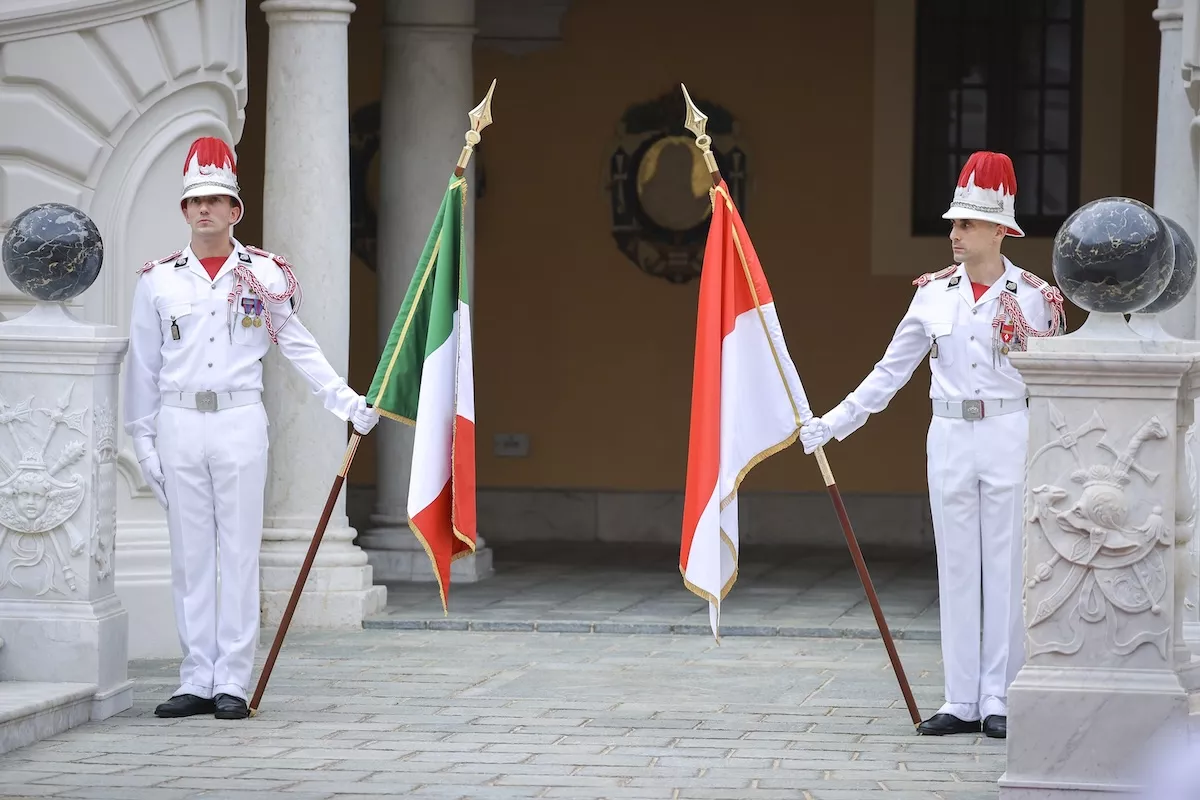
Photo credit: Stephane Danna

Sovereignty and peace in a changing world

The Italian President’s toast took on a sharper tone as he turned to international affairs, describing the Principality as a model at a time of renewed geopolitical tension.

“In a constantly changing global landscape, marked by severe crises and by the re-emergence of dynamics of domination that we believed belonged to the past, the Principality and its international relations represent a virtuous example. For seven hundred years now, your country has managed to reconcile the will to maintain its own sovereignty with the pursuit of peaceful coexistence,” said President Mattarella.

He congratulated Monaco on its presidency of the Committee of Ministers of the Council of Europe, the first in the Principality’s history, which it has held since May. Prince Albert, for his part, said the two countries shared “a vision founded on dialogue, law and multilateralism”.
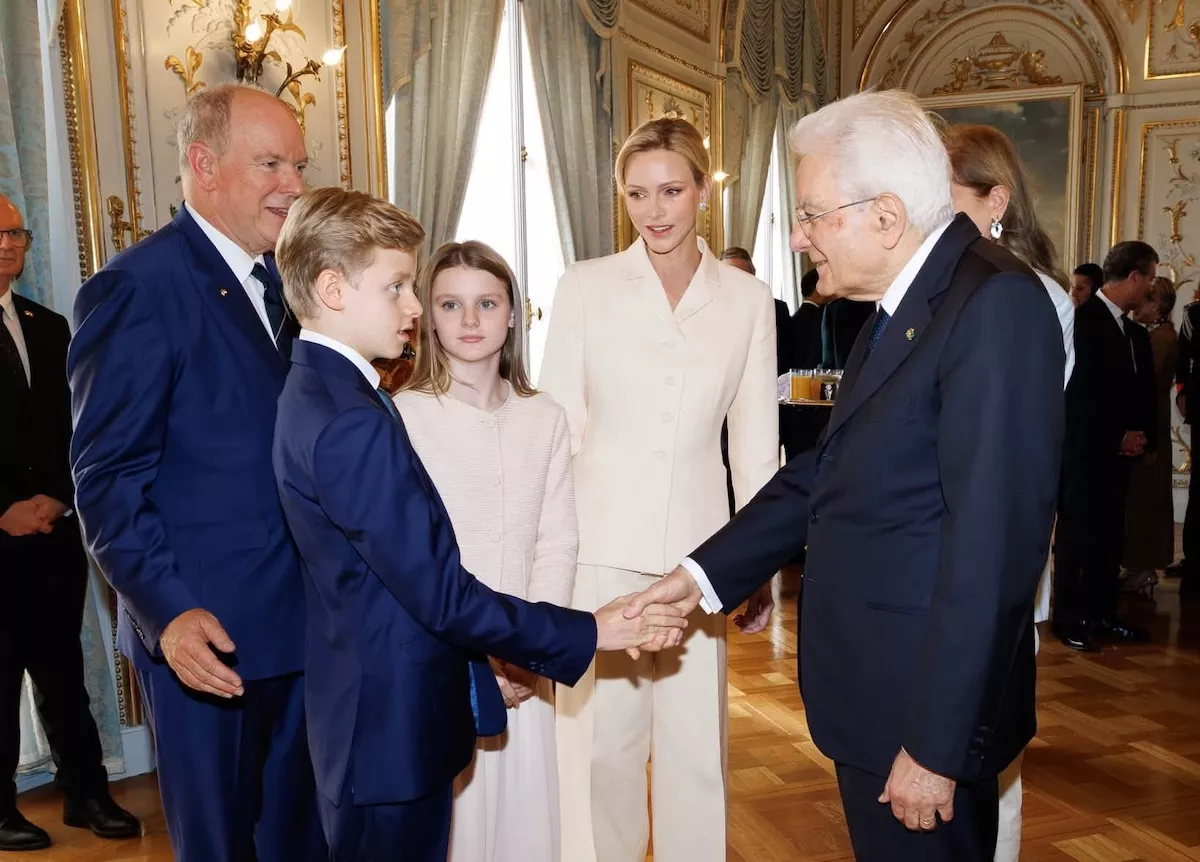
Photo credit: Michaël Alesi / Frédéric Nebinger / Palais princier

Fifty years of RAMOGE

The environment ran through both speeches. Prince Albert noted that the RAMOGE agreement between Italy, France and Monaco on protecting the marine environment had been signed half a century ago in the very room where they were dining.

“This anniversary reminds us how much we are capable of achieving together, but also how much still remains to be done, in particular to preserve the Mediterranean that we share,” said the Prince, who also saluted Italy’s decision during Mattarella’s presidency to enshrine environmental protection in its Constitution.

The President described the Mediterranean as “that Mare Nostrum, shaken today by conflicts, violence and migration crises, and which we aspire, despite too many headwinds, to make once again a source of civilisation, a sea of peace and of cooperation between peoples.”
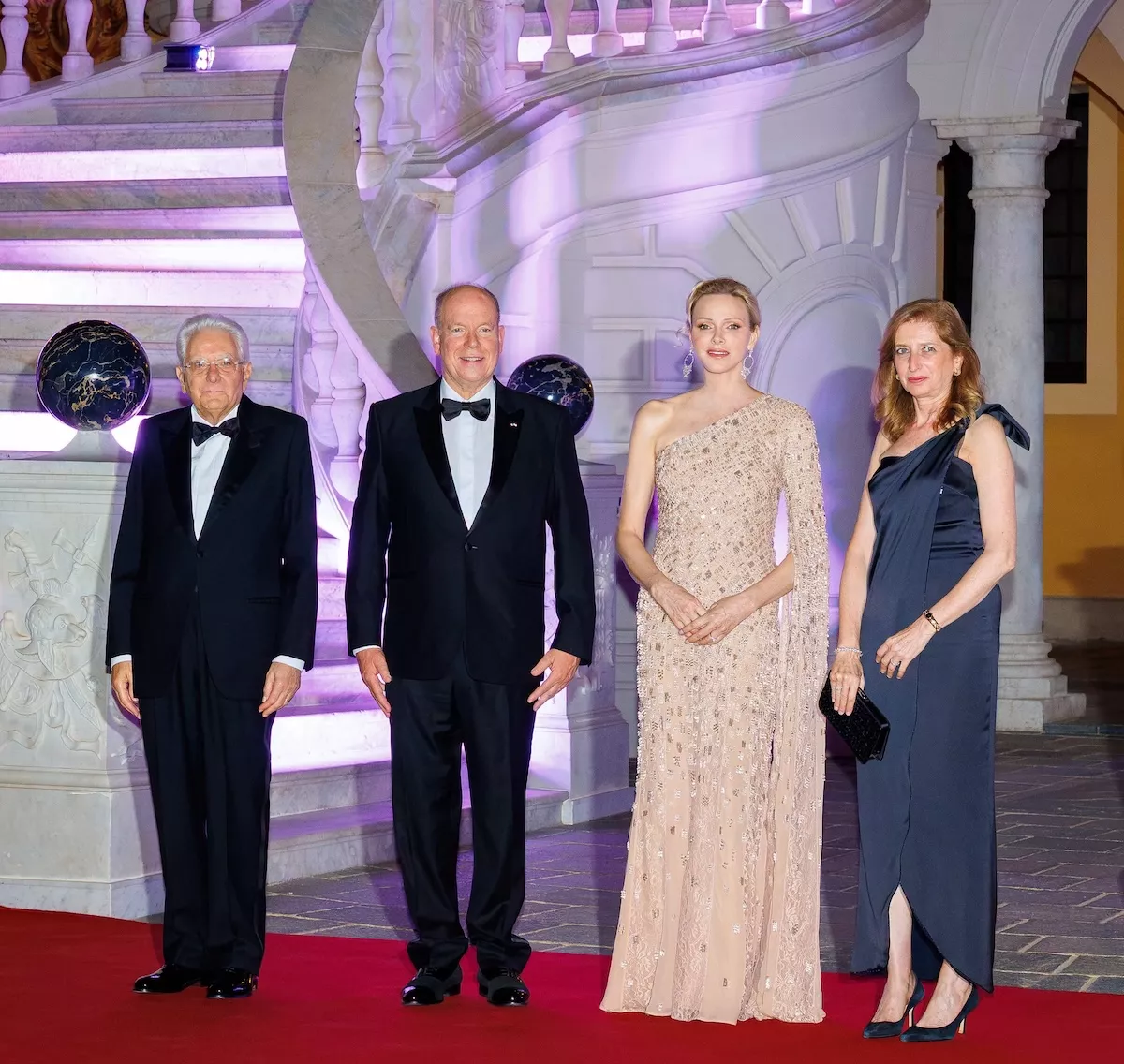
Photo credit: Michaël Alesi / Palais princier

Bartoli and an Italian evening at the opera

Earlier in the evening, the Princely Couple had welcomed the President and his daughter to the Opéra de Monte-Carlo for a concert by Roman mezzo-soprano Cecilia Bartoli with Les Musiciens du Prince and the Opera chorus. The programme opened with the Italian anthem, Il Canto degli Italiani, and the Monegasque anthem, before moving through Handel, Gluck, Rossini and Bizet to Verdi’s ‘Va, pensiero’ from Nabucco and the Brindisi from La traviata, with ‘Caruso’ and ‘Santa Lucia luntana’ listed among the encores.

President Mattarella thanked his hosts for the performance and singled out Bartoli, who became director of the Opéra de Monte-Carlo in 2023, for particular praise, describing her leadership as that of the “first woman in the history of the institution” and “a source of pride for us”.

He also expressed Italy’s gratitude for the loan of the painting ‘Hannibal crossing the Alps on an elephant’ to the ‘Barocco globale’ exhibition in Rome, which Prince Albert visited in April 2025.
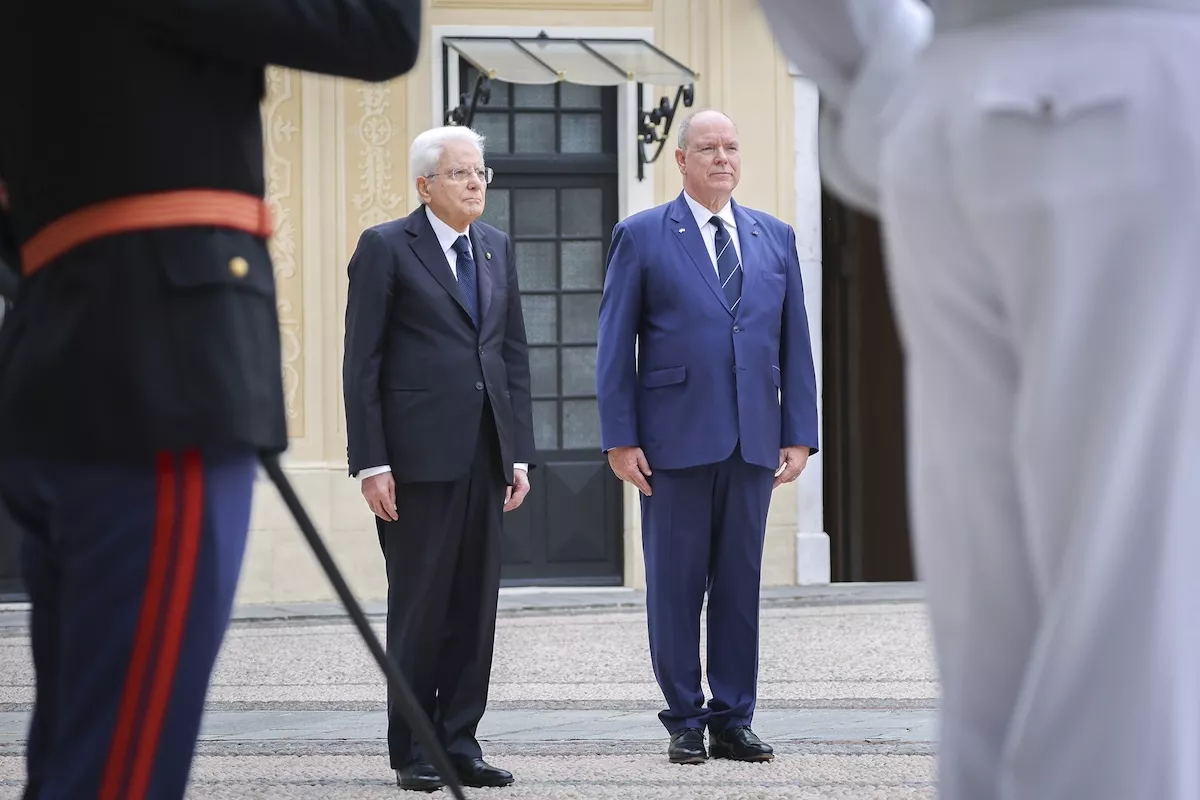
Photo credit: Stephane Danna

Honours in the Salon des Glaces

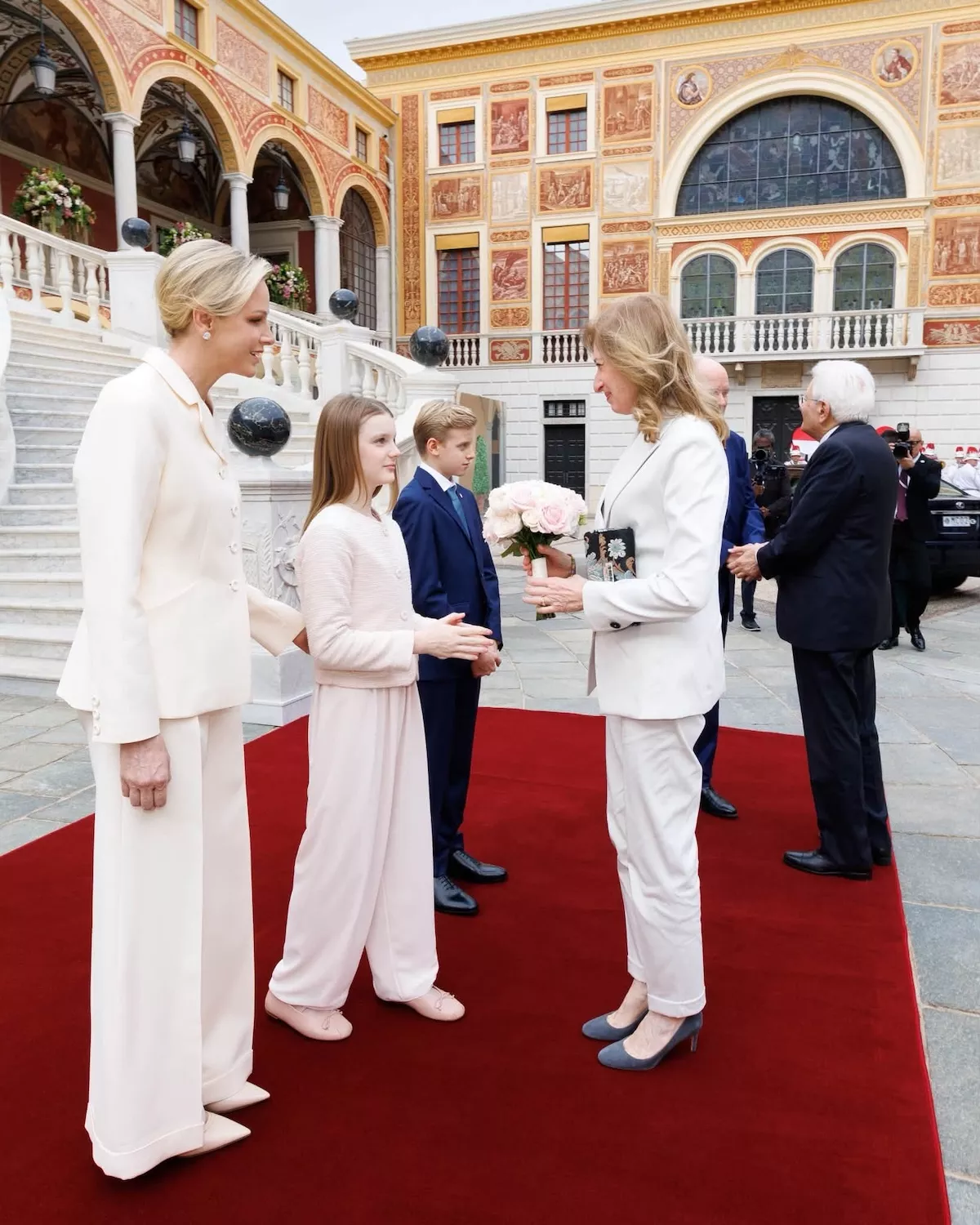
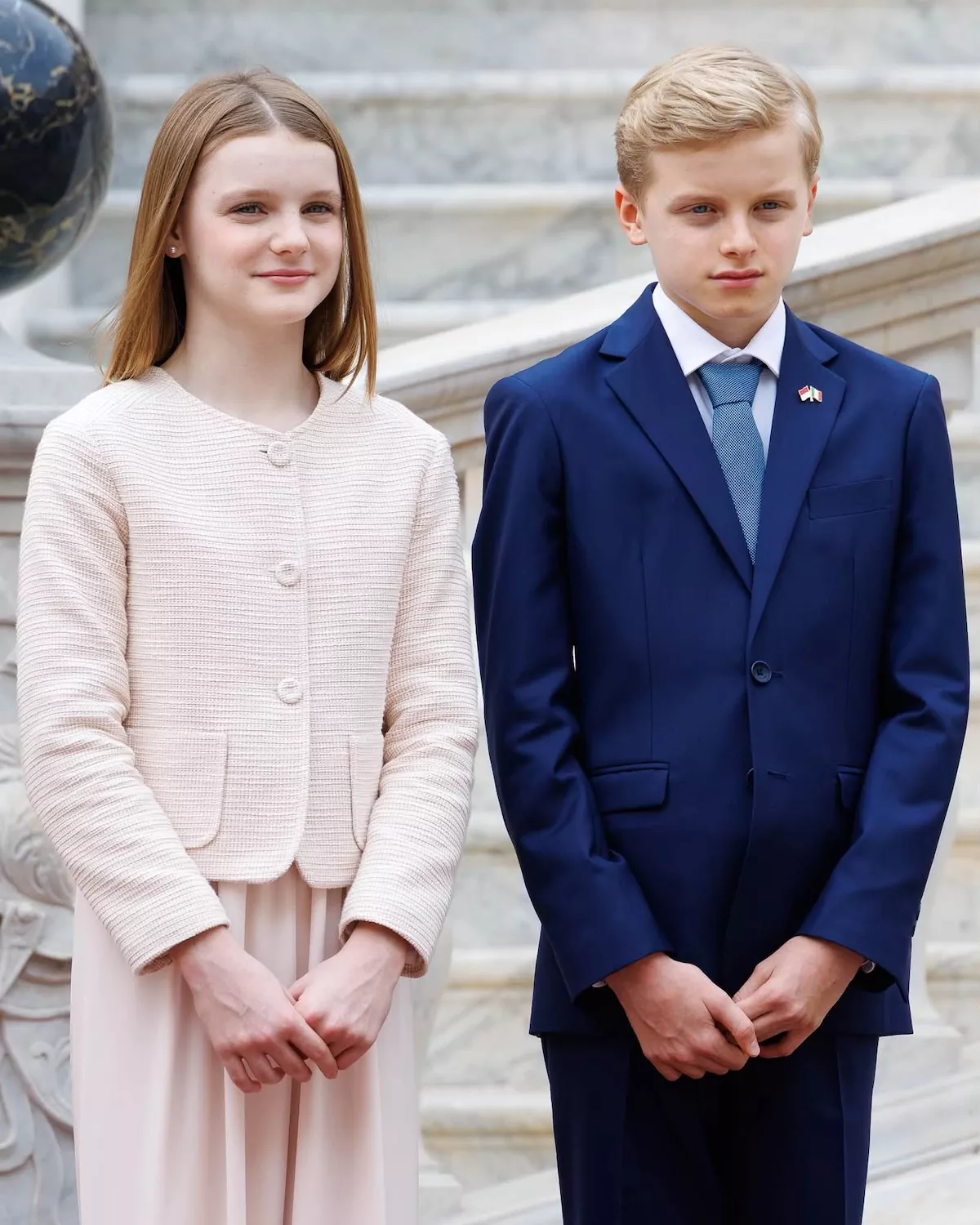
The day had begun in the Cour d’Honneur, where the Princely Family greeted the Italian guests in the presence of both official delegations. Military honours were rendered under the command of Colonel Tony Varo, and the Italian and Monegasque anthems were played before the two heads of state reviewed the detachments.

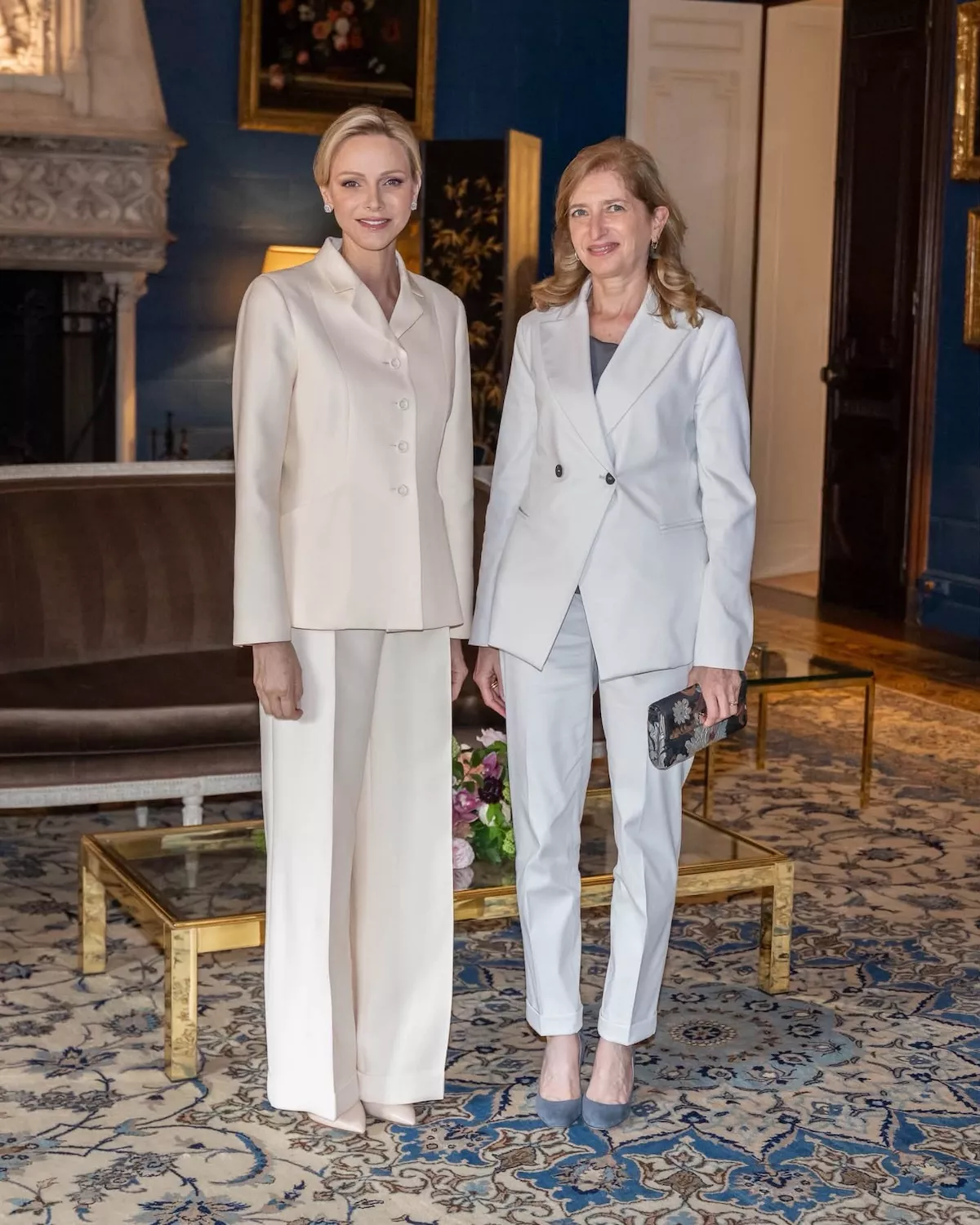
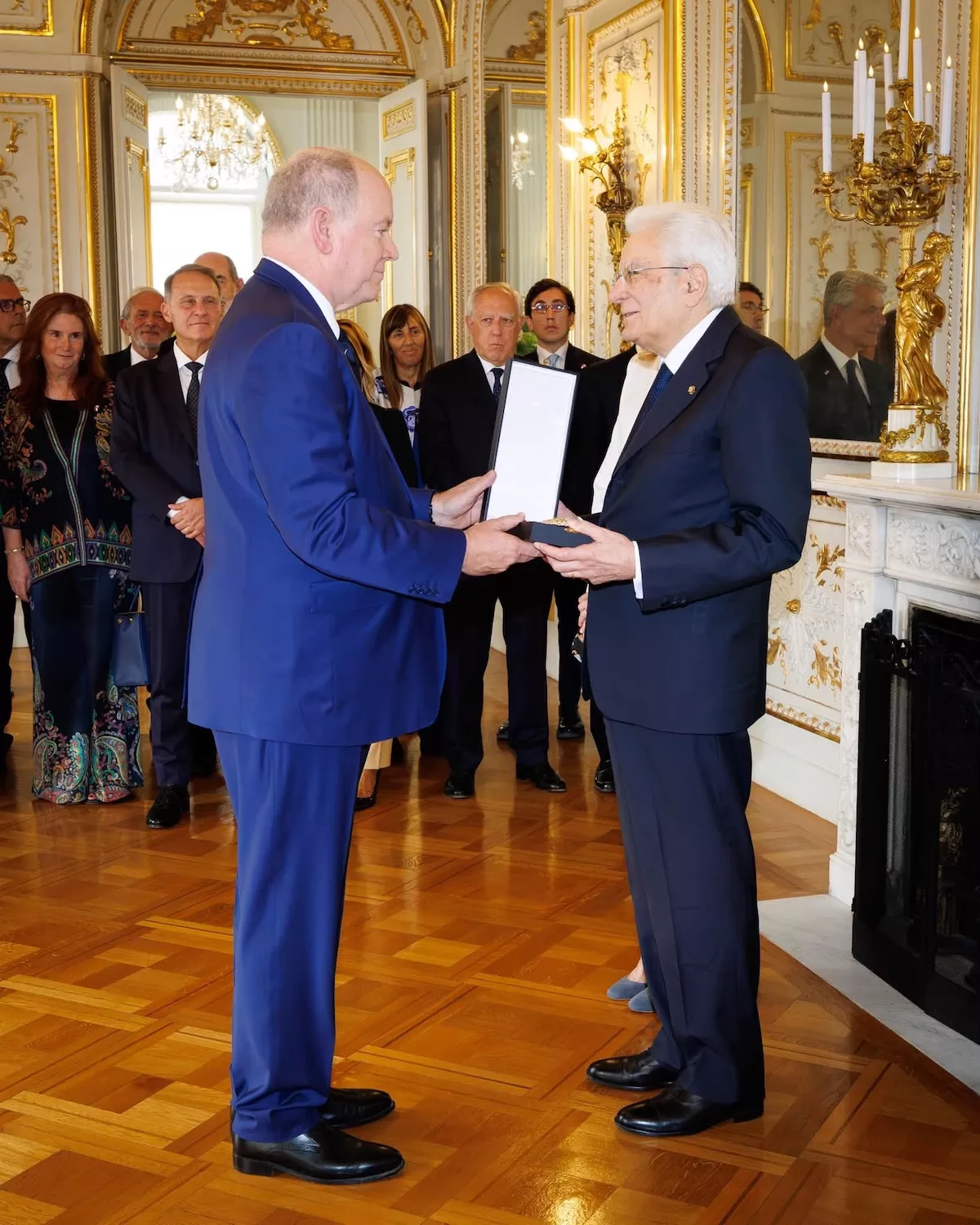
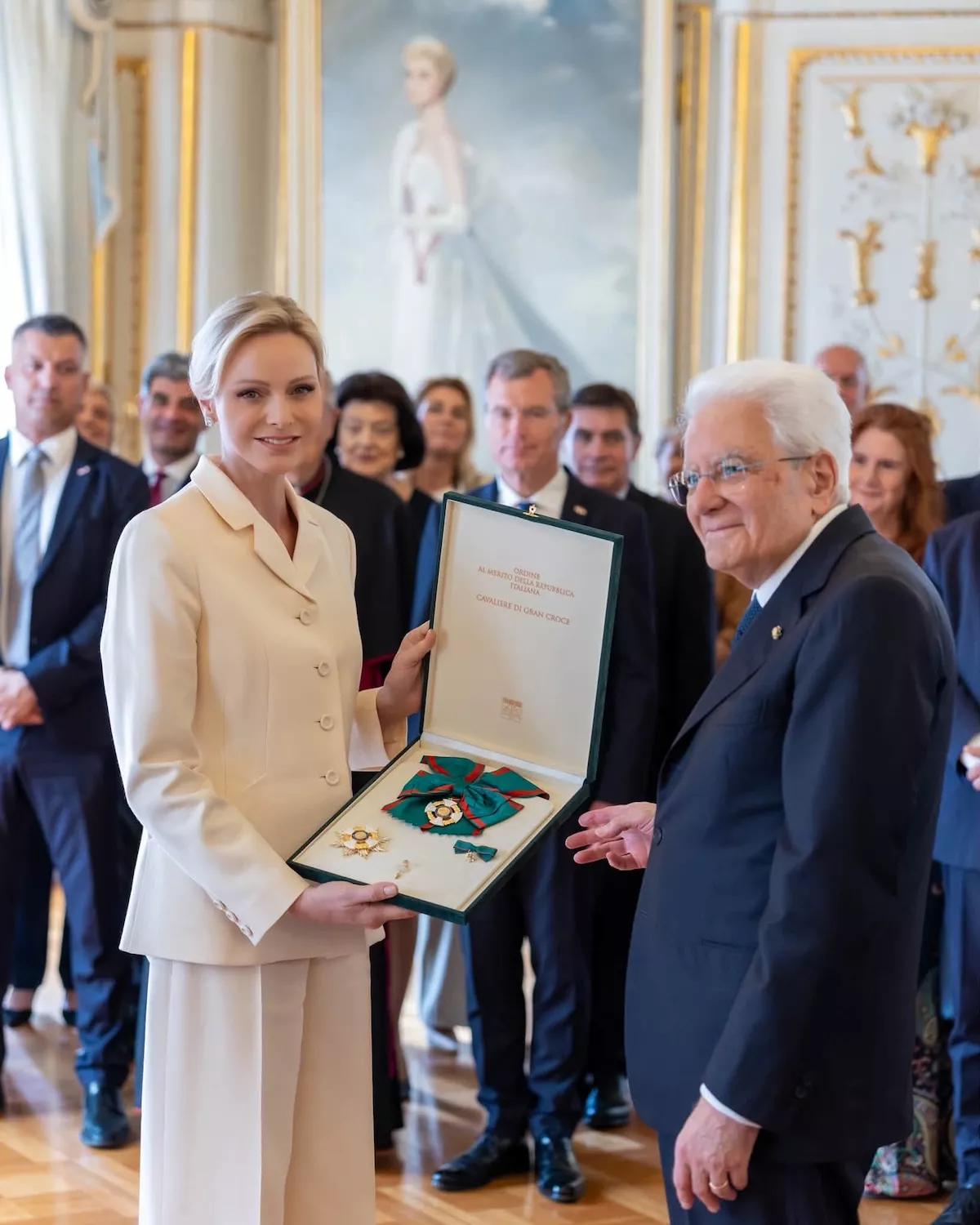
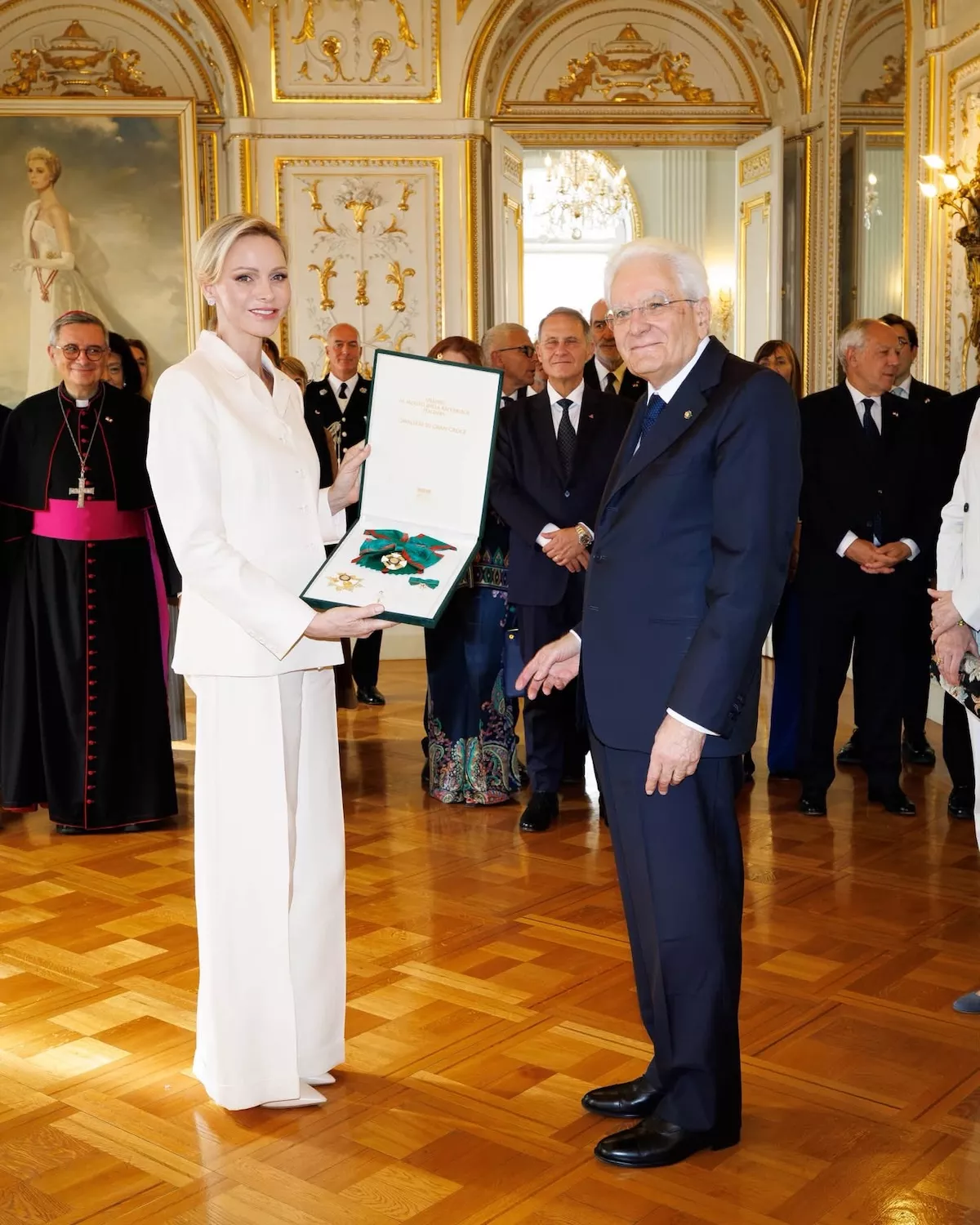
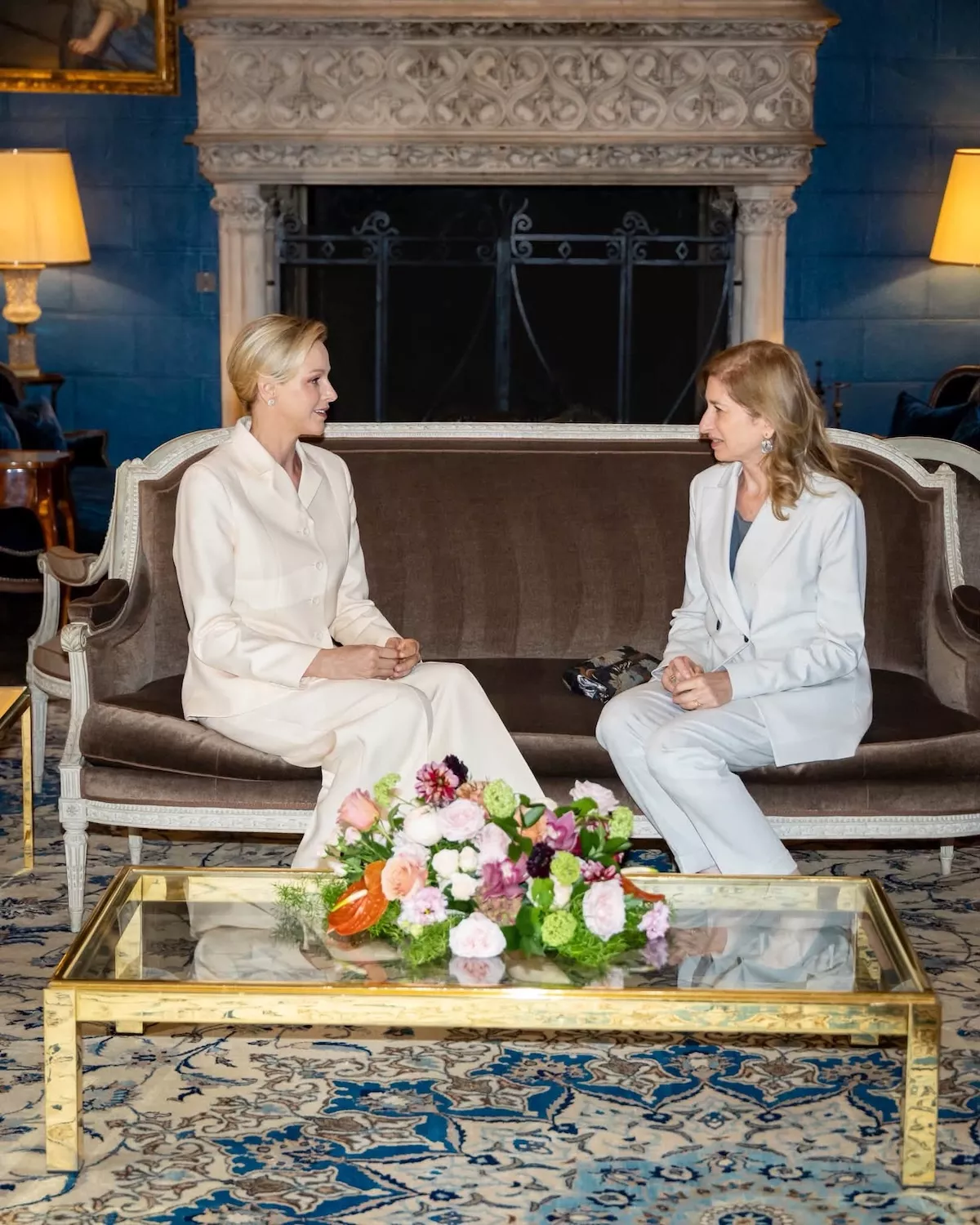
After a private audience between the Prince and the President in the Salon de Famille, and a meeting between Princess Charlene and Laura Mattarella in the Salle des Gardes, the two delegations moved to the Salon des Glaces for an exchange of decorations. Prince Albert raised President Mattarella to the dignity of Grand Cross of the Order of Saint-Charles, the Principality’s highest distinction, and made Laura Mattarella a Grand Cross of the Order of Grimaldi. In return, the President raised Princess Charlene to the dignity of Grand Cross of the Order of Merit of the Italian Republic.
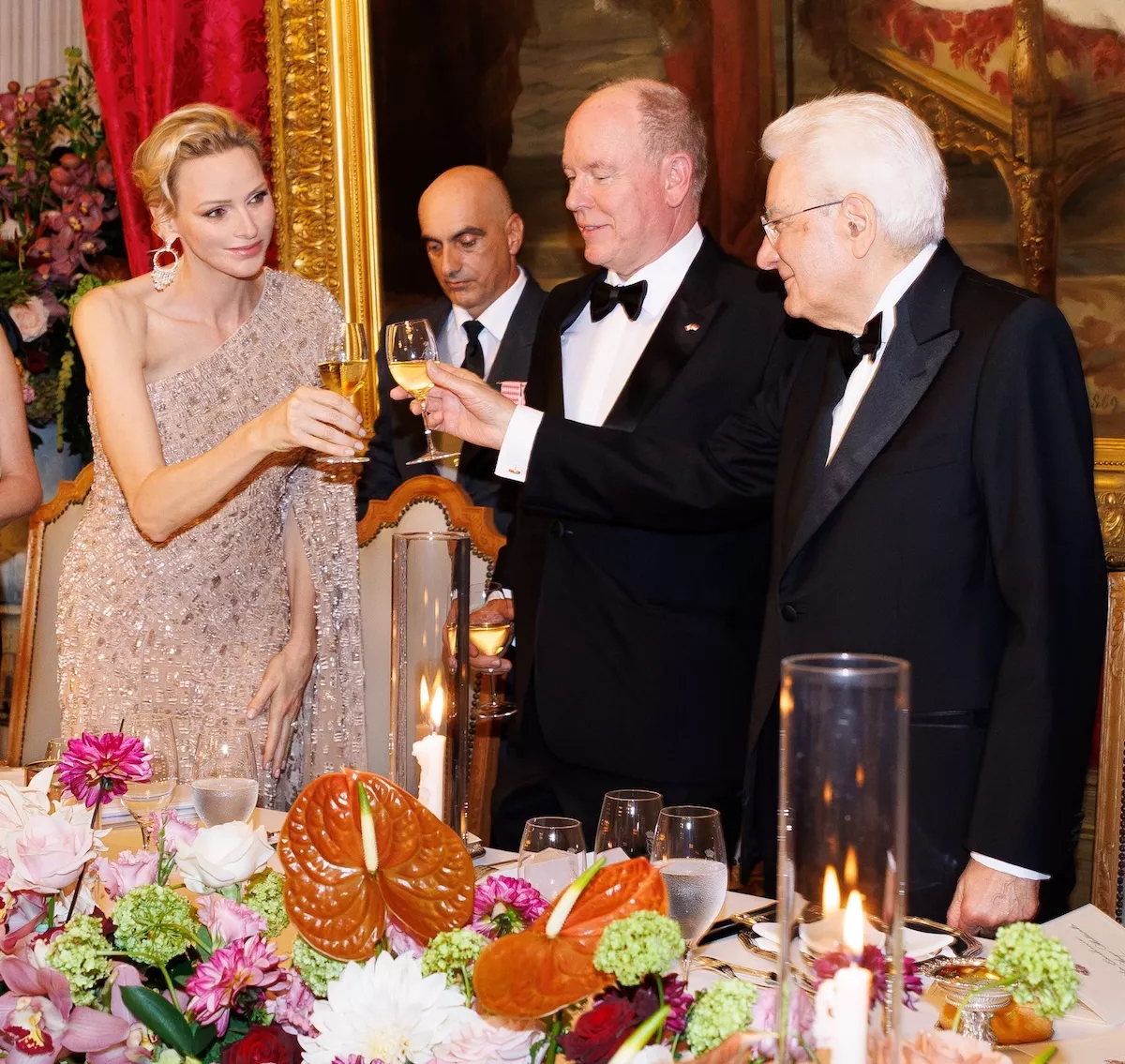
Photo credit: Michaël Alesi / Palais princier

A sonnet for peace

President Mattarella chose to close his toast with lines by Louis Notari, the author of ‘The Legend of Saint Devota’, which in 1927 became the first work written in the Monegasque language. “If only, once and for all, every flag in the whole world would speak as you do, you who are the oldest: may peace reign everywhere!” said the President, quoting Notari’s sonnet addressed to Monaco’s flag.

Prince Albert ended his own toast by describing his guest as “a man I hold in particularly high esteem, an admirable head of state, and the representative of a friendly country”, before raising a glass to the friendship between Monaco and Italy.

The visit is due to conclude on Saturday 3rd October with a meeting with Monaco’s Italian community and a tour of the Oceanographic Museum alongside Prince Albert II, Minister of State Christophe Mirmand and Robert Calcagno, Director General of the Oceanographic Institute.

See more in the gallery below. Photos credit: Michaël Alesi / Frédéric Nebinger / Palais princier…
Monaco Life is written by qualified journalists, writing original content. Sign up for our free newsletter, listen to our podcasts on Spotify, and follow us across Facebook,  Instagram, LinkedIn, and Tik Tok.

Main photo credit: Michaël Alesi / Palais princier
Monaco businesses urged to harness EU trade agreements amid shifting global markets

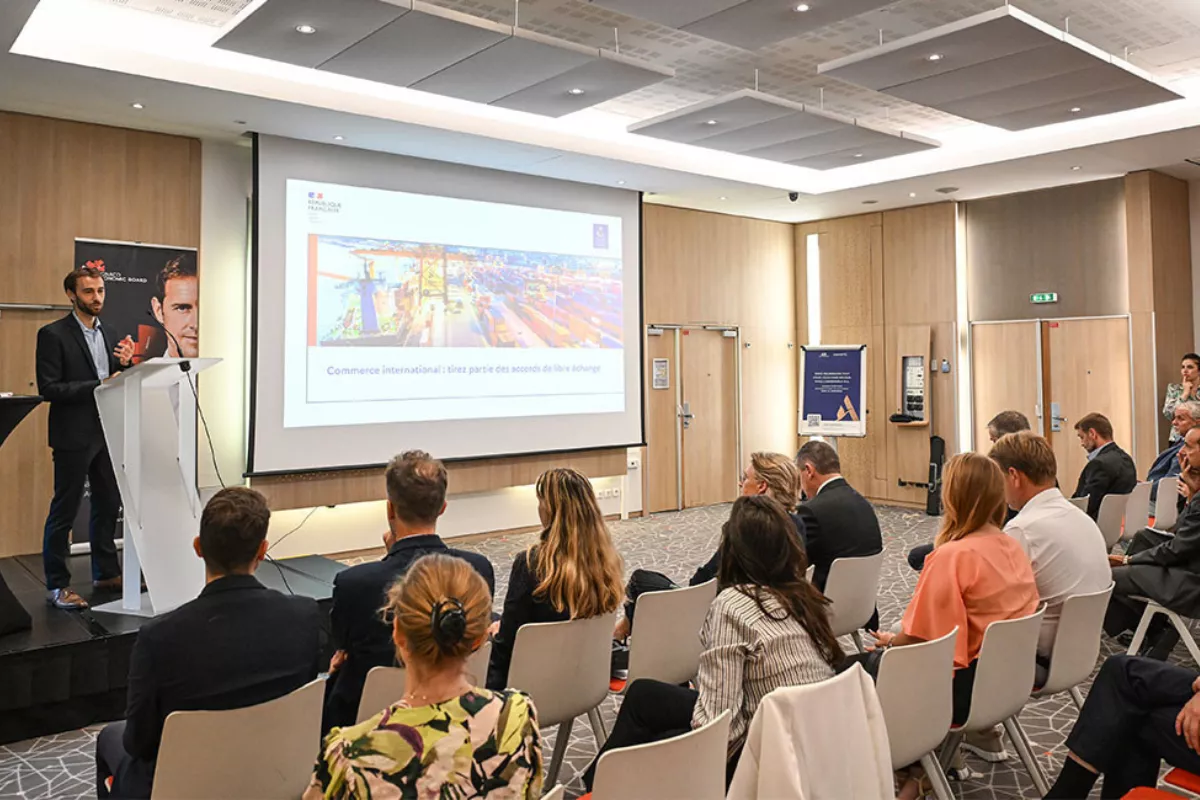
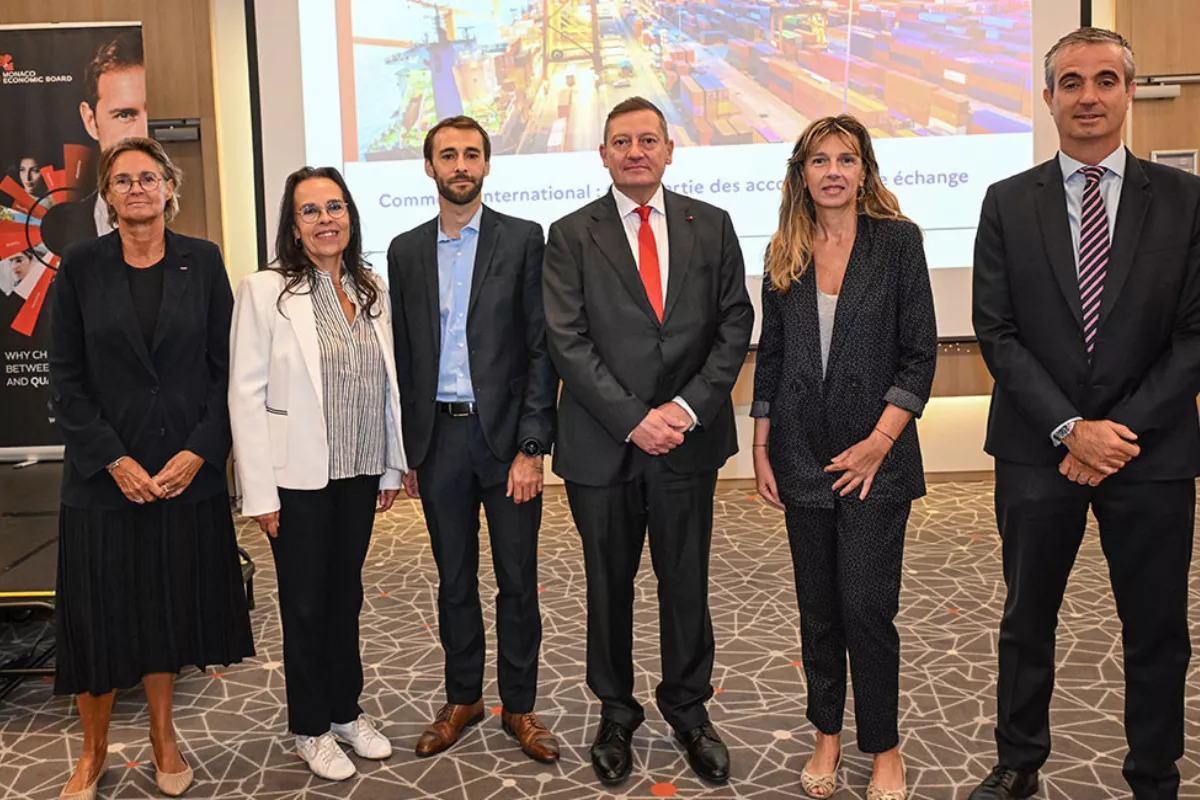
Around fifty import-export stakeholders gathered at the Novotel Monte-Carlo on Tuesday, 29th September, for a briefing hosted by the Monaco Economic Board (MEB), the Economic Action Unit of the Nice Customs Office, and the Monaco Customs Office to examine practical growth opportunities within the European Union’s expanding network of trade agreements.

Under the 1963 Franco-Monegasque Convention, France and Monaco operate within a customs union, meaning French regulations apply directly across the Principality. This framework positions Monegasque enterprises to leverage the EU’s extensive trade network, which spans 48 agreements with 79 partner countries and accounts for nearly half of all European trade. 

Étienne Pollet, Business Adviser within the Nice Economic Action Unit, speaking at the conference. Photo Credit: Sébastien Darrasse / MEB

Navigating new markets and tariffs

During the briefing, Étienne Pollet, Business Adviser within the Nice Economic Action Unit, highlighted recent trade treaties enacted with New Zealand, Kenya, and Chile, alongside upcoming prospects scheduled for 2026 and 2027. Advanced negotiations are currently underway with major economic blocs and nations, including MERCOSUR, Indonesia, Australia, and India. The primary objective of these pacts is to reduce or eliminate customs duties in heavily protected markets.

Despite these advantages, tariff preferences frequently remain underutilised by commercial operators due to complexity and a lack of familiarity, leading to billions of euros in missed savings across Europe. Experts emphasised that unlocking these benefits requires mastering the strict criteria governing the ‘origin of goods’—distinct from basic provenance—which relies on precise goods classification and sufficient transformation criteria.

Safeguarding operations and compliance

To help businesses legally secure operations and forecast international costs, customs authorities offer complimentary EU-wide support mechanisms. Participants were introduced to Binding Tariff Information (BTI) and Binding Origin Information (BOI). Furthermore, officials recommended utilising Access2Markets, the European Commission’s digital platform designed to verify trading conditions for specific countries.

The session highlighted the ongoing collaboration between Monaco Customs and the International Formalities service of the Monaco Chamber of Commerce, providing local companies with essential support for secure international expansion.

Stay updated with Monaco Life: sign up for our free newsletter, listen to our podcasts on Spotify, and follow us across Facebook,  Instagram, LinkedIn, and Tik Tok. 

Photo Credit: Sébastien Darrasse / MEB

Aston Martin reveals DBX GT with the same power and a softer edge

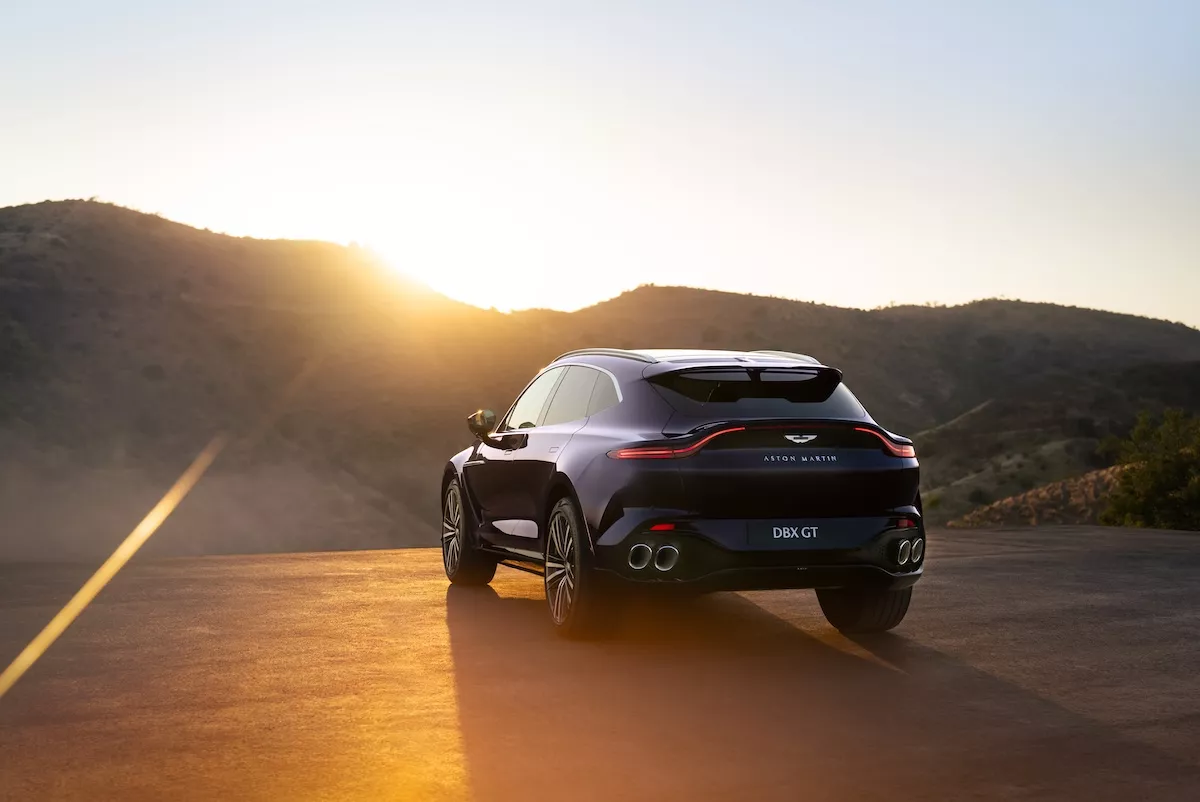
Aston Martin has just revealed the DBX GT, a new interpretation of its SUV that keeps the 727PS twin-turbo V8 and 310km/h top speed of the performance-focused DBX S but re-tunes almost everything else for comfort and refinement — a deliberate turn towards quiet luxury over outright aggression.

Revealed on 1st October and reaching its first customers in the final quarter of 2026, the DBX GT splits Aston Martin’s SUV range into two distinct characters. Where the DBX S wears its performance assertively, the GT is aimed at buyers who want the same capability delivered with greater restraint and craftsmanship.

“DBX GT is aimed at customers who prefer assured elegance over sporting aggression and demand a higher degree of luxury,” said Aston Martin chief executive Adrian Hallmark. “By refining the visual drama and elevating the interior with new elements of craftsmanship, the DBX GT delivers a true ultra-luxury experience; one which comes with no sacrifice in performance.”

A more discreet character

The changes to the exterior are deliberately understated. The DBX GT introduces a new double-vaned grille and a two-piece metal side strake whose contrasting polished-and-satin finish is drawn from traditional watchmaking, while the lower bumpers, sills and rear diffuser are painted in body colour rather than the assertive black of the DBX S. New 22-inch forged wheels on all-season tyres come as standard, chosen to smooth the ride and reduce road noise, with 23-inch wheels available for those wanting a sportier stance.

“With DBX GT we have taken a more discreet approach,” said chief creative officer Marek Reichman. “One which downplays its outright performance and instead exudes a quiet charisma. Elegantly understated, yet safe in the knowledge it possesses the same performance and class-leading dynamics expected of a DBX.”

The same super-SUV heart

Beneath the restraint, nothing has been softened. The GT retains the bespoke 4.0-litre twin-turbo V8 introduced on the DBX S, producing 727PS (717bhp) and 900Nm of torque, with turbocharger technology shared with Aston Martin’s Valhalla supercar. It accelerates from 0 to 100km/h in 3.3 seconds and reaches 310km/h — figures that, Aston Martin says, make it and the DBX S the world’s most powerful pure-combustion SUVs. The carbon-ceramic brakes and quicker steering rack carry over unchanged.

What has been reworked is the way the car rides. Revised dampers with a new internal valve system, new transmission and subframe mountings and extensive sound insulation are all directed at a calmer cabin; the company claims a 13% improvement in the industry measure of how easily occupants can hold a conversation on the move. A dedicated exhaust tune keeps the GT muted in its standard setting, reserving the full Aston Martin soundtrack for its Sport modes.

Craftsmanship in the cabin

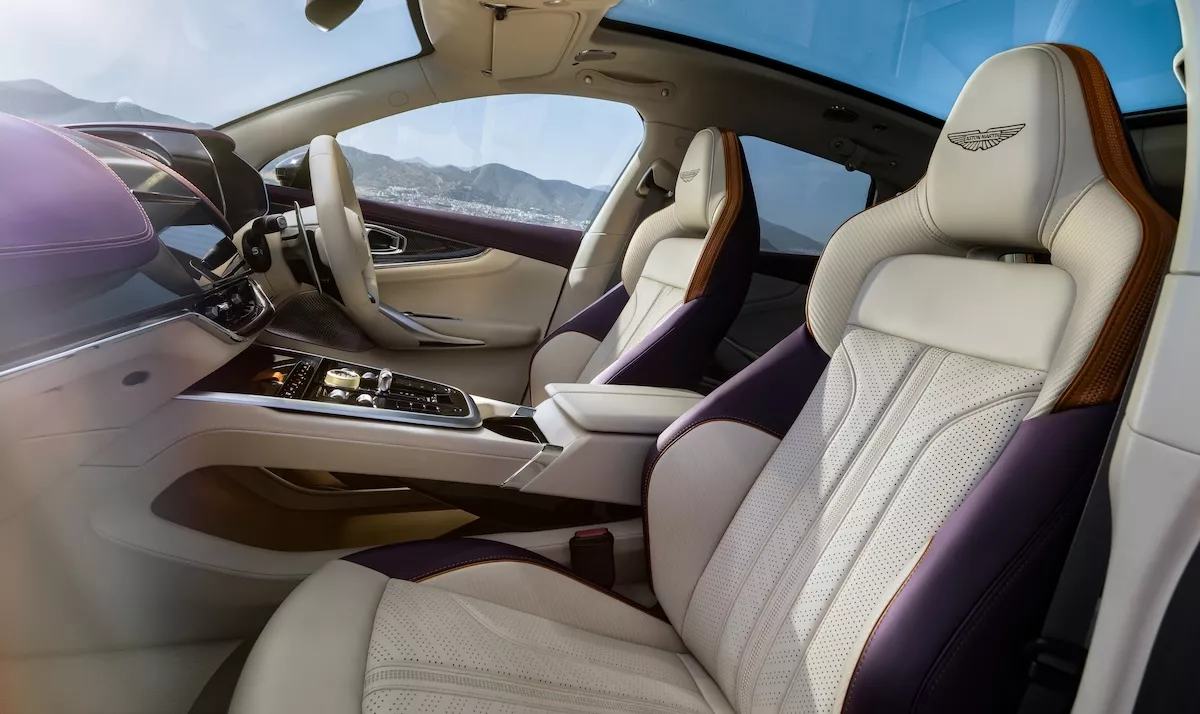
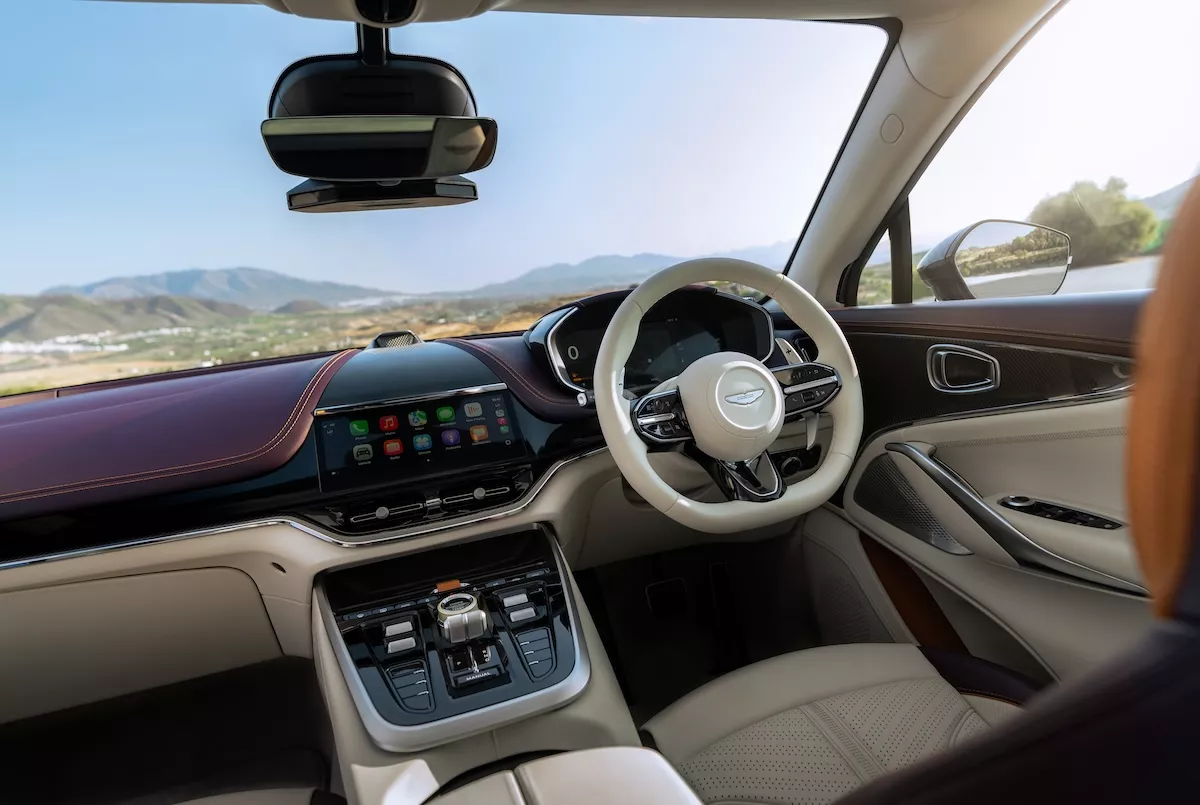
It is inside that the DBX GT makes its clearest case. Its front and rear seats have been redesigned around a thicker layer of memory foam, and a new individual rear-seat layout gives back-seat passengers the same sculpted comfort as those in front, while retaining five seats. A panoramic glass roof is now standard, alongside semi-aniline leather and metal controls finished to what Aston Martin describes as jewellery quality. Each front seat alone, the marque notes, is built using 691 metres of thread and more than four and a half hours of hand-finishing.

Built at Aston Martin’s plant in St Athan, Wales, the DBX GT begins deliveries in the fourth quarter of 2026. Pricing has yet to be announced.

Stay updated with Monaco Life: sign up for our free newsletter, listen to our podcasts on Spotify, and follow us across Facebook,  Instagram, LinkedIn, and Tik Tok. 

Photo provided

Monaco’s Museum of Stamps and Coins launches interactive experience for kids

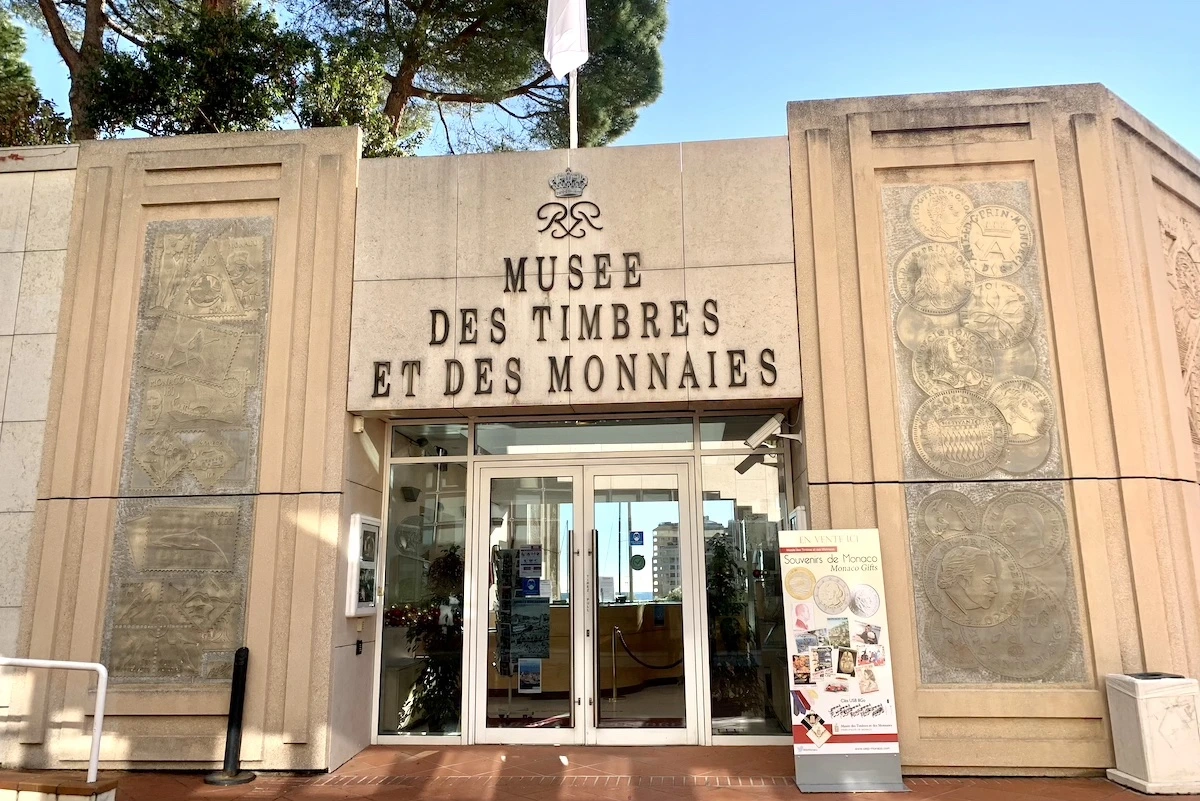
Monaco’s Museum of Stamps and Coins has launched an interactive experience, inviting children to discover the stories hidden within the museum’s collections.

Offered since 30th September, this new activity allows young visitors to become explorers, using a booklet filled with puzzles, games, and challenges to guide them through the museum. Rather than simply observing, children are encouraged to search and investigate collections as they discover the history of stamps and coins, how they’re made, figures who have shaped Monaco’s history, and some treasures that have been preserved by the museum.

The experience was created for children aged eight to fifteen to complete independently, while visitors aged six and over can participate alongside an adult. At the end of the experience, a surprise awaits young explorers.

The activity costs €5, and to mark its launch, the museum is offering one free adult admission with each children’s booklet purchased until 2 November. Adult admission otherwise costs €3. The Museum of Stamps and Coins is open daily from 9:30am to 5pm, giving families the opportunity to discover the museum’s collections through a new, interactive experience.

Stay updated with Monaco Life: sign up for our free newsletter, listen to our podcasts on Spotify, and follow us across Facebook,  Instagram, LinkedIn, and Tik Tok. 

Photo by Monaco Life

Small states, big stakes: Prince Albert II defends multilateralism at the Council of Europe

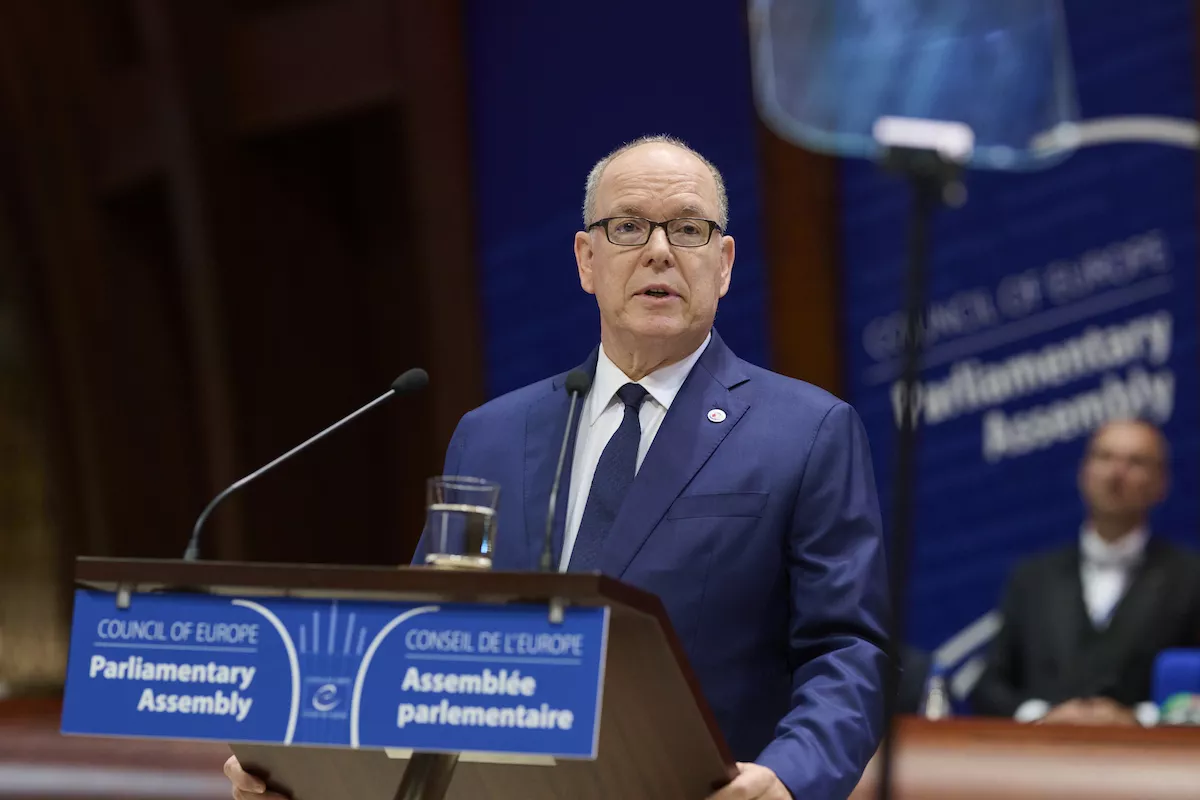
Addressing the Parliamentary Assembly in Strasbourg on Thursday, 1st October, in a twenty-minute address, Prince Albert II used Monaco’s first-ever presidency of the Committee of Ministers to defend international law. 

Marking twenty years since Monaco joined the organisation, the Prince explained that small nations rely on shared rules rather than raw power.

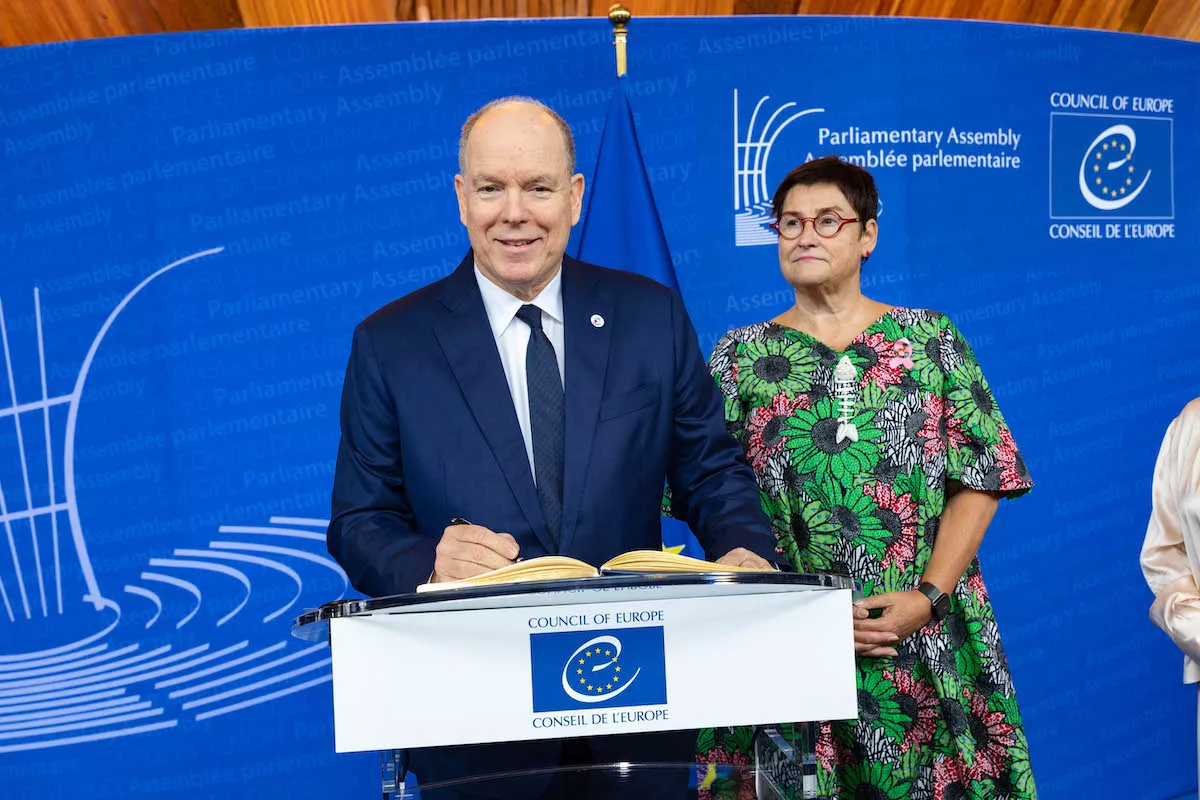
Prince Albert II signing the Golden Book with Petra Bayr, President of the Parliamentary Assembly of the Council of Europe. Photo credit: Manuel Vitali

Signing the Golden Book

Upon his arrival at the Palais de l’Europe, Prince Albert II met with Petra Bayr, President of the Parliamentary Assembly of the Council of Europe (PACE). Continuing an enduring diplomatic tradition reserved for visiting heads of state and monarchs, the Sovereign inscribed his signature and a personal testament into the institution’s official guestbook—the historic Livre d’Or. He wrote: 

“On the occasion of Monaco’s first presidency of the Committee of Ministers of the Council of Europe, I thank the President of the Parliamentary Assembly for her welcome and reaffirm the Principality of Monaco’s unwavering commitment to the defense of multilateralism, international law, and the rule of law. May I also take this opportunity to recall the importance of environmental issues, which constitute the essential foundation for the objective framework of fundamental rights.”

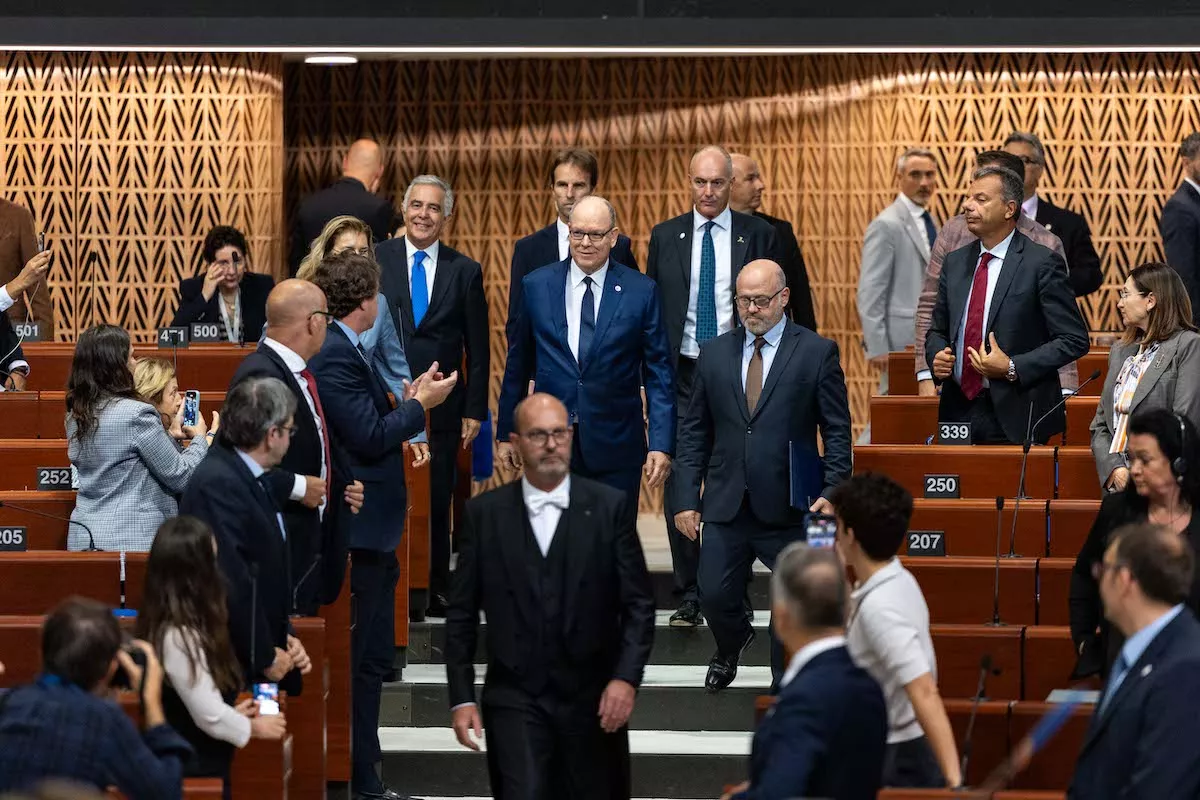
Prince Albert II arriving at the Parliamentary Assembly in Strasbourg. Photo credit: Manuel Vitali

A unique model of harmony and openness

Opening his address by highlighting the principality’s internal foundations, the Prince pointed to Monaco’s constitutional monarchy, its advanced social protections, and a society blending over 140 nationalities where nationals live alongside a vibrant global community. Stressing the everyday contributions of tens of thousands of foreign workers, tourists, and international investors, Prince Albert II highlighted that Monaco’s success is a testament to the power of dialogue, mutual welcome, and openness to the world.

Upholding the rule of law and confronting crisis

Reflecting on a Europe navigating deep political fractures, the Prince positioned the European Convention on Human Rights and the Strasbourg Court as indispensable safeguards for the continent’s seven hundred million citizens – explicitly including Monaco’s ten thousand nationals and forty thousand residents. Warning that the multilateral system collapses if individual states ignore their commitments or judicial rulings, he firmly stressed Monaco’s absolute condemnation of Russia’s aggression against Ukraine. “We cannot accept a system where international law is violated without consequence”, the Prince said, praising the Council of Europe’s creation of accountability frameworks like the damage register and the path toward a special tribunal.

Climate action as a fundamental right

Shifting focus to planetary survival, the address linked ecological collapse directly to the erosion of human rights. Drawing on Monaco’s century-and-a-half tradition of marine research and the work of his own environmental foundation, Prince Albert II stressed that climate change, pollution, and biodiversity loss respect no borders and demand unified, science-led cooperation. 

“Protecting nature is guaranteeing the very conditions in which the rights we defend today can be exercised tomorrow,” Prince Albert II said.

A shared destiny for Europe

Concluding his address, the Prince urged member states to reject isolationism and power politics in order to confront modern technological, environmental, and geopolitical threats together. As the principality steers its historic presidency, Monaco’s message to Strasbourg remained resolute: preserving multilateralism is not just a diplomatic choice, but an urgent, shared destiny.

See also: 

Monaco reaffirms its support for Ukraine as Council of Europe presidency nears end


Stay updated with Monaco Life: sign up for our free newsletter, listen to our podcasts on Spotify, and follow us across Facebook,  Instagram, LinkedIn, and Tik Tok.

Prince Albert II speaking at the Parliamentary Assembly in Strasbourg. Photo credit: Manuel Vitali

Monaco declares digital transition over as State enters new era of AI and implementation

After eight years spent building the infrastructure, services and skills required to transform Monaco into a digital State, the Government is drawing a line under the era of “digital transition” and moving to a permanent model in which technology — including artificial intelligence — becomes part of the everyday machinery of government.

The shift has been formalised in a new Sovereign Ordinance published in the Journal de Monaco on Friday, creating the Délégation Interministérielle au Numérique (DIN) – or Interministerial Delegation for Digital Affairs in English – from 5th October.

It replaces the Délégation Interministérielle chargée de la Transition Numérique (Interministerial Delegation for Digital Transition, DITN) with the new Délégation Interministérielle au Numérique (Interministerial Delegation for Digital Affairs, DIN) — significantly removing the concept of “transition” from its name and reflecting the shift towards digital as a permanent function of the State.

The distinction reflects how much has changed since Monaco began its digital transformation in 2018.

“Digital is no longer a transition: it is now an essential function of the State and a lever for transforming professions,” Minister of State Christophe Mirmand said in a statement announcing the restructuring.

From Extended Monaco to a digital State

Monaco’s concerted push into the digital era began in February 2018 with the appointment of Frédéric Genta as Interministerial Delegate for Digital Transition. Prince Albert II then formally launched Extended Monaco in April 2019, an ambitious programme intended to apply digital technology across the Principality’s economy and public services.

At the time, the programme was built around three major ambitions: improving quality of life, creating a new cycle of economic prosperity and increasing the value of public services. The Government initially envisaged its full implementation over the following three years.

What followed was a much broader transformation.

Monaco rolled out 5G and fibre infrastructure, launched its sovereign Monaco Cloud, expanded online government services, introduced digital identity through MConnect, developed e-health and e-education services and pursued smart-city projects including a digital twin of the Principality.

The programme also extended beyond government. Extended Monaco Entreprises and the Fonds Bleu were established to help local businesses digitalise, while thousands of professionals received digital training. By 2022, the Government said almost 700 transformation projects had been co-financed through the Fonds Bleu.

The Administration itself was reorganised along the way. Dedicated digital and information-system departments were established in 2020 to develop online public services, dematerialise administrative procedures and deliver projects spanning health, education, smart-city services and the economy.

The transformation also proved unexpectedly important during Covid, when systems already developed under Extended Monaco allowed the Administration to move to remote working and schools to use digital education platforms.

Eight years after the transition began, the Government’s position is effectively that digital technology is no longer a project to be completed. It is infrastructure that now has to be operated, governed, secured and continually developed.

From building digital services to governing them

The new DIN will go considerably beyond delivering new apps and online services. Under Sovereign Ordinance No. 12.143, the delegation will design and propose the State’s digital policy and oversee its implementation.

It will identify the State’s digital requirements, anticipate changes in infrastructure and technology, establish rules governing the sharing and management of government data, monitor technological and regulatory developments and evaluate State digital projects from technical and budgetary perspectives.

For the first time, it will also prepare a consolidated digital budget for the State, bringing greater central oversight to spending across the departments it coordinates.

Security and data governance are embedded in the new structure. The DIN will oversee implementation of the State’s information-system security policy and ensure the proper management of personal data within digital projects.

AI signals the next phase

Artificial intelligence is one of the clearest indications of where Monaco intends to take the new model. The Government says the DIN will be responsible for launching a strategy for the development of AI within the Administration.

Rather than being treated as a standalone technology project, AI will therefore sit within the same structure responsible for data, infrastructure, digital services, security, regulation and spending.

That is a significant difference from the mission Monaco set itself in 2018 and 2019. Then, the challenge was getting the Principality into the digital era. Now it is deciding how increasingly powerful technologies should be integrated into the operation of the State.

Three operational departments will sit beneath the DIN: the Direction du Développement des Services Numériques (the Digital Services Development Directorate – DDSN), responsible for digital public services and elements of digital identity; the Direction des Infrastructures et des Systèmes d’Information (Infrastructure and Information Systems Directorate – DISI), responsible for State IT infrastructure, security, resilience and continuity; and the Direction des Services de Confiance Numérique (Digital Trust Services Directorate  – DSCN), responsible for digital trust services and technical elements of digital identity.

Digital regulation is meanwhile being separated from those operational activities, with a dedicated regulatory service placed directly under the Minister of State.

Pascal Rouison will head the new structure as Interministerial Delegate for Digital Affairs, with Georges Gambarini leading Digital Services Development, Jean-Charles Harlé heading Infrastructure and Information Systems and Fabien Giraud responsible for Digital Trust Services.

Monaco Life is written by qualified journalists, writing original content. Sign up for our free newsletter, listen to our podcasts on Spotify, and follow us across Facebook,  Instagram, LinkedIn, and Tik Tok

Photo credit: Benjamin Vergely