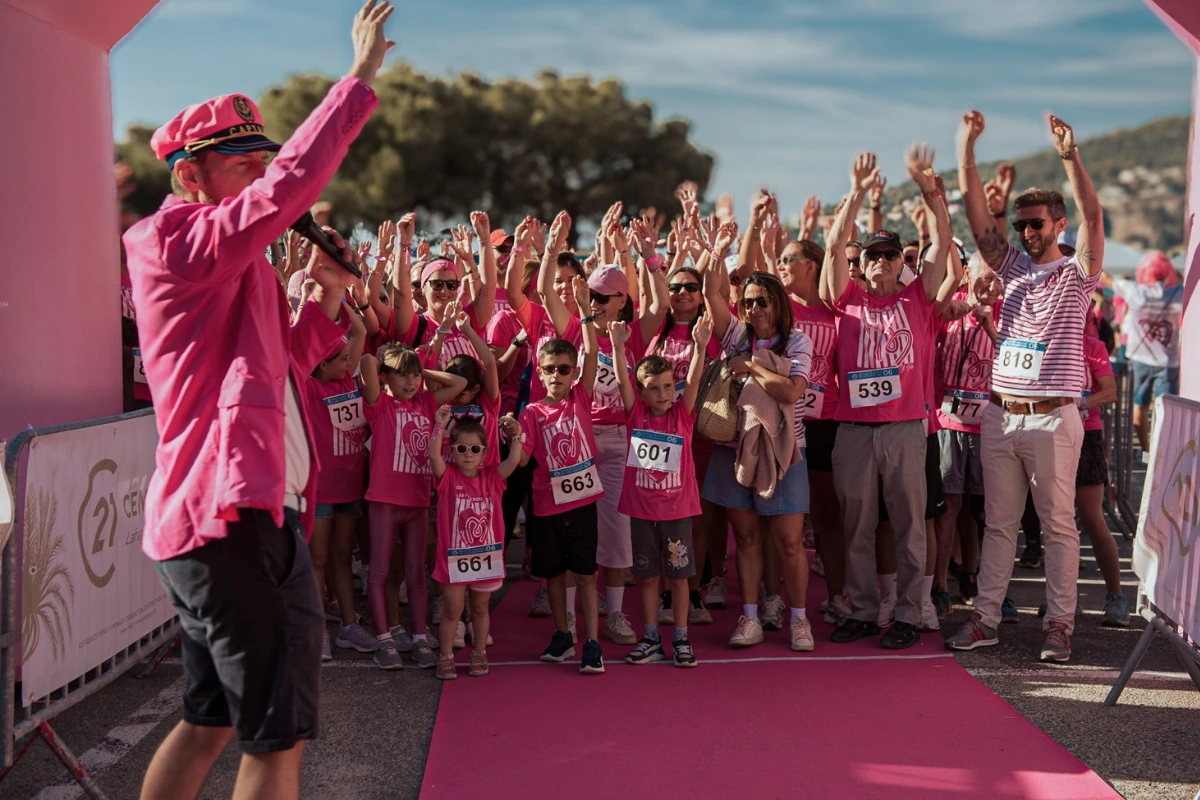
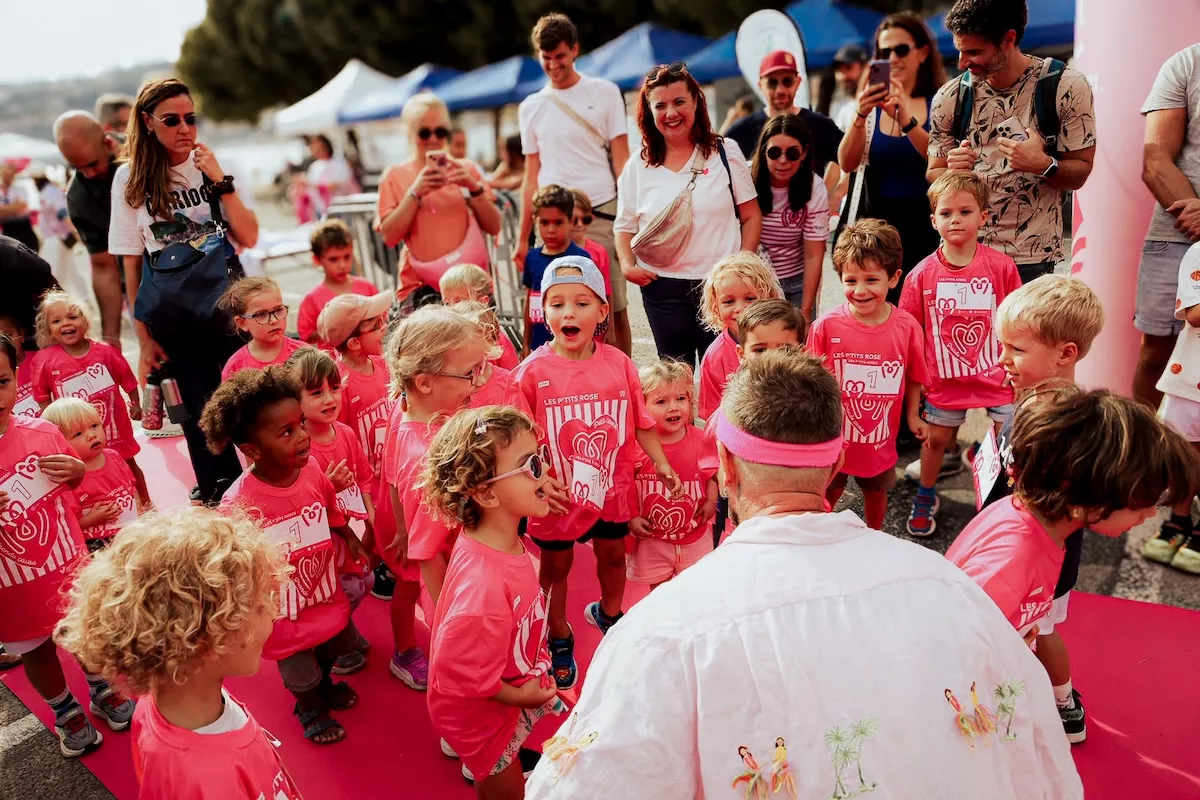
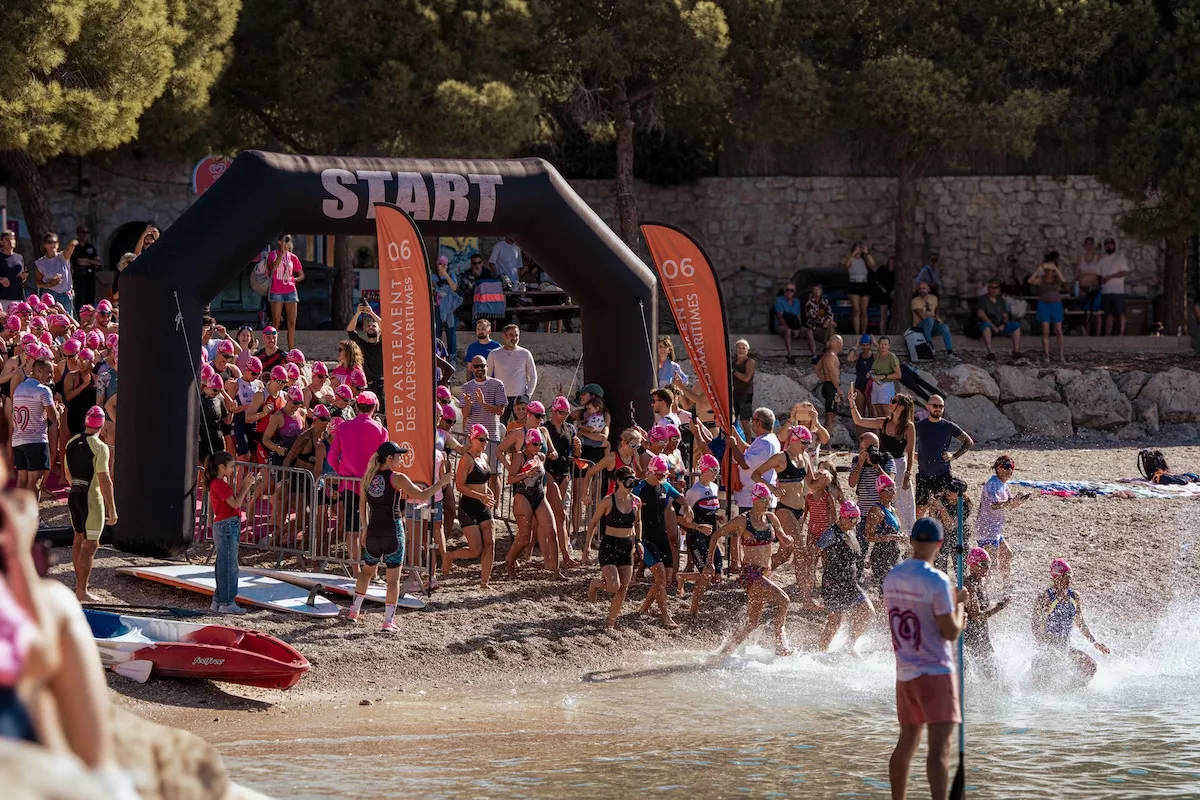
Les Marinières en Rose marked its fifth edition with a record-breaking weekend in Villefranche-sur-Mer, with 800 participants coming together and raising €15,000 for Monaco’s Centre Hospitalier Princesse Grace (CHPG).
Held on Saturday 3rd and Sunday 4th October as part of Pink October, the charity event saw a significant increase in participants from the 500 who took part in 2025, while fundraising increased from €11,000 to €15,000. The results meant that founder Patricia Plessis’ goals of 800 participants and €15,000 raised were reached.
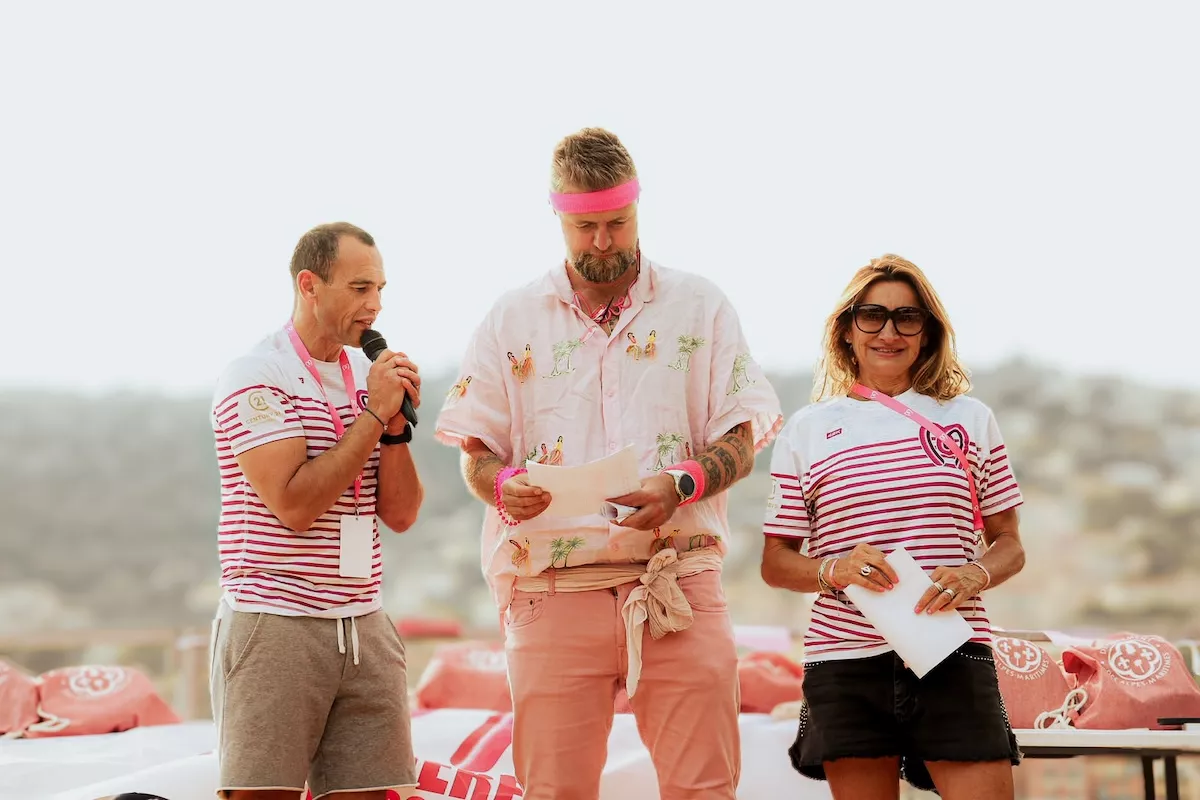
For Plessis, this level of growth carries major significance. “I’m very moved because I started this event after a friend of mine passed away in 2022,” she revealed to Monaco Life. “We began with 70 people, and this year we are 800. It’s wonderful. We’ve multiplied the number of participants by ten in five years, and as a result, we’re able to give much more to help women.”
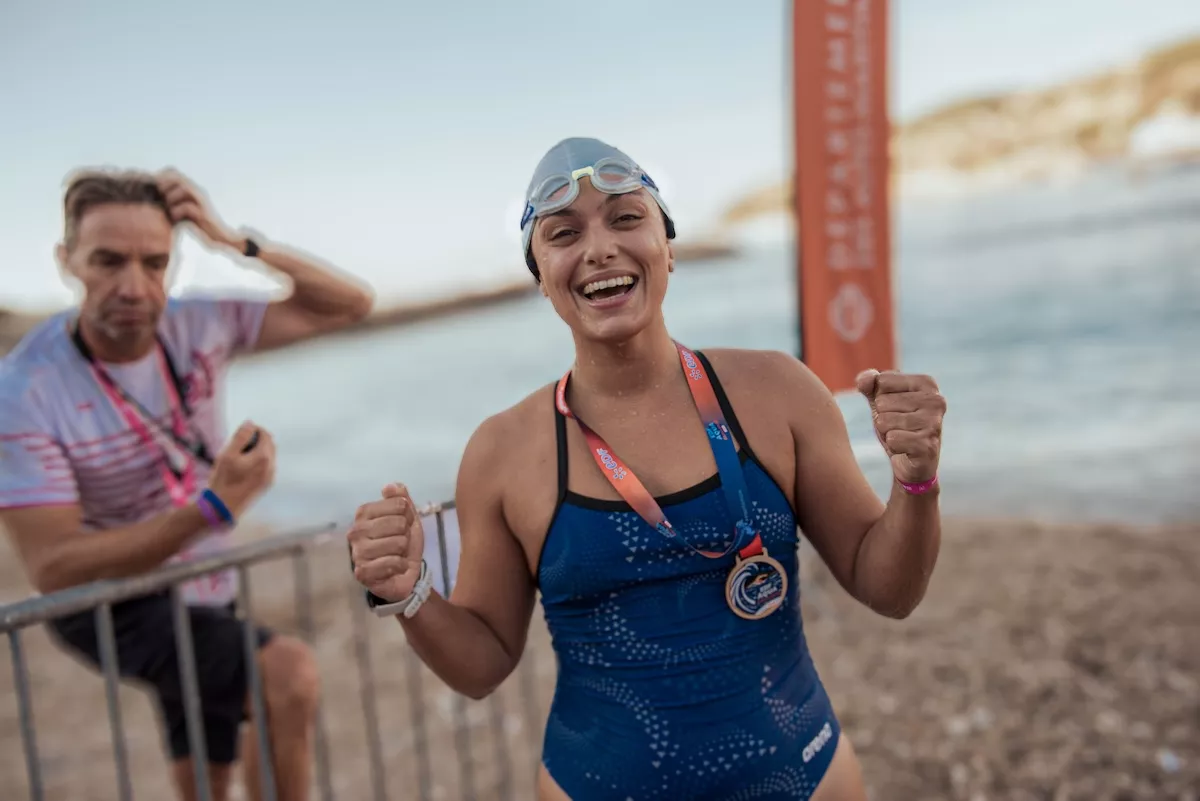
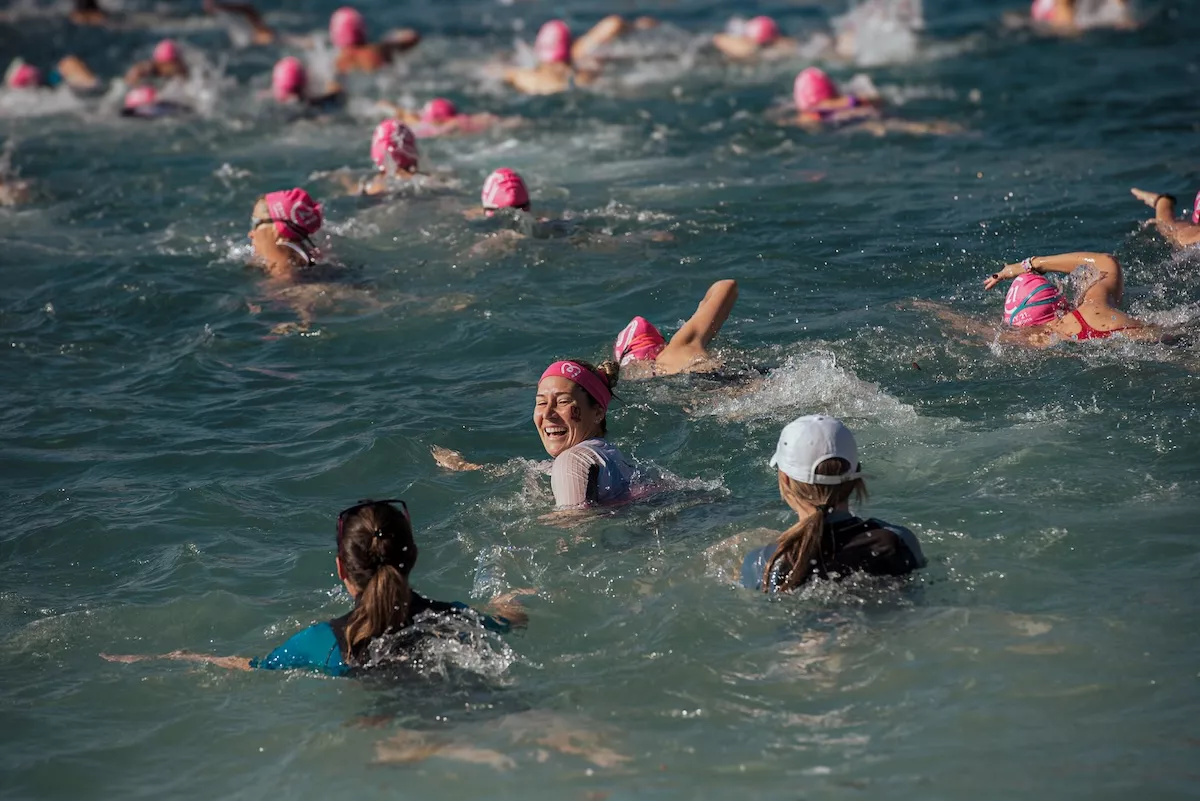
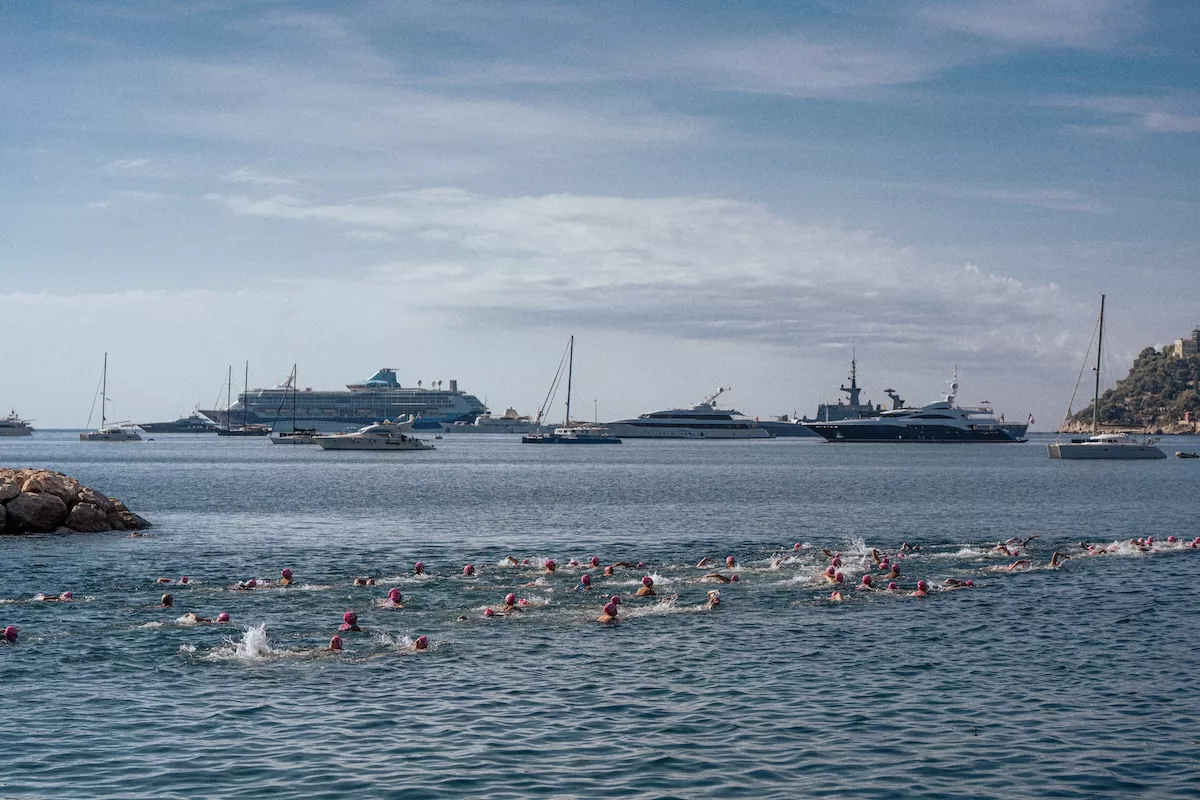
Throughout the weekend, participants of all ages took part in open-water swimming, a solidarity walk, and a children’s race, highlighting the idea of “solidarity before performance”.
Villefranche-sur-Mer Mayor Robert Capelier and President of Century 21 Lafage-Transactions Benjamin Mondou were also present throughout the weekend, highlighting their support for the initiative.
Patricia Plessis (right) organiser of Les Marinières en Rose
SUPPORTING WOMEN BEYOND TREATMENT
100% of funds raised through the event are donated to the CHPG to help finance supportive care for women undergoing cancer treatment. Services that are not reimbursed include yoga, massages, music therapy, wigs, and more. Plessis stressed that the initiative aims to bring people together around a disease affecting many. “We are all concerned by this, so we should all come together to fight it,” she said.
This year’s contribution brings the total amount raised by Les Marinières en Rose to €40,000 since its creation in 2022. What began with just 70 participants in memory of one woman has grown into an event bringing hundreds together every year to show support for women undergoing cancer treatment.
Click on the gallery for more images of the event…
Monaco’s sea is often a backdrop to beach days, harbour views and yacht outings. But a new IMSEE report reveals its more powerful side: an individual wave measuring 8.58 metres — roughly the height of a three-storey building — was recorded off the Principality during a storm on 20th December 2019.
That was the highest wave captured in a ten-year series of offshore measurements analysed by Monaco Statistics. It was not an isolated example of sizeable seas either: other storms produced individual waves of 7.81 metres in November 2019 and 7.56 metres in December 2017.
Published on 1st October, the study examines Monaco’s wave conditions between 2016 and 2025. Its findings reveal a coastline where generally modest waves are interrupted by much more powerful episodes — and where the roughest month is not necessarily the one with the biggest waves.
What an 8.58-metre wave means
The measurements came from a buoy moored off Monaco in 92 metres of water, part of the CANDHIS network operated by France’s technical agency Cerema.
During the December 2019 storm, significant wave height reached 4.51 metres. This measures the average height of the highest third of waves over a 30-minute interval, giving a picture of the surrounding sea conditions. The largest individual wave was almost twice that height.
The report ranks this episode first for both measures: it produced the biggest single wave and the most severe overall sea state recorded in the series.
These are offshore measurements, rather than wave heights at the beach or inside the harbour, but they illustrate the scale of the storms that can develop beyond Monaco’s waterfront.
The biggest waves arrive before the deepest winter
One of the study’s most useful findings is the difference between frequency and force.
March had the greatest number of rough days across the decade. Yet the most extreme waves were recorded between October and December, including the four largest individual peaks, all exceeding seven metres.
In other words, winter and early spring brought more regular rough seas, while autumn and early winter produced the strongest recorded events.
How often does Monaco’s sea become rough?
Across the days with measurements available, significant wave height exceeded one metre on roughly one day in three.
After estimating gaps in the records, IMSEE calculated an average of around 127 rough days each year. That does not mean four months of continuously rough water: a day is counted when the one-metre threshold is crossed at least once.
Summer presents a very different picture. July and August averaged only around three rough days per month, compared with approximately 17 in March.
Even the calmer season had its larger moments, however. Individual waves of around two to three metres were recorded during summer, showing how much conditions can vary within a season generally associated with gentler seas.
Direction matters too. Waves arriving from the south-west and east accounted for 87.2% of the most severe sea states. The eastern sector became particularly prominent during storms, despite contributing a smaller share of everyday conditions.
Are Monaco’s waves getting bigger?
The study found no detectable increase in average wave height or the annual frequency of rough days between 2016 and 2025.
Average significant wave height stayed close to 62 centimetres. The strongest storm in each year varied much more substantially, showing how a single event can dominate a year’s record without changing the underlying pattern.
Monaco Life is written by qualified journalists, writing original content. Sign up for our free newsletter, listen to our podcasts on Spotify, and follow us across Facebook, Instagram, LinkedIn, and Tik Tok.
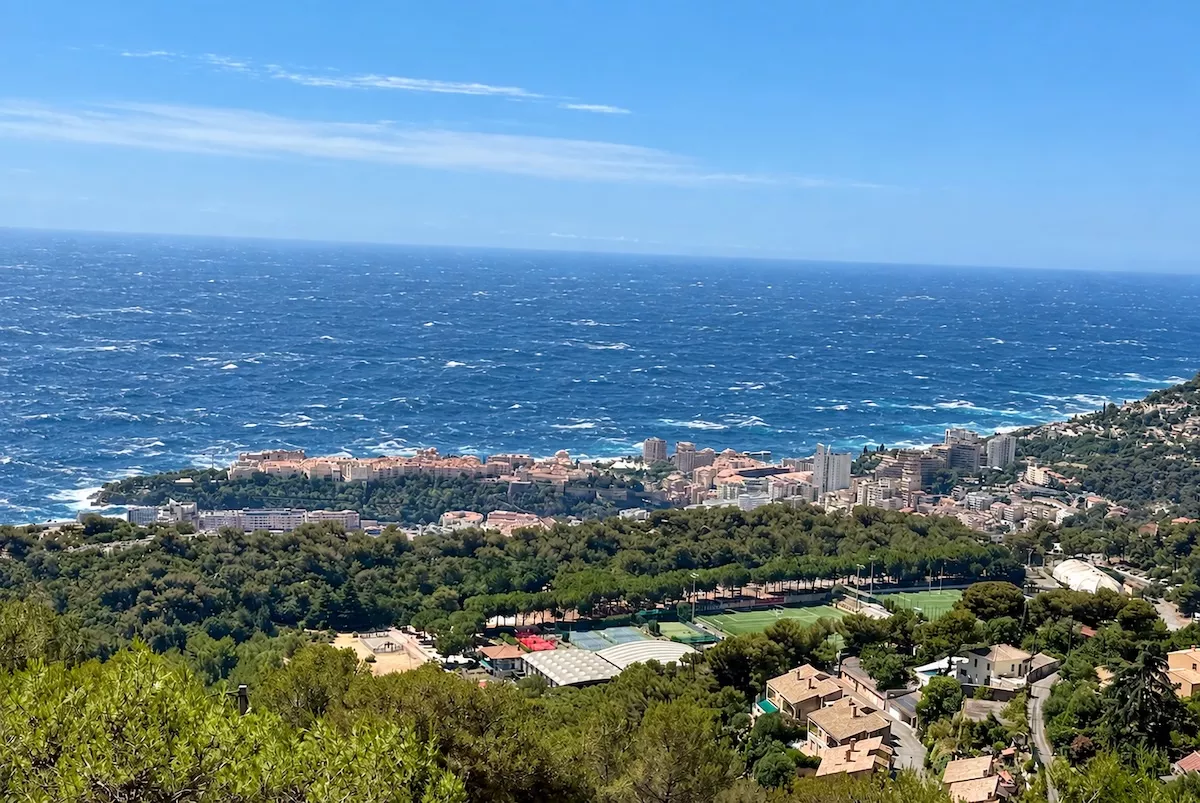
Photo by Monaco Life, digitally edited to illustrate rough sea conditions
Leclerc fights back from last to fourth in chaotic Sepang race
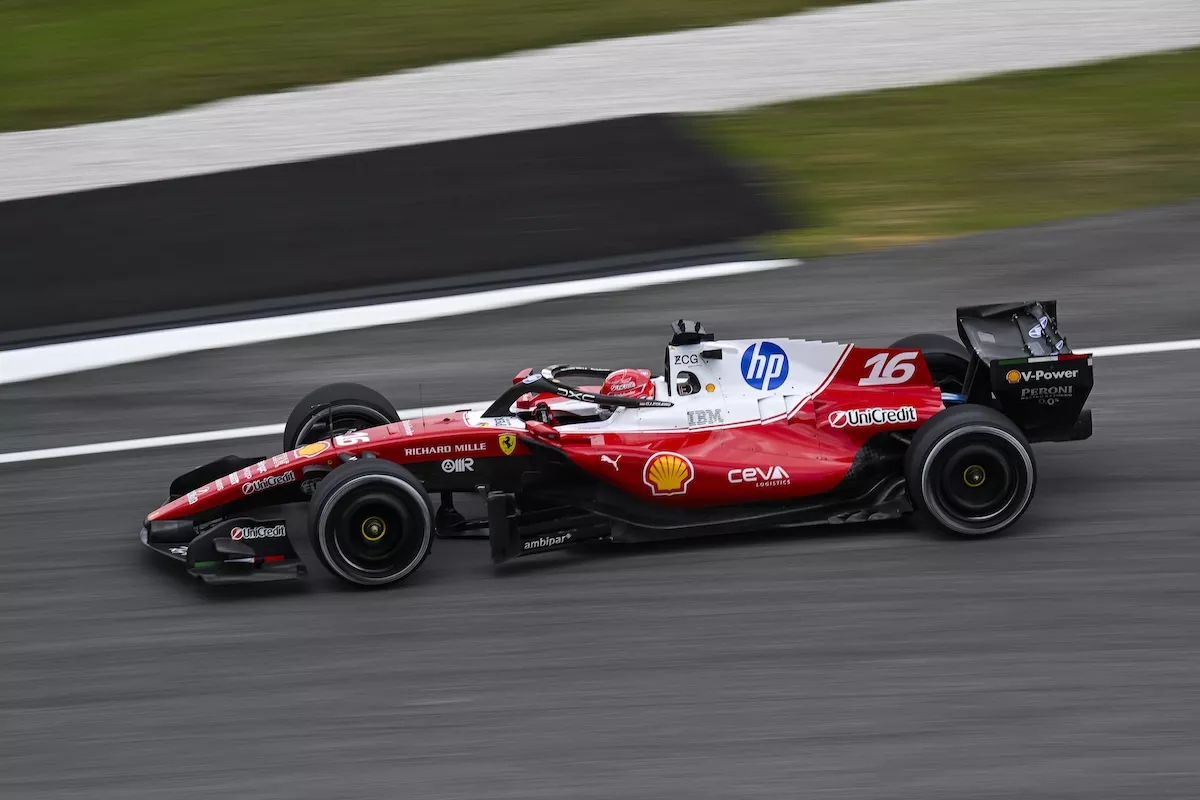
Monaco’s Charles Leclerc recovered from last place to finish fourth at the Bahrain Grand Prix in Malaysia on Sunday, overcoming Ferrari’s costly opening tyre gamble and collision damage to salvage 12 points before Formula 1 heads to Singapore this week.
The Monégasque finished behind team-mate Lewis Hamilton, who completed the podium alongside race winner Max Verstappen and runner-up Kimi Antonelli. Leclerc crossed the line 7.258 seconds behind Verstappen, with Ferrari’s combined 27 points consolidating second place in the Constructors’ Championship.
Held at Sepang under the official Bahrain Grand Prix in Malaysia title, the race began 90 minutes late after heavy rain and a software problem disrupted preparations. For Leclerc, starting fourth, the difficulties continued almost immediately.
An opening gamble goes wrong
Ferrari chose Soft slick tyres for both drivers as the rain eased, but the circuit remained too wet for the decision to pay off. Both cars slipped backwards against rivals running Intermediates.
Leclerc’s situation worsened following first-lap contact with Nico Hülkenberg, which damaged his front wing and caused a puncture. A stop for repairs and Intermediate tyres left him at the back of the field.
“It was an eventful race. A lot of things went wrong in the first part, and everything that could have gone right did in the second part, so I would say P4 is a good result today all things considered,” Leclerc said in Ferrari’s post-race statement.
“I collided with Nico on lap 1 as I started on slicks and the track turned out to still be very wet. It was a close call which tyres to start on, with a mixed grid, and we will learn from today to be prepared should these conditions come up again.”
A Safety Car intervention brought the field back together, giving Ferrari an opportunity to recover. As conditions improved, Leclerc and Hamilton worked their way into contention, reaching sixth and fifth respectively by around two-thirds distance.
A late move secures fourth
The closing stages brought another opportunity when Alex Albon stopped on track, triggering a further Safety Car. Ferrari brought both drivers in for fresh Soft tyres, while George Russell’s retirement moved them closer to the podium.
Hamilton passed Isack Hadjar after the restart to take third, with Leclerc following him past the Red Bull driver to secure fourth.
Ferrari team principal Fred Vasseur acknowledged that the opening tyre decision had been wrong, but praised the recovery.
“Charles’ race was made even more difficult by the need to stop after the first lap to replace the front wing following a collision, which makes his recovery to fourth place particularly impressive,” he said.
Hamilton’s third place delivered Ferrari’s tenth podium of the season and his sixth.
Final race results
Max Verstappen won ahead of Kimi Antonelli and Lewis Hamilton, with Charles Leclerc fourth. Isack Hadjar, Oscar Piastri, Liam Lawson, Fernando Alonso, Lando Norris and Arvid Lindblad completed the top 10.
Singapore brings another chance this weekend
Leclerc will have little time to dwell on Sepang, with the Singapore Grand Prix taking place from Friday 9th to Sunday 11th October.
Marina Bay will host its first Formula 1 Sprint weekend, adding another points-scoring opportunity. Sprint qualifying takes place on Friday, followed by the Sprint and Grand Prix qualifying on Saturday. Sunday’s race starts at 8pm in Singapore, or 2pm in Monaco and France.
Monaco Life is written by qualified journalists, writing original content. Sign up for our free newsletter, listen to our podcasts on Spotify, and follow us across Facebook, Instagram, LinkedIn, and Tik Tok.
Photo source: Scuderia Ferrari Media Centre
Monaco and Italy turn to unfinished business as state visit ends
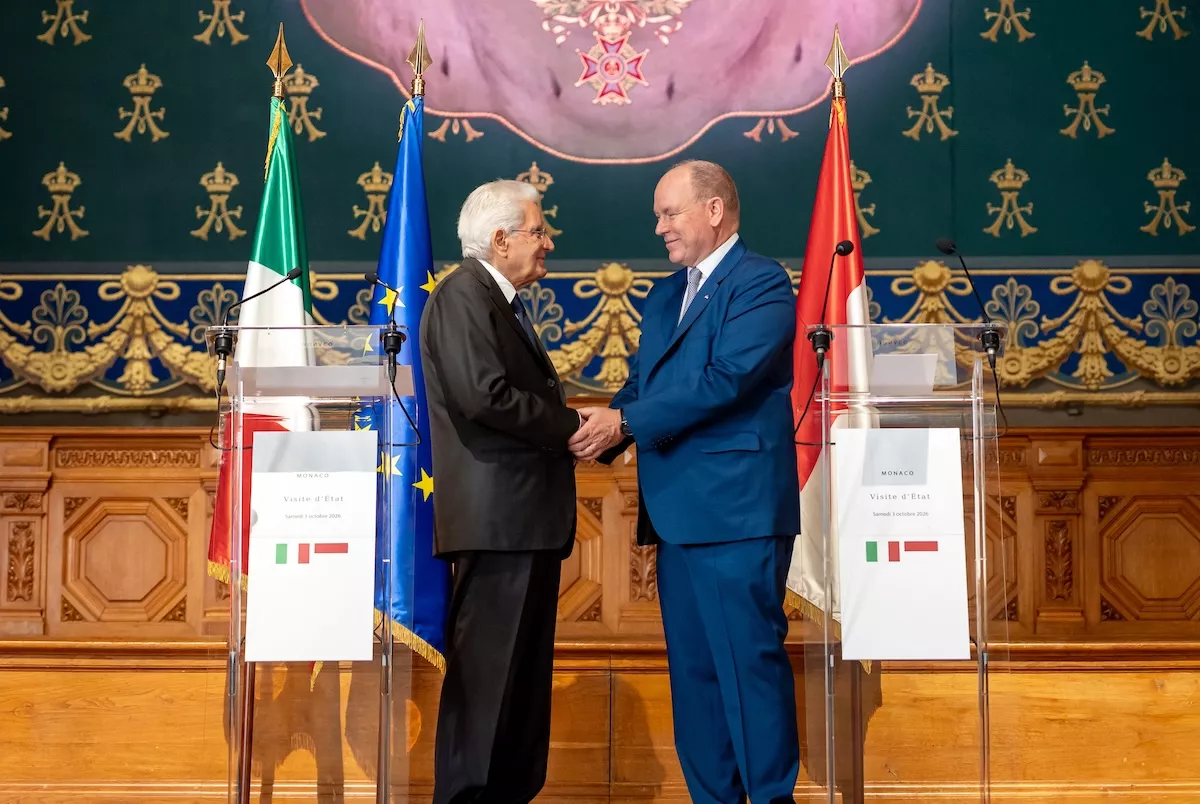
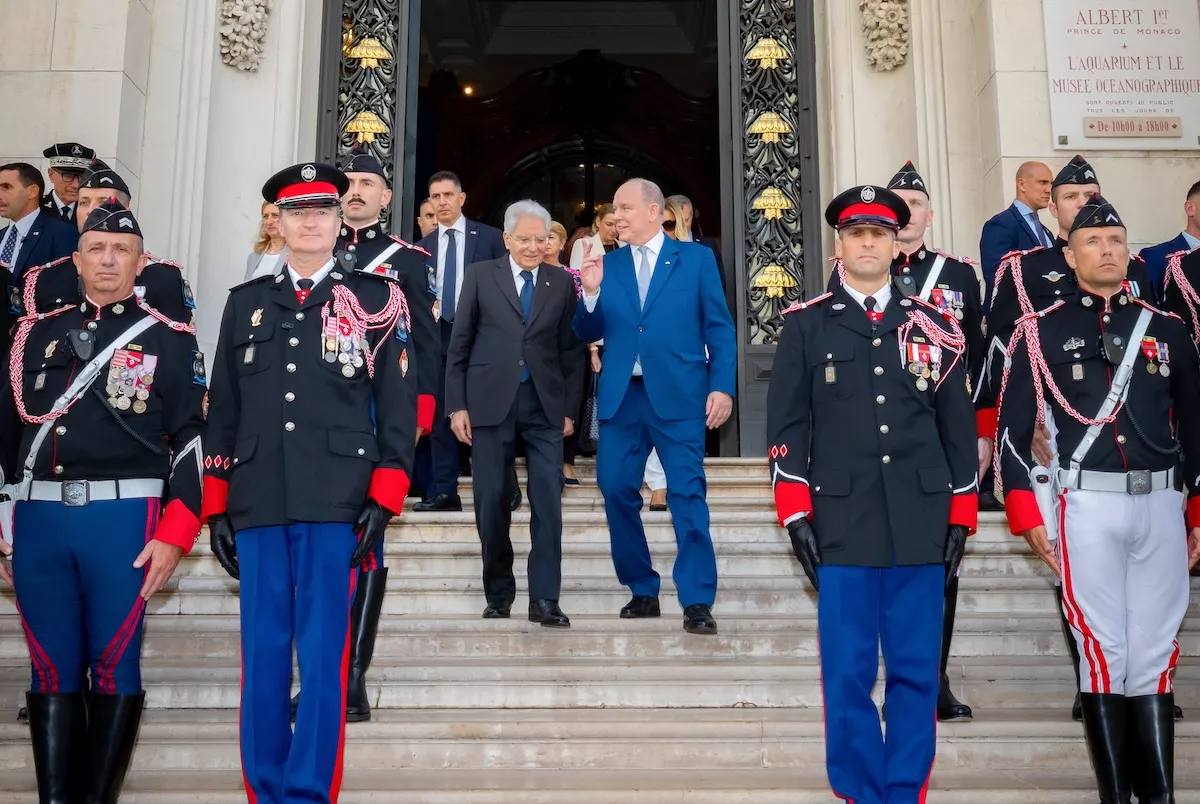
A 37-year-old air treaty and access to Monaco’s hospitals for residents of Liguria were among the issues Prince Albert II put on the table on Saturday 3rd October, as Italian President Sergio Mattarella ended the first state visit by an Italian head of state to the Principality with talk of the practical work still to be done.
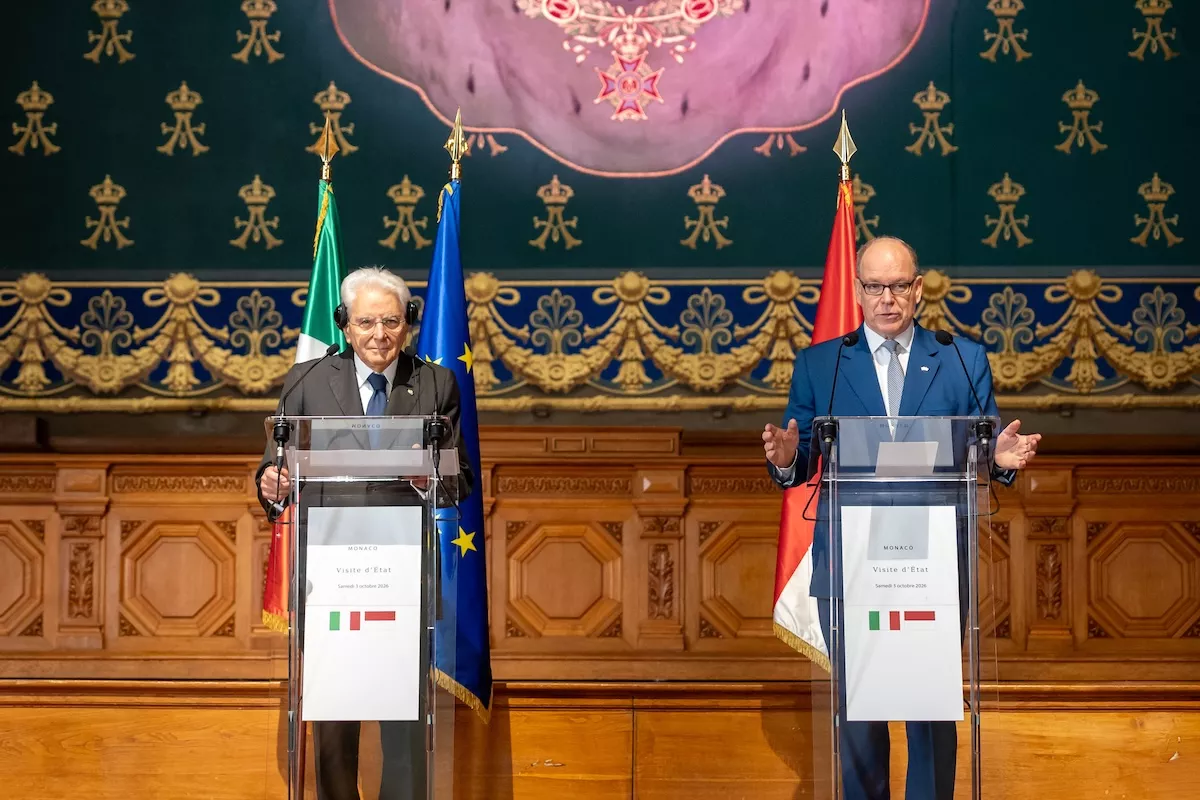
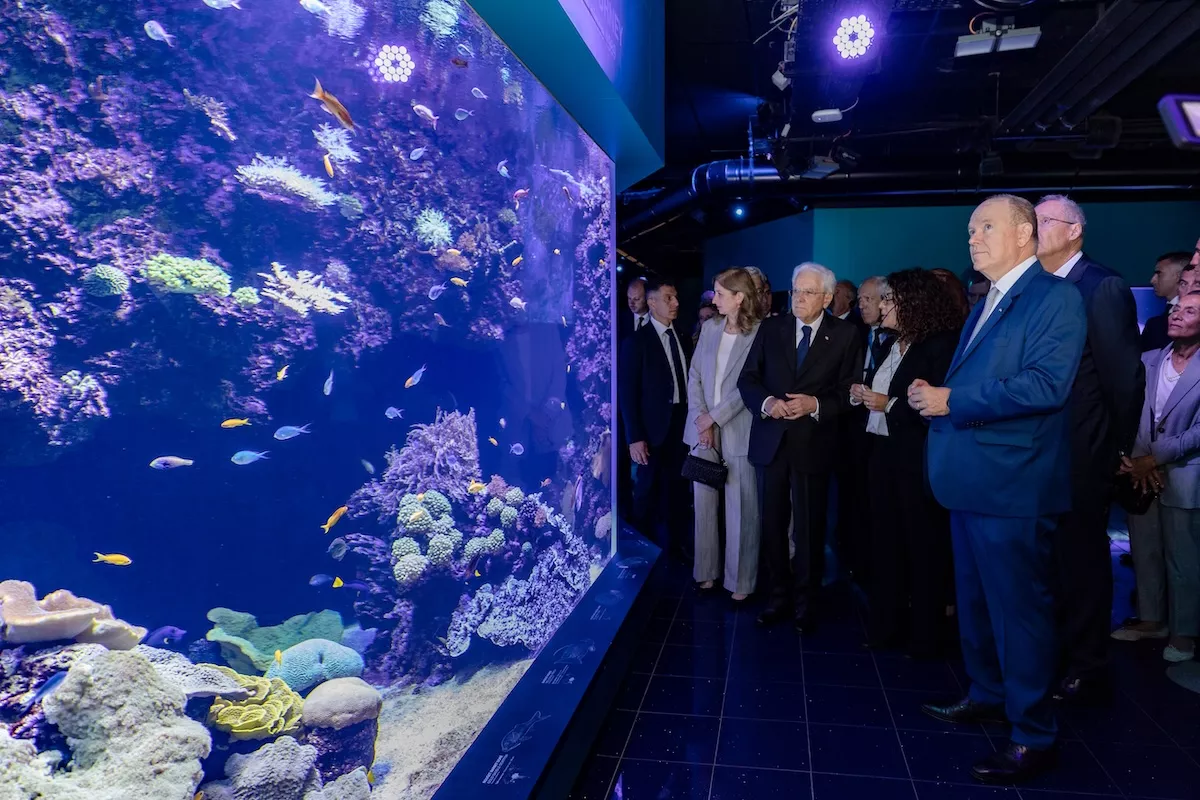
Friday had belonged to ceremony, with military honours, opera and a state dinner in the Throne Room. Saturday was about substance. After meeting members of Monaco’s Italian community, the President and his daughter, Laura Mattarella, toured the Oceanographic Museum with the Prince. The two heads of state then gave their closing statements, which read less like toasts to shared history and more like a checklist of open files.
Flights and hospital beds
The Prince wasted little time in naming them. “I am thinking, for example, of the air services agreement, which has been under discussion for many years and which will, I hope, soon modernise the bilateral agreement of 1989. And I am thinking of the question of access for residents of the Liguria region to the medical care provided in the Principality,” said Prince Albert II.
Neither issue is new. Both were raised when the Italian-Monegasque Administrative Cooperation Commission met in Monaco on 12th May 2025, according to the Monaco Government. On that occasion the revision of the 1989 air transport agreement was discussed alongside health and social security. The Prince now wants that forum to deliver.
“Beyond these subjects, I hope that we will be able to achieve stronger coordination between our two countries, in particular through the reactivation, in 2025, of the Italian-Monegasque Administrative Cooperation Commission,” he said.
The President was on the same page. “I too would like to recall, as the Prince did, the important work carried out by the joint commission, which has addressed issues of common interest: social security, transport, investment. A cooperation that is also enriched by the cross-border dimension,” said President Mattarella.
Prince Albert II and Italian President Sergio Mattarella delivering speeches in Monaco. Photo credit: Frédéric Nebinger
Following the money
Mattarella’s most pointed remark concerned financial crime, an area where cooperation has quietly moved up a gear.
“I would also like to express great appreciation for the strengthened cooperation between our countries in combating organised economic and financial crime, with the signing last April of a memorandum of understanding with the Guardia di Finanza. It is another area in which we work together with great effectiveness and great value,” he said.
At the commission’s May 2025 session, both delegations had pledged to swiftly sign a memorandum between Italy’s financial police and Monaco’s police department to improve operational cooperation against crime.
Prince Albert II with Italian President Sergio Mattarella and his daughter Laura during a visit to the Oceanographic Museum of Monaco. Photo credit: Manuel Vitali
Business without borders
Italy is, with France, one of only two countries to keep a resident embassy in Monaco. The Prince described the commercial ties as “intense and numerous”.
“Italian companies are firmly established in key sectors of our economy. Opening up the use of teleworking has made it easier to hire Italian cross-border workers. And the first Italy–Monaco Business Forum confirmed the vitality of our exchanges, as well as our shared will to encourage innovation, investment and partnerships between our companies,” said Prince Albert.
That forum, held at the Le Méridien Beach Plaza on 13th March, drew representatives of more than 200 Italian and Monegasque companies.
“As you recalled, Your Highness, economic relations are intense and growing, and there is significant integration between our economies. And there is a collaborative integration between our companies, which is an aspect of great importance, and one that benefits from the climate of friendship between our countries,” said President Mattarella.
The diplomatic ties are growing too. Monaco sits as an observer on the Franco-Italian cross-border cooperation committee set up under the Quirinal Treaty. It has also joined the Community of Italophony, a forum for the Italian-speaking world founded in Rome on 18th November 2025. The Prince first discussed the idea in Monaco in February 2025 with Italy’s Deputy Prime Minister and Foreign Minister, Antonio Tajani.
Photo credit: Frédéric Nebinger
Sport, peace and the rule of law
The President singled out Prince Albert, Princess Charlene and their children for their presence at the Winter Olympics and the Mediterranean Games. He said it reflected “the value that the Principality, like Italy, places on sport at a social level, in the education of young people, and in healthy and fair international relations.”
On the wider world, he signalled complete alignment. “We also spoke about the many problems facing international life at this time, finding constant and full harmony and convergence, inspired by the values of peace, freedom, the equal dignity of every State and the protection of the rule of law and human rights,” said President Mattarella.
What lies beneath
The setting for the final word was no accident. Fifty years after the RAMOGE agreement was signed to protect the Mediterranean, Italy currently holds its presidency, a point the Prince welcomed. Mattarella, standing in the museum founded by Prince Albert I, spoke of the sea that remains largely unexplored.
“It is a place of science that gathers testimony and urges us to explore what we in reality still know very little about, namely the seabed, and the commitment of the Principality of Monaco in this area is particularly precious for the international community,” he said.
He paid tribute to the Principality’s scientist-sovereign as “a scientist who drove the world towards knowledge of the sea and the protection of the sea and of the environment.”
Next stop, Italy
The visit closed with a pledge from one side and an invitation from the other.
“On behalf of all Monegasques, I therefore wish to thank you, Mr President, and to tell you that you can count on me to sustain and enrich, in the future, the long shared history of Monaco and Italy,” said Prince Albert II.
“In conclusion, Your Highness, I would like to thank you once again for your hospitality over these two days and for the meetings we have had, to express my conviction that the ties between our countries will be further strengthened as a result, and to tell you that, naturally, I hope to see you again soon in Italy,” said President Mattarella.
Monaco Life is written by qualified journalists, writing original content. Sign up for our free newsletter, listen to our podcasts on Spotify, and follow us across Facebook, Instagram, LinkedIn, and Tik Tok.
Main photo credit: Frédéric Nebinger
Interview: François Arpels on bringing a celebrated jewellery legacy to Korloff
François Arpels was born into one of jewellery’s most celebrated families. Now, as chief executive and co-owner of Korloff, he is drawing on that inheritance to reposition the independent French Maison for a new generation of clients.
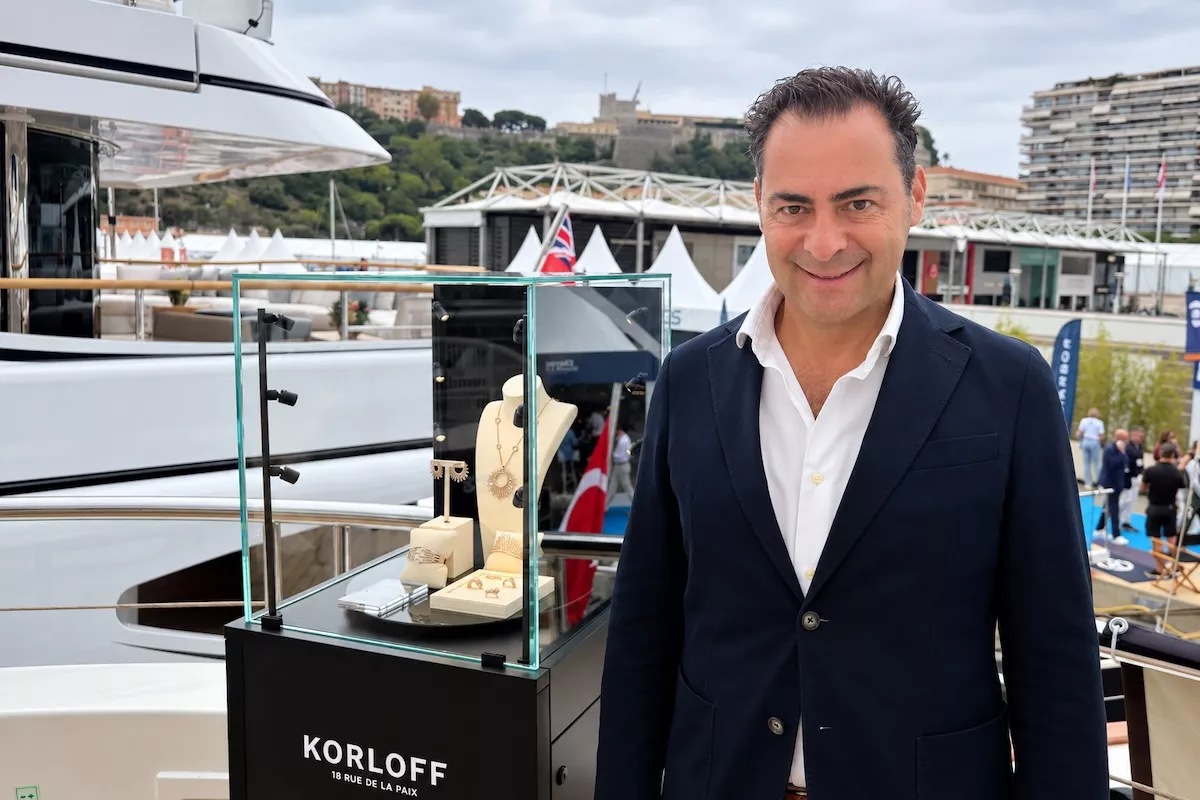
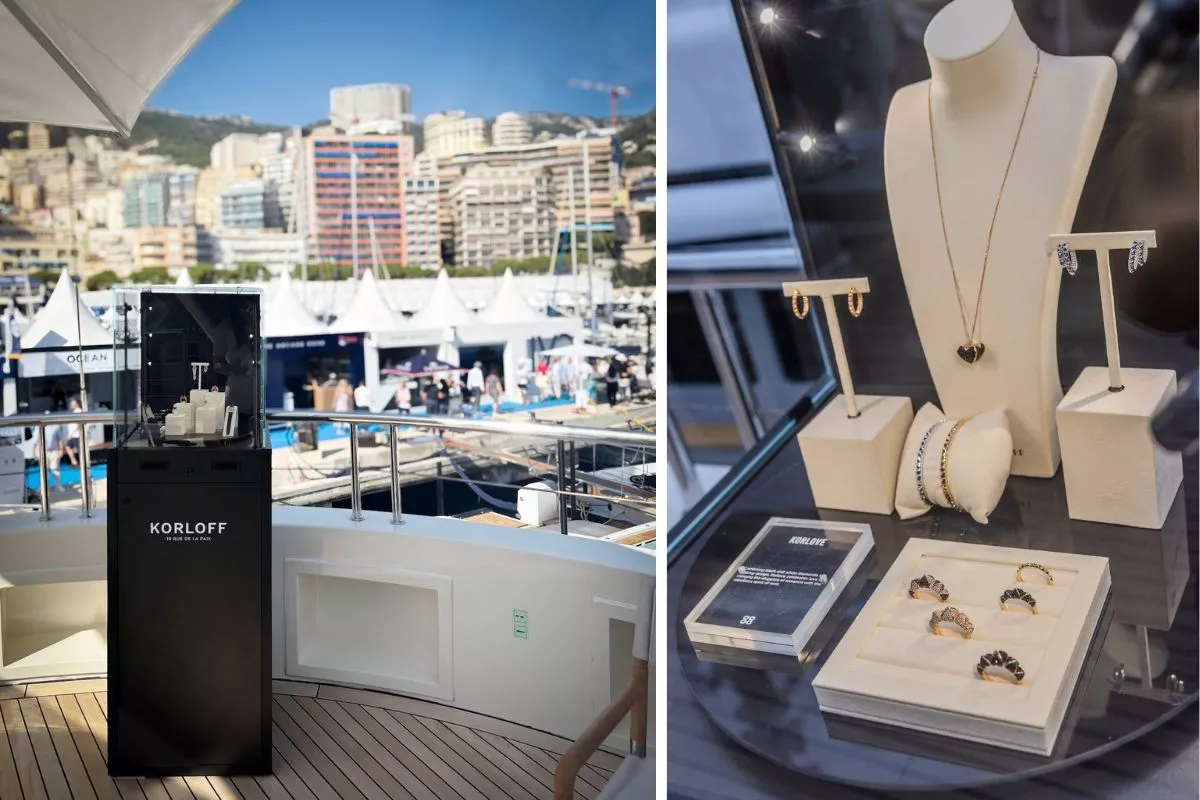
I met François Arpels aboard the 54.5-metre sailing yacht Meira during the Monaco Yacht Show, where Korloff had partnered with Ocean Independence to present its collections and one-of-a-kind pieces through a series of private appointments.
The collaboration brought together two worlds with a natural overlap in clientele, while the yacht itself reflected the identity Arpels is building around Korloff: strong but elegant, distinctive without being ostentatious.
“To me, a sailing yacht is bold and strong, but it also glides effortlessly across the water in a very elegant way,” he told Monaco Life. “That is very much Korloff. It is the attitude we like and the sports-elegant style that is becoming part of the Maison’s identity.”
From Van Cleef & Arpels to Korloff
Arpels is a third-generation member of the family behind Van Cleef & Arpels. He grew up learning about gemstones, craftsmanship and the commercial realities of running a luxury house before formally joining the company in 1988.
“I suppose you could say it is in my genes,” he said. “I was born into the family that created what is now considered one of the finest jewellery houses in the world. From a young age, I completed internships, learnt about diamonds and understood how jewellery was made. It was deeply embedded in me, and it remains my passion.”
He worked first in the United States and later at the company’s French headquarters, remaining with Van Cleef & Arpels until its acquisition by Richemont in 2000.
François Arpels presenting the Korloff jewellery collection aboard Meira during the Monaco Yacht Show
Over the following two decades, Arpels helped develop other French and Italian family-owned brands, living and working in the United States, India and Turin. By 2022, he was ready to take responsibility for a Maison of his own and began looking at independent jewellery houses in France and Italy.
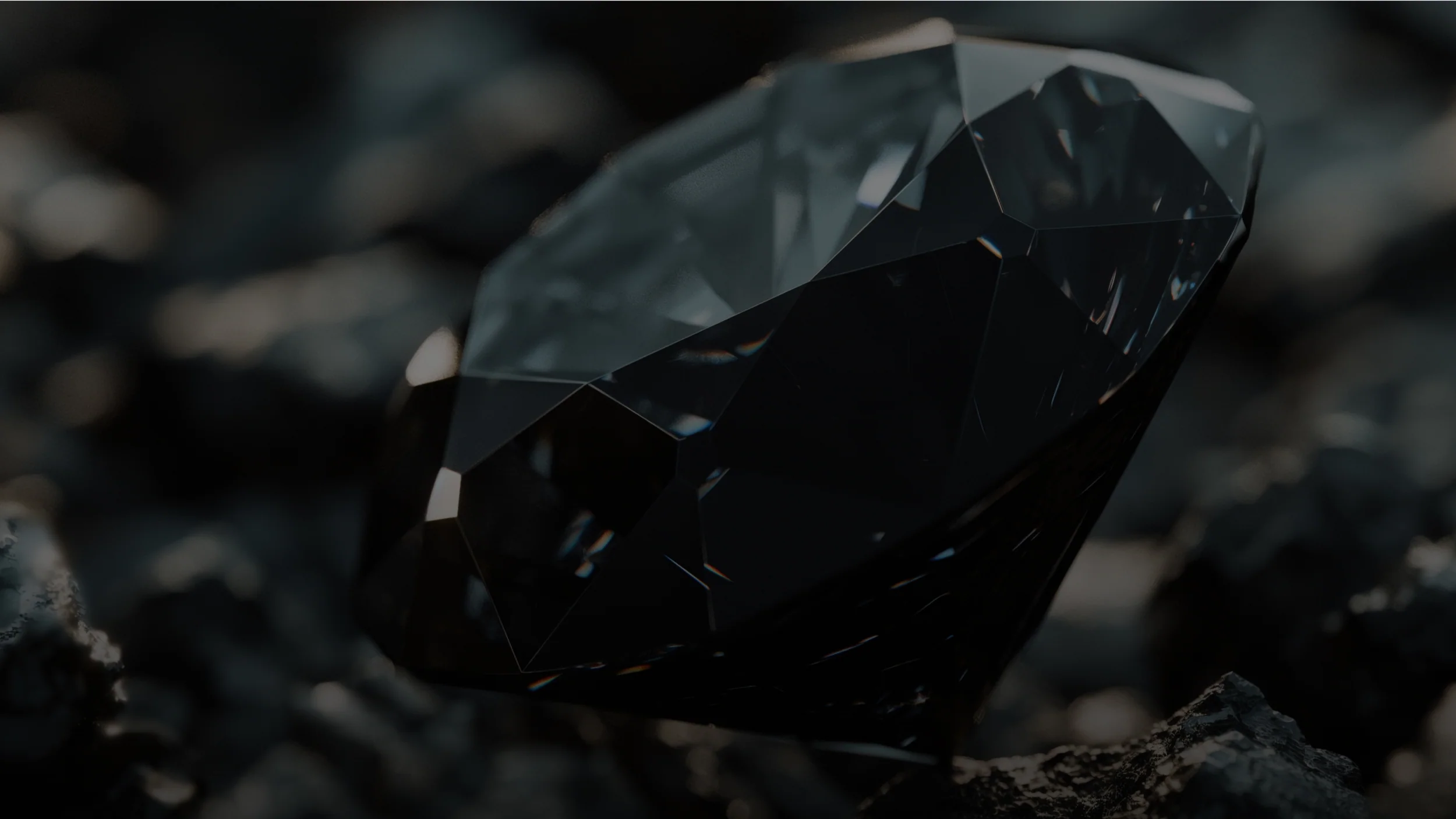
Korloff stood out. Arpels was drawn to its history, its independence and the 88-carat black diamond at the centre of the brand’s identity. He joined as chief executive at the end of 2023 and acquired the company with a Singapore family office in September 2025, giving him control over both its creative and commercial direction.
Korloff’s infamous 88-carat black diamond
A new chapter without abandoning the past
Korloff was founded by Daniel Paillasseur in 1978 and takes its name from the Korloff Noir, an 88-carat black diamond whose history, according to the Maison, traces back to the Russian aristocratic Korloff-Sapojnikoff family, who carried it to Europe when they fled the 1917 revolution. The stone inspired Paillasseur to establish the jewellery house, which became its owner in 1988, and remains central to its identity today. For Arpels, the task is not to discard that inheritance, but to give the Maison a clearer and more contemporary identity.
“When I arrived, one of my first responsibilities was to look back at the history, understand what had worked and examine what had been created by the founder,” he said. “My role is to preserve that story while taking Korloff to the next level in quality, craftsmanship and modernity.”
That role brings together two sides of Arpels’ experience. He is equally interested in gemstones, aesthetics and design as he is in strategy, branding and building businesses. At Korloff, those disciplines are being used to make the collections more consistent and the Maison more immediately recognisable.
His creative vision centres on contrast: black and white diamonds, strength and delicacy, bold forms and fine craftsmanship. The aim is to produce jewellery with a clear personality while preserving the standards expected of a French fine jewellery house.
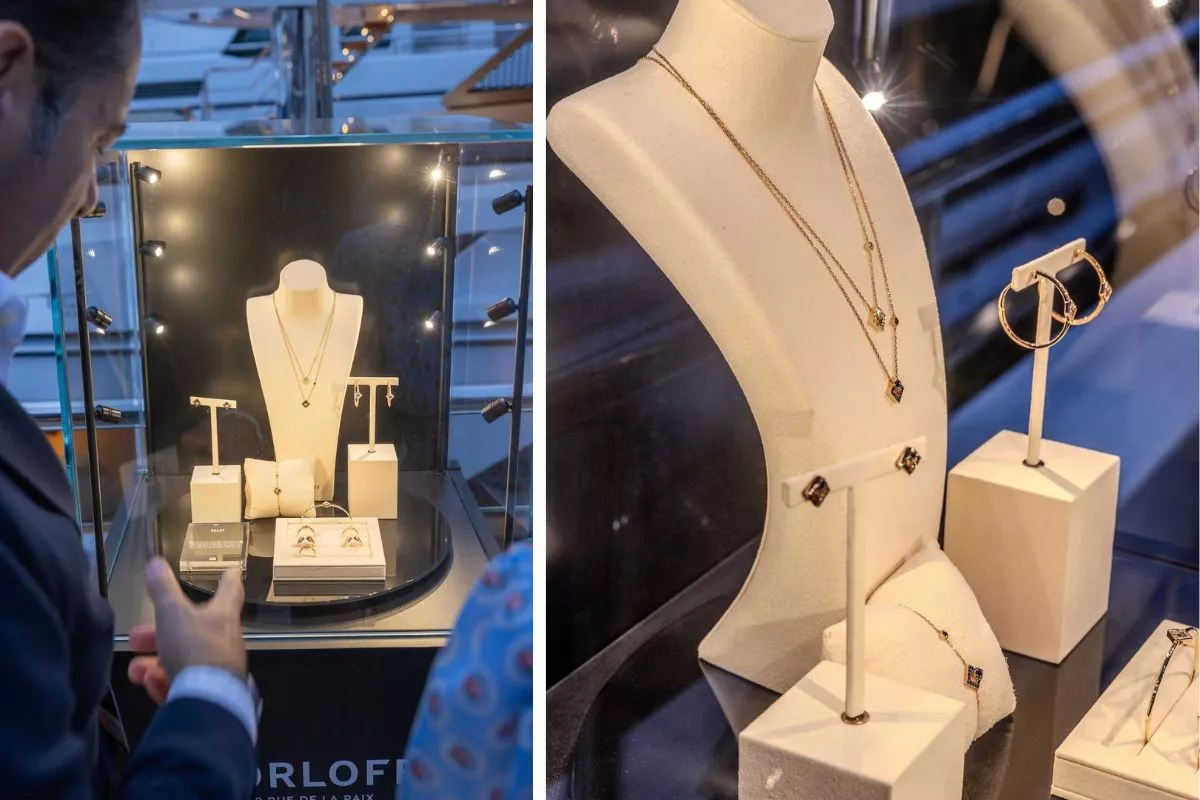
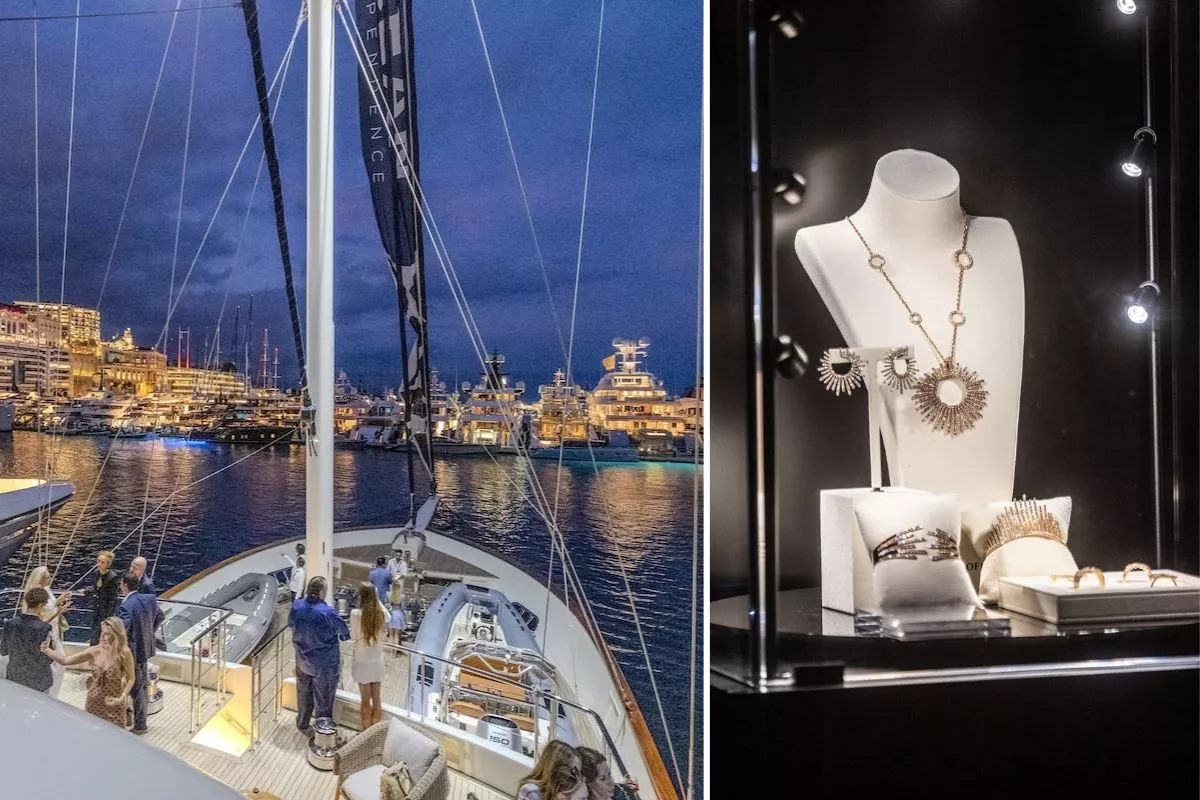
The Korlove collection (right) makes a bold, contemporary statement, with pieces designed to be layered and worn together.
The bestselling Korlove collection embodies that approach. Its three-dimensional heart motif combines romance with a more rebellious, rock-influenced character – an intentional departure from conventional representations of the symbol.
The Lance collection brings the same thinking to men’s jewellery through arrow-inspired forms and cable bracelets designed for ease of wear. Its pieces respond to what Arpels describes as a less formal approach to luxury, in which clients expect fine jewellery to fit naturally into everyday life.
“We live differently today,” he said. “We wear sneakers and prefer clothing that is comfortable and easy while still wanting to remain elegant. I wanted to create jewellery with the same attitude: refined, contemporary and effortless to wear.”
Guests aboard Meira during the Monaco Yacht Show, viewing Korloff’s jewellery collections.
Responding to a more individual client
Arpels is repositioning Korloff for customers who increasingly want recognisable jewellery without wearing the same pieces as everyone else.
“Clients are looking for jewellery that is different – pieces in which they can recognise themselves, rather than simply wearing what everybody else has,” he said.
That shift is influencing how the collections are designed. Korloff is developing jewellery intended to be stacked, layered and built upon over time, allowing clients to create their own combinations rather than following one prescribed way of wearing a piece.
The approach serves two distinct but increasingly connected audiences. Established collectors may already own pieces from Cartier, Bulgari or Van Cleef & Arpels and be searching for something less ubiquitous. Younger clients are often attracted to bolder designs, personalisation and a more playful relationship with fine jewellery.
Arpels sees no need to choose between them. Korloff’s strategy is to retain the craftsmanship and materials valued by established collectors while giving its designs enough versatility and individuality to speak to a new generation.
Monaco Life is written by qualified journalists, writing original content. Sign up for our free newsletter, listen to our podcasts on Spotify, and follow us across Facebook, Instagram, LinkedIn, and Tik Tok.
Main photo of François Arpels by Cassandra Tanti/Monaco Life, all other photos courtesy of Korloff
Vacherot reaches Japan Open semifinals after three-set Fils victory
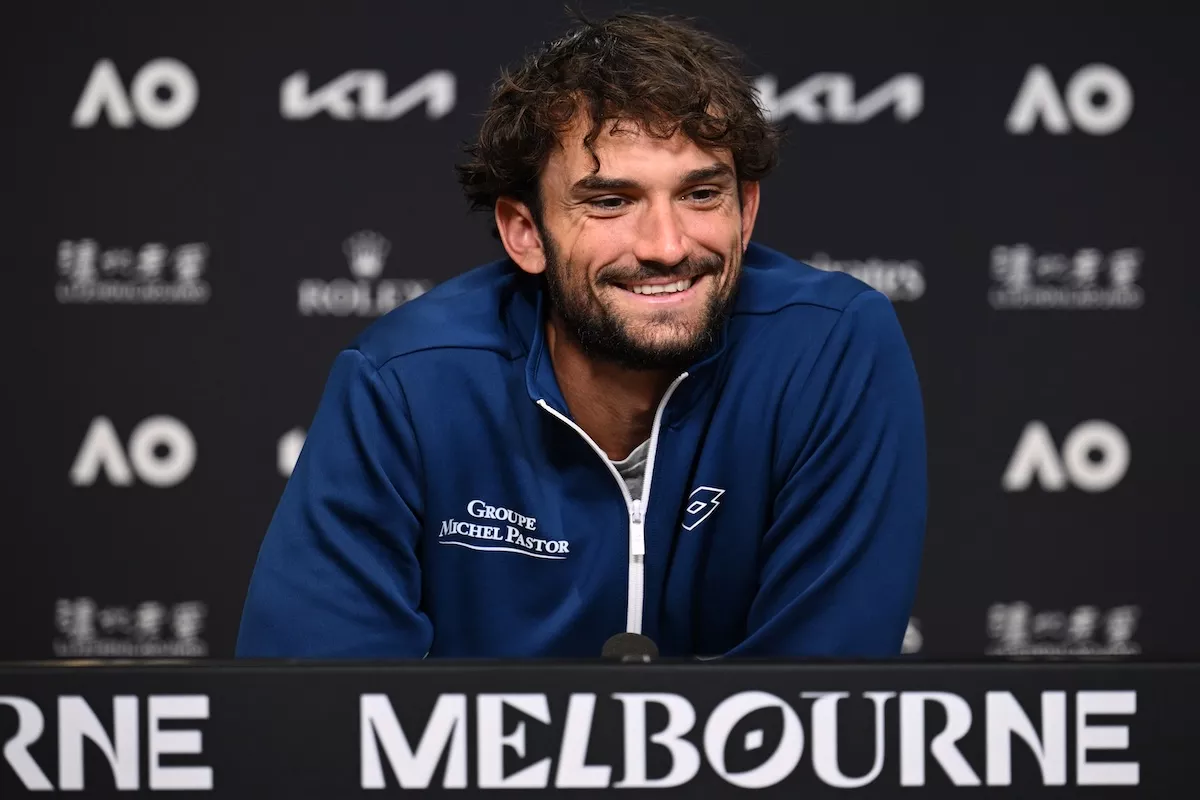
Valentin Vacherot maintained his impressive run at the Japan Open on Sunday with a victory over world No. 9 Arthur Fils in a three-set battle, securing his place in the semifinals.
Monaco’s tennis player found himself facing challenging positions throughout this quarterfinal, ultimately overcoming Fils 7-5, 4-6, 6-4 in Tokyo.
Fils took control of the match early, breaking Vacherot and earning opportunities to seal the opening set at 5-3. However, Vacherot refused to let the set fall out of reach as he saved both set points before shifting the momentum in his favour. Vacherot broke as Fils served for the set, winning four consecutive games and turning the set around to finish 7-5.
The top-10 player responded in the second set, finding the break before serving for the set at 5-4. Although Vacherot continued applying pressure, Fils held onto his lead to end the set 6-4 and force a decisive third set.
The final set found Vacherot chasing the match once again as Fils took a 4-2 lead, leaving little room for error. Vacherot responded by recovering the break, then taking control towards the match’s end, winning four consecutive games for the second time in the quarterfinal. With Fils serving to stay alive in the competition at 4-5, Vacherot earned match point and completed the victory to secure his position in the final four.
This was the second career match between Vacherot and Fils, marking Vacherot’s first win over the top-10 player. This victory marks a significant milestone for Vacherot as he has now reached his first ATP 500 semifinal, having previously reached the semifinals at the Shanghai Masters in 2025 and the Monte-Carlo Masters this year.
Vacherot will now face Czech world No. 23 Jiri Lehecka for a place in the Japan Open final on Monday. The two met in 2025, when Vacherot won 6-1, 6-3 in Paris. A win would send Vacherot into his first ATP 500 final ahead of his return to Shanghai to defend his title.