Man charged over death of Prince Albert’s cousin Antoine de Massy

A 42-year-old man has been charged with involuntary manslaughter and failure to assist a person in danger following the death of Antoine de Massy, Prince Albert II’s first cousin once removed, whose body was found in Monaco on Sunday evening.

The Ukrainian national, who has lived in Monaco for 30 years, was brought before an investigating judge on Wednesday 28th October and remanded in custody.

Monaco’s prosecutor general, Stéphane Thibault, said the man had denied the allegations during police questioning and had not wished to answer the investigating judge’s questions at that stage.

The charges concern alleged “acts that may have been committed at different times”, Thibault said in a statement issued to Monaco Life 1.30pm on Wednesday.

The charges do not allege an intentional killing. He is presumed innocent.

Investigation to establish what led to the fall

A formal judicial investigation has now been opened, placing inquiries under the authority of an investigating judge. Its purpose will be to establish “the precise sequence of events that led to Antoine de Massy’s fall”, Thibault said, through questioning of the accused, analysis and technical investigations.

The statement does not explain how the fall occurred or specify what actions the suspect is alleged to have taken.

Family raised the alarm on Sunday

Antoine, 29, was found dead on Sunday 25th October in a park below Boulevard du Larvotto after his family alerted the authorities and Monaco’s Public Security service began searching for him.

Police initially opened an investigation to establish the cause of death. According to the prosecutor’s office, investigators established that a man had approached Antoine while he was on Boulevard du Larvotto. The man was arrested on Monday morning, and his police custody was extended by 24 hours that evening as interviews and technical inquiries continued.

On Wednesday, he was formally charged and remanded in custody. An investigating judge will now oversee further inquiries into the circumstances of Antoine’s death. He remains presumed innocent.
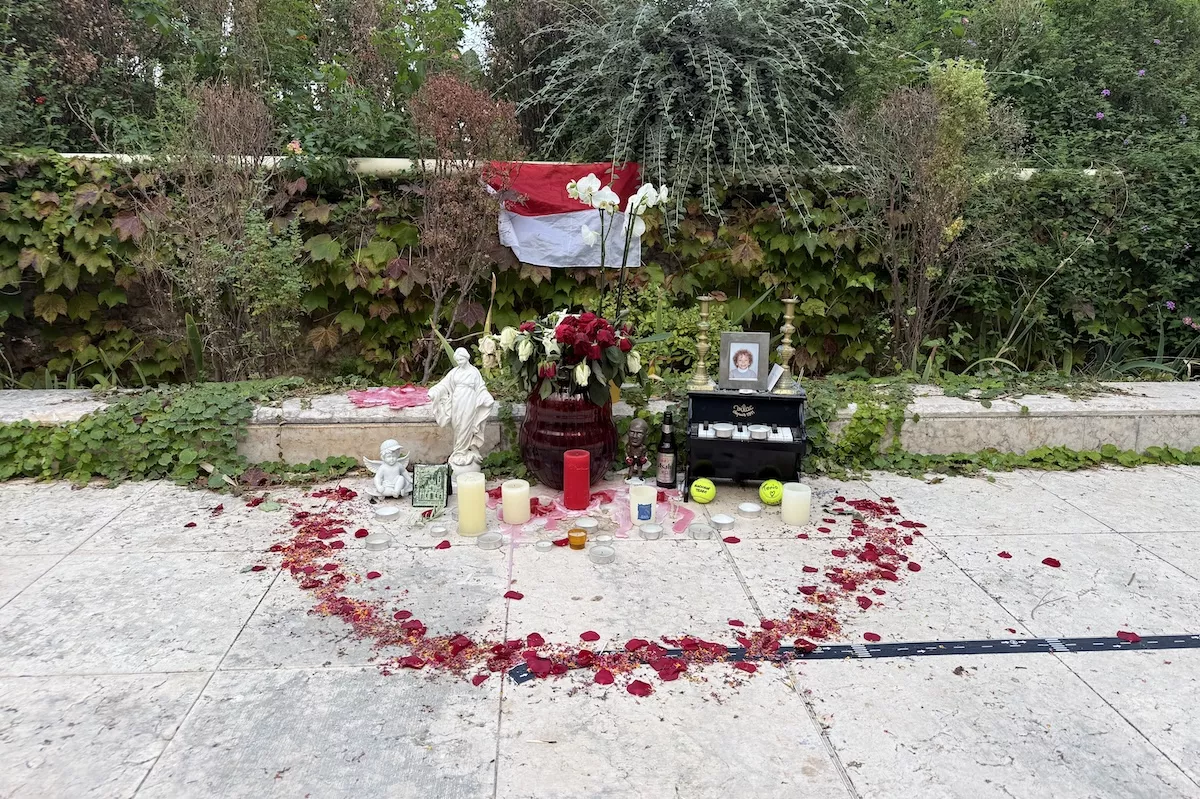
The memorial to Antoine de Massy, near to where his body was discovered on Sunday. Photo credit: Cassandra Tanti, Monaco Life

Tributes near the site

A memorial has been set up near where Antoine’s body was found, with flowers, candles and a Monaco flag.

Tennis balls recall his passion for the sport, while a framed childhood photograph serves as a reminder of how young he was. Rose petals have been arranged in a heart around the tributes.

Palace expresses sadness

Antoine was the son of Baron Christian de Massy, Prince Albert’s first cousin, and Cécile Gelabale. His grandmother, Princess Antoinette, was Prince Rainier III’s elder sister and Prince Albert’s aunt.

In a communiqué issued on Monday, the Prince’s Palace said Prince Albert II and Princess Charlène had learned of his death “with sadness”.

“Passionate about tennis, he was part of a family history closely linked to the sport in the Principality,” the Palace said. “Their Highnesses share in the grief of his family and loved ones and extend their sincere condolences at this painful time.”

See also: 

Prince Albert II’s cousin Antoine de Massy dies aged 29


Monaco Life is written by qualified journalists, writing original content. Sign up for our free newsletter, listen to our podcasts on Spotify, and follow us across Facebook,  Instagram, LinkedIn, and Tik Tok.

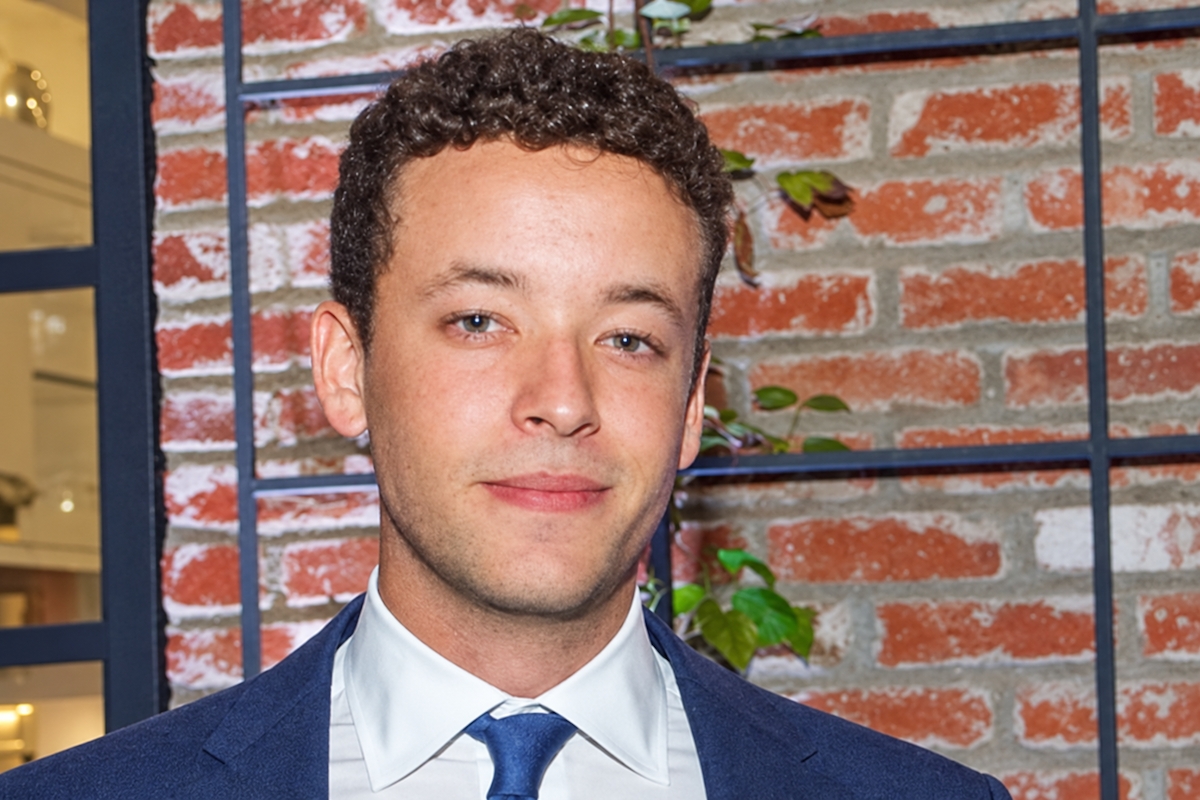
Image of Antoine de Massy taken from his Instagram page

From Caribbean crisis to organic fertiliser: Monaco-based Grogenics wins Blue Circle Award

What if toxic, foul-smelling seaweed could be turned into high-grade organic fertiliser? A Monaco-based project doing just that has won the acclaimed Blue Circle Award at the 2026 OceanLove Innovation Awards.

The annual awards, organised by the volunteer-run non-profit OceanLove, recognise early-stage grassroots innovations tackling ocean pollution, overfishing, and climate change. The 2026 edition drew a record 487 applications from 91 countries, an 80% increase on 2025.

The project, titled ‘What If Sargassum Could Give Back?’, is headed by Josée Dancause of Monaco-based Grogenics and piloted in Belize. It secured top honours both from an international panel of expert judges and through a global public vote during a live-streamed ceremony at AltaSea in the Port of Los Angeles on Sunday 11th October.

Photo credit: OceanLove

A lightweight solution to a heavyweight problem

Tons of floating seaweed wash onto Caribbean shores every year. As it rots on the beach, it traps sea turtles and gives off toxic gas. Traditional responses rely on heavy machinery that damages dunes or simply relocates the waste to landfills.

Grogenics intercepts sargassum in shallow waters before decomposition begins, utilising lightweight electric vehicles on beaches to protect turtle nesting sites. The seaweed is cleaned of heavy metals and salt, then converted into nutrient-rich organic soil.

The initiative, already an endorsed UN Ocean Decade project and a World Economic Forum UpLink winner, received USD $10,000 in seed funding, a year of executive coaching, and global media support.

Putting Monaco on the global conservation map

The Blue Circle victory highlights the Principality’s growing influence as an incubator for international environmental innovation.

“The ideas were never the scarce thing, the platform was,” said Ilco van der Linde, Founder of OceanLove, which operates under the high-profile endorsement of renowned marine biologist Dr. Sylvia Earle and former Unilever CEO Paul Polman.

Following the win, OceanLove announced it is actively seeking a Country Ambassador for Monaco to help expand its network of ocean innovators across the Principality.

Stay updated with Monaco Life: sign up for our free newsletter, listen to our podcasts on Spotify, and follow us across Facebook,  Instagram, LinkedIn, and Tik Tok. 

Photo credit: OceanLove

Bees, skincare, and farming: Prince Albert II backs pioneering propolis science

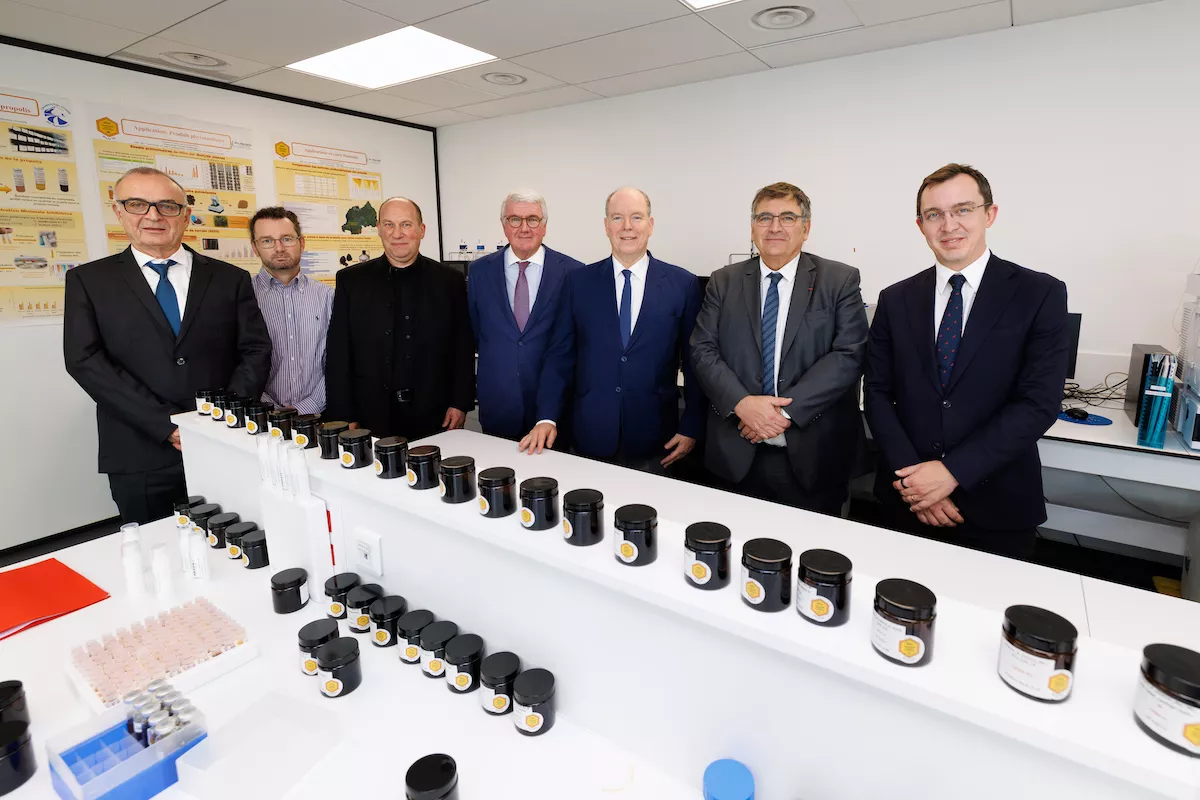
Could bees hold the secret to solving both skin disorders and eco-friendly farming? Prince Albert II travelled to Marignane on Monday 26th October to inspect scientific research turning natural hive defenses into remedies for acne and alternatives to crop pesticides.

What began as a bold theory in 2014 has now matured into patented science, proving that bees do far more than pollinate: they act as live chemical archives of our ecosystems. Visiting the facilities of Flavine, the Sovereign joined academic and institutional leaders for an exclusive briefing on the latest breakthroughs from the French Observatory of Apidology (Observatoire Français d’Apidologie-OFA).

Photo credit: Michaël Alesi / Palais princier

Unlocking the therapeutic power of propolis

Founded by Thierry Dufresne, the OFA focuses its research on propolis, the resinous substance bees use to seal their hives. Following international scientific expeditions, including a key research mission to Rwanda in 2025, researchers mapped how the composition of propolis varies across different global habitats.

From medical skincare to sustainable farming

That rigorous field and laboratory work has generated academic papers, a new patent, and its first commercial application: a specialised dermatological treatment for acne-prone skin. Beyond human health, the observatory is now developing antifungal propolis treatments for agriculture, offering a natural alternative to synthetic pesticides.

Photo credit: Michaël Alesi / Palais princier

Strengthening Monaco’s biodiversity legacy 

The Prince’s visit highlights his ongoing commitment to science-led environmental protection. By supporting projects that combine conservation with advanced research, Monaco continues to promote practical solutions that connect human health, sustainable farming, and ecosystem protection.

As the OFA expands its core mission to ‘Protect, Understand, and Transmit’, the observatory aims to demonstrate how preserving the natural world can unlock vital scientific innovation for the future. 

Stay updated with Monaco Life: sign up for our free newsletter, listen to our podcasts on Spotify, and follow us across Facebook,  Instagram, LinkedIn, and Tik Tok. 

Prince Albert II visiting the propolis research facilities of Flavine in Marignane. Photo credit: Michaël Alesi / Palais princier

Behind the €54 billion industry: PYA champions seafarers’ rights at Monaco forum

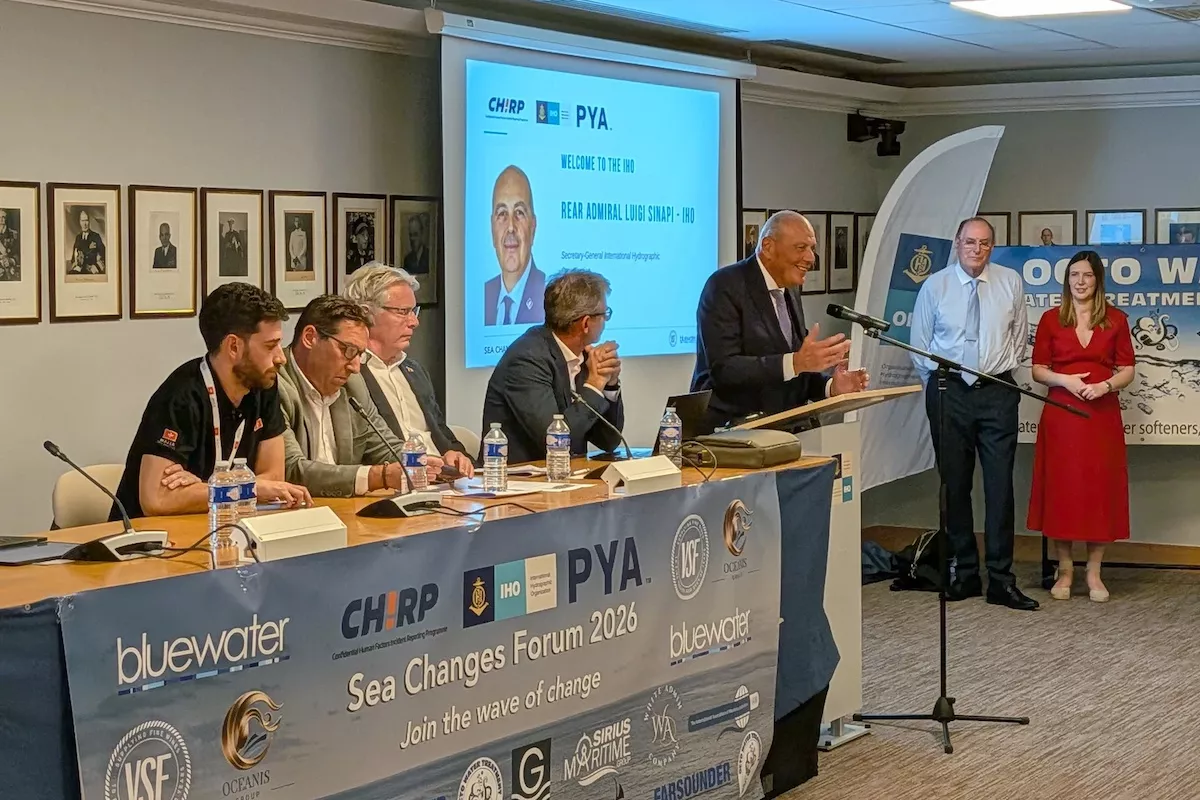
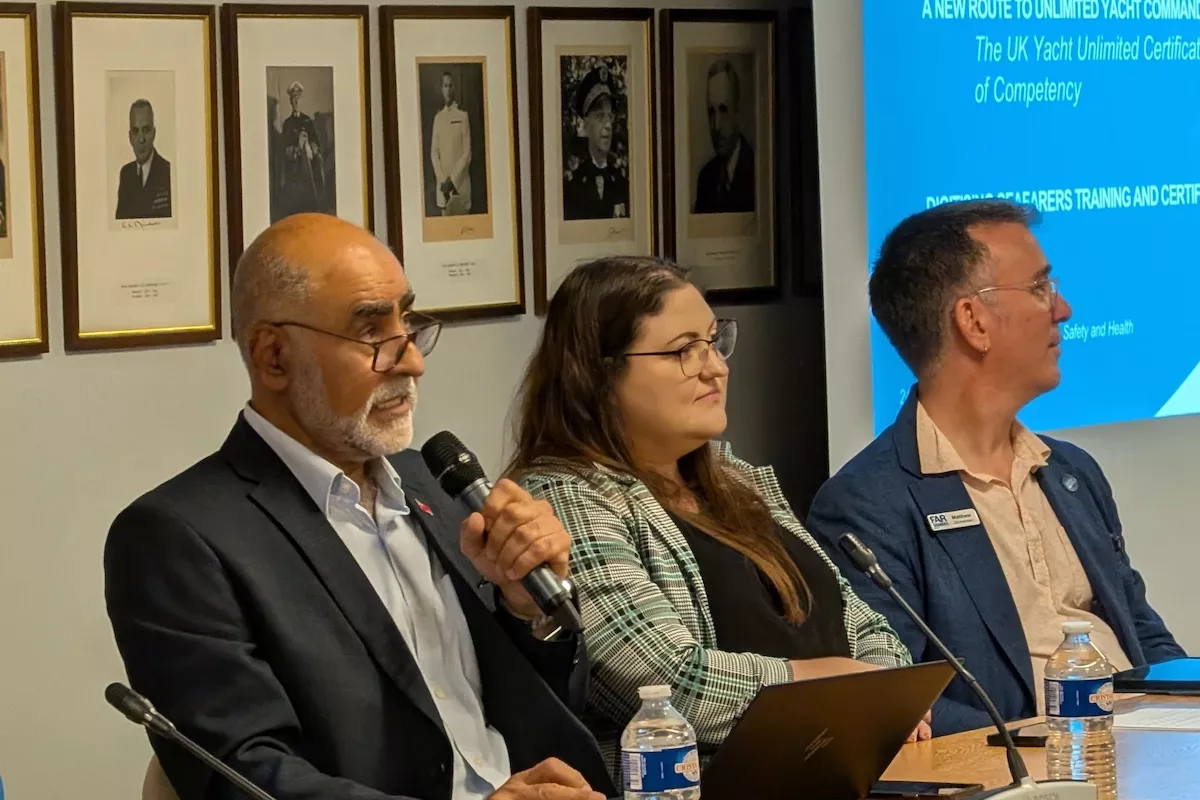
Beyond contract disputes and border checks, superyachts in Monaco are taking on a new role: ocean conservation. At the Professional Yachting Association’s (PYA) 16th Sea Changes Forum at the International Hydrographic Organization (IHO), industry leaders unveiled forward-looking sonar systems to prevent whale strikes and outlined how private yacht fleets are now actively mapping the global seabed.

Meeting alongside the Monaco Yacht Show, the PYA brought together ten major maritime authorities on Thursday 24th September to safeguard the 11,000 crew members powering a €54 billion global industry. The forum established a clear priority: eliminate administrative delays, clarify border rules, and strengthen crew protections.

Slashing administrative friction for crew

Officially authorised by the UK MCA and Transport Malta, the PYA verified thousands of Sea Service Testimonials this year, preventing costly career delays for crew. The forum introduced streamlined fast-track processes for Certificate of Competency (CoC) and Notice of Eligibility (NoE) applications.

Working with the RYA and the IAMI GUEST Program, the association also briefed seafarers on new European border rules (EES), Schengen stay limits, and stricter Mediterranean anchoring laws.

Photo credit: PYA

Uniting crew welfare and ocean tech

While technological initiatives like FarSounder’s whale-avoidance sonar and the IHO’s crowdsourced bathymetry connect yachting with marine science, human welfare remains the PYA’s core focus.

Through its Member Assistance Service (MAS), the association reinforced its direct support for crew across deck, engineering, interior, and galley departments, offering confidential guidance on contract disputes, unpaid wages, and workplace conditions.

“Our presence during the Monaco Yacht Show confirms what the PYA has always been, a dedicated advocacy platform and service hub for working crew, not just an observer,” said Christophe Bourillon, CEO of the PYA, adding: “Whether a deckhand logging their first sea days or a Captain revalidating a Master’s CoC, our role remains to protect their professional standing and simplify their career path.”

The PYA will continue delivering legislative briefings and sea service verification through late 2026, before the Sea Changes Forum returns to Monaco next September.

Stay updated with Monaco Life: sign up for our free newsletter, listen to our podcasts on Spotify, and follow us across Facebook,  Instagram, LinkedIn, and Tik Tok.

Main photo credit: PYA

Monaco-Ville’s new property law is now in force. Here’s what changes

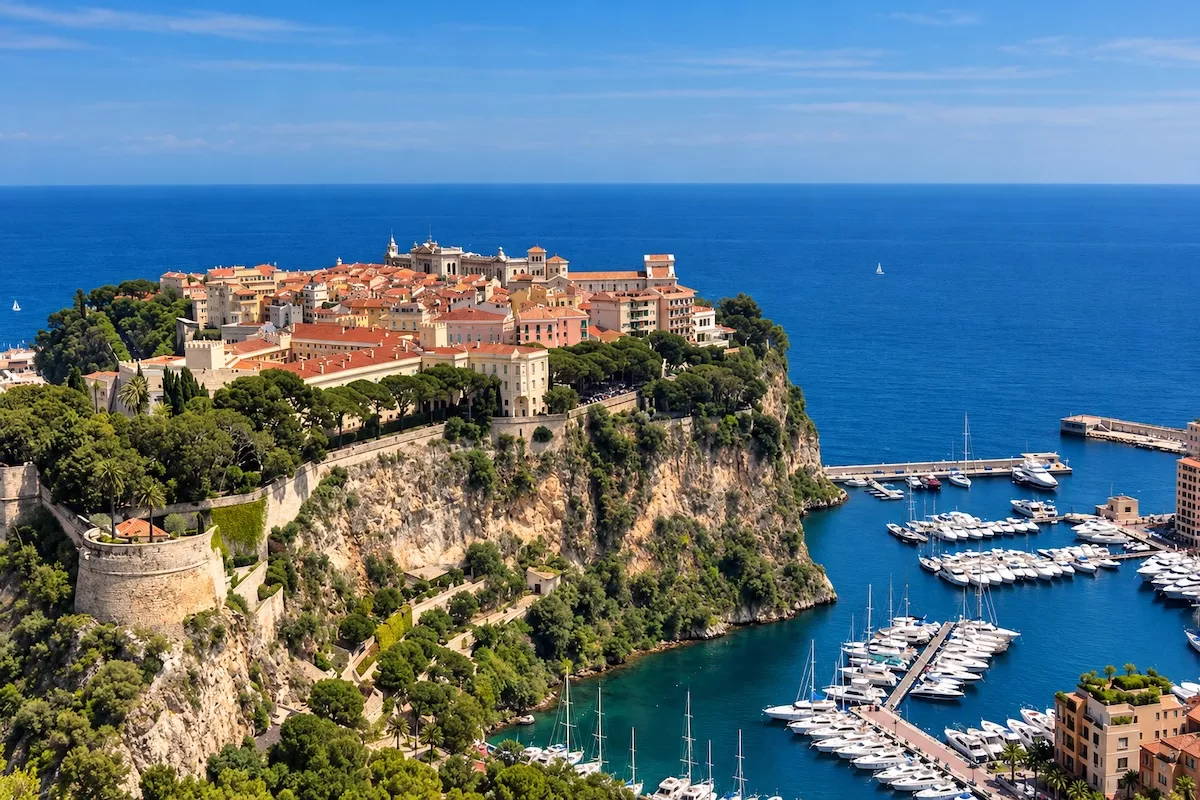
Buying a home, opening a business or letting an apartment to visitors in Monaco-Ville now comes under a new set of controls, as legislation designed to protect the Principality’s historic heart takes effect.

The State has gained a right of first refusal over property sales on the Rock – home to key Monegasque institutions including the Prince’s Palace, the Monaco Cathedral, the Oceanographic Museum, and the Court House. Short-term holiday lets, changes of commercial activity and alterations to buildings, meanwhile, face tighter scrutiny.

Law No. 1.598 on the protection of the Rock of Monaco was adopted by the National Council on 12th October and sanctioned by Prince Albert II on 16th October. Its publication in the Journal de Monaco on 23rd October, alongside four implementing Sovereign Ordinances, moves the measures from proposal to practice.

As Monaco Life reported earlier this month, the Government presented the legislation as an urgent response to mounting property pressure. The final text describes the Rock as “the heart of the Principality’s identity” and makes its protection an objective of “higher general interest”.

For owners, residents and businesses, its reach extends well beyond preserving historic façades.

The State gets first refusal on property sales

Owners wishing to sell a building, apartment or commercial lease on the Rock must notify the Minister of State in advance, disclosing the price and intended buyer. Selling a controlling stake in a company that holds such assets also falls within the rules, regardless of where the company is registered.

The State has one month to decline, buy on the declared terms or make a counter-offer. Disputes over valuation can go to an independent conciliation commission and ultimately the courts.

Owners retain the right to abandon a sale without penalty. The law expressly prevents them from being forced to sell to the State at a price they have not accepted.

The power must serve specified purposes, including protecting historic buildings, retaining permanent homes, supporting local commerce or providing public amenities. Transfers within families are exempt, while sales that bypass the declaration requirement are void.

For buyers, the practical change is an additional stage before a transaction can proceed.

Holiday lets face registration and a deadline

The law also draws a clearer line between homes and visitor accommodation. Converting a permanent residence into a property repeatedly let for short stays now requires prior authorisation.

Residents can still let their main home for up to 90 days a year without that authorisation, provided their lease and co-ownership rules allow it. Other operators may apply for a temporary licence lasting up to three years. These licences cannot be transferred with the property, and their number may be restricted street by street.

All short-term furnished lets must be registered, including those covered by the main-residence exemption, with the registration number displayed in advertisements.

Existing operators have until late April 2027 to register. Those who need authorisation but do not obtain it must stop operating by late October 2027. Breaches can attract administrative fines of up to €100,000, alongside daily penalties.

Protecting shops that serve residents

The measures give the Government a way to influence the balance between businesses serving residents and those catering primarily to tourists.

Commercial premises are divided into six activity classes, with authorisation required to move between them. The Government can also set minimum or maximum proportions for different categories on individual streets.

This could help preserve food shops, everyday services, crafts and cultural activities in a district where visitor demand competes with residents’ needs.

Building work comes under closer scrutiny

Prior approval is required for changes to façades, roofs, windows and other joinery, colours, shopfronts, signs and awnings, as well as new construction and demolition. Routine maintenance carried out on a like-for-like basis requires a declaration.

A dedicated planning regulation will establish conservation requirements building by building, following a three-month public consultation. Where those requirements make restoration more expensive than ordinary works, the State will contribute towards the additional cost.

The Government must also compile an inventory of how every premises on the Rock is used within 18 months. Owners will have three months to challenge their property’s entry.

Reports to the National Council every three years will record property sales, State acquisitions and authorised holiday lets, providing a measure of how the new controls are being applied.

Monaco Life is written by qualified journalists, writing original content. Sign up for our free newsletter, listen to our podcasts on Spotify, and follow us across Facebook,  Instagram, LinkedIn, and Tik Tok.

Photo credit: Stephanie Horsman, Monaco Life


Monaco academy graduate Mbappé reaches new high in Ballon d’Or

Former AS Monaco forward Kylian Mbappé recorded his highest Ballon d’Or placing on Monday 26th October, coming in second place behind Harry Kane at the ceremony in London.

The Real Madrid striker finished ahead of Barcelona’s Lamine Yamal, with Rodri and Lionel Messi completing the top five. Although he did not secure his first Ballon d’Or, the occasion marked another milestone for the player whose professional career began in the Principality.

A SEASON OF GOALSCORING

Mbappé entered the awards after leading the scoring charts in both La Liga and the Champions League during the 2025-2026 season. He scored 25 league goals for Real Madrid and added 15 in Europe’s leading club competition.

His goalscoring continued internationally during the 2026 World Cup. The forward struck ten times for France, claiming the tournament’s Golden Boot. This honour was among the achievements that earned him a place among the leading Ballon d’Or contenders.

Kane ultimately secured the award after scoring 73 goals for club and country across the campaign. The Bayern Munich striker became the first Englishman to win the award since Michael Owen in 2001 and also collected the men’s striker of the year prize.

Harry Kane with his first Ballon d’Or. Photo source: Ballon d’Or

BREAKTHROUGH AT STADE LOUIS-II

Mbappé’s rise began in Monaco’s academy before his first-team debut against Caen on 2nd December 2015. At 16 years and 11 months old, he became the club’s youngest professional player at the time.

His first Ligue 1 goal followed against Troyes two months later, while he also helped Monaco’s under-19s win the Coupe Gambardella in the spring of 2016.

The next season established him on the European stage. Mbappé scored 15 league goals as Monaco won the 2016-2017 French title, combining domestic success with a run to the Champions League semifinals.

His contributions included goals against Manchester City and Borussia Dortmund. Across his first-team career with Monaco, he registered 27 goals and 17 assists in 60 appearances.

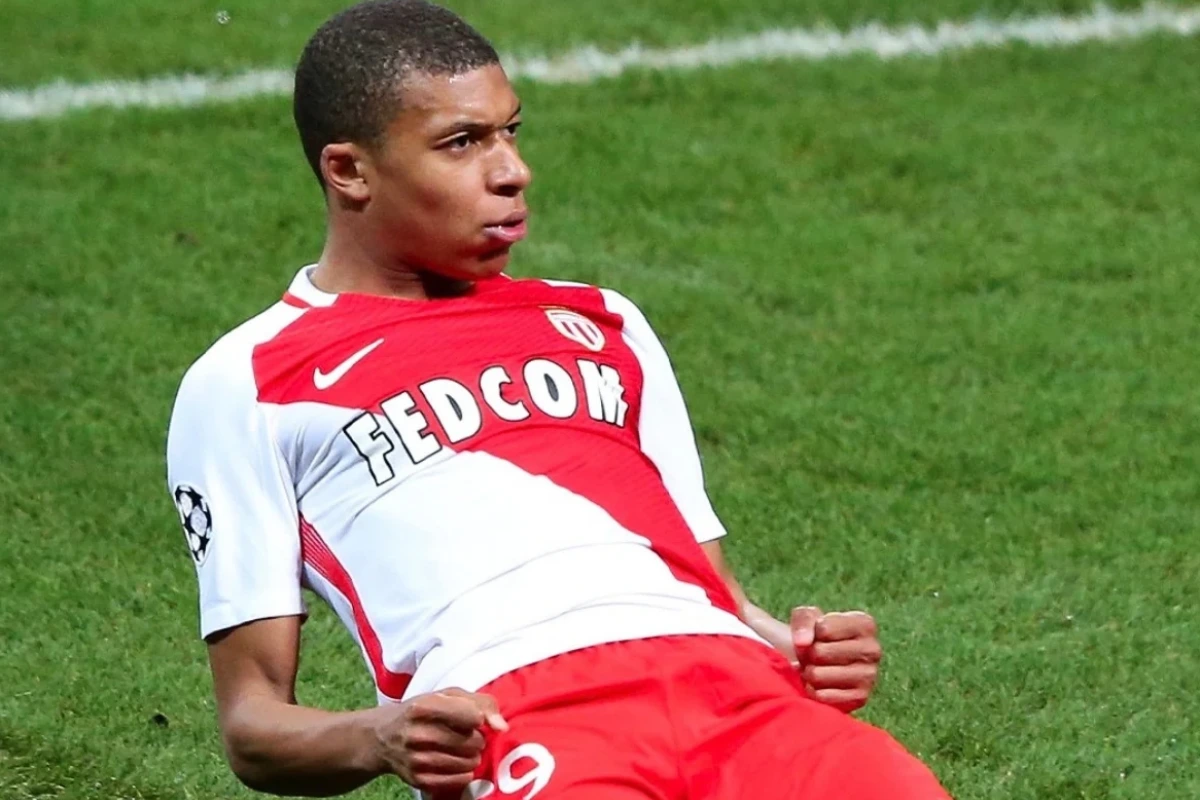
Mbappé celebrating during his time with AS Monaco. Photo source: Champions League

HONOURS ACROSS THE GAME

Elsewhere at the ceremony, Alexia Putellas won the women’s Ballon d’Or, while Yamal collected the men’s young talent award.

Paris Saint-Germain were named men’s club of the year, with Barcelona taking the women’s honour. Spain’s Luis de la Fuente received the men’s coaching award, while Unai Simón was named men’s goalkeeper of the year.

Nearly eleven years after his professional debut with AS Monaco, Mbappé now stands one place away from one of football’s most prestigious individual awards, with Monaco having provided the platform and support for his early rise.

Monaco Life is written by qualified journalists, writing original content. Sign up for our free newsletter, listen to our podcasts on Spotify, and follow us across Facebook,  Instagram, LinkedIn, and Tik Tok.

Main photo source: Ballon d’Or