Defending champions retain Monaco pétanque title

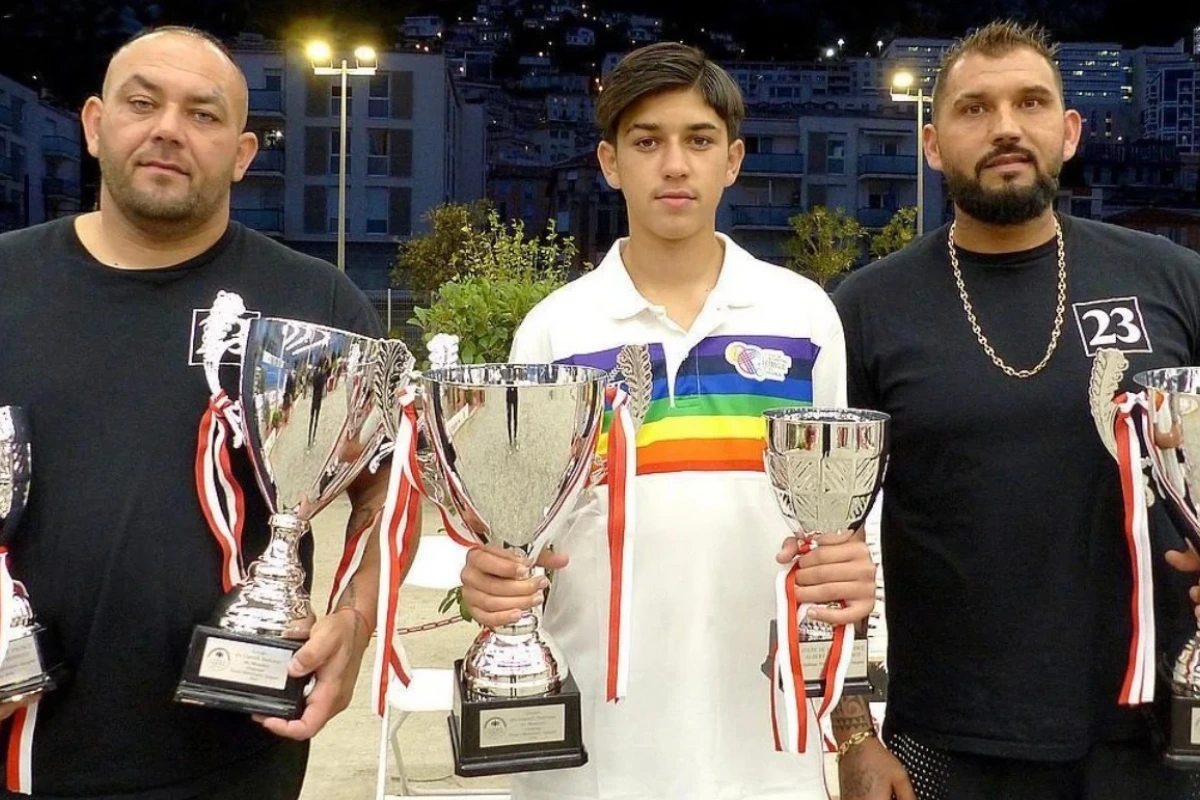
Dawson Herlemann, Marcel Herlemann, and Joseph Gimenez retained the Challenge Prince Héréditaire Jacques title with a 13-0 victory in the final of Monaco’s international pétanque tournament.

Held on Saturday 24th and Sunday 25th October, the triplette competition was organised by the Fédération Monégasque de Boules and Club Bouliste Monégasque.

The defending champions defeated Italy’s Franck Sciortino, Saverio Amormino, and Frederick Sciortino in a shutout final, rounding out a dominant run through the closing rounds of the tournament.

CONVINCING TITLE RUN

Herlemann, Herlemann, and Gimenez overcame Frédéric Lacanety, Ludovic Tarditi and Sony Delys 13-8 in the last 16 before beating Simon Dubois, Amir Khader and Anthony Michel 13-5 in the quarterfinals.

In the semifinals, the trio raised the bar as they conceded only one point against Lucas Attali, Anthony Cafiero, and Jordan Casanova to earn their place in the final.

Across the quarterfinals, semifinals, and final, the champions scored 39 points while only allowing their opponents six.

ITALIAN TRIO CLAIM SECOND

Sciortino, Amormino, and Sciortino earned their place in the final after a much tighter semifinal against Sébastien Batista, Stéphane Pagni and Jérémy Fernandez of La Boule Aixoise, with a narrow 13-11 victory.

Their quarterfinal performance had been more comfortable, with a 13-2 win over Jordan Clodic, Jean-Pierre Subrenat and Nicolas Roure.

However, the Italians were unable to respond to the defending champions in the title match, as Herlemann, Herlemann, and Gimenez secured another Monaco win.

Monaco Life is written by qualified journalists, writing original content. Sign up for our free newsletter, listen to our podcasts on Spotify, and follow us across Facebook,  Instagram, LinkedIn, and Tik Tok.

Photo source: Pétanque Boulistenaute

Errol Girdlestone to conduct Handel’s timeless Messiah at St Paul’s 

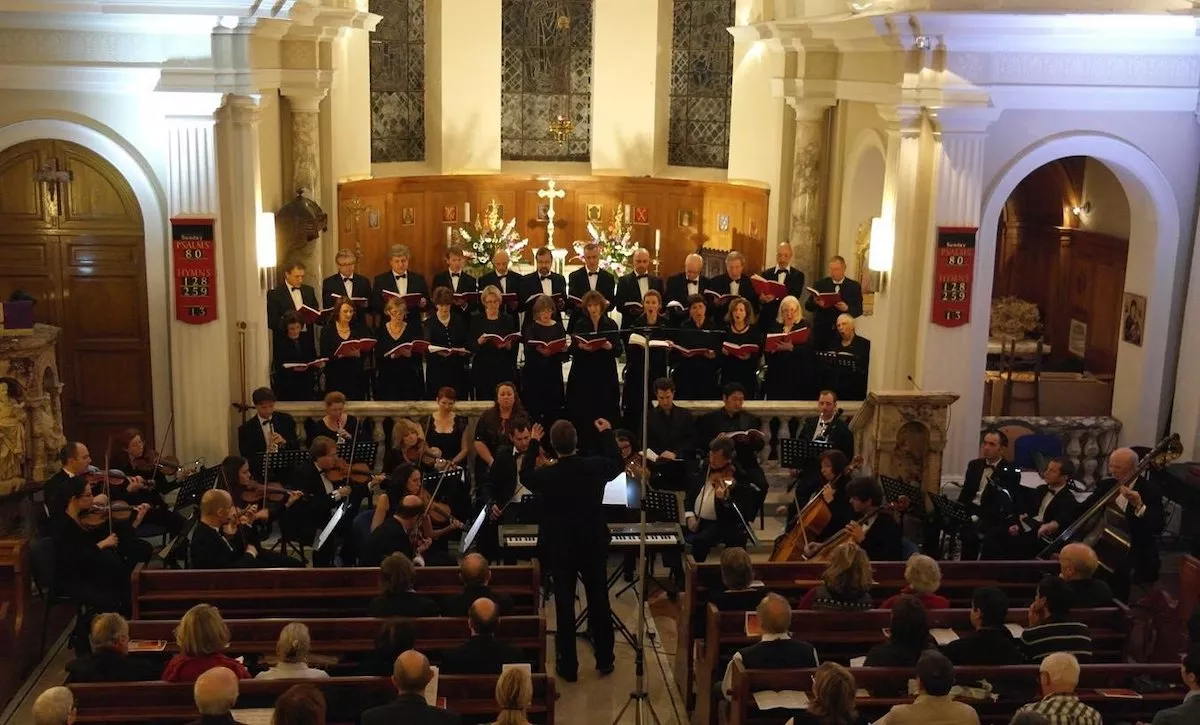
Monaco’s seasonal cultural calendar officially opens on Saturday 28th November, as the Ensemble Vocal et Instrumental Ristretto brings George Frideric Handel’s Messiah back to St Paul’s Anglican Church.

Long considered the Principality’s definitive winter masterpiece, Handel’s 1742 work will be performed in an intimate setting from 19:30 to 22:30.

International lineup takes centre stage

The performance will be conducted by British maestro Errol Girdlestone. A former English National Opera staff conductor and Oxford alumnus, Girdlestone founded the regional Ristretto ensemble in 2012 and has served as Director of Music at St Paul’s since 2020.

For this annual presentation, Girdlestone leads the full Ristretto choir and orchestra alongside soprano Felicity Murphy, countertenor Clint van der Linde, tenor Gavan Ring, and bass Thomas Dear.

First performed in Dublin in 1742, Handel’s masterpiece remains a defining work of the Baroque repertoire. 

General information and venue access

The evening includes a 15-minute interval following the first section and a brief pause during the second half.

Tickets are priced at €30 for general admission, with free entry for children aged 12 and under. Seating is unreserved, and attendees are encouraged to use nearby parking facilities at Saint Laurent or Saint Charles. 

Photography and video recording during the performance are strictly prohibited.

Stay updated with Monaco Life: sign up for our free newsletter, listen to our podcasts on Spotify, and follow us across Facebook,  Instagram, LinkedIn, and Tik Tok.

Photo credit: Monaco Life

Who was Antoine de Massy? From Olympic ambitions to business in Monaco

Antoine de Massy, who has died at 29, grew up in the shadow of one of Monaco’s great tennis families and once set his sights on the Olympic Games. In the end, though, he made his own way as an entrepreneur in the Principality’s small but growing technology sector.

The Prince’s Palace announced his death on Monday 26th October, a day after his body was found in a park below Boulevard du Larvotto. Its tribute focused on the sport that had shaped his early life. “Passionate about tennis, he was part of a family history closely linked to the sport in the Principality,” the Palace said, adding that Their Highnesses “share in the grief of his family and loved ones and extend their sincere condolences at this painful time.”

A Grimaldi by descent

Antoine Alexandre Denis de Massy was born on 15th January 1997, the son of Christian de Massy and Cécile Gelabale, who founded the children’s charity Ladies Lunch Monte-Carlo in 2005.

Through his father he descended directly from the Grimaldis. His grandmother, Princess Antoinette, was the elder sister of Prince Rainier III, which made Christian de Massy a first cousin of Prince Albert II and Antoine the Sovereign’s first cousin once removed. He had no official role in the Princely Family and kept a low public profile.

Raised on the court

Tennis came to him through both blood and example. His grandfather, Alexandre-Athenase Noghès, a Monégasque lawyer who married Princess Antoinette, was an international tennis champion. His aunt, Elizabeth-Ann de Massy, ran the Monte-Carlo Country Club and the Monégasque Tennis Federation for years until her death in 2020. That role has since passed to her daughter, Mélanie-Antoinette de Massy, who also heads the Rolex Monte-Carlo Masters.

Antoine was given his first racket by his father at the age of three. Before he reached his teens, he had left Monaco for Miami to train seriously, combining long days on court with private lessons.

He described that life to L’Uomo Vogue in 2012, at the age of 15. Each morning started with a run on the beach at eight, then practice, then schoolwork. He named Novak Djokovic as the player he most admired, and he spoke of wanting to wear Monaco’s colours at the 2016 Olympics in Rio. His answer to the magazine’s question about his greatest ambition was: “To become number one in the world,” he said. “Even in the top 20 wouldn’t be bad!”

He never reached the Olympics or the professional tour. But for a teenager, the routine he described shows real discipline and a deep commitment to the game.

From Miami to Monaco’s tech scene

Antoine stayed in Florida after his junior tennis years and went on to Florida International University, where he studied between 2016 and 2019. His interests included international relations and diplomacy.

Back in Monaco, he moved into business. In December 2021 he co-founded Instant App, a company set up to design, build and run software, mobile applications, websites and digital platforms. The Journal de Monaco named him and Kenneth Gadeau as its first managers. When Gadeau stepped down in 2024, Antoine stayed on to run the business with a new partner, Velizar Radovic.

He also became a visible part of the Principality’s efforts to build a digital economy. At the Digital Innovation Summit Monaco in November 2023, he spoke about practical uses for blockchain and cryptocurrency.

Questions over his death

The circumstances of his death are still unknown. According to Prosecutor General Stéphane Thibault, Antoine’s family raised the alarm on Sunday 25th October, and police found his body early that evening.

A man who investigators established had approached Antoine on Boulevard du Larvotto was arrested on Monday morning. His custody was extended by 24 hours that evening while interviews and technical investigations continued. The prosecutor described him as, at this stage, a suspect who had witnessed events whose legal nature had yet to be established, and said that all possibilities remained under consideration, including an accident.

As the investigation continues, the Princely Family, and with it the wider Monégasque community, is left to try to understand how a life so full of promise could end so early.

See also: 

Prince Albert II’s cousin Antoine de Massy dies aged 29

Monaco Life is written by qualified journalists, writing original content. Sign up for our free newsletter, listen to our podcasts on Spotify, and follow us across Facebook,  Instagram, LinkedIn, and Tik Tok.

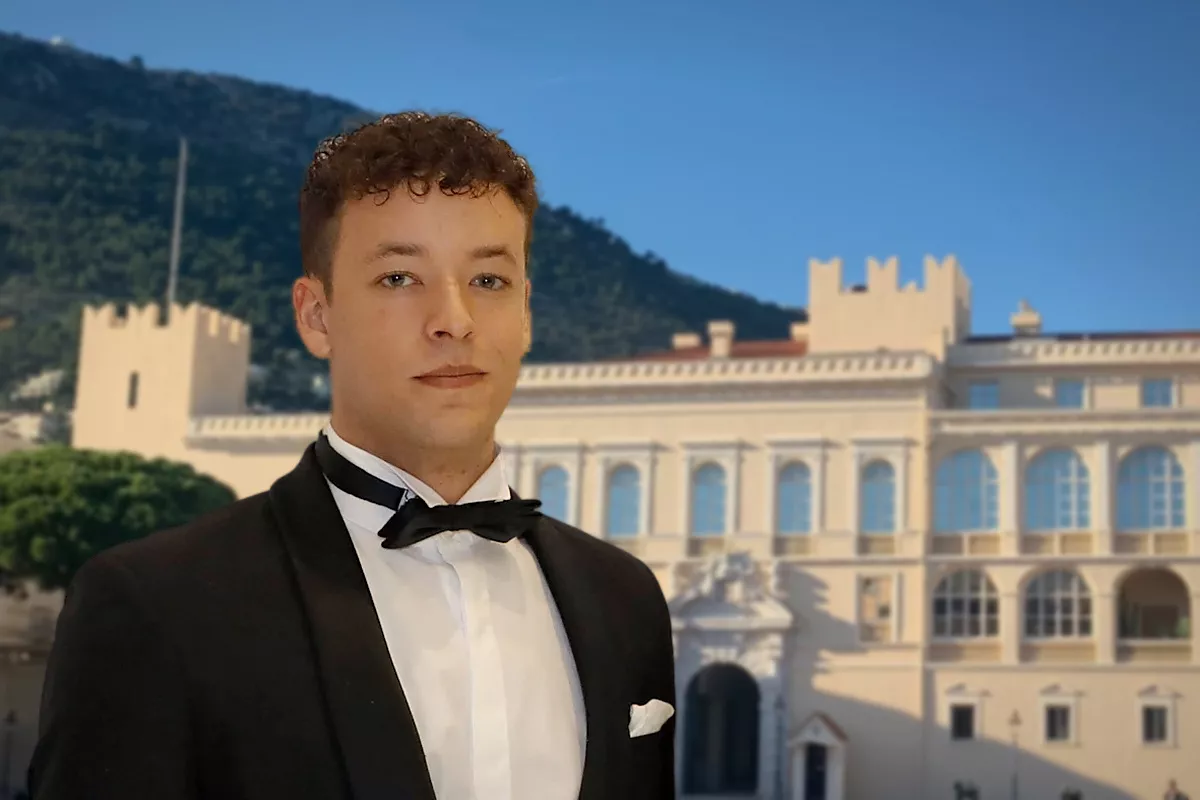
Photo generated by Monaco Life

Brigitte Aliot’s In File exhibition brings colour to Le Méridien

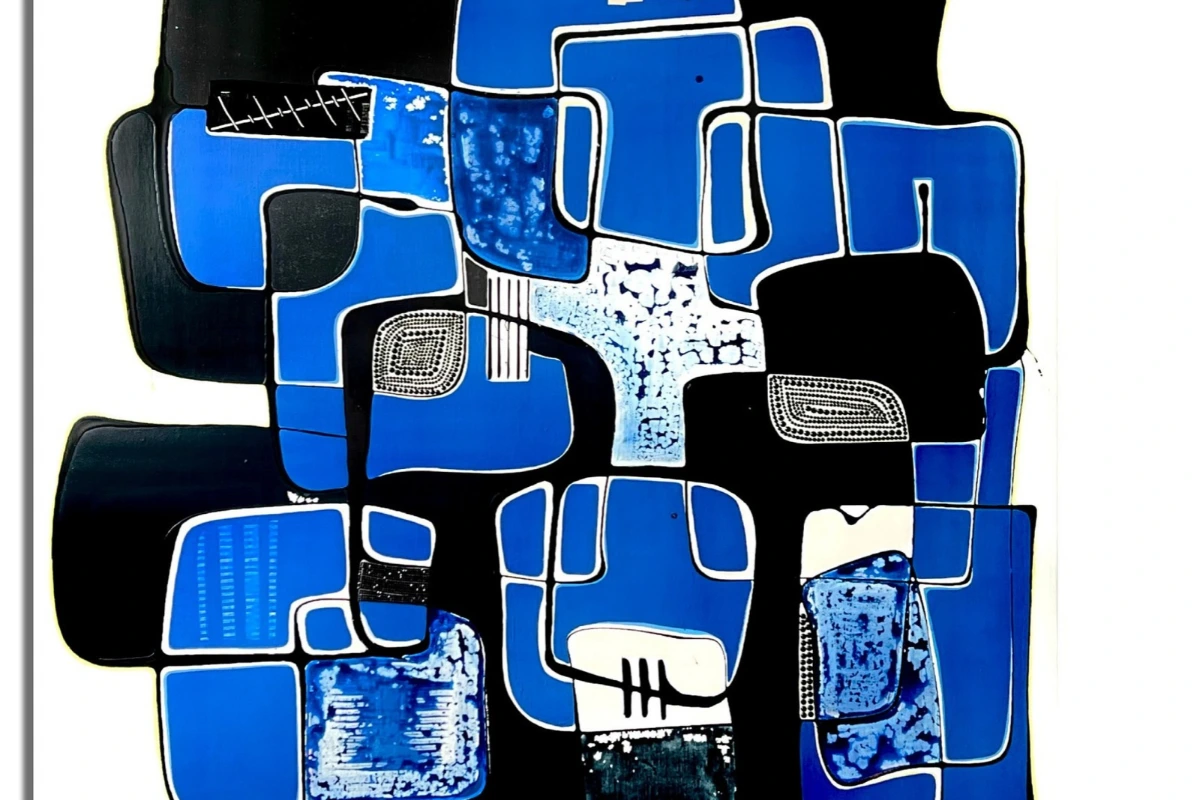
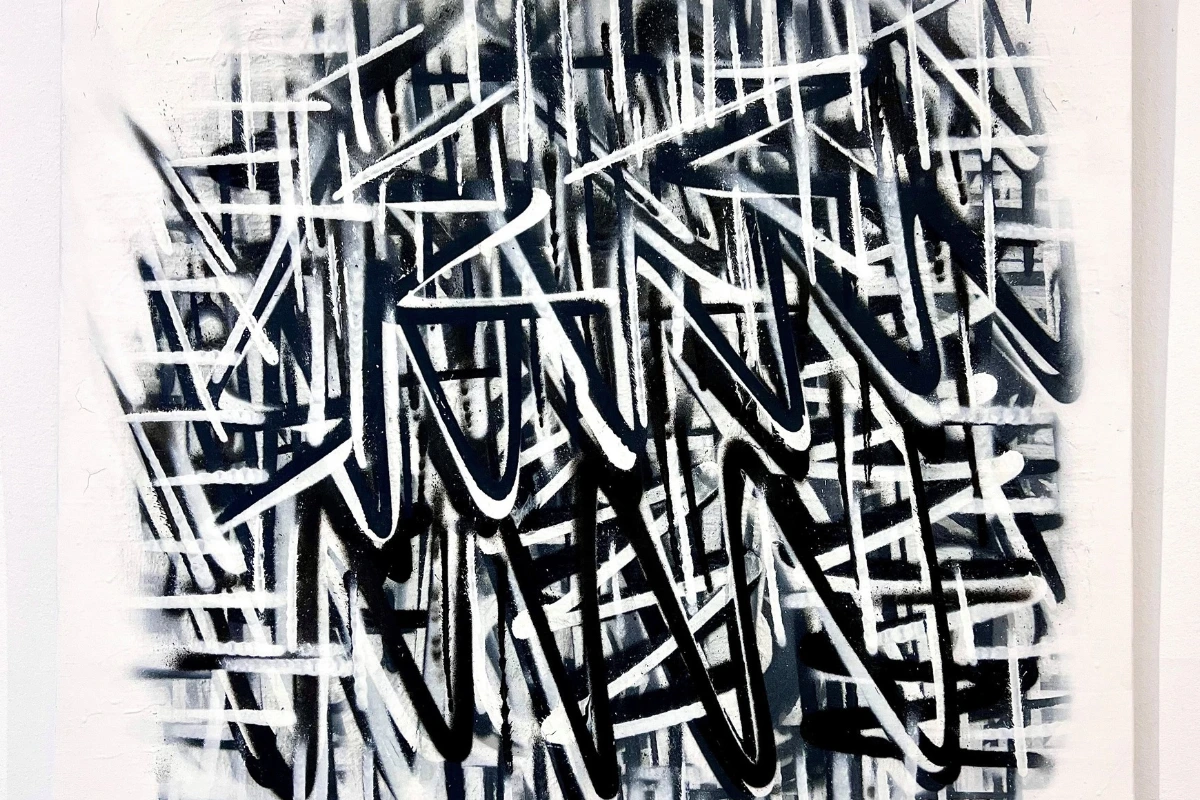
French artist Brigitte Aliot’s abstract works are on display at Le Méridien Beach Plaza, where her exhibition In File explores a painting practice developed over almost 20 years.

Running from 16th October to 16th January 2027, the exhibition occupies Le Méridien Hub, the hotel’s lobby and social space. The selected works reflect Aliot’s move towards freer compositions, leaving visitors free to find their own meaning in the paintings.

FROM STRUCTURE TO SPONTANEITY

As a self-taught artist, Aliot places emotion at the core of her practice. She describes her painting process as instinctive, informed by years of experimentation.  Her earlier, more structured works have gradually given way to softer lines, rounded contours, and sweeping movements of colour. Contrasts run through the work, bringing together boldness and fragility.

Rather than attaching a narrative to each painting, Aliot invites viewers to draw on their own experiences and imagination.

Intersecting black and white lines in one of Aliot’s abstract compositions. Photo credit: Brigitte Aliot

ART BEYOND THE GALLERY

The exhibition forms part of Le Méridien Beach Plaza’s ongoing artistic programme, which brings contemporary works into the hotel’s shared spaces for guests to encounter.

Its cultural offering also extends beyond the building through the brand’s Unlock Art programme. Hotel guests can receive complimentary admission to exhibitions at the Nouveau Musée National de Monaco by presenting their room key.

Monaco Life is written by qualified journalists, writing original content. Sign up for our free newsletter, listen to our podcasts on Spotify, and follow us across Facebook,  Instagram, LinkedIn, and Tik Tok.

Photo credit: Brigitte Aliot

Le Méridien goes Italian with new restaurant La Bisnonna

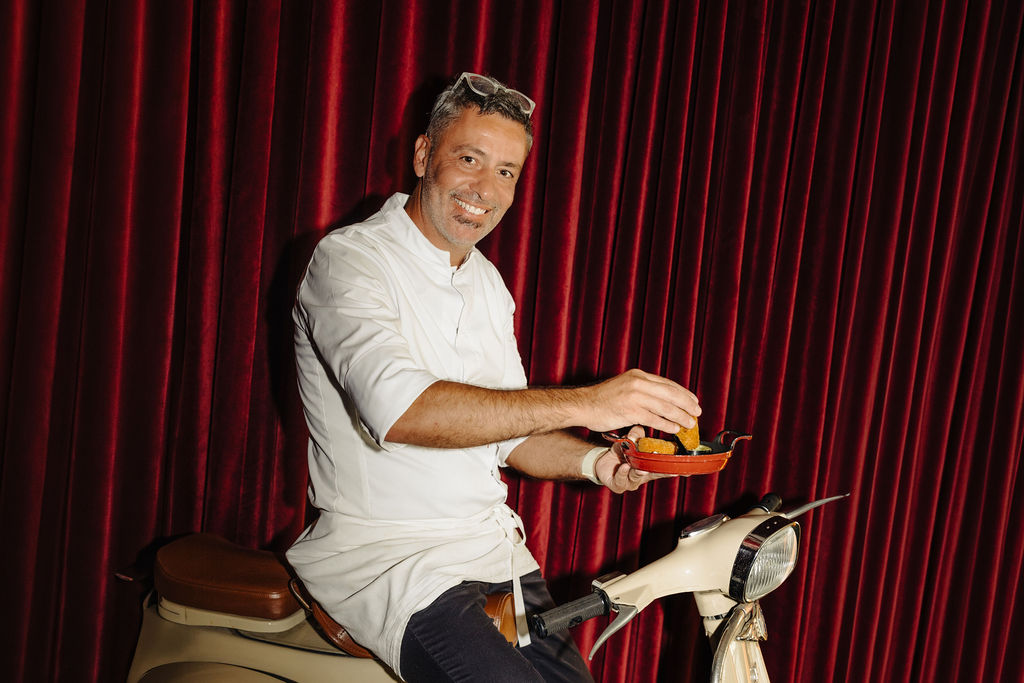
A new Italian restaurant has opened at Le Méridien Beach Plaza, bringing traditional family recipes, an Italian retro atmosphere and the culinary expertise of chef Pantaleo de Pinto to Monaco. Named La Bisnonna, the restaurant takes its inspiration from the Italian great-grandmother, celebrating generous cooking, fresh ingredients and the pleasure of sharing a meal.

Opened on 8th October in the space previously occupied by Belgian restaurant Smakelijk!, La Bisnonna draws its inspiration from an elegant Milanese great-grandmother, a woman whose kitchen was always open and whose table always had room for another guest.

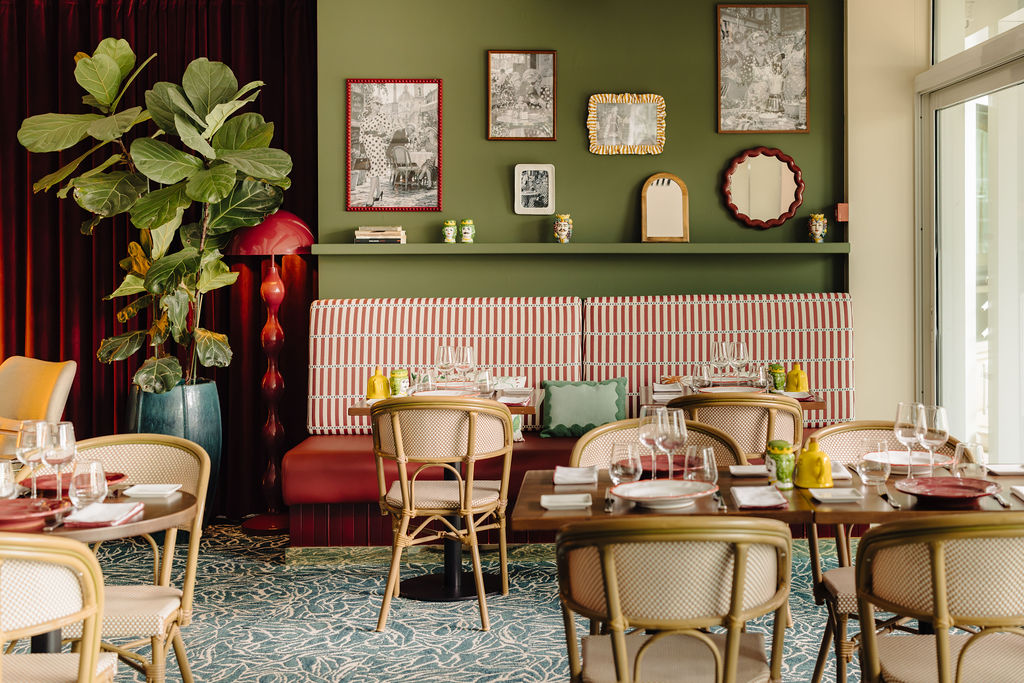
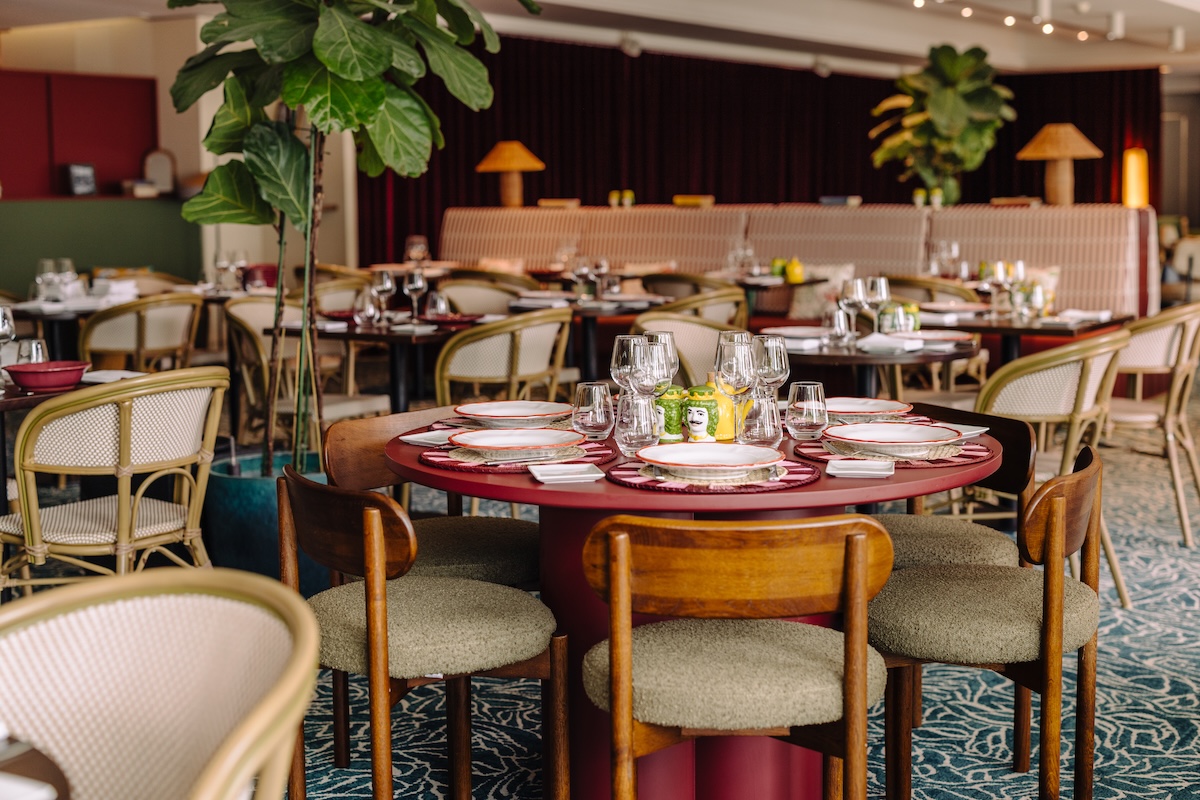
The concept extends beyond the food. Deep green walls, burgundy tones, vintage furnishings and carefully chosen retro details give the restaurant the character of an Italian family home. A 1963 Vespa with sidecar adds a particularly charming touch, recalling the Italy of another generation.

The result is a restaurant that combines the warmth of traditional Italian hospitality with a stylish, nostalgic setting overlooking the Mediterranean.

A familiar chef returns to his Italian roots

Leading the kitchen is Pantaleo de Pinto, whose career spans more than three decades and includes some of Monaco’s best-known restaurants.

Originally from Puglia, de Pinto began cooking professionally in 1993 before moving to Paris, where he worked alongside Gualtiero Marchesi, one of the most influential figures in modern Italian cuisine.

He arrived in Monaco in 2004 to help open Joël Robuchon’s restaurant at the Hôtel Métropole. His subsequent career took him to Château de la Chèvre d’Or, L’Atelier de Joël Robuchon in Paris and Mozza in Monaco, where he headed the kitchen during his time with the Giraudi Group.

Despite that impressive professional background, the inspiration behind his cooking comes from much closer to home.

“On Sundays, I would wake up to the smell of the ragù my grandmother was preparing. I would run into the kitchen, climb onto a chair and she would immediately hand me an apron. I plunged my hands into the flour – that is where my dream began,” he recalls.

At La Bisnonna, those memories translate into a menu built around the Italian dishes people know and love, prepared with carefully selected ingredients and an emphasis on flavour rather than unnecessary complication.

From carbonara to veal Milanese

The menu opens with traditional antipasti, including calamari alla Romana, cheese arancini and vitello tonnato.

Pasta features prominently, with rigatoni alla carbonara served with crispy guanciale, tonnarelli cacio e pepe and maccheroncini coated in the restaurant’s signature truffle cream.

The pinsas are made with a highly hydrated dough left to rise for at least 72 hours, while the lasagna di melanzane combines gratinated aubergine, slow-cooked Bolognese sauce, mozzarella and Parmesan.

Other Italian favourites include cotoletta di vitello alla milanese and tagliata di manzo, while seafood lovers can choose dishes such as cod cooked all’acqua pazza or roasted turbot with caponata and fig sauce.

Desserts are equally rooted in tradition. The moka tiramisu is prepared to order in front of guests, while the budino alla crema combines vanilla and orange with Piedmont hazelnut meringue.

Sunday lunch, the Italian way

La Bisnonna also introduces a new chapter for Le Méridien Beach Plaza’s popular Sunday brunch, transforming the hotel’s established family tradition into an Italian feast.

The weekly Brunch Club features an extensive buffet of antipasti, Italian classics and desserts, alongside access to the hotel’s newly redesigned 250-square-metre Kids Club, where children aged four to 12 can enjoy supervised activities while parents linger over lunch.

The restaurant joins Le Méridien’s wider dining collection, which includes Japanese restaurant SEN, Mediterranean dining destination Muse Monte-Carlo and Le Café Lacoste.

With its combination of traditional Italian cooking, an experienced chef and a setting designed for long, relaxed meals, La Bisnonna brings a distinctly Italian approach to dining at one of Monaco’s best-known seafront hotels.

La Bisnonna is open daily for lunch from 12pm to 3pm and Thursday to Monday for dinner from 7pm to 11pm. Starters begin at €12, main courses at €22 and desserts at €12.

Monaco Life is written by qualified journalists, writing original content. Sign up for our free newsletter, listen to our podcasts on Spotify, and follow us across Facebook,  Instagram, LinkedIn, and Tik Tok.

Photos source: Le Meridien Beach Plaza

Interview: From the BBC’s boys’ club to the battle for truth, Colleen Murrell on women in journalism

When Kate Adie became a household name in 1980, she was the only woman reporting abroad for the BBC. Today, women lead its coverage of wars and world affairs, and former BBC journalist Colleen Murrell has captured that transformation in a new book telling the story in the correspondents’ own words.

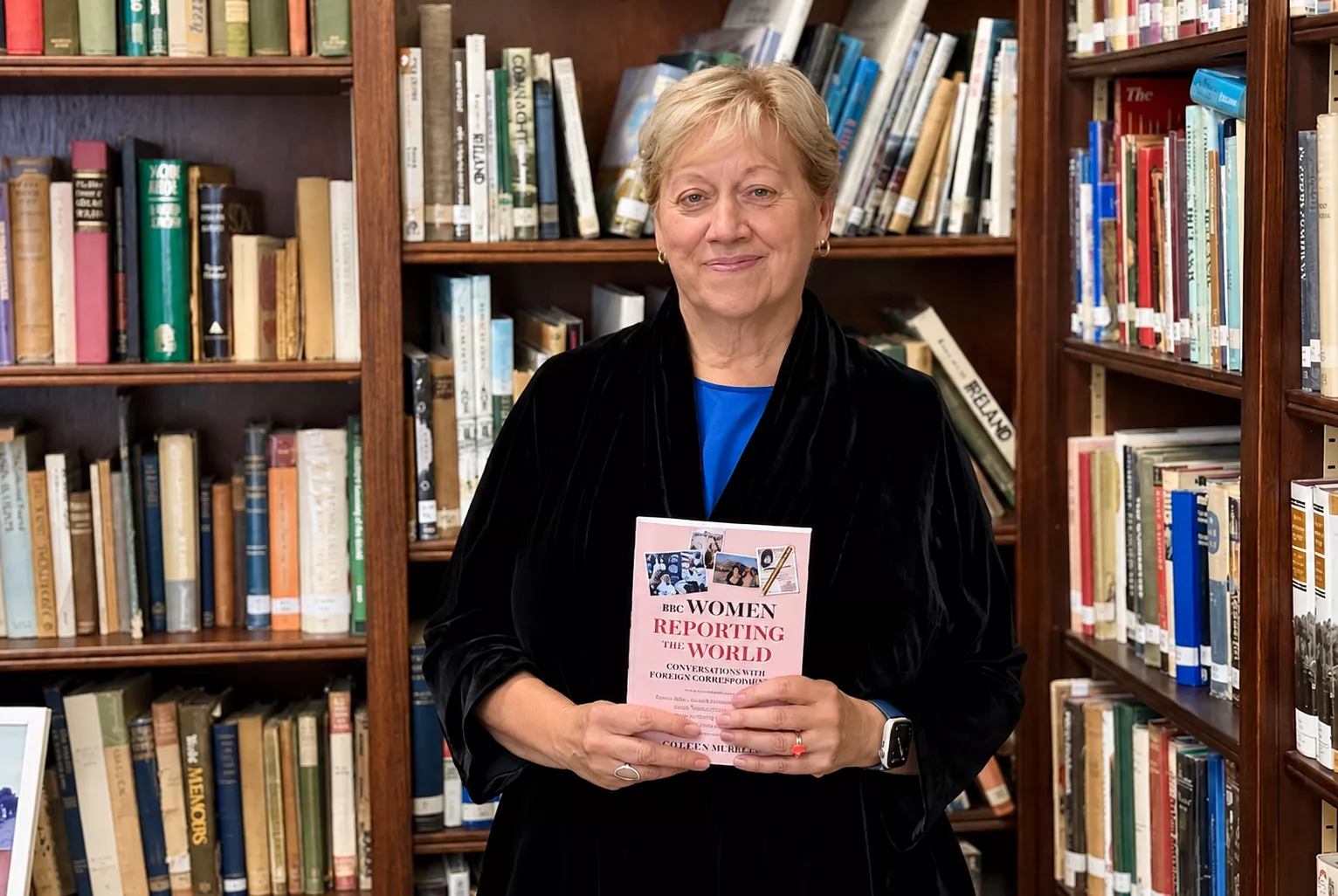
Colleen Murrell, Professor of Journalism at Dublin City University, was speaking to Monaco Life at the Princess Grace Irish Library, where she presented BBC Women Reporting the World: Conversations with Foreign Correspondents. Published by Palgrave Macmillan in 2025, it brings together the experiences of 10 BBC foreign correspondents, including Kate Adie, Lyse Doucet, Orla Guerin and Shaimaa Khalil, women who broke into one of journalism’s most prestigious and historically male-dominated fields.

A former reporter for the BBC, ITN and Associated Press, Murrell traces how quickly that world has changed, and why the lessons still matter as journalists face new pressures, from online abuse to the battle for trust in the age of artificial intelligence.

“I think that’s one of the reasons why I wanted to write this – it’s not very long ago that this was the case,” she says. “I’ve got two girls in their 20s – one of whom is studying journalism – and they have no idea how hard it was before.”

When marriage meant the end of a career

In its early years, the BBC was a relatively progressive employer, offering roles to the first generations of women graduating from university, some of whom rose to senior positions behind the microphone. That changed in 1932, when the broadcaster introduced a marriage bar.

“So any woman who married had to leave the BBC,” Murrell explains. “Some of those women were quite high up in the organisation and still had to leave because they’d got married.”

The bar was lifted in 1944, when wartime staff shortages meant the BBC needed women in its workforce. That same year, Audrey Russell became the first accredited female war reporter, travelling to mainland Europe shortly after the D-Day landings. Yet after her, four decades passed before the BBC appointed a woman to a permanent foreign posting.

Women had to fight even to be heard on air, facing prejudice about their voices and their competence. Some were allowed to present or report from home, but foreign correspondence remained a male preserve.

“The excuses were always, ‘It’s too dangerous for them’, or ‘We have to take care of them’, or ‘Oh, I don’t think they even want to do it’, which wasn’t true,” Murrell says.

Kate Adie and the empty space behind her

Kate Adie’s coverage of the Iranian Embassy siege in London in 1980 made her one of the most recognisable faces on British television. But her prominence, Murrell argues, disguised just how isolated she was.

“I was a teenager when Kate Adie was all over the television, and in a way, she was a sort of queen bee, because we didn’t realise that there was nobody behind her,” she says. “She was the only one, in fact. She sort of had it to herself, really, and we didn’t notice that there were all these other positions missing.”

It was not until 1986 that the BBC posted women to overseas bureaux, sending New Zealand-born Diana Goodman to Bonn as its first female foreign correspondent and Liz Blunt to West Africa. The appointments made headlines in their own right.

The resistance had sometimes been extraordinary. When Goodman reported from Beirut during Lebanon’s civil war in 1984, members of the public wrote to the BBC and to newspapers arguing she should not be there, partly because male colleagues might put themselves in danger trying to protect her.

“Diana just kind of went, ‘Oh, what nonsense’,” Murrell recalls.

Blunt went on to report from the front lines of Liberia’s civil war, and was inside the port authority building in Monrovia during the shootout in September 1990 when President Samuel Doe was captured, before being killed by rebels. Two schools in Liberia now bear her name.

The price women paid for their careers

Professional recognition was only part of the struggle. Of the 10 correspondents in Murrell’s book, only three have children. “The thing is, you had to choose back then,” she says. “It was one or the other.”

Murrell faced that choice herself. She turned down a senior role at Australia’s ABC after being told the job would demand “the hours that it takes”, and later moved into academia to raise her two daughters. Earlier in her career, at AP, she had seen others make that decision on women’s behalf.

“People didn’t want to send women abroad because they were thinking, ‘why on earth would they want to? For goodness’ sake, they’ve got children’,” she says. “People were making assumptions all the time.”

Today, correspondents such as Katya Adler and Anna Foster combine motherhood with senior international roles. For Murrell, the shift became clear at the start of the war in Ukraine, when she watched BBC bulletins in which female presenters crossed to female editors and correspondents, one after another.

“It was women talking to women, passing back to other women in the BBC studio, and it feels like, now, there’s a step change from back then,” she says.

Equal pay: a battle across generations

Equal pay has taken longer. Murrell traces the fight back to Audrey Russell, who she says challenged the BBC on discovering she earned less than the men. Generations later, women were still in the dark.

“It was not a conversation they had with their colleagues,” Murrell says. “And then one day, the highest salaries were published in the paper, and women found out that they weren’t being paid as much as their equal male colleagues. That went down very badly.”

Among them was China editor Carrie Gracie, who discovered in 2017 that North America editor Jon Sopel was earning up to £249,999 to her £135,000. She resigned from the post in protest, won an apology and back pay from the BBC, and gave every penny to charities championing equal pay.

“Nobody’s really shocked anymore”

Just as women have won their place on the front line, in the newsroom and, increasingly, on the payroll, the most powerful man in the world is openly belittling them. US President Donald Trump notoriously told Bloomberg’s Catherine Lucey “Quiet, piggy” aboard Air Force One, has repeatedly told CNN’s Kaitlan Collins to “smile more”, and in September barred CNN, MS NOW and Politico journalists from the White House.

It is the kind of behaviour that, a generation ago, might have ended a political career. For Murrell, what is most alarming is how little reaction it now provokes.

“I think it’s staggering that it has become normalised and that nobody is really shocked anymore,” she says. “There is always an undercurrent against women, and it shouldn’t be happening in the United States, which is meant to be one of the most enlightened democracies.”

Can journalism survive AI and the collapse of trust?

With anyone with a smartphone now able to document and share events instantly, and artificial intelligence producing content, what role is left for professional journalists?

“I think it is the truth teller,” she says. “Of course, if you’re dealing with Trump, he simply decides there are no truth tellers. The most remarkable brand he ever coined was ‘fake news’, which can be used to dispute anything anybody says.”

She believes readers will still turn to journalists who know their subject, put events in context and explain them clearly, so that people can trust that what they are reading “is the truth as far as it can be established”.

She also urges readers to question who is paying for the information they consume.

“You have to ask yourself, where has the money come from? Who is backing this? And how much of it, especially at election time, is being driven by other countries?” she says.

Advice for the next generation

Murrell’s own daughter has just completed a master’s in international journalism, “exactly the same one I did at City all those years ago”. She is entering a profession that, thanks in part to the women in her mother’s book, is no longer the male preserve it once was, but which is changing faster than ever.

For her daughter, her students and anyone hoping to follow them, Murrell’s first piece of advice is to specialise before studying journalism.

“I often think the best way into journalism is to study something else first, and then do a master’s in journalism, because it gives you a specialism,” she says. “Finance, for example. We desperately need financial journalists. Hardly anybody is numerate.”

Politics, international relations and languages can give young reporters the same edge, she adds. Many of the correspondents in her book studied languages and built their careers around a single country or region.

Her second piece of advice is to learn every practical skill possible, because today’s reporters are expected to write, film, record and edit their own work.

Third, she urges young journalists to decide early what kind of journalist they want to be. Many of her students lean towards activism. For them, she suggests working for campaigning organisations or NGOs, rather than newsrooms built on impartial reporting.

The fight for journalism’s future

For Murrell, the progress made by women in journalism is worth celebrating, but it is no reason for complacency. The barriers that once kept women out of foreign bureaux and war zones have largely fallen, yet the profession now faces new challenges, from political pressure and attacks on press freedom to misinformation and artificial intelligence. And while the tools and opportunities may have changed beyond recognition, the responsibility of journalists to report independently, challenge those in power and establish the truth remains as important as ever.

Monaco Life is written by qualified journalists, writing original content. Sign up for our free newsletter, listen to our podcasts on Spotify, and follow us across Facebook,  Instagram, LinkedIn, and Tik Tok.

Main photo credit: Cassandra Tanti