
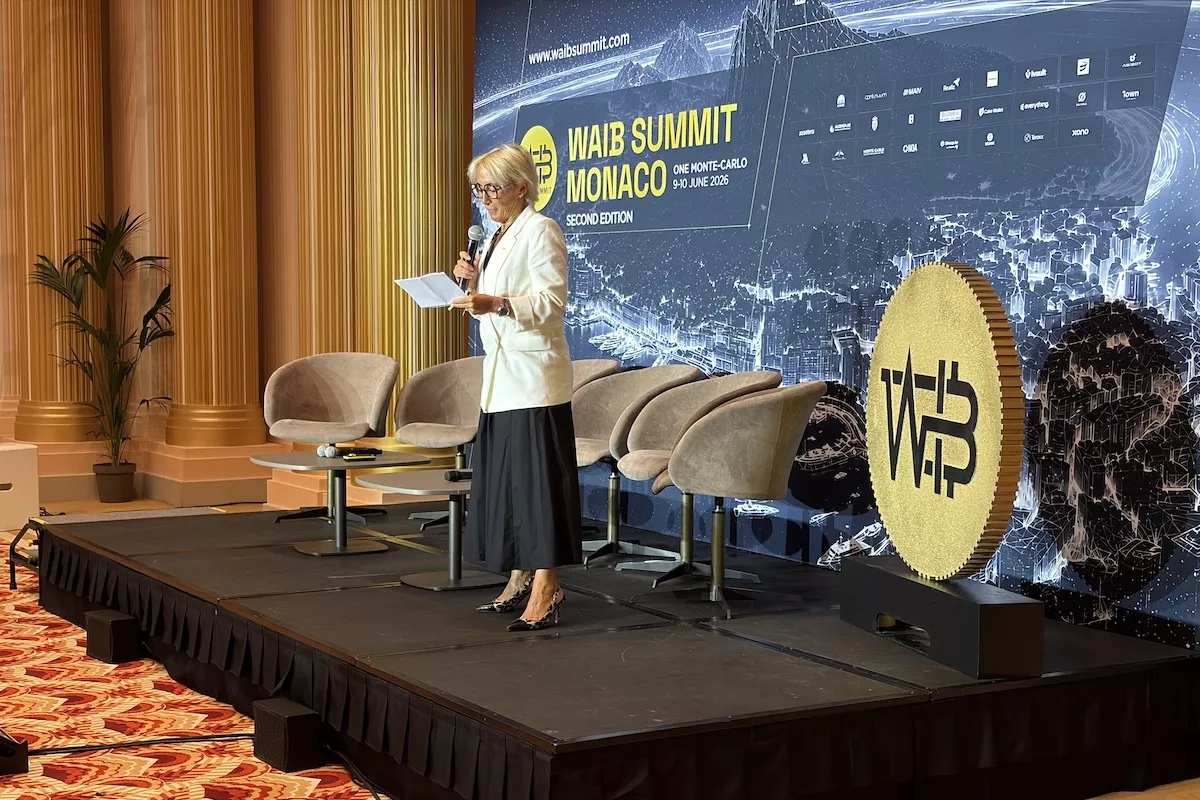
The Principality’s status as a global hub for innovation was firmly in the spotlight as the WAIB Summit 2026 descended upon the One Monte-Carlo on 9th and 10th June. Over two days, the event brought together the brightest minds in finance and technology to dissect a singular, pressing reality: the economic landscape is undergoing a fundamental transformation, and the digital asset space is leading the change.
Setting the tone for the event, Ludmilla Raconnat Le Goff, Monaco’s Attractiveness Delegate, delivered a powerful opening address. Emphasising that innovation must be balanced with responsibility, she noted: “Infrastructure, taxation, and quality of life still matter, but the future will belong to those who are willing to learn, adapt, and to collaborate.”
Breaking the ‘four-year’ myth
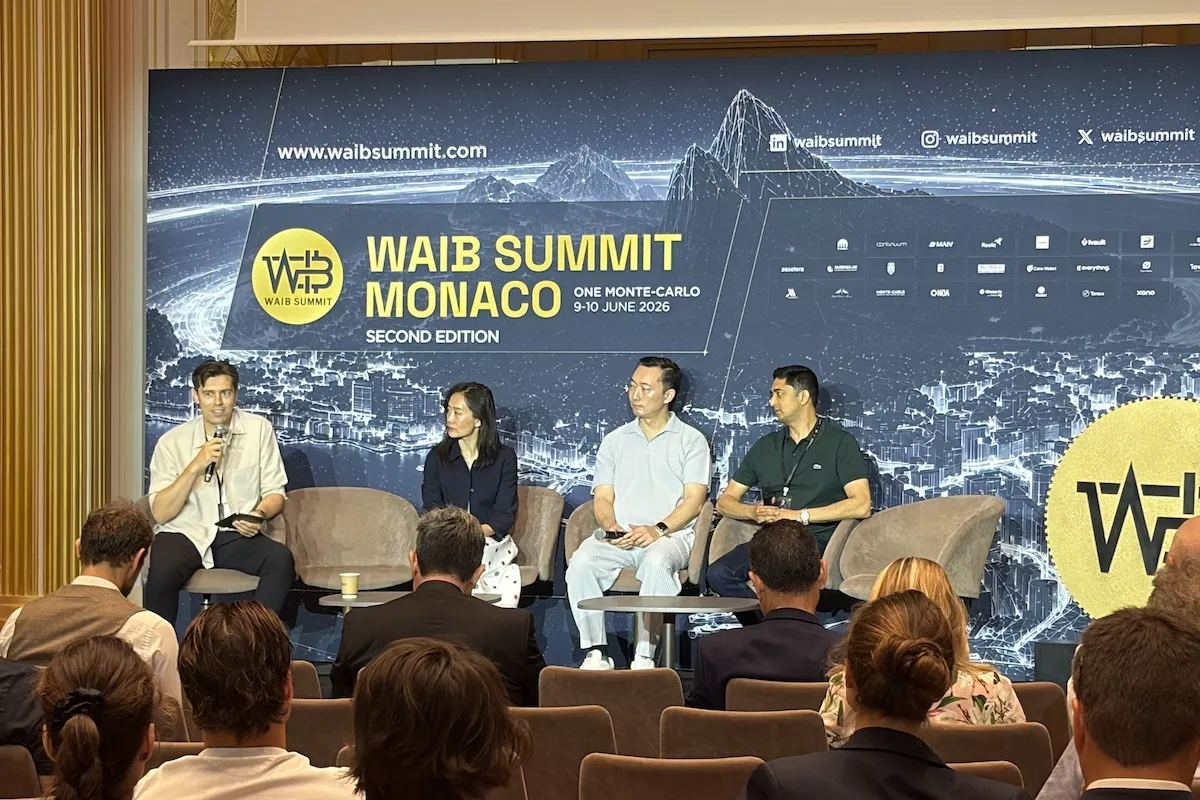
The summit’s opening panel, Beyond the Four-Year Cycle: What Drives Crypto Markets Now?, wasted no time challenging conventional wisdom. Industry veterans, including Sabina Liu (KuCoin EU), Nenter Chow (BitMart), and Ajinkya M. Tulpule (HashKey Europe), dismantled the long-held belief that Bitcoin’s halving events remain the sole pulse of the market.
While the four-year cycle remains a recognisable pattern, the consensus was clear: the market has matured. It is now tethered to the heartbeat of global macroeconomics and institutional capital. As Nenter Chow of BitMart observed, “You’re not seeing that same natural climb on the demand side anymore; it’s now a matter of institutional supply and demand dynamics.” Because today’s institutional players manage massive, diversified portfolios across equities and commodities, digital assets are now inextricably linked to the broader financial system.
The regulatory clock is ticking
The atmosphere turned serious during a critical fireside chat with Peter Kerstens, Advisor at the European Commission, DG FISMA, regarding the EU’s MiCA framework. The takeaway was unambiguous: 1st July 2026 marks a definitive hard cutoff for the MiCA transitional period. Any firm operating in the EU without a license after this date faces a precarious future.
Kerstens delivered a clear advisory for users: shift your assets to fully regulated, MiCA-compliant platforms immediately to ensure the safety of your holdings. With the European Commission already casting its gaze toward ‘MiCA 2.0’—a framework poised to encompass the tokenisation of real-world assets—it is clear that the days of the ‘Wild West’ are officially behind us.
From stablecoins to tokenised assets: The new capital market
The summit also featured critical discussions on the convergence of stablecoins and tokenised assets as the foundation for Europe’s new capital markets. Financial leaders from institutions like ABN AMRO and BNP Paribas emphasised that tokenisation is no longer a theoretical exercise but an operational reality. The focus has shifted from experimental pilot programmes to industrial-scale infrastructure. By migrating traditional legacy settlement systems to on-chain capabilities, institutions can unlock trapped liquidity and significantly enhance capital efficiency.
Reflecting on the timeline of this evolution, Julien Clausse of BNP Paribas noted, “We are in the midst of a generational change that will take roughly 20 years to fully realise. The next five years will be defined by market scaling; we are at a pivotal moment right now.” Experts agreed that this transformation requires a unified ‘monetary stack’—integrating stablecoins, tokenised bank deposits, and central bank digital assets—to bridge the gap between retail innovation, and institutional stability.
Making blockchain ‘invisible’
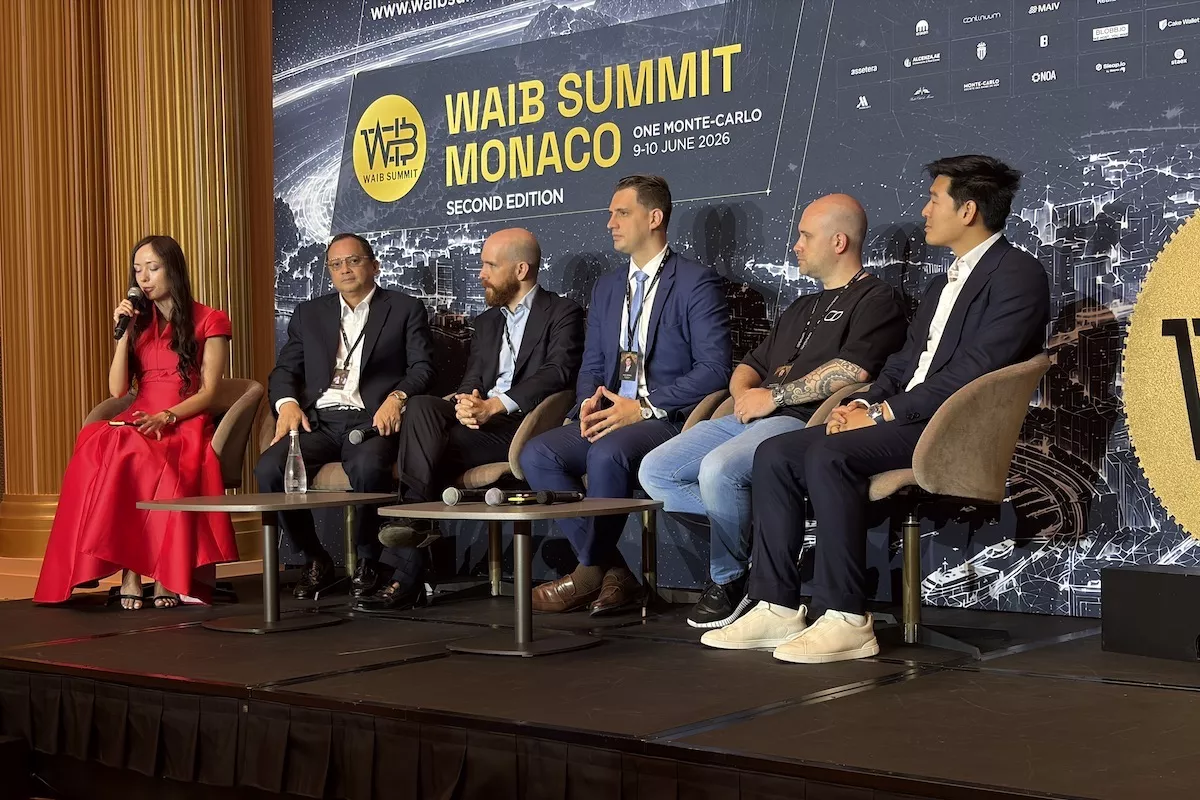
The dialogue shifted to institutional adoption, where leaders from ABN AMRO and BNP Paribas confirmed that digital assets have graduated from fringe speculation to essential components of modern portfolios. With roughly 97% of family offices now viewing digital assets as a permanent fixture, the industry is entering its most ambitious phase yet: the pursuit of invisible infrastructure.
The sentiment among the panellists was pragmatic. As Dr. Paul Infante Moñozca from the Moñozca Family Office noted: “The bank of humanity is here. We want to create bridges and remind every single player, small or big, that they’re important in a decentralised world.”
The mission for the next 24 months is to move beyond experimental proofs-of-concept. The goal is to weave blockchain so seamlessly into the fabric of the banking platforms that institutions already trust that the user won’t even know it’s there, effectively stripping away the intimidating technical complexity that has long kept retail and institutional investors at arm’s length. Centralised entities will increasingly serve as the compliant ‘gatekeepers’ to these decentralised networks, balancing the efficiency of blockchain with the trust and oversight required by traditional financial regulation.
The path forward
Despite the complexities of regulatory shifts and institutional integration, the mood at the One Monte-Carlo was undeniably optimistic. The industry is currently eyeing three major growth engines for the coming year. There is an aggressive push toward tokenising real-world assets, such as bonds and real estate, to unlock new liquidity. Simultaneously, the sector is prioritising a breakthrough in digital identity standards to ensure data can move seamlessly across platforms. Finally, there is an intense focus on building institutional-grade custody that meets the rigorous, long-term risk-management standards demanded by the world’s most conservative banks.
As the summit concluded, it was clear that we are witnessing a ‘smartphone moment’ for the financial sector—a foundational shift that may take years of meticulous building, but one that is now on an unstoppable trajectory.
Stay updated with Monaco Life: sign up for our free newsletter, listen to our podcasts on Spotify, and follow us across Facebook, Instagram, LinkedIn, and Tik Tok.
Main photo: Ludmilla Raconnat Le Goff – Monaco’s Attractiveness Delegate. All photos by Monaco Life