Casting is underway for extras aged 18 to 90 to appear in the upcoming Ocean’s Eleven prequel, with filming set to take place in Nice and Monaco from 24th August to 15th October.
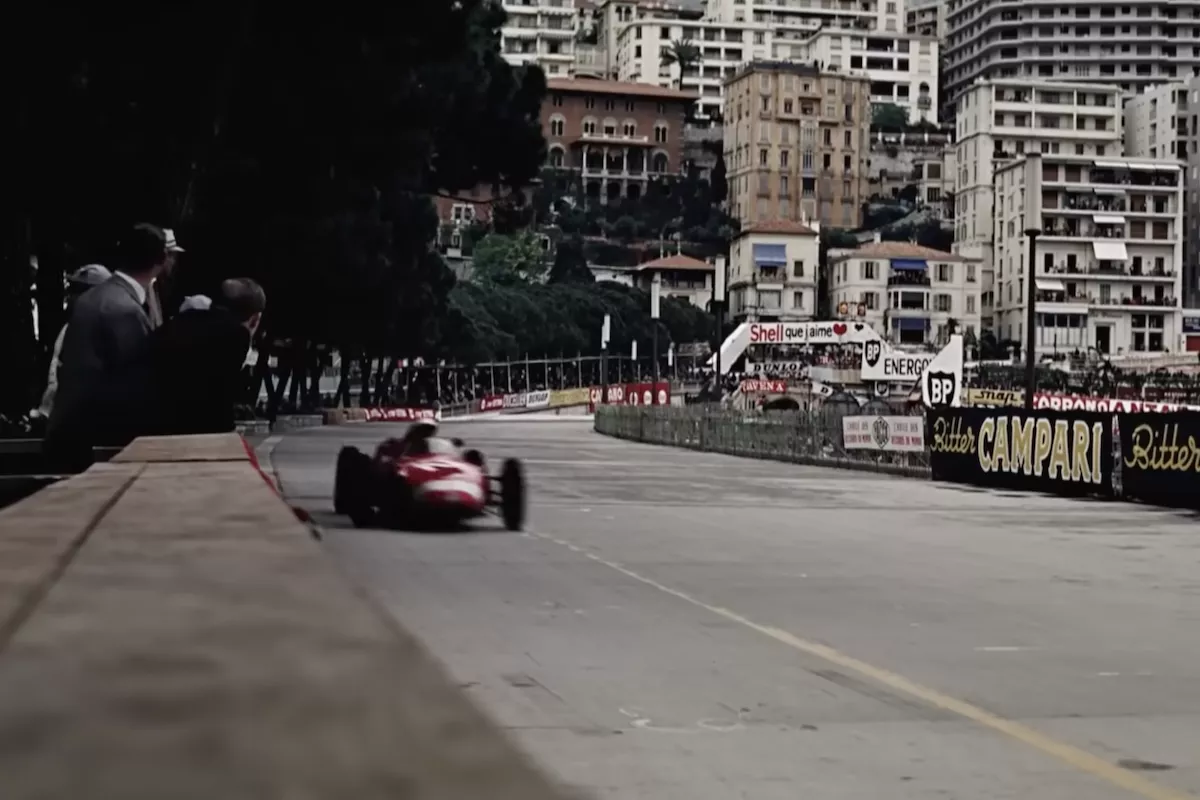
The untitled Warner Bros. film, directed by Bradley Cooper and starring both Cooper and Margot Robbie, is set at the 1962 Monaco Grand Prix and follows the parents of Danny Ocean, the heist mastermind played by George Clooney in the original franchise. Wagner Moura, fresh off his Oscar-nominated turn in The Secret Agent, is attached to play the film’s antagonist.
A strict period look required
Casting notices published by Tous les Castings call for a wide range of period-appropriate extras: hotel and casino staff such as waiters, sommeliers, croupiers and concierges; bodyguards, police officers, firefighters and lifeguards; mechanics, racing drivers and motorsport engineers; dancers, musicians and English-speaking actors with light-double experience; and boat crew, sailors and scooter riders.
A further call is open for crowd-scene extras of all backgrounds, though with notably strict requirements: no visible tattoos, piercings or cosmetic surgery, no modern hair colouring, a maximum height of 1.82m for men and 1.72m for women, and short haircuts required for male applicants. Anyone applying for the 1960s crowd scenes must live in Nice, Monaco or within an hour’s travel of the area.
Costume fittings ahead of filming
Costume fittings will run for half a day between 5th and 23rd August, ahead of the shoot itself, with applicants asked to commit to at least one full day of filming during the August-to-October window, and in some cases several consecutive days for continuity scenes. Applications are being taken through Tous les Castings’ website, with candidates encouraged to detail any relevant experience, from hospitality and motorsport to sailing, dance, security work or stunt and light-double work.
Production on the prequel is expected to begin in Paris in July before moving to the south of France, with the film slated for release in cinemas on 25th June 2027.
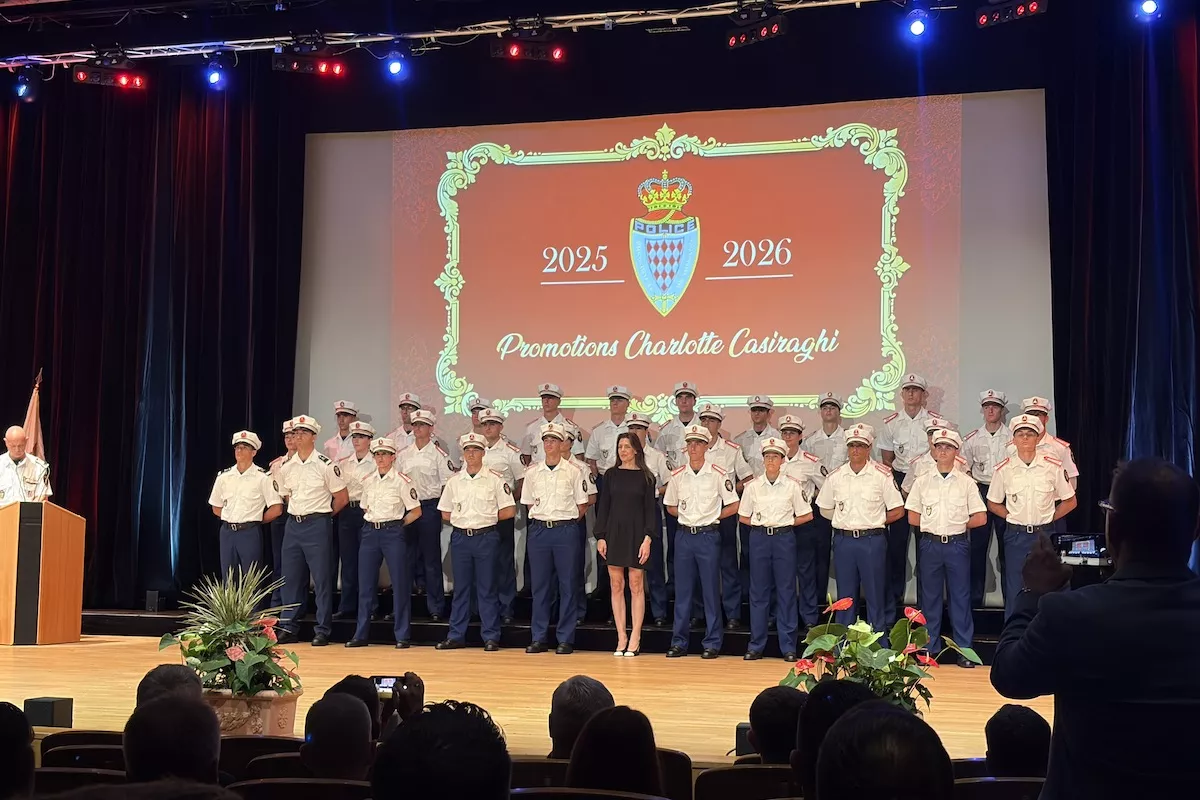
The Auditorium Rainier III in Monaco served as backdrop for a solemn and significant occasion on Monday 22nd June, as Charlotte Casiraghi joined the new recruits of the Monaco Police Force for their traditional badge and epaulette ceremony. These two cohorts, collectively named the ‘Charlotte Casiraghi Promotions’, marked the successful conclusion of an intensive 10-month initial training programme.
The event was defined by the presence of Charlotte Casiraghi, who has served as the Godmother of the Sûreté Publique since 1997. Addressing the newly graduated officers, Casiraghi spoke of the profound weight of their new roles: “I am proud that this promotion of trainee police lieutenants and agents will bear my name. I saw it as both a mark of trust and a powerful symbol of the bond that unites me with the Sûreté Publique. I fully measure the responsibility that this sponsorship represents”.
She also highlighted the rigours of their chosen path. “Behind this solemn gesture lies hours of effort, discipline, learning and overcoming oneself,” said the daughter of Princess Caroline of Hanover. “You have chosen a profession that requires courage, commitment and a sharp sense of service to the general interest.”.
A tradition of excellence
The ceremony, supported by the Direction of Cultural Affairs, celebrated not only the personal achievements of the graduates but also the enduring values of the Monegasque police force: Fides, Diligentia et Virtus (Faith, Diligence and Virtue).
The graduates, comprising two lieutenants and 29 police agents, were commended for their outstanding results, with average scores surpassing 16 out of 20 for lieutenants and 14 out of 20 for agents. These officers are now tasked with upholding the Constitution and the law, serving as the visible guardians of security for citizens, residents, and visitors alike.
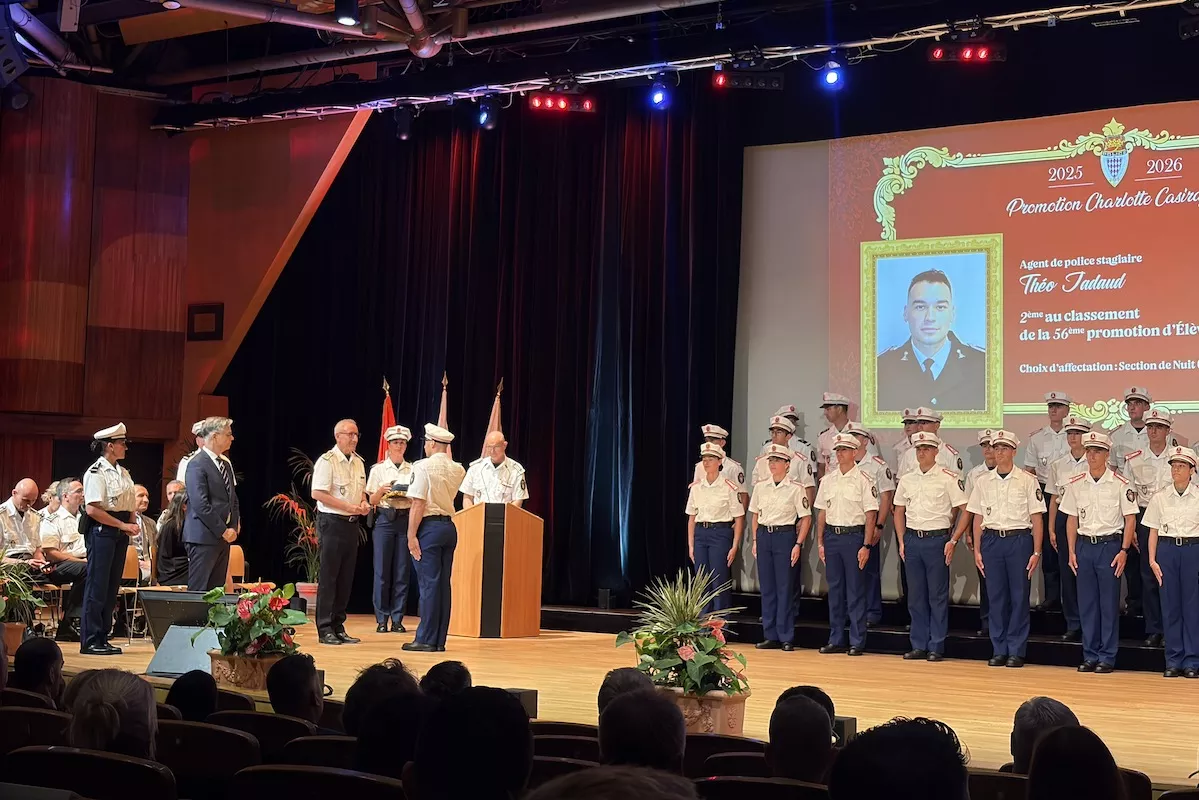
Théo Jadaud receives his badge and epaulettes from Contrôleur Eric Arella, Director of the Sûreté Publique, during the graduation ceremony. Photo by Monaco Life
Honouring service and looking ahead
Eric Arella, Director of the Sûreté Publique, used the platform to express his gratitude to the government authorities, the National Council, and the instructors who guided the cohorts throughout the 2025-2026 academic year. Special tributes were also paid to long-serving members of the force, including Brigadier Marie-Pierre and Major Patrick Bélanger, who are both approaching their retirements following distinguished careers.
As the new officers prepare to take up their duties on 8th July, Charlotte Casiraghi offered them a final piece of advice. “I wish for you to keep throughout your career the enthusiasm, humility and sense of duty that animate you today,” she said. “So, all my congratulations to the ‘Charlotte Casiraghi Promotion’ and I wish you a beautiful path in the service of the Principality of Monaco.”
To celebrate the launch of its new academic year, the Académie de la Mer de Monaco has partnered with the Méridien Beach Plaza to unveil ‘Les petits poissons de l’Académie de la Mer de Monaco’. Running from 15th June to 15th July 2026, this exhibition marks the first time Bologna-born artist Marco Quarantini presents his unique underwater universe in the Principality.
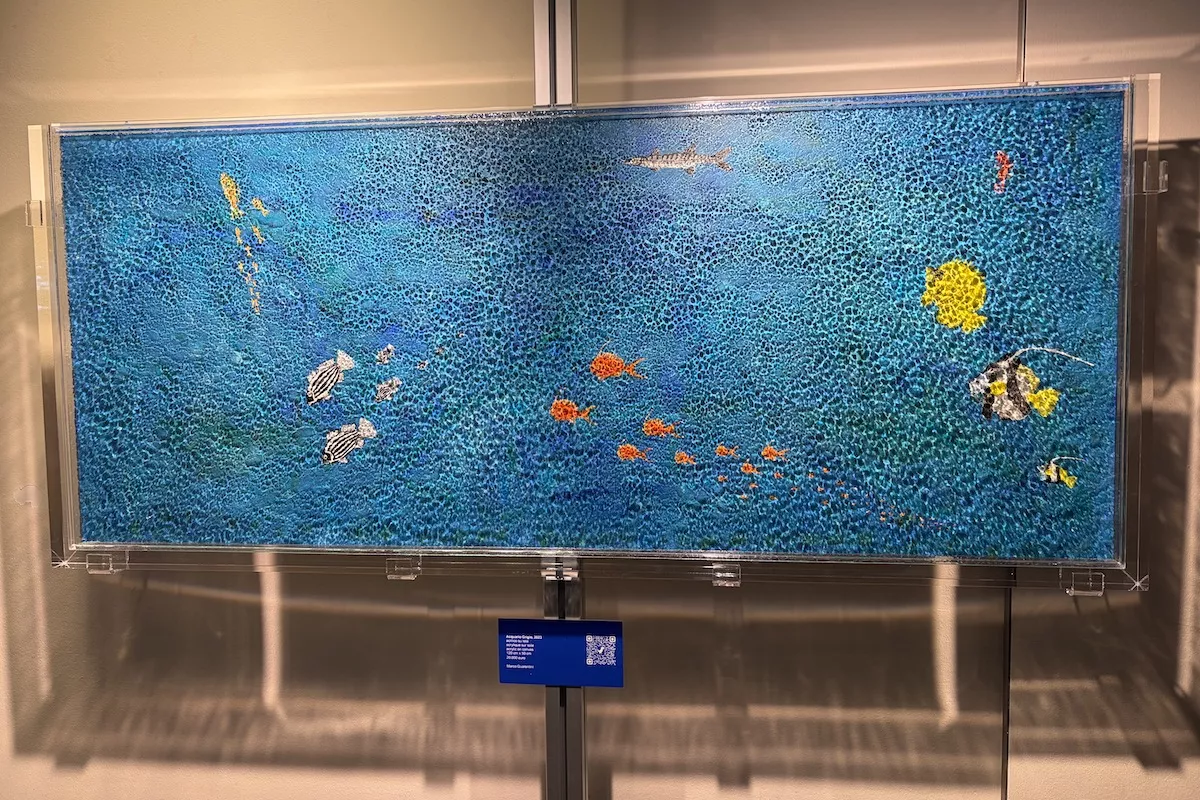
Marco Quarantini has developed a singular artistic language that bridges technical innovation with poetic sensitivity. His work is defined by the integration of handcrafted glass into acrylic paintings on canvas—a pioneering method he developed to recreate the perpetual motion and light variations of the sea.
Inspired by the pulegoso glass (a traditional Murano technique involving intentional air bubbles) often found in old cathedrals, this delicate overlay creates an immersive sense of depth. “The glass is a crucial part of my work,” Quarantini explained to Monaco Life. “It creates an effect of depth and immersion in the marine environment, much like looking into the water itself.”
For the artist, light is not merely an accessory to his work; it is an essential, dynamic component. By designing and positioning the lighting installations himself, he can simulate different atmospheres, from the crispness of a morning sea to the golden nuances of the evening. “The light changes throughout the day, and so the paintings undergo a transformation,” he notes. “It’s a dynamic interaction. Depending on the lighting angle, the colours and the overall effect of the fish appear completely different.”
Marco Quarantini’s ‘Aquario Grigio’ (Grey Aquarium), 2023
‘The message of the blue crab’
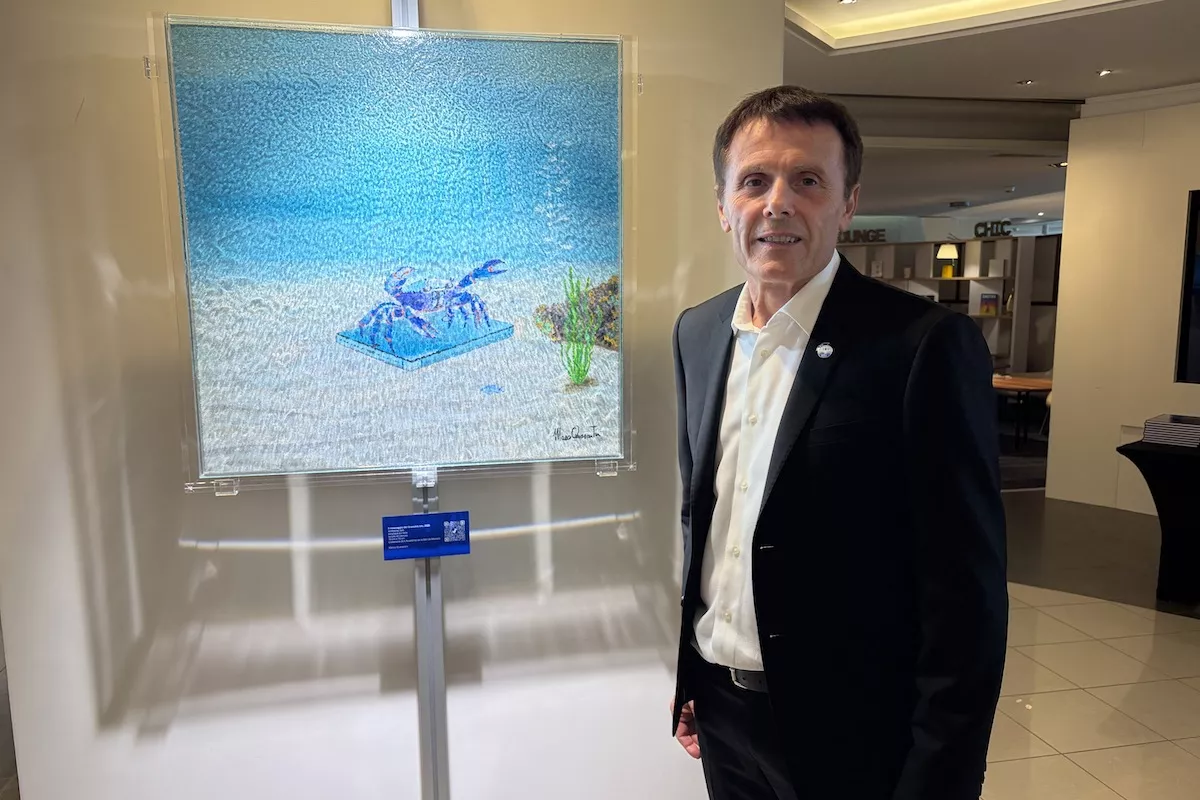
The exhibition reflects a deep harmony between the artist and the Académie de la Mer de Monaco, grounded in shared ideals of beauty and respect for the marine environment. This is encapsulated by the painting ‘The message of the blue crab’, a piece featuring an invasive species that has profoundly altered the Mediterranean ecosystem.
“The fact that the crab is clutching a mobile phone is a wake-up call,” says Quarantini. “It is a cry for alarm to remind everyone how vital ecology is for the future of all humanity.”
Laurent Anselmi, President of the Académie de la Mer de Monaco, echoes this sentiment, noting that the exhibition provides a vital platform to address urgent concerns such as plastic pollution and rising sea temperatures. “Marco is highly appreciated here in the Principality,” Anselmi says. Regarding the blue crab specifically, he adds: “It is an invasive species, and we must fight against its invasion. Fortunately, it is excellent to eat, so we may be able to solve the problem that way.” For Anselmi, the collaboration with Quarantini represents a total convergence of values.
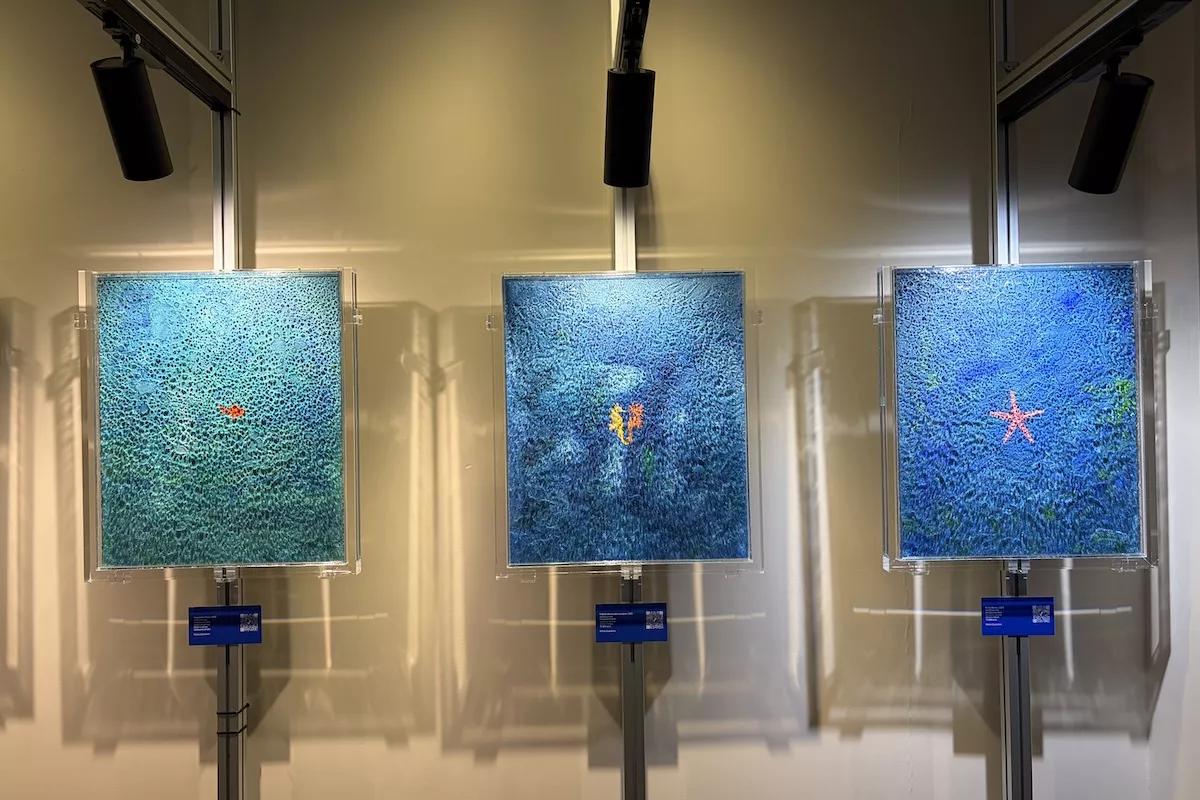
Three of Marco Quarantini’s paintings currently on display at the Méridien Beach Plaza—from left to right: ‘Pesciolino rosso’ (Goldfish) 2022, ‘Il bacio dei cavallucci marini’ (The seahorses’ kiss) 2025 and ‘Stella Marina’ (Starfish) 2024
Where art meets environmental awareness
Quarantini’s work focuses on fish and dreamlike aquatic landscapes, balancing his distinct aesthetic with a clear message about the state of our oceans. His vision pulls the viewer away from the noise of life on land, inviting them to see the marine world through the eyes of its inhabitants.
At the heart of this journey is a sharp environmental awareness. By capturing the beauty and fragility of marine ecosystems, the exhibition encourages a fresh look at our natural heritage. This resonates with the core mission of the Académie de la Mer de Monaco, which is dedicated to promoting maritime culture and a more sustainable relationship between humanity and the ocean.
A meaningful collaboration
The exhibition finds a perfect home at the Méridien Beach Plaza, the only hotel in Monaco with a private beach bordering the Larvotto Marine Protected Area. This location underscores a shared commitment to marine conservation alongside partners like the Monaco Association for Nature Protection.
For Quarantini, the partnership is a natural alignment of values. Expressing gratitude to those who facilitated his integration into the Académie de la Mer de Monaco, he notes that he has shared the same objectives as these maritime institutions since the very beginning—viewing fish as the protagonists of his dreams and champions of marine protection.
The exhibition is open to the public as part of the Méridien’s broader cultural commitment to creating spaces for dialogue and discovery. Visitors are invited to immerse themselves in this sensory exploration of the deep, discovering the delicate balance of the world beneath the waves.
In the world of international finance, it is rare to find a storyteller. Yet, for veteran producer Patrice Poujol, the jump from managing a 10-billion-euro banking portfolio to the film industry was a natural move. He is now changing how films are made and funded, using blockchain to bypass traditional studios and hand more power to the audience.
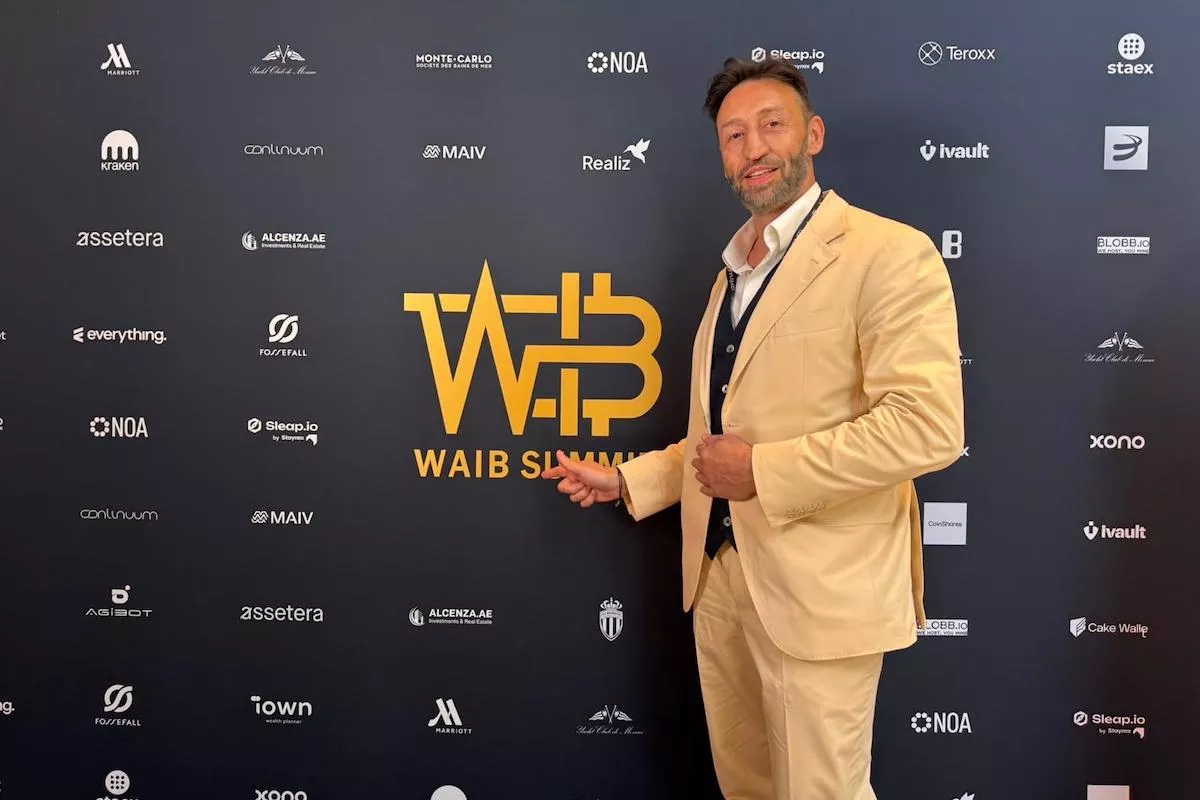
“The era of the traditional gatekeeper is coming to an end,” Poujol Monaco Life during the recent WAIB conference in Monaco. “By allowing communities to help create and even own a share of the art they love, we are breaking a cycle that has kept fans on the sidelines for generations.”
As his platform, W3BFLIX, brings on partners like Rolling Stone Italy, his mission remains focused: the future of entertainment should be shaped by the audience. This platform operates as a streaming service built directly into the Telegram app—using blockchain to turn passive viewing into a participatory experience.
“The film industry has been defined by closed-door processes for far too long,” Poujol explains. “Our goal is to make every dollar of a production budget visible and easy to track.” His approach relies on three core principles: involving the community in the creative process, using clear digital agreements to ensure creators are paid fairly, and putting a priority on user privacy. Poujol first noticed these gaps in transparency while working in Hong Kong and Singapore, where he founded his company, Lumière. He saw that the way money moved through the industry often left both creators and investors in the dark. In 2018, he completed a PhD focused on how digital ledger technologies could fix those issues, paving the way for his current work.
‘W3BFLIXED’ animation series / Photo credit: PegLeg Creative
From banking to the big screen
Poujol’s transition from banking to filmmaking is the result of 20 years of balancing both worlds. While some worry that the arts suffer during economic downturns, Poujol takes a different view. “When the economy struggles, people need an escape more than ever,” he notes.
His platform is built to operate regardless of market conditions. His interest in film goes back to the 1980s, when he first started filming on VHS tapes. He cites Sergio Leone’s classic Once Upon a Time in the West as a major influence. “Leone taught me that cinema isn’t just about the plot; it’s about character and the weight of a gaze,” Poujol reflects. “I want to bring that level of craft to modern audiences, even if it is delivered in short, episodic formats.”
New projects on the horizon
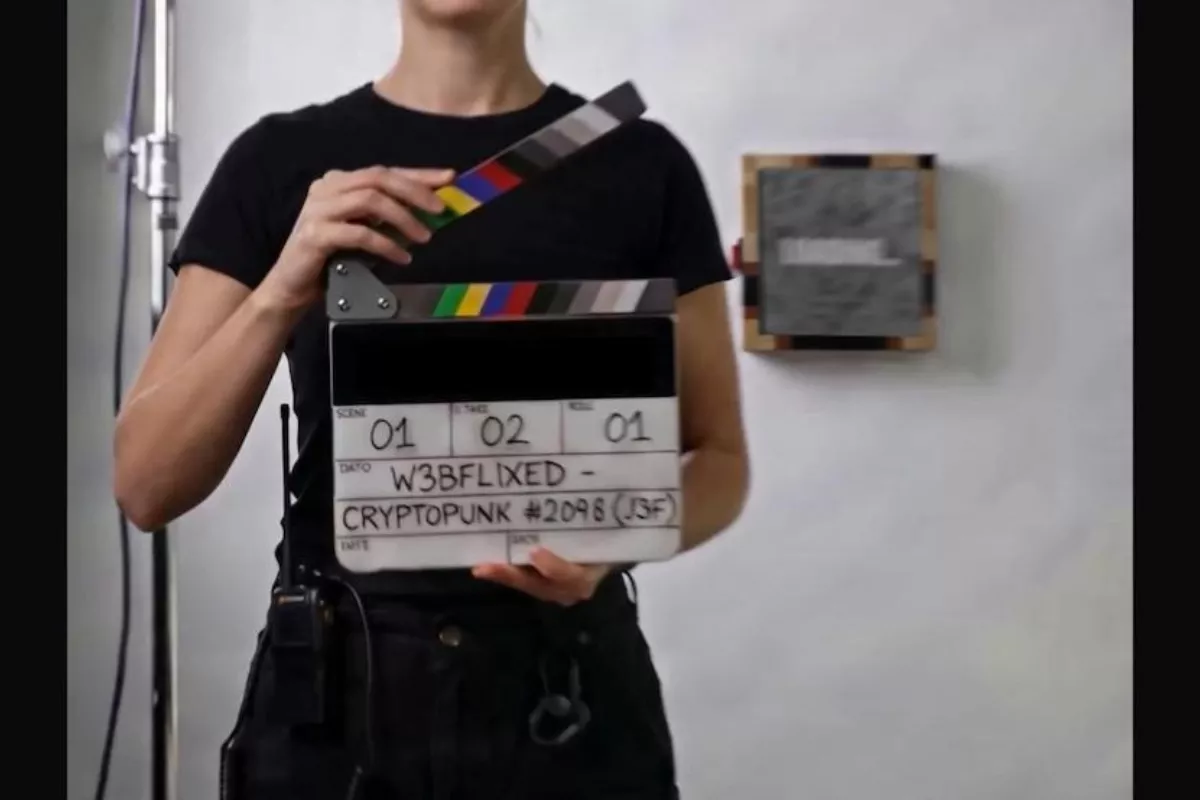
Among his upcoming projects is an animated series, called ‘W3BFLIXED’, that he describes as a ‘Crypto South Park’. The show follows a group of digital characters who break out of their online world to navigate real life, using sharp humor to poke fun at industry habits. The project adds to his track record. Poujol was a pioneer in using modern financial techniques to ‘tokenise’ direct investment in film equity, starting with the Algerian film Papicha. Selected for the Un Certain Regard section at the Cannes Film Festival, Papicha went on to win two César Awards in 2020.
As the platform grows, the team is now looking for new partners and sponsors who want to help build this innovative way of making films. Staying true to his focus on letting the audience have a say, the team is also trying something different with their upcoming animated series. Fans who hold the project’s digital tokens—or NFTs—will have the chance to audition for parts in the show. It’s a way to let the platform’s one-million-strong community actually help decide who makes it onto the screen.
Having experienced the ‘subprime crises’ in 2008, Poujol is now fully committed to radical transparency. Rather than looking back at the limitations of the past, he is focused on the immediate future: building an ecosystem where the barriers between production and audience vanish entirely.
For Poujol, the goal isn’t just to change the way films are financed, but to ensure that the weight and craft of cinematic storytelling—the very thing that captivated him on VHS decades ago—remains at the heart of the industry’s evolution.
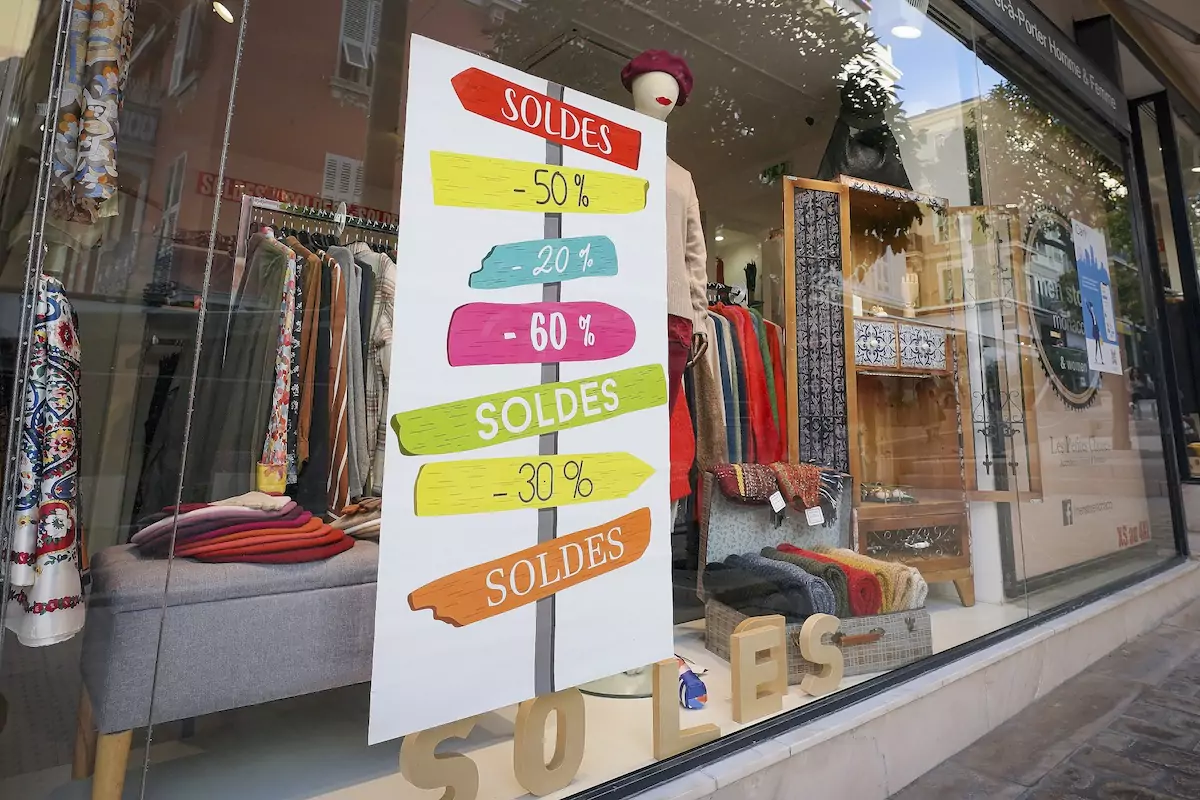
Summer sales begin on both sides of the border this Wednesday, with Monaco’s running two weeks longer than France’s under rules that give the Principality’s retailers an extended sales period each year.
In France, the legally mandated soldes d’été run nationwide from Wednesday 24th June at 8am until Tuesday 21st July, covering the Alpes-Maritimes and the rest of the French Riviera along with the vast majority of mainland departments. The dates, set by the French government under the Code de commerce, apply uniformly across mainland France with the exception of Corsica, where sales begin on 8th July and run until 4th August.
Monaco runs a longer sales period
In the Principality, sales are governed by a separate law and run for six weeks rather than four. Under the rule set out by Monaco’s Business Development Agency, summer sales begin on the final Wednesday in June, which falls on 24th June this year, the same start date as France, and continue for six weeks until around 4th August. Monaco’s retailers, from fashion boutiques to home and multimedia outlets, will be offering discounts throughout that period, giving shoppers in the Principality an extra fortnight of sales compared with their counterparts across the border.
What shoppers can expect
In France, surveys suggest shoppers are approaching this year’s sales more cautiously than in the past, with average spending down compared with last year, even as the majority of consumers say they still plan to take advantage of the discounts. High-tech and home appliance items are expected to be among the most sought-after categories, alongside the usual fashion and homeware bargains.
Monaco’s water utility, the Société Monégasque des Eaux (SMEAUX), has launched a survey asking residents about their water use, as the Principality looks to plan ahead for a resource increasingly strained by climate change.
The online survey, open now at smeaux.mc, asks residents about their habits, expectations and perceptions around water use, with the results intended to guide which technologies and measures the utility prioritises going forward. Responses are anonymous, and the company has framed participation as a way for residents to directly shape future decisions on water management.
A resource already under strain
Monaco introduced its first usage restrictions in May 2023, following three consecutive years of drought and rainfall levels short of the threshold the Principality relies on to replenish its karstic springs. Wider France and other parts of southern Europe faced similar conditions that year, with neighbouring Alpes-Maritimes already at “alert” level when Monaco followed suit. Lawn watering, fountains, vehicle washing and outdoor pools were among the activities restricted at the time, with industrial and commercial water use also cut.
The utility’s own figures show the network here already runs at around 95% efficiency, a level it has sustained for two decades and one it points to as among the best in the world, with overall consumption down nearly 30% over 25 years despite sustained population and economic growth. But SMEAUX has acknowledged that the increasing frequency of drought and heavy rainfall events alike is putting pressure on both the Principality’s own springs and the external supplies it draws from the neighbouring French department.
Feeding into long-term planning
SMEAUX has described the survey as feeding directly into decisions on which new technologies and solutions are adopted to secure supply for the years ahead, as part of a wider push by the Prince’s Government to ensure water security as climate impacts intensify.