Monaco’s Kaléido programme launches with Styleto concert at Fort Antoine

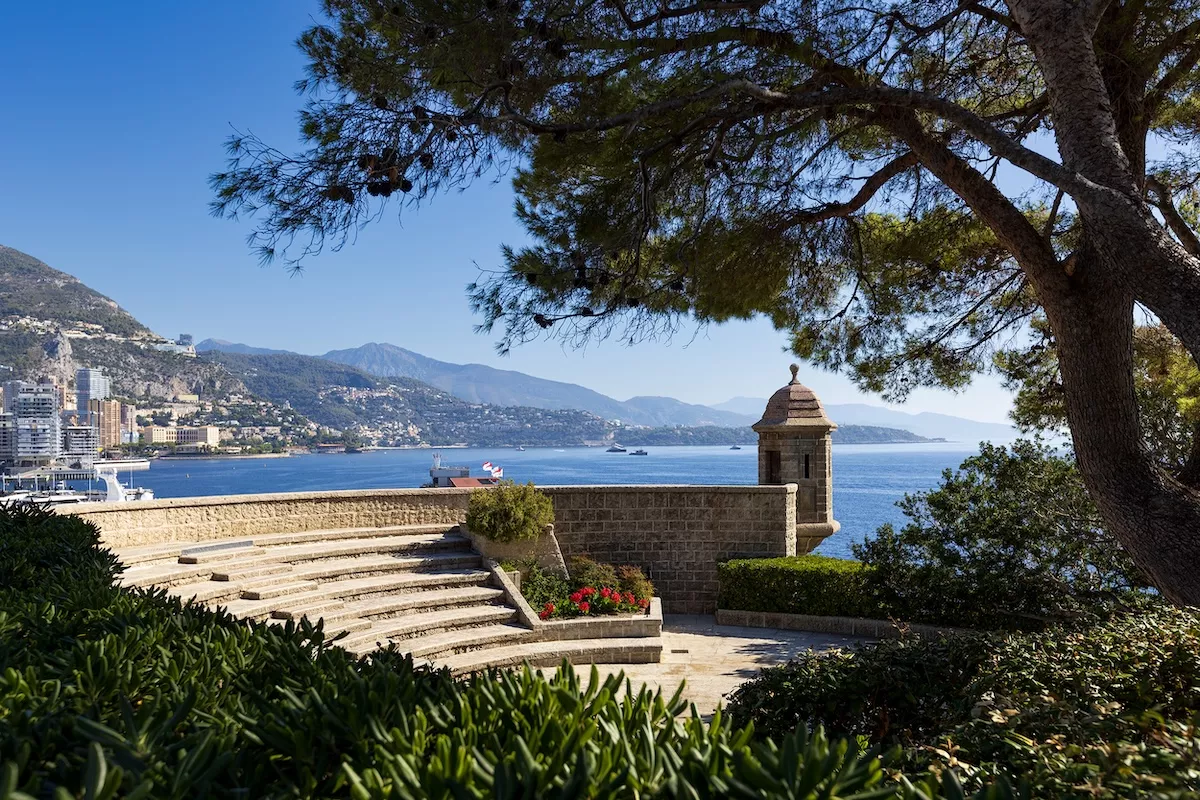
Monaco’s Direction des Affaires Culturelles is launching Kaléido, a new cultural programme dedicated to under-30s in the Principality, with a headline concert by French pop singer Styleto at Fort Antoine on 16th July.

The initiative brings together the Principality’s major cultural events for young people under a single banner, with a focus this year on emerging international artists performing live. Kaléido’s opening event marks the first in a series of concerts planned for the season.

Who is Styleto?

Lyon-born singer Styleto — real name Laure Gonnet — first built her following on YouTube and Instagram before transitioning to a music career, blending French pop with humour and self-deprecation to address her generation’s experiences and challenge gender stereotypes. She has amassed close to two million followers across social media.

Her 2022 debut, Carrousel, was an EP of covers featuring artists including Dalida, Angèle and Ben Mazué. She subsequently began writing original material, releasing singles including Trop bonnes and Dans la moyenne, before her breakthrough track Faut que tu m’aimes in 2024 brought her to national attention. Her first album of original songs, Fille lacrymale (2025), features collaborations with Louane and Ben Mazué, and earned her a nomination for Révélation féminine at the 2025 Victoires de la Musique. In 2026, she performed at L’Olympia and the Zénith de Paris as part of an extensive tour.

Tickets and access

Kaléido is aimed exclusively at young people under 30, and ticketing for the Styleto concert opened on 27th May for Monégasques, residents and students enrolled in the Principality. Tickets are available at montecarloticket.com and at the Théâtre Princesse Grace between 10am and 1pm, on presentation of valid identification — a Monégasque identity card, residence permit or student card. Identity checks will be carried out at the entrance on the night.

Stay updated with Monaco Life: sign up for our free newsletter, catch our podcasts on Spotify, and follow us across Facebook,  InstagramLinkedIn, and Tik Tok.

Photo credit: Benjamin Vergely, Monaco Tourism Department


AS Monaco launches season ticket campaign with lower prices and new features

AS Monaco has just launched its 2026-2027 season ticket campaign for renewals and will open sales soon for new season ticket holders. Like last season, season ticket holders will have access to all 17 Ligue 1 matches, the Europa Conference League qualifying/playoff match and three league phase matches, subject to qualification, as well as all home Coupe de France matches. In total, the package guarantees a minimum of 18 home matches.

AS Monaco has aimed to make season tickets as affordable as possible, reducing prices across all categories, with prices ranging from €18.50/month to €97.90/month for 10 months, depending on the selected category. The club also continues to offer the option to pay in 10 installments at no additional cost. In the family stand, season tickets are available from just €1 for the first child, while preferential rates are also available for students under 25, seniors over 65, people with disabilities, Monegasques, and CSM or UM94 members. Existing season ticket holders can retain their current seat and preferential renewal rate until 25 June.

Monaco is introducing two new features for season ticket holders next season designed to improve the fan experience. Cancellation insurance gives ticket holders the option to cancel one or more matches included in their season ticket and receive a refund of up to 90% of the ticket price. Tickets can be cancelled without justification up to 48 hours before the match, and the refund will be processed within 48 hours.

Additionally, season tickets will now be fully digital through the AS Monaco App, allowing for simpler and more convenient ticketing. However, fans who prefer a physical keepsake can still opt for a personalized collector card.

Additional benefits returning next season include free ticket transfers to family or friends, official resale options, priority booking for gala matches, preferential rates for Ligue 1 matches (excluding gala matches), exclusive fan experiences, and a 10% discount at the AS Monaco shop.

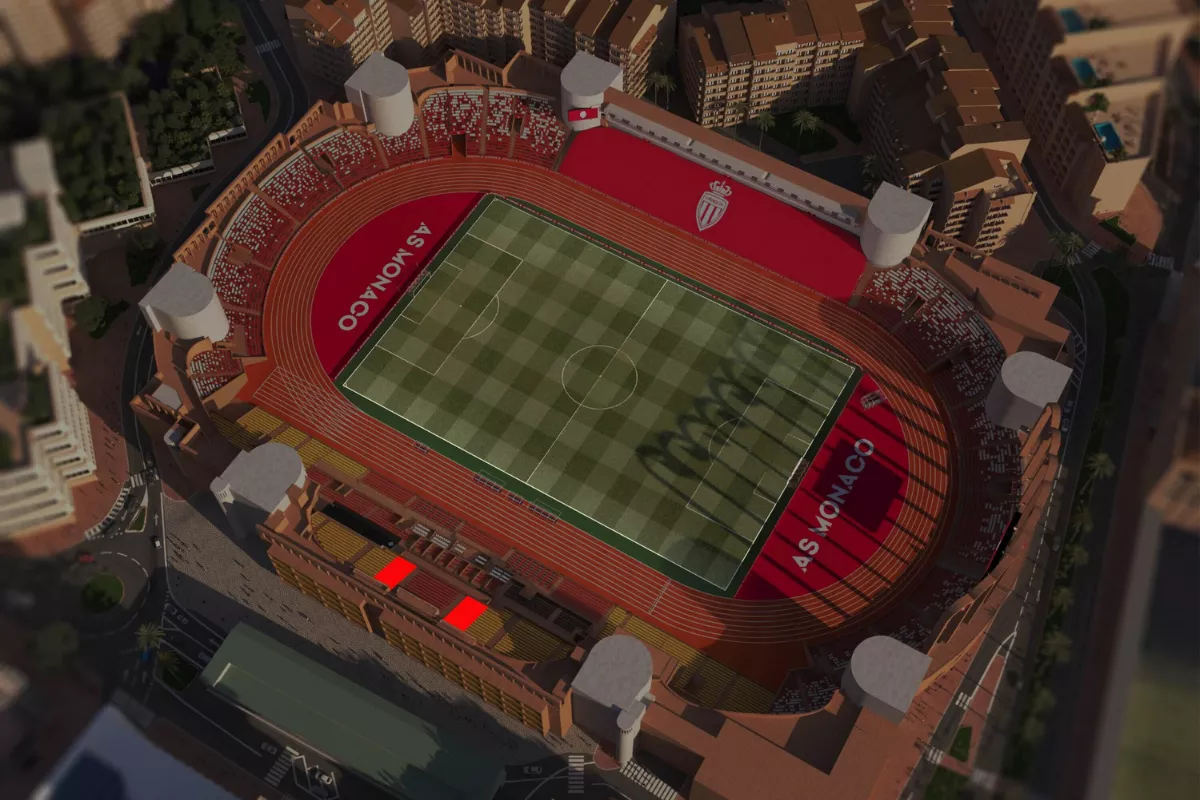
Stade Louis-II will continue renovations throughout the 2026-2027 season, resulting in the entire Première stand being closed. As a result, former ticket holders in Categories 2 and 3 will be reallocated to Honneurs A2 or B2 under comparable viewing conditions and at no additional cost.

More information can be found on the club’s website: https://billetterie.asmonaco.com/fr/reabonnement-saison-2026-2027?_token=b285f0192e689b14171efa16647d7170

Stay updated with Monaco Life: sign up for our free newsletter, catch our podcasts on Spotify, and follow us across Facebook,  InstagramLinkedIn, and Tik Tok.

Photo credit: AS Monaco FC

BEFF 2026: The forum reshaping the blue economy’s financial DNA

High-profile world leaders and top-tier venture capitalists gathered in Monaco on 28th and 29th May for the second edition of the Blue Economy and Finance Forum (BEFF) to declare that the multi-trillion-dollar ocean economy is no longer a niche for philanthropists—it is officially the defining investment opportunity of our time.

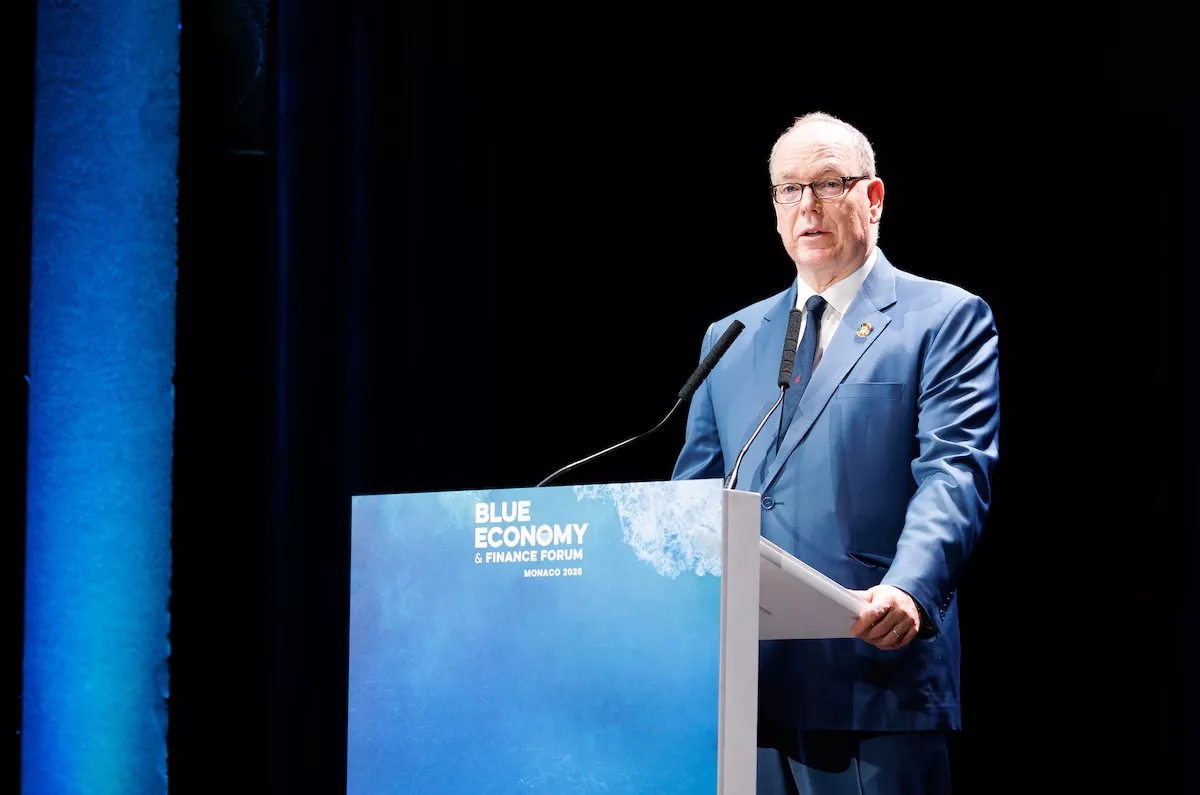
Opening the forum with a sharp directive, Prince Albert II made Monaco’s stance unequivocally clear. “Let me be plain: I will not ask whether the ocean is investable. We have left that question behind us. I ask something harder: invest in the ocean now. Invest in it at scale, and invest in what it truly is—not a risk to be managed, but the defining opportunity of our time.”

The Prince emphasised that whilst the global blue economy generates a staggering $2.5 trillion annually, it currently receives only a minute fraction of worldwide sustainability capital. In his view, the foundational debate over whether the ocean belongs on a financial balance sheet has been decisively settled; the pressing challenge now is determining how quickly and boldly institutions will deploy their reserves. The Prince also highlighted that Monaco is actively leading by example through the ReOcean Fund, urging private equity, venture capital, and institutional investors to stop viewing the high seas as a risk to be managed, but rather as the defining economic and civilisational opportunity of the era.

This sentiment of urgent, high-stakes stewardship was closely echoed by UAE royal and sustainability advocate, Sheikha Shamma Al Nahyan. Drawing a parallel between Abu Dhabi and the Principality, Al Nahyan underlined the profound historic and economic bonds that both coastal states share with the sea. Moving far past the outdated concept of the ocean as a mere resource to be plundered, she framed marine conservation as an absolute multi-generational, civilisational responsibility.

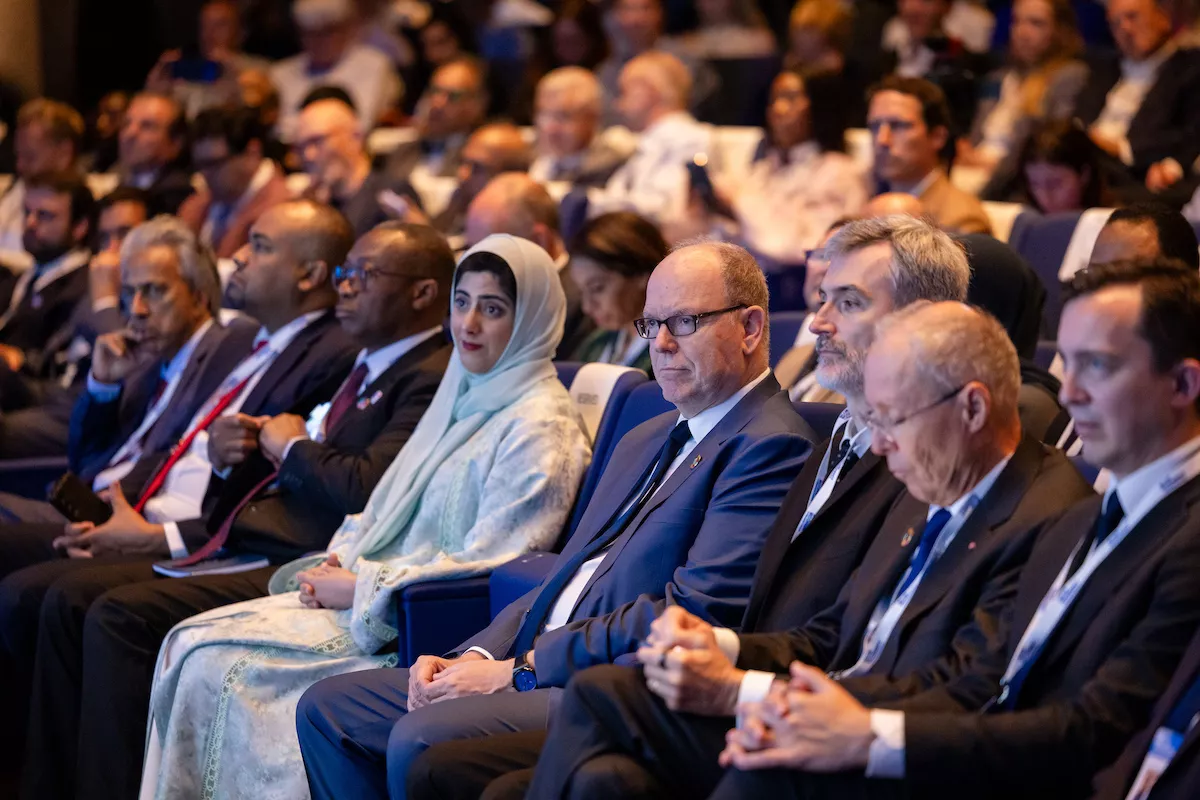
Prince Albert II with Sheikha Shamma Al Nahyan. Photo credit: Philippe Fitte

To demonstrate how this vision translates into scalable, state-level action, Sheikha Shamma spotlighted, among others, the UAE’s push into mangrove and blue carbon expansion. Honouring the ecological legacy of UAE founder Sheikh Zayed, the nation has already planted 30 million mangroves using advanced drone planting and tissue culture, pacing rapidly toward an ambitious target of 100 million mangroves by 2030.

“If we don’t give back, we will pay a higher price,” Sheikha Shamma warned, delivering a powerful closing call to unify scientific knowledge, human curiosity, and institutional capital. Ultimately, she reminded delegates that the long-term health of the blue economy remains fundamentally tethered to the very survival of the global biosphere.

The $700 Million West African breakthrough

This demand for rapid, scalable action found its first major practical expression in a historic milestone for the Global South: a Memorandum of Understanding signed between the West African Development Bank and the French Development Agency. Facilitated by Catherine Jadot of the West Africa Sustainable Ocean Partnership (WASOP), this agreement unlocks $700 million to scale West Africa’s blue economy by engineering the common impact standards and regulatory frameworks required to absorb this capital. Ultimately, this breakthrough underscores the overarching thesis of the Monaco forum: the financial architecture for a sustainable ocean is no longer a theoretical exercise, but an actively assembled, multi-billion-dollar capital market.

From ‘unicorns’ to ‘narwhals’: The high-sea escape velocity

For decades, the standard playbook for Silicon Valley tech investors was simple: find a software loophole, back an app, and hope for a multi-billion-dollar ‘unicorn’ exit. But a major structural shift is happening in global finance. The world’s smartest capital is moving away from the cloud and diving straight into the deep ocean.

“At the ocean’s edge, we don’t look for ‘unicorns’,” says Steven Fox, Managing Partner at ocean venture firm Propeller. “We look for ‘narwhal’ outcomes—companies with asymmetric upside return possibilities that can cross billion-dollar valuations.”

Steven Fox at BEFF 2026. Photo credit: Philippe Fitte

According to Fox, the sectors hitting true “escape velocity” right now are ocean data and marine energy. This rapid scaling is fuelled by two lucrative, ultra-wealthy customer bases: governments and tech hyperscalers. By marrying cutting-edge ocean tech to urgent geopolitical mandates like energy sovereignty and national security, early-stage blue tech startups are securing massive institutional checks.

The numbers back up the hype. Financial modelling suggests that upwards of $550 billion could be deployed into sustainable ocean sectors by 2030, with a massive portion concentrated in the Asia-Pacific region and Small Island Developing States.

Why deep-sea tech is the new frontier for elite venture capital

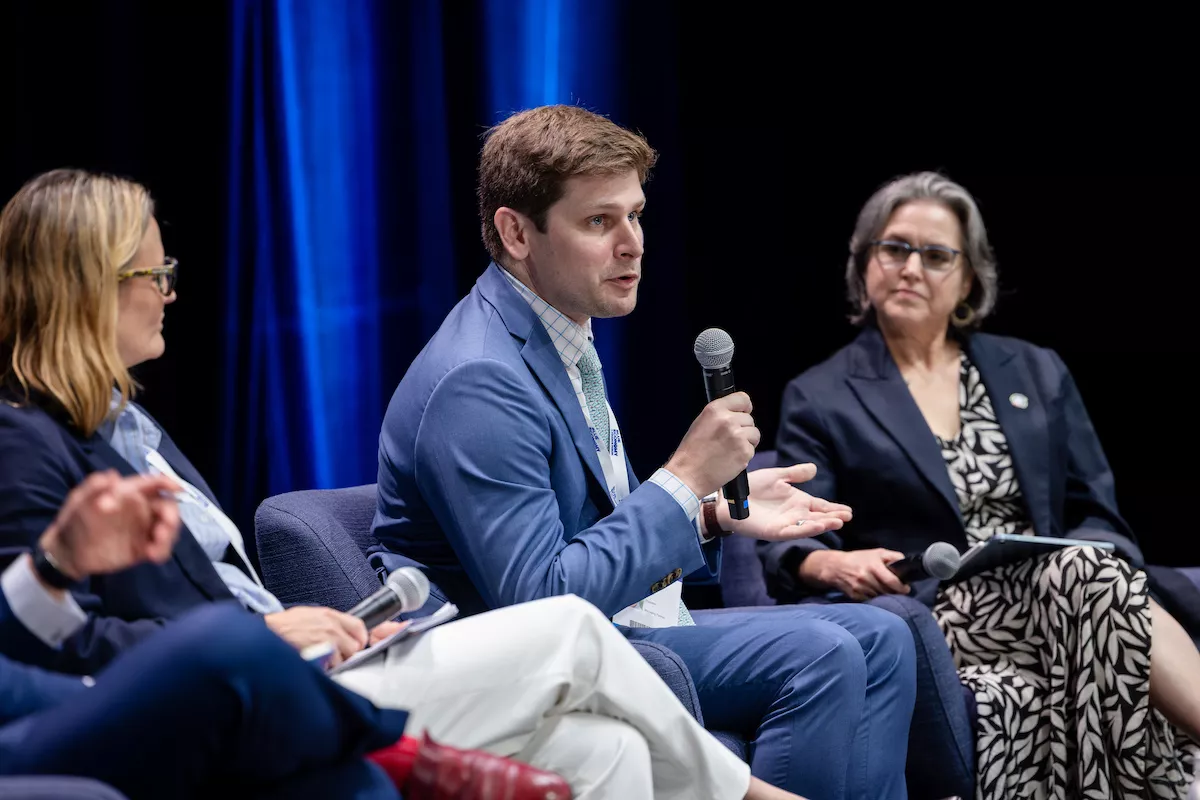
At the side event ‘Ocean capital decoded: Mapping the blue finance landscape’, Cyril Gomez, Chief Operating Officer of the Oceanographic Institute of Monaco, unveiled a sweeping international audit co-organised with the Ocean Risk and Resilience Action Alliance (ORRAA) and July Advisory. By screening over 200 initiatives launched between late 2024 and mid-2026, the partners established a “living observatory of ocean capital” to map flows and identify structural deficits. Gomez noted that while the ocean economy yields $2.5 trillion annually, sustainable financing is capped at $150 billion, a gap driven by an absence of market structure—such as common standards and de-risking mechanisms—rather than a lack of investor interest.

To bridge this divide, the BEFF is championing a systemic, data-driven approach. Through this same analysis, July Advisory’s Marianne Carpenter and Lucy Galinon identified three waves of blue finance, with the emerging ‘Wave 3’ shifting the focus toward an ‘economics of absolute necessity.’ This paradigm evaluates true ocean wealth by combining produced infrastructure—such as ports—with non-produced environmental capital like seagrass meadows and coral reefs.

To accelerate this maturation, the BEFF is leveraging tools like the Ocean Impact Navigator for startup standardisation, the #BackBlue coalition’s $3.45 trillion in committed assets, and a $5 billion annual pledge from the Finance in Common Summit (FiCS) Ocean Coalition. As ORRAA’s Senior Director Chip Cunliffe noted: “The industry’s focus has shifted from questioning what works to how fast it can deliver.”

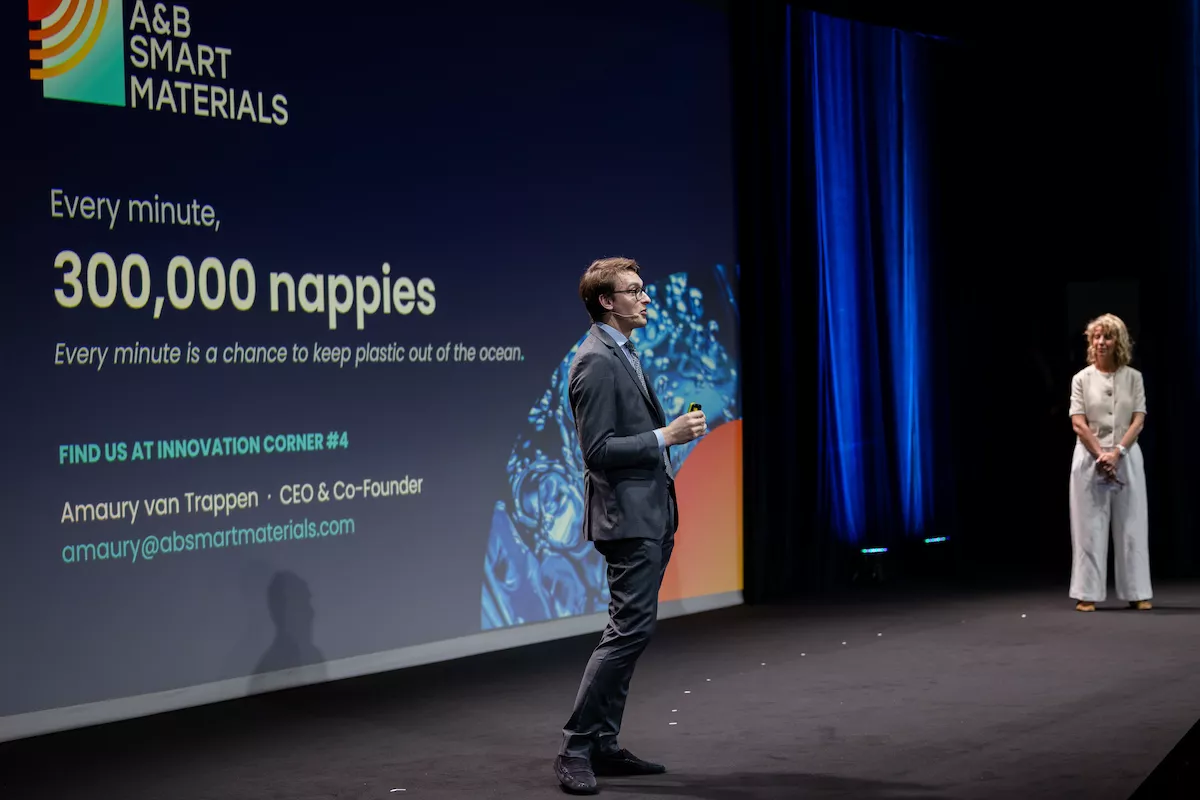
Amoury von Trappen, CEO and Co-Founder of A&B Smart Materials speaking at the BEFF. Photo credit: Philippe Fitte

From scalable fish farming to biodegradable nappies: How practical innovation is anchoring the architecture of blue finance

Ultimately, the forum’s thematic shift toward operational market maturity proved that ecological regeneration is no longer a philanthropic ideal, but the foundational architecture upon which the future capital market is being built. The pitch session spotlighted a curated pipeline of high-impact blue economy ventures through a dynamic dual-pitch format, bringing together senior company leaders and their investment partners to showcase innovative solutions, scalable business models, and compelling growth trajectories.

Spearheading the ‘blue food’ mission, Bastien Riera, Managing Director of Gloria Maris, alongside Chris Gorell Barnes, Founding Partner at Ocean 14 Capital, presented their integrated white fish aquaculture platform as the ‘gold standard’ in sustainable protein production. Gloria Maris has successfully scaled premium, antibiotic-free seafood by pairing its operations with industrial circular-economy models—such as blending cold North Sea water with warm industrial bypass currents to establish optimised, ASC-certified ecosystems. This marriage of deep-tech innovation and immediate commercial scalability was mirrored in the material science sector by Oxford University spin-off A&B Smart Materials.

Co-founder and CEO Amaury Van Trappen showcased a fully bio-based, programmable superabsorbent polymer capable of disrupting the global hygiene market ahead of the European Union’s 2028 synthetic plastic ban. Backed by Archipelago Ventures through an oversubscribed $2 million pre-seed round, A&B’s direct ‘drop-in’ technology offers a vital solution to the global nappy crisis, which currently accounts for 21% of marine plastic waste recovered in regions like Indonesia. 

By grounding high-level financial theory in these tangible, highly profitable market solutions—and serving as a direct gateway between innovation and capital—the Blue Economy and Finance Forum delivered its most resounding takeaway: bridging the global ocean funding gap will not be achieved by waiting for regulatory consensus, but by deploying institutional assets into the bankable pipelines and disruptive enterprises that are actively rewriting the rules of global commerce.

See also:

Turning the blue economy mainstream: Monaco Blue Initiative 2026 maps the future of ocean finance

Stay updated with Monaco Life: sign up for our free newsletter, listen to our podcasts on Spotify, and follow us across Facebook,  Instagram, LinkedIn, and Tik Tok.

Main photo of Prince Albert II credit: Michaël Alesi, Prince’s Palace


Inside the new media frontier: how Salla Kozma is building the future of audience-led entertainment

For decades, the entertainment industry operated on a relatively straightforward formula: studios developed content, broadcasters distributed it, advertisers funded it, and audiences consumed it passively. But according to Monaco-based media entrepreneur and actress Salla Kozma, that model is no longer sustainable.

“The old broadcasting model is broken,” Finish-native Salla Kozma tells me bluntly. “Nobody’s really commissioning. Everybody’s being careful. If production companies can’t adapt fast enough, they die.”

Kozma is the co-founder of Naru Force Studios, a newly launched venture focused on developing scalable, digital-first intellectual property ecosystems that stretch far beyond traditional television. The company operates at the intersection of streaming, creator culture, commerce, audience participation, data analytics and platform-native storytelling — a space she believes represents the next major evolution of media and entertainment.

Alongside her work with Pig & Horse Productions, where she recently completed an investigative documentary set in the art crime world, Kozma has shifted much of her attention toward building what she describes as “multi-layered IP ecosystems” rather than single-format productions.

“We won’t make one TV show and that’s it,” she explains. “The IP has to live across multiple platforms — YouTube, TikTok, Instagram, podcasts, live experiences, commerce, communities. It will become an entire universe.”

Why Audience Ownership Is Becoming the Most Valuable Asset in Media

At the centre of Naru Force Studios’ strategy is a fundamental shift in how audiences are viewed. In the traditional television era, audiences were simply viewers. Today, Kozma argues, audiences are consumers, collaborators and long-term assets.

“The relationship between the IP and the audience is where the real power is now,” she says. “It’s attention economy. It’s not enough to go viral once. Millions of videos get millions of views every day and are forgotten the next morning. The question is: how do you keep that relationship alive for years?”

That thinking is shaping Naru Force Studios’ first major pilot project, which centres around the global K-pop phenomenon. For Kozma, K-pop is the perfect example of how modern entertainment has evolved into a fully immersive ecosystem.

“It’s not just music,” she explains. “It’s culture. Fashion, products, communities, fandoms, identity. These audiences are superfans. There’s enormous value in that.”

Rather than producing a standalone talent format, the company is developing a wider digital ecosystem around the concept, designed to exist simultaneously across long-form and short-form content, live activations, branded partnerships and fan interaction.

“It’s not about one revenue stream anymore,” Kozma says. “You build multiple revenue streams from one IP. If one thing doesn’t work, something else will.”

The Rise of Creator-Led Entertainment and IP Ecosystems

The strategy also reflects a broader change happening across the creator economy, where creators are increasingly functioning like independent studios and brands are seeking more organic ways to integrate into entertainment.

“Traditional advertising doesn’t work the same way anymore,” she says. “Brands need to become part of the content itself. They need to live inside the ecosystem.”

For Kozma, this convergence of entertainment, commerce and community is not theoretical — it is already happening. The challenge now is building scalable infrastructure around it.

Part of that infrastructure involves data. Naru Force Studios includes data analytics expertise at its core, using audience insights to guide forecasting, platform strategy and monetisation opportunities.

“You can’t do anything without data anymore,” Kozma says. “You need to know what audiences are actually watching, how they behave, what they consume, and how they move between platforms.”

How AI and Rapid Technological Change Are Transforming Media Production

Artificial intelligence is becoming an increasingly important part of modern media production, but for Kozma, its value lies firmly in optimisation rather than replacement.

“AI helps optimise workflows,” she says. “But human creativity is still at the centre of everything we do. AI cannot replace that.”

At Naru Force Studios, AI is viewed as a tool that can accelerate processes, streamline development and improve operational efficiency — particularly in areas like pre-production, forecasting, workflow management and data analysis. But Kozma is adamant that storytelling, creative direction and audience connection still depend on human instinct and creativity.

Instead, she sees AI as part of a much larger shift happening across the entertainment industry: the rapid acceleration of technology and the increasing speed at which media businesses are expected to evolve.

“The pace is incredibly fast now,” she says. “Platforms change constantly. Audience behaviour changes constantly. Technology changes constantly. You have to be able to adapt very quickly.”

That speed is fundamentally reshaping how media companies operate. Traditional television production models, which often moved slowly through long development cycles, are increasingly struggling to keep up with digital-first audiences and platform-native content ecosystems.

“You have to be ready to pivot every week,” Kozma explains. “You can have 100 ideas, but maybe only one works. The key is moving fast.”

For digital-first companies like Naru Force Studios, agility has become as valuable as creativity itself. Projects are no longer confined to a single platform or release structure, and audience feedback now arrives in real time through data, engagement metrics and community interaction.

“Everything is much more immediate now,” she says. “You can test concepts faster, understand audience behaviour faster and make decisions faster than before.”

That acceleration is also changing how companies approach long-term strategy. Rather than building static content models, Kozma believes the future belongs to businesses capable of continuously evolving alongside technology, platforms and audience habits.

At the same time, she believes the increasing speed of innovation makes intellectual property and system protection more important than ever — particularly for companies developing entirely new production models.

Why Monaco Could Become a Hub for Media Innovation

The speed of change, however, is exactly what excites her.

Kozma believes Monaco is uniquely positioned to support ventures like Naru Force Studios. While the Principality has increasingly positioned itself as a hub for innovation, fintech and entrepreneurship, she sees a major opportunity emerging within media and entertainment technology.

“I think this kind of company is very beneficial for Monaco’s image,” she says. “It’s modern, forward-thinking and international.”

The company is currently preparing for its next stage of development and future financing strategies ahead of a planned funding round in 2027. While the long-term ambition is significant, Kozma remains pragmatic about the process ahead.

“We’re building systems,” she says. “And systems take time.”

The Future of Digital-First Entertainment

Still, her confidence in the future of audience-led entertainment is unmistakable.

“The old model isn’t coming back,” Kozma says. “Content now has to live everywhere. Audiences want participation, convenience and connection. The companies that understand that — and build for that — are the ones that will survive.”

Stay updated with Monaco Life: sign up for our free newsletter, listen to our podcasts on Spotify, and follow us across Facebook,  InstagramLinkedIn, and Tik Tok.

Monaco GP: Why the FIA’s active aero ban could hand Charles Leclerc his moment at home

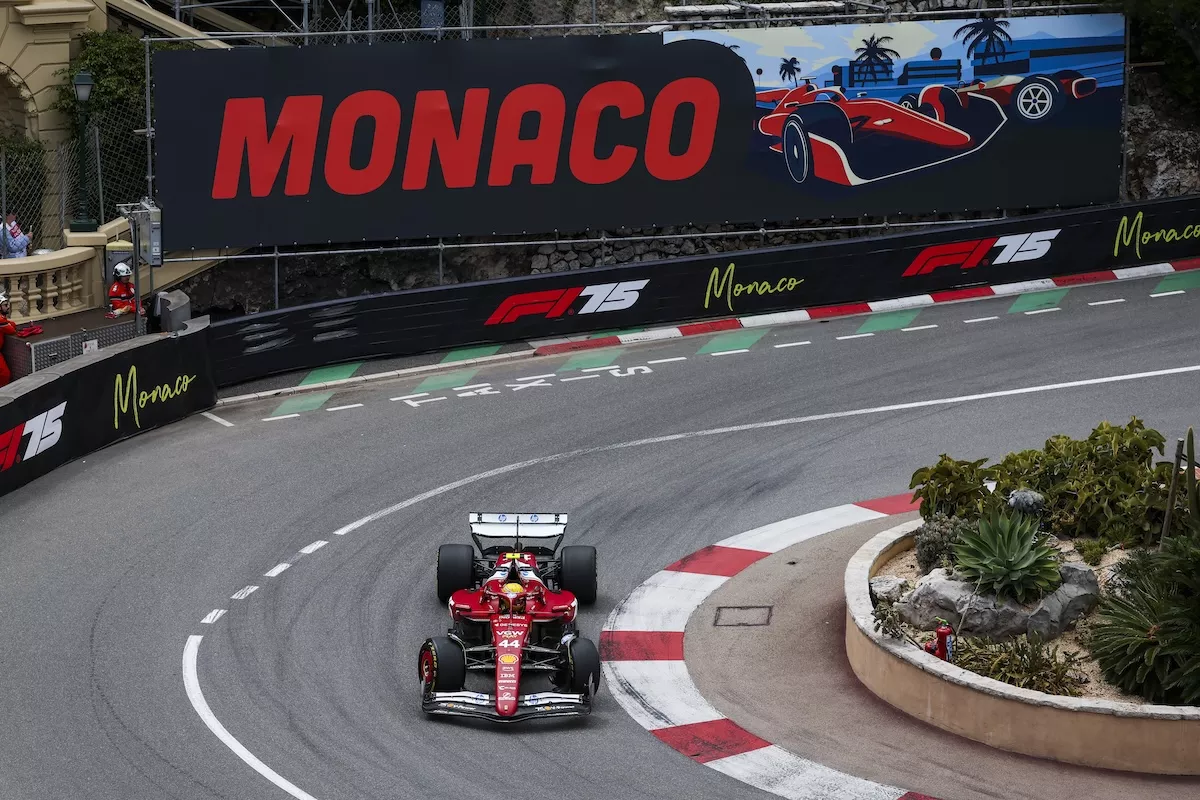
For the first time this season, Mercedes may not be the dominant force on the grid — and a single regulatory decision is largely responsible. The FIA has confirmed that active aerodynamics will not be used at this weekend’s Monaco Grand Prix, a ruling that reshapes the competitive picture and places Charles Leclerc’s Ferrari squarely in the conversation for victory on home ground.

The 2026 cars introduced straight mode — a system where both front and rear wings flatten to reduce drag on designated straights, replacing the DRS of previous seasons. At Monaco, however, that system will be entirely absent. The FIA determined that not a single section of the Monte Carlo street circuit meets the criteria required for the system to operate safely, with the tight barriers, minimal run-off and relentless cornering demands making activation zones impossible to define. The risk of instability at the tunnel exit, in particular, was considered too significant.

The result is a Monaco Grand Prix unlike anything the 2026 season has produced so far — one run on fixed aerodynamic surfaces, without straight mode, and without even the DRS option that was available in previous years.

Ferrari’s moment

Mercedes has won all five races so far in 2026, with Kimi Antonelli claiming four victories and George Russell one. That dominance has been built partly on the power and efficiency of the W17’s power unit — a factor that counts for considerably less around Monaco’s slow, twisting streets than it does anywhere else on the calendar.

The SF-26 suffers from a lack of power at high engine speeds, but is widely regarded as the best car in terms of chassis and aerodynamic performance through medium- and low-speed corners — precisely the conditions Monaco demands from the first corner to the last. Ferrari’s prospects have received an additional boost from Leclerc’s presence on home soil. After a disappointing performance in Montreal, many expect the Monégasque driver to return immediately to the front of the field in an environment where he has traditionally excelled.

Leclerc himself has been characteristically direct about what the weekend represents for Ferrari. “That’s the one track that power is not king. I think that’s definitely car performance. I think our car could be really strong,” he said ahead of the race.

The wider picture

McLaren, which runs the shortest wheelbase on the grid, will also carry legitimate ambitions, with the compact dimensions of the MCL40 well-suited to Monaco’s tighter sections. Mercedes, meanwhile, cannot be discounted — the latest upgrade package introduced on the W17 in Montreal was specifically aimed at increasing downforce, which remains the defining currency of a Monaco weekend regardless of which aerodynamic system is in play.

One thing is unlikely to change. Audi’s Gabriel Bortoleto has suggested overtaking will remain difficult despite the new tools available to drivers in 2026, noting that the removal of straight mode means the aerodynamic effect of the wings will also be absent — leaving qualifying, as ever, as the session that will most likely determine the race result.

Stay updated with Monaco Life: sign up for our free newsletter, listen to our podcasts on Spotify, and follow us across Facebook,  InstagramLinkedIn, and Tik Tok.

Photo source: Scuderia Ferrari Media Centre


Monaco Grand Prix: road closures, parking restrictions and free buses

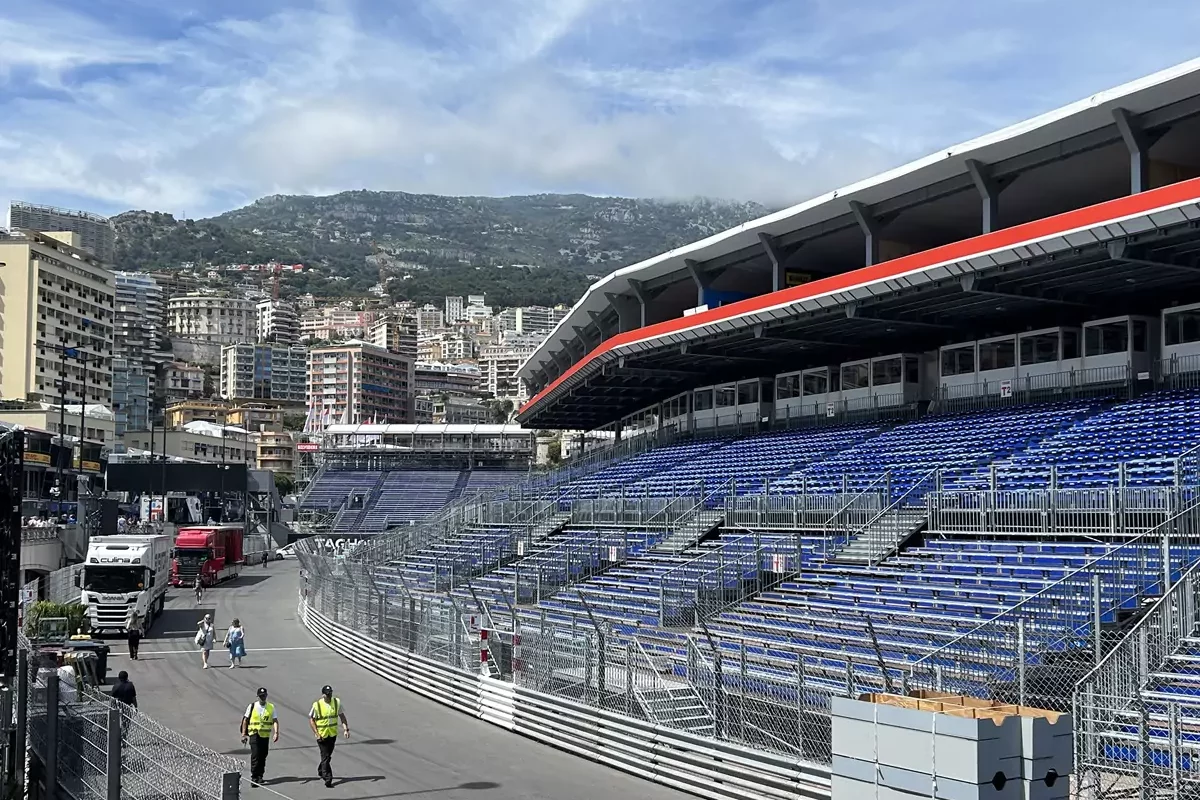
With the 83rd Formula 1 Louis Vuitton Grand Prix de Monaco running from Thursday 4th to Sunday 7th June, the Principality’s road network will undergo significant changes from this week. Residents, workers and visitors should expect widespread closures, parking suspensions and diversions across the city centre throughout the race period.

From Thursday 4th through to Sunday 7th June, from early morning until the conclusion of each day’s sessions, vehicles will be prohibited from a large number of central routes. These include the Quai des États-Unis, Route de la Piscine, Boulevard Albert Ier, Quai Antoine Ier, Avenue de la Quarantaine, Place du Casino, Avenue des Spélugues, Avenue Princesse Grace between Avenue des Spélugues and Boulevard Louis II, Avenue de Monte-Carlo, Boulevard Louis II, and Avenue J.-F. Kennedy, among others. The Tunnel Rocher Albert Ier, Tunnel Rocher Noghès, Tunnel Sainte-Dévote and Tunnel Débarcadère will all be closed to traffic for the duration.

Several streets will see their one-way direction reversed, including Rue Princesse Florestine, Rue Suffren Reymond, Rue Saige and Rue Terrazzani. Two-way circulation will be introduced on Rue Grimaldi between Rue Suffren Reymond and Place d’Armes, and on Rue Notari between Rue Suffren Reymond and Rue Princesse Antoinette.

On Saturday 6th and Sunday 7th June only, the one-way system in Monaco-Ville will be suspended, and vehicles not registered in Monaco will be prohibited from Avenue de la Porte Neuve.

A further traffic measure takes effect after the Grand Prix: from Monday 15th to Thursday 18th June between 9:30am and 4pm, Avenue J.-F. Kennedy between the Sainte-Dévote roundabout and Quai des États-Unis will operate as a one-way street in that direction, obliging vehicles approaching from Boulevard Louis II to proceed towards the quai.

Parking suspensions

Parking restrictions began in some areas on Sunday 31st May and extend well beyond race weekend itself. The most extensive suspensions run from Wednesday 3rd June at noon through to Sunday 7th June, covering Boulevard Albert Ier, Quai Antoine Ier, Place du Casino, Boulevard Charles III, Avenue des Spélugues, Avenue Princesse Grace, Avenue J.-F. Kennedy, Boulevard Louis II, Avenue d’Ostende, Boulevard des Moulins, Rue du Portier and numerous other streets throughout the Principality. Some restrictions on Rue du Gabian and surrounding streets in Fontvieille continue until Tuesday 9th June, while Avenue de la Quarantaine remains under restriction until Saturday 14th June.

Pedestrian access

Pedestrians will be unable to use many of the same routes as vehicles on race days, including Boulevard Albert Ier, Place du Casino, Avenue des Spélugues and Avenue J.-F. Kennedy. Those holding a valid ticket for the 83rd Grand Prix or an accreditation issued by the Automobile Club de Monaco or the Sûreté Publique will be permitted to circulate within the circuit perimeter and on a number of additional routes including Quai Albert Ier, Boulevard du Larvotto between Rue du Portier and Rue Louis Auréglia, Avenue de la Porte Neuve, Avenue de la Quarantaine and the Terrasse du Ministère d’État. Residents and employees of buildings immediately adjacent to the circuit will retain access on presentation of identity documents or a work permit.

Electric charging points suspended

Several Monaco ON public electric charging stations will be out of service from Wednesday 3rd to Sunday 7th June, including those on Rue Grimaldi, Rue Louis Notari, Avenue de la Quarantaine, Quai Jean-Charles Rey and Quai des États-Unis. Stations on Rue Florestine and the Avenues des Ligures and de la Madone will remain out of service until Tuesday 9th June.

Free buses across the entire network

As part of its mobility plan, the Princely Government has extended its policy of free public transport during major events in the Principality. All Compagnie des Autobus de Monaco (CAM) bus services will be free of charge from Monday 1st to Sunday 8th June inclusive, across the entire network — not only lines serving the Grand Prix circuit. Services will also be reinforced and rerouted during the period. Full details are available at cam.mc.

Stay updated with Monaco Life: sign up for our free newsletter, listen to our podcasts on Spotify, and follow us across Facebook,  InstagramLinkedIn, and Tik Tok.

Photo by Monaco Life