The full team line-up has been confirmed for The Crossing 2026, the water bike relay across the Mediterranean organised by the Princess Charlene of Monaco Foundation, which departs from Viareggio in Italy on Friday 19th June and arrives at Larvotto beach in Monaco on Saturday 20th June.
Seven teams of four athletes — 28 participants in total — will take on the 225-kilometre crossing through the Pelagos Sanctuary, a protected marine area spanning France, Monaco and Italy. Prince Albert II and Princess Charlene will give the starting signal from the Club Nautico di Viareggio on Friday.
The teams
Team Serenity brings together Gareth Wittstock, Princess Charlene’s brother and Secretary General of her Foundation, alongside four-time Tour de France winner Chris Froome, former French Cameroonian heavyweight world title contender Carlos Takam, and Kevin Crovetto.
TC Racing fields two of the most decorated names in the professional peloton: Danish Grand Tour winner Jakob Fuglsang and Italian classics specialist Filippo Pozzato, joined by Denis Shadlov and Christos Fiotakis. Fuglsang won the 2019 Criterium du Dauphine and a stage at the Tour de France, while Pozzato was one of Italy’s most celebrated one-day racers of the 2000s.
Scuderia Monte-Carlo features Ferrari factory driver and 2023 Le Mans 24 Hours overall winner Alessandro Pier Guidi alongside Guido Giovannelli, Francesco Castellacci and Gianfranco Spallarossa.
Team Lionheart is made up of Swedish Olympic cyclists Gustav Larsson and Veronika Larsson, alongside Alex Bennett and Jeremy Josserand. Rock to Rock Mangusta features Jacopo Marzocco, Alexandre Baccili, Jean-Baptiste Pastor and Anthony Roustan. Team Galenic brings together freediving world record holder Pierre Frolla, Loulou Fuglsang, Cyrius Monk and Megan Monk. The Gouvernement team comprises Geoffrey Espigue, Nicolas Collet, Bruno Chapot and Jean-François Sehan.
The event
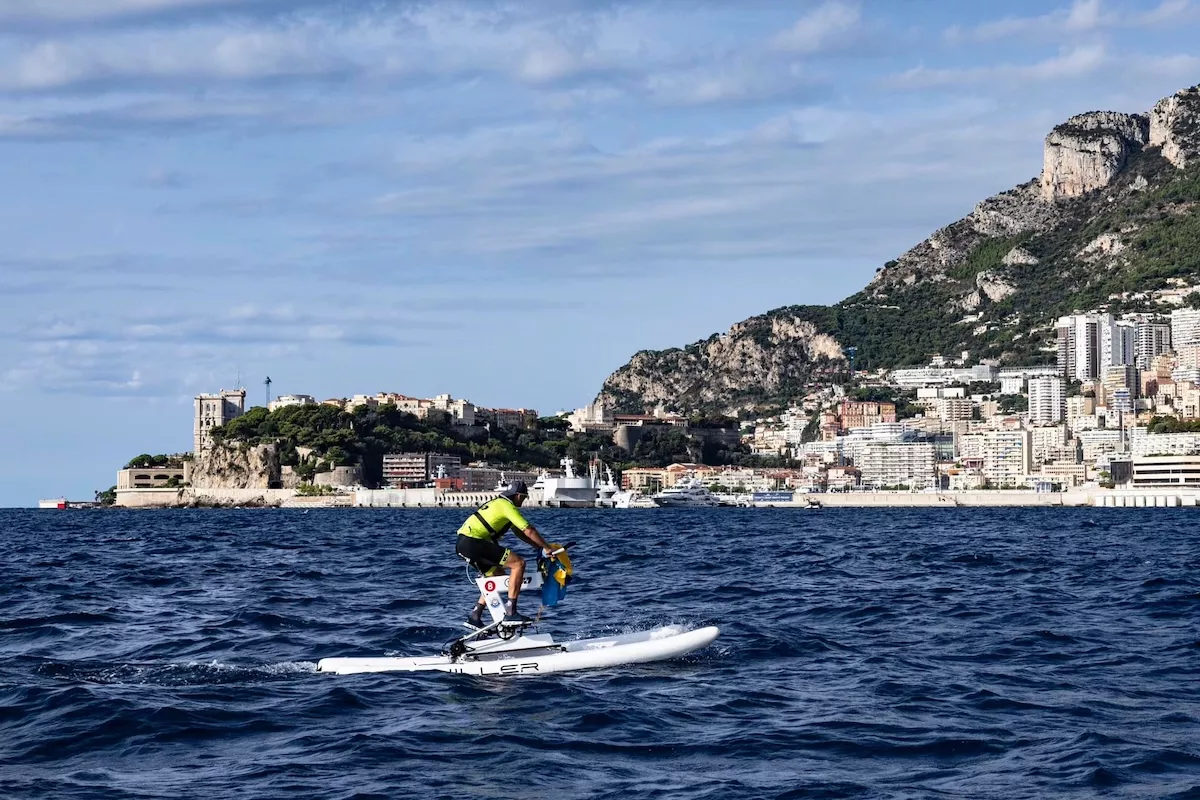
Now in its third edition, The Crossing this year marks the first formal collaboration between the Princess Charlene of Monaco Foundation and the Prince Albert II of Monaco Foundation, a partnership sealed at the Monaco Blue Initiative in May. The relay format sees each team member rotate continuously across the 24-hour crossing, using water bikes — floating structures built around a cycling-style pedalling mechanism.
The route passes through the Pelagos Sanctuary, one of the largest marine protected areas in Europe, recognised for its populations of dolphins, fin whales and sperm whales. The event raises awareness for drowning prevention — the core mission of the Princess Charlene of Monaco Foundation, which operates in 45 countries and has reached more than two million beneficiaries — and for marine conservation, the focus of the Prince Albert II of Monaco Foundation.
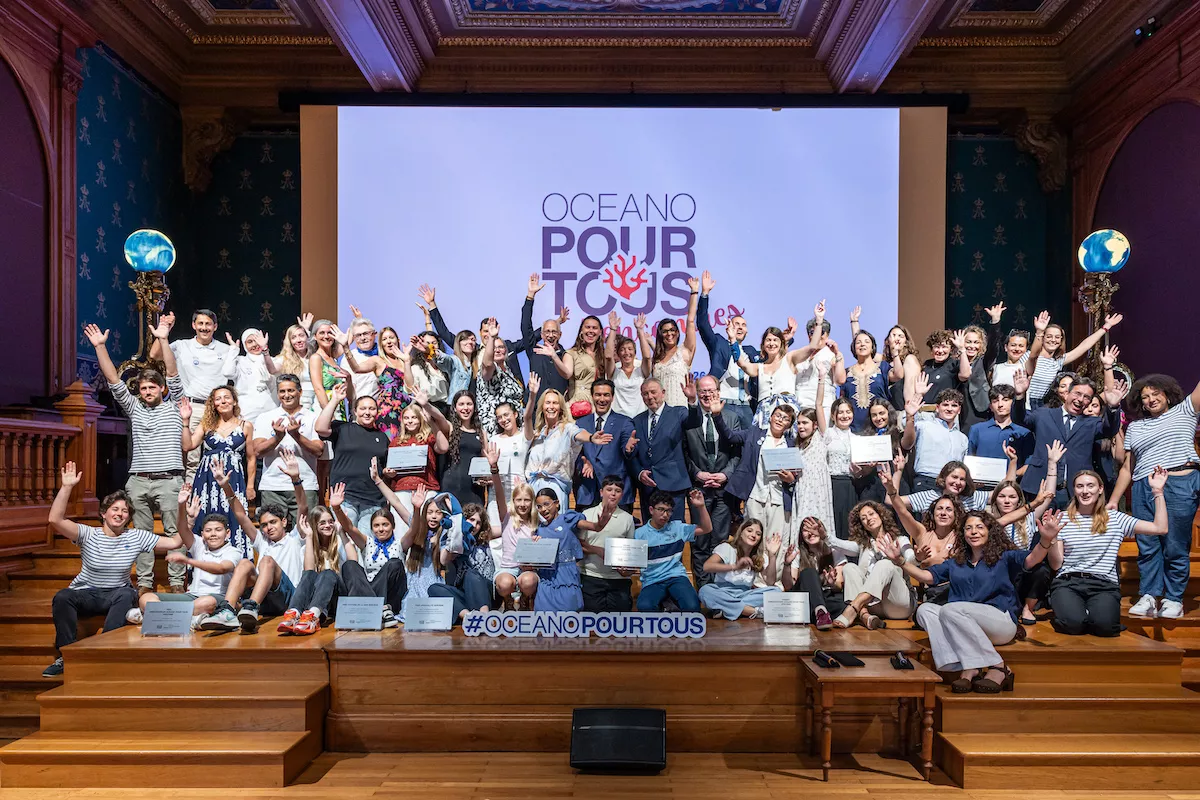
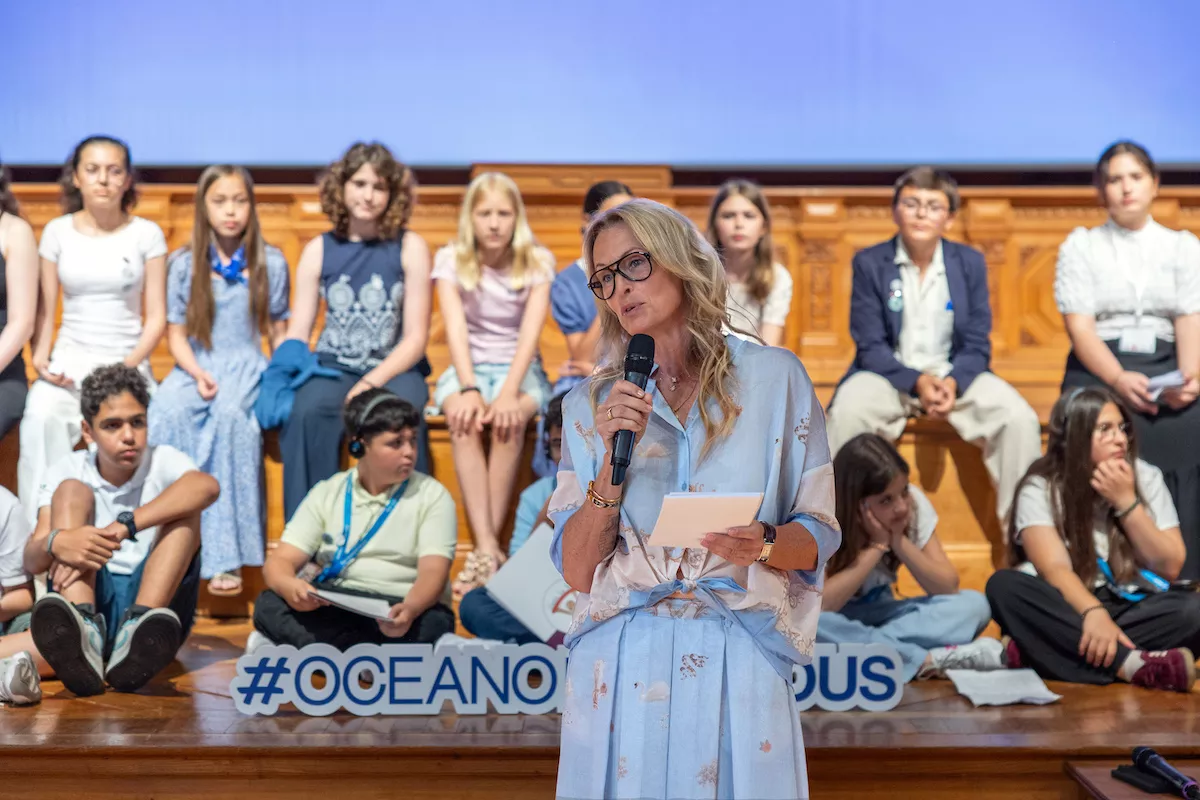
The Oceanographic Museum of Monaco has hosted the ‘Rencontres Oceano pour Tous’ event to conclude the 12th edition of the Oceano pour Tous competition. Bringing together 11 classes from France, Algeria, Italy, Spain, Tunisia, and Turkey, the two-day event, which took place on 9th and 10th June, served as a platform for intercultural dialogue and a collaborative commitment to the Mediterranean Sea and the broader ocean.
Launched in 2014 by the Oceanographic Institute of Monaco in partnership with the Princess Charlene of Monaco Foundation, the programme aims to make marine science accessible to students facing social or geographical barriers. Throughout the academic year, more than 1,000 pupils took part in digital workshops and field activities, culminating in a range of community-based conservation projects.
Cyril Gomez, Deputy Director General of the Oceanographic Institute, highlighted the initiative’s impact: “Through our Oceano Jeunesse programme, we provide students who face geographical or social barriers with the opportunity to connect with the sea. ‘Oceano pour Tous’ is more than a competition; it is a catalyst for engagement. These students remind us that local initiatives fuel a broader collective dynamic, and their energy and creativity are essential in building the world of tomorrow.”
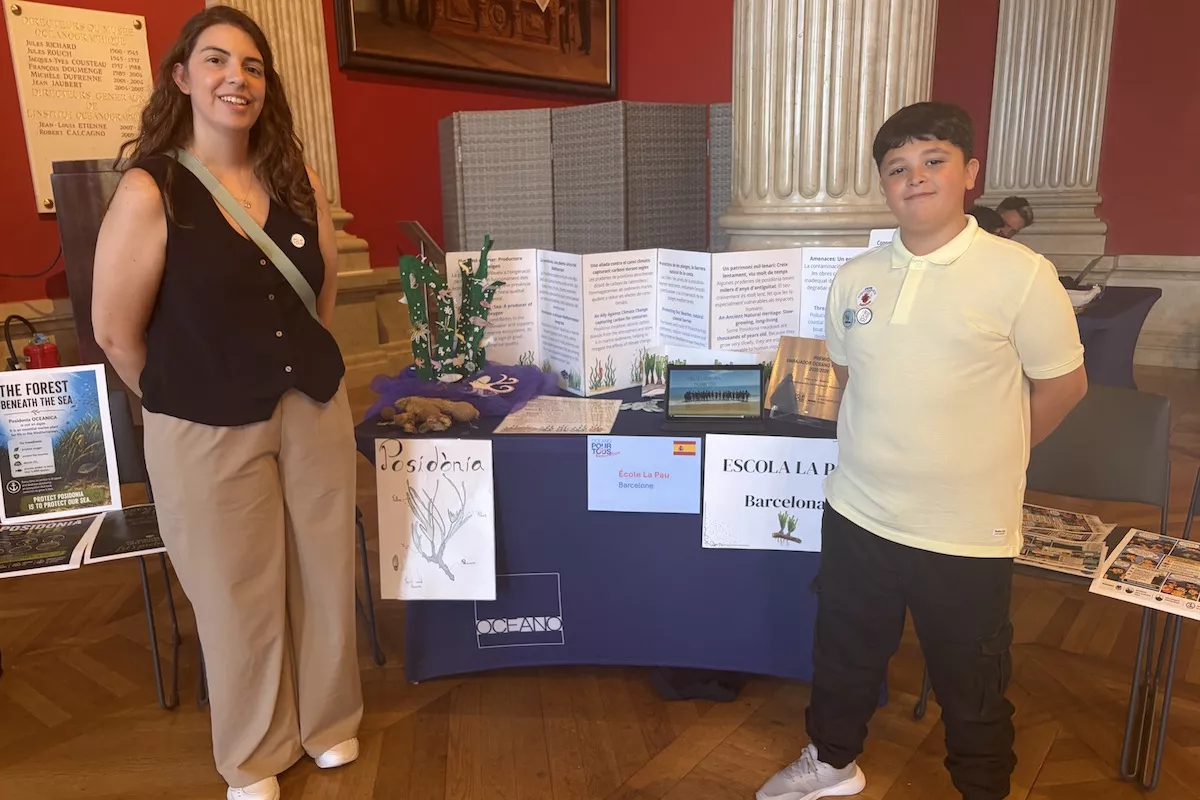
Teacher Belen with one of her students, Miguel, from the École La Pau in Barcelona / Photo credit: Virginia D’Umas
Innovative student-led solutions
The winning projects showcased a sophisticated blend of scientific rigour and community advocacy. Students from École La Pau in Barcelona spearheaded a campaign titled ¿Cómo sería el mar sin la Posidonia? (What Would the Sea Be Like Without Posidonia?). Utilising posters and comics, the pupils highlighted how boat anchors devastate this fragile aquatic plant. “Posidonia generates an incredible amount of oxygen—up to 20 litres per day per square metre—and serves as a vital habitat supporting over 1,400 marine species,” Belén Rodriguez, the school’s teacher, told Monaco Life.
Meanwhile, fifth-grade pupils from École Marcel Pagnol in Cannes La Bocca addressed the intricacies of sustainable fishing through a seasonal recipe book. By researching size restrictions and breeding cycles, the children sought to sensitise recreational fishers to the environmental consequences of their actions.
“Regarding seasonality,” their teacher explained, “we created a guide categorised by season to ensure minimal environmental impact. We understand that during specific periods, species are reproducing, nursing juveniles, or are otherwise vulnerable, and should be left alone. Through research, meetings with professional fishers, and practical workshops, we gathered the necessary knowledge to produce this booklet and filmed a supplementary video to champion these sustainable practices.”
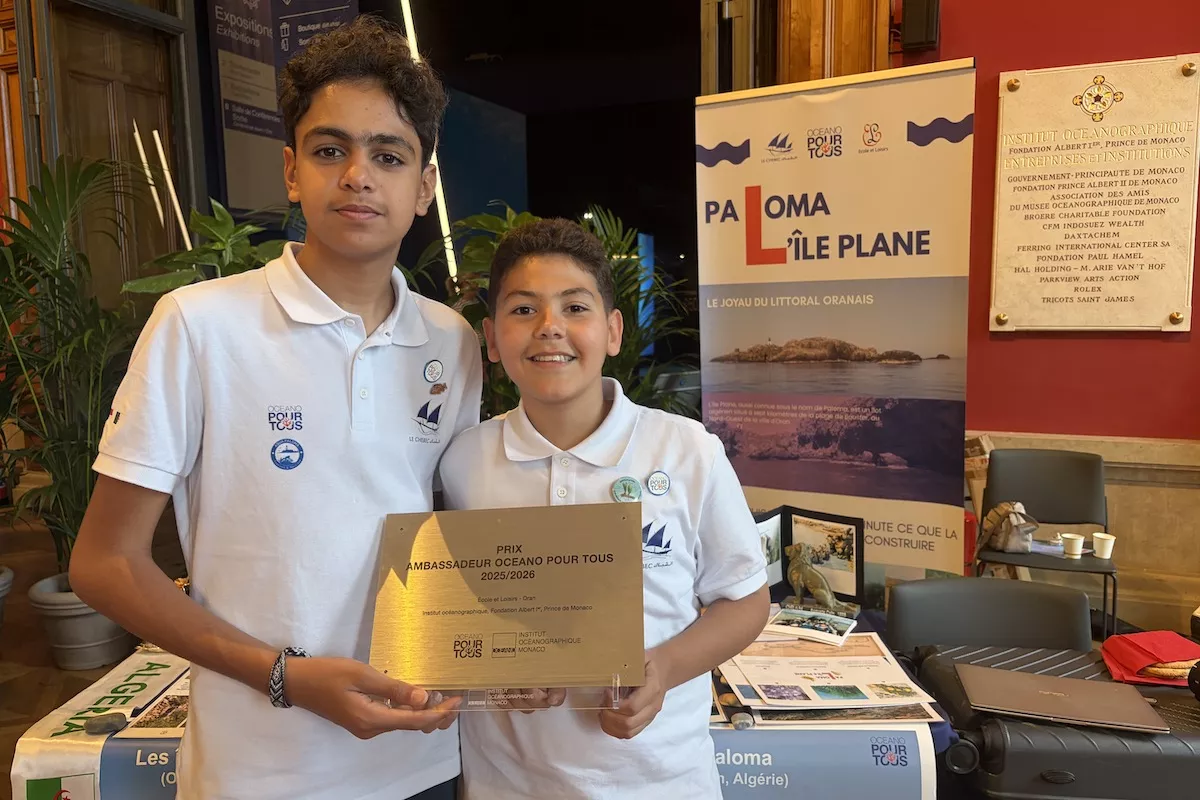
Students from École et Loisirs in Oran with their ‘Ambassadeur Oceano Pour Tous’ prize / Photo credits: Virginia D’Umas
Cultivating the next generation of stewards
The true impact of Oceano pour Tous is found not in the accolades, but in the measurable momentum these students are generating across the Mediterranean. This year’s selection highlighted a striking diversity of approaches, from the scientific rigour displayed by the Lycée École et Loisirs d’Oran, whose research into marine turtle life cycles has become a vital resource for their local community, to the adventurous spirit of Naples’ Istituto Comprensivo Statale Ferdinando Russo. Their ‘Trames de voyage’ project effectively bridged the gap between the classroom and the coast, utilising sailing expeditions to ground their scientific workshops in direct, hands-on observation of the marine ecosystem.
Estelle Lefébure, Ambassador of Oceano pour Tous / Photo credit: Philippe Fitte
Perhaps the most inventive response to the region’s changing environment came from the Lycée anatolien Sabancı in Marmaris, Turkey. Their ‘The eye behind me’ initiative moved beyond passive education, combining coastal cleanup efforts with digital innovation to create a new application that assists recreational fishers in identifying and reporting invasive lionfish. These projects, along with 12 others from across France and Monaco, were awarded funding to scale their initiatives, ensuring these grassroots efforts continue to thrive well beyond the end of the school year.
“Year after year, Oceano pour Tous shows how capable young people are of transforming ocean-related issues into concrete action. Their energy and dedication to sharing what they have learned make these students true ambassadors. I am proud to support this generation, which is already fully committed to the future of our planet,” said Estelle Lefébure, Ambassador of Oceano pour Tous.
Café de Paris Monte-Carlo is hosting its annual Spanish Week from 17th to 21st June, with the 2026 edition carrying particular significance: the event coincides with the 150th anniversary of Monaco’s diplomatic mission in Spain and comes just two months before the Principality hosts the Grand Départ of La Vuelta a España for the first time in its history.
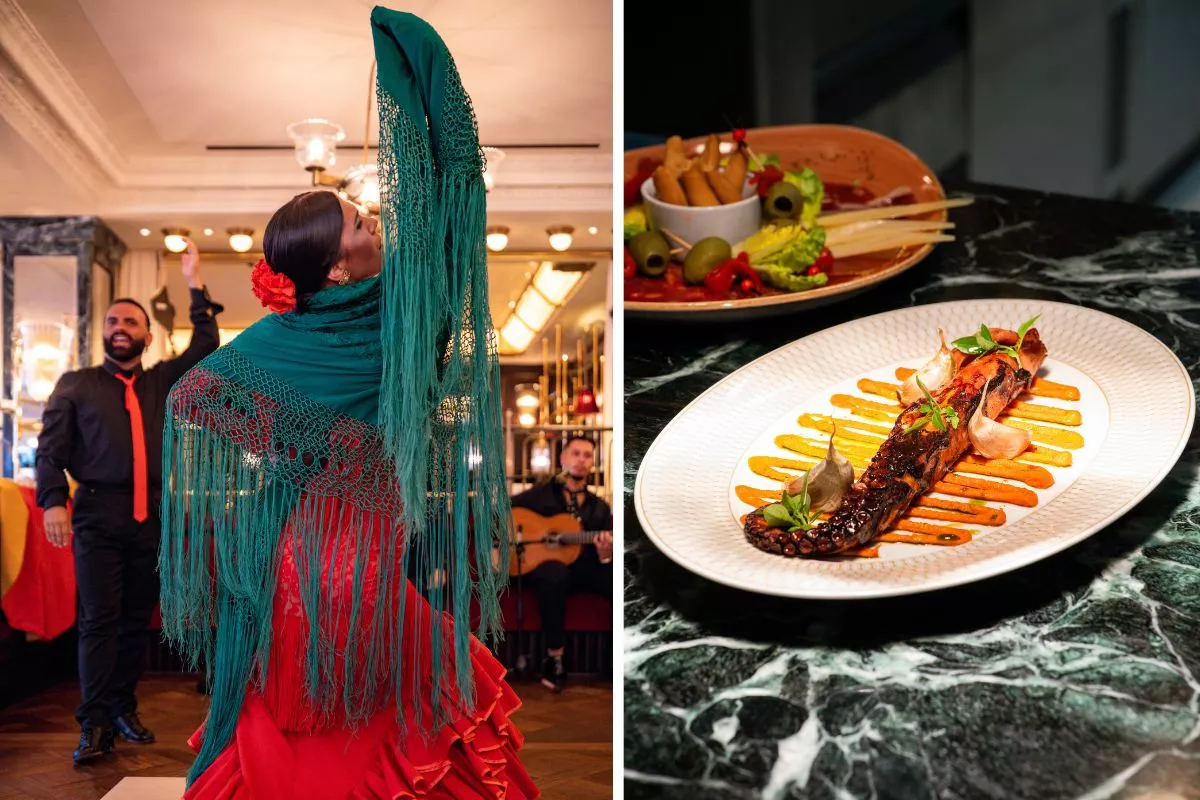
The week, which the brasserie has staged annually since 2009, dresses the Café de Paris in the yellow and red of the Spanish flag for five evenings of Iberian cuisine, flamenco and live music. This year’s menu has been created by Café de Paris chef Victor Marion in collaboration with Chef Fernando Lopez, and features dishes including Tabla de jamón ibérico de bellota Pata Negra, Paella mar, Pata de pulpo braseado and Entrecote de Vaca Rubia de Galicia madurada.
Flamenco every evening
European Flamenco champion Jose Lucena performs a flamenco dance show each evening alongside his dancers and singer Alvaro Alcaidhe. Master Iberian ham cutter Sandra Fernandés Santos will also give demonstrations of ham carving throughout the week.
Gala dinner for 150 years of diplomatic ties
The centrepiece of the week is a gala dinner on Saturday 20th June at 7:30pm, marking 150 years since Monaco established its diplomatic mission in Spain on 14th July 1876. Stéphane Valeri, Delegate President of Monte-Carlo Société des Bains de Mer, and Christophe Navarre, creator and organiser of the event, will welcome Catherine Fautrier-Rousseau, Ambassador Extraordinary and Plenipotentiary of Monaco to Spain.
The gala menu has been signed by Chef Albert Gonzales Margallo of Le San Sebastian 57 in Santa Cruz de Tenerife, a restaurant recognised by the Michelin Guide. The evening will also showcase produce from the Balearic Islands and the Canary Islands, presented in collaboration with H.E. Laura Calvo Borrego, Consul of Monaco in the Balearic Islands, and Francisco J. Doblas Gonzales de Aledo, incoming Consul of Monaco in the Canary Islands.
Prelude to La Vuelta
The Spanish Week arrives ahead of what will be a landmark moment for the Principality. The 81st edition of the Vuelta a España begins on 22nd August in Monaco with a 9.6-kilometre individual time trial, making Monaco the only country in the world to have hosted the Grand Départ of all three Grand Tours — following the Giro d’Italia in 1966 and the Tour de France in 2009. The official team presentation takes place at Casino Square on Thursday 20th August, with Stage 2 departing Monaco for Manosque on Sunday 23rd August.
Spanish Week at Café de Paris Monte-Carlo runs from 17th to 21st June 2026.
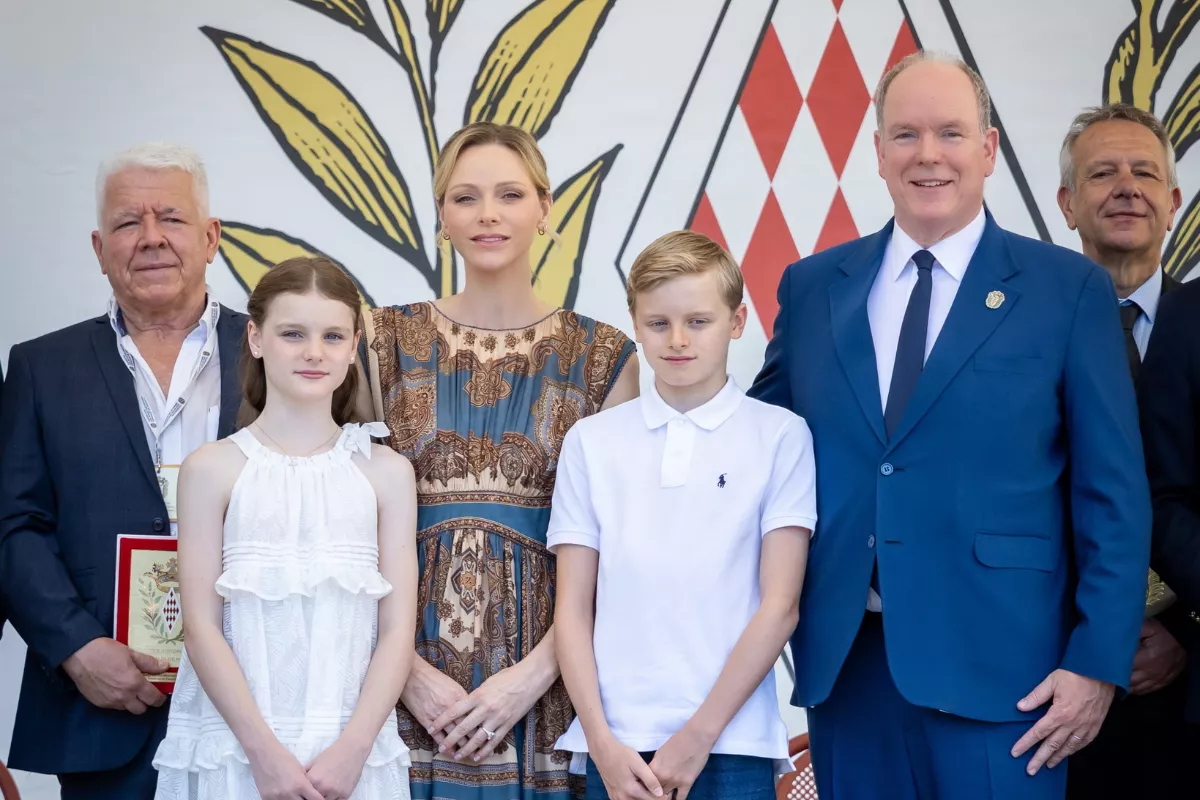
Prince Albert II officially opened the seventh edition of the Grimaldi Historic Sites Meetings on Saturday 13 June, joined by Princess Charlene, Hereditary Prince Jacques, and Princess Gabriella at Place du Palais.
The event welcomed representatives from both French and Italian communities with links to the Grimaldi family heritage, including the Department and City of Mayenne, Fontaine-Française, Roumoules, Ascros, Marie, and Italian municipalities of Pianezza and Livorno Ferraris.
In his opening speech, Prince Albert II emphasized the importance of the meetings in preserving the shared history, while expressing his desire to strengthen friendship, cooperation, and exchanges between Monaco and the territories connected through the Grimaldi heritage.
After the ceremony, the Princely Family toured the village set up at Place du Palais, meeting elected officials, producers, and visitors gathered to celebrate this shared heritage.
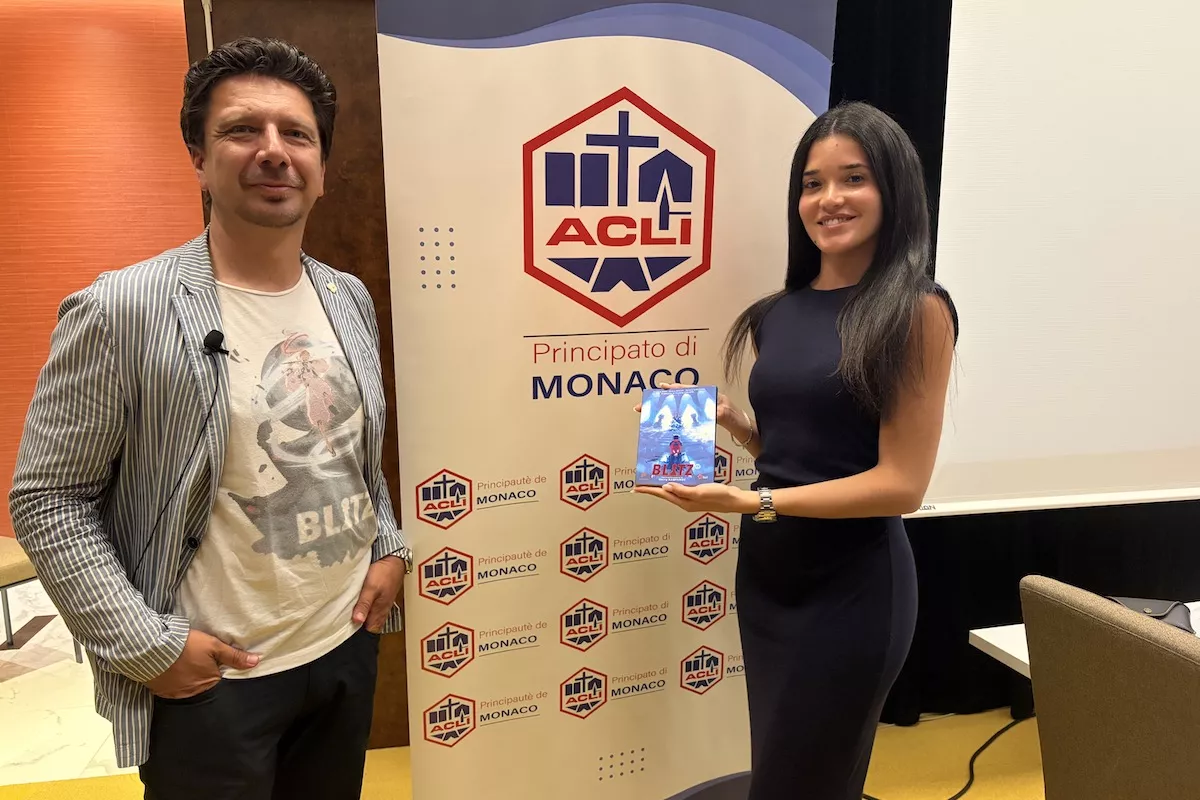
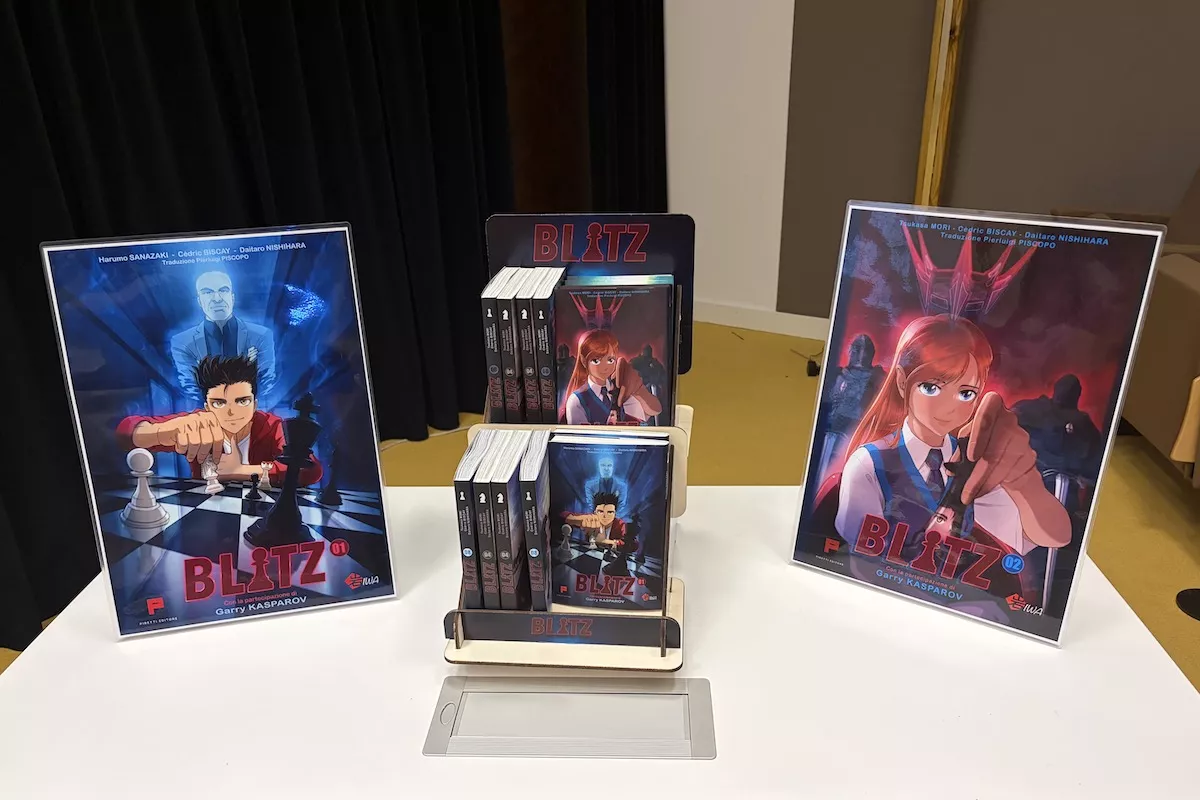
The Agora-Maison Diocésaine in Monaco hosted a cultural showcase on Tuesday 9th June, celebrating the international success of the French manga Blitz. Organised by ACLI Monaco—the Association of Italians in the Principality—the event highlighted the manga’s successful translation and publication in Italy. Supported by Shibuya International and Pirreti Editore, the gathering brought together enthusiasts to explore the intersection of strategic chess and graphic storytelling.
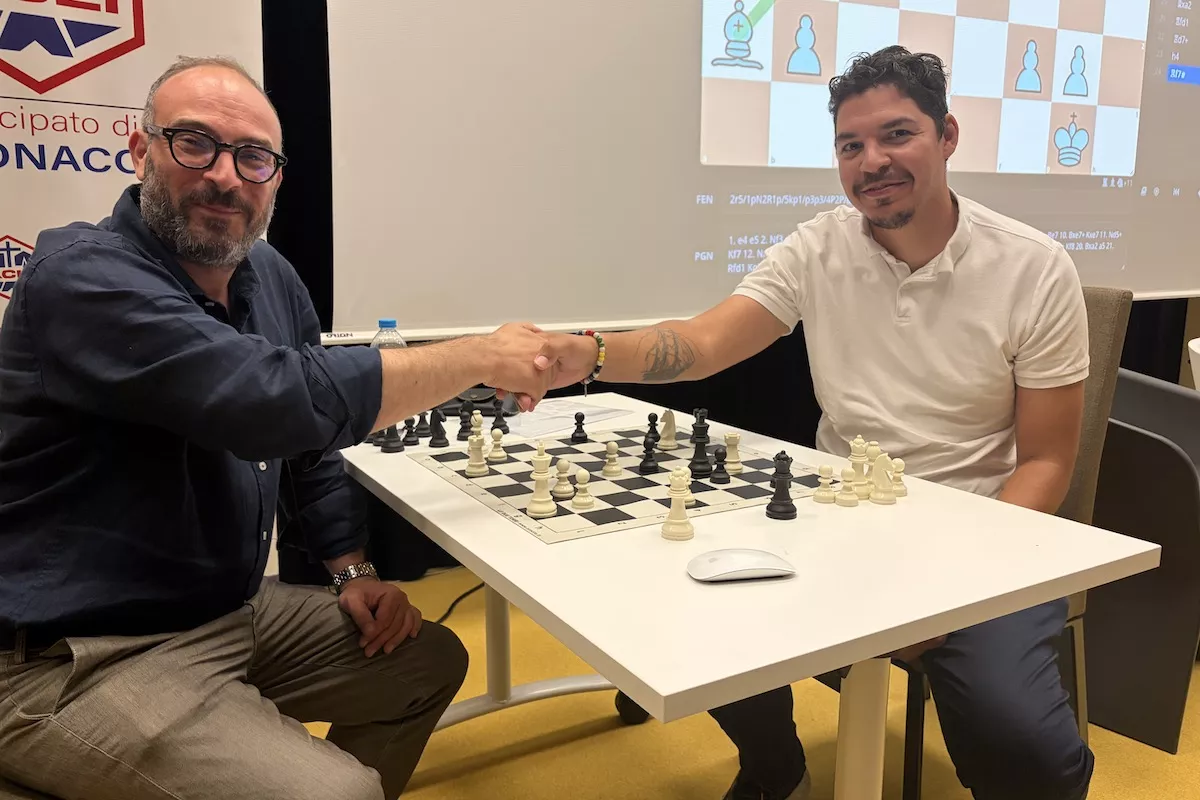
The programme opened with a high-level chess demonstration led by International Grandmaster Pierluigi Piscopo. Reflecting on the discipline required for such strategic play, Piscopo said: “Chess is a game of complete information where analysis and anticipation allow a player to essentially see the future before it unfolds on the board.” This demonstration served as a practical exploration of the intellectual rigour central to the narrative of Blitz, mirroring the mental discipline required by the characters within the series.
The creative vision of Cédric Biscay
Author and creator Cédric Biscay took to the stage to lead a conference on his work. Biscay provided detailed insights into the creation of the series, which is notable for prominently featuring the Principality and references to the Princely Family. He also discussed how his personal cross-border ties serve to link Monaco and Italy through his writing.
Reflecting on the manga’s broadening international footprint, Biscay expressed his pride: “Having a true reader base in Italy for Blitz is a sign of growing soft power for the Principality of Monaco in sectors where it was previously absent; it is a great pride to contribute to this development.” He further credited the success to the passion behind the project, noting, “I have no formal training in writing manga; my work is driven by passion, motivation, and a deep familiarity with the genre.”
Photo by Monaco Life
A cultural contribution to the Diocese
The evening continued with a formal ceremony, during which the Italian publisher Massimiliano Piretti officially donated the first eight volumes of the Italian edition of Blitz to the Diocese of Monaco. This act underscored the cultural weight of the series, positioning it as a notable contribution to the literary landscape of the region.
International Grandmaster Pierluigi Piscopo playing with an event attendee. Photo by Monaco Life
Fan engagement and future perspectives
The evening concluded with a signing session, marking the official launch of the eighth volume of Blitz in Italy. Ginevra de Masi, President of ACLI Monaco, explained that the event was central to the organisation’s strategy to engage local youth, utilising the global resonance of the manga to celebrate the bond between Monaco and Italy through the medium of Japanese popular culture.
As Biscay continues the production of the 12th volume of the series, the success of the gathering at the Agora highlights the growing importance of Blitz as a vehicle for cross-border collaboration and cultural exchange.
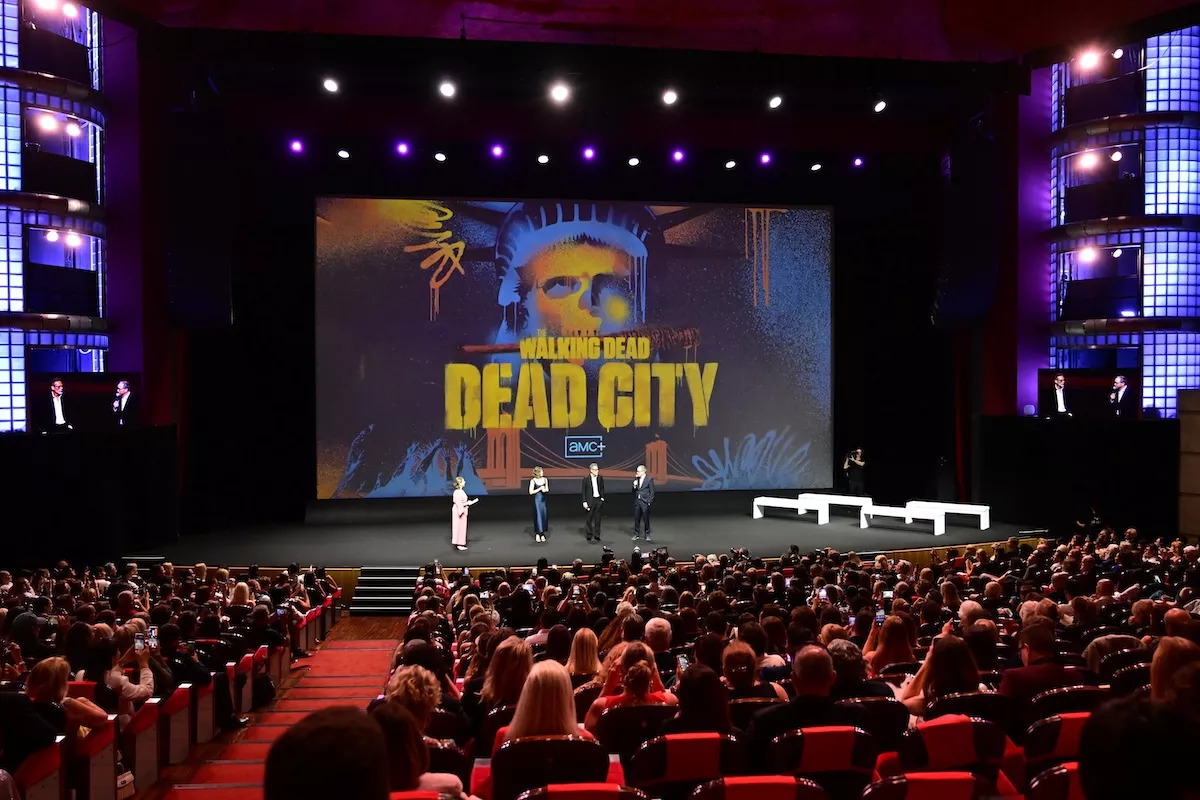
The day after The Walking Dead: Dead City opened the 65th Monte-Carlo Television Festival with a world premiere of its third season, the show’s cast and creative team gathered at the Grimaldi Forum for a panel that ranged from immigration and hope to the moment that changed television.
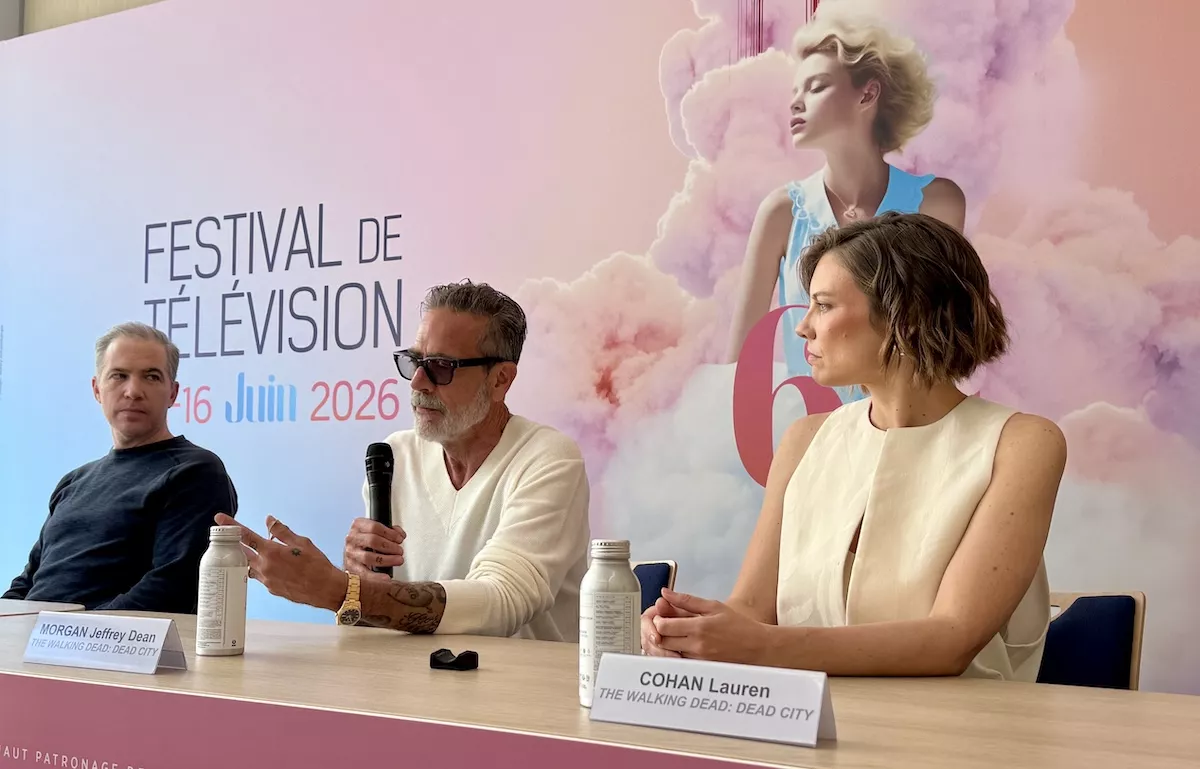
Showrunner Seth Hoffman, who wrote for the original Walking Dead series during Seasons 4 and 5 before returning to lead this spin-off, was joined by actors Jeffrey Dean Morgan and Lauren Cohan for a wide-ranging conversation with the international press, including Monaco Life’s Cassandra Tanti.
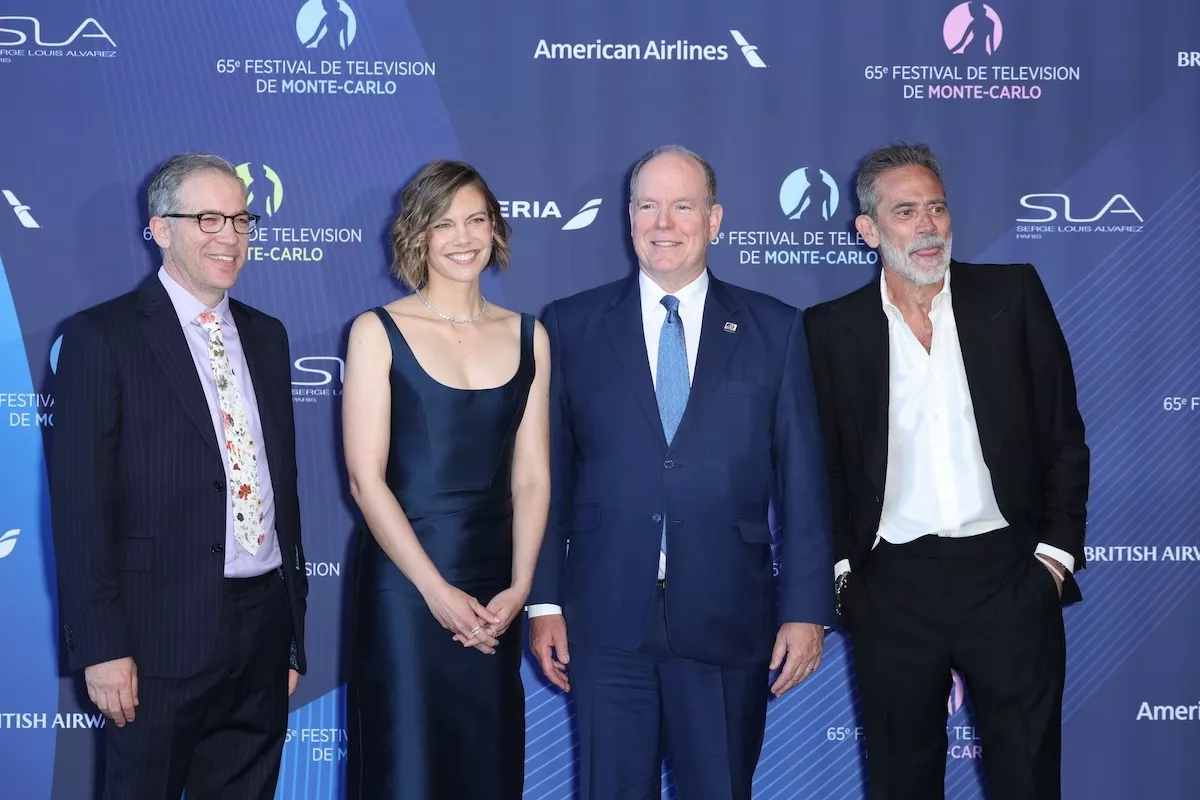
Left to right: Showrunner Seth Hoffman with actors Jeffrey Dean Morgan and Lauren Cohan. Photo credit: Cassandra Tanti
A different kind of Maggie and Negan
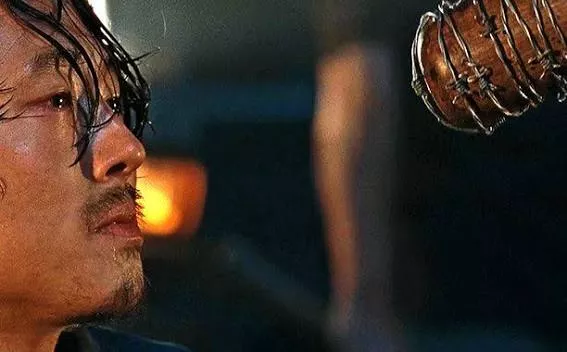
The central thread running through the discussion on Saturday was the transformation of Dead City‘s core relationship — between Maggie Greene, played by Lauren Cohan, and Negan, played by Jeffrey Dean Morgan — from enemies to unlikely allies. The two characters have spent a decade defined by the fact that Negan murdered Maggie’s husband, Glenn Rhee, in what remains one of the most shocking scenes in television history.
Morgan reflected on how far Negan had travelled from the character who stepped out of a Winnebago in Season 6 swinging a barbed-wire bat — and why, more than a decade later, he still wants to play him. “I think that will always be part of who Negan is. But he’s much more three-dimensional now,” he said. “We’ve added layers through the years and I think this season in particular, there’s such a shift in Negan’s relationship that it brings yet another side of Negan out. Those sides are the reason I still want to play the character – even after 10-plus years. It’s still new to me every year because there’s always something added to the character and to the story.”
For Lauren Cohan, Season 3 represents a turning point — the first time Maggie is given permission, within the story, to stop being defined by loss.
“I think a huge part of what has made her relatable, and what has given me such pleasure and depth as an actor over all these years, is the fact that her highs feel especially high in a world that has so many lows. But this is really the first year where Maggie recognises that being defined by grief, and operating from a place of grief, doesn’t serve her anymore,” she said.
The world premier screening of The Walkig Dead: Dead City Season 3 at the 65th Monte-Carlo Television Festival
‘The longest-living person Maggie knows’
When asked how the two actors had experienced the evolution of their on-screen dynamic, Lauren Cohan highlighted the irony of the Maggie-Negan relationship. “I think what I enjoy so much are the surprises and the unlikely pairing of a widow and the person responsible for making her a widow,” she said.
“And yet Negan is now the longest-living person Maggie knows in this universe. So the irony of the breadth and depth of their relationship compared with how they met is pretty interesting.”
Morgan agreed, and pointed to something that neither character had been allowed much of in the previous two seasons: lightness. “We’ve spent years being at each other’s throats. So to suddenly have scenes that have genuine meaning and emotional depth was amazing. Seeing Maggie smile is so nice,” he said. “I don’t think we’ve seen her smile in 10 years. It kind of took me by surprise.”
The death scene that changed The Walking Dead forever
The death that still haunts television
Monaco Life asked whether anything in The Walking Dead universe had ever matched the impact of Glenn’s death — the brutal scene in which Negan used his barbwire bat Lucille to kill Maggie’s husband, complete with the now-infamous eye-popping visual that shocked audiences around the world.
Cohan revealed that she recently rewatched the episode with neighbours who had never seen the series before and admitted she found it just as difficult the second time around.
“I felt protective of them because they had never experienced it before. But honestly, I also felt protective of myself,” she said. “Watching it again reminded me just how intense it was.”
The experience reinforced her view that the scene remains in a league of its own.
“I don’t think we’ve matched that moment. And honestly, I’m okay with that. I think it will always stand as one of the most impactful moments in television history. For me, it’s up there with the Red Wedding from Game of Thrones. Those are two moments that genuinely changed television. We were very privileged to be part of something that moved the needle in that way. For better or worse, it’s unforgettable.”
Morgan’s memories of filming the scene were somewhat lighter.
“Everyone remembers the eye popping out. Everyone remembers how shocking it was,” Morgan laughed. “What I remember is Steven Yeun running around with that prosthetic on. He was singing and dancing in the makeup trailer with Michael Cudlitz. The two of them were basically making what would be a TikTok video today. They were having an absolute blast while everybody else was horrified. That’s what I remember.”
Becoming Negan
Jeffrey Dean Morgan also spoke about the role Negan’s iconic weapon, Lucille, plays in helping him slip back into character more than a decade after first joining The Walking Dead universe.
“It’s honestly the only prop I’ve ever had as an actor that I truly loved,” he said. “There’s something about holding that bat. Resting it on my shoulder. It changes my posture. It changes the way I speak. It changes the way I move. It immediately helps me become Negan. And that’s rare. Most props don’t do that.”
He added, to audience laughter, that the electrified version of Lucille seen in recent seasons had lost some of its menace.
“The battery ran out. So that’s unfortunate.”
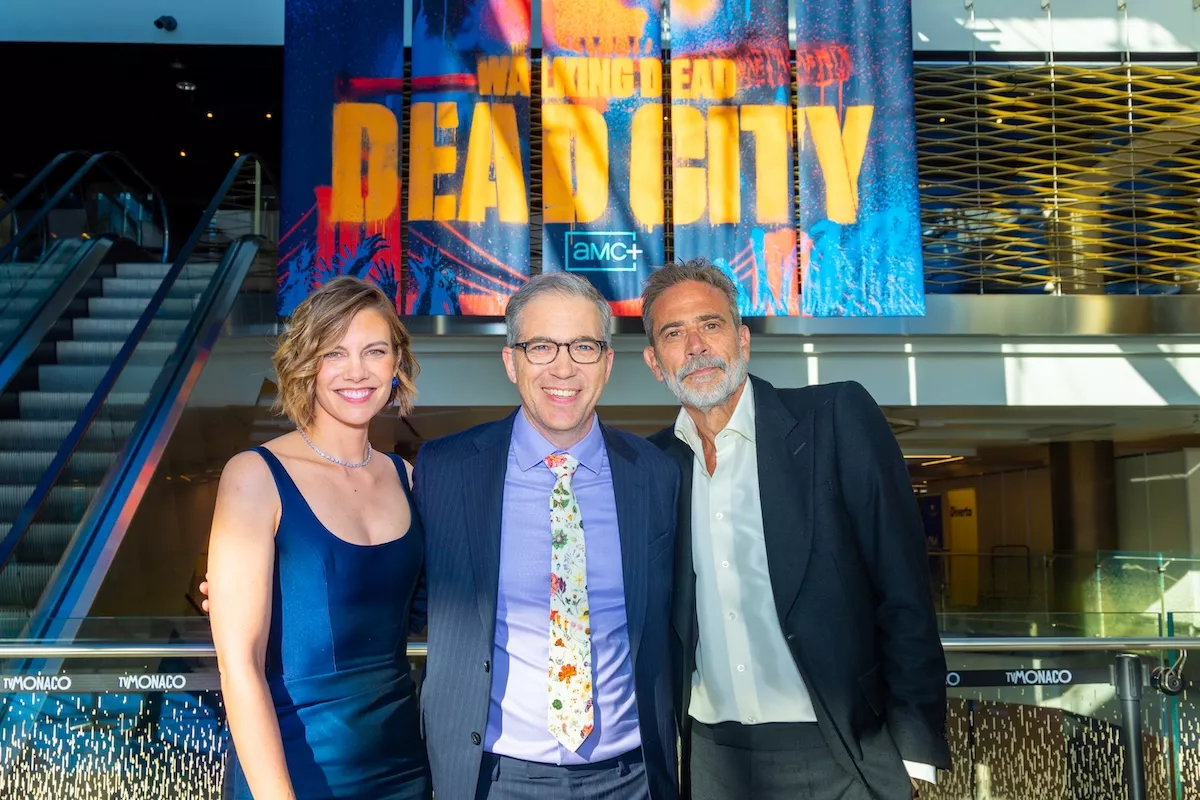
Prince Albert II on opening night with, from left to right, Seth Hoffman, Lauren Cohan and Jeffrey Dean Morgan and
The alternate reality episode fans are talking about
Asked about season three’s alternate reality episode — a storyline that has already sparked excitement among fans — showrunner Seth Hoffman revealed that the concept was actually the first idea he developed for the new season.
Having initially come to The Walking Dead as a fan before later writing for the series, Hoffman said the episode offered a rare opportunity to revisit characters audiences may not have seen in years.
“If you do an alternate reality episode where the apocalypse never happened, suddenly you can bring back characters who haven’t been part of the franchise in years,” he explained.
But for Hoffman, the appeal goes beyond nostalgia. The episode asks a question that cuts to the heart of the entire Walking Dead universe. “It raises a question,” he said. “Are these people actually better off for having gone through the apocalypse? Or would they have been better if it had never happened? That’s one of the questions we want the audience to explore when they watch that episode.”
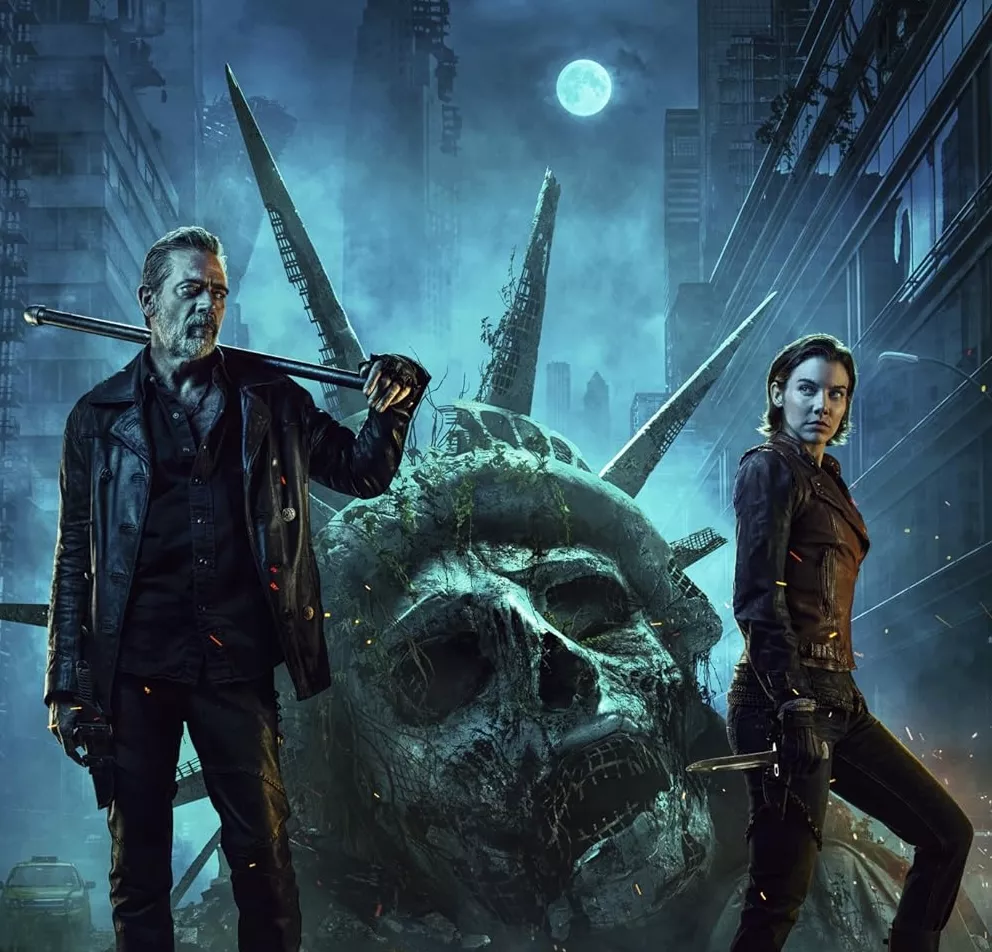
The Walkind Dead: Dead City promotional poster
Immigration, hope and the Statue of Liberty
New York itself plays a larger role in season three than simply serving as the backdrop to the action. Hoffman said the creative team wanted some of the city’s most recognisable landmarks to become characters in their own right.
“We’re setting the story in New York and we wanted those places to matter,” he said. “So in addition to the Statue of Liberty, you’ll see the Empire State Building, a Broadway theatre, Grand Central Station. We wanted New York itself to feel like a character.”
The Statue of Liberty, however, carries particular weight as the story explores questions of immigration, belonging and who gets welcomed into a community.
“We’re aware that not everyone in the United States shares the same views on immigration and inclusion,” Hoffman said. “There are people who don’t necessarily believe bringing more people into a community is a good thing. As the season progresses, there are characters within Maggie’s community who oppose what’s happening. That debate continues throughout the season.”
Cohan said those themes resonate because they reflect one of the core ideas that has always driven both America and The Walking Dead — the belief that people can reinvent themselves and build something better.
“One of the things that makes me proud — and I’m both American and British — is that America has always had this idea that people can define themselves differently. You can prove yourself in different ways. And I actually think there’s a parallel between that and The Walking Dead. It’s one of the reasons people have connected with the show for so long.”
Saying goodbye
While The Walking Dead has built its reputation on shocking character deaths, the cast admitted that losing castmates never becomes routine. All three paid tribute to Željko Ivanek (who plays ‘The Croat’ on The Walking Dead: Dead City), describing him as both an exceptional actor and a valued colleague, with Morgan summing up the experience of long-running departures across the franchise.
“One thing I’ve learned is that you never get good at it,” he said. “Every time somebody leaves, it hurts. You lose friends. You lose colleagues. You lose actors you care about. And it never becomes easier.”
New territory for the undead
Hoffman said one of the challenges facing any long-running franchise is finding ways to surprise audiences without abandoning what made them fans in the first place. Season three attempts to do exactly that, introducing concepts and storylines that push the boundaries of TheWalking Dead universe in unexpected directions.
“One thing we’re intentionally doing this year is exploring the humanity of the walkers,” he said. “We have recurring walkers. We have walkers who have names. Walkers who have personalities, to some extent. We wanted to ask questions that The Walking Dead hasn’t really explored before. We wanted audiences to feel: ‘Yes, this is definitely The Walking Dead.’ But at the same time: ‘I’ve never seen this before.’ That balance was really important.”
The Walking Dead: Dead City Season 3 is due to air on AMC and AMC+ later this summer.