From battlefield alliances to royal godmothers: the remarkable history behind Monaco and Spain’s 150-year milestone

When Princess Charlene stepped onto Spanish soil on Monday, it marked her first official visit to the country since marrying Prince Albert II in 2011 — a personal milestone that sits quietly alongside a much longer story.

Monaco and Spain have been bound by alliance, marriage, military cooperation and mutual ambition for over five centuries, and this two-day visit to Madrid marks 150 years since the formal establishment of Monaco’s diplomatic mission in Spain, as well as the 10th anniversary of the Spanish branch of the Prince Albert II of Monaco Foundation.

The relationship between these two states is rarely told in full. It deserves to be.

From the Reconquista to the Rock

The historical ties trace back to 1349, when the Grimaldis — having established themselves on the Rock half a century earlier — are recorded as having responded to a call from Pope Clement VI to support King Alfonso XI of Castile during the Reconquista. This early military solidarity laid the groundwork for a far deeper political entanglement.

By 1524, following the assassination of Lucien Grimaldi and faced with an absence of French support, Augustin Grimaldi placed Monaco under the protection of Emperor Charles V, transforming the Principality into a strategic Mediterranean foothold against French interests. The strength of this bond was demonstrated in 1529, when the Emperor spent four days in Monaco, cementing a personal trust between the two powers. The formal alliance was consolidated in 1532 with the appointment of the first dedicated Spanish resident, Francisco de Valenzuela.

Alfonso XIII of Spain and Victoria Eugenie of Battenberg

During the 117 years of the Spanish protectorate that followed, the integration of the two cultures was profound — frequent marriages between Spanish soldiers stationed on the Rock and local women left a lasting demographic and linguistic mark on Monaco’s population.

The protectorate ended on the night of 17th November 1641, when Prince Honoré II expelled the Spanish garrison and pivoted Monaco’s protection toward France. Yet the aristocratic ties persisted. By the mid-18th century the Grimaldi family had acquired the prestigious Spanish title of Grande de España, cementing their place at the highest levels of Iberian nobility.

Albert I and Spain’s seas

The 19th century gave the relationship a more personal character. In 1866, the future Prince Albert I — who would become known as the Navigator Prince — joined the Spanish Royal Navy as an ensign at the age of 18, traversing the Atlantic aboard the training frigate Teutan before serving on the Gerona, sailing to Cuba, Puerto Rico and the United States. He would later describe Spain as his “second homeland.” His ties to the country went beyond the maritime — he collaborated with conservationist Pedro Pidal to promote nature reserves in the Pyrenees and supported the scientific study of the prehistoric caves of Altamira.

The connection between the two courts reached a symbolic peak in 1958, when Queen Victoria Eugénie of Spain stood as godmother at the baptism of Prince Albert II.

Formal diplomatic ties continued to deepen. The Monaco legation in Spain, established on 14th July 1876, was elevated to embassy status in 1991. Throughout 2026, the anniversary year has been marked by tours of Spain by the Monte-Carlo Philharmonic Orchestra and the Monte-Carlo Ballet, alongside culinary events at the Café de Paris in Monaco showcasing Spanish traditions.

Monday in Madrid

Prince Albert II met with King Felipe VI at the Zarzuela Palace on Monday morning for a working meeting and private lunch, before holding an audience with Prime Minister Pedro Sánchez at the Moncloa Palace. That evening, the Princely Couple joined King Felipe VI and Queen Letizia at the Royal Botanical Garden of Madrid for the inauguration of two exhibitions at the Villanueva Pavilion: Monaco and Spain: Five Centuries of Shared History, drawn from the Palace Archives, and the 8th edition of the Monaco Artists Forum.

On Tuesday, Prince Albert II will conclude the visit at IE University, delivering the keynote address at a conference titled Leading the Future Through Collaboration: Talent, Innovation and Opportunity, marking the 10th anniversary of the Foundation’s Spanish branch.

Stay updated with Monaco Life: sign up for our free newsletter, listen to our podcasts on Spotify, and follow us across Facebook,  InstagramLinkedIn, and Tik Tok.

Main photo of Prince Albert II and King Filipe IV of Spain, credit: Michael Aelsi, Prince’s Palace

Monaco unveils sweeping integrity reforms for ministers, senior officials and Palace advisers

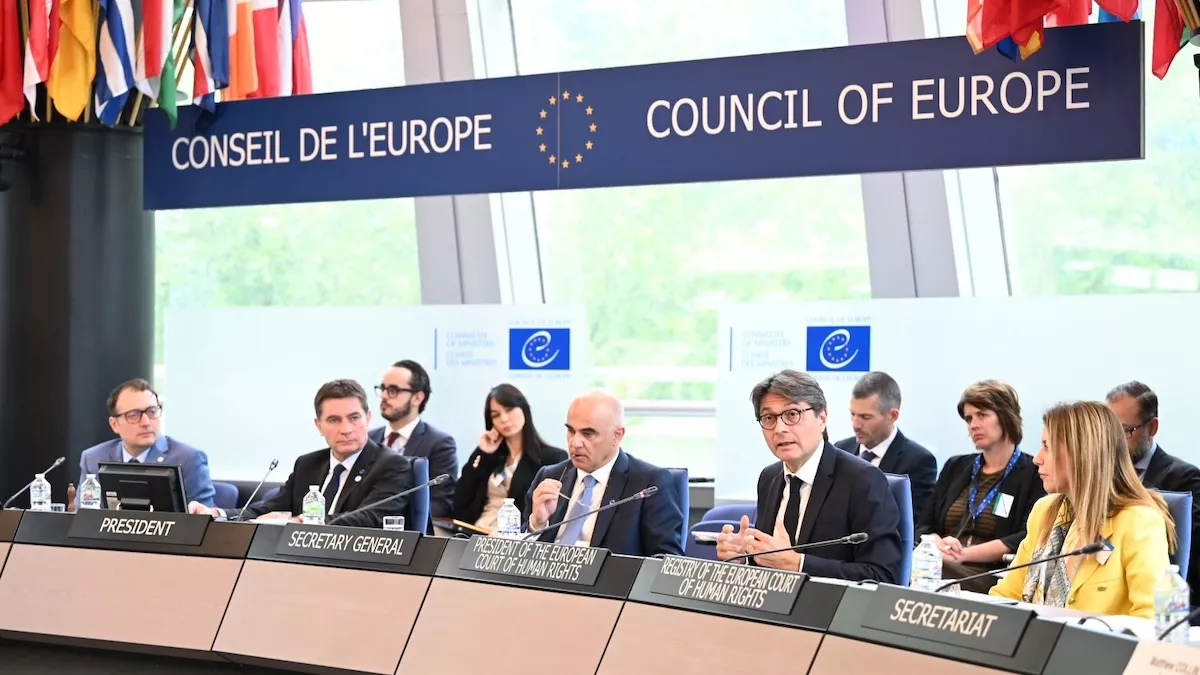
The Princely Government has adopted a three-year strategy to combat corruption across the Principality’s highest executive functions, setting out new obligations for ministers, senior officials and, for the first time, certain roles within the Maison Souveraine.

The 2026–2028 strategy, revealed to the press Tuesday, responds to 17 recommendations issued by the Council of Europe’s Group of States against Corruption (GRECO) following its evaluation of Monaco in June 2024 under the fifth assessment cycle, which focused on the prevention of corruption and promotion of integrity within central governments. It is structured around five objectives and accompanied by a detailed operational action plan.

A steering committee born from a sovereign ordinance

The strategy was developed by a dedicated steering committee established by Sovereign Ordinance No. 11.092 of 18th February 2025. Chaired by the Minister of State and composed of the five Government Councillor-Ministers, the Secretary of State for Justice, and representatives of the governmental administration and the Maison Souveraine, the committee has met six times since its creation to oversee the design of the measures.

A risk-mapping exercise — carried out with external experts and covering both governmental functions and other senior executive roles — formed the analytical foundation of the strategy, allowing the committee to identify specific threats, vulnerabilities and risk factors.

Extended ethics oversight

The strategy’s first objective broadens the scope of existing ethics controls. Declarations of interests, until now required only of Government Councillor-Ministers, will be extended to the Minister of State, the Secretary of State for Justice, senior figures within the governmental administration, and holders of senior positions at the Maison Souveraine — including the Secretary of State, members of the Princely Cabinet, and the Administrator of Crown Property.

An integrity check by the President of the Ethics Committee will be required ahead of all such nominations. For government members and the Secretary of State for Justice, interest declarations will be made public except where disclosure would disproportionately affect the right to private and family life.

A post-departure oversight mechanism will also be extended beyond government members to all senior executive functions. Officials moving to the private sector within two years of leaving office will be required to submit details of their future activity to the Ethics Committee, which will issue an opinion on compatibility or incompatibility — an opinion that may itself be made public if ignored.

Asset declarations, previously required only of government members, will similarly be extended across all senior executive roles, with the President of the Superior Audit Commission given authority to conduct substantive checks rather than purely formal verifications.

Mandatory ethics training and a permanent advisory role

The second objective centres on embedding a culture of integrity. All individuals holding senior executive functions will be required to undergo initial ethics training upon taking office and at least one further session per year thereafter. A best-practice guide — published publicly and signed for by each official — will be issued at the point of appointment.

A dedicated ethics adviser will be available on a permanent and confidential basis to government members, the Secretary of State for Justice, and senior officials within the governmental administration. For the Maison Souveraine, this advisory role will be fulfilled by the President of the Ethics Committee.

Rules on conflicts of interest, gifts, and the holding of concurrent paid activities — already applicable to government members — will be extended across all senior executive functions. Ministers and the Secretary of State for Justice will be prohibited from holding any other remunerated position during their term, with limited exceptions for educational, artistic, literary, sporting, or cultural activities.

Lobbying registers and more press engagement

The third objective introduces transparency measures around decision-making processes. Digital registers recording meetings between senior executive officials and interest representatives or influential third parties will be created and made publicly accessible for the Princely Government, the Directorate of Judicial Services, and the Maison Souveraine. Entries will include the identities of those met, the date and location, the position put forward, and the legislative or regulatory text concerned.

The opinions of the Council of State will be published in the Journal de Monaco and on the Legimonaco digital platform, providing greater visibility into the legal, technical, and political considerations underpinning legislation and regulation.

Government members will also be expected to hold regular joint press conferences, while thematic press briefings led by the relevant minister or the Secretary of State for Justice will address specific policy areas. The Secretary of State for Justice will commit to at least one annual press engagement at the opening of the judicial year, with further interviews or briefings on topical matters throughout the year.

Whistleblower protection and procurement reform

The fourth objective concerns the passage of a whistleblower protection law. A bill — originally tabled before the National Council in December 2018 — would establish the formal status of whistleblower in Monaco, guarantee anonymity from the outset of proceedings, provide legal protection against professional reprisals, and set out a reporting procedure leading to judicial referral. The Government and National Council aim to adopt the legislation in 2026.

The fifth objective targets public procurement. The sovereign ordinance governing public contracts — last updated in 2018 — will be revised to introduce publication requirements for contracts for services and supplies, new procedural timelines, weighted and ranked objective award criteria, the end of the practice of opening bids in the presence of operators, and mandatory publication of contract awards above €200,000 including the name of the successful tenderer.

Transparency rules will also be extended to majority state-owned companies, both for their procurement from the state and for certain contracts they conclude with third parties in the delivery of public services or network operations.

A framework designed to evolve

According to the government, the strategy will be reviewed at regular intervals by the steering committee, which is also tasked with preparing a progress report to be submitted to European authorities by 30th June 2026. A full assessment will be conducted at the end of the 2026–2028 period to evaluate outcomes and shape any subsequent phase.

Stay updated with Monaco Life: sign up for our free newsletter, listen to our podcasts on Spotify, and follow us across Facebook,  InstagramLinkedIn, and Tik Tok.

Photo by Cassandra Tanti

Nice Côte d’Azur Airport unveils a luxury retail transformation

Following eighteen months of extensive renovation, Nice Côte d’Azur Airport has officially unveiled a complete overhaul of its commercial landscape. The project, which commenced in September 2023, has transformed approximately 6,300 square metres of retail and service space across the airport’s scheduled and business aviation terminals.

The renovation encompasses 42 retail and service units, creating a new shopping environment designed to embody the unique art de vivre of the French Riviera—a region stretching from Saint-Tropez to Monaco and beyond to Italy.

A ‘laboratory’ for future travel

The airport’s vision for this transformation centres on delivering a premium experience that mirrors the region’s cultural identity while positioning Nice as an innovative ‘laboratory’ for the airport of tomorrow.

“Nice Côte d’Azur Airport has a twofold specificity: it is the gateway to an exceptional region, and it is designed as a laboratory for the airport of tomorrow,” explains Franck Goldnadel, Chairman of the Executive Board of Franck Goldnadel. “This is naturally reflected in our new retail offering, which delivers an unusual encounter inspired by the colours and scents of the Riviera, as well as concepts that are entirely new to a French airport.”

Photo source: Nice Côte d’Azur Airport

French craftsmanship and sustainable luxury 

The new retail mix places a heavy emphasis on French excellence and Mediterranean craftsmanship. Travellers will now find luxury brands in fashion, leather goods, and perfumery that are exclusive to Nice within the French airport landscape, outside of Paris.

In a move highlighting the airport’s commitment to Corporate Social Responsibility (CSR), the retail portfolio now includes a multi-brand luxury fashion boutique featuring second-hand products. This initiative responds to the growing demand for more sustainable, meaningful consumption patterns among luxury travellers.

Furthermore, the airport has refined its ‘travel essentials’ offering, introducing new product categories in collaboration with established market partners. The project also included a full refurbishment and expansion of the Service Centres in the commercial aviation terminals to better cater to the diverse needs of leisure and business passengers.

Defining the passenger experience

Candice Cadreils, Director of the Commercial Business Unit of Candice Cadreils, says there was a  strategic intent behind the works, noting that the objective was to ensure that arriving at or departing from Nice feels distinct from any other travel experience.

“These eighteen months of work reflect our ambition to offer all our passenger categories—leisure and business travellers alike—a unique, surprising, and innovative travel experience,” says Cadreils. “We have succeeded in attracting iconic brands representing French excellence that travellers will not find in any other airport. This demonstrates the strong trust that exists between us and our partners.”

Stay updated with Monaco Life: sign up for our free newsletter, listen to our podcasts on Spotify, and follow us across Facebook,  Instagram, LinkedIn, and Tik Tok.

Main photo source: Nice Côte d’Azur Airport


Le Fernet brings the soul of the French brasserie back to Monaco

With classic French comfort food, an exceptional wine programme and one of the Principality’s most thoughtfully designed dining rooms, Le Fernet is proving that elegance does not have to come with extravagance.

In a Monaco dining scene increasingly dominated by ultra-luxury concepts and international brands, Le Fernet arrives with something refreshingly different: the confidence to keep things simple. Opened earlier this year on Avenue Saint-Charles, the independent restaurant has quickly established itself as one of Monte-Carlo’s most talked-about new addresses, offering the timeless appeal of a traditional French brasserie at prices that remain remarkably accessible by local standards.

A restaurant designed to be discovered

What immediately sets Le Fernet apart is its atmosphere. Designed by renowned Parisian interior designer Rodolphe Parente, a former protégé of Andrée Putman, the restaurant balances classic brasserie aesthetics with contemporary sophistication.

Warm wood panelling, aged brass, crisp white tablecloths and softly lit banquettes create a sense of understated luxury, while every surface reveals another carefully considered detail. Rich textures, elegant lighting and striking artworks transform the space into something closer to a private gallery than a traditional dining room. Whether seated inside among the intimate lounges or on the spacious terrace overlooking the city, guests are immersed in an environment that feels both familiar and elevated.

Le Fernet dining room. Photo provided

French classics executed with confidence

During a recent press dinner, Chef Mathieu Dorlac’s menu demonstrated exactly why the restaurant is attracting attention. The signature organic mimosa egg offered a refined take on a French classic, while the house-cured salmon gravlax showcased the kitchen’s commitment to craftsmanship.

The standout was undoubtedly the foie gras. Rich, indulgent and perfectly balanced with Banyuls reduction and onion chutney, it served as a reminder that some dishes deserve a place on menus year-round rather than being reserved for festive occasions alone. Equally memorable was Le Fernet’s homemade cordon bleu, featured as one of the restaurant’s popular lunch specials and elevated far beyond the nostalgic comfort dish many diners might expect.

The organic mimosa eggs and salmon gravlax, alongside the housemade foie gras with breads. Photo credit: Cassandra Tanti

Lunch specials that deliver exceptional value

That lunchtime offering deserves special mention. Daily specials priced between €26 and €28 deliver exceptional value in a market where casual dining is becoming increasingly difficult to find. From monkfish in tapenade crust and seasonal hachis parmentier to confit duck and the now-famous Fernet cordon bleu, the menu offers a rotating selection of generous French classics designed to encourage regular visits rather than special occasions alone.

One of Monaco’s most impressive wine programmes

Yet food is only part of the story. Le Fernet’s wine programme may ultimately become one of its defining strengths. Overseen by head sommelier Florine Huby, the cellar has been conceived as a journey through France’s diverse terroirs, with each region presented almost like an exhibition.

During our lunch, each course was paired with precision, highlighting the kitchen’s flavours without ever overpowering them. The breadth of the collection is equally impressive, featuring 300 references and 4,000 bottles, making it one of the most compelling wine destinations currently operating in the Principality.

Le Fernet’s impressive wine cellar. Photo credit: Cassandra Tanti

Why Le Fernet is resonating with Monaco diners

At a time when Monaco’s restaurant landscape often gravitates towards spectacle, Le Fernet succeeds by focusing on hospitality, comfort and authenticity. It recalls an era when brasseries were neighbourhood institutions rather than concepts, where excellent food, thoughtful service and great wine mattered more than theatre. Judging by the crowds already filling its dining room, Monaco has been waiting for exactly this kind of restaurant.

Stay updated with Monaco Life: sign up for our free newsletter, listen to our podcasts on Spotify, and follow us across Facebook,  Instagram, LinkedIn, and Tik Tok.

Main photo provided

Beyond the discussion: what Monaco’s blue economy forums achieved this year

The 17th Monaco Blue Initiative and the second Blue Economy and Finance Forum brought together close to 300 participants across four days in Monaco at the end of May, drawing scientists, policymakers, institutional investors and entrepreneurs from 47 countries for what has become the Principality’s most significant annual gathering on ocean finance and governance.

The two events, held consecutively at the Oceanographic Museum and the Grimaldi Forum, are increasingly designed to work in tandem. Prince Albert II confirmed in his opening address to the MBI that from this year the forum is formally repositioned as a prelude to BEFF, with scientific and governance priorities developed at the Initiative intended to feed directly into the finance discussions that follow. “Investing in the Ocean is no longer simply responsible. It is profitable. The Ocean has become an asset class in its own right,” he said.

A data first for ocean investors

Among the announcements at the Monaco Blue Initiative, GIST Impact and Hub Ocean confirmed that the world’s first ocean risk datasets for listed equity investors will be published before the end of 2026. The datasets will cover marine protected areas and ocean-sensitive zones, providing asset-level exposure analysis for institutional portfolios. The absence of usable, science-grade ocean data has long been identified as one of the principal barriers to mainstream investment in the sector — making the forthcoming publication a practically significant development for the finance community.

Amundi and Crédit Agricole commit to natural capital

At BEFF, Amundi and Crédit Agricole announced the creation of a dedicated business line for natural capital, to be established within the next three years. The initiative is specifically designed to make ocean preservation and restoration projects investable within existing financial frameworks — a response to the $175 billion annual funding gap that delegates identified as the central challenge facing the blue economy.

The forum’s sessions also explored a range of emerging mechanisms gaining traction in the sector, among them resilience bonds, biodiversity credits, parametric insurance and outcome-based funds. On maritime decarbonisation, green shipping corridors between major ports and the electrification of port operations were identified as near-term levers, alongside technologies including wind propulsion, AI-powered routing and alternative fuels. The seaweed sector drew particular attention as a growing and increasingly profitable asset class, while discussions on food security underlined the overlooked role of small-scale fisheries, which supply up to 60% of protein consumed across the Global South.

BEFF 2026 drew 60% private sector representation across its 20 sessions, with institutional investors, venture capital and private equity accounting for 23% of attendees — a composition that organisers said reflected the growing integration of ocean investment into mainstream finance.

Stay updated with Monaco Life: sign up for our free newsletter, listen to our podcasts on Spotify, and follow us across Facebook,  InstagramLinkedIn, and Tik Tok.

Photo credit: Philippe Fitte

Monégasque space company Venturi Space to invest €250 million in Toulouse lunar rover facility

Venturi Space, the Monaco-based company developing critical technologies for space exploration, has announced a €250 million investment in France to build a 16,000 square metre technology centre in Toulouse, where it will design, manufacture and assemble rovers intended for lunar and Martian missions.

The announcement was made at Choose France, the annual summit held at the Palace of Versailles dedicated to French economic attractiveness, and was led by Gildo Pastor, the company’s Chairman and the driving force behind the Venturi Group’s push into space mobility.

NASA, Artemis and the CLV-1 connection

The investment comes at a pivotal moment for the company. NASA has selected the CLV-1 rover developed by Venturi Astrolab — Venturi Space’s American strategic partner — to transport astronauts across the surface of the Moon from 2028 as part of the Artemis programme. That vehicle draws directly on critical technologies developed by Venturi Space, including its high-performance batteries, hyper-deformable wheels and energy management systems, making the Toulouse facility central to meeting NASA’s requirements ahead of the crewed lunar landings.

In Europe, the company is contributing to preparatory work for future lunar rovers through a risk-reduction study conducted under contract with the European Space Agency since January 2026, and unveiled its 100% European lunar rover MONA LUNA in June 2025.

Toulouse as the European flagship

Already present in Toulouse for two and a half years, Venturi Space will expand its footprint significantly with the new site, which will serve as the hub for rover assembly and system integration. The facility will work in close collaboration with the company’s existing entities in Monaco and Switzerland, which will supply wheels, thermal systems, cryogenic materials, high-performance batteries and other critical components for final assembly and qualification in Toulouse. The centre will employ nearly 200 highly qualified engineers and technicians.

“I have always believed that mobility would be one of the keys to space exploration. Today, the momentum is there. With this €250 million investment and the creation of nearly 200 jobs, Venturi Space is taking a decisive step forward. We have the technologies, the experience, the partners and, soon, the industrial tool to go further. I want this project to succeed, to bring an entire sector with it, and to inspire Toulouse,” said Gildo Pastor.

Dr Antonio Delfino, Director of Space Affairs at Venturi Space, described the site as the company’s European centrepiece. “This site will be Venturi Space’s European flagship. Our teams will work there on critical technologies, on the integration of complex systems and on the assembly of rovers designed to operate in the most extreme environments. It will play a central role in our ability to meet the requirements of American and European lunar programmes,” he said.

Rover assembly at the Toulouse facility is expected to begin in 2027.

Stay updated with Monaco Life: sign up for our free newsletter, catch our podcasts on Spotify, and follow us across Facebook,  InstagramLinkedIn, and Tik Tok.

Photo source: Venturi Space