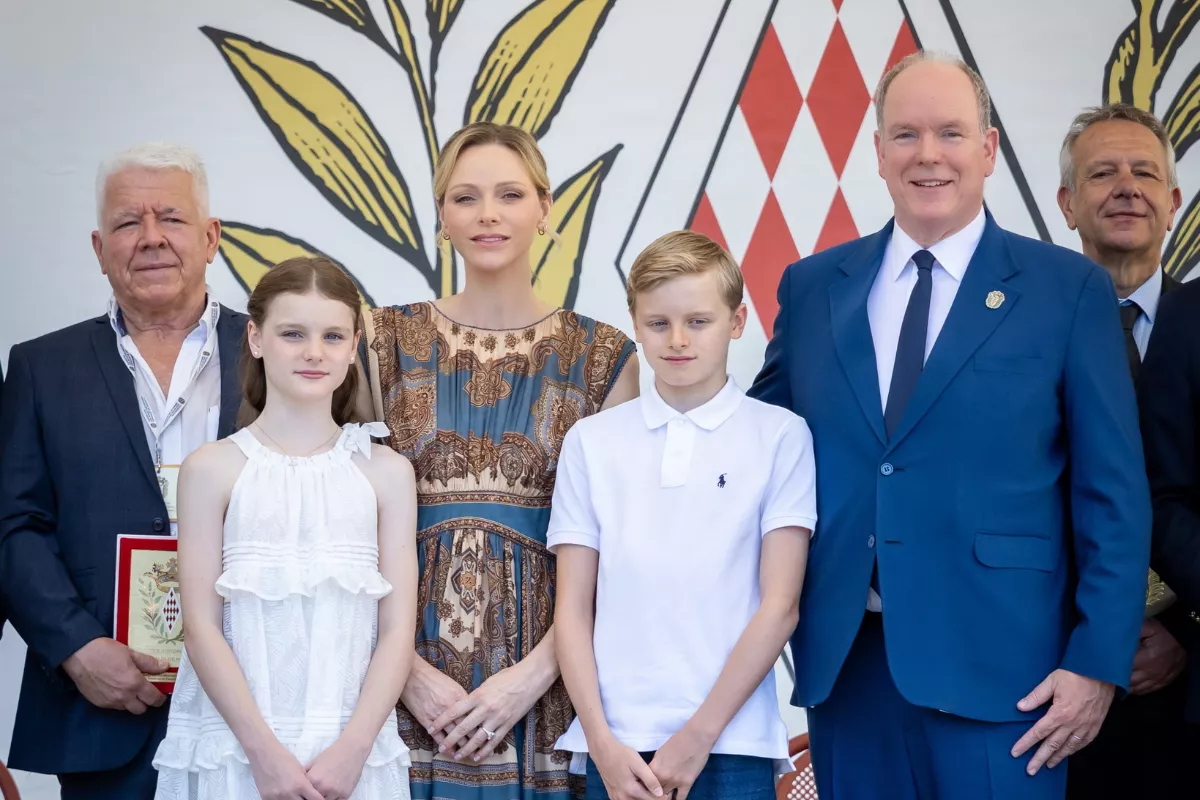
Prince Albert II officially opened the seventh edition of the Grimaldi Historic Sites Meetings on Saturday 13 June, joined by Princess Charlene, Hereditary Prince Jacques, and Princess Gabriella at Place du Palais.
The event welcomed representatives from both French and Italian communities with links to the Grimaldi family heritage, including the Department and City of Mayenne, Fontaine-Française, Roumoules, Ascros, Marie, and Italian municipalities of Pianezza and Livorno Ferraris.
In his opening speech, Prince Albert II emphasized the importance of the meetings in preserving the shared history, while expressing his desire to strengthen friendship, cooperation, and exchanges between Monaco and the territories connected through the Grimaldi heritage.
After the ceremony, the Princely Family toured the village set up at Place du Palais, meeting elected officials, producers, and visitors gathered to celebrate this shared heritage.
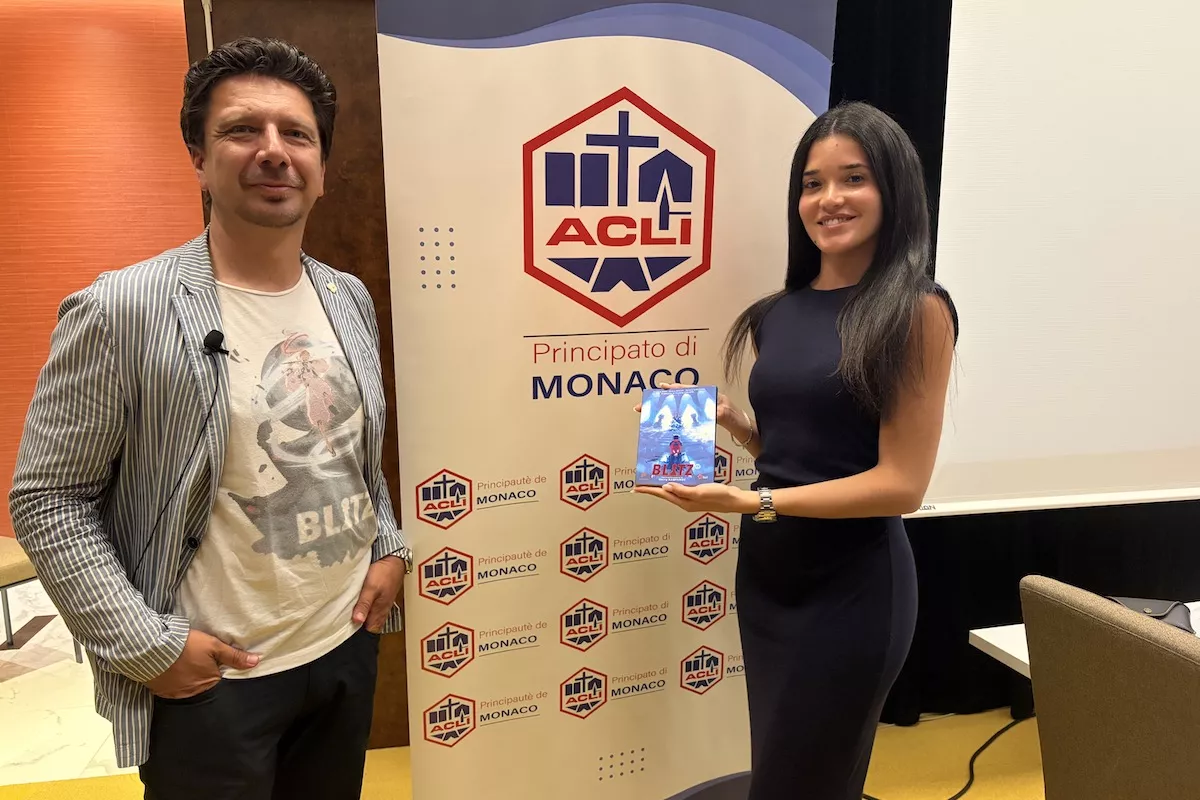
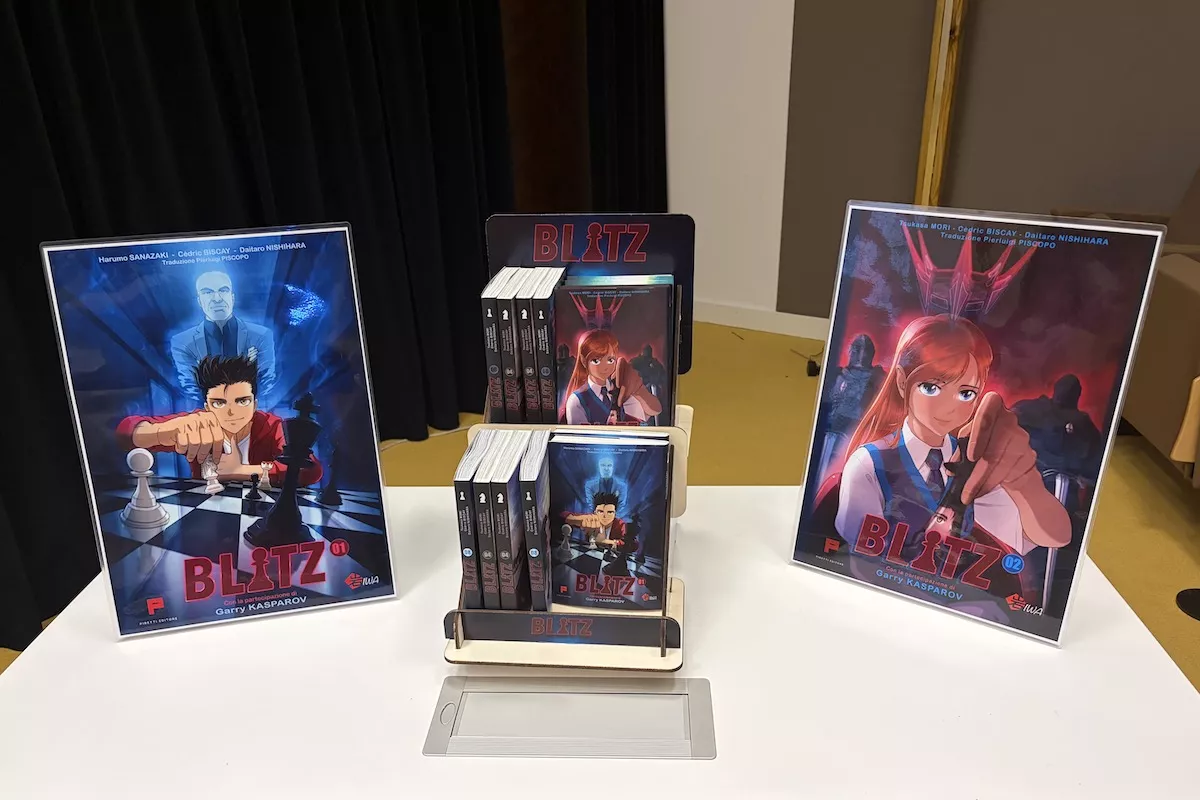
The Agora-Maison Diocésaine in Monaco hosted a cultural showcase on Tuesday 9th June, celebrating the international success of the French manga Blitz. Organised by ACLI Monaco—the Association of Italians in the Principality—the event highlighted the manga’s successful translation and publication in Italy. Supported by Shibuya International and Pirreti Editore, the gathering brought together enthusiasts to explore the intersection of strategic chess and graphic storytelling.
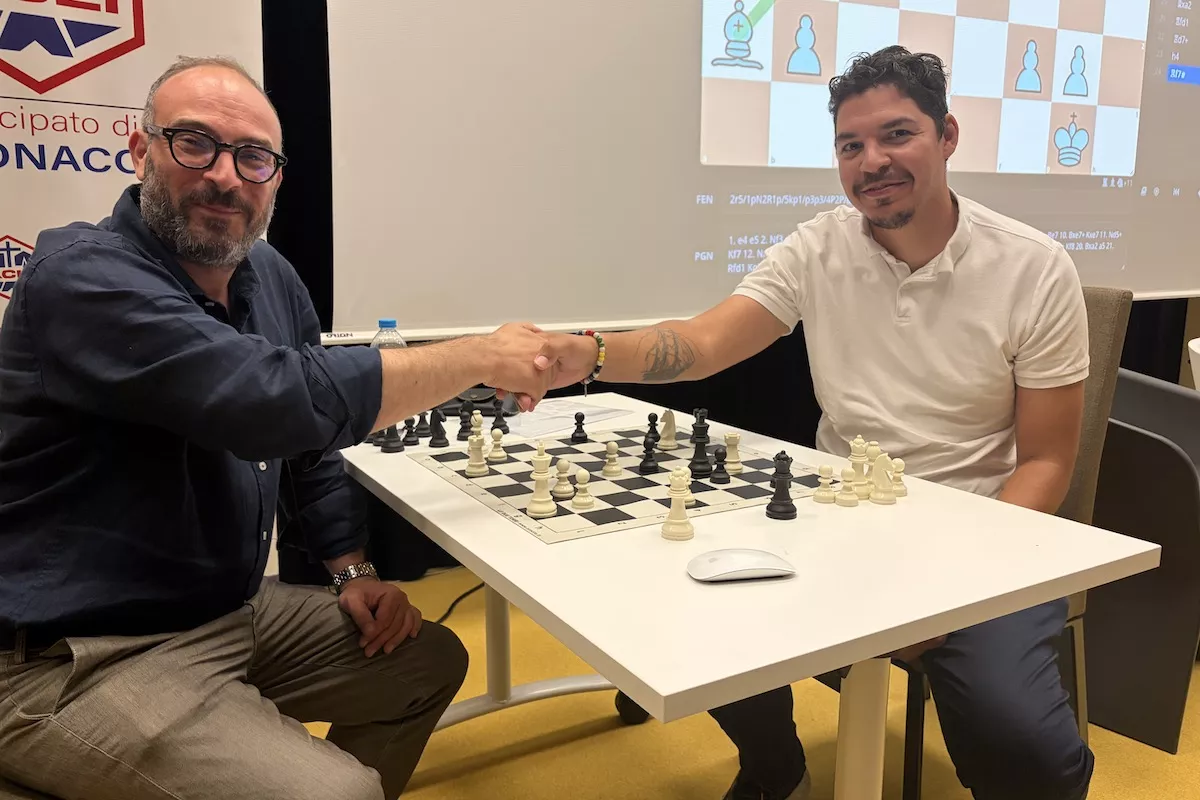
The programme opened with a high-level chess demonstration led by International Grandmaster Pierluigi Piscopo. Reflecting on the discipline required for such strategic play, Piscopo said: “Chess is a game of complete information where analysis and anticipation allow a player to essentially see the future before it unfolds on the board.” This demonstration served as a practical exploration of the intellectual rigour central to the narrative of Blitz, mirroring the mental discipline required by the characters within the series.
The creative vision of Cédric Biscay
Author and creator Cédric Biscay took to the stage to lead a conference on his work. Biscay provided detailed insights into the creation of the series, which is notable for prominently featuring the Principality and references to the Princely Family. He also discussed how his personal cross-border ties serve to link Monaco and Italy through his writing.
Reflecting on the manga’s broadening international footprint, Biscay expressed his pride: “Having a true reader base in Italy for Blitz is a sign of growing soft power for the Principality of Monaco in sectors where it was previously absent; it is a great pride to contribute to this development.” He further credited the success to the passion behind the project, noting, “I have no formal training in writing manga; my work is driven by passion, motivation, and a deep familiarity with the genre.”
Photo by Monaco Life
A cultural contribution to the Diocese
The evening continued with a formal ceremony, during which the Italian publisher Massimiliano Piretti officially donated the first eight volumes of the Italian edition of Blitz to the Diocese of Monaco. This act underscored the cultural weight of the series, positioning it as a notable contribution to the literary landscape of the region.
International Grandmaster Pierluigi Piscopo playing with an event attendee. Photo by Monaco Life
Fan engagement and future perspectives
The evening concluded with a signing session, marking the official launch of the eighth volume of Blitz in Italy. Ginevra de Masi, President of ACLI Monaco, explained that the event was central to the organisation’s strategy to engage local youth, utilising the global resonance of the manga to celebrate the bond between Monaco and Italy through the medium of Japanese popular culture.
As Biscay continues the production of the 12th volume of the series, the success of the gathering at the Agora highlights the growing importance of Blitz as a vehicle for cross-border collaboration and cultural exchange.
The day after The Walking Dead: Dead City opened the 65th Monte-Carlo Television Festival with a world premiere of its third season, the show’s cast and creative team gathered at the Grimaldi Forum for a panel that ranged from immigration and hope to the moment that changed television.
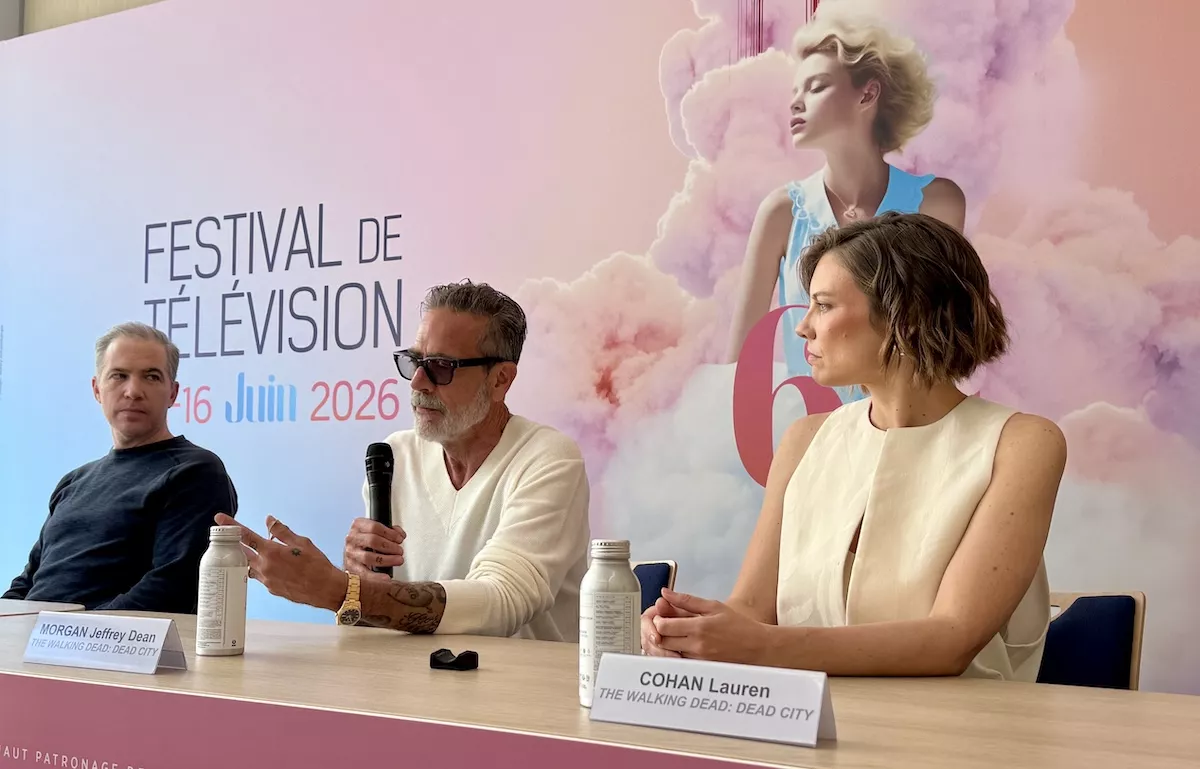
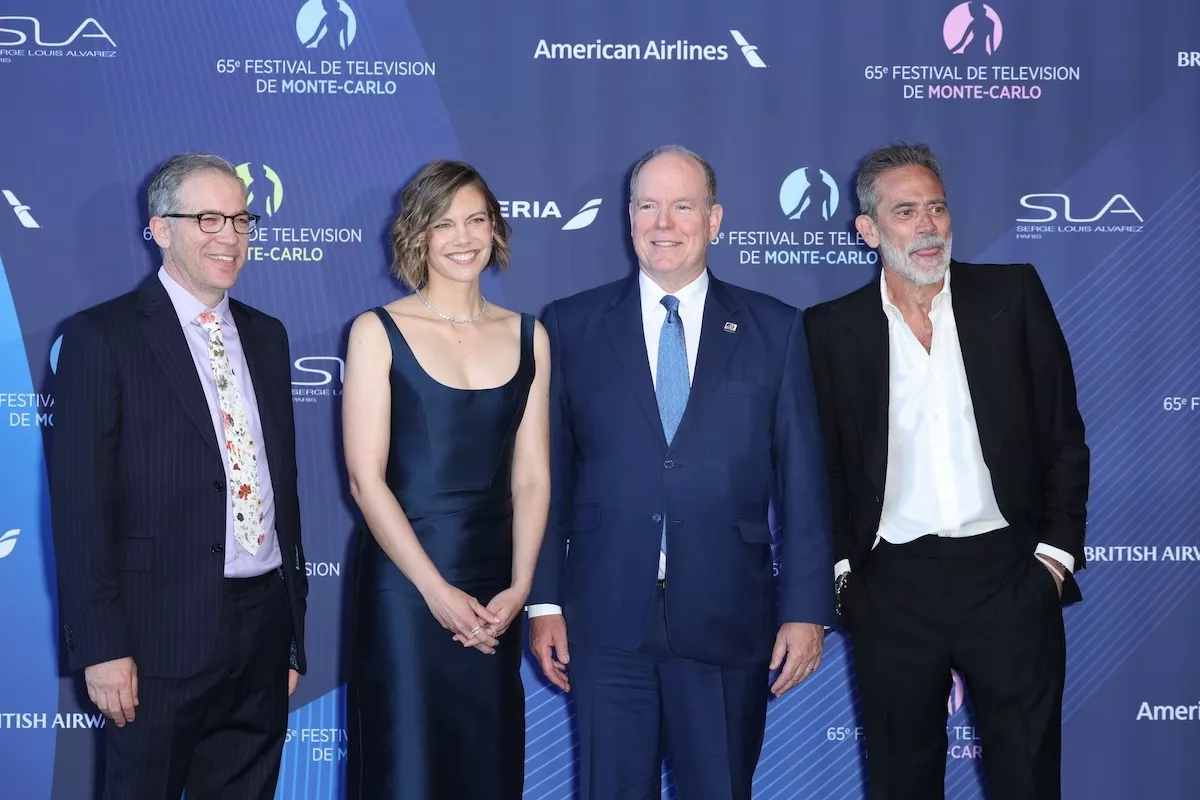
Showrunner Seth Hoffman, who wrote for the original Walking Dead series during Seasons 4 and 5 before returning to lead this spin-off, was joined by actors Jeffrey Dean Morgan and Lauren Cohan for a wide-ranging conversation with the international press, including Monaco Life’s Cassandra Tanti.
Left to right: Showrunner Seth Hoffman with actors Jeffrey Dean Morgan and Lauren Cohan. Photo credit: Cassandra Tanti
A different kind of Maggie and Negan
The central thread running through the discussion on Saturday was the transformation of Dead City‘s core relationship — between Maggie Greene, played by Lauren Cohan, and Negan, played by Jeffrey Dean Morgan — from enemies to unlikely allies. The two characters have spent a decade defined by the fact that Negan murdered Maggie’s husband, Glenn Rhee, in what remains one of the most shocking scenes in television history.
Morgan reflected on how far Negan had travelled from the character who stepped out of a Winnebago in Season 6 swinging a barbed-wire bat — and why, more than a decade later, he still wants to play him. “I think that will always be part of who Negan is. But he’s much more three-dimensional now,” he said. “We’ve added layers through the years and I think this season in particular, there’s such a shift in Negan’s relationship that it brings yet another side of Negan out. Those sides are the reason I still want to play the character – even after 10-plus years. It’s still new to me every year because there’s always something added to the character and to the story.”
For Lauren Cohan, Season 3 represents a turning point — the first time Maggie is given permission, within the story, to stop being defined by loss.
“I think a huge part of what has made her relatable, and what has given me such pleasure and depth as an actor over all these years, is the fact that her highs feel especially high in a world that has so many lows. But this is really the first year where Maggie recognises that being defined by grief, and operating from a place of grief, doesn’t serve her anymore,” she said.
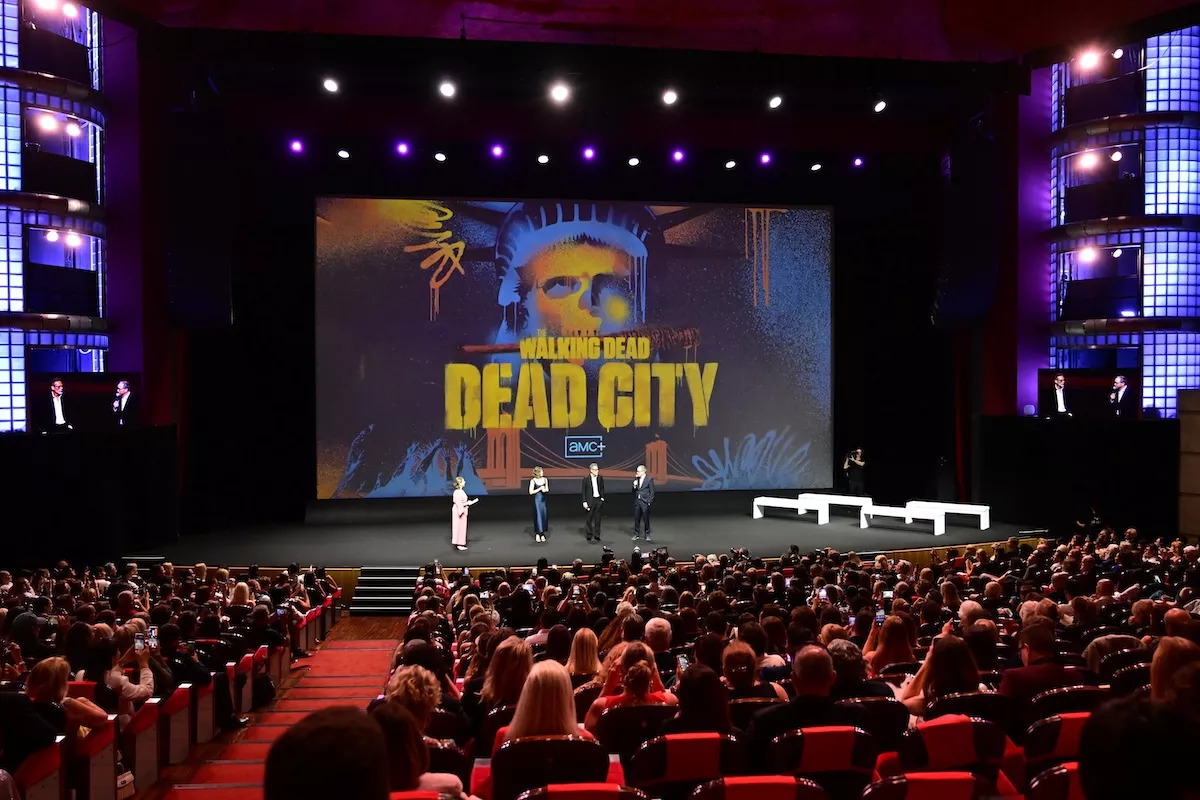
The world premier screening of The Walkig Dead: Dead City Season 3 at the 65th Monte-Carlo Television Festival
‘The longest-living person Maggie knows’
When asked how the two actors had experienced the evolution of their on-screen dynamic, Lauren Cohan highlighted the irony of the Maggie-Negan relationship. “I think what I enjoy so much are the surprises and the unlikely pairing of a widow and the person responsible for making her a widow,” she said.
“And yet Negan is now the longest-living person Maggie knows in this universe. So the irony of the breadth and depth of their relationship compared with how they met is pretty interesting.”
Morgan agreed, and pointed to something that neither character had been allowed much of in the previous two seasons: lightness. “We’ve spent years being at each other’s throats. So to suddenly have scenes that have genuine meaning and emotional depth was amazing. Seeing Maggie smile is so nice,” he said. “I don’t think we’ve seen her smile in 10 years. It kind of took me by surprise.”
The death scene that changed The Walking Dead forever
The death that still haunts television
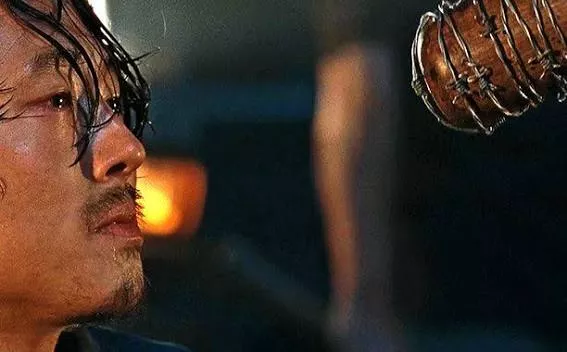
Monaco Life asked whether anything in The Walking Dead universe had ever matched the impact of Glenn’s death — the brutal scene in which Negan used his barbwire bat Lucille to kill Maggie’s husband, complete with the now-infamous eye-popping visual that shocked audiences around the world.
Cohan revealed that she recently rewatched the episode with neighbours who had never seen the series before and admitted she found it just as difficult the second time around.
“I felt protective of them because they had never experienced it before. But honestly, I also felt protective of myself,” she said. “Watching it again reminded me just how intense it was.”
The experience reinforced her view that the scene remains in a league of its own.
“I don’t think we’ve matched that moment. And honestly, I’m okay with that. I think it will always stand as one of the most impactful moments in television history. For me, it’s up there with the Red Wedding from Game of Thrones. Those are two moments that genuinely changed television. We were very privileged to be part of something that moved the needle in that way. For better or worse, it’s unforgettable.”
Morgan’s memories of filming the scene were somewhat lighter.
“Everyone remembers the eye popping out. Everyone remembers how shocking it was,” Morgan laughed. “What I remember is Steven Yeun running around with that prosthetic on. He was singing and dancing in the makeup trailer with Michael Cudlitz. The two of them were basically making what would be a TikTok video today. They were having an absolute blast while everybody else was horrified. That’s what I remember.”
Becoming Negan
Jeffrey Dean Morgan also spoke about the role Negan’s iconic weapon, Lucille, plays in helping him slip back into character more than a decade after first joining The Walking Dead universe.
“It’s honestly the only prop I’ve ever had as an actor that I truly loved,” he said. “There’s something about holding that bat. Resting it on my shoulder. It changes my posture. It changes the way I speak. It changes the way I move. It immediately helps me become Negan. And that’s rare. Most props don’t do that.”
He added, to audience laughter, that the electrified version of Lucille seen in recent seasons had lost some of its menace.
“The battery ran out. So that’s unfortunate.”
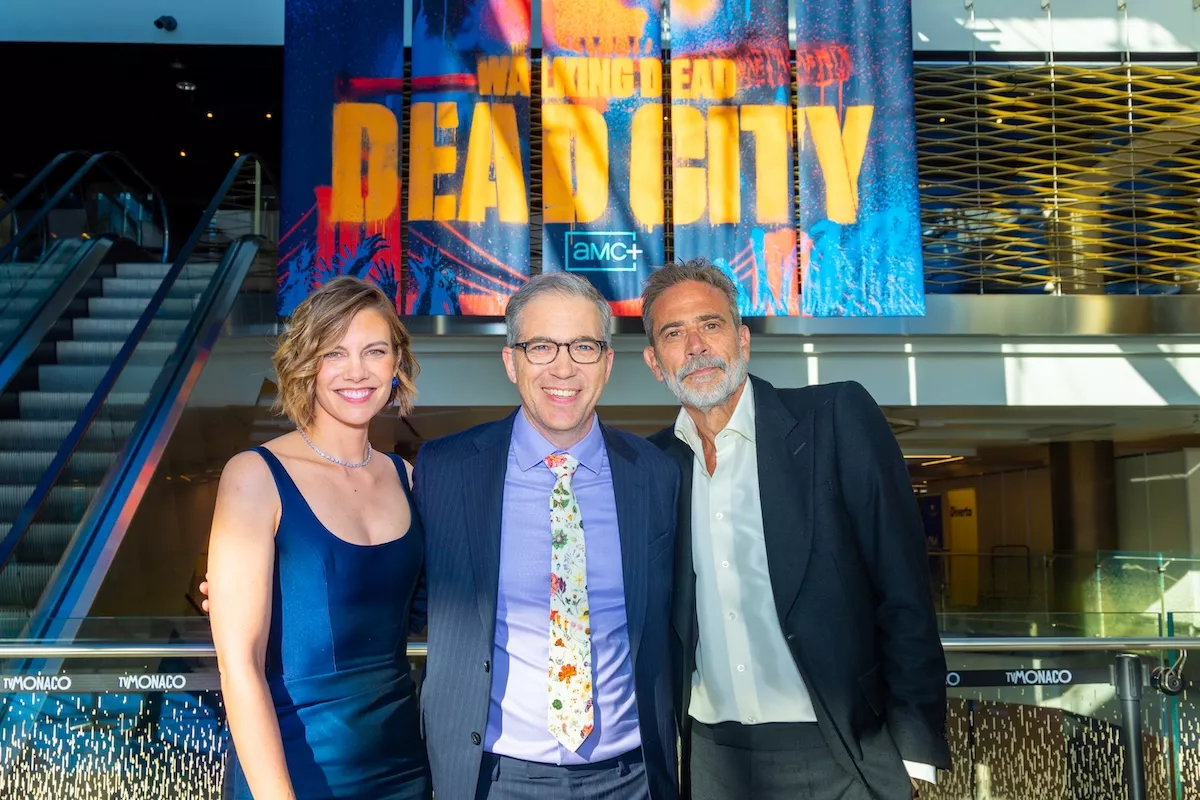
Prince Albert II on opening night with, from left to right, Seth Hoffman, Lauren Cohan and Jeffrey Dean Morgan and
The alternate reality episode fans are talking about
Asked about season three’s alternate reality episode — a storyline that has already sparked excitement among fans — showrunner Seth Hoffman revealed that the concept was actually the first idea he developed for the new season.
Having initially come to The Walking Dead as a fan before later writing for the series, Hoffman said the episode offered a rare opportunity to revisit characters audiences may not have seen in years.
“If you do an alternate reality episode where the apocalypse never happened, suddenly you can bring back characters who haven’t been part of the franchise in years,” he explained.
But for Hoffman, the appeal goes beyond nostalgia. The episode asks a question that cuts to the heart of the entire Walking Dead universe. “It raises a question,” he said. “Are these people actually better off for having gone through the apocalypse? Or would they have been better if it had never happened? That’s one of the questions we want the audience to explore when they watch that episode.”
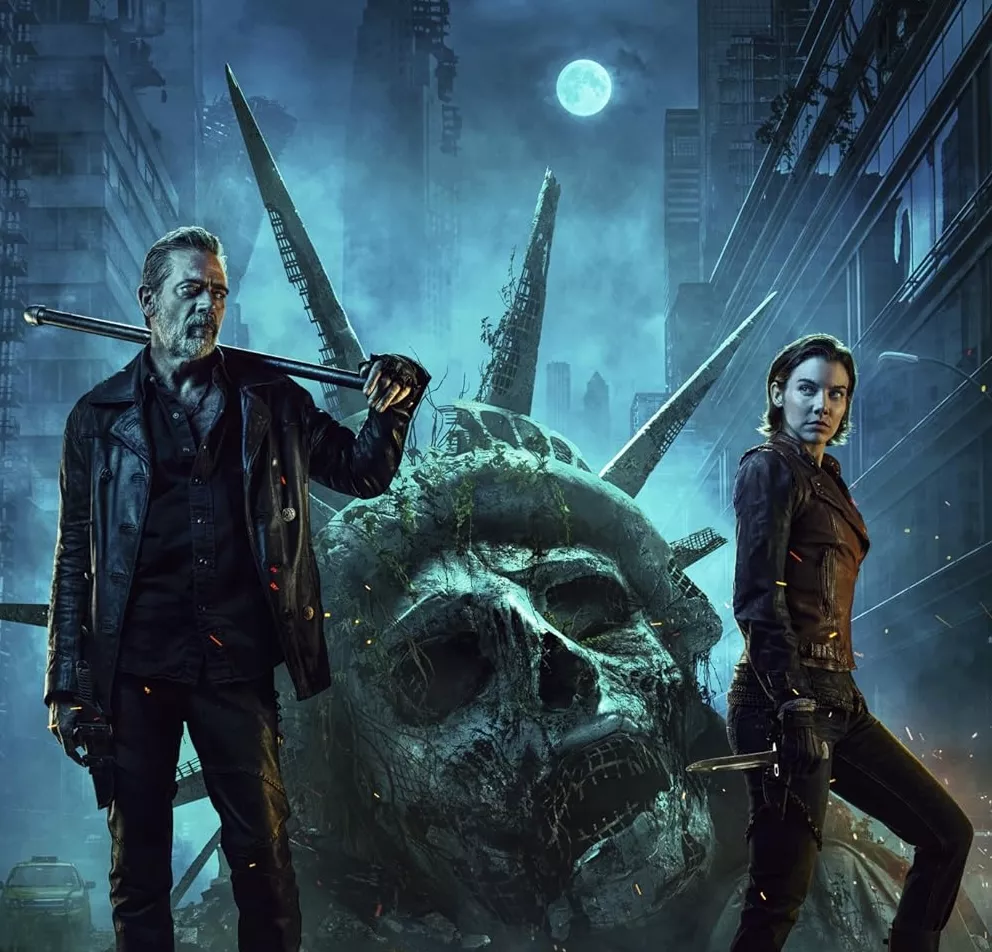
The Walkind Dead: Dead City promotional poster
Immigration, hope and the Statue of Liberty
New York itself plays a larger role in season three than simply serving as the backdrop to the action. Hoffman said the creative team wanted some of the city’s most recognisable landmarks to become characters in their own right.
“We’re setting the story in New York and we wanted those places to matter,” he said. “So in addition to the Statue of Liberty, you’ll see the Empire State Building, a Broadway theatre, Grand Central Station. We wanted New York itself to feel like a character.”
The Statue of Liberty, however, carries particular weight as the story explores questions of immigration, belonging and who gets welcomed into a community.
“We’re aware that not everyone in the United States shares the same views on immigration and inclusion,” Hoffman said. “There are people who don’t necessarily believe bringing more people into a community is a good thing. As the season progresses, there are characters within Maggie’s community who oppose what’s happening. That debate continues throughout the season.”
Cohan said those themes resonate because they reflect one of the core ideas that has always driven both America and The Walking Dead — the belief that people can reinvent themselves and build something better.
“One of the things that makes me proud — and I’m both American and British — is that America has always had this idea that people can define themselves differently. You can prove yourself in different ways. And I actually think there’s a parallel between that and The Walking Dead. It’s one of the reasons people have connected with the show for so long.”
Saying goodbye
While The Walking Dead has built its reputation on shocking character deaths, the cast admitted that losing castmates never becomes routine. All three paid tribute to Željko Ivanek (who plays ‘The Croat’ on The Walking Dead: Dead City), describing him as both an exceptional actor and a valued colleague, with Morgan summing up the experience of long-running departures across the franchise.
“One thing I’ve learned is that you never get good at it,” he said. “Every time somebody leaves, it hurts. You lose friends. You lose colleagues. You lose actors you care about. And it never becomes easier.”
New territory for the undead
Hoffman said one of the challenges facing any long-running franchise is finding ways to surprise audiences without abandoning what made them fans in the first place. Season three attempts to do exactly that, introducing concepts and storylines that push the boundaries of TheWalking Dead universe in unexpected directions.
“One thing we’re intentionally doing this year is exploring the humanity of the walkers,” he said. “We have recurring walkers. We have walkers who have names. Walkers who have personalities, to some extent. We wanted to ask questions that The Walking Dead hasn’t really explored before. We wanted audiences to feel: ‘Yes, this is definitely The Walking Dead.’ But at the same time: ‘I’ve never seen this before.’ That balance was really important.”
The Walking Dead: Dead City Season 3 is due to air on AMC and AMC+ later this summer.
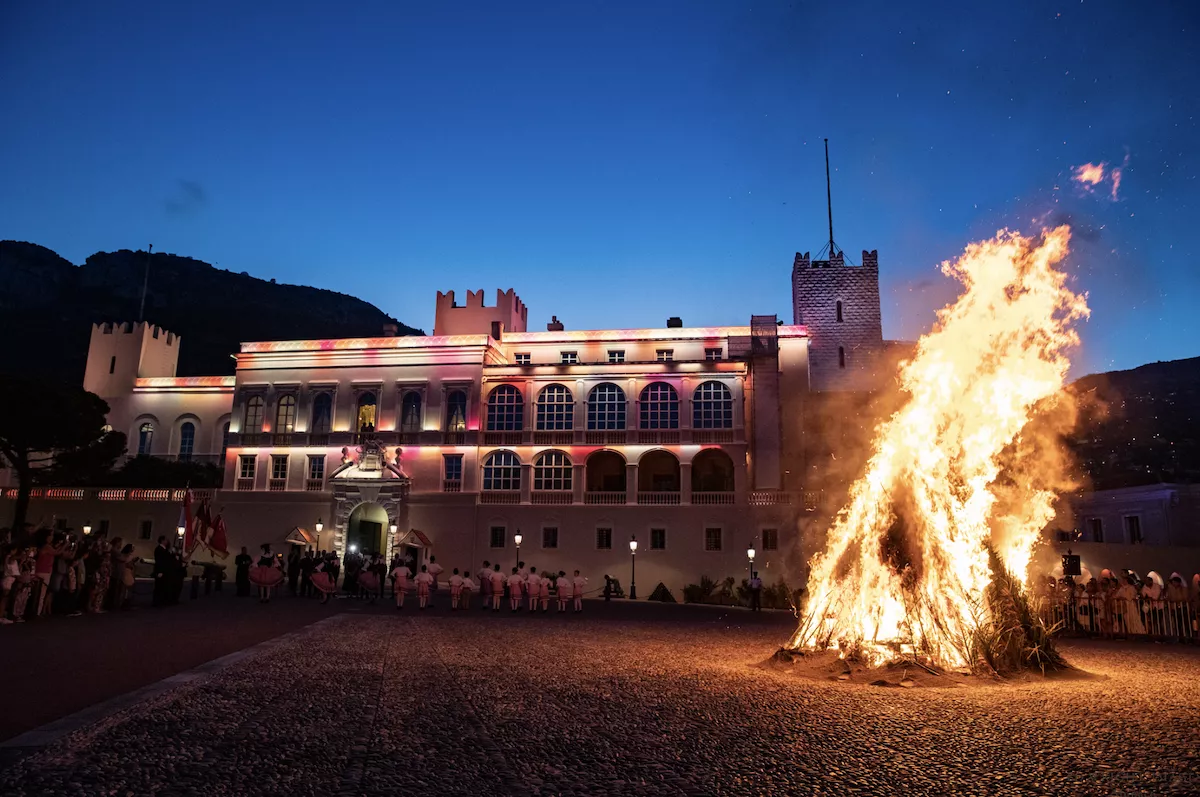
Monaco’s annual Saint-Jean celebrations return next week with two evenings of traditional festivities open to the public, centred on the lighting of the batafoegu — the ceremonial bonfire — at the Palace Square on Tuesday 23rd June and the Place des Moulins on Wednesday 24th June.
The celebrations, organised by the Mairie de Monaco in partnership with the Saint-Jean Club, are one of the oldest traditions in the Principality and mark the midsummer feast of Saint John with fire, music and folk dance.
Tuesday 23rd June — Palace Square
The first evening begins around 7:30pm at the Place du Palais, following a private ceremony in the Palatine Chapel. The batafoegu will be lit before folk dancers from La Palladienne take to the square.
Wednesday 24th June — Place des Moulins
The main celebrations on Wednesday begin with a traditional procession departing the Place des Moulins at around 7:20pm. The parade will include several Municipal Councillors, flag bearers from the Mairie, representatives of the Committees of Traditions, the Municipal Band, dancers from La Palladienne, the U Cantin d’A Roca choir and, as a guest this year, the folk dance troupe of the Association Folklorique des Portugais de Monaco. As is customary, the procession will be led by the young Saint Jean and his lamb.
A religious ceremony takes place at the Église Saint-Charles at 7:30pm, followed by the lighting of the batafoegu on the Place des Moulins at around 8:15pm, accompanied by music from the U Cantin d’A Roca choir and traditional dancing from both La Palladienne and the Portuguese association’s troupe.
Drivers should note that boulevard des Moulins and avenue Saint-Laurent will be closed during Wednesday’s procession. Access to the Place des Moulins will be regulated from 6:30pm, and parking on the square is prohibited from 1pm.
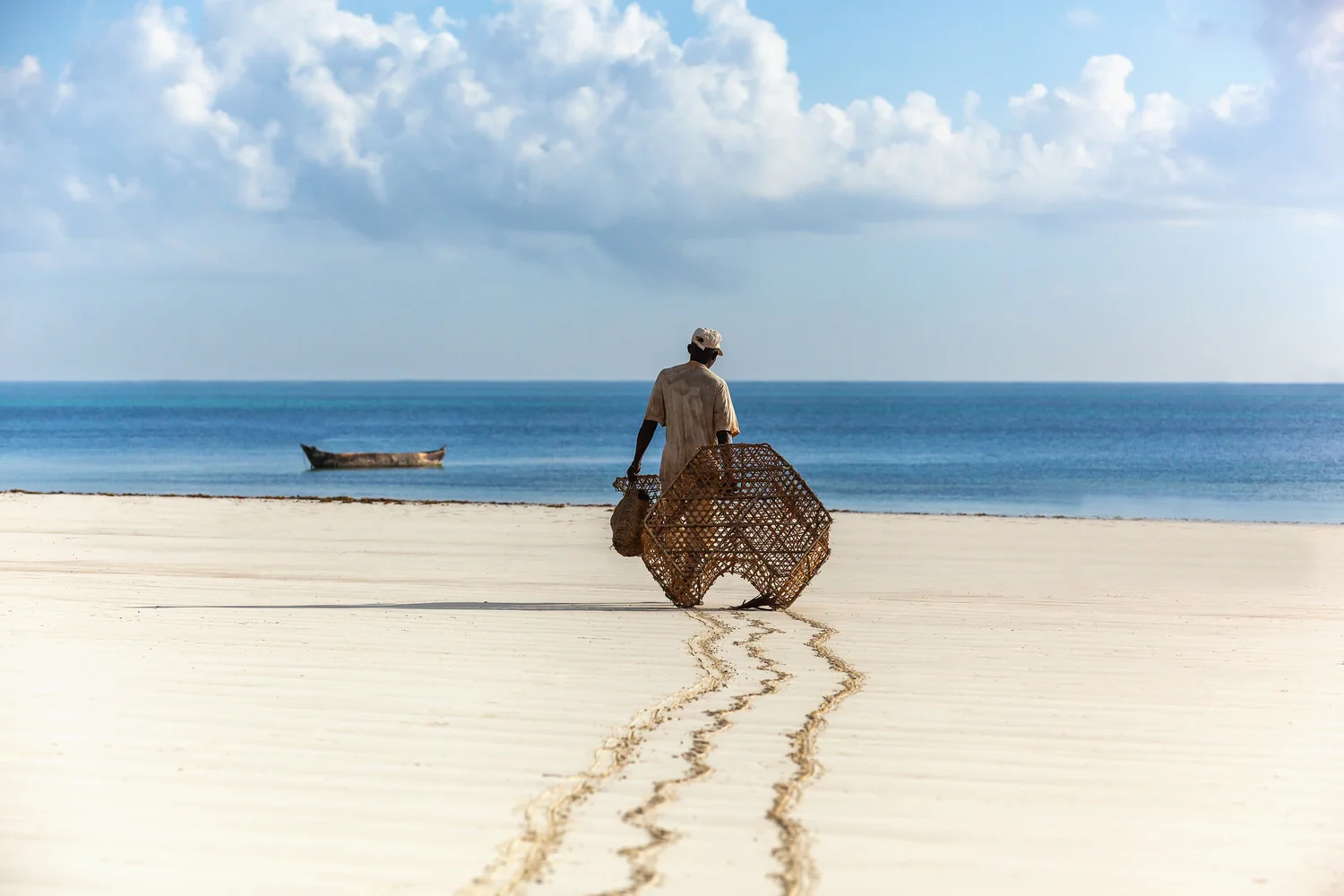
The 11th Our Ocean Conference opened in Mombasa Tuesday, bringing together governments, scientists, investors, civil society organisations and youth leaders for three days of talks on the future of ocean governance — the first time the annual event has been held on the African continent.
Running until 18th June across Mombasa and Kilifi counties, the conference is being hosted by the Government of Kenya under the theme ‘Our Ocean, Our Heritage, Our Future’. It focuses on six priority areas: marine protected areas, sustainable blue economy, the ocean-climate nexus, sustainable fisheries, marine pollution and maritime security.
A conference built on accountability
Since its inception in 2014, the Our Ocean Conference has recorded more than 2,900 commitments valued at over US$169 billion, spanning marine conservation, sustainable fisheries, climate adaptation, maritime security and pollution reduction. This year’s edition arrives with pressure to accelerate delivery rather than accumulate further pledges. The world has committed to protecting at least 30 per cent of the ocean by 2030 — but progress is not keeping pace with what is needed, with too much protection still existing only on paper and too many marine protected areas lacking the funding, enforcement and local leadership required to deliver real outcomes.
The High Seas Treaty entered into force in January 2026, with its first Conference of Parties scheduled for January 2027, adding urgency to discussions around translating international agreements into action on the water.
Africa’s role in ocean governance
Kenya’s hosting of OOC11 reflects a broader shift in where ocean leadership is being exercised. Kenya is recognised for its blue carbon leadership, including the protection of mangroves and seagrass ecosystems, and has a solid record on tackling plastic pollution and advancing circular economy policy. It also sits alongside the Western Indian Ocean, one of the world’s most biodiverse marine regions.
Throughout the conference, Kenya is spotlighting opportunities to mobilise private-sector investment across fisheries, aquaculture, shipping, marine biotechnology, renewable energy and digital ocean technologies, alongside co-management models that position coastal communities as active partners in governance and restoration rather than simply beneficiaries.
“By hosting OOC11, Kenya seeks to leave a lasting imprint on global ocean governance, one that ensures future generations inherit a resilient, productive, and just ocean,” said Hassan Ali Joho, Kenya’s Cabinet Secretary for Mining and Blue Economy.
Monaco’s stake
The Prince Albert II of Monaco Foundation has been a long-standing partner of the Our Ocean Conference process. Monaco has used previous editions to advance commitments on marine protected areas and plastic pollution, and the Principality’s ocean protection agenda aligns closely with the conference’s core focus areas. The Ocean Space Forum, which Monaco will host on 2nd July, addresses many of the same priorities — specifically the role of satellite technology in monitoring and protecting marine ecosystems.
The 11th Our Ocean Conference runs until 18th June in Mombasa and Kilifi, Kenya. Further information is available at ouroceankenya.com.
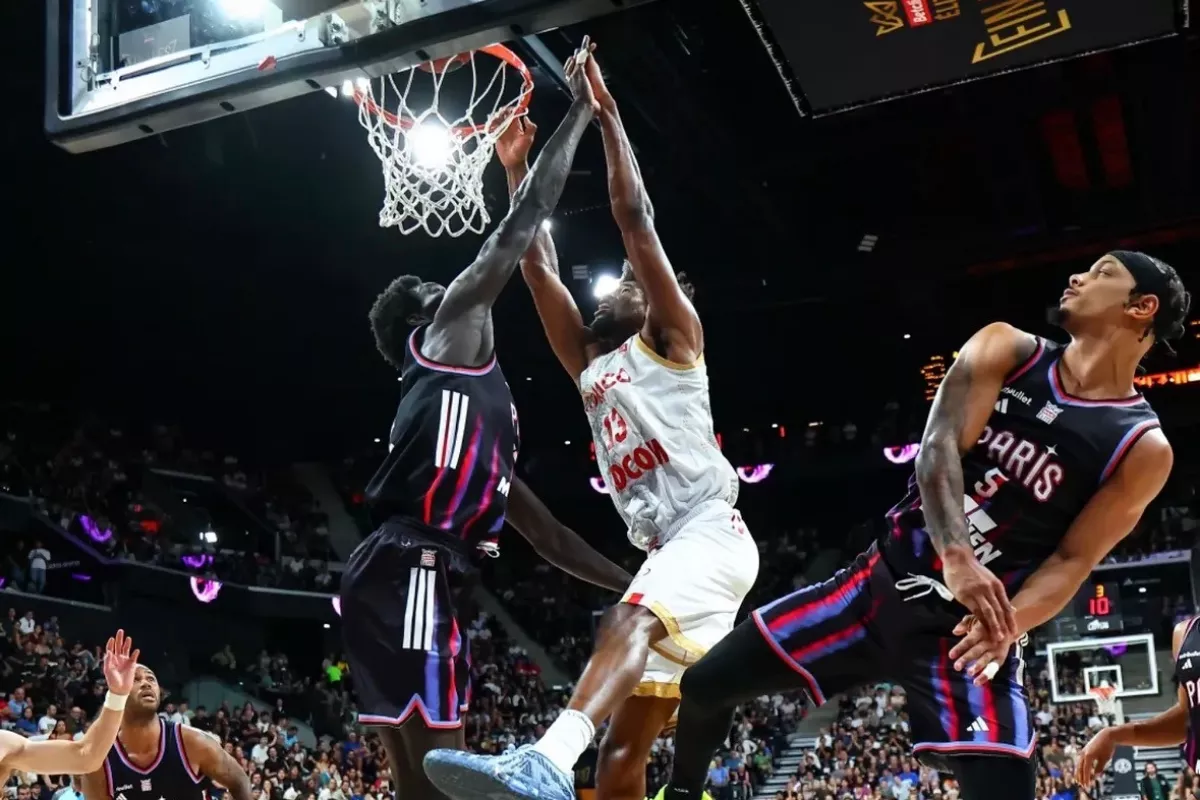
Sunday 14th June saw Monaco face Paris Basketball in the opening match of the Betclic Elite Finals in Paris. Despite controlling much of the game, the Roca Team suffered a late collapse to fall 95-91 in a chaotic finish to Game 1.
Although Monaco maintained control for much of the game, they struggled to pull away from Paris’ persistence, allowing the home team to capitalize on momentum shifts and late free throw opportunities to claim the opening game of the series.
The initial minutes of the game saw both teams settle into a similarly paced rhythm, trading both baskets and mistakes. Monaco built an early advantage, but Paris remained within reach. Midway through the second quarter, back-to-back three-point shots from Paris cut Monaco’s lead to a single possession and energized the crowd at the Adidas Arena. Despite a response from Monaco, their advantage continued to shrink as the teams headed into halftime with Monaco holding only a narrow 52-51 lead.
Following halftime, however, Monaco reasserted themselves. Paris suffered their worst quarter offensively, yet Monaco still struggled to build a substantial lead, entering the final quarter ahead 76-67 despite appearing to regain control of the game.
Paris quickly bounced back in the final quarter and began chipping away at Monaco’s advantage. After five minutes, the teams were level once again. Shortly after, Paris capitalized on Monaco’s fourth-quarter mistakes to take the lead with just over three minutes remaining.
A chaotic final few minutes followed, with free throws being a major deciding factor as Paris, holding a one-point advantage with under a minute remaining, drew a foul following a sloppy Monaco possession. A technical foul only added to Monaco’s troubles, allowing Paris to extend their lead to 95-91 with only 0.5 seconds left on the clock. The Roca Team was unable to respond, suffering their first defeat of the Betclic Elite Finals.
The final quarter proved decisive, as Monaco endured their weakest offensive quarter while Paris delivered their strongest. Monaco shot only 29.41% from the field in the fourth, compared to Paris’ 55.56%, while Paris also benefited from 39 free throw opportunities throughout the game. With more than one-third of their total points coming from the free throw line, Monaco’s inability to contain Paris late ultimately proved costly.
With Paris now holding the advantage, Monaco will need to respond strongly in Game 2 to avoid returning to the Principality trailing 2-0.