From racing carbon to better sleep: female entrepreneurs pitch at K2MATCH Monaco

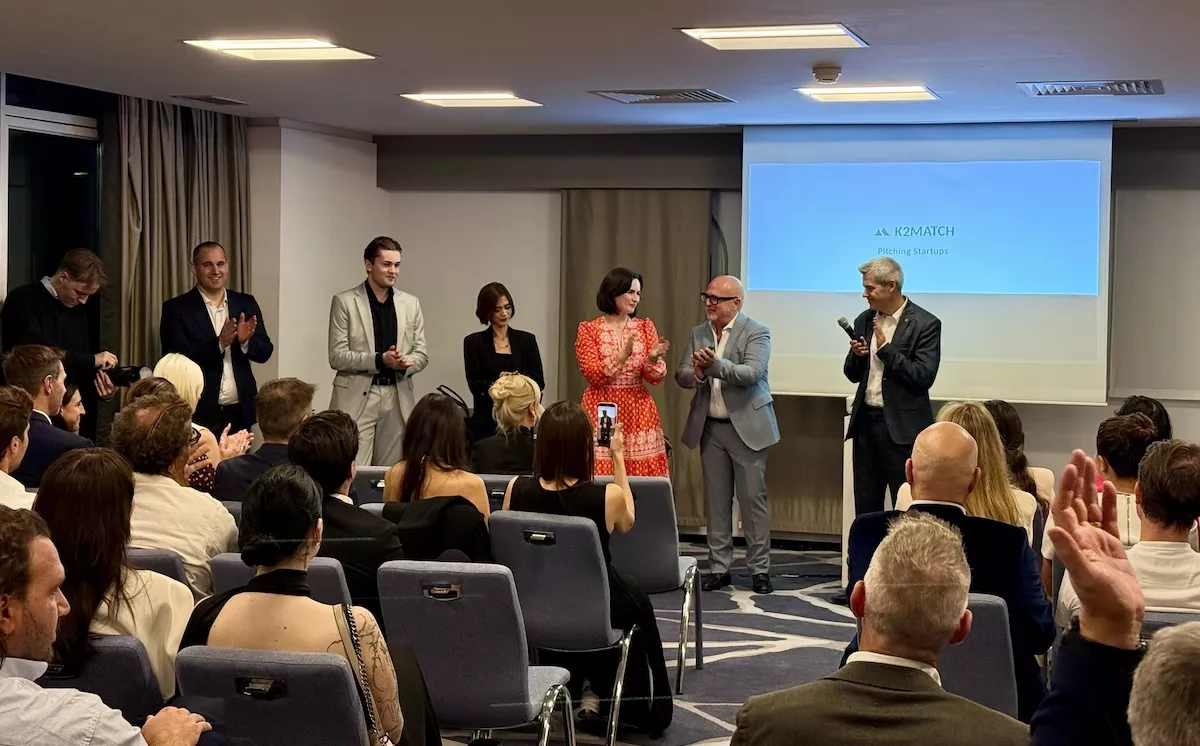
Technology that helps people improve their movement, jewellery made from discarded carbon fibre, personalised hotel wellness content and tools for teaching art: four female-led businesses presented their ideas at K2Match’s tenth Investor Lounge at Le Méridien Beach Plaza on Thursday 22nd October.

Held as part of Hers Monaco, ahead of its jury day and gala, the evening connected entrepreneurs with investors through pitches and questions about their products, business models and plans for growth.

The line-up demonstrated the breadth of businesses seeking backing, from Japanese movement technology to French manufacturing and British education and hospitality platforms.

SHOSABI: understanding how the body moves

Co-founder and CEO Sachiko Kamiyama presented Shosabi, a system combining 3D motion sensing and AI to reveal the difference between how people think they move and how they actually move.

Using a depth sensor, laptop and monitor, the technology provides live feedback intended to help users understand and correct their movements without wearing tracking devices.

The company is targeting premium fitness clubs and preventive health clinics, with hospitality among its expansion markets. Its pitch described existing customer deployments and a business model combining an upfront system payment with a monthly software licence.

For coaches and clinicians, the proposition is a way to make movement easier to explain. For users, it offers an opportunity to see what verbal instructions alone may struggle to communicate.
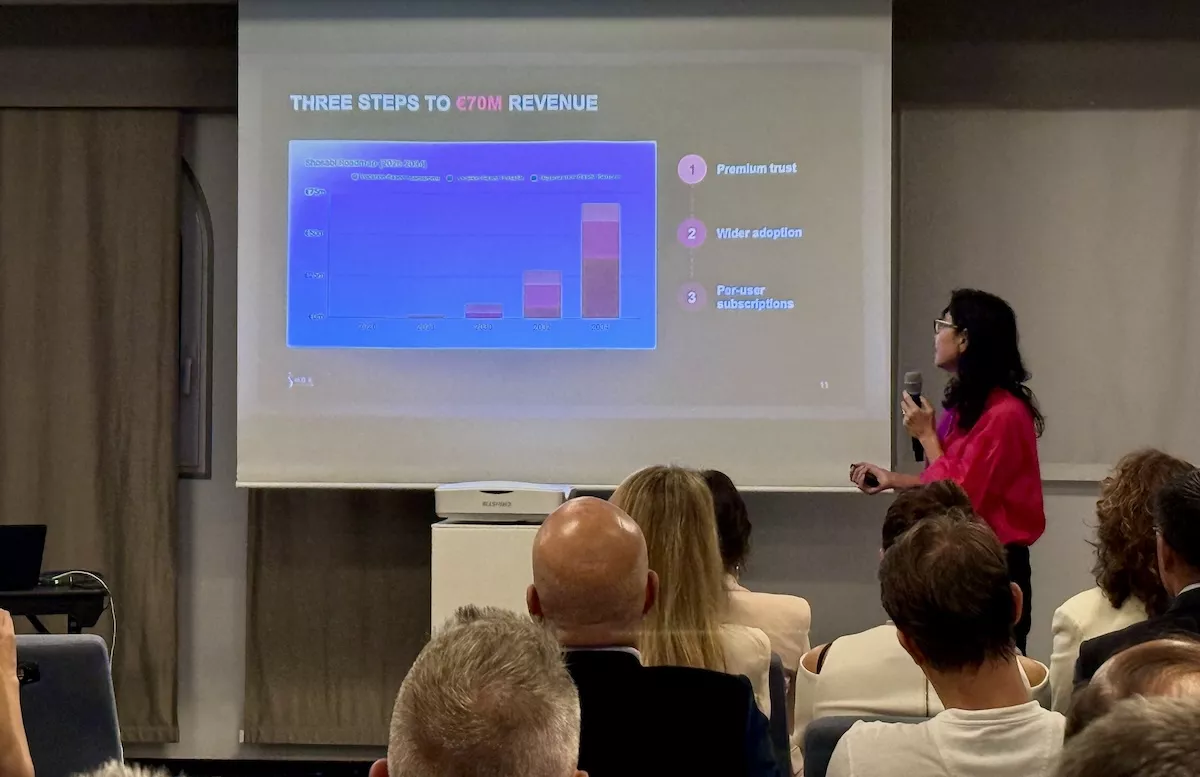
Co-founder and CEO Sachiko Kamiyama presented Shosabi

BY KARBON: giving racing materials a second life

Presented by partner and creative director Nathalie Colin, By Karbon turns high-performance carbon fibre waste into jewellery, accessories, trophies and collectible objects.

The French company collects and traces materials from shipyards and racing teams, then designs and manufactures products in Brittany. Its broader concept draws on carbon fibre from sailing, cycling, Formula 1 and aerospace, preserving the material’s provenance as part of each creation’s appeal.

One example had a particular Monaco connection. According to its presentation, By Karbon has recovered 400kg of carbon fibre from Team Malizia, associated with Pierre Casiraghi and Boris Herrmann, for use in accessories, jewellery and boat models.

The business is seeking to expand production and develop its corporate and consumer markets, building on its relationships in offshore racing.

Tethered: turning a hotel’s location into a wellness experience

Scottish company Tethered approaches hotel wellbeing through the stories and sounds of the surrounding area.

Co-founder and chief creative officer Karen Kerr presented a platform that uses generative AI to create sleep and wellness content informed by a hotel’s location. Stories, music and soundscapes are delivered under the property’s own brand through QR codes, guest apps or in-room televisions.

The intention is to offer something more closely connected to the stay than a generic relaxation playlist, while making bespoke content accessible to hotels without the budget to commission an extensive library themselves.

Tethered’s pitch identified Virgin Hotels Edinburgh as an existing deployment. Its growth plans include a self-service product for smaller independent properties.

Everybody Creates: helping teachers bring art into the classroom

Everybody Creates, presented by co-founder and CEO Emilie Scholey, aims to give primary school teachers the confidence and practical resources to deliver art lessons.

Its proposed subscription platform provides complete teaching packages, including lesson schedules, materials lists, substitutions and adaptations for pupils with special educational needs and disabilities.

It also incorporates tools to capture evidence of learning and track progression, addressing the administrative work that accompanies classroom teaching.

The company’s development plans include machine-learning tools to support learning analysis and curriculum adjustments, with its pitch emphasising that these would provide indicators rather than diagnoses. Privacy, transparency and bias testing form part of its proposed safeguards.

The next stage is to develop the core product and pilot it with 10 to 20 schools.

Building connections beyond the pitch

Across the four presentations, investors heard businesses at different stages of development explain how funding could help them reach their next milestones, whether through product development, manufacturing capacity or international sales.

Hers Monaco’s focus on investment in female entrepreneurs also informed the discussion around fundraising. One useful reminder from the evening was that founders should feel entitled to assess prospective investors themselves, rather than accept the first offer simply because funding is difficult to secure.

The pitches were followed by opportunities for individual conversations, allowing founders and investors to explore the businesses in greater depth.

Monaco Life is written by qualified journalists, writing original content. Sign up for our free newsletter, listen to our podcasts on Spotify, and follow us across Facebook,  Instagram, LinkedIn, and Tik Tok.

Photo by Monaco Life
Monaco rewrites state housing rules with greater choice for applicants

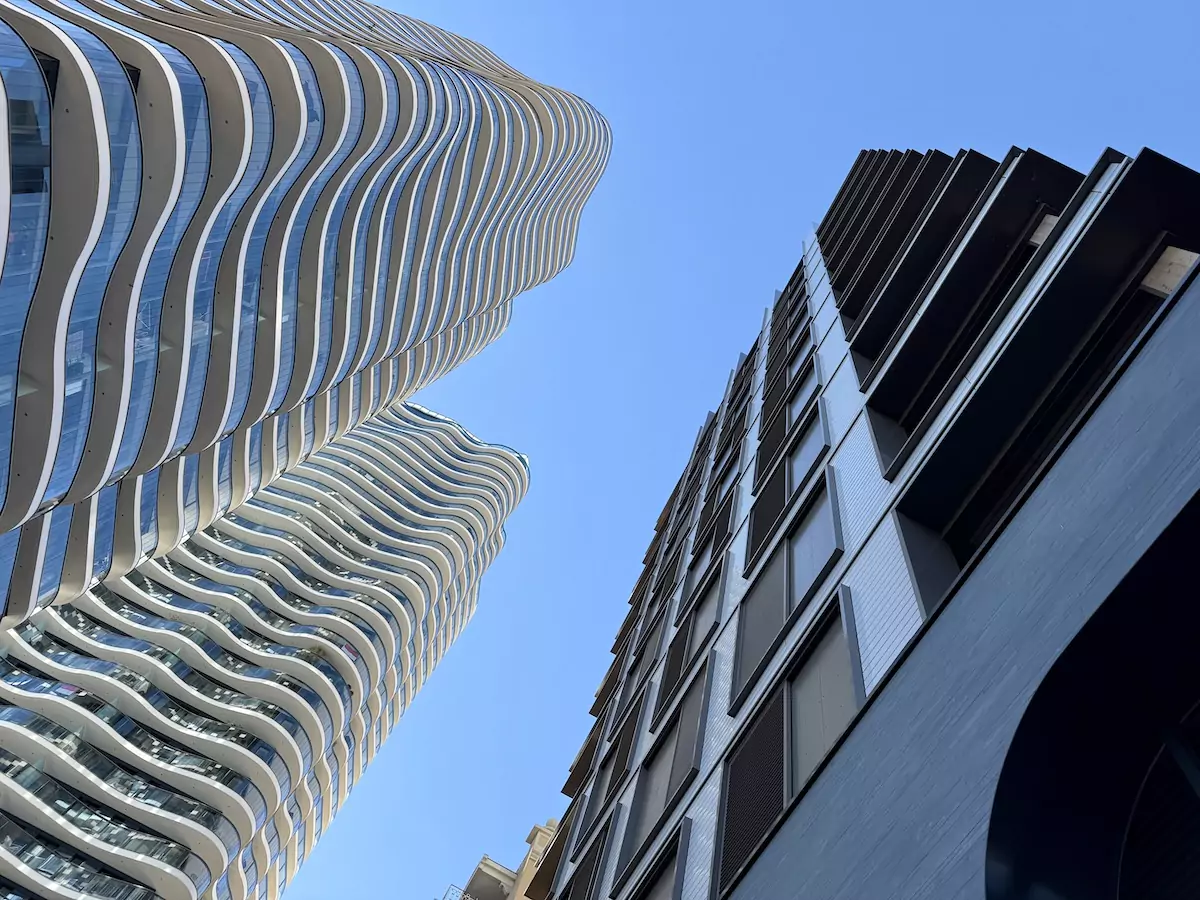
Monaco has overhauled the way it allocates state-owned housing, introducing a system that matches applicants’ apartment preferences with their priority scores and extends rent protection for households moving into smaller homes.

The framework, published in the Journal de Monaco on 23rd October, replaces the July 2023 rules governing logements domaniaux. It retains the points-based assessment of housing need but changes how households are matched with available properties.

Under Ministerial Order No. 2026-571, applicants will select and rank apartments from a list tailored to their household needs and income. An automated process will then match those preferences against competing applications, with the highest points total taking priority where several households seek the same home.

The reform is the latest development in Monaco’s extensive state housing programme, designed to help Monégasque nationals remain in the Principality despite the high cost of private accommodation.

A different approach to allocating homes

The reform gives applicants a direct role in the selection process while retaining the housing allocation commission’s oversight and the Minister of State’s final decision. A safeguard allows exceptions in emergencies or particularly acute social circumstances.

It also moves away from requiring applicants to renew their requests at every call for applications. Once declared admissible, a file will remain active for 12 months and automatically enter successive allocation rounds. Each round must conclude within 60 days of applicants being notified of the available properties, or of the absence of suitable homes.

The changes establish a more continuous process, combining a year-long application with repeated opportunities to select apartments.

Incentives to free up larger apartments

The framework also broadens financial protection for households downsizing within the state housing stock.

Previously available in specified circumstances to households leaving four- or five-room apartments, rent protection now expressly extends to qualifying households moving from three rooms to two. Where the smaller property would cost more, the existing rent is maintained. The provision applies to households without dependent or visiting children, with corresponding protection for qualifying habitation-capitalisation contracts.

The annex awards 20 priority points for each room released above a household’s assessed needs, giving tenants in oversized accommodation an incentive to move.

Choice comes with conditions

The revised process links the accumulation of waiting points to participation. Applicants who receive no apartment options, or who select properties without securing an allocation, can earn two points for each unsuccessful round.

Those offered properties must select at least three, or all available options if fewer than three are offered, to qualify for the additional points. An unjustified refusal of an allocated apartment carries an eight-point deduction for the following round, although the Minister of State can waive it after considering the applicant’s explanation and the commission’s advice.

Income remains central to both priority and the range of apartments offered. Six eligible income bands award between 20 and zero points, while a seventh excludes households from allocation. Separate tables connect household resources with the rents of properties available for selection.

The order also replaces some exclusions previously measured in allocation commissions with fixed periods. Proven subletting, for example, now triggers a two-year exclusion from the date it is discovered, rather than exclusion for two commissions.

Transitional provisions preserve waiting points accumulated under the previous rules, subject to an admissible application enabling participation in the first allocation round under the replacement framework.

Monaco Life is written by qualified journalists, writing original content. Sign up for our free newsletter, listen to our podcasts on Spotify, and follow us across Facebook,  Instagram, LinkedIn, and Tik Tok.

Photo credit: Cassandra Tanti

Four champions crowned at Tennis Europe Junior Masters in Monaco

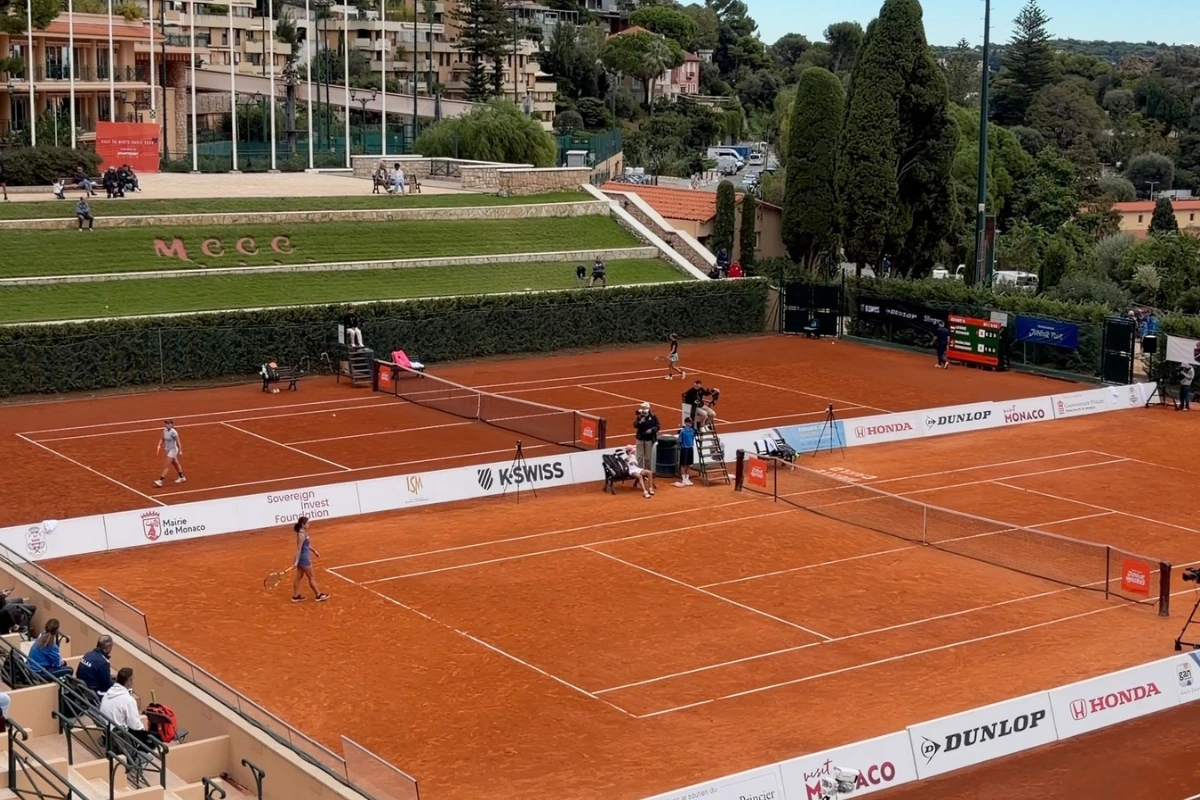
The Tennis Europe Junior Masters concluded at the Monte-Carlo Country Club on Saturday 24th October, with four champions crowned and Monaco’s Christine Graf finishing sixth in the girls’ 16 & Under competition.

The tournament brought together 32 of Europe’s leading junior players from 21st to 24th October, competing across boys’ and girls’ 14 & Under and 16 & Under categories.

Each draw featured eight players divided into two groups of four, with the group winners advancing to Saturday’s finals and the remaining competitors contesting placement matches.

HISTORY IN THE OLDER CATEGORIES

Poland’s Blazej Krzysko claimed the boys’ 16 & Under title with a 6-4, 6-1 victory over Hungary’s Mark Jony. With this win, he became the first Polish player to win a Junior Masters title, ending the tournament without losing a single set.

Greece’s Lydia Panagiotidou also won all four of her matches in straight sets, defeating Serbia’s Zana Peric 6-2, 6-3 in the girls’ final. The victory made her the event’s first Greek female champion and secured the year-end No. 1 ranking.

PAPOIAN AND KOCHERZHENKO TAKE YOUNGER TITLES

Rafael Papoian defeated Bulgaria’s Bruno Dzhenev 6-2, 6-4 to claim the boys’ 14 & Under trophy, extending his Junior Tour winning streak to 15 matches.

Ukraine’s Mariia Kocherzhenko overcame Italy’s Olivia Conticello 7-6 (5), 6-3 in the girls’ final, becoming the first Ukrainian winner of that category.

GRAF FINISHES SIXTH

Monaco’s Christine Graf began with a 6-1, 6-1 victory over Bulgaria’s Raya Markova before losses to Serbia’s Zana Peric and Portugal’s Madalena Fernandes ended her hopes of reaching the final.

She finished sixth after retiring following the opening set of her placement match against Cyprus’s Danai Margariti.

Monaco Life is written by qualified journalists, writing original content. Sign up for our free newsletter, listen to our podcasts on Spotify, and follow us across Facebook,  Instagram, LinkedIn, and Tik Tok.

Photo credit: Kayla Sauceda / Monaco Life

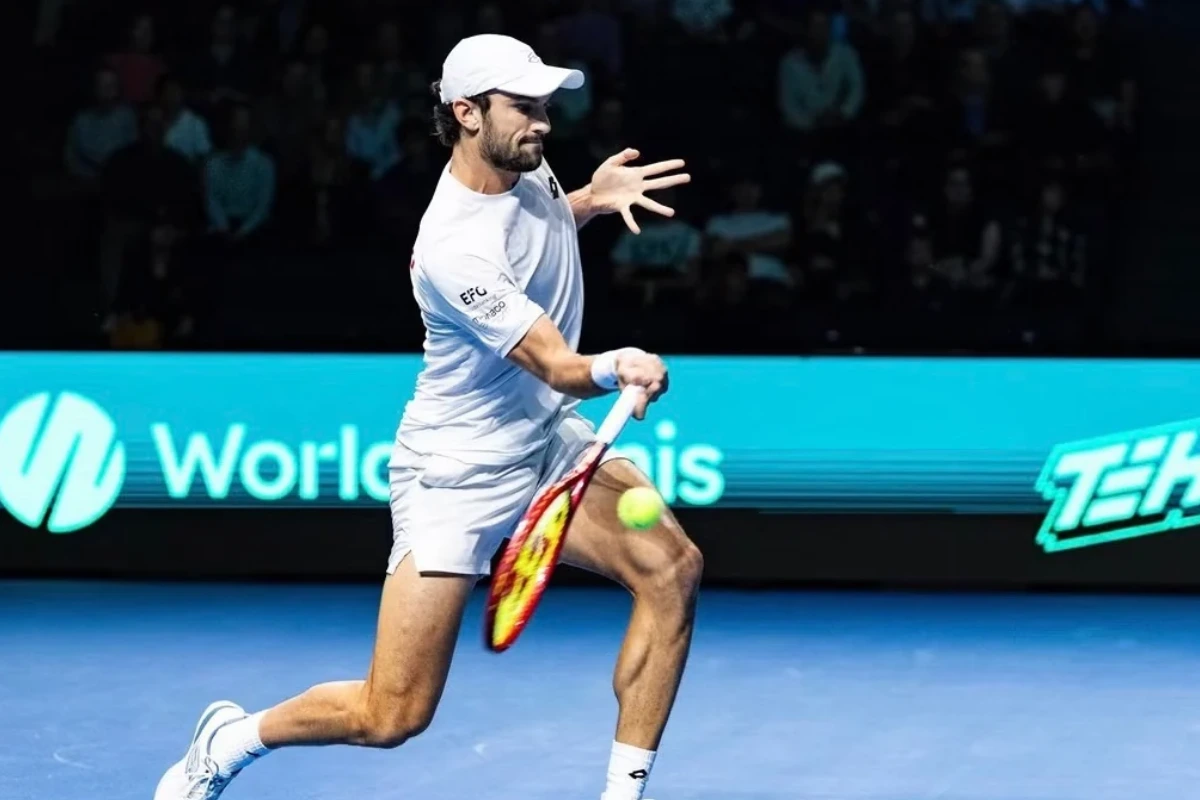
Vacherot returns to victory with straight-sets win in Basel

Valentin Vacherot saved four set points in his victory over Argentina’s Mariano Navone 6-3, 7-6 (4), reaching the second round of the Swiss Indoors Basel.

Vacherot returned to victory on Monday 26th October after his second-round exit in Lyon, with his serve proving critical in this straight-set win secured in just under two hours.

Vacherot struck 12 aces to Navone’s one and won 85% of points behind his first serve. He held 10 of his 11 service games, saving six of the seven break points he faced.

Vacherot struggled more to convert chances on Navone’s serves. Navone defied 11 of Vacherot’s 13 break point opportunities, keeping the contest competitive.

RESISTANCE IN THE SECOND SET

After taking the opening set 6-3, Vacherot faced a tougher second set against the Argentinian. Navone earned four opportunities to force a deciding set; however, Vacherot remained resistant before securing the tie-break 7-4.

This win puts Vacherot in the last 16 of the indoor ATP 500 tournament and gives him his second victory in three meetings with Navone. Vacherot will next play on Wednesday 28th October, facing the winner of the match between Chile’s Alejandro Tabilo and Spain’s Rafael Jódar for a place in the quarterfinals.

Monaco Life is written by qualified journalists, writing original content. Sign up for our free newsletter, listen to our podcasts on Spotify, and follow us across Facebook,  Instagram, LinkedIn, and Tik Tok.

Photo credit: Manuel Vitali, Government Communications Department

Prince Albert II’s cousin Antoine de Massy dies aged 29

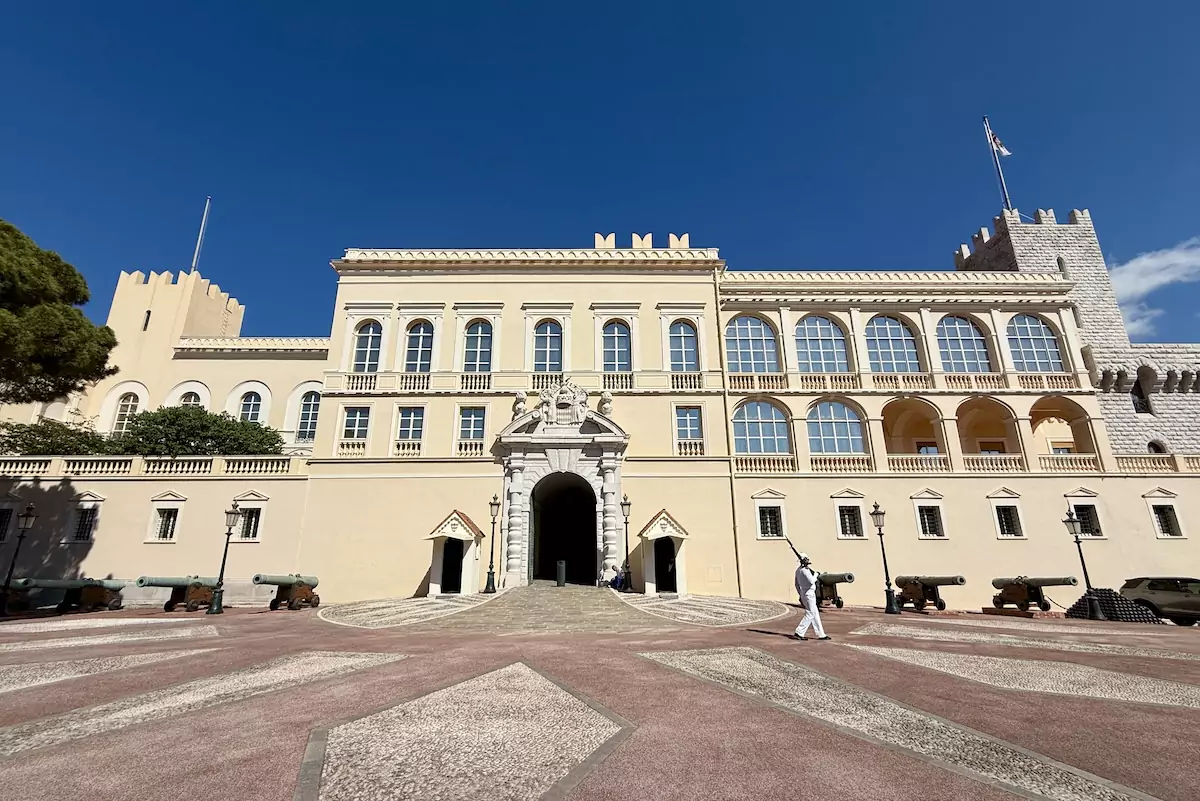
Antoine de Massy, Prince Albert II’s first cousin once removed, has died aged 29, the Prince’s Palace announced on Monday 26th October.

He was the son of Christian de Massy, Prince Albert II’s first cousin, and the grandson of Princess Antoinette, the elder sister of Prince Rainier III and aunt of the current Sovereign.

“Their Serene Highnesses Prince Albert II and Princess Charlène learned with sadness of the death of Antoine de Massy, aged 29, grandson of Princess Antoinette, the elder sister of Prince Rainier III,” the Palace said in its communiqué on Monday.

Photo sourcce: Antoine de Massy Instagram page

A family connection to Monaco tennis

The Palace paid tribute to his enthusiasm for a sport closely associated with his family: “Passionate about tennis, he was part of a family history closely linked to the sport in the Principality.”

Antoine began playing as a young child. In a 2012 interview with L’Uomo Vogue, he recalled being introduced to tennis by his father at the age of three. He later moved from Monaco to Florida to pursue intensive training alongside his schooling, speaking of his admiration for Novak Djokovic and his ambition to represent Monaco at the Olympic Games.

His grandfather, Alexandre-Athenase Noghès, was a Monegasque tennis player. His aunt Elizabeth-Ann de Massy led both the Monte-Carlo Country Club and the Monegasque Tennis Federation until her death in 2020. Her daughter, Antoine’s cousin Mélanie-Antoinette de Massy, now heads those institutions and the Rolex Monte-Carlo Masters.

“Their Highnesses share in the grief of his family and loved ones and extend their sincere condolences at this painful time,” the Palace concluded.

Antoine’s body was found early on Sunday evening, 25th October, in a park below Boulevard du Larvotto, following an alert from his family and a search by Monaco’s police, Prosecutor General Stéphane Thibault confirmed.

An investigation was opened to establish the cause of death. After investigators found that a man had approached Antoine while he was still on the boulevard, the legal basis of the investigation was changed to allow police to identify him and question him in custody.

The man was arrested on Monday morning. In a statement issued at 7pm that evening, Thibault said his custody had been extended by 24 hours while interviews and technical investigations continued.

The prosecutor stressed that the man’s role remained unclear and that all possibilities, including an accident, were being considered. The circumstances of Antoine’s death have yet to be established.

Monaco Life is written by qualified journalists, writing original content. Sign up for our free newsletter, listen to our podcasts on Spotify, and follow us across Facebook,  Instagram, LinkedIn, and Tik Tok.

Photo by Monaco Life
 

HĂ´tel de Paris staff face disciplinary action over drinking on the job

Monte-Carlo Société des Bains de Mer (SBM) has taken disciplinary action against several employees of Le Grill at the Hôtel de Paris, accusing them of repeatedly drinking alcohol at work using the restaurant’s own stock. It has also rejected union claims that the move amounts to the suppression of union activity.

In a statement released on Monday 26th October, SBM said it had been “compelled” to act after the alleged behaviour was observed over a period of several weeks. It said a thorough internal investigation followed, in which “verified and consistent” evidence was gathered.

According to the company, the conduct breached internal rules and the respect owed to company property, and exposed SBM’s responsibility for safety. It did not say how many employees were involved or what sanctions had been imposed.

“Not taken lightly”

Le Grill, the Michelin-starred restaurant on the eighth floor of the HĂ´tel de Paris, overlooks Place du Casino and the sea. Its kitchen is led by executive chef Dominique Lory.

SBM’s management stressed that the disciplinary decisions were “fair and proportionate to the seriousness of the acts committed by each person”. It said each employee concerned had been interviewed and given the opportunity to explain themselves, accompanied by a representative if they wished.

“The procedures and the disciplinary decisions that follow are not taken lightly,” the company said.

Union accused of “provocation”

The statement was also a direct response to a leaflet put up at the Hôtel de Paris by the Union des Syndicats de Monaco (USM), which SBM said described the disciplinary action as union repression. The company said it regretted the leaflet’s “needlessly provocative” tone.

“It is therefore obviously not a matter of union repression,” SBM said, adding that the leaflet’s authors could not “seriously have considered that holding the position of staff or union representative would allow the applicable rules to be broken, or even condone the consumption of alcohol in the workplace and the appropriation of property belonging to the employer”.

The wording suggests that at least one of the employees facing disciplinary action holds a staff or union representative role.

Tensions with the union

The dispute comes during a year of mobilisation by the USM, which has staged a series of strikes and rallies over pensions and wages. In June, SBM president-delegate Stéphane Valeri said around 50 of the company’s roughly 5,000 employees had joined a USM strike, while describing staff as broadly satisfied.

In its statement, SBM said it recognised the role of trade unions, remained open to dialogue and fully respected the right to strike and to protest. However, it added that “the safety of employees and the fair application of rules common to all cannot be subject to exceptions”.

Monaco Life is written by qualified journalists, writing original content. Sign up for our free newsletter, listen to our podcasts on Spotify, and follow us across Facebook,  Instagram, LinkedIn, and Tik Tok.

Photo by Monaco Life