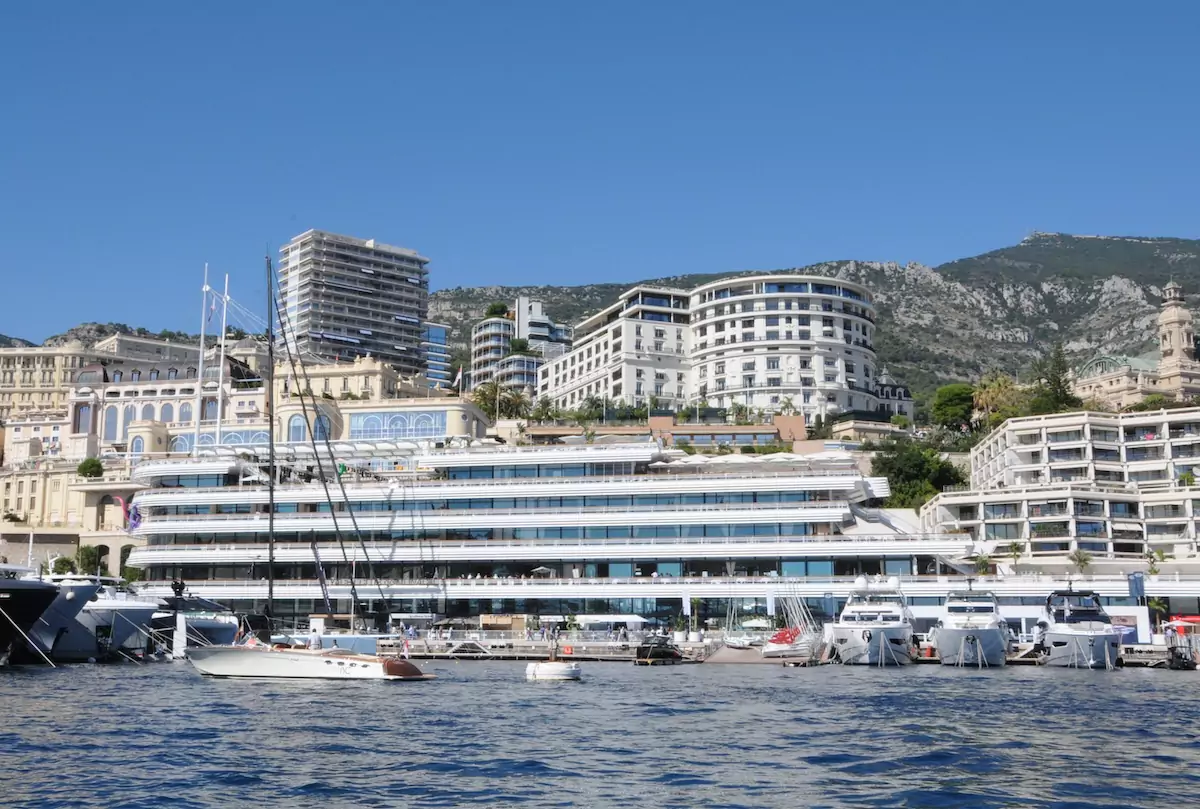
How does the destruction of ecosystems become a risk to a country’s finances, and who should pay to protect them? Those questions will bring scientists, policymakers and financial experts together at the Yacht Club de Monaco on Wednesday 4th November.
BNP Paribas and the Centre Scientifique de Monaco are organising the fourth Natural Capital Conference, in partnership with the Prince Albert II of Monaco Foundation. The event will examine how scientific evidence on biodiversity loss can inform government spending, investment and economic decisions.
Natural capital describes the resources and services nature provides, from water and fertile soils to the ecosystems that support food production and help regulate the climate. The conference will explore how their deterioration can weaken economies, and how finance can support their protection and restoration.
From biodiversity loss to sovereign risk
One central discussion will focus on the implications for national finances: how damage to ecosystems affects economic resilience, and why it matters to finance ministries, credit rating agencies and multilateral banks.
A second strand will examine how to attract private investment into biodiversity protection, including through bond markets and financing at a regional or local level. Reliable data on nature-related risks will be a key part of that discussion.
The programme will also consider new conservation funding mechanisms and indicators capable of measuring whether investment delivers meaningful environmental results.
According to the organisers, the aim is to move beyond identifying the damage towards practical, lasting responses – connecting scientific knowledge with financial decisions while accounting for the needs of the populations concerned.
Monaco Life is written by qualified journalists, writing original content. Sign up for our free newsletter, listen to our podcasts on Spotify, and follow us across Facebook, Instagram, LinkedIn, and Tik Tok.
Photo by Monaco Life
Flu and Covid-19: both vaccines now available across Monaco
Vaccines for Covid-19 are now available in pharmacies across the Principality and are fully covered for socially insured residents, joining the seasonal flu vaccines accessible since 15th October.
The Prince’s Government reminds the public that vaccination against both viruses offers crucial protection against severe complications and health risks, particularly for vulnerable individuals.
Annual seasonal flu vaccination is recommended for adults aged 65 and over. It is also strongly advised for pregnant women, individuals with obesity, those with specific chronic illnesses, and residents of long-term care or medico-social facilities regardless of age. Furthermore, vaccination is recommended for individuals living with infants under six months at risk of severe flu, as well as those residing with immunocompromised persons.
Priority individuals receive a coverage voucher allowing them to obtain the vaccine or receive their jab directly at a pharmacy.
Updated access rules and prescriptions
Access procedures for other residents have evolved this year. Individuals aged over 15 can now receive their flu vaccination directly in pharmacies. However, those wishing to collect the vaccine for administration by their general practitioner or private nurse must now hold a prior medical prescription.
The Prince’s Government highlights the importance of vaccination among healthcare workers and professionals in regular contact with at-risk individuals. Vaccinating staff protects practitioners individually while reducing the risk of transmitting respiratory infections to patients.
Covid-19 protocol and dual injections
The recommended target groups for Covid-19 vaccination match those for the seasonal flu. Any resident wishing to be vaccinated against Covid-19 can receive the jab directly in a pharmacy or collect it for administration by a doctor or nurse. A medical prescription remains required prior to receiving a Covid-19 injection from a nurse.
Both vaccinations can be administered at the same time, provided different injection sites are used.
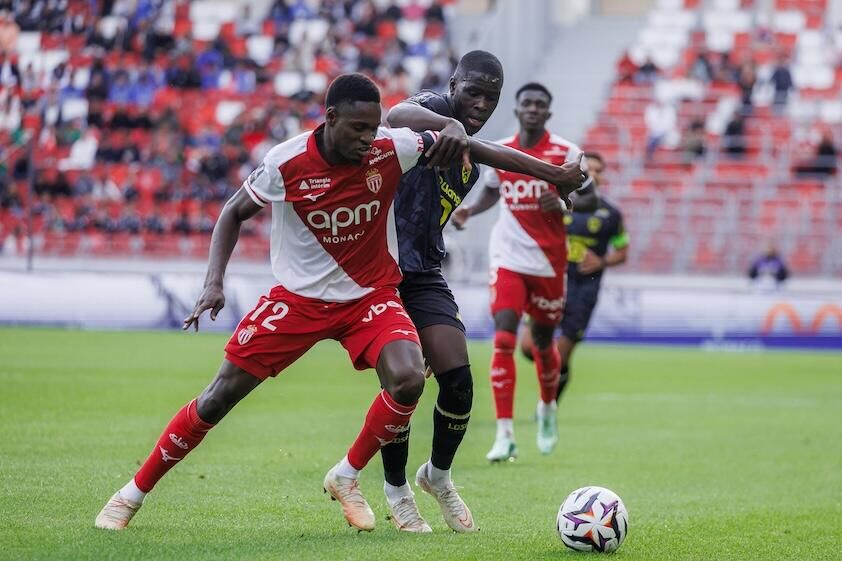
AS Monaco came from behind to salvage a point against Lille (1-1) at the Stade Louis II on Sunday. Filipe Luís’ side are now winless in their last three league games.
If the win over Freiburg on Thursday (3-0) was composed and controlled, a win over Lille OSC would have been cathartic but flawed. Ultimately, they had to settle for just the point, despite dominating the second half. The feeling, despite coming from behind, was one of dejection at the full-time whistle at the Stade Louis II.
Superficially, it isn’t the worst result for the Principality club. Lille came into the gameweek level on points with Monaco; last season, they finished inside the top three; and Davide Ancelotti’s side came into the game more rested, having played their European fixture on Wednesday.
Camara and Brunner below their standards
Monaco have made a habit of starting strong and fading this season. The trend was inverted against Les Dogues. Neither side forced the issue in the first half, and ultimately Lille didn’t have to in order to open the scoring. Lamine Camara lapped up praise from Luís on Thursday night but was at fault as he presented too much of the ball to Soriba Diaoune. Having lost it in a dangerous zone, Les Monégasques weren’t set up to prevent a simple ball into Ethan Mbappé, who needed just one touch to beat Lukas Hradecky from close range.
The Principality club were a blunt attacking instrument and weren’t aided by the premature exit of Ansu Fati, who is struggling to rewrite his narrative. Often pivotal when he is on the pitch, the issue is keeping him on it. Given back-to-back starts in Ligue 1, his body betrayed him, the Spaniard withdrawn with an apparent muscular injury just 15 minutes in.
Another game of two halves for Monaco
Monaco were feeling charitable and provided the only other clear opportunity of the first half. Vanderson fed Nathan Ngoy, up from defence, but his effort was too close to Hradecky, who this time made the save.
Hradecky’s opposite number, Berke Ozer, was finally tested seconds after the break. His save from Aleksandr Golovin’s free-kick was theatrical but relatively simple. But as was the case in Lorient a week earlier, there was at least intent shown by the Principality club upon their return from the dressing room.
The Russia international could have tested Ozer again if not for a tackle in extremis from Alexsandro. And the Turkish goalkeeper should not only have been tested but beaten by Paris Brunner. The German has been clinical this season, but presented with an open goal, just yards out, he blazed over. Monaco, however, were beginning to purr, and Tanguy Nianzou’s red card seconds later provided further cause for optimism of a Monégasque revival.
Nianzou’s recklessness hands Monaco the advantage
Brunner was struggling to hit his heights. Failure to control a dinked ball over the top saw another chance go begging. He then couldn’t get a touch on Edan Diop’s inswinging ball. As it transpired, however, he didn’t have to. The German’s diversion was enough for Ozer to be fooled. He didn’t make the dive and saw the ball nestle into the side of his net.
The siege on the Lille goal was inevitable. Monaco had possession, had shots, too, but failed to test Ozer. Brunner’s off day continued. Folarin Balogun was waiting in the wings, but his services weren’t solicited until stoppage time. He didn’t have time to get into the game; Monaco, pushing and threatening until the end, didn’t have time to find a winner against a tiring LOSC.
Post-match, Filipe Luís spoke about dropping two points, an indication of how Monaco completely dominated the second half at the Stade Louis II. “Our first half wasn’t at the level,” added the Monaco manager. Whilst the win over Freiburg held great promise, Les Monégasques are yet to piece together a full 90 minutes in Ligue 1.
Monaco Life is written by qualified journalists, writing original content. Sign up for our free newsletter, listen to our podcasts on Spotify, and follow us across Facebook, Instagram, LinkedIn, and Tik Tok.
Photo source: AS Monaco
Nine dishes, seven days: inside Mona’s weekly menu revolution
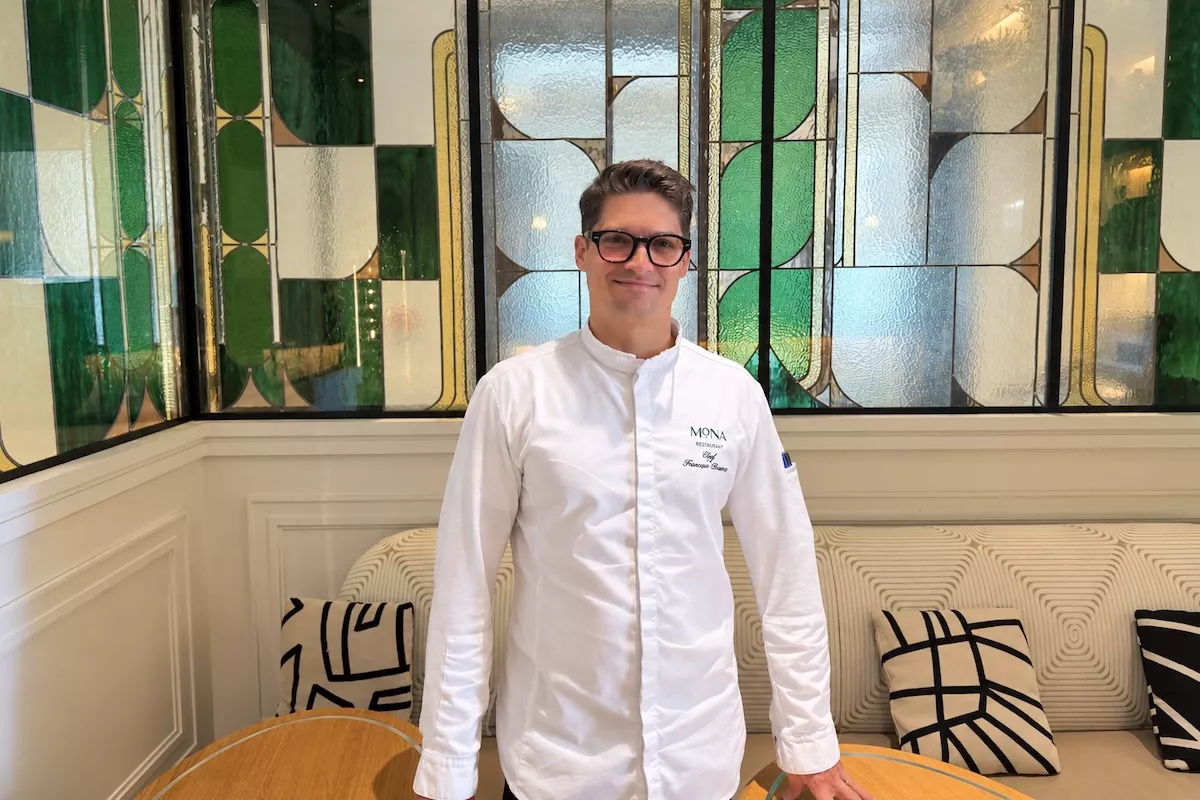
A menu of three starters, three mains and three desserts might sound like a modest proposition. Replacing them every week is anything but. At Mona, Chef Tristan Romain has taken on a challenge that gives his cooking more freedom — and his guests a reason to keep coming back.
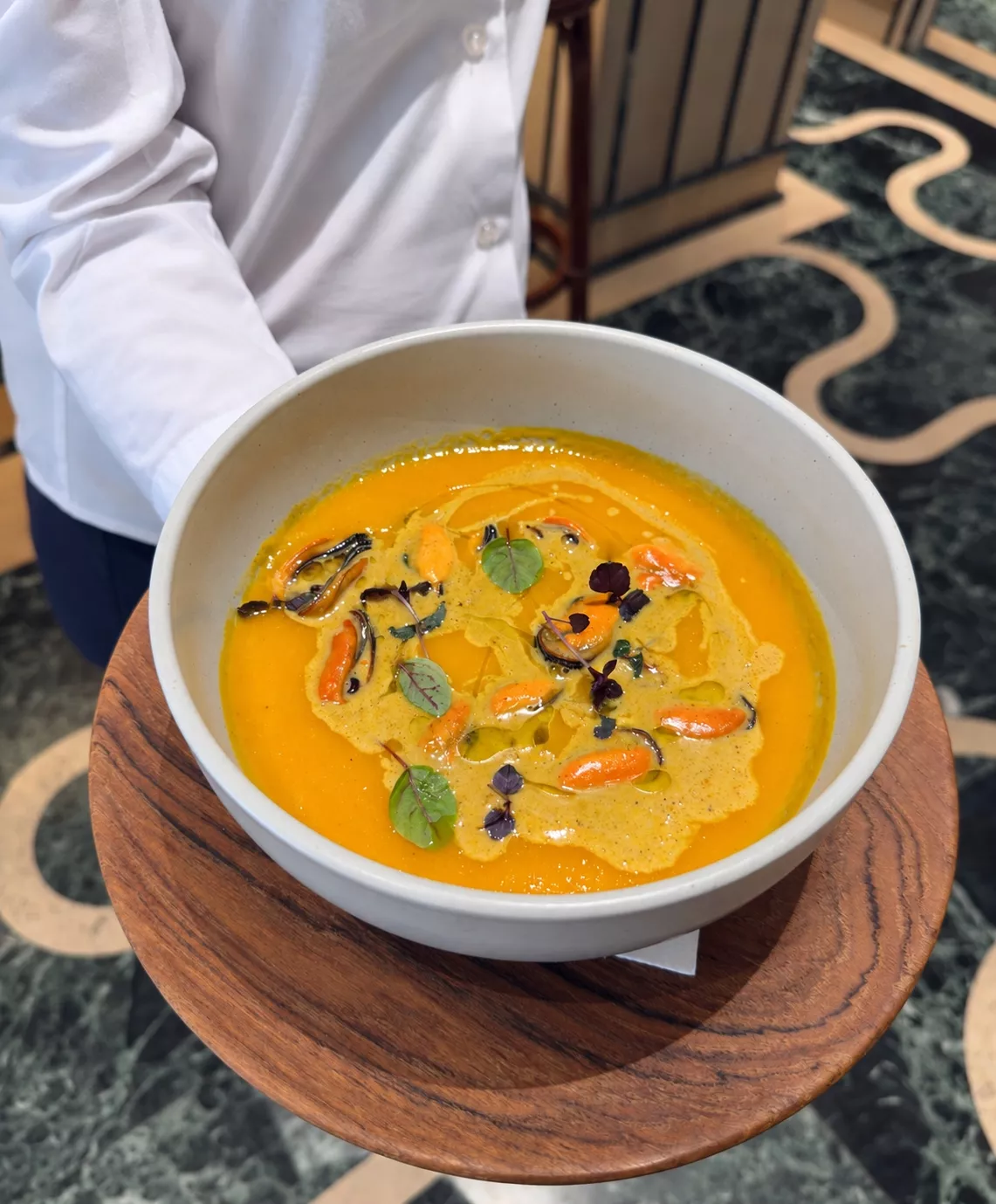
There is a moment with the butternut squash soup when I find myself trying to place the spice. A little chilli? Curry. Then there are the mussels: an unexpected addition that makes me reconsider what I thought would be a familiar bowl of autumn soup.
That ability to build flavour, to introduce something that catches your attention without overwhelming the dish, is what I particularly enjoy about Chef Tristan Romain’s cooking. His new menu gives him considerably more scope to exercise it.
Developed in discussion with the group, the concept moves Mona away from its previous Lebanese and Mediterranean focus towards a broader bistronomic approach. Rather than changing the menu at the turn of each season, Tristan now writes a new one every week.
“We choose our seasonal produce, then create our dishes, starters and desserts according to what the market offers us and what nature offers us,” he says.
The distinction is in how closely the kitchen can respond to those ingredients. The season still sets the framework; what is available that week determines what is served.
The revelation that was butternut pumpkin, mussels and curry. Photo credit: Thierry Apparu
Following the chef’s instincts
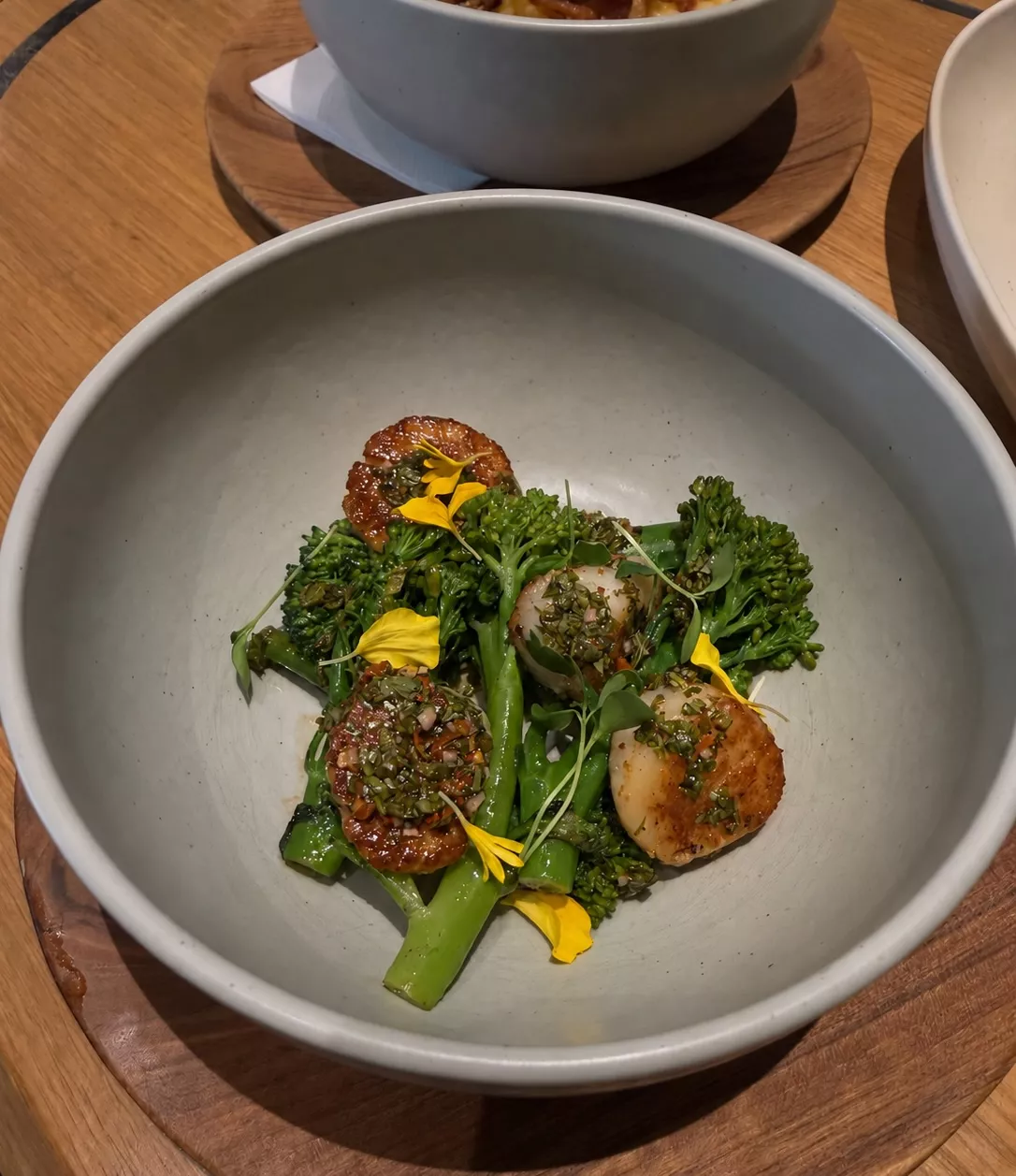
During my visit, warm goat’s cheese came with focaccia soldiers and salad leaves, while a veal chop was prepared piccata-style with heritage root vegetables. The roasted scallops, served with broccoletti and chimichurri, were a particular highlight. So were the coquillettes with crispy guanciale and a delightfully subtle use of butternut squash.
The squash appeared in both soup and pasta, but to quite different effect. That is part of Tristan’s skill: knowing how much to draw from an ingredient, and what to put alongside it.
A cheese platter has its place among the final courses, accompanied that week by vanilla-infused vegetable jam. The sweet choices were a waffle with accompaniments and a walnut tart, each offering a separate direction to finish the meal.
The wider concept releases Tristan from the expectation that every dish must belong to the same culinary tradition. Some spices and influences remain from the previous menu; others can now enter the kitchen.
“We used to really limit ourselves to Mediterranean and Middle Eastern cooking. Now we’ve broadened things a little,” he explains. “Sometimes we even have slightly Asian notes, without necessarily going into sushi or anything like that. We’re freer to do what we want, in a manner of speaking.”
He prioritises French produce and sources as locally as possible, while acknowledging that not everything can be obtained nearby. The aim, he says, is to avoid ingredients that have travelled around the world before reaching the restaurant.
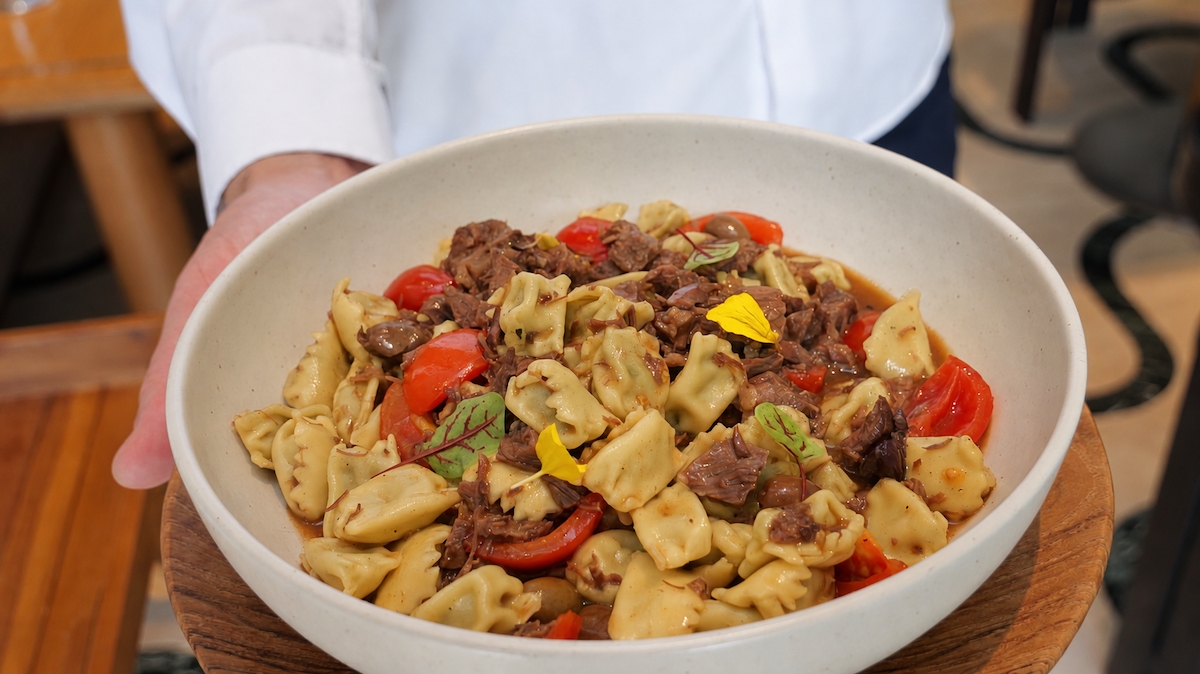
Daube ravioli. Photo credit: Thierry Apparu
The work behind a short menu
For the diner, a weekly menu offers variety. For the team, it creates a relentless deadline.
“Every month, I have to come up with twelve starters, twelve mains and eight to ten desserts,” Tristan says. “Sometimes it isn’t easy, especially making sure we don’t repeat something we did a month ago.”
There is also the work of turning each idea into a dish that can be delivered consistently, then making sure the people serving it understand what is on the plate. Familiarity has barely had time to settle before the next change arrives.
Tristan discusses ideas with maître d’hôtel Julien and asks colleagues what they like eating and what they would like to see on the menu.
“It’s always easier for them to sell something they already like and already know,” he says.
He describes the undertaking with an almost nonchalant confidence. Yet there is nothing casual about the commitment. Producing a good new menu is one task; doing it again the following week, and the week after that, is a much bigger one.
Scallops, broccolini and chimichurri. Photo credit: Thierry Apparu
Having led the kitchen from the start, Tristan now has greater latitude to cook according to his own instincts. It is satisfying to see a chef whose ability is already apparent being given more room to use it.
For residents in the building, the changing selection makes eating downstairs a more interesting regular proposition. For the public, it offers a different kind of loyalty: returning for the chef’s judgement, rather than a particular dish.
The French have long done this with the plat du jour; Chef Romain takes the idea to another level by changing the entire menu. For me, it has the appeal of being invited into a chef’s own kitchen to taste what he really wants to cook at that moment. I would happily return for that soup, but I’m just as interested in what comes next.
Monaco Life is written by qualified journalists, writing original content. Sign up for our free newsletter, listen to our podcasts on Spotify, and follow us across Facebook, Instagram, LinkedIn, and Tik Tok.
Main photo credit: Cassandra Tanti, Monaco Life
Former Palace head chef presides over International Olive Oil and Tea Competitions in Monaco
The Agence pour la Valorisation des Produits Agricoles (AVPA) hosted an international gastronomic event in Monaco on Thursday 22nd October, bringing together two distinct sensory disciplines: extra virgin olive oils and European-origin teas.
The tasting gathering took place at La Table d’Élise in Monaco, where the AVPA convened its gastronomic jury for the 23rd International Contest of Oils of the World, Southern Hemisphere Edition, alongside a special tasting of European-origin teas as part of the 9th International Contest of Teas of the World – AVPA Paris.
Presided over by Palace expertise
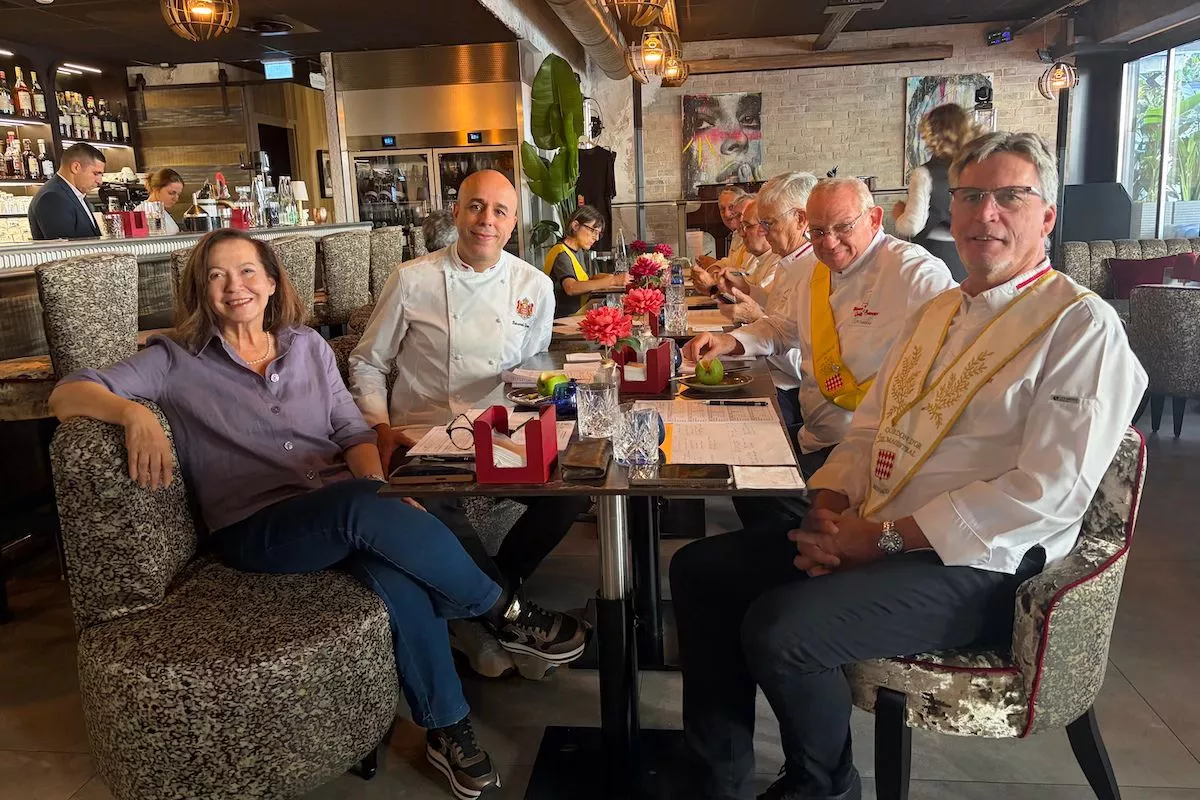
The gastronomic jury was presided over by Gilles Brunner, former Head Chef of the Prince’s Palace of Monaco, President of the Grand Cordon d’Or de la Cuisine Française, board member of the Escoffier Foundation, and Disciple of Auguste Escoffier.
Reflecting on the host city, Brunner highlighted the natural synergy between the Principality and the organisation’s mission:
“I tend to say that Monaco is always the ideal venue to bring together quality people,” Brunner told Monaco Life, adding: “The AVPA is a truly wonderful agency that showcases agricultural products, so naturally, Monaco is a capital for highlighting these products.”
A two-tiered evaluation model
The competition relied on a rigorous, two-tiered judging process designed to balance technical precision with commercial reality. According to AVPA Chief Operating Officer Ksenia Hleap, all submitted entries first underwent a blind technical assessment.
For the olive oil category, samples were sent directly to the Olive Technical Centre (CETOLIV) in Aix-en-Provence for rigorous testing. To maintain total objectivity, oils were served in dark blue cups to prevent colour from influencing panel ratings.
Only entries exceeding the category average advanced to the gastronomic jury. This secondary panel comprised active industry professionals, including restaurateurs, chefs, and fine delicatessen owners, who evaluated the products from a consumer perspective.
“The technical scores are adjusted by the gastronomic jury to reflect market reality,” explained Hleap. “An oil might hit every technical parameter, but it still needs to resonate with the end consumer.”
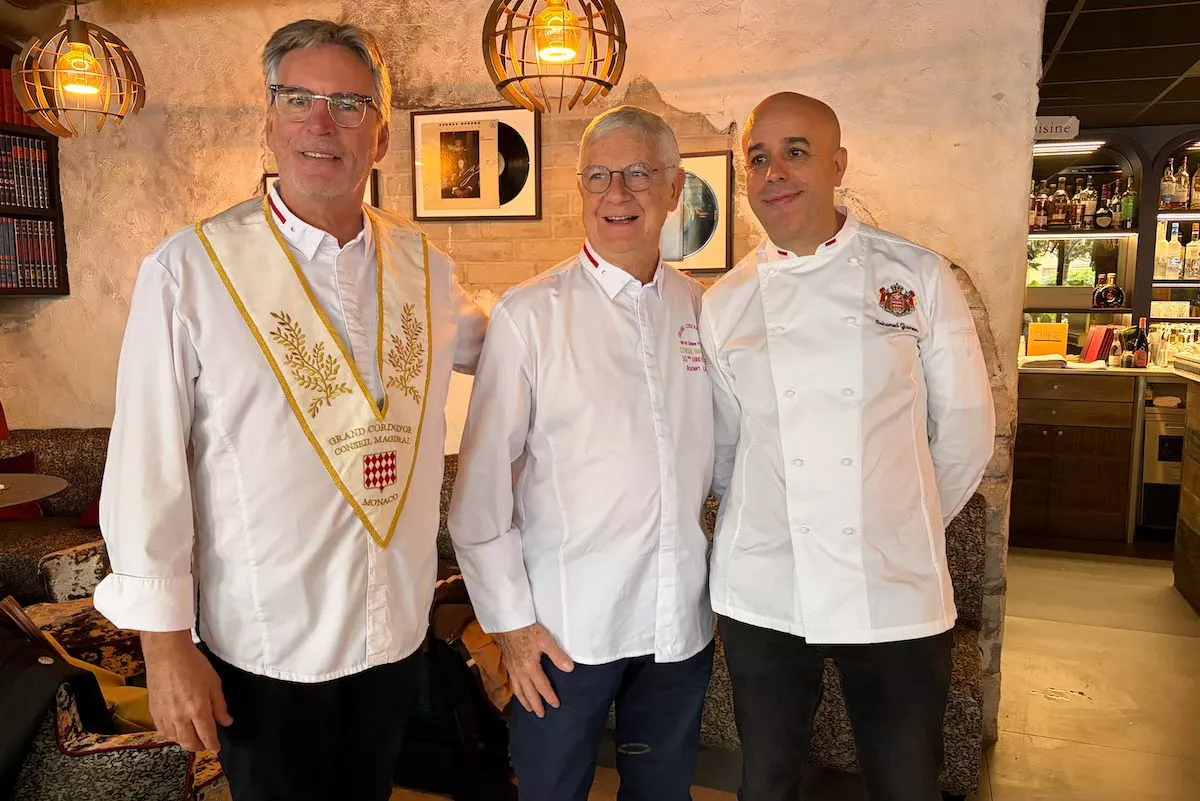
From left to right: Gilles Brunner, Robert Larini (Prominent Member of the Grand Cordon d’Or de la Cuisine Française andMohamed Ghanem (Executive Chef at La Table d’Élise in Monaco). Photo credit: Virginia D’Umas
Shared sensory standards and terroir
To maintain consistency across evaluations, all AVPA jury discussions are conducted in French. This ensures a common tasting language, avoiding regional differences in how flavours are described.
This year’s Southern Hemisphere olive oil entries featured producers from Brazil, Chile, and South Africa. While differing in origin, both olive oil and tea share core gastronomic attributes rooted in terroir, producer skill, and complex sensory profiles. Brunner said that assessing such entries requires complete sensory alignment between aroma and taste:
“I believe it’s all about the balance between all the flavours. First, when you bring it up to your nose, you immediately pick up the essence that characterises olive oil – that scent of artichoke, fresh grass, sometimes tomato leaves or almonds. If you get all of that on the nose and then find it again on the palate, you know you are dealing with an exceptional product.”
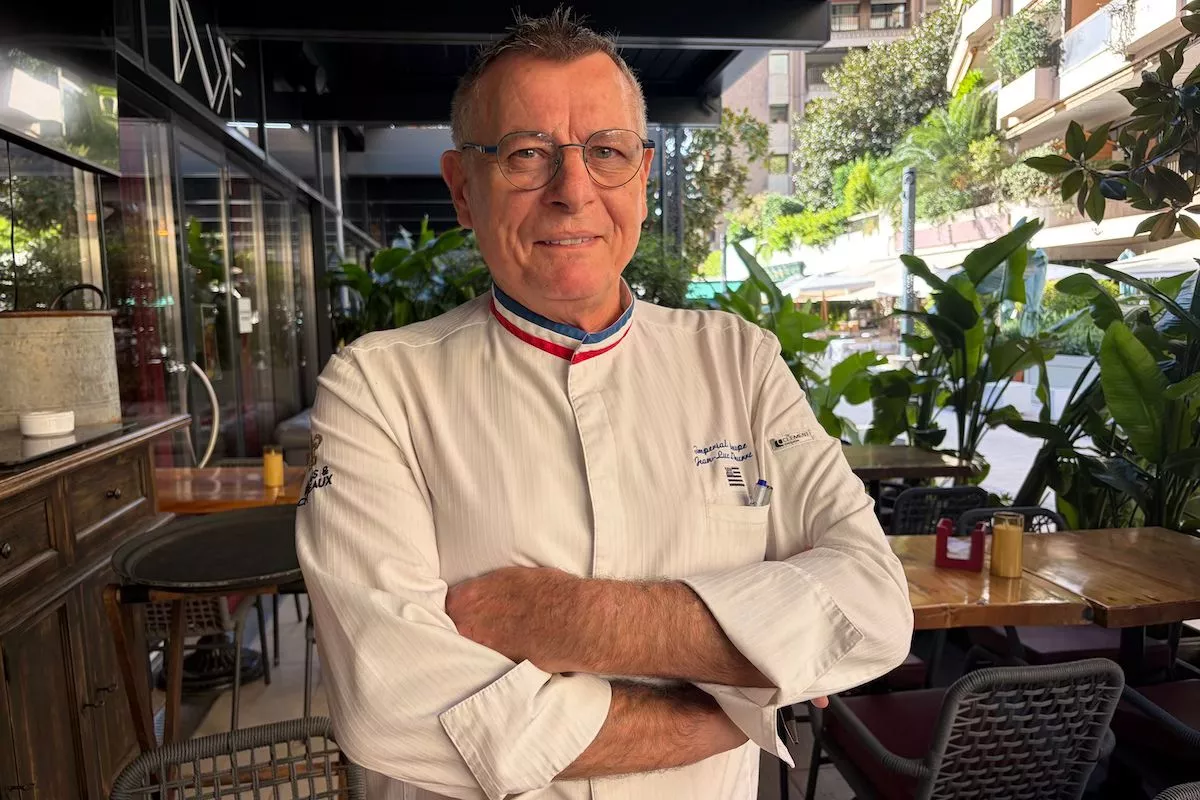
Acclaimed French chef Jean-Luc L’Hourre. Photo credit: Virginia D’Umas
Meanwhile, acclaimed French chef and Meilleur Ouvrier de France (MOF) Jean-Luc L’Hourre highlighted the practical value of these evaluations for working chefs:
“It remains fascinating to explore the differences among oils and their acidity levels from all corners of the world,” he said.
Supporting global producers
Now held regularly in Monaco for Southern Hemisphere entries, the event highlights the Principality as a hub connecting local culinary expertise with international producers.
As a non-profit organisation, the AVPA does not sell products directly. Instead, it focuses on providing producers with recognition, marketing support, and digital visibility.
Winning producers receive promotional resources, opportunities for blog features, and direct exposure to potential buyers during award ceremonies.
The official winners of this year’s competitions will be announced in December.
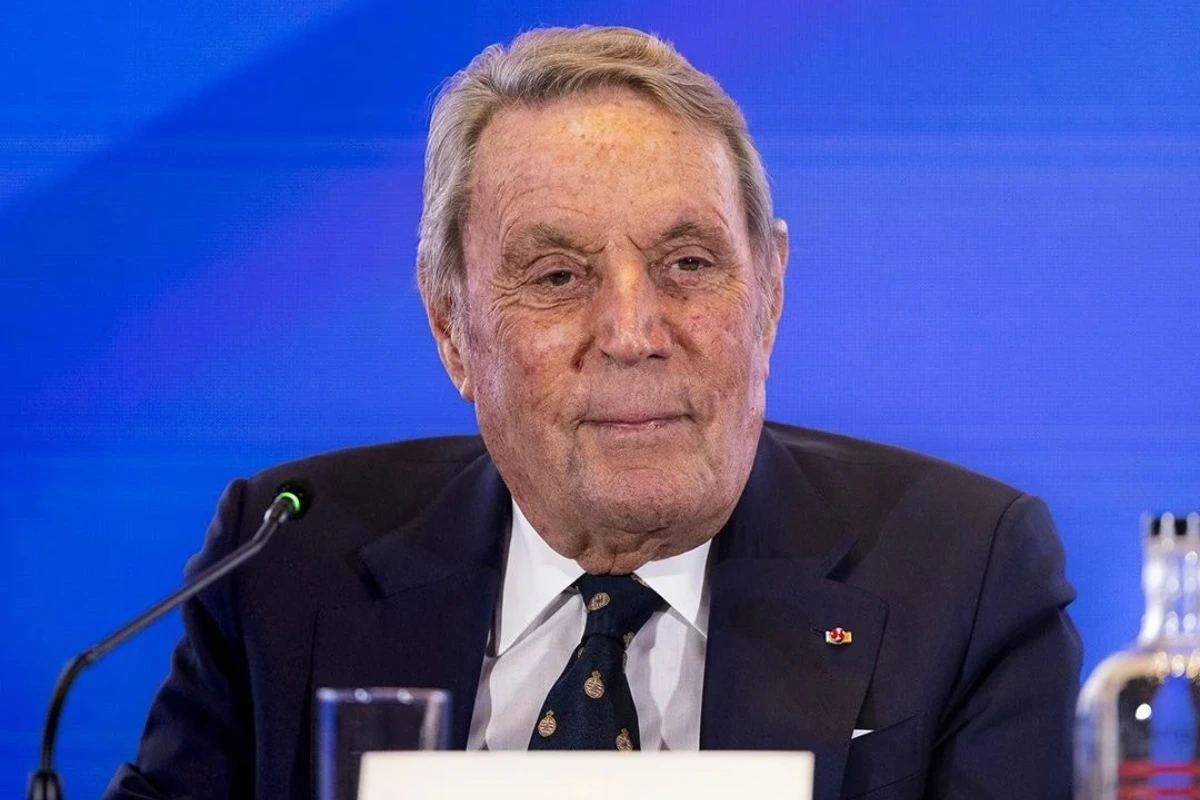
At age 87 years, Michel Boeri has been re-elected president of the Automobile Club de Monaco (ACM) for another five years, extending a presidency that began in 1972.
The club renewed its governing bodies during its general assembly at the Sporting Monte-Carlo on Wednesday 21st October. More than 1,000 members participated in the vote, with the ACM describing Boeri’s re-election as a landslide endorsement. His new mandate runs until 2031.
OVER FIVE DECADES OF LEADERSHIP
Boeri took over the presidency at the time of the 1972 Monaco Grand Prix. Having now led the organisation for 54 years, he is the longest-serving president in the club’s history, which traces its leadership back to founding president Théodore Muller in 1890.
His involvement in motorsport administration has extended beyond Monaco. Boeri served as president of the Fédération Internationale de l’Automobile’s Senate from 2004 to 2009 and has held the role of FIA vice-president for sport.
A lawyer by training, he studied law in Aix-en-Provence and served as a national councillor in Monaco before joining the Crown Council in 2006. His career has combined legal practice, public service, and international motorsport governance.
FOUR EVENTS IN 2027
The ACM organises several of the Principality’s major sporting events, including the Formula 1 Monaco Grand Prix, Rallye Monte-Carlo, Monaco E-Prix, and Historic Grand Prix.
Boeri’s next term will include a significant change to the Monaco Grand Prix with the introduction of the Sprint format for the first time in 2027. Scheduled for 3rd to 6th June, the weekend will feature two qualifying sessions and two races across Monaco’s streets.
The club’s 2027 calendar will begin with Rallye Monte-Carlo from 21st to 24th January, followed by Rallye Monte-Carlo Historique from 27th January to 3rd February. The Monaco E-Prix will take place on 1st and 2nd May, ahead of Formula 1’s return in June, while the Historic Grand Prix is next scheduled for 2028.
Monaco Life is written by qualified journalists, writing original content. Sign up for our free newsletter, listen to our podcasts on Spotify, and follow us across Facebook, Instagram, LinkedIn, and Tik Tok.
Photo source: Automobile Club de Monaco
All the headlines and highlights from Monaco, direct to you every morning