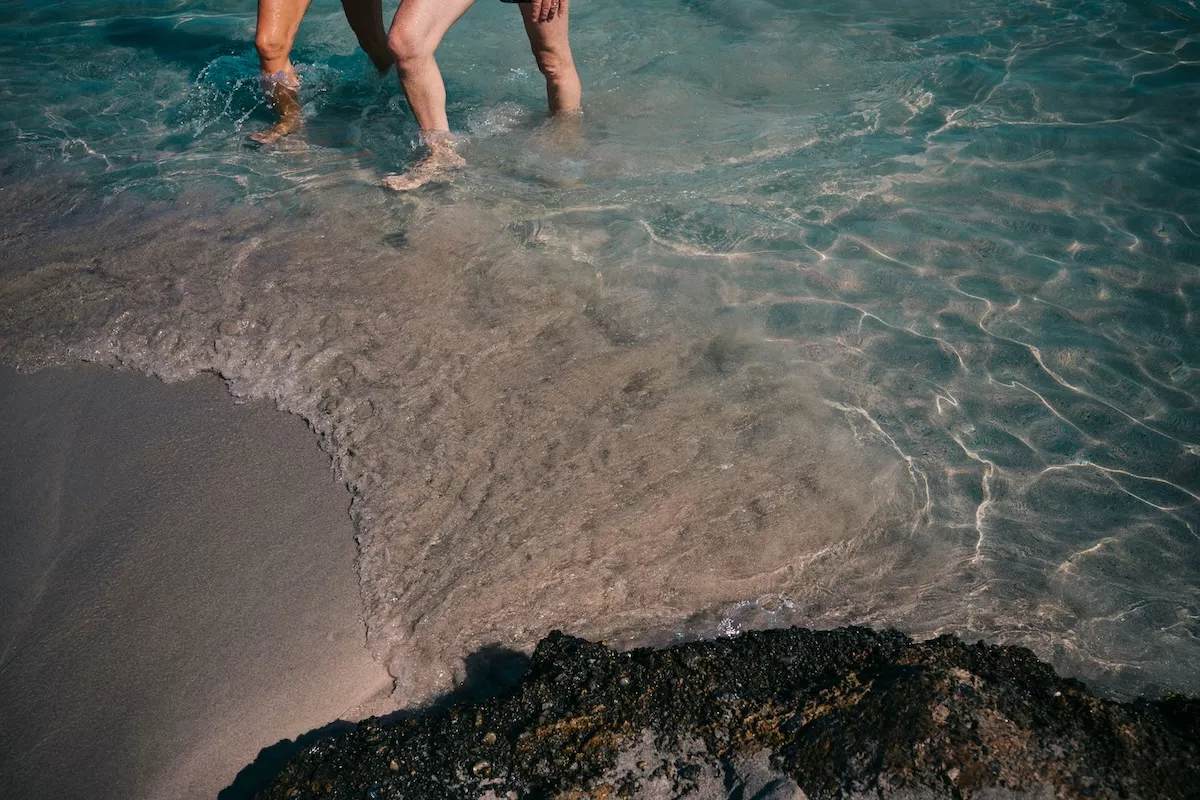
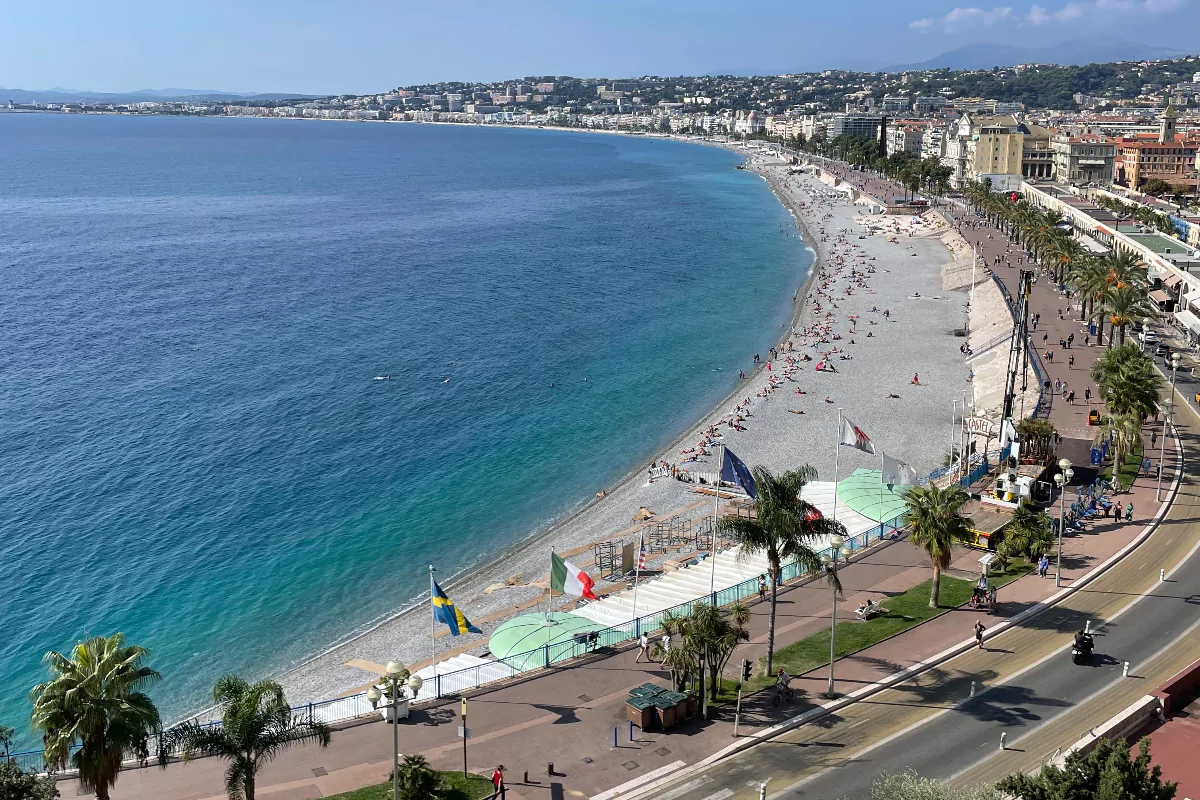
Rising sea temperatures linked to climate change are fuelling the spread of Vibrio, popularly known as “flesh-eating bacteria”, across European coastlines, with several beaches in Spain already closed this summer as a precaution. The bacterium, which lives naturally in marine and brackish waters, is of particular concern in the Mediterranean, which scientists regard as one of the regions most vulnerable to global warming, raising questions for a coastline, including the French Riviera, that depends heavily on summer tourism.
Vibrio occurs naturally in seawater, particularly where rivers meet the sea, and according to the European Food Safety Authority can be present in seafood. Certain strains, including Vibrio vulnificus and Vibrio parahaemolyticus, can cause illness ranging from gastroenteritis to severe infections contracted through eating raw seafood or through open wounds exposed to seawater. The charity Gavi notes that Vibrio is a relative of the bacterium that causes cholera, though the two produce very different illnesses, and that severe cases can lead to necrotising fasciitis, in which tissue around a wound rapidly breaks down, or to sepsis requiring amputation of the affected limb.
The European Centre for Disease Prevention and Control has warned of a heightened risk of Vibrio infections through the summer, particularly during heatwaves and in shallow coastal waters.
A warming sea under pressure
Hatim Aznague, an analyst for projects, climate action and energy resilience at the Union for the Mediterranean, told Euronews that warmer, less saline water, of the kind found near river mouths and lagoons, creates more favourable conditions for pathogenic bacteria to multiply. He said the Mediterranean is among the fastest-warming seas on the planet, and that the bacteria themselves are best understood as a symptom rather than the underlying issue, telling Euronews: “Bacteria are not the story; they are the messengers.”
The European Food Safety Authority has said the prevalence of Vibrio in seafood is expected to increase both globally and in Europe as a result of climate change, particularly in low-salinity waters and estuaries, while antimicrobial resistance detected in some strains adds a further layer of concern for public health.
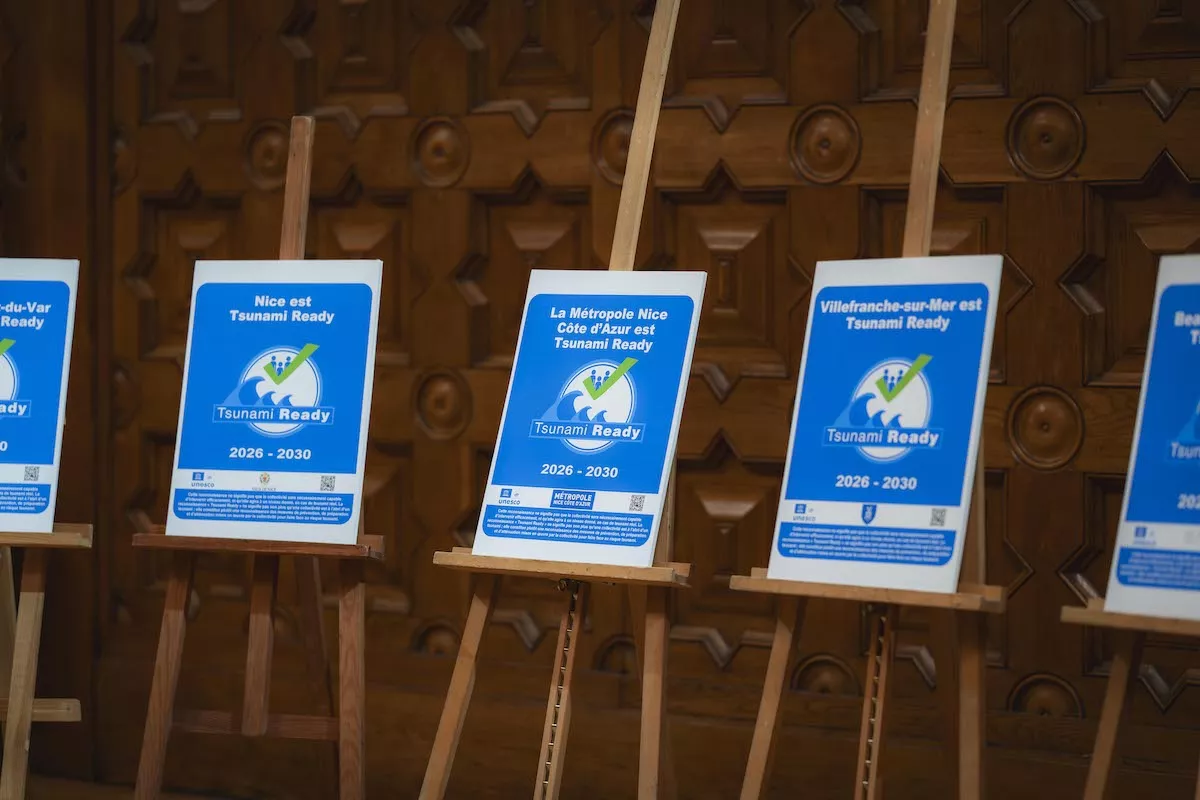
The Mediterranean is often associated with tranquil seas, but it is not immune to powerful undersea earthquakes and tsunamis. Acknowledging that risk, the Nice Côte d’Azur Metropolis and six coastal communes have become the first in France to earn UNESCO’s ‘Tsunami Ready’ certification, recognising years of work to strengthen emergency preparedness.
While a tsunami might seem an unlikely threat for the Mediterranean coast, experts suggest otherwise. “There is a near-certain probability—estimated at 100 per cent—that a tsunami reaching a height of at least one metre will strike the Mediterranean basin within the next 30 to 50 years,” said the Intergovernmental Oceanographic Commission of UNESCO.
With millions of residents and visitors along the Côte d’Azur each year, local authorities are treating the threat as a matter of preparedness rather than probability. The certification recognises efforts to improve warning systems, emergency planning and public awareness to help minimise the impact of any future event.
‘Tsunami Ready’ labels. Photo Credit: Ville de Nice – David Nouy
From risk to readiness
The path to receiving the UNESCO recognition has been a rigorous three-year undertaking. The project, titled EVACTSU (2023–2026), was developed in a strategic partnership between the Metropolis’s public safety agency and geography experts from the University of Montpellier.
The primary objective was to transform the coastline into a landscape of safety. The project team conducted detailed mapping to identify the most vulnerable areas and, crucially, to designate secure refuge sites. The physical transformation of the coast is now visible to any observant passer-by: 800 new tsunami-specific signs have been erected across the shore. These markers do more than warn; they provide clear, easy-to-follow directions on evacuation routes to ensure that in the event of an alert, the move from the beach to higher ground is rapid and organised.
Twelve steps to safety
The ‘Tsunami Ready’ label requires adherence to 12 international standards. To qualify, a municipality must prove it has a complete and accurate map of the risks, a functional 24-hour warning system, and a commitment to a culture of preparedness.
For the Nice Côte d’Azur Metropolis, this involved the execution of regular, full-scale evacuation practice runs. These exercises are designed to test the quick-thinking of public services and the public alike, ensuring that the plans developed on paper are effective in a real-life situation.
A new standard for the Riviera
The official presentation of the label was made on 2nd June at a ceremony in Nice. As the first territory in France to meet these strict international criteria, the Metropolis considers that it has set a new benchmark for coastal safety.
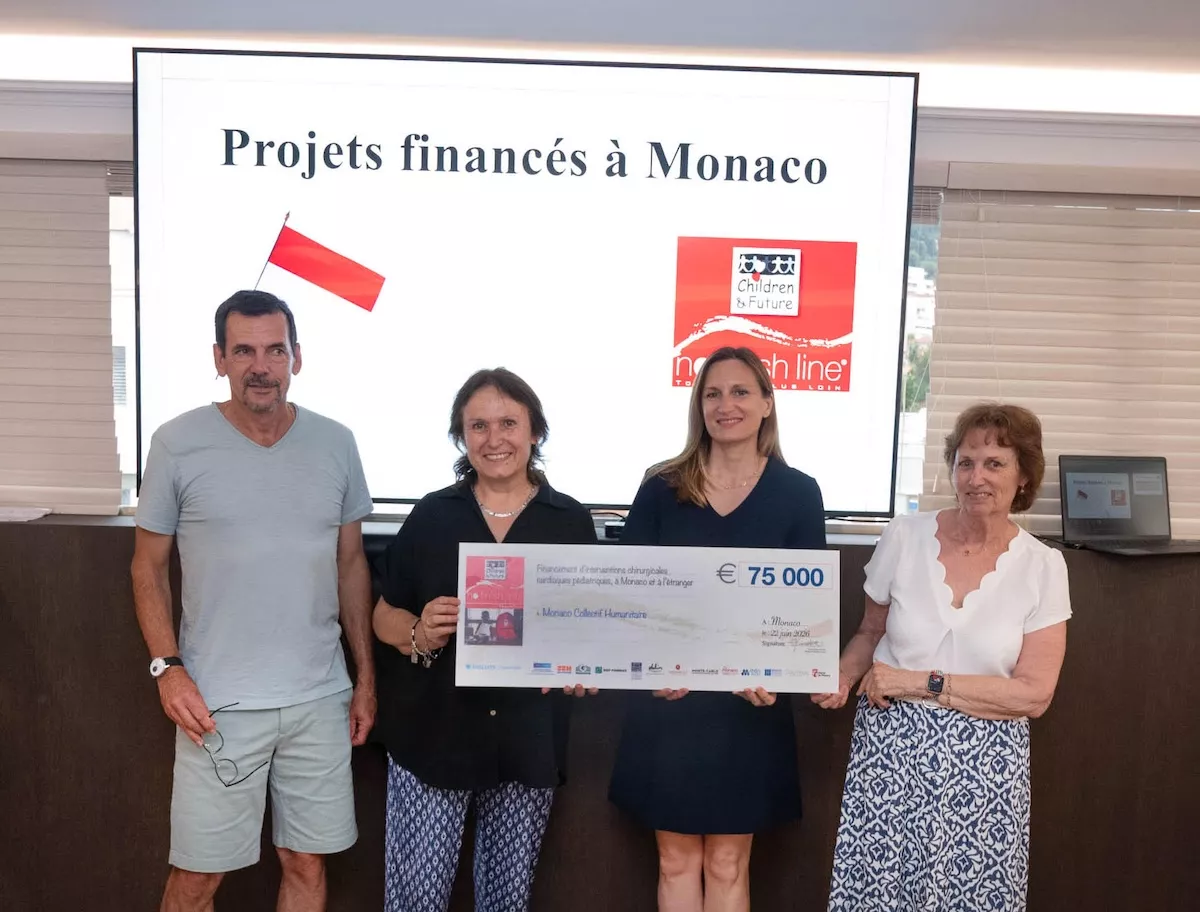
Children & Future presented cheques to the 37 projects it supported this year, distributing the €375,245 raised during November’s No Finish Line to organisations helping sick and underprivileged children in Monaco, France, Europe, Africa and the Middle East. The handover took place on Monday, marking the formal conclusion of the funding cycle generated by the charity’s 26th edition of the race.
The 2025 No Finish Line, held from 15th to 23rd November at the Chapiteau de Fontvieille, brought together 14,440 participants who together covered 375,245 kilometres, with Children & Future donating one euro for every kilometre completed. Since the event was founded in 1999, nearly 190,000 walkers and runners have taken part, covering more than 5,122,815 kilometres and raising over €5,448,620 for children’s causes.
Funds distributed across five regions
This year’s total was split between projects in Monaco (€103,053), France (€137,114), Europe (€23,743), Africa (€98,526) and the Middle East (€12,808).
The biggest single grant, €75,000, went to Monaco Collectif Humanitaire (MCH), which in 2025 arranged medical care for 45 children from Africa. Six of those children were operated on in the Principality at the Centre Cardio-Thoracique de Monaco, while the remaining 39 underwent surgery in MCH’s four partner countries: Mali, Madagascar, Senegal and Burkina Faso. Children & Future’s donation made it the leading donor to the Collectif.
Monaco Collectif Humanitaire, photo credit: Andre Faure
Support for hospitalised children in Monaco
A further €10,585 funded the purchase of ten ‘Calinanges’ for the Centre Cardio-Thoracique de Monaco. The ergonomic positioning devices are designed for young hospitalised patients, recreating the sensation of human contact to help calm children and improve their comfort, particularly when parents are unable to be present.
Emergency aid in Lebanon and family support in Monaco
In Lebanon, €9,008 was directed through the Monaco-based association Les Amis du Liban to support families affected by economic hardship, covering medicines, baby supplies, hygiene products and non-perishable food, as well as the preparation and distribution of meals.
The Association des Cœurs Vaillants et Âmes Vaillantes de Monaco received €9,588 to enable children from low-income families to take part in holiday camp activities.
Hospital activities and mobility support in France
Les Petits Princes, founded in 1987 to fulfil the wishes of seriously ill children and teenagers aged three to 18, received €15,720 to fund three hours of artistic activity per week at young patients’ bedsides, including poetry evenings and educational workshops.
In a separate French project, €14,310 went towards adapting a vehicle for 13-year-old Dev, who lives with spinal muscular atrophy and a disability rate exceeding 80 per cent, to allow safe transport of his electric wheelchair. A further €14,152 funded animal-assisted therapy sessions for hospitalised children at the Gustave Roussy Hospital in Villejuif, run by the association Ani’nomade.
Accessibility and medical missions abroad
In Italy, €23,000 was allocated to install a lift with automatic doors at the home of four-year-old Adriano, who has spinal muscular atrophy, to ensure he can access his first-floor home safely once he receives an electric wheelchair.
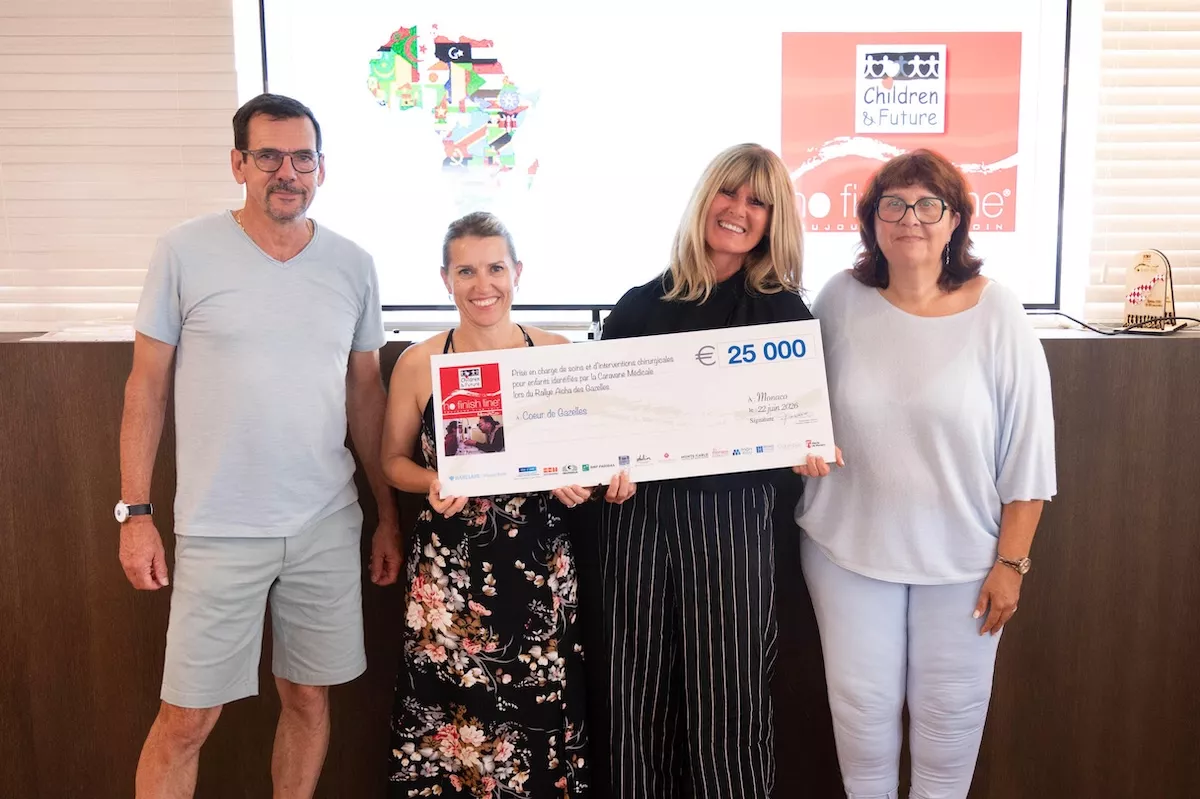
In Morocco, €25,000 supported paediatric healthcare during the 2026 medical caravan run alongside the Rallye Aïcha des Gazelles, which operated across four sites: Merzane, Ksar El Hassi, Anagam and Foum Zguid. The funding covered medicines, on-site paediatric surgery and medical equipment, including braces for seven-year-old Saja, who has cerebral palsy following complications at birth. Unable to walk or speak in 2025, Saja can now take a few steps and say a few words following treatment with walking and night braces alongside physiotherapy and speech therapy. The fund will also support around ten paediatric surgeries scheduled between summer and autumn 2026 for children identified during the caravan.
Education and child protection projects in Africa
In Cameroon, €18,446 is funding a multi-sports handball and basketball court at the Notre-Dame des Apôtres school in Ngaoundéré, which serves 1,200 pupils and 32 teachers. The project is overseen by a volunteer engineer from the NGO Fidesco who spent 30 years working in Monaco.
In Madagascar, €19,000 went to Fight Aids Monaco and its local partner SISAL, which support children from families living with HIV in Antananarivo and Toliara. In 2025 the project helped more than 100 children with school fees, supplies, uniforms, meals and transport, while also running awareness campaigns aimed at protecting minors from sexual exploitation.
In Rwanda, €13,794 funded the completion and renovation of a school run by the association Une Maison des Sourires, serving 550 children. The grant covered a full roof repair on the nursery building along with new boards, computers, sports equipment and furniture.
The 27th edition of the No Finish Line will take place from 14th to 22nd November 2026.
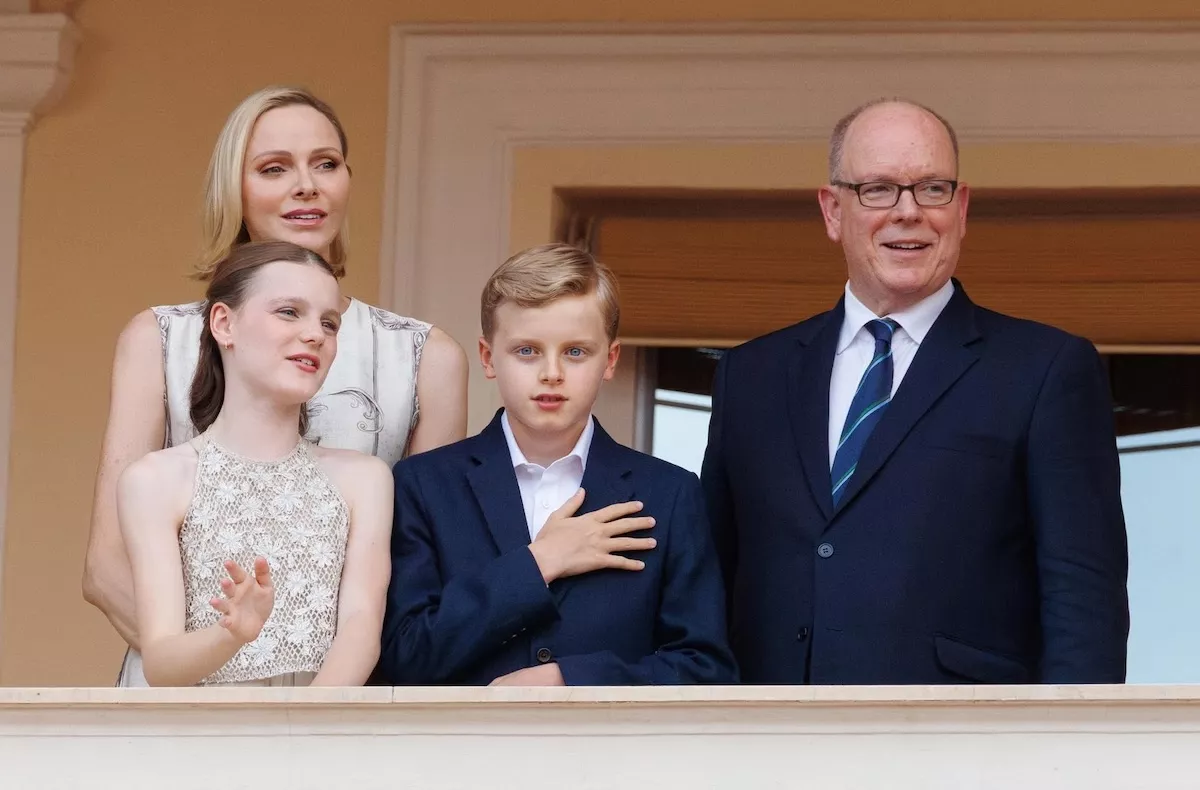
A towering bonfire, traditional folk dancing and a crowd gathered beneath the Prince’s Palace marked Monaco’s annual Saint-Jean celebrations on Tuesday evening, as Prince Albert II and Princess Charlene were joined by Hereditary Prince Jacques and Princess Gabriella to watch one of the Principality’s most enduring traditions.
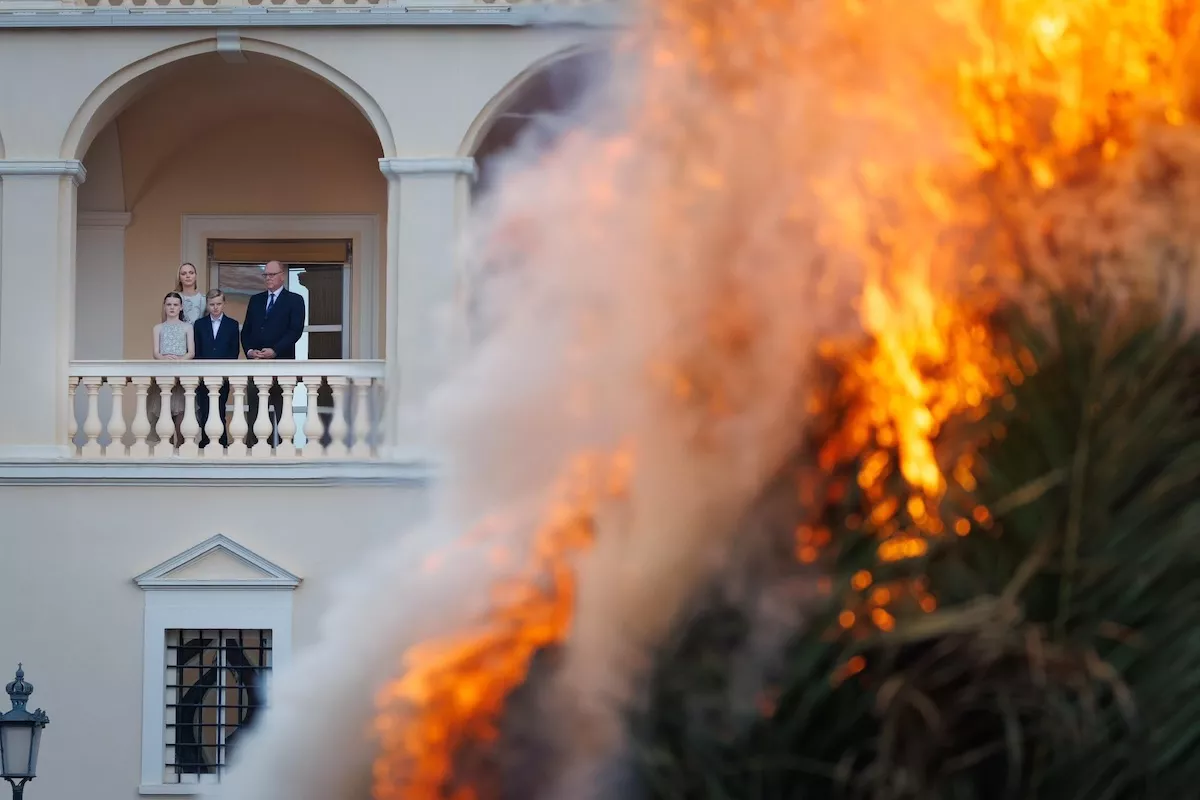
The evening began with the blessing of the Holy Sacrament in the Palatine Chapel, led by Archbishop Dominique-Marie David. Afterwards, the Princely family stepped out from a window overlooking Palace Square to witness the lighting of the traditional Batafoegu bonfire, a ritual that has long been associated with Saint John’s Day and the summer solstice.
Photo credit: Michaël Alesi, Prince’s Palace
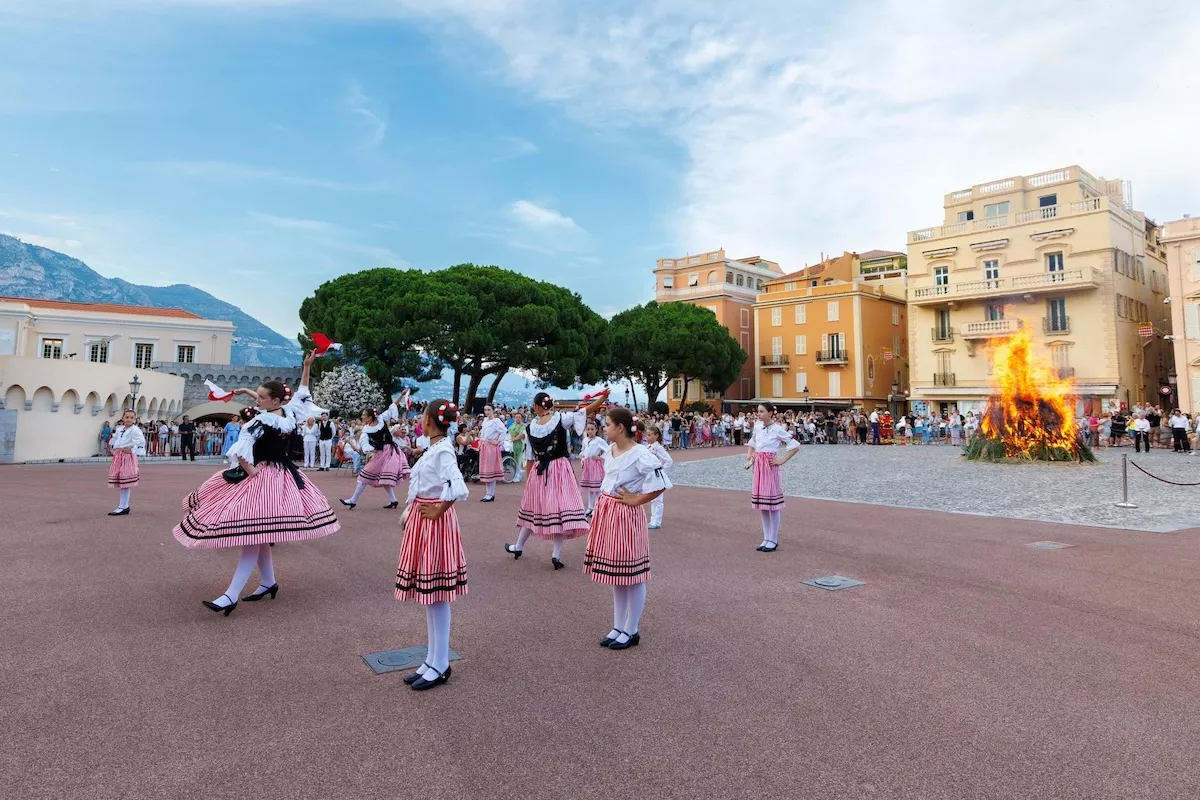
Below, residents and visitors filled the square as flames rose into the night sky. Members of Monaco’s folk group, La Palladienne de Monaco, performed traditional dances around the fire, their colourful costumes and choreographed movements adding to the spectacle.
The Batafoegu remains one of the visual highlights of Monaco’s summer calendar, bringing together religious tradition, folklore and community celebration in the heart of Monaco-Ville. From their vantage point above the square, the Princely family watched as the festivities unfolded beneath the Palace walls, sharing the moment with the hundreds of people who had gathered for the occasion.
Photo credit: Michaël Alesi, Prince’s Palace
The celebrations continued on the evening of 23th June with the traditional Saint-Jean festivities, which have been passed down through generations and remain an important part of Monaco’s cultural heritage.
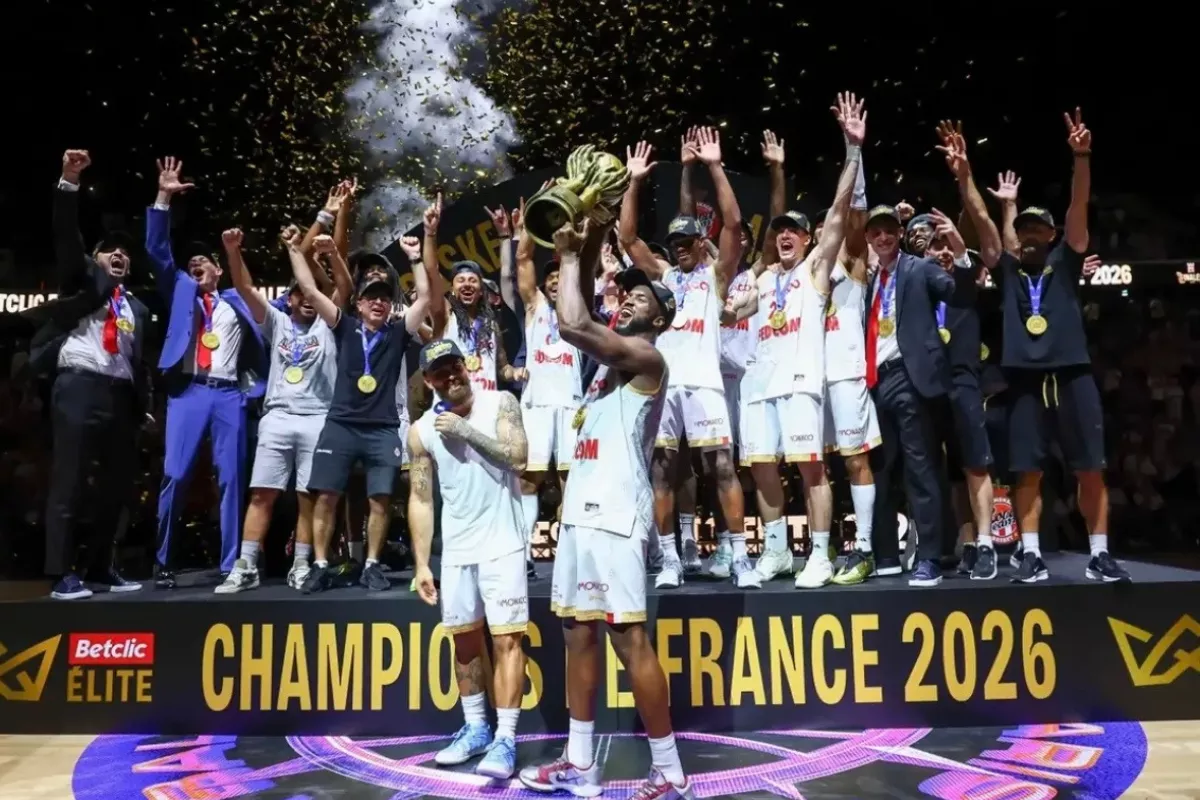
After forcing a winner-takes-all Game 5 with a dominant victory on Sunday, AS Monaco headed to the Adidas Arena on Tuesday 23 June knowing that a win over Paris would secure the title. In a battle fought until the end, the Roca Team came out on top 101-92 over Paris, claiming the French championship.
With Matthew Strazel suspended following his Game 3 ejection, Mike James made his long-awaited return to the lineup wearing Strazel’s No. 32 jersey in tribute. Paris opened the scoring through Nadir Hifi, going up 6 points early. Monaco, however, responded with an unanswered eight-point run to take the lead.
Both teams continued exchanging leads in the high-intensity atmosphere. Monaco’s offensive rebounding proved crucial, allowing them to capitalize on second and third-chance opportunities. Despite struggling from the free-throw line, converting just 66.7% of their attempts, Monaco ended the first quarter leading by three points.
The second quarter continued in a similar fashion, with neither side establishing sustained dominance. Paris reclaimed the lead shortly into the quarter as Monaco began to struggle on the boards. The Roca Team quickly responded, however, with a steal from Terry Tarpey helping extend Monaco’s lead to seven points.
Monaco’s improved efficiency inside the arc allowed them to establish control for much of the quarter. A late push from Paris reduced a nine-point Monaco lead to just three points heading into halftime.
Following the break, momentum shifted. Paris reclaimed the lead early in the third quarter as Monaco struggled to create quality shooting opportunities and committed turnovers. Paris took advantage of this, recording multiple steals within the first few minutes.
Monaco’s outside shooting also deserted them, with the team converting just 16.7% of their three-point attempts during this quarter. Paris capitalized, ending the third quarter with an eight-point advantage.
The final quarter, as had been proven throughout the series, once again proved decisive. Monaco delivered when it mattered most. A strong start to the fourth quarter quickly reduced Paris’ lead to just two points, before the Roca Team reclaimed the lead, holding Paris scoreless for more than two minutes during a 12-0 run.
Improved rebounding and greater shooting efficiency allowed Monaco to maintain their advantage as time wound down. Paris put up a fight throughout the closing stages, but the Roca Team remained composed while extending their lead to eight points in the final minute before securing a 101-92 victory.
Each player on the Roca Team arrived ready to leave everything on the court. Jaron Blossomgame led Monaco with 27 points, while Juhann Begarin contributed 18 points and nine rebounds. Finals MVP Elie Okobo added a double-double with 12 points and 15 assists as Monaco secured the title.
Following a challenging season both on and off the court, the Roca Team closed the season with multiple titles and a season to be proud of.
As artificial intelligence and social media make it harder than ever to tell fact from fiction, the Prince’s Government has launched a new programme designed to help young Europeans navigate disinformation, opening applications to 18 to 30-year-olds across the continent.
The initiative, ‘Youth Facing Disinformation – Why Journalists Matter’, forms part of Monaco’s presidency of the Council of Europe’s Committee of Ministers and sits under the organisation’s wider ‘Journalists Matter’ campaign for the safety of journalists. It is designed to give young people the tools to recognise authentic, verified sources, and is set to continue beyond the end of Monaco’s presidency in November.
Events planned in the Principality this October
In Monaco, the programme will run a series of public-facing events in October, including a press conference, a round-table discussion open to the public, and workshops and debates in schools involving international experts and Monegasque journalists. A companion video series is also in production, using a Socratic, fiction-based approach inspired by the style of social media content and short-form series, aimed at engaging young audiences directly on the mechanics of information overload, conspiracy thinking and disinformation.
A closing conference in Strasbourg
The programme’s centrepiece will be a two-day international conference in Strasbourg on 9th and 10th November, bringing together around 40 young people from across Europe at the Palace of Europe and the European Youth Centre. The event, which will mark the close of Monaco’s presidency, will combine high-level panels with interactive workshops involving media specialists, journalists and policymakers.
How to apply
Young applicants from Council of Europe member states can apply to join year-long working groups tasked with developing concrete projects on reliable information and quality journalism, by submitting a technological, artistic or environmental project through the Council of Europe’s website before 1st July. Up to four grants of €5,000 will be awarded to selected projects, which will be showcased at the Strasbourg event. A separate call, open from 6th July to 1st September, will allow young people who do not wish to join a year-long working group to apply simply to attend the Strasbourg conference itself.